1982, Brussels: The former au pair for Rick Wakeman of Yes and two of her teenage friends are at the doorstep of Les Disques Du Crepuscule, ready to cut an album with Gilles Martin. Living on busking wages and next door to Tuxedomoon, their work results in a contemporary bossanova record that would provide a missing link between Antonio Carlos Jobim and Kraftwerk. Camino Del Sol was issued and promptly forgotten, with Isabelle Antena moving toward jazz in Asia and the others returning to France. Twenty years later, it was findable only as a VG+ LP with a sticker price of $4.99. Intrigued by the striking cover's sunlit patio furniture emptiness basking in the south of France, we scooped up Camino Del Sol and grouped the extant Antena recordings from that exceptional period by session. 2LP reissue of the original five-song mini-LP adds the group's first 12" (a cover of Jobim's "Girl From Ipanema," naturally), the Seaside Weekend 12", compilation tracks, and two previously unissued cuts, recasting this short-lived combo's forward-thinking milemarker as a modern-day masterstroke.
quête:carlo del
Experimental guitarist and composer Carlos Ferreira is inspired by how we listen to music and the singer between sound, space, time and memory. He's dropped ambient gems on the likes of Past Inside The Present and Modern Obscure but here serves up a superb cassette on Mystery Circles. Across eight pieces he concurs up a range of feelings from rose-tinted nostalgia on the beautifully tender opener 'The Light We Lost' to more uplifting feels on 'A Pile Of Thoughts' (feat Fu_k The Zeitgeist). 'Organism' has delicate vocal whispers from Patricia Wolf that make it all the more heavenly and a second appearance feature from Fu_k The Zeitgeist on 'Primal' is another standout.
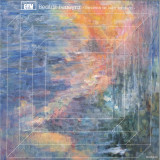
The themes that permeate »Senderos de luz y sombras« simultaneously engage the overwhelming, unyielding immensity of the beginnings of the universe and the forces at work in the unconscious mind. What connects these themes are the dark energies operating outside our knowledge, far beyond the conceptual scope of our limited thinking. How to convey all this and build music from these concealed forces? What Beatriz Ferreyra achieves, thanks to her trademark virtuosity, is precisely to summon energies, to bring in the raw forces that govern the laws of Acoustics, so as to trigger sonic storms as one would call the rain, to transform all sound matters into the core of a ritual. Indeed, Beatriz Ferreyra addresses the mind-body reconciliation, for in providing this unique sound and musical experience, with a rare sensitive intensity, the great composer simultaneously invites us to engage in a personal experience. (François Bonnet, Paris, 2021)
Commissioned by the French State for INA grm – 2016-2020.
In memoriam Bernard Baschet, Bernard Parmegiani and Carlos Pellegrino. A 16-channel piece inspired by astrophysics, the mystery of the pre-Big Bang era and some of the uncanny motions of the unconscious mind, where strangeness meets the ordinary.
- 1: Mario Montalbetti-Música Para Quince Grullas Atadas De Las Patas (2008)
- 2: Jorge Eduardo Eielson - Colores (197)
- 3: Francisco Mariotti - Manifiesto Dadá 1918 Reordenado 1985 (1985)
- 4: Carlos Germán Belli - Expansión Sonora Biliar (1960/1990)
- 5: Ol-Ki-Ol (El Lamento Del Guerba) (1981/2010)
- 6: Omar Aramayo - Homenaje A Marcela Castro (2009)
- 7: E. Verástegui-Lectura Sensual Arquitectura Música Persistente (195-2021)
- 8: Virginia Benavides - Resonancia Magnética Nuclear (2021)
- 9: Florentino Díaz Ahumada - Poema Viento (2011)
- 10: Luisa Fernanda Lindo - Estado De Emergencia (Lugar Común) (2011)
- 11: Carlos Estela - Uncu Erpo (2008)
- 12: Frido Martin - Socos (2021)
- 13: Macri Cáceres - Pers.pec.ti.va (2021)
- 14: Paola Torres Núñez Del Prado - Cae El Cuadro De (2021)
- 15: Peru Saizprez - Huayno Europeo (2021)
- 16: Tilsa Otta - (Auto) Configuración De Voz De Una Máquina Inteligente (2011)
- 17: Rodrigo Vera Cubas - La Otra Mitad (2012)
- 18: Giancarlo Huapaya/Omar Córdova - Pop Es Cía (2011)
- 19: Sandra Suazo - Carteles (2021)
- 20: Michael Prado - Es To No (17)
- 21: Lisa Carrasco - Na Na Na Na Na Na Na (20)
- 22: Luis Alvarado - Hipercomunicación (2021)
This compilation brings together 22 sound poems, including both pioneering and current pieces, and constitutes itself as the first great overview of sound poetry from Peru. It continues a cycle that began in 2009 with the appearance of a CD called Inventar la voz: Nuevas tradiciones orales To Invent the Voice: New Oral Traditions and was followed up in 2011 with another one called Irse de lengua [To Let It Slip], both of which contributed to articulate diverse manifestations of poetry that used technological means, also in the context of intense activity in the local scenes of experimental music and sound art that opened spaces for interdisciplinary dialogues. What we know as sound poetry is the product of a technological revolution associated with the appearance of various means of recording, transmission and amplification of the voice. A long process that took shape in the 20th century, until it became a discipline, articulated as an international movement which, based on phonetic research, expanded into a universe of oral/vocal artistic practices as part of a new technological context. The recordings gathered here comprise a time frame that goes from 1972 to 2021. We find poems that work with montage techniques, either because they explore simultaneity or juxtaposition, such as those by Mario Montalbetti, Frido Martín, Florentino Díaz, Carlos Estela, Luisa Fernanda Lindo, Macri Cáceres, Rodrigo Vera Cubas, Tilsa Otta, Giancarlo Huapaya/Omar Córdova, Virginia Benavides, Lisa Carrasco and Luis Alvarado. Others emphasize vocal/oral performance: we find the phonetic poems of Carlos Germán Belli and Eduardo Chirinos, as well as the concrete conceptual poems of Michael Prado, Sandra Suazo, Peru Saizprez, and the oral/guttural poem of Omar Aramayo. Finally, we find another group of pieces where the poem starts with the creation of a computational parameter or algorithm, as is the case with the pieces by Jorge Eduardo Eielson and Enrique Verástegui, eventually reaching the use of Artificial Intelligence as in the poems by Francisco Mariotti and Paola Torres Núñez del Prado. The Verbal Matter: An Anthology of Peruvian Sound Poetry is part of a series produced by Buh Records for Centro del Sonido, a website set up as a digital archive of Peruvian experimental music and sound art. The compilation has been made by Luis Alvarado and is published in a limited edition of 300 copies in vinyl format. It includes extensive notes and visual documentation. Mastered by Alberto Cendra. Art by René Sánchez.
Ayahuasca: Music for Film, by Luis David Aguilar (1978-1983) compiles works by Luis David Aguilar, one of the most prolific composers of film scores in Peru. It shows the great versatility and avant-garde style that has distinguished his work. Luis David Aguilar (Arequipa, 1950) occupies a fundamental place in the history of film music in Peru, not only because of the prolific nature of his work (which also includes music for television and advertising), but because of the singular, experimental style found in many of his scores. Aguilar's music blends modern academic composition with the use of native instruments, synthesizers, sound collages and a diversity of resources, which identify him as a key figure to understand a period of Peruvian music marked by the imprint of the avant-garde and the use of native sounds, which developed during the late 70's and the early 80's. Aguilar belongs to the so called "Generation of the 70's", along with Peruvian composers such as Walter Casas, Seiji Asato and Aurelio Tello, who were then immersed in the languages of contemporary classical music. But he also shares the spirit of renewal of a generation of musicians who came from the world of jazz and electronic experimentation such as Manongo Mujica and Arturo Ruiz del Pozo. Ayahuasca is an album that collects pieces from 1978 to 1983 and offers an overview of the different musical paths that Aguilar followed during his career as a soundtrack composer. The album opens with music from the film El viento del ayahuasca The Wind of Ayahuasca (1983), by director Nora de Izcue, performed by the National Symphony Orchestra and Choir of Cuba under the baton of Luis David Aguilar, with Chucho Valdés on piano. Recorded at the ICAIC studios (Cuba), it is an ambitious orchestral and vocal composition, in which you can hear the beginning of the famous melody of "Mujer Hilandera" [Female Weaver], popularized by the Amazonian cumbia group Juaneco y su Combo, which serves as an introduction to the sound world of the jungle, a dense and hypnotic atmosphere that, without a doubt, places this work as one of the most important compositions of the author's repertoire. The next track is the music for the documentary Anónimo cotidiano [Anonymous Everyday] (1979), by director Jorge Rey, a unique experimental piece for synthesizers (played by Aguilar), drums and percussion (played by Manongo Mujica), with the addition of various Andean instruments (panpipes, charango, among others). It is a clear example of fusion of sound experimentation and timbres from the Andean world. And finally Los constructores [The Builders] (1978), by director José Carlos Huayhuaca, a salsa which incorporates unusual sounds of tubular bells and prepared pianos. Ayahuasca: Music for Film by Luis David Aguilar (1978-1983) is the second album by Aguilar released by Buh Records, following the celebrated Hombres de Viento/Venas de la Tierra (1978-1982), appeared in 2015. The album is published in vinyl format, in a limited edition of 300 copies, as part of the Essentials Sounds collection. It includes a booklet with notes by Luis David Aguilar. The audio has been remastered from the original reel tapes by Aldo Montalvo. The artwork and design is by About Studio.
- A1: Max Romeo - Sometimes
- A2: Melodians - Best Girl
- A3: The Sensations - Born To Love You
- A4: Alton Ellis - Room Full Of Tears
- A5: Monty Morris - Do It My Way
- A6: Keith Blake - Blue Bird
- A7: Ken Boothe - Money In My Pocket
- B1: Cornell Campbell - She Wears My Ring
- B2: Danvan Carlos - Lover Girl
- B3: The Melodians - She Don't Care
- B4: John Holt - Reconsider
- B5: Johnny Clarke - Come To Me Softly
- B6: Monty Morris - Magic Moments
- B7: Cornell Campbell - Baby Be True
2022 Repress
Jamaican love songs always came across as heartfelt poetry whether they conveyed a broken heart, unrequited love or even the message ‘it’s all over don’t bother to come back’ anecdotes. But whatever the mood the singers of these songs were so good and versatile that putting such
subject matter over in a few verses was always so moving and believable.
Jamaican love songs were a constant in the ever evolving sounds and
journey’s that reggae music took us on, from ska to rocksteady to the early reggae sounds of the late 1960’s early 1970’s. We have complied a great selection of songs that all deal with that timeless subject matter. Max Romeo’s heartfelt ‘Sometimes’ opens our set in fine style, known more for his roots singing this song proves what a great singer he is. The Melodians a great Jamaican vocal group are featured here with ‘Best Girl’. The Sensations provide us with our title track ‘Born To Love You ‘and the theme for this compilation a great rocksteady tune with fantastic harmonies. Alton Ellis gives us the soulful ‘Room Full Of Tears’. Ken Boothe
provides us with his rendition of Dennis Brown’s ‘Money In My Pocket’ the ode that money cannot buy you everything. Cornell Campbell sings one of his most overlooked classic songs with his prideful `She Wears My Ring’. The great singer of love songs himself Mr John Holt tells us that we should all `Reconsider’, before giving up on love and a great lost singer Monty Morris gives us two great examples of how to find love in `Do It My Way’ and `Magic Moments’.
A great selection delivered as only Jamaica can do with style and feeling…….
Hope you enjoy the set …greetings from Jamaica… love songs for all…
- 01: Emerson, Lake & Palmer – Peter Gunn (Live)
- 02: Basement Jaxx – Where’s Your Head At (Head-A-Pella)
- 03: Peaches – Fuck The Pain Away
- 04: The Velvet Underground – I’m Waiting For The Man
- 05: Polyester – J’aime Regarder Les Mecs
- 06: Sly And The Family Stone – Dance To The Music
- 07: Ready For The World – Oh Sheila (A Capella)
- 08: Dakar & Grinser – I Wanna Be Your Dog
- 09: Ural 13 Diktators – Disko Kings
- 10: Bobby Orlando – The “O” Medley
- 11: Felix Da Housecat – Silverscreen-Shower Scene
- 12: The Stooges – No Fun
- 13: Salt ‘N Pepa – Push It
- 14: Hanayo With Jürgen Paape - Joe Le Taxi
- 15: The Jets – Crush On You (A Capella)
- 16: Funkacise Gang – Funkacise
- 17: Soul Grabber – Motocross Madness
- 18: Lil Louis And The World – French Kiss
- 19: Zongamin – Serious Trouble
- 20: Garbage – Androgyny ‘Thee Glitz Mix’ By Felix Da Housecat
- 21: Frank Delour – Disc Jockey’s Delight Vol. 2
- 22: The Residents – Kaw-Liga (Prairie Mix)
- 23: Carlos Morgan – Shake Your Body
- 24: Alphawezen – Into The Stars (Firebirds Remix)
- 27: Destiny’s Child – Independent Women Part 1 (A Capella)
- 28: 10Cc – Dreadlock Holiday
- 29: Dolly Parton – 9 To 5
- 30: Röyksopp – Eple
- 31: Arbeid Adelt – Death Disco
- 32: Jeans Team – Keine Melodien Feat. Mj Lan
- 33: Skee.lo – I Wish (A Capella)
- 34: Maurice Fulton Presents Stress – My Gigolo
- 35: The Breeders – Cannonball
- 36: The Cramps – Human Fly
- 37: The Wildbunch – Danger! High Voltage
- 38: Op L Bastards – Don’t Bring Me Down
- 39: Adult – Hand To Phone
- 40: Vitalic – La Rock 01
- 41: Queen Of Japan – I Was Made For Loving You
- 42: New Order – The Beach
- 43: Detroit Grand Pubahs – Sandwiches (A Capella)
- 44: Lords Of Acid – I Sit On Acid (Soulwax Remix)
- 45: Streamer Feat. Private Thoughts In Public Places – Start Button
- 25: Interstellar – Concepts
- 26: Nena – 99 Luftballons
Das ikonische belgische DJ-Duo 2ManyDJs, bestehend aus den Brüder Stephen und David Dewaele, feiert das 20-jährige Jubiläum ihres Albums 'As Heard on Radio Soulwax Pt. 2' mit einer besonderen Re-Issue. 2002 erschien es ursprünglich nach einer Reihe von Radioshows der beiden Brüder, damals vor allem bekannt als die Köpfe hinter der Electronic/Indie-Rock Band Soulwax. Die Re-Issue erscheint mit dem Foto von Richard Young auf dem Cover, das ursprünglich als Cover vorgesehen, aber nach Rechtsstreitigkeiten mit Tipp-Ex verfremdet wurde.
- A1: Carlos Cutaia - Operativo
- A2: El Signo - Dimensiones Ocultas (Ric Piccolo Edit)
- A3: Ultimate Warriors - Running Away From You
- B1: Abaddon - No Es Computable
- B2: Toby - Ain’t That Better (Harari Edit)
- B3: The Originals - Vamos A La Playa
- B4: Mike Ribas - Secuencia Sin Consecuencias
- C1: Adalberto Cevasco - Reencuentros N° 2
- C2: Los Músicos Del Centro - Esquirlas
- C3: Divina Gloria - Mediterranée Club
- D1: Mike Ribas - Como Son Los Retratos (Harari Edit)
- D2: Delight - I Wanna Make You Mine
- D3: Gaita - Mueve Tu Cuerpo
- E1: Donald - A Ver, A Ver (Ric Piccolo Edit)
- E2: Bad Girls - Dance To Dance
- E3: Carla Rab - Sexy Films
- F1: Los Músicos Del Centro - Aire De Trópicos
- F2: Jorge López Ruiz - De Mamá Candombe
- F3: Jorge Alfano - Fuego
Soundway’s telescope to forgotten and lesser known musical realms extends to Argentina on a brand new, triple vinyl compilation, Síntesis Moderna: An Alternative Vision Of Argentinian Music 1980-1990.
A digital rewilding of computer and synth powered music, dripping with an impressive variety of influence, from Italo disco, electro-funk, post punk, tango, ambience, jazz-fusion, Afro-folk and techno pop. The record is a cultural document of a musical decade transformed after the lifting of restrictions of English language music post Falklands War, and the end of Argentina’s military dictatorship.
It’s almost four years since their last opus - two years since the most-recent run
of live shows. Now, Bitchin Bajas return from whatever kind of rare ether they
occupy when they’re at home, bearing the riches of the whole cosmos in their
hands. And strictly OG as well - on cassette only.
‘Switched On Ra’ is the outcome of a typical Bajas exercise: pouring some out
for the pioneers that came before (as they’ve done with Bitchitronics and their
participation in the annual Chicago performance of ‘In C’ over the years). It’s a
nice way to get a flow - they play a little of themselves, then some for the
pioneers, then a little more for the band. Before long, they’re playing with the
inspirations twined, as they can only come from within.
For ‘Switched On Ra’, this meant a deep delve into the song-book of one of their
soul-predecessors, Sun Ra, whose music is literally written in the Bajas DNA.
Digging into this music sounded wild on paper: the drone synth group taking on
the Arkestra harmonies and Ra’s loose grooves? The trick was to get that sense
of rhythm to translate across the spectrum from Ra to Bajas, in a way that
worked for them both.
Their rearrangements of the tunes went good - up and down the EQ band, they
were finding the round sounds and jagged edges that brought Ra’s music into
their own thing. Then at the last minute, there was another twist - why not pay
tribute to the Queen herself, and think of the arrangements with a Wendy Carlos
vibe? A little side homage? After all, ‘Switched on Bach’ was visionary, bringing
analogue synths from the outside all the way into the mainstream in the late 60s -
and this take on Ra is meant to take him to new ears everywhere.
Sun Ra of course was his own kind of original keyboard visionary, using electric
keyboards in the late 40s and 50s to fill a role in jazz that had traditionally been
played on acoustic piano only. Once he’d done so, he took his writing in
directions inspired by the electricity, places no one had thought to go before
then.
Bitchin Bajas have been content to dominate in a microtonal world, usually
without a single chord to be found anywhere. But here, they step up righteously,
their vibe triangulated as they bring Ra’s music forward with some Wendy C
style, making an unexpected space for all to thrive. There’s a real feeling of joy
as these collected signals bounce off the tape and through the speakers into
your space.
To get this unique colloid exactly right, Bitchin Bajas used nineteen different
keyboards. They abstained from deploying their arsenal of reed and woodwind
instruments: everything had to be on the keys. This meant Yamahas, Rolands,
Korgs, Casios, a MicroMoog and of course their trusty Ace Tone organ. They
even broke out the Crumar DS-2, to have some of Ra’s chosen tone in the mix.
Then Jayve Montgomery added an EWI as a solo voice on a few tunes, just to
get some air-blown signal (and a natural shout out to EWI master Marshall Allen)
in there, after all. It felt like somewhere in the universe, Ra was decreeing it.
2 x 180 g black LPs
"Insieme" ("Zusammen") heißt das erste Duett-Album von Jonas Kaufmann und seinem Freund, dem französischen Star-Bariton Ludovic Tézier. Die berühmten Duette aus Opern von Verdi, Puccini und Ponchielli wurden mit dem Orchestra dell'Accademia Nazionale di Santa Cecilia unter der exzellenten Leitung von Antonio Pappano aufgenommen. "Insieme" erscheint als Doppel-Vinyl (180g) am 11. November bei Sony Classical.Auf der Bühne sind sie oft Rivalen, im wahren Leben verbindet Jonas Kaufmann und Ludovic Tézier eine enge Freundschaft. Nach zahlreichen gemeinsamen umjubelten Live-Auftritten erscheint das erste Duett-Album der beiden Ausnahmesänger: "Insieme", Italienisch für "Zusammen" ist der Titel. Mit dem hervorragenden Orchestra dell'Accademia Nazionale di Santa Cecilia unter Antonio Pappano präsentieren sie Duette, die sie zusammen auf der Bühne gesungen haben, und Stücke, die sie extra für dieses Album einstudiert haben.Seit ihrem gemeinsamen "Werther", 2010 in Paris, sind sie immer wieder Bühnenpartner in verschiedenen Produktionen; und wie bei ihrem Duett-Album spielen die Werke Verdis dabei eine zentrale Rolle. Als sie 2013 an der Bayerischen Staatsoper zum ersten Mal die Rivalen in "La forza del destino" verkörperten, war sofort zu spüren: da haben sich zwei gefunden, die sich gegenseitig anfeuern. 2017 standen sie in Paris in der französischen Urfassung von Verdis "Don Carlos" auf der Bühne; da ist es nur logisch, dass das berühmte Duett von Carlos und Rodrigue auf ihrem Duett-Album in dieser Fassung erklingt. Hier sind sie einmal nicht die ewigen Widersacher, sondern echte Verbündete, in einer der schönsten Männerfreundschaften der Oper. Außerdem sind die beiden hier zum ersten Mal zusammen in "Otello" zu hören. Bei Kaufmanns Debüt als Otello, 2017 am Royal Opera House in London, sollte eigentlich Tézier an seiner Seite als Iago debütieren, doch leider musste er absagen. Und so kam es, dass die Aufnahmesitzungen während des Lockdowns 2021 zum ersten gemeinsamen "Otello" der beiden wurden, noch bevor Tézier seinen ersten Bühnen-Iago an der Wiener Staatsoper "nachholte". Dass mit Antonio Pappano am Pult seines Orchestra dell'Accademia Nazionale di Santa Cecilia einer der profiliertesten Operndirigenten unserer Zeit mit seinem exzellenten Orchester an Bord ist, ist ein weiterer Glücksfall für diese Einspielung.Beide Sänger sind hier erstmals in den großen Duetten aus Verdis "Les vêpres siciliennes" zu erleben, in der selten gespielten französischen Fassung. Auch das Duett aus Ponchiellis Verismo-Meisterwerk "La Gioconda" ist ein echtes Doppel-Debüt, dem bald auch eine gemeinsame Aufführung der kompletten Oper folgen soll. Puccinis "La bohème" hingegen haben beide bereits auf der Bühne gesungen, jedoch noch nicht gemeinsam; hier sind sie zum ersten Mal gemeinsam mit dem Duett aus dem 4. Bild zu hören.
- A1: Bardo State "Sospiro
- A2: Nikolaj Grandjean "Heroes & Saints
- A3: Riccardo Eberspacher "Setira
- A4: Shiftz Feat Hiba El Mansouri "Ahwak
- B1: Ravin, Carlos Campos & David Visan "Homage To Mr V
- B2: Amanaska "Cetacea
- B3: Hess Is More "Yes Boss
- B4: Alihan Samedov "Sen Gelmez Oldun
- C1: Alfida "Allaya Lee (Original Mix)
- C1: Waldeck Get Up .. Carmen
- C2: Arno Elias "El Corazon
- C3: Amanaska "Fracture
- D1: Ravin & Carlos Campos "Romance In Klotild Palace
- D2: Aria "Un Bel Di
- D3: Ganga "Chair
- D4: Laidback "Happy Dreamer
- E1: Consoul Trainin & Pink Noisy Feat Anastasia Zannis "Ta
- E2: Kirpi "The Song
- E3: Riham "Erja Ya Habebi (Dj Srulik Einhorn Remix)
- F1: Amanaska "Wonder Of The Storm
- F2: Panjabi Hit Squad Feat Manpreet Kaur "Hasdi Hasdi (Hit
- F3: Sean Bay Vs Mehdi Mouelhi Feat. Arabella "Maktoub
- F4: Parov Stelar "Chambermaid Swinge
Blue Vinyl
Since 1996, Buddha-Bar has created and developed a new vision of Life. With its enchanting venues and intoxicating music, Buddha-Bar has created Lounge Music. Widely copied but never equaled, our musical signature has delighted millions of people around the world and through the years. Selected by Ravin, this triple Best Of Vinyl gathers the greatest titles that made the Buddha-Bar history from 1996 to 2013.
First time reissue of one of the essential and most sought-after Venezuelan rock albums, originally released in 1970, along the lines of what other artists such as Santana or El Chicano were doing from the United States in those same years. Grupo Pan was led by Carlos "Nené" Quintero, former member of Los Dementes, Ray Pérez's group, and through this record he aims to retain the rhythmic strength and brass arrangements typical of salsa, but also explore other sounds based on powerful guitars. This reissue includes original artwork, liner notes and exclusive photos. 180g vinyl Grupo Pan was formed in 1970 in the popular Caracas neighborhood of Marín at the initiative of Carlos "Nené" Quintero together with his brother Jesús "Chú" Quintero. His experience as a professional musician as part of Los Dementes, Ray Pérez's group, would allow him to retain the rhythmic strength and brass arrangements typical of salsa, but also explore other sounds based on powerful guitars. The band would be completed with Alfredo Padilla (percussion), David Azuaje and Carlos Guerra (trombones), Henry Camba (trumpet) and Rubén "Micho" Correa (electric guitar), already with a solid reputation as a guitarist after years playing in rock bands. Nené Quintero would resume contact with his acquaintance Mario Tepedino, at that time artistic director of 2001 Juvenil, a Venezuelan tv show focused on the promotion of young musical values, who would offer them to appear on said program. Through the popularity provided by their frequent television appearances, they were offered the opportunity to record an album. In December 1970 their first and only LP would release, recorded at the Fidelis studios in Caracas and produced by Mario Tepedino. It was published by Souvenir, a label responsible for the release of many other essential Venezuelan rock albums, such as the highly sought-after records by The Love Depression or Ladies W.C. "Pan" successes in overcoming through its grooves the eternal rivalry between the followers of the hard rock sounds and those who, on the contrary, were devotees of salsa. All the songs on the album are written by "Nené" Quintero himself and remain as fundamental milestones in the history of Venezuelan rock. The album would contribute to the birth of a new paradigm of Latin rock, along the lines of what other artists such as Santana or El Chicano were doing from the United States in those same years. After this Souvenir release, the band would also record two singles on another label called Promus. Grupo Pan would remain active until 1973 when the band members would follow different paths. "Pan", their only LP, has become one of the essential and most sought-after Venezuelan albums, and we are pleased to now be able to present the first-time reissue, including liner notes and exclusive photos.
On 21 April 1960, Claudio Arrau recorded Johannes
Brahms' 1st Piano Concerto in London with the
Philharmonia Orchestra and Carlo Maria Giulini - under
the auspices of Walter Legge, the legendary artistic
director of EMI, who hired the pianist. The Chilean pianist
is an immense Brahmsian, and here he delivers a
masterly version that is at once heroic and tragically
profound.
The LP benefits from a new remastering in 192htz/24 bit
done in 2022 from original tapes by Art & Son Studio,
Annecy.
A previously unreleased project of Henning Christiansen, monumental in scope, traversing years, countries and now, formats. The Henning Christiansen Archive is proud to finally present one of the crown jewels of the archive, the masterpiece ‘Penthesilea’ as a 2LP and 5CD set. Both limited to 300 copies. Pentheseila is one of the most ambitious works in the entire Henning Christiansen oeuvre. A large-scale work from the mid eighties based on the play of the same name by Heinrich von Kleist (1808). Both Henning and his widow, Ursula Reuter Christiansen, were enthusiastic about Kleist’s text, both making works around the themes within this portent text. Henning Christiansen first developed a work around this text for the Rosenfest festival performed in Berlin in 1984. Rosenfest was curated by René Block and featured a variety of composers presenting works in response to Kleist’s work including Robert Ashley, “Blue” Gene Tyranny etc. Henning formulated a composition utilising tape, field recordings, voice, soprano, and violoncello alongside the home made instruments of Werner Durand. The live presentation was then expanded upon and first performed two years later at Teatro Olímpico, Rome on the 8th November 1986 as directed by Carlo Quartucci. The two releases presented here include a 2 x vinyl LP of the Rosenfest recordings in 1984 and a 5CD set sharing the four and a half hour backing track prepared for the Teatro Olímpico performance in Rome in 1986. Together these two releases make up a substantial overview of one of the most significant works in the entire Christiansen canon. THE REALITY IS A GHOST IN MY MIND (LP1) is a work that unfolds patiently with a mix of field recordings; wind, bird song and the sound of snow being crushed underfoot all unite in a foreboding atmosphere. IN PENTHESILEAS HÖHLE (LP2) features electronic treatments to the original field recordings found on THE REALITY IS A GHOST IN MY MIND, a representation of psychological reorientation perhaps? A deep ground tone (or ROOT as Henning calls it) leads the listener through a variety of realistic and unrealistic environments. As Henning says in his essay reprinted on the back sleeve: “Then comes a section where the field recordings of the sea, the storm, birds, cars and other things, are built together so that the realism of these sounds become unreal. For example the cars drive into the sea and the birds are singing within the storm. When you hear footsteps in the show, it’s Kleist sneaking past Deutsche Schauspielhaus. When you hear a deep, human sleeping noise, it’s Achilles sleeping. When you hear hammering it’s the weapon smith working. When you hear a stone being thrown it means the unanswered question: “Who threw the first stone?” These recordings lead to the finale where Carla Tatò’s haunted vocals into her singing mournfully along with Jan Tilman Schade’s violoncello and tuba, then a chainsaw appears. Presented in a deluxe di-cut sleeve with writings by Ursula Reuter Christiansen and Henning Christiansen and adorned with an artwork, Penthesilea by Ursula Reuter Christiansen, 1983.
Originally released in July 2021 on blue vinyl – this is a yellow vinyl re-press – original notes below
During 2019, Blondie was invited to perform in Havana, Cuba as part of a cultural exchange through the Cuban Ministry of Culture. This was a 40 year ambition come especially for songwriter & guitarist Chris Stein, who had longed to visit Cuba for most of his life. Artist and director Rob Roth documented this special moment and career highlight by shooting a short film titled “BLONDIE: VIVIR EN LA HABANA”.
The film is broken up into 3 parts — Water, Fire and Air — and present a meditation on the experience as well as highlights from the two-night live musical performances with special guests Alain Perez, David Torrens and Cuban Fusion Pioneers Sintesís at Havana’s famous Teatro Mella.
With narration from Blondie founding members Debbie Harry, Chris Stein, and Clem Burke, providing a glimpse into the passion and beauty they discovered in Havana and the magic moments of performing alongside incredible Cuban artists. “BLONDIE: VIVIR EN LA HABANA” goes beyond the atypical short form film and live music documentary by presenting a portrait of the legendary band’s first experience in Havana and of the magical exchange between musicians from the two cities each call home and their intertwined influences.
The sound track for the film features Cuban musicians Carlos Alfonso, Ele Valdés, María del Carmen Ávila, Alejandro Delgado, Juan Carlos Marin, Jamil Schery, Degnis Bofill, Adel González
Released in July on limited edition pale blue vinyl to accompany the film which will feature throughout 2021 in many prominent Film Festivals inc the Tribeca Film Festival.
- A1: Jade 0R - Nie Kantshaietsa (Feat Bielka Nemirovski)
- A2: Karunesh - Solitude
- A3: Sina Vodjani - Straight To The Heart
- B1: Cantoma - Essarai
- B2: Zen Men - Une Table A Trois (Feat Caroline)
- B3: Mikael Delta - Mia Agapi Mikri (Feat Tania Tsanaklidou - Faithful Mix)
- B4: Al-Pha-X - An Indian Summer
- C1: Bliss - Breathe
- C2: Laidback - Happy Dreamer
- C3: Refractory - Road
- C4: Trumpet Thing - You Need (Right Now) (Right Now)
- D1: Angel Tears - Inshalla (Ya Salam) (Ya Salam)
- D2: La Roca - Drama In Japan
- D3: Oliver Shanti & Friends - Sacral Nirvana
- E1: David Visan & Carlos Campos - Irish Coffee
- E2: Jade Or - Opium
- E3: Cellar 55 - Close To Home
- E4: Afterlifev - Sunrise (Dj Thunda & K20 Allstars Mix)
- F1: Dos Hombres - The Alkemyst
- F2: Ravi Prasad - Indian Gypsy
- F3: Trumpet Thing - Far Away
Early fans, nostalgic, lounge-chill-world or deep house lovers... this new compilation is made for you! Relive the history of the Buddha-Bar through the titles that create the birth of the Lounge & Chill, melodic house and ethnic house movement. Among them are many forgotten tracks. A magic and captivating selection mixed by Ravin
- A1: La Cigarrona
- A2: Mara Del Carmen
- A3: Tambo Tambo
- A4: Virgen De La Candelaria
- A5: Perdi Las Abarcas
- B1: Mi Machete
- B2: La Muerte De Eduardo Lora
- B3: Martha Cecilia
- B4: Cuando Lo Negro Sea Bello
- B5: Asi Se Goza
- C1: Cumbia En La India
- C2: Que Te Vaya Bien
- C3: Por Ahi Es Que Va La Cosa
- C4: La Mochila Tercia
- C5: Rosa Y Mayo
- D1: La Pava Congona
- D2: Yo Amaneci
- D3: Las Mellas
- D4: Mercedes Elena
- D5: La Sanjacintera
Re-released after being unavailable for 2+ years. Andrés Landero embodies like no other the spirit that made it possible to bring cumbia to the world. His legacy represents a creative pinnacle of tropical music and has influenced countless artists. This collection gathers tracks from 1966 to 1982, taken from his albums on Discos Fuentes and other labels. They all are extraordinary masterpieces of Colombian popular music. Includes liner notes by Carlos Mario Mojica (Don Alirio).
Andrés Gregorio Landero Guerra, born in 1931 in San Jacinto, Colombia, embodies like no other artist the spirit that made it possible to bring cumbia music to the world. Synonymous with the evolution of this musical genre, inevitably any selection of Landero's best songs cannot aspire to do him full justice.From the very first note he played, Landero managed to charm audiences through a complex weave of compositions, shot through with local nuances and diverse derivations from his native Caribbean province. A torrent of words and refreshingly original, he constantly sought to create his own language while remaining acutely alive to tradition. Driven by a strong personality and undeniable abilities, and solely governed by his desire to follow his musical vocation and write songs that faithfully reflect the stories of his pure native land, Landero left home at seventeen, manifesting his passion to take artistic creation to the limit while demonstrating his belief in freedom and communal living, expressed through the free rein he gives to transparent narratives in all of his songs.
Not one of the records released during Andrés Landero's career is bad, mediocre or dispensable. His coherent and constant efforts to build on the foundations of the cumbia tradition form an extraordinary legacy rich in masterpieces of Colombian popular music. Sixteen years after his death, he continues to be the creative summit of an entourage of names associated with the folk music of the tropics. He is the author of a polyphonic blossoming whose beats still sound fresh today and the outstanding figure through which to appreciate, from a historical perspective, the syncretism of indigenous and African slave music from the Caribbean coast, namely cumbia.
- A1: Jingo
- A2: Persuasion
- A3: Let's Get Ourselves Together
- A4: Soul Sacrifice
- B1: As The Years Go By
- B2: Evil Ways (Live)
- B3: La Puesta Del Sol
- B4: Travellin' Blues
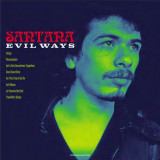
The 8 tracks on this LP capture the guitar hero at his creative best; Jingo from the 1969 album Santana grabs our attention with a flurry of conga drums and snare drum rhythms. Carlos leaps into the fray with an anguished cry from his Gibson SG, displaying the sustained, melodic blues notes that became his signature sound. Carlos then does that voodoo that he does so well, on a studio version of Soul Sacrifice where he launches his cosmic guitar into outer space.
While Let’s Get Ourselves Together is a nicely constructed arrangement. Side 2 features As The Years Go By, a tasteful blues ballad, that has Santana caressing the strings with expertise and passion. Followed by a live performance of Evil Ways, one of Santana’s greatest hits that reached Number 9 in the U.S. Billboard chart in February 1970.
RIYL: David Byrne, Guy Clark, Bob Dylan, The Flatlanders, Randy Newman, John Prine, Lucinda Williams, Townes Van Zandt. The first-ever vinyl reissue of Allen’s manifold, moving fourth album, remastered from the original analog tapes. Deluxe LP edition features 140g virgin vinyl; a gatefold jacket, inner sleeve with restored, new, and alternate art and photos by Terry and Jo Harvey Allen and friends, insert with lyrics and original notes & DL. Deluxe CD edition features a trifold jacket & inner sleeve. On his manifold fourth album, acclaimed songwriter and visual artist Terry Allen contemplates kinship the ways sex and violence stitch and sever the ties of family, faith, and society with skewering satire and affection alike. Bloodlines compiles thematically related but disparate recordings from miscellaneous sources both theatrical and historical: two songs written for plays; two full-band reprises of selections from Juarez; the irreverent hellfire-hitchhiker-on-highway ballad “Gimme a Ride to Heaven Boy” (featuring Joe Ely); and the poignant eponymous ode to the arteries of ancestry and landscape (the debut recording of eight year-old Natalie Maines, later covered by Lucinda Williams). Since 1970, when they met in Allen’s studio in his hometown of Lubbock, Texas, one of songwriter and visual artist Terry Allen’s great foils and friends was the sometimes cantankerous but always brilliant art critic and writer Dave Hickey, with whom he sparred on topics musical, visual, and beyond (and to whom this reissue is dedicated in memoriam, in the wake of his passing in 2021.) Hickey, a fellow Texan paddling against the currents of the hermetic New York centric art world, was an accomplished songwriter in his own right, and he and Terry pushed each other to refine their respective practices. In 1983, the two were thick as thieves brothers in blood and Hickey’s wry but big-hearted presence haunts the history and periphery of Bloodlines, the album Terry released in June of that year. Hickey’s commercial doubts notwithstanding, critical recognition was not in short demand. In a 1984 review of Bloodlines, the L.A. Herald Examiner called Allen “one of the most compelling American songwriters working today … making the most unique art-pop of our time,” elsewhere comparing him not only to Moon Mullican and Jerry Lee Lewis, but also to the Velvet Underground and Philip Glass (probably the first time that unlikely quartet ever appeared together in one sentence). In 1983, against all odds, such sentiments were growing in underground prominence, as Allen’s records gained a fanatical word-of-mouth following they weren’t easy to find in those days. Recorded piecemeal at Caldwell Studios in Lubbock, in sessions spanning August 1982 through January 1983, Terry self-released it, like all his previous records, on his own Fate Records imprint. Despite his frustration with the protracted timeline and some anxiety about the correspondingly higher budget, the production on Bloodlines courtesy, once again, of master guitarist Lloyd Maines is slicker, cleaner, and more dynamic than prior efforts, and it reached a broader audience than ever before. UK label Making Waves reissued it in 1985, facilitating semi-reliable European distribution for the first time as well as a 1986 UK tour, on which the great BJ Cole filled in for Lloyd on pedal steel. No veteran country songwriter sounds more attuned to the national mood. His songs still feel like little guidebooks for staring down a harsh universe. – The Washington Post // It has always been a fool’s errand to frame Allen in terms of other artists there was nobody like him before he showed up, and the subsequent 40 years have been equally light on plausible peers. Uncut
- A1: La Justicia - Guaguanco Coroco
- A2: Ebirac All-Stars Featuring La Calandria & Ramito - Plena Matrimonial-Contraversia
- A3: La Justicia - Las Frutas Del Pais
- A4: Tipica Leal ‘79 - Donde Estabas
- B1: Juventud Tipica ‘78 - Ano Nuevo Y Reyes
- B2: La Solucion - A Bailar Son Montuno
- B3: La Justicia - Alegre Hibarito
- B4: Under The Sun Orchestra - Under The Sun (Instrumental Theme)
Far from the twin epicenters of New York and Miami, Carlos Ruiz and his Ebirac label were both feeling and generating the aftershocks of the mid-’70s salsa boom. Holed up in their own bustling Puerto Rican community center on Chicago’s west side, these third coast salseros plied their trade outside the hot lights, cutting their teeth in city parks, VFW halls, and Holiday Inn rec rooms. Nearly 50 records survive in the wake of orquestas La Justicia, La Solucion, and Tipica Leal ’79, the most impassioned, singular moments of which are compiled here.