** Cassette release
""A Synonym for Repetition" weaves together a tapestry of parallels, all intricately linked to Japan. The project initiates with a collaboration with a Tokyo-based musician, which ultimately fails to materialise during Jason Kolar’s recent visit to the country.
From an original approach that has to mutate in its starting phase, the record was conceived from the beginning to embody a sincere homage to Ryuichi Sakamoto, also a Tokyo native. Shaping ideas within the context of a city with a vibrant soundscape, through an exploration where tradition and modernity intersect in an ongoing quest for correspondences.
Yet, the barriers of language and cultural disparity emerge, casting a veil over the perceived connections and rendering them more projection than reality. This dynamic delineates the space observed from an external perspective, perpetually distant from true understanding, framing it in the fields of imagination, both Japan and Sakamoto. Nonetheless, Kolar tries to pay an honest ode to the artist and its scenic background, with all the implications and contradictions of this kind of process, even with the risk of falling into clichés, pastiches, and Eurocentric bias.
Connecting it to ‘vertical listening’ rather than to an obvious tribute exercise, he has morphed his sound to a synthetic and midi approach, aiming to set an ironically fictitious stage, one that resembles something, but it’s not really it."
Suche:cas
- A1: I Am In The World With You
- A2: Telema
- A3: Prado
- A4: A Little Asphalt Here And There
- A5: This Sandy Piece
- B1: Tomorrow
- B2: Greenwich
- B3: Cars
- B4: She Loves Animals
- B5: Die Dinge Des Lebens
- C1: Set
- C2: Cars (Variant)
- C3: Meet The Lucky Kitchen
- C4: Telema (Längs)
- C5: Rocket Fuel
- C6: Copa
- D1: Pantone 6
- D2: Numbers In Love
- D3: Casper
- D4: Milker
- D5: A Day Long
- D6: Pantone 1
Ltd edition!
to rococo rot?s the amateur view (1999) will be reissued as a highly limited expanded edition, featuring 12 bonus tracks on an additional disc, a new gatefold sleeve with previously unseen photos, and liner notes by Jon Dale. The Amateur View is widely hailed as one of the definitive records of late '90s analog electronica. Released in the U.S. via Mute Records, it was named one of UNCUT's Albums of the Year in 1999 and perfectly captured the introspective, experimental mood of the era. The album's influence was far-reaching-so much so that Saint Etienne enlisted To Rococo Rot for their 2000 album Sound of Water. At the time, To Rococo Rot were the band of the moment-jetting across the globe to play the most cutting-edge electronica festivals, including wild WARP events where none other than Aphex Twin spun support DJ sets, The trio was invited three times by John Peel to record radio sessions in the BBC studios between 1997 and 1999. Bands like Modeselektor still cite them as key influences and pioneers. Stephen McRobbie of The Pastels, Mark Fell (SND), and Kieran Hebden (aka Four Tet) are all big fans-Kieran even remixed a track from their debut album so did Mira Calyx and Daniel Miller of Mute, a longtime supporter, and yes Björk is a fan too.
“To Model Phenomena” is a scientific concept that describes a computer’s ability to emulate, regardless of whether the emulated phenomenon exists outside its circuits or is purely imaginary.
Modeling communication platforms enables us to interact with each other or with computers. Modeling behavior patterns, nuclear fusion, or, as in the case of scientists from the Human Brain Project, a virtual human brain, allows us to simulate cognitive processes such as perception, memory, and decision-making, providing insight into the nature of human thought.
In this record, the phenomena modeled are those moments when the mind leaps into the void, confronting new paradigms. For instance, when science, art, or mass media introduces new information, propelling us into a transformed reality.
From this starting point, European musician Shifting Heigo maps a path between realities, evolving his narrative as his music unfolds. This work draws inspiration from Curtis Roads (vice chair of Media Arts and Technology at the UCSB) and his studies on granular synthesis and time scales, where each track on To Model Phenomena evokes a sense of movement, where nothing begins or ends in quite the same way.
A musician with strong ties to new technologies, Shifting Heigo has collaborated with the University of Málaga (Spain) in its PH Degree Program in video game design, composing interactive music, while also singing as part of the tenor section in the Qatar Concert Choir, affiliated with the Qatar Philharmonic Orchestra.
Currently based in Abu Dhabi, he is now part of a circle of electronic musicians surrounding the New York University Abu Dhabi, an institution that supports electronic and experimental music across the Middle East.
To Model Phenomena is the result of his search for a unique voice as a musician, where ternary rhythms, noise, and silence shape the narrative. This is a discourse from a musician’s perspective on the changes that science, technology, art, and the rapid flow of information demand of us. A direct gaze into the fear of change.
When SW. AKA, Stefan Wust, first established SUED in 2011, their compelling, cosmic and anonymous material struck a rare chord, emanating far beyond the freeform Berlin underground in which it was written. Unknowingly, Los Angelean Oliver Bristow had
established a parallel musical universe, founding the hyper-specific label Acid Test, inviting pioneering artists such as Donato Dozzy, Tin Man and Pepe Bradock to indulge in glorious interpretations of 303 control. Without compromise, these were records that quietly
reinvigorated electronic music.
Some years later, a new label, SWOB, unites Wust and Bristow in a very different landscape. And while it would be easy to transform the purity and integrity of this special alchemy into something like nostalgia, yearning for an alternative culture before
influencers and against algorithms, SWOB endeavours to find inspiration in arguably tougher truths.
“By the mid-90s, the techno scene had already reached a breaking point”, recalls Wust.
“Today, the scene is so highly professionalized that it barely resembles what was once called the "underground. But "underground" was never more than the simple reality that music circulated on cassettes among friends or that dubplates were played at illegal
parties... The consequence of today’s professionalization is the death of the original movement.”
Still, no one can kill an idea. Here, inspired by the “Outside Tekno” or “Outkast Techno” that emerged to subvert even back in the day, SWOB are proud to introduce the tekkNOthing trilogy, a new project from SW. beginning on cassette and culminating later
on vinyl. Some years in development, tekkNOthing first began to take shape during the 2020 global pandemic, when ‘the underground’ quickly began to mean something radically different once again.
“I noticed how everything was accelerating while simultaneously spinning in circles – existing in a kind of creative limbo on a global scale”, recalls Wust. “And that’s where true freedom lies: for artists – in any sense – to consciously engage with this necessity. In
other words, irrationality or nonsense can eventually generate meaning.” While hardly capitulating to the contemporary hammering of techno’s most recent developments, tekkNOthing’s first chapter quickly establishes a frenetic pace; tracks like ‘nuclearFALLoutX’ and ‘paslolESmess’ interlock and unfold at a tempo removed from that typically associated with SW. while ‘euroBSS’ and ‘viscousHEAT’ successfully experiment with a more guttural palette, veering far into a rejuvenating and previously uncharted leftfield.
A resolutely human endeavour, the music of SW. is nonetheless written and recorded in the looming shadow of AI, whose free-form adoption of pop culture, hip-hop and techno reminds Wust of “when photography emerged in the 19th century... painting was no
longer bound to naturalism. Similarly, music today is no longer bound to fixed standards – through AI, it can become truly free.”
If not in competition, than taking inspiration from this landscape of new opportunity, tekkNOthing diversifies further with eight unpredictable tracks across part II, taking in stuttering machine-funk on ‘crAMPDUNK’, a freeform organ jam via ‘sonicENdo’ and the
inexplicable piston-percussive, post-punk exotica heard on ‘poorTENOOR#a#01’ DJs with dual cassette decks skills might even find function in the more overtly floor-focused ‘DU ¨NEhowSE#1takeÄ’ or ‘lookLOOK’.
The times may have changed, but the promise remains simple; more music, more freedom.
Repress!
This is the fourth release in the critically acclaimed Environments series and continues where the third left off. It is a fourteen track journey from the river's delta to no-man's land where murmurations lead across supercontinents and back to the clear light of reality. Strings meet choirs - cascading down to the glass valleys of synthesised biophany.
'Murmurations' was the track featured on an exclusive vinyl 10' release for Record Store Day in 2012, it coincided with the CD version of this album's release that year. The album also has collaborations with Riz Maslen (Neotropic) and Ivor Novello award winning composer Daniel Pemberton.
"Non Rompere" is a dark, decidedly experimental song from the disco era, a style embraced in the second half of the 70s by Amanda Lear and then in the early 80s by Italian showgirls such as Nadia Cassini, Patrizia Pellegrino, Pamela Prati, who considered disco-music the most transgressive genre of the time (which later often became ''trash''). G.Bri, namely Vanna Brosio, a seductive actress and TV presenter, follows this trend with an equally bold approach, making use of the shameless lyrics of Cristiano Malgioglio (Cristiano Facile) and the arrangement and orchestral direction of Beppe Cantarelli, one of the key figures of Italian music in the world (with over 100 million records sold). The record production of ''Non Rompere', longed for by followers for decades, nevertheless needs to be enriched. Dave Mathmos takes care of it, choosing to keep the original version intact and faithful to his style he creates two alternative versions: the ''Remix'' oriented towards High Energy, replacing the rock guitar with synthesizers that evoke the sounds of artists such as Giorgio Moroder and Patrick Cowley; the "Italo Dub", draws on the roots of Italo-Disco, highlighting the melodies of the chorus and adding another layer of melodic depth, all through the use of synthesizers (Additional instruments used: Linndrum drum machine, Roland TR-707 drum machine, Moog V - Synth, Jupiter 8V - Synth, Diva - Synth). This approach shows once again the talent of the Italian-Australian DJ in fusing and reinventing the genre, while preserving the energy and innovation, characteristics of the Italian Disco music scene of that time.
Australia's world-renowned cinematic soul outfit Surprise Chef return with new album Superb. A record that represents a change in their creative approach and turns up the heat in their music. Trading in their meticulous writing and recording techniques for a looser and less planned approach with the intentions of bringing more levity to the process, and it comes through in spades. The high caliber musicianship is still front and center, but they push their sound into a more energetic and fun place on this album. Album opener "Sleep Dreams" is the closest thing to a Surprise Chef tune one would come to expect but then lead single "Bully Ball" comes on and you get the picture that they came to kick in the door on this one. The song's gritty drums thunder through the speakers and get covered with percussion, keys, bass, and guitar chanks that stay in the pocket and bring the funk with them. The band pushes the boundaries of arrangement with tunes like "Body Slam" that starts off like a sweet soul track then pulls a 180, turning dark and haunting, centering on a sound they created by tucking a timpani into a bathroom two doors down from the mixing board. That same sense of experimentation comes up again on "Fare Evader" where they pepper another neck breaking rhythm track with synth notes that sound like robot sound effects from a 70s sci-film. The fellas turn up the tempo for the dance with tunes like "Consulate Case" and "Tag Dag"; the former pulling influence from afro-funk and the latter from jazz-funk. They take us deep into the beautiful world of Surprise Chef ballads on "Websites" and double down on their abilities to make beautiful and ethereal tracks with "Dreamer's Disease". With their new album Superb, their new approach, and plans to tour the world, we are about to see Surprise Chef take the step from the underground's most beloved to a household name and we are definitely here for it.
After a long hiatus since the release of Medicine Music 001, the scalpel has been sharpened and in full effect in the DP studio with the master surgeon cutting and splicing some fine edits to create a frenzy on the dancefloor.
Delivering 4 edits, providing the perfect prescription for all terrains.
Supported by LNTG, Michael Gray, Greg Wilson, Sgt Slick, Casual Connection, Mell Hall & Trent Rackus!
Australia's world-renowned cinematic soul outfit Surprise Chef return with new album Superb. A record that represents a change in their creative approach and turns up the heat in their music. Trading in their meticulous writing and recording techniques for a looser and less planned approach with the intentions of bringing more levity to the process, and it comes through in spades. The high caliber musicianship is still front and center, but they push their sound into a more energetic and fun place on this album. Album opener "Sleep Dreams" is the closest thing to a Surprise Chef tune one would come to expect but then lead single "Bully Ball" comes on and you get the picture that they came to kick in the door on this one. The song's gritty drums thunder through the speakers and get covered with percussion, keys, bass, and guitar chanks that stay in the pocket and bring the funk with them. The band pushes the boundaries of arrangement with tunes like "Body Slam" that starts off like a sweet soul track then pulls a 180, turning dark and haunting, centering on a sound they created by tucking a timpani into a bathroom two doors down from the mixing board. That same sense of experimentation comes up again on "Fare Evader" where they pepper another neck breaking rhythm track with synth notes that sound like robot sound effects from a 70s sci-film. The fellas turn up the tempo for the dance with tunes like "Consulate Case" and "Tag Dag"; the former pulling influence from afro-funk and the latter from jazz-funk. They take us deep into the beautiful world of Surprise Chef ballads on "Websites" and double down on their abilities to make beautiful and ethereal tracks with "Dreamer's Disease". With their new album Superb, their new approach, and plans to tour the world, we are about to see Surprise Chef take the step from the underground's most beloved to a household name and we are definitely here for it.
"Dame café", originally released on Discos Fuentes in 1965 to meet the tropical music demand of the time, features a mix of traditional rhythms like vallenato and cumbia, alongside more experimental beats. The vibrant musical scene of the 1960s in Colombia owes much to a group of versatile accordionists who blended genres such as cumbia, charanga, guaracha, vallenato, and Cuban-influenced rhythms. This group included notable figures like Andrés Landero, Aníbal Velásquez, Lisandro Meza, and Alfredo Gutiérrez, among others. A prime example of their diverse musical styles is the album "Dame café", released in November 1965, which features a mix of traditional rhythms like vallenato and cumbia, alongside more experimental beats such as paseaíto and pasaje. The album includes six previously released singles composed by José Castro, Policarpo Calle, and others. The album highlights the commercial strategy of Discos Fuentes, which often created short-lived studio bands to meet the tropical music demand of the time. Los Gavilanes de la Costa, the band behind "Dame café", had a brief existence but left a lasting impact, especially in Mexico's sonidero scene. The group's creation was driven by the high demand for tropical music in the 1960s, with many musicians adjusting to market trends. Most of the members, including composers Campillo and Castro, vanished from the scene, while others, like Calle and Zambrano, went on to have notable careers in music. Calle, in particular, became a cumbia legend, later settling in Mexico City. The album "Dame café" has gained cult status due to its rarity and the intrigue surrounding its origins. The album features a remarkable contribution from Colombian jazz legend Justo Almario, who, at just 16 years old, played tenor sax on the track 'Pues no da pa' más'. Over the years, pirate editions and elusive original copies have made it a highly sought-after collector's item. The album's lively sound, combining accordion melodies, deep bass, and vibrant guacharaca rhythms, continues to resonate in the tropical music scene.
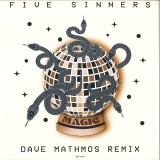
With the reissue of ''Magic" the circle of the works originally published by Eyes Records and composed in the earliest 80s by Celso Valli is completed: Future State, Blue Gas and now precisely Five Sinners !!! Best Record thus creates ''the triplet'' of the Italo-Disco operas made by the immense musician from Bologna, who used various nicknames at that time - as the trend of the main Italian arrangers - feeling 'a certain shame' in making commercial pieces, songs that were danced in the discos. He hid under dozens of pseudonyms (Adal-Scandy, Azoto, Bulldog Lama, Sandon, Super Band....) ''Magic'' and ''Precious Lies'' kept hidden, almost buried for over 40 years (but with many followers abroad) now shine their own light! Indeed. To further enrich this latest vinyl production by Claudio Casalini there is - in addition to the successful artwork of graphic designer Nerina Fernandez - the new captivating version of ''Magic'' (timing 6'20'') skillfully remixed by the talented Italian-Australian DJ-producer Dave Mathmos. In short, a 12-inch reissue not to be missed for both collectors and club DJs.
Limbo Tapes boss Titus XII returns with a sample-rich album of feral beats, degraded meditations, and graphic dubwise. Blurring hip-hop and dub techniques with a taste for the melancholy, this is cinematic armchair listening with its own corner of moody nostalgia, macabre humour, and the menace of sound system culture.
We’re thrilled to present the latest vinyl release from Castor Recordings' brand new sublabel, Castor Club. This one comes from the talented producers Standford & FaBER, delivering a smooth yet powerful house track in the signature “Defected” style.
The vinyl features two standout mixes: the original track crafted by Greg Standford and DJ Alain FaBER, Alongside a stellar remix by Greg Standford and DJ Cekezz.
Both versions bring their own unique vibe, perfect for the dancefloor and collectors alike, as bonus both “radio versions” are included.
Don’t miss out on this exciting new release from Castor Club and grab your copy and feel this amazing groove!.
Prospect Park,Taka Boom,Lou Casablanca,Angela Johnson,Da Funk Junkies&Discogalactix,Massimo B
Groove Is In The Heart Vol. 2
DJ Support: Dimitri From Paris, David Morales, Dave Lee, The Shapeshifters, Brian Tappert, Quentin Harris, Michael Gray, Dr. Packer, Marcel Vogel, Dj Pippi, Sebb Junior, Dj Pope, Dj Oji and many others
Groove Culture main men Micky More and Andy Tee are once again at the controls as the label presents its' second collection of 'Groove Is In The Heart'. As with the popular imprint's various EPs, the focus is on joining the dots between organic house, revivalist disco, uplifting dancefloor soul and colourful jazz-funk. There's much to admire from start to finish, a very strong bunch including MM & AT's celebratory Mix of Prospect Park's swirling disco-funk treat Feat Taka Boom 'i Got This Feelin', a wonderfully rolling and soulful Groove Assassin rework of Lou Casablanca and Angela Johnson's 'Gimme Your Love', Da Funk Junkies and DiscoGalactiX tasty Feel Good house Tune 'Holding On' and the revivalist Italo-house warmth of Massimo Berardi's 'Who I Am' Feat. Sheree Hicks.
T H E E L E K T R O N I K Z O O
F E S T I VA L J O U R N E Y VA . E P
The new various artists compilation launches with a seismic opener from none other than Gregor Tresher, a true legend whose influence has shaped the sound of techno for decades—"Bonegrinder" is a raw, hypnotic masterstroke. Following is Marco Bailey, our iconic label founder and relentless force in the scene, delivering a bold Electro cut with "Arcane". The journey continues with deep melodic trips from Works of Intent & Voltaire and Tom Hades & Soren Aalberg, gritty Electro from Ian O’Donovan, raw techno heat from Eddie Merced, and ethereal Electronica by Alienna—each artist contributing their unique voice to this powerhouse compilation.
We present you the third installment of our limited only vinyl series, Esuoh Limited 003. Four track V.A. featuring Ale Castro, Hurlee, Housewife & Midas Field.
180 G. BLACK VINYL WITH LINER NOTES IN CREOLE, FRENCH, ENGLISH
Originally released in 1979, "Spiritual Sound" lives up to its name, a soaring, triumphant album, six tracks of spirit magic from Guadeloupe.
Telluric, intense, terribly alive, the gwoka drums of Guadeloupe carry the identity of a painful and fervent island. Marked forever by the crime of slavery, Guadeloupe's créolité cherishes the ka drums and their natural environment: the low-pitched boula drum with male goatskin, the high-pitched soloist makè drum with female goatskin, the chacha, ti bwa, triangle, calabash and other percussion instruments that surround them, and the voices - the fiery, proud, timbred, urgent voices of the gwoka.
This album is also a legend for its voices: in his then dazzling youth, singer Lukuber Séjor was one of the first gwoka artists to largely feminize the chorus of répondè, who converse with his text delivered in a straight and powerful voice.
And everything here sets new standards. In 1979, Mizik Filamonik - Spiritual Sound proclaimed a spiritual patriotism of ferocious intensity. The album by Lukuber Séjor - whose spelling alone is a battle - sets out to give Guadeloupe the intangible weapons of self-respect and self-knowledge, through a singular practice of traditional music.
The genesis of gwoka music is less straightforward than one might imagine... The drums performed the servile task of accompanying the work of slaves in the fields and during the “corvées” imposed by the administration, before being freely practiced by the common people after the abolition of 1848. At the heart of the conviviality of the Guadeloupeans furthest from the cities - geographically and socially - the gwoka drums come out for carnival, funeral wakes and neighborhood celebrations, but also during strikes, fits of anger and armed vigils of the riots and revolts that have punctuated the island's history. For generations, governors of the colony and then the prefects of the overseas department of Guadeloupe have been viewing the gwoka as a potential for turbulence and a threat to public order.
But as the Beatlesmania, “chanson engagée” and rock revolutions unfolded in Europe, young people turned to the drums of mizik a vié nèg (“bad negro music”, in Creole), which Guadeloupeans had learned to despise by following the “assimilation” process advocated by the school system and most of the political class. At the end of the sixties, in a Guadeloupe mourning the deadly repression of the May 1967 social movement, they played traditional music, refusing to wrap it up in tourist prettiness and madras folk costumes. Instinctively, they played a rough and contemporary gwoka, led by the incendiary Guy Konkèt. This was the era of decisive 45 rpm records such as Robert Loyson's Kann a la richès, which brought to light the fieriest words of union rallies.
At his home in Sainte-Anne, Lukuber Séjor played with flautist Olivier Vamur and his brother Claude Vamur, who cobbled together a drum kit from tin crockery and became, a few years later, the most influential drummer in Kassav'.
These were the years of the Bumidom program, when young Guadeloupeans were encouraged to emigrate to mainland France. At the age of twenty, Lukuber Séjor embarked on the liner Irpinia, disembarking at Le Havre and taking the train to the Gare Saint-Lazare - the route taken by thousands of young West Indians who went on to study or looked for work, all the while trying to maintain a link with their homeland. In this case, it's at the Antony university residence, where Lukuber played the drum and participated in a thousand gwoka updates and aggiornamentos, while exile reinforced the need for a spiritual link with the native land.
In 1978, Guy Konkèt played at the Salle Wagram, a historic event for West Indian music. After serving as répondè - i.e. backing vocalist - on one of his home-recorded albums, Lukuber joined his live band. Little by little, he became one of the key artists on a circuit parallel to French show business. At a student party in Caen, he met a young woman from Martinique who, at the time, was more motivated by her ambitions as a visual artist than by her vocation as a musician. Her name was Jocelyne Béroard and, a few years before she plunged into the Kassav' adventure and became the greatest West Indian singer of her generation, she designed the cover of Lukuber Séjor's LP.
This ambition was obvious and imposed its will. A more or less regular band was formed, with Roger Raspail, Rudy Mompière and Éric Danquin on ka drums, Claude Vamur on ti bwa, Olivier Vamur and Françoise Lancréot on flutes and Annick Noël on keyboards. Lukuber Séjor is set on wanting to extend the gwoka palette to other instruments, as the jazz-rock revolution opens a thousand new doors. Annick Noël will play a wide range of timbres and textures on electric piano and synthesizer. Another novelty: the répondè are two men and two women, Roger Raspail, Olivier Vamur, Françoise Lancréot and Maryann Mathéus ...
Mizik Filamonik - Spiritual Sound is a self-production in which the singer and leader sank all his savings, allowing him no more than a single day in the studio. The first side is more of a musical manifesto, with the first two tracks, Éritage and Penn é plézi, being instrumentals. The third, Son, forcefully celebrates the need for Guadeloupeans to connect with the gwoka. In fact, Jocelyne Béroard's cover shows a tambouyé in the shadow of a cloudy sky, against which a radiant sun is rising and whose light will soon flood the entire landscape. The silhouette and face of this man strongly evoke the immense Vélo, master of the ka, rejected at the time on the fringes of society.
The second side of the LP is surprising. Formally, three tracks are explicitly linked like the three parts of a triptych. Primyé voyaj evokes the appalling tribulation of Africans deported as slaves to Guadeloupe; dézyèm voyaj speaks of the Bumidom program and the economic, political and social forces driving young Guadeloupeans towards the mirage of prosperity in France; twazyèm voyaj closes the cycle with the emigrants' return from Europe after years away from their island...
This gwoka, obsessed with the need to save Guadeloupe spiritually, appeals far beyond the politicized audience. Mizik Filamonik - Spiritual Sound instantly became a classic, although Lukuber Séjor never really made a career for himself as a musician.
After all, the album was released in 1980, with no promotional resources in France or Guadeloupe - and therefore no concerts. The thirty-two-year-old author, composer and performer made his own third trip back to Guadeloupe. He set up a small woodworking business, which he lost in Hurricane Hugo in 1989. His other activity, teaching in a medical-educational institute, became the core of his professional life. He continued to be an active campaigner - a campaigner for the Creole language, a campaigner for the reawakening of identity, a campaigner for special education, a campaigner for a thousand causes that he ignited with his generous and perceptive enthusiasm, such as the defense of breadfruit fries...
The echoes of his 1979 album have not died down. Of course, the use of Penn é plézi as the theme tune for Radio Guadeloupe's funeral notices from 1980 to 1992 kept him in the collective memory, but he continues to sing and compose sporadically, as with his all-female
vocal group Vwapoulouéka... Still convinced that music is a means of liberating the spirit, he continues the journey of a young man eager to deploy the power of Creole music and language.
Bertrand Dicale