After smooth detours into Soul covers, French Neo-Disco, modern Sunset Disco and Brazilian AOR, in 2022 DJ Supermarkt's Too Slow to Disco series makes a joyous return to its original Westcoast AOR/Yacht roots. Celebrating the 10th TSTD compilation. Who would have thought….
The Berlin curator releases a killer 4th edition of the original compilation art form, "Too Slow to Disco", featuring forgotten and overseen gems from the mid 70s to the early 80s from a global world of smooth, brilliant lost and overproduced tracks from Finland via London and L.A. to Trinidad and beyond.
The great 'un-vanisher' of lost lazy classics, DJ Supermarkt once again unearthed some incredible music that labels, publishers (in many cases also those, who actually own the rights to those tracks…) and streaming services have often long overlooked. You're welcome, world!
out of Stock
Last delivered 3 years ago available to reorder, subject to availability
'Quiet Pieces' initiates Abul Mogard’s personal imprint Soft Echoes with a definitive self-portrait of calm, contemplative, and discreet inner landscapes made audible. It is the first solo album on vinyl in four years. RIYL Alessandro Cortini, William Basinski, The Caretaker.
While sifting through archived material left idle from earlier projects, a chance encounter with a late uncle’s trove of beloved 78rpm classical and opera records prompted the reworking and completion of what would eventually become the album. Spinning dusty records at 33 and 45rpm, Abul Mogard recombined their enduring spectres with unfinished sketches from his archive. The resulting soundscape blurs distinctions between his memories and those of another, exquisitely short-circuiting the senses with its waking, dream-like lucidity.
This was a process I hadn’t explored in my earlier works. I began sampling brief moments from these records, altering them with studio effects and playing them at slower speeds. In many cases, I wasn’t entirely sure how the original music sounded. These fragments, once further processed, became a source of inspiration for my new compositions. Over time, I realised that the old pieces from the archive and the new material derived from the samples naturally complemented each other.”
The resulting pieces hover over a threshold, a liminal space that harmonises the old and older material. Voluminous waves of quiet and loud undulate between consonance and dissonance, conjuring imagery of a decaying grandeur that humanity’s decadence has surrendered to the elements. Abul Mogard’s seemingly abandoned yet vast landscapes are nevertheless intimate with timbral frissons of red-lined distortion. Elusive, yet as tangible as sea spray or smog, they affect the olfactory senses with a rarified, synesthetic quality that modestly engages one’s emotional register – a hypnotic, distinguishing feature long hailed as one of the hallmarks of his work. A fidelity to memory and dream recall is sensitively probed in the journey from the stately symphonic stasis of 'Following a dream' to the almost industrial, untethered brutality evoked by a looming silhouette that’s never fully visible in 'Constantly slipping away', culminating in the foreboding coda of 'Like a bird'. Those pieces appear to shield the album’s sentimental core, where the tempestuous play of light and shadow of 'In a studded procession' escalates to breathtaking, panoramic climax, while 'Through whispers' evokes an out-of-body-like experience encountered with visceral poignancy.
Looking back, Mogard notes an unexpected influence: “I realise being inspired by Phill Niblock, whose work I had barely known at the time but explored after his passing in 2024. His album 'Boston Tenor Index' changed the way I approached dissonance. It encouraged me to push my sound further, to the edge of a space where I began to feel uncomfortable.”
The album artwork, created by longtime collaborator Marja de Sanctis, features a photograph taken at the Temple of Jupiter Anxur, an archaeological site overlooking the Mediterranean Sea. Captured with an iPhone, the image traces the residual presence of construction techniques and architectural forms of the Romans, where material history is transcribed through contemporary tools. The convergence of ancient and modern technology aims to reverberate the site’s lasting spiritual presence – an echo persisting in what is now perceived as a quiet, emptied space. The spiral gestures towards infinity and light. Past and present dissolve into one another, reflecting 'Quiet Pieces' meditation on sound, memory, and time.
RIYL Alessandro Cortini, William Basinski, The Caretaker
out of Stock
Last delivered 9 months ago available to reorder, subject to availability
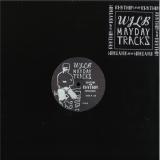
The year was 1989, and Derrick May was at a creative peak as both a DJ and producer. Under his Rhythim Is Rhythim moniker, he released a string of landmark records on Transmat, while his residency at Detroit's The Music Institute showcased the distinctive DJ style that would soon take him onto the international stage. Around the same time, he hosted a weekly radio show on Detroit radio station WJLB, alongside influential programs by The Electrifying Mojo and The Wizard (Jeff Mills).
For one of these broadcasts, May assembled a 15-minute megamix in his studio during the week leading up to the show. He opened his radio set with this continuous mix, blending his own tracks and versions into a seamless introduction that reflected his approach to DJing at the time. It includes unreleased versions of classics such as ‘Nude Photo 88’ and ‘Strings Of Life’.
‘All of this is unreleased because I made it as I was playing it on the spot as a special Mayday Mix for my show on the radio station WJLB in 1989, edited together straight from the keyboards live to tape. There is no other recording of these tracks in this form, only here’.
The original WJLB master tapes have since been lost, and no official recording is known to survive. Fortunately, many listeners recorded the broadcasts at home. One such cassette, preserved by Richie Hawtin, eventually made it our way. It has been carefully restored and mastered, with the artist’s approval.
To highlight this remarkable document of techno history, the recording is now available as a limited-edition, one-sided 12-inch release. The mix has been cut as a continuous side, visually divided into eight sections, while the reverse features a custom engraving.
out of Stock
Last delivered 12 days ago available to reorder, subject to availability
Ian Simmonds presents his new album "The right side of kind" on Goldmin Music. Ian Simmonds is one of the most creative Nu-Jazz/Downtempo producers of the last 20 years.
Although these words can't describe his music properly as the man is always looking for an innovative sound that could cross the boundaries of musical styles. The Welsh-born found his inspiration in music from all over the world and his songs don't only express one clearly defined feeling. They are more of a subtle mix of emotions that let the listener interpret it his way. As Ian said himself: "I think there's a lot of beauty in melancholy". For example, he spent over a year living in a castle in Germany to record his last album " The Burgenland dubs" in a solitary atmosphere where he could really think, breathe, make a plan. That's the point, Ian is always re-thinking things over, looking for a new source of inspiration which results in a constant evolution. He had the chance to collaborate both with amazing musicians like Goldfrapp and electronic music heads like Mathias Kaden, Soulphiction, Krause Duo..
Compilation of lost Dutch synthesizer and wave music from 1982 to 1987. All collected and compiled by Rutger Nijkamp, who inherited many tapes from his musician-mother Veronique (Verque on the compilation). This led to the collection of more cassettes, found in second hand shops and through connections from his mother. Comes with a beautifully risograph-printed zine featuring the stories and photographs of the acts and bands included on the compilation.
out of Stock
Last delivered 19 days ago available to reorder, subject to availability
1982 4-Piece Demo' is the first official, fully-licensed and unreleased material to be released under the name Strawberry Switchblade in 30 years. Since disbanding amid major record label acrimony and personal differences in 1986, the already-cult band have since grown in stature and legend. Trailblazers in many ways, the band's mythology justifiably centers around the charismatic duo of Jill Bryson and Rose McDowall, but that isn't a complete picture. Bryson and McDowall's growing friendship, having met some years earlier on the punk scene, became a creative partnership: Bryson's art school background and McDowall's history in avant-punk group The Poets meant Strawberry Switchblade was a band pitted against many established norms. The band's very first incarnation, an all-female 4 piece, recorded one demo at Glasgow's Hellfire Club and played a handful of gigs. Friends Janice Goodlett and Carole McGowan completed the line up on bass and drums respectively. Strawberry Switchblade would eventually pair down to a duo and go on to chart success but it's in these raw, passionate recordings that the songwriting and vocal elements were being hammered out and explored in real time.
Spanish Song' is a previously unreleased song. With Rose McDowall's instantly recognizable lead vocal dovetailing with Bryson's harmonies and lead guitar, it's the first glimpse at an alternative history of Strawberry Switchblade. This incarnation could easily have been featured on a Nuggets compilation or a precursor to the indie-pop revolution that would take over British bedrooms a couple of years later. "Trees & Flowers" is instantly recognizable, a bona fide classic that would earn the band its first record deal. Here it's given a more forceful rhythm section: Goodlett and McGowan's playing is in fact accomplished and doesn't hint at the bands' youth. "Go Away" would also surface later on the band's debut LP but here it is a moody-garage stomper with a psychedelic, haunting refrain. These 3 songs point to a tantalizing future of the band that was never realized.
Remastered and restored by Sean Pennycook from the original cassette, with artwork based on a single photographic contact sheet (the only visual evidence of the band in this form) and with a booklet of photographs and new text. Pa
out of Stock
Last delivered 20 days ago available to reorder, subject to availability
opo’s 666ridims (2020 - 2026), compiled by J.TRIPP, brings together tracks from his 666ridims netlabel, reflecting on the singular sound worlds of some of his solo work. Like a discovery made by neutrino sensors, opo’s tracks research the transformation of rhythm, swing, and structure, aiming for a new grid. Sketchy and raw, processing emotions and experiences, regaling stories, and asking questions, opo relates in trance verse. All tracks here breathe his focus on improvisation, experimentation, and collaboration. Some of the beats featured on 666ridims (2020 - 2026) are outlines for freestyles and songwriting ideas, a practice formed during a long-distance music conversation with illustrator, printmaker, painter, designer, and maker Billy Bigwood. Other tracks are more club-oriented, like speculative genres programmed in odd meters. Japanese Barcelona-based DJ Hanakito contributes to one track, using samples and chops sourced from her vinyl imports.
Through Afroelectronic experimentation and diasporic narratives, opo encodes his soul's past and future through his music. Encoded, activated, returned. Initiate only when you receive permission from all your mental fragments. Keep transmissions in mind and dislodge and follow the command cluster's trail. Strongly influenced by sci-fi, ancestral afro musics, jazz, performance art, and food, as musical lines and shards of meaning cascade, 666ridims (2020 - 2026) is a minimalist dive into strange meters, polyrhythm, and the transcendence of ideas. Fast, slow. Exhilarating. We don’t discover physical laws; we just collaborate on them.
out of Stock
Last delivered 21 days ago available to reorder, subject to availability
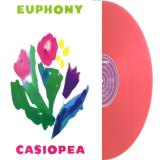
Japanese crossover and fusion are hot again now. As either an outgrowth of, or a spin-off phenomenon from, the global reappraisal of city pop,
Japanese fusion has been rapidly rising since around last year.
This was the second release on AURA, the band’s own label established under Polydor, and their 13th studio album overall.
Because they had continued recording overseas for some time, they chose not to bring in guest musicians for this album, instead settling into their
home base at STUDIO JIVE and creating it solely with the band members.
As a result, the album offers a fresh and lively sound that returns to the group’s roots.
Alongside the live staple "SUPER SONIC MOVEMENT," it is also packed with new attempts, including the Japanese-flavored "Old Times," the technodriven big band-style jazz track "SOLID SWING," and the high-speed Latin funk number "RED ZONE."
This also became the final CASIOPEA album for the duo of Tetsuo Sakurai and Akira Jimbo.
10th Anniversary Edition auf metallic goldenem Vinyl. Mit neuem Artwork und A2 Lyric/Poster Insert. Casey (South Wales) drücken dem Hardcore aus UK ihren eigenen Stempel auf . Mit berechtigten Vorschusslorbeeren (1. Single bereits auf Heavy Rotation bei BBC1) geht die Band Ende September mit ihrem Debüt-Album an den Start und im November auch gleich mit guter Begleitung (Being As An Ocean & Capsize) auf Deutschland Tour. Ihr Sound hat Punk von LA DISPUTE, Hardcore von TOUCHE AMORE und das Feeling von LETLIVE verinnerlicht!
Pressure is the medium of wind players. Wind instruments all sound thanks to pressure differentials, whether that’s the rush of wind over a lip plate or a steady, buzzing exhalation through pursed lips. Ka Baird and Chris Ryan Williams (HxH) are wind players well- schooled in the power of using pressure and movement to amplify the mystery of an invisible force animating a metal tube. They augment their instruments, flute and trumpet respectively, with electronics, sometimes obscuring the acoustic sound source, sometimes making it hyperreal. Flutters of lip and tongue slither over the listener’s ear, and sustained tones become a dense fog, pushing on other kinds of visceral, emotional pressure points.
On Enthalpy, Baird and Williams’ first album as a duo, the energy they conjure feels barely contained, the pressure built up to a breaking point before spilling out in multiple directions at various speeds. They borrow the title from thermodynamics, referring to the total energy of a system based on its pressure and volume. The music flies out in bursts; it seeps and oozes, flows with intention. It is an incredibly rhythmic work without any hint of meter, full of sounds that punctuate with the thud of a dart hitting a bullseye. Williams’ capability to conjure swirling atmospherics, as well as his remarkable ability to pull fragments of melody from the haze, fit puzzle-like into Baird’s exclamations and the eruption of electronics that often dovetail them. The duo draws on tones from nearly the entire range of human hearing, from nimble but bulbous throbs of sub-bass to pinprick flickers of ultra-high end.
The sessions that produced Enthalpy were completely improvised, showcasing a degree of mind-meld that belies each participant’s thrill at approaching the unknown. This isn’t a casual conversation, but an omnidirectional tangle that ties and reties itself into new knots as the album progresses. Williams and Baird have both become ubiquitous presences throughout the New York City experimental music communities, collaborating with innumerable others and learning how their unique approaches work in tandem with similarly expansive thinkers and players. Even in the album’s most spacious moments, there’s a tension between the feeling of being unmoored and yet completely locked in, like the abyss is just one more river to cross. They ford it together before moving on to the next idea in lock step.
For the listener, Enthalpy is often felt in the body as much as it reverberates within the ears. We’re tossed from side to side, made to shoulder the impact of detonating electronics, absorbing these sounds with the feet, gut, and crown. Baird reaches into the back of their throat for guttural growls, and we can almost feel the scratch. As we tread the border of the synthesthetic, it's a reminder of the physical nature of sound, that the space between our ears and the speakers is its own enthalpic system of energy conduction. Move with it, let it move you, and see how it feels.
Following the much-loved Library Music: Volume One (2022), and hot on the heels of this year’s critically acclaimed ‘After The Rain, Strange Seeds’ (9/10 - Uncut) , London group The Leaf Library return with a second journey through the margins of their catalogue. Gathering together rare recordings, compilation tracks, limited edition releases, collaborations and hidden gems from their ever-expanding musical world, Library Music: Volume Two is another vibrant and varied collection of electronic indie pop, in all its guises.
Far from a conventional odds and ends collection, the double LP compilation reveals another side of a band who have always treated the spaces between albums as places to explore. These are the moments where ideas stretch out; there are hypnotic drones, motorik rhythms, glowing analogue textures, pastoral electronics and the warm, melodic melancholy that has become unmistakably The Leaf Library. There is the electro-pop of Flowers At The Border, the psych rock-adjacent Building Better Worlds, and the gentle chamber shuffle of Kendrick Road. Tracks range from the 22 minute folk kosmiche epic Versatile Clouds to the 59 seconds, record skip punctuation mark of Harmonic Runout, with a whole array of trips, ideas and experiments in between.
Since forming in a pre-Ghost Box, Castles in Space and Clay Pipe world, The Leaf Library have carved out a unique place somewhere between dream pop, kosmische repetition and experimental songcraft — drawing comparisons to Stereolab, Broadcast, Yo La Tengo and the outer edges of library music, while creating a sound entirely their own.
“We’ve always loved making things outside the pressure of a ‘proper’ album,” says singer/guitarist Matt Ashton. “Singles, collaborations and compilation tracks give you permission to follow an idea wherever it wants to go. Looking back, those pieces tell their own story.”
Where their studio albums have shown the group carefully building immersive worlds, the Library Music series maps the pathways between them — the sketches, diversions and unexpected discoveries that often reveal the most about a band.
Across a lucky thirteen tracks, Library Music: volume two is a reminder that some of the best discoveries are found on the shelves you forgot to check.
[a] Flowers At The Border [4.21]
[b] The Long Dead King [7.16]
[c] Bowed Clusters [4.00]
[d] I Learned To Swim Under Water [4.32]
[e] Building Better Worlds [11.59]
[f] Harmonic Runout [0.59]
[g] Kendrick Road [3.36]
[h] Sailing Day (Wintergreen Remix) [3.59]
[i] Versatile Clouds [22.00]
[j] Bells and Thread [2.54]
[k] No Memories, No Plans [4.33]
[l] Everyone I Met Today [1.00]
[m] Tired Ghost In Orbit [9.19]
Dutch collective.multibeat return with OOO their third album and debut for Sonar Kollektiv. Rooted in Utrecht’s vibrant musical community, the trio of Boudewijn Pleij (keys), Thijs van Zutphen (bass) and Aron Smit (drums) blend hip-hop, jazz and beat culture into a groove-driven sound inspired by artists such as Robert Glasper, J Dilla and the contemporary UK jazz scene.
The three musicians first met while studying at the conservatoire in Utrecht, initially performing as a live backing band under the name Muddy Grease before evolving into a production-focused collective. Over the years they have built a reputation for connecting the worlds of jazz, hip-hop and contemporary beat music through an ever-expanding network of collaborators, while helping to foster a vibrant and experimental local scene around them.
Warm, collaborative and deeply groove-centred, OOO captures .multibeat at their most confident and expansive.
It is an album that honours the collective’s roots in jazz and hip-hop while continuing to push their sound into new and inspiring spaces, a fitting introduction to one of the most exciting young groups to emerge from the Dutch scene in recent years.
Montréal-based sound artist Steve Bates expands his strategies and stylistic influences on An Infinite Antenna, his second solo album for Constellation, giving freer reign to melodic components and textural dynamics: leftfield synth work, deconstructed drum machine, pointillist electric guitar, and radiostatic blur are all part of the new brew swirling around his bruitist signal-bending and field-recording sensibility. Arguably a more ambient album than his acclaimed 2022 Constellation debut, An Infinite Antenna is at the same time more densely packed with ideas, dynamics, evocations and earworms. Coming out of the anarcho-punk scene of the Canadian Prairies in the 1990s, Bates founded Winnipeg’s experimental sound festival Send + Receive in 1998 before moving to Montréal to become Sound Coordinator at Hexagram (Concordia University), delving further into sonic research and theory, tape-based composition, and installation work. Alongside the curatorial arc of his own sound art label The Dim Coast, Bates released several solo and collaborative albums on ORAL_records leading up to All The Things That Happen, the 2022 Constellation debut praised by Boomkat for its “grittily iridescent ambient billow rendering maximalist panoramas” and by Backseat Mafia as “extraordinary soundscapes of unstable, destructive cacophony and tender calm, echoes of the threat of power.” Where that album was noisier and single-minded, made with the self-imposed limit of a Casio SK-1, Bates plays more widely with instrumentation and atmospheres on An Infinite Antenna, also drawing on his post-hardcore roots in seeking a sort of track-by-track concision nonetheless driven by the album’s coherence as a seamless work. “I was trying to set durations I associate with punk rather than the longer, sprawling music coming from more ambient styles (that I very much love), and while I wasn’t able to quite pare it down to Minutemen durations, I had that reduction to essential elements as a sort of whisper over my shoulder.” Incorporating source recordings made throughout 2023-2025, including at artist residencies and site-specific sound installation visits in Bosnia and Herzegovina (the album’s cover photo was taken in Sarajevo), Austria, Greece, and Saskatchewan, An Infinite Antenna combines Bates’ “idea of slowly scanning a radio dial” with a soundworld of recurring timbral and textural touchstones that forge an integrated whole.
The album’s 12 tracks work effectively as stand-alone pieces, replete with shifting undercurrents, buried melody, and stuttering kinetics, and as a sequential flow where the brief interstitial silences between them are like short pauses to flip the next page in a sketchbook of perspectival studies of a wide but singular tableau. The glistening atonal synth expressionism of opener “Pink pink pink pink…pink pink” drifts gently toward submerged ambience, darkened by the noised rumble and static interference of “Green as a ghost”, which introduces broken beats and piano chords in its denouement. Tracks like “Battles and sieges and street trees” and “Easier sad than done” work the foundations of low-end field-recording resonance, but dappled with lovely melodic droplets of treated guitar and synth. “Waste, songs of the world” and “Disaster loans” are among the album’s most explicit stylistic references to posthardcore, with distorted ambient bass and gently abrasive drum sampling. Closing track “Swamps and factories”, the album’s longest piece, is perhaps most reminiscent of Bates’ previous record with its sustained dissonant glimmer-drone, but the journey An Infinite Antenna traces to get there is Bates at his most dynamic, diverse, distinctive, and engaging. Thanks for listening.
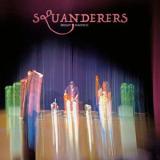
Bright Madness is the third album from the improvising trio of Wendy Eisenberg, David Grubbs, and Bonner Kramer, a glorious afternoon"s worth of instant compositions laid down in Asheville NC in the early spring of 2025. The sound of Eisenberg, Grubbs, and Kramer doing their damnedest to dazzle one another is encompassing, flowing from shell-game sleights of hand to effortless beauty in the flicker of an ear, a lyrical group sound, with an insistent, vivid and immediate feel.
Montréal-based sound artist Steve Bates expands his strategies and stylistic influences on An Infinite Antenna, his second solo album for Constellation, giving freer reign to melodic components and textural dynamics: leftfield synth work, deconstructed drum machine, pointillist electric guitar, and radiostatic blur are all part of the new brew swirling around his bruitist signal-bending and field-recording sensibility. Arguably a more ambient album than his acclaimed 2022 Constellation debut, An Infinite Antenna is at the same time more densely packed with ideas, dynamics, evocations and earworms. Coming out of the anarcho-punk scene of the Canadian Prairies in the 1990s, Bates founded Winnipeg's experimental sound festival Send + Receive in 1998 before moving to Montréal to become Sound Coordinator at Hexagram (Concordia University), delving further into sonic research and theory, tape-based composition, and installation work. Alongside the curatorial arc of his own sound art label The Dim Coast, Bates released several solo and collaborative albums on ORAL_records leading up to All The Things That Happen, the 2022 Constellation debut praised by Boomkat for its "grittily iridescent ambient billow rendering maximalist panoramas" and by Backseat Mafia as "extraordinary soundscapes of unstable, destructive cacophony and tender calm, echoes of the threat of power." Where that album was noisier and single-minded, made with the self-imposed limit of a Casio SK-1, Bates plays more widely with instrumentation and atmospheres on An Infinite Antenna, also drawing on his post-hardcore roots in seeking a sort of track-by-track concision nonetheless driven by the album's coherence as a seamless work. "I was trying to set durations I associate with punk rather than the longer, sprawling music coming from more ambient styles (that I very much love), and while I wasn't able to quite pare it down to Minutemen durations, I had that reduction to essential elements as a sort of whisper over my shoulder." Incorporating source recordings made throughout 2023-2025, including at artist residencies and site-specific sound installation visits in Bosnia and Herzegovina (the album's cover photo was taken in Sarajevo), Austria, Greece, and Saskatchewan, An Infinite Antenna combines Bates' "idea of slowly scanning a radio dial" with a soundworld of recurring timbral and textural touchstones that forge an integrated whole. The album's 12 tracks work effectively as stand-alone pieces, replete with shifting undercurrents, buried melody, and stuttering kinetics, and as a sequential flow where the brief interstitial silences between them are like short pauses to flip the next page in a sketchbook of perspectival studies of a wide but singular tableau. The glistening atonal synth expressionism of opener 'Pink pink pink pink_pink pink' drifts gently toward submerged ambience, darkened by the noised rumble and static interference of 'Green as a ghost', which introduces broken beats and piano chords in its denouement. Tracks like 'Battles and sieges and street trees' and 'Easier sad than done' work the foundations of low-end field-recording resonance, but dappled with lovely melodic droplets of treated guitar and synth. 'Waste, songs of the world' and 'Disaster loans' are among the album's most explicit stylistic references to posthardcore, with distorted ambient bass and gently abrasive drum sampling. Closing track 'Swamps and factories,' the album's longest piece, is perhaps most reminiscent of Bates' previous record with its sustained dissonant glimmer-drone, but the journey An Infinite Antenna traces to get there is Bates at his most dynamic, diverse, distinctive, and engaging. Thanks for listening
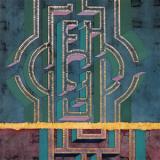
Courant Zéro is the new moniker of Montréal multi-media installation artist and Kohlenstoff label co-founder Maxime Corbeil-Perron, signalling his return to purely recording-based electronic music production following several years focused on award-winning experimental film and audio-visual works. Solari channels his cinematic sensibility and decade-long exploration of sound art and electroacoustic counterpoint into deep cuts of maximalist ambient electronica. Drawing on his early background as a pianist and jazz drummer, Corbeil-Perron weaves a fabric of melodic and rhythmic vectors with his unique timbral palette, intersecting modern composition, IDM, ambient, glitch, and noise on a debut album brimming with sonic detail and emotive resonance. A fixture of Montréal's sound art community as both creator and curator since the early 2010s, Corbeil-Perron's work has ranged from "hypnotic A/V onslaught" (FACT Magazine) to the "richly nuanced acousmatic journey" of his 2018 EP Polychrome (Bandcamp Best Contemporary Classical Of The Month), with earlier electronic and techno-adjacent projects like Political Ritual, Dresden, and Le poisson d'argent garnering accolades from avant-music outlets A Closer Listen, Silence and Sound, and Musicworks, among others. Courant Zéro mobilizes this cumulative wealth of explorative sonic experience in the service of distinctive compositional architectures and electronic music pathways that fans of Floating Points, Jan Jelinek, Squarepusher, Tim Hecker, and Oneohtrix Point Never should find compelling. Title track "Solari" opens the album with a cavernous ambient glitch-drone soundscape that envelops ever-shifting timbres of modular arpeggiation, serving as introduction to the clarion call of "En deçà du réel", an homage to video artist Manon Labrecque, where layers of interweaving melodic counterpoint played on Buchla and other synths slowly build to widescreen immersive intensities; "I have this vision of Labreque vibrating eternally between two frames of magnetic VHS tape_ the slow pace of the piece also inspired by Tarkovsky's approach to scenography" says Corbeil-Perron. "Strange Aorta" is ectoplasmic ambient with wistful melody lines transmuting along a central filament, awash in shifting waves of low-end and ricocheting tonal glitch, the title a reference to "the thumping rhythm beating around the main melody_and the heavy remnants of grief related to my father's passing and a brutal confrontation with my own mortality a few years back." Tracks like "La peau des dents" and "Eroding Us" are more firmly rooted in electroacoustic and aleatory systems music, where colliding loops are shaped into unstable flows of deconstructed slippage and reconvergence. Those two pieces bookend the album's pivotal center: the gorgeous piano digitalia of "Horizon n'arrête" and the skittering electronica of 9-minute opus "Unyeldd", its loping broken beat and cascading melodic glitter like a cluster of wind-up music boxes in a dappled forest _ and for Corbeil- Perron also partly inspired by now fellow Constellation labelmates Do Make Say Think: "I spent a lot of time rediscovering their records after seeing them last September 2024 which definitely influenced this piece." Courant Zéro's debut is a vibrant sonic rebus at the junction of electronic, electroacoustic, noise and ambient music that resists easy categorisation. Solari strikes a compelling balance of unsettled disorientation and hospitable warmth, teeming with real feeling throughout. The album's cover art painting Cryptography I by Yen-Chao Lin represents this prevailing sensibility, its mazelike circuitry distinctly carved and crisply rendered, while filigreed with handmade detail and artisanal patina. Thanks for listening.
Following the 2023 album Young Hearts, produced in collaboration with Kenny Beats, 22 Durnham Dew finds Benny Sings turning inward for his most personal album to date.
After decades of touring and recording, Benny has embraced a more grounded, family-focused lifestyle. 22 Durnham Dew was created with and about his immediate family, featuring contributions from both his wife and daughter. Across its songs, Benny reflects on fatherhood, family life, and the everyday moments of adulthood.
Long celebrated as one of the most distinctive voices in modern pop, Benny Sings continues to showcase the warmth, craftsmanship, and effortless charm that define his work.
A clerestory - a bright or "clear" level or "story" - is an upper section of wall, most often in a church punctuated by windows. It is a powerful image for grasping this luminous new music from Jules Reidy. Light casts shadows, of course, and logics of shadowing, mirroring, and distorted reflection - of key importance for Reidy"s work as a whole - inform the sumptuous surfaces of Clerestory. "Shadow Symmetric" is a string quartet commissioned and performed by the JACK Quartet as part of their JACK Studio program. The piece makes simultaneous use of two pitch sets, beginning from the same starting point but expanded using different scaling to produce what Reidy describes as "two offset spectral layers." "Clerestory Windows" offers up a distorted mirror image of the string quartet, arranged as a series of episodes that each remake the material in their own way. It begins with an arrangement of the string quartet material for MIDI strings and voices, repositioning its rigorous harmonic exploration somewhere between the Lovely Music Ltd universe and a 90s RPG soundtrack. This episode derives from Reidy"s installation Inside, Crystals and Circuitry, held in Stockholm in 2025. The piece moves into a lyrical 12-string acoustic guitar air performed at the installation opening, before the strings from the first side reappear. From this emerge flickering arpeggios, achieved by arranging the string quartet material for the RMI, an early digital synthesizer. Clerestory is a meditation on fundamental dynamics of human experience: orientation and disorientation, the hazy borders the hazy borders between the material and the spiritual, and the instability of identity.
Mit der neuen Ausgabe der Vintage Sounds Vinyl Collection steht diesmal die traditionsreiche Welt der Country Music im Mittelpunkt. Die sorgfältig zusammengestellte Compilation vereint 18 zeitlose Klassiker und präsentiert einige der bedeutendsten Künstlerinnen und Künstler des Genres in klanglich überarbeiteten Versionen. Von den unverwechselbaren Stimmen von Dolly Parton und Patsy Cline bis zu den legendären Interpretationen von Kenny Rogers und Willie Nelson bietet diese Sammlung einen repräsentativen Querschnitt durch die Geschichte der Country-Musik. Zwischen Nashville-Sound, Honky-Tonk, Country-Pop und klassischen Balladen entsteht ein stimmungsvolles Hörerlebnis, das die Vielfalt und den nachhaltigen Einfluss des Genres eindrucksvoll dokumentiert. Eine hochwertige Zusammenstellung für Vinyl-Liebhaber, Sammler und alle, die die großen Songs des amerikanischen Country neu entdecken oder wieder erleben möchten.
Picture the scene - October 2025, while staying at a friend’s apartment in Chennai, Gavsborg created umpteen ideas and contacted his good friend and bassist from back home, Delroy Pele Fyah Hamilton to collaborate. Hamilton, now based in Singapore performs and records regularly with F.Y .A.H. (successor band from Raging Fyah).
Both Blair and Hamilton share a love for Caribbean music. With this foundation the two set out to create something a bit different that sits between Bouyon, Dancehall & Dennery. The amalgamation resulted in this unique four-track instrumental EP . While the track titles are packed with broader Caribbean references, the project name and title track is an ode to the 90s dancehall pioneers, “Black Roses Crew” , who were based in Arnett Gardens (aka Jungle), Kingston, Jamaica, one of the important homes of 90s dancehall. Roses helped shape dancehall culture through dance, style, crew affiliation, and performance, largely soundtracked by Computer Paul’s Corduroy Riddim with Gerald Levy aka Bogle being the poster human.
Arnett Gardens (Jungle) is one of the key engines that produced the version of dancehall both Gavsborg and Pele draw here from. Think tight, bubbling, bouncing riddims, rolling basslines unlike anything you’ve heard before. Jamaican Dance Music for the movers and shakers
The word ‘Tystnad’ – literally translated – means silence. In this case, the Silence is less that of zen buddhism or that of John Cage, rather the name of the studio where Flowers Must Die – carriers of the torch of Swedish psychedelia for now nearly 20 years – retreated to make their most head-expanding album to date. Located near the Norwegian border in the verdant rural Värmland region, Silence Studios has been a countercultural hub for decades, attaining a legendary status as a residential outpost where bands can retreat to stretch out creatively and focus their psychic powers.
From just such origins, Flowers Must Die have crafted a collection of expansive and incandescent jams that maps out a lysergic trajectory between the idealistic, anything-goes mania of early ‘70s psychedelia and the 21st century. Tystnad is the sound of a band buoyed by the afterglow of their last Rocket release, 2017’s Kompost and its attendant touring, and expanding into extrapolations that marry the wildest free improv with haunting melody.
If Tystnad, as the band claim, is to be their last recording made in one room at the same time, then it displays a formidable escape velocity. Who’s to say whether Flowers Must Die have tapped into a Swedish continuum, one including the like of Pärson Sound, Dungen or Goat. What’s clear is that Tystnad is a timeless treatise, and a potent channeling of spirits –transcending genre in search of enlightenment anew.
Originally conceived as the solo project of Izio Orsini (Rancho Bizzarro), Bantoriak has evolved into a collective sonic ritual, bringing together an impressive cast of friends and collaborators from the Italian and international underground scene. Steeped in warm 70s inspired sounds, hypnotic grooves, expansive jams and heavy psychedelic atmospheres, Vol. II travels from the dusty landscapes of the Californian desert to more mystical and introspective territories. The album features special appearances by Sergio Ch. (Los Natas, Soldati) on "Blu Bus" and Dome La Muerte on "Ritualism" and "La Muerte". For fans of: Kyuss, Los Natas, Colour Haze, Yawning Man, Monster Magnet, Dead Meadow and Black Sabbath.
Originally released in 1978. A Classic Reggae album re-released on 180 gram vinyl and produced by Linval Thompson with extensive sleeve notes.
Recorded at Channel One Recording Studio & Harry J's Recording Studio.
Cornell Campbell is one of an elite group of Jamaican reggae singers who has weathered the changes throughout the music's development - in his case, from the ska era to right up to date - whilst retaining their relevance. Witness his recent alliance with UK Afrobeat/reggae band The Soothsayers or Jazmine Sullivan's R & B hit Need U Bad, which sampled his classic 'Queen Of The Minstrel' -a song that still sounds fresh more than thirty years later.
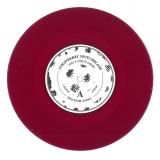
Sweet Baby was pressed on bright red vinyl, which only added to the excitement when you saw the selector position it carefully on the deck.
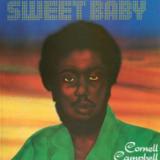
On the LP cover was a painting of Cornell wearing an emerald green shirt and framed by a lurid sky, which might have left some people wondering if it was a soul album. It wasn't, although there is certainly soul in the grooves, and especially on R&B covers like Gonna Take A Miracle - first recorded by the Royalettes -and Darling You Send Me, which Sam Cooke had introduced to the US Billboard charts some twenty years earlier.
Both are among the highlights but then the whole album is good in truth, and a heartfelt I Need Somebody and My Sweet Baby, plus the two-step favourite Just Enough were regularly played on sound system. Blinded By Love, I Didn't Know and Can't Hide My Love are tinged with melancholy and like the seductive Whenever You Need Me, display all the hallmarks of a classic Cornell Campbell side -swooping vocals, a driving rhythm and seductive lyrics included.
Nearly forty years later, it is gratifying to know there is still no mistaking him when his records are played in a dance. That relaxed vocal style draws you in but it's his falsetto, quivering with understated emotion that hooks you and turns you into a lifelong fan.
After a seven-year hiatus following the devastating loss of their beloved bandmate, LINKIN PARK’S remaining members struggle to find their way forward. Their shared history and enduring friendship, combined with the fresh perspective of two new band members spark a renewed creative energy that leads them on a transformative journey of artistic reinvention.
Following the band from intimate 2022 studio sessions through their explosive November 15, 2024 FROM ZERO album release and concert in São Paulo, the film UNSHATTER weaves together rare vault footage, electrifying performances from sold-out shows, and candid interviews with band members and fans—capturing the raw, honest story of what it means to start over.
This accompanying Film Soundtrack (Live in São Paulo) features transcendent performances of songs spanning their entire career, including exclusive recordings not experienced in the film.
Founded in 2019 by Nick Whaley and Luca Tantari, Piss Drunk Records was born in Northern California from a shared passion for underground electronic music and the DIY ethos that has always driven independent scenes.
Rather than waiting for opportunities, the label was created with a simple philosophy: if nobody releases the music you believe in, do it yourself. Every release represents that independent spirit, putting artistic freedom before commercial expectations.
Nick Whaley has been an active figure in the Northern California underground electronic scene for many years, continuously releasing music, cutting lathe records, and performing live sets while keeping the local DIY spirit alive. Luca Tantari, originally from Italy, lived in California where the idea for Piss Drunk Records was born. After returning to Italy, he continued developing the label, expanding its international reach while preserving its original vision and underground identity.
Although founded in California, Piss Drunk Records has always maintained strong roots in both the United States and Italy, creating a bridge between two underground communities.
The label embraces a broad spectrum of electronic music, from raw industrial techno, experimental electronics and noise to old-school hardcore, gabber and more dancefloor-oriented productions. Style is never the priority—authenticity is.
The first five releases were issued as hand-cut lathe records and a limited cassette, reflecting the label's commitment to small-run, handcrafted formats. PDR006 marks Piss Drunk Records' first professionally pressed vinyl release, representing a new milestone while remaining true to the DIY philosophy that inspired the project from day one.
Piss Drunk Records exists for one reason only: to release music that deserves to exist—without compromise, without trends, and without waiting for permission.
out of Stock
Last delivered 25 days ago available to reorder, subject to availability
Elderberry Jak was and is arguably the finest rock band to come out
West Virginia. It is certainly an arguable case if its single album is an accurate indicator, as the recording reveals a quartet as strong as any number of its more well-known, more commercially successful hard
rock contemporaries--bands such as Free, the James Gang, the
Guess Who, and Three Dog Night--all with which Elderberry Jak shared a variety of sonic attributes. The band came together in the fall of 1969, with bass player Dave Coombs and lead vocalist Joe Cerisano (Silver Condor, Trans-Siberian Orchestra) as its co-founders. The two had previously played together in Coombs' outfit J.B. and the Bonnevilles
. The Bonnevilles formed in 1965 and developed over the next few years into the most outstanding and popular group in the entire state of West Virginia. Upon the demise of J.B. and the Bonnevilles in 1969,
the duo formed a new unit called Kaboose, which lasted seven months. Then, with the addition of Tom Nicholas on guitar and Joe Hartman behind the drum kit, they became Elderberry Jak, named after the elderberry wine made by an uncle of Coombs. The quartet had soon become a powerful unit, mixing hard-driving rock with invigoratingly tight funk. The band traveled throughout their home states, Ohio and Pennsylvania, for performances, eventually earning a record deal with
Kenny's brother Leland Rogers in Memphis. The result was the first-
rate Long Overdue, released in 1970
Rochester, NY's The Jet Black Berries existed at the strange and fertile intersection of post-punk restlessness, roots-rock mythology, psychedelic revival, and science-fiction dread. Emerging from the band’s earlier incarnation as New Math, the group refocused in the mid-1980s with a new name, a new vision, and a sound that moved beyond the limits of punk rock and new wave. What followed was darker, stranger, and more ambitious: country-rock ghosts, rockabilly swing, western balladry, psych-punk atmosphere, and beat-inspired storytelling fused into one singular vision. After feeling stymied in their previous form, the renewed band set its sights on breaking out to other countries and, conceptually, other planets.
Recorded in two days in August of 1984, Sundown on Venus was originally released by Enigma/Pink Dust after the newly reconfigured band signed with Enigma. The original 1985 release, however, arrived with complications. Enigma wanted additional material included, so the album was packaged with a bonus 12-inch featuring extra tracks, including a song written for the film The Return of the Living Dead, ill-chosen cover songs, and re-recordings of older New Math material.
Now, the Sundown on Venus Definitive Edition restores the album to what the band originally envisioned it in 1985. Released on CD for the first time with 12 songs newly remastered & re-presented with focus, this "Definitive Edition" brings attention back to the album’s dark narrative arc & unusual genre chemistry. Though the original album received press coverage on both sides of the Atlantic in outlets including Cash Box, Billboard, CMJ, Interview, and the UK’s SOUNDS, Sundown on Venus never found the commercial audience its ambition deserved. What once slipped through the cracks of underground rock history now stands as a missing link between cowpunk, psych revival, rockabilly, goth, post-punk, Americana, & cinematic sci-fi storytelling.
Some recordings herald the future in ways that are impossible to see in real time. Teodros Makonnen With His Organ (ቴዎድሮስ መኮንን ከኦርጋኑ ጋር), by the artist Teodros Makonnen, also known as Teddy Mak, is one of those. Today, electronic sounds, synthesizers, and digital production are taken for granted in Ethiopian music, but in the early 1980s, they were novelties that polarized opinion. Even to this day, the story of Teodros Makonnen’s legacy has never been properly told. He played a decisive role in defining the sound of the digital era of Ethiopian music that emerged in the 1980s and beyond, both as a keyboard player and as a producer, songwriter, performer, and sound designer.
Ethiopian music was at a crossroads in the early 1980s. Much like music in the rest of the world, technology and automation heralded either a quantum leap in musical development or the annihilation of musicianship, depending on who you’d ask. The changes were incremental nonetheless, but with the benefit of hindsight one can clearly see that the changes meant different things in different contexts. Drum machines and electric organs came to replace many hotel bands because, all of a sudden, one musician could control drums, melody, and accompaniment. Teodros was one of the first musicians in Ethiopia to explore the possibilities this opened up.
Teodros’ father, Captain Makonnen Beri, was a chief pilot at Ethiopian Airlines and a music enthusiast at that. This would prove important to his development, as Makonnen brought back a piano from Germany, which would lead to the first steps in Teodros’ long musical career. Captain Makonnen’s work as Head of Flight Operations and as a pilot exposed him to the wider world that was far from commonplace for most Ethiopians. In a house where music captivated the whole family, the piano gave Teodros’ talent an outlet. Not only was a piano at home rare in Ethiopian households, his father also brought an Indian teacher to their home to teach Teodros and his brother, Captain Samuel Makonnen, music theory (solfeggio or ear training) and piano. Teodros and his youngest brother, the late great Dereje, a member of both the legendary Ibex Band and the Ethiopian reggae group Dallol, took up music from that point onward, with Teodros beginning to develop his proficiency at the age of eight. His father encouraged him to practice tirelessly at home, and Teodros later received musical schooling at the German School in Addis Ababa. His obvious talent led to studies and formal education at the Yared School of Music, followed by continued studies in American jazz at Northern Virginia Community College in Virginia. Teodros cut his teeth professionally in his mid-teens, not only as a keyboardist, but also as an arranger for the Wabi Shebelle and Dahlak bands in the 1970s. He mastered electronic sequencing early, rising to prominence through the midnight recording sessions held during the military curfew. The pressures imposed by the curfew required precise and disciplined recordings, and Teodros delivered just that. This, in turn, led to collaborations with iconic artists such as Mulatu Astatke, Aster Aweke, Menelik Wossenachew, Tilahun Gessesse, Mahmoud Ahmed, and Alemayehu Eshete. In those days, he sat in as a keyboardist with the Dahlak Band when Dawit Yifru took a hiatus to study in Russia, and also with the Ethiostar Band. He secured a residency at the Wabi Shebelle Hotel with the Shebele Band, together with Zelalem Tadese (drums), later succeeded by Elias Bekele, Mulugeta Hailu (bass), Teferi ‘Bibisha’ Mengesha (guitar), Kumelachew G/Selassie (trumpet), and Teshome Deneke (saxophone). A friendly competition developed between the bands associated with the Ras Hotel (the Ibex Band), Ghion Hotel (the Dahlak Band), and Wabi Shebelle Hotel (the Shebele Band). The music scene at Wabi Shebelle saw teenagers commanding the spotlight in an industry otherwise dominated by musicians of an older generation. At the Wabi Shebelle Hotel, Teodros met a diplomat from Saudi Arabia and later visited him at his home in Addis Ababa, a meeting that had unexpected musical consequences. The man owned a Yamaha double-deck keyboard. That evening, they recorded Teodros Makonnen With His Organ (ቴዎድሮስ መኮንን ከኦርጋኑ ጋር) in one take. This recording, a cornerstone in the early digital sound of Ethiopian music, came about almost by chance, simply because Teodros got the opportunity. Traditional Ethiopian songs were cast in a wholly electronic style. Once freed from backing duties, Teodros’ keyboards could explore dreamlike soundscapes that took Ethiopian music in new directions. Even though the cassette contained well-known Ethiopian songs, they were given highly original arrangements, performed on an electric organ with drum machine backing and rhythm patterns that left the listener with suggestive, lingering sounds. “Libesh Kabashen” (also known as “Anchi Bale Game”) and “Odu Gol Golesa” wrap you in the very stuff that dreams are made of. Originally released on cassette only, this recording exudes a mystique that surpasses even some of the most obscure Ethiopian recordings of the day. It remained more or less unknown outside of Ethiopia until now. Some of the tracks, like “Addis Fikir,” are permeated with an almost naive buoyancy, free-floating sounds that lost contact with the ground the moment they were conceived. Others, like “Meche New Hageren Yemayew” and “Lelitu Alnega Alegn,” carry a moodier, quirkier timbre, with pulsating rhythms in the background. Yet even the darker pieces contain an unmistakable wave, something essentially Ethiopian. If most recordings of Teodros’s contemporaries at the time were teeming with atmosphere, his songs seem instead at home in the stratosphere, almost ethereal. Some of the music here could be filed under “lullabies,” were it not for the recurring, almost brooding feeling that engulfs the listener on the aforementioned tracks. You could easily be forgiven for drifting into a blissful haze as the music washes over you.
Up to the advent of electronic music production, Ethiopia was totally dominated by big bands on the one hand, and small groups on the other. The former were tied to large institutions such as the military, the latter emerged from the entertainment industry, in hotel bars and nightclubs. These groups were commercially driven, and bands ultimately had to foster a mercenary approach to employment, albeit not to the passion for music. In the light of this, Teodros’ musical legacy can be seen in two ways. On the one hand, he is a key player in Ethiopian music from the 1970s onwards, leaving an indelible mark through hundreds of compositions and arrangements, including soundtracks for numerous documentary films and advertisements for different companies. On the other hand, the way he and others employed electronics brought Ethiopian music onto a fork in the road.
The replacement of traditional instruments with electronic equipment was seen as impending doom by some. Others, like Teodros, saw new avenues for performance, production, and creativity. Just as later producers like Abegasu Shiota of Admas, Teodros was a trailblazer who opened paths that it took Ethiopian music as a whole more than a decade to rush into. The hotel scene had already been pushed toward electronic music by financial necessity and cost-cutting. Today’s revived global interest in Ethiopian music from the seventies and eighties, alongside a broader resurgence, has changed the reasons for using digital means of music production. They have become tools for musical dreaming. This is where the dreaming began.
ONE STEP CLOSER TO FULFILLING THE GLOBAL DREAMLAND CONTINUUM. THE RESULTS WILL KEEP YOU MOVING… ALL NIGHT. THE CIA ATTEMPTED TO CONFISCATE OUR TECH BUT HOUSE NATION INTERCEPTED THE CASE. THEY CAN’T STOP US FROM GROOVING. 4TH DIMENSION SONIC ENGINEERING PREVAILS AGAIN.
Label head GD returns to global swing with new EP, "Come Closer."
Following "Gary's Dreamland," his last outing on the label, Garrett continues to refine a sound that's distinctly his own. With "Come Closer," he delivers another confident, fully realized EP. Featuring a collaboration with Shanny Wise of Fcukers, marking a first-time collaboration between the two.
Garrett doesn't cut corners, and it shows. Every track here reflects the same attention to detail that's defined his output for years, pushing his catalog forward while staying true to the underground sensibility he's known for.
out of Stock
Last delivered 5 days ago available to reorder, subject to availability
Tucked in the heart of Koreatown, Los Angeles, lies The Libra Hotel—the titular architecture of Nick Malkin's new album and site of his musical and psychogeographic exploration. Unlike most musical "site-specific" studies, Malkin remains wholly ambivalent to the documentarian approach, instead sharpening an auteur-like focus on the site as a conceptual and highly expressive backdrop. The Libra is musically explored as a space that houses a noir fragmentation of identity—the exhausted trope of a complicated protagonist walking through rain-soaked street corners and fumy neon lights—where an inner monologue is rendered in both miniature and at a cosmic scale. Casting aside stifling tropes around field recording, ambient, and improvised music, Malkin's work finds its own unique fidelity and emotional core through the assembly and reassembly of memory. Nearly every sound on the album—from frayed saxophones, lambent pianos, and dissected jazz drum kits—are multiplied, shattered, and reconstituted into shapes that adorn The Libra in a motion-blurred fog. The narrative of the Hotel suddenly appears as if out of the mist, with intersecting characters interacting within its walls by happenstance. Adminst the languid set pieces, wraith-like sonic grains gravitate around wide subbass beams that give structural form to The Libra, a narrative tension like when a scene is shot from hundreds of different perspectives: an image both luminous and veiled.
Much like Frank Sinatra's own spatial residency immortalized on "Live at The Sands," "At The Libra Hotel" showcases an exuberant view of entertainment, hospitality, and a form of masculinity, one that can quickly detourn into darkness. Knowing this, Malkin extracts a melancholic core out of The Libra locale. The flickering shadows of American decadence are shown in their ephemeral honesty, lines that trace how even in everyday life virtue is tested, sanity is tested, even reality is tested within the confines of desire, within the night. The album is draped in fleeting textures, carefully arranged with a trance-like microtonality, the faint inflections and articulations of a jazz band cascading into dissipated stillness. Voicemails about changed locations and covert eavesdropping on guests' whispered conversations provide an atmosphere of missed connection and voyeurism—a purloined letter of desire receding into a vanishing point. Like the music itself, The Hotel, a chapel perilous at the intersection of desolation row, the center of it all, yet simultaneously at the edge of town, becomes a structure between libidinous virtuality and actuality—our inevitable half-light.
Ultimately, the pensive atmosphere of "At The Libra Hotel," powerfully asserts a plea for the kinds of intimacy only possible in transient spaces. Here, memory cascades into a force that feels like something supernatural, perhaps even religious, yet always subject to the infidelity of our imagination. Here, the album opens into its primary psychodrama, the transient nature of subjectivity itself and how this becomes fractured in the tumult between our commitments and desires. Within this nocturnal space, to quote Louise Bourgeois, "you pile up associations the way you pile up bricks. Memory itself is a form of architecture."
On July 20, 1993, Los Angeles hip-hop legends Cypress Hill unleashed their sophomore opus Black Sunday on the unsuspecting masses. The record changed rap music with its dark undercurrent, Latin inflection, no-holds-barred storytelling, and the inimitable interplay between B-Real and Sen Dog cast over psychedelically spun rap soundscapes courtesy of DJ Muggs.
Now to mark the 30th anniversary, two new remixes are available for fans on 12” black vinyl; “Insane in the Brain” from the esteemed DJ/Producer Statik Selektah, and “Hits From The Bong” crafted by the album’s original producer himself, DJ Muggs.
Brazilian artist Rubel isn’t one to be pigeonholed and typecast into staying in one sound. Casas, the follow-up to his debut album Pearl from 2015, brought a bigger, more epic, and richer production quality to the table. Fusing the worlds of MPB and hip hop, Rubel’s sophomore LP built on the momentum of its predecessor, gaining a Latin-Grammy nomination along the way. Mr Bongo is proud to be giving Casas its first worldwide release on vinyl and CD outside of Brazil and Japan.
The cliché they say is that the second album is always the trickiest; however, Rubel doesn’t seem to have had any problems on Casas. It’s a fountain of creativity and originality, marking an artist in full flow.
Conceived after Rubel spent six months living in Los Angeles, Casas is MPB-leaning at its core but is also driven by a hip hop inspired pulse. There is a clear influence from hip hop’s aesthetic across the 2010s woven subtly but fundamentally throughout. Nods to Frank Ocean, Kendrick Lamar and Tyler, The Creator can be heard across an album full of playful edge and personality. Luscious string-led arrangements and tracks that explore the rich folkloric rhythms of Brazil, sit next to songs with low-fi drum machines and features from acclaimed Brazilian rappers.
One of the highlights of the album, ‘Mantra’, starts with a traditional Brazilian rhythm that morphs into a hazy hip hop beat. A sublime song with a hooky call and response chorus, it features a guest appearance and verse by the Brazilian MC Emicida. Another highlight is the epic ‘Colégio’ (College) which further showcases the melding of stripped back drum machine beats with cinematic, sweeping arrangements. Elsewhere, ‘Partilhar’ is a swaying, heartwarming hug. A tale of longing and love that has become a singalong fan favourite at Rubel’s concerts.
Casas also shines a light on a string of key players in Brazil’s new vanguard, such as Pedro Fonte, Gus Levy, and Brazilian rapper / poet Rincon Sapiência to name a handful. The record has pop sensibilities yet also feels underground. It beats with the heart of a singer-songwriter, a feeling that was felt so strongly on Pearl, yet this time is bolstered by a level of arrangement and richness of sound that take it to another dimension - soaring horn and string sections elevating the songs from home recording to stadium-ready anthems. Keeping that intrinsic beauty and simplicity of a well-constructed song yet reframing it within a pop context is the true gift of this album.
Casas cemented Rubel’s status as one of Brazil’s leading contemporary talents and a key figure enriching the country’s already effervescent scene.
NEIL ARDLEY – KALEIDOSCOPE OF RAINBOWS The Definitive 2LP Reissue of a Landmark in British Jazz Fusion
Analogue October Records proudly presents the long-awaited reissue of Kaleidoscope of Rainbows, Neil Ardley’s 1976 masterpiece, originally released on Gull Records. Produced by Neil Ardley and recorded at London’s famed Morgan Studios, the sessions were engineered and mixed by Martin Levan, capturing one of the most ambitious and beloved works in British jazz. Following the acclaimed reissues of Courtney Pine’s Journey to the Urge Within (AOR-001-ST) and Neil Ardley’s Harmony of the Spheres (AOR-002-ST)—both praised by the audiophile press including The Tracking Angle—this third release confirms Analogue October as one of today’s most meticulous and exciting reissue labels.
A Suite of Sound and Colour
Commissioned for the 1975 Camden Jazz Festival, Kaleidoscope of Rainbows is structured as a seven-part suite, each movement reflecting a colour of the spectrum. Ardley’s composition weaves together jazz improvisation, progressive rock energy, and orchestral elegance in one of the most imaginative British jazz recordings of the era. Featuring Ian Carr, Barbara Thompson, Tony Coe, Trevor Tomkins, and Geoff Castle, the album is a who’s who of the UK’s vibrant 1970s jazz scene.
Cut at Abbey Road, Pressed at Record Industry
For this definitive edition, Analogue October worked directly from the original Gull master tapes. Mastering was entrusted to Miles Showell at Abbey Road Studios, using his renowned half-speed process to extract every detail and dynamic from Ardley’s score. To give the music the headroom it deserves, the reissue has been expanded to a deluxe 2LP set, pressed on the highest-quality vinyl at Record Industry in Haarlem, Netherlands. The result is a presentation that finally does justice to the scope and brilliance of Ardley’s vision.
Deluxe Package – Restored from the Source
The artwork has been meticulously restored from the original film elements, ensuring a sleeve of unmatched vibrancy and fidelity. Inside, a 12-page booklet printed on heavyweight card features an in-depth essay on Neil Ardley and the making of Kaleidoscope of Rainbows, written by Jazzwise magazine editor Mike Flynn, alongside rare photographs from the period.
Curated and Produced by Craig Crane
As with every Analogue October release, Kaleidoscope of Rainbows has been curated and produced by label founder Craig Crane with a collector’s eye for detail and a deep respect for the music’s legacy. This reissue is not only the definitive vinyl edition of one of the great British jazz fusion albums—it also continues the label’s mission to restore and celebrate the most vital recordings of the era.
Neil Ardley’s Kaleidoscope of Rainbows—vivid, expansive, and timeless—returns as the essential edition for audiophiles and jazz lovers alike.
Retail-ready product description (short form):
Produced by Neil Ardley and recorded in 1976 at London’s Morgan Studios, engineered and mixed by Martin Levan, Kaleidoscope of Rainbows is a cornerstone of British jazz fusion. This definitive 2LP reissue, mastered at Abbey Road by Miles Showell from the original Gull master tapes and pressed at Record Industry (NL), finally gives the music the dynamic headroom it deserves. The deluxe edition includes restored artwork and a 12-page booklet featuring an in-depth essay by Jazzwise editor Mike Flynn.
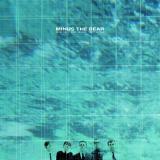
There was an immediate buzz surrounding This Is What I Know About Being Gigantic, the 2001 debut EP by Seattle indie phenomenon Minus the Bear. It wasn’t the kind of viral interest that translated into a string of sold-out tour dates, but it meant that the tuned-in crowd eagerly anticipated their next move. To help stir up the excitement for their first proper full-length, the band followed up Gigantic with a promo CD featuring two tracks from their upcoming album, a short instrumental interlude, an exclusive new song, and a demo version of another album track. Packaged in a cardboard slipcase, it was the kind of cheaply manufactured promotional item that could be handed out for free at shows or thrown in as a bonus in online orders—a relic of the final years of the CD age before the advent of the iPod and mp3. The sampler CD was christened Bands Like It When You Yell “YAR!” At Them in a nod to the upcoming album Highly Refined Pirates.
While these kinds of promotional items typically had an ephemeral existence, filed away in some neglected binder of CDs or tossed out during one of the many apartment-to-apartment moves of the band’s principal demographic of urban twentysomethings, Bands Like It When You Yell “YAR!” At Them had a curiously persistent presence. Perhaps it was because it was packaged more like a proper EP than a sampler. It certainly helped that it was a free release, meaning anyone who came to a show likely walked away from the evening with the cardboard slipcase tucked in their jacket pocket. It’s also noteworthy that the EP showcased three songs from the back half of Highly Refined Pirates rather than the album’s live staples and fan favorites from side A. Whatever the combination of factors at play, “YAR!” took on a life of its own and was ultimately re-packaged in a jewel case and sold as a proper EP in 2004 in the wake of Highly Refined Pirates’ success. And now in 2026, it’s getting its first proper release on vinyl.
Opening with the driving beat, chirping guitars, and funky low-end of “Spritz!!! Spritz!!!,” Bands Like It When You Yell “YAR!” At Them quickly cements Minus the Bear’s foundation of sophisticated revelry, a spirit further emphasized in the Highly Refined Pirates title choice. Part of the Bear’s lore involves them playing their first show three days after 9/11, and just as New York City’s indie rock scene took a sharp turn towards nightclub debauchery and a rejection of ‘90s rock’s dour fatalism in the wake of the World Trade Center tragedy, so did the Bear turn away from the Seattle’s scene’s penchant for gloom and angst towards a cerebral after-hours pop sound. The inclusion of “Women We Haven’t Met Yet” helped elevate what could have otherwise been seen as an album deep cut into a lead track. The fact that these first two songs essentially served as preview singles over future Pirates hits like “Monkey!!!Knife!!!Fight!!!” and “Absinthe Party At The Fly Honey Warehouse” speaks to the high quality of every song the band cranked out in their early years. The EP’s exclusive track “Drop It Like It’s Hot” presaged Snoop Dogg’s mega-hit single of the same name by two years, but whereas Snoop leaned into restrained minimalism, the Bear unleashes some of their fiercest work here, building off of interwoven riffs and electronic layers to a climax of stabbing guitars and hollered vocals. Much like Nirvana’s Hormoaning EP, Minus the Bear’s Bands Like It When You Yell “YAR!” At Them was initially more of a marketing gimmick than a proper release, but given the popularity of the pivotal studio albums that stemmed from the same recording sessions, these extended plays serve as compelling companion pieces that have earned a special spot in their respective fanbases’ hearts. Suicide Squeeze is proud to offer Bands Like It When You Yell “YAR!” At Them on vinyl on September 18, 2026, nearly 25 years after the band’s first show.
Remastered for vinyl by Bernie Grundman with lacquers cut at 45rpm, this limited edition pressing of 1000 copies on Puget Sound-colored vinyl helps document and preserve the exciting early years of one of American indie rock’s most beloved acts.
2003 erscheint auf dem Hamburger Label Hit Thing auf CD das Album KARNY SUTRA eines Duos namens Luther & Toby. Wer hinter Toby steckt, wird bald klar: Label-Co-Founder und Schlagzeugkünstler Larry Mullins. Man kennt ihn als Mitglied ikonischer Bands wie den Stooges, Swans oder Nick Cave & The Bad Seeds. Wer aber ist Luther, Nachname Hawkins? Erst jetzt wird eines der vielen Geheimnisse hinter KARNY SUTRA gelüftet: Hinter dem Pseudonym Luther Hawkins steckt James Hawkinson, als Kameramann in L.A. verantwortlich für die Bilderwelten von Serien wie "Hannibal" und "The Man In The High Castle", von Musikvideos wie "Naughty Girl" von Beyoncé, Missy Elliotts "Get Ur Freak On", "Aenema" von Tool oder "Windowlicker" von Aphex Twin. Mullins und Hawkinson verbindet seit vielen Jahren eine Freundschaft. In den 80er-Jahren spielten sie in L.A. gemeinsam in einer Band. Vielleicht hätte daraus etwas werden können, doch dann gehen die beiden andere Wege - um sich Anfang der Nullerjahre in Hawkinsons Haus in L.A. zu verabreden und dieses Album aufzunehmen. Mit dabei: der Produzent Mark Howard. Die Liste an Namen, für die dieser als Produzent oder Engineer gearbeitet hat, ist imposant: Bob Dylan und Neil Young, U2 und R.E.M., Tom Waits und Willie Nelson, Emmylou Harris und Fiona Apple. Zusammen mit Daniel Lanois etabliert er ab Ende der 80er die Idee eines mobilen Studios: Howard hat einen Lkw-Führerschein, lädt das Equipment ins Fahrzeug und sucht für Aufnahmen zu speziellen Orten. Als Hawkinson ihn fragt, ob er sich vorstellen könnte, ein Album bei ihm zu Hause aufzunehmen, schaut sich Howard dort kurz um - und sagt sofort zu. "Kurze Zeit später sah ich ihn, wie er sich vor James" Haus an der oberirdischen Stromleitung zu schaffen machte", sagt Larry Mullins. "Für seine Aufnahmegeräte brauchte er mehr Leistung, und die besorgte er sich dort oben selbst." Nun, über 20 Jahre später erscheint das Album in einer 180 Gramm Doppel-Vinyl-Ausgabe mit aufwändigem Artwork in gewohnter Hit Thing Qualität.
Whirr and Luster have been orbiting each other for years, bound by a shared language of glide guitar, buried vocals, and volume as emotion. A through line that’s only deepened by Nick Bassett’s hand in producing and mixing the majority of Luster’s previously recorded output. The Whirr & Luster Split pairs one of American shoegaze's most storied bands with one of its most vital new voices across four new songs. Out on 12" EP, CD EP, and digital via Freewhirl Records. Splits are sacred territory for Whirr. More than a decade after the band helped define the modern heavy-shoegaze landscape, the Bay Area five-piece returns with its first new material in years. “Spiral Again” opens the record in classic Whirr fashion: an avalanche of guitar wrapped around a lyric about losing yourself in someone else’s gravity — spiraling, intertwining, coming down together. “Wish I Could Give You The World” follows, one of the most openly romantic songs the band has ever recorded, all wildfire imagery and dizzy devotion, desire rendered at full volume. Produced by Whirr and Zac Montez, both tracks find the band in signature form: enormous yet tender. On the flip side, Los Angeles' Luster continue their run as the standouts of the new shoegaze generation. Formed with the intent of pushing the genre forward rather than reenacting it, Luster fold electronic pulse and '90s texture into walls of glider guitar, and the two contributions here find the band in peak form. "Against the World" is a love song as a locked door — it's you and me, us against the world — claustrophobic and comforting in the same breath. "Forever" closes the record in a haze of doomed-romance repetition, a mantra of do you feel it now dissolving into the knowledge that nothing lasts. Also produced with Zac Montez, the songs make the case plainly: Luster aren't students of the form. They're peers. Taken together, the four songs read like a conversation. About distance, obsession, and the ache of never being able to give someone enough — carried across two coasts and two generations of a genre that refuses to fade. Loud, longing, and gone too soon: the Whirr & Luster Split, out September 18th. Whirr and Luster celebrate the release and cement the collaboration with two shows — the only U.S. Whirr performances of 2026, with no shows planned beyond them. Each night features a unique set built from rarities and live debuts, alongside exclusive vinyl variants and merchandise available only in that room, on that night: 9/18 — Los Angeles, CA @ The Wiltern 9/20 — New York, NY @ Brooklyn Paramount Two nights, two coasts, and no telling if there’s a next time — for the songs, the pairing, or the band itself.