Sakura is without doubt the most loved and lauded entry in Susumu Yokota’s catalogue.
The music unravels like cascades of petals falling from the eponymous cherry blossom trees. Yokota intended to ‘express ki-do-ai-raku (the four emotions; joy, anger, sorrow, and happiness) through music’, and throughout Sakura, the effect fluctuates between profound tranquillity, hesitation, melancholy and joy with ease, addressing the fickle nature of human emotion, while transcending the inclination to label moods entirely.
Sakura became Yokota’s best selling album. It was greeted with universal acclaim, lauded by Philip Glass and Brian Eno and launched Yokota internationally.
‘A bittersweet beauty, heightened by the sadness that all things must one day end.’ - Martyn Pepperell
Search:cas
- 1: The Casualty
- 2: The Martyr
- 3: Shallow Means, Deep Ends
- 4: Making Friends And Acquaintances
- 5: A Red So Deep
- 6: The Lament Of Pretty Baby
- 7: The Game Of Who Needs Who The Worst
- 8: The Radiator Hums
- 9: The Night I Lost The Will To Fight
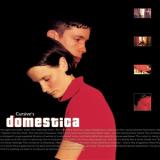
A critical darling and beloved by fans, the success and recognition of Domestica changed the trajectory of Cursive's career. It was recorded over nine days at Lincoln, NE's Whoop-Ass studios (the original studio of Mike and AJ Mogis), and the album's bracing, jagged, cathartic, and visceral songs capture the urgency of the reunited young band_and continue to resonate with fans 25 years later.
- 1: Heard A Bubble
- 2: Gum Bump
- 3: What Kind Of Fish Is A Turtle
- 4: Ribbon Of Moss
- 5: Derring-Do
MAROON VINYL[29,20 €]
The North Carolina trio Setting brings together their substantial collective skills as musicians and their collaborative mindset to bear in their inventive and rich improvisations. Known for work in Mind Over Mirrors, Califone, Black Twig Pickers, Pelt, Peeesseye, Sylvan Esso, and Jake Xerxes Fussell, multi- instrumentalists Jaime Fennelly, Nathan Bowles and Joe Westerlund subvert expectations while creating a sense of wonderment. Their intricate interplay of synthesizers, cassette loops, banjo, keyboards, electronics, zithers, and a litany of percussive instruments form a tactile amalgam of celestial transcendence and terrestrial rhythm, a loamy pulse fluidly guiding every minute fluctuation in feel. Setting"s self-titled album is a definitive statement of their improvisational acumen meeting compositional rigor, a robust wellspring of hypnagogic grooves and mosaiced textures. The eponymous album from Setting is the product of three intuitive players and deep listeners, artists who use those skills to create transformative music. The trio shirk any broader categorizations, as their unique dynamic pieces are alight with arrangements urgent and smoldering, patient and emotive.
Black Vinyl[26,68 €]
The North Carolina trio Setting brings together their substantial collective skills as musicians and their collaborative mindset to bear in their inventive and rich improvisations. Known for work in Mind Over Mirrors, Califone, Black Twig Pickers, Pelt, Peeesseye, Sylvan Esso, and Jake Xerxes Fussell, multi- instrumentalists Jaime Fennelly, Nathan Bowles and Joe Westerlund subvert expectations while creating a sense of wonderment. Their intricate interplay of synthesizers, cassette loops, banjo, keyboards, electronics, zithers, and a litany of percussive instruments form a tactile amalgam of celestial transcendence and terrestrial rhythm, a loamy pulse fluidly guiding every minute fluctuation in feel. Setting"s self-titled album is a definitive statement of their improvisational acumen meeting compositional rigor, a robust wellspring of hypnagogic grooves and mosaiced textures. The eponymous album from Setting is the product of three intuitive players and deep listeners, artists who use those skills to create transformative music. The trio shirk any broader categorizations, as their unique dynamic pieces are alight with arrangements urgent and smoldering, patient and emotive.
Einar Solberg (Leprous) kehrt mit "Vox Occulta" zurück, seinem zweiten Projekt unter eigenem Namen und einem kühnen, schweren und symphonischen Statement, das in Zusammenarbeit mit dem begehrten Norwegian Radio Orchestra aufgenommen wurde. Solberg will sich als einer der epischsten Charaktere der experimentellen Musik etablieren: "Ich möchte als der cineastische Mensch im Prog gesehen werden", erklärt er. "Ich möchte das vollständig für mich beanspruchen. Dies ist ein sehr cineastisches Album, und genau das war mein Ziel."
"Stella Mortua", der Eröffnungstrack von "Vox Occulta", spiegelt diese klare Vision wider. Solberg singt zu klassischen Streichern, bevor sich eindringliche E-Gitarren-Akkorde hinzugesellen und der Sänger sich durch einen majestätischen Refrain kämpft. Von da an hat jeder Song seinen eigenen Charakter - "Medulla" betont sein gewaltiges, metallisches Riff und "Grex" ist eine fast 12-minütige Odyssee.
"Vox Occulta" wurde von Solberg und David Castillo co-produziert, der für seine Arbeit mit Opeth, Katatonia, Amorphis und anderen bekannt ist. Auf dem Album sind Schlagzeuger Keli Guðj\u00F3nsson (Agent Fresco), Violinist Chris Baum (Bent Knee), Gitarrist Pierre Danel (Novelists) und Bassist Jed Lingat sowie John Browne (Monuments) und Ben Levin (ex-Bent Knee) zu hören. Adam Noble, ehemaliges Mitglied von Biffy Clyro, war für den Mix verantwortlich.
"Vox Occulta" wird als limitierte CD-Digipak- und Gatefold-Weiß/Schwarz-2LP-Version sowie digital erhältlich sein..
- 1: Quiet Girl
- 2: A Volta
- 3: The Eyes Of Love
- 4: Helen's Song
- 5: The Surest Things Can Change
- 6: Pieces Of Dreams
- 7: How Long?
- 8: Francisco
On "Enduring Sonance," saxophonist and flutist Steve Wilson reflects on a lifetime of lyrical, deeply felt songs drawn from jazz, pop, and film—brought to life by an all-star ensemble featuring Renee Rosnes, Joe Locke, Jay Anderson, and Kendrick Scott. *** Certain songs have a way of lingering in the imagination—resonating long after we’ve last heard them, sometimes for a lifetime. On his breathtaking new album "Enduring Sonance," veteran saxophonist and flutist Steve Wilson celebrates the music that has left the deepest imprint on his musical life. “Some of the tunes on this record have stayed with me for, in some cases, over 50 years from the time that I first heard them,” Wilson says. “I wanted to put some music out there that people can connect with, no matter what kind of music they like.” Originally conceived as a ballads project, Enduring Sonance evolved into something broader and more personal. Rather than focusing on tempo or style, Wilson gravitated toward a sense of lyricism—music whose emotional clarity and melodic resonance endure across genres, decades, and listening habits.
To realize this vision, Wilson assembled a deeply intuitive ensemble featuring pianist and arranger Renee Rosnes, vibraphonist Joe Locke, bassist Jay Anderson, and drummer Kendrick Scott, with special guest Kevin Newton (French horn, Imani Winds) appearing on two tracks. Each musician brings a rare sensitivity to melody, texture, and space, allowing the material to unfold with warmth, restraint, and quiet authority. The repertoire draws from a wide musical landscape, including works by close collaborators and modern jazz masters Billy Childs and George Cables, alongside enduring songs by Michel Legrand, Quincy Jones, Milton Nascimento, Gino Vannelli, Bill Lee, and Eliane Elias. These are not standards in the traditional sense, but deeply personal selections—songs that have accompanied Wilson through different chapters of his life. The album opens with Childs’ “Quiet Girl,” its subtle rhythmic motion enhanced by Newton’s luminous French horn, and travels through cinematic ballads, soulful grooves, and reflective lyricism. The title Enduring Sonance speaks both to the lasting resonance of these songs and to Wilson’s enduring musical relationships—most notably with Rosnes, whom he has known for nearly four decades and whose sensitive arrangements help unify the album’s diverse repertoire. “These songs are the soundtrack of my life,” Wilson says. “I’d love it if listeners came away from this album with the same kind of enduring sound and feeling.”
- 1: Blue Water
- 2: My Place Among The Stones
- 3: A Friend Like You
- 4: I'll Go Home From Here
- 5: Lost Cause Lover Fool
- 6: Blinded And Smiling
- 7: Sad Song
- 8: Ribbon
- 9: Young Love
Color Vinyl[26,68 €]
On their seventh studio album, Lost Cause Lover Fool (due April 24th on Far Cry/Thirty Tigers), The Milk Carton Kids deliver 9 songs that, more than ever, invite listeners to lean in close and hover in the small moments the album magnifies. Much has changed since The Milk Carton Kids — Los Angeles-based singer-songwriters Kenneth Pattengale and Joey Ryan — burst on the Folk scene in 2011. And The Milk Carton Kids have changed too. But at least one constant remains. Pattengale and Ryan continue to make music that entices us turn down the volume on a chaotic world and dwell as long as possible on what matters most. With rootsy arrangements, Lost Cause Lover Fool expands on the duo’s signature minimalist sound their fans love while also, somehow, making it even smaller. Lost Cause Lover Fool begins with the lonesome pluck and strum of the banjo on “Blue Water.”
Often employed either for lightning-speed or rhythm, here the banjo is handled carefully, with reticence, so that it feels more like light cast across a stretch of grass than a whole bluegrass instrument. Lyrically, this album-opener zooms in on a snapshot of a man walking along a riverside, remembering the child that used to lay on his chest who has now grown to share his worried mind. It’s a moment so small it might easily have been dismissed, except that it holds an emotion as universal as it is fleeting. Lost Cause Lover Fool magnifies many such small moments, turns them into mesmerizing worlds, and reminds us — pleads with us — to pay attention to them as they go by.
Limited run of cassettes, full on body print & double sided J-card, design by Ciaran Birch, 49m30s each side.
Marylou is a French DJ and sound artist based in Berlin, known for her boundary-free, anything-goes approach to DJing. Previously affiliated with Morphine Records, YOUTH, and Ominira, she’s also part of the Wheel of Fortune collective alongside rRoxymore, CCL, and Nono Gigsta.
Her tape for Accidental Meetings drifts effortlessly through dub, noise, traditional folk, improv jazz, footwork, and breakcore—never sitting still for long. The tape clocks in at just under 100 minutes, packed with offbeat selections that give a deeper glimpse into her ever-shifting sonic world.
- A1: Levzon - Intense
- A2: Roll Dann - That Will Never Happen
- A3: Hemka - Fragrance
- B1: Chlär - Inside Us
- B2: Alarico - Push To Select
- B3: Glaskin - Cutta
- C1: Slv - Liminal Space
- C2: Lars Huismann - Conductor
- C3: Selective Response - Reality Unfolds
- D1: Dax J - Celestial Dub
- D2: Colin Benders - Siren
- D3: Alpharisc - Spiral Down
- E1: Seelow - Instant Welfare
- E2: Lds - Maxidub
- E3: Blawan - Don't You Dare Squawk At Me
- F1: Regent - Cyberian
- F2: Annē - Outrun
- F3: Sera J - Machinery
- G1: Chontane - Pyrax
- G2: The Advent - Randomized
- G3: Stigmata - Mortal Vados
- H1: Gary Beck - Fold
- H2: Non Cycling - Nothing Left
- H3: Measure Divide - Lemm
- I3: Sonic Propaganda - White Paper
- J1: Invexis - Artefakt
- J2: Jancen - Voluptuous
- J3: Z I.p.p.o - Broken Game
- I1: William Artist - Form
- I2: Raffaele Attanasio - Pointbreak
- 2026 repress / hot foil printed sleeve -
Limited Edition: Box with holographic hot foil logo print and five printed inner sleeves - No Repress
SHDW's label, Mutual Rytm hits a notable milestone at the start of 2024 as it turns two years old and hits its 20th release. To mark the occasion, the carefully curated compilation 'Federation Of Rytm III' arrives on February 2nd with a 30-track 5 x 12" boxset vinyl release and a further 6 digital bonus tracks.
Mutual Rytm is synonymous with serious, no-frills techno. It is a go-to for the world's most influential DJs and a home to some of the scene's most innovative producers. Over the last two years, it has explored several shades of sound, always with high-quality production and forward-thinking styles. A fine balance has always been struck between new and emerging talents and established names with plenty more to say, and that is the case on this collection which features the legendary likes of Blawan, Gary Beck, Colin Benders, The Advent and Dax J next to ANNE, Alarico, JakoJako, Chlar, LDS and many more.
Founder SHDW says, "I've poured my heart into curating a compilation of 36 tracks, a reflection of my deepest musical passions. The lineup is stacked with incredible artists, and it captures the label's essence - a fusion of artists spanning generations, united by a shared spirit and aesthetic, creating a seamless 'mutual rhythm'."
Although all 36 tracks stand alone as high-grade and club-ready dynamite, they also collectively form a versatile listening experience thanks to how they've been carefully assembled into a perfectly sequenced journey.
Each one dives into a different nuance within the world of techno and there is a range of moods from dark and driving to more energising and uplifting. The collection not only shows how far Mutual Rytm has come in a short space of time but also that it remains in a constant state of evolution and has a bright future ahead in 2024 and beyond.
SHDW's vision at Mutual Rytm was always to present a cohesive yet varied musical experience, and Federation Of Rytm III does exactly that.
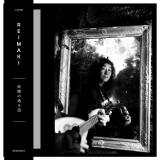
妖精の通る道 (The Path Where Fairies Pass) is the debut vinyl release by Reimaki, the duo of Rei Yokoyama (Triggers Flowers, Stakaidan, Lapiz Trio, 新井薬師自警団, and Fujio, Chiko Hige and Rei), and Maki Miura (Tsubamegami, Les Rallizes Dénudés, Shizuka, Fushitsusha, Ohkami No Jikan and Katsurei). The duo has been an understated presence in Tokyo, playing occasional under-the-radar shows and self- releasing a few CD-Rs, but they’ve recently started to break cover, with a recent cassette on UFO Creations, released in support of a late 2024 tour of China. It’s also a welcome reappearance on the scene for both musicians; Miura’s musical history, in particular, is being reevaluated thanks to a recent string of welcome Shizuka reissues.
But the music Reimaki make together is a different thing entirely, much as it shares some psychological and aesthetic interests with both Miura’s and Nokoyama’s other projects. Their sound is split between two main interests – an extension of glacial, deoxygenating psychedelic improvisations, and a deep interest in medieval European music. They’ve also been known to cover compositions by English prog/improv musician Fred Frith. These various elements of the Reimaki aesthetic are all present through 妖精の通る道, from the fragility of the opening “Novel Amor” through to the smeared, hazy textures of the three extended pieces that comprise the album’s flipside.
There’s a beautiful sympathy in these performances, and a generous simplicity, too; you can sense that this music is informed by decades of finding just the right way to say the right thing in the clearest manner possible. Yokoyama and Miura never overstate things; make the statement, play the song, let it hang in the air for a while, and then move on to the next essential expression. The music is unburdened by self- consciousness. Their take on medieval music cuts to the core of melody and melancholy; their psych- improv side is blurred and drifting without ever lapsing into rote generic gestures.
There’s some shared space with other artists who suspend the timeless within the kaleidoscopic possibilities of the psychedelic – Kendra Smith & The Guild of Temporal Adventurers; Emmanuelle Parrenin; Rosina de Peira – and a tangled folksiness that might put listeners in mind of Jan Dukes De Grey, Comus, Current 93, and Tower Recordings. Accompanied by beautiful photography from street photographer Takehiko Nakafuji, who was also personally chosen by Mizutani to document Les Rallizes Dénudés, 妖精の通る道 is a most unique and necessary trip.
Lo Recordings is proud to present a brand new compilation by Russian electronic producer/composer OID, spanning 25 years of music that blends in and out of focus, inhabiting styles from dub techno to ambient, vaporwave, space gamelan, electronica and beyond. The album is both a retrospective and a celebration, a journey into a singular world that exists only in OID’s imagination, available digitally and on Ltd cassette from 24th April 2026.
“I first met OID in an illicit ‘Sky High’ bar in Moscow. It was a club for people who liked to jump from high buildings. OID played the piano whilst a tea ceremony took place. It was all like some kind of strange dream. The music he creates sounds like that kind of dream. Some of the tracks are reminiscent of the music released by ALEXANDROID on the ‘False Starts’ album way back in 2003 - a legendary album, in our minds at least. Alex tragically passed away in 2009, leaving only OID.
The music on this album is a testament to the beauty of friendship, the everlasting meaning of music and the light that shines forever.” -
Jon Tye, Lo Recordings
- 1: Glass Bottom Boat
- 2: Paper Screen
- 3: Awhile
- 4: Fog On Mirror Glass
- 5: Old Universe
- 6: Makeshift Room
- 7: Your Dreaming Eyes
- 8: Valley Floor
- 9: Usual Phantom
- 10: Bamboo
Fog On Mirror Glass introduces a new aesthetic amongst Donald Beaman albums. After four albums of varied full-band arrangements, this album emerged as an idea to present solo performances in conversation with full-band work. The bulk of the songs were recorded in the same place they were written: Beaman’s living room. Long time bandmate and producer Kirt Lind set up a makeshift studio at Beaman’s house to record the guitar parts in the same room where they were written, using the same guitars on which they were first played.
Unfurling with a measured pace, the resulting album combines elegiac lyrics with elemental arrangements played with an almost jazz-like reverential expressiveness, calling to mind the works of Cass McCombs, Will Oldham, and Jake Xerxes Fussell. Album opener “Glass Bottom Boat” sets the tone for the album with just Beaman and his guitar – written during the final months of a decade-long stay in New York City, the song was finished upon his arrival back in California. Meanwhile the title track, long a staple in live sets, lands near the middle of the album to recalibrate the mood, featuring the ghostly guitar work of longtime collaborator Ken Lovgren. “Old Universe” lifts things up a bit, propelled by the brushwork of drummer Michael Nalin and the jaunty bass playing of Kirt Lind. Finally, the album ends much the way it began, with Beaman and his guitar on album closer “Bamboo”.
“The dictionary definition of less is more.” - ---- Mojo
“His ability to carve universal empathy from mundane domesticity is remarkable.” - ---- RNR Magazine
“...a collection of evocative scenes and vivid emotions sung to sparse musical arrangements in Beaman’s distinctive sonorous tones” - Americana UK
“...pure and simmering, like a tattoo dedicated to a long lost friend, slightly fading from years in the sun, a memory that will always bring a tear in those quiet reflective moments.” - Psychedelic Baby Magazine
- 1: Pass Between Houses
- 2: Theatre For Change
- 3: Real Home
- 4: Treat Me A Stranger
- 5: Utopia Of Bog
- 6: Void Attentive
- 7: My Love, Let's Take The Stage Tonight
- 8: The Kiss
- 9: He Had Always Led
Cathartic avant-rock, literate DIY folk & experimental composition exploring displacement, love, climate change, belonging & the places we call home - RIYL Jim O’Rourke, Richard Youngs, This Heat, Richard Dawson, Flying Nun. ‘Real Home’ is the new album by the Manchester-born, London-based artist Kiran Leonard. His sixth album proper (not including innumerable tour-only CD-Rs and short-run cassettes), since his precocious debut in 2013, ‘Real Home’ finds Leonard invigorated by inspiration and experience, making passionate, literate, and mercurial music that explores displacement, love, memory, climate change, connections to home and more. Encompassing songs recorded after moving to South London, ‘Real Home’ reflects on ideas of belonging and domesticity through folkloric, stream-of-consciousness songwriting. Across nine tracks, Leonard traces lived impressions of the household and the city, expressing sentiments of dislocation, alienation and stasis, but contentment too. Infusing the avant-rock effervescence, terraced dynamics and visionary lyricism of his music with what he defines as a greater sense of openness, Leonard is as versatile, fervent and imaginative as ever on ‘Real Home’, yet his music is somehow more intimate, affecting, and acutely expressive. Shaped by dual considerations of simplicity and formalism, ‘Real Home’ is by turns beautiful, allusive, and ruminative, an album on which Leonard considers what his songs have resembled in the past and what they mean now. In recent years, Leonard has crafted eloquent chamber music inspired by the likes of James Joyce and Clarice Lispector (‘Derevaun Seraun’), responded to contemporary politics and communication breakdown in the digital age (‘Western Culture’), and compiled solo works and ensemble recordings for a longform ode to Jonas Mekas and to one of Leonard’s enduring themes; home (‘Trespass On Foot’). On ‘Real Home’, Leonard reiterates this abiding thematic focus yet ascends to new, different heights, in music of cathartic delicacy and dissonance where all the myriad dimensions of his work to date seem to crystallize. There are sinuous songs about struggle and defying the pace of city life through drift and diversion (‘Pass Between Houses’), stirring songs of intense feeling and crescendo, described as a form of speculative detective fiction (‘Theatre for Change’). There are touching solo piano ballads (the title track), symbolic contentions with carbon capture and climate change (‘Utopia of Bog’), modes of experimental minimalism (‘Void Attentive’), and other profuse feats of compositional range, embroidered with wild tendrils of narrative and lyrical depth. A record to pore over, and get lost in. Exemplifying the vast aesthetic scope of Leonard’s music, lead single ‘My Love, Let’s Take The Stage Tonight’ is inspired by country lodestar Hank Williams, Russian poetry and a late period love poem by William Carlos Williams. Yet for Leonard, the song signals a sense of accessible materiality, and is the product of a more linear approach to writing songs: “My imitation of the great Hank Williams, in spirit if not in substance…This is one of the best efforts on Real Home at a song-as-object. Looking at it now I realise I was trying to write a song that made itself known as a song to the listener, and I wonder whether that’s crucial if you want a song to transcend its context. And that this is either accomplished through a total openness – by being inviting, by laying the tricks of the song out plain to see, as Williams and his many ghostwriters did so well – or by adopting a knowing aloofness, positioning oneself against the listener but letting it be known that that’s what it’s doing. In this song I try both, but mostly the former: as in, I wanted to write a song where every line follows on from the next.” Imbuing the endlessly elaborate and inventive qualities of his music with a newfound streak of candid, clear-cut melodicism, Leonard has reached a special place in his artistry, on a record that feels familial, and expresses closeness. Assembled with affiliates including Lauren Auder, Otto Willberg, Jasper Llewellyn (caroline), Tom Hardwick-Allan (Shovel Dance Collective), Magda McLean (caroline, The Umlauts), Alex Mckenzie (caroline, Shovel Dance Collective), Isabelle Thorn (Dear Laika) & more, the recording process had a significant influence on the subject matter of ‘Real Home’, in sessions defined by close-knit camaraderie and artistic eccentricity: “The theme of the home obviously recurs throughout the record; the album was mostly recorded in domestic spaces with friends, and the name of the album is Real Home. I like the qualifier ‘real’, like you’re getting past the cloak of the word and towards the thing-itself…also nearly all the percussion in this record was recorded on items from my dad’s shed (jam jars, sandpaper, blocks of wood, etc). Real home record!” ‘Real Home’, like anything by Kiran Leonard, is a record of dazzling multiplicity. Yet it’s a companionable prospect with a central premise; a collection of songs where listeners old and new can find a home. An album led by a scene; of Leonard standing at the threshold, ready to welcome you inside. “Exceptional songs that linger” - The Guardian // “An autodidact of amazing talent & energy” – Pitchfork // “A ridiculous amount of talent…confrontational, celebratory, provocative or perverse – he manages all of these emotions & more” - The Quietus /
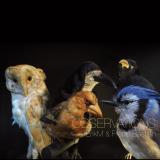
With one exception, this disc is a recording of a concert given at the Ateliers Claus in Brussels in March 2024. It was preceded by three short hours of improvisation the day before and the day before that, during which ErikM and I made a series of careful observations of each other's playing. It must be said that neither of us had skimped on transporting a few cases, the contents of which would have allowed us to play several concerts in a row without ever repeating ourselves. Erik had brought his turntables to Brussels, as well as sophisticated electronic machines, accompanied by a virtually infinite sound bank. For my part, I had both a mechanical orchestra and a range of acoustic instruments at my disposal. In two sessions, we eliminated the superfluous and the ineffective. On the evening of the concert, it was through close observation-of each sound, each direction taken by one or the other, each intention, each break-that we composed this record in the moment: vigilant and scrutinising, like the pairs of eyes on the cover of this album.
- A1: A Frauta De Pã
- A2: Serenata Do Meio-Dia
- A3: Estrada Da Intemperança
- A4: Pote De Mel
- A5: Via Láctea
- A6: Cidade Americana
- B1: O Cavaleiro E Os Moinhos
- B2: Modinha
- B3: Debaixo Do Sol
- B4: Um Dia
- B5: Alfazema
A Frauta de Pã, released in 1975 when Carlos Walker was just 19, stands as a cult masterpiece of 1970s Brazilian music. An album where MPB (Música Popular Brasileira) sophistication meets jazz-fusion virtuosity and psychedelic imagination.
the album features an all-star cast of musicians, including João Bosco, Hélio Delmiro, José Roberto Bertrami (Azymuth), Gilson Peranzetta, and Roberto Quartin, the record delivers a rich, orchestral sound that continues to captivate collectors and DJs worldwide.
A Frauta de Pã is available as a limited edition of 500 copies on smokey smarble vinyl.
- 01: Paimpol
- 02: Marché
- 03: Le Port
- 04: À La Maison
- 05: La Vie Lente
- 06: Bandes
- 07: Adieu
A century-old grand piano, a secluded house surrounded by the greenery of Brittany, no internet connection, and a reel-to-reel recorder.L'Écho de Bretagne, the new EP by Niklas Paschburg, set for release from fall 2025 via Nettwerk Music Group, is a solo piano record as essential as it is intense. An album made of silences, space, slowness. A music that doesn't chase impact, but truth.
the album release is march 26th - 2026.
If his previous work, Mexican Alps (2025), marked the first time the German composer and producer created an ambient-electronic album without his instrument of choice, the piano, L'Écho de Bretagne emerges as a direct response to that absence. "It was exactly the lack of piano that brought about the need for this new record, which instead puts that instrument, so vital to me, at the very center, stripping everything else away," Niklas explains.
Born in 1994, Paschburg has shaped over the years a musical path deeply connected to travel, nature, and introspection. From his debutTuur Mang Welten(2016) toOceanic(2018),Svalbard(2020),Panta Rhei(2023), and the aforementionedMexican Alps— alongside soundtracks, remixes, and collaborations with artists like RY X, Hania Rani, Ásgeir, and Bryan Senti — his sound bridges neoclassical, electronic, ambient, and pop-driven composition.
WithL'Écho de Bretagne, the Hamburg-born, Berlin-based musician continues his exploration by seeking solitude in nature, much like he did onSvalbard, but this time with an even more radical choice: disconnecting completely from the internet, and switching off both computer and smartphone for a while, in order to fully immerse himself in his new music. "I rented an old cottage in Paimpol, Brittany, where I knew there was a grand piano," he recounts. "When I got there, I discovered that not only was the piano more than a hundred years old, but it was also of an unknown brand, never restored, and quite difficult to play. But that gave it a unique character, and I didn't give up. Sure, it was an instrument left to its own fate, I couldn't play anything too fast. But how fascinating was that? I'm convinced that setting limits, instead of giving yourself total freedom when composing, can become an extraordinary source of inspiration."
As for the decision to temporarily detach from a life that demands we stay constantly connected, Niklas describes it as both a creative and human experiment. "I had my laptop and phone with me, just in case, but I kept them turned off. That choice made me wantL'Écho de Bretagneto be a fully analog work, even in how it was recorded." A way of clearing the mind. "I don't think I've ever been as calm as I was during those days in Paimpol. Even though I was working on a very specific project and didn't have much time, that period was more relaxing than any vacation."
Not that it was free of hiccups. "I'd borrowed a reel-to-reel recorder small enough to travel with me, but after recording a session on the piano, I realized it wasn't working properly, the sound was distorted, full of crackles. I got worried, because I wasn't near any big city where I could find a technician. Luckily, I figured out the problem was the old tape reels I had brought along. That was the only time I had to go online, to order new ones. But it was just for a moment. I shut everything off again right after." At that point, Niklas was waiting for the new tapes to arrive. He found out, completely by chance, from a local UPS courier that they had been delivered to a nearby village. "Since my phone was off, I couldn't track the shipment. So one day I asked this delivery guy, who didn't know anything about it. But from that point on, we'd see each other daily and talk… That's what being disconnected also means: reconnecting with people around you, even strangers. It was thanks to that courier that I found out where the tapes had ended up. And he even helped me get them back, writing directions for me on a scrap of paper."
But there's another element that makes this new EP unique.L'Écho de Bretagnewas recorded entirely live; its tracks are all improvised, complete with their imperfections. This approach leads to a sound that is pure, profoundly organic, and deeply authentic, intentionally preserved to give the listener the feeling of a live performance happening in their own living room. The touch of fingers on the keys, the breath of the wood, the tension of the vibrating string, all become part of the music. There is no construction, only expression. "Even now, when I listen back to it, I feel that moment I gave myself to step away from everything: from reality, from words, from noise." The result is a collection of suspended melodies and atmospheres, reflecting a state of the soul. A refuge from the rush of time. A pause from the world.
- A1: Kaze Ni Naru
- B1: Kimi Wo Nosete
This is the second 7"single cut project from the album"Ghibli HOUSE essential PIANO set", which blends the beautiful melodies of the original Ghibli classic songs with the vibrancy and exuberance of house!
"Kaze Ni Naru" is a refreshing arrangement of the theme song for the movie"The Cat Returns"released by Ayano Tsuji in 2002. The song incorporates the essence of house music without losing the bright atmosphere of the original. The B-side "Kimi Wo Nosete" is an instrumental cover of the theme song for "Castle in the Sky," written by Hayao Miyazaki and composed by Joe Hisaishi in 1988. The beautiful melody with a hint of sadness is reworked in an up-tempo style, making it perfect for floor use. A must have for Ghibli and house fans!
Mystic Force was a progressive power metal band from Baltimore, Maryland. After releasing several demo tapes, they signed a contract with the German label Rising Sun Productions. This resulted in two albums, “The Eternal Quest” (1993) and “A Step Beyond” (1995). Their third album, “Man Vs. Machine,” followed in 2001 on Siegen Records. After Mystic Force broke up, drummer Chris Lembach and guitarist Rich Davis formed the group Shift and recorded two albums with them. Rich then started his own solo project (for which he played all the instruments and sang), before looking for suitable fellow musicians again and releasing the CD “Inside The Upside Down” in 2024. Mystic Force was originally formed in 1984 by guitarists Rich Davis and Marc Rouchard together with bassist Keith Menser. After numerous line-up changes in the early days, they finally found suitable bandmates in Chris Lembach (drums) and Bobby Hicks (vocals). In 1987, Mystic Force released their first 4-song demo, followed by “Blind Vision” a year later. After selling large quantities of self-produced cassettes (the first 4-track demo is said to have sold over 5,000 copies), it was time for their first vinyl release. In 1990, the album “Take Command” was released on the English label C.M.F.T. Records, which included the first demo and four brand new tracks: “Take Command,” “Awakened By The Dawn,” “Immortal Souls,” and “Silent But Deadly.” Later that year, the 12“ single ”Shipwrecked With The Wicked“/”Eternal Quest" was released in a limited and numbered edition by the band's own company, Pro-duction. The widespread distribution of Mystic Force's material (also via underground distributors such as Oliver Jung's “Demolition”) led to an increasing number of labels taking an interest in the band. Ultimately, the choice fell on Rising Sun Productions, who released the debut album “The Eternal Quest” in 1993, featuring tracks such as “Shipwrecked With The Wicked,” “Another World,” and “Answers Of The Mystery”—a forgotten gem of progressive power metal somewhere between Fates Warning and Hades.
Venturing into “a limbo world between medieval tropes and modern-day decay”, New Orleans musician Urq (half of art punk duo Spllit) returns with a new solo offering. Recorded over a single, intense month, This Dismal Village is a homespun document that sits somewhere between jittery punk, dreary psychedelia, and hooky bedroom pop. Recorded to 4-track, the record embraces limitation as a creative engine, resulting in a sound that is raw, unsettled, and deeply atmospheric.
The album is set not in a fixed point in time or geography, but a liminal environment where dystopic visions and archaic fixtures exist side by side. In the dismal village, kings and witches share space with televisions, skyscrapers, and modern enterprise; organ fanfares echo down streets populated by disgruntled townsfolk and whispered gossip. It is simultaneously the dark ages, 1950s suburbia, and a 21st-century metropolis. Embracing anachronism was central to the project’s identity, an attempt to collapse history into a single, uneasy present.
Sonically and philosophically, the album sits firmly in the tradition of rough and raw cassette rock. Guided By Voices’ Bee Thousand looms large as an influence, particularly its ability to build an entire world through unpolished, first-take recordings. Robert Pollard’s idea of the “four P’s” (psych, punk, prog, and pop) serves as a neat summary of the artist’s musical instincts and each element can be traced right through the heart of This Dismal Village. Further inspiration comes from post-punk’s so-called “Calgary Sound,” a loose movement blending psych pop, post-punk, and math/prog elements with a home-recorded, unpretentious ethos.
The result is an album that unrolls like a place wandered through, uneasy, occasionally familiar, and impossible to pin down in time. All captured on tape before it could disappear like an apparition, like a dream only half-remembered.