
Search:casa

Mindblowing Afro-Soul music from Ivory Coast served up by Deke Tom Dollard, an obscure artist who only recorded two albums in 1979 and 1981 but who created an original funky fusion with Bété langage. A Selection of four amazing tracks recorded in Abidjan on two different records label called War Records and As Records.
The music here is a mixture of Funk with heavy basslines, traditional percussions, funky guitar riffs, nice horns section and lyrics in Beté. The song Demonde' is inspired by harmonies of the famous Dance to the Drummer Beat' by Herman Kelly.
Those two rare records were found by Afrobrazilero (aka Djamel Hammadi) and never appeared on the vinyl market. It's almost impossible to have infos about this singer and composer neither the musicians involved in the recording sessions. Most of the traces of the recording session were lost by the labels we licensed the tracks with.
Unique, pressed on a deluxe vinyl, remastered by The Carvery, this very Funky album is a must have for all the Afro Funk lovers!

- A1: Viva Zapata
- A2: Casa Babylon
- A3: The Monkey
- A4: Senor Matanza
- A5: Santa Maradona (Larchuma Football Club)
- A6: Super Chango
- A7: Bala Perdida
- A8: Machine Gun
- A9: El Alakran (La Mar Esta Podrida)
- B1: Mama Perfecta
- B2: Love And Hate
- B3: Drives Me Crazy
- B4: Hamburger Fields
- B5: La Vida (La Vida Me Da Palo)
- B6: Sueno De Solentiname
- B7: This Is My World
16

The Afro-Funk side of the Latin Soul maestro!
Born in Gao (Mali), Boncana Maïga is one of the most talented and popular producer of West-African music since the 60's. He studied flute and Latin arrangements in Cuba during the 60's and founded the famous Les Maravillas du Mali' in 1968.
He became orchestra leader for the national Ivorian TV in Abidjan in the mid-seventies, and toured all over the world with the famous Africando band. During his recording sessions in NYC at the beginning of the 80's with a lot of Latin musicians' from Puerto Rico, Venezuela or Colombia, Boncana Maïga also recorded few rare Funky tracks with heavy breaks!
With the artist, we decided to reissue four rare tracks from 1978 to 1982 dedicated to dancefloor, including a really rare soundtrack for the oil company of Ivory Coast called Petroci'.
In 2018, he'll be back on tour with Les Maravillas du Mali', still have a weekly TV show on TV5 Monde and with this reissue will continue to warm your Afro-Funk parties!
Fully licensed, 12inch vinyl (45 RPM) including interview. Remastered by The Carvery!

13
If we talk about ideas, we surely talk about "Idee 1", one of the best collaborations between Massimo Catalano and Remigio Ducros - together with "La fatica", that will be reprint in a while - with contributions from the amazing Daniela Casa. Daniela is one of the few women in the "Italian libraries" scene, but she's more talented than some of her better known male colleagues. If Daniela, and so her husband Ducros, are names linked to a tiny niche of soundtracks' lovers, Catalano has instead worked for television, being a well-known composer for the audience. His great technique and composition, combined with those of his 2 colleagues, is one of the strong points of "Idee 1", published (but never released) by Team on February 1972, fulfilled with experimental sparks (Astrazione per Flauto, Astrazione per Piano, Filanda, La Fonderia), staggering orchestrations, breakbeat and funky (Lunedì ore 7:45, Ducros), mournful atmospheres (Venerdì ore 20:30, by Casa; Ripensandoci by Catalano) and world music influences (Tibetano, Catalano). If we have to explain this record with just one track, this would be the fourth one, Creatività (Creativity): unrestrained, with no limits or filters, this song is ready to get heavy rotation on your record player.
11
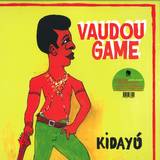
When faced with the decision to take a different direction at the risk of getting lost in a synthetic sound or to further explore the same musical path, Vaudou Game didn't need to consult the oracle for very long when putting together their new album. Since their first acclaimed album, Apiafo and its irresistible single "Pas Contente", these Lyon natives never turned down the heat on over 130 stages across Europe, Africa, America and Asia. Peter Solo has displayed his amulets, charisma and yellow pants around the globe.When time came for them to harness their Afro-Funk sound for the second time, they turned their attention once again to their analog strengths. Vintage material, instruments produced in the 70's and cassette tapes were the "grigris" (or lucky charms) which proved most effective to ward off digital corruption of their music and return them to a tight-knit group with a solid groove.This unbeatable trance rhythm, inherited from James Brown and Fela, icons of Funk and Afrobeat, becomes trident when joined by Mawu, the creative voodoo divinity hidden in each of the group's notes. This inspiration transcends their spirit of communion, plunges them deeply into Mother Earth and results in the telepathic trance which is directly connected to Togo Peter's native Togo.Each song then becomes a celebration where the listener becomes the group's voodoo doll, embraced by the rhythm, submitting itself to the mercilessly metronomic cutting of guitars, struck by the copper-colored flashes of lightning forged by the African voodoo deity Hevioso, pierced by the psychedelic visions generated by the organs and a six-string guitar, cheerful songs, and hypnotic incantations.KIDAYU means "sharing" in Kabye, the language spoken in northern Togo. Sharing, is the philosophy of Vaudou Game - both in their recorded music and on stage.Vintage African funk tinged with voodoo chanting: Togolese Peter Solo and his fellow musicians from Lyon electrify us in a frenzied ceremony" - Télérama

6
Growing up in a royal household in Nigeria, Joni Haastrup began his musical journey performing for his brothers band Sneakers and was quickly snapped up as a vocalist for Orlando Julius Ekemode and his Modern Aces' Super Afro Soul LP, one of Afro-beat's formative LPs. Soon after, Ginger Baker of Cream fame replaced Steve Winwood with Joni on keys for Airforce's UK concerts in '71 and the success of the collaboration led to further shows with Baker as part of the SALT project before he returned to Nigeria to set up MonoMono. Back in London in 1978, Joni recorded his solo gem Wake Up Your Mind for the Afrodesia imprint. Coming in a Deluxe gatefold Replika LP with printed sleeves.
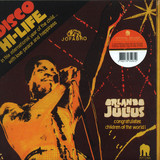
Hot Casa Records reissues Disco Hi-Life, a real treasure album composed and interpreted by Afro-Soul maestro, Orlando Julius. Comes as delux 180 gramms vinyl with tip on jacket & inserts with interviews & photos. Check!
Following up to the 12inch release (HC07 / 2009), here comes the remastered version of a real mindblower piece from 1976 including four unreleased tracks, all recorded with the best Nigerian musicians, between Ginger Baker' Studio in Lagos and the American Star Studio in West Virginia, USA.
Orlando Julius Aremu Olusanya Ekemode was born in 1943 in Ikole-Ekiti, Nigeria and can be considered as a main figure of the Afro-Soul music history. One of the first African musician to get signed on a 'Major' label (Polydor), he delivered many hit single as a composer and effortlessly performed live as a tenor sax and singer. He worked and met with some of the 'greatest', such as Louis Armstrong, James Brown (for his Nigerian tour with Bootsy Collins), The Crusaders, Gil Scott Heron, or Hugh Masekela.
In the middle of 1975, just after they finished the recording of The Boys Doing It' album with Hugh Masekela, they all flew to Ghana and Lagos. It was holyday and Orlando had also plenty of time to focus on his own songs. He wrote 'Disco Hi-Life' in Yoruba and 'Children of the World' in English. And he immediately planned a recording session including 12 finest musicians, such as the great singer Dora Ifudu Avery, Adelaja Gboyega on keys, Kenneth Okulolo on Bass guitar, Butley Moore on drums, Fela's collaborator Tunde William on Trumpet, and also Ade, who helped sang 'Love Peace & Happiness'.
Originally released by Nigerian label Jofabro in partnership with the UNICEF association for the 'International year of the Child', it was only available in few promotional quantity... here comes the very first official reissue of this dancefloor masterpiece!

As one of the most enigmatic figures of the 1970's Italian soundtrack and library music network Emma De Angelis and her short recording career provides thirsty fans of speedball psychedelic rock and drum heavy instrumental funk with a tight discography rivalling many of the long-standing bastions of the otherwise male-orientated business. * Strictly limited to 1000 copies.*
.
Born in Rocca di Papa, near Rome, into a flourishing musical environment Emma was the younger sister of future award-winning composers Guido And Maurizio De Angelis, a duo, who under names like Oliver Onions and Dream Bags, would write chart-topping lyrical theme tunes for a wide range of Italian crime, Giallo and Spaghetti Western films featured alongside full scores by Ennio Morricone and the Magnetic System composers (Bixio Frizzi Tempera).
With encouragement from her brothers, Emma, who would also write music under the pseudonym of Juniper, would record a tight clutch of solo-penned material and seldom credited studio contributions to Guido And Maurizio's film commissions, such as the score for Giuliano Carnimeo's Simone e Matteo: Un gioco da ragazzi (aka Convoy Buddies). While simultaneously pursuing a career as an illustrator and set designer the De Angelis family contacts would lead Emma to the offices of Romano Di Bari, whose up-and-coming Flirt label was finding success providing custom built mood music for use in TV and film. Alongside important composers like Alessandro Alessandroni, Gerardo Iacoucci and A. R. Luciani, the young Emma Di Angelis would record a small number of tracks for a compilation called Underground Mood (credited in the small print to E De Angelis - not to be confused with Italian singer Edoardo De Angelis). It is from this rare LP that the record you are now holding is compiled. Within the Flirt family of labels Emma De Angelis would also share schedules with other important female composers such as Daniela Casa and Giulia Kema' De Mutiis - both of whom have appeared on dedicated Finders Keepers releases.
The tracks on this record provide us with a rare glimpse into Emma De Angelis' short musical career before she became a full-time visual artist. With an unknown personnel or studio date it is easy to speculate a potential family jam in Piero Umiliani's Sound Workshop studio in 1972. One only has to take a listen to Guido And Maurizio's instrumental theme Gangster Story from Enzo G. Castellari's 1973 thriller High Crime (which later appeared on Tarantino's Death Proof soundtrack) or the trippy title theme to Paolo Poeti's kinky 1976 drama Inhibition to spot the family resemblance

A limited edition 7' release by Francisco Aguabella, both tracks taken from the rare Hard Hitting album released 1970 on EPSILON records. These two have never been on 7' before, includes wonderful re-production cover of the original sleeve
Track A1 - 'Desire' - Amazing vocal club classic which has stood the test of time always in demand. Never before pressed and released as 45. A massive dancer and a must have release.
Track B2 - 'Casa fuerte' - if you like Latin jazz dancers this is for you - top class banger.

- A1: Charlie Palomares Y Su Yuboney - Vives Boogaloo
- A2: Nilo Espinosa Y Orquesta - Baby Boogaloo
- A3: Los Hilton's - Hilton's Descarga
- A4: Silvestre Montez Y Sus Guantanameros - Silbando
- A5: Alfredo Linares Y Su Sonora - El Pito
- A6: Melcochita Y Karamanduka - Booga Jazz
- B1: La Sonora De Lucho Macedo - Caramelos
- B2: Mario Allison Y Su Combo - Un Regalo Para Ti
- B3: Coco Lagos Y Su Orates - Descarga Jala Jala
- B4: Tito Chicoma Y Su Orquesta - Fat Mama
- B5: Alfredo Linares Y Su Sonora - Cool
- B6: Nico Estrada Y Su Sonora - Ven Pa' Mi Casa
- C1: Mario Allison Y Su Combo - Ensueno
- C2: Charlie Palomares Y Su Yuboney - Push Push Push
- C3: Al Valdez - Que Rico Sabor
- C4: Tito Chicoma Y Su Orquesta - Clap Your Hands
- C5: Coco Lagos Y Sus Orates - Mamblues
- C6: Mario Allison Y Su Combo - Uno-Dos-Tres
- C7: La Sonora De Lucho Macedo - Guayaba
- D1: Alfredo Linares Y Su Sonora - Yo Traigo Boogaloo
- D2: Nico Estrada Y Su Sonora - Juan Jose
- D3: S Montez Y Sus Guantanameros - El Diablo
- D4: Alfredo Linares Y Su Sonora - Linares Blues
- D5: Nilo Espinosa Y Orquesta - Do The Boogaloo
- D6: La Sonora De Lucho Macedo Con Lina Panchano - Moliendo Cafe
- D7: Al Valdez - Guajira
26

11
Far Out Recordings presents the peerless and criminally undervalued Quartin catalogue, beginning with the reissue of Jose Mauro’s forgotten masterpiece Obnoxius. Over the course of the 60s, Roberto Quartin released more than 20 albums in Brazil on his label Forma, by artists including the likes of Eumir Deodato and Quateto Em Cy. Selling the rights of Forma to Polygram in 1969, Quartin struck out for pastures new at the dawn of the 1970s with the launch of his self-titled label. Significant works and high-water marks for Brazilian music overall followed in that decade’s first year, with Victor Assis Brasil Plays Antonio Carlos Jobim and the aforementioned Obnoxius. These singular gems in Brazilian music, difficult to categorise yet compellingly haunting, have for too long gone unheard.
Today, very little is known about Jose Mauro and as a result those searching for some kind of insight on the man behind the music must attempt to glean what they can from the music itself. One rumour claims he died in a car accident shortly before the album’s release, a fact that could have lent his brief musical career a touch of mythology were it not for how scant the details concerning any other aspects of his life are. The political turmoil from which the album emerged is significant also; recorded during an era of oppressive state censorship, the album, like all the Quartin catalogue, is the result of steadfast defiance in the face of a crushing military dictatorship. While many musicians of the era fled the country, preferring their prospects in the affluent, liberated USA, rebellious, young musicians like Mauro chose to stay and reflect their anger at the authorities through thinly veiled protest songs such as the stirring ‘Apocalipse’. Herein lies the basis for a more dramatic theory; that Mauro was in fact abducted by the military! Whatever the truth, the mystery remains unsolved, and all that remains is his bewitching music, all of which is composed by Mauro and Ana Maria Bahiana. Production on the record was cancelled after Mauro’s death and it was never sold commercially until its rerelease decades later. What appeal does Mauro’s music hold to today’s listeners, forty-something years removed from its conception? Simply put, there is very little else that sounds much like it all. Take the title track of ‘Obnoxius’. A wholly singular piece of music, blending string-drenched melancholia with orchestral pomp, sunny psychedelic strumming with propulsive percussion, topped off with Mauro’s yearning vocals. The result is indicative of Mauro’s unique blend of sounds from Latin Jazz and samba to psychedelic folk and baroque orchestration.
Today, Obnoxius retains its strange, otherworldly appeal – A firm favourite amongst a small circle of deep diggers including Madlib, Gilles Peterson, Floating Points. Jose Mauro’s mournful and melancholic vocals create a dark, brooding atmosphere that stands in contrast to the usual joyfulness and high-spirited rhythm of the more prominent Brazilian music of the era. Despite this air of foreboding, Mauro’s confident baritones, chord patterns and sumptuous arrangements have the ability to induce in the listener an almost trance-like state of ecstasy. Mauro’s long hidden masterpiece, a complex and uniquely stunning work is being offered the chance to be heard by the wider audience it has always deserved. A second Jose Mauro release, A Viagem Des Horas, compiling more incredible tracks unreleased in Mauro’s lifetime, will follow, alongside other unreleased jewels from the Quartin catalogue, from the likes of Piri and Victor Assis Brasil…

7
Osaka,Japan-based electronic music producer/musician 'ind_fris' will release his first LP record 'Sink in' from his own Scaffolder recordings. This LP includes 7 soft & watery sounds recorded with analog synthesizers, drum machines, guitars, and vintage Rhodes piano. Under the influences of ambient, newage, jazz-fusion, and deep house sounds, 'ind_fris' came up with the ideas of making something odd but sounding familiar to our daily lives. Meanwhile many inspirations of psychedelic feeling from Osaka underground's night club experiences underlie this album. 6 tracks are originally composed by himself. Track B4 is cover of jazz standard number 'Blue moon.'

11
Classic Brazilian album from master drummer, Ronald Mesquita, originally released in 1972. Featuring songs by Jorge Ben, Antonio Carlos-Jobim, Gilberto Gil, Edu Lobo and others.
Mesquita is probably most well-known for playing with Luis Carlos Vinhas and his 'Bossa Tres' outfit, along with his own group, 'Ronie E A Central Do Brasil', that he formed after his return from the US in the early 1970s. He also played on several songs on Tenorio Jr.'s 'Embalo' album that Mr Bongo recently reissued.
The killer track 'Balanca Pema' was very big in the Jazz Dance scene in the 90s and also featured on the Mojo compilation 'Dancefloor Jazz Volume Four'.
Madlib sampled 'Balanca Pema' on his Medicine Show Number 2 'Flight to Brazil'.
Official Mr Bongo reissue. Licensed courtesy of Universal Music Group Limited.

11
A great early album from Belchior - much rootsier than some of his later work, with a groove that almost feels like samba soul at times! Arrangements and music are handled by Marcus Vinicius - who uses quick-stepping samba elements on some of the best tracks, mixed with more modern funky styles in this really great way - which creates even more magic with the hauntingly poetic structures of Belchior's lyrics! The songforms are great - very much in the concrete poetry format used on Caetano's Araca Azul album, but with a warmer vibe overall - on titles that include "Bebelo", "Mote E Glosa", "A Palo Seco", "Maquina", "Todo Sujo De Baton", "Rodagem", and "Cemiterio".

6

- A1: Retrato De Um Forro
- A2: A Casa De Anita
- A3: Rio Antigo
- A4: Sereia Do Mar
- A5: Xeêm
- A6: Quem Vem Lá
- A7: Forrozinho Moderno
- A8: Vocé Passa, Eu Acho Graça
- B1: Xaxando Com Garibaldi
- B2: Não Interessa Não
- B3: Os Camarões
- B4: Se Quiser Valer
- B5: Camarão No Oriente
- B6: De Serra Em Serra
- B7: A Cigana Ihe Enganou
- B8: Fim De Festa
16
Camarão - The Imaginary Soundtrack to a Brazilian Western Movie 1964 - 1974
In 1960 we received an invitation to play in Recife, a wonderful, exciting and dangerous place, often described as a social jungle'.
The Forró party took place at Caxangá´s neighbourhood theatre, on the first floor, with its high ceilings, wooden floors and balconies, the place was perfect for these kinds of events. When all the windows were wide open, there would be a wonderful breeze during the hot tropical evenings.
Since everyone was looking for amusement, the place was packed on weekends. People from all corners of society would arrive nicely dressed, animated and chatting loudly over the sound of clinking glasses.
Pernambuco´s Cachaça, considered by many, especially by the locals, to be the best in the country, had started flowing generously and the popular sugar cane based alcohol lives up to its reputation.
We always had a few shots to warm up before performing and by the time the place was packed we were already in a very good mood.
Our local cachaça had loosened the bodies and minds of everyone in the room, people started to pair off and twirl around to the sound of forró music, smiling and sliding their feet off the floor - a reflex picked up from dancing in rural villages to avoid kicking up the dust'.

London's Chocky joins the Dessous Recordings label and shares four tracks of sublime house music on Steve Bug's imprint. 'Self Knowledge' is a deep, techy roller clocking it at nearly 10 mins - plenty of space to expand into its full potential - the groove grows ever more hypnotic and engaging as the track unfolds. Next up is 'A Reefa' - a non too subtle reference to a certain herb that might have inspired this loose yet highly funky deep house jam. 'Casa De Estrela' changes the vibe up with a more direct and jacking track - even though it would work at prime time, Chocky's feel for space and drama make sure the track will be heard in many diverse surrounding and sets this year.

- A1: Mahalangur
- A2: Proto Fish (Tiago Denis Mpunga & Paul K - Criola
- A3: Mal - A Letter From Yellowland
- A4: Zazou & Biyake - Komba
- A5: Bene Gesserit - Broken Toy
- A6: La Caida De La Casa Usher - Caballos
- A7: Kastrieste Philosophen - Heroina
- B1: Danny Alias - Big Brother-The Answer
- B2: Image Pour Image - Where Is The Love In This World
- B3: Attrition - Beast Of Burden
- B4: Zazou, Nodland, Lema - Stranger In The New Light
- B5: Det Whiel - Lakota
- B6: Instead Of - Bad Angelsremix)
13
Emotional Rescue starts its 5th year by shining a light on one of Europe's best underground 80s' label in Spain's Auxilio De Ciento. Their Terra Incognita Volumes I and II collated an international mix of synth-pop, new wave, world and industrial sounds to a small but appreciative following. Released in 1985 and 1986, the Volumes have become highly regarded and rightly sought after, finding a place in discerning playlists from London to Amsterdam and Dusseldorf to Glasgow. Here, taking a premise of avoiding the songs unearthed on other recent reissues, is a unique album itself. Starting with Denis Mpunga & Paul K's esoteric Criola, a fusion of fourth world ideals and poly-rhythmic funk. The music of Mal, Bene Gesserit and La Caida De La Casa Usher, however, soon highlight that the decade also belonged to dark, minimal synth as to shiny balearic ideals. The inclusion of Hector Zazou with Bony Biyake and their contribution Komba, is a fitting continuation from their cult Noir Et Blanc LP before, things continue with US avant-artist Danny Alias and his humorous Big Brother "response" to Laurie Anderson's Superman O. Image Pour Image loose indie-pop and the inclusion of seminal Beast Of Burden lead again to a Zazou contribution, this time in his collaborative Stranger In A New Light, before the compilation eclectically ends with the dadaesque Lakota and the post punk dub of Instead Of's closer, Angels .
