Andrea is returning after more than a year with his uplifting debut album Ritorno.
The casanova is back with some cosmic waves that will channel your spirit animal.
High energy bounce guaranteed!
On Stock and ready to ship
Andrea is returning after more than a year with his uplifting debut album Ritorno.
The casanova is back with some cosmic waves that will channel your spirit animal.
High energy bounce guaranteed!
On Stock and ready to ship
The mysterious Kayroy appears on his second Whiskey Disco record bringing the heat by way of sampladelic dancefloor collages packed with funk and a slight left-of-center aesthetic. 'Like Damn!' and the titular, 'Pavlova Casanova', are both hands-up, disco gaiety that will rip the heart of your chest.
'Sandy Shackles' closes out the EP conjuring the disco dub vibes of editors like Idjut Boys or Ray Mang. Just who is Kayroy - and who was he on his first Whiskey Disco appearance
On Stock and ready to ship
Driven by a lush and irresistible energy, Beyond Brazilian Stories takes you on a musical journey between Brazilian traditions and jazz improvisation.
Introduced to the richness of Brazilian music by Philippe Baden Powell, pianist Mathieu Bélis and double bassist Stéphane Dardour founded BSP PRODUCTIONS and formed the quintet Beyond Brazilian Stories, joined by saxophonist David Florsch, drummer Louis Bao Lao, and Äulne, vocalist and flutist.
Together, they revisit masterpieces by giants such as Milton Nascimento, Airto Moreira, Hermeto Pascoal, Dorival Caymmi, Edu Lobo and Moacir Santos, blending popular melodies with soaring instrumental passages.
The group also brings its own compositions, inspired by the vibrant energy of Brazilian music, creating a sound that is both authentic and innovative.
Their new album O ritmo do sonho has been awarded the “Revelation” distinction by Jazz Magazine!
Album contributors:
Mariana Zwarg - flutist, daughter of Itiberê Zwarg, Hermeto Pascoal’s bassist.
Edmundo Carneiro - Brazilian percussion legend (Tania Maria, De La Soul, Saint Germain, etc.).
Jessica Simon - trombonist, member of the Orchestre National de Jazz.
“An explosive fusion where samba, bossa and jazz become the playground for joyful and virtuosic freedom....” Jazz Rhônes Alpes
“...the brilliant Hermeto Pascoal,
whose spirit is present throughout O ritmo do sonho...” Revelation Jazzmag
expected to be published on 09.10.2026
black vinyl[25,63 €]
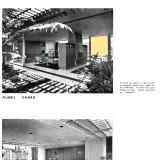
Brazilian artist Rubel isn’t one to be pigeonholed and typecast into staying in one sound. Casas, the follow-up to his debut album Pearl from 2015, brought a bigger, more epic, and richer production quality to the table. Fusing the worlds of MPB and hip hop, Rubel’s sophomore LP built on the momentum of its predecessor, gaining a Latin-Grammy nomination along the way. Mr Bongo is proud to be giving Casas its first worldwide release on vinyl and CD outside of Brazil and Japan.
The cliché they say is that the second album is always the trickiest; however, Rubel doesn’t seem to have had any problems on Casas. It’s a fountain of creativity and originality, marking an artist in full flow.
Conceived after Rubel spent six months living in Los Angeles, Casas is MPB-leaning at its core but is also driven by a hip hop inspired pulse. There is a clear influence from hip hop’s aesthetic across the 2010s woven subtly but fundamentally throughout. Nods to Frank Ocean, Kendrick Lamar and Tyler, The Creator can be heard across an album full of playful edge and personality. Luscious string-led arrangements and tracks that explore the rich folkloric rhythms of Brazil, sit next to songs with low-fi drum machines and features from acclaimed Brazilian rappers.
One of the highlights of the album, ‘Mantra’, starts with a traditional Brazilian rhythm that morphs into a hazy hip hop beat. A sublime song with a hooky call and response chorus, it features a guest appearance and verse by the Brazilian MC Emicida. Another highlight is the epic ‘Colégio’ (College) which further showcases the melding of stripped back drum machine beats with cinematic, sweeping arrangements. Elsewhere, ‘Partilhar’ is a swaying, heartwarming hug. A tale of longing and love that has become a singalong fan favourite at Rubel’s concerts.
Casas also shines a light on a string of key players in Brazil’s new vanguard, such as Pedro Fonte, Gus Levy, and Brazilian rapper / poet Rincon Sapiência to name a handful. The record has pop sensibilities yet also feels underground. It beats with the heart of a singer-songwriter, a feeling that was felt so strongly on Pearl, yet this time is bolstered by a level of arrangement and richness of sound that take it to another dimension - soaring horn and string sections elevating the songs from home recording to stadium-ready anthems. Keeping that intrinsic beauty and simplicity of a well-constructed song yet reframing it within a pop context is the true gift of this album.
Casas cemented Rubel’s status as one of Brazil’s leading contemporary talents and a key figure enriching the country’s already effervescent scene.
expected to be published on 18.09.2026
Remastered limited edition double vinyl with double-sided screenprinted poster-cover (sleeve folds out to be one huge poster). A real collectors item!
When Off Off came out around June 1984, one couldn’t speak of an independent music scene in Portugal. Warm Records’ vague existence didn’t have any impact and Dansa do Som’s inaugural release appeared only in December. 10 years after the revolution, after two IMF interventions, a lot of political instability (not to say turmoil, in the first couple of years) and the natural excesses of a sudden burst of freedom, the Portuguese consumer had more choices but a generally poor standard of living. There was no entrepreneurial culture and serious second thoughts about investing private money in risky ventures.
After many complaints about the whole music scene (institutions, critics and record label executives, popular and classical music alike), something that would continue well beyond the end of the decade, Telectu decided to finance, record, produce, release and sell an album with complete independence from outside structures. Their karmic reward was profit. According to Vítor Rua, Off Off was the only album fully payed by the duo and the only one that really payed off. Not an easy accomplishment for a double LP housed in a large (also double-sided) screenprint with complicated cuts and folds. The artwork was conceived by António Palolo, a friend and multidisciplinary artist. It was based on a collage of heavily saturated and xeroxed polaroids framed in shocking pink and green. Palolo was considered the third member of Telectu, regularly producing slides, video and other visual support for their shows. The inspiration for the type of cover came from GRM’s Gramme series.
Off Off is divided in four distinct sides, each one corresponding to a “theme” or “function” related to Telectu’s manifold artistic interests and interactions. The titles are also gateways to influences and a small portion of Portuguese cultural life:
- Side 1 / “Diagonale” is dedicated to Egídio Álvaro, art critic and gallery director (he opened Diagonale in Paris). Performance art was arguably his main artistic concern over the years, so the music on this side is suggested for use by one or more performers in live or playback situations. The three tracks segue into each other, linked by a synth arpeggio much in the same way as Telectu’s previous “Belzebu” álbum (1983);
- Side 2 / “Anarké” is dedicated to the composer Filipe Pires, one of Jorge Lima Barreto’s recurring invocations when asked about worthwhile contemporary music in Portugal. It is subtitled “concert music”, proposing «a new form of listening». Three tracks also, and these are separated by “clap interludes”, which basically consisted in the following: JLB and VR each had a pair of headphones on, and they clapped their hands according to the rhythm of the music each one was listening. Both musicians were interacting with a different Steve Reich piece: Vítor with “Music for Mallet Instruments”, Jorge with “Six Pianos”. The result is disjointed clapping, an awkwardly deliberate celebration of their own music. Telectu applauded themselves.
- Side 3 / “Cornucópia” is subtitled “music for theatre” and dedicated to Luís Miguel Cintra and Luís Lima Barreto (JLB’s brother), both connected to the Cornucópia theatre company. The side consists of several short pieces previously used as interludes in the Cornucópia staging of “Mariana Espera Casamento” (1983). Field recordings, mood pieces, ambience and a numeric poem (“Soneto Soma 14x”, by E.M. de Melo e Castro) read by João Perry, a quite well-known stage actor. His voice is treated with a flanger effect;
- Side 4 / “Palolo” is “video music”. It’s a one-take mix recorded from cassette sources (Telectu studio experiences) and done live while watching António Palolo’s Om film (1978) projected on the living room wall. It’s a deep, immersive, quasi-mystical 20-minute piece perfectly suiting the meditative, abstract, fluid images created by Palolo by mixing paint and water inside a bathtub. One imagines the Cosmos, hardly suspecting the technique. The film is 90 minutes long, so the music on the LP is of course edited.
The six titles on sides 1 and 2 evoke demons, all of them with conflicting symbolism, since it varies from culture to culture, religion to religion. No explanation is given and Vítor Rua has no idea where this imagery comes from. During virtually the whole stretch of the 1980s, Jorge was the one in charge of titles and concepts, and Vítor didn’t bother too much even reading the liner notes :) In any case, when you synchronize the listening experience with the imagery, a powerful impression emerges, a feeling of being in the presence of these entities while placing yourself inside the sonic narrative.
Off Off is undoubtedly a seminal album in the history of electronic music, as much Heldon as Fripp & Eno, jazz and American minimalism, cosmic out-thereness, mantric miniatures. Telectu at the height of their powers, still very early on, delivering an album-manifesto advocating intermedia art and the fierce independence of Portuguese musicians «from the scum of capitalist music industry monopolies. It’s a path to follow, albeit one that requires enduring hardships and retaliation from music industry gangsters.» Despite a few journalists deemed «capable of being free», the media are «enslaved by the dominant and fascist imbecility of the speculators of light music.» Off Off is addressed to those journalists «and to an audience angry at the cultural misery imposed upon us ..., certain that this music will open new horizons of musical pleasure in the conception of Portuguese avant-garde music, and in the open consciousness of us all. OFF OFF repeats Freedom.»
Those two words are a direct lift from Alberto Arbasino’s 1968 book Off Off, the basis of which is a critical analysis of Theodor Adorno’s and Dwight MacDonald’s ideas concerning the stratification of culture in different levels (high, mid and low) and the pervasiveness of mass culture in the form of a culture industry. In very simplistic terms, and that is precisely the point that inspired Jorge, Arbasino argued that it was possible and desirable to effect a revolution from below, cultivating alternative circuits completely cut-off from what he termed the in-in reality. Telectu’s record was a deliberate demonstration that it could be done, displaying Freedom in the face of all the gatekeepers and other human obstacles.
expected to be published on 18.09.2026
expected to be published on 28.08.2026
Vinyl[32,35 €]
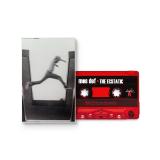
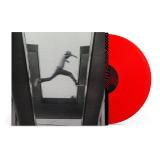
Originally released in June 2009, The Ecstatic stands as a defining artistic statement from Mos Def (now known as yasiin bey) — a richly textured return to form that reaffirmed his status as one of hip-hop’s most adventurous and intellectually engaged voices. Arriving a decade after his celebrated debut Black on Both Sides, the album was widely regarded as his strongest work in years, earning near-universal praise for its lyrical breadth, eclectic production, and thematic ambition.
Musically, The Ecstatic weaves a global sonic tapestry shaped by an array of forward-thinking producers including Madlib, J Dilla, Oh No, Preservation, Mr. Flash, Chad Hugo (of The Neptunes), and Georgia Anne Muldrow. The resulting soundscape is both rooted in hip-hop tradition and unbound by genre, integrating elements of jazz, soul, Middle-Eastern inflection, and experimental sample work. Tracks like “Supermagic” and “Twilite Speedball” establish a vibrant, restless energy that mirrors the album’s expansive creative scope.
Lyrically, yasiin bey traverses personal, political, and philosophical terrain with characteristic incisiveness, confronting social inequality, Western imperialism, and questions of cultural identity with poetic urgency. Embracing risk and complexity rather than nostalgia, The Ecstatic remains a mature, deeply felt body of work whose ambition, depth, and enduring resonance have solidified its place as a standout entry in Mos Def’s catalog and in modern hip-hop history.
expected to be published on 14.08.2026
Tape[20,59 €]
,The Ecstatic", das ursprünglich im Juni 2009 erschien, gilt als wegweisendes künstlerisches Statement von Mos Def (heute bekannt als Yasiin Bey) - ein facettenreiches Comeback, das seinen Status als eine der abenteuerlustigsten und intellektuell engagiertesten Stimmen des Hip-Hop bekräftigte. Das Album erschien ein Jahrzehnt nach seinem gefeierten Debüt ,Black on Both Sides" und wurde weithin als sein stärkstes Werk seit Jahren angesehen; es erntete nahezu einhelliges Lob für seine lyrische Bandbreite, die vielseitige Produktion und den thematischen Anspruch. Musikalisch webt ,The Ecstatic" einen globalen Klangteppich, der von einer Reihe zukunftsweisender Produzenten geprägt ist, darunter Madlib, J Dilla, Oh No, Preservation, Mr. Flash, Chad Hugo (von The Neptunes) und Georgia Anne Muldrow. Die daraus entstehende Klanglandschaft ist sowohl in der Hip-Hop-Tradition verwurzelt als auch genreübergreifend und integriert Elemente aus Jazz, Soul, nahöstlichen Einflüssen und experimenteller Sample-Arbeit. Tracks wie ,Supermagic" und ,Twilite Speedball" strahlen eine lebendige, rastlose Energie aus, die den weitreichenden kreativen Spielraum des Albums widerspiegelt. Textlich durchstreift yasiin bey mit seiner charakteristischen Schärfe persönliche, politische und philosophische Themen und setzt sich mit poetischer Dringlichkeit mit sozialer Ungleichheit, westlichem Imperialismus und Fragen der kulturellen Identität auseinander. The Ecstatic setzt eher auf Risiko und Komplexität als auf Nostalgie und bleibt ein ausgereiftes, tief empfundenes Werk, dessen Ehrgeiz, Tiefe und anhaltende Resonanz seinen Platz als herausragender Eintrag im Werk von Mos Def und in der modernen Hip-Hop-Geschichte gefestigt haben.
Order now and we will order the item for you at our supplier.
Longform: Across two decades, the California-born hardcore outfit CEREMONY has earned its standing as one of punk’s most adaptable and unflinching bands, always ready to meet the moment without surrendering its principles. True to form, CEREMONY's seventh album, Tell Me Your Dream pushes the group’s punk-forged intensity all the way to the fore, capturing the quintet at its most expressive, expansive, and timely. “We’re living in an era of mass uncertainty,” says CEREMONY vocalist Ross Farrar. “In punk, I don’t see how you can’t respond. It’s taken over our lives in so many different ways — economically, politically, spiritually. We want people to wake up and get into what’s happening.” Ferociously alert, Tell Me Your Dream reunites CEREMONY — Farrar, guitarist-keyboardist Anthony Anzaldo, guitarist Andy Nelson, bassist Justin Davis and drummer Jake Casarotti — with producer John Reis for ten songs of searing breadth. That means everything from bristling hardcore to moody post-punk — all while taking fundamental inspiration from Discharge, Crass, and other anarcho-punk troupes that first helped certain members of CEREMONY find their own political voices back when they were teenagers. The result is a culmination of the band’s 21 years together, if not some kind of riddle: CEREMONY knows how to make a return-to-form sound like evolution — and vice versa.
expected to be published on 07.08.2026
Ever since the late 1950s bossa-nova revolution, Brazil’s influence on French music has been undeniable. Pierre Barouh, Georges Moustaki and a vast array of lesser known artists, all made the Musica Popular Brasileira (MPB) an axis of promotion at the service of a cool and metaphysical, modern and mixed Brazilian lifestyle. Some were seduced by the poetic languors of the bossa, some were looking for fun, and others just loved the American hybridization of jazz-bossa, jazz-samba.
What is bossa nova? One of its creators, Joao Gilberto said: "Its style, cadence, everything is samba. At the very start, we didn't call it bossa nova, we sang a little samba made up of a single note - Samba de uma nota so .... The discussion around the origins of bossa nova is therefore useless”. It is nevertheless useful to remember that these magnificent Brazilian songs, which the guitarist describes as samba, were shifted and balanced around improbable chords. "I like things that lean, the in-betweens that limp with grace," said Pierre Barrouh, quoting Jean Cocteau.
With emotion, arrangements for violin and supple guitar licks, bossa nova rapidly changed. A transformation that can be heard in the Tchic, tchic, French Bossa Nova 1963-1974 compilation, the result of a cultural reappropriation, which traveled through the United States and supplemented itself in France.
A musical revolution that has remained significant, bossa nova was born in Rio. From 1956 to 1961, Brazil lived through its golden years. In five years, the country had invented its modernist style. Elected president in 1956, Juscelino Kubitschek de Oliveira, an elegant man with a broad forehead, brandished a promising slogan: "Fifty years of progress in five years". He quickly got to work. Not worried about increasing debt, he launched the project for a new federal capital, Brasilia, designed by the communist architect Oscar Niemeyer. Volkswagen opened state-of-the-art factories and created the “fusquinha”, the Beetle. In Rio, the Vespa made its first appearance. The Arpoador Surf Club crew run into the “girl” from Ipanema, Helô Pinheiro - the tanned garota ("chick"), between a flower and mermaid, who at 17 walked by the Veloso bar, where the fiery author and composer, Tom Jobim and Vinicius de Moraes, were getting drunk on whiskey. From then on, bossa symbolized cool.
In 1958, Joao Gilberto recorded Chega de Saudade, which the directors of Philips denied, calling it "music for fagots". The marketing director, who believed in it, secretly pressed 3000 78-inch vinyls and distributed them at schools around Rio, creating a tidal wave.
American jazzmen then took over. In particular, trumpeter Dizzy Gillespie and guitarist Charlie Byrd. In November 1962, the Brazilian Ministry of Foreign Affairs funded a "Bossa-Nova" concert at Carnegie Hall in New York, inviting the genre’s pioneers. Unprepared, the show soon turned to disaster. But the troupe was invited to the White House by Jackie Kennedy. The first lady loved "the new beat" and in particular Maria Ninguem, a song by Carlos Lyra, later covered by Brigitte Bardot.
In Brazil, the 1964 military coup quickly ended this euphoria. The destructive atmosphere that ensued pushed many Brazilian musicians to leave, if not to exile. Thus, Tom Jobim, Sergio Mendes and Joao Gilberto arrived to the United States. In New York, Joao Gilberto met saxophonist Stan Getz. At the time, he was married to the Bahianese Astrud Weinert Gilberto, who had a German father. She had never sung before, but she knew how to speak English. Getz therefore asked her to replace her husband on The Girl From Ipanema. The Getz/Gilberto record with Tom Jobim on piano, was released in March 1964. Phil Ramone, the "pope of pop" was in charge of sound.
Bossa nova arrived in Paris through the classic “guitar-voice” channel (Pierre Barouh, Baden Powell, Moustaki…) But France loved jazz and Paris had already welcomed its American contributors. All these good people were to pass through Saint-Germain-des-Prés. The cabaret l'Escale became the Mecca of Latin American sound where one could find Pierre Barrouh and his friends, such as the Camara Trio, samba-jazz aces, whose only record was published by the Saravah label. With a band strangely called Les Masques (a band that included Nicole Croisille and Pierre Vassiliu, among others), the Camara Trio recorded an interesting Brazilian Sound, including the track Il faut tenir which is present on this tasty compilation of rarities.
Other enlightened musicians can also be found on the compilation, such as Jean-Pierre Sabar (songwriter for Hardy, Auffray, Leforestier ...) and the French pop rock organist Balthazar. In 1975, Sabar recorded Aurinkoinen Musiikkimatka on a Finnish label, which featured the crazy Vai, Vai, included on this record. We are now following the footsteps of Brazilian electronic musicians such as Sergio Mendes, Eumir Deodato or Marcos Valle who created funk and disco sounds on their keyboards and synthesizers. A style that influenced Véronique Sanson when she wrote Jusqu’à la Tombée de la nuit in 1969 for Isabelle de Funès, the niece of Louis and a great friend of Michel Berger - Sanson did end up singing this track on her 1992 Sans Regret record.
The pinnacle of exoticism and travel, Sylvia Fels’ Corto Maltese includes bongos, sea mist and ocean sounds. The title was taken from Jacky Chalard’s concept album written in 1974, Je suis vivant, mais j’ai peur (I am alive, but I am scared), based on Gilbert Deflez’s science fiction novel.
However, bossa nova extended the scope of popularity. "In the 1970s, I was a fan of Sergio Mendes, Getz / Gilberto. I fell in love with this music that I knew because I had been an orchestral singer, " explained Isabelle Aubret, who in 1971 delivered a composite record of covers by the very funky Jorge Ben, Orfeu Negro, Tom Jobim, Vinicius de Morais and Jean Ferrat. "I recorded this album for Meys Records in Paris, far from Brazil, with wonderful musicians, François Raubert, Roland Vincent, Alain Goraguer...". The latter wrote the arrangements for Casa Forte, a very percussive title borrowed from Edu Lobo, one of the initiators of the bossa who spent time in California. "Jazz and bossa came together and produced very rhythmic music. I love singing, it allows me to dream, to have fun, to feel a high on stage, and these songs brought me joy, made me swing, my singing felt like a dance.”
The world tours of French singers and their desire for the tropics, often brought them to Rio with its hills, forests, caipirinhas and tanned bodies. There are surprises though, like this Iemenja (Iemenja is the goddess of the sea in the Afro-Brazilian candomblé religion). Not unlike the composer and musician Jean-Pierre Lang, based in Sao Paulo, Claire Chevalier taught Brazil to Brazil. In 1970, the singer and painter published a 45-inch vinyl, Mon mari et mes amants (My husband and my lovers), under the improbable pseudonym of Clarinha (little Claire). She was then living in Rio, with her husband, Joël Leibovitz, who founded a band called Azimuth, and who owned a record label specialized in "sambas enredos" songs for samba school parades.
For its B side, she asked Pierre Perret to come up with lyrics for a song composed by Carlos Imperial: "Oh goddess of the sea, o goddess Iemenja, I bring a white rose to adorn your long hair ..." . "Perret came to see us, and we had fun, remembers Joël Leibovitz. We wrote Lemenja for fun, we recorded it at the Havaí studio, behind the Central do Brasil the central station. Erlon Chaves, the arranger who worked with Elis Regina, joined us" adding his share of Afro-Brazilian percussions and funky brass to the mix.
There is a common misunderstanding in Franco-Brazilian history: that bossa, admittedly hedonistic, is perceived as funny, even though the poets who wrote the texts are often philosophizing on the human condition. Its French interpreters pull it towards a carnival inspired universe, far removed from its fundamental essence. Thus, Jean Constantin covered the famous Samba da minha terra, an ode to the art of samba written by the classic Bahian composer Dorival Caymmi, renaming it with the enticing title of Pas tant de tchi tchi pompon: "On your pier there is no tchi tchi / when you arch your back, you know everything is alright ”(lyrics by Gérard Calvi). This expedited bossa aims for the absurd, but retains a certain elegance.
Indeed, Jean Constantin was not an idiot, the rather large man had a huge mustache and liked fantasy, (Les pantoufles à papa, Le pacha, inspired by cha-cha-cha-cha, salsa and jazz) but he was also the lyricist of Mon manège à moi interpreted by Edith Piaf, the composer of Mon Truc en plume by Zizi Jeanmaire and the soundtrack of François Truffaut’s 400 Blows. Le Poulpe, published in 1970, from which this bossa is extract, was arranged by Jean-Claude Vannier, an accomplice of Serge Gainsbourg’s Melody Nelson. In short: "There is enough of samba / By looking at the parasol / Because my poor cabeza / Is going to die in the sun".
Even the American actress Marpessa Down, who was at the heart of the bossa nova revolution with her role as Euridyce in Marcel Camus’ film Orfeu Negro, winner of the 1959 Cannes Palme d'or, fed the clichée with Je voudrais parler au petit cuica - "Tell me how you manage to always make people want to dance / It's true, I must admit that I cannot resist your magic" - in consequence, once can hear the cuica, a little drum inherited from the Bantu.
But bossa nova had many angles. Societal, of course, pushing actresses who were symbols of women's liberation like Brigitte Bardot, Jeanne Moreau, or Sophia Loren to engage in the exercise of accelerated bossa. In February of 1963, Sophia Loren made a record in French in Rome, Je ne t'aime plus, featuring the song De jour en jour, a bossa written by two Italians, Armando Trovajoli and Tino Fornai, which was released a little later by Barclay. Bossa accompanied the 1960s, a decade of moral liberation. Ann Sorel, who interpreted La Poupée des favellas, caused a sensation with L’amour à plusieurs, a provocative song written by Frédéric Bottom and Jean-Claude Vannier. As for the actress Andrea Parisy, she displayed her bourgeois cheekiness in Marcel Carné's Les Tricheurs before interpreting Les mains qui font du bien. And Magalie Noël, the friend of Boris Vian, who sung Johnny fais-moi mal, was hired to sing Une énorme Samba, composed by Alain Goraguer (arranger to Gainsbourg, Bobby Lapointe and Jean Ferrat) with lyrics by Frédéric Botton.
But in the end, of what wood is bossa nova made of? The answer is given by Christianne Legrand, daughter of Raymond the conductor, and sister to Michel the composer: "With me, with jà" - jà means "immediately" in Portuguese. In 1972, the singer, an expert in vocal jazz and a member of the Double Six, published Le Brésil de Christianne Legrand. Two songs included on the Tchic Tchic compilation that demonstrate how bossa, jazz, funk, rock, etc. work like a swiss army knife: the music is used to denounce broken systems, or miracles, HLM et ciné roman, Cent mille poissons dans ton filet, two songs from the O Cafona soundtrack, a successful telenovela broadcast, at the time in black and white, on TV Globo. The first was adapted in French by the fighter and friend of the Legrand tribe, Agnès Varda. The second is content with a play on words, jostling them into a summer fun.
Véronique Mortaigne
Order now and we will order the item for you at our supplier.
Composer Vasco Mendonça presents his third album “Third Places”. The album brings together a collection of landmark performances and features some of the leading names in international contemporary music, including countertenor Iestyn Davies, mezzo-soprano Barbara Kozelj, the Porto Casa da Música Symphony Orchestra, the ensemble Het Muziek, and conductors Brad Lubman and Ernest Martínez Izquierdo.
More than just a record, “Third Places” stands as a space for artistic and political reflection on the present. Inspired by Ray Oldenburg’s concept of the ‘third place’ – a space beyond home and work where community life takes place – the album’s title refers to the venues where these works came to life, Casa da Música and the Muziekgebouw aan ’t IJ in Amsterdam: spaces for encounter, dialogue and cultural resistance. For Vasco Mendonça, these spaces symbolise “the ability to elevate the way we communicate with one another and to resist our most primitive and violent impulses”.
The voice lies at the heart of this work. The compositions explore the theatrical, intimate and political dimensions of vocal expression, drawing on texts of great social and emotional weight to create a shared space for listening and questioning the current state of the world.
One of the album’s central works stems from a profound contemporary concern. Inspired by the turbulent political climate in the United States following the 2016 elections and by his discovery of the poetry of Terrance Hayes and Tracy K. Smith, Vasco Mendonça composed a cycle of songs initially conceived for voice and percussion, later transposed for orchestra. The result is described by the composer as “a kind of imaginary American folklore”, where excess, transcendence, fascination and fear coexist.
The album also includes a reworking of material from the opera “Bosch Beach”, created in 2016 to mark the 500th anniversary of the death of Hieronymus Bosch, commissioned by the Dutch foundation Stichting Bosch 500. Based on a libretto by the writer Dimitri Verhulst, the work reflected on the European migration crisis through a scathing portrait of human indifference. In “Third Places”, Mendonça revisits some of this musical material to construct an incisive reflection on contemporary political discourse, transforming the opera’s numbers into archetypes of election campaigns, populism and performative communication.
Straddling contemplation and confrontation, lyricism and political tension, “Third Places” stands as one of the most ambitious recording projects in contemporary Portuguese music, offering an experience that is both aesthetic and critical, where music and thought intersect in a visceral way.
The digital version of the album will include a bonus track, “Marathon”, which explores the analogy between music and long-distance running, creating a piece in which time is transformed through breathing, the heartbeat and the ritualised repetition of movement and the body, in a constant tension between exhaustion and survival.
expected to be published on 19.06.2026
2023 Repress
Dennis Brown has always been cited as Jamaica's favourite singer.
While Bob Marley set out to conquer the world, Dennis's popularity on the island grew with every year.
His most prolific period is said to be with producer Niney the Observer,who led the singer down a more Roots avenue.He put Dennis on some of his heaviest rhythms.
Throwing also into the pot the fact that these rhythms were also to be mixed by the Dubmaster himself King Tubby we are bound to get one of the best Dub albums around.
Here is where the Crown Prince of Reggae Meets Niney the Observer at King Tubbys.
It's from this period that we have focused on and it's these tracks that were taken to King Tubby's studio to produce this stunning album.
Hope you enjoy the set.......
G a7 | COME AGAIN DUB
J b2 | WOLF AND LEOPARDS DUB
Order now and we will order the item for you at our supplier.
The 1970s/'80s duo is most well-known for the most requested song ever on the Dr. Demento radio show, "Fish Heads." The video for the hilarious classic track had national TV exposure airing on Saturday Night Live in December 1980. The clip often aired in the early days of MTV and it has over 6.9 million views on YouTube. Their "Best of" compilation was an early Rhino Records release back in 1987 and this 16- track album features many beloved Demento classics like "Boogie Woogie Amputee" and "Party In My Pants." Includes their version of "What's New Pussycat" from Devo's late Bob Casale and the track "Blithering" from Gerry Beckley from the band America. Also features guest appearances from Steve Perry of Journey, Dewey Bunnell of America and Joseph Williams of Toto on the track "Don't' You Wanna Go To The Moon". The album has never been re-released.
expected to be published on 19.06.2026
Cool Ghoul Colour Vinyl[43,07 €]
Futurismo are proud to present DEVO’s NITROUS NIGHTMARE, Halloween Live ‘75. Never before released, or heard in it’s entirety, this legendary live performance is presented here in it’s full chaotic glory on limited edition 2xLP and 2xCD. The live release all hardcore Devo fans have been waiting for, Nitrous Nightmare demonstrates a band harnessing their artistic greatness in the purest of forms. This mythic performance captures Devo perfecting some of their most iconic concepts in the raw. Expertly restored, this live recording makes for a thrilling experience, it also captures Devo as a lightening rod for hostility. On Halloween 1975, Devo took the stage at the WHK Auditorium in Cleveland, in a supporting capacity for jazz legend Sun Ra, to perform for a raucous crowd dressed in the finest of Halloween cliché. Already riding high on Nitrous Oxide and booze supplied by the sponsoring radio station, this unaware horde was expecting to see a slick cover band churning out renditions of Bad Company hits, only to be subjected to an act of subversive performance art that would send the growingly aggravated crowd into eventual meltdown. Physical threats ensued, but Devo played on. Acting as a live companion release to Futurismo’s much lauded Art Devo, the tracklist featured here showcases the origins of de-evolution theory in a live setting. These songs would become some of their most famous material, with this recording believed to be the very first time ‘Jocko Homo’ was performed in front of a live audience; the full 12 minute version documented here is sure to please fans, even if it displeased the urban hippies and horror masked onlookers that evening. Whilst Devo may have felt they were trapped inside a negative energy vortex during that era, it is clear in retrospect that the band was using this energy to carve out the genesis of a sonic and visual art that has truly stood the test of time. The music performed that evening would mutate culture for decades to come, long after the denizens of the auditorium packed away their cheap vampire costumes and returned to their day jobs. Spanning 2xLP’s of unreleased live material, most of which has never been heard before, this wondrous performance draws purely from that integral early history. Mixed and mastered directly from recordings kept in the bands personal vaults, this live collection showcases why Devo was, and still is, one of the most important bands in American history. De-evolution is real. The art of DEVO is real. Here is the evidence. This 2xLP is housed in a gloss laminated wide spined sleeve. It has a tracklist that has been sourced directly from the archives, and contains colour inner sleeves and a fold-out containing archival imagery and liner notes by Gerald V Casale.
expected to be published on 19.06.2026
expected to be published on 29.05.2026
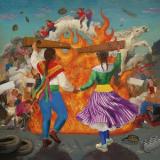
With Flame Folclòre, Cocanha continues reclaiming Occitan folklore as a living, political and embodied space. For Lila Fraysse and Caroline Dufau, folklore is neither decoration nor nostalgia. It is a site of struggle, where narratives, identities and imaginaries are constantly renegotiated. Drawing from fragments of traditional Occitan music, the duo composes, reshapes and rewrites. Ancient melodies intertwine with original texts in a contemporary language that echoes both subversive Occitan memories and present-day struggles. The voice becomes a chronicle of now, a way of inhabiting the present. Driven by hypnotic polyphony and the deep pulse of stringed tambourines, the album embraces a minimal, physical and grounded aesthetic. Repetition acts as propulsion, dance as function. Cocanha"s practice is collective by nature: to gather, to move, to fuel a joyful struggle around reclaiming the commons. Produced by Raül Refree, Flame Folclòre intensifies the dialogue between memory and transformation. Voices strike, revolve and respond, opening a circular space where folklore is no longer frozen but alive and burning in the present.
expected to be published on 15.05.2026
Mit seinem neuen Studioalbum „Cinematic“ widmet sich der Multi-Platin-Vokalist Josh Groban den großen Momenten der Filmgeschichte.
Die Auswahl reicht von Oscar-prämierten Klassikern wie „Can You Feel the Love Tonight“ (Der König der Löwen) und „Skyfall“ (James Bond) bis hin zu zeitlosen Standards wie „As Time Goes By“ (Casablanca) und „Moon River“ (Frühstück bei Tiffany).
Hochkarätige Kollaborationen: Ein besonderes Augenmerk liegt auf dem Duett „Unchained Melody“ mit Jennifer Hudson sowie einer persönlichen Interpretation von „Moon River“ zusammen mit seinem Bruder Jack Groban.
Orchestrale Inszenierung: Produziert von Greg Wells (u. a. The Greatest Showman), besticht das Album durch opulente orchestrale Arrangements, die in Los Angeles und London aufgenommen wurden.
expected to be published on 08.05.2026
Transparent Yellow Vinyl[26,68 €]
Celebrating 20 years of Frank Turner’s solo debut EP ‘Campfire Punkrock’, Xtra Mile Recordings are excited to release a special anniversary extended edition of the seminal release. Featuring the original EP with two added songs (The Real Damage and The Ballad Of Me & My Friends, both of which were included on the US version in 2007), plus 7 further live tracks recorded from Frank’s 50th solo gig in London 2006 - taking listeners right back to where it all began at the very early days of Frank’s incredible solo career. The 12” LP features new reworked artwork with shiny gold campfire on matt black cover plus coloured vinyl.
The original EP was recorded by Frank's guitarist Ben Lloyd at the Oxford home of Turner's bass player Tarrant Anderson and mixed by Tristan Ivemy. If features fan favourites ‘Nashville Tennessee’, ‘The Real Damage’ and ‘Ballad Of Me And My Friends’. Throughout April, Frank will tour UK performing tracks from Campfire Punkrock and the early years of his solo career. All dates are sold out including two nights at London’s Scala.
expected to be published on 10.04.2026
Tauchen Sie ein in das glitzernde Lebensgefühl der 1970er Jahre! Mit „70s Disco Hits Vol. 3“ holen Sie sich die größten Dancefloor-Klassiker einer unvergesslichen Musikära direkt nach Hause – energiegeladen, zeitlos und voller Groove.
Diese exklusive Vinyl-Compilation vereint ikonische Künstler und Welthits, die die Disco-Welle geprägt haben:
• Donna Summer – Die „Queen of Disco“ begeistert mit ihren elektrisierenden Hymnen und unverwechselbarer Stimme.
• Barry White – Samtweiche Soul-Vibes und unverkennbarer Groove.
• Blondie – Disco trifft New Wave mit ikonischem Sound.
• Stevie Wonder – Funkige Rhythmen und musikalische Meisterwerke.
„70s Disco Hits Vol. 3“ bringt das Gefühl von Spiegelkugeln, Plateauschuhen und durchtanzten Nächten zurück – eine musikalische Zeitreise in die goldene Ära der Disco.
Let the music play – und machen Sie Ihr Wohnzimmer zur Tanzfläche!
Order now and we will order the item for you at our supplier.
Celebrating the 30th anniversary of Enlace Funk magazine, they present the world's first Flamenco-Jazz compilation, featuring 16 tracks from between 1978 to 2025, released on vinyl for the first time. A musical dialogue between Flamenco and Jazz, unique in the world, a journey through some of the most important artists of this style, starting with the seminal work of the group Dolores in 1978, and continuing to examples of the current sound of this exciting fusion. Includes tracks never before released on vinyl by artists such as Jorge Pardo, Chano Dominguez, Pedro Ojesto, and Marc Miralta. The first volume of Flamenco-Jazz aims to showcase this unique style that has proven to be a bridge of communication and dialogue between flamenco and jazz musicians, creating an inimitable sound that is constantly evolving and transcending barriers. We take as our starting point a 1978 recording by Dolores, featuring Paco de Lucía, which later led to the formation of her legendary sextet with musicians who had participated in this recording. Of course, this first volume wouldn't be complete without other masters like Josemi Carmona, Pedro Ojesto, and Marc Miralta. And of course, a new generation of names that have elevated the genre to its current status, such as flautists Trinidad Jiménez and Sergio De Lope, Juanfe Pérez and Juan Pérez Rodríguez from Huelva, Pablo Martín Caminero from Vitoria, and Miquel Alvarez from Valencia. Not forgetting innovators like Antonio Lizana and Enriquito, who are crossing borders and sharing their unique style. Ltd ed.classic black vinyl double LP in gatefold sleeve
expected to be published on 27.03.2026
COLORED VINYL[29,20 €]
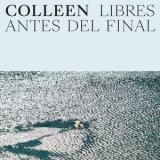
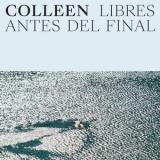
The compositions of Colleen, aka multi-instrumentalist CeIücile Schott, are as richly varied as they are precise. Each of Colleen"s albums are shaped by her predetermined distinct instrumentation and parameters, including works composed entirely of music boxes, pocket synthesizers, and antiquated stringed instruments. The connective essence of Schott"s music is in her ability to create pieces within this transcendent specificity that are both expansive and imbued with profound emotions. Libres antes del final is an album that reaches for the hope and desire to be truly freed from unnecessary suffering and harmful thoughts before reaching the end of one"s life cycle. Schott composed and performed Libres on the Moog Matriarch, centering the record on a pulse-driven, bubbling energy with constant momentum. She then reamped the music in one of her favorite spaces in Barcelona, Casa Montjuic, accentuating the album"s sense of movement. The reamping process adds a literal physicality to the album, as carefully chosen and placed microphones (including the famous Neumann KU100 binaural head) capture both the venue"s PA sound itself and the venue"s acoustics. Colleen"s music translates snapshots of Schott"s life into singular pieces, often instrumentally transmuting a dense web of sensations into wondrous sonic terrain. Schott"s deft manipulation of the Moog Matriarch makes each subtle adjustment feel monumental.
expected to be published on 20.03.2026
Black Vinyl[26,68 €]
The compositions of Colleen, aka multi-instrumentalist CeIücile Schott, are as richly varied as they are precise. Each of Colleen"s albums are shaped by her predetermined distinct instrumentation and parameters, including works composed entirely of music boxes, pocket synthesizers, and antiquated stringed instruments. The connective essence of Schott"s music is in her ability to create pieces within this transcendent specificity that are both expansive and imbued with profound emotions. Libres antes del final is an album that reaches for the hope and desire to be truly freed from unnecessary suffering and harmful thoughts before reaching the end of one"s life cycle. Schott composed and performed Libres on the Moog Matriarch, centering the record on a pulse-driven, bubbling energy with constant momentum. She then reamped the music in one of her favorite spaces in Barcelona, Casa Montjuic, accentuating the album"s sense of movement. The reamping process adds a literal physicality to the album, as carefully chosen and placed microphones (including the famous Neumann KU100 binaural head) capture both the venue"s PA sound itself and the venue"s acoustics. Colleen"s music translates snapshots of Schott"s life into singular pieces, often instrumentally transmuting a dense web of sensations into wondrous sonic terrain. Schott"s deft manipulation of the Moog Matriarch makes each subtle adjustment feel monumental.
expected to be published on 20.03.2026
Abdou El Omari was born in 1945 in Tafraout, south of Agadir -- a village suspended between the pink granite peaks of the Anti-Atlas and the waves of the Atlantic. A landscape already musical in itself. He grew up in the dry mountain light, surrounded by the rhythms of nature and Berber's culture. Very little is known about the man -- a veil of mystery still surrounds his life, only deepening the fascination. In the 1970s, as Morocco was transforming, Abdou El Omari shaped a sound of his own -- a visionary blend of spiritual jazz, psychedelic funk, Moroccan traditions, and early electronic experimentation. Today, his work is resurfacing, rediscovered by a new generation of listeners in search of lost horizons. This record stands among its rarest and most precious fragments. At twenty-two, he founded his first group, Les Fugitifs, which gained him local fame. Soon after, he released records and cassettes on labels such as Cléopâtre, Hassania, Boussiphone, Hilali, and his own, Al Awtar, while performing on RTM (national radio and television). He also composed for artists like Naima Samih, Laila Ghofran, and Aicha El Waad. In 1976, through the label Gam, he released his only vinyl album, Nuits d'été -- a record that would become cult decades later, reissued in 2017 by Radio Martiko. In the 1980s, his music grew quieter, more secret. He tried to recover his old tapes from the studios he had recorded in, but gradually withdrew from the scene and returned to hairdressing. A pioneer of musical fusion, he opened paths that would remain unexplored for years. He passed away in 2010, never witnessing the rediscovery of his music by diggers, bloggers, and collectors online. One day, his close friend and poet Aziz Essamadi, rescued a cardboard box from the trash -- a box containing Abdou El Omari's personal archives. It was later entrusted to Casablanca based collector Ahmed Khalil, founder of the label Dikraphone. Inside were treasures preserved by chance: demos, rehearsals, private recordings, unseen photographs -- and a stunning, almost forgotten cassette. Here, El Omari sounds bolder than ever, exploring territories where pop, cosmic disco, electric blues, and Moroccan tradition merge without boundaries. Armed with his ARP Odyssey synthesizer, hypnotic grooves, and the celestial layers of his Farfisa, he expanded the dialogue between deep roots and electronic exploration. This album is the continuation of a vision -- a music of the Moroccan future: rooted, but reaching for the unknown. Colorful, magnetic and timeless, here is music for dancing as much as for dreaming.
expected to be published on 13.03.2026
Far from being a nostalgic exercise, the record reasserts their daring artistry, merging legacy and rebirth. Known for melodic minimalism, elegant melancholy, and pulsing electronics, the band has often been compared to Depeche Mode, New Order, or Joy Division, yet their singular identity has always set them apart. On this new album, they reinvent their sonic language, blending vintage synths with classical textures and luminous modern production. The result is a sensory journey where light and shadow converse, where poetry meets pulse, reaffirming their timeless relevance. Their influence extends across genres: sampled by Madlib, reinterpreted by Tricky, reimagined by Theophilus London, and remixed by DJs such as Marcel Dettmann. Tributes, reissues, and appearances in cinema and fashion underscore their resonance, from Lucie Borleteau's Chanson Douce movie to catwalks by Chloe.
Born in Marseille in the early 1980s and led by Alain Seghir alongside Catherine Loy , Brigitte Balian , and Beverley Jane Crew , Martin Dupont left a mythic legacy with tracks like ' Inside Ou't and 'Just Because...' before dissolving in 1987. Rediscovered through Minimal Wave reissues, their music captivated a new generation of underground and electronic enthusiasts. Today, Martin Dupont are reborn. Seghir and Crew, joined by Sandy Casado, Thierry Sintoni, and Olivier Leroy, embark on a world tour that affirms their unique ability to move and inspire. You Smile When It Hurts proves that their visionary sound has never been more alive
expected to be published on 13.03.2026
Yellow Bio Vinyl[36,35 €]
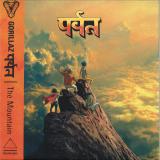
The Mountain is Gorillaz’ ninth studio album, a collection of 15 new tracks featuring a stellar list of artists and collaborators. Jamie Hewlett’s album artwork captures the four much-loved animated band members - Murdoc, Noodle, Russel and 2D – in a series of beautifully intricate, hand-drawn illustrations.
The Mountain is Gorillaz 9th studio album. The album is a collection of 15 new tracks featuring artists and collaborators including: Ajay Prasanna, Anoushka Shankar, Asha Bhosle, Asha Puthli, Bizarrap, Black Thought, Gruff Rhys, Idles, Jalen Ngonda, Johnny Marr, Kara Jackson, Omar Souleyman, Paul Simonon, Sparks, Trueno and Yasiin Bey; as well as the voices of Bobby Womack, Dave Jolicoeur, Dennis Hopper, Mark E. Smith, Proof and Tony Allen. Produced by Gorillaz, James Ford, Samuel Egglenton, Remi Kabaka Jr. and Bizarrap (Orange County), The Mountain was recorded in London, Devon, Miami, Jaipur, Mumbai, New Delhi and Rishikesh; and features artists performing in five languages: Arabic, English, Hindi, Spanish and Yoruba. The artwork for The Mountain sees Jamie Hewlett’s distinct, yet ever-evolving, style illustrate the world of Gorillaz with an ever more detailed and beautiful intricacy across a series of hand-drawn illustrations. Circumstances find Murdoc Niccals, Russel Hobbs, 2D and Noodle in India, where our heroes are immersed in the rhythms of mystical music-making as they navigate the mountainous terrain of this thing called life.
Order now and we will order the item for you at our supplier.
expected to be published on 27.02.2026
WILDSTYLE HOUSE is a new compilation series where Toy Tonics invites producers and DJs that have a very special, funky, unique sound to make one new track. The compilation should show the variability and diversity of house and disco TODAY. Like the wild music mix you can hear at the Toy Tonics events and the way Toy Tonics DJs combine many different styles of "4 to the floor" music into one new soulful, multi-style, and warm-sounding blended "genre." It's about the groove, about a new soul sound, the human feel, the organic and Y2K-inspired dance music that is growing and appeals to a new generation of dance music lovers.
This first part of the compilation includes unreleased music by:
Afro-funk and salsa-house producer talents ELADO, MUSTA, and ALMA NEGRA.
Garage house maestros MELON BOMB and Italian musician DANIEL MONACO (known for his New Wave disco and proto-house releases on Rush Hour and his work for Antal).
MARLA KETHER, the London bass player and DJ, who is known for her work with Little Simz, Oscar Jerome, and Loyle Carner, and has now started to release her own tracks.
Argentinian singer, musician, and DJ ALOT, combining proto-house vibes with Spanish rap.
Funk house producer and edit maestro PAUL OLDER, who is starting to become one of the key names of the new soul house scene (supported by DJs like Folamour, David Penn, Seth Troxler, Kirollus, Breakbot...).
And also Toy Tonics' own GEE LANE, KAPOTE, and ARPY BROWN contributed new tracks.
Order now and we will order the item for you at our supplier.
Black Vinyl[27,52 €]
The Mountain is Gorillaz’ ninth studio album, a collection of 15 new tracks featuring a stellar list of artists and collaborators. Jamie Hewlett’s album artwork captures the four much-loved animated band members - Murdoc, Noodle, Russel and 2D – in a series of beautifully intricate, hand-drawn illustrations.
The Mountain is Gorillaz 9th studio album. The album is a collection of 15 new tracks featuring artists and collaborators including: Ajay Prasanna, Anoushka Shankar, Asha Bhosle, Asha Puthli, Bizarrap, Black Thought, Gruff Rhys, Idles, Jalen Ngonda, Johnny Marr, Kara Jackson, Omar Souleyman, Paul Simonon, Sparks, Trueno and Yasiin Bey; as well as the voices of Bobby Womack, Dave Jolicoeur, Dennis Hopper, Mark E. Smith, Proof and Tony Allen. Produced by Gorillaz, James Ford, Samuel Egglenton, Remi Kabaka Jr. and Bizarrap (Orange County), The Mountain was recorded in London, Devon, Miami, Jaipur, Mumbai, New Delhi and Rishikesh; and features artists performing in five languages: Arabic, English, Hindi, Spanish and Yoruba. The artwork for The Mountain sees Jamie Hewlett’s distinct, yet ever-evolving, style illustrate the world of Gorillaz with an ever more detailed and beautiful intricacy across a series of hand-drawn illustrations. Circumstances find Murdoc Niccals, Russel Hobbs, 2D and Noodle in India, where our heroes are immersed in the rhythms of mystical music-making as they navigate the mountainous terrain of this thing called life.
Order now and we will order the item for you at our supplier.
Born in Casablanca, Oum is a talented songwriter and melodist, whose songs are deeply rooted in the complex rhythms that can be found in Moroccan traditional music. Over the years, she has crafted a unique signature, with songs infused with sensual themes, carried by a voice that is both powerful and warm. While she sometimes borrows from jazz, soul or trance music, Oum defies categorization. Her music is that of a singular, free and universal artist.
A dedicated artist, Oum champions freedom, the rights of women and minorities, as well as an ecological and humanist vision of the world. As a UNAIDS Goodwill Ambassador, she makes her art a space of resistance and sharing, where spirituality and poetry rise as a life force. With Dialddar ("homemade"), Oum takes on a radical approach: composing an album without strings or wind instruments, relying solely on voice and percussion. A choice that constitutes both a technical challenge and an artistic manifesto. The percussions used are mostly handcrafted in Marrakech. Their tuning, sensitive to variations in temperature and humidity, make each recording fragile, vibrant, and unpredictable. It is precisely this organic dimension that Oum wanted to preserve: music that breathes, escapes control, and finds its true expression in the moment. With Dialddar, Oum continues her quest for a universal, rooted, and visionary music that invites a sensitive listening to the world. TER004 - CD comes with a 44 page book.
expected to be published on 20.02.2026
The wild lunar landscape of Lanzarote is the dreamy frame in which Populous paints his new album, “Isla diferente”.
An instrumental trip between cumbia and latin ambient music through the mysterious and magical landscape of Lanzarote, with some gloomy vocal interventions from Fuera (Italy), Javier Arce (Costa Rica), Eva de Marce (Mexico) and Esotérica Tropical (Puerto Rico).
An organic mixture of sweet ethereal melodies and experimental electronic sounds which the artist himself labeled as “latin ambient”.
Order now and we will order the item for you at our supplier.
"When The Wind Forgets Your Name" ist das erste neue Built to Spill -Album seit der Veröffentlichung von "Untethered Moon" aus dem Jahr 2015 und das achte Studioalbum dr langlebigen Band um Mastermind Doug Martsch. Es wurde von Martsch produziert, von Martsch, Lê Almeida, Joao Casaes und Josh Lewis gemischt und von Mell Dettmer gemastert. Das Cover Artwork wurde von dem Comiczeichner Alex Graham (Dog Biscuits; Fantagraphics Books) gestaltet, der auch den fünfzigteiligen Comicstrip für das Klappcover des Albums illustriert hat (erhältlich mit den CD-, LP- und MC-Ausgaben des Albums). Seit 1992 wollte Doug Martsch, Gründer von Built to Spill, dass seine geliebte Band ein gemeinschaftliches Projekt ist, eine sich ständig weiterentwickelnde Gruppe von unglaublichen Musikern, die gemeinsam Musik machen und live spielen. Nach mehreren Alben und EPs auf Independent-Labels stand Martsch von 1995 bis 2016 bei Warner Brothers unter Vertrag. In dieser Zeit nahmen er und seine wechselnden Mitstreiter sechs unbestreitbar großartige Alben auf - "Perfect From Now On", "Keep It Like A Secret", "Ancient Melodies Of The Future", "You In Reverse", "There Is No Enemy", "Untethered Moon". "When The Wind Forgets Your Name" setzt nun die Erweiterung des Built to Spill -Universums auf neue und aufregende Weise fort. Im Jahr 2018 brachten Martschs Glück und seine Intuition ihn mit dem brasilianischen Lo-Fi-Punk-Künstler und Produzenten Le Almeida und seinem langjährigen Mitstreiter Joao Casaes zusammen, beide von der psychedelischen Jazz-Rock-Band ORUA. Als Martsch ihre Musik entdeckte, verliebte er sich sofort in sie und bat sie bei Built to Spill mitzumachen, als er eine neue Begleitband für Auftritte in Brasilien brauchte. Die Auftritte in Brasilien liefen so gut, dass Martsch, Almeida und Casaes beschlossen, 2019 weiter zusammen zu spielen und durch die USA und Europa zu touren. Bei Soundchecks erlernten sie neue Songs, die Martsch geschrieben hatte, und als die Tournee zu Ende war, nahmen sie die Bass- und Schlagzeugspuren in seinem Proberaum in Boise auf. Nachdem sie nach Hause geflogen waren, begann Martsch selbst mit dem Overdubbing von Gitarren und Gesang. Das gemeinschaftliche Abmischen fand während der Pandemie übers Internet statt, in dem die Tracks hin und her geschickt wurden. Herausgekommen ist "When The Wind Forgets Your Name", eine komplexe und schlüssige Mischung aus den unterschiedlichen musikalischen Ideen der Künstler. Neben den poetischen Texten und Themen von Built to Spill sorgen die Experimente und die Liebe zum Detail für ein Album voller einzigartiger, lebendiger und zeitloser Klänge.
expected to be published on 30.01.2026
Limitierte Loser Edition, gepresst auf "Misty Kiwi Fruit Green" farbiges Vinyl. "When The Wind Forgets Your Name" ist das erste neue Built to Spill -Album seit der Veröffentlichung von "Untethered Moon" aus dem Jahr 2015 und das achte Studioalbum dr langlebigen Band um Mastermind Doug Martsch. Es wurde von Martsch produziert, von Martsch, Lê Almeida, Joao Casaes und Josh Lewis gemischt und von Mell Dettmer gemastert. Das Cover Artwork wurde von dem Comiczeichner Alex Graham (Dog Biscuits; Fantagraphics Books) gestaltet, der auch den fünfzigteiligen Comicstrip für das Klappcover des Albums illustriert hat (erhältlich mit den CD-, LP- und MC-Ausgaben des Albums). Seit 1992 wollte Doug Martsch, Gründer von Built to Spill, dass seine geliebte Band ein gemeinschaftliches Projekt ist, eine sich ständig weiterentwickelnde Gruppe von unglaublichen Musikern, die gemeinsam Musik machen und live spielen. Nach mehreren Alben und EPs auf Independent-Labels stand Martsch von 1995 bis 2016 bei Warner Brothers unter Vertrag. In dieser Zeit nahmen er und seine wechselnden Mitstreiter sechs unbestreitbar großartige Alben auf - "Perfect From Now On", "Keep It Like A Secret", "Ancient Melodies Of The Future", "You In Reverse", "There Is No Enemy", "Untethered Moon". "When The Wind Forgets Your Name" setzt nun die Erweiterung des Built to Spill -Universums auf neue und aufregende Weise fort. Im Jahr 2018 brachten Martschs Glück und seine Intuition ihn mit dem brasilianischen Lo-Fi-Punk-Künstler und Produzenten Le Almeida und seinem langjährigen Mitstreiter Joao Casaes zusammen, beide von der psychedelischen Jazz-Rock-Band ORUA. Als Martsch ihre Musik entdeckte, verliebte er sich sofort in sie und bat sie bei Built to Spill mitzumachen, als er eine neue Begleitband für Auftritte in Brasilien brauchte. Die Auftritte in Brasilien liefen so gut, dass Martsch, Almeida und Casaes beschlossen, 2019 weiter zusammen zu spielen und durch die USA und Europa zu touren. Bei Soundchecks erlernten sie neue Songs, die Martsch geschrieben hatte, und als die Tournee zu Ende war, nahmen sie die Bass- und Schlagzeugspuren in seinem Proberaum in Boise auf. Nachdem sie nach Hause geflogen waren, begann Martsch selbst mit dem Overdubbing von Gitarren und Gesang. Das gemeinschaftliche Abmischen fand während der Pandemie übers Internet statt, in dem die Tracks hin und her geschickt wurden. Herausgekommen ist "When The Wind Forgets Your Name", eine komplexe und schlüssige Mischung aus den unterschiedlichen musikalischen Ideen der Künstler. Neben den poetischen Texten und Themen von Built to Spill sorgen die Experimente und die Liebe zum Detail für ein Album voller einzigartiger, lebendiger und zeitloser Klänge.
expected to be published on 30.01.2026
About DJ Yoke..
Born in the small city of Aveiro, Portugal, DJ Yoke (Gabriel Casal) is a hip hop DJ and producer with over two decades of experience shaping the underground scene. In 2011, he was awarded Hip Hop Band of the Year in Portugal and crowned champion of the DMC Battle Supremacy, alongside multiple finalist appearances in the same competition.
Known for blending raw hip hop beats with broken beat and groove-driven textures, DJ Yoke has built a solid independent catalogue, including three solo albums and three beat tapes released independently.
In 2025, he unveils Yoke Fora de Órbita, a landmark release that represents a more mature and refined stage of his artistic journey. The album marks his first physical release, available on vinyl and cassette, and reflects the strong influence of his recent years based in London.
Conceived to be performed both as a live act with musicians and as a DJ set, Yoke Fora de Órbita expands Yoke’s sonic universe beyond the traditional DJ format. Live performances with musicians are scheduled for London, Lisbon, and other European cities.
No longer just a DJ, DJ Yoke continues to redefine his role as an artist — while keeping the turntable as his core instrument.
expected to be published on 30.01.2026
The journey through French-speaking pop archives continues with this fifth volume, packed with fuzz, gimmicks, and dissent. Far from the charts, the selected tracks display a great creative freedom, often backed by corrosive humor. Welcome to the surprising, kaleidoscopic, and colorful world of the late sixties and early seventies, Wizzz!
Born in Montauban, Robert Pico stumbled into music by chance when he met René Vaneste, then artistic director at Pathé-Marconi. René brought him to Paris to record his first 45 RPM EP in 1964. A year later, Pierre Perret introduced him to Vogue, where he recorded his second album with Claude Nougaro’s orchestra. Sylvie Vartan then introduced him to RCA, where he recorded four singles, including the astonishing "Chien Fidèle," a track backed by a hair-rising fuzz guitar. Alongside his solo career, he also composed for other artists like Alain Delon (the song was recorded but remains unreleased), Magali Noël, Bourvil, and Georges Guétary. In the Paris of the sixties, he mingled with Mireille Darc, Elsa Martinelli, Marie Laforêt, France Gall, Françoise Hardy, Petula Clark, Régine, Dani, Serge Gainsbourg, Joe Dassin, Franck Fernandel, Charles Level, and Roland Vincent. Despite his efforts and winning a Grand Prix Sacem for his final record, Robert Pico didn’t achieve the expected success in show business and decided to leave Paris and return to the Southwest, where he devoted himself to writing. He is the author of 23 books (including Delon et Compagnie, Jean-Marc Savary Editions 2025, a memoir about his youth and his many encounters). Today, he is relieved to never have become a celebrity and devotes himself to his work with passion.
In 1969, the Franco-Italian movie Erotissimo was released, directed by Gérard Pirès (who later directed Taxi in 1998, written and produced by Luc Besson). This pop comedy features Annie Girardot, Jean Yanne, Francis Blanche, Serge Gainsbourg, Nicole Croisille, Jacques Martin, and Patrick Topaloff. The soundtrack was written by Michel Polnareff and William Sheller, with lyrics by Jean-Lou Dabadie. "La Femme Faux-cils," performed by Annie Girardot. It recounts the feelings of a rich CEO's wife who seeks to develop her sex appeal under the influence of advertisement and magazines. Groovy, sparkling and light, this track, with ITS lush arrangements humorously critiques consumer society and feminine beauty standards.
“Je suis l’Etat” (1967) is the flagship track of the first EP by singer-songwriter Spauv Georges, aka Georges Larriaga, better known as Jim Larriaga (1941-2022). Born into a family of bakers, the young man was initially planning to become a hairdresser when he discovered English-speaking music through Elvis Presley and the Beatles. After this revelation, he decided he would become a songwriter and gave himself five years to succeed. He recorded his first two EP’s independently for RCA under the pseudonym Spauv Georges; meaning “that poor George”, a nickname given to him by the mother of her friend Jean-Pierre Prévotat (future drummer of the Players, Triangle, or Johnny Hallyday). Portraying a depressed and eccentric young man, Spauv Georges created corrosive and amusing songs that didn’t reach a wide audience, despite a TV appearance with Jean-Christophe Averty.
Supported by his loyal friend and fellow songwriter Jean-Max Rivière, Georges Larriaga met the future singer Carlos in the early '70s, then Sylvie Vartan’s assistant. He wrote songs for Carlos, including the popular "La vie est belle," "Y’a des indiens partout," and "La cantine", which went onto become a huge hit in 1972. He also composed for Claude François (“Anne-Marie”, 1971), Charlotte Julian (“Fleur de province”, 1972), helped launch child singer Roméo (who sold 4 million records), and later wrote the hit "Pas besoin d’éducation sexuelle" (1975) for the young Julie Bataille. In 1971, Jim recorded an album for Disc'Az: “L’univers étrange et fou de Jim Larriaga”, which featured pop gems like “La maison de mon père”.
The story of the song "Zoé" began when Pierre Dorsay, artistic director at Vogue Records, asked Swiss singer and musician Pierre Alain to write a song for a new female singer. The inspiration came when he realized that Zoé (the artist's name) was also the name of France's first atomic battery, created in 1948, which consisted of uranium oxide immersed in heavy water! The lyrics reflect a bubbling energy that must be handled with caution, while the instrumentation echoes this atomic theme, notably with the use of a theremin.
Zoé’s career lasted only as long as a single 45 RPM, but it seems Christine Fontane was the vocalist behind this pseudonym, who is known for several EPs, a good "popcorn" album in 1964, and a handful of children’s singles in the '70s. Regardless, the photograph on the cover is of a different girl entirely.
Later, Pierre Alain continued his career, writing songs for himself, Marie Laforêt, Danièle Licari, Alice Dona, Arlette Zola (3rd place in Eurovision 1982), and achieving multiple gold and platinum records in Canada. Also an inventor with several patents, president of the Romande Academy, and head of the French Alliance in Geneva, he now composes atonal music, books, and poetry. Moreover, he is also the host of "Les Mardis de Pierre Alain" at "Le P'tit Music'Hohl" in Geneva.
Filled with oriental choruses and fuzz guitar, "Fou" is from Jacques Da Sylva's only EP released by Vogue in 1967. Despite the quality of this recording, all traces of this singer disappear after this first effort.
Valentin is a baroque pop singer born in Belgium. He is the songwriter and composer of most of the tracks on his three singles released in the late 60s in Canada. A legend says that he reincarnated himself as Jacky Valentin during the 1970s for a rock'n'roll revival career in Belgium, but his older brother sadly debunked this story. Valentin's first two singles were arranged by Claude Rogen, a Parisian session pianist who had come to Canada to promote the song “Mister A Gogo”, a cover of David Bowie’s “Laughing Gnome”, adapted by singer Delphine, his wife at the time. Far from his usual network, Claude Rogen arranged music for Polydor, including the arrangements for “Je suis un vagabond” in 1969, a jerk tune with string arrangements and a furious optimism.
Jacques Malia wrote, composed, and recorded his only 45 EP for Festival in 1966. “Histoire de gitan” is an incredible beat track with bohemian scat that tells the story of a gypsy musician who came to Paris to make it in the Music-Hall, to no avail. The hero of the song and its author probably shared a similar fate, as Jacques Malia faded into anonymity after this remarkable attempt.
Bernard Jamet recorded two EPs for Barclay in the late sixties and co-wrote several songs with Christine Pilzer, Pascal Danel, and prolific songwriters Michel Delancray and Mya Simile. The track “Raison Légale” (1968), his masterpiece, immerses the listener in a courtroom right when a murderer is being judged, with jerk rhythm and free arrangements. A unique, paranoid, judicial, and psychedelic oddity.
Jean-Pierre Lebrot-Millers started his career in show business in 1967 as a singer and songwriter for the Philips label. After three singles, he wrote several songs of a new kind with his friend Pierre Halioche, in the midst of the sexual liberation movement and the democratization of drugs. With provocative lyrics, “Les filles du hasard” and “Barbara au Chapeau Rose” were released on a Philips singles in 1968. The character of Barbara was inspired by a queen of Parisian nightlife during the psychedelic years: model Charlotte Martin, who dated Eric Clapton from 1965 to 1968, then Jimmy Page from 1970 to 1983. Jean-Claude Petit’s arrangements, with a table-filled intro, soul brass, and Hendrixian guitar, emphasize the flamboyance of a hedonistic and sexy character, whose dog is named Junkie because “Junkie est un nom exquis”! The track was recorded live in three takes with a full orchestra.
Upon its release, the record was censored by Europe 1 and RTL due to its references to drug use. Jean-Pierre Lebrot was then banned from the airwaves and later dismissed by his record label. He changed his artist name to Jean-Pierre Millers, while his companion Pierre Halioche became D. Dolby for a new dreamy composition, “Chilla”, which Jean-Pierre produced himself with arrangements by Jean Musy. Once again, the song was immediately censored everywhere. After this setback, he decided to stop singing and started taking on odd jobs to support his Swedish wife and their son until the day he met Jean-Pierre Martin, then production manager at Decca, who had worked with Manu Dibango. Martin offered Jean-Pierre Lebrot-Millers, then employed at Rank Xerox, the position of artistic director at Decca. He accepted and became, a year later, promotion director (radio, press, TV). He worked on Julio Iglesias’s first album for Decca, which became a massive hit and allowed him to meet Claude Carrère. The latter asked him to write new songs and find their performers, much like a “talent scout.” It’s through him that Jean-Pierre discovered Julie Pietri and Corinne Hermès. He composed “Ma Pompadour” for Ringo, Sheila’s husband, and took the microphone again for the syncope hit “Rendez-Vous” in 1982.
That same year, Jean-Pierre Lebrot-Millers tried to release a track for which he had heavily gone into debt: “Si la vie est un cadeau”. Having recorded it in London, he presented it to numerous professionals, all of whom refused to get involved. The same thing happened with Antenne 2 and the Sacem when he proposed the song as France’s entry for Eurovision. He then met Haïm Saban, who was producing cartoon soundtracks and had just launched the Goldorak theme song. Saban, having listened to the song, declared it had the potential to become a hit. He sent Jean-Pierre and Corinne Hermès to meet the CEO of the Luxembourg radio and television network. The latter received them, asked to hear a verse and chorus a cappella in his office, and immediately hired them to represent Luxembourg at Eurovision 1983. They reworked the arrangements and recorded a new version with Haïm Saban as co-producer. The song ended up winning Eurovision 1983, a great comeback for our hero. He continued producing and hung out with the band Nacash in Belgium when a couple came to introduce their daughter for an impromptu audition in a hotel room. The girl sang “Les démons de minuit” while dancing to a radio cassette. Impressed, he had her take singing lessons for a year and composed a song for her (for which he had the melody and title, but no lyrics). This required him to go on the hunt for a lyricist, who ended up being Guy Carlier. They recorded the song, which was initially a ballad, at Bernard Estardy’s CBE studio, and gave the singer a new name: Melody. They showed the song around their industry network without success. Later, Estardy called Jean-Pierre to suggest changing the rhythm and making it pop-rock. Orlando, Dalida’s brother, liked the result and decided to co-produce the track. “Y’a pas que les grands qui rêvent » became a classic hit. The song has since been covered by Juliette Armanet (as a ballad, like the original) and Valentina.
Born into an aristocratic Breton family, Hervé Mettais-Cartier worked as a DJ at Queen Kiss, a nightclub in Poitiers, where he formed the band Les Concentrés with Michel (an actor) and Christian (a radio technician). Together, they created a repertoire of whimsical songs (“Ma bique est morte”, “J’suis un salaud”, “Fils de dégénéré”...) that they performed on stage dressed in white (in homage to “concentrated milk”). They performed at Bliboquet and Olympia in 1968 for the 10th edition of the “Relais de la chanson Française” organized by L’Humanité-Dimanche and Nous les Garçons et les Filles, sponsored by Pepsi Cola. Winners in the author-composer category, alongside Danish singer Dorte, their visibility allowed them to record a 45, and appear on television in Jean-Christophe Averty’s show. The A-side of the disc features Bruno le ravageur, a casatchok dedicated to Bruno Caquatrix, the director of Olympia, nicknamed in the song “Coq Atroce” or “croque-actrices”. The B-side is dedicated to “Fils de dégénéré”, a quirky tribute to Hervé's aristocratic roots, mixing absurdity with sophisticated vocal harmonies.
After Les Concentrés, Hervé Mettais-Cartier formed the duo La Paire et sa Bêtise with his friend Olivier Robert. They performed in Parisian cabarets and toured with Pierre Vassiliu. In the late 1970s, Hervé began a solo career. He recorded two albums for the Motors label in 1978 and 1979, which did not achieve their anticipated success due to lack of promotion. In 1980, he met Bernadette, with whom he started a family and created a “Chansons à voir” (songs to see) show that he performed until his death at the end of 2024.
Publicité comes from the final EP by the Missiles (Ducretet Thomson, 1966), a disc that also includes “La (nouvelle) guerre de cent ans”, featured on Volume 4 of our Wizzz! series. Please refer to the booklet for the story of the band.
“He’s 1.82 meters tall, 28 years old, weighs 135 kg, is black and Belgian”: this is the description of singer Hegesippe on the back of his sole single (Decca, 1967). He appears on the album cover wearing a Greek toga, like a hippie gag – we are at the end of the year 1967. In “Le crédo d’Hegesippe”, this former bodyguard of Antoine and the Charlots plays the delightful card of the thick brute converted to Flower-Power and non-violence, with arrangements by Jean-Daniel Mercier, aka Paul Mille.
“Ethéro-disco” was released on a promotional record for clients of the Maréchal company (Liège, Belgium) for the New Year 1979. Over a funky rhythm, celebrity impersonations (Brigitte Bardot, Jacques Dutronc, Fernandel…) deliver an enigmatic text about pharmaceutical products like ether, bismuth, and aspartate. The track was composed by Dan Sarravah (responsible for Joanna's “Hold-up inusité” featured on Wizzz! Volume 3) and Tony Talado, who was also a singer (one 45 in 1967), songwriter (with over a dozen credits between 1964 and 1985 in various styles from surf music to disco), author (Devenez Végétarien, Dricot Editions, 1985), ad designer, and psychologist.
Décollez-les is on the A-side of Mamlouk's only single, a pseudonym for Marsel Hurten, who is known for his work on several EPs in the late sixties, as well as composing music for Hervé Vilard’s “Capri, c’est fini”, Claude Channes' “La Haine”, Annie Philippe’s “On m’a toujours dit”, and Nancy Holloway’s “Panne de Cœur”.
This strange song, with Afrobeat horns and absurd dialogues between a chef and his kitchen staff, is the result of a collaboration between Marsel Hurten and one of his neighbors, a photographer from Pavillon-sous-Bois (93), where the musician settled after returning from the Algerian War. A music video was shot to promote the record.
Marsel Hurten was born in Tourcoing (59) into a musical family. At a young age, he joined the brass band founded by his grandfather, playing the piston before studying trumpet at the conservatory, as well as teaching himself how to play the guitar. As an orchestra musician, he toured in France, Belgium, Germany, and England. He released a series of solo 45’s between 1965 and 1968 for the DMF and Az labels before stopping recording to focus on working for other artists (Gilles Olivier, Noëlle Cordier…).
“L’amour nu” (Vogue, 1971) is the work of the short-lived Belgian band Mozaïque. The track, written by singer Jacques Albin, closely resembles another of his compositions, “Carré Blanc”, which he recorded in 1969 for Disc’AZ.
Represented by the Lumi Son micro-label based in Marignane (Côte d'Azur), Jean-Marc Garrigues released two 45 RPMs in the late sixties, defending the French jerk sound. The song “Je dis Non” is a short, joyful ode to youth, pop music, and rebellion.
Songwriter and performer Jacques Penuel released three singles. The first one, “Astronef 328” (Fontana, 1969), features a dizzying series of chords punctuated by sound effects, a sci-fi story, and arrangements by Jean-Claude Vannier.
We would like to sincerely thank Pierre Alain, Moon Blaha, Marsel Hurten, Bastien Larriaga, Jean-Pierre Lebrot-Millers, Bernadette Mettais-Cartier, Robert Pico, Olivier Robert, Claude Rogen, Micky Segura.
Order now and we will order the item for you at our supplier.
Die Benefiz-Compilation "Passages: Artists in Solidarity with Immigrants, Refugees, and Asylum Seekers", mit einer unglaublichen Auswahl an Künstlern wie Alan Sparhawk, Oneohtrix Point Never (Daniel Lopatin), Benjamin Booker, Lambchop, Marisa Anderson, Lonnie Holley, Bonnie Prince Billy, Dirty Projectors, William Tyler, Tim Heidecker und vielen anderen, wurde zusammengestellt von dem genialen Musiker und Musikvideo-Regisseur Rick Alverson und Emilie Rex von Lean Year. "Passages..." enthält intime, verletzliche Songs, die alle an einem Ort der Zuflucht und Sicherheit geschrieben, aufgenommen und geteilt wurden: einem Ort, der sich wie ein Zuhause anfühlt. "Wir hoffen, dass du ,Passages" an einem Ort hören kannst, der sich wie dein Zuhause anfühlt - wo du dich wohlfühlst, sicher bist und dich frei bewegen kannst. Die Künstler haben diese Songs aus Dankbarkeit für diesen Ort und zu seinem Schutz geschrieben und aufgenommen. Unser Zuhause, wie wir es kennen, ist in Gefahr. Einwanderer, Flüchtlinge und Asylsuchende, die ihr Recht auf sichere Durchreise einfordern, verteidigen unseren Zugang zu genau diesem Recht. Zu den vielen Organisationen, die sich solidarisch mit ihnen einsetzen, gehören zwei in Texas ansässige gemeinnützige Organisationen namens American Gateways und Casa Marianella. Mit über 70 Jahren gemeinsamer Erfahrung bieten diese Organisationen kostenlose oder kostengünstige Rechtsberatung, Lebensmittel, Unterkunft, Zugang zu Gesundheitsversorgung und andere wichtige Dienstleistungen an. Zusätzlich zu den großzügigen Beiträgen der Künstler wurden alle Arbeitskosten - Produktion, Abmischung, Mastering, Design und Werbung - sowie die Herstellungskosten für die Platte gespendet oder separat gesammelt, um sicherzustellen, dass alle Einnahmen der wichtigen Arbeit von American Gateways und Casa Marianella zugutekommen. ,Passages" ist sowohl eine Anerkennung der laufenden Arbeit als auch eine Einladung, noch mehr zu tun. Unsere Vertreter müssen uns sehen. Unsere Familien müssen von uns hören. Unsere Nachbarn und lokalen Organisationen, die an vorderster Front dieser Krise stehen, sind bereit, uns aufzunehmen."
expected to be published on 23.01.2026
Casabianca launches its vinyl imprint with “Irma’s Disko,” the debut EP from Zagreb-based DJ and producer MIMI.
Channeling the deeper corners of contemporary club music, the EP moves between hypnotic percussion, atmospheric tension and moody, slow-building grooves.
“Treshold Chant” opens with ritualistic rhythm and forward-driving momentum, while “S04E04” explores a darker, more introspective space.
The B-side centers on the title track “Irma’s Disko,” where MIMI combines tight, minimal drum work with unsettling synth motifs and a steadily expanding rhythmic architecture.
Closing the record, Düsseldorf’s Tolouse Low Trax reshapes the track into his signature off-kilter style — sparse, shadowy and unmistakably physical.
Order now and we will order the item for you at our supplier.
With Ylh Bye Bye, Swiss-Moroccan producer Sami Galbi delivers a raw and electrifying debut album after the success of his first single Dakchi Hani / Rruina. Merging North African folk, chaâbi, and trap with forward-thinking electronic club music, his punk energy and DIY ethos stem from years immersed in Lausanne"s underground squat scene, shaping a sound that"s both deeply personal and politically charged.
Order now and we will order the item for you at our supplier.
HOUSE BY THE CEMETARY, the 'supergroup' led by former MONSTROSITY and VILE frontman and current artwork artist Mike Hrubovcak and Rogga Johansson from PAGANIZER and RIBSPREADER are releasing their third full-length, "Disturbing The Cenotaph". Since the duo, completed by former THE PROJECT HATE drummer Thomas Ohlsson, originally picked up their moniker as an homage to the 1981 cult horror flick of the same name, it shouldn't come as a surprise they've once again paying tribute to director Lucio Fulci (1927-1996) in one of this album most lethal salvo, 'New York Ripper'. Elsewhere on this third album, other tracks like 'Undead Apocalypse' or 'Burial Disturbance' were inspired by other famous horror classics like "Night Of The Living Dead" and "The Texas Chainsaw Massacre", Hrubovcak has come up in his lyrics with his own tales of terror. Some are totally fictional like, 'Coffin Colony' about a "diseased homeless living in underground coffins who gets infected with rabies after eating sewer rats". Others, like 'Lunatic Butcher' are inspired by real-life events or, in that case, by the antics and vicious killings of Paul John Knowles, dubbed 'the Casanova killer'. Musically speaking, Johansson jokes about "every band saying that their new album is their best but that's actually true here eh eh! This album is HOUSE BY THE CEMETARY on steroids. The sound is broad and impious, the vocals are awesome and the heavy riffing interlaced with occasional melody makes an overall varied, fun and GORY listen!" Completed, like on 2024's "The Mortuary Hauntings", by a gruesome artwork courtesy Felipe Mora (whose nightmarish visions can already be seen on albums by CONSUMPTION, ACHERON or WOMBBATH) and mixed by Håkan Stuvemark from WOMBBATH, Disturbing The Cenotaph is one raw, in-your-face and eight songs packed death-metal-to-the-core album ready to chill you to the bone!
expected to be published on 09.01.2026
(LP+DL) First issue of this previously unreleased Oriental psych monster from the organ king of Casablanca, combining traditional rhythms with spaced out modern sounds. Third part of Abdou El Omari's Nuits-trilogy. This album contains dazzlinginstrumentals spiced up here and there with some traditional vocals.
Order now and we will order the item for you at our supplier.
Limited Algae Sea Vinyl. CocoRosie is Bianca and Sierra Casady. Sierra sings and plays guitar and flute. Bianca sings and does percussion (rattles things, makes things squeak, shakes a gold chain belt). They write all the music together. La Maison de Mon Réve was written and recorded in a tiny apartment in the 18th district of Paris during the spring of 2003. La Maison de Mon Réve was released by Touch and Go Records in March 2004. La Maison de Mon Réve is deceptively innocent; enchanting and sweet yet eerie and twisted. An acoustic guitar paints melody through a haze of cryptic sounds and perversely angelic voices. A broken radio transmits a music box orchestra. Tiny field mice sing opera. This 20th anniversary edition of CocoRosie's debut album La Maison de Mon Réve is pressed on transparent algae sea vinyl and limited to 1500 copies worldwide. Packaged in a gatefold jacket with neverbefore-seen photos, the vinyl includes the full album along with a previously unreleased bonus track, "Hairnet Paradise."
Order now and we will order the item for you at our supplier.