Cindy Lee, the performance and songwriting vehicle of Canadian artist Patrick Flegel (who fronted influential indie group Women earlier), previously stunned listeners with Act Of Tenderness, a heart-wrenching statement informed by the noirish core of celebrity, and has continued to enchant with every album, including the startling What's Tonight To Eternity released earlier this year.
Model Express originally appeared as a self-released edition of 100 gold cassettes. The arch, filmic drama of Cindy Lee's songwriting – realized with keyboards, guitars, aching voice and collaged, lo-fi production – traverses a wide range of emotional and sonic terrain. The red velvet psych-pop of "What Can I Do" gives way to the fluid "Diamond Ring" like radio bursts from space. Model Express finds Flegel at both their most experimental and immediately melodic, and this first-time vinyl release recognizes the collected tracks as a pillar in the Cindy Lee catalogue.
Cindy Lee (who uses the gender neutral pronoun they) is a drag persona drawing on suburban closet queens and mid-century divas. In keeping with Flegel's interest in the faultlines of identity, gender expression, performance and media, Model Express delivers an intense and diverse set of unforgettable songs.
out of Stock
Last delivered 10 months ago available to reorder, subject to availability
Skepticism's celebrated debut album's 30th anniversary edition with bonus material out in November Stormcrowfleet, Skepticism's monumental 1995 debut, remains a landmark of funeral doom — an album that defined both a sound and a legacy. This 30th anniversary edition of the classic was newly mixed from the original tape reels by Anssi Kippo in 2018 at Astia Studio under supervision of the band and is now freshly cut for vinyl. "Stormcrowfleet was originally released on CD. Instead of taking the easiest route we wanted to make the vinyl version the best it can be. We bought the multi-track tapes at the end of the recording sessions back in the day and have stored them for possible later use. This use became the Stromcrowfleet reissue - not just a vinyl edition but a complete remix of the album from the original recordings." "In the remix sessions nothing was added or changed in the original recordings. The mix was done at Astia-studio with high quality analog equipment. In fact most of the equipment used did exist in 1995. What did not exist back in then was more than two decades of audio engineering tradition dedicated to processing extreme metal. In this process that tradition manifested in the form of Anssi Kippo - multiple award winning producer who handled the mixing in co-operation with the band members. In short the target was not to do a different mix but one with the original vision for the album with better equipment and engineering." comments the band. The 30th anniversary edition of Stormcrowfleet features two bonus tracks from the 1994 demo cassette AEOTHE KAEAR cut directly from the original studio master tape, released on vinyl now for the first time ever. Also including a special anniversary edition booklet illustrating the making of the album. A milestone of doom metal history, expanded and reintroduced for a new generation.
Skepticism's celebrated debut album's 30th anniversary edition with bonus material out in November Stormcrowfleet, Skepticism's monumental 1995 debut, remains a landmark of funeral doom — an album that defined both a sound and a legacy. This 30th anniversary edition of the classic was newly mixed from the original tape reels by Anssi Kippo in 2018 at Astia Studio under supervision of the band and is now freshly cut for vinyl. "Stormcrowfleet was originally released on CD. Instead of taking the easiest route we wanted to make the vinyl version the best it can be. We bought the multi-track tapes at the end of the recording sessions back in the day and have stored them for possible later use. This use became the Stromcrowfleet reissue - not just a vinyl edition but a complete remix of the album from the original recordings." "In the remix sessions nothing was added or changed in the original recordings. The mix was done at Astia-studio with high quality analog equipment. In fact most of the equipment used did exist in 1995. What did not exist back in then was more than two decades of audio engineering tradition dedicated to processing extreme metal. In this process that tradition manifested in the form of Anssi Kippo - multiple award winning producer who handled the mixing in co-operation with the band members. In short the target was not to do a different mix but one with the original vision for the album with better equipment and engineering." comments the band. The 30th anniversary edition of Stormcrowfleet features two bonus tracks from the 1994 demo cassette AEOTHE KAEAR cut directly from the original studio master tape, released on vinyl now for the first time ever. Also including a special anniversary edition booklet illustrating the making of the album. A milestone of doom metal history, expanded and reintroduced for a new generation.
On a "Balearic-Jazz trip", the phenomenally hyped Thought Leadership returns with another X ideas: the deck this time chooses the Ace of Swords. In the acclaim garnered by III of Pentacles, there were many whispers of “Balearic” from those in the know. As soon as you drop the needle on XI you will be basking in turbo Balearica.
Originally out on cassette only, we present the first ever vinyl issue. It's a hideously limited pressing of 300 for the world, so don't sleep on this.
The sonic palate has been augmented by the addition of synth and bass; there are more guitar layers, more pedals and more organic drums this time – a much fuller production. Still DIY, and still recorded straight to multitrack, just ever so slightly grander in scale; think a rough-hewn, long-lost Claremont 56 cut and you’ll have some idea of how XI opens this future classic LP.
The touchstones so key to the vision of Pentacles (Cocteau Twins, Dif Juz, Durutti Column) are all still present and correct; XII could be a piece from Extractions, XIII is pure Garlands-era Guthrie and, now with the shuffling jazz drums, XV makes TL even more LC – but more disparate influences are found this time out too. ECM guitar legends John Abercrombie and Pat Metheny in the more considered melodic phrasing and harmonic structure of the ideas and a nod to the cosmic Balearic spirit in the overall vibe, means more is offered to the listener across Swords.
XVI and XVII are the biggest indicators to Thought Leaderships’ new found love of The Real Book and their grasp of jazz chords. The former sounds like if Mike Hedges had produced on a heavily sedated ECM date in the early 80s, whilst the latter is Bright Size Life condensed into a most post-punk shard of Strat conversation. The syrupy Phase 90 on the lead parts lends much weight to the guitar melodies, a beautiful tonal counterpoint to the Vox-ish chimes of the plangent chords we’ve all come to love.
The flip again treats us to three extended, improvised jams. XVIII owes as much to Canterbury as it does to Krautrock, another modal voyage through the stars. Light the incense and drift away, guided by delayed cymbals and weaving ribbons of guitar. XIX has almost a New-Wave/Sophisti-Pop energy to it in tone, if not in structure and execution. Something almost Tears for Fears-esque in the chiming chorus guitars. An interesting outlier that has already received a lot of love from those that have heard it. XX is the starkest idea, and the only piece this time with no drums. What we do get, however, is a free exploration over a two chord-vamp. It’s Harvest Time meets Planet Caravan and a fitting end to this Balearic jazz trip.
Be With is honoured to present the first ever vinyl release of Ace Of Swords, carefully remastered by Be With's engineer Simon Francis to ensure it sounds better than ever after its initial tape release. Cicely Balston's expert skills have made sure nothing is lost in the cut at Abbey Road Studios whilst the records have been pressed to the highest possible standard at Record Industry, in Holland. The original tape cover artwork, so crucial to Thought Leadership's striking visual aesthetic, has been rejigged for vinyl issue here at Be With.
The last one flew. You have been warned.
out of Stock
Last delivered 10 months ago available to reorder, subject to availability
God Given Ass is a five piece punk rock band from Helsinki, Finland, formed in 2008. The band members’ former outfits include 90’s Finnish rock band Tehosekoitin (a.k.a. The Screamin’ Stukas), legendary drunk punks Maho Neitsyt and horror-garage-punksters The Patsy Walkers. As connoisseurs will have noticed, the band name derives from a line in a certain David Bowie song, and true to that, their influences range wide – from classic punk rock sneer to 60’s-influenced melodies to glitter stomp and back. Despite God Given Ass having been around for some time, this eponymous record is their debut album. Having released four 7-inchers early in their career (and two cassettes to boot), they went on a hiatus a couple of years back, only returning to the touring cycle in 2024. Despite the near glacial release pace, the album itself is not slow: it’s a 28 minute and 12 track ride through the at times fun & at others dreary landscapes of eastern downtown Helsinki by night.
Transparent blue music cassette. The acclaimed Yuzo Koshiro is back with the incredible score to Earthion! Listen to the sounds of this modern classic shmup. Featuring 31 tracks from the video game mastered especially for the format, along with a packaging featuring artwork by illustrator Mitsuhiro Arita. The vinyl edition contains liner notes by Yuzo Koshiro (in English and Japanese). Created by Japanese developer Ancient Corporation, studio of the legendary video game composer Y?z? Koshiro (Streets of Rage, ActRaiser), Earthion is a space-themed 2D side scrolling shooter that sees players guide space fighter pilot Azusa Takahashi through eight chaotic levels, each with their own unique environments, enemies, and screen-filling boss fights
Dutch artist Sander van der Toorn returns to Kit Records, following his much-loved work with analogue-decayed folk duo Love is Yes, in 2024. While Sander's signature haze of tape-smeared synthesis and motorik guitar is ever present, "kom-kom" represents a departure from the elysian warmth of Love's debut.
The industrial throb of tracks like 'FIVE' and 'Rainhum' bear the deconstructed hallmarks of krautrock pioneers Neu!, and even the dystopic glow of artists like Plastikman or Pole. When kom-kom's harmonic ambitions resurface, such as on the synapse-aching 'Dwarsdoor', or the glassy structures of 'Hazenhart', the effect is startling.
van der Toorn cites the inspiration of Morton Feldman and Sarah Davachi when describing his work less as a linear listening experience, more a collection of sculptures that can be viewed from different angles. In this way, kom-kom doesn't have to move forward; the encounter can be one of stillness, of static objects given movement by the beholder's shifting perspective.
Sounds like: John Fahey being stretched into infinitely long pieces of spaghetti.
Recommended if you like: intercontinental rail travel, Mark Fisher, a nice malbec.
Limited edition of 100 cassettes, with risograph printed artwork.
Dark Entries release 'A Boy Alone', a double LP set from Manchester electronic music pioneer Eric Random. Best known for his early recordings for New Hormones and Les Disques du Crépuscule and collaborations with Pete Shelley (Buzzcocks), Cabaret Voltaire and Nico.
As an original member of The Tiller Boys with Shelley, Random injected a healthy dose of Krautrock into the dour Manchester post-punk scene in 1978/79 before going solo the following year. Random's first 7' 'Subliminal'/'23 Skidoo' was released in 1981 via Les Disques du Crépuscule and explored ominous sonic surrounds. That same year also saw the release of a second 7" single on New Hormones, 'Dow Chemical Company'/ 'Skin Deep'. Both tracks offered bubbling, rhythmic sound patterns, and were the first to feature other musicians that would become know as The Bedlamites. Consisting of Lynn Walton on vocals, Ian Runacres and Andy Diagram of Dislocation Dance, and bassist Wayne Worm, aka Wayne Sedgeman. Their debut 12' single 'Subliminal Seduction'/'Bedlam-a-Go-Go' was released in 1982 through Plurex, mixing arid funk textures and sparse melodies. That same year the group contributed proto chill-out track '6.55' to Plurex compilation 'Hours' and the highly filmic track 'In Cassette Conference' to the Touch cassette package 'Feature Mist'. In 1983, Random spent several months in the Himalayas with a group of musicians from the Kulu Valley and studied non-Western instruments such as tabla. On returning to Manchester, Random convened a new group of Belamites including Walton, Sedgeman and drummer Graham Dowdall aka Dids of Ludus. They released the 12' single 'Mad As Mankind'/'Dream Web Of Maya' in 1984 on Cabaret Voltaire's Doublevision, embracing electronic, industrial and dub styles. In 1985 they contributed the soothing 'Pure Power' to Food Records' 'Imminent Episode One' compilation.
Our reissue also includes 4 unreleased bonus tracks from Eric's archives recorded between 1981-1984. The whole set adds up to 115 minutes of sinister, somnambulant Random music. All songs have been remastered by George Horn at Fantasy Studios. Each copy is housed in a gatefold jacket designed by Eloise Leigh featuring a spread of ephemera, photos with liner notes by James Nice of LTM.
Ian Elms’s cult isolationist synth masterpiece Good Night returns via Dark Entries. Originally released in 1982, Good Night blends Berlin school minimalism and BBC Radiophonic weirdness with the aesthetics of then-nascent DIY punk electronics throughout its fifteen short tracks. According to Elms, these pieces were composed in two broad but interrelated modes: pieces with voice and synthesizer, which are obliquely narrative, and instrumental synthesizer pieces that aspire to capture fleeting emotions. Ian met with producer David Hoser at Octopus Studios and they began constructing pieces using a Polymoog Keyboard 280a, sampled drum tracks, and Elms’s synthesizer. On “The Street Enters the House”, live drums lurch along with skeletal motifs while Elms’s elliptical lyrics evoke domestic discontent. “A Light Moves Across Curtains” features metronomic pummeling and icy strings buttressing the scant cryptic lines from Elms. Instrumental gems like “Goodnight” and “Surrounded by Trees” are built around detuned riffs in round-like structure, both drifting and static like the motion of waves. With original pressings fetching three digits – if you can even find a copy – this reissue is essential listening for fans of John Bender, Transparent Illusion, and the early 80’s DIY cassette scene. Each copy of Good Night comes with a postcard featuring a photograph and notes by Elms. “This record is intended for anyone who by accident or design spends most of their time alone (whether in the body or in the mind).” – Ian Elms.
out of Stock
Last delivered 3 months ago available to reorder, subject to availability
Atsuko Hatano is a contemporay classical Viola player who works with electronics to add textures and layers to her sound. Located in Tokyo, Japan, she is a commanding instrumentalist and composer who constructs innovative compositions with strings and layered electronics.
Cells #5 is an orchestral collection and sequel to her previous album Cells #2 which will also be released on cassette via Imprec’s Cassauna label. Cells #5 required three years to complete and the work features the artist’s signature methodology where the instrumental performances are gradually enveloped by multiple layers of a string orchestration.
When not playing solo Atsuko is extremely active recording, collaborating and playing live with Jim O’ Rourke, Eiko Ishibashi, Mocky, Midori Hirano and many more acts.
Atsuko Hatano: Violin, Viola, Cello, Contrabass, Piano (track 1), Xylophone, Oscillator and Chorus
REISSUE of the legendary debut album. Delmar is the debut album of Argentine stoner rock band, Los Natas, released in 1998 under the legendary Man's Ruin Records. This material was first released in 1996, on cassette, an independent edition the band put out containing eight tracks. It's a highly regarded stoner rock album, a masterpiece within the genre. It's praised for its heavy riffs, beautiful melodies, and overall atmosphere. Fans appreciate its calming, meditative qualities, making it a great choice for relaxation and reflection.
Orange vinyl, limited to 250 copies. REISSUE of the legendary debut album. Delmar is the debut album of Argentine stoner rock band, Los Natas, released in 1998 under the legendary Man's Ruin Records. This material was first released in 1996, on cassette, an independent edition the band put out containing eight tracks. It's a highly regarded stoner rock album, a masterpiece within the genre. It's praised for its heavy riffs, beautiful melodies, and overall atmosphere. Fans appreciate its calming, meditative qualities, making it a great choice for relaxation and reflection.
Nocturnal E.P. is a joint production between some of Tuscany’s finest: O.M.A.R. J (already on Evasione) and Alex Picciafuochi, an esteemed producer behind many progressive records, as well as the engineer for Francesco Farfa’s Area Record.
In 1996, Farfa, hearing the track during one of the studio sessions instantly decided to do a remix.
As with many projects of that time, these tracks were never pressed or released, and remained on a DAT cassette until now.
out of Stock
Last delivered 10 months ago available to reorder, subject to availability
Enigmatic UK producer Dylan Henner announces new album of deeply considered and choral-laced experimental ambient music Star Dream FM, said to be taped from a mysterious radio broadcast that plays his favourite memories from adolescence.
Though (clearly) fictional, the backdrop to new album Star Dream FM represents a tactile canvas on which the record’s true meaning is painted. It is, through Henner’s now-characteristic employment of ambient-textured synthesis, marimba, digital choir, and processed voice, a study of late adolescence and the experience of being seventeen.
Little is known about Dylan Henner, who landed on the ambient scene in 2020 with cassette releases for Phantom Limb, Belgian label Dauw, and cult tastemakers AD93. He barely promotes himself publicly, instead choosing to communicate through disarmingly poetic song titles. His debut album “The Invention of the Human” (AD93, 2020 - a recipient of BBC 6Music’s Album of the Year honours) responds to a set of philosophical questions - what exactly makes us human? What good is civilisation when there’s so much misery attached to it? How will technology affect humanity in the long run? In 2022, he released follow-up You Always Will Be on AD93, which traced the course of a single life from birth, to childhood, to adolescence, adulthood, parenthood, middle-age, old-age, and demise. He has also covered Raymond Scott, Terry Riley, Aphex Twin, Ryuichi Sakamoto, and Su Tissue among numerous further projects.
out of Stock
Last delivered 10 months ago available to reorder, subject to availability
The Sator Arepo, or Sator Square, is an ancient word puzzle comprising five palindromes that's etched on various historical sites throughout the Western world. Its origins are unknown, but the square has long been thought to hold magical properties, used as a charm against illness and evil, to cure insanity or to determine whether someone was guilty of witchcraft. Self-styled "punk ethnomusicologist", acoustician and musician Julien Hairon uses this mystical symbol as the starting point for his debut Judgitzu album in an attempt to reconnect with his Celtic heritage, exploring how its hallowed messages might harmonize with contemporary Tanzanian dance music.Hairon has been traveling across the world for over a decade, collecting field recordings from countries such as Indonesia, Australia, Cambodia, China and Bangladesh, and presenting them on his Les Cartes Postales Sonores label, re-issuing any curious cassettes and CDs he came across on the PetPets' TAPES imprint. It was during this time that he became fascinated by rituals that involved spirits, prompting him to examine his own ancestry when he returned to Brittany. "Many artifacts in the landscape remain," Hairon explains, "and the power of spirits is still palpable." He represents this Celtic mysticism on 'Sator Arepo' with murky drones and magickal synth tones, using xenharmonic scales (tuning outside of standard 12-tone equal temperament) that reach back to the ancient world. These sounds are augmented with fast-paced, sci-fi rhythms informed by his time in Tanzania; "Singeli has contaminated me," admits the producer.The most astonishing example of this is 'Miracle', a thrusting soundsystem experiment that layers serpentine, bagpipe-esque electronic wails over extravagant clusters of blocky percussion. Driven by the frenetic 175BPM pulse that echoes through the streets of Dar Es Salaam - popularized globally by forward-thinking producers like Sisso, Duke and Jay Mitta - Hairon opens up a rare conversation, seeking to draw parallels between today's most urgent dance forms and the archaic rituals of antiquity. On 'Vitalimetre', Hairon drives his sonic palette into the red, harmonizing with Dutch hardstyle and gabber, and splaying distorted drones over maddeningly blown-out kicks and ratcheting percussion. 'L'or Des Fous' takes a more meditative route, prioritizing Hairon's eccentric tonality with expressive sheets of pitch-warped sound that ghost walk across energized, rattling beats.If you heard Hairon's last Judgitzu release 'Umeme / Kelele', described by Boomkat as "one of 2019's deadliest dancefloor sessions," then you'll know how mindboggling this material can be. And with 'Sator Arepo', the French producer deepens his reach, grasping a world that we've almost forgotten and juxtaposing it with a landscape most of us barely comprehend.
out of Stock
Last delivered 10 months ago available to reorder, subject to availability
A reissue of a cassette that was originally released on Uramado in 2020, this is the first time this live session appears on vinyl. The performance, featuring Kudo on piano and 3C123 on clarinet, was recorded on October 18, 2009, at the Uramado venue in Shinjuku. A beautiful and quixotic forty-minute set, that reconnects both Kudo and 3C123 with various musical histories, including those of classical composition and free improvisation.
The performance documented on Tori Kudo & 3C123 is a curious one. While they both appear to slip into improvised ruminations at times, for the most part, Kudo performs pieces by Erik Satie on the piano, over which 3C123 teases an excoriating stream of improvisation from the clarinet. His playing here is wild in its poetry: sometimes lushly nestly alongside Satie’s melodies, elsewhere loosing Ayler-esque squalls from the instrument, it’s a bravura performance that is matched, in an indirect manner, by the poise and pacing of Kudo’s generous, fluent recital.
When asked about the thinking behind the performance documented here, Kudo explains by describing the historical juxtaposition of Satie with Takehisa Kosugi’s improvised violin as “an essence of the Japanese art of collective improvisation.” The playing here, as within Japanese collective improvisation, is about sitting ‘alongside’ each other, not necessarily in direct (or even indirect) reference, but rather sharing the space; “just being there together,” Kudo says, and letting go of the need for performers to engage in interplay.
Tori Kudo & 3C123 is certainly part of that tradition, and this is where its curious poetry resides; in that ‘third space’ that sits in between, but not directly connecting, the two performers. Kudo makes an analogy with Fluxus, which is appropriate. But you can also hear their shared history here, somehow, as Kudo and 3C123 have known each other since the eighties, when they shared a house in Kunitachi City, Tokyo. Their musical paths have been multiple – Kudo, of course, best known perhaps for his Maher Shalal Hash Baz ensemble; 3C123 as a member of Vedda Music Workshop, and with other Japanese musicians like Koichiro Watanabe.
out of Stock
Last delivered 11 months ago available to reorder, subject to availability
Another cassette-only mixtape in Death Is Not The End's series in partnership with Philadelphia's World Gone Mad, this time surveying South American punk and post-punk between '81 & '90 - featuring bands from Colombia, Peru, Ecuador, Chile, Paraguay, Uruguay and Argentina.
out of Stock
Last delivered 11 months ago available to reorder, subject to availability
Mister Water Wet returns to Soda Gong with "Things Gone and Things Here Still," an album that radically expands the project’s purview while preserving the homespun warmth and oblique tactility that have long defined Iggy Romeu’s work. Where earlier records tilted toward the dusty swing of sample-based beatcraft or spectral minimalist jazz, here Romeu opens the frame to a more ensemble-minded approach, inviting a stellar cast of supporting musicians, including SG alumni Memotone and K. Freund, into the fold.
The result is an album that feels both broader and more intimate, with live instrumentation such as piano, strings, and reeds woven into MWW’s signature lattice of hand percussion, production sleights, and slippery time signatures. Acoustic and electronic textures bend toward each other like plants angling for the same light: bowed strings blur into vaporous pads, brushed drums scatter under riffing guitars, a horn phrase lingers in the same space as a cracked cassette loop.
A tension between decay and presence - the “things gone” and the “things here still” - runs throughout the record. At times, the music evokes a chamber session refracted through waterlogged tape; at others, it recalls the afterimage of a hip-hop instrumental slowed into an oneiric haze. In the world of MWW, memory functions less as nostalgia and more as a living fabric - mutable and resonant. "Things Gone and Things Here Still" finds Iggy Romeu at his most expansive, offering up a generous record of open spaces and porous boundaries.
out of Stock
Last delivered 11 months ago available to reorder, subject to availability
A decade after its release, A Fragile Geography returns transformed. This limited edition cassette accompanies the AFG10 anniversary reissue, offering an inspired re-envisioning of Rafael Anton Irisarri’s landmark compositions. Reworks presents distinctive readings of these pieces, with each artist leaving their personal mark on the material. The titles remain unchanged, with the sole exception of “Hiatus,” reborn here as “Ausencia.” Together, these reimaginings extend the emotional cartography of the album into new terrains.
KMRU reframes “Displacement” with expansive, glimmering layers that open into meditative ambient landscapes. Nairobi born and Berlin based, he is known for morphing field recordings into vivid aural experiences, often capturing the texture of footsteps, foliage, and distant city life and weaving them into contemplative soundscapes. In this version he introduces subtle new sounds, including stringlike synths that trace and heighten the piece’s emotional arc. The result invites close listening, offering enveloping tones where the organic and the synthetic gently collide and flow.
Penelope Trappes renders “Reprisal” as a voice-led invocation of the delicate and the intimate. Her wistful vocals bloom with fragile sorrow, rising over shimmering strands of strings to create a sound world at once sacred and shadowed. She is adept at channeling inherited grief into music that is transcendent and otherworldly. The interplay of her voice, the strings, and her use of space and depth draws those qualities into Irisarri’s orbit, imbuing “Reprisal” with the same spiritual weight and clarity that define her most powerful work.
Kevin Richard Martin (a.k.a. The Bug) transforms “Empire Systems” into a cavernous “Iced Mix,” driven by polyrhythmic double bass motifs and sculpted from subterranean pressure and negative space. Known for pushing sound to its physical limits, Martin brings the stark intensity of his dub and noise infused practice into Irisarri’s architecture. The track seethes with harmonic distortion and erupts in white noise rhythms, its brooding low end depth and icy reverberant textures amplifying the tension. Vulnerability and force are set in stark relief, as silences feel as heavy as the bursts of sound themselves. The result is a stark study in atmosphere, restraint and impact, reframed through Martin’s singular lens of sonic mass and low end intensity.
On Side B, Mabe Fratti opens with a cinematic, dreamlike, Lynchian reimagining of “Hiatus” in her native Spanish (“Ausencia”). She threads cello and voice so wondrously that her rendering feels at once hauntingly beautiful and disquieting. Emotionally charged melodies shift in unexpected directions, while her soft, intimate vocals hover above Irisarri’s brooding synth textures. Fratti’s gift for blending experimental and avant pop sensibilities with visceral, emotionally powerful expression shines resplendently here. She gives voice to Irisarri’s reflections on the passage of time and his growing desire to reconnect with his familial roots.
Abul Mogard stretches “Persistence” into a vast drone elegy. A master of patient sound sculpting, Mogard layers evolving waves of analog synths into a dense shroud that radiates its own internal light. Gradual surges of tone and subtle harmonic shifts emphasize the piece’s endurance and inevitability. Irisarri’s original composition, in Mogard's hands, becomes a rumination on time’s unrelenting flow. Melancholy and transcendence coexist in equal measure in this engulfing, cathartic rework.
William Basinski and Gary Thomas Wright close the cycle with a spectral version of “Secretly Wishing for Rain.” Basinski’s field recordings of Reseda rainfall and birdsong, which open and close the rework, add a personal touch and evoke the imagined sound of a grainy film reel flickering to life. The piece suspends Irisarri’s yearning for the Pacific Northwest, lodging it hazily between memory, place and an unreachable dream. It feels like a fading recollection, half forgotten and half felt. A final gesture that dissolves the album into vapor, leaving the listener adrift in its lingering afterglow.
Mastered with great care by Stephan Mathieu and featuring a remixed version of the original artwork by Daniel Castrejón, this edition refracts the language of the original through new prisms. Less a return than a passage, across time, across interpretation, into uncharted emotional realms.
out of Stock
Last delivered 11 months ago available to reorder, subject to availability
Effortlessly picking up from their excellent demonstration cassette, it sees the band refining their sound even further. An audio amalgamation combining the profoundness of early Ulver, with the gloom of old Katatonia and exalted boldness of Fields of the Nephilim, thus adding unique elements of nostalgia and atmosphere to their own melodic interplay of guitars and excellent musical framework.
The album contains strong signs of a band that knew at a young age how to draw their canvas. Very Scandinavian in nature, and influenced by the American landscape of the Pacific Northwest, it firmly put Agalloch on the map and raised eyebrows about what a band from North America would be capable of. As a person that grew up checking out records based on their cover-artwork alone, this album is particularly notable for such an experience, considering the wooden cover with a gold emblazoned logo engraved. This is music that glorifies the night sky, envisions campfire magic, heralds nature over humans, arcane arts & poetry, and worships the beauty of a crackling fireplace. It could be the soundtrack for a lone wanderer striving through a wintry storm, only to end up knocking on a faded
wooden door to find shelter in a desolate cabin. In many ways the sound of forlorn times.
If you are looking to fill your heart with woodsmoke and the fire of
the mountain's spirit, look no further.
"Pale Folklore was a watershed moment in American heavy music, when a few young musicians with a shared love of underground death metal - and broad personal tastes beyond - turned their already virtuosic talents toward a fresh hybrid of metal and neofolk through a gothic lens." - Daniel Lake / author of USBM: A Revolution of Identity in American Black Metal
Talulah’s Tape is the debut offering from magnetic Midwest-jangle collective Good Flying Birds. Across a patchwork mixtape of stripped-down home recordings that span the independent-guitar spectrum, the band delivers colorful, intricate pop songs perched between the immediacy of DIY punk and the intimate sweetness of twee. Breakbeats, memes, and noise glue everything together, making the album feel as chronically online as it is timeless.
Originally released on cassette in January 2025 by Midwest-punk legend Martin Meyers’s Rotten Apple label, the tape sold more than 300 copies in under a month and quickly became an out-of-print and coveted item. Meyers called it “certified catnip for popheads.” Now, with a refined track list and a fresh master from Greg Obis, Talulah’s Tape returns on LP and CD via Carpark and Smoking Room in October 2025.
While production and approach vary, a through-line of sensitive self-contemplation rests on bright, scrappy guitars and hyperactive melodic bass. Opener “Down on Me” rides a buoyant bass line while jangling guitars frame reflections on overcoming trauma: “I see you in the mirror every time I cry / I hear your voice every time I try.” Next, the guitars trade twinkling counter-melodies on “I Care for You,” pairing sugary, lovestruck lyrics with effervescent strums: “You catch me when I fall / You build me up so tall.”
The rosy grin occasionally twists into a wicked smirk. “Dynamic” warns, “You used to paint the face, but now you’re just the clown,” while “Glass” asks, “Is it lonely at the top when everyone follows the trend, and you hold the pen?” Both tracks brim with sparkling guitar interplay. By the closing, nearly five-minute “Last Straw,” Good Flying Birds stand far beyond conventional indie-pop or 4-track punk, unveiling a roller-coaster of unpredictable changes, vocal harmonies, and instrumental cross-talk.
Altogether, Talulah’s Tape is a pastel-yellow, candy-coated shell filled with thoughtful juxtapositions and melodic experiments. Standing on the same ground as idiosyncratic songwriters like Connie Converse and Daniel Johnston, Good Flying Birds find sweetness in sadness, tear stains on a colorful flower-print couch. Simultaneously, it’s packed with the scratchy guitars and vibrant rhythms of Scottish guitar groups like The Pastels, Orange Juice, and Josef K. It’s a tremendous opening statement from a band just getting started.
"Nu Vintage returns with his highly anticipated new album, The Beat Bodega, a follow-up to his acclaimed 2023 release Vibrations In Color.
Like a crate-digger’s dream corner shop, The Beat Bodega offers a vibrant assortment of beats and textures, stacked high with dusty samples, laid-back rhythms, and head-nodding vibes. Adding to the flavor are collaborations with fellow beat luminaries Pat Van Dyke, Emapea, and MichRyc, each bringing their own distinct flair to Nu Vintage’s finely tuned production.
True to Cold Busted’s dedication to high-quality physical editions, The Beat Bodega will be available in carefully crafted formats: a limited run of 500 copies on 180-gram white vinyl and 100 copies on baby blue cassette tape, alongside its digital release.
With The Beat Bodega, Nu Vintage reaffirms his place in the modern instrumental hip hop movement while pushing his artistry forward, offering listeners a richly detailed soundtrack that feels both rooted and refreshingly new."
"Nu Vintage returns with his highly anticipated new album, The Beat Bodega, a follow-up to his acclaimed 2023 release Vibrations In Color.
Like a crate-digger’s dream corner shop, The Beat Bodega offers a vibrant assortment of beats and textures, stacked high with dusty samples, laid-back rhythms, and head-nodding vibes. Adding to the flavor are collaborations with fellow beat luminaries Pat Van Dyke, Emapea, and MichRyc, each bringing their own distinct flair to Nu Vintage’s finely tuned production.
True to Cold Busted’s dedication to high-quality physical editions, The Beat Bodega will be available in carefully crafted formats: a limited run of 500 copies on 180-gram white vinyl and 100 copies on baby blue cassette tape, alongside its digital release.
With The Beat Bodega, Nu Vintage reaffirms his place in the modern instrumental hip hop movement while pushing his artistry forward, offering listeners a richly detailed soundtrack that feels both rooted and refreshingly new."
Effortlessly picking up from their excellent demonstration cassette, it sees the band refining their sound even further. An audio amalgamation combining the profoundness of early Ulver, with the gloom of old Katatonia and exalted boldness of Fields of the Nephilim, thus adding unique elements of nostalgia and atmosphere to their own melodic interplay of guitars and excellent musical framework.
The album contains strong signs of a band that knew at a young age how to draw their canvas. Very Scandinavian in nature, and influenced by the American landscape of the Pacific Northwest, it firmly put Agalloch on the map and raised eyebrows about what a band from North America would be capable of. As a person that grew up checking out records based on their cover-artwork alone, this album is particularly notable for such an experience, considering the wooden cover with a gold emblazoned logo engraved. This is music that glorifies the night sky, envisions campfire magic, heralds nature over humans, arcane arts & poetry, and worships the beauty of a crackling fireplace. It could be the soundtrack for a lone wanderer striving through a wintry storm, only to end up knocking on a faded
wooden door to find shelter in a desolate cabin. In many ways the sound of forlorn times.
If you are looking to fill your heart with woodsmoke and the fire of
the mountain's spirit, look no further.
"Pale Folklore was a watershed moment in American heavy music, when a few young musicians with a shared love of underground death metal - and broad personal tastes beyond - turned their already virtuosic talents toward a fresh hybrid of metal and neofolk through a gothic lens." - Daniel Lake / author of USBM: A Revolution of Identity in American Black Metal
Talulah’s Tape is the debut offering from magnetic Midwest-jangle collective Good Flying Birds. Across a patchwork mixtape of stripped-down home recordings that span the independent-guitar spectrum, the band delivers colorful, intricate pop songs perched between the immediacy of DIY punk and the intimate sweetness of twee. Breakbeats, memes, and noise glue everything together, making the album feel as chronically online as it is timeless.
Originally released on cassette in January 2025 by Midwest-punk legend Martin Meyers’s Rotten Apple label, the tape sold more than 300 copies in under a month and quickly became an out-of-print and coveted item. Meyers called it “certified catnip for popheads.” Now, with a refined track list and a fresh master from Greg Obis, Talulah’s Tape returns on LP and CD via Carpark and Smoking Room in October 2025.
While production and approach vary, a through-line of sensitive self-contemplation rests on bright, scrappy guitars and hyperactive melodic bass. Opener “Down on Me” rides a buoyant bass line while jangling guitars frame reflections on overcoming trauma: “I see you in the mirror every time I cry / I hear your voice every time I try.” Next, the guitars trade twinkling counter-melodies on “I Care for You,” pairing sugary, lovestruck lyrics with effervescent strums: “You catch me when I fall / You build me up so tall.”
The rosy grin occasionally twists into a wicked smirk. “Dynamic” warns, “You used to paint the face, but now you’re just the clown,” while “Glass” asks, “Is it lonely at the top when everyone follows the trend, and you hold the pen?” Both tracks brim with sparkling guitar interplay. By the closing, nearly five-minute “Last Straw,” Good Flying Birds stand far beyond conventional indie-pop or 4-track punk, unveiling a roller-coaster of unpredictable changes, vocal harmonies, and instrumental cross-talk.
Altogether, Talulah’s Tape is a pastel-yellow, candy-coated shell filled with thoughtful juxtapositions and melodic experiments. Standing on the same ground as idiosyncratic songwriters like Connie Converse and Daniel Johnston, Good Flying Birds find sweetness in sadness, tear stains on a colorful flower-print couch. Simultaneously, it’s packed with the scratchy guitars and vibrant rhythms of Scottish guitar groups like The Pastels, Orange Juice, and Josef K. It’s a tremendous opening statement from a band just getting started.
STANDFIRST Titanic, the project spearheaded by Mabe Fratti and Hector Tosta (aka I. la Católica), return with a sumptuous and life-affirming new album.
In her sensational 1929 biography Tiger Woman, dancer and socialite Betty May claimed her ‘coster’s eye’ meant she liked to wear as many colours as possible. “Colours to me are like children to a loving mother. Each is my favourite, yet I can never bring myself to deny the others by preferring one.” May’s bold and inclusive strategy is one that manages to transfer itself, almost a century later, to Hagen, the new record by Titanic.
Many will know Titanic as the Mexico City-based brainchild of cellist and singer Mabe Fratti and multiinstrumentalist Hector Tosta who is now operating under the pseudonym, I. la Católica, (taken, rather unusually, from the name of the street the pair live on). With Hagen, and their previous release, Vidrio, (2023), the pair are creating a distinctive signature sound in modern alternative pop music. Nobody else sounds quite like them. Both records have an open hearted nature and simple, winning melodies that play off against a taste for drama, spectacular orchestration and a feeling of otherworldly mystery. Hagen is the more ambitious, sometimes more mystical effort. From the opening handclaps of ‘Lágrima del Sol’, (a wonderfully uptempo playground chant translating as a tear from the sun but, surely, not referencing the brand of pineapple wine?), the record dances its way through various mid-to-late-eighties inspirations, lush and widescreen passages of melancholy and vertiginous contrasts.
Mystery is often found in the simple but slightly odd song titles. English translations of various track titles give, ‘you swallowed the gum’, ‘leak’, ‘a tear from the sun’, ‘raising the trophy’ ‘digging dimensions’, ‘the owner’, ‘the decapitated hen’ and ‘the trap is exposed’. All denote striking images, metaphysical hints and emotional cues or simple, even childlike actions. Though Fratti and Tosta don’t reveal its provenance, the album’s title could even be a crafty play on words: the listener would be forgiven in thinking the moments of brash contrast and eyebrow raising theatricalism in the music constitute a musical nod to German punk chanteuse, Nina Hagen.
On Hagen, singer and cellist Mabe Fratti once again displays her brilliant knack of speaking to us directly. There is never the suspicion of her playing to the gallery, and the directness of many of the lyrics don’t allow it. Parallel to this, Fratti has an almost magical ability to give Hector Tosta’s melodies, and her and Tosta’s lyrics ones imbued with an insight and meaning that feels otherworldly. Tosta admitted it was “pretty wild to hear Mabe take the interpretations to a different place” and the listener can pick up on the delight Fratti takes in (literally) adding a voice to the many narratives.
Two examples can be shown here: ‘Gotera’ (Leak) uses harsh slashes of cello and tough, gunfire-like guitars and drums and multiple vocal lines that could be acting as a Greek chorus. They play off brilliantly against Fratti’s soft, slightly baleful vocal take that delivers lyrics such as: ‘nobody knows where the leak is / but I know where it is / they fight in front of the door and / nobody can go in’. With ‘La Gallina Degollada’ the somewhat blithe melody melody line, sung with what could be sarcastic brio by Fratti, plays against an itchting rhythm and rasping guitar part. The punch comes when you see that the song is about a chicken that has been decapitated and read lyrics such as: ‘I already saw it, it moved, the decapitated chicken’ / ‘could it be that I'm broken’ and ‘Two people hurt each other by thinking that they no longer agree’/ ‘Hours pass and the chicken represents what scares me’.
There may be death and fights to deal with, but there is also a quality of chirpy self-reliance about Hagen that is a key part of its nature. Like Betty May and her colourful outfits, Hagen’s sound often revels in its own sense of richness. Throughout, the record delivers vaulting string sections or glutinous guitar squeals that could, like the powerful, driving ‘Escarbo Dimensiones’ (Digging Dimensions) have come directly from a glossy 1980s TV series. Fratti sees this “glam sound” developed by Tosta on the aforementioned track and ‘Te Tragaste el Chicle’ (You Swallowed The Gum), as moments that were truly “revealing” for the album as a whole during its making.
What else? The thud and thump of ‘La Trampa Sale’ (The Trap is Exposed), and its sudden change of tempo and mood betrays a monstrously ambitious piece of music, the players almost greedily creating the sounds. Other moments are heart wrenching: ‘Libra’ ends on a poppy chord switch that cleverly ramps up the emotion inherent in the music’s notation. You could almost imagine a teenager in a bedroom forty years ago, rewinding the track over and over on a small, cheap cassette player, unable to get enough of that sugarsweet switch. Elsewhere, Oneohtrix Point Never adds stardust and an unearthly sense of space on the changeable, slightly moody meditation, ‘Pájaro de Fuego’ (Firebird). The record ends with ‘Alzando el Trofeo’ (Lifting the Trophy), a track that could soundtrack a state wedding, what with its beautiful cascading piano parts, a sugary vocal and short triumphal guitar riffs that add a rich patina to the overall sound. Fratti: “When I doubled those vocals on ‘Alzando el Trofeo’ I felt there was an epiphany happening, right at that moment.”
Making a good record is a team game. Tosta and Fratti recall seeing Randall from Circular Ruin Studios in NYC “tweak the drums in ‘Libra’ to make that amazing effect of the gated reverb”, or the shaping of ‘Gotera’, “when (recording engineer) Nate Salon added some synths to the track.” Drummer Eli Keszler, “an amazing and versatile player” had the songs down pat in a couple of days” and, according to Tosta, Oneohtrix Point Never “just came to one of the sessions and we hung out, and after all the recordings he and Nate were together in some studio and out of nowhere they sent us some beautiful tracks for ‘Pájaro de Fuego’! Fratti concurs. “He decided that he wanted to record because he was listening to the record (Nate works closely with him) and he really liked it! It was a total honour, indeed!”
Bedazzled by the playing, the skyscraping ambition in the arrangements and the giddy moments of contrast thrown up by Hagen, we could allow ourselves a brief moment of flippancy and state that Titanic’s new record is Yacht Rock meets Aeschylus, full-on. It’s also worth speculating that, in this hyper-sensitive, intemperate age, Titanic’s music has the power, however fleetingly, to heal hurts. Hagen is a brilliant showcase for a fresh and enriching form of pop music: displaying a magpie eye for what glints and plundering what has gone before.
Like Vidrio, Hagen was partially and additionally recorded at Fratti and Tosta’s house, aka Tinho Studios in Mexico City, as well as Golden Girl Studios & Circular Ruin Studios in New York City. Mixing was done by Santiago Parra in Pedro y el Lobo Studios, Mexico City and mastered by Rafael Anton Irisarri at Black Knoll Studios, New York City. The recording engineer was Nate Salon.
Hagen featured Mabe Fratti on cello, vocals & backing vocals, I. la Católica on guitar, keyboards, prepared piano, bass & backing vocals, drums by Eli Keszler and synths in ‘Pájaro de Fuego’ from Daniel Lopatin and Nate Salon.
All compositions on Hagen are written by I. la Católica, except ‘Escarbo Dimensiones’ & ‘Pájaro de Fuego’, which were composed by I. la Católica and Mabe Fratti. The record was produced by I. la Católica and co-produced by Nate Salon & Mabe Fratti. And all lyrics are by I. la Católica except ‘Escarbo Dimensiones’, ‘Gotera’, ‘Gallina degollada’ & ‘Pájaro de Fuego’, which were written by I. la Católica & Mabe Fratti.
out of Stock
Last delivered 12 months ago available to reorder, subject to availability
STANDFIRST Titanic, the project spearheaded by Mabe Fratti and Hector Tosta (aka I. la Católica), return with a sumptuous and life-affirming new album.
In her sensational 1929 biography Tiger Woman, dancer and socialite Betty May claimed her ‘coster’s eye’ meant she liked to wear as many colours as possible. “Colours to me are like children to a loving mother. Each is my favourite, yet I can never bring myself to deny the others by preferring one.” May’s bold and inclusive strategy is one that manages to transfer itself, almost a century later, to Hagen, the new record by Titanic.
Many will know Titanic as the Mexico City-based brainchild of cellist and singer Mabe Fratti and multiinstrumentalist Hector Tosta who is now operating under the pseudonym, I. la Católica, (taken, rather unusually, from the name of the street the pair live on). With Hagen, and their previous release, Vidrio, (2023), the pair are creating a distinctive signature sound in modern alternative pop music. Nobody else sounds quite like them. Both records have an open hearted nature and simple, winning melodies that play off against a taste for drama, spectacular orchestration and a feeling of otherworldly mystery. Hagen is the more ambitious, sometimes more mystical effort. From the opening handclaps of ‘Lágrima del Sol’, (a wonderfully uptempo playground chant translating as a tear from the sun but, surely, not referencing the brand of pineapple wine?), the record dances its way through various mid-to-late-eighties inspirations, lush and widescreen passages of melancholy and vertiginous contrasts.
Mystery is often found in the simple but slightly odd song titles. English translations of various track titles give, ‘you swallowed the gum’, ‘leak’, ‘a tear from the sun’, ‘raising the trophy’ ‘digging dimensions’, ‘the owner’, ‘the decapitated hen’ and ‘the trap is exposed’. All denote striking images, metaphysical hints and emotional cues or simple, even childlike actions. Though Fratti and Tosta don’t reveal its provenance, the album’s title could even be a crafty play on words: the listener would be forgiven in thinking the moments of brash contrast and eyebrow raising theatricalism in the music constitute a musical nod to German punk chanteuse, Nina Hagen.
On Hagen, singer and cellist Mabe Fratti once again displays her brilliant knack of speaking to us directly. There is never the suspicion of her playing to the gallery, and the directness of many of the lyrics don’t allow it. Parallel to this, Fratti has an almost magical ability to give Hector Tosta’s melodies, and her and Tosta’s lyrics ones imbued with an insight and meaning that feels otherworldly. Tosta admitted it was “pretty wild to hear Mabe take the interpretations to a different place” and the listener can pick up on the delight Fratti takes in (literally) adding a voice to the many narratives.
Two examples can be shown here: ‘Gotera’ (Leak) uses harsh slashes of cello and tough, gunfire-like guitars and drums and multiple vocal lines that could be acting as a Greek chorus. They play off brilliantly against Fratti’s soft, slightly baleful vocal take that delivers lyrics such as: ‘nobody knows where the leak is / but I know where it is / they fight in front of the door and / nobody can go in’. With ‘La Gallina Degollada’ the somewhat blithe melody melody line, sung with what could be sarcastic brio by Fratti, plays against an itchting rhythm and rasping guitar part. The punch comes when you see that the song is about a chicken that has been decapitated and read lyrics such as: ‘I already saw it, it moved, the decapitated chicken’ / ‘could it be that I'm broken’ and ‘Two people hurt each other by thinking that they no longer agree’/ ‘Hours pass and the chicken represents what scares me’.
There may be death and fights to deal with, but there is also a quality of chirpy self-reliance about Hagen that is a key part of its nature. Like Betty May and her colourful outfits, Hagen’s sound often revels in its own sense of richness. Throughout, the record delivers vaulting string sections or glutinous guitar squeals that could, like the powerful, driving ‘Escarbo Dimensiones’ (Digging Dimensions) have come directly from a glossy 1980s TV series. Fratti sees this “glam sound” developed by Tosta on the aforementioned track and ‘Te Tragaste el Chicle’ (You Swallowed The Gum), as moments that were truly “revealing” for the album as a whole during its making.
What else? The thud and thump of ‘La Trampa Sale’ (The Trap is Exposed), and its sudden change of tempo and mood betrays a monstrously ambitious piece of music, the players almost greedily creating the sounds. Other moments are heart wrenching: ‘Libra’ ends on a poppy chord switch that cleverly ramps up the emotion inherent in the music’s notation. You could almost imagine a teenager in a bedroom forty years ago, rewinding the track over and over on a small, cheap cassette player, unable to get enough of that sugarsweet switch. Elsewhere, Oneohtrix Point Never adds stardust and an unearthly sense of space on the changeable, slightly moody meditation, ‘Pájaro de Fuego’ (Firebird). The record ends with ‘Alzando el Trofeo’ (Lifting the Trophy), a track that could soundtrack a state wedding, what with its beautiful cascading piano parts, a sugary vocal and short triumphal guitar riffs that add a rich patina to the overall sound. Fratti: “When I doubled those vocals on ‘Alzando el Trofeo’ I felt there was an epiphany happening, right at that moment.”
Making a good record is a team game. Tosta and Fratti recall seeing Randall from Circular Ruin Studios in NYC “tweak the drums in ‘Libra’ to make that amazing effect of the gated reverb”, or the shaping of ‘Gotera’, “when (recording engineer) Nate Salon added some synths to the track.” Drummer Eli Keszler, “an amazing and versatile player” had the songs down pat in a couple of days” and, according to Tosta, Oneohtrix Point Never “just came to one of the sessions and we hung out, and after all the recordings he and Nate were together in some studio and out of nowhere they sent us some beautiful tracks for ‘Pájaro de Fuego’! Fratti concurs. “He decided that he wanted to record because he was listening to the record (Nate works closely with him) and he really liked it! It was a total honour, indeed!”
Bedazzled by the playing, the skyscraping ambition in the arrangements and the giddy moments of contrast thrown up by Hagen, we could allow ourselves a brief moment of flippancy and state that Titanic’s new record is Yacht Rock meets Aeschylus, full-on. It’s also worth speculating that, in this hyper-sensitive, intemperate age, Titanic’s music has the power, however fleetingly, to heal hurts. Hagen is a brilliant showcase for a fresh and enriching form of pop music: displaying a magpie eye for what glints and plundering what has gone before.
Like Vidrio, Hagen was partially and additionally recorded at Fratti and Tosta’s house, aka Tinho Studios in Mexico City, as well as Golden Girl Studios & Circular Ruin Studios in New York City. Mixing was done by Santiago Parra in Pedro y el Lobo Studios, Mexico City and mastered by Rafael Anton Irisarri at Black Knoll Studios, New York City. The recording engineer was Nate Salon.
Hagen featured Mabe Fratti on cello, vocals & backing vocals, I. la Católica on guitar, keyboards, prepared piano, bass & backing vocals, drums by Eli Keszler and synths in ‘Pájaro de Fuego’ from Daniel Lopatin and Nate Salon.
All compositions on Hagen are written by I. la Católica, except ‘Escarbo Dimensiones’ & ‘Pájaro de Fuego’, which were composed by I. la Católica and Mabe Fratti. The record was produced by I. la Católica and co-produced by Nate Salon & Mabe Fratti. And all lyrics are by I. la Católica except ‘Escarbo Dimensiones’, ‘Gotera’, ‘Gallina degollada’ & ‘Pájaro de Fuego’, which were written by I. la Católica & Mabe Fratti.
out of Stock
Last delivered 12 months ago available to reorder, subject to availability
Unlike anything we have heard from her before, Okkyung Lee returns to Shelter Press with "Just Like Any Other Day: Background Music For Your Mundane Activities", a deeply intimate body of recordings at the juncture of ambient music, minimalism, and the baroque, that stands as radical intervention with what experimental music can be, and the place that organisations of sound occupy in our lives. For more than two decades, Okkyung Lee has stood at the forefront of the most radical trajectories of experimental music: a virtuosic cellist and improviser, renowned for her creative rigour and emotive depth. Particularly noteworthy for her range, dexterity, and adaptability, over the last five years Lee's output has revealed unexpected shifts and developments that move far afield from the realms of free improvisation for which she is most well known. 2020's "Yeo - Neun", a heart-wrenching, ambient chamber work - drawing inspiration from the Korean popular music of her youth - was issued by Shelter Press to great critical response, followed closely by "Teum (The Silvery Slit)" - one of a series engrossing electroacoustic works created at Groupe de Recherches Musicales in Paris - on Portraits GRM, and then "Na-Reul" in 2021, regarded by Lee as a closing statement of more than two decades living in New York, which set the precedent of her allowing her emotions to fully occupy the forefront of the music for the first time. Marking her return to Shelter press, "Just Like Any Other Day": Background Music For Your Mundane Activities", encounters Lee upturning the apple cart once again, weaving a profoundly intimate artistic statement on completely unexpected terms. Like its three aforementioned predecessors, "Just Like Any Other Day" belongs to broadening shift in Lee's approach to composing that roughly aligns with her return to her native South Korea, having lived in the United States since her late teens. Infused with a deep reengagement with her own culture and relationship to memory, it is equally a response to those critical challenges and questions provoked by significant life change. Worked on in isolation, and continuously returned to, over the course of four years, the album's nine pieces began with a simple recognition that experimental music is not always what we imagine it to be. It is a practice and a pursuit - a music for which, at its inception, the outcome is unknown - rather than an idiom defined by certain syntaxes, approaches, and qualities of structure and sound. From this departure point, Lee began to inquire after the utility of music itself: what is it for, what does it do, and what place does it (or can it) occupy in our lives? This solitary and durational journey, each composition gradually moving through different phases and evolutions over years, led Lee toward uncharted ground: a music that is not only playful, introspective, and seductive, but also intended to provoke a relationship to experimental music beyond its normative expectations. Rather active or deep listening, it pursues passive listening. Rather than a grand statement, it is discreet. Rather than virtuosity, it embraces the elegant and direct. Even more strikingly, for the first time, the music of "Just Like Any Other Day" encounters Lee leaving the cello entirely behind. Created at home on keyboard, computer, and an inexpensive cassette recorder, "Just Like Any Other Day" presents a remarkable form of ambient music - organisations of sound that become their own environment, to be occupied - intended, as the album's subheading infers, as Background Music For Your Mundane Activities. An expansion of the creative pathways opened by the Korean pop imbued compositions of Yeo - Neun, aspects of electronic process explored by "Teum (The Silvery Slit)", and the emotive foregrounding of "Na-Reul", each of the pieces presented across the two sides of "Just Like Any Other Day" implies something far greater than the limits of its own temporarily: a mood, provocations of memory and place, mirrors for the solitude within which it was made, and palpable emotion lingering just out of grasp. For Lee, each of the album's compositions could be continued or looped for an indeterminate duration: straddling a ground between the minimal and the baroque, enveloping the listener in endless cycles of appreciating, repetitive and rhythmical notes, flirting with the melodic and implying a disembodied imagism that borders on the profound. Remarkably beautiful and direct, Okkyung Lee's "Just Like Any Other Day: Background Music For Your Mundane Activities" - issued by Shelter Press on vinyl - represents a radical reconfiguration of experiential music, stripped to its bare essence in defiance of the widely presumed aesthetic signifiers. Unlike anything we've heard from her before, this immersive body of intimate recordings not only reveals new dimensions of Lee's striking range as an artist, but also of how we might regard and occupy music itself: an ambience to lived and felt like a second skin.
out of Stock
Last delivered 12 months ago available to reorder, subject to availability
Hot off their two smashes for Marvel’s blockbuster lm Venom: Let There Be Carnage, CZARFACE is back, triumphantly swinging into your universe with their all new CZARMAGEDDON! Expect many twists and turns as Wu-Tang’s Inspectah Deck and Esoteric go to war with an all-new, all-different soundscape from Czarface producers the Czar Keys. Alt-rap icon Kool Keith shatters the lyrical glass and the enigmatic Frankie Pulitzer, who rst appeared on the Venom soundtrack on Czarface’s Today’s Special, is back with guns blazing. Fans will crash the gates for this all new chapter of the Czarface saga.
Includes:
-Collector's Lunchbox with embossed Czarface art on front and back
-Series 2 Trading Cards only available with the Lunchbox
-Cassette of CZARMAGEDDON! only available in the Lunchbox
out of Stock
Last delivered 12 months ago available to reorder, subject to availability
Hip-hop legend Ice Cube finally returns with his latest studio album “Man Down” – a hard-hitting statement that once again proves why he remains one of the most vital voices in rap today. With “Man Down”, Ice Cube delivers a powerful project that dives deep into today’s social realities, both musically and lyrically. Fans can expect raw lyrics, strong production, and real stories from one of the most inflfluential MCs of all time.
Exclusively for collectors and true fans: “Man Down” is available in several formats: Black Double Vinyl, Limited Marbled Double Vinyl, Music Cassette
out of Stock
Last delivered 8 months ago available to reorder, subject to availability
Cassette
Earth Sounds Now is a collective made up of community activist and musician Stefan Christoff,
drummer, composer, scholar, and bandleader Asher Gamedze, music producer Nicolás Jaar, pianist
and composer Büsra Kayikçi, and novelist, poet, and sound performer Kaie Kellough.
Over 13 months, they met online to share sounds, readings, writings, and drawings, resulting in
Convergence—a project reflecting their collaborative process. Each member submitted different
works, including paintings, poetry, field recordings, and musical experiments, taking turns responding
to each other's contributions.
Member Stefan Christoff highlights the importance of listening in these sessions:
"Sometimes we would listen all together, so there was also silence on the online call as we all listened
on headphones to the sounds from our respective places. I am underlining listening here, which the
world needs much more of."
These submissions were organized into a sound library and finally mixed into record format by Jaar,
capturing the essence of their exchanges across global soundscapes.
out of Stock
Last delivered 12 months ago available to reorder, subject to availability
Joaquin Joe Claussell readies the ‘Raw Tones’ LP on Rekids this June.
The first LP since 2008’s ‘Corresponding Echoes’ on his Sacred Rhythm Music, Joaquin Joe Claussell arrives on Radio Slave’s Rekids for ‘Raw Tones’, a nine-track excursion through the sound of his exquisitely soulful house music.
Originally released on uber limited cassettes, the music within ‘Raw Tones’ caught the ear of Radio Slave, aka Matt Edwards, who messaged Claussell, a friend since remixing Edwards’ Machine project in 2012, and convinced the legendary producer that the music needed a wider audience and, so, ‘Raw Tones’ the LP is here.
Introspective opening cut ‘Lock Down’ draws for breathy strings and swirling pads, followed by the hypnotic and low-slung ‘The Blame Game (Table Top Idea)’, which sees jazzy keys float around carefully crafted dubbed-out ambience and subtle, whispered vocals.
‘Break Free’ ups the energy, bringing a wonky bassline under decisive, machine-like drum hits while both spoken and sung vocals interplay throughout. ‘You Mutha Fuka’ brings rock-solid drums and thick bass underneath delayed vocals before the dreamy chords and twinkling keys of ‘Way Back Then’ close out the B-side.
The gorgeous ‘Air We Breathe (Revisited Cassette Demo)’ marries rolling percussion across live bass and softly drawn-out pads, followed by an instrumental version of ‘Break Free’. The final side of vinyl sees the extended trippiness of ‘If It's All In Your Mind Let It Out’ lead into the floaty low tempo closer ‘Hallucinations Ejaculations’.
Joaquin Joe Claussell, co-founder of Body & Soul with Francois Kervorkian and Danny Krivit, continues to run his Sacred Rhythm Music record label and curate the Cosmic Arts community centre in his hometown of Brooklyn, NYC.
out of Stock
Last delivered 89 days ago available to reorder, subject to availability
World of Echo unites with the confounding genius of TRii for a highly limited first time vinyl run of 2020's Music For Desert Reboot tape, first released as TRj on the TRjj Musik label and then again as a second cassette by Mascarpone earlier this year.
As with all the sounds produced within the TRjj/TRii /TRj/TRi universe, strange illusion is part of the process, and this is certainly music that befits such smoke and mirror nomenclature, a kind of gamelan Werkbund re-programmed via the isolationist sounds of DIY home electronics conceived for a film that might or might not actually exist. Consider this time-dilation rug-pulling that's well in touch with its own mythology, so much so that it's hard to think of any obvious contemporaries, but if you've ever enjoyed the minimalist murk of Civlistijavel, the private quarters confessionals of Thomas Bush's first LP or any one of Guy Gormley's projects, you'll not got too far wrong here. Is further clarification required? That perhaps misses the point, though there is a track that features around two-thirds in entitled 'First Time Realizing the Clock Was Absent' that might function as a form of instruction to the listener. Namely, where does the time go? Music For Desert Reboot might not provide the answer, but it certainly knows how to ask the question.
Yellow Cassette. Modern Baseball kommen aus Philadelphia. Mit ihrem Indie-Alternative-Rock-Pop knüpfen sie an gute und schöne Traditionen an, die Bands wie Weakerthans oder Wonder Years bereitet haben.
It began with a cassette tape entitled 'Pleased To Meet You' gifted to us at Sessa's Fasching, Stockholm show by Yann Dardenne, the multi-tasking tour manager/sound engineer/producer/merch stall worker and co-owner of Seloki Records. On first listen, the selection of underground Brazilian artists from the Seloki's roster was superb, however, one song stopped us in our tracks. The hauntingly captivating ' GOSTO MEIO DOCE' by Nina Maia and Francisca Barreto, gave us a taste of Nina's ethereal, addictive voice and we knew we needed to hear more. Born in Minas Gerais but now based in Sao Paulo, the 22-year-old has already packed a lot into a relatively short space of time. The singer, songwriter, instrumentalist, and producer, has already collaborated on the soundtracks for six Brazilian feature films, including a track with the vocalists Maria Gadu, Iza, and Liniker. But things enter a new exciting era with this, her remarkable debut album entitled 'INTEIRA', which translates to English as 'whole'.
As much inspired by Billie Eilish and Rosalia, as Milton Nascimento and Toninho Horta and not sounding like other records coming out of Brazil, 'INTEIRA' is unique. Though rich in its Brazilian heritage, inspired by samba cancao, MPB, and the Clube da Esquina movement, it also channels influence from bands such as Portishead and Massive Attack, mixed with jazz, contemporary leftfield and electronic pop artists. Musically, it is not easily pigeonholed, with beautiful, well-crafted songs, sophisticated arrangements, eloquent vocals and intimate lyrics. Each track reflects different moments and stories from Nina's youth but with dialogues, feelings, and questions that span generations and resonate with all. This ambitious debut album is Nina's vision and sound, expressing herself without constraints and making music with her friends. Featuring a lineup of Thalin (drums), Valentim Frateschi (bass), Francisca Barreto (cello and vocals), Thales Hashiguti (viola and violin), Yann Dardenne (acoustic guitar and co-producer) and Nina on piano, Rhodes, guitar and production. The album led to a nomination in Paulista Association of Art Critics (APCA) award's 'Breakthrough Artist' category, who also listed 'INTEIRA' as one of the 50 best albums of 2024.
It also received support from Bandcamp Weekly and Jamz Supernova on BBC 6 Music. Released digitally by Seloki Records in Brazil in 2024, Mr Bongo in partnership with Seloki Records now present this new, deluxe worldwide edition that includes four additional songs. These comprise the brand-new exquisite 'MANHA', as well as an original twist on Vinicius de Moraes' classic 'Serenata Do Adeus'. Elsewhere you'll find a live recording showcasing Nina's remarkable energy on stage courtesy of 'DE DENTRO' and 'GOSTO MEIO DOCE' with the amazing musician/vocalist Francisca Barreto, where our whole story began. Here at Mr Bongo, we are honoured to release music by such a remarkable new talent - one whose musical trajectory is most certainly about to soar.
out of Stock
Last delivered 12 months ago available to reorder, subject to availability
Superstar Silvestre strikes strong on Studio Barnhus, bringing moronic dance music and stupendously haunting
ambient ditties to the forefront once again, following his highly reputable It's 2024!! EP, released in 2024.
On his most expansive and accomplished work yet, tensions between Silvestre’s many expressions – bass-faced rave maker,
hazy lo-fi crooner, absurdist beat poet, etc. – reach catastrophic levels, resulting in an album that shimmers and convulses
with both inviting warmth and that rare, essential hint of danger at the core of club music's spirit.
There's just never a dull moment with this Silvestre guy, whether he's out blessing club crowds with electroid techno sets or
effortlessly delivering instant classic albums like this one. Delivered via 16 digital tracks and/or cassette tape designed by
Stefan Fält, Silvestre’s Fantasma arrives on Studio Barnhus on Sept 26
The Rachel's band began when Jason Noble joined forces with Christian Frederickson. Within months of their meeting on a crowded trolley, they had formed a small ensemble to perform original compositions. In the next three years, madness ensued. Christian finished his degree at the Peabody Conserva-tory of Music, traveled to Switzerland to study, returned home, then wound up in NYC to attend the Julliard School. Jason didn't finish his degree, moved back to Louisville, began employment as an artist by day, dishwasher by night, and be-gan working with friends in a band that would become Rodan. This insane, all over the world life-style, led to a barrage of telephone, demo tape, notepaper, sheet music & mail communication. This, combined with sporadic two-week or two-day person-to-person collaborations in whatever city was central enough, became the bizarre process of the music. During this long gestation, Rachel Grimes became involved, first assisting Jason in his brute comprehension of written music, then joining as a pianist & confidant. Soon she was fully entrenched, providing the strange coincidence of possessing the name "Rachel," and an incredible backbone to the project. Several recordings had been finished, some in the studio, hundreds of 8-track cassettes, a few jambox cuts, but the time for a concentrated attempt at an LP seemed far away. Finally, Rachel, Christian, & Jason began assembling musicians who they respected; John, Mark and Barry from the Chicago supergroup The Coctails, Kevin Coul-tas from Rodan, Bob Weston, and several other string players from various walks of life. The result was a group of semi-vagrants, some reading from sheet music, some rambunctious noisemakers, working from an equally improvisational and tight-assed way. The real character comes from the musicians involved, participating in what can only be called a "labor of love." Handwriting, the band's debut album, was originally released by Quarterstick Records in 1995. Jacket custom screen-printed by Jeff Mueller at Dexterity Press.
First time reissue of this French cold-wave / minimal-synth treasure.
November 1981 – In the heart of autumn, we set off in two cars along the Nationale 1 (!) to reach Choisy-le-Roi, where a 16-track studio was waiting for us—a place where, over the course of a weekend, we would finally be able to carve our own grooves into vinyl. We were quite nervous, as Guerre Froide had already been around for a year and a half. Our elders in Kas Product had already released two EPs—one with four tracks, the other with three—in 1980, even though they’d started only a few months before us. Admittedly, there wasn’t really a sense of urgency—some of us came from the punk movement, where the prevailing mood was still very much No Future, even if we’d long since stopped believing in it... And yet others had truly lost everything, like those from the generation before us. The reasons, ironically, were often the same: heroin and/or love—hard drugs, in both cases.
Speaking of which, I had a terrible stomach ache—due to nerves or some form of tension—which forced us to make a pit stop in the Oise region so I could rush to the toilet of a local café. That same stomach discomfort would hit me again once we arrived at the studio—whose name, incidentally, I’ve since forgotten...
We had gotten there thanks to the generous initiative of a friend, Sylvain S., known as “Perlin” (what a phonetic coincidence!?), who had specifically created the Stechak Products label to produce our record. Stechak because it was consistent with his earlier association called Tchernoziom, and Products as a plural tribute to the trailblazers from Nancy.
Guerre Froide originally consisted of four members: Fabrice Fruchart on guitar-synth (Korg MS-20), Patrick Mallet on bass, and Gilbert Deffais, known as “Bébert”, on Korg drum machine. At the time, I was already singing in a rock/post-punk band called Stress, and that’s how Guerre Froide picked up the bad habit of rehearsing in the same basement in Amiens as Stress. Within a month or two, we had half a dozen songs. We then had the opportunity to record a 4-track demo with a friend from Radio France Picardie, and to perform in October at a festival held at the Amiens municipal circus. Then came the now-legendary concert on November 11 at B.J.’s Club. After that, we self-produced and released 50 completely DIY copies of a cassette titled Cicatrice. A few concerts later—after Jean-Michel Bailleux had joined us on bass and Patrick had switched to guitar, which felt more natural to him—and with more concrete plans starting to take shape, we had to find a new rehearsal space and start renting a room.
Then came the moment when Fabrice told us he was leaving to go study in Lille... After the June 19, 1981 concert, which was naturally dubbed “Farewell to 2F,” Marie-José, Bébert’s wife, offered to take over on synth.
That’s when Perlin, who was a close friend of the Deffais couple and a great fan of our music, offered to fully finance the production of a 4-track 12-inch EP—covering the studio time, mastering, pressing, and artwork. What up-and-coming band would have turned that down? An improvised contract was signed with each member of Guerre Froide. The first step was choosing which four songs we would record. Berlin 81 was an obvious pick, having already become the group’s flagship track. We wanted to avoid reusing songs from Cicatrice, so the focus shifted to new material—some written before, some after Fabrice’s departure. Ersatz, for example, was his composition, but Mauve and Peine Perdue, which were also selected, were both written by Patrick.
No-One Driving is a collection of John Foxx singles and B-sides, all released 45 years ago in 1980 and now set for release on black vinyl. Includes the singles ‘Underpass’, ’No-One Driving’, ‘Burning Car’ and ‘Miles Away’, the latter hinting at a new direction after the minimalism of his 1980 album, Metamatic. Some of Foxx’s strongest work is on the B-sides with the likes of ‘Film One’ and ‘Mr. No’ being particular Aphex Twin favourites, while ’This City’ could easily have been a single in it’s own right. An alternative take on ‘20th Century’ became the theme for the Janet Street-Porter TV magazine show, 20th Century Box which was first broadcast by London Weekend Television in 1980, but this B-side remains the definitive, full fledged version. To complete the album are two tracks - ‘Cinemascope’ and ’To Be With You’ - which were later constructed by Foxx out of original cassette recordings, notes and lyrics from the Metamatic sessions and have never been released on vinyl before.
out of Stock
Last delivered 12 months ago available to reorder, subject to availability


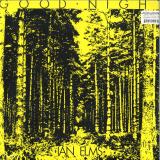





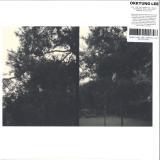







![Silvestre - Fantasma [Casette Tape]](https://www.deejay.de/images/l/6/1/1165561.jpg)


