US-based Mystery Circles is the next stop for Hiroshi EBINA following a previous outing here last year. This new cassette is another beautifully organic ambient soundscape with delicate pads and a sense of quiet hope and atomism. The beauty of the album cover really portrays the majesty of the music within as gentle chords linger in the air above warm and fuzzy drones. Some pieces are more empty that others which only lends the appearance of a wispy pad all the more weight while some grow in stubby intensity as sounds are layered up and draw you in ever deeper.
Thermal Shadow is a first-ever long player from Intertoto, and it is one that has very much not been rushed. This record comes after the artist has spent more than 10 years lost in sonic experiments and now they are all distilled into the eight tunes presented here on a limited edition cassette on the artist's own label. It's a mix of sounds that embrace mistakes, that keep the perfections in and layers up dust, texture, absorbing ambient and barely-there hints of rhythm. They are full of suggestive energy akin to that you might feel when queuing up outside the club and the highs and bass are bleeding out. It's an enticing collection for sure.
Together with EDWIN, SEEKERSINTERNATIONAL have created a limited edition “Healing Hifi” T-Shirt with a graphic approach that mirrors the SKRS style in a playful way. To accompany the release, they have created an exclusive mix for The EDWIN Music Channel, that will also be available as a cassette tape
out of Stock
Last delivered 3 years ago available to reorder, subject to availability
Emotion Hospice is the debut LP by New York-based sound artist and writer Chaperone on Bedouin Records. Combining layers of doom electronics, dystopian ambient, and manipulated tape loops, Emotion Hospice reflects both the artist's suffering and recovery from addiction, as well as Philadelphia's history of socio-economic decay and misanthropy.
Emotion Hospice was recorded from 2016 to 2019, when Chaperone's David Coccagna lived and worked in his hometown of Philadelphia, a city notoriously known for its poverty, redlined city divisions, and fascist policing tactics. While exploring the sound of the city and the effects of its political and social climate, Coccagna also struggled with and managed to overcome a severe addiction to alcohol, tying further the misaligned nature of the self to the maladjusted world he grew up in that is reflected in the record itself.
Sonic thrills and their destruction is present throughout the record, as Coccagna experiments with the brutal manipulation of bossa nova, varying styles of jazz, hip hop, and rap, using 4-Track tape loops, shortwave radio frequencies, various apps on his iPad, and open source audio editing software. With Emotion Hospice, Chaperone liberates the inherent darkness of the cheerful and poppy music that he samples and transforms it into an extensive, doomy sound of a future that is dystopian, maladroit, suffering, but hopeful about human beings. The album was written and recorded entirely by Coccagna aside from the track featuring New York rapper and producer Andre Altrez, whose establishment of Girard Hall in Philadelphia was a beacon of DIY ethos that became legendary in the city in its own right.
Chaperone's Emotion Hospice is his first release on Bedouin Records. His cassette release Dead Pitbulls Slung On Tired Shoulders was his first outing for Bedouin's now defunct sub-label Bastakiya Tapes in 2017. This initial tape was the catalyst to a working relationship between Coccagna and label operator Salem Rashid as collaborators and colleagues.
Avid Habibi Funk listeners may be familiar with Libyan composer / producer Najib Alhoush, who’s track “Ya Aen Daly” - the Bee Gee’s “Stayin Alive” cover - was included in our second compilation. While the original track never excited us, Najib’s version managed to strip it from its pop approach that had taken over disco during the genre`s peak. At that time, disco tracks mostly were aiming to appeal to the widest audience possible. Najib had turned the original track into something different and very unique. Upon further research we found that Najib was actually the singer and founder of The Free Music band alongside Fakhreddin, Salim Jibreel, Abdulrazzak ‘Kit-Kat’, Mukhtar Wanis and Mohameed Al Rakibi.
Initially, we only licensed Najib Alhoush’s “Ya Aen Daly” from Yousef Alhoush, Najib’s son, who was pleased to hear that there was interest in his father’s music form someone abroad. In the process of exchanging and learning about Najib’s music and career, our understanding was that The Free Music only recorded the one album. This couldn’t be further from the truth, in fact, there were ten albums produced by the group, all impressively coherent with a clear influence from disco, soul, funk and reggae.
The Free Music album was probably the longest it ever took us to gather information, photos and musical source material in a good enough quality to be reissued. This is largely due to the complicated political situation in Libya, compounded by the fact that Libya is still largely cut off from international payment systems, so getting an advance payment to the right person can be a process that takes weeks. The same goes for getting master tapes to a studio abroad and afterwards back to Libya.
When we look for music that works under the umbrella of Habibi Funk, we often come across albums where bands experimented with influences from Soul, Jazz, Funk, Disco and more, usually on a single track or two but then they often go down to a different path for the rest of the album. This was not the case for The Free Music. All their albums are fully dedicated to their unique blend of Disco, Reggae and Funk and it feels that when we made the selection for this album, we could have chosen a completely different number of tracks and the album would be been equally strong.
The lead-off single is the stupendously groovy “Ana Qalbi Ehtar” out February 3rd along with LP pre-order to capitalize on Bandcamp Friday. From the outset, the rhythmic strumming of the funkified guitars give way to the galloping drums and bass, opening up to anthemic vocals and rounding out with a blistering guitar solo, a certified disco-funk classic through-andthrough.
Second single, out February 17th is the disco slammer “Hawelt Nensa Ghalaak.” Guitars, harmonized horns, synths and bouncing bass and drums collide w/ spaced out vox to make the track a dancefloor sureshot for any party.
Third single is “Mathasebnish,” out March 3rd, a pure disco-funk slammer if there ever was one – with stabbing horns, funky bass riffs, a riding rhythm guitar and anthemic vocals, rounded out with stunning flute and guitar solos – the track will surely be on repeat along with the arrival of warmer weather.
Album focus track “Men Awel Marra” is another standout disco-infused tune, showcasing the immense creativity out of Najib and The Free Music. This past summer we finally had the opportunity to get together with Yousef face-to-face at a coffee shop in Istanbul’s central Istiklal road together with our friend Anas El Horani. Yousef told us the whole story of how his father got into music, the start of the band and his father’s continued conflicts with the Gaddafi regime that probably kept his career from becoming even bigger. As always, both vinyl and CD come with an extensive booklet featuring background on The Free Music and Najib Alhoush, including words from Najib’s son, Yousef, as well as unseen photos, cassettes and more.
out of Stock
Last delivered 18 months ago available to reorder, subject to availability
Veils Of Transformation 1972 - 1980 is a collection of the earliest works of Gregory Kramer, one of the 20th century masters of textural electronic music. This collection is available on CD and cassette with liner notes from Gregory Kramer and Kaitlyn Aurelia Smith, who first brought this fascinating work to the attention of Important Records.
“Greg is one of the pioneers of electronic music and these pieces are unique opportunities to discover how intricate and dynamic early synthesizers are.” Kaitlyn Aurelia Smith
Kramer developed a musical language focused on continuous transformation of timbre, yielding a continuity of attention. This musical language, formed of timbral change, is a compelling aesthetic in its own right and a source of meditative experience. The four works on this album share a deep sense of order derived not from organizing pitches or rhythms, but from the evolution of timbre itself.
Gregory Kramer (b. 1952) is a pioneering electronic composer, inventor, researcher, teacher and author. In 1975 he co-founded Electronic Musicmobile, a synthesizer ensemble later renamed Electronic Musicmobile, a series of synthesizer concerts in New York from which he formed the Electronic Art Ensemble, a highly regarded all electronic quartet. His work extended to developing synthesizers and related equipment. Kramer also co-founded the not-for-profit arts organization Harvestworks in New York City. He is recognized as the founding figure of the intensely cross-disciplinary field of data sonification. Since 1980, Kramer teaches Buddhist meditation.
The four compositions collected here each represent Kramer’s unique approaches:
The structure of Meditations on 32 Parts of the Body (1978) is derived from the means of its production. Recording 5 people chanting an ancient meditation text, then layering to gradually achieve more than one million voices. The layering was all done using analogue tape recorders. The decomposition of the sound reflects the anomalies of tape machines out of sync, and the build up of artifacts from the audio tape itself, such as uneven response curves and tape hiss, are all engaged as musical materials.
Role (1972) was generated using one complex patch on a large hybrid Buchla 200/100 system. Emerging from a zeitgeist that valued pure synthesis as a combined artistic and technological research. At the time this piece was realized its as exceedingly difficult to produce electronic sounds that were internally complex.
Blue Wave (1980) is built on Kramer’s timbral development technique Veils Of Transformation which allows for disparate timbres to be woven into a continuously developing sound.
Monologue (1977) is a virtuosic performance of a massive patch on a Buchla/Electron Farm hybrid electronic instrument. Built into the patch is a pathway for continuous transformation of voice and voltage-controlled synthesizer. The blunt, raw and sometimes harsh sounds of this piece reflect an attitude prominent among composers that music can, or even should, be difficult, contrary to what’s already been done and, by all means, new.
For a quarter of an hour, Zürich was the navel of the world. Let's look back: at New York's CBGB's, pre-punks were shredding away, Malcolm McLaren, as a man with a fine-tuned taste for the hip, imported the sound to London, where his sweetheart Vivienne Westwood dressed the test-tube band The Sex Pistols. A few pop magazines later (we are in an analog world!) punk bands sprouted everywhere, like shiny pimples on poorly fed teenagers. Contrary to legend, even back then, it was often those with a musical background who were the most successful. One such example, Henrich "Wüste" Zwahlen, who had learned the violin, attended a jazz school and went into prog-rock before joining the Nasal Boys, one of the first punk bands in Zürich. The scene included the female band Kleenex (cover: Fischli of art heroes Fischli/Weiss), whose minimalism was praised by the London music press, while the world's most important rock theorist, Greil Marcus, wrote an ode highlighting Zürich's role as the birthplace of Dadaism. A fertile ground for the militant youth movement that exploded in 1980 and stirred up the city of banks, protestantism and boredom with raw wit and expressive violence. Gathering at concerts of local bands and fueled by endogenous and artificial substances - they paid homage to exuberance and self-indulgence.
The mantra of "everything-is-possible" was driven forward on the musical front by progress in terms of means of production: analog electronic instruments were no longer reserved for hippie nerds, who sat in front of large plug-in boards like autistic-psychedelic switchboard operators connecting cables for their sound carpets. Now snazzy stage personnel elicited fast-paced sounds from handy devices often made in Japan. Kraftwerk was fashionable, the Zurich duo Yello experimented with new synthetic sounds, and the groundbreaking album "Alles Ist Gut" by the Düsseldorf based duo D.A.F. (Deutsch Amerikanische Freundschaft) was released, which chanted its program of provocation times danceability with lines such as "Tanz den Jesus Christus, tanz the Mussolini, tanz the Adolf Hitler." In England meanwhile, electronically backed New Romantic bands were replacing New Wave. The Human League, Heaven 17, Duran Duran, OMD, Depeche Mode or Visage stormed the charts.
In Zürich's underground, the duo Aboriginal Voices caused a stir at that time. A couple, good-looking, styled, looking cool into the cold neon light, with a danceable beat and sequenced electro sounds, to which Micheline gave a very unique touch when she sang in French and English. Micheline had a classical piano education, had left home early, worked as a lighting technician in a strip joint and at Booster, the hottest boutique in town (one of the relicts that still exists). Voilà: a musician who was as stylish as she was tough. She was already playing with Wüste in the band "Doobie Doos", a band where everyone played an instrument they didn't master. In 1980 the Aboriginal Voices were formed, initially with vocalist Magda Vogel (of later UnknownmiX fame), who was trained as a classical singer.
Frustrated by organizational friction and constant hassles with band lineups, Wüste and Misch decided to do everything as a twosome: self-mixed, self-styled, self-produced. With the top-of-the-line Linn drum machine clocking the beat, Wüste's guitar and Micheline on the Yamaha synthesizer created a unique sound of danceable electronic music. Whereby the Aboriginal Voices acted as a kind of proto-influencer, receiving the latest equipment to try out, especially since they made it a point not to work with tapes, but to design everything for live shows. They had an interface built for the legendary Roland MC-4B, who sequenced the modular Roland System 100M but where one output controlled a light show synchronized with the sound. A pioneering act that fit well into the DIY spirit of punk, with its self-distributed tapes and fuck-you attitude towards the cretins of the music industry. Consequently only two cassettes and an EP were released. There was something futuristic about the sound, the vestiary style and the electronics, while the attitude remained rebellious. Of course something so deeped in the Zeitgeist wasn't meant to last. Wüste moved to New York, Micheline stayed in Zurich, both still active in the music scene to this day.
Sven Regener, head of the band Element of Crime and one of Germany's most successful pop writer said a few years ago when asked if he knew of any Swiss music: "Of course! In 1983, a Swiss band called Aboriginal Voices played with us at a festival in Zurich. Great, avant-garde electro-pop. That was my first encounter."
If you ever saw them live, you never forgot them, and so over the years you belonged to a teeny-tiny circle of insiders, happy to be joined after all these years by new aficionados who appreciate the sound of that quarter-hour, when Zurich was ravishing, creative and exciting.
- Thomas Haemmerli
out of Stock
Last delivered 3 years ago available to reorder, subject to availability
Mannequin presents an expanded double-LP of 'Exploded View' from Dutch minimal synth pioneers The Actor. Originally released in 1982 by Trumpett Tapes, the album was repressed for the first time by Mannequin Records in 2014, and is now coming back to life again in 2022, enriched by an extra full-length of demos from a 1981-1984 period.
Singing both in English and German, The Actor songs are often related to modernism, fashion and dancing, like a sort of early incarnation of Depeche Mode but totally devoted to home taping and diy recordings, where Trumpett was definitely the perfect home for it, having releasing such amazing cassettes from Doxa Sinistra, Ende Shneafliet, Dr C.Stein, and many more. A must have for the dusty/rusty analog synthesizers lovers.
out of Stock
Last delivered 3 years ago available to reorder, subject to availability
Finally a vinyl edition of the first release by Valencian electronic experimental band Mecánica Clásica. Originally released on cassette in 2019. Eight tracks of early electronic experimentation, meandering rhythms, minimal modular ambient passages and bleeping synth sequences. From Cluster to Craig Leon, from K. Leimer to Marc Barreca.
A journey to the inner reaches of the sound modulation.
Recorded, mixed and produced by Mecánica Clásica.
Mastered by José Guerrero at Plataforma Continental.
Artwork by María Gea
out of Stock
Last delivered 3 years ago available to reorder, subject to availability
(C40 Cassette) Georgian artist Rezo Glonti's debut on Muscut is the label's first take on far Eastern Europe. "Subtropics" was made during sea voyages between subtropical ports.Delicate sound design and ambient experimentations manifest themselves as an audio excursion of the Black Sea region. Currently, Tbilisi-based Glonti has several albums and EPs under the name and the moniker "Aux Field".
Serial collaborator and Producer/DJ Regularfantasy rallies long-standing friends Cecile Believe (PC Music) and Priori (NAFF) for a 6-track release on Canada-based imprint Specials.
“As both a collaborator and a solo artist, Regularfantasy has quite the CV, with 12-inches for the likes of Mood Hut and Total Stasis and ongoing collaborations with D. Tiffany as Plush Management Inc and Plush Throw, among other projects. This doesn't even touch on the stream of straight-to-cassette mixtapes she's put out over the years. Still, New Glow feels like a milestone for Regularfantasy, hands down her most accomplished solo release.”
“Cheery house music laced with bona fide vocal hooks for a Vancouver label that focusses on real crossover potential.”
out of Stock
Last delivered 16 months ago available to reorder, subject to availability
Tape
J. Mono twists our sense of time again, coming up with the third installment of his 'Redate' series: an elegant selection of uncut tracks, roaming in the fields of electro, acid, IDM and EBM.
Redate III in its digital format presents tracks that were written and recorded between 2014 and 2015.
As the cassette version, it includes not only Redate III (as side A), but a collection of J. Mono's various other tracks created between 2017 and 2021, that appeared beforehand on various compilation albums (as side B). In other words, with this fresh new tape you're all set with 8 years of J. Mono experience.
Equipped with a cassette porta studio and a mic found in a recycling bin, Your Planet Is Next has put together an album of 10 tracks stripped down to their essentials. Half of the them were produced using a Yamaha CS-01 synthesizer and a Yamaha MR-10 drum machine — the perfect 1982 budget combo — while the other half were made solely with a Yamaha CS-10 synthesizer and a Boss DR-55 drum machine, both from the late 70s and budget options even in their heydays. As many times before throughout music history, pristine sound quality had to be sacrificed for pristine creativity... After all, ideas are what makes the world turn, not high fidelity!
out of Stock
Last delivered 3 years ago available to reorder, subject to availability
Hailu Mergia & Dahlak Band's Wede Harer Guzo is the third release on Awesome Tapes From Africa for Ethiopian keyboard and accordion maestro. In the years since Shemonmuanaye, Mergia has revamped his touring career, playing festivals and clubs worldwide, including a recent tour supporting Beirut. By 1978, Addis Ababa's nightlife was facing challenges. The ruling Derg regime imposed curfews, banning citizens from the streets after midnight until 6:00 am. But that didn't stop some people from dancing and partying through the night. Bands would play from evening until daybreak and people would stay at the clubs until curfew was lifted in the morning. One key denizen of Addis' musical golden age, Hailu Mergia, was preparing a follow-up to his seminal Tche Belew LP with the famed Walias Band. It was the band's only full-length record and it had been a success. But his Hilton house band colleagues were a bit tied up recording cassettes with different vocalists. Still Mergia, amidst recording and gigs with the Walias, was also eager to make another recording of his instrumental-focused arrangements. So he went to the nearby Ghion Hotel, another upmarket outpost with a popular nightclub. Dahlak Band was the house band at Ghion at the time. Together they made this tape Wede Harer Guzo right there in the club during the band's afternoon rehearsal meetings, with sessions lasting three days. Dahlak Band catered to a slightly more youthful, local audience, while Mergia's main gig with the Walias at Addis' swankiest hotel had a mixed audience that included wealthy Ethiopians, foreign diplomats and older folks from abroad. Therefore, their sets featured lighter fare during dinnertime and a less rollicking selection of jazz and r&b. Meanwhile, Dahlak was known more for the mainly soul and Amharic jams they served up for hours two nights a week to a younger crowd. Mergia released Wede Harer Guzo ("Journey to Harer," a city in eastern Ethiopia) with Sheba Music Shop, which was located in the Piazza district but has long since shut down. His cassette copy is the only known source we could find. Jessica Thompson at Coast Mastering managed to restore the recording to clean up layers of hiss, flutter and distorted frequencies, made worse by years of storage. Although there are some remaining sonic artifacts of the era's recording and cassette duplicating quality, this reissue captures the band's inimitable vibe. Recalling the audience's positive reaction to Wede Harer Guzo's novel arrangements, he says it sold well and found many fans. However, as no trace of the tape can be found online, there's no indication as to why the cassette appears largely forgotten until now
out of Stock
Last delivered 3 years ago available to reorder, subject to availability
Debut album by Ani Zinc, member of the Spanish experimental duo Diseño Corbusier and co-founder of the iconic record label Auxilio de Cientos. - First time reissue of this much sought-after record on the highly collectable Spanish experimental label Auxilio de Cientos. Formed in 1981, NEO ZELANDA was the way of expression of a woman, Ani Zinc, who since then began to experiment with vocal music, manipulated tapes or sound collages. As a child, radio had been her only contact with music. She received her first shock listening to 'Remember Love', the repetitive song by Yoko Ono. She later found out about Llorenç Barber, Spanish experimental music pioneer. After recording a single ("Paso Hambre") and several cassettes ("Radio-Sabotage", "Ese Lenguaje"), which helped her to gain international recognition, and the inclusion of her work in various contemporary cultural centers (Juan March Foundation, among others), her first LP saw the light of day in 1986 on her own label, Auxilio de Cientos (also home to Diseño Corbusier, pioneer Belgian EBM/Industrial band The Klinik, and the amazing compilations "Pas De Deux" and "Terra Incognita"). "Mix Zelanea" brings together part of her experimental work with voices and sound effects ('Si Esto Es Amor' or 'Il Drama'), together with new compositions, in which she is accompanied by some friends and welcomes the use of conventional instruments such as drum machines, keyboards, etc, resulting a richer and more diverse outcome ('Alemana Mix', 'Extenso Mundo Brillante', etc).
out of Stock
Last delivered 3 years ago available to reorder, subject to availability
West Midlands five piece MACHIAVELLIAN ART follow up their self released and self titled cassette only album with their first release proper, ‘Indoctrination Sounds’ released February 24th via Riot Season Records, with an eye popping promo video to go with it.
A Maximalist blowout of Sax-honking Noise Rock, Doom Metal, Hardcore Punk, and Shoegaze, with Industrial Noise, Howls, Paranoid Rambles, and pure Disdain for oneself and the rest of you layered on top.
Indoctrination Sounds was conceived in various practice spaces in Digbeth throughout 2020 and 2021 and recorded at Ian Boult's Stuck On A Name Studios in Nottingham in the Summer of 2021, despite the best efforts of a global pandemic. Will Killingsworth mastered the record at Dead Air Studios.
Serotonin Problem opens the record with a huge sludge bass riff before the rest of the band pile in on top to create an all-encompassing and oppressive low mood that continues for the rest of the album. Next, we spiral down into the more open and atmospheric post punk of Faceless Voices - the collective bad feelings of a nation in decline reach boiling point. Indoctrination Sounds, for which the record is named, is a hardcore punk song regarding the clear and easily understood ways that humanity in the Western World is indoctrinated into the death-cult of capitalism under fear of violence, soaked in misinformation and conspiracy. Revolution is a call to action as guitars shift and glide uncertainly around, in a menacing inversion of shoegaze's dreamy safety. Side A is finished - a brief respite.
Side B opens with the more introspective Let Down, as the band play out a pounding homage to Iggy and the Stooges with Fenriz taking a turn on the drums. The drum intro to We're Not Gonna Take It gives way to a Rusted Shut bassline as the band turns their disdainful gaze to the violent pornography that is the 24-hour news cycle and reality TV in Watch Them Crawl. The album closes with Digbeth B5, an improvised piece on the gentrification of Digbeth. During the pandemic one of the band's practice spaces was turned into an overpriced ping pong bar for yuppies. As our culture is softened and cleaned up to make profit, so are our communities and cities.
Machiavellian Art are : Amy Murphy - Bass Guitar Benjamin Thomas - Vocals and Saxophone Joe Parkes - Guitar and Noise John Andrews - Guitar and Vocals Sam Hunt – Drums
Debut release on the newly-launched MSCTY label, the first in a series of highly collectible, very limited and lovingly designed physical releases.
This is a state-of-the-art double cassette boxset complete with 12-page booklet and limted to only 100 copies.
It features a host of brilliant compositions, each exclusive to the label from a wide cross-section of some of the world's foremost emerging electronic artists, including Hannah Peel, Loraine James, Bill Fontana, Chisara Agor and many more.
Each piece represents the artist's response to work by the World's leading architects, unbuilt futuristic buildings and spaces created for London Design Festival 2020.
MSCTY_EDN future releases will continue follow the theme of music created for places and spaces around the World, exclusive material specially commissioned musical artists across the globe, from the likes of Ryuchi Sakamoto, Midori Takada, Terry Riley, Moses Boyd, Scanner, Jon Hopkins, Erland Cooper, Craig Richards and any more.
The duo HER ABSCENCE FILL THE WORLD is the new sensation in Berlinese synthwave scene. Their genre classical song structures with a modern twist capture and transport immediately to the likes of successful past releases of Oráculo Records like Boy Harsher, Ultra Sunn, Synths Versus Me or NNHMN. Their debut EP include four songs already relased by Detriti Records in cassette tape format and two new songs previously unreleased plus one remix by techno master KOR. Comes presented in a one-off truly limited edition of 300 copies lacquered pressed on 180gr. high quality solid black vinyl. All tracks have been specially remastered for long cut vinyl by Daniel Hallhuber at Young and Cold Studios.
(Oraculo Records - OR109)
out of Stock
Last delivered 23 months ago available to reorder, subject to availability
“A unique and refreshing release.” — Earmilk
“Stellar… an exciting and surprising release” — Popmatters
Cut Copy’s January Tape, an ambient project originally released in 2016 as a limited-edition run of 400 cassette tapes, comes to vinyl for the first time on January 2023 via Cutters Records and Diggers Factory.
Dan Whitford of Cut Copy said the project took shape after the band took a break from recording the follow-up to 2013’s Free Your Mind. “Having worked for much of the previous 12 months on a new Cut Copy album, we decided in January it was time to give ourselves a well earned break, “Whitford stated. “But instead of retreating to the wilderness or decompressing on a beach somewhere, we spent ten days in the studio making a collection of ambient instrumental works. We wanted to share outtakes from these sessions in all their unedited glory with you, and put them out as an extremely limited edition cassette, available mainly through our webstores.” Now with this limited vinyl release, more fans will be able to grab a hold of a physical copy of the music (the OG cassette’s are now a long-gone and highly coveted collector’s item).
Composed and recorded by Whitford and Cut Copy’s guitarist Tim Hoey, January Tape was accompanied by a short video, January Trip, by Glen Goetze and Brendan MacLeod. The video takes from several parts of the tape, evoking the lush, cinematic and occasionally disparate moods in the music via split screen themed imagery, both man-made and elemental in origin. More meditation than music video, more hypnosis than hype, January Trip works as a harmonious visual companion to the soundscapes in the tape.
Born in the bleak isolation of the secluded prairie city of Edmonton, Canada, Homeshake’s Peter Sagar worked with friends in a number of local bands be-fore picking up and moving to Montreal in 2011 to begin recording under the Homeshake moniker. Following two self- released cassettes (The Homeshake Tapes and Dynamic Meditation) and two acclaimed full lengths (In The Shower and Midnight Snack), Sagar cracks a window open with his third album for Sinderlyn – Fresh Air.
Started immediately following the recording of Midnight Snack, Fresh Air continues Sagar’s exploration of dreamy, downtempo bedroom R&B and draws
In the midst of a wave of hybridizing ambient, drone, folklore and experimental electroacoustic music, Roxane Métayer has gained a cult following with only a couple of releases to date. Following her debut album (Éclipse Des Ocelles) for Morc with a split EP and a limited cassette for Wabi-Sabi, Roxane now turns to Marionette with her intimate narrative based multi-instrumental recordings, a match made in the heavens if you ask us. With her violin, woodwind, voice and various effect pedals, Métayer takes the listener on a newfound journey into the ancient, medieval, and primordial.
Perlée de sève is Métayer’s second full length, a sophomore to the critically acclaimed Éclipse Des Ocelles, where Métayer continues to sonically realize the map of the fictional habitats that inhabit her mind. Coming from a background of studying narration and different animation mediums, it’s no surprise that her recordings evoke vivid imagery and carry a trace of the environment they were conceived in. The instruments morph as extensions of her body and ultimately become new organs, a means of communicating these bio-memetic stories and creating a dialogue between herself and her surroundings. Meandering melodies intertwine with accompanying drones, mantra-like fragments and a handfeel percussion lend themselves as living and breathing elements in Roxane’s beguiling and spellbinding anecdotes.
Roxane is an observer of the world, her projects conceived from elements that inform her reality, such as the organic imagery and sounds of nature, then transforming that into a strangely familiar parallel universe that would not exist otherwise. Whether it's active research or taking her instruments to the forest, Métayer opens up her imagination by taking this mental journey to discover locations, creatures, and time periods then channeling that into her own fairy tales. The album and track titles act as a portal into those worlds, like chapters in a book where the protagonists are animalia, plantae, and fungi. As Métayer wrote in an interview: “Stories are a privileged way to create an awareness of a specific subject.”
After opening the dimension door via a hypnagogic contribution to recent Ruf Kutz comp 'Expansion Pack 2: Textures' and offering a sonic submersion into his 'Deep Waters Mixtape', Inner Glow takes the controls for RK18, treating the DJs and dancers to a high grade house triptych.
For the uninitiated, the man behind the music is a lifelong friend from Ruf Dug's Sydney sojourn, when the two would host mushroom squat parties with the rest of the "Bodega Clan", and who helped mastermind the seminal Paradise Lost warehouse parties. Virtuously patient, the Australian spent the years since perfecting his craft, maxing out the XP and emerging as his evolved form, Inner Glow.
On the A-side, Inner Glow comes through with the two clubbiest cuts from the 'Deep Waters' cassette, unmixed, mastered loud and exclusive to vinyl. Already a firm favourite with Bradley Zero 'Party People' pulses on the A1, its one note bassline and taut pads keeping tension at a maximum. At the top of the frequency band sparse stabs and nuanced percussion dance in tandem, while the deft use of E-Smoove and First Choice acapellas provide an underground intertext Sprinkles would be proud of.
'Call Me' coaxes us into the shadow realm with the lure of Lynchian dialogue, slowly taking shape as a dub techno phantom. It's a heads down affair as urgent subs push against the mist of static, until a rising, wriggling keyboard riff unwinds waists with a hint of UKG exuberance.
Inner Glow brings the beatific on the B-side's 'Love Has No Age', combining rippling keys and MK vocal chops over waves of hiss and haze.
The percussion combines classic house swing with the tinny hats of electro, keeping perfect time as the soulful vocals swell into the sublime.
Over the last twelve months Ruffy's rocked the spot from Pikes to Houghton with these heaters, and now he's sharing them with you.
out of Stock
Last delivered 2 years ago available to reorder, subject to availability
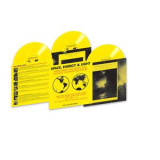
New edition of this Soul Jazz Records out-of-print classic album available now as a new limited-edition one-off pressing triple yellow vinyl album (plus download code), and limited-edition one-off pressing special yellow CD edition. Soul Jazz Records" Space, Energy and Light is a collection of music by early electronic and synthesizer pioneers (from the 1960s through the 1970s), mid-1970s proto-new age gurus and 1980s guerrilla D-I-Y cassette-era electronic artists, spanning in total over a near 30-year time frame. All of these artists used electronic advancements in music technology as a means of exploring not only space and the idea of the future, but also of looking inwards to the soul and of creating music in harmony with the natural world.
New edition of this Soul Jazz Records out-of-print classic album available now as a new limited-edition one-off pressing triple yellow vinyl album (plus download code), and limited-edition one-off pressing special yellow CD edition.
Soul Jazz Records’ Space, Energy and Light is a collection of music by early electronic and synthesizer pioneers (from the 1960s through the 1970s), mid-1970s proto-new age gurus and 1980s guerrilla D-I-Y cassette-era electronic artists, spanning in total over a near 30-year time frame. All of these artists used electronic advancements in music technology as a means of exploring not only space and the idea of the future, but also of looking inwards to the soul and of creating music in harmony with the natural world.
From computer software and hardware experimentalists and sound pioneers such as Laurie Spiegel and Kevin Braheny, as well as Mother Mallard’s Portable Masterpiece Company – the first synthesizer ensemble created in collaboration with Robert Moog – through to musique concrète experimentation, the album shows how technological advancements and creative artistic expression often went hand in hand.
In the mid-1970s artists Steven Halpern and Iaxos were instrumental in creating proto-new age music, experimenting in both the healing properties of sound and its relationship with the natural world. These artists also pioneered a new self-contained and underground D-I-Y approach to music, creating their own record labels, forming new distribution networks (with albums sold in meditation centres, health food stores and ashrams) far away from the commercialism of the mainstream music industry. In the early 1980s after the revolution of punk, these D-I-Y attitudes and ideas appeared once more in the growth of the distinctly anti-commercial and underground cassette-only careers of artists such as Germany’s Stratis and Carl Matthews in Britain.
Artwork includes some of the earliest photography of the Plieades star cluster dating from the 1880s.
"Listening to Space, Energy & Light in one sitting is a bit like experiencing constellations exploding within constellations inside your brain." Record Collector
"Incredible collection of spacey electronics and meditative soundscapes dating from the early 60s to the late 80s here, lovingly assembled by the Soul Jazz team. This compilation has it all if you like your music deep. Big names such as Iasos and Laurie Spiegel feature, but even if you think yourself a bit of a nerd in this field, there are some lesser known pearls to be found." Bleep
"Quite simply an amazing mix of some quite bizarre and interesting pieces of music, no way to describe it other than to buy it, put on some headphones and drift off to inner space.” Amazon
"New compilation charting almost three decades of experimental
electronic and synthesizer music from the most influential and often
unsung composers of their generation. Beginning and 1961 and
following the story until 1988, Space, Energy and Light connects
proto-new age gurus and DIY tape vigilantes who were equally
inspired by the advancements of new technology and its potential to
unlock utopian futures in both the music and the soul." Vinyl Factory
out of Stock
Last delivered 3 years ago available to reorder, subject to availability
With their emotive melodies, propulsive rhythms, angular guitars and dark cinematic electronics, TRAITRS have quickly become one of modern post-punk’s fastest rising independent bands. Consisting of Sean-Patrick Nolan and Shawn Tucker, TRAITRS formed during the summer of 2015 in Toronto, Ontario Canada. The duo recorded demos with producer/engineer Josh Korody (Nailbiter, F*cked Up, Japandroids, Dilly Dally), garnered the attention of Pleasence Records label head James Lindsay and released their debut cassette Rites And Ritual in April 2016. After gaining buzz in the European and North American dark music scenes, TRAITRS released their critically acclaimed LP Butcher’s Coin (Pleasence Records, Manic Depression Records, Alchera Visions) in May 2018. Backed by the strength of lead single ‘Thin Flesh’, the duo embarked on a series of lengthy tours overseas, performed in over a dozen countries including showcases at Wave Gothik Treffen, Castle Party, Extramuralhas, Nocturnal Culture Night, Wavefest, Canadian Music Week and Pop! Montreal. Their relentless touring schedule and work ethic caught the attention of Schubert Music Publishing’s Thomas Thyssen and Eric Burton, and in October 2020 they announced TRAITRS as the first signing to their brand-new record label Freakwave Records. This year, TRAITRS will release ‘The Sick, Tired And Ill’ EP on July 30 and the full-length LP ‘Horses In The Abattoir’ on November 19.
Wewantsounds is delighted to reissue Fairuz"s classic album "Kifak Inta" produced by her son Ziad Rahbani in the late 80"s and only released on cassette and CD in 1991. Composed and arranged by Rahbani, who had already produced "Wahdon" (1979) and "Maarifti Feek" (1987), "Kifak Inta" features his usual blend of Jazz, funk and Arabic music, spiced up with Brazilian influences serving Fairuz"s beautiful voice. The album successfully pursue the path that made "Wahdon" and "Maarifti Feek" such in-demand albums, modernising the sound of the Lebanese Diva with contemporary arrangements. It is the first time "Kifak Inta" is released on vinyl, retaining the original cassette artwork. The album - curated by Mario Choueiry from Institut du Monde Arabe (Paris), who also wrote the liner notes (Fr/En) - has been newly remastered by Colorsound Studio in Paris.
out of Stock
Last delivered 6 months ago available to reorder, subject to availability
After the quadruple compilation “Flash Dynamic Triade Color Test”, seekers return with a beautiful double LP entitled ”What He Does”, comprising 4 tracks recorded on tape cassette in the 1990’s and 4 tracks recorded in the 2000’s. The LP also incorporates an intro where the producer’s father is explaining on the phone to a friend how his son is producing electronic music with his gear. Artwork by @mona_bit_
out of Stock
Last delivered 19 months ago available to reorder, subject to availability
Déjà vu is translated as “already seen” but for South California native Ben Schwab, his discovery in a small Ohio town 2000 miles from home led to an epiphany of creating the “already heard.” Unearthing a box of 1975 cassette tapes of his father’s old band, the recordings or “Sylvies” as Ben would affectionately call them later became the imprint for a familiar feeling he would end up chasing. The songs were timeless, effortless, and soulful.
Awakening senses to the eternal quality of hidden or lost music, Sylvie fully encompasses that very same musical lineage and spirit living in those lost yet beloved time capsules. Recorded years before by Ben’s father, John Schwab and his own band Mad Anthony in a Southern California barn, those reels spoke of a common narrative at the time; a band close to a record deal which never came, so the tapes were boxed up and stored in a closet for years to come. “Dad’s songs are straight from the heart and really shaped my taste and imagination for songwriting in a permanent way,” Ben reveals. Taking the name from one of those early recordings an obscure cover of a 70s track by Ian Matthews ‘Sylvie’ would inspire his project’s namesake and feature as the album’s only cover. “It’s an incredible song from the past but for whatever reason, is basically unknown,” Ben offers by way of an explanation.
The Soninke collective consciousness finds its origins in a founding myth, a blood pact: the legend of Biida and the decadence of the empire of Ghana or Wagadu (evoked by Léopold Sédar Senghor as a land of plenty in his poem Le Kaya Magan). From the 3rd century AD, gathered in the region of Sahel, on the edge of the Sahara desert, the Soninko ruled over their kingdom and its capital Kumbi Saleh. According to folklore, they were blessed with abundant rain and nuggets of gold could be picked directly from the ground.
They owed this prosperity to a providential but cruel protector: the Wagadu Biida, a seven-headed serpent who lived at the bottom of the Kumbi well. Every year, as a reward for his favours, the Biida demanded an offering: the life of the most beautiful virgin woman in the community. Sacrifices took place for generations, until the 13th century AD, when fate chose Siya Yatabéré, Maamadi Sehedunxote's sweetheart...
Centuries later in 1977, Gaye Mody Camara, a young Soninke raised in Mali's Kayes region, settled in France to found his own empire. Initially selling wax, kola nuts and other goods in his Parisian outlets, he rapidly started distributing cassette tapes and eventually producing a multitude of recordings for his own label: Camara Production.
Crossing paths and collaborating over the next four decades with legendary artists, griots and industry moguls like Boncana Maïga, Jean-Philippe Rykiel, Ganda Fadiga, Diaby Doua or Ibrahima Sylla, Camara became one of the great independent music producers of his generation, and a pilar of the Parisian Soninke diaspora.
Released in close collaboration with Gaye Camara and with the assistance of Daouda N'diaye, one of A.P.S' (Association pour la Promotion de la langue et de la culture Soninké) historical members, this selection of songs and accompanying notes aim to shed a light on an intricate culture and its modern music, injustifiably unknown outside of West Africa and the various Soninko diasporas around the world.
From Malian Zouk to Mauritanian Reggae and other psychedelic groovers originally released on cassettes or digitally, we have given the utmost attention to bringing this music to a new format. It has been carefully remastered and pressed on a couple of 180g vinyls, with riso printed liner notes.
Especial presents a 2 EP live concept collaboration with Berlin's Giraffi Dog. With live tours cancelled due the on-going changing world, the idea of bringing their live set to vinyl - an opera for your innerspace, while constrained from outerspace - was born.
Setting up Doom Chakra Tapes with DJ Deflektorschild in 2016, Max Webber's project first released the L'Existence Du Reve cassette album as a blueprint for the Giraffi Dog sound, with some tracks appearing on the acclaimed vinyl debut for Aiwo Recs, before a split 7" for the WARNING label series followed.
Teaming up with friend Max Heesen (Dessous, Poker Flat) to take the project live, their backgrounds in punk and hip-hop shine in their take on breakbeat driven club culture.
Recording live in the studio, as a different state of meditation, MCPs trigger drum machines, the duality of live synth and vocoder, while tape machines, reverb and FX looped, twisted and filtered for an inter-mind festival
Cut as a continuous mix, tracks like Concorida, Jam X and Multiverse, are a manifestation of their sets dropped from small basements in Berlin to fields in the outskirts of Paris, this first EP acts as a hypothesis for the parallel, the other, the alternate, the infinite.
out of Stock
Last delivered 16 months ago available to reorder, subject to availability
Y2K era Central AYR Productions. From the orlando home office of Mr. Cole session genius, all songs written, performed and recorded by a one man band well ahead of his time. We'd like the thank the lady who gifted him the 4-track cassette to digi converter that started this whole journey.
His debut EP on Amen Brother and for this release, he went for a different approach to our usual kind of release. This EP has been created to sound like recording of a rave from the early 90’s. Back in the day, tape packs and bootleg cassettes were common place, where raves from all over the country could be enjoyed at home, especially by those of us who were too young to attend. They were like currency, traded with mates at school or sent to friends in other parts of the country by post.
Tony Justice kicks you off at the start of the rave, interlinking all the tracks by extracts of various raves so the release runs smoothly (for the digital we chopped the EP into 4). You are then asked to leave… but quietly. And don’t go looking for any free parties in Bournemouth!
Sit back, light a fat one and let this ep take you on a trip…
out of Stock
Last delivered 3 years ago available to reorder, subject to availability
“Avada Kedavra Deluxe,” by Seattle rapper AJ Suede, is a 21-track, self-produced, self-referencing, double-vinyl labyrinth of experimental boom-bap. Building on a signature style that SPIN magazine describes as “stream-of-consciousness rhymes, containing everything from socio-political commentary and blunted cinematic allusions to psychedelic visions,” Suede’s creation is as compelling as it is unclassifiable. On the first LP, Suede demonstrates his substantial skills as a beatmaker and rapper, chopping up what Seattle’s KEXP calls “the smoothest, jazziest, weirdest samples” and overlaying parkour bars about Grunge, success, and social justice. From the first cut, “Nebuchadnezzar,” which New York’s Major Stage describes as a “powerful chant-like hypnotic loop,” these 10 tracks capture an elusive mood of too many hours inside watching YouTube and trying to piece together fractured connections. The album’s title is derived from an Aramaic spell: “Let this thing be destroyed.” On the second LP, Suede invites 13 guests to “destroy” the original songs. This disc of remixes and reworkings showcases underground voices from across the Northwest (Seattle’s Wolftone, Khrist Koopa, Portland’s Fines Double), from across America (New Jersey’s Fatboi Sharif, California’s mudwater, Ohio’s Lord Olo, New York’s Bloodblixing), and around the world (Tel Aviv’s Argov and Japan’s Wazasnics). Seattle rappers Astral Trap, Blake Anthony, Mika’il, and Greg Cypher are featured on a bonus “posse” cut. AJ Suede has been grinding for years in the underground, building a solid, devoted global fanbase. He’s released acclaimed cassettes and CDs through respected labels such as Fake Four Inc., Candy Drips, Chong Wizard, and Blackhouse. In May 2022, a 100-copy vinyl run of his album “Metatron’s Cube” sold out in less than four hours. With “Avada Kedavra Deluxe,” AJ Suede has tapped into the moment, using what Deeply Rooted Hip-Hop calls “a subconscious steeped in the mystical.” As KEXP says: “Quite predictably, the whole album bangs.”
Originally released on cassette in the spring of 1984 together with the 5th issue of Tribal Cabaret fanzine - included here in its original format - this is an invaluable document focusing on the obscure side of the 80’s Italian post-punk scene. A composite picture drawn by a bunch of different and often under recorded groups from various Italian regions and cities. All together they contribute to defining a prominently dark yet vivid soundscape based on different approaches and styles. All these aspects are perfectly translated through the b&w art and graphics of the beautiful Tribal Cabaret fanzine. If you want to dive deep into the fringes of the 80’s this is one of the places to start.
Originally released on cassette in the winter of 1984, together with the 7th issue of Komakino fanzine - included here in its original format. 8 groups and 14 tracks revealing the whole meaning of the Afterglow operation. Bands who already had record deals and enjoyed some popularity, others that will do so shortly, others that will fade in the mists of that decade. “Afterglow” is a document from an era when small gestures and uncomfortable choices were true stances.
Originally released on cassette in the spring of 1985, together with the 8th issue of Komakino fanzine - included here in its original format. Relatively well- known names coexist with bands that lasted only a season. “Still Life” was and remains a half hour of pure abstraction. An intense and precious post-punk overdose!
Philly’s own Chained Bliss set tongues a-waggin’ back in 2019 with their Stained Red cassette EP, gathering more than a few comparisons to the Wipers’ early racket in the process. Well, now they’re back with a debut album that seems to have skipped right ahead from Is This Real? to Over The Edge: this self-titled LP has all the gut-punching ramalama, knockabout guts’n’glory of that first tape, with added layers. Melodic guitar lines come perilously close to jangling over crunching power chords, while furiously yelped choruses give way to sumptuously put-together breakdown sections that catch you off guard and kick you in the shins before legging it down the street. Chained Bliss clearly love scrappy, skatey garage rock (echoes of Agent Orange’s Living In Darkness abound) as much as they love pushing that raucous clatter into something spacious - the meditative sections that flow effortlessly into absolute ripper Pillars Of Abuse are as unexpected as the thoughtful but head-spinningly energetic sections that bring Creative Seizure so thrillingly to life. Other times they’re just as happy to keep you careening towards the pit with two-minute bangers, but that’s the beauty of this record: it’s never smarter than when it’s playing dumb, and the rest of the time it’s just pretty damn smart. Here’s a challenge: can you listen to Ominous Life’s gnarly pop without raising those fists of yours skywards and landing a firm thump on the air? Or Drifter’s swaggering stomp? Or, or, or… ahhh hell, you get what I’m saying here. Every single cut slays, every single hook snags itself on your brain. You’ll come back for more, and more, and more. Are Chained Bliss your new favourite band? Well, gee, we’ve never met and I don’t know what you like and it’s not for me to say… but on the other hand, yes. Yes, they are. They’re heading straight for your heart and they ain’t budging. Will Fitzpatrick
One of our all-time favourite artists and extended Circus Company member The Mole returns to the label for a proper presentation of his album The River Widens. Originally a limited, cassette-only release via fellow Canadian Eddie C’s Red Motorbike, we are proud to offer this album in its full glory for the first time on all formats.
Never one to shy away from synth deep dives, or raw sample flip collaging, this collection of 21 works checks all the boxes. Ambient trippers to straight up neck-snapping instrumental beats. Not forgetting tastes of the more uptempo, highly-assured and hypnotic dance floor feels the world has come to love The Mole for. Moments of casual chillin are interspersed with effortless, emotive angles, some evoking the charm of his Little Sunshine release for us in 2017.
X-pert Profat opens the set with sly statements that give way to relaxed and subtle keys over gentle, midtempo rhythms. Things switch up nicely into easy, Northwest Coast boogie-meets-beatdown feels inBreak For Ma, followed by a solid array of almost Jaylib-schooled boom bap twists, like the aptly-titled Drums 2002 and Jo Barker. Ambient cuts like AR Dayand New Family offer a refreshing tap of the brakes, setting the scene for the gorgeous, Jarre-esque Weak Stranger. We also get treated to Repepepater’s nod to Detroit house, urban-mode Balearic feels on They Work For Mr. O, and sneak
attack lo-fi future funk in the form of UFOs Over Egypt, with Montreal co-pilot Cristobal on a wild shisha-lit vox narrative, earlier versions of which have blessed many of our label comrades’ DJ sets, from Dave Aju to Vincent Lemieux.
The River Widens expands beautifully on the breadth of unique musical directions The Mole is capable of taking us in, now spread across fresh 2x12” vinyl and available digitally for the first time, along with another limited edition cassette run - we hope you enjoy the ride as much as we do!
out of Stock
Last delivered 3 years ago available to reorder, subject to availability
Barely heard in his lifetime (1961-2002) but hailed as an outsider hero of ur-punk since 2009’s ‘Cosmic Lightning’ compilation, J.T. IV strikes back!
15 unheard-of tracks found on an obscure cassette tape make the schizo split in his music - rabid rock & roll fantasy and cold-eyed acoustic introspection - an epic. ‘The Future’ is J.T. IV’s mad magnum opus.
The 2009 comp LP, ‘Cosmic Lightning’, cast his tragic silhouette up on the big screen
for all to see: the lost boy, alone in the world, standing before the mic and releasing
his inner star with glee and vengeance, his antisocial visions flying high atop a raging
funnel of distorted guitars and blunt rhythms. Or couched, childlike, within a heart
breaking billow of acoustic guitars - a schizophrenic split that only magnifies the
display of his deep emotions.
‘The Future’ goes even further, excavating fifteen recordings from a previously
unheard-of cassette entitled ‘The Best Of Johnny Zhivago Retrospective 1979–1993’,
and adding four more uncollected tracks from his slim (and impossible to find
anyway) discography.
Of these nineteen tracks, eight are covers - and J.T. IV’s picks, from Velvets to Mott
the Hoople, Roxy Music, Lee Hazlewood, The Kinks, Eno and Stephen Sondheim,
sharpen our image of the misfit adrift; on the outside looking in, but maybe just a few
steps away from his goal.
‘The Future’ unfolds like an epic, as both sides of J.T.’s persona - the street-smart,
damaged rocker and the heart struck poet of the scene - live on together in the best
performances of his short career.
A punk of the old order, John Henry Timmis IV was born in 1961 into a dysfunctional,
abusive and eventually broken family. By the mid-70s, he was desperate to get out,
running away from his mother’s home several times while still a teenager living in the
greater Chicagoland area. At wit’s end, she had him committed to the Menninger
Clinic for a year or so. Released on his own reconnaissance, he began his meteoric
ascent to the mythic level of self-aggrandizement in which he appears here. Inspired
by the underground, proto-punk sounds in the air (the likes of which any sharp-eyed
young thing might chance upon in the back pages of Creem, Crawdaddy, Trouser
Press, etc.) and desperate to be heard himself, J.T. presented like the scabby
younger brother of Bangs and Laughner: born only to rock, his musical conception a
rabid personality crisis of proselyte elitism and nihilist excess.
Now, 20 years on from his passing, ‘The Future’ is ever farther away from the world
in which he struggled so mightily - but his stinging iconoclasm, whether screamed
from Marshall amps or mic-ed up close, feels ever more powerfully infused with his
unique breadth of illness and essence.
These songs represent the two sides of J.T. - and while they emanate from the 80s,
they find themselves potently renewed in the polarized world of today, making ‘The
Future’ a worthwhile destination for everyone who ever had a heart touched by the
transgression and freedom promised by rock & roll.