“Tubby did three original dub albums, ‘Dub From The Roots’. ‘The Roots of Dub’ and the third is ‘Brass Rockers’ with Tommy McCook ‘pon the flying cymbals. Where he mixed it with the horn going in and out in a dub way and one named ‘Shalom Dub’ you can call Tubby’s too because he mixed the versions as they were off forty fives’’
Bunny ‘Striker’ Lee
King Tubby and Producer Bunny ‘Striker’ Lee are intertwined in the birth of Dub Music. After discovering a mistake that made a ‘serious joke’ (more of which later...) they went on to release the first pressings of this new musical genre namely ‘Dub Music’. Tubby’s vast knowledge of electronics and Bunny’s vast catalogue of rhythms would lay the foundations of what today is taken as a standard... the Remix / Version cuts to an existing vocal tune.
Osbourne ‘King Tubby’ Ruddock was born in Kingston, Jamaica on 28th January 1941 and grew up in the High Holborn Street area of downtown Kingston. He studied electronics at Kingston’s National Technical College and also on two correspondence courses from the U.S.A... When he had qualified Tubby began repairing radios and other electrical appliances in a shack in the back yard of his mother’s home. His work in the early days included winding transformers and building amplifiers for Kingston’s Sound Systems. Tubby built his first Sound System in 1957 playing jazz and Rhythm & Blues at local weddings and birthday parties. His reputation as a man who knew and understood both electronics and music grew steadily and as the sixties drew to a close. Tubby
purchased his own basic two track equipment. He installed this alongside his dub cutting machine, a home-made mixing console, and his impressive collection of jazz albums in the back bedroom of his home at 18 Dromilly Avenue which he christened his music room.
Tubby and Striker were at Treasure Isle Studio’s one day while Ruddy from Spanish Town was working with the engineer Byron Smith....
“Tubby and myself was talking when Ruddy was cutting some dub but Smithy (engineer) made a mistake through we were talking and forgot to put in the voice. It was two track recording in those days. Ruddy said ‘No Man! Make it stay! and so they cut the rhythm. When I went over to Ruddy’s that Saturday night a dance was in progress and when they played the vocal to the tune... then he said we’re going to play ‘Part Two’. They never called it ‘Version’..and then he played the rhythm track. The song was a catchy song and everybody started to sing along and the deejay started to toast so everything went down well. On Monday morning I went up and I said ‘Tubbs the mistake we made was a serious joke.It mash up Spanish Town! The people went wild. So you have to start to do that now ‘cause when the man put on the ‘Part Two’ everyone start singing this song. It played about twenty times. I said you try Tubbs!’...Well the next Saturday night now when Tubby strung up down the farm U Roy said he’s going to play ‘Part Two’ but Tubby did it different now. He started with the voice then dropped it out and let the rhythm run and then he brought in the voice in the middle and from there Tubby started to get really popular.’’
Bunny ‘Striker’ Lee
Dynamic Sounds upgraded to sixteen track recording in 1972 and Tubby purchased, again with the help of a deal brokered by Bunny Lee. The old four track equipment and the MCI console from their Studio B. The four tracks now gave him far wider scope to work with and he began to create a new musical form where the bass and drum parts were brought up while the faders allowed Tubby to ease the vocal and rhythm in and out of the mix. It was only a matter of time before Tubby’s dub plate experiments began to make it on to vinyl and the first ever long-playing King Tubby releases would feature a collection of his mixes to a selection of Strikers rhythms. So please sit back and enjoy this historic set of sounds. Lovingly restored and with a few extra gems added to the CD Editions. These releases were the first to carry the name of King Tubby and the first to credit the great musicians that contributed so much to the rhythms that made these albums possible.
Cerca:catch
'Flowers', the new EP from Elizabeth Davis, finds itself at the cross-section of many factors. In part, it’s the result of Davis’ obsession with a seminal folk song. But it also coincides with her rediscovery of the voice and language as an instrument. It was recorded during an autumn residency at Sternhagen Gut, the cultural refuge run by Gudrun Gut and Thomas Fehlmann, located deep in the Uckermark countryside halfway between Berlin and the Baltic coast.
The six tracks on 'Flowers' all take Pete Seeger’s ‘60s protest-folk song 'Where Have All The Flowers Gone' as their starting point. However, they veer off in different directions, from vocal loops and deconstructed lyrics, to instrumental drones and glitchy, manipulated rhythm tracks. Like many musicians, Davis has learnt composition by a process of disassembly, analyzing musical works piece by piece, and 'Flowers' began as one such forensic exercise. “But sometimes,” says Davis, “a source is so loaded up on meaning that the studies and experiments can become worthwhile and meaningful works in their own right.” 'Flowers' began to take on a life of its own, raising renewed questions about age-old themes such as war, authorship, translation and historical structures.
Davis is no stranger to cover versions. From studying violin to playing in free jazz and punk bands, interpreting other artists’ works has long been a key part of her musical approach. And since her radio show 'Deep Puddle' recently drew to a close after seven years, her experiments with narration and sound collage have found their way into her musical work once again. For 'Flowers', she cut up the source material (with a nod to Gysin and Burroughs), and reassembled the lyrics, the musical notes, and recordings by different performers, to create uncanny new forms.
But perhaps the biggest influence on 'Flowers' was conversations about music, art and pop subcultures with Gut. These dialogues helped Davis find a balance between far-out sound design experiments and catchy melodies, combining a certain avant-garde element and modern day songcraft. And it’s this sense of conversation, this revisiting of topics and renewal of ideas, that will keep us coming back to 'Flowers' long into the future.
- 1: Tribe
- 2: Halo
- 3: Mayday
- 4: Parallel Realities
- 5: Doppelgänger
- 6: Godlike
- 7: Ghost Town
- 8: Coldheaven
- 9: Back To Dirt
- 10: Snake Skin
- 11: Lies
- 12: Echo
Explosive Ukrainian metalcore force SPACE OF VARIATIONS returns with Poisoned Art, out on February 13, 2026 via Napalm Records. Blending furious brutality with heartfelt emotion, the four-piece band sheds their skin and continues to push the boundaries of modern metal, their new record showing a new facet of their ever-evolving sound—a new era. Twice crowned Ukraine’s best metal band, and former tour partners of genre giants Jinjer, SPACE OF VARIATIONS are raising the bar for metalcore with the twelve new tracks of Poisoned Art. Mercilessly honest, the opening track “TRIBE” sees the band battle existential fears in both English and their native Ukrainian. Driving in the urgency are diverse stylings, ranging from djent in “HALO” to fitting sirens in “MAYDAY”, showing that SPACE OF VARIATIONS doesn’t shy away from adding a certain edge to their catchy choruses. “PARALLEL REALITIES” cleverly combines soft melodies with brutality, staging captivating desperation and neck-snapping breakdowns as parallel realities. Explosive outburst “DOPPELGÄNGER” powerfully blends groovy distorted guitars and unrelenting intensity, contrasted by haunting melodic passages and subtle electronic textures, making this song especially hard-hitting. The mix of pummeling ferocity with emotional depth continues throughout “GODLIKE” and “GHOST TOWN”, before “COLDHEAVEN” stands out from Poisoned Art through its exploration of hip hop elements and cold industrial grain. “BACK TO DIRT” continues the djent vibe, while “SNAKE SKIN” delves into electronic territory.
- 1: Invocation
- 2: Grotto That Returns The Echo Of My Cry
- 3: Face Of Unknown Stars
- 4: This Who Do Not Dance
- 5: Boiling Vortex
- 6: The Shining Host
The late pedal-steel guitarist Susan Alcorn leaves a final surprise hinting at new directions left underexplored on her collaboration with Nomad War Machine, the improvising metal duo of drummer Julius Masri and guitarist James Reichard. Their death-metal-influenced pummel adds new fire to her molten flow across a suite of improvised tracks that show off the vast range and simpatico of the trio. Julius Masri and James Reichard of Nomad War Machine: “An unexpected opportunity arose out of a catching-up conversation where Susan had revealed a recent fascination with death metal, confessing, ‘I’m 70 years old—I think about death!’ She had learned a couple of Arch Enemy songs on her pedal steel, particularly compelled by their frontwoman’s intensity and vigor as a performer. Voicing an appreciation for the hook-oriented sound of Swedish death metal made sense for a melodic thinker whose roots as veteran pedal steel player reached into the Texan Western swing circuit in the ’60s and ’70s. For her, ever the explorer, metal was a new, appealing point of departure into fresh musical territory. When she expressed an interest in playing with Nomad War Machine, it felt like there was a whole world of shared or complementary interests to explore.” Though known for her fluency in jazz, country, and free improvisation, Alcorn had also studied Arabic, the oud, and maqam, with all holding a deep curiosity for her. Pre-’70s country & western music had also been a lifelong presence for both members Nomad War Machine. Masri, a Lebanese free-jazz and metal drummer, and devoted fan of Texas swing legends like Speedy West, Jimmy Bryant, Leon Rhodes, and Joe Maphis, was also steeped in Arabic music traditions. James Reichard, before coming to “freely” improvised metal, xenharmonic music, and non-Western tuning systems, had grown up being subjected to countless singalongs to numerous pre-’70s country records, entranced by the pedal steel.
- Said The Spirit
- Kool Aid On The Rocks
- Pieces Of Eight
- Failsafe
- Matador
- Split
- Ambient Brain
- Cosmic Circus Escapees
- Dream Catcher In The Rye
- The Psychedellic Shooter
- Blast Radius Blues
- Zero Gravity
SACRED COWBOYS are a moody hard rock band with a dry sense of humor. They started playing in murky Melbourne dive bars in 1982 attracting a rabid following. With the release of their iconic first single, Nothing Grows in Texas, they were catapulted to national TV notoriety on Countdown, Australia's version of Top of the Pops. 2025 saw founders Garry Gray and Mark Ferrie enlist Timothy Deane, Anthony Paine, and Damian Fitzgerald. You will soon be holding in your hands the new album, 'In the Manifesto.' 'In the Manifesto' was mastered by Mikey Young, who worked on the last six Mark Lanegan records and plays in Eddie Current Suppression Ring. All new songs are written by Garry and the band. 'In the Manifesto' shows the Sacred Cowboys do not indulge in one musical style. It's a complex, atmospheric soundtrack with Gray's uber cool delivery over sometimes sparse, sometimes weaving guitars and rich harmonies. Channeling a Sonic Youth ethos and grinding the gears in the engine room of the Cosmos Factory, 'In the Manifesto' is as wide and expansive as the Australian desert skies. Radio 3CR's Paul 'Dr Gonzo' Elliott got a sneak preview and says. "Garry Gray returns with Sacred Cowboys and a brand-new album . a 12-track tour de force titled, 'In the Manifesto'. The Sacred Cowboys have performed intense live shows and transported that energy and mood onto this new album, 'In the Manifesto.' It is all killer and a tour de force. Garnering the attention of Andrew McGee at Torn & Frayed Records, Australia and combining with French allies Seb Blanchais and Romain Michon at BEAST Records, France, the rest is about to become history.
- 1: Bury Me
- 2: Weak And Mean
- 3: Seeds
- 4: Chew Toy
- 5: Nimble
- 6: Wrong Nothing
- 7: Quiet Storm King
- 8: Going Gone
- 9: Lemonader
- 10: Rollover, Please
- 11: It's Your Ceiling
- 12: Resistance Is Futile
- 13: First History
(make of that what you will). FIG DISH were four high school friends: guitarists/ vocalists Rick Ness and Blake Smith, bassist/ vocalist Mike Willison, and drummer Andy Hamilton. In their day (a day that began in the late Winter of 1991 and ended in the early summer of 1998), they were known for catchy songs, memorable (often booze-fueled) live shows, and self-sabotage. In July 1995, FIG DISH's debut That's What Love Songs Often Do was released. And just like that, the band was catapulted from regional obscurity into national obscurity. MTV played the video for the band's first single, "Seeds" and FIG DISH toured the U.S. and Canada relentlessly with bands like Veruca Salt, The Muffs, Letters to Cleo, Juliana Hatfield, Local H, and The Rentals. In 1997, their sophomore album When Shove Goes Back To Push , was sunk by a risque music video for the single "When Shirts Get Tight" Featuring adult film stars that MTV refused to play and the band was dropped by an indifferent Polygram Records in the summer of 1998. FIG DISH returned from hibernation in 2024 with two sold out shows in Chicago and the release of Feels Like The Very First Two Times, the band's first "new" release in 27 years, collecting unreleased tracks recorded in the late 90s. On August 1, 2025, Forge Again Records reissued That's What Love Songs Often Do on vinyl for the first time, 30 years after the original CD release. The officially licensed 2xLP features white vinyl, reworked gatefold jacket art by Wall of Youth and vinyl mastering by Carl Saff. FIG DISH celebrated the 2025 re-release with live shows in Chicago and Milwaukee with old tour-mates Letters to Cleo and capped off the year with shows in Kenosha and Chicago with Local H and Fountains of Wayne.
In his own time, in his own tone and in his own company.
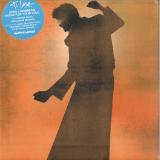
‘Win and lose without losing oneself’’ This line from French rapper Oxmo Puccino greatly accompanied David Walters while composing his fourth studio album. Over the eleven tracks on ‘Ti Love’, David took his time to find the right tone and in turn, tell his truth.
‘Ti Love’, is a French-Creole abbreviation for “petite love”, meaning ‘little love’, evoking that sweet fondness found in those small gestures and little acts of kindness.
Think of things like young kids' brotherly love or a stranger lending you a helping hand, while expecting nothing in return. It’s these motions that allow this album to feel full of real life, carried by beating drums that also pull at our heart strings.
Basing himself in a small village in Martinique, where David had not long since scattered the ashes of his late mother, the multi-instrumentalist decided to remain there and let the writing of Ti Love pour out from deep inside him. Taking influence from around the island, the energy from his makeshift studio set up in Fort de France, allowing a resilient yet grieving man to recount, let go and come to terms with his recent loss.
So embracing these new circumstances, on the rugged coastal Caribbean island of Martinique, David took up an artist’s residency in the island’s capital Fort de France, located near the town’s port is the ‘Manoir des Artistes’, a bustling recording studio space. A place where the walls shake as the latest sounds being created are blasted by locals and visitors alike. Most studio doors are wide open; as music here is a huge part of everyday life, feedback from encouraging neighbouring musicians is on hand and welcomed. A contrast to the isolation often assumed with working in more traditional music studios.
It was here in this stimulating environment that David recorded Ti Love’s initial demos.
With his first collaborator onboard, Neeweed, a 25-year-old producer and gospel expert who David met at the Martinique Jazz Festival.
Of the album’s initial versions of the record David recollects: ‘It took me three years to write it, then I rewrote it, reworked it. In the end I'm really glad I stepped back and listened to myself.’ I found a great ally in GUTS, who ended up being the artistic director of the record”
David surrounded himself with the right people who helped him express himself in the best possible way. He called on other friends and musical comrades; album opener and title track, ‘Ti Love’ features the incomparable Fatoumata Diawara (World Circuit Records / Africa Express) and further along additional production came in from; Izem, Art Of Tones, and GUTS himself, who all added just the right amount of ‘little love’ to this
project. Further helping hands came from Californian producer and DJ Captain Planet, who David was introduced to a few years ago. Closer to home, here in Europe, the German producer Bluestaeb appears on two tracks: the very catchy disco funk ‘Mr Maraboo’ and ‘Kite Koule’, the latter being the first single lifted from the album, where David invited Nigerian guitarist Keziah Jones.
Elsewhere on the album, fellow Heavenly Sweetness recording artist Blundetto contributed two tracks; the reggae ‘Voodoo Love’, which is David's tribute to Studio One, and the very sweet and resilient ‘Bon Voyage’, which closes the album... "It's gold, it doesn't need anything changing.” remarked David - ‘Bon Voyage’ is a goodbye to his mother, whose voice called him from the bottom of the sea one night while he was surfing during the full Moon.
Released almost 20 years after his debut album ‘AWA’ released on French imprint Ya Basta, home to Gotan Project and many others, David boasts a long list of radio supporters including; Gilles Peterson, Cerys Matthews and Don Letts at the BBC, while further field Cosmo Radio in Germany, and KCRW in Los Angeles.
On this new record, David has shown sincerity and vulnerability, while still honouring the infectious groove that he is known for the world over. Despite the upsets, a little love can indeed go a long way.
CREDITS:
Produced by Bluestaeb / Blundetto / Captain Planet / Izem / Art of Tones
A&R : Guts
Mixed by Mr Gib @ Onetwopassit
Except "Bon Voyage” and "Voodoo Love" mixed by Jerome “Blackjoy” Carron
Mastered by Benjamin Joubert @ Biduloscope
Art by Elliott Walters
Haven Trax welcomes a standout 12" from Dutch mainstay Michel de Hey. On the A-side, he delivers a warm and rolling house cut with a catchy piano melody, featuring the soulful vocals of Michael Sebastian -- a track that blends depth and emotion with undeniable floor appeal. The B-side sees Michel join forces with Orlando Voorn for a rawer, more stripped-back club workout. Two generations of Dutch electronic music finding common ground in groove, texture, and timeless dancefloor energy.
Out of Buenos Aires, Argentina the ever-consistent Manuel Sahagun comes
correct for Sounds of Style Records with our 6th release titled “Feed The
Flame EP”.
With excellent releases on Freerange, Pomme Fritte and Fortunea we are
excited to welcome Manuel to the team!
We start off with a jam that's funky and moving titled “Stressed Out’ that’ll give
the heads something to think about while the dance floor boogie’s. Next up is
“1000 Shamans” with a nice spoken word over a funky chugger that will turn
out the heads whether its early in the night or full-on boogie till the sun comes
up.
The B side starts off with our title track “Feed The Flame” which gets to the
feels of classic House music that we love so much! We round out the ep with
“Younger Brother” that ties a catchy spoken word over solid chord work and
bumping low-end to round out this quality record!
Already getting play by DJ Sneak, Toomy Disco, Jay West, DJ Dazy, Mateo
Dufour, Cory Wells, Sound Process & more.
Up next, we have Eddie Leader ”Need To Pivot EP” that is due out January 30th!
Wood White Sessions, the new sub label of Berlin based Sushitech Records dedicated to laid back, atmospheric dub presents its second release.
Roots For Your Soul, the new 12” album from Bristol’s Tubby Isiah, marks their second full length outing.
Featuring right stunning tracks, the record blends fresh material with carefully unearthed, previously unreleased archive sessions.
Together, these pieces form a heartfelt dub journey, rich with warm textures and unmistakable sonic character that define the Tubby Isiah’s sound.
Mastered at Wood White Studios and beautiful finished with artwork by in-house designer Scott Cottrell.
- A1: Life Is Short
- A2: Iwatchedhimdrown (Feat. Xxxtentacion)
- A3: Alien Sex
- A4: Where's The Blow! (Feat.lil Pump)
- A5: Nationwide
- A6: Psycho
- A7: Broly (Feat. Xxxtentacion)
- A8: Slmd Remix (Rip Bernie Mac)
- B1: Rickybobby!
- B2: I Like Bricks
- B3: Unmask (Feat. Denzel Curry & Craig Xen)
- B4: Vetty Vrocker
- B5: Apple Sauce
- B6: Fatality (Feat. Xxxtentacion)
- B7: Billy & Mandy
- C1: Kate Moss
- C2: Young Vorhees
- C3: Shit Talk (Feat. Pollari)
- C4: Jfk
- C5: Pull Up
- C6: Holy
- C7: Wet
- D1: Vr All Stars
- D2: Chanel
- D5: Freaky Fred
- D6: Snomed
- D7: Skimeetsworld
- D3: Hell In A Cell
- D4: Iceberg
2x12" Cloud Orange vinyl[27,69 €]
Ski Mask The Slump God is a vaunted underground rap legend and pioneer in the Soundcloud Rap era
The Lost Files is a collection of songs from the soundcloud era, some unreleased, some never on streaming before.
Includes rarely heard features from XXXTentacion
Recently released “Catch Me Outside 2,” the followup track to his iconic “Catch Me Outside” track - with the single and video going viral
Over 8.5M streams on Spotify alone since release
Recently performed Sold-Out hometown concert celebrating release of The Lost Files. The show sold out in 4 minutes
- Side A. Stay By My Side
- Side B. Strawberry Girl
●STAY BY MY SIDE (Youth Of Roots)
This is the title track from Young Israelites' 2021 debut EP, which made them a household name.
Its catchy, pop melody has captured the hearts of reggae fans worldwide, and Youth Of Roots' KON RYU has covered it in Japanese.
It blends seamlessly with the song like a long-time favorite, bringing out the original's charm with a new brilliance.
●STRAWBERRY GIRL (Young Israelites)
A popular song that shines with sweetness in Youth Of Roots' repertoire, which is filled with roots-conscious, message-driven songs.
Young Israelites' English cover, with its melancholic vocals, further enhances the quality of the original.
YOUTH OF ROOTS
A roots rock reggae band formed in Kanagawa in 2016. Their multi-generational sound and spiritual musicality, rooted in their experiences in Jamaica,
define their sound. They've released numerous singles, including their latest album, "LOVE IS THE ANSWER."
They connect with their audiences at live shows, conveying the spirit of "One Family." Their overwhelming sense of unity and sincere message transcends
borders, earning them praise from international fans as "the best reggae band."
[YOUNG ISRAELITES]
A rocksteady/roots reggae band consisting of three members from Israel. Building on a vintage Jamaican sound, their familiar melodies and soulful,
passionate performances have garnered attention from reggae fans worldwide. Since their debut, they've released a string of EPs and full-length albums,
and have expanded their global reach, including airing on the BBC and performing at the world's largest reggae festival, ROTOTOM SUSPLASH.
This new-generation band vividly revives the spirit of rocksteady and roots reggae for the modern era.
" Shake away " After many hours of work, the no wave, synth punk crooner has produced his best album yet. The voice is soulful and deep, and each track seems paradoxically spontaneous and thoughtful, while the production is perfect for bringing out all these catchy hits.It inevitably brings to mind Alan Vega at his best, but with that Australian touch that makes this album so personal .
Islaja presents her new album ”Angel Tape”, her debut release on the new Helsinki-based label Other Power. Drawing inspiration from childhood epiphanies while listening to an alleged recording of angels singing, Islaja has crafted an album that stands out as a major work in her expansive and celebrated catalogue, which includes previous releases on labels such as Ecstatic Peace!, Fonal and Svart.
Islaja, aka Finnish artist Merja Kokkonen, describes her new album as a “counterwork” to her most recent albums, where the mode of composing was more song-based. This time around, she goes more in the direction of vast fields of sound where the human voice is a key ingredient of music that breaks free of strict stylistic guidelines and traditional song forms. Rough around the edges, atonal and otherworldly, "Angel Tape” is the result of a lifetime of inspiration from something beyond the immediate realm of our experience, an attempt to catch the elusive essence of musical otherness.
”As a child, I listened to the ’angel tape’ my mother played, and I never thought that the human voices I heard on it were angels singing. Instead, all the aural debris lying just beneath the surface caught my attention as I thought it was mysterious and something from a different world than ours, and so that was probably what was referred to as the ’angels’ so miraculously caught on tape”, Kokkonen explains. ”I think this was one thing that led me on this lifelong quest to find new sounds and forms in music.”
The tape she is referring to, a mid-80s church recording, was passed around in religious circles. Each time the tape was copied, it became slightly more distorted. It was believed that this recording of religious music had accidentally captured for the first time the voices of actual angels singing. The tape was rumoured to have originated in Kansas City and to have made its way to Finland.
Whereas Islaja has often thought of albums as being collections of recent songs presented together, ”Angel Tape” has a strong sense of conceptual coherence. The music comes from a place. That doesn’t mean that one must take a single path from one place to the next, as close listenings of the album reveal layers upon layers of not only sound but also of mood and meaning. From the human voice in its barest form, to the rising dense walls of sound moving and reshaping, ”Angel Tape” is a captivating album that unveils new contours with each repeated listening.
We Jazz Records kicks off their new series of archival 7" releases with Esa Pethman "In Belgium 1967" released 23 September 2022. The two-tracker is licensed from the Belgian VRT radio archives and both of the pieces are previously unreleased. Finnish jazz legend Pethman, heard here on alto flute and tenor sax, joins forces with European jazz greats such as Heinz Bigler, Uffe Karskov and Jean Fanis. This is a small but valuable piece of unheard European jazz history from the early heyday of modern jazz. The physical release is a quality "inside-out"-styled EP with 3mm spine and small center hole on the 45rpm vinyl.
An excerpt from the liner notes by Mikko Mattlar:
"Esa Pethman (b. 1938) was one of the key figures of modern Finnish jazz in the 1960s. His album The Modern Sound Of Finland was the first Finnish modern jazz album and his composition "The Flame" a true modern Fenno-jazz evergreen.
Pethman was born in Kuusankoski, 135 kilometres from Helsinki in the Kymenlaakso area. The jazz scene was active even though it was an area of rural landscapes and paper mills. Pethman discovered jazz when he heard a Charlie Parker record being played at a local music shop in the late 1940s. Following Parker, bebop became his favourite style of jazz.
Young Pethman played flute and saxophone in local bands who accompanied schlager singers. They played tangos and waltzes for dancers, but usually started a typical dance event with an hour of jazz. In 1959 Pethman moved to Helsinki to study music at the Sibelius Academy. Back then it was a strictly classical music academy, but Pethman later described the studies as crucial for his development and career. He quickly made his way to studio sessions and into the best orchestras in Helsinki.
As a student of composition, Pethman also began writing his own music. "The Flame" was a melody he just got on his mind one night, and he decided to write it down. The catchy composition was released as a 7" single in 1964, a year before Pethman's debut album. Both records stand as benchmarks for modern Finnish jazz. The album consisted entirely of Pethman's compositions, not versions of jazz standards like a lot of the Finnish jazz released until then.
In the mid 1960s, Finnish jazz was also taking its first international steps. Pethman's quintet took part in the first Montreux Jazz Festival in Switzerland in June 1967. At the Montreux jazz band competition, the quintet came in fourth of the twelve contestants. Despite not winning the competition, the band got an honourable mention, and Pethman was now recognized outside Finland.
In December 1967 Pethman travelled to Brussels. His visit was organised by the national Finnish broadcasting company Yleisradio and their jazz program producer Matti Konttinen. Konttinen was supposed to go to Brussels with Pethman, but the musician ended up traveling alone.
In the Decca recording studios Pethman played two songs. He recorded a version of his most famous composition "The Flame", where he played the alto flute and was accompanied by Belgian musicians. On Swiss saxophonist Heinz Bigler's composition "Like Steel", Pethman played the tenor saxophone. The band was now more international, consisting of Bigler, the Italian Francesco Santucci, the Dane Uffe Karskov, a Belgian rhythm section and Pethman. After 55 years, Pethman still remembers Bigler's remarkable skills as a saxophonist.
The two-day visit included the recording session, a dinner and a concert. Pethman and the other non-Belgian musicians came to Brussels mainly to play at a jazz concert organised by the European Broadcasting Union EBU. They played at the studio first, and the concert was held the following day. Pethman and all the other soloists played as members of an international big band. The studio and live session were produced by the Belgian Radio and Television jazz section leader Elias Gistelinck."
Hot Creations latest Vinyl Sampler featuring four of the Hottest recent release on Hot Creations.
Fresh off his Paradise debut with ‘Way U Move’ alongside Jamie G, Manchester’s Goosey steps up solo on Jamie Jones’ Hot Creations with ‘Funky Shit’ featuring Dope Earth Alien, with wobbly subbass
pulses and Dope Earth Alien’s catchy vocals, sweeping you into a full-body groove!
Murphy’s Law return to Jamie Jones’ Hot Creations, joined by label debutant Sam Curran and Harry Unsworth,on the collaborative banger, ‘Proper Whopper’. ‘Proper Whopper’ brings booming low-end that demand attention while soaring sirens and charismatic vocals build the track’s energy and pave the way for a thundering bassline to command dancefloors.
London-based DJ/producer Sidney Charles is back on Hot Creations with ‘Disco Bumping,’ a slick House cut that blends Aleya Mae’s lush vocals with Sidney’s warping sonic textures and immersive synth work.
Brazilian nocapz delivers the huge anthem ‘Getting Heard’, driving forward with quick, bouncy
beats and heavy synths that build a wave of intensity to the dancefloor.
2026 Repress
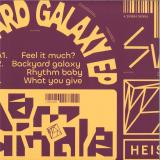
Dam Swindle's new 'Backyard Galaxy' EP is an ode to house music and the classic Swindle sound.
It's only been a few months since Dam Swindle released their highly acclaimed album "Open" and already the boys are back on Heist with a new release that takes you right back to the dancefloor. Where they've spent the better part of the last 3 years writing their album with all its sonic explorations and collabs, this new EP sees the duo return to their roots of club-ready house music. The 'Backyard Galaxy' EP comes with 4 high-energy house tracks made in their Amsterdam studio that have been road-tested all summer.
EP opener "Feel it much?" has all the ingredients of a classic Swindle heater, with warm pads, rich organic percussion and tons of soul. There's a simple and effective vocal running throughout the track that blends nicely with the classic house elements and electronic textures that are layered throughout the track. There's an effortless flow to this track and it comes as no surprise that it has been a highlight in their sets this summer.
The EP title track 'Backyard Galaxy' is an up-tempo Latin-themed jam with a hint of old school techno. The synth stabs hit you just right and the modulated vocal chops are a lovely boost for the build ups and add a touch of swing to a track that already has a tight groove. Add to that a huge breakdown and drum roll and you've got yourself a track that'll light up any dancefloor.
On the flip, we're moving into garage territory with the shuffling vibes of 'Rhythm Baby'. The current popularity of the genre is not missed on Dam Swindle, but when you look closely, you'll see this track is full of elements that the duo have built their legacy on. The vocal chops, transposed key samples and swing are all on point and work just as well below, as above 130 bpm if speed is your thing.
The EP closes with the NY-style house cut 'What you give', which reminds us of Dam Swindle's remix of Cinthie's Heist hit 'Won't U take me' with its lush organs and moody keys. It's perhaps the most classic house track they've made in a long time and you can hear they had a great time recording this. It's playful, vibey and catchy. Just the way we like it.
Dam Swindle might have delivered one of the standout cross-over albums of 2025, but on this EP the message is clear: Once a househead, always a househead.
As always, enjoy the music and play it loud!
Much love,
Heist HQ
In 2017, at Documenta Kassel (but in Athens), I invited José Jiménez Bobote, a remarkable gitano artist from the Tres Mil Viviendas neighbourhood in Seville, to record a series of actions in specific locations in the Greek capital. Ancient Greece and modern Greece. I wanted him to draw sound from the city, to strike it as only a flamenco artist can, with his feet. To hit the ground and make it moan, ring out with noises evoking significant moments in history: from Diogenes the Cynic and the Apostle Paul’s sermon at the Areopagus to Rosa Eskenazi’s resistance to the Nazi-German occupation, and the ups and downs of police Inspector Costas Haritos’s survival at the European Bank during the PIGS crisis. Bobote struck the ground and Athens responded, sending back echoes of the past, in an exceptional anachronistic exercise. In flamenco it is possible for several times to sound simultaneously.
We took seventeen hours of footage, and water from many wells.
I then shut away producer, musician, and friend Raül Refree with this material so that he could take the long titles and use them as scores, turning them into mere songs. It was very important to think in terms of songs. The tracks had to have the capacity to be songs, the kind of thing one whistles while absent-mindedly walking down the street. Generally speaking, the scores—that is, the texts—defended the use and abuse of the loose coins that people carry around in their pockets. Loose change as a kind of everyday fetishism against big financial capital. Pistis! Refree managed to coax that distinctive unity of songs, their bright catchiness, from the amalgamation of sounds that would, in other hands, end up being labelled concrete music. Peter Szendy would be pleased and grateful. Being able to sing under one’s breath something that others consider simply noise.
Seven songs, yes. And if you get the chance, take a stroll through Athens with them: the locations are clearly defined. If not, then let Athens fill your home with all its ancient wisdom, boring into your ears like worms, making holes in history.
Listen, and, as people used to say, turn up the volume!
Pedro G. Romero, Santa Marta, Colombia, November 2025
Comes with booklet with song lyrics written by Pedro G. Romero. Limited edition of 250 vinyl records.
ROTCIV is back with his new EP ‘Memory’, which marks the 20th release on Beartrax’s label Melodize. Throughout the record, the Berlin-based and native Brazilian producer explores his signature dark, mysterious, and atmospheric vibes shaped by the underground and queer club nights and dance-floors that fuel his sound, refined by over almost 30 years behind the decks.
Maintaining Melodize’s specialized sound deep-rooted in moody electronic principles, the EP opens with ‘Memory’, a piercing, dark, synth dynamic alongside rich tonal textures in both harmony and melodies alike. Unapologetic, yet calming and reminiscent of a slow drive through the winter nights; cold, yet bold, sharp, and comforting.
First to remix ‘Memory’ with a nostalgic, synth-heavy 80’s remix is Frankfurt-based DJ, producer, and visual artist Chinaski. Integrating his signature bold synth hooks into the track, Chinaski knows how to roll in with longing sentimentality. The remix features a bouncier approach with re-envisioned acoustic percussion and catchy synth arps, along with an eery dark disco feel.
On the B side, Rotciv kicks in with ‘Trintage’, which gives a sinister sensation with its hypnotising bass synth lines alongside contrasting, choir-like pads. Seeping with articulate poly-rhythmic synth arps, Trintage guides the listener to be indulged into a dream-like state on the border between both digital and analogue soundscapes, blurring the lines between fantasy and reality.
Next up is New York-based and founder of Samo Records, Facets, who takes on the next remix for ‘Trintage’ with a more electro-grunge techno approach consisting of heavier four to the floor kicks in company of Rotciv’s hypnotic textures. Having shifted the synth melody rhythmically, a sense of space and tension is created within the soundworld of this track. The play between gritty bass-end synths along with softer, textured high-ends helps emphasize the groove injected into this remix.
One last remix of ‘Memory’ by Melodize’s own label founder, Beartrax, rounds out the EP. Available exclusively via digital bonus, Beartrax features his deeply hypnotic aesthetic by driving in ethereal synths alongside cosmic arps and slow-rolling rhythmic and pulsating groove lines.
The Mad Geezers are basically F-Spot mainstays Night Owls’ Dan Ubick, Dave Wilder, and Roger Rivas, but with long-time friend and drum guru, Oliver Charles (Ben Harper & The Innocent Criminals, Gogol Bordello) behind the kit. It’s safe to say that these four musicians love their Ska, Rocksteady, roots, and dub, but for this lineup, the four Mad Geezers collectively decided to explore their other obsession... early Jamaican Dancehall.
First on producer Dan Ubick’s To Do list was to channel the fun, attitude, and natural talent on records by Jamaican legends like Yellowman, U-Roy, Sister Nancy, Barrington Levy, Bunny Wailer, and Freddie McGregor. Secondly, find a song that no Jamaican artist has covered, but every DJ on the planet loves, and flip it into a Dancehall groove. Hmm… What about Tom Tom Club’s “Genius of Love”? Ooh! That’s it! So, The Mad Geezers broke out synths, Syn drums, and invited some friends to the party, stepping up to the plate with the brand-new F-Spot Records 45 “Genius Of Love” b/w “Genius Of Dub (Roger Rivas Dub Version). Featuring vocals by one of Jamaica’s shining jewels, Ranking Joe & Oakland’s chosen daughter, Destani Wolf (who many will recall from top-selling Night Owls singles such as “After Laughter” and “Let’s Stay Together,”) this 7” is a sure shot.
With its iconic bass line and catchy synth hook, this 1981 decade-long crate essential is in the collective unconscious at this point. Whether you found it as a Talking Heads fan, or as a rap music fan via Dr. Jeckyll & Mr. Hyde’s “Genius Rap” or Grandmaster Flash and the Furious Five’s “It’s Nasty,” the groove is infectious. It’s hard to imagine no one had yet infused this punk-disco powerhouse with a dancehall injection… until now.