
vorbestellen11.03.2022
erscheint voraussichtlich am 11.03.2022
17,61 €
erscheint voraussichtlich am 11.03.2022

On their Dualtone Records debut 'Sticking With It', Seattle-based sevenpiece The Dip deliver the kind of unbridled soul/R&B that hits on every
emotional level, inciting everything from raw catharsis to heavy-hearted
reckoning to wildly exuberant joy
In a major breakthrough for the band, the self-produced album fully channels the
vitality of the freewheeling live show that's earned them an ardent following over
the last decade, expertly matching their sophisticated musicianship with a
fantastically loose energy. When met with The Dip's lyrical reflection on matters
both timely (the crush of late capitalism, the glaring need for true community)
and undeniably timeless (the vast complexities of love and loss), the resulting
body of work captures the mood of the current moment while offering immediate
escape into a more elevated state of mind.
erscheint voraussichtlich am 04.03.2022

Nineties-inspired alternative indie noise rock / post
punk.
For fans of IDLES, The Jesus Lizard, (‘Worst Case
Scenario’-era) dEUS, Black Midi.
If The Waltz were a drink, it’d be a slamming
cocktail of Panoramix’s magic potion, mixed with
Red Bull, some coffee and a strong Belgian Tripel
beer. A firm headbutt with a kiss on the cheek
afterwards. You won’t know what to remember first:
the bang or the catharsis.
CD in digipack. LP pressed on 180gm yellow
coloured vinyl.
First singles received airplay on Belgian national
radio (Studio Brussels / Radio Willy).
Everything is Noise (US) premiered the single
‘Red-Orange Moon’ and will do an extended
feature on the album.
erscheint voraussichtlich am 25.02.2022

FFO: Arthur Russell, Stealing Sheep, Neu!, Agar Agar, Galaxians
Holodrum are a new disco-infused synth-pop group, who feature members of Hookworms, Yard Act, Cowtown, Virginia Wing, Drahla and more.
Maybe Holodrum were destined to start at this point. This might be the first time they’ve all officially worked together, but between Emily Garner (vocals), Matthew Benn (synth/bass/production), Jonathan Nash (drums), Jonathan Wilkinson (guitar), Sam Shjipstone (guitar/vocals), Christopher Duffin (sax/synth) and Steve Nuttall (percussion) they’ve shared bands, mixed each other’s records, promoted live shows and made music videos together in and around Leeds. As Holodrum, this is the 7 piece’s debut album, but the interlocking grooves and hot headiness of their repeato-rock-via-CBGBs dopamine hits have in one way or other been fermenting for years.
“When it comes to doing music most bands fall between two extremes of doing it for some goal or as an end to itself” says Shjipstone. “I think Holodrum is about the joy and complexity of living, and I just hope to god everyone gets to have a good time doing it.”
Ultimately the core of the group comes from Shjipstone and his former Hookworms bandmates Benn, Nash and Wilkinson. After their abrupt dissolution in late 2018, the four of them spent six months apart; Benn still had Xam Duo, his ongoing project with Virginia Wing and some-time James Holden & The Animal Spirits live member Duffin, Nash remains vocalist and guitarist of long-running DIY rockers Cowtown and helms his solo project Game_Program; and Shjipstone plays guitar with Yard Act. However, the four of them missed the sixth sense synergy they’d built-up playing together over a decade and soon enough demos were being swapped and new ideas were discussed.
The vision of a large live electronic ensemble formed quickly. Friends were added: Duffin and Nuttall – who was keen to resurrect the double percussion interplay that he and Nash had been exploring as part of motorik trio Nope joined first. Then animator and VIDE0 singer Garner crystallised the line-up by joining on vocals.
“Apart from Emily, all of us had actually played together before in a covers band at a New Year’s Eve party at the Brudenell Social Club a couple of years ago, so we knew we could have fun together” says Benn. “So we set up to be a live party band early on. We wanted lots of people on stage having fun, playing for people that also wanted to have fun. It makes sense we take inspiration from bands like Tom Tom Club and Liquid Liquid; they were trying to help people to party at a point when New York was quite a scary and dangerous place we’re doing the same, albeit in the face of a decaying world and a global pandemic.”
Covid-19 hasn’t given them much opportunity to do that yet, with two fledgling shows in late 2019 to their name before festival appearances at the likes of Bluedot, Sounds From The Other City and Gold Sounds were scuppered last year. However, the 6 tracks on Holodrum crackle with the energy of the dancefloor. Opening cut 'Lemon Chic' described by Garner as her “workout track” starts out sparsely, with tight drum claps and burbling synths holding a teetering suspense before the whole thing’s prised open, allowing beaming saxophone skronk to shine in. Garner’s vocals bob and weave around the syncopations of the track’s building cacophony.
It sets the stall for an album heavy on euphoria, built atop crisp interplaying percussion and acid-flecked grooves. At times Shjipstone provides a raw counterpoint on vocals, while elsewhere - like on the strutting, swirling disco of 'Free Advice' and 'Low Light'’s late night ping pong synths - the pair indulge in playful call and response as the instrumentation builds and contorts around them. 'Stage Echo' provides a respite of sorts halfway through, a swirling, fever dream of a track that peaks with big squelchy frequencies and cavernous reverb, before the album returns to its repetitious exercises in body-moving catharsis underpinned at all times by a relentlessly propulsive rhythm section.
erscheint voraussichtlich am 25.02.2022

"The core of confusion and upheaval that drove some of the band's most fiery earlier work, however, is replaced by a more stabilized undercurrent, a mentality that's reflected in songs not afraid to try new things and honestly explore uncomfortable feelings. When combined with exciting production and songwriting choices, that mindset helps make Feels So Good // Feels So Bad one of the Shivas' best albums.” - AllMusic "Portland, Oregon-hailing psych-surf band The Shivas accomplish another time-traveling, reverb-ridden sound that refuses to get boring. Jared Molyneux’s guitar work knows when to be bright or bashful at the right times, breaking into guitar solos that possess a late-’60s groove… The Shivas seem to blissfully flourish” - Paste "a consistent treat for the ears” - The Vinyl District "Though the psych-tinged guitar riff that drives 'Feels So Bad' was written while The Shivas were still on the road, its lyrics didn’t fall into place until the band was well into lockdown, unsure of when they’d be able to return to their most imperative true love: Live shows... Accordingly, 'Feels So Bad' permeates with a sense of urgent desperation, building off a chugging prog-rock instrumental.” - Consequence (on “Feels So Bad”) "They hooked the audience with their throwback rock sounds. The guitar strums and rhythmic drum beats were layered atop smooth and hallucinogenic vocals. The eyes can tell the take at times and there was a sparkle there that said that the band members just love doing live performances." - California Rocker "This single layers on the fuzz but keeps it dreamy, with an especially sticky guitar riff sure to lodge itself in your brain with minimal effort." - Portland Monthly (on “If I Could Choose”) “'My Baby Don’t' translates the genuine vibrant joy
of the live experience into the studio, bringing the band’s ‘60s garage rock roots, sharp pop vocal harmonies, and fervent performances along for the ride." - Under The Radar "Perfectly straddling the line between a solid-head bopping track and an introspective deep cut, The Shivas’ 'Undone' is a rock & roll gem. The track sounds straight out of the late 60s and fits seamlessly in the Portland band’s electrifying catalog." - The Luna Collective "The first time I clicked play on this track, I knew it was a yes for me." - Ear To The Ground Music (on “If I Could Choose”) "The harmonies would make the “Happy Together” Turtles blush, but the unsettling guitar doesn’t shy away from the woollier implications of the ’60s." - Willamette Week (on “If I Could Choose”) "'Undone' is just the perfect song for the good days and the bad ones." - GlamGlare "another hit" - Austin Town Hall (on “Undone”) "one of the best forthcoming albums of the year" - Austin Town Hall RADIO: #3 Most Added @ NACC - 50 official adds BIO Every working musician has had their life turned upside down by Covid-19. For The Shivas, who had recently released a new LP and normally keep a rigorous touring schedule, it was a particularly screeching halt. “We were about to go to SXSW, the following weekend was Treefort in Boise, and then we were going to open for our friends’ band on tour in the US before going to Europe,” Jared Molyneux remembers. Then everything just stopped. They were faced with a dilemma. “It forced us to adapt or just quit,” Molyneux says. “The reality is that shows are our job.” In truth, live shows aren’t just The Shivas job: they are the band’s greatest love. Shivas shows are bombastic, explosive and thoroughly communal live rock and roll experiences where barriers between the performers and their audience seem to dissolve into the sweat and sound. The stage—or the basement, or the living room—that’s The Shivas’ true element. It’s their raison d’etre. It’s their religion. The band’s live urgency may have been born in 2006, when the band’s young members—who began booking West Coast tours while still in high school—waited without fanfare on sidewalks or in parking lots, before being rushed onstage for their sets at 21-and-up clubs. Maybe it developed a little later, as The Shivas blasted their way through Portland’s storied and unsanctioned mid-aughts house show scene. Whatever the origin of their famously kinetic live experience, it’s the show that keeps them coming back after over 1,000 performances spread over 25 countries in 15 years. In those 15 years, The Shivas have grown tight-knit as a group. Guitarist/singer Jared Molyneux, bassist Eric Shanafelt and drummer/singer Kristin Leonard have all been with the band since its earliest days; guitarist Jeff City, another high school friend, joined in 2017. Together they’ve learned to thread a seemingly impossible needle: They’ve honed and tightened their performances without sacrificing the element of surprise that makes each show special. And despite touring and recording for most of their lives, they speak about their project with humility, in the DIY vernacular of their Pacific Northwest upbringing. They talk up their own favorite bands, play all-ages shows as much as possible, and bring a sort of blue-collar humanism to the live performances they relish so much. “We just want to make people feel good,” Molyneux says. “We want them to forget they have to work tomorrow.” Kristin Leonard elaborates, “The live show is all about that feeling of catharsis—in ourselves and in everyone who comes out. We’re creating this safe space where we can all let go. Where we can exhale. And it feels really good when we are able to facilitate that.” So when Covid hit, the band knew it was time for transformation. After a settling realization that live music would be grounded for the foreseeable future, The Shivas booked significant studio time with Cameron Spies, who also produced the 2019 Dark Thoughts LP. They also transformed their lives: three of the band’s four members found work with a local nonprofit serving unhoused Portland residents. They became engaged in protests and fundraisers for social justice. They spent a whole summer actually living in Portland, settling into the city they had always called home, but that sometimes felt like a temporary stop between tours. “We got into a more community-minded headspace,” Leonard says. “And that did give us some purpose. It felt cool to see everybody come together to stick up for what they believe in. It feels like an incredibly formative last twelve months.” The album that emerged from this new moment finds The Shivas reborn as a band that seems seasoned and perfectly at home with itself. There is a calm, even a hopefulness, to Feels So Good // Feels So Bad that sounds new. The Shivas didn’t write or record the album with a particular theme in mind, but one seems to have emerged: where Dark Thoughts was about confronting your demons with fearless self-examination, much of Feels So Good // Feels So Bad is about what happens once you find that peace: how being honest with yourself changes your relationships and your priorities. “I do think it’s about acceptance,” Leonard says. “There’s a weird relaxation that comes with being at peace with things you can’t control or have regrets about.” Maybe that’s why the squealing, riff-laden break-up song opener, “Feels So Bad,” is such a shock to the system. But it’s more of an exorcism than a melodrama: more a song about not being able to do the thing you love (in
this case, playing live shows) than splitting with a partner. “It’s like part of you goes to sleep,” Leonard says. As bandmates who are also in a long-term relationship, Molyneux and Leonard know that their songs might be seen as glimpses into their personal lives, but their songwriting is rarely autobiography. Leonard compares their process to something more akin to screenwriting. “There’s bound to be some autobiographical material in there,” she says. “But the common denominator is the exploration of universal feelings: ones that everyone experiences or can relate to.” The goal is to use the music to drill down into something genuine and sincere, beyond genre or stylistic affectation. That’s where The Shivas have arrived. Whatever growth led the band to Feels So Good // Feels So Bad, plenty of their fascinations remain. They’re still turning love songs into psychedelic, transcendent epics. “Tell Me That You Love Me” subverts doo-wop extravagance and dabbles in Flamenco rhythms. “Rock Me Baby” is a bubblegum anthem soaked in so much reverb that we might just be hearing it from the stadium nosebleeds. “Sometimes” is almost impossibly huge, like a witchy outtake from the Brill Building era. Those songs feel like logical expansions from a band that has always excelled at a timeless sort of rock and roll that tinkers with and explodes elements from every era. But on the towering and mournful “You Wanna Be My Man,” a slow-burning six-minute shoegaze prayer for a higher sort of love, there is a level of emotional nuance that feels like something altogether revolutionary. It’s there again in the stripped-down vulnerability of the album-closing elegy “Please Don’t Go.” Yes, Feels So Good // Feels So Bad is an album about acceptance. Sometimes that acceptance feels enlightened and sometimes it feels like the end result of a lot of kicking and screaming. The Shivas have adapted in both of those ways. With new tours scheduled and a new album on the way, they’re still hoping--like all of us--for a new era of vibrant, cathartic live music. The lessons they learned from having their normal upended, though, have only helped them grow
erscheint voraussichtlich am 18.02.2022
Single release from the forthcoming album “Catharsis”, produced by Sven Va¨th & Gregor Tresher The second release before the upcoming mighty new Sven Va¨th album “Catharsis” gives you another hint at what´s coming at you! Let us tell you, we couldn´t be more excited for everyone to finally experience Sven´s new masterpiece! But before we unleash the beast, we decided to release a second single. This time containing two absolute highlight tracks. If you have heard Sven playing in the past months, you will recognize both, as they were pivotal moments in almost every set! First up we have “Mystic Voices“, a track that was created during the early stages of the album production with Sven gathering ideas and words to finally record the unmistakable vocals during a hectic tour through India, and Gregor spending days and nights on the other side of the planet in his studio to process the stream of inspiration. When the two finally sat down together in the studio, the track emerged quickly. Some would call the instant vibe that magic that every creative mind is longing to find. “Butoh” is a raw and dark force, influenced by Japanese dance, an art form that deeply touched Sven during his travels on Nippon Island. It´s an otherworldly sounding track, still based in the Techno Realm but heavily twisted by a long break that introduces Japanese percussions that eventually get topped by the haunting vocals of Cana Hatsushiba.
Bestelle jetzt und wir bestellen den Artikel für dich beim Lieferanten.

Produced by Jonathan Wilson (Dawes, Father John Misty, Conor Oberst), Erin Rae's highly anticipated new album Lighten Up is a timeless amalgam of classic pop, cosmic country and indie rock, recorded earlier this year in California’s Topanga Canyon. Three years have passed since the release of her critically acclaimed debut Putting On Airs, which drew high praise from publications from Rolling Stone to NPR Music. She mostly spent her time on the road, performing at Newport Folk and Red Rocks, sharing stages with Iron & Wine, Jason Isbell, Jenny Lewis, Hiss Golden Messenger and Father John Misty, before her touring came to a sharp halt at the start of the pandemic. The solitude of the road and then the pandemic created space for Rae to undergo a sonic and philosophical shift where she found personal catharsis in creating an album that reflected on her newfound lessons of self acceptance, alongside finding the confidence to offer social commentary on the environment, gender identity and equality. “My last record was a lot of self-assessment and criticism, and trying to kick old habits and ways of relating and not relating to people,” Rae acknowledges. “This one is about blossoming, opening up, and living a little more in the present moment. Fully experiencing what it is to be human.” With a renewed sense of agency, Rae also took a more active role in creating the kaleidoscopic soundscape that became Lighten Up, setting out to reflect a sound she calls, “an emotional pallet, I could get lost in.” Alongside Erin and Jonathan Wilson, who contributed various instruments, the album also features guest appearances from fellow rising star singer songwriters, Meg Duffy, Ny Oh, and Kevin Morby.
erscheint voraussichtlich am 04.02.2022

Svart Records is proud to unleash the debut album from Dutch female Black Metal duo Doodswens! “Lichtvrees” (translation: fear of light) will be unveiled to the world on the 14th of January 2022. Doodswens Black Metal is a bleak, distorted wave of negative energy according to the tenets set by the Scandinavian originators but with their own new organic reflection of darkness. Their name translated as “Death Wish,” Doodswens breathe new life into the dust of the past, inspired by the rawness of the ‘90s and capturing the black hearts of a new throng of acolytes as they ignite the gloom. Founded in Eindhoven in 2017 by Fraukje van Burg (vocals and guitar) and Inge van der Zon (drums), Doodswens initially erupted into the underground scene in 2019 with their demo, which sent a shiver through its decaying corpse. With their debut album “Lichtvrees,” Doodswens opens up the cesspit of the human condition, giving voice to our bleakest emotions through old-school Black Metal like a freshly dug grave. Proudly expressing feelings of inner negativity and depression, Doodswens have taken the promise of their underground roots and crystallized their very own atmospheric war of sound on “Lichtvrees,” making it an enthralling and captivating inception. With deathly conviction and intense passion they bring their music alive on stage, playing at Roadburn Festival and many esteemed nocturnal events, their cult infamy leading them to be picked for a support slot on Marduk’s upcoming tour of Europe. If you like your Black Metal served especially cold, but with wide-screen atmosphere, then Doodswens could be your new moonless catharsis. “Lichtvrees,” is a highly conceptual work which deals with life and death, reaching enlightenment and fulfilling the symbolical “death wish” that Doodswens represents. Cast your shadow in the unholy light of “Lichtvrees” and discover a rising new star in the Black Metal cosmos.
erscheint voraussichtlich am 28.01.2022

Malta-based stoner and grunge rock act A Broken
Design gear up for the vinyl-release of their latest
album, ‘Another Day In Hell’, via Argonauta
Records.
The band’s much acclaimed debut album was
originally self-released in the middle of the
pandemic in October 2020, but will be now
reissued, for the first time ever, on vinyl.
A Broken Design were formed in 2014 and feature
former band members of sludge metal
heavyweights Slit, doomsters Nomad Son and
electro rockers Kill The Action.
With a mix of various alternative and heavy rock
influences, their 2017 debut EP ‘Halo Of Flies’
already showcased A Broken Design’s passion,
drive and skills to write catchy songs that deliver a
heavy dose of flat out grooves with a nostalgic oldschool grungy touch in a raw and rough sound.
Their album ‘Another Day In Hell’ marks the band‘s
most mature and emotional record to date, delving
deep into a personal catharsis while the four-piece
broadens its sound to further sonic templates.
For fans of Soundgarden, Los Natas, Life Of
Agony, Stone Temple Pilots, Queens Of The Stone
Age, Alice In Chains, I Mother Earth, Pist.On,
Mother Love Bone, Kyuss, Gruntruck.
erscheint voraussichtlich am 28.01.2022

Combo Chimbita unleash a primal roar of catharsis on their latest album,
IRE, channeling a burning spiritual awakening blazing through the world
and in their hearts
Rapturous cumbia, ancestral drumming, free jazz, electronic distortion and
wordless chants abound throughout IRÉ; a testament to the ever expanding
scope of Combo Chimbita's sonic palette and acts of resistance in realms both
spiritual and terrestrial.
The New York City- based quartet are tracing their roots back to Colombia and
even further to the precolonial continent of Abya Yala. Often described as tropical
futurists for their ambitious melange of ancestral musical traditions and cutting
edge experimentation, the creative unity of Carolina Oliveros (vocals,
guacharaca), Niño Lento es Fuego (guitar), Prince of Queens (bass, synthesizers)
and Dilemastronauta (drums) transcends common concepts of time and
nationality. By identifying as Abya-yalistas, the ensemble takes yet another step
towards unshackling their essence from the cruelty of conquest and the stifing
oppression of land borders.
erscheint voraussichtlich am 28.01.2022

Boy Harsher’s latest release, ‘The Runner (Original Soundtrack)’, is an exorcism.
Augustus Muller and Jae Matthews’ fifth release entitled ‘The Runner (Original Soundtrack)’ is not a traditional album. Rather, it is the soundtrack to a short film, also entitled ‘The Runner’. The film, written, produced, and directed by the duo, is a searching horror film, attached to a meta-style “documentary” about Boy Harsher’s recording process. The album includes several distinct components: cinematic arrangements, vocal features, and of course classic Boy Harsher dark pop.
Both the album and short film will be released in January 2022.
Last year, in the midst of the obvious chaos (the global pandemic), but additionally with Jae’s MS diagnosis, Augustus started working on moody, cinematic sketches. It was uncertain what these pieces would become, other than catharsis. In Jae’s period of convalescence, she kept thinking about this sinister character: a woman running through the woods. Together, they developed this idea further into a film. They were unable to tour, a drastic (and isolating) shift in their career, and making ‘club music’ did not feel right. But there was so much they needed to get out. The next Boy Harsher release would be a reconciliation of this time. The album processes feelings of universal anxiety and the confrontation of at home illness. A necessary expulsion during a time of unrest.
The album opens with “Tower”. The only track on ‘The Runner (Original Soundtrack)’ that Boy Harsher has previously played live, but never recorded. The song is an incantation, with its pulsing synth and Jae’s begging vocals. A spell about desire and impending destruction. Jae asks 'But are you honest? Do you trust? You trust in me?' Questions answered by her desperate yells. It starts both the film and the soundtrack with a heavy presence.
Two songs on ‘The Runner (Original Soundtrack)’ feature vocalists other than Jae Matthews. He allows a distinct sound for both vocalists and really leans into the possibility of divergent genres. “Machina”, is a HI-NRG homage, performed by Mariana Saldaña of Boan, and “Autonomy” a new wave tribute, performed by Cooper B. Handy of Lucy. Augustus Muller fully embraces the soundtrack ethos, by creating fictional ‘bands’ to generate additional content.
‘The Runner (Original Soundtrack)’ is exactly what’s in the name: a soundtrack. At first the shape of the release was nebulous - yet once realized the album is dynamic. It serves as the story of the running figure and her musical accompaniment. Those expecting a traditional release will be surprised, but not disappointed.
Bestelle jetzt und wir bestellen den Artikel für dich beim Lieferanten.

Digital Afrika return to the fray with this incredible EP for ASW. Featuring the original Gnawa plus it’s acoustic source recording as performed by Radouan Naim in Morocco PLUS two truly excellent remixes from the legendary Jose Marquez and Melbourne’s own TEYMORI (Amin Payne).
The original source recording for this track was laid down in Planet Essaouira and recorded by Zhonu “Nui” Moon (Digital Afrika ) on one of his many cultural trips to his ancestral home land. The studio is situated on the Moroccan coastal town of Essaouira , a cultural hub for the Berber (indigenous Moroccan) traditions.
This enigmatic town , popularised by the beatniks and bohemians of the 60ʼs, most famously by Jimi Hendrix and The Rolling Stones , has a mystique all its own as well as a long musical history.
“Gnawa” in Berber language literally translates as “Trance“ music , and is traditionally performed in “Lilas” musical ceremonies accompanied by dance that can go on for days .. where the purpose is to produce trance-like states of being where different types of healing or catharsis can occur ..
The recording was then brought back to Melbourne, Australia. Where the Digital Africa team applied its electronic Afro-house touches , while keeping true to its original North African aesthetic.
Bestelle jetzt und wir bestellen den Artikel für dich beim Lieferanten.

WRWTFWW Records is super happy to announce the official reissue of Roland Bocquet’s highly sought after solo album, Paradia. Sourced from the original masters, this very comforting and warm gem is available on limited edition vinyl housed in heavy 350gsm sleeve with holographic sticker, as well as on digipack CD.
Originally released in 1977 on the legendary Cobra label, Paradia is the first solo album by Roland Bocquet, keyboard player for cult French band Catharsis. The (mostly) instrumental album is a wonderful oddball adventure blending cosy ambient, euro-folk, synth escapades, Latin fusion with a French touch, gentle bossa, a tiny bit of minimalist chanson, and a heavy dose of je-ne sais-quoi. The result is soothing, mysterious in the sweetest ways, and fully atmospheric: a must have for fans of Pascal Comelade, Mort Garson, Dominique Guiot, ZNR, Vladimir Cosma, movie soundtracks, library music, and unclassifiable gems.
It’s hard to describle but lovely to experience! Paradia, Paradia, Paradiaaaaaaaa…
Bestelle jetzt und wir bestellen den Artikel für dich beim Lieferanten.

Ltd White vinyl LP w/ printed inner sleeve lyric insert (1000 copies ww)! Emma Ruth Rundle's forthcoming Engine of Hell is stark, intimate, and unflinching. For anyone that's endured trauma and grief, there's a beautiful solace in hearing Rundle articulate and humanize that particular type of pain not only with her words, but with her particular mysterious language of melody and timbre. The album captures a moment where a masterful songwriter strips away all flourishes and embellishments in order to make every note and word hit with maximum impact, leaving little to hide behind. "I really wanted to capture imperfection and the vulnerability of my humanity," Rundle says of the album's sonic approach. "Here are some very personal songs; here are my memories; here is me teetering on the very edge of sanity dipping my toe into the outer reaches of space and I'm taking you with me and it's very fucked up and imperfect.'" Emma Ruth Rundle has always been a multifaceted musician, equally capable of dreamy abstraction (as heard on her album Electric Guitar: One), maximalist textural explorations (see her work in Marriages, Red Sparowes, Nocturnes or collaborations with Chelsea Wolfe and Thou), and the classic singer-songwriter tradition (exemplified by Some Heavy Ocean). But on Engine of Hell, Rundle has opted to forego the full-band arrangements of her previous albums in favor of the austerity of a lone piano or guitar and her voice, which creates a kind of intimacy, as if we're sitting beside Rundle on a bench, or perhaps even playing the songs ourselves. It's an extremely up-close and personal confessional with a focus on the rich subtleties and timbre of Rundle's graceful performances. "For me this album is the end of an era to the end of a decade of making records. Things DO have to change and have changed for me since I finished recording it." In essence, Engine of Hell signifies a major turning point for Rundle as both an artist and as a person. The catharsis of this type of songwriting has effectively served its purpose, and to continue ruminating on the past going forward is less of a healing process and more like picking at a scab and refusing to let it heal. This may help explain why Rundle is less than enthusiastic about divulging the details about her muses, but it doesn't alter the fact that these songs served a purpose in their creation, and that they may continue to bring comfort to others.
erscheint voraussichtlich am 19.11.2021

Debut album Moveys was released to critical acclaim from the likes of The New York Times, NPR, NYLON, AV Club, Stereogum, and more. Pigeons & Planes Rising Band To Know For 2021. Future Touring: European tour spring 2022. RIYL: Alex G, Beabadoobee, Big Thief, Soccer Mommy. Slow Pulp follow up their triumphant debut album 'Moveys' with two 'Deleted Scenes'. "At It Again (Again)" reinterprets the grunged-up album track as a soft and gentle acoustic version. Emily Massey’s vocals float light as a feather over strumming acoustic strings and staccato guitar rhythms. "Iowa" is a hazy, fever-dream take on 'Moveys' standout "Idaho". Recalling the ethereal allure of alt 90s acts such as Mazzy Star or Enya, this adaptation finds the band experimenting with new sonic textures. Somehow both haunting and comforting, the pitched-down, androgynous vocal delivery gives “Iowa” its unique charm. 2020 was a turbulent year of ups and downs for the band. In the process of making their debut record, the Chicago- based indie rock band powered through health challenges, a severe car accident, and a pandemic. On the other side, they emerged with 'Moveys', 10 compelling tracks of blistering energy and emotional catharsis, highlighting the band's resourcefulness and resilience to come together even when the odds were stacked against them. Their debut long-play was released to critical acclaim from the likes of The New York Times, NPR, NYLON, AV Club, Stereogum, and more. Pigeons & Planes recently dubbed Slow Pulp a rising band to know for 2021. To support 'Moveys' and its counterpart, 'Deleted Scenes', the band will embark on a full US headline tour this November and December. Stops will include shows in New York City, Los Angeles, and their hometown of Chicago.
erscheint voraussichtlich am 12.11.2021

Bestial Mouth’s creations in the last two years, the INSHROUDSS EP and the RESURRECTEDINBLACK LP, are the phoenix cries of the project’s rebirth under the guiding hand of vocalist Lynette Cerezo, melding noise and darkwave pop into a theatre of skin-shredding catharsis that brings the project’s post-punk roots to new levels of club-ready destruction—equal parts intensity and accessibility.
THOUSANDNEEDLES pierces that veil with warped reimaginings of both releases, from a diverse selection of artists in the dark underground. Each brings their own unique twist, whether it’s to a dance ritual of pounding EBM and industrialized techno, fog-shrouded darkwave dives, cosmic washes of synthpop bliss, or soul-smashing noise dredged from a sewer cathedral. Dance through the pain, and make new paths of your scars.
Bestelle jetzt und wir bestellen den Artikel für dich beim Lieferanten.

Following recent appearances on Permanent Vacation, Mute and Correspondant, Terr makes a triumphant return to Phantasy with a deeply dreamy new single, ‘Wings of Time’. Marking Terr's third appearance on the label, and her first since 2019, 'Wings of Time' is complimented by a momentous remix from Tornado
Wallace.
‘Wings Of Time’ serves to underscore Daniela Caldellas’ talents as both a producer and performer, a songwriter and a master of dancefloor atmosphere. Terr’s assured vocal performance once again takes front-and-centre, a warm beckoning light through a journey made of shimmering pads, wistful chords and
defined by a powerful sense of groove. An instrumental edition further highlights the arrangement, which resolves with rare, cosmic catharsis.
Tornado Wallace appears to stretch the time Terr sings of on his elastic, tunnelling remix, grinding out every inch of tension and detail from the blueprint, expanding minds and widening eyes in the process. While Terr’s original will likely send dancers to the heavens, Wallace reverses the energy source for an unexpectedly bass-heavy interpretation that generates a different, earthier pleasure.
Bestelle jetzt und wir bestellen den Artikel für dich beim Lieferanten.

My Morning Jacket proudly announce the upcoming release of
their ninth studio album, the self-titled ‘My Morning Jacket’.
The band’s first new music since 2015’s GRAMMY Awardnominated ‘The Waterfall’, ‘My Morning Jacket’ reaffirms the
rarefied magic that’s made My Morning Jacket so beloved,
embedding every groove with moments of discovery, revelation
and ecstatic catharsis.
Produced and engineered by James over two multi-week
sessions at Los Angeles, CA’s 64 Sound, the album came to life
after what looked like a permanent hiatus for the band. But after
performing four shows in summer 2019 - beginning with two
mind-blowing nights at Red Rocks Amphitheatre - My Morning
Jacket were overcome with the urge to carry on.
That sense of purpose can be heard throughout the thrillingly
expansive ‘My Morning Jacket’. For all its unbridled joy, songs
like ‘Regularly Scheduled Programming’ and the otherworldly,
album-closing ‘I Never Could Get Enough’ once again reveal My
Morning Jacket’s hunger for exploring the most nuanced and
layered existential questions in song form while simultaneously
harnessing the hypnotic intensity of their legendary live show
more fully than ever before.
“I hope this album brings people a lot of joy and relief,
especially since we’ve all been cooped up for so long,” says
James. “I know that feeling you get from driving around blasting
music you love, or even lying in bed and crying to the music you
love. The fact that we’re able to be a part of people’s lives in
that way is so magical to us, and it feels really good that we’re
still around to keep doing that.”
CD in digisleeve with 12pp booklet.
Double LP on clear vinyl featuring a gatefold jacket with artwork
by Robert Beatty, custom inner-sleeves with lyrics and digital
download. (Once this format has sold out, a standard black vinyl
format - ATO0573LP - will be made available.)
erscheint voraussichtlich am 22.10.2021

In 1994 Come responded to the difficult-second-album stereotype with the hypnotic, intense and emotional masterpiece 'Don't Ask Don't Tell'. Featuring the original line-up of Thalia Zedek, Chris Brokaw, Sean O' Brien and Arthur Johnson, the Boston band broadened their sound by slowing down the tempos and creating a dense urban stream of consciousness that mixes noise, city blues and_ catharsis. The album hits you immediately as one of the greatest dissident records ever made. Lovingly remastered, this expanded edition includes 'Wrong Sides', an additional albums worth of b-sides and unreleased tracks, including the band's very first single 'Car' and their last recorded song, 'Cimarron', featuring this core line-up. These gems showcase the rawness and incredible growth of a band completely in command of their songwriting and at the same time paying homage to some of their punk roots with beautiful renditions of Swell Maps 'Loin Of The Surf' and X's 'Adult Books'. Also Includes new artwork with unearthed photos and fresh liner notes by the band. Dissident from traditional rock this is a band playing music that thematically and structurally seems to pull from old Europa, from Eastern folk and modernist classical music as much as US and UK rock. Dissident from traditional ideas about singing and songwriting Thalia's (ex of Live Skull) presence on songs like 'Yr Reign' and the astonishing closer 'Arrive' isn't the pushy self-aggrandizement of a lead singer but the internal voice of the eternal migrant, someone who knows about survival, hiding, how living between multiple worlds can become its own refuge of distance, its own sanctuary of unbelonging Don't Ask Don't Tell emerged from a period of cohesion, a break from the tight and hectic touring schedule Come had been plunged into after the acclaim accorded 11:11, and you can hear that increased focus in every moment the layers of guitars and feedback are even more precise, the structuring of songs takes on a new openness and ambition, and the whole narrative arc of the record from 'Finish Line' to 'Arrive' is more exquisitely realised and sequenced. "The songs on Don't Ask Don't Tell . . . had a kind of magic we didn't necessarily control ourselves." Chris Brokaw - interview with Neil Kulkarni, 2013. "Devastating, with slow, burning songs that shudder and wince" NY Times
erscheint voraussichtlich am 22.10.2021

"More than any other artist to emerge from the fertile black metal scene of the early ‘90s, Ihsahn has firmly established himself as an unpredictable maverick. Frontman and chief composer with the legendary Emperor, he re-wrote the rulebook on epic extreme music across a series of albums that are still widely regarded as classics. From the genre-defining majesty of In The Nightside Eclipse in 1994 to 2001’s wildly progressive tour-de-force Prometheus: The Discipline Of Fire & Demise, Ihsahn’s unique approach and liberated musical ethos ensured that when he embarked on a solo career with 2006’s The Adversary, fans were primed to expect the unexpected. Box includes seven double LP’s, two single LP’s, all on 140g ultra-clear vinyl. Bringing Ihsahn’s core-works in one unique box, including a 36-page booklet. Limited to 1,000 copies – a true collector’s item.
Artwork lovingly restored by Dan Capp design. Vinyl mastered by Jens Borgren (Opeth, Katatonia, Soilwork)."
erscheint voraussichtlich am 22.10.2021

Revered Danish producer and live performer KÖLSCH follows his 2013 hit album "1977" (KOMPAKT 276 CD 107) with the new full-length "1983", again chaining up heroic techno tracks for a grandiose sonic journey to the vibrant heart of today's dance floor. PRIORITY RELEASE
Coupling contemporary production pizzaz with nostalgia-tinged soundscapes and sweeping melodies, this opus acts as both a skilfully composed portfolio of personal memories and a sublime collection of crowd-charming cuts - a modern classic in the making, coming from a master of his craft.
1983 features collaborations with Gregor Schwellenbach, Waa Industry and WhoMadeWho's Tomas Høffding.
Hot on the heels of SPEICHER 84 (KOMPAKT EXTRA 84), featuring club crackers DERDIEDAS and TWO BIRDS, the latest full-length offering from KÖLSCH is very much a travel album: "When I was a kid in 1983, we used to drive through Europe every summer on the way to the south of France", he explains. "A lot of my early music memories stem from these long travels, as we would listen to all my father's favorite records on the cassette deck. After getting a walkman, I would make up my own soundtrack for travelling, with early electro and hip hop creeping into my life. My father of course did not like it, and it never grace the official cassette deck of the car, obviously"
These trips became a primary source of inspiration to a hungry young mind forced to sit on the backseat of a car for several days: "they were also journeys through the seasons. In Denmark, it would be spring time, so I could nearly see us driving through spring into the summer. The scenery would change, and so would the mood in the car." Informed by the symbolic quality of these slightly gauzy childhood memories, KÖLSCH's unique melange of emotional and functional elements works exceptionally well for the full-length format - a seamless transition of musing introspection and explosve expression, where catharsis never seems far away in dance-ready techno vignettes like MOONFACE, UNTERWEGS or PACER.
From beatless opener and title track 1983 to the filigreed piano banger DIE ANDEREN or the bleep-infused synth-fest E45, each cut operates as its own little time capsule, storing bits and pieces of recollection and then magically transforming them into epic, beat-driven soundscapes. Confronted with other producers' input (and other memories), these traits find themselves extended in the most interesting ways - TALBOT, THE ROAD and CASSIOPEIA (also featured on KOMPAKT EXTRA 79) make excellent use of GREGOR SCHWELLENBACH's emotive orchestral flourishes, while BLOODLINE's lyrics come to life thanks to the distinct timbre of TOMAS HØFFDING of WHOMADEWHO fame. A new powerful take on an earlier collaboration, PAPAGENO 30 YEARS LATER not only rejoins WAA INDUSTRY on vocal duty, but also ends the album on a wonderfully elegiac, yet hopeful note - basically turning water into wine, as we've come to expect from KÖLSCH.
Bestelle jetzt und wir bestellen den Artikel für dich beim Lieferanten.

In the Company of Serpents traffic in sonic catharsis. Their music inhabits the strange fringes between sludge metal and sprawling spaghetti western scores, constantly striving for visceral power and raw intensity, contrasted with eerie, spare instrumental passages. Founded in Denver, Colorado in 2011 the band quickly managed to establish a name for themselves. Several releases followed in the years to come and In the Company of Serpents managed to impress the masses on stage as well. Late 2019/early 2020 the band started to work on their album ‘Lux’. It turned out to be one of the most impressive Doom/Sludge Metal albums ever recorded. The band self-released the album in limited edition during 2020 but soon afterwards Petrichor noticed their supreme musical qualities and decided to offer the band a chance to release the album worldwide. A deal was made, hands were shaken and you now all have to face the impending doom before you. The music of In the Company of Serpents is so intense it mimics the gravitational pull of a black hole.
erscheint voraussichtlich am 03.09.2021

Comes with POSTER and digi dowload
Destruction by IND (Artist) - English version below.
Ce morceau est une tentative d'allégorie de la situation actuelle, entre confinement collectif et confinement individuel, ou comment en etant seul l'on peut se retrouver confiné en nous meme, et comment ce regard sur soi peut se transformer en catharsis si on ose le soutenir.
C'est un peu expérimental, j'espere que ça vous parlera!
C'est l'histoire de quelqu'un posé chez lui, seul.Dans sa solitude l'anxiété monte, et pour tenter d'attenuer cela, il décide de sortir à l'extérieur.il passe la porte de chez lui, se retrouve dans la rue, sous la pluie, dans l'orage.Les rues sont vides, vides comme son intérieur à lui, et ce vide ne fais que grandir cette anxiété qui le prend.Il marche, explore, pense, se perd, et finit par trouver un batiment dont il ne connait pas vraiment l'origine ni le but. Ca ressemble à une usine abandonnée, mais l'est ce vraiment?il décide d'entrer, se retrouve a l'intérieur, il fait sombre, l'angoisse grandit en lui.Pour retrouver un peu de lumière, il entrouvre une porte qu'il avait aperçu en entrant, au fond de la salle principale, et sort dans une petite court intérieur, quelques plantes ont poussé. Au fond de cette cours, et bien qu'il sache pertinemment, à l'image de son intérieur a lui, que certaines portes ne doivent pas,ne doivent plus être ouverte, il trouve une lourde porte de metal et l'ouvre.
Devant lui des escaliers, qui le mènent dans la cave, dans sa cave, a l'intérieur de lui meme, là ou la lumière n'arrive plu.Et attiré par la noirceur il descend.
Ses pas résonnent , et arrivé en bas, il découvre ce qu'il n'aurait pas du voir.alors l'instinc de survie reprends ses droits, et il court, il court et s'enfui, remonte les escaliers, ressort du batiment et revient dans la rue, vide, mais en sécurité, l'angoisse a disparue, car des fois, se confronter a notre noirceur la plus enfoui, permet de la mettre en lumière, et ainsi la dompter.
his track is a kind of allegory, a trial to express the feeling of these weird times , the lockdown we live ,wich is as external as its internal...How the anxiety grow and how our internal vibe could be felt as empty as the streets around us while seeing nobody all day long.
This is the story of someone, at home.He feel the anxiety grow in him, and decide to go outside, but all the streets are empty,like himself. he walk and as he walk the anxiety continue to grow.Finally he find a building, unknowing if its a factory or what but its abandonned, ,he goes inside to explore, arrive in an indoor course, and see a door...being intrigued, he decide to open this door and to go down the stairs he have in front of him...The more he descend, the more the fear and anxiety grow, as he goes down inside his mental.Finally he arrive in the basement, and what he see is too rude for him, and so he decide to run and escape from this, from himslef.
he run run run, go upstaris, open the doors and arrive in the street, safe.And without any anxiety, because sometimes, to go face to face with our deepest dark side, let us put light on it, and so let us tame it.
Bestelle jetzt und wir bestellen den Artikel für dich beim Lieferanten.

Thirteen turbocharged tracks indebted to the pleasures and pitfalls of their lives in the modern city of Sydney and to the the first and second waves of international extreme music freaks and loonies: pure fucking aggression. The Oily Boys have graced us with a beast of an album that swells between direct, gripping, tangible hardcore punk and near nauseating psychedelia and throb which at moments feels like either ritual trance or a nervous breakdown. Cro Memory Grin contains near equal measures of tension and release; an exercise in high catharsis. It’s rare that a punk record can give the listener anywhere near the same intoxicating feel of an “everything louder than everything else” live show, but that’s what Oily Boys have done. That lightning in a bottle feeling of excitement, chaotic energy, delirium, presence in a moment and frenzied flight into a mind state both frightening and ecstatic. The stone has been carved, the fire has been lit, and this is it... Cro. Memory. Grin. *** Best played LOUDEST ***
erscheint voraussichtlich am 13.08.2021

LP on white vinyl! What if a song was not a culmination but a singe, an imprint, or a crater left in the wake of creative process? On her new record "Jade", Pan Daijing composes at a different scale than that we've come to know. Since the release of her groundbreaking LP "Lack" in 2017, Daijing has expanded her operatic vision into a series of major commissioned exhibition-performances at institutions including the Tate Modern, Martin Gropius Bau, and the Haus der Kulturen der Welt. Developed for full casts of opera singers and dancers, and reaching for an all-encompassing durational experience of intensity for both performer and audience, the development of these works was for Daijing as emotionally disarming as it was thrilling. In order to continue accessing her own limits, Daijing had to develop a place of sanctuary within her own practice. Its nine tracks written and recorded over the last three years, "Jade" is the sound of solitary release and refuge, of creative self-sustenance. Written without the imperatives of direct address to performers or audience, "Jade" speaks inward, while inviting a kind of rhetorical listening. The artist draws on materials familiar from her previous work: namely, ascetic electronic textures that rumble and pierce, and voice bent in irreverent directions. In place of catharsis, however, her arrangements here linger in tension, extending curiosity towards the delicate void that nourishes extremes. They toy with the minor capacities of song: repetition, chant, observations that conclude without resolving. "Jade" comes from a vulnerable place, tender as in an undressed wound caught in the midst of healing over. Vocals, mostly Daijing's own, arrive as wordless sequences of notes soaring alongside a drone, or plain laughter, or in a few places spoken word. What is said or sung provides fragments of experience and reflection. In the process of piecing together these fragments, the listener is confronted with the tender parts of her own. "Solitude is like an immense lake you're swimming through," says Daijing of these songs. "Sometimes you dip your head in and sometimes you lift it above. On album centerpiece "Let," she speaks to us over the sound of rippling water, returning between anxious scenes to a refrain: "I take my bath in the ocean." We are not just consuming Daijing's story; we are being invited to join her in the water. The album is mixed and mastered by Rashad Becker, featuring artwork by Pan Daijing, cinematography by Dzhovani Gospodinov & design by NMR.
Bestelle jetzt und wir bestellen den Artikel für dich beim Lieferanten.

Cindytalk is the mercurial, expressionist outlet of Scottish artist Cinder. An evolution of her early 1980's Edinburgh-based punk band The Freeze, she launched the project upon moving to London, inspired by the crossroads of exploratory UK post-punk and early European industrial. Her work thrives on chance and transformation, collaging elements of noise, balladry, soundtrack, catharsis, and improvisation. After a series of celebrated albums for the Midnight Music label as well as collaborations with This Mortal Coil and Cocteau Twins, Cinder migrated to the United States, becoming involved with various underground techno collectives around the Midwest and West Coast. Subsequent relocations to Hong Kong and Japan further expanded Cindytalk's horizons, resulting in a fruitful partnership with Viennese experimental institution Editions Mego, for whom she released five full-lengths of swooning, granular atmosphere. 2021 finds her as engaged as ever, at the precipice of long-awaited back catalog reissues alongside multiple new works, guided by her lasting love of discovery and deviation: “new pathways always being uncovered.”
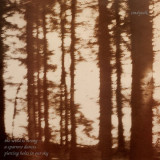
The 3rd album by Scottish industrial enigma Cinder aka Cindytalk began life as the soundtrack to an experimental film by English director Ivan Unnwin entitled Eclipse (The Amateur Enthusiast's Guide To Virus Deployment), and was originally slated for release via Factory Records' video division, Ikon. Inspired heavily by Alan Splet's eerily disembodied sound design in David Lynch's Eraserhead, the collection's 15 pieces seethe between field recordings, wistful piano vignettes, and lurking metallic haze – a hybrid palette Cinder characterized at the time as “ambi-dustrial.” Unfortunately Ikon collapsed on the eve of the project's completion so the film was never distributed, but the Midnight Music imprint repackaged Cindytalk's score as an LP in 1990 under the name The Wind Is Strong... (full title: The Wind Is Strong - A Sparrow Dances, Piercing Holes in Our Sky).
erscheint voraussichtlich am 30.07.2021
Cindytalk is the mercurial, expressionist outlet of Scottish artist Cinder. An evolution of her early 1980's Edinburgh-based punk band The Freeze, she launched the project upon moving to London, inspired by the crossroads of exploratory UK post-punk and early European industrial. Her work thrives on chance and transformation, collaging elements of noise, balladry, soundtrack, catharsis, and improvisation. After a series of celebrated albums for the Midnight Music label as well as collaborations with This Mortal Coil and Cocteau Twins, Cinder migrated to the United States, becoming involved with various underground techno collectives around the Midwest and West Coast. Subsequent relocations to Hong Kong and Japan further expanded Cindytalk's horizons, resulting in a fruitful partnership with Viennese experimental institution Editions Mego, for whom she released five full-lengths of swooning, granular atmosphere. 2021 finds her as engaged as ever, at the precipice of long-awaited back catalog reissues alongside multiple new works, guided by her lasting love of discovery and deviation: “new pathways always being uncovered.”
The 3rd album by Scottish industrial enigma Cinder aka Cindytalk began life as the soundtrack to an experimental film by English director Ivan Unnwin entitled Eclipse (The Amateur Enthusiast's Guide To Virus Deployment), and was originally slated for release via Factory Records' video division, Ikon. Inspired heavily by Alan Splet's eerily disembodied sound design in David Lynch's Eraserhead, the collection's 15 pieces seethe between field recordings, wistful piano vignettes, and lurking metallic haze – a hybrid palette Cinder characterized at the time as “ambi-dustrial.” Unfortunately Ikon collapsed on the eve of the project's completion so the film was never distributed, but the Midnight Music imprint repackaged Cindytalk's score as an LP in 1990 under the name The Wind Is Strong... (full title: The Wind Is Strong - A Sparrow Dances, Piercing Holes in Our Sky).
erscheint voraussichtlich am 30.07.2021

Cindytalk is the mercurial, expressionist outlet of Scottish artist Cinder. An evolution of her early 1980's Edinburgh-based punk band The Freeze, she launched the project upon moving to London, inspired by the crossroads of exploratory UK post-punk and early European industrial. Her work thrives on chance and transformation, collaging elements of noise, balladry, soundtrack, catharsis, and improvisation. After a series of celebrated albums for the Midnight Music label as well as collaborations with This Mortal Coil and Cocteau Twins, Cinder migrated to the United States, becoming involved with various underground techno collectives around the Midwest and West Coast. Subsequent relocations to Hong Kong and Japan further expanded Cindytalk's horizons, resulting in a fruitful partnership with Viennese experimental institution Editions Mego, for whom she released five albums of swooning, granular atmosphere. 2021 finds her as engaged as ever, at the precipice of long-awaited back catalog reissues alongside multiple new works, guided by her lasting love of discovery and deviation: “new pathways always being uncovered.”
Across decades of activity Cinder’s body of work has forever followed its own elusive muse but nowhere is this restless spirit more apparent and ambitious than the 4th Cindytalk LP, Wappinschaw. Conceived as “a call to arms” inspired by Scotland and its struggle for independence, the title refers to an archaic Scottish battle inspection during which clan chieftains surveyed their group's weapons to ensure they were combat ready. A mindset of reflective preparation threads throughout the record, manifested in forms both naked and noisy, ancient and anguished.
Opening with an aching solo vocal rendition of the British folk standard “The First Time Ever (I Saw Your Face),” the album then surges into the Cindytalk classic, “A Song Of Changes,” sparkling and spiraling in strange waves of sorrow and joy. From there the mood fragments, tracing asymmetrical paths of feverish dirge, pensive spirituals, noir abstraction, spoken word (landmark Glaswegian writer Alasdair Gray guests on “Wheesht”), bagpipe drone, and apocalyptic post-punk. Given its aggressive eclecticism, it's not surprising that Cinder describes the creation of Wappinschaw as a “precarious” process, composed from “scraps” with abruptly shifting personnel – a situation only compounded by the impending dissolution of their label at the time, Midnight Music.
erscheint voraussichtlich am 30.07.2021

Cindytalk is the mercurial, expressionist outlet of Scottish artist Cinder. An evolution of her early 1980's Edinburgh-based punk band The Freeze, she launched the project upon moving to London, inspired by the crossroads of exploratory UK post-punk and early European industrial. Her work thrives on chance and transformation, collaging elements of noise, balladry, soundtrack, catharsis, and improvisation. After a series of celebrated albums for the Midnight Music label as well as collaborations with This Mortal Coil and Cocteau Twins, Cinder migrated to the United States, becoming involved with various underground techno collectives around the Midwest and West Coast. Subsequent relocations to Hong Kong and Japan further expanded Cindytalk's horizons, resulting in a fruitful partnership with Viennese experimental institution Editions Mego, for whom she released five albums of swooning, granular atmosphere. 2021 finds her as engaged as ever, at the precipice of long-awaited back catalog reissues alongside multiple new works, guided by her lasting love of discovery and deviation: “new pathways always being uncovered.”
Across decades of activity Cinder’s body of work has forever followed its own elusive muse but nowhere is this restless spirit more apparent and ambitious than the 4th Cindytalk LP, Wappinschaw. Conceived as “a call to arms” inspired by Scotland and its struggle for independence, the title refers to an archaic Scottish battle inspection during which clan chieftains surveyed their group's weapons to ensure they were combat ready. A mindset of reflective preparation threads throughout the record, manifested in forms both naked and noisy, ancient and anguished.
Opening with an aching solo vocal rendition of the British folk standard “The First Time Ever (I Saw Your Face),” the album then surges into the Cindytalk classic, “A Song Of Changes,” sparkling and spiraling in strange waves of sorrow and joy. From there the mood fragments, tracing asymmetrical paths of feverish dirge, pensive spirituals, noir abstraction, spoken word (landmark Glaswegian writer Alasdair Gray guests on “Wheesht”), bagpipe drone, and apocalyptic post-punk. Given its aggressive eclecticism, it's not surprising that Cinder describes the creation of Wappinschaw as a “precarious” process, composed from “scraps” with abruptly shifting personnel – a situation only compounded by the impending dissolution of their label at the time, Midnight Music.
erscheint voraussichtlich am 30.07.2021

The furious double LP "AL AZRAQAYN" documents KARKHANA (with members of KONSTRUKT, THE DWARFS OF EAST AGOUZA, LAND OF KUSH, PETER BRÖTZMANN CHICAGO TENTET, "A" TRIO) at their very best and intense: live on stage.
Consisting of seven of the most adventurous and innovative artists from the Middle Eastern experimental scene (and a veteran jazz percussionist from Chicago), KARKHANA are surely among the most unique and interesting ensembles around. When MAURICE LOUCA (THE DWARFS OF EAST AGOUZA), SAM SHALABI (LAND OF KUSH, THE DWARFS OF EAST AGOUZA), UMUT ÇAĞLAR (KONSTRUKT), MAZEN KERBAJ ("A" TRIO, JOHNNY KAFTA ANTI-VEGETARIAN ORCHESTRA), MICHAEL ZERANG (PETER BRÖTZMANN CHICAGO TENTET), SHARIF SEHNAOUI ("A" TRIO, ORCHESTRA OMAR) and TONY ELIEH (ORCHESTRA OMAR, JOHNNY KAFTA ANTI-VEGETARIAN ORCHESTRA ) come together to perform and / or record, the result is as diverse as their individual musical backgrounds. The septet's sound is neither retro nor avantgarde, not folklore nor jazz or rock – it's an astonishing blend of all these different styles and elements where seductive oriental melodies can intensify and turn into a psychedelic freak-out, fuelled by reeds, guitars and electronics, only to re-start again from quiet sounds till the ensemble seeks catharsis in a collective improv outburst! Defying simple categorization, and in lack of proper terms for the intense experience of KARKHANA's music (as well as the member's other projects mentioned before), someone labelled it "free Middle Eastern music".
And it's not surprising that these skilled musicians are at their best live on stage – as documented on this live recording from a furious, highly energetic concert at Bimhuis / Amsterdam!
erscheint voraussichtlich am 23.07.2021

Romantic Images, Molly Burch’s third album, marks a distinct evolution for Burch, both emotionally and sonically. Recorded in Denver with Ten - nis’ Alaina Moore and Pat Riley producing, the collection celebrates the timeless delights of a well-crafted pop song, flirting with Blondie, Madonna, and even Mariah Carey as it forges a joyful soundtrack to liberation and self-discovery.
Burch deliberately worked with more women collaborators than ever before on the album, and the results are transcendent, reveling in the passion and the power of the divine feminine. The collection prioritizes ecstasy and escape, and Burch’s commitment to collective catharsis in her lifted, airy delivery manages to exude both thoughtful introspection and carefree abandon all at once. The shadow still lurks on the album, to be sure, but the light ultimately wins, and the result is an intoxicating collection all about coming into our truest selves.
erscheint voraussichtlich am 23.07.2021

Dauw welcomes Taylor Deupree to the label with his new record 'Mur'. With this release Dauw also introduces Jelle Martens, a Belgian graphic designer and painter, for the artwork of this release.
Deupree describes the album title “as if there’s always something about my music that’s like a murmur”, resulting in a murmuring effect when pronouncing the names of each track. Mur is a personal journey through the challenging year that 2020 has been. The fifth and last track on the album, Mar, contributes as a catharsis to this turbulent period in Deupree’s personal life, which is defined by the interaction between the loud sounds and the soft keys of the piano. As if the storm has died down and the waters have found their peace.
Taylor Deupree is an American musician and mastering engineer based just outside of New York. As a former member of the American electronic band Prototype 909, Deupree has had numerous collaborations with artists such as Ryuichi Sakamoto, Stephen Vitiello, Alva Noto and Marcus Fischer. Curating 12k, a New-York based music label, is another aspect of Deupree’s career and brought together over one hundred releases since its beginnings in 1997. Having some similar artists in our catalog (Federico Durand, Will Samson and Steinbüchel for example), it’s safe to say that Deupree’s new release through Dauw will be in good company.
Bestelle jetzt und wir bestellen den Artikel für dich beim Lieferanten.

No one album could ever capture the claustrophobia-to-catharsis of an Eyehategod show, but this compilation of live tracks and demos comes as close as it gets. Giving you an idea of Eyehategod’s uncompromising, single minded purity of expression and exertion of raw nerve, “10 Year Of Abuse” is a monumental document all the way from the demo era to their later, legendary relentless live tour set. Many other bands have tried unsuccessfully to emulate Eyehategod and have never quite captured their dynamic. Formed in 1988 in New Orleans they have become one of the most well known bands to emerge from the NOLA metal scene. Eyehategod note bands like Melvins, The Obsessed, Discharge, Black Flag, Black Sabbath and Saint Vitus as major influences, but are often mentioned in the same breath as any of these legendary bands. Drawing comparisons to Grindcore, Crust Punk and Sludge Metal, their heavy bluesy, detuned rock and roll has been a lynchpin for the misanthropic and disenfranchised. Eyehategod has released five studio albums to date with a sixth in the works and have toured all over the world in a career spanning over thirty years. Though the band has never released a live album, we are left with “10 Years” as the only official witnessing document to decades of decimating live sonic abuse. Released on May 29, 2001, “10 Years” spans seven live tracks from their European tour in 2000, a live radio show from August 1994 and four songs from an early 1990 demo. The result is a feedback-laced window into that wonderful, brutal Eyehategod “sound”, that addictive, lower-than-low note that nestles somewhere in the pit of your burning, alcohol-soaked, nauseated stomach. The booklet alone is a delight for anyone who worships at the altar of Eyehategod’s oppressively heavy, crushing riffs.
erscheint voraussichtlich am 21.05.2021

Backed by members of the David Nance Group, Rosali (Long Hots, Wandering Shade, Monocot) wades through the emotional mire with infectious, earworm melodies led by her luminous voice. With their rich, raw instrumentation, these rock ballads sound like the resilience discovered in facing one’s darkest moments, the assurance of the calm and clarity that comes after the storm. As she sings on the second track, “Bones,” “Through the darkness of the field / I walk through without yielding / To the rest of the feelings / I’m carrying.” With her confident song craft, Rosali illustrates the ability to push through, moving toward something greater without being destroyed by the weight of trauma.
Engineered by James Shroeder and featuring Kevin Donahue (Simon Joyner), James Shroeder (Simon Joyner, DNG, Connor Oberst), David Nance, Noah Sterba, Colin Duckworth, and Daniel Knapp, the album was recorded in ten days and the raw immediacy of the music is palpable across these ten tracks. Added adornment was contributed by Philadelphia's Robbie Bennett (War on Drugs) on organ and keys, and Matt Barrick (The Walkmen, Jonathan Fire Eater, Muzz) makes a percussion cameo on “Whisper,”which was tracked at Philly’s Silent Partner Studio, where No Medium was mixed by Quentin Stoltzfus (Mazarin, Light Heat). The open creative collaboration elevated the songs, resulting in the exciting, vibrant sound of the album.
Rosali wrote the bulk of these songs in January of 2019 while on a self-imposed two week residency in the hills of South Carolina. Alone in an old farmhouse, she experienced supernatural events and faced her own demons in the deepest darkness. Perhaps as a result, there is a boldness that permeates the album, a daring vulnerability in both the lyrical themes and their musical accompaniment. Rosali says, “I approach guitar playing the same intuitive way I sing, which is profoundly spiritual for me. Where words fail, the guitar becomes the conduit for raw feelings, providing a direct connection to them. I’m constantly working on being fearless in my work, which means showing the rough side, the mistakes along with the triumphs.”
While writing No Medium, Rosali was inspired by harmonographs—swinging pendulums that create beautiful illustrations of the mathematics of music—considering how the mind, too, creates images through song. She imagined herself as the swinging pendulum—“a body suspended from a fixed point” (Encyclopedia Britannica), governed by the forces surrounding her. She thought about the pendulum’s relationship to time, movement, and even its use in divination practices. The album’s title, lifted from Charlotte Brontë’s, Jane Eyre, resonated with this vision: “I know no medium: I never in my life have known any medium in my dealings with positive, hard characters, antagonistic to my own, between absolute submission and determined revolt. I have always faithfully observed the one, up to the very moment of bursting, sometimes with volcanic vehemence, into the other.” With the multiple meanings of “medium”—as middle ground, a term for psychics, and as the material of artistic expression—No Medium felt like the appropriate name, describing how the self is shaped by the patterns of life .
The influences for the sound of No Medium reflect this pairing of assured vulnerability, in the stylistic coherence of Bob Dylan’s Desire, the tender delivery in Iain Matthews’ Journey From Gospel Oak, the strut and swagger of Bowie’s Hunky Dory, the ambition and beauty of Gene Clark’s No Other, and the playful catharsis of Harry Nilsson’s Nilsson Schmilsson. The Richard and Linda Thompson-esque album opener “Mouth,” places Rosali within both a physical and emotional space. “East of the river I was travelling on / watch me lie, undone / rest me in a forest, overgrown / until I am free of all that I’ve known,” she sings. There is movement, both within a cityscape, and in her outlook on love. Speaking of her thought process when writing the song, she says, “I imagine confidently walking away from the past, toward a new approach to love and intimacy to achieve a closer relationship with myself.”
In “Pour Over Ice,” Rosali explores her relationship with alcohol and her former reliance upon it as a social lubricant to quell her social anxiety, an energizer to keep moving, a means to cope and self-medicate, and most addictively, to lure out her wild side as a free flowing, good time girl. While drinking helped her through some shitty times, it eventually got the upper hand and became an insatiable hole within. She says, “The ‘you’ in the song is really me, talking to that component of myself struggling with drinking and self-sabotage, caught up in the cycle, and all the bad choices I made.” She sings, “Maybe I didn’t care enough / or can’t remember / chasing small pleasures / making fire from embers.” Rosali wanted her lead guitar on this track to simultaneously sound like a slow motion car crash propelling her through the day, and the sound of a gnawing hunger for something more.
Rosali’s alliance with the Omaha musicians that orbit David Nance Group (including Nance himself) came about while on a Long Hots / DNG tour in the summer of 2019. Great friendships formed and one night after playing in Detroit, Dave suggested they be her backing band. The pairing was effortless and natural, and in November of the same year, they were recording No Medium in a basement in Omaha.
erscheint voraussichtlich am 14.05.2021

Brooklyn based Starrk debuts with this 4-track EP of experimental & industrial techno records. Through dissonant synths, harsh distortions, and powerful kicks, "The Club Is Now An Empty Room" is a reflection of a 2020 that deprived us of the catharsis of a dancefloor. The release is influenced by artists such as Tommy Four Seven, Swarm Intelligence, Ansome, and L A V E N, and the sounds will be familiar to fans of these artists.
Starrk himself is a NY based producer who is affiliated with the local techno venue Basement, and organizes various parties and music-related events under the SYITS organization.
Bestelle jetzt und wir bestellen den Artikel für dich beim Lieferanten.

After a long hiatus, Romain Azzaro is reactivating his Rouge Mécanique Musique imprint with an exciting collaborative project, exploring new musical territories.
As the world started to flip on its head early in 2020, a quintet of musicians formed in Berlin : Paul Behnam (guitar), Sacha Hladiy (grand piano), Nicolai Johannsen (vibrating metal plates), Ruth Mogrovejo (viola), and Azzaro himself (zither) recorded their first album over 3 months in Azzaro’s living room, studio and basement. In Hladiy’s words, “a magical musical circus”. The collision of these different personalities and sensibilities makes Colours Of Now a singular, spontaneous and inimitable object, exploring neoclassical, ambient and experimental music.
“Romain had a wide open vision for a brand new project, connecting musicians from different horizons,” says Paul Benham, “a lot of different processes and beautiful vibrations were shared at this moment in his place.”
Nicolai Johannsen adds: “Colours Of Now is a portrait of a time which was and wasn’t; an alternation between existence and its opposite. The album is a collective formation, realized through different energies drawn to the same centre.”
“This album has become a compilation of people,situations and emotions to me,” explains Ruth Mogrojevo. “2020, the year in which we all met, has been an orderly metamorphosis from which we cannot exclude our professional activities. We all met playing music and deep down we knew that the whole project could be something great and actually meaningful.”
« Colours of Now » is a quintet that formed in early 2020 during quarantine in Berlin. The self-titled album, produced and mixed by Romain Azzaro, explores the different shades of sound in a time where uncertainty leads to the present moment.
Bestelle jetzt und wir bestellen den Artikel für dich beim Lieferanten.

WRWTFWW Records is beaucoup happy to announce the official reissue of Pierre Barouh's hard-to-describe-but-easy-to-enjoy French flair meets Japanese avant-garde lost treasure of experimental-electronic-chanson-pop with a new-wave-minimal-bossa touch, Le Pollen. Originally recorded July 1982 at Nippon Columbia Studio in Tokyo and composed, arranged, and played by a who's who of Japan's most groundbreaking musicians of the 80s, the album comes as a LP with bonus 7inch, housed in a heavy sleeve displaying two immaculate photos of Barouh and holding a printed lyrics insert.
A free-spirited world traveler with an incredible ear for music, Paris-born singer and activist Pierre Barouh introduced the sounds of Brazil (and more) to Europe and pushed the envelope with his pio-neering label Saravah, home of adventurous innovators Brigitte Fontaine, Areski, Jacques Higelin, Naná Vasconcelos, and Roland Bocquet's Catharsis among many others. His bohemian border-free vision of modern chanson, blending musical tradition from various parts of the globe with forward-looking artistry, resonated particularly well in Japan, where the scene spearheaded by Yellow Magic Orchestra fell in love with everything Barouh.
And so one day in 1981, Pierre Barouh received an invitation from a Japanese label to come record an album in Tokyo. Not one to turn down an escapade around the world, the French visionary jumped on a plane and landed in a studio surrounded with a dream line-up of musicians: Yukihiro Takahashi (who had named his solo debut Saravah! after Barouh's imprint) and Ryuichi Sakamoto of YMO, Yasuaki Shimizu and his Mariah bandmates Masanori Sasaji and Hideo Yamaki, members of the Moonriders, Motohiko Hamase, Mitsuru Sawamura of Interior, Kazuhiko Katoh and the list goes on. Also participating in the making of the album were longtime collaborator Francis Laï and the mys-terious and beautiful David Sylvian.
The result is Le Pollen, a sincere and affectionate mix of nouveau chanson, techno-pop, post-punk, jazz, bossa, ambient, and minimalism. And probably something else entirely. Honestly impossible to classify in a particular genre, Pierre Barouh's fascinating cosmopolitan music melting pot is, above all, a reassuring ode to humanity, where friendship, exchange, and collaborative creativity breeze freely. Making music together. It's all love.
Pierre Barouh sadly passed away in December 2016, leaving behind a monumental legacy of music and art for us to cherish, and a life philosophy that's well worth considering:
La vie, qu'elle soit longue ou brève
Moi, tous mes rêves
Je les prends toujours au sérieux
Quand l'utopie brise les chaînes
C'est l'oxygène,
De ceux qui sont restés curieux
Life, be it long or brief
Me, all my dreams
I always take them seriously
When utopia breaks the chains
It's the oxygen,
Of those who've remained curious
From the song "L'Autre Rive" on Le Pollen.
Bestelle jetzt und wir bestellen den Artikel für dich beim Lieferanten.

Blue Vinyl
babycasey is the debut album from composer, producer, artist Casey MQ. Across 13 songs, the record is an examination of identity formation through the prism of pop. Punctuated by original songs Casey recorded as a child, the album examines pop archetypes while reveling in the pure catharsis of the medium. babycasey is a radiant, deft statement from a crucial new talent - a gorgeous reckoning, and an honest reconciliation of ambition, queerness and artistry. A fall limited-vinyl release follows a successful summer rollout of the album.
Bestelle jetzt und wir bestellen den Artikel für dich beim Lieferanten.

4-Track Guitar Music is the unassuming title of a cassette by Swedish composer Mats Erlandsson, which was originally released on Kali Maloneʼs and Maria W. Hornʼs XKatedral label in 2018. Composed using only, as the album title implies, a 4-track tape deck and an electric guitar, the music was later modified on the computer and re-amplified in the machine hall of Ställbergs Gruva, a disbanded Swedish iron mine.
The music is primarily composed using melodic motifs and canonical structures in which a set of pitches are transposed in octaves and delayed, creating an ever-evolving cyclical polyphony. Contrary to the albumʼs modest title, the music is a tour-de-force of exuberance and stoic catharsis, continuously bordering on a sense of ecstatic serenity, sincere contemplation and restraint.
Now Vaagner is proud to present the work on vinyl for the first time via a fully remastered reissue of 4-Track Guitar Music, with the Double LP including a bonus track titled "Cellar" by Mats Erlandsson which was not included on the original release.
As a composer, musician and sound artist, Mats Erlandsson is part of the vibrantly reemerging field of drone music in Stockholm, Sweden, and is associated with practices characterized by the extensive use of sustained sound.Erlandsson has undergone studies in composition in Stockholm, where he received a Masterʼs degree in Composition of Electronic Music. In addition to his own artistic practice, Erlandsson holds a position as studio assistant at the world-renowned Elektronmusikstudion (EMS) in Stockholm. He presents his work both as a solo artist and in collaborations, most notably together with Yair Elazar Glotman.Recent releases include Minnesmärke on Hallow Ground (2020), the collaboration Emmanatemade with Yair Elazar Glotman on 130701 (2020), Hypodermic Letters on Portals Editions (2018), Selective Miracles and Valentina Tereshkova on Posh Isolation (2016), and again together with Glotman, Negative Chambers on Miasmah (2017). Erlandsson has performed his work extensively, most recently at Présences Électronique hosted by the GRM in Paris, CTM 2019 and The Long Now in Berlin, Norbergfestival in Norberg, Sonica Festival in Ljubljana and in various music and arts venues around the world.
Bestelle jetzt und wir bestellen den Artikel für dich beim Lieferanten.

Me And Ennui Are Friends, Baby is the latest full-length from New Zealand-born, Melbourne-based singer-songwriter, Sarah Mary Chadwick, whose brutally honest songwriting has cast her contrary to the gentleness of most current music. Comprised entirely of minimal solo piano arrangements, the album is despondently clear-eyed and smirkingly self-deprecating, completing a trilogy of records that started with The Queen Who Stole The Sky recorded on Melbourne Town Hall’s grand organ, and her only outing to date featuring a full band, Please Daddy. Each record has followed Chadwick’s internal processing after a traumatic event, with Chadwick’s zeal for psychoanalysis front and center. On Ennui, Chadwick presents an exacting intensity with her choice to pare back to piano and vocals. It’s in this stark setting that she focuses on the attempt she made on her life in 2019. The methods Chadwick employed here contrast those of her previous full-band record, which thrust her into a very different world of rehearsal, planning, restraint and control as a functional tool. The result, 2020’s critically acclaimed Please Daddy, was her most aching and engaging achievement to date: “a raw, often unnerving experience,” which “delivers compelling and uplifting catharsis” (Mojo). Recording Ennui shortly after those sessions, Chadwick concludes her trilogy by returning to the most immediate compositional process she can muster, doing it alone, with less between her and the microphone than ever before. Joined by long time production collaborators, Me And Ennui was mastered by David Walker at Stepford Audio and mixed and recorded by Geoff O’Connor at Vanity Lair—both expertly bringing scale, subtlety and intangible ascendence to this recording.
erscheint voraussichtlich am 12.02.2021
