pre-order now16.10.2026
expected to be published on 16.10.2026
13,03 €
expected to be published on 16.10.2026

The machinic rapture of Van Boom’s debut album, ‘Prosthetics’, firmly planted the Kuwaiti artist in the underground of critical producers that stoke grisly and inhuman themes. Set against the backdrop of the Gulf Region, these themes remain exceptionally nefarious. His latest release, the ‘NUBORNE’ EP, mounts wider explorations of the eviscerating sonic grounds that he began to depict with his first long-playing document.
Gestured with the EP’s title, ‘NUBORNE’ stakes its significance on regeneration and permutation, clearly relishing in the aftermath of ‘Prosthetics’. Across four tracks, Van Boom crafts precisely to forge a set of works that are attached to their live performance state. It’s here that the EP is at home, for this is where unknowns come into play, this is where distortion leads to novel structures. Featuring collaborations with whiterose, Safety Trance, and Evita Manji, ‘NUBORNE’ is rendered evermore atypical. Accompanying the shift in design, there’s an unnerving ambience that’s given free reign across the EP, too. Snapshots of solitude prick the focal points amongst rhythmic tics, as if these shards deform the tracks in real time. With sheer relentless momentum, Van Boom seizes a new path wielding his familiar forces.
On Stock and ready to ship

Ever since he made his first trip to Japan to DJ, Optimo Music founder JD Twitch has been bewitched by Japanese music, and particularly the vibrant, imaginative, and often far-sighted sounds which emerged from the island nation during the 1980s. Now he’s put years of digging in Japanese record shops to good use on Polyphonic Cosmos, the latest release on his compilation-focused Cease & Desist imprint.
Subtitled ‘A Beginners Guide to Japan In The ‘80s’, the collection offers a personal selection of Japanese gems recorded and released between 1981 and ’86 – a period when advances in recording and musical technology offered the nation’s artists and producers a whole new tool kit to employ. When combined with the unique musical culture of Japan, where local traditions are frequently fused with Western styles to create timeless, off-kilter aural fusions, this embrace of locally pioneered music technology had spectacular, often unusual results.
Eight years in the making, Polyphonic Cosmos provides an endlessly entertaining musical snapshot of Japanese music of the early-to-mid ‘80s with all of the open-minded eclecticism and sonic twists that you would expect from the Glasgow-based DJ.
Compare and contrast, for example, the gently breezy, morning-fresh folk-plus-electronics bliss of ‘ばら二曲 Baranikyoku (Fellini&Rota)’ by World Standard – the most familiar alias of long-serving musician/producer Sohichiro Suzuki – and the hallucinatory, slow-motion tribal rhythms, post-punk rhythms and tape delay-laden electronics of Imitation’s ‘Exotic Dance’. Or, for that matter, the tipsy mid-‘80s electronic reggae of Pecker’s ‘Sha La La’, the grungy but melodic post-punk strut of ‘You Go On Natural’ by Earthling (a track Twitch accurately describes as “sheer unrelenting groove”), and the unearthly, swirling sonics, new age instrumentation and flotation tank vocals of prolific (and seemingly mysterious) act Geinoh Yamashirogumi’s ‘Rimme Kohkyogaku Meiki’.
It’s a credit to JD Twitch’s curatorial skills that the quality never dips, and sonic surprises lurk around every corner. Consider for a moment the hard to describe, far-sighted audio immersion of D-Day’s ‘Ki-Ra’ – all languid post-pop guitar, enveloping chords, spoken word vocals, shuffling 808 beats and marimba melodies – and the two contributions from video games soundtrack specialist (and driving instrumental synth-pop specialist) Hiroyuki Namba.
The collection naturally includes some selections that have long been favourites in Twitch’s DJ sets – see Masumi Hara’s ‘Your Dream’ – as well as a handful of tracks from artists who may be more recognisable to those with only rudimentary knowledge of Japanese musical culture. The great Yasuaki Shimizu, whose work as Mariah has become far better known in recent years thanks to reissues of some of his most magical albums, is represented via ‘The Crow’, a picturesque chunk of horizontal, hard-to-define jazz-not-jazz smokiness, while the collection fittingly concludes with a sublimely funky, oddball electronic workout from Yellow Magic Orchestra legend Ryuichi Sakamoto (the frankly incredible ‘Wongga Dance Song’).
Matt Anniss
On Stock and ready to ship

expected to be published on 15.09.2023

RAR001 was featured in Resident Advisor's Best music of July list
RANT & RAVE
An enigmatic new sound is oozing out of your speakers. Seemingly self-tasked with reviving the essence of the techno rave style, Rant & Rave Records presents the world with an updated vision that sounds exactly like it should. Based in Berlin, the techno epicenter, It's a dangerous new label, unafraid to stir things up and break the rules. Run by Tresor resident and Sonic Groove recording artist Maedon, the label intends to inject some hard-hitting fun back into the techno underground. About to be revealed; EPs from Maedon, Lady Starlight, JoeFarr (of Turbo fame), and veteran industrial techno guru Mark Crumby, (aka Codex Empire, Konstruktivitis). Look for Rant & Rave records this summer at all fine record shops.
RAR 001
Berlin-based American expat Maedon (Tresor, Sonic Groove) ushers in the arrival of Rant & Rave Records with a slickly produced debut EP entitled 'Cease and Desist'. '1989' opens with booming kicks, driving mechanical percussion, and hallelujah samples interspersed throughout. The droning rave synths sound eerily akin to kamikaze dive bombers heading directly for your brain. 'Grandstand' and the title track 'Cease and Desist' continue in this direction, abundant with hypnotic electronics and relentless energy. On 'The Worlds So', Maedon shares her thoughts on the state of world current events with looped vocals 'The worlds so fucked... all we can do is dance'. Gritty, dark rave tracks for peak time workout that provide a nice blueprint of what to expect from this label. No prisoners taken.
Order now and we will order the item for you at our supplier.

Anarcho Punk was the one sub-genre of Punk that emerged in isolation from the rock & roll establishment. During its pioneering days of the early 1980s it thrived in opposition to the music industry, existing as a fiercely underground alternative to the bands, labels and venues of the commercialised mainstream Punk scene. It continues to do so. Anarcho Punk represented one of the last truly underground and autonomous music movements ever witnessed and remains a movement that has never sold out and has never gone away.
The major differentiation between the Anarcho Punk acts and the more traditional Punk outfits was that for the former, albeit often more due to musical limitation than intent, the message was more important than the music. Standard song structures were often dispersed with in favour of a relentless lyrical polemic accompanied by a similarly uncompromising aural assault. As the scene grew, so did the diversity of records that emerged under the Anarcho Punk umbrella: from D & V (drums & vocals) to the proto-EBM synth-pop of Belfast’s one-man Hit Parade and the Dadaist Beefheart hybrid of The Cravats. In later days the two biggest acts of the scene, Flux of Pink Indians and Crass themselves, both released LPs which had more in common with improv Jazz than hardcore punk.
The resounding victory of Anarcho Punk is that it is now a the unifying soundtrack to a culture of resistance that spans Scotland to Indonesia and remains without compromise. It is still as removed from mainstream music and oppositional to conventional culture as it was over forty years ago and shows no sign of changing. Quite the opposite: the more popular Anarcho Punk becomes the less it has to engage with the music establishment and the more control it can enjoy. In 2023, that message remains as uncompromising as ever.
This is a double vinyl retrospective compilation of some of the most radical music ever made, a musical force that changed lives. Covering the years 1979 - 86 and including classic tracks from Crass, Poison Girls, Flux Of Pink Indians, The Mob, Zounds, Annie Anxiety, The Ex, ATV plus 10 more, all newly remastered by iconic Punk mastering engineer Daniel Husayn. It has been lovingly compiled by JD Twitch and Anarcho legend Chris Low and was ten years in the making. There are also a couple of previously unreleased mixes included. It comes as a high quality double vinyl pressing, and has a full colour sleeve with back and front images designed by the legendary Gee Vaucher. It also comes with a 6 page fold out poster on one side with detailed sleeve notes, recollections and essays on the other side.
The compilation is a fundraiser for Faslane Peace Camp. Not so far from Glasgow Faslane Naval Base is home to Britain's abhorrent Trident nuclear missiles. The camp has been there, protesting since 1982 and is still active to this day. We hope in our lifetime we will see those missiles leave Scottish soil. We have so much respect for those who have dedicated their lives to protesting these weapons and it seemed an obvious choice that the proceeds from this release should go to help them, and the Scottish Campaign for Nuclear Disarmament.
Order now and we will order the item for you at our supplier.

Clear Vinyl
Northern Electronic's latest outing on their sub-label for raw anarchistic industrial electro-techno. //Dark green transparent vinyl in 200 copies only// With just two EPs having brought Van Boom's productions within earshot of a wide, forward-thinking audience in the last few years, his debut album, 'Prosthetics', continues the acceleration with an uncompromising statement of intent from the Kuwait-based artist. Orbiting hyper-industrial dread yet threatening to freefall into a melancholic blackhole, 'Prosthetics' introduces the scarcely balanced tension at the core of his work with a wicked and combusting fascination.
Order now and we will order the item for you at our supplier.

Yellow Vinyl
The first release on Optimo Music founder JD Twitch’s new compilation-focused label Cease & Desist will be a collection of pioneering turn-of-the-90s British “Bleep & Bass” techno tracks curated by author and music journalist Matt Anniss.
Join The Future: UK Bleep & Bass 1988-91 is a partner product to Anniss’s critically acclaimed book on the foundations of British dance music’s ongoing love affair with sub-bass, Join The Future: Bleep Techno and the Birth of British Bass Music. The book, which was published by Velocity Press in December and features a foreword by JD Twitch, documents in vivid detail the previously untold story of the Yorkshire-pioneered style and the impact it had on the development of UK dance music.
The compilation is the first to focus on Bleep & Bass since the sound’s heyday in the late 1980s and early ’90s. It features a mix of historic cuts, period classics, overlooked gems and unreleased material. It was mastered for release by Warp Records co-founder and Forgemasters member Rob Gordon, a producer, remixer and studio engineer who arguably did more than anyone else to define the sub-heavy sound of the style.
Gordon also contributed a previously unheard version of Alfanso’s “Dub Feels Nice”, a near mythical track he produced in 1991 that has never received a proper commercial release. The cut has been a secret weapon for a handful of Sheffield DJs for almost 30 years, most notably Gordon’s fellow Forgemasters member Winston Hazel. Fittingly, the compilation also includes the original unreleased instrumental version of Tuff Little Unit’s Steel City classic “Join The Future”.
Many of the other tracks on the compilation are rare, hard to find or have not been issued on vinyl or digital since their initial release. It opens with Unique 3 and the Mad Musician’s “Only The Beginning” – the 1988 A-side of the first ever Bleep record – and also includes tracks and remixes from fellow scene pioneers Ital Rockers (an early alias of dub hero Iration Steppas), Nightmares on Wax, Cabaret Voltaire and DJ Martin and DJ Homes, the previously unheralded Chapeltown duo behind the influential Leeds-based studio and record label BASSIC.
Elsewhere on the compilation you’ll find Birmingham producer Demonik’s sought-after debut single “Layrinthe”, a hard-to-find cut from Bedford-based men of mystery Original Clique, two classic cuts from the vaults of influential Midlands label Network Records and a glassy-eyed slab of Bleep/deep house fusion from 100 Hz.
Join The Future: UK Bleep & Bass 1988-91 will be released on double vinyl and digital download. The 10-track vinyl version features an insert with extensive liner notes by Matt Anniss. It also comes with a code to download the 12-track digital download version. The compilation will be released by Cease & Desist on March 25th 2020.
Order now and we will order the item for you at our supplier.

In Musik und Text verschmelzen über alle 11 Titel hindurch Stimmungen, Eindrücke der Sub-Sahara Konzert-Tour von B.Friedmann 2013 und Fetzen von Erinnerungen an eine imaginierte Zukunft. Sie reagieren auf reale "Kpafuca" - "things falling apart" - Zustände afrikanischer Metropolen und kollabieren zu Grooves und Phrasen, die an Chris Marker´s Science-Fiction-Apokalyptik ( "La Jette"/ "Sans Soleil" ) erinnern. In dieser Polyphonie der Un-Orte schwingt auch der Geist reisender Klangabenteurer, zB. der musikethnologischen Praktiker Hartmut Geerken und Roman Bunka (Embryo), deren Visionen und Musik-Wirken sich gegen reduktionistische, essentialistische Inszenierungen sträubt. Gegen jene kulturellen Landkarten, die in die Musik immer wieder zwanghaft hineingezeichnet werden, setzt Friedman auf "Cease To Matter" im intuitiven Modus die befreiende Kraft des Rauschens, der Über-Mensch-Maschinen-Musik, der krummen Beats und des technischen Zufalls-Defekts, kurz: das "Un-gehör-sam" (Johannes Ismaiel-Wendt) gegenüber der normativen Deutungshoheit musikalischer Weltkarten.
Die Stimme des aus Texas stammenden in Berlin lebenden Performers und Vokalisten Daniel Dodd-Ellis wirkte bereits 2007 auf Burnt Friedman´s Album "First Night Forever" (non22). Die Lyrics stammen von beiden Autoren und wurden von Friedmann während der Produktionsvorgänge 2013 bis 2014 mehrfach zerlegt und neu zusammengesetzt. Die Zeile "Sky Is Blue Inside Of You" ist dem 1932 erschienenen Roman "Brave New World" von Aldous Huxley entnommen. Tracks 04 und 09 ("Cease To Matter") enthalten ein Piano Sample Edit basierend auf einer Komposition von Georges Invanovich Gurdjieff (1872-1949).
Order now and we will order the item for you at our supplier.

At the same time that Neville 'Bunny Wailer' Livingston recorded his debut solo long playing masterpiece, 'Blackheart Man', he was also creating a series of singles for his own Solomonic label. These records were every bit as good, at times even better, but they have never been released outside of Jamaica. Until now...,
It is next to impossible to ever overstate the importance of The Wailers to the history of Jamaican music and, as the last surviving member of the group, Bunny Wailer rightly regards himself as the sole keeper of their history ever mindful of the group's exalted position in the story of reggae music and the importance of their legacy. In 2010 Dub Store were proud to be able to work with Bunny on re-releasing a selection of his earliest recordings for the Solomonic label, lovingly restored and presented in reproduction sleeves and labels, on limited edition seven and twelve inch singles. Now, taking another step forward, we are more than proud to present Bunny's timeless music on two beautifully packaged CD's and double LP's. Bunny's first solo album, 'Blackheart Man' originally released in 1976 on his own Solomonic label in Jamaica and on Island in the UK, is one of the undisputed all time classics of Jamaican music and established Bunny Wailer as a highly respected, world renowned artist in his own right. During this period Bunny also produced a series of singles released in Jamaica and the UK in strictly limited quantities without the benefit of international distribution, that are every bit as good and, in some cases, even better than this awesome debut long player. Original copies have subsequently become highly prized, and highly priced, collector's items. "Classic rarities" is an overused and abused term too often employed to describe average records that failed to sell on their initial release but both 'Tread Along' and 'Rise & Shine' are packed from beginning to end with a searing selection of some of the greatest and hardest to find reggae records ever produced. 'Tread Along' opens, naturally enough, with 'Tread Along' from 1969, one of the last singles for The Wailers' own Wail N Soul M label, and runs through the first release on the Solomonic label, 'Searching For Love' also known as 'Search For I', 'Bide Up' released as 1974 drew to a close, a radical reworking of 'Pass It On' and a marked contrast to the version on The Wailers' 'Burnin'', album, 'Life Line' and the prophetic 'Arabs Oil Weapon' kept the pressure on as Bunny began outlining the flawless 'Blackheart Man' album. Each release was a certified classic in its own right. Peter Tosh's melodica version to Bunny's 'Amagideon' ('Armageddon'), the first track on 'Rise & Shine', is followed by 'Love Fire', an update of another Wail N Soul M track, 'Fire Fire'/'Babylon Burning', through to one of the deepest roots records ever created, 'Rise & Shine', on to 'Riding' from the 'Bunny Wailer Sings The Wailers' sessions (but not featured on the album) and a huge hit in the UK in 1981, and closing with 'Rule Dance Hall' from 1985. No idle boast..., The liner notes feature the story of The Wailers, as told to Dub Store by Bunny himself in Kingston in an enlightening 2012 interview, and rarely seen contemporary photographs complete these essential releases. The music of Bunny Wailer was not only a medium for change and protest but also to elucidate and educate and 'Tread Along' and 'Rise & Shine' finally complete the canon of un-compiled Wailers music. "I'm quite satisfied, you know, reggae music is the kind of music that although sometimes you would look at it and say..., boy, it's hard..., then again you look at what it has done for the people of the world you know that that couldn't be locked up in a little place like Jamaica!" Bunny Wailer
Order now and we will order the item for you at our supplier.

Double Vinyl edition of 300 copies w/ download code and etched d-side.
Breaching is the debut album from Leeds-based, 6-piece, post-metallers Hundred Year Old Man. Hot on the heels of recent EP Rei, Breaching emitsthe same heaving intensity and unforgiving, wall of sound approach. Dense and billowing riffs are intertwined with field recordings and spoken word passages to form an unyielding, sprawling piece of work that delivers the bands artistic vision perfectly. The more ambient, drone sections of the record compliment and allow the real songs to take flight. Debut single Black Fire is reworked to give the track a new lease of life, whilst the other heavy hitters here; The Forest, Long Wall, Disconnect and Ascension are a continuation of the excellent work found on the Rei EP. Breaching contains masses of atmosphere and is a ferocious and immersive listening experience. An epic, monolithic voyage full of texture, depth, aggression and emotion. This is an album that should be approached as a whole, with patience and attention. The rewards will deliver a unique, crushing and quite simply superb record.
Order now and we will order the item for you at our supplier.

Blackhill Transmitter comes from the FSOLdigital stable of projects. Credited to Dougans / Cobain it was produced and engineered by Yage.
Blackhill Transmitter has been compared to a Four Tet from the 1970's, combining Krautrock with granular synthesis. It is a journey through 15 tracks which blend in and out, interspersed with hauntingly distorted sounds of old lost transmissions that still circle the Earth.
The album is available as a 180g heavy weight vinyl release.
Order now and we will order the item for you at our supplier.
With her fifth solo studio album, Half An Owl And A Full Moon Rising, landing on Dekmantel Records, Steffi harnesses the energy of the dancefloor for a powerful, uplifting ride into the core of what makes this culture so transformative. From her years as a dedicated raver in the late 80s, through to her global tours, prolific production and ceaseless love for music in its many forms, Steffi's innate understanding of the dancefloor informs this new body of work. Key to all of this is the joy of the club experience: the high energy and the vibrational field that's created when the DJ, their musical selections and the dancers align on the same wavelength. The "Feel Factor" as she calls it. Even the title is a reference: half an owl meaning half a pill.
Each track is imbued with pure, unfiltered club energy. Steffi's approach with her albums is to start from scratch, working up and out from a core idea rather than compiling music from an existing collection, and Half An Owl And A Full Moon Rising is comprised of eight cuts, whittled down from over 40. Opening with 'The Rolling Wave', the album immediately transports the listener into a world of emotionally and physically moving soundscapes. Across all eight tracks Steffi weaves together potent drum programming with ethereal pads, strings, heartrending melodies and straight up grooves: honest, no fluff productions that are designed for a very specific purpose. Listening to cuts like 'Sweeping Leaps', you can hear echoes of the huge variety of house and techno Steffi has absorbed. The title track wraps you up in its scintillating rhythms and heady strings, while, midway through, 'Acoustics Of Space' fires on all cylinders with its dynamic tempo, relentless drums and euphoric pad work.
expected to be published on 16.10.2026

The track titles on Post Dub Cities – the new album by Adriano Zanni, photographer, sound artist, and field recordist – evoke the aftermath, that moment when a place continues to exist and live on, but no longer serves anyone. The human element has vanished, whether it happened overnight or through a slow abandonment that lasted for years. The perspective shifts: buildings, homes and palaces reveal a dimension of reality all their own, in which even the ruins give shape to this landscape that endures, transforming into pure presence.
This, after all, is our fate. The fate of us human beings, of our civilisation, of every civilisation: to pass away, to be forgotten, to erect monuments whose significance no one will remember once we are gone.
The opening track Crisopoli transforms the sonic dimension of a city into an echo chamber: a dark, urban dub built from delays and resonances, holding the imprint of what is no longer there — like a bassline that keeps vibrating even after its source has gone silent. What we see is not the presence, but its reverb.
Available from September 11, second excerpt Warosha gives us a minimalist, enveloping, solemn beat, like the symbols on a map that no one can read anymore. Warosha was the district of luxury hotels overlooking the sea in the city of Famagusta. After the island of Cyprus was invaded by the Turkish army, the entire area, emptied of its inhabitants, who had fled south, was fenced off and surrounded by barbed wire. No one has been allowed to enter it since 1974. Now, on these unspoilt beaches, sea turtles have found the perfect place to breed.
Fordlândia, on the other hand, is the symbol of Henry Ford’s failed dream of conquest. An industrial settlement built deep within the Amazon rainforest, several hours’ boat journey from the nearest towns, to gain access to natural rubber for the tyres of his mass-produced cars in Michigan. An extremely costly project, it quickly became a ruinous pipe dream: a town that has been uninhabited for almost a century and has since been reclaimed by nature.
For a long time now, Adriano Zanni has been exploring, through music and photography, the landscape that unfolds before our eyes, as attentive yet silent observers. As if we were absent, a civilisation that has long since vanished: human presence has dissolved, preparing to fade into oblivion. The precise depiction of places through field recordings, and the black-and-white imagery, give rise to apparitions, hallucinations, and memories. The less present we are, the more we seek meaning. We resist abandonment and the indifference of time.
In the ten tracks (plus three bonus tracks) of Post Dub Cities the echoes and reverberations of dub grant us access to an unknown future, as yet untold – in which we are nothing more than a vague memory. The deep sound guides us through a landscape that is familiar yet unknown, unrecognisable. The cold, distant, industrial rhythm resonates within us as if we were the last, all too aware, inhabitant of a now-deserted village.
Every place – be it an abandoned mining settlement on an island in Svalbard, or a ghost town in Pennsylvania evacuated following an underground fire that has been burning for sixty years at a depth of one hundred metres – leaves questions unanswered, shrouds itself in mystery, and makes us wonder, ceaselessly: what happened here?
In the end, we realise that we don’t really care that much about knowing the details of the disappearance. We can guess them, we’ve seen it happen a thousand times before. Just like in the photos accompanying the album, portraits of ghostly, deserted cities: Belgrade, like Venice, Dublin, Sarajevo, Lisbon, Kraków, Sofia, Naples, Hanoi, Lampedusa, Tehran. Unexpectedly, pleasantly emptied of people, and of their obsessions, struggles, illusions.
Then, suddenly, the crowd returns. Busy, feverish, hardworking. The record ends, the spell is broken. We feel a sense of longing for a future that has not yet come to pass, for a place we were only able to observe because we were not there.
expected to be published on 16.10.2026

Those albums that never age, that never cease to surprise with their innovative freshness_listen after listen_defying the years that go by. Released in 2016, Heimat's debut album is one of those records you love knowing is there on the shelf or on the turntable, like a reassuring talisman. To mark its 10th anniversary, and such an awaited repress, we decided to honor this landmark album as it deserves: with a powerful remaster by Tioma Tchoulanov (UVB76, NzeNze) featuring enhanced dynamics, and an ultra-limited edition on blue splatter vinyl. What a beautiful object this is, celebrating_alongside Armelle and Olivier Demeaux_ten years spent exploring the outer limits of music, in France and abroad, from SMAC venues to squats and other joyful initiatives. Their deeply sincere music loses none of its naive tension; the emphasis is there, yet it remains restrained, contained, almost nervous, without any show of. Here, then, is something to make this fantastic album, a subtle milestone in a teeming musical landscape. A fine achievement indeed!
expected to be published on 16.10.2026

2x12"[30,21 €]
Often credited as the father of multi-media theatre, Alwin Nikolais (1910-1993) took complete creative control over his productions - including cutting-edge approaches to lighting and costume that transformed human bodies into shifting sculptural shapes, while also composing wildly innovative electro-acoustic and synth-based audio as accompaniment.
After initially experimenting with musique concrète and tape manipulation (as demonstrated on the 1959 LP Choreosonic Music of the New Dance Theatre of Alwin Nikolais) Nikolais became the first owner of Robert Moog's synthesizer at the Audio Engineering Society convention in New York in late 1964. Relying heavily on the Moog and later the Synclavier synth/sampler, these 21 tracks document Nikolais' highly-prescient compositions across the mid 1960s through to the late 1980s - existing not only as extensions of his other-worldly choreographic productions, but standalone pieces of foundational mid-century American electronic and experimental music.
"Born in Southington, Connecticut in 1910, Nikolais’s early years and early career were in acting, music and puppetry. It was not until the late 1930s that he began his work as dancer/choreographer in Hartford, Connecticut, where he was commissioned by the Avery Memorial Theatre, a part of the Wadsworth Atheneum, to create an evening-length work to the music of Ernst Krenek. Previously his work and study as a pianist-organist found him accompanying silent films. This sort of accompaniment required from the musician not only a playing skill but also a versatility in improvisation, matching movement to sound, and evoking mood to situation.
Nik was drawn initially to dance by his involvement with the percussion scores used by the illustrious early twentieth century German dancer Mary Wigman. In trying to learn more about percussion, he was lured into dance class and thus his career began. His development of music and dance occurred simultaneously. His introduction to the twelve-tone technique opened his mind to the expanding areas of atonal music, and his dealing with music as sound per se. In 1948, after being appointed director of the Henry Street Playhouse in New York, Nikolais formed the Playhouse Dance Company, later known as the Nikolais Dance Theater, and began his aesthetic orientation toward dance as a study of motion. By the 1950s, he had ceased creating literal dances and began his explorations and eventual milieu as an abstractionist.
Sound became an important part of his abstract theatre. For his first dances, which involved his new thinking of dance as both a visual and kinetic art, he used live percussion scores in which he directed his dancers to play instruments of all nature. There was a combination of children’s toy instruments as well as harsh and resonant automobile brake drums, and other pitched auto parts which he also used to accompany classes. Once he installed his own tape recording machines, he quickly used the limited range these instruments provided in a new way, slowing and increasing speed and reversing sound. He also made the sounds adhere to the choreographic structure (not the other way around), thereby giving the dance its independence from the musical phrasing. But the real need remained: the search for new sound. Nik made a sound library, recording noises and percussion and vocal sounds, which the French aptly called musique concrète. Needless to say, he became a master at splicing bits and pieces.
From 1956 to 1962 Nikolais composed eleven major scores for his theatre pieces using such techniques. In 1963, James Seawright, who at the time was assisting Nik in his productions and also working at the Columbia-Princeton Center for Electronic Music, recorded a sound bank for the production Imago (1963). With this material, Nikolais created his first synthesizer score. Imago won the Paris Grand Prix in 1968 and launched the Nikolais Dance Theatre towards its national and primarily international acclaim.
During the same period, Seawright came to Nik and told him of a young man who had invented and constructed a simplified synthesizer and insisted that Nik visit the electronic fair currently being held in New York. Nik did so and met Robert Moog. He was completely taken by the new machine and after making some suggestions to Moog, (which Moog made), Nik bought the inventor’s first machine with the aid of a Guggenheim Fellowship. Moog himself was astonished by what his machine could produce for Nik. This machine was later acquired by the Museum of Musical Instruments at the University of Michigan at Ann Arbor as the first Moog synthesizer. The Synclavier was Nik’s next source of sound and since the mid-1970s remained the major instrument in the Nikolais soundroom.
Alwin Nikolais has been honored and awarded throughout the world. He has received the French Legion of Honor, the Kennedy Center Honors, National Medal of the Arts, two Guggenheim Fellowships, as well as Mellon, Ford, and Rockefeller grants. He has been a recipient of NEA grants since 1966, been awarded five honorary doctorates, all for his remarkable achievements in Dance Theater. His genius has influenced several generations of artists."
—Murray Louis
expected to be published on 19.10.2026

Hara Discs is proud to present the first EP from Sheffield-based DJ Harry Shackleton, co-owner of Grub Records and one half of DJ duo Wow & Flutter. This release draws influence from their longstanding residency at underground electro party Control., melding together sounds which have made this one of the North of England’s best kept secrets for the past 7 years. In an extremely long-winded and uncertain move, he has finally donned his rather fetching production hat and completely self generated the alias Hypno Disc with which he aims to unleash some music that is 100% OK.
The EP and alias are a homage to the late 90s and early 00s TV show Robot Wars. The title track combines the carnage of Craig Charles with something a bit UK and tribal. The remaining tracks bear the names of robots which took part in the wars. These are written from the perspective of the robots and as such are internal monologues of what each robot was thinking. The concept comes from an early fascination with this show and how it made the artist feel as someone growing up in the UK around 2000.
We hope you enjoy this release. Complaints will be tolerated.
CEASE!!!
On Stock and ready to ship

Bridgeport Records is a new venture from Windy City house heads Jerry Morrison and Vick Lavender, and they kick off with a serious EP of delicious Chicago house depths from some standout stars. Glenn Underground opens up with one of his deepest and most serene sounds in some time: 'Slander' rides a rolling kick drum and is infused with dreamy, wispy pads and gentle cosmic details that empties your mind perfectly. Anthony Nicholson brings a little funk to the dancefloor with his equally classy 'Boogie Aftermath' and its jazzy melodies, while Lavender himself offers 'Deep Funk Dance', a timeless and soul-drenched gem. Dejay Cease's closer 'Seeing Is Believing' has a more pronounced, subtly off-kilter groove with loungey piano chords and lush strings. Pure class.
expected to be published on 23.10.2026

For over 25 years, David Madson (aka Odd Nosdam) has been stationed away from the light of the mainstream, diligently working the nightshift. Every so often, we awake to find another of his bleary and beautiful missives slung into the waking world – albums whose assemblages of sampled grooves, atmospheres and voices are unified by a hallucinatory sense of melody, like disparate visions strung together through ribbons of sleep-talk. From his earliest days as a member of the seminal group cLOUDDEAD, through his remixes for artists such as Boards of Canada and Black Moth Super Rainbow, Nosdam has been reporting back from his rounds upon the perimeters of culture and consciousness, forging a musical language all of his own.
On Patrol is the second Odd Nosdam LP to be released on The Notwist’s imprint Alien Transistor – following on from the 2019 album Mirrors – and continues a collaborative history that begun with a 2008 remix of The Notwist song, “Sleep”. It’s a love letter to the vinyl format, produced with the aim of optimizing for a single LP. This objective permeated every aspect of the album’s production, from the duration of each side through to the vinyl mastering (Jessica Thompson) and lacquer-cutting (Dubplates & Mastering, Berlin). As we've come to expect, the album is built almost entirely from found sounds, many of which were taken from obscure and second-hand vinyl gathered during Nosdam’s ceaseless crate-digging escapades. Other sources include field recordings made in 2022 at the Catalonia summer home of artist Salvador Dalí, which are baked into the swirling sci-fi glide of “Here to Know (Adéu Mix)”, and a sumptuous clunking bass line courtesy of Organi’s Mike Walti, which runs like an infinite highway through the fuzzy, sunbaked sprawl of “Deepsimple”.
Odd Nosdam’s work has always swept the entire atmospheric spectrum, from rhythmic vigour to levitational beauty. On Patrol is perhaps his finest assimilation of these extremes. “Sgt. Pepsi” is the perfect case in point: a formidable slow groove capsizes into vinyl crackle after a mere minute, before the song resurrects itself through sweeping strings and vocal harmonies, sliding against each other like the overlain romantic denouements to a dozen Hollywood films from the 1940s. Elsewhere, “Get You In (Belong Mix)” drapes shoegaze guitar over a trundling funk backbeat, straddling the physical world and the outer realms, while hushed voices point toward the song's implied themes of cultural cliques, critical consensus and the plight of the eternal outsider: “Sure, I can get you in... these people are my friends, I’m one of them - I belong.”
This is music that both endures and disappears. Odd Nosdam has always wielded a strange relationship with time, scrambling association with any specific era, weaving together numerous tempos simultaneously. There is no master clock. Each track could happily hold up as an infinite loop, yet Nosdam clearly favours the potency of the gone-too-soon, applying the fadeout just as hypnosis starts to crest. Indeed, the songs are both the product of meticulous long-term construction and spontaneity. While the foundations of On Patrol have come together over several years, the recording process involved channeling vibes through a vintage Roland Space Echo and bouncing song fragments back and forth from hard disk to cassette 8-track, gifting a phased permanence to creative decisions made on the fly – a hat-tip to the production processes of Nosdam's longtime hero, Lee ‘Scratch’ Perry. Like a recurring dream, On Patrol appeals to both the plains of momentary ephemera and the long-established backchannels of the unconscious, equal parts revelation and deja vu.
Text by Jack Chuter
Artwork by Ian Ferguson
expected to be published on 23.10.2026
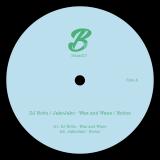
Crossing their distinctive techno practices in the spirit of mutual appreciation and experimentation, DJ Nobu invites JakoJako to Bitta. Each delivering an original track and then remixing each other's work, both artists examine where their creativity converges, and what happens when their differing qualities collide. JakoJako has forged a reputation within techno and electronica circles centred on her accomplished exploration of modular synthesis. While she comfortably embraces ambient projects, she's also firmly entrenched in the club matching a tough rhythmic sensibility with adventurous textures and subliminal emotional content. As Nobu himself describes, "Beyond standard techno functionality, I deeply respect JakoJako's approach to music making, which stems from a pure, unyielding curiosity about sound itself. Her sound aligns perfectly with Bitta's core philosophy--the coexistence of experimentation and physicality." Nobu's own 'Wax and Wane' opens up the release in a melancholic mosaic of bleeping leads and natural-sounding drum tones, patiently laid out over a dense pad and developed with the elegant but driving style he's made his own over many years. JakoJako's 'Nodus' is a more cybernetic affair--lithe layers of frequency modulation moving over the rugged kick drum thump before opening up to celestial arps and jagged flurries of percussion. For the remixes, Nobu immediately reframes 'Nodus's melodic crescendo as the core theme while steering the track towards an immersive, linear arrangement that ebbs and flows with poise. In the process, he finds his own expressive sound design language to put a unique spin on JakoJako's original sound. Meanwhile, JakoJako steers 'Wax and Wane' into a mesmerising lattice of needlepoint percussion and swooning synth strokes, creating emotive swells out of the raw ingredients of Nobu's original melodies. The end result is a record made up of four distinct pieces, all logically compatible but bringing forth different aspects of two dedicated, ceaselessly curious practitioners of contemporary techno.
expected to be published on 26.10.2026
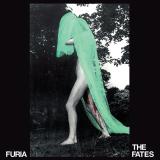
Following her foundational role in the early years of The Fall, and then the searing post punk of The Blue Orchids, as well as several tours serving as a backing group for Velvet Underground chanteuse Nico, Una Baines found herself starting 1985 without a band. Drafting together members of the all-female Beyond The Glass, and compatriots associated with her past projects, she entered the studio with a clutch of songs and a willingness to experiment. Separating the sides into “waxing”, for the more traditional songs, and “waning”, where the structures become looser and varied, the resulting album was the sole release on her Taboo Records and seemed quickly lost to time, but feels shockingly current in both feminist content, and freak folk execution.
It is a collection of influences that would emerge decades later in the wyrd folk movement, and Furia is not out of place at an intersection of Devendra Banhart and Meg Baird, but there was absolutely nothing like it in 1986. Upon release, Mark E. Smith famously likened it to Third Ear Band, having to dip back to 1970 for a touchstone. Songs like “Bridget of Ireland” could be traditional ballads from decades past, while “No Romance” is a lo-fi new wave hit waiting to happen. “Sheila/Beats My Heart” fashions The Velvet Underground as a feminist protest band, and “Ritual” plays out like all of the Motown girl groups banding together to tell the world that they don’t need a boyfriend to solve all of their problems. It all draws on sources that are so familiar, yet turns them upside down in a celebratory fashion. Is it freak folk? Pagan punk? Pastoral drone? It is all of that and so much more. It is the sound of a woman, and an artist, truly finding her voice, and it is both magical and compelling.
“Remarkably prescient and weirdly beautiful record. A creative, challenging and memorable companion, with a distinct voice and identity of its own: in turn playful, political and experimental. It's highly recommended.” – The Quietus
expected to be published on 30.10.2026

Limited Locked Club 12", one-time press only
Critics have claimed that the internet is flattening and homogenizing subculture, but whichever internet they're referring to does not include Locked Club. Watch a video of one of their sets and you'll quickly realize that something very different-and extremely unhinged-is going on in the post-Soviet rave scene before the FOMO punches you in the face, ceaselessly blistering industrial electro and techno punk from the irreverent, exhilaratingly wild underground of the other internet.
expected to be published on 13.11.2026
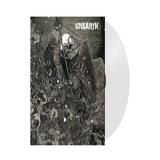
Originally unleashed in 2014, Watchers of Rule stands as one of the most aggressive, intense, and relentless entries in Unearth's catalog.
expected to be published on 20.11.2026

Tape[16,60 €]
Often credited as the father of multi-media theatre, Alwin Nikolais (1910-1993) took complete creative control over his productions - including cutting-edge approaches to lighting and costume that transformed human bodies into shifting sculptural shapes, while also composing wildly innovative electro-acoustic and synth-based audio as accompaniment.
After initially experimenting with musique concrète and tape manipulation (as demonstrated on the 1959 LP Choreosonic Music of the New Dance Theatre of Alwin Nikolais) Nikolais became the first owner of Robert Moog's synthesizer at the Audio Engineering Society convention in New York in late 1964. Relying heavily on the Moog and later the Synclavier synth/sampler, these 21 tracks document Nikolais' highly-prescient compositions across the mid 1960s through to the late 1980s - existing not only as extensions of his other-worldly choreographic productions, but standalone pieces of foundational mid-century American electronic and experimental music.
"Born in Southington, Connecticut in 1910, Nikolais’s early years and early career were in acting, music and puppetry. It was not until the late 1930s that he began his work as dancer/choreographer in Hartford, Connecticut, where he was commissioned by the Avery Memorial Theatre, a part of the Wadsworth Atheneum, to create an evening-length work to the music of Ernst Krenek. Previously his work and study as a pianist-organist found him accompanying silent films. This sort of accompaniment required from the musician not only a playing skill but also a versatility in improvisation, matching movement to sound, and evoking mood to situation.
Nik was drawn initially to dance by his involvement with the percussion scores used by the illustrious early twentieth century German dancer Mary Wigman. In trying to learn more about percussion, he was lured into dance class and thus his career began. His development of music and dance occurred simultaneously. His introduction to the twelve-tone technique opened his mind to the expanding areas of atonal music, and his dealing with music as sound per se. In 1948, after being appointed director of the Henry Street Playhouse in New York, Nikolais formed the Playhouse Dance Company, later known as the Nikolais Dance Theater, and began his aesthetic orientation toward dance as a study of motion. By the 1950s, he had ceased creating literal dances and began his explorations and eventual milieu as an abstractionist.
Sound became an important part of his abstract theatre. For his first dances, which involved his new thinking of dance as both a visual and kinetic art, he used live percussion scores in which he directed his dancers to play instruments of all nature. There was a combination of children’s toy instruments as well as harsh and resonant automobile brake drums, and other pitched auto parts which he also used to accompany classes. Once he installed his own tape recording machines, he quickly used the limited range these instruments provided in a new way, slowing and increasing speed and reversing sound. He also made the sounds adhere to the choreographic structure (not the other way around), thereby giving the dance its independence from the musical phrasing. But the real need remained: the search for new sound. Nik made a sound library, recording noises and percussion and vocal sounds, which the French aptly called musique concrète. Needless to say, he became a master at splicing bits and pieces.
From 1956 to 1962 Nikolais composed eleven major scores for his theatre pieces using such techniques. In 1963, James Seawright, who at the time was assisting Nik in his productions and also working at the Columbia-Princeton Center for Electronic Music, recorded a sound bank for the production Imago (1963). With this material, Nikolais created his first synthesizer score. Imago won the Paris Grand Prix in 1968 and launched the Nikolais Dance Theatre towards its national and primarily international acclaim.
During the same period, Seawright came to Nik and told him of a young man who had invented and constructed a simplified synthesizer and insisted that Nik visit the electronic fair currently being held in New York. Nik did so and met Robert Moog. He was completely taken by the new machine and after making some suggestions to Moog, (which Moog made), Nik bought the inventor’s first machine with the aid of a Guggenheim Fellowship. Moog himself was astonished by what his machine could produce for Nik. This machine was later acquired by the Museum of Musical Instruments at the University of Michigan at Ann Arbor as the first Moog synthesizer. The Synclavier was Nik’s next source of sound and since the mid-1970s remained the major instrument in the Nikolais soundroom.
Alwin Nikolais has been honored and awarded throughout the world. He has received the French Legion of Honor, the Kennedy Center Honors, National Medal of the Arts, two Guggenheim Fellowships, as well as Mellon, Ford, and Rockefeller grants. He has been a recipient of NEA grants since 1966, been awarded five honorary doctorates, all for his remarkable achievements in Dance Theater. His genius has influenced several generations of artists."
—Murray Louis
On Stock and ready to ship

Francesco Messina is perhaps best known for his split album with fellow composer Raul Lovisoni, Prati Bagnati del Monte Analogo, originally released on the seminal Italian label Cramps in 1979. Along with contemporaries Franco Battiato, Juri Camisasca and Giusto Pio, Messina helped reshape the world of modern composition with an organic rawness and haunting beauty.
In November 2023, Messina performed Prati Bagnati live for the first time in Milan, Italy – along with pianist Michele Fedrigotti, who appeared on the original LP. The concert was a tremendous success and led the composer to further reflect upon the music he made over 40 years ago. From his home piano – a hundred-year-old Schimmel with magnificent resonance – new pieces began to emerge out of these meditative sessions.
As Messina says in the liner notes, "The idea of making a new album wasn't the driving force at all; what mattered was trying to reconnect with the 'freedom' I had experienced back then while creating that music. I started over without haste or deadlines, simply trying to find a deeper, inner connection."
W.25TH / Superior Viaduct is honored to present Le api dell'invisibile. From the hazy drone of "For Florian" and the title track to the gentle swells of "Letter for an Absent Friend," the album is a lush amalgam of new age and ambient minimalism that is vividly reminiscent of Messina's earlier work.
The title draws inspiration from a famous reflection by Austrian poet Rainer Maria Rilke: "We are the bees of the invisible. We ceaselessly gather the honey of the visible, to store it in the great golden hive of the Invisible." It is a phrase that has long shaped the way Messina looks at his music – transforming lived experience into sound, making audible what normally eludes the eye.
expected to be published on 27.11.2026

Bill Withers was a modest, gentle, and yet towering musical figure responsible for some of the most important, universally known soul hits ever written. It’s no wonder that “Just the Two of Us” and “Ain’t No Sunshine” won him two Grammy awards and undoubtedly played a huge role in getting him inducted into both the Songwriters and Rock and Roll Hall of Fame.
Naked & Warm is Withers' fifth studio album, released in 1976. A year earlier, the Sussex label—home to Bill's first four landmark albums—ceased operations. Withers then signed with the mighty Columbia Records, which would remain his home until the end of his recording career. While Naked & Warm retains Bill's unique, earthy approach to soul that made him Sussex's biggest star, it's clear that musically too, he was in transition; the first half of the album is full of synthesized jazz-funk vamps, while "City Of The Angels" is an almost 11 minutes long cosmic funk excursion combining biting Rhodes chords with swirling synth pads and Dorothy Ashby's spiritual harp work. All in all, Naked & Warm might be one of Bill's most underrated records, simply because his previous work for Sussex was just that impactful.
Naked & Warm is available as a 50th anniversary edition of 1500 individually numbered copies on blue vinyl and includes a 4-page booklet featuring lyrics and new liner notes written by Marcia Withers.
expected to be published on 27.11.2026

The master of ambient soundscapes, intertwining authentic old school breakbeats with his inimitable style returns with a fresh album of choice cuts for the Spatial crew. A1 - Form of Defraction Opening the LP in his gloriously unique style, Aural Imbalance sets the tone with a powerfully ambient intro of padwork and delicately filtered breaks before dense, analogue old school breakbeats roar to life sending the track skyward. The sublime 808 bassline simmers beneath an ever-evolving soundscape of twinkling melodies and strings, the very essence of serenity captured in just under 7 minutes of audio bliss. A2 - Discreet Function Enveloping the listener with a warm blanket of silky ambience, Discreet Function soon jolts to life with a crunchy breakbeat that counteracts yet compliments the pads and myriad of delicious micro melodies so well, you wonder how it’s possible to take such extremes and mix them down so expertly that our ears accept it as one. After a relatively brief breakdown the track rolls out before the breaks are snatched away at the death - capping off a quite unique composition. B1 - Softlight Light cymbals and delicate textures introduce us to Softlight, a track which sees Aural Imbalance guiding the listener through the clouds to a haven of gentle serenity where your troubles simply fade away, punctuated by a stunningly programmed and memorable Hot Pants break pattern, timid classic basslines and an overall plethora of sun-baked energy - perfect for the headphones and the record box - as always. B2 - Airwave Immensely old school vibes are immediately present in Airwave, with analogue breaks and succinct female vocal samples that mingle with echoing melodies and synthwork to create a beautifully flowing and unique slice of atmospheric gold. Additional breaks are fused into the mix as the track progresses, elevating the piece to the heights we have come to expect from Aural Imbalance, yet never cease to amaze. C1 - Speed of Light Gentle cymbals and filtered breaks open Speed of Light, before a crisp barrage of amen goodness descends and dominates proceedings - just as a good amen should! Programmed to perfection with an immensely danceable rolling pattern, the amens lead us through a sea of washing synths and delicate melodies, intertwining and frolicking in the mix, completing a charming and memorable piece. C2 - Fading Star Playful strings and a luscious 808 bassline play with sumptuous padwork in the intro to Fading Star, a track which sees Aural Imbalance capture the essence of 90’s jungle and it’s symbiotic relationship with atmospheric drum & bass perfectly. Developing throughout with an array of unassuming effects and a quietly moving vibe, Fading Star is the perfect addition to sets spanning the entire history of this music. D1 - Drifting Under Bright Skies Aural Imbalance resurrects the excellent break last featured on Spatial in his sublime track Surface Area, this time chopped and sliced to a different vibe, with kickdrums at the forefront and that fantastically crunchy snare deployed more sparingly. Shimmering padwork and light melodies dance across the mix throughout to leave us with a refreshingly unique and memorable track you won’t be able to get enough of. D2 - Violet Completing this fine LP of old school ambient breakbeat mastery, Aural Imbalance deploys Violet to see us out - a climactic-feeling romp that opens with quiet intent before launching the listener through cheery melodic tones and bustling soundscapes, sprinkled liberally with airy pads and fluttering micro melodies that zip and whoosh around thick analogue breakbeats. A fitting end to a thoroughly enjoyable album. Words by Chris Hayes (Spatial / Red Mist) credits
On Stock and ready to ship

The SouL Pops is Chicago based Dejay Cease, who is known for spinning at places like the Buddha Lounge and making tunes that span Soul to House. Here, he debuts on Cataleya Music with the organic and soul infused The Mask EP. This Masquerade featuring Trevor Johnson is a cover of the George Benson song, which takes it in a classy Soulful House direction courtesy of an impressive piano display and questioning vocals. The Instrumental version is self explanatory, where keys and strings hold their own. Afro-Rican Jazz is another key led winner, where powerful grooves are joined by textured percussion. Something About You rounds off the EP with strong organ blasts, life giving strings and ear catching melodies. The Mask EP is a soulful winner with jazzy flourishes and spiritual edges.
On Stock and ready to ship

Through analog synthesizers and Eurorack modular systems, in “Axis,” Equinoxious establishes an axis between electro and minimal electronics, closely flirting with the harshness of industrial. The pieces unfold under a logic akin to the cybernetics of Norbert Wiener: feedback systems, flows of information, and voltage control intertwine with the experience of the one who operates them; the synthesizer ceases to be a mere tool and becomes an organism that reacts and communicates.
These tracks are inspired by speed, the absurdity of reality, the impossibility of things, imaginaries of dystopia, and protocols of romance, delivered with mechanical frankness and precision.
Recorded between 2023 and 2025, the pieces stand out for their FM synthesis basslines and incisive 808 derived percussion; subtractive synthesis, and 90s samplers dragging staccatos and energetic sequences.
On Stock and ready to ship
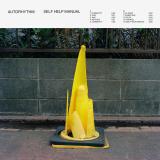
/// First track, Symmetry, debuted on BBC Radio 6 New Music Fix, 10th February: "A beautiful, beautiful album" /// I got my life back. On 17 February 2025, 1024 rays of ultra sound converged at an operation table in Bern, Switzerland, and disconnected a noisy circuit on my brain. 90% of the manifestation ceased – of a disease that I no longer wish to mention by its name. During the same period, I completed my new album: Self Help Manual. I’ve read more current research about the nameless disease than my neurologist, who despite that I didn’t follow his advice on suitable treatment, called me after the successful operation: a brave, brave man. I have composed the music in the same way as in my previous album – Songs for the Nervous System – through layers upon layers of improvisations in dialogue with my synthesizers, most of which are the same age as me. I made the majority of the songs in my studio in the remains of Old Hagalund in Solna. I edited the recordings in my bed during the waking hours of clarity at night. Some songs – NAC, Ketosis, Overkill – were recorded in the basement of my childhood home in Skutskär, in Norduppland, where I’d returned to be nurtured by my retired parents – who during a night when I couldn’t turn over in bed, or pull the blanket over me – made a list of what would happen to my belongings. To my friends who have stood out with me despite my disease, I want to state: you will not inherit me yet. On the new album, the electric bass takes on a leading role. ESG and Liquid Liquid have been important when I reinvented my baselines, limited and liberated by my poor fine motor skills. Plasma is my homage to Summertime Rolls by Jane’s Addiction, that I listened to frequently in my youth. I guess that no one will hear the resemblance. In several songs, the Fender Rhodes plays an important role, a magical instrument that I bought shortly after my diagnosis over a decade ago, and for a long time didn’t dare to touch out of respect for Herbie Hancock and Fela Kuti. A couple of songs draw inspiration from the Horn of Africa – Inner Nile and Delta. At first, subconsciously in the reverb-drenched Inner Nile, then more consciously in Delta. I’m sorry it doesn’t swing the right way, but it was my attempt to return to the cradle of humanity. Longevity is possibly my favourite. The melody is played by an arpeggiator that I controlled by pressing down different keys in an exhilarating sense of freedom. One song in particular, the second track – One – has caused friends to associate freely: one thought it sounded like Patrick Cowley, another like Sly & Robbie meets Kraftwerk, a third like Air – Moonlight Safari. I made one song just before the surgery: opening track Symmetry. It’s the mightiest and most minimal song. I made one song after the surgery: finishing track Self Help Manual. My previous medication pump is heard through the microphone of my Ovation Magnum. It’s the most hopeful song on the album. I took the cover photos with my Hasselblad during walks in Tokyo suburbs of Ōmori and Kamata more than ten years ago. It was something about the faith of the traffic cones that fascinated me – born in the same streamlined form, they had over the years become increasingly individual and lovable. The mixing was finalized by Christoffer Roth in the newly built Studio Dubious in Nacka. Rashad Becker, who in an interview said that he listens as much with his mouth as with his ears, mastered the album at Clunk in Berlin. Right now it feels like anything is possible. My recovery is perhaps a small step for mankind, but a giant leap for me. I hereby leave the music to you. Joakim Forsgren
On Stock and ready to ship

Over the past few years, Munich based polymath Lindsey Wang has risen to the forefront of the club scene under her Polygonia alias, creating a stream of spectacular releases where she tirelessly twists techno into a living, breathing ecosystem.
As she appears on Timedance for the first time, Polygonia sculpts a set of four immersive, pressure‐loaded club tracks where earthy psychedelia brushes up against precision‐engineered rhythm, inviting dancers into a zone that feels both ritualistic and sharply futuristic.
“Ceaseless Motion” draws on deep‐focus sound design, restless percussion and subtly warped harmonies, all threaded by a quietly hallucinatory sense of detail that really takes our breath away, and will surely bring the distinctive dancer to the very front of the bass bins.
On Stock and ready to ship

Between flesh and silicon. “Under My Skin” (2026) is the first album by IADI, released by Neo Life. A record like few
others, highly conceptual, cover art included. Its essence lies in the folds of the increasingly ambiguous relationship
between man and machine, where the former designs the latter and, perhaps without fully realizing it, is gradually
destined to adapt and be reprogrammed by it. Each track of “Under My Skin” is, in fact, a sort of interface, connector, or
any other imaginative point of contact between two creative phases, amid emotional impulses and binary calculations.
The sonic architecture oscillates between analog warmth and algorithmic coldness, constructing landscapes in which
pulsating synthesizers and mechanical rhythms seem to question each other. There's no linear narrative, but rather a
progressive immersion in a zone of near-friction, where the comfort of technology coexists with more than a faint
musical uneasiness, like a background noise that never ceases to remind you who's truly in charge. In “Under My Skin”,
the machine is neither an enemy nor a simple instrument: it's a real presence, intimate, even tactile, amplifying desires,
fears, and dreams of dawns beyond the digital realm. Intelligent dance music. Less noise, more sensations. Electronic,
but profoundly human.
The final result, then, is a music project that speaks to the present, yet sounds like an X-ray of the future, capturing that
fragile moment when humanity and technology stop observing each other from afar and begin to merge, track after
track. It's no coincidence that IADI's album opens with “Impulse”, an immediate expression of an electrical impulse, for
both humans and machines, which is also the language of the nervous system, as fast as it is vital—pure energy and
rhythm, a track as intense as it is irregular. And after this introduction, it's the turn of the equally erratic “Axon”, whose
title describes the neuron that transmits the signal over distance, telling the listener to sit back and relax for a new
journey through the notes toward the more melodic “Cortex”. The cerebral cortex, the ultimate seat of thought and
memory, becomes the source from which the musical flow of the first part of the work is drawn.
Then, suddenly, an automatic, or instinctive, response to the constant succession of impulses: “Reflex”, or zerotemperature techno, with a fragmented pace, featuring vocal samples, breaks, and restarts. In the producer's
imagination, the subsequent, and conversely placid, “Neuron” represents the emotional core of the second part of the
work, providing a kind of respite from the seething vibrations. While the neuron is the basic unit of the nervous system,
the synapse is the functional connection point between one neuron and another effector cell, essential for the
transmission of nerve impulses and communication in the nervous system, enabling functions such as learning and
movement. Likewise, a track like “Synapse” once again illuminates the path traced by IADI. The more experimental and
streamlined “Static” instead suggests true ordered chaos. “Dreamstate” is the conclusion suspended in the void, relating
to that dreamlike state between waking and sleeping, where consciousness fades toward infinity and visions begin. Pure
fading into the subconscious. Eternal return to where it all began. Dancing is a form of consciousness. Every beat is a
question. IADI, however, holds all the answers you need.
On Stock and ready to ship

Protocolo SysEx aka Fabio Vinuesa lanza este EP en su sello con cuatro pelotazos originales y dos remixes de Boris Divider y Heinrich Mueller.
GEOMETRÍA VIRTUAL documents a scenario in which mechanisms of control cease to function as external layers and instead become the very foundation of the system. The album does not propose a future dystopia, but rather a reality in which decision-making is automated and artificial intelligence is established as a structure of social control.Protocolo SysEx, a project by Fabio Vinuesa, is conceived as a narrative and sonic framework from which to examine the political and philosophical implications of a world governed by artificial intelligence. The release includes reinterpretations by Boris Divider and Heinrich Mueller and constitutes the first chapter of a trilogy focused on the progressive normalization of algorithmic control.
Geometría Virtual EP – Distrito 91 15
a A1 - Geometría Virtual Part I
b A2 - Geometría Virtual Part II
On Stock and ready to ship

Somewhere between revelation and delusion, Euphoria Bound maps a familiar trajectory: the irresistible pull towards dissolution, the gradual erasure of memory, the self rendered irretrievable. It moves between states of consciousness where such distinctions of enlightenment or self-deception are erased.
Across ten tracks, the album constructs a spectrum of sound that is both ambitious and Uncompromising. The approach here is more direct than recent releases, with textures that accumulate and disintegrate with renewed urgency.
On Stock and ready to ship

Breve is the new album by Stefan Paul Goetsch aka Hainbach.
"After a ceaseless amount of work and family struggles, 2023 had left me empty and tired. Instead of the many hats I usually wear, I shifted my focus exclusively on my music. For two weeks every day I sat down behind a few modular synths, a toy piano and an Ondioline, recording tape after tape. I did not lock myself in though - my kids were playing around me, commenting, touching knobs, adding oscillations. What in „deadline times“ can be disrupting, became restorative. I was with my family, just drifting on waveforms. I hope some of that atmosphere shines through, and the album can help you to find peace as it did for me.
Thanks to Forgotten Futures for the loan of the Ondioline and technician Daniel Kitzig for the beautiful restoration work." - Hainbach
Based out of Berlin, Germany, electronic music composer and performer Hainbach creates shifting audio landscapes THE WIRE called "One hell of a trip". His music has been released on Opal Tapes, Seil Records, Spring Break Tapes, Limited Interest and Marionette. He has been fascinated with sine tones, noise and FM since he discovered the dial on the radio. Never losing his childhood wonder, he still searches for the sounds in between on modular synths and other devices.
On Stock and ready to ship

Astral travel with Cybotron into the meta-narrative of the Parallel Shift, a new sonic fiction that raises many questions about military science of the near-future and the possibility of other worlds.
Descending backward through the rhythms of time, the Skynet module retracts from the hyper-structural society of 2100, edging toward the mid-century modern age teetering on the brink of what was then the frontier of “the future”. The system boots the Infiniti process, morphing into a cosmotechnic vessel coursing the superhighway of burgeoning general intelligence, seeking data from just before “the overshoot and collapse.”
R&D methods, rhythmanalytically applied, dissect the aftermath of an industrial society that burst through the ecological capacity of Spaceship Earth. Fractal visions of war and innovation spike and recede from and into the surfaces of reality being bent and guiding the eyes, ears, touch towards a laboratory in the year 1961. A nuclear expert, Don Lewis, receives orders to decrypt the mysterious black dodecagonal disc known as Fortec and the extraterrestrial biology unearthed in Roswell. He joins a team disassembling Fortec and studying the recurrent dodecahedral patterns linked to the human nervous system.
Through dismantling and probing, the team cycles through a saecular search devoid of finite conclusions, limited by Earth’s intellectual and technological prowess. One 1960s night, Lewis, while meddling with Fortec’s cyborganic innards, accidentally electrifies himself. His cyclotron and missile experience guides him to circuit-bend Fortec, stirring the entity from a mechanical slumber. Lewis and Fortec communicate in resonances, until it drifts back into a tranquil stasis.
The US Defense and contractors, unbeknownst to them, observe this breakthrough. They later permit Lewis to exit military service as the Air Force forms the Foreign Technology Division. Concurrently, MJ12 evolves into CY12, delving into second-order cybernetics. Lewis clandestinely keeps working on Fortec fragments, transitioning from military engineer to musician, pioneering the LEO module, a fusion of Fortec’s essence and audio engineering.
He shares his insights with Roland founder Ikutaro Kakehashi, aiding the creation of the iconic TR-808. Meanwhile, Fortec branches out, coining “Cyberspace” – a collective illusion of liberty unshackled by physical, political, or spiritual bounds, anchored in the equitable distribution of The Golden Ratio across realities. Yet “Cyberspace” morphs into a chaotic truth reservoir, spilling over into deception.
The Parallel Shift manifests in the perpetual “Now,” a collapsed event horizon where past and future are ensnared in a relentless present, unfurling along a dissolving timeline, overseen by a monolithic simulation under ceaseless watch…
— The Rhythmanalyst aka DeForrest Brown, Jr.
On Stock and ready to ship

The Błoto quartet had made a comeback six months ago with their first singles in over two years dropping “Szlam” and “Ścieki”. These tracks were pressed on a 7-inch vinyl by Astigmatic Records, but this only whetted the appetites of the band’s mud-loving fans, as the singles sold out instantly. And so, the band's musical onslaught continues. Ahead of their upcoming LP “Grzybnia” set to release in autumn 2024, Błoto is putting out another bacteria-laden 7-inch to conclude this brief series of singles. This time, the release features a remix by none other than the modern funk maestro DāM-FunK, hailing from sunny Pasadena, California.
Wading through the sludge of sewage, one can encounter colonies of bacteria. They are well-known for their dark side – causing serious diseases. Nevertheless, they are with us all the time. They exist in humans and all other living organisms – fungi, plants, and animals. They can be found in soil and water. They are even present in radioactive areas, proving that they are truly hard to eliminate. Such is the music of Błoto. Like a post-apocalyptic bacterium, it’s capable of surviving in the harshest conditions.
Sinister, biting, and primitive – just like colonies of microorganisms. This is Błoto's latest single. Drawing heavily from classic acid house, it can truly infect the mind, inviting you to join a rave in Błoto on the eastern flank of Europe. Quartet’s “Bakteria” is a direct continuation of their first 7-inch release. However, this time, during their collective improvisation at Studio Pasterka, the band has entirely forsaken acoustic instruments in favor of a full array of synthesizers accompanied by drums.
Certainly, the dichotomous nature of these organisms presents a paradox. While capable of causing harm, without bacteria, life as we know it would cease to exist, and human civilization would not have reached its current state. Bacteria fulfill numerous essential roles. They serve as decomposers, crucial in maintaining biogeochemical cycles, and contribute to processes such as fermentation and decay. As symbiotic organisms living within other organisms, they are vital for functions like digestion. Their versatility extends to diverse applications, from biological wastewater treatment to the production of various food products.
Such are the properties of the beneficial probiotic titled “Bakteria Re-Freak” by DāM-FunK (renowned for his classic albums released on Stones Throw, like “Toeachizown” and “7 Days of Funk” with Snoop Dogg). It offers a 180-degree transformation of the dark atmosphere of the original version. The track evolves towards G-Funk, brimming with sunny synths and a drum machine. It portrays a vision of a biopharmaceutical bacterium lazily roaming the streets of warm yet perilous Los Angeles.
The 7-inch will be released on July 19, 2024, by Astigmatic Records. The vinyl single is limited to 700 copies.
On Stock and ready to ship

Completing Kranky's chronologically reverse reissue program of the earlier loscil albums on vinyl, the 2001 debut album is issued on the format for the first time with the addition of three bonus tracks from the same sessions that produced the original release.
‘’Triple Point was my first full length album under the loscil name, and it was my first with kranky - a relationship now 25 years old. This reissue is as much about celebrating that relationship as it is about the music. I am extremely grateful for this journey. Arguably, none of it would have happened without this release.’’
“Pay no mind to the label and pay no mind to the producer's locale (Vancouver isn't Cologne or Detroit); Triple Point is one of the finest—and most varied—ambient techno releases of 2001.”— AllMusic
"Finding itself nestled halfway between the endlessly spacious mechanoid constructions of Berlin's Basic Channel and the drifting expanses of Labradford, Scott Morgan's work as Loscil never ceases to impress with its deft use of technology and percussion.”—Boomkat
On Stock and ready to ship

Sacred Record is a 9-track album of ethereal and introspective tracks, filled with almost pop-like hooks balanced out with all-in rhythms, heavenly pads & addicting diagonal melodies.
Where media degrades and replaces positive imagination, and destroys the ability to think healing thoughts, Sacred Record encourages the opposite. Hijacking the dark nihilism of contemporary art & music, listeners are called to cease indulging in despair, and stop being tricked into seeking eternal fulfillment in worldly things which die. Screens foist convoluted worldviews upon us, depriving us of our natural agency by casting illusory perceptions of a net-negative reality over our actual, tangible lives. Ando Laj’s Sacred Record takes your hand and walks with you, side-by-side, gently, deeper in, but further u
On Stock and ready to ship
