Buscar:central energy

Estilos
Todo
OPEN SKY UNIT - OPEN SKY UNIT

OPEN SKY UNIT

OPEN SKY UNIT

12inchSDBANLP21LTD
SDBAN ULTRA
11.11.2025
 
6
También disponible

STANDARD VERSION[23,95 €]


On November 7, 2025, the Belgian label Sdban Records will release a reissue of the mythical Open Sky Unit (1974) by the eponymous jazz fusion group featuring Micheline and Jacques Pelzer, Steve Houben, Ron Wilson, Janot Buchem and Michel Graillier. The album returns on vinyl, highlighting a pivotal moment in Belgian jazz history, where soul, funk, and free improvisation came together in a vibrant and family-driven project.

Formed in the early 1970s as a homage to Dave Liebman's group Open Sky, Open Sky Unit grew out of informal jam sessions in Liège, Belgium, into a unique collective. One of the central figures was Jacques Pelzer, father of drummer and vocalist Micheline Pelzer, alongside his second cousin, saxophonist/flutist Steve Houben, bass player Janot Buchem, percussionist Michel Graillier and American pianist/composer Ron Wilson.

Their 1974 debut album was released on the Duchesne classical music label, run by Pelzer's brother-in-law. The group's sound carefully balanced jazz and soul and was largely directed by Wilson, a Californian pianist and singer who settled in Liège and nearby Maastricht after his army service. Wilson composed the entire repertoire. Open Sky Unit was recorded live at Jazzland club in Liège, and the band made several short tours in Belgium and abroad (including Tunisia) until around 1975-1976, when Houben left for Boston to study at the Berklee College of Music.

Although the original live recording from 1974 was not technically perfect, the group succeeded in capturing their heartfelt live energy. Tracks such as Open Sky, Sunshine Star, and Passion and Compassion are striking examples of this. Years later, the album version of Sunshine Star found its way onto Funky Chicken (2014), the compilation that not only brought the track back into the spotlight but also marked the beginning of Sdban Records.

In addition to the standard reissue, a limited edition of 200 copies will be released for collectors, featuring a 7" single of Ron Wilson's Sunshine Star as a special bonus. This single was originally released in 1973 with the acoustic version of Sunshine Star (piano and vocals) on the B-side, recorded a few months before the longer jazz-funk version later featured on the LP Open Sky Unit. The A-side, Peace Is The Answer, was only released on that single at the time and is now being reissued for the very first time. The 7" is thus a faithful and long-awaited reissue of a rare piece of Belgian jazz history, it's intimate, soulful, and an ideal complement to theexisting and well-known LP.

Although the band never achieved a major international breakthrough, they were highly valued in progressive European jazz circles and later secured a place in anthologies such as Utopic Cities: Progressive Jazz in Belgium 1968-1979. The reissue of Open Sky Unit brings their music back into the spotlight and reaffirms their role as key figures in the Belgian jazz scene of the seventies.

Reservar11.11.2025

debe ser publicado en 11.11.2025

28,78

Ültimo hace: 2026 Años
OPEN SKY UNIT - OPEN SKY UNIT

Open Sky Unit

OPEN SKY UNIT

12inchSDBANLP21
SDBAN ULTRA
07.11.2025

On November 7, 2025, the Belgian label Sdban Records will release a reissue of the mythical Open Sky Unit (1974) by the eponymous jazz fusion group featuring Micheline and Jacques Pelzer, Steve Houben, Ron Wilson, Janot Buchem and Michel Graillier. The album returns on vinyl, highlighting a pivotal moment in Belgian jazz history, where soul, funk, and free improvisation came together in a vibrant and family-driven project.

Formed in the early 1970s as a homage to Dave Liebman's group Open Sky, Open Sky Unit grew out of informal jam sessions in Liège, Belgium, into a unique collective. One of the central figures was Jacques Pelzer, father of drummer and vocalist Micheline Pelzer, alongside his second cousin, saxophonist/flutist Steve Houben, bass player Janot Buchem, percussionist Michel Graillier and American pianist/composer Ron Wilson.

Their 1974 debut album was released on the Duchesne classical music label, run by Pelzer's brother-in-law. The group's sound carefully balanced jazz and soul and was largely directed by Wilson, a Californian pianist and singer who settled in Liège and nearby Maastricht after his army service. Wilson composed the entire repertoire. Open Sky Unit was recorded live at Jazzland club in Liège, and the band made several short tours in Belgium and abroad (including Tunisia) until around 1975-1976, when Houben left for Boston to study at the Berklee College of Music.

Although the original live recording from 1974 was not technically perfect, the group succeeded in capturing their heartfelt live energy. Tracks such as Open Sky, Sunshine Star, and Passion and Compassion are striking examples of this. Years later, the album version of Sunshine Star found its way onto Funky Chicken (2014), the compilation that not only brought the track back into the spotlight but also marked the beginning of Sdban Records.

In addition to the standard reissue, a limited edition of 200 copies will be released for collectors, featuring a 7" single of Ron Wilson's Sunshine Star as a special bonus. This single was originally released in 1973 with the acoustic version of Sunshine Star (piano and vocals) on the B-side, recorded a few months before the longer jazz-funk version later featured on the LP Open Sky Unit. The A-side, Peace Is The Answer, was only released on that single at the time and is now being reissued for the very first time. The 7" is thus a faithful and long-awaited reissue of a rare piece of Belgian jazz history, it's intimate, soulful, and an ideal complement to theexisting and well-known LP.

Although the band never achieved a major international breakthrough, they were highly valued in progressive European jazz circles and later secured a place in anthologies such as Utopic Cities: Progressive Jazz in Belgium 1968-1979. The reissue of Open Sky Unit brings their music back into the spotlight and reaffirms their role as key figures in the Belgian jazz scene of the seventies.

Reservar07.11.2025

debe ser publicado en 07.11.2025

23,95

Ültimo hace: 2026 Años
The Dead 60s - The Dead 60s LP 2x12"
  • A1: Riot Radio
  • A2: A Different Age
  • A3: Train To Nowhere
  • A4: Red Light
  • A5: We Get Low
  • A6: Ghostfaced Killer
  • B1: Loaded Gun
  • B2: Control This
  • B3: Soul Survivor
  • B4: Nationwide
  • B5: Horizontal
  • B6: The Last Resort
  • B7: You're Not The Law
  • C1: Too Much Tv Dub
  • C2: Invader Dub
  • C3: D-60 Fights The Evil Force
  • C4: No Control Dub
  • C5: Tower Block Dub
  • D1: Cns Lazer Attack D-60
  • D2: Police Radio Dub
  • D3: Flight Mission Dub
  • D4: No Good Town Dub
  • D5: Game Over

The Dead 60s seminal self-titled album gets a timely Deluxe edition reissue on Vinyl for its 20th Anniversary, on Deltasonic Records


“Back in the day, punk and dub weren’t just sharing space—they were smashing into each other headfirst. Late '70s Britain was a pressure cooker, and for kids like me, growing up between Brixton’s bass bins and the chaos of King’s Road, that collision was everything. Jamaican sound system culture met punk’s raw spirit in a haze of smoke, sweat, and feedback. It wasn’t about genre—it was about energy. Identity. Defiance. so when The Dead 60s came along, post-Britpop and post-bullshit, it felt like someone had dusted off the blueprint and run it through a battered old tape echo. These weren’t just lads with good taste—they understood the assignment. They took the DNA of two rebel cultures and mutated it into something that could stand tall in the 21st century. Dub-soaked, punk-fuelled, dripping with that Liverpool attitude. I remember first hearing them and thinking—yeah, here we go again. Not in a retro way, but in a real way. Guitars that cut like sirens in the night. Basslines fat and warm, straight out the Channel One playbook. Lyrics that painted the grey corners of Britain like CCTV poetry. It was the sound of youth under pressure. The sound of not fitting in—and not wanting to.

Their debut album dropped in 2005, and it hit like a flare in the dark. “Riot Radio” was a pirate broadcast from the concrete frontlines. “Control This” swaggered with menace and reverb. It was like someone opened a time capsule from the punky-reggae party and rewired it for a new generation.

Now, with this 20th anniversary vinyl reissue—complete with the full dub companion produced by Central Nervous System—we get to hear the bones and blood of it all. The dub versions pull the tracks apart and let the ghosts speak. Reverb, delay, space—it’s not just production, it’s meditation. Revolution slowed down to a heartbeat. It’s music that makes you move and think. What they’ve done here is more than remix a record—they’ve revealed its soul. That’s what dub does when it’s done right. And The Dead 60s, they got that. They weren’t tourists in the culture—they were students of it, shaped by it, and ultimately, contributors to the legacy. Liverpool’s long had a love affair with Jamaican music—you can hear it in the streets if you’re really listening. The Dead 60s tapped into that lineage, but they brought their own thing to the table. Punk's fire. Dub’s depth. Ska’s bounce. All filtered through a Northern lens and blasted out like protest graffiti. This 20th anniversary reissue ain’t about nostalgia. It’s a reminder. A celebration. A call to arms. Music like this doesn’t belong in a museum—it belongs on a system, shaking walls and waking minds. Crate diggers, completists, young punks, old heads—this one's for all of you.

So put it on and turn it up. Let the punk edge sharpen your thoughts, and the dub shake your bones ‘cos this isn’t just a reissue - it’s resistance on wax.....”

Reservar31.10.2025

debe ser publicado en 31.10.2025

33,19

Ültimo hace: 2026 Años
Fracture x Tim Reaper - APHAFR001

Fracture x Tim Reaper

APHAFR001

12inchAPHAFR001
Astrophonica
28.10.2025

Four cuts of unapologetic, immediate Jungle that capture Tim Reaper’s frantic energy and Fracture’s deadly sonics — a perfect balance of aggression and detail. No holds barred, examined with a fine-tooth comb. Precision Pandemonium. Alongside the music, the collaboration extends to artwork, with each label’s iconic logo reimagined in the other’s style. This visual partnership spans the 12” label and sleeve design, as well as an extensive range of streetwear merch.

Fracture says:

I’ve known Ed for over 15 years, going back to the forum days of Subvert Central and Dogs On Acid. Even then, his approach to Jungle was authentic and compulsive. He’s stayed on that path with unwavering focus, never chasing trends—just pure, raw Jungle. What he’s built with Future Retro London is so desperately needed in this day and age: a space where music and community come first, shining a light on artists and DJs often overlooked by mainstream channels that favour gimmicks. His passion for Jungle is infectious, and I’ve always wanted to work with him so doing a full label collaboration feels completely right. Working with Ed is a real eye opener - he’s so full of ideas and the speed at which he can generate patterns is scary. Watching him fly around his laptop, chopping breaks and writing basslines is like watching a Grandmaster play speed chess—always on, never off. Shout out Tim Reaper each and every. An incredible DJ as well.

Tim Reaper says:

I think this is probably the longest ever I've spent on any release for Future Retro London, clocking in at just over 3 years of back & forth between me & Fracture in the making of this. There's a lot of backstory behind this project, so excuse my ramblings below.

The story starts with me hearing Sully playing a tune by Fracture called "Booyaka Style" which I really liked and thought would be great to release. I reached out to Fracture about it and found out later that he already made plans to include it on an album project (0860) that he was working on at the time which later came out on his label Astrophonica. He asked if I would be up for sending him any tunes to be considered for release on Astrophonica, but in response to this, I suggested a joint label project that both of us would have tunes on & he seemed keen to do it.
Few months later, I got back in touch to ask if he had done any tracks for this release but he was still busy with other things and instead sent me a track he had been working on, with the suggestion of us collaborating on it. We finished a track together that we both liked & felt as if it was a good starting point for the release. We then got a few more collabs done with a fair bit of back & forth, but upon reflection, he felt as if they could be a lot better than what they currently were and so, the release started to change in format a bit. Fracture suggested that we should meet up in his studio and work on some tunes together in person, with the aim of getting a few bits done over a bunch of sessions and getting it all sorted out in a much quicker timeline. Thankfully, this actually worked, we managed to get some collabs done that both of us are very happy with (even managing to sample a recording of Blackeye from a set from a Future Retro London event!)

Thanks to Fracture for his co-operation & perseverance with this release, helping to see it through to the end & not allowing it to be anything less than the best possible version of itself, thanks to Mark at Sequence for his role in helping with the logistics/manufacture of this release, thanks to Utile for assisting on the design on this release and most importantly, a very special thanks to all the obstacles along the way that I faced in the making of this release, which helped me appreciate getting to this point so much more than I ever could have!

No en stock

Haga su pedido ahora y le encargaremos el artículo en nuestro proveedor.

14,92

Ültimo hace: 4 Meses
Felt - Felt 2: A Tribute To Lisa Bonet 2x12"
  • 1: Reintroduction
  • 2: Employees Of The Year
  • 3: Your Mans And Them
  • 4: Lisa (Never Easty On My Nextel)
  • 5: Morris Day
  • 6: Dirty Girl
  • 7: Early Mornin' Tony
  • 8: Breaker Down Like A Shotgun
  • 9: Marvin Gaye
  • 10: Life Vegas
  • 11: Bonet (Cement Angels)
  • 12: Woman Tonight
  • 13: Gangster Ass Anthony
  • 14: The Biggest Lie
  • 15: I Shot A Warhol
También disponible

Cassette[21,43 €]


In 2005, Felt 2: A Tribute to Lisa Bonet brought together two of underground hip-hop’s most respected voices of the time—Murs and Slug—for a second collaboration that felt looser, livelier, and more charismatic than its predecessor. The album captures a moment of creative freedom, where both MCs were firing on all cylinders, trading verses with sharpness, humor, and effortless chemistry. Their interplay reflects a deep mutual respect and a shared drive to push boundaries while keeping things rooted in style and substance.

Working with different producers for each volume allowed Murs and Slug to bring a unique energy to each release, and Ant’s masterful production was central to the chemistry of Felt 2.


With roots in classic soul and West Coast bounce, his beats created a warm, funk-laced foundation that allowed both rappers
to experiment with new cadences and ideas. Rather than lean on moodiness or melodrama, the soundscape of Felt 2 is expansive, colorful, and rooted in rich, infectious rhythm—an aesthetic that has aged gracefully and continues to draw new listeners into its orbit. While undeniably fun, Felt 2 is also structurally tight and full of moments that reward repeat listens. The chemistry between Murs and Slug is effortless, and their shared sense of humor, timing, and respect for the craft creates a lasting impression. It’s a standout entry in the canon of early-2000s indie hip-hop, and one that’s long overdue for a proper vinyl reissue.

Reservar17.10.2025

debe ser publicado en 17.10.2025

26,01

Ültimo hace: 2026 Años
Felt - Felt 2: A Tribute To Lisa Bonet (TAPE)

In 2005, Felt 2: A Tribute to Lisa Bonet brought together two of underground hip-hop’s most respected voices of the time—Murs and Slug—for a second collaboration that felt looser, livelier, and more charismatic than its predecessor. The album captures a moment of creative freedom, where both MCs were firing on all cylinders, trading verses with sharpness, humor, and effortless chemistry. Their interplay reflects a deep mutual respect and a shared drive to push boundaries while keeping things rooted in style and substance.

Working with different producers for each volume allowed Murs and Slug to bring a unique energy to each release, and Ant’s masterful production was central to the chemistry of Felt 2.


With roots in classic soul and West Coast bounce, his beats created a warm, funk-laced foundation that allowed both rappers
to experiment with new cadences and ideas. Rather than lean on moodiness or melodrama, the soundscape of Felt 2 is expansive, colorful, and rooted in rich, infectious rhythm—an aesthetic that has aged gracefully and continues to draw new listeners into its orbit. While undeniably fun, Felt 2 is also structurally tight and full of moments that reward repeat listens. The chemistry between Murs and Slug is effortless, and their shared sense of humor, timing, and respect for the craft creates a lasting impression. It’s a standout entry in the canon of early-2000s indie hip-hop, and one that’s long overdue for a proper vinyl reissue.

Reservar17.10.2025

debe ser publicado en 17.10.2025

21,43

Ültimo hace: 2026 Años
O.N.E. - WELL ACTUALLY...

O.n.e.

WELL ACTUALLY...

12inchAPRLP153
APRIL RECORDS
17.10.2025
  • Robespierre?
  • Berio
  • Kaldur Vindur
  • Cipher
  • Well, Actually
  • Oslo
  • Fount
  • Ry
  • Sneaking Around

Leading Danish contemporary jazz label April Records is proud to present Well, actually..., the third album from Polish acoustic jazz quartet O.N.E. Grounded in the spirit of democracy andcollective improvisation, the album offers a tightly woven set of original compositions that blur the lines between modal jazz lyricism and the raw energy of free improvisation.The band name O.N.E. is a clever double entendre: in Polish, "one" (pronounced oh-neh) means "they" in the feminine plural - an apt nod to the all-female lineup. In English, of course, it signifies unity. Both meanings reflect the band"s egalitarian, leaderless approach and cohesive group sound.Almost three years after the recording of their previous release Entoloma(Audio Cave), the group reunited in December 2024 at Studio S4 in Warsaw to record a fresh set of ten compositions. Spread over two sides, the album captures the continued evolution of a band that thrives on interaction, trust, and shared purpose - even in a society fractured by post-pandemic socio-economic uncertainty and political ambiguity. Featuring contributions from all four members - pianist Kateryna Ziabliuk, saxophonist Monia Muc, bassist Kamila Drabek, and drummer Patrycja Wybranczyk - the recordreflects their commitment to artistic democracy. Each voice is given space, yet the music always feels greater than the sum of its parts. Even on the miniature solo track solo form, the other three players remain present, supportive, and responsive. From Ziabliuk"s percussive piano textures and dreamlike voicings on tracks like Osloand Berio, to Muc"s expressive, woody tone on alto and baritone sax, each piece explores dynamic interplay and shifting emotional landscapes. Drabek"s resonant, grounded bass - by turns lyrical and propulsive - provides a central thread, while Wybranczyk"s drumming fizzes with precision and imagination, as heard on Cipherand the angular closer Sneaking Around.Together, these four distinctive creative forces have developed a shared language built on mutual respect, long-term collaboration, and deep listening. Their concerts across Europe (including Jazzahead, B-Jazz, Umea, and the Edinburgh Jazz & Blues Festival) haveaffirmed their standing as a boundary-pushing group with something new to say.


[f] [SOLO FORM]

Reservar17.10.2025

debe ser publicado en 17.10.2025

23,11

Ültimo hace: 2026 Años
Stefano Pilia - Lacinia LP 2x12"

Stefano Pilia

Lacinia LP 2x12"

2x12inchDSZEIT19-LP
Die Schachtel
10.10.2025

Returning to Die Schachtel with his fourth full-length with the label, the Genoa born, Bologna based, guitarist and electroacoustic composer, Stefano Pilia, delivers “Lacinia”, a new, immersive cycle of compositions, delving deeper into the realm of metaphysical, spiritual, and divine meaning, weaving astounding arrangements of sonority from a palette of synths, strings, brass, organ, various electroacoustic instruments, and percussion. Resting at a refined intersection of the acoustic and electroacoustic, drone, and chamber music - overwhelmingly beautiful, delicate, and bold, - “Lacinia” stands as a high-water mark in Pilia’s already remarkable and forward-looking career.

Since its founding in Milan during the early years of the new millennium, Die Schachtel has occupied a singular place in the landscape of experimental music, issuing a carefully curated body of reissues and archival releases by historically significant figures and projects like Christina Kubisch, Luciano Cilio, Marino Zuccheri, Prima Materia, Claudio Rocchi, Lino Capra Vaccina, Gruppo di Improvvisazione Nuova Consonanza, Roland Kayn, and numerous others, balanced against bristling contemporary counterparts by the likes of Jim O'Rourke, Giovanni Di Domenico, Nicola Ratti, Luigi ArchettI, Valerio Tricoli, etc. Running like a spine through the label’s output is a deep dedication to the work of the Italian guitarist and electroacoustic composer Stefano Pilia. Now Die Schachtel returns with “Lacinia”, Pilia’s forth full-length with the label and their first release of 2024. Building on the ground of deeply personal engagement with metaphysical, spiritual, and divine meaning, explored within his previous LP with Die Schachtel, 2022’s “Spiralis Aurea”, “Lacinia” encounters the composer working in close calibration with various ensembles, including the Bologna based Ensemble Concordanze and Comunale di Bologna String Orchestra, weaving synths, strings, brass, organ, various electroacoustic instruments, and percussion into an astounding reconfiguration of immersive, contemporary minimalism that stands among Pilia’s most noteworthy releases to date. Issued by Die Schachtel in two special double vinyl editions and a CD edition, “Lacinia” features artwork by Bruno Stucchi/Dinamomilano, and is an absolute marvel that draws you in and doesn’t let go.

First emerging during the early 2000s, over the past two decades – via solo releases and numerous collations with artists like Oren Ambarchi, Valerio Tricoli, Alessandra Novaga, Z'EV, Andrea Belfi, David Grubbs, and numerous others - the Genoa born, Bologna based, guitarist and electroacoustic composer, Stefano Pilia has presented a singular voice within Italian experimental music, harnessing visceral energy and hands-on immediacy within delicately woven tapestries of sonority, each investigating the sculptural properties of sound and illuminating its relationship to space, memory, and the suspension of time. “Lacinia”, Pilia’s forth solo venture with Die Schachtel, encounters the composer reentering his longstanding practice of collaboration with various ensemble forms, including the Bologna based Ensemble Concordanze, for the albums central piece, “Lacinia Off Axis”, spinning stunning string confirmations by Pietro David Carami and Elena Maury on violin, Alessandro Savio on viola, and Mattia Cipolli on cello.

A new, important cycle of compositions by Pilia, “Lacinia” (meaning "lace" in Latin) builds upon the exploration of the metaphysical, spiritual, and divine dimensions through numbers, geometry, and the creation of tonal forms explored by 2022’s “Spiralis Aurea”, mirroring archetypal, immutable forms at the juncture of the abstract realm of mathematics and architectural structures in the physical world, expands the poetics and compositional ideas featured in its predecessor. Regraded by Pilia as both a series of individual compositions and a single work, “Lacinia” was conceived to “define a circular path (a sort of "rhizomatic lace") where the beginning and end touch, suggesting the concept of time not only as linear but also cyclical and ritualistic—an eternal return, a process of transformation where matter changes, its state changes, but without altering the invisible internal principle of mutation”, embarking upon a a series of “steps, degrees, and energetic quanta in a progression of archetypal whole numbers and transcendent creation.”

The resulting 16 tracks unfold as a series of complex sonic meditations. While deeply resonant with the minimalism of composers like Arvo Pärt, LaMonte Young, Pauline Oliveros, and Eliane Radigue, Pilia digs deep and moves far beyond the predictable tonal relationships and structures of that idiom, echoing the ancient liturgical and devotional music of composers like Gesualdo da Venosa, Monteverdi, and John Dowland, at a refined intersection of the acoustic and electroacoustic, drone, and chamber music.

Fascinatingly structured as a whole to include a number of motif returns, across which we encounter works like “Lacinia Off Axis” appearing in slightly different rendering, states, or evolutions three times, and compositions like “Eve” appearing twice in subtly different forms and arrangements - first for four oscillators, guitar and voice and then for string orchestra - as well “Maris Stella”, which similarly makes two appearances, first for horn trio, organ and percussion, and then for string orchestra, with “Lacinia” Pilia delves further into the world of chamber music than ever before, creating a deeply inward, mediative body of work the totality of which, guided by its rich string arrangements of arching, sorrowful tone, feels almost like a mass for some unproclaimed loss; simultaneously locked in the nuances of a moment, while managing to suspend time.

Perhaps most remarkable is Pilia's ability to create a remarkable sense of sonic cohesion while using such a varied number of ensembles and instrumentation. From the sprawling string arrangements delivered by Comunale di Bologna String Orchestra, under the direction of Paolo Mancini, and Ensemble Concordanze, and a flute trio (Cadux / Plectere) brilliantly played by Manuel Zurria, to pieces for sax, organ and percussion, violin duo and percussion, organ and percussion, Pilia manages to create a sense of singular, encompassing world that flows forward like a shifting stream.

Overwhelmingly beautiful, delicate, and bold, “Lacinia” is unquestionably a high-water mark in Stefano Pilia’s already remarkable, forward-looking career. Nothing short of a marvel of contemporary Minimalism that, through its shifting arrangements of harmonics, tonality, and texture draws flickering images of ancient forms of music into the present day, “Lacinia” is Issued by Die Schachtel in two special editions on double vinyl and a CD edition, featuring artwork by Bruno Stucchi/Dinamomilano. This is an immersive all-consuming listen that can’t be missed.

No en stock

Haga su pedido ahora y le encargaremos el artículo en nuestro proveedor.

46,43

Ültimo hace: 5 Meses
Max Sinal, Kingcrowney, Ft Liv East - Intentions

Following on from the single release of ‘Intentions’, Soul Quest is pleased to present a myriad of remixes alongside a resonating live version of the original cut - and in doing so, serving up a package of lively renditions that add further to the label’s soulful sound.

‘Intentions’ in its original guise was the result of a joint musical adventure from label head Max Sinal, producer and longtime collaborator Kingcrowney, and vocalist Liv East. The track is Soul Quest to its core, with simmering and emotive chords interlaced between a softly spoken yet impactful rhythm section. East provides some inspired vocal work up top, her angelic voice floating through the breeze, shining light on all corners, as the totality of the musical package gives over only the most heartfelt and joyful feels. It seems only fitting that the original track be explored and reconsidered by some of the finest producers currently going, and with this remix album, you see all sides of ‘Intentions’ possible. Up first comes producer extraordinaire Frits Wentink, who takes the atmosphere firmly into the clubbing sphere. Wentink breaks down all the elements with razorsharp precision, drawing focus to the central progression by adding in new, repeating chordal elements that revolve around the kicks. As the track shifts through the gears, lines emerge and grow in stature, with plenty of time for breakdowns to get that full dose of the original’s emotive brilliance.

Dallas based deep house legend, JT Donaldson features next with not one but two remixes, the first of which retains the forward progression of the original but adds in some exciting elements. The addition of the driving bass line gives depth to the undercurrent, with stripped-back sections allowing the flow to meander through some very profound atmospheres. The ‘Dub’ version strips back East’s vocals to draw more focus to the groove and melodic sequences, and as a flip side to the first remix, the duo encapsulates all that could be wished for in a soulful house number.

Flying Moth is up next, with his spin consisting of a more hypnotic approach, with skipping broken drums creating melodic pools and caverns. East’s voice echoes through space and time, enticing further escapism as the track grows and morphs with each passing minute - a beautiful saucerful of sound that is oh so intoxicating.
Finally, to wrap things up, the live version lands to take the energy down to a beautiful canter. The rhythm section takes the form of a full percussive outlay, which speaks gently amidst a sea of exquisite guitar licks, breezy chords, and brass. East is the star of the show here, her voice the anchor within the ever-evolving backing section, which drifts and lulls with a wondrous effortlessness.

‘Intentions’ as a single contained all the sonic qualities which Soul Quest treasure, and with this collection of remixes and live versions, its meaningfulness is only added to. From imaginative takes through to inspired audial environment

No en stock

Haga su pedido ahora y le encargaremos el artículo en nuestro proveedor.

16,77

Ültimo hace: 3 Meses
Raveena - Where the Butterflies Go in the Rain LP 2x12"

Where the Butterflies Go in the Rain is the third studio album from the enchanting songstress, Raveena. Blending powerful storytelling with early 2000s pop, Where the Butterflies Go in the Rain sees music continuing to play the central role as both a catalyst and medium in her personal and creative growth. With newfound clarity, Raveena delves into themes of new love, maturity, comfort, and domesticity that reflect the peace of mind she currently inhabits. Speaking on this evolution and how it informed the album’s creative, she shares, “Butterflies are so delicate that they have to hide in leaves and flowers until the rain passes so that their wings don’t get crushed in the rain. I felt like that was kind of a metaphor for where I was in my life. I needed to go back to comfort—to deep rest—and stop weathering storms.” On the most instinctual level it’s an album that should conjure simple pleasures like the joy of a summer road trip with loved ones.

Embracing the sounds of classic artists like Fleetwood Mac, Brandy, Bob Marley, Joni Mitchell, and Marvin Gaye, to name a few, Where the Butterflies Go in the Rain draws inspiration from people who, “are really good at capturing the beauty and loss of life in the same breath,” she describes. In her signature style, Raveena seamlessly unites that expansive songwriting with traditional Indian instruments and feel-good early 2000s pop hits —putting forth a work that’s more unabashedly herself than any that’s come before.

Raveena reflects on her forthcoming album, “I don't think I've ever understood a record so well before—It wasn’t like the process I used to have with past albums where I was more anxious about being at my best. This time, it was all intuition, and I knew the album was right when I finally had the feeling of rest.”

The deluxe release sees the addition of 3 tracks. Sun Don't Leave Me - contemplating the feeling of wanting to hold onto one more beautiful sunset, one more passionate embrace, before things change again and hard times strike again - and a reimagined version of Lose My Focus with UMI, bringing fresh energy to an album that’s more unapologetically Raveena than ever.

Reservar06.06.2025

debe ser publicado en 06.06.2025

26,85

Ültimo hace: 2026 Años
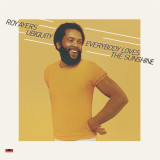
ROY AYERS UBIQUITY - EVERYBODY LOVES THE SUNSHINE LP
  • A1: Hey, Uh-What You Say Come On
  • A2: The Golden Rod
  • A3: Keep On Walking
  • A4: You & Me My Love
  • A5: The Third Eye
  • B1: It Ain't Your Sign (It's Your Mind)
  • B2: People & The World
  • B3: Everybody Loves The Sunshine
  • B4: Tongue Power
  • B5: Lonesome Cowboy

In "Everybody Loves the Sunshine" (1976), Roy Ayers seamlessly blends genres, creating a timeless sound that continues to influence musicians and DJs around the world. He makes the vibraphone the central instrument, a jazz-funk approach that defines his unique style. Over time, the album has remained an essential reference in Roy Ayers' discography and in the history of 70s Black music. Summertime soul classic! 180g vinyl.
In 1976, legendary musician and composer Roy Ayers released one of the most iconic albums of his career: "Everybody Loves the Sunshine." This album not only solidified Ayers as a key figure in the world of jazz-funk but also marked a milestone in soul music and contemporary jazz. It features a sophisticated blend of irresistible grooves, smooth melodies, and a unique sound that has endured over the years, becoming a reference for multiple generations of musicians and listeners.

By the mid-70s, Ayers had already established his reputation with his band, Roy Ayers Ubiquity, and his distinctive use of the vibraphone, which became his personal trademark. However, with this album, Ayers ventured into a smoother, more accessible sound, partly in response to the rise of disco music and the growing interest in more experimental sounds within the music scene. Throughout its ten tracks, Ayers managed to create a sonic atmosphere that evoked both the warmth of summer and the sophistication of jazz from that era, set against a backdrop of modern soul. The production was carried out by Ayers himself, along with his producer and friend, David R. Williams, and features the wonderful sound of Phillip Woo's Fender Rhodes and the powerful energy of the rest of the band, achieving an unmistakable authenticity and freshness. Some of its most well-known songs include the title track, ‘Everybody Loves the Sunshine,’ ‘The Golden Rod,’ and ‘The Third Eye,’ which quickly became classics of jazz-funk and soul. This album is crucial in Roy Ayers' career, as it demonstrates his ability to remain relevant and creative in an ever-changing music industry. Over the years, "Everybody Loves the Sunshine" has become a cult album, frequently featured in DJ sets by artists like Gilles Peterson, Theo Parrish, and Lefto. Summertime soul classic!

Reservar06.06.2025

debe ser publicado en 06.06.2025

27,31

Ültimo hace: 2026 Años
Leftover Salmon - Let's Party About It

In celebration of their 35th anniversary, Leftover Salmon, the legendary
bluegrass-rooted jam band, will be releasing their new studio album, Let's
Party About It
Let's Party About It reaffirms their status as pioneers of blended bluegrass and
showcases their unmatched musical chemistry. For the first time ever, the band wrote
the album together in a single session as a group. Longtime friend of the band and
storied songwriter Aaron Raitiere (Lady Gaga, Lukas Nelson, Ella Langley, Lainey
Wilson, Anderson East, The Lone Bellow, Trace Adkins, and more) also joined the band
for the writing session. The resulting album captures the energy and camaraderie that
have defined Leftover Salmon's three-and-a-half-decade-long career.
The album was recorded at Compass Sound Studio (formerly Glaser Sound Studio,
aka "Hillbilly Central"), the iconic birthplace of Outlaw Country, with the band joined by
special guests such as Del McCoury (vocals), Sam Bush (fiddle, mandolin), Jason
Carter (fiddle), Jeff Coffin (saxophone), and more.

Reservar16.05.2025

debe ser publicado en 16.05.2025

32,56

Ültimo hace: 2026 Años
Phara - Soft Glow, Fierce Light

After a strong first release on Fuse Imprint with 'The Wall', resident Phara returns to his home base for a mirage of introspective tracks. Furthering his research of emotive club music, 'Soft Glow, Fierce Light' seems more than appropriately named. Shimmering melodies, swinging rhythms, and a comforting ambiance, Phara proves that his constantly evolving musical persona and relationship with the Brussels club are built to last.

Beginning with 'Unfold', the Belgium-native sets the board with a warm introduction. Reminiscent of his recent endeavor as In Glass, a balance is struck between the slower tempo dub techno of his secondary alias and the higher club energy that he's been known to bring as Phara. Steady at first, filters open wide half way through the track to ensure maximum euphoria off or on the dance floor. 'Flow' follows in suit and here the producer keeps the level constant and tense with intricate melodic design. A steady groove with blossoming synth lines make 'Flow' a beauty to witness unravel. Warm chord stabs make for a nostalgic EP and shows once more that the seasoned producer frequently enjoys prioritizing emotion over drive. Flipping the vinyl to the other side, 'Wave to Wave' points a finger to all things dub, even a discrete appreciation of house music, through the harmony of his keys to the sound design of his square bass, and its common borders with techno. Juggling in snare rolls and rides throughout, Phara sets the tone with a soothing piece of work for lovers of the eyes-closed genre. To conclude, 'Solitude' brings a polished vintage effect to the project that 'Wave to Wave' introduced, this time with heightened intensity worthy of a set closer. Punchy stabs make this a particularly extraverted track, fitting into almost any record bag - Room 01 or Motion Room friendly. Thundering claps over an electric melody, these kinds of tracks aren't new to Phara. Pouring soul into his tracks, Phara proves once again to be a truly central artist in developing the Fuse sound and continuing his stylistic journey.

No en stock

Haga su pedido ahora y le encargaremos el artículo en nuestro proveedor.

12,56

Ültimo hace: 51 Días
Ibex Band - Stereo Instrumental Music LP 2x12"

The Ibex Band, with Giovanni Rico and Selam Woldemariam at the creative helm, provided the musical backbone for legends like Aster Aweke, Girma Beyene, Tilahun Gessesse, Mulatu Astatke, and Mahmoud Ahmed, including the iconic album Ere Mela Mela, shaping modern Ethiopian music as we know it today. This 1976 album (Ge’ez Year 1968) played a pivotal role in that legacy and has now resurfaced to set the record straight.

There’s a tendency to talk about the seventies as a golden age of Ethiopian music. There are good reasons for that, and just as good reasons against it. However, the notion of a golden past privileges the role of Western explorers and suggests that the pinnacle of Ethiopia’s musical culture is something only a foreigner can appreciate and unearth. It downplays the complexities of Ethiopia’s culture and history, creating an artificial divide between then and now. And it underestimates the constantly evolving sound that has followed.

The legendary musical outfit The Ibex Band, later metamorphosed into The Roha Band, has played a central role in defining the sound of many of the greatest stars on the music scene of Ethiopia from the mid-seventies onwards–but their golden output has never really waned. The story of the origins of the band that provided the musical backbone for greats such as Aster Aweke, Girma Beyene, Tilahun Gessesse, backing the solo career of group member Mahmoud Ahmed as well as backing Mulatu Astatke and many others has yet to be properly told.

Two misconceptions plague the image of Ethiopian music, one is that the music is pure because it is, by some notion, unexploited, the other is that it is all traditional. To begin with, a combination of political changes between the late sixties and the mid-nineties created an environment where only the most dedicated and skilled musicians struggled on and pursued a musical career against fierce odds. The whole Ibex Band, with Giovanni Rico and Selam “Selamino” Seyoum Woldermarian at the creative helm, are arguably the origo of the vibrant scene in the mid-seventies, and the said pair are foremost responsible for not only navigating the band through troubled times, but also modernizing the 6/8 chickchicka rhythm to a contemporary form. Giovanni laid the rhythmic foundation with heavy looped basslines that reinvented traditional melodies as dance music, and with Selamino’s innovative guitar work they influenced scores of musicians from Abegaz Kibrework Shiota to Henock Temesgen. Even Giovanni’s Fender bass and Selamino’s Gibson guitar inspired younger musicians in their choice of instruments. Not only in choice of instruments but also in sound–even as the digital revolution hit Ethiopian music, a lot of popular music still took its cue from the masters from Ibex and Roha.

Ibex emerged out of the ashes of the sixties group the Soul Echos band, adding Giovanni and Selamino to their ranks and taking their cues from a slew of influences, such as Motown and The Beatles, fused with traditional music. A tighter-knit unit than most bands at the time – Ibex has remained six to seven members throughout their whole career, compared to many bands that were as large as fifteen or sixteen men strong when Ibex set out. Their playing has been viciously focused, economical yet heavy. Just a year before the recording sessions of the album in your hands, Giovanni and Selamino made a contribution to the popular musical lexicon of Ethiopia that was simply defining the popular sound: their arrangement and recording of bandmate Mahmoud Ahmed’s solo effort and real commercial breakthrough tune and eponymous album, Ere Mela Mela, from 1975.

Selamino has never limited himself to being an adroit lead guitarist, but has always been a scholar of history, and as such he has probably contributed as much to modern Ethiopian music with his guitar playing and compositions as with a deepened understanding of modern or contemporary – Zemenawi – Ethiopian music. Selamino’s contributions serve as a metaphor for those of the whole band, at one and the same time creating and defining a new, danceable and updated sound anchored in Giovanni’s bass, whilst also elevating the broader scene through their support for others on the scene and on top of that, increasing the understanding of the music.

There is an understandable desire to romanticize the musical heyday Ibex and Roha were at the forefront of, because so much of the output is sorrowfully hard to come by. Ibex creativity was nothing short of ridiculously fierce compared to many of their Western contemporaries. Based on their sheer recorded output alone they could have usurped the title “hardest working in show business” from James Brown, recording more than 250 albums or 2500 songs in the seventies and eighties. Some only surface as cassettes today, others were never given full LP release, and some are simply impossible to find today. In the light of that, it’s nothing short of a miracle that the recording Stereo Instrumental Music from 1976 (Ge’ez Year 1968) has resurfaced. Unearthed in perfect condition on a chrome cassette, this is musical history comes alive–to set the future straight. Stereo Instrumental Music was recorded in collaboration with Karl-Gustav Lundgren, a Swedish national working for the Radio Voice of the Gospel. It took two sessions at the Ras Hotel ballroom in Addis Ababa. The Ibex Band was the first band in Ethiopia to employ a four-track recorder for their recording (the first available in the country, lent by Karl-Gustav). Later the same week, Giovanni and Selamino realized that, lengthwise, the recorded material fell short of what they wished for, so they recorded four more tracks in one more session on a single-track recorder. The Ras Hotel and Ghion Hotel, where the Ibex Band held musical residencies were to Ethiopia in general and Addis Ababa in particular what Motown was to the USA and Detroit a few years earlier – a hotbed of musical creativity and showmanship.

The most astonishing thing about Ethiopian music of the last half century is how tradition and modernity are intertwined. Because of this feature, it’s kind of hard to tell when there ever was or when we are in a “golden age”. So much of music from the past has been criminally neglected, but because of the hardships in the past, it would be an oversimplification to say that said past was a golden age. Probably, the golden age is what we are approaching, because for the first time both the past and future are accessible, and the monumental contributions from before can lay a firm foundation for a thriving music scene today. The Ibex Band stands firmly in the past, present and the future. That, if anything, is golden.

The detailed history of Stereo Instrumental Music is in many ways unique. To begin with, it couldn’t have been recorded earlier (there were no four-track recorders available) and it really couldn’t have been recorded afterwards either, at least not in the years directly following, because of the toll the musical scene took from the unfavorable political climate that followed when the nascent Derg regime and rival groups tried to assert themselves, the musical equipment lent from The Voice of Gospel Radio simply disappeared from Ethiopia when the radio station folded in 1977. Karl-Gustav Lundgren,
the Swedish foreign national who assisted during the recording, worked with the Ethiopian Evangelical Church Mekane Yesus at the time, recalls how they only had about fifteen minutes to get the microphones in place for the recording as to not alert neither the management at Ras Hotel nor the authorities and most importantly, to complete the recording before the curfew came into effect at midnight. In leaping to the opportunity to use previously unavailable equipment to push their sound forward and improvising to meet the logistical challenges, the Ibex Band displayed the very avant-gardism and adaptability that explains their longevity as a band through the years. The recording of Stereo Instrumental Music is from a given time in history, but it sounds as beyond time.
Much of the energy that burst out of the scene that Stereo Instrumental Music came out of dissipated or got sidetracked during the societal changes Ethiopia went through in the 1970s and 80s. Whilst leaders might have professed to be revolutionary, the work ethic of the Ibex Band can truly be described as that. They never called it quits, but adapted, toured extensively abroad in Africa, Europe, and the Middle East, and found ways to work even in the face of the curfew that curtailed a lot of musical life. They even played major arenas in the nineteen eighties, despite said curfew and restrictions. The whole extent of their legacy has never been told, but their music speaks louder than words, so therefore… tune in to the Ibex Band’s Stereo Instrumental Music.

No en stock

Haga su pedido ahora y le encargaremos el artículo en nuestro proveedor.

24,33

Ültimo hace: 9 Meses
Damian Lazarus - Magickal LP 3x12"

Audio alchemist Damian Lazarus continues to redefine the boundaries of electronic music with his fifth studio album, ‘Magickal’.

Renowned for his unparalleled ability to craft transformative sonic journeys, Damian Lazarus is a master of rhythm, melody, and vibration—a true pioneer among his generation’s visionary artists. Damian’s broad depth of experience encompasses a variety of disciplines: tastemaker, selector, label owner, A&R and a Grammy-nominated artist in his own right - each informed by his unique ear for sound. He is chief wizard of the hugely influential and culture-defining Crosstown Rebels label, a globally renowned DJ with a penchant for exotic outdoor locations and a highly regarded recording artist with four albums and a plethora of solo cuts, collaborations and remixes in his sprawling discography.

With his fifth album, ‘Magickal’, Damian steps into his next evolutionary phase, combining his newly found sobriety with a more mature outlook while still pushing boundaries and creating unforgettable moments. At the root of it all is the magical power of togetherness and human connection that only music can facilitate. Driven by this core ethos, Damian continues on his mission to share his heartfelt music, taking the dance floor into unexplored realms of experience, facilitating moments of transcendence, bliss and pure, unadulterated magic.

Damian Lazarus, the avant-garde architect of spiritually nourishing sounds, is joined by a stellar lineup of collaborators on his latest excursion. It’s imaginative and mystical, rhythmically captivating and daring in its own way, as is typical of Damian’s approach. Taking consideration of his past, the album references his previous work to create a tapestry of compositions that tap into the energy of key moments from his discography. Drawing on his existing catalogue creates cohesive through lines and thematically serves as a continuation of previous stories. November’s single, ‘Sunrise Generation’, for instance, works as a companion to ‘Vermillion’, which was recorded by Damian with his band The Ancient Moons and vocalist Moses Sumney back in 2015. ‘Sunrise Generation’, featuring the beautiful vocals of Fink, was Damian’s first major release since his Grammy-nominated 2021 collaboration ‘Don’t Be Afraid’ with Diplo and Jungle, and continues to take inspiration from global gatherings at solstice and those moments of collective awe at sunrise.

Indeed, the album’s themes of mental elevation and psychedelic sonic journeys are evident throughout. Damian channels this energy through tracks like the soulful ‘So Low’, featuring the incredible Zoe Kypri, and the luminous ‘Searchin’, with Jem Cooke, whose collaboration with Damian dates back to ‘Flourish’ (2020) and lead single ‘Into The Sun’. Uplifting is the operative word here, as Damian aims straight for our hearts and inner selves, stripping away the layers to take us on a trip inwards, and out into the ether all at once. There’s a clear nod to Damian’s appreciation of amapiano when he teams up with Ghanaian interdisciplinary healer Jojo Abot on ‘Warrior Dance’. Old friend and inspirer Mathew Jonson brings his virtuoso touch to ‘Are You Dreaming?’, while TEED and A-Trak form an awesome alliance for ‘Falling Down’ with its heartrending vocals. ‘Alive’ features the Bloom Twins, and also additional production from acclaimed producer Mark Ralph, who incidentally worked on Damian’s debut album ‘Smoke The Monster Out’ in 2009 and forms another throughline to the past. ‘Alive’ blends pop sensibilities and song structure with Damian’s inimitable sound - and could become one of Damian’s biggest moments to date. ‘La Hija De Juan Simon’ delves into the Latin energy synonymous with vibrancy and self-expression as Damian teams up with acclaimed Spanish flamenco-influenced duo Mëstiza. On a solo tip, he rolls out with the eight-minute-plus soulful funk flex ‘Why Don’t U’.

In a suitably aligned instance of serendipity, the arrival of ‘Magickal’ comes at a pivotal period in Damian’s life, just as it has been with previous album concepts. Albums made and released during big shifts in his life speak to the correlation between growth, personal evolution, creativity, catharsis and sharing that process musically. The last album ‘Flourish’, for instance, was recorded and released in the space of a few months during the first summer of the global pandemic. As a result, there’s a kind of vulnerability in the music, a subtle story that’s being told with emotional touchpoints that will be relevant to anyone listening. The universal human experience and spectrum of emotions are things almost everyone can relate to. With the enhanced clarity of his sobriety, Damian’s compositions embody the uplifting nature of simply being alive, connected and unified in our love for music and one another.

Day Zero, Damian’s iconic annual festival, is intrinsically linked to ‘Magickal’. It’s the setting for his imagination when producing the music, it’s the launchpad for each year’s kaleidoscopic adventures around the world, and this year’s edition will be the backdrop to the release of ‘Magickal’. As the pinnacle of Damian’s annual experiences, Day Zero marks a vital milestone for his artistry, an extension of his inner realm, carefully curated and created for his global family of lovers and dancers to revel in the awe-inspiring beauty of Mother Nature. Central to the ethos of Day Zero is its sustainability practices and deep consideration for the locality within which it is held. Connections with local elders embolden its depth, cultivating a strongly aligned purpose with the ritual, customs and energy of the land and its people.

‘Magickal’ will be released in the same week as Day Zero, tying the two projects together in a neat dovetail. 12 years since it started, Day Zero continues to play a significant role in the music Damian makes, curates and plays. For him, it’s the epitome of his vision: a stunning natural setting, the very best party people from around the world, an unparalleled lineup of friends and family, high production values, eco-centric policies and music from another dimension. With these interdimensional transmissions, Damian channels his inner alchemist, which, in turn, permeates into the vibrational framework of ‘Magickal’.

Never one to adhere to convention, Damian has opted for a disruptive album release. ‘Magickal’ is to be kept under wraps and then announced and released on Crosstown Rebels on 8th January 2025, bypassing the modern trend of prolonged single drops and ‘tombstone’ album releases. ‘Magickal’ is the embodiment of Damian and his intentional, against-the-grain approach and reinforces the album as a complete artistic statement, offering listeners the full cohesive experience from the very beginning. This is a return to the album as the pinnacle moment and not the afterthought. Singles, edits and remixes will follow the ‘Magickal album’ release, and, of course, there will be a world tour to promote the album (including Glastonbury and Coachella) and a chance to present the album in exciting, innovative and unique ways.

Forever dreaming, a sincere student of magic, new and old, social sorcerer, lover of nature and master of musical wizardry, Damian Lazarus is a potent force. With ‘Magickal’, he reaffirms his place as one of electronic music’s most influential figures, taking listeners on a profound journey into sound, spirit, and connection.

No en stock

Haga su pedido ahora y le encargaremos el artículo en nuestro proveedor.

40,76

Ültimo hace: 3 Meses
Marthial - NECH029

Marthial

NECH029

12inchNECH029
TECHNO Records
07.04.2025

MARTHIAL joins NECHTO with ‘NECH029’, a four-track vinyl release blending tradition and futurism. The record pays homage to a genre central to MARTHIAL’s imagination, drawing on its history to shape a forward-thinking sonic vision. The Milan-born and -based artist describes the EP as “a reflection on change: everything transforms, everything evolves, and we are tasked with finding harmony between what has been and what could be”.
Born Alessandro Vaccari, MARTHIAL is a DJ, producer, and founder of Milan’s independent cultural hub, the Tempio del Futuro Perduto. Through this unique space and his 24/H Records label, MARTHIAL has collaborated with influential artists like Stanislav Tolkachev and Fabrizio Rat. His music evokes ethereal atmospheres and hypnotic rhythms, bridging Detroit-inspired soundscapes with innovative, interstellar journeys.
The EP represents a personal journey for MARTHIAL, who describes the process of revisiting this sonic language as an opportunity to redefine himself and his perspective on the world. By channelling the past as a guide and embracing the future as a responsibility, he crafts a cohesive narrative that combines deep emotional resonance with forward-thinking energy.
‘NECH029’ is a cohesive exploration of these elements, delivering pulsating energy and emotional depth across its four tracks: ‘Don’t Wanna’, ‘Soul Groove’, ‘The Dancer Gift’, and ‘Infinito Imperfetto’.

No en stock

Haga su pedido ahora y le encargaremos el artículo en nuestro proveedor.

13,24

Ültimo hace: 36 Días
Beatrice Melissa - Secret
  • A1: Game Ft. Clara Le Meur
  • A2: Days
  • A3: Fight
  • A4: Emergency Ft Kaba
  • B1: Wrong Turn Ft. Chapelier Fou
  • B2: Future Me Ft. Tioklu
  • B3: Family Tree
  • B4: Be Be
  • B5: Secret

Who is Beatrice? Who is Melissa? Could they be one and the same?

This is the question at the heart of Secret, the duo’s debut album—or at least, that’s what the music seems to suggest. If sound is an extension of ourselves, it can also become a character we shape. The main character of Secret isn’t visible to the human eye, and yet they give off an androgynous and timeless energy, rooted in multiple languages and spaces. As the album unfolds, we sense the fusion of two distinct energies combined into a single, composite being. This constantly shifting, blurred identity comes to life in the album’s profusion of genres: club music, ambient, chanson, trip-hop, UK garage, and tech house. The tracks stretch and contract, following the trajectory of a dual voice.

Behind Secret lies a mélange of perspectives. Beatrice M., a Franco-British artist at the head of the label Bait, curates an innovative blend of syncopated UK club styles (mostly dubstep) and trancy techno grooves. Melissa Weikart, a French-American songwriter trained in classical piano with a deep passion for jazz, makes intimate avant-pop songs that embody her unique, hybrid approach to music-making. The diverse musical collaborations in Secret reinforce a dynamic that is central to both of their artistic journeys from the start, and these collaborations melt seamlessly into the album’s overall aesthetic. Despite a confluence of influences, the implied development of this obscure, extraterrestrial main character grounds us in a refreshing coherence. Secret is rich in variety and style, but above all, it diffuses a calm and serene atmosphere. Even when the BPM speeds up, we are carried along, suspended in Beatrice Melissa’s uncanny world.

Reservar21.03.2025

debe ser publicado en 21.03.2025

19,29

Ültimo hace: 2026 Años
GOWDY, T. - TRILL SCAN

Gowdy,T.

TRILL SCAN

12inchCSTLP181
CONSTELLATION
14.03.2025
  • Anonymous Iv
  • Blest Age!
  • Richmond Rd
  • Courante
  • Anonymous V
  • Materiadiscipuli
  • Novus Lumen
  • Pentaarc
  • Flit
  • Arislei Bone
  • Strewn

T. Gowdy returns with a major statement and luminous stylistic expansion on his third album for Constellation. Trill Scan is an exquisite suite of songs literally and figuratively about alchemy, where Gowdy melds his background in choral and medieval music with his trademark analogue electronics. Following the acclaimed Miracles (Bleep Album of the Week / Albums of the Year 2022), Gowdy's bar-raising new LP centers human voice for the first time. Choral set-pieces and solo lead vocals, along with his own lute playing, are novel elements in Gowdy's work, and draw on strains of Middle Ages polyphony and the Baroque "broken style" to further distinguish Trill Scan from anything in his discography to date. Gowdy sees "the modal language of medieval Europe as a less distant cousin to indigenous traditional music practice" compared to a Classical-colonial "patriarchal order of tonality that honours a system of domination." The 12th century Notre Dame School of choral music and 17th century style brisé each carry tonal materiality, heterodox technique, and cultural-historical symbolism central to Trill Scan's conceptual and compositional alchemy. Gowdy coheres these beautifully into his palette of serpentine slowburn electronics, a minimal analogue-driven techno shaped by aleatory strategies and tinged with post-punk grit. Gowdy's sound has been aptly described as "gently transportative, flickering like a busted halogen lamp" and his overriding pursuit of psychoacoustic immanence likened to "getting your brain massaged" and praised as "blissful work that bristles with effervescent energy, like brain waves coming in and out of focus." Trill Scan expands this sonic sensibility with more conspicuous harmonic complexity, stylistic variety, and humanistic narrative arc. Alternately sacramental and intimately personal vocals, sometimes wordless and sometimes lyrical, are worked into superlative instrumental tracks, yielding a warmly immersive concept album that's equally Gowdy's most musical. Gowdy sings explicitly of alchemy on the hypnotic album centerpiece "Novus Lumen" with lyrics that gesture at these medieval processes of material investigation. The tension between the scientific and esoteric is crucial; the separation and synthesis of physical substances in medieval alchemy maps onto his fixation with the interplay between the materiality of sound and psychoacoustics. Gowdy follows the Jungian interpretation of classic alchemical texts as an historical bridge to theories of the psyche, where consciousness itself is treated as materiality and similarly subjected to methodical analysis and experimentation, to deconstruction, dissolution, transformation, reintegration, metamorphosis. Song titles like "Arislei Bone" and "Materiadiscipuli" further reference these mythopoetic throughlines from medieval alchemy to modern psychology. Gowdy chooses disruptive forms from the history of Western music that symbolize and prefigure the modern psychological subject and its struggle for/against order, even as they also evoke liturgy and the Renaissance court. The sacramental adds a potent dimension to his pursuit of psychoacoustic activation, meditation, and transcendence, as choral passages intersperse with electronic drone and pointillism throughout the album. His gorgeous Fennesz-meets-lute rendition of the Baroque composition "Courante" by François Dufault offers idiomatic salon-secular counterpoint. Album closer "Strewn" is bookended by a final recurrence of choral invocation, with pulsing earworm motorik techno in between, over which Gowdy whisper-sings a dreamlike vision quest of mythic-alchemical imagery: "as I washed my eyes they turned to metal / and the memories melted to the metal / the metal of my heart." A mesmerizing final song that explicitly invokes Gowdy's search for materialized abstraction and substantive musical immanence wrought from his own psycho-therapeutic subjectivity, and encapsulates the album's turn towards more harmonic, historicized, and humanistic elements. Trill Scan commingles empyrean and earthly electronic songcraft to genuinely original and absorbing effect. Thanks for listening. RIYL: Coil, Nicolás Jaar, Alessandro Cortini, Pantha Du Prince, Fennesz, Visible Cloaks, Actress,

Reservar14.03.2025

debe ser publicado en 14.03.2025

21,22

Ültimo hace: 2026 Años
Los Dexter's De Uchiza - Fiesta en La Jungla
  • A1: Fiesta En La Jungla
  • A2: Fuga En La Selva
  • A3: Tu Partida
  • A4: Agua De Cachilde
  • A5: La Chicharra
  • A6: Dolor Y Pena
  • B1: Izango
  • B2: El Shiringuero
  • B3: A Jenny
  • B4: Linda Tocachina
  • B5: Para Mi Gente
  • B6: Tragedia En Uchiza

Carrying the torch of psychedelic cumbia, with a healthy dose
of surf guitar and Amazonian dancefloor flourishes from Peru
and Brazil alike, Fiesta en la Jungla by Los Dexter’s de Uchiza
is the first release from the newly formed London-label Ritmo
del Barrio. Originally released in 1982, it captures the finest
cumbia being made in Peru at the time, decked out with
frenetic surf-rock guitar riffs, rhythms floating on crisp
cumbia percussion and occasionally punctuated by carimbó
breakdowns native to the Pará region of north-eastern Brazil.
The album is filled with energy, a gem that was always
intended to animate any dancefloor. Peruvian cumbia came to national attention in the late 60s
through the recordings of Juaneco y su Combo, Los Destellos
and Los Wembler’s de Iquitos, but it’s had many revivals, and
Fiesta en la Jungla arrived when the style was going through a
major transition. In 1977, a passenger plane carrying most of
the members of Juaneco y su Combo crashed, killing everyone
on board. In 1980, Los Destellos retired, and Los Wembler’s
released their tenth and final record, they were ready for a
break. This left a big void in Peruvian music. Wasting no time,
Los Dexter’s Emerson Ruiz Mosquera took the opportunity and
gave his band new life, filling the band’s ranks with young and
energetic musicians who were hungry for success. He built the
new band around a solid base of dexterous guitars, a dynamite
rhythm section, and added oodles of percussion and an electric
organ, giving them a powerful psychedelic sound that called
back to the sounds of the original chichamasters, but added a
new sheen. Along with bands like Los Shapis and Los Walkers
de Huánuco, Peruvian cumbia was reborn as chicha in the
1980s, and was now the sound of Peru’s barrios up and down
the country.
Based in the city of Uchiza, on the edges of the Amazon basin,
Los Dexter’s were uniquely located in central Peru, closer to the
largest urban centres of the country than Amazonian outposts
like Pucallpa or Iquitos, and therefore better positioned to
travel to the furthest reaches of the country with ease. In a
sense, Los Dexter’s were a bridge between the Amazon and the
rest of Peru, a bridge over which the sounds of Amazonian
cumbia could travel to the rest of the country on their way to
becoming one of the most ubiquitous elements of Peru’s musical
identity. Fiesta en la Jungla represents Los Dexter’s in their third
iteration. Led by Emerson Ruiz Mosquera, who was just a
young boy in 1970 when his older brother founded the group
with four of his friends, the ensemble by the time of Fiesta en la
Jungla included Orlando Abad on the timbales and lead vocals,
Lucho Bendezú on lead guitar, Javier Quiroz as second
guitarist, Alejandro Almeira on bass, Rufino Bustamante on
keyboard, Ramon Siu on bongos and bells, Ivan Rios on conga,
and Emerson as musical director and composer. Remarkably,
most of the group’s members helped to write at least one
track, Los Dexter’s were a collective endeavour.
Reissued on vinyl for the first time by Ritmo del Barrio, this
record is essential for any collector of Peruvian cumbia.
Showcasing the unique sound of Los Dexter’s, it carries hits
like “Fuga en la Selva” and “El Shiringuero”, which are sure to
set any dancefloor on fire, combined with slower, carimbó-
infused cumbias like “Fiesta en la Jungla,”and “Agua de
Cachilde.” Its closing track, “Tragedia en Uchiza'', is a key
piece of local history and tells of the flooding of the
Chontayacu River in 1982, a mortal tragedy that affected
thousands of people. Despite the subject matter, the album
maintains a joyful vibe throughout, with high energy riffs and
irresistible rhythms, contrasted with terse love ballads, like “A
Jhenny.” It is both a piece of musical history, and a sure-fire
tool for the dance floor.
Los Dexter’s became a fixture of festivals and celebrations in
the provinces of San Martin and Huánuco, and from expanded
across the country, taking Amazonian cumbia from the
Peruvian Amazon, to the heights of the Peruvian sierra, the
coastal plains, and the capital city of Lima.

Reservar28.02.2025

debe ser publicado en 28.02.2025

19,96

Ültimo hace: 2026 Años
Shabaka And The Ancestors - Wisdom Of Elders - 2x12"

Tradition shapes your work. For saxophonist and bandleader Shabaka Hutchings, that's something he's long understood. After years spent in the orbit of London's jazz circuit, he examines and reimagines his influences with a dexterity that's unique. Drawing out the vision underlying his new album, he says, I see energy as being a form of wisdom to be passed down through the ages.'

Unpicking the album's title, he continues, "When we study the music, the lives, the words of our master musicians we obtain a glimpse of that artist's essential energy source. This is the core vitality of the individual which leads them to utilise the musical specifics of their chosen genre in a way that mirrors their inner source of power. This is an intuited wisdom that's handed to us from the legacies of our elders.

The album is a document of sessions combining Hutchings with a group of South African jazz musicians he's long admired. His connection to the group was Mandla Mlangeni (bandleader of the Amandla Freedom Ensemble), whom he'd flown there to play with over the past few years. Recorded across just one day, the group drew on their South African lineage - heroes like Zim Ngquwana and Bheki Mseleku - to bring their own slant to the American jazz lineage which is reconfigured in Hutchings' compositions themselves.

Going beyond the jazz greats Hutchings cites, influences are drawn from plenty of other sources: Caribbean calypso, central African song structures and Southern African Nguni music all play a part. Bringing together those ideas with the contributions of his bandmates is, he explains, crucial to what he sees in the role of an album artist. Even though I wrote all the music, for me, the leader of the project isn't the person who writes all the music but the one who has a vision for how certain musical elements will be combined."

A regular sight on stages around London and beyond, playing - and often leading - groups like The Comet Is Coming, Sons of Kemet and Melt Yourself Down, he's part of a generation whose idea of jazz is pointedly unrefined. That's to say, Wisdom of the Elders comes from an artist interested in the indefinable gaps more than fitting into boxes.

No en stock

Haga su pedido ahora y le encargaremos el artículo en nuestro proveedor.

35,25

Ültimo hace: 23 Días
Tunnel Dancers - Energy Is Residual

I first saw Hugh and Jackson play together at Good God’s ‘Soft Future Piano Bar’ at the Sydney Opera House in 2017. That year was a fruitful year for the two as artists and for the Sydney music community in general. I remember that all of us, along with Greville and Brad, hosted a DIY party in a tunnel under a highway somewhere near Sydney Airport. Is that the same tunnel that Tunnel Dancers derived their name from? 7 years after that first meeting at the Sydney Opera House, Hugh and Jackson have released an album. Listening to these songs there is an audible patience and understanding between two musicians. They probably could have released something else a long time ago, but chose to wait - instead enjoying bowls of laksa on their lunch breaks and sharing long, quiet conversations at The Babylon Sauna & Spa. When the next warm bowl of noodle soup arrives on your table, how long will you let it sit before you dive in? Soup first or noodle first? If you learn from these songs, perhaps you will know to first observe the whole bowl. Observing in this way, the moment settles and hovers and remains for much longer than a moment.

No en stock

Haga su pedido ahora y le encargaremos el artículo en nuestro proveedor.

19,96

Ültimo hace: 10 Meses
BEN LUKAS BOYSEN - Alta Ripa

Ben Lukas Boysen

Alta Ripa

12inchERATPLP169
Erased Tapes
11.12.2024

Ben Lukas Boysen’s new album, Alta Ripa, signifies a seismic shift in his artistic journey. It revisits the foundational impulses of his youth, shaped amidst the serene beauty of rural Germany—a bucolic backdrop where his creative palette flourished. However, it was his move to Berlin in the early 2000s that electrified his sound, infusing it with the city’s pulsating energy and diverse cultural influences. Alta Ripa captures this transformative experience, blending the introspective melodies of his rural beginnings with the bold, experimental tones born from Berlin’s vibrant electronic music scene. This album is a testament to Boysen’s evolution, showcasing how geographical shifts can profoundly shape artistic expression.

Boysen’s fourth studio album under his own name, Alta Ripa is a nod to his beginnings as much as a hint to his future, and as a work, it’s almost contradictory in its boldness and humility. He invites the listener on a journey of self-discovery; both for himself and for them, describing the music as “something the 15-year-old in me would have liked to hear but only the grown-up version of myself can write.”

His last two albums involved working closely with other musicians, including cellist Anne Müller, flugelhorn player Steffen Zimmer, and drummer Achim Färber. However, inspired in part by a recent return to live performance, Alta Ripa sees Boysen circling back to his passion for pure computer music.

For Boysen, the return to his youthful musical language marks a major turning point in his career. It represents a departure from his roots in classical music – his mother was an opera singer and his father an actor with an appreciation for Wagner, Arvo Pärt, Keith Jarrett, and Stockhausen. Although these are still important influences, Alta Ripa encapsulates a new, exploratory interplay between Boysen’s careful craft and his ability to let go of some of the process.

The album’s title comes from the original Roman name of the town that Boysen grew up in, Altrip, where he lived until his early twenties. This formative period is central to the ideas behind this album, from Boysen’s parental ‘schooling’ in classical music through to his sonic journeys through drum and bass, Aphex Twin, and Autechre — all of which changed his idea of what music could be. The extreme energy of tracks like ‘Acperience 1’ by Hardfloor, ‘Tracks & Fragment’ by Cari Lekebusch, ‘Focus2 Implan’ by Jiri.Ceiver, and ‘Low On Ice’ by Alec Empire are also pivotal influences.

For Boysen, this time of his musical development also involved knocking down the pillars that he previously thought had carried his world. A key moment for Boysen was being given a precious (pre-internet) club cassette at school that featured artists like Source Direct, Photek and Goldie. Excited by this new discovery, he introduced his father to the song ‘Dred Bass’ by Dead Dred. After the song finished, Boysen Sr. turned off the tape and proclaimed it was “the end of all music”. This heated exchange sparked a new, and more mature dialogue between the two that involved them sharing and discussing music on a regular basis.

Boysen’s classical and jazz music upbringing might not be easily noticeable from the electronic palette that he uses. But it can be found in its bones; the structure of the tracks and their dynamic shifts. On Alta Ripa, he intentionally embraces a spirit of controlled chaos, churning out sonic ideas to see what sticks.

One of Brian Eno’s Oblique Strategy cards contains the phrase “gardening, not architecture”, and the trajectory of Boysen’s creative path reflects this metaphor. In much of his previous work he followed a sort of Brutalist architect’s approach; here, he was fully responsible for the tracks’ austere structures and planned them with deliberate care. But by sacrificing some of that control on Alta Ripa, he sets the right conditions for a dark and unpredictable, organic growth. It’s a push forward into a new world.

No en stock

Haga su pedido ahora y le encargaremos el artículo en nuestro proveedor.

23,49

Ültimo hace: 15 Meses
BEN LUKAS BOYSEN - Alta Ripa

Ben Lukas Boysen

Alta Ripa

12inchERATPLE169
Erased Tapes
04.12.2024

Ben Lukas Boysen’s new album, Alta Ripa, signifies a seismic shift in his artistic journey. It revisits the foundational impulses of his youth, shaped amidst the serene beauty of rural Germany—a bucolic backdrop where his creative palette flourished. However, it was his move to Berlin in the early 2000s that electrified his sound, infusing it with the city’s pulsating energy and diverse cultural influences. Alta Ripa captures this transformative experience, blending the introspective melodies of his rural beginnings with the bold, experimental tones born from Berlin’s vibrant electronic music scene. This album is a testament to Boysen’s evolution, showcasing how geographical shifts can profoundly shape artistic expression.

Boysen’s fourth studio album under his own name, Alta Ripa is a nod to his beginnings as much as a hint to his future, and as a work, it’s almost contradictory in its boldness and humility. He invites the listener on a journey of self-discovery; both for himself and for them, describing the music as “something the 15-year-old in me would have liked to hear but only the grown-up version of myself can write.”

His last two albums involved working closely with other musicians, including cellist Anne Müller, flugelhorn player Steffen Zimmer, and drummer Achim Färber. However, inspired in part by a recent return to live performance, Alta Ripa sees Boysen circling back to his passion for pure computer music.

For Boysen, the return to his youthful musical language marks a major turning point in his career. It represents a departure from his roots in classical music – his mother was an opera singer and his father an actor with an appreciation for Wagner, Arvo Pärt, Keith Jarrett, and Stockhausen. Although these are still important influences, Alta Ripa encapsulates a new, exploratory interplay between Boysen’s careful craft and his ability to let go of some of the process.

The album’s title comes from the original Roman name of the town that Boysen grew up in, Altrip, where he lived until his early twenties. This formative period is central to the ideas behind this album, from Boysen’s parental ‘schooling’ in classical music through to his sonic journeys through drum and bass, Aphex Twin, and Autechre — all of which changed his idea of what music could be. The extreme energy of tracks like ‘Acperience 1’ by Hardfloor, ‘Tracks & Fragment’ by Cari Lekebusch, ‘Focus2 Implan’ by Jiri.Ceiver, and ‘Low On Ice’ by Alec Empire are also pivotal influences.

For Boysen, this time of his musical development also involved knocking down the pillars that he previously thought had carried his world. A key moment for Boysen was being given a precious (pre-internet) club cassette at school that featured artists like Source Direct, Photek and Goldie. Excited by this new discovery, he introduced his father to the song ‘Dred Bass’ by Dead Dred. After the song finished, Boysen Sr. turned off the tape and proclaimed it was “the end of all music”. This heated exchange sparked a new, and more mature dialogue between the two that involved them sharing and discussing music on a regular basis.

Boysen’s classical and jazz music upbringing might not be easily noticeable from the electronic palette that he uses. But it can be found in its bones; the structure of the tracks and their dynamic shifts. On Alta Ripa, he intentionally embraces a spirit of controlled chaos, churning out sonic ideas to see what sticks.

One of Brian Eno’s Oblique Strategy cards contains the phrase “gardening, not architecture”, and the trajectory of Boysen’s creative path reflects this metaphor. In much of his previous work he followed a sort of Brutalist architect’s approach; here, he was fully responsible for the tracks’ austere structures and planned them with deliberate care. But by sacrificing some of that control on Alta Ripa, he sets the right conditions for a dark and unpredictable, organic growth. It’s a push forward into a new world.

No en stock

Haga su pedido ahora y le encargaremos el artículo en nuestro proveedor.

25,17

Ültimo hace: 15 Meses
Jupiter & Okwess - Na Kozonga LP

Jupiter&Okwess

Na Kozonga LP

12inchZAMOLP2101
Zamora
09.10.2024

Hailing from the Democratic Republic of the Congo, Afropop, funk, rock and jazz outfit Jupiter & Okwess returns with the explosive ' Na Kozonga' album, a blast of energy that bewitches the body and feeds the spirit . Their latest invites guests from around the world

From the samba of carioca Rogê to the rap of Brasilian pioneer Marcelo D2 , via the horns of New Orleans' Preservation Hall Jazz Band or the voice of the militant Chilean singer Ana Tijoux , the guitar riffs of French guitarist Yarol Poupaud or soulful voice of American vocalist Maiya Sykes , Jupiter & Okwess have no fear of strange encounters, nor the craziest journeys.

Produced in Los Angeles at the studios of Mario Caldato Jr (Beastie Boys, Seu Jorge, Beck, Bjork, Blur, John Lee Hooker, Manu Chao).

They have toured the US including Central Park Stage, NewOrleans Jazz & Heritage Festival and Outside Lands. They performed on NPR's Tiny Desk and they were booked on Bonarroo 2020 before its cancellation.

Jupiter & Okwess previous album is also available on CD/LP. 'Kin Sonic" was voted Best Album by the NY Times in 2018 and a pick on Obama's playlist that year.


l 12: Bolingo (Ça Va Saravá) feat. Rogê

No en stock

Haga su pedido ahora y le encargaremos el artículo en nuestro proveedor.

26,68

Ültimo hace: 17 Meses
Maelstrom - The FM Tapes

Maelstrom returns to Central Processing Unit for the fourth time, and it's the one born Joan-Mael Péneau's lengthiest drop on the Sheffield label yet. The French artist has been a mainstay in the European electro game since the 2000s, and Malestrom brings that experience to bear on new LP The FM Tapes. He goes about this album with the assurance of a seasoned pro, combining his mastery of electro production techniques with a trademark guile to craft an expertly-paced eleven-track affair.

The first section of The FM Tapes sets out the album's stall with style and aplomb - listeners are in store for a rich feast of off-kilter machine-funk which will feature no shortage of intriguing detours. On opener 'Ondes Courtes' the mix throbs with all manner of strange electronic gristle: a distorted bass hum rattles the monitors; wisps of distortion float across the mix; eerily pretty keys wax and wane before giving way to a radar pulse.

'Ondes Courtes' is an ominous slouch of a scene-setter, and it lines things up perfectly for following cut 'Alt50ser' to lock in. This track's churning, gurgling mid-tempo rattle brings to mind the wacky insistence of Modeselektor. Maelstrom repeats the slow-fast one-two again directly afterwards - 'La Vie Sociale Des', a strange nugget that sounds like an early Eski instrumental stripped for parts and blasted into the cosmos, is an ideal prelude to the twitchy space-funk of 'My Digitone'.

Maelstrom's staying power in the electro world comes, in no small part, from his ability to apply his delightfully idiosyncratic choices to some of the genre's staple production tropes. On The FM Tapes, he marks himself out once more as a pleasingly unorthodox talent by taking tracks in unexpected directions to produce surprising - and often rather moving - results.

There are multiple cuts here which channel the more cerebral end of Richard D. James' AFX/Analord output: 'My Digitone' may be a quicksilver techno-electro number, but there's still something cinematic about the synth treatment here which softens the edges; 'Suede's minor-key oscillations bring other CPU veterans like Cygnus and Bochum Welt into view; 'Res 06', one of two Fasme collaborations on the record, is full of pathos even as the beat programming bangs and whirrs throughout.

While there's a deep emotional undercurrent to The FM Tapes, though, Maelstrom's commitment to bringing the thrills surfaces time and again. If 'Res 06' had Maelstrom and Fasme getting wistful, the album's other Fasme link-up 'Trempo' is one of the hardest club joints here, a piece of old-school Detroit energy replete with some great cascading drum production. Indeed, 'Trempo' comes in the middle of a run towards the album's end where Maelstrom takes the handbrake off - there's a wild-eyed sense of fun to 'The Operator' and 'Upside Down DX7' which has one thinking of the zany cut-and-thrust of KiNK's best work.

Maelstrom's latest drop for Sheffield's Central Processing Unit label is an album of leftfield electro numbers that bring both pounding beats and poignant production.

RIYL: KiNK, Modeselektor, Cygnus, Bochum Welt, AFX

No en stock

Haga su pedido ahora y le encargaremos el artículo en nuestro proveedor.

16,60

Ültimo hace: 9 Meses
ASMAA HAMAZAOUI - BNAT L'BNAT TIMBOUKTOU LP

Asmaa Hamzaoui stands out as a pioneering female figure in the traditionally male-dominated realm of Gnawa music. With her group, Bnat Timbouktou, she brings a dynamic and spiritual dimension to the genre, infusing it with the vibrant energy of desert blues. Despite the essential role women have played in Gnawa rituals, female musicians have historically been underrepresented. Hamzaoui, however, is at the forefront of changing this trend. Born into a family deeply entrenched in Gnawa traditions in Casablanca, Hamzaoui was immersed in this musical heritage from a young age. Her father, a master musician, and her mother, a dancer, provided a rich environment for her early education in music. She learned to play the guembri, a three-stringed lute central to Gnawa music, and began performing with her father's band on the qraqeb, metal castanets used in Gnawa music, and in the choir. Encouraged by her father, she eventually formed her own group, Bnat Timbouktou. The group's debut album, "Oulad Lghaba," recorded in collaboration with the Swedish label ajabu! Records, was critically acclaimed and nominated for a Songlines Music Award. This album, along with their upcoming release "L'bnat," showcases Hamzaoui's commitment to preserving and revitalizing Gnawa music. "L'bnat," will emphasize the female traditions and spiritual aspects of Gnawa culture. Hamzaoui's performances are characterized by her powerful voice and the rhythmic, percussive playing of the guembri. Her music not only pays homage to the spiritual and healing qualities of Gnawa but also aims to keep the tradition alive by introducing it to new audiences worldwide.

Reservar31.07.2024

debe ser publicado en 31.07.2024

36,09

Ültimo hace: 2026 Años
PINEGROVE - CARDINAL
  • Old Friends
  • Cadmium
  • Then Again
  • Aphasia
  • Visiting
  • Waveform
  • Size Of The Moon
  • New Friends

Debut LP by Pinegrove from Montclair, New Jersey. On Cardinal, the band's captivating blend of indie rock, pop and country elements is more vivid, fine-tuned and addictive than on their previous released EP's. Painting his emotions onto these songs with colorful and kinetic strokes, vocalist and guitarist Evan Stephens Hall moves through Cardinal's eight songs with an unforgettable energy and passion, with a vocal performance that is pleasantly reminiscent of Will Oldham and Built to Spill's Doug Martsch. Highlighted by the downtrodden nostalgia of twangy opener "Old Friends" and the climactic refrain of "Size of the Moon," where the confession "I Don't Know What I'm Afraid Of" is just as much of a sing-a-long as it is an emotional breakdown, moods don't stay in one place for very long on Cardinal - they are carefully crafted and revisited throughout to continually evoke the album's central themes of memory, longing and deep introspection.

Reservar28.06.2024

debe ser publicado en 28.06.2024

21,22

Ültimo hace: 2026 Años
Gent1e $oul - Shoals

Gent1E $Oul

Shoals

12inchFC07
FAST CASTLE
14.05.2024

Throw the gauntlet: Fast Castle is back with Gent1e $oul’s “Shoals”-EP, our furthest excursion into the unexplored depths of mind-bending bassweight! Having perfected his build order on his recent “Block Printing'' and “Silk Armor”-EPs, Gent1e $oul continues to infuse his productions with sonic bass strategies over five versatile tracks.

“Dark Age” provides an aggressive opening, immediately applying pressure with nasty bass wobbles, dembow echoes and a 4x4 switch that might catch distracted players off guard. Tried and tested in many settings, this is an essential option for the incoming dancefloor rush!

With its heavy neo-stepper energy, ”Bad Neighbor” lays siege to dancefloor resistance with a piercing lead, breathing drums and powerful waves of sub wubs. Just like the AoE2’s legendary trebuchet of the same name, “Bad Neighbor” – paired with the right Soundsystem – will make the walls shake.

“Dusty Acer” is a homage to Gent1e $oul’s dear but aging AoE2 gaming machine, capable of producing similar noises to this dark UKG cuts’ central bassline.

Deep dubstep cut “Illumination” takes us to the for a wholesome mana refill: Mystic ambiences make you pull down your cowl, before diving into a fully blown sub massage.

The standout self-titled cut “Shoals” concludes the release: A deep-yet-powerful half-stepping perc grower at 160bpm, operating on subdued rhythmic shifts and layers.

As a special tribute to the AoE2 community, all tunes are flavored with the game's original sound effects. Thanks for keeping us inspired, Nili_Aoe for NAC5 and T90 for HC5!

No en stock

Haga su pedido ahora y le encargaremos el artículo en nuestro proveedor.

11,13

Ültimo hace: 17 Meses
Adult Jazz - So Sorry, So Slow 2x12"

London-based four-piece Adult Jazz announce their first full-length album in a decade, So Sorry So Slow, out 26 April 2024 via Spare Thought. Alongside the announcement comes lovesick new single ‘Suffer One’ featuring Owen Pallett, a cautious excavation of self and sexuality, clambering across a gorgeously shapeshifting, filmic five-minutes.

Containing some of the band’s most abrasive but gentle, beautiful and melismatic work to date, So Sorry So Slow has many defining characteristics: romance, panic, devotion and remorse, threaded together by an intentionally laser-focused love. It’s deeply personal, bruised and candid in its expressions of tenderness, and deeply pained in its concurrent reflections of ecological regret. Across its hour-long runtime, a delicate, frenetic energy and glacial heaviness coexist, the band pitting those paces against one another. In their richly experimental timbre, dancing strings and fluttering falsettos prang against a bed of brass drones like a wounded bird.

“We started writing in 2017 and began recording in 2018,” says vocalist Harry Burgess. “We genuinely thought it might be finished in 2018! But things kept developing and, having resolutely not struck while the iron was hot, there was no real external push to rush things after that, so we just kept letting things shift and unfold until it felt right. Listening back to my voice notes it’s nice to notice that there are fragments of ideas from the whole period 2017-2023 which have shaped the record.”

Recorded in bursts at studios across London and in the band members’ flats, at Konk, on the Isle of Wight and in Sussex, So Sorry is unambiguous in its evolution. Sonically, there are sparks of the arrhythmic brightness that afforded the band’s critically acclaimed debut album Gist Is its cult adoration, for fans of Arthur Russell and Meredith Monk, but with a blossoming, melancholic darkness often overhead. Piano sprees and luscious string sections appear like low-hanging stars on a night-time drive, whilst plunging vocal distortions and humming brass loops resurrect heavy limbs in a bad dream.

“I usually have objects as kind of totems for ideas,” explains Burgess. “The album initially started out to do with performance… the totem was a head mic, one of the subtle skin-tone ones, discreet on the forehead of a West End star. A number of the first songs in their original forms were almost musical theatre piano ballads. I think that was really a device to write about my life as the ‘main character’ (pre internet-speak reframing): regrets about romance, relationships - unsustainable relationships with the self and others.”

“However, once we started writing, the ideas about unsustainable personal relationships, loving unevenly and heartbreak conflated with a more expressly ecological regret. Like contending with big feelings of loss, endings, beauty, desolation, and with how much joy the earth contains in it. Feeling so much gratitude bound up in waves of sadness. Maybe witnessing a slow-motion goodbye to all that, or its last gasps. I love the earth and the life it supports so much. I love how ecosystems fit together - even the brutal stuff. It may be basic to say, but now is the time to be laser focused on that love. I was thinking about human centrality on earth, us as the ‘main character’, the way that is served by faith and romanticism, and the subsequent disingenuous understandings of our position in the ecosystem, as only stewards somehow, rather than subjects. The totems at this point: a herald’s horn, lorry inner tubes, archaeological tools. I guess from doom, industry, history respectively.”

“Now I would say the record is about gripping. Totems being: crampons, rope, drips, desalination equipment, accruing various survival tech. I think gripping sums up both of the threads. There’s the emotionally correct clinging to the earth that is the substrate of everything we value, or the delusional clinging to our imagined dominant position. But also the practical, technological aspects of creating a sustainable relationship, of remaining here. Then I think of romance again.”

So Sorry So Slow comes out 26th April 2024 on Spare Thought, mixed by Fabian Prynn at 4AD Studios and mastered by Alex Wharton at Abbey Road.

Adult Jazz is Harry Burgess, Tim Slater, Steven Wells and Tom Howe.

No en stock

Haga su pedido ahora y le encargaremos el artículo en nuestro proveedor.

26,01

Ültimo hace: 22 Meses
Kiran Leonard - Real Home LP

Cathartic avant-rock, literate DIY folk & experimental composition exploring displacement, love, climate change, belonging & the places we call home - RIYL Jim O’Rourke, Richard Youngs, This Heat, Richard Dawson, Flying Nun. ‘Real Home’ is the new album by the Manchester-born, London-based artist Kiran Leonard. His sixth album proper (not including innumerable tour-only CD-Rs and short-run cassettes), since his precocious debut in 2013, ‘Real Home’ finds Leonard invigorated by inspiration and experience, making passionate, literate, and mercurial music that explores displacement, love, memory, climate change, connections to home and more. Encompassing songs recorded after moving to South London, ‘Real Home’ reflects on ideas of belonging and domesticity through folkloric, stream-of-consciousness songwriting. Across nine tracks, Leonard traces lived impressions of the household and the city, expressing sentiments of dislocation, alienation and stasis, but contentment too. Infusing the avant-rock effervescence, terraced dynamics and visionary lyricism of his music with what he defines as a greater sense of openness, Leonard is as versatile, fervent and imaginative as ever on ‘Real Home’, yet his music is somehow more intimate, affecting, and acutely expressive. Shaped by dual considerations of simplicity and formalism, ‘Real Home’ is by turns beautiful, allusive, and ruminative, an album on which Leonard considers what his songs have resembled in the past and what they mean now. In recent years, Leonard has crafted eloquent chamber music inspired by the likes of James Joyce and Clarice Lispector (‘Derevaun Seraun’), responded to contemporary politics and communication breakdown in the digital age (‘Western Culture’), and compiled solo works and ensemble recordings for a longform ode to Jonas Mekas and to one of Leonard’s enduring themes; home (‘Trespass On Foot’). On ‘Real Home’, Leonard reiterates this abiding thematic focus yet ascends to new, different heights, in music of cathartic delicacy and dissonance where all the myriad dimensions of his work to date seem to crystallize. There are sinuous songs about struggle and defying the pace of city life through drift and diversion (‘Pass Between Houses’), stirring songs of intense feeling and crescendo, described as a form of speculative detective fiction (‘Theatre for Change’). There are touching solo piano ballads (the title track), symbolic contentions with carbon capture and climate change (‘Utopia of Bog’), modes of experimental minimalism (‘Void Attentive’), and other profuse feats of compositional range, embroidered with wild tendrils of narrative and lyrical depth. A record to pore over, and get lost in. Exemplifying the vast aesthetic scope of Leonard’s music, lead single ‘My Love, Let’s Take The Stage Tonight’ is inspired by country lodestar Hank Williams, Russian poetry and a late period love poem by William Carlos Williams. Yet for Leonard, the song signals a sense of accessible materiality, and is the product of a more linear approach to writing songs: “My imitation of the great Hank Williams, in spirit if not in substance…This is one of the best efforts on Real Home at a song-as-object. Looking at it now I realise I was trying to write a song that made itself known as a song to the listener, and I wonder whether that’s crucial if you want a song to transcend its context. And that this is either accomplished through a total openness – by being inviting, by laying the tricks of the song out plain to see, as Williams and his many ghostwriters did so well – or by adopting a knowing aloofness, positioning oneself against the listener but letting it be known that that’s what it’s doing. In this song I try both, but mostly the former: as in, I wanted to write a song where every line follows on from the next.” Imbuing the endlessly elaborate and inventive qualities of his music with a newfound streak of candid, clear-cut melodicism, Leonard has reached a special place in his artistry, on a record that feels familial, and expresses closeness. Assembled with affiliates including Lauren Auder, Otto Willberg, Jasper Llewellyn (caroline), Tom Hardwick-Allan (Shovel Dance Collective), Magda McLean (caroline, The Umlauts), Alex Mckenzie (caroline, Shovel Dance Collective), Isabelle Thorn (Dear Laika) & more, the recording process had a significant influence on the subject matter of ‘Real Home’, in sessions defined by close-knit camaraderie and artistic eccentricity: “The theme of the home obviously recurs throughout the record; the album was mostly recorded in domestic spaces with friends, and the name of the album is Real Home. I like the qualifier ‘real’, like you’re getting past the cloak of the word and towards the thing-itself…also nearly all the percussion in this record was recorded on items from my dad’s shed (jam jars, sandpaper, blocks of wood, etc). Real home record!” ‘Real Home’, like anything by Kiran Leonard, is a record of dazzling multiplicity. Yet it’s a companionable prospect with a central premise; a collection of songs where listeners old and new can find a home. An album led by a scene; of Leonard standing at the threshold, ready to welcome you inside. “Exceptional songs that linger” - The Guardian // “An autodidact of amazing talent & energy” – Pitchfork // “A ridiculous amount of talent…confrontational, celebratory, provocative or perverse – he manages all of these emotions & more” - The Quietus /

Reservar05.05.2024

debe ser publicado en 05.05.2024

25,00

Ültimo hace: 2026 Años
ACE VISION - RAISING AWARENESS EP

Steeped in the sounds of electro disco, italo and new beat, Ace Vision is an artist raised on the synthesizer traditions of Italy.

Following on from his debut EP,”Not An Ordinary Story”, the musician returns with four pieces of crafted electronics; Snapping percussion lays a path for arcs of melody, bruised bass and computer game chords for the driving energy of “Enigmatic Flow.” The same rhythmic strength is carried into “Middle of the Night.” Kicks and snares are the foundation from which perfumed keys ascend. In the exquisite “Goodbye,” warm analogue waves are punctuated by beats while rolling arpeggios and soaring lines drift above vocoder lyrics. “Synthpop Voyager” ends the EP. Warm playful melodies are central in this elegant and emotional finale, crisp drum patterns being the central columns around which Ace Vision weaves his analogue tapestry. Four tracks that tell a very different musical tale.

No en stock

Haga su pedido ahora y le encargaremos el artículo en nuestro proveedor.

13,40

Ültimo hace: 10 Meses
The MRK Edits - Wela Wela / Komi Ke Kenam

The tom-tom heavy tribal rhythm of “Wela Wela” is one of the rawest, hardest cuts from the band Black Blood, a conglomeration of musicians from the central part of the African continent who were based in Belgium. The group had a breakout single in 1974 with the exotica-leaning “A.I.E. (A Mwana)” but never were able to quite capture the excitement that single generated with their follow up records. We can only guess that songs like “Wela Wela” were simply way too heavy for the pop tastes of the day, since the groove is a beast! — an acid rock tangent of the “Soul Makossa” riff that radiates pure energy. Mr. K aserts “It’s an incredible song to dance to, but was not very DJ friendly, and I never seem to hear other DJs play it... or even talk about it.” Originally debuted on his Grass Roots album, Mr. K's new rearrangement should change that, especially now that it's been made available on this hard hitting, portable 7-inch format.

Originally released the same year as Black Blood’s debut, “Komi Ke Kenam (Fish & Funjee)” was discovered and distributed by a small independent Brooklyn label that featured many other incredible African bands of the 70's. The song opens with a tough breakbeat (subtly extended by Mr. K on our release), and rumbles over a funky bassline and slicing wah-wah guitar before bursting out with a sax-led climax, a gritty get-down jam if there ever was one.

Both cuts have been remastered expressly for DJ play and are loud and clubworthy, in new extended edits that tease every last bit of funk from the originals.

No en stock

Haga su pedido ahora y le encargaremos el artículo en nuestro proveedor.

10,55

Ültimo hace: 7 Meses
MILES DAVIS - A Tribute To Jack Johnson LP

Miles Davis' A Tribute to Jack Johnson is the best jazz-rock record ever made. Equally inspired by the leader's desire to assemble the "greatest rock and roll band you have ever heard,” his adoration of Johnson, and Black Power politics, Davis created a hard-hitting set that surges with excitement, intensity, majesty, and power. Bridging the electric fusion he'd pursued on earlier efforts with a funkier, dirtier rhythmic approach, Davis zeroes in on concepts of spontaneity, freedom, and identity seldom achieved in the studio — and just as infrequently accepted by the mainstream.

Sourced from the original analog master tapes, pressed on MoFi SuperVinyl, and housed in a Stoughton jacket, Mobile Fidelity's 180g LP reissue brings it all to fore with startling realism. Benefitting from SuperVinyl’s nearly inaudible noise floor, superb groove definition, and clean, ultra-quiet surfaces, this 180g LP showcases everything — from the bold tonality of the headliner's white-hot trumpet solos to the decay of crashing cymbals, carry of wiry guitar notes, and echoes of the studio — in reference fashion.

Bristling with exuberance, Davis' high-register passages explode with authority and commanding presence. Around him, a barrage of urgent backbeats, knifing riffs, and supple bass lines emerge amidst black backgrounds. One of the most prominent differences long-time fans will notice is how much more aggressive, immediate, and vibrant the music sounds, with those aspects central to the composer's original desires.

Utilizing wah-wah and distortion, the go-to instrumentalist of the performances— guitarist John McLaughlin — attacks with a nasty edge, slashing style, and vicious streak that allows A Tribute to Jack Johnson< cross the until-then-impenetrable divide between rock and jazz. Davis puts both feet in the former camp and erases any gap. The stories of the record’s creation are nearly as legendary as the sounds within: Two sessions, multiple jams, different sets of musicians (several uncredited), and near-miraculous production perfectionism that made it all appear cohesive.

The least-well-known masterpiece of Davis' career, the 1971 record — seamlessly assembled and spliced together by producer Teo Macero — was a victim of limited record-label promotion. Audiences also didn’t immediately know what to make of its original cover art — faithfully replicated here. In addition, the powers that be at Columbia Records were directing the public’s attention to Miles at Fillmore, a completely different kind of album guided by two keyboardists. A Tribute to Jack Johnson practically lives in a different universe, one from the future. To many listeners who did manage to hear it — among them critic/musician Robert Quine, Stooges leader Iggy Pop, and renowned critic Robert Christgau — it surpassed everything that came before.

Indeed, Davis treated it as a personal manifesto: An opportunity to salute the Black championship boxer admired for his threatening image to the establishment and impeccable taste in clothes, cars, women and music. Davis explains in the liner notes his affinity for Johnson — a stance mirrored by the defiant music, which hits with a prize fighter's force and reflects the graceful elegance with which a pugilist navigates the ring — and closes the album with a Johnson quote read by Brock Peters.

Inspired not only by Johnson but by Jimi Hendrix and Sly Stone, Davis changed his approach and his band. He surrounds himself with a cadre of musicians in their 20s and, in the case of bassist Michael Henderson, a 19-year-old fresh from touring with Stevie Wonder. Henderson gives Davis what he requested: boogie-based grooves that don’t lose shape or direction. Soprano saxophonist Steve Grossman, drummer Billy Cobham, and organist Herbie Hancock adhere to a similar aesthetic that prizes brazenness, innovation, and energy.

In that vein, during a portion of “Yesternow,” Davis segues into a separate performance (which became known in its entirety as “Willie Nelson”) played by guitarists McLaughlin and Sonny Sharrock, bass clarinetist Bernie Maupin, keyboardist Chick Corea, bassist Dave Holland, and drummer Jack DeJohnette. Dig it!

Talking with jazz scholar Bill Milkowski — who himself noted how McLaughlin’s unrestrained style, decibel-forward volumes, and rapid-fire power chords engendered himself to the rock crowd at the same time that his harmonics and syncopation still definitely made him a jazz player — guitarist Henry Kaiser summed up part of the appeal of A Tribute to Jack Johnson as well as anyone, saying: “It’s a jazz record that way way more open than other jazz records at the time, but still not free jazz. McLaughlin’s rhythm guitar playing on ‘Right Off’ — the use of different chords in a rock shuffle than what anybody had used before — was revolutionary.”

And to think that’s just one aspect of a record that contains multitudes. “Never let them forget it.” Indeed.

Reservar15.03.2024

debe ser publicado en 15.03.2024

75,21

Ültimo hace: 2026 Años
Nullptr - Terminus

Nullptr

Terminus

12inchCPU01100011
CENTRAL PROCESSING UNIT
19.02.2024

Back in stock!

NULLPTR never fails. Since emerging in 2016 with the Optical LP, Eddie Symons' project has become a byword for top-draw contemporary electro productions. After triumphantly returning to Sheffield's Central Processing Unit with 2020's Future World full-length, NULLPTR follows that album up with a new quartet of machine-funk slammers. Striking a balance between highwire, twitchy rhythm programming and some deft textural work, the Terminus EP demonstrates exactly why the NULLPTR name is so respected in the world of electro.

The first half here almost showcases the two sides of the NULLPTR sound in microcosm. Opening track 'Connected' zips along like one of the racers from a Wip3out game. The 808s are all booming breakbeats and hissing-piston hats, with a jittery synth bassline nipping in and out of the spaces left vacant by the drums. Atop these swirl eerie keyboard pads, the reverb from them draping across the rest of the instruments like fog above a city. By contrast, following cut 'Mesospheric Cruise' is the yin to 'Connected's yang. Where its predecessor was tense and coiled, this lilting number is expansive and open like a primetime Virginia joint - though the point where the wistful house pads strip back to foreground the twinkle-toed electro beat still has a pleasing crunch to it.

The B-side of Terminus serves dystopian snap from the off. Genre masters Drexciya are invoked by 'Syndicate'. The needle-gun bassline here turns itself inside-out across these five minutes, and all the while the tune is laced with some evocative shadow-realm synth pads. A similar energy courses through the EP's closing title-track, a cut which also brings into play a booming four-to-the-flour that gives it an unstoppable sense of forward-motion. Like 'Connected' and 'Mesospheric Cruise' - indeed, like all of the NULLPTR material that Central Processing Unit has brought us down the years - these jams will sound positively devilish when deployed in a dark basement.

The Terminus EP sees electro don NULLPTR (Eddie Symons) deliver four slices of unadulterated machine-funk heat.

RIYL: Virginia, Cardopusher, Drexciya, Silicon Scally

No en stock

Haga su pedido ahora y le encargaremos el artículo en nuestro proveedor.

9,20

Ültimo hace: 12 Meses
Proswell - People are Giving and Receiving Things at Incredible Speeds

Warehouse find!

Since emerging in the early 2000s with releases on the seminal Merck label, Proswell (Joseph Misra) has proven to be one of the most original voices in IDM. People Are Giving And Receiving Things At Incredible Speeds (PAGARTAIS), his debut on Sheffield's Central Processing Unit, is another Proswell record which overflows with creative energy. Containing five widescreen electronic epics, PAGARTAIS showcases some of the most ambitious work in the discographies of both artist and label.

The core sonic palette of PAGARTAIS is one schooled in the IDM and electronica sounds of imprints like Rephlex Records, B12 and Skam. These tracks are helmed by thick washes of keys, an array of playful synth tones and drums so deft it's sometimes hard to tell whether they have been programmed or played live. However, across almost forty minutes of music here Proswell explodes preconceptions about genre and form, his music gleefully jumping from one new sound to the next while assimilating electro, prog, computer game music, post-jazz and pretty much everything in between.

Opener 'PAGARTAIS I' sets the tone for the rest of the record. This is a track which never sits still - beginning with a distorted melee of drums that comes off like a strange new version of breakbeat, 'PAGARTAIS I' moves through some thrillingly idiosyncratic takes on Rephlex-school IDM, stargazing Detroit electro and The Comet Is Coming's futurist electronic jazz across its near-ten-minute runtime. Following number 'PAGARTAIS II' is no less impressive, referencing the hyper-modern computer sounds of Iglooghost and Kai Whiston while containing a driving opening section which could have soundtracked one of the legendary Wipeout games.

Although this fabulously unpredictable record often zips along at high speeds, Proswell is also able to dial things back when he needs to. Indeed, the second half of PAGARTAIS finds him slowing down a tad in order to deliver some of the album's most atmospheric material - 'PAGARTAIS III' blends cutting-edge electronics with sonorous jazz harmonies and fizzing improvised lead lines, the mysterious 'PAGARTAIS IV' is a sort of freeform variation on the maximalist, colourful electronica of Galaxy Garden-era Lone, and the slinking computerised Braindance number 'PAGARTAIS V' recalls Calum Gunn's recent CPU drop Addenda.

Really, though, none of these comparisons quite do justice to the inventive capacity of this music - Proswell's in a lane of his own here. An incredibly innovative fusion record that takes in IDM, prog, computer music, electro and plenty more besides, People Are Giving And Receiving Things At Incredible Speeds (PAGARTAIS) is the sound of a unique musical mind in full flight.

RIYL: Calum Gunn, Kai Whiston, Iglooghost, Rustie, Bogdan Raczynski

No en stock

Haga su pedido ahora y le encargaremos el artículo en nuestro proveedor.

9,20

Ültimo hace: 3 Años
Dead Bandit - Memory Thirteen

Three years on from the desolate beauty of their debut, Quindi Records is proud to present the second album from Dead Bandit. The ghosts of their past endeavours still haunt their guitars, but on Memory Thirteen the duo's delicately dishevelled Southern gothic feels tonally distinct from their prior outing.
Dead Bandit is Ellis Swan and James Schimpl - the former a noted solo singer-songwriter from Chicago with a penchant for eerie, witching hour murder ballads and the latter an accomplished Canadian multi-instrumentalist with a bias towards heartworn, roaming soundscapes. Their instrumental collaboration has an open, lyrical quality which says as much as any spoken line, and on this album they've especially embraced the power of contrast as we're guided between scenes, sometimes within the confines of one track.
'Peel Me An Orange' is especially instructive in this regard, beginning as a blown-out paean to sonic degradation and the acute sense of hopelessness it projects, only to yield to a lilting tape loop of twanging guitar before entirely widening out in an emphatic burst of post-rock optimism.
Post-rock isn't noted for its banal cheeriness as a genre, and Dead Bandit aren't about to lay down feel-good drive-time anthems, but the sense of pulling at extremes of energy and introspection show Swan and Schimpl to be testing the emotional limits of their weatherbeaten sound. The cautiously sentimental mood of 'Blowing Kisses' hints at the hard-won light which can be encountered while pointedly driving into darkness.
Sometimes noise is a subtle device - a looming bed of unease under the forthright pluck of Swan's distinct guitar tone or the cracking round the edges of a beaten up drum machine. On 'Memory Thirteen' the distortion on the bass becomes a central figure in its haggard waltz, while 'Staircase' and 'Perfume' leave the signal wet until the delay feedback becomes the body of the riff. Either way, the sound is never left untouched as Swan and Schimpl grow more comfortable in their exchange, blurring their respective sonic languages as they expand their shared vocabulary to create an album of depth, difference and devoted distortion.

Reservar12.02.2024

debe ser publicado en 12.02.2024

20,97

Ültimo hace: 2026 Años
FIRE-TOOLZ - I AM UPSET BECAUSE I S... LP

Producer / composer / multi-instrumentalist Angel Marcloid records music under the moniker Fire-Toolz. Though Marcloid’s output emerges in a litany of aliases and projects — from the jazz fusion / new age of Nonlocal Forecast to the vaporous nostalgia of MindSpring Memories — the Fire-Toolz catalog remains the central focus of the prolific artist’s musical universe and a home for Marcloid’s most ambitious work.

"I am upset because I see something that is not there.", the fifth Fire-Toolz album to join the Hausu Mountain catalog since 2017, follows 2021’s sprawling double-album Eternal Home and 2022’s self-released EP I will not use the body’s eyes today. I am upset… offers listeners a prismatic cross-section of juxtaposed genres and compositional contortions to explore, maintaining Fire-Toolz’s signature density and complexity while tightening the scope of Marcloid’s experimentation into the project’s most focused song cycle to date.

Perhaps more than any previous Fire-Toolz album, I am upset... presents some form of pop music, carried in Marcloid’s passages of clean vocals, in the bright synth tones that animate its tracks, in the yearning saxophone lines that pour into view and whisk the narrative onto a new path. The format of a one-person “band” carries a different weight in a landscape of solo artists crafting modernist productions that don’t allude in the slightest to various twentieth-century rock-related traditions. Fire-Toolz exists on both sides of this divide. The music of Fire-Toolz draws energy on a moment-to-moment basis from the constant fluctuation between seemingly disparate styles, yet Marcloid repeatedly pulls off the impossible feat of making chaotic deviations and improbable jump-cuts between ideas sound holistic, as if such compositional gambits were already logical to begin with. Bursts of harsh textural noise cut into drifts of new age synth bliss, while screamo verses bookend passages of hyper-technical jazz fusion.

Reservar12.01.2024

debe ser publicado en 12.01.2024

33,40

Ültimo hace: 2026 Años
Fortunato Durutti Marinetti - Eight Waves In Search Of An Ocean

With its tenth record from Fortunato Durutti Marinetti, Quindi continues to celebrate songwriting and storytelling framed by curious musicality. In keeping with the label's trajectory to date, this is an album which draws on a universal human sentimentality and presents it with an uncommon flair. In the case of Toronto-based Daniel Colussi, the man behind Eight Waves In Search Of An Ocean, his melancholic poetry cuts through with a clarity which calls to mind all-time greats from Anette Peacock through to Lou Reed and Leonard Cohen.
Turin-born Colussi has drifted through various bands, guises and styles over the past 20 years, but since settling into Fortunato Durutti Marinetti as a vehicle for his songs, he's found a strong expressive impetus which transcends genre to become entirely hinged on the power of his words and melodies. The first album under this alias was a 2020 cassette album, Desire, later pressed on vinyl due to demand in tandem with the release of 2022's Memory's Fool. On each record, Colussi has found distinct arrangements of players to set the mood, ranging from gently lilting art and folk rock through to orchestrated balladry, but Eight Waves In Search Of An Ocean widens the palette of Fortunato Durutti Marinetti to create an album in which each song feels like a tale unto itself.
Colussi's renewed approach is instantly apparent as album opener 'Lightning On A Sunny Day' unfurls, informed greatly by producer Sandro Perri's input pursuing a hybrid electro-organic sound. The addition of drum machines and synths to the musical palette bring with them the strong connotations of pop while the sax and violin sounds similarly smooth and silky, and one can't help but think of John Martyn's slide into the digital sound of Sapphire or Kraftwerk's bittersweet synthetic tenderness.
Within this sound, there's still space for the energy to fluctuate according to the whims of songs. 'The Flowers' turns inward with a soft-touch composition as delicate as the petals Colussi describes falling to the floor. 'Misfit Streams' and first single 'Clerk Of Oblivion' savour the fluid, luxuriant tone of fretless bass with all the 80s connotations intact. Colussi remains the central focus whatever happens around him, in possession of the kind of unforced charisma which drives a song deep into the listener's heart. It's at once entirely his own style and yet comforting and familiar. The lyrics might sweep you into the singer's inner world, similarly to the experience listening to late 60s Tim Buckley, or you might well inhale the mellow jazziness of the harmonic movement like you would Joni Mitchell on Hejira.
The emotional direction of each track is never linear - 'Smash Your Head Against The Wall' snarls its rhythm section before the strings sow their aching beauty to cool the song's temper, winding up as a track of distinct halves jabbing at each other. "I Need You More' leaves space for spiralling flute solos and strangely stiff, militaristic drum rolls in the midst of a sweet, slightly sad synth ballad, the final wave receding back into the tidal undulations of Colussi's unique exploration of his muse.
The artist himself dubs his musical expression as "poetic jazz rock" with a sideways glance - it's not exactly poetry, far from trad jazz and it doesn't really rock, yet the tag feels uncannily like it fits, just like the curious music it's used to describe.

Reservar18.12.2023

debe ser publicado en 18.12.2023

20,97

Ültimo hace: 2026 Años
Baby T - Shee Punk 01

Baby T

Shee Punk 01

12inchBSHEE01LTD
Banshee
26.09.2023

Banshee is the new record label from internationally renowned DJ/producer Brianna Price (B.Traits/Baby T). Drawing “esoteric aggressive feminine energy” from the folkloric figure that gives Banshee its name, the imprint will focus on the output of Price’s Baby T alias.

Brianna knows her way around a dance. Years spent producing, DJing, and touring under the B.Traits alias have given Price a vast knowledge of rave culture. Now, all of that experience has been put to good use as part of Baby T’s “hardcore junglist shit only” approach. Anyone who has encountered a Baby T tune in a dark basement over the years should know that there will be no messing around with Banshee’s output. Baby T specialises in hardcore rave tackle schooled by junglism, electro and darkside techno, the project’s sound was honed via releases on labels like Samurai Music and Central Processing Unit. It’s a style at once wild yet focused, untamed yet laser-precise - This is music that will make the hairs on the back of your neck stand up – not unlike a banshee’s shriek, in fact…

The first Banshee release is not a collection for the faint of heart. Each of these four cuts is primed for deployment at the point of the party when things really kick into overdrive. Fiercely danceable, and unapologetically abrasive, Baby T’s productions here can school any challenger in the electro, techno, and jungle fields yet also carry themselves with a punkish spirit that sets them apart from the pack.

No en stock

Haga su pedido ahora y le encargaremos el artículo en nuestro proveedor.

21,64

Ültimo hace: 2 Años
Sweet Pill - Where The Heart Is

The kind of band whose members are fully immersed in their local scene-through a handful of notable side projects and the show- promoting Philly staple 4333 Collective- the quintet's sound takes wide- spectrum influence from its environment. The result is an amalgam of complex song structures and flourishes of technical acumen, wholly unconcerned with genre, yet evoking the specific styles of touchstones such as Paramore and Circa Survive.

On their debut longplayer Where the Heart Is, Sweet Pill's unbound, raucous energy presents through ten autobiographical tracks that hinge on singer Zayna Youssef's elastic, enrapturing voice- at times belting and controlled, at others textural and guttural. Supporting Youssef are guitarists Jayce Williams and Sean McCall, bassist Ryan Cullen, and drummer Chris Kearney. Their blistering lead single "Blood" sees Youssef exploring a deteriorated friendship over Williams and McCall's trudging riffs and tactful counterpoint, with Cullen and Kearney rumbling nimbly in the song's foundations.

Second single "High Hopes" counters with introspective, melodic punk that reshapes anxiety rather than succumb to it. But third single "Diamond Eyes" momentarily slows the pace, with McCall joining Youssef on vocals for a breakup lament laden with acoustic sentimentalism and an emotive flurry from guest flutist Jill Ryan. Such range is the central facet of Where the Heart Is, where Sweet Pill's penchant for combining punkish tropes enlivened with the vibrance of math- rock and the aggression of post- hardcore sweetened with pop sensibility compound into something stylistically new yet still familiar.

Reservar22.09.2023

debe ser publicado en 22.09.2023

31,51

Ültimo hace: 2026 Años
Artículos por página
N/ABPM
Vinyl