- A1: Love's Theme
- A2: I'm Gonna Love You Just A Little More Baby
- A3: I've Got So Much To Give
- A4: Never, Never Gonna Give Ya Up
- A5: Honey Please, Can't Ya See
- B1: Can't Get Enough Of Your Love, Babe
- B2: You're The First, Tjhe Last, My Everything
- B3: What Am I Gonna Do With You
- B4: I'll Do For You Anything You Want Me To
- B5: Let The Music Play
- C1: Satin Soul
- C2: You See The Trouble With Me
- C3: Baby, We Better Try To Get It Together
- C4: Don't Make Me Wait Too Long
- C5: I'm Qualified To Satisfy You
- C6: It's Ecstasy When You Lay Down Next To Me
- D1: Playing Your Game, Baby
- D2: Oh What A Night For Dancing
- D3: Your Sweetness Is My Weakness
- D4: Just The Way You Are
- D5: September When I First Met You
- D6: I Love To Sing The Songs I Sing
Suche:century
- A1: 20Th Century Fox Fanfare
- A2: Somebody To Love
- A3: Doing All Right... Revisited (Performed By Smile)
- A4: Keep Yourself Alive (Live At The Rainbow)
- A5: Killer Queen
- A6: Fat Bottomed Girls (Live In Paris)
- B1: Bohemian Rhapsody
- B2: Now I'm Here (Live At Hammersmith Odeon)
- B3: Crazy Little Thing Called Love
- B4: Love Of My Life (Rock In Rio)
- C1: We Will Rock You (Movie Mix)
- C2: Another One Bites The Dust
- C3: I Want To Break Free
- C4: Under Pressure (Performed By Queen & David Bowie)
- C5: Who Wants To Live Forever
- D1: Bohemian Rhapsody (Live Aid)
- D2: Radio Ga Ga (Live Aid)
- D3: Ay-Oh (Live Aid)
- D4: Hammer To Fall (Live Aid)
- D5: We Are The Champions (Live Aid)
- D6: Don't Stop Me Now... Revisited
- D7: The Show Must Go On
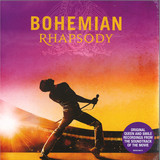
'Bohemian Rhapsody' Original Film Soundtrack
featuring previously unavailable QUEEN performances at Live Aid
and new versions of band classics heads for October 19 release.
Available on Virgin EMI (Universal) /Hollywood Records (USA)
For the first time ever audio tracks from Queen's legendary performance at Live Aid are being released as part of the soundtrack album to "Bohemian Rhapsody", 20th Century Fox and Regency Enterprises' forthcoming feature film celebrating the band, their music and their extraordinary lead singer Freddie Mercury. Recorded at the historic Wembley concert in July 1985, these Live Aid songs are among the rare gems and unheard versions from the band's rich catalogue.
Alongside the show-stopping Live Aid performances of Bohemian Rhapsody, Radio Ga Ga, Hammer To Fall and We Are The Champions, the album features other rare live tracks spanning Queen's entire career, new versions of old favourites, and a choice selection of the band's finest studio recordings. Among them are some of Queen's biggest hits, including eleven all-time anthems that reached Number One around the world. The track listing is being announced on 5 September 2018, which would have been Freddie's 72nd birthday.
"Bohemian Rhapsody" is scheduled to have its World Premiere in the UK on 23 October before opening across the world in early November. It stars Rami Malek as Freddie, Gwilym Lee as Brian May, Ben Hardy as Roger Taylor, Joe Mazzello as John Deacon, and Lucy Boynton as Freddie's lifelong companion Mary Austin. The soundtrack, featuring all-original Queen recordings and vocals, is released on CD and digital formats on 19 October.
Rockets Audio starts the saga with 4 finest minimal house trackers by Matheiu, Denis Kaznacheev and the master trio Wareika. A rocket (from Italian rocchetto "bobbin" is a missile, spacecraft, aircraft or other vehicle that obtains thrust from a rocket engine. Rocket engine exhaust is formed entirely from propellant carried within the rocket before use. Rocket engines work by action and reaction and push rockets forward simply by expelling their exhaust in the opposite direction at high speed, and can therefore work in the vacuum of space.
In fact, rockets work more efficiently in space than in an atmosphere. Multistage rockets are capable of attaining escape velocity from Earth and therefore can achieve unlimited maximum altitude. Compared with airbreathing engines, rockets are lightweight and powerful and capable of generating large accelerations. To control their flight,
rockets rely on momentum, airfoils, auxiliary reaction engines, gimballed thrust, momentum wheels, deflection of the exhaust stream, propellant flow, spin, and/or gravity.
Rockets for military and recreational uses date back to at least 13th century China. Significant scientific, interplanetary and industrial use did not occur until the 20th century, when rocketry was the enabling technology for the Space Age, including setting foot on the Earth's moon. Rockets are now used for fireworks, weaponry, ejection seats, launch vehicles for artificial satellites, human spaceflight, and space exploration.
SOUND rockets are the most common type of high power rocket, typically creating a high speed pitch by the wave of rythm with an oxilator. The stored delay can be a simple pressurized detune or a single filter delay that disassociates in the presence of a curve (EQ + FILTER ), two hats that spontaneously react on contact (RANDOMIZER), two snares that must be ignited to react, a solid combination of effects with oxidizer (solid GROOVE), or solid fuel with liquid oxidizer (hybrid FILTER BAND DELAY). Chemical rockets store a large amount of energy in an easily released form, and can be very dangerous. However, careful design, testing, construction and use minimizes risks.
Since the late 80s, Mudhoney - the Seattle-based foursome
whose muck-crusted version of rock, shot through with caustic
wit and battened down by a ferocious low end - has been a
high-pH tonic against the ludicrous and the insipid. Thirty years
later, the world is experiencing a particularly high-water
moment for both those ideals. Just in time, vocalist Mark Arm,
guitarist Steve Turner, bassist Guy Maddison and drummer Dan
Peters are back with 'Digital Garbage', a barbed-wire-trimmed
collection of sonic brickbats.
Arm's raw yawp and his bandmates' long-honed chemistry
make 'Digital Garbage' an ideal release valve for the 2018
pressure cooker. 'My sense of humor is dark, and these are
dark times,' says Arm. 'I suppose it's only getting darker.'
'I would've really just loved to write songs about just hanging
out on the beach, and going on a nice vacation,' says Arm.
'But, you know, that probably doesn't make for great rock.'
Mudhoney, however, know what does make great rock - and
the riffs and fury of 'Digital Garbage' will stand the test of time,
even if the particulars fade away. 'I've tried to keep things
somewhat universal, so that this album doesn't just seem like
of this time - hopefully some of this stuff will go away,' Arm
laughs. 'You don't want to say in the future, 'Hey, those lyrics
are still relevant. Great!''
Mudhoney will be touring Europe in 2018.
CD in die-cut gatefold digipak with custom dust sleeve. LP in
die-cut gatefold jacket with custom dust sleeve and digital
download coupon. Cassette in four-panel J-card in clear case.
Digital download album.
- A1: Debora
- A2: One Inch Rock
- A3: Ride A White Swan
- A4: Cosmic Dancer
- A5: Life's A Gas
- A6: Hot Love
- B1: Get It On
- B2: Jeepster
- B3: Telegram Sam
- B4: Metal Guru
- B5: Children Of The Revolution
- B6: Solid Gold Easy Action
- C1: 20Th Century Boy
- C2: The Groover
- C3: Truck On (Tyke)
- C4: Teenage Dream
- C5: Till Dawn
- C6: Light Of Love
- D1: New York City
- D2: Dreamy Lady
- D3: London Boys
- D4: I Love To Boogie
- D5: The Soul Of My Suit
- D6: Celebrate Summer
T. Rex - Gold brings together the Greatest Hits of Marc Bolan & T. Rex on 2LPs.
2x 180G Heavyweight LPs with Original Artwork housing the Very Best of Marc Bolan & T. Rex.
24 Classic Tracks including Get It On, Metal Guru, Hot Love, Children Of The Revolution,
Ride A White Swan, Telegram Sam, 20th Century Boy, & Cosmic Dancer.
needs is a not-for-profit record label & collective lovingly curated by Bobby Pleasure. We believe in people. The concept of the label is to use music as a medium to spread love, unity and the idea of giving back. Promoting harmony and togetherness rather than isolation and estrangement, each release and accompanying event will act as a support stream to various issues within society such as mental health, homelessness and equality. For the first release we have tracks from Hubie Davison, Johannes Albert, DJ Swagger and Bobby Pleasure. Four artists from different countries of the world who all have the needs factor, and have very kindly donated their music to the dancedloor.
- A1: 20Th Century Fox Dub
- A2: Enter The Dragon Dub
- A3: Shaft Dub
- A4: Coffy Is The Color Dub
- A5: Love Theme From The Godfather Dub
- A6: The Good, The Bad & The Ugly Dub
- B1: T Stands For Trouble Dub
- B2: Condor Dub!
- B3: Psycho Dub
- B4: The Imperial March Dub
- B5: Close Encounters Of Third Kind Dub
- B6: Tstands For Trouble Dub Version
Thomas Blanchot, 40 years old percussionist and drummer, started his production structure Mato Production in 2001, where he collaborated and directed for many projects.
Composer, music publisher and producer of music for TV, advertising, films and records, he also began a career as reggae producer since 2006, under the name "MATO". Since then he's released music through various projects concepts, coming out through labels such as Makasound, EDR Records or Big Singles. In the meantime he developed a real trademark: taking over classics French, Hip-Hop, or Pop song, into roots reggae-dub new versions.
Besides since 2010, Mato has built a solid reputation thanks to his hot remixes of Hip-Hop classics on Stix Records. And in 2014, he presented Homework Dub, giving his own vision of the multiplatinum classic album by Daft Punk, quickly acclaimed internationally as a true performance.
Today, Mato is back with another target for his special skills as a tailor of reggae music, this time focusing on classic musical themes from original soundtracks. Imagine if Lalo Schiffrin, Nino Rota, Gorgio Moroder, Ennio Morricone or John Williams had been blunted at Lee 'Scratch' Perry's Black Ark studio... there you go, this is Hollywoo Dub!!
- 1: Uptown Top Ranking With Eva Lazarus
- 2: Gideon Boot With General Levy
- 3: Session Haffi Cork With Mr Williamz
- 4: Indian Sun With Biga Ranx & Ruffian Rugged
- 5: Jump Around With Cheshire Cat
- 6: Rainbow Country With Cian Finn
- 7: Amsterdam (Flight Mode Mix) With Eva Lazarus
- 8: Bubble N Wine With Solo Banton
- 9: Searching (Stepper Mix) With Marina P
- 10: Got The Vibes With Charlie P
- 11: Ice Cream Gal With Gardna
- 12: Rise And Gravitate With Kenny Knots
Glasgow reggae collective Mungo’s HiFi celebrate 25 years of pulsating music with a follow-up to game-changing second studio album Soundsystem Champions. Released in 2008, the original Sound System Champions became an instant 21st century classic - thanks to its industrial strength basslines, blazing horns and lineup of scorching microphone talent. To commemorate a quarter century of rocking dances and building rhythms, Mungo’s have created Soundsystem Champions 2. They’ve lovingly assembled some of their biggest dubplates, previously only heard in a soundsystem situation, now available to the world. Fans of the first Sound System Champions will hear musical echoes in the new version. Irrepressible Junglist General Levy rides the Belly Ska riddim that kicked off the 2008 edition, with the militant Gideon Boot. Italy’s Marina P returns to the new record on the expansive Searching, as does Kenny Knots, closing the track list with heartfelt roots anthem Rise and Gravitate. For Soundsystem Champions 2, Mungo’s have invited many more voices from their epic journey. Bristol’s Eva Lazarus revisits Althea and Donna’s immortal Uptown Top Ranking. Reading’s Solo Banton turns his lyrical versatility to hip hop banger Bubble N Wine. The beautiful grainy tones of Ireland’s Cian Finn reimagine the Wailers’ Rainbow Country. With this historic sequel album, Mungo’s look back while going forward, the exclusive becomes the inclusive, and the Sound System comes to you!
- 01: Maanitus &Amp; Tšiižik
- 02: Markka
- 03: Melkutus
- 04: Letška
- 05: Kuuen Parin Hoirola
- 06: Brišatka
- 07: Tšiižik
- 08: Kirkonkellot
- 09: Kirkonkellot Korkea
- 10: Hoirola, 3 Parin
- 11: Lippa
- 12: Kyngäkiža
- 13: Ristakondra
- 14: Vanha Polkka
- 15: Viistoista
- 16: Vanha Valssi
- 17: Kiberä
- 18: Maanitus Kuokan Kanteleella
- 19: Tuuti Lasta Nukkumahe
Vinyl[22,65 €]
Death Is Not The End present a further volume of Arja Kastinen's eerie amalgamations of 110 year old wax cylinders with her own meticulously transcribed takes, this time focussing in on Armas Otto Väisänen's field recordings of kantele player Iivana Mišukka (b. 1861 d.1919).
"Ivana Mišukka (1861–1919) was one of the Karelian kantele players recorded by the folk music researcher Armas Otto Väisänen on wax cylinders in 1916 and 1917. In the early 20th century, the remote areas of Border Karelia were undergoing the final phase of a transformation in musical culture, with the ancient runo song tradition giving way to newer forms of music. This transition is reflected in Mišukka's repertoire and choice of instrument. The ancient small kantele, hollowed out of a single piece of wood, was already rare at the turn of the century. Mišukka's kantele was a new type of instrument with 26 strings, constructed of several parts, but he played it using the traditional plucking technique. Like other Border Karelian kantele players, his repertoire consisted of music rooted in runosong culture, as well as newer dances and songs from the east and west. Most of the recorded material falls into the latter category.
Ivan Bogdanov Mišukka was born out of wedlock in Suursara village, Suistamo, on 1 May 1861. He began playing the kantele at the age of five or six, quickly mastering the instrument. In adulthood, he was considered one of the area's best master players. Mišukka was landless for most of his life and lived in different parts of the Suistamo parish. His first wife, Tekla Markintytär, died in 1897 at the age of 40, and his second wife, Jevdokia Filipintytär Jeminen, died in 1907 at the age of 50. Seven children were born from the first marriage, two of whom died young. The third wife, Maria Ignatintytär Gurnan (Kuurnanen), was a well-known master of lamentations. Together with Maria, Iivana Mišukka worked as a tenant farmer in the village of Suursara. Mišukka suffered from rheumatism, which prevented him from participating in physical work like Maria. This was apparently partly the reason why Iivana Mišukka went to earn extra money by playing the kantele on gig trips. He often had other traditional artists from Suistamo as his travelling companions, such as the runosingers Konstantin Kuokka and Iivana Onoila. Iivana Mišukka died in Leppäsyrjä village, Suistamo, on 18 May 1919 at the age of 58, and his kantele was donated to Teppana Jänis.
Mišukka only used 14 of the 26 strings on his kantele, playing the same tunes either a fourth higher or lower. He tuned his kantele to the major scale using fifths, except for a low seventh scale degree on the upper strings, but not below the fundamental. Since he did not use the seventh note of the scale on the upper strings at all, he could use the major scale both lower and a fourth higher with this tuning. According to Mišukka, the sound of higher, or 'finer', strings is 'more beautiful', while that of lower ones is 'greater'. Among runosingers, the size of the thirds varied, ranging from major to minor to neutral. A similar phenomenon can be observed in kantele tunings, where the third, sixth and seventh scale degrees vary in a comparable way.
During a meeting, Väisänen suggested that Mišukka play the smaller kantele belonging to Konstantin Kuokka. The idea was to bring it closer to the horn to improve the recording quality. However, the kantele was completely out of tune, and now Mišukka tuned it to the Lydian scale (track 18).
Using the old plucking technique, Mišukka placed his right middle finger on the fundamental tone, his right index finger on the second scale degree, his left middle finger on the third scale degree and his left index finger on the fourth scale degree, and his right thumb on the fifth. The thumb also played the notes above the fifth note of the scale. As Mišukka remarked to Väisänen: 'Peigaloll' tuloo enemb ruadoa' (the thumb has to do more work). However, he did not use the seventh note of the scale on the upper strings at all. Below the fundamental note, he played the seventh and sixth notes of the scale with his right middle finger of and the fifth note of the scale with his right ring finger. This fifth scale degree below the fundamental is almost always used as a drone. Sometimes, when the melody required it, Mišukka, like other players, also varied the fingering. He would also occasionally strike the same string with the side of his fingernail after plucking it.
The wax cylinder recordings of Karelian kantele players are kept in the archives of the Finnish Literature Society in Helsinki, Finland. Copies were made of them onto reel-to-reel tapes in both the 1960s and 1980s. The 1960s copies are mono and the 1980s copies are stereo. However, not all kantele recordings from these decades have survived.
The sound of the kantele is difficult to hear in wax cylinder recordings due to its low volume, and it occasionally becomes completely obscured by noise. During the copying process, the cylinder sometimes rotates unevenly, resulting in breaks or jumps in the music. Additionally, the rotation speed of the cylinder in the copies does not correspond to the performance speed of the original music, which alters the pitch. However, since Väisänen's precise notes are available in the archive, it is possible to deduce the melodies, their speed, and the tuning level of the kantele in the recordings. Of the copies of the original recordings from the 1960s and 1980s, I have selected the one that best met the requirements of this publication and adjusted the speed of the recording to align with Väisänen's notes. To enhance the listening experience, I have replayed the songs, which now partly overlap the old recordings on this release."
— Arja Kastinen
- 01: Maanitus &Amp; Tšiižik
- 02: Markka
- 03: Melkutus
- 04: Letška
- 05: Kuuen Parin Hoirola
- 06: Brišatka
- 07: Tšiižik
- 08: Kirkonkellot
- 09: Kirkonkellot Korkea
- 10: Hoirola, 3 Parin
- 11: Lippa
- 12: Kyngäkiža
- 13: Ristakondra
- 14: Vanha Polkka
- 15: Viistoista
- 16: Vanha Valssi
- 17: Kiberä
- 18: Maanitus Kuokan Kanteleella
- 19: Tuuti Lasta Nukkumahe
Tape[16,39 €]
Death Is Not The End present a further volume of Arja Kastinen's eerie amalgamations of 110 year old wax cylinders with her own meticulously transcribed takes, this time focussing in on Armas Otto Väisänen's field recordings of kantele player Iivana Mišukka (b. 1861 d.1919).
"Ivana Mišukka (1861–1919) was one of the Karelian kantele players recorded by the folk music researcher Armas Otto Väisänen on wax cylinders in 1916 and 1917. In the early 20th century, the remote areas of Border Karelia were undergoing the final phase of a transformation in musical culture, with the ancient runo song tradition giving way to newer forms of music. This transition is reflected in Mišukka's repertoire and choice of instrument. The ancient small kantele, hollowed out of a single piece of wood, was already rare at the turn of the century. Mišukka's kantele was a new type of instrument with 26 strings, constructed of several parts, but he played it using the traditional plucking technique. Like other Border Karelian kantele players, his repertoire consisted of music rooted in runosong culture, as well as newer dances and songs from the east and west. Most of the recorded material falls into the latter category.
Ivan Bogdanov Mišukka was born out of wedlock in Suursara village, Suistamo, on 1 May 1861. He began playing the kantele at the age of five or six, quickly mastering the instrument. In adulthood, he was considered one of the area's best master players. Mišukka was landless for most of his life and lived in different parts of the Suistamo parish. His first wife, Tekla Markintytär, died in 1897 at the age of 40, and his second wife, Jevdokia Filipintytär Jeminen, died in 1907 at the age of 50. Seven children were born from the first marriage, two of whom died young. The third wife, Maria Ignatintytär Gurnan (Kuurnanen), was a well-known master of lamentations. Together with Maria, Iivana Mišukka worked as a tenant farmer in the village of Suursara. Mišukka suffered from rheumatism, which prevented him from participating in physical work like Maria. This was apparently partly the reason why Iivana Mišukka went to earn extra money by playing the kantele on gig trips. He often had other traditional artists from Suistamo as his travelling companions, such as the runosingers Konstantin Kuokka and Iivana Onoila. Iivana Mišukka died in Leppäsyrjä village, Suistamo, on 18 May 1919 at the age of 58, and his kantele was donated to Teppana Jänis.
Mišukka only used 14 of the 26 strings on his kantele, playing the same tunes either a fourth higher or lower. He tuned his kantele to the major scale using fifths, except for a low seventh scale degree on the upper strings, but not below the fundamental. Since he did not use the seventh note of the scale on the upper strings at all, he could use the major scale both lower and a fourth higher with this tuning. According to Mišukka, the sound of higher, or 'finer', strings is 'more beautiful', while that of lower ones is 'greater'. Among runosingers, the size of the thirds varied, ranging from major to minor to neutral. A similar phenomenon can be observed in kantele tunings, where the third, sixth and seventh scale degrees vary in a comparable way.
During a meeting, Väisänen suggested that Mišukka play the smaller kantele belonging to Konstantin Kuokka. The idea was to bring it closer to the horn to improve the recording quality. However, the kantele was completely out of tune, and now Mišukka tuned it to the Lydian scale (track 18).
Using the old plucking technique, Mišukka placed his right middle finger on the fundamental tone, his right index finger on the second scale degree, his left middle finger on the third scale degree and his left index finger on the fourth scale degree, and his right thumb on the fifth. The thumb also played the notes above the fifth note of the scale. As Mišukka remarked to Väisänen: 'Peigaloll' tuloo enemb ruadoa' (the thumb has to do more work). However, he did not use the seventh note of the scale on the upper strings at all. Below the fundamental note, he played the seventh and sixth notes of the scale with his right middle finger of and the fifth note of the scale with his right ring finger. This fifth scale degree below the fundamental is almost always used as a drone. Sometimes, when the melody required it, Mišukka, like other players, also varied the fingering. He would also occasionally strike the same string with the side of his fingernail after plucking it.
The wax cylinder recordings of Karelian kantele players are kept in the archives of the Finnish Literature Society in Helsinki, Finland. Copies were made of them onto reel-to-reel tapes in both the 1960s and 1980s. The 1960s copies are mono and the 1980s copies are stereo. However, not all kantele recordings from these decades have survived.
The sound of the kantele is difficult to hear in wax cylinder recordings due to its low volume, and it occasionally becomes completely obscured by noise. During the copying process, the cylinder sometimes rotates unevenly, resulting in breaks or jumps in the music. Additionally, the rotation speed of the cylinder in the copies does not correspond to the performance speed of the original music, which alters the pitch. However, since Väisänen's precise notes are available in the archive, it is possible to deduce the melodies, their speed, and the tuning level of the kantele in the recordings. Of the copies of the original recordings from the 1960s and 1980s, I have selected the one that best met the requirements of this publication and adjusted the speed of the recording to align with Väisänen's notes. To enhance the listening experience, I have replayed the songs, which now partly overlap the old recordings on this release."
— Arja Kastinen
Esbe returns to Cold Busted for a phenomenal new four-track EP, Sunset Girl. With previous releases on Dusted Wax Kingdom and Cult Classic, as well as his acclaimed Bloomsday and Late Night Headphones albums for Cold Busted, the Los Angeles-based multi-genre beat-maker is riding a wave. Sunset Girl is another exciting moment in Esbe's musical progression. The release starts quietly with the gentle, muted piano chords of "Special." A sparse hip-hop beat and subdued melodic layers round out the tune, cutting away to reveal a lonesome vocoder vocal. "Again" is as close as Esbe gets to a pop song, as a carefree male vocal and twinkling pianos ride over a crisp, solid rhythm track. More delights await on "Sunset Girl" with its simple piano line, reverby percussion hits, distant sax solo, and splashes of vocal collide in a sonic daydream. "I Want Love" closes things out on a vintage flavor, with echoes of a mid-century school dance reverberating into a modern day beat battle. Potent vibes all around.
Plastico makes a striking entrance with a release that commands attention.
Jojo Hofmockel acts as the bridge between the electro sounds of the mid-1990s and the early minimal wave of the 2000s. The result is a strong, highly personal release, showcasing clear artistic vision and fresh, distinctive creative ideas. The tracks, composed between 2004 and 2006, carry a sound unmistakably rooted in the early years of the century.
- 01: We Are The Biobots
- 02: Skratching Terminators (Feat. Dj D-Styles &Amp; Prime Cuts)
- 03: Coffeecuts (Feat. Dj Ben, Krootki &Amp; Pan Jaras)
- 04: Electrode (Feat. Dj Flip Flop &Amp; Prolifix)
- 05: Priority (Feat. Dj Tigerstyle &Amp; Dj Iq)
- 06: Supersonics (Feat. Dj Melo-D)
- 07: Jam Of A Borg (Feat. Daniel Drumz)
- 08: Cybots Patrol (Feat. Pan Jaras, Miyajima &Amp; Ken One)
- 09: Digital Human
- 10: 8 Bit Overheat (Feat. Mr Krime)
There are two versions of the vinyl edition: classic 140g black record or limited (Universe Edition) 140g black + 7" black vinyl with two bonus tracks.
WE ARE THE BIOBOTS is an album by Michal Baj (DJ Eprom), who has ties to Silesia. It will be released on 21th January 2026, by the legendary Polish label JuNouMi Records (est. 2002). WE ARE THE BIOBOTS is an album that not only talks about technological progress, but also touches on the digitization of human consciousness in the 21st century. Although it discusses the dangers of AI development, no artificial intelligence was used in its creation.
The album features legendary hip hop DJs, including the art of scratching. The album will feature the most outstanding DJs from Poland, England, the USA, and Japan. Thanks to this, the album has a chance to gain a broader, international context. Eprom's professional experience to date has allowed him to bring together such a wide range of artists and bring them together on the album, including:
DJ D-Styles – a legend of scratching from the USA. A pioneer of the genre. Member of groups such as The Beat Junkies and Invisibl Skratch Piklz, creator of many scratching techniques still used today.
DJ Prime Cuts – founder of the legendary Scratch Perverts from London, multiple world champion and creator of unique scratching techniques.
DJ Flip Flop, Prolifix – representatives of the DJ community from the US coast.
DJ Tigerstyle – a leading representative of the DJ community in England, multiple world champion in scratching.
DJ IQ – the most successful scratching champion in the world.
DJ Miyajima – the unrivaled master and creator of the Japanese school of scratching.
DJ Melo-d – co-founder of The Beat Junkies collective, multiple DJ champion hosting a legendary show on Radio HOT 97 in the US.
DJ Ben, Krootki – co-founders of the Modulators group from Poland, World Champions in scratching.
Daniel Drumz – Polish DJ and music producer known worldwide.
Mr Krime – pioneer of DJing and turntablism in Poland.
Michal Baj is a multi-talented musician, artist, and music producer born in Jastrzebie-Zdroj, as well as the owner of the analog Eprom Sounds Studio, where tracks based on mixing and mastering are produced and gain worldwide recognition.
The inspiration for the album is Eprom's connection to Silesia. His work at the KWK Borynia mine, surrounded by heavy equipment and mining technology, became a direct inspiration for creating a musical story about people, machines, as well as the directions of technological development and the impact they have on society.
The album is released by JuNouMi Records, a label specializing in vinyl records, founded in 2002. Your wax supplier.
Black Truffle is pleased to present Radis, the first recording by the Oslo-based trio of Andrea Giordano (voice and organetto), Kalle Moberg (accordion) and Jo David Meyer Lysne (guitar and snare drum). Now based in Norway, Giordano is a native of Cuneo, in the Piedmont region in the north-west of Italy and her exploration of the Piedmontese language provides the starting point and conceptual anchor of the trio improvisations heard on Radis, which make use of the words of 20th century Piedmontese poets Nino Costa, Bianca Dorato and Oreste Gallina. As the musicians explain, the project is an attempt to preserve the beauty and singularity of a language at risk of extinction.
Fittingly, the first sound we hear on the opening piece ‘Fiorìa’ is Giordano’s unaccompanied voice. She sings a poem from Oreste Gallina as a kind of floating cadenza, the accompanying silence sensitizing the listener to the pellucid quality of Giordano’s voice and the unique sound of the Piedmontese language. The voice dies away and into the silence swells a single tone, sounded by Moberg’s accordion and—special guest on this opening piece—the alto saxophone of Mario Gabola. Extended techniques and preparations create unexpected timbres from the acoustic instruments: Gabola’s saxophone is augmented with tin cans and springs and Moberg’s unorthodox techniques allow the accordion to generate wheezing, buzzing textures and patterns of microtonal beating. Giordano’s voice returns, picking up the thread of the languorous opening melody, coexisting for a while with the shifting drone before the piece takes an unexpected yet organic left-turn into a delicate saxophone solo of sorts.
Recorded in several locations across Italy and Norway over the course of three years, Radis documents an ensemble who have developed both a distinctive sound-world and a remarkably sensitive group dynamic. Moving from folkish duets between accordion and Giordano’s organetto (the small accordion used in Italian folk music) to episodes of metallic guitar scraping from Meyer Lysne, the music is both quietly contemplative and gently chaotic. Ensemble roles shift with disarming ease. If on ‘Profij dëspers’ Meyer Lysne’s prepared guitar adds a haywire noise element to a lyrical episode of organetto and accordion, the next piece, ‘D’antorn a lor’, is grounded in chiming guitar chords of stunning beauty; once Giordano’s joins, the result calls up the most spacious moments of Maria Monti’s Il Bestiario. Throughout the seven pieces, the trio explore countless possibilities of group interaction and the margin between conventional euphony and pure abstraction: at times the voice floats against silence or seems almost disconnected from the gentle clatter of the instruments (sometimes reminiscent of Nikiforas Rotas’ haunting settings of Cavafy), while at other points the instruments touch on conventional harmonic accompaniment. What is perhaps most striking of all is the way that voice and instruments relate to each other, the extended technique reframing the voice as a kind of abstract sound object, while the melodic beauty of Giordano’s voice lends a contemplative, almost melancholic air to the wheezing and scraping of accordion and guitar.
Captured in gorgeously intimate recordings, Jim O’Rourke’s careful and beautifully spacious mix highlights the wealth of textural detail in each element. Accompanied by notes, session photos and the text of the Piedmontese poems, Radis is a work of stunning beauty that demonstrates the vitality of exploratory music in Norway today.
- A1: Hung Up
- A2: Get Together
- A3: Sorry
- B1: Future Lovers
- B2: I Love New York
- B3: Let It Will Be
- C1: Forbidden Love
- C2: Jump
- C3: How High
- D1: Isaac
- D2: Push
- D3: Like It Or Not
Madonna’s Confessions on a Dance Floor is not only one of the most celebrated albums of the 21st century but continues to be an influential reference within pop and dance music. Originally released in 2005, the record features 12 seamless club tracks including the global hits “Hung Up,” “Sorry,” “Jump” and the deep cut favorite “Get Together.” For the first time, the full continuous mix has been pressed on 2LP silver vinyl and carefully adapted to its groundbreaking technical specifications, while preserving the album's club flow as Madonna originally intended. The dance floor is calling, no time to hesitate.
Some tracks are just too good to only feature on a compilation, even if it is a significant and celebratory set like Leng’s 15 Year anniversary album from late last year. That’s certainly the case with Payfone’s brilliantly atmospheric ‘Dime Algo’, a seductive slab of slow-motion Balearic disco featuring ‘I Feel You’ vocalist Kyd Nereida, along with Sofi Hardoy and Ludmila Rodriguez.
For this single release Black Science Orchestra, one of Britain’s most storied production collectives, deliver some truly exceptional remixes. Initially making their name with a series of sensational house jams on Junior Boy’s Own across the 1990s, BSO became renowned for the quality of their remixes as well as an ever-evolving trademark sound that put soul, organic instrumentation and references to dance music’s rich and varied past front and centre.
Comprised of Rob Mello, Ashley Beedle and Darren Morris, Black Science Orchestra work has been rare in recent years but here they deliver some magical takes on ‘Dime Algo’, blending Payfone’s original instrumentation with their own low-tempo magic. The Vocal Mix begins with sparse drums, Kraftwerkian bleeps and heavy sub-bass, building the action in waves with 303 lines, electro synths, warm chords and Nereida’s superb lead vocals combining to re-frame ‘Dime Algo’ as a deep, far-sighted slice of chugging 21st century acid-disco. The Dub Mix stretches things out with effects-laden instrumentation, acid lines and vocal snippets. Deeper and woozier, with more prominent use of the trio’s 303 trickery and Payfone’s superb original elements, it’s a heady, intoxicating and loved-up interpretation that subtly gains intensity throughout its seven-minute duration.
- Ricardo Villalobos - I Have Forgotten Featuring Tara Middleton (Ricardo Villalobos Earlier Than Late Remix 2)
- Underground Resistance – The Outer Darkness Featuring Saul Williams
- Baris K – Somebody Else’s Idea Featuring Abiodun Oyewole (Baris K & Mini Bashekim Remix)
From Detroit’s techno resistance to Berlin’s elastic minimalism, Lusaka’s ancestral futurism to Chicago’s house communion, When There Is No Sun is a recording project, uniting visionary electronic music producers to reimagine the universe of Sun Ra. One of the most radical musical pioneers of the 20th century, Sun Ra used jazz, electronics, poetry, and performance to expand the possibilities of sound, identity, and imagination. Commissioned by Omni Sound and curated by Ricardo Villalobos, the series brings together Underground Resistance, Chez Damier & Ben Vedren, Calibre, A Guy Called Gerald, She Spells Doom, Barış K, and Ricardo Villalobos himself. Drawing from Omni Sound’s recordings of Living Sky by the Sun Ra Arkestra and My Words Are Music of Sun Ra’s poetry, the producers pull fragments of sound and text into their own creative orbits, passing through the portal that Sun Ra opened into a realm where the impossible is possible. Saul Williams, Tunde Adebimpe, Mahogany L. Browne, Abiodun Oyewole, Anthony Joseph and Tara Middleton are the featured voices that turn rhyme into rhythm and revelation into resistance Rooted in deep reverence for Sun Ra’s legacy, yet reaching forward as a living, generative force, When There Is No Sun is not a tribute but a continuum, balancing the pulse of electronic music with the spirit of experimentation, embodying Sun Ra’s promise that ‘there are other worlds’ if you are willing to see them.
- Calibre – Chopin Featuring Sun Ra Arkestra (Calibre Remix)
- Chez Damier & Ben Vedren – The Endless Realm Featuring Tunde Adebimpe (H2H Mix)
- She Spells Doom – Somebody Else’s Idea Featuring Sun Ra Arkestra (She Spells Doom Remix)
From Detroit’s techno resistance to Berlin’s elastic minimalism, Lusaka’s ancestral futurism to Chicago’s house communion, When There Is No Sun is a recording project, uniting visionary electronic music producers to reimagine the universe of Sun Ra. One of the most radical musical pioneers of the 20th century, Sun Ra used jazz, electronics, poetry, and performance to expand the possibilities of sound, identity, and imagination. Commissioned by Omni Sound and curated by Ricardo Villalobos, the series brings together Underground Resistance, Chez Damier & Ben Vedren, Calibre, A Guy Called Gerald, She Spells Doom, Barış K, and Ricardo Villalobos himself. Drawing from Omni Sound’s recordings of Living Sky by the Sun Ra Arkestra and My Words Are Music of Sun Ra’s poetry, the producers pull fragments of sound and text into their own creative orbits, passing through the portal that Sun Ra opened into a realm where the impossible is possible. Saul Williams, Tunde Adebimpe, Mahogany L. Browne, Abiodun Oyewole, Anthony Joseph and Tara Middleton are the featured voices that turn rhyme into rhythm and revelation into resistance Rooted in deep reverence for Sun Ra’s legacy, yet reaching forward as a living, generative force, When There Is No Sun is not a tribute but a continuum, balancing the pulse of electronic music with the spirit of experimentation, embodying Sun Ra’s promise that ‘there are other worlds’ if you are willing to see them.
- Underground Resistance - When Angels Speak Featuring Saul Williams
- She Spells Doom - Portrait Of The Living Sky Featuring Sun Ra Arkestra (She Spells Doom Remix)
- Chez Damier & Ben Vedren- The Three Dimensions Of Air Featuring Anthony Joseph (H2H Kora Mix)
- A Guy Called Gerald - Message To Black Youth Featuring Mahogany L.browne (Gerald Rework)
- Ricardo Villalobos - I Have Forgotten Featuring Tara Middleton (Ricardo Villalobos Earlier Than Late Remix 1)
- Calibre - Chopin Featuring Sun Ra Arkestra (Calibre Ambient Remix)
From Detroit’s techno resistance to Berlin’s elastic minimalism, Lusaka’s ancestral futurism to Chicago’s house communion, When There Is No Sun is a recording project, uniting visionary electronic music producers to reimagine the universe of Sun Ra. One of the most radical musical pioneers of the 20th century, Sun Ra used jazz, electronics, poetry, and performance to expand the possibilities of sound, identity, and imagination. Commissioned by Omni Sound and curated by Ricardo Villalobos, the series brings together Underground Resistance, Chez Damier & Ben Vedren, Calibre, A Guy Called Gerald, She Spells Doom, Barış K, and Ricardo Villalobos himself. Drawing from Omni Sound’s recordings of Living Sky by the Sun Ra Arkestra and My Words Are Music of Sun Ra’s poetry, the producers pull fragments of sound and text into their own creative orbits, passing through the portal that Sun Ra opened into a realm where the impossible is possible. Saul Williams, Tunde Adebimpe, Mahogany L. Browne, Abiodun Oyewole, Anthony Joseph and Tara Middleton are the featured voices that turn rhyme into rhythm and revelation into resistance Rooted in deep reverence for Sun Ra’s legacy, yet reaching forward as a living, generative force, When There Is No Sun is not a tribute but a continuum, balancing the pulse of electronic music with the spirit of experimentation, embodying Sun Ra’s promise that ‘there are other worlds’ if you are willing to see them.
- A1: Procession
- A2: Father To Son
- A3: White Queen (As It Began)
- A4: Some Day One Day
- A5: The Loser In The End
- B1: Ogre Battle
- B2: The Fairy Feller's Master-Stroke
- B3: Nevermore
- B4: The March Of The Black Queen
- B5: Funny How Love Is
- B6: Seven Seas Of Rhye
Over half a century after it set them on the path to superstardom, Queen’s regal second album, Queen II, has been remixed and remastered.
Arguably the heaviest Queen album, Queen II was originally released in 1974 and widely heralded as their first true masterpiece. With Brian May and Roger Taylor as executive producers, the album has been stunningly mixed by the team of Justin Shirley-Smith, Joshua J Macrae and Kris Fredriksson.
- Mission To Mars
- Long Lost Sunday
- One Day Hi One Day Lo
- I'll Let You In
Limited Green / Blue coloured vinyl[26,85 €]
Multi-coloured vinyl LP or CD. For fans of Nektar, Van Der Graaf Generator and Progressive Rock! Formed in Germany in 1969, Nektar favoured extended compositions and concept albums over the constraints of pop. They were among the progenitors of the progressive rock movement of the 1970s as well as the jam-band scene that arose in the late 1990s. Their sound travelled well to the States, where they enjoyed Top 40 success with "A Tab in the Ocean" (1972) and "Remember the Future" (1973). Nearly 20 albums and a half-century later, the band's artistic and personal charisma has earned them masses of devoted fans. Now Nektar is broadening their horizons with the first in the "Mission To Mars" trilogy. Their first to feature new drummer Jay Dittamo, alongside longtime members Ryche Chlanda (guitars),Kendall Scott(keyboards), and original members Derek "Mo" Moore(bass) and Mick Brockett (visual environment).From the rocking title track "Mission To Mars" to the beautiful "I'll Let You In", Nektar covers all of the prog rock bases while venturing into some new melodic territories. Track listing: Mission To Mars; Long Lost Sunday; One Day Hi One Day Lo; I'll Let You In
- Sing Like Little Birds Sing
- What I See Up On The Roof
- No Pasaran!
- A Monochrome Set
- You're Leaving
- Indian Summer
- The Fishing Song
- See What The Morning Brings
- Days Of The Revolution
- Art School
- Trouble Talking
- Dream On
- Take Me To The Dance Floor
- Jaine
- In Our Time
- One More Day
Blue Vinyl[35,50 €]
Campbell Owens, Douglas MacIntyre and Mick Slaven worked on the album alongside founding members Robert 'Bobby Bluebell' Hodgens, David McCluskey and Ken McCluskey to create the new collection of tracks. The result is a stunning body of work; rich, melodic, thoughtful and infectious. First single No Pasaran! premiered on BBC Radio Scotland and in The Herald in September 2025. The Bluebells rose to fame in the 1980s as jangle-pop pioneers of the Sound of Young Scotland era with their three hits Young at Heart, Cath and I'm Falling.
Despite only releasing one readily-available album during their initial run (Sisters, 1984) the band have remained as one of Scotland's most beloved bands, currently boasting over 144,000 monthly Spotify listeners. The band enjoyed a post-breakup revival in 1993 after a Volkswagen advert featured Young at Heart, pushing the single to No.1 for 4 weeks. They have since reunited over the years, to play various festival slots and develop new material. In 2023, the band released The Bluebells In The 21st Century, their first LP in decades. In 2025, The Bluebells played Glastonbury.
Campbell Owens, Douglas MacIntyre and Mick Slaven worked on the album alongside founding members Robert 'Bobby Bluebell' Hodgens, David McCluskey and Ken McCluskey to create the new collection of tracks. The result is a stunning body of work; rich, melodic, thoughtful and infectious. First single No Pasaran! premiered on BBC Radio Scotland and in The Herald in September 2025. The Bluebells rose to fame in the 1980s as jangle-pop pioneers of the Sound of Young Scotland era with their three hits Young at Heart, Cath and I'm Falling.
Despite only releasing one readily-available album during their initial run (Sisters, 1984) the band have remained as one of Scotland's most beloved bands, currently boasting over 144,000 monthly Spotify listeners. The band enjoyed a post-breakup revival in 1993 after a Volkswagen advert featured Young at Heart, pushing the single to No.1 for 4 weeks. They have since reunited over the years, to play various festival slots and develop new material. In 2023, the band released The Bluebells In The 21st Century, their first LP in decades. In 2025, The Bluebells played Glastonbury.
- A1: My Old Cortina
- A2: My Favourite Song
- A3: Blue Moon
- A4: Beep Beep Love
- A5: Up To Date
- A6: Ramona
- A7: Mexican Radio E
- A8: (Gimme A) Break
- B1: Very Nice
- B2: Cats Hiss (The Buddy Odor Stop)
- B3: Buddy Odor Is A Gas! (The Buddy Odor Stop)
- B4: Teardrops And Two Broken Hearts (The Buddy Odor Stop)
- B5: Watch Your Boy!
- B6: It's Too Late
- B7: Happily Unemployed
- B8: Sucker Of The Century
- C1: Holland Now
- C2: A Girl Like You
- C3: Sleeping Bag
- C4: I Don't Love You
- C5: Hey Girl
- C6: Real Teeth Are Out
- C7: I I I (Ay Ay Ay)
- D1: Rhythmisaconstantbeat
- D2: If Beauty Is
- D3: Disco Really Made It!
- D4: I Don't Know
- D5: Rock 'N Roll
- D6: I Shot My Manager
- D7: She Was Pretty (Normal Then)
Step back into the irresistible world of Dutch pop legends Gruppo Sportivo with Vinylly! (Selected Songs '78-'91). a vibrant, limitededition celebration of the band's most iconic tracks. This double LP is the ultimate collector's item for fans of clever pop, quirky humor, and timeless hooks.
Featuring standout songs like ''Beep Beep Love,'' ''My Old Cortina,'' ''Up to Date,'' and cult favorites from The Buddy Odor Stop, Vinylly! captures the band's golden era with crisp remastered sound and a beautifully designed sleeve and 4-page booklet. A complete overview of a group that defined an era with their playful lyrics, sharp arrangements, and unmistakable charm.
The band is touring throughout 2026 to celebrate the 50th birthday of Gruppo Sportivo.
High Cube is the beat-focused brainchild of Brian Foote (Peak Oil, Leech) and Paul Dickow (Strategy, Community Library), two low-key legends of the American experimental underground. After some 30-odd years of making music separately and together, Foote and Dickow are collaborating in earnest for the first time as a duo. For this debut, the pair enforced a simple, stringent set of rules: five instruments, a one-hour timer, and a total ban on overthinking.
The result is a record that is the sound of two old friends unplugging the usual levers and letting the "accident" of their chemistry take the wheel. It is drier, sparser, and decidedly "chunky"—a fictional band stepping into a suit to drive around for a while. It is neither dance nor chill-out, but a moody, complex trajectory defined not by the gear used to make it, but by the narrative mood it compels.
"Volcano Snail” starts things off in a disheveled shuffle, locking into gear with blurred and bubbling effluence. The shimmering dimness is lit low, with a woozy gait that recalls the headiest highs and luminescent lows of Jan Jelinek. “Underwater Welder” is a foggy, neon-lit cruise of skittering low-ends suspended in a permanent fall of color, while “A Dragon’s Treasure is its Soul” offers blown-apart, low-end city pop fragmented into an array of rhythmic detritus. Chordal textures hover in the air as a percussive loop takes its beguiling and frolicking shape.
B-side opener “Yonaguni” shapeshifts in real time, drifting with the grace of a glacier before bobbing in a frigid pool of vibrating clatter, static, and synth stabs. “Ofid+wor” offers a tried and true blitz of braindance, nodding to an endless list of 20th and 21st-century electronic body music. Buoyant closer “Mother of Thousands” holds a gravity-defying tenderness, pirouetting on a breeze with the elegance of effervescent longing. Woven together, the six extended tracks of High Cube are tethered to nothing but the ether—a giant sonic leap of peripheral absurdity from two artists with a lifetime of shared rhythm.
- A1: Another World
- A2: Fleeting
- A3: I’m Bored
- A4: Easy Man
- A5: Killincs
- A6: My Sister’s Loom
- B1: Mountain Song
- B2: Belljar Convenience
- B3: Fated To Pretend
- B4: Waiting Game
- B5: A Light
A Profound Non-Event, the debut album by Sydney-based three piece Daily Toll, comprises 11 songs traversing three years of forged friendships, collaborative experimentation and a shared love of growing through words and song.
Those attuned to the ever-vibrant Australian underground may already be well familiar with Daily Toll, their consistent live presence since their inception in 2021 embroidered by a handful of (mostly) home-recorded, (mostly) digital self-releases that have steadily accumulated an appreciative following. Initially the project of self taught musician, poet & artist Kata Szász-Komlós(they/them) and Jasper Craig-Adams(he/him), and expended to a three piece with the more recent addition of friend Tom Stephens(he/him), Daily Toll represents the union of three unique creative dispositions, of relationships blooming through the push and pull of creative practice. Mapping the band’s existence through their recorded output is to bear witness to the flux of three people learning to respond to one another and gently ossify into a collective vision that at once calls to mind folk song intimacy, post-punk dynamics and the artful poeticism of an adjacent Flying Nun legacy.
If those earlier recordings reflect a band imagining themselves into being in real time, A Profound Non-Event observes a clear shift in both conviction and approach. Recorded in just three days with Alex Bennett at the purely analogue Sound Recordings studio in Castlemaine and holing up at night in the century old cottage situated beside the studio, sheltering from the late-June wind and rain within walls littered with instruments and microphones, lighting fires to stay warm. Kata describes the experience as defined by “candle light and creative camaraderie”, an idyllic account of a collection of songs that glide with an undeniably warm, easy charm, evidenced in particular in the record’s second half as the tone turns increasingly introspective, the very sound of a cold evening’s drift into night. When contrasted with the moody swirl and sing-song bounce of the opening trio of tracks, there’s clear evidence of a band not simply in the process of becoming, but committed to finding their truth in that process.
Still, if Daily Toll display a reluctance to be wholly defined, then album centerpiece ‘Killincs‘ (positioned in the middle for a reason) might just be their Rosetta Stone. A verbose rumination on unsettled feelings of isolation and longing, exploring the challenges in making peace with one's decisions amidst the uncertainty of an often harsh world and the realisation that some things remain best unresolved - “I have the keys still, but I’ve buried the path”.
- Kofán – El Bejuco Umbilical
- Ensamble Juyungo – Chimborazo
- Llaquiclla – Agua Larga
- Asunción Quiñonez – Bambuco La Katanga
- Juan Luis Restrepo – A Saravino
- Juan Cayambe – Negra Muele Caña
- Rosa Huila – Andarele
- Ensamble Juyungo – Amanece
- Caynamanda Cunangaman – Candela Y Ron
- Llaquiclla – Ceremonia Matrimonial
- Ensamble Juyungo – Patagoré
- Papá Roncón – Sanjuanito Chachi
- Ensamble Juyungo – Llacta Pura
- Llaquiclla – Ritual Emberá
- Osvaldo Lindberg Valencia – Torbellino
- Raúl García Zárate – Kasilla Shungulla
- Ensamble Juyungo – Tren Con Ritmo De Caramba
- Ensamble Juyungo – Caramba Con Ritmo De Tren
- Llaquiclla – El Viaje Del Yagé
- Ensamble Juyungo – Toquesito
- Llaquiclla – Galapago
- Llaquiclla – Carambalante
‘Since the 16th century, the Ecuadorian province of Esmeraldas has been home to a unique Afro-Indigenous culture originating in the integration of the Indigenous Chachi and Nigua peoples with African Maroon communities. Juyungo documents significant Esmeraldan artists and bands playing the Afro-Ecuadorian folklore of the province, as well as including some older field recordings. Based mostly on the marimba, whose origins lie partly in the African balafon, partly in Indigenous percussion instruments, the music is laced with call and response chants, ambient insect and bird noise, the filigree finger-styles of the Andean guitar tradition and the panpipes of the mountains. This is resonant insider roots music at its headiest — the mystic revelation of Esmeraldas, gully deep and lustral.’
- Francis Gooding, The Wire.
The fifth in our series of LPs compiling classic music from Ecuador. Customary Honest Jons runnings: a beautiful gatefold sleeve; superior pressing, with vivid, intimate sound; full-size, sixteen-page booklet, in colour throughout, with detailed, fascinating, bi-lingual notes, and stunning photographs.
The music is transfixing, magical; not like anything else. From start to finish, this album is continuously, profoundly immersive; a kind of journeying, trippy meditation about slavery and cultural resistance, identity and mix, places and spaces, futures and pasts. It’s inscrutable to net-surfing, algorithms, Shuffle. But for a taste try the insurgent marimba roller Agua Largo, jet-propelled by Rosa Huila’s rapturous blend of African spiritualist and Christian chant. ‘Healing music,’ Zakia called it on Gilles Peterson’s BBC show recently. And the ravishing pasillo Kasilla Shungulla — ‘calm your heart’ in the Quichua language — a duet between the Peruvian master-guitarist Raúl García Zárate and viola da gamba by Juan Luis Restrepo from Medellin, recorded in a baroque church in Buzbanza, Colombia.
- A1: Santrax - Come & Get It
- A2: Marini - Let’s Get It On
- A3: Time Unlimited - Back Fire
- B1: Venus Dodson - Shoot Me (With Your Love) (With Your Love)
- B2: Wings Of Light - He Loves You
- B3: Ship Of The Desert - Count Of Monte Thisgo
- B4: Frank Hatchett Dance Explosion - Super Hero
- C1: Cherish - For You
- C2: Jaze - Wanna Get Down With You
- C3: The 21St Century - One Of These Days
- C4: Porno Disco - Go Down Moses
- D1: Cousin Ice - Catch Your Glow (Feat Zack Sanders)
- D2: Boobie Knight - Juicy Fruit My Love
- D3: John Lamkin - Ticket
Represss!
Z Records continues its commitment to unearthing the obscure and
long forgotten tracks from the last 40 years through the ever-popular
Under The Influence series. Following on from Red Greg, Nick The
Record, Sean P, Faze Action, and last years Alena Arpels. It’s now the
turn of one of the scene’s most impressive collectors & DJs; Rahaan
Hailing from Chicago his love affair with muzik started in the late 70’s early 80’s, listening to muzik on the radio combined with his mom and dad playing their records every weekend. In the early 80’s on the South side of Chicago, he started hearing something a bit different, what they called ‘house muzik’. A combination of Disco, Jazz, Soul Funk, New Wave and Italo Disco. Here Rahaan digs deep into his impressive record collection that he has collected, built up and crafted over his many years of travelling, networking and DJin to showcase 22 of his finest and rarest cuts. Many of the tracks on the album would cost hundreds and that’s if you were even able to find the originals! As always with ZR compilations a lot of time and effort has been spent on creating these masters from the original vinyl, cleaning them up, removing all the clicks and pops resulting in the cleanest sounding copy possible.
Repress!
Kirk Degiorgio’s influence on electronic music cannot be overstated, having been responsible for producing some of the most emotive and soulful machine music dating right back to the early 90’s. As a leading figure in UK techno his As One, Elegy and Future/Past output on labels such as B12, R&S and his own Applied Rhythmic Technology (A.R.T.) have rightly become revered classics and helped shape ambient techno and what would come to be known as IDM/Future Electronica. His connection with Cyphon co-founder Jamie Odell also dates back to the turn of the millennium when Kirk invited Jamie to play keys on his 21st Century Soul LP released on Ubiquity and subsequently releasing an EP together under the name Super Aloof on Exceptional.
Terrestrial Funk presents a piece of Detroit history. Born and raised in Motor City, Karl Fultz knew at the age of twelve that he wanted to be the most talented and successful DJ in the world. In 1999 he released on Juan Atkins’ Metroplex under the alias People Mover and in 2000 he released as Black Electric on Puzzlebox. Inspired by British synth-pop duo Eurythmics, Fultz says Black Electric was a way to get more women involved in the techno movement. Together alongside vocalists Tiffany Elliott, Kim Glover & Talena Fultz, Black Electric brought sex appeal to the scene. Their first and only release stays in demand and has become inaccessible until now. Terrestrial Funk’s reissue provides two fresh cuts on the new 12”. ‘Purple’ a chugging Detroit acid track describing soul modification to enhance intimacy and a proper bassed out club mix of the nasty electro sex song ‘Work That’, which was only featured as an acapella on the original release. Black Electric stands as a testament to turn of the century Detroit and the city’s undying devotion to expand our connection to music.
In the spring of 1971, somewhere between Brussels, Paris and a collective pop fever dream, Le Monde Fabuleux Des Yamasuki landed on vinyl. It sounded like nothing else then and it still does not today. More than half a century later, Sdban Records proudly presents a reissue of this singular cult album, available from April 3, 2026 on vinyl.
The album was produced by Jean Kluger and written both by Jean and Daniel Vangarde (aka Bangalter, later the father of Thomas Bangalter of Daft Punk), who were alreadywell ahead of their time, long before electronic music rewrote the rules of pop culture.
Released under the name Yamasuki, also referred to as The Yamasuki Singers, or The Yamasuki's, the project was never intended as a conventional band. It was a studio-born fantasy, a concept album disguised as a pop record. What began as a standalone single quickly expanded into a full-blown pan-cultural pop opera that ignored genres and common sense with joyful abandon.
Musically, the album sits at a delirious crossroads. Psychedelic pop collides with funk rhythms, samba and bubblegum melodies, full of chants and choruses in a phonetic pseudo-Japanese, written with the help of a dictionary. Kluger and Vangarde famously recruited a children's choir to perform the vocals, and for added spectacle, they brought in a Japanese judo grandmaster, whose ritualistic shouts and battle cries erupt throughout the record.
Several singles were released. One of them, Yamasuki, with accompanying dance move, appeared in the United Kingdom and France on John Peel's Dandelion label, a fitting home for a record that thrived on the margins of pop culture. Its B-side, Aieaoa, proved even more potent. In 1975, the song was reborn as A.I.E. (A Mwana) by Black Blood, an African group recording in Belgium, this time sung in Swahili. That melody would travel even further. Aie a Mwana became the debut single of English pop group Bananarama, and in 2010 it resurfaced once more as Helele, an official song of the FIFA World Cup, recorded by South African singer Velile Mchunu with Danish percussion duo Safri Duo. That version became the most widely known incarnation of the song. With Jean Kluger directly involved, it was less a cover than a continuation of the original idea.
The album's afterlife did not stop there. Over the years, Yamasuki has been quietly sampled, covered, and featured across media far beyond the realm of novelty pop. Kono Samourai was sampled in The Healer by Erykah Badu (2007), produced by Madlib, while Yama Yama has found its way into recent pop culture as well: appearing in the television series Fargo, on Angus Stone's project Dope Lemon, and on the 2008 Late Night Tales compilation curated by Arctic Monkeys drummer Matt Helders. Proof, if any were needed, that this strange little record carries a deeper musical DNA than its playful exterior might suggest.
This new reissue of Le Monde Fabuleux Des Yamasuki proves the renewed interest and respect for this cult album, faithful to the original spirit while finally giving it back the physical presence it deserves. In an era obsessed with genres and algorithmic neatness, Yamasuki still laughs, dances and karate-kicks its way past definitions. It reminds us that pop music can be playful without being disposable, strange without being cynical and joyfulwithout explanation. The world of Yamasuki was always fabulous, we are just lucky it found its way back to us!
- 1: Into The Garden Of Grief
- 2: Reborn
- 3123: 9
- 4: Lifelong Sentence
- 5: Quick To Forget
- 6: Earth
- 7: Hq
- 8: Through The Poison
- 9: Procrastination-Frustration
- 10: Creepy Reaper
- 11: Sex Beat
Ok Leute, die fünf legendären Thrasher aus Antwerpen kommen mit einem dicken Moshbrett zurück auf das europäische Crossover-Parkett! Glatte 9 Jahre nach 20 Last Century brettert "Future Is Calling" straighter und direkter, aggressiver als je gehört - I know, das liest man bei jeder neuen Platte, aber hier stimmt es ausnahmsweise mal. Im Ernst, das neue Zeug klingt in keinster Weise angestaubt oder so, als wäre es schon das 100. Mal wieder aufgewärmt - im Gegenteil: Toxic Shock hat die kleine Pause der letzten Jahre offensichtlich gutgetan und ordentlich Fuel in den Motor geschüttet. Hier passt alles - die Gitarren sind super aufeinander abgestimmt, das Drumming ist tight und vor allem Wally, der Sänger, hat einen fetten Sprung in die A-Liga der Shouter geschafft. Aber klar - Toxic Shock erfinden das Crossover-Thrash-Game nicht neu, im Gegenteil, sie zollen den Großen des Genres Tribut! Klar, Excel, Suicidal Tendencies, Testament - das sind die Referenzen. Gleichzeitig merkt man die Hardcore/Punk-Wurzeln der fünf - nicht zuletzt durch das überaus passende und gelungene Cover von The Gun Club. Und fun fact - bei dem Gun Club-Song klingen Toxic Shock stellenweise wie Lee Hollis zu seinen besten Spermbirds-Zeiten! Was "Future Is Calling" aber wirklich auszeichnet, ist diese rohe, ungebremste Energie, die trotzdem nie ins Chaos kippt. Die Songs sind kompakt, kommen schnell auf den Punkt und haben trotzdem genug Hooks, um im Ohr zu bleiben. Kein unnötiger Schnickschnack, kein selbstverliebtes Gefrickel - einfach ehrlicher, wuchtiger Crossover mit Haltung. Genau so muss das 2020er-Thrash-Revival klingen. Moshpit-Garantie inklusive.
- A1: Rabbit Hole - Marsh Feat. Allknight
- A2: Ascension - Marsh X Volen Sentir
- A3: Mercy - Marsh
- A4: Hope - Marsh
- B1: Rabbit Hole (Extended Mix) - Marsh Feat. Allknight
- B2: Ascension (Extended Mix) - Marsh X Volen Sentir
- B3: Mercy (Extended Mix) - Marsh
- B4: Hope (Extended Mix) - Marsh
The culmination of an incredible six months of touring the new ‘Aria’ live show, Marsh shares his ‘Aria EP’.
Originally birthed as an audio-visual live concept designed to showcase Marsh’s growing catalogue and the many talented vocalists he has worked with, ‘Aria’ began as two UK shows - the first at London’s premium new venue, HERE at Outernet, followed by a night at New Century in Manchester.
More recently the EP has been supported by a run of eight North American shows including dates at New York’s Webster Hall, Los Angeles’ Fonda Theatre, and a set at Montreal’s Piknic Électronik festival. The ‘Aria’ live show reached its final stop at iconic Colorado venue Red Rocks Amphitheatre for Anjunadeep Open Air - a particularly snowy and enchanting performance for all those lucky enough to be there.
The full EP features two brand new Marsh tracks; ‘Mercy’, a hard-hitting club record known for getting the crowd moving on ‘Aria’ tour dates, and ‘Hope’, a softer track with uplifting vocal samples.
The ‘Aria EP’ is out November 15 on Anjunadeep.
- 1-: Fire Graphics
- 2: Secret Speech
- 3: Ex-Human Shield
- 4: History's Biggest T-Shirts
- 5: Not A Sound In Heaven
- 6: Company Town
- 7: You Can't Say Dallas Doesn't Love You
Bristol experimental band SUGAR HORSE are delighted to announce that their third album, Not A Sound In Heaven, will be released on 10th April 2026 via Fat Dracula Records.
To celebrate the news, the band are sharing the bruising lead single ‘Secret Speech’, available to stream on all good digital service providers from 12th February 2026.
Also announced today are a run of April 2026 UK album headline tour dates and an appearance at StrangeForms Festival 2026, with tickets on sale now (see below for full listings).
“We are fortunate enough to live in what is generally known as ‘The West’,” says front man Ash Tubb of the lyrical themes behind the new track. “I say fortunate with gritted teeth, because I know—as I’m sure the reader knows—that living in the West isn’t always rosy. The vast majority of people struggle everyday to feed, clothe and house themselves. Let alone receive adequate healthcare, schooling and workers’ rights.”
“We are, however, where all the world’s wealth is hoarded. We are at the centre of Empire. The people outside of this empire—those of the Global South—have had their resources extracted and their populations exploited by our own governments, with very little given back in return. This won’t go on forever. It will inevitably end, as all great empires do.”
“We in The West have a choice to make in the meantime; either help create a new, fairer world, or let the greed of our ruling classes become the undoing of all of us.”
The first glimpse of new material from the quartet, ‘Secret Speech’ starts as Not A Sound In Heaven means to go on—a politically-charged wrecking ball of a song that smashes its way through the often unbelievable chaos and brutality of the 21st century with vitriolic malice.
How do you capture the machinations of the geo-political industrial war machine—and all the horrors that go with it—in the studio, without seeming trite or crass? That’s the question that Sugar Horse have posed themselves on their forthcoming third album Not A Sound In Heaven, and they must surely be one of the only bands in existence capable of delivering on just that premise with both musical substance and cutting philosophical insight.
“Ever since I was born I can remember visions of war, famine, and death being beamed directly into my living room via the magic of television,” says Tubb of the record. “These visions were accompanied by newsreader narratives designed to either humanise or dehumanise the people involved. We humanise our government’s allies and dehumanise their enemies. This is taken as common sense, or even wisdom to some degree. People watch the news and accept it as fact, simple and true.”
“As a person gets older they move in one of three different directions with this acceptance of reality; They embrace what they’re being told, they fall into a kind of trust free nihilism or they learn that there are deeper narratives at play.”
“Not A Sound In Heaven is an aged acceptance of the latter. An acceptance of sitting at the centre of a global empire of both military and economic dimensions. An acceptance that the stories we’re told as a nation, or what’s generally in the zeitgeist, isn’t necessarily reality itself.”
“How does a person cope with the weight—and, frankly, the guilt—of a society that perpetuates such distinct inequalities? A society that thinks a bit of killing abroad is fine, as long as it improves the lives of people at home. You can see why so many choose to embrace it. Hell, nihilism seems pretty sensible. Once a person decides upon pursuing a degree of truth however, things get a bit depressing. Beyond depressing...maddening.”
“This album explores this kind of breezy, frivolous subject matter in a manner that will no doubt be uplifting to the listener and massively financially rewarding for the artist.”
The new album follows on from their standalone AA single ‘What’s Your ETA? Let’s Have A Tear Up’/‘Would You Like Me To Be The Cat?’ which was released late last year as a surprise double drop.
- A1: The Lisu Mix A Side
- B1: The Lisu Mix B Side
One of the longest standing figures amidst the Discrepant wolfpack, the unstoppable alias of sound collector Laurent Jeanneau returns to the fold 2 years after 'Tanzania II' with this 2.0 update of the celebrated 'The Lisu' sort-of-mixtape released way back in 2014.
Based on recordings of music from the Lisu communities in China and Thailand captured on site, this mix shows Gong more like a selector or dj, restricting electronic processing to a bare minimum in order to convey different histories, places and timeframes within the same mesmerising continuum. A respectful and deeply vivid evocation of all the richness and diversity found among the different strands of lisu music, from ceremonial vocal incantations through a chibeu string instrument "processed" in loco through saturated street speakers to moments of pure poetic radiance, 'The Lisu' flows gracefully with the keen sense of wonder and knowledge of one of this century's most thoughtful and insightful sonic travellers.