Mystique Records kick off the label with MYSTIQUE Vision #01 a full frontal EP from Sylvester Javier, aka Stefano Curti of Vibraphone fame, that delves into the depths of house, techno and acid.
'Secret Ceremonies' nods to the hey days of tech house with the Italo Disco Mix a rolling '90s influenced number. The Cocorico mix weaves in a bit of that early 00's minimal feel before the Original touches on a jazzier, more soulful strand.
On the flip, 'Lost in 1st Avenue Loop' and 'Microdot' venture into the realms of acid tinged techno to round of the EP.
Suche:ceremonie
Five years after the release of ‘Luyando’, Zimbabwe’s most celebrated music export returns with their long-awaited follow-up album ‘Tusona: Tracings in the Sand’. The six musicians from Victoria Falls are refining their unique sound: infectious Afro grooves deeply connected to Zimbabwe’s cultural DNA. ‘Tusana’ is their most danceable album to date, a DIY production recorded in Zimbabwe. It features horns by Ghanaian highlife outfit Santrofi.
Every Sunday, there is a gathering in the sweltering heat on grounds of an old local beer hall in the Chinotimba township in Mosi-o-Tunya (Victoria Falls). Entertainment is provided by various traditional groups including the Luvale Makisi masquerade. It is a day full of singing, drumming, dancing and storytelling. Mokoomba’s lead vocalist Mathias Muzaza can often be found here singing with a voice both soaring and vulnerable. In the course of the afternoon the other band members - guitarist Trustworth Samende, bass player Abundance Mutori, keyboard player Phathisani Moyo, percussionist Miti Mugande and drummer Ndaba Coster Moyo - often join in with singing. The drum driven song “Bakalubale” featured on their new album invites you to this gathering.
Mokoomba recorded ‘Tusona: Tracings in the Sand’, the follow-up album to ‘Luyando’ (2017, Outhere), in Zimbabwe during the pandemic. Instead of working with outside producers like Manou Gallo or Steve Dyer as they have in the past, this album was entirely recorded in a DIY fashion by Mokoomba. The collective from Zimbabwe put in all the experiences made over the previous years and have forged their music into a unique Zimbabwean sound. On popular demand from their fans in Zimbabwe they have even re-recorded three songs from their last more acoustic album ‘Luyando’ turning them into dancehall bangers (featured on the CD and digital versions of the album). In short, this album is more Mokoomba than any of the ones before.
On the album Mokoomba are singing about love, loss, courage in a changing society. The first single “Nzara Hapana” means “no money” in Shona. The song talks about a man who wants to ensure the future of his wife and family and is trying to protect them against the greed of his relatives. The danceable up-tempo song “Nyansola” praises the goddess of harvest and asks her for rain. “Makisi” is sung in Luvale. It celebrates the beauty of the initiation ceremony for which the whole community comes together. “Manina” is a song about losing a loved one. It was written during the pandemic and features the young singer Ulethu from Harare. Mokoomba sing in many different local languages. Their songs are in Tonga, Luvale, Shona, Nyanja and even Lingala used in “Makolo” when they team up with Congolese singer Desolo B. (The album also features horns by Nobert Wonkyi Arthur (trumpet), Bernard Gyamfi (trombone) and Emmanuel Arthur (sax) from Ghanaian highlife outfit Santrofi.)
The title of the album is a nod towards their immense respect for tradition. ‘Tusona’ refers to an ancient system of signs and symbols, drawn in the sand and used for instruction during initiation ceremonies by the Luvale in Southern Africa. Another important part of the Mukanda initiation ceremony is the incredible Makisi masquerade. Since 2008 the Makisi dances are on the UNESCO list of intangible heritage. The Makisi are masked characters, representing the spirit of deceased ancestors. During the yearly initiation ceremony the Makisi return to the living world to teach the young children to become responsible adults among the Lubale people of Southern Africa. In the last decade the interest - especially among the young people – has faded and the Makisi dances have nearly died out.
“Our inspiration comes from these gatherings”, Trustworth Samende explains, “from listening to and playing pure traditional music with everyone in the township. We then add influences from music that we listened to in our homes growing up and the sounds we experience travelling around the world.” It is the connection with the cultures around them that gives Mokoomba’s music its spiritual power. When you hear Mathias Muzaza singing and you watch closely, you will see the music carrying him away to a different sphere, a place where he is singing with the ancestors. Only a split second later though Trust Samende’s sparkling guitar riffs kick in, blending Congolese influences from neighbouring Kasai with Zamrock and Mbira inspired Chimurenga music, making you want to hit the dancefloor. It is this unique blend of local musical styles with contemporary dance music that is at the heart of Mokoomba’s music. The strong reference to tradition is also reflected in the cover illustration by young Zimbabwean visual artist Lomedy Mhako.
It has been nearly 10 years since this young energetic band from Zimbabwe has exploded onto the international music scene. Since then they have shared their music with fans all over the world: Mokoomba have performed in over 40 countries, rocking audiences in places like Roskilde festival (Denmark), WOMAD festival (UK), Sziget festival (Hungary), SXSW (USA), Apollo Theatre (New York) to name but a few.
Like anywhere in the world Africa’s musical output has become more and more producer based. Mokoomba are the living proof that Africa’s great guitar band heritage is well alive and ready to set any dancefloor on fire. Most important though is that deep below the surface of Mokoomba’s sound - flowing like the Zambezi River - you can still hear the heartbeat and the rhythm of a community connected by its music. Like ‘Tusona’, it is a source of rejuvenation, resilience and strength in these changing times. May the tracings in the sand not fade.
The British producer Alex Smalley (aka Olan Mill) has been active for more than a decade building his signature through nature as the central theme across emotional journeys through beautiful ambient melodies. Moments at the Re-engage —his first publication in Umor Rex— was created for a performance in Thüringen, Germany. On the night, while the audience was floating in mineralized neon water, the sound was being diffused across submerged speakers. Multiple synthesizer layers were mixed with processed guitar. Later, additional acoustic sounds, field recordings, voice, and violin were added and processed.
While the recordings were made in the German winter, the mixing took place on the Island of Koh Phangan in Thailand. Nature, plant medicine ceremonies, meditation, and jungle hikes somehow guided the sound-arranging process. Moments at the Re-engage reach an experience when time and reality dissolve into a single point of complete sedation.
Produced and mixed by Alex Smalley.
Maria Smalley: Voice.
Jane Wild: Violin.
Mastered by Porya Hatami. Artwork by Daniel Castrejón.
Underdog Recordings is Proud to present the Touchdown Ep by Dark Dean & Hankinson with crowd Hype from MC Shadow & also featuring MC Stevie A.
Originally started in 1993, one of Bournemouth's foundation Jungle Labels, Underdog Recordings taps into the wealth of Jungle talent on the south coast and the Destiny connection is strong with this release. Touchdown Junglist tracks started under lockdown by Dark Dean & Hankinson feature a sample of Fusion & Destiny's Master of Ceremonies & old friend MC Shadow. After an authentic old skool jungle mix was completed, it was decided to bring the track upto date with a 170bpm Future Mix to complement the '94 style original .
Add in the much requested Dub Mix of Good Samaritan featuring another Destiny soldier, MC Stevie A that has only previously been available in the digital format and the haunting vocals of Carmen Naida on Good Vibrations and you have a fully loaded 4 track Ep on vinyl, the 16th release from Underdog On a limited Translucent Blue 12" Vinyl
Edmony Krater grew up on the side of Morne Rouge in Sainte-Rose, north of Guadeloupe. His mother sang in church, but Edmony was drawn to the sound of Gwo Ka, which was frowned upon but very present in ceremonies or funeral vigils.
As both a fashion designer for the theater and a musician (percussion, trumpet, vocals) in the group Gwakasonné, formed by Robert Oumaou and Georges Troupé, Edmony left Guadeloupe in 1983 to settle in mainland France just after recording their first album.
Upon his arrival in Paris, with the desire to give his own version of Gwo Ka, he founded the group Zepiss with Eddy Lebouin, Freddy Tisseur, Philippe Augusty, and Rico Toto and immediately recorded a first album, Natibel.
In a singular way, Natibel perpetuates Gwo Ka Modèn, a movement initiated by the iconic jazz guitarist Gérard Lockel, who was the first to theorize and politicize this music previously transmitted only orally. In just six tracks, Natibel combines the sophistication and roughness of its root music, as Gwo Ka combines an intense rhythmic section with intoxicating melodies.
In the tradition of other Gwo Ka musicians who took the music further such as Guy Conquet, Fabriano Fuzion, Gwakasonné, Erick Cosaque, and above all legendary drummer Marcel Lollia aka Vélo, Edmony Krater and his group Zepiss have contributed to preserving its heritage and bringing an obvious touch of modernity.
- A1: Craig David - Fill Me In
- A2: Sweet Female Attitude - Flowers (Sunship Radio Edit)
- A3: The Streets - Has It Come To This?
- A4: Artful Dodger & Romina Johnson - Movin' Too Fast (Radio Edit)
- A5: Dj Pied Piper & The Masters Of Ceremonies - Do You Really Like It?
- A6: Double 99 - Ripgroove (Radio Edit)
- A7: Wideboys - Sambuca (Feat Dennis G)
- B1: Mj Cole - Crazy Love (Feat Elisabeth Troy)
- B2: Dj Luck & Mc Neat - A Little Bit Of Luck
- B3: Shanks & Bigfoot - Sweet Like Chocolate (Radio Edit)
- B4: T2 - Heartbroken
- B5: Shola Ama - Imagine (Asylum Remix)
- B6: Zed Bias - Neighbourhood (Radio Mix)
- C1: Wookie - Battle (Feat Lain)
- C2: Oxide & Neutrino - No Good 4 Me (Feat Megaman, Romeo & Lisa Maffia)
- C3: Sunship - Try Me Out (Let Me Lick It) (Let Me Lick It)
- C4: Architechs - Body Groove (Feat Nay Nay - Mix Mc Version)
- C5: Gabrielle - Sunshine (Wookie Main Mix)
- D1: Lovestation - Teardrops (Flava 7" Mix)
- D2: Shaun Escoffery - Space Rider (Mj Cole Vocal Mix)
- D3: Monsta Boy - Sorry! (I Didn't Know) (I Didn't Know)
- D4: Tru Faith & Dub Conspiracy - Freak Like Me
- D5: Another Level - Guess I Was A Fool (Mj Cole Remix)
- D6: K-Ci & Jojo - Tell Me It's Real (Club Asylum Steppers Mix)
Demon Records presents a new collection of 24 UK garage anthems, brought together on vinyl for the first time, exploring the very best of the UK garage scene and packed full of classic floor-fillers.
Across the two 140g vinyl, highlights include tracks such as - Craig David ‘Fill Me In’, The Streets ‘Has It Come To This?’, Artful Dodger and Romina Johnson ‘Moving Too Fast’, Shanks & Bigfoot ‘Sweet Like Chocolate’, T2 ‘Heartbroken’ plus 19 other massive tracks.
• Pressed on two 140g vinyl, housed in printed inner sleeves.
• An essential collection for any UK garage fan!
Circassian-Turkish Producer Sine Buyuka debuts new solo project Sinemis with lush, graceful album ‘Dua’, gently combining the ancestral Sufi music of her homeland with sophisticated techno-inflected ambient. Dua’s life began with a life-threatening illness. “I started feeling unwell last year and no one could figure out the reason,” Sine writes. “It was a scary time, not knowing and trying to manage symptoms while they slowly worsened. In late 2021, while I was visiting my family in Turkey during the Christmas break, I was taken into A&E. After more tests, I had a diagnosis and had surgery in January.” Following this, within the healing process - highly emotional as well as physical - Sine was drawn to the traditional Sufi music of Turkey and the Middle East. Ritualistic music to accompany ancient sema ceremonies, in which whirling dervishes enter a transcendental consciousness through ecstatic movement and repetition. With this influence at heart, Sine began work on ‘Dua’, with a newly-formed artist name to signify new, unfamiliar music from a celebrated electronic producer. For her, the album marks a significant step in her recovery. But it is also a potent marriage of contemporary and ancestral trancestates, interweaving sci-fi synthesis and floor shaking bass tones with mystic imagery, textures and timbres. A meditative, spiritual balm that melds field recordings, found sounds, ambient soundscapes, electronics and acoustic instrumentation to celebrate life and survival in challenging circumstances. The breathy, cinematic tones of album opener ‘Dua’ hover and shiver in preparatory stasis as broken-machine punctuation begins to dot rhythmically through the space. A yearning, repeated vocal sample - a living, beating heart inside the machine - characterises a crucial theme for the album: the marriage of digital instrumentation with the analogue, the human and the organic. Later, ‘Elegy’ reflects its title with heartbreaking chordal shifts and glitching birdsong, conjuring a sound world somewhere between KMRU and Max Richter. Key track ‘Gazel’ moves in glacial slo-mo, like whirling dervishes frozen in time at the peak of their trance. Euphoric ceremony made haunting and poignant without losing a mote of power…Across the album, the timbres of Sufi ritual are often captured by the otherworldly presence of the historic ney flute, said to be as old as the Holy Books. “Sufi music can be created using several different instruments but the ney flute is at the heart of it. The sounds emanating from this fascinating instrument kept capturing my imagination,” Sine tells us. Working both with samples and with Turkish musician Omar Faruk Tekbilek, Sine achieves a rare balance of reverence and recontextualisation for such a time-honoured instrument, here performed by a lifelong student of its intricacies and mysteries. In Sinemis’ hands, the processing and sonic treatment of the ney even sometimes renders it indistinguishable from Dua’s synthesis and sound-design
- A1: Kimina - Aliamka
- A2: Kmru - I Had The Impression
- A3: Barno - Calm, Chaos
- B1: Manch!Ld - Escape From Nyawawa
- B2: Budalagi - Mura
- B3: Ngat Maler - Nam Lolwe
- B4: Nyokabi Kariuki - Anjiru
- C1: Nabalayo - Mtwapa Siren
- C2: Avom - Waza
- C3: M3 - I Choose Violence
- C4: Munyasya - Borrowed Cadences
- D1: Snse - Ng'eetich
- D2: Mr Lu - Kaa Tukachome
- D3: Rushab Nandha - Sunset Over Vienna
In Kenyan cultural communities’ musical performance has always been linked with a long chain of related events and ideas. Music was often used to illuminate a specific topic and its implications to society. Through this method of explanation, musicians were able to reveal several underlying social concepts that determined people’s behaviour towards each other and the community.
This common recurring theme was seen mostly in ceremonies. African musical productions are abstract configurations that demonstrate a common fundamental creative principle of mediating the physical and metaphysical worlds. INSHA is centered on time and the evolution/relationship of these cultural-creative influences. The compilation inquires aspects of traditional cultures, physical or metaphysical from communities in Kenya, and act as inspirations and sonic paraphernalia. INSHA serves as a bridge between the past and future music creators on a more fundamental level than usual record keeping.
- A1: Heroes 2 : 10
- A2: La Face B 4 : 36 Feat. Catsuko
- A3: Lana 0 : 48
- A4: M.a.d 2 : 04
- A5: Looking For Richard 1 : 57
- A6: Les Elus 2 : 06
- A7: Breakfast Twins 0 : 39
- A8: The Setup 1 : 18
- A9: Living Hell 3 : 50
- A10: Amant Secret Feat. Catsuko 2 : 43
- B1: Funeral 0 : 37
- B2: Transall 0 : 40
- B3: Ambulance 1 : 02
- B4: Fontaine 0 : 59
- B5: Bachelor Party 1 : 22
- B6: Nillipolis 1 : 34
- B7: Sexy Gangster Feat. Catsuko 2 : 20
- B8: Delphine 0 : 45
- B9: Undercover 1 : 38
- B10: Accroche-Toi Petite 1 : 18
- B11: Il A Réussi 3 : 10
- B12: Ceremonie 2 : 00
- B13: Ceremonie Finale 2 : 00
- B14: Howard 1 : 18
After a crush at the Brussels World Fair in 1900, King Leopold II decided, for his own personal pleasure, to have the Japanese Tower and Japanese Gardens built. In order to create this little relocated Asian paradise, he had the wood, sculptures, paintings, ornaments, trees, workers, and their know-how imported. For a few years, he invited his entourage to enjoy it during large banquets and private receptions. He then had the idea of transforming the Japanese Tower into a luxury restaurant, but he died. This magnificent place remains closed to the public except during an annual opening.
"A Story of a Global Disease" is a short tale about artificial paradises of globalization, a melancholic walk through the exotic relics of free trade, where whim, appropriation, and appearances take precedence over otherness. Here, geishas eat chips, Europeans confuse Tokyo and Beijing, and tribal ceremonies begin with samples and drumkits.
These tracks have been initially recorded for the “ON THE GO” Beursschouwburg’s project in Oct. 2020. It has been originally and properly released on shiny pinky tape by the fantastic Bamboo Shows imprint and includes an unreleased track (Walk With Your Romance).
Naomie Klaus is a young artist from Marseille based in Brussels. In love with performance, constantly flirting with cinema and acting, Naomie seems to conceive her music as a big playground, a free zone of mischief in which she likes to experiment and interpret different identities, different characters. The result is funambulistic, a hybrid and synthetic form of a thousand influences that we can't really characterize: 90' Techno, loud Trip-hop, languid Pop, nonchalant Post-punk, dracular mass... Naomie Klaus doesn't know on which foot to dance and invites us to join a zone of in-between, has fun to plunge us in her strange tales for adults, where the princesses we meet are armed, hysterical, nymphos and badly dressed.
Following a B.F.E proposal to release on a limited vinyl edition, Teenage Menopause from France & Moli Del Tro from Brussels joined the project. Rude66 remastered these gems and Harrisson made the artwork.
In response to the current political and ecological turmoil, the famous Malian quintet BKO appeals to the magical spirit of the djinn with Djine Bora (the appearance of the genie). An explosive and mystical third album, embodied by a music of resistance, the fruit of their unique experimentation with Mandingo music and their extraordinary history
The three letters B.K.O. are the code for Bamako airport. It is in the Malian capital that the group has been rehearsing since 2012. In the same year that Mali declared a state of emergency, no one could have imagined that these musicians would be responsible for three albums and over 450 concerts in 25 different countries. BKO fights, does not fail, unifies and looks like no one else.
In this album, the band delivers an abrasive music where tradition is tinged with rock, polyphonies, distortions and shrill breaks. They invoke ancestral spiritualities by marrying for the first time in Mali
two diametrically opposed traditions.
In the course of the ten tracks of Djine Bora, BKO propels the traditions within a powerful and hybrid universe, just like Bamako. In this bewitching atmosphere, crackling concrete and ritual ceremonies
meet. The group has released one of its most accomplished albums, tinged with trance, enigmatic melodies (Ntiaro's Peulh prayer) and unifying messages (Maya, Bamako, Toumaro).
Obscure congregation SPECTRUM MORTIS was formed in somber MMXV and under the sign of Baal. The gates of hell were opened to emerge their malevolent entrails to the black spell of death and destruction. Among the shadows arise Aataa and Aath to celebrate a black mass and closed with the arrival of Sheram and Ta’ao. These four reptiles complete to the perfect black circle for the enhancement to the necrosophia and the arts of the occult sciences.?The band released two mini albums : "Blasphemare Nomen Eius" in 2016 and "??????" in 2018 and a split album with Mexico's Hacavitz. SPECTRUM MORTIS played many live ceremonies as an authentic celebration of the fall of light and the cult of black fire under the sign of Baal. After signing with Listenable records, SPECTRUM MORTIS focused on the writing of their debut full-length album, immersed in ancient worlds between infinite passages buried in the sands of time, going back to the Sumerian saga of Apkallus and Ziggurats. Under that primordial influence, the band entered The Empty Hall studios in Madrid in 2021 and recorded “BitMeseri - The Incantation” scheduled for a September 2022 release. The band elaborates about 'Bit Meseri -The Incantation‘ : "We wanted to recover the essence of both mini albums and translate them into an authentic black celebration to continue enhancing the obscure arts and dimensions that we have managed to create with these works. This congregation will continue to write cold riffs of death under the path of ancestral rites and traditions, always low extreme care and obscure dedication. " SPECTRUM MORTIS transcends the listener with its inspired ceremonial occult death metal and their ‘Bit Meseri - The Incantation’ deeply masters that genre with great atmosphere and conviction. For fan of early MORBID ANGEL, IMMOLATION, NECROS CHRISTOS, DEAD CONGREGATION
P&F Recordings takes a quick break from original material to welcome back everyone’s favourite Episcopalian Minister/DJ: JAZ.
When it comes to left-field floor fillers, JAZ (née John Zahl) is in a league of his own. Over the past 13 years, he's churned out celebrated home listening mixes, jaw-dropping DJ sets, and extended edits with a pace that belies the usual slow-motion tempo of the majority of his selections.
Here, he serves up four colourful, cosmic, dance floor delights. EP opener ‘Cloud Worship’ marries a chugging prog-rock-esque bassline with virtuosic synth work. Then ‘Pick a Toy’ gets us sweating with some serious Caribbean flair.
On the flip side, ‘Puzzle’ delivers exotic chants and an infectious, serpentine beat - and lastly ‘Friday Night’ closes things out with infectious, retro positivity.
While one might wonder how JAZ consistently unearths these obscure -yet essential- gems, it's obvious that he's driven by a higher purpose.
Let the ceremonies begin!
By now counting more than four decades of constant activity, Pierre Bastien erected such a towering and influential body of work that any blurb attempt regarding his music could easily fall into redundancy. Not that his revolving soundworld, deeply personal and unique, has ever stalled into gimmick or self mimicry, being Bastien the tireless explorer whose vision can never be complete, only continuously redefined in a process of discovery equally playful and challenging. So, completely in touch with Discrepant's ethos.
Returning to the label after 2017 The Mecanocentric Worlds of Pierre Bastien, the french musician, composer and instrument builder, brings an array of instruments from different cartographies and legacies with the appropriately titled Sonic Folkways. Resorting to different types of horns, prepared trumpet, an army of percussion, from gongs and tambourine to castanets and maracas, violin and too many others to mention here, Bastien weaves together a highly textured and hypnotic mosaic that projects an exotica beamed from scraps of the future. 'Aha!' in the same interstellar wavelength as Sun Ra's cosmic tones, 'Moor's Room’ almost orchestral tapestry of small percussion and insects or the non-western strings and tunings salvaged from ancient alien ceremonies on 'Pan's Nap'.
In an era where so much ink has been shed about world building in experimental music, Bastien can actually claim that to himself. The otherworld is right here, indeed.
At the center of Dadub's SA020 lie the myths of the ancient Greek goddess Demeter - her search for daughter Persephone, the drink at the Eleusinian Mysteries ceremonies in her honour, and the fungus which gave the drink its psychoactive properties. The opening track is 'Mistresses March', a thumping narrative of Demeter's search for her abducted daughter Persephone. At the fundament lies a test of a new generation VST - 'Diachronic' - which is used to manage audio samples. The textures which merge during the near 12-minute march scrape and plummet, raining down upon the ominous marching band beat. This is an odyssey, unhappy and unflinching. Based on the handmade modular synth system from Nicola Buono and Lino Monaco, the representation of ceremony drink 'Kykeon' is on one hand a flowing narrative and on the other a demonstration of intense artistic scrutiny: a perfect, unremitting thud. There is, at five minutes, a subtle key pattern, light but not impermanent under the cacophony of chaos. This is indicative of the ceaseless self-examination. Little details, significant differences. Powered by a sound and groove generator invented by Daniele de Santis (Grün), 'Ergot Kernel' is a chemical cauldron. It's a beat continuously emerging from the undergrowth; an imperious column rising; a train ploughing on, coursing through an arid landscape. Conversely, the atmosphere is bright, full of electricity and warmth, with moisture descending. Dadub's SA020 is a journey through a Greek myth, with textural magnificence and technological innovation.
- 01: *
- 02: I
- 03: Ii
- 04: Iii
- 05: Iiii
- 06: Iiiii
- 07: Iiiii I
- 08: Iiiii Ii
- 09: Iiiii Iii
- 10: Iiiii Iiii
- 11: Iiiii Iiiii
- 12: Iiiii Iiiii I
- 13: Iiiii Iiiii Ii
- 14: Iiiii Iiiii Iii
- 15: Iiiii Iiiii Iiii
- 16: Iiiii Iiiii Iiiii
- 17: Iiiii Iiiii Iiiii I
- 18: Iiiii Iiiii Iiiii Ii
- 19: Iiiii Iiiii Iiiii Iii
- 20: Iiiii Iiiii Iiiii Iiii
- 21: Iiiii Iiiii Iiiii Iiiii
- 22: Iiiii Iiiii Iiiii Iiiii I
- 23: Iiiii Iiiii Iiiii Iiiii Ii
- 24: Iiiii Iiiii Iiiii Iiiii Iii
Chìsake Algonquin: to chant; to conjure; to cast a spell; this generally involves a shake-house, or shaking tent, in which the conjurer goes into a trance; the conjurer then has an out-of-body experience, going into the future to predict coming events, or into the past; as well as going into any locality in the universe to seek out someone or something generally practiced for ancestral divination.
The unaccompanied flute pieces within this album are adaptations of Anishinaabeg shaking tent chants. The Anishinaabeg also known as Anishinaabe are a group of culturally related Indigenous peoples that reside in areas now called Canada and the United States. They include the Odawa, Saulteaux, Ojibwe (including Mississaugas), Potawatomi, Oji-Cree and Algonquin peoples. The word Anishinaabeg translates to "people from whence lowered". The Anishinaabeg origin myths describe their people originating by divine breath.
The shaking tent or conjuring lodge was the setting for a divinatory rite performed by specially trained shamans otherwise known as Chìsakewininì. During the shaking tent ceremony the Chìsakewininì would construct a special cylindrical framework typically of birch or spruce uprights planted in the ground with respective wood hoops to bind it together. This created a tensile structure of which birch bark, deer skin, or cloth was used as a covering. Rattles of caribou and deer hooves, or cups of lead shot, were tied to the frame. The floor was usually softened with freshly cut spruce boughs. The vertical axis of the shaking tent represents the realm of mediating beings, while the horizontal axis the earth or world of humans. The Chìsakewininì would enter the shaking tent at night and once inside would not be visible from onlookers. The singing of chants and drumming would summon the Chìsakewininì's spirit helpers, whose arrival was signified by animal cries and erratic tent shaking. During this transcendent state, the Chìsakewininì could dispatch these spirit helpers or Manidò to distant regions to answer questions from the onlookers about the most auspicious places to hunt, the well-being of a distant relative, and what would happen in the future.
The chants were usually sung using vocables before, during, and after the Chìsakewininì entered the shaking tent. Like many other similar divination ceremonies, singular or collective, the opening chants begin lyrically. They gradually turn to more reductive abstract structures midway and then end in lyrical chants. This symbolizes the performer and listener leaving the external literal world, entering a more abstract state of mind, and then returning. Traditionally all songs were carved on birch bark for record-keeping with mnemonic pictographs or other marks for future use. Tally mark clustering, sometimes used for song-keeping throughout the Anishinaabeg, is used for this album's track titles and numerical sequence.
The album intro begins with the shaking of a necklace of otter penis bone, fish spine, bear teeth, elk teeth and deer hide, gifted from Algonquin Elder Ajawajawesi. It is meant to focus the listener's attention before the flute pieces begin. The warble or multi-phonic oscillation prevalent in the middle tracks traditionally represented the "throat rattling" vocalization of the tonic note or sometimes known as the horizon of which the melody floats off of. Due to the repetition of multi-phonic oscillation the performer will breathe erratically creating an altered state correlating with the Chìsakewininì ceremonial actions. All songs are repeated seven times to signify the seven sacred directions: east, south, west, north, above/sky, below/earth, and center.
Digital Afrika return to the fray with this incredible EP for ASW. Featuring the original Gnawa plus it’s acoustic source recording as performed by Radouan Naim in Morocco PLUS two truly excellent remixes from the legendary Jose Marquez and Melbourne’s own TEYMORI (Amin Payne).
The original source recording for this track was laid down in Planet Essaouira and recorded by Zhonu “Nui” Moon (Digital Afrika ) on one of his many cultural trips to his ancestral home land. The studio is situated on the Moroccan coastal town of Essaouira , a cultural hub for the Berber (indigenous Moroccan) traditions.
This enigmatic town , popularised by the beatniks and bohemians of the 60ʼs, most famously by Jimi Hendrix and The Rolling Stones , has a mystique all its own as well as a long musical history.
“Gnawa” in Berber language literally translates as “Trance“ music , and is traditionally performed in “Lilas” musical ceremonies accompanied by dance that can go on for days .. where the purpose is to produce trance-like states of being where different types of healing or catharsis can occur ..
The recording was then brought back to Melbourne, Australia. Where the Digital Africa team applied its electronic Afro-house touches , while keeping true to its original North African aesthetic.
Jorja Smith returns to announce a new 8-track project. ‘Be Right Back’ is due May 14th and is the first body of work from Jorja since her 2019 critically-acclaimed, Mercury Prize nominated debut album ‘Lost & Found’, for which she won her second BRIT Award for ‘Best
Female’ and earned herself a nomination for ‘New Artist’ at the GRAMMY Awards.
The project finds Jorja delivering some of the most emotive and imaginative songs of her career. Over string-heavy production, she unveils a collection of songs that are diverse in their range but still extremely cohesive as a body of work - “It’s called be right back because it’s just something I want my fans to have right now, this isn’t an album and these songs wouldn’t have made it. If I needed to make these songs, then someone needs to hear them too.” - Jorja says of the project.
To coincide with the announcement, Jorja is sharing new single ‘Gone.’ Highly anticipated,
Smith states that “There’s something about being able to write about one thing and for it to mean so many different things to others. I love that this song, well any of my songs really, will be interpreted in different ways, depending on the experiences of the people listening.
This one is just me asking why people have to be taken from us.”
‘Gone’ follows in the footsteps of Jorja’s stunning March release ‘Addicted’, which also appears on ‘Be Right Back’, alongside 6 additional unheard tracks including a feature from
rising South London rapper, Shaybo on track 3, ‘Bussdown’.
Over the past three years, Smith has been celebrated unanimously across the world for her evocative song-writing, powerful delivery, pure emotion and unbridled talent as a young woman navigating her way through the world. Smith has graced multiple magazine covers,
performed at awards ceremonies and on late night TV, and sold out shows across the globe, now surpassing over one billion global streams. Her 2019 hit single ‘Be Honest’ featuring Burna Boy has become her biggest song to date at almost 250M streams worldwide. Smith continues to hone her craft and ‘Gone’ serves as a much-anticipated prelude for the release of ‘Be Right Back’ on May 14th.
- A1: Don Cornelius– Introduction By Master Of Ceremonies Don Cornelius Of Soul Train
- A2: Mfsb– Freddie's Dead
- A3: Harold Melvin And The Blue Notes– If You Don't Know Me By Now
- A4: Harold Melvin And The Blue Notes– The Love I Lost
- B1: Harold Melvin And The Blue Notes– I Miss You
- B2: The Three Degrees– I Didn't Know
- B3: The Three Degrees– Dirty Ol' Man
- C1: Mfsb– T.s.o.p. (The Sound Of Philadelphia) Theme From Soul Train
- C2: Billy Paul– East
- C3: Billy Paul– Me And Mrs. Jones
- D1: The O'jays– Back Stabbers
- D2: The O'jays– When The World's At Peace
- D3: The O'jays– Sunshine
- D4: The O'jays– Love Train
Acid Jazz Records continue their exclusive
licensing agreement with Albarika Store, the
legendary record label that defined the sound of
Benin and influenced the entire region of West
Africa and beyond.
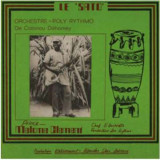
Recorded and issued in 1974, ‘Le Sato’ is one of
the earliest releases on the Albarika label and it is
also one of the deepest.
Sato is the term for the traditional rhythms that
soundtrack Vodun (Voodoo) rituals and
ceremonies in Benin. Performance of Sato is
reserved for these sacred rites, which evoke the
spirits of the dead and can last for several days
and attract hundreds of people. Sato rhythms
cannot be played outside of Vodun.
A large ceremonial Sato drum is used, which
measured over 1.5m in height. This drum is played
using wooden stick beaters, the drummer dancing
while playing. The Sato drummers are supported
by percussionists and other drummers playing
smaller drums. Together, they create unique,
layered, trance-inducing polyrhythms.
Optimo Music presents “Janara” the new album from Italy’s José Manuel. We always have our ears open for music that is unique, powerful and that can conjure up a ritualistic atmosphere, and this meistrerwerk did all that, and then some. We knew we had to release it after the first listen.
We’ll let José tell you about it….
This album is a result of the necessity of exploring and opening my mind to new musical horizons, by testing the main traditional instrument of the Italian region Campania, whose name is “Tammorra”. It is a big drum, which must not be confused with the typical tambourine, made from a wrap of wood shaped in a circle and covered with dried skin (almost always goatskin or sheepskin). This instrument was used during playful events, especially during rituals and ceremonies, such as the frequent devotional pilgrimages in honour of the Virgin Mary. By using this instrument, the sound, the rite and the magic could take possession of the mind and the body creating a perfect union. Also, the dancers, as if they were bitten by a tarantula and possessed by a strange evil, launched themselves to an uncontrolled dance by moving every part of their body.
In addition to the Tammorra, I also inserted some texts, which have been written by some Neapolitan friends and interpreted with Neapolitans voices, in honour of the “JANARA”. The Janara represents a popular belief of the Southern Italian regions, particularly of the Benevento area. The Janara is one of the many types of witches represented by folktales belonging to the rural tradition.
The Janara was expert in medical herbs, which were also be used for her magical practices, such as the manufacturing of ointment. The ointment gave her the power to become incorporeal with the same nature as the wind. According to the tradition, in order to snatch the Janara it was necessary to grab her by the hair. It was also said that if anyone was able to capture the Janara during her incorporeal moment then Janara herself would offer protection to them and their family for seven generations, in exchange for her freedom.
With this work I hope that the listener might get carried away by the spirit of this pagan and popular legend that can be still be considered as current. As a matter of fact, the folk tales speak of a probable comeback of the Janara, who after being burned at the stake seems to be thirsting for revenge for the evil suffered.
Kink Gong is back with his unique take and re-interpretation of the music he’s been recording and documenting for years in the South East Asian highlands.
Zomia Vol.1 takes the conceptual idea of ZOMIA, proposed by James C Scott in The Art of Not Being Governed, an Anarchist History of Upland South East Asia, to construct its very own mythological soundscape inspired by a semi-utopic region where state rules don’t apply. Zomia might be (almost) gone but Kink Gong is keen keep its spirit alive by releasing a series of albums celebrating the region’s quasi mythological features.
‘’Zomia is an idea, a concept that, not so long ago, there were two very distinct worlds in southeast Asia, the valley VS highland/hinterland, the civilisation VS the primitive, paddy rice VS slash and burn agriculture, Buddhism VS Animism, fixed territory VS movement/migration, written system VS oral culture, the state VS anarchy, property VS squat, controlled population VS autonomy, bricks VS bamboo and wood and, at my level museumified traditional mainstream music VS real emotions/songs of devastated lives and/or gongs ceremonies with buffalo sacrifices, extreme heat in the valleys VS shade in the jungle. I could go on and on but let’s not forget that ZOMIA is disappearing fast, if not altogether already. How many of the people I’ve recorded are still alive?
As you might know, before composing new music from my own ZOMIAN experience (from 2001 to 2014 in Cambodia, Laos, Vietnam, Thailand and China) I had to find those musicians, be able to communicate with them, record them as good as I could with very limited finances and gradually release a collection of 160 CDrs. It is very important for me to make sure you to listen to the fantastic original recordings before or after you’ve listened to this experimental reconstruction I called ZOMIA!
Expect more volumes to come, this is my biggest source of inspiration, and the reason why I’ve been involved for years in constructing a mythological experimental musical ZOMIAN soundscape.’’
Laurent Jeanneau, Berlin 2020
Ooh, aah, ooh I didn’t say the giants should be tied up I didn’t say the giants should be tied up I didn’t say the giants should be tied up I didn’t say the giants should be tied up I didn’t say the giants should be tied up I didn’t say the giants should be tied up
All sounds recorded during the creation of the films “Coming of Age” (2015) and “Initiation” (2016). Featuring Mosaku and Retabile Lehselo. Day 1 and Day 2 recorded during ceremonies on January 25 and 26, 2014 in the village of Dreihoek in the Ha Sekake District of Southern Lesotho. Additional footage recorded in the summer and autumn of 2013 in Dreihoek and the surrounding mountain pastures.
500 only LP. One of the first full-length recordings of Hauka ritual music. Praise songs and sacred incantations to the spirits to inhabit the body. Call and response chants, the pluck of a monochord lute and relentless pounding percussion combine in a dizzying nonstop session. The Hauka movement started nearly a century ago and has persisted on the fringes of Nigerien society. Documented in the 1955 Jean Rouch film Les maitres fous, the Hauka are a pantheon on spirits mirrored on colonial and military figures. Central to the religion is the "Holley Hori" possession ceremony, a ritual driven by militaristic percussive music, wherein spirits come into the body in powerful and violent manifestations. Lingo Seini has played ritual music for almost 60 years, learning from his father. He is joined by his son Youssouf on the calabass and Issaka Moulla, playing his homemade kuntigi. The group regularly accompanies Hauka priests in ceremonies. Recorded with a single microphone in the outskirts of Niamey.
- A1: Deep Moaning Blues (Feat. Maxayn Lewis)
- A2: El Train
- A3: Lazy Mama
- A4: Chicago Sun
- A5: Those Dogs Of Mine (Feat. Viola Davis)
- A6: Hear Me Talking To You (Instrumental)
- B1: The Story Of Memphis Green
- B2: Jump Song
- B3: Leftovers
- B4: Shoe Shopping
- B5: Deep Henderson
- C1: Reverend Gates
- C2: Ma Rainey’s Black Bottom (Feat. Maxayn Lewis)
- C3: Levee’s Song
- C4: Sweet Lil’ Baby Of Mine (Feat. Clint Johnson)
- C5: In The Shadow Of Joe Oliver
- C6: Hear Me Talking To You (Feat. Maxayn Lewis)
- D1: Levee And Dussie
- D2: Levee Confronts God
- D3: Sandman
- D4: Baby, Let Me Have It All (Feat. Clint Johnson)
- D5: Toledo’s Song
- D6: Chicago At Sunset
- D7: Skip, Skat, Doodle-Do (Feat. Cedric Watson)
Ma Rainey’s Black Bottom is the official soundtrack to the 2020 Netflix original film of the same name about “Mother of the Blues” Ma Rainey. The album features score music by critically-acclaimed saxophonist, instrumentalist, composer, bandleader and educator Branford Marsalis, as well as newly-recorded covers of both popular Ma Rainey tracks and blues and jazz standards from the era. The multi-GRAMMY Award® winner brings over four decades of experience across stylistic boundaries to the project, imbuing the film with an authentic 1920s Chicago soundscape. The film was directed by George C. Wolfe and stars Viola Davis and Chadwick Boseman. It is lauded by critics and moviegoers alike, and it is expected that Ma Rainey’s Black Bottom will be a favorite at many 2021 award ceremonies. Ma Rainey’s Black Bottom is available to watch on Netflix now.
Joshua Abrams’ first album Natural Information from 2010, superb avant-jazz, newly remastered at Dubplates & Mastering.
In his book Powershift, published in 1990, writer and businessman Alvin Toffler predicted that the century ahead would be defined by speed and that time itself is destined to become our most valuable commodity. When Joshua Abrams recorded Natural Information, originally released by Eremite in 2010, he was reacting against such commodification of time and the diminishing attention span that accompanies it by offering music with an irresistible groove, rooted in the sinuous rhythms of the human body and the full play of our senses.
At the heart of this music is the sound of the guimbri, a North African three-stringed bass lute, which Abrams started to play following a visit to Morocco during the late 90s. Traditionally the instrument has a key role in mystical healing ceremonies. Abrams, already a well-established figure in Chicago’s vibrant musical communities, had no desire to repackage tradition. He recognized however that the involving, springy and percussive sound of the guimbri was just the right voice to communicate vital data, to relay the natural information we all need in order to get back in touch with the pulsating continuities of a world we all share.
With Natural Information Abrams entered a new phase of his musical life, extending an invitation to the trance, where time intersects with timelessness. He carried with him a wealth of playing and listening experience. As a bass player he had worked with a host of notable musicians including guitarist Jeff Parker and percussionist Hamid Drake, and had been a member of back porch minimalism outfit Town And Country and the improvising trio Sticks And Stones.
The guimbri is a shaping presence on this remarkable recording, but Abrams also plays bass, bells, kora, sampler and synthesizer. Sympathetic friends including guitarist Emmett Kelly, vibraphonist Jason Adasiewicz and drummers Frank Rosaly and Nori Tanaka join him for the project. They set out not to contrive some neat hybrid but to enable coordinated energies and enriching influences to pulse and flow through living, breathing music. Ten years further into a century seemingly dedicated, as Toffler foresaw, to the survival of the fastest, the deep involving groove of Natural Information seems still more relevant, more illuminating, more vital.
Joshua Abrams: guimbri, mpc, percussion, harmonium, bass, bells, dulcimer, donso ngoni, ms20
Jason Adasiewicz: vibraphone
Emmett Kelly: guitar
Frank Rosaly & Noritaka Tanaka: drums
We're glad to be back with our latest reissue, a couple undercover soul gems from the Midwest originally self-released in 1984: LaVerne Washington's "The Promise" and "I Found What I've Been Searching For".
LaVerne has dedicated her life to the arts in every possible way. As an artist herself but also behind the scenes, helping and supporting her contemporaries fulfil their callings. Charlie Parker, Count Basie, Ella Fitzgerald, Mary Lou Williams - LaVerne grew up in Kansas City listening to the all time jazz greats, and soon discovered she was blessed with a keen sense for playing music by ear, playing the piano to what she would hear on the radio. In her teens whilst the 60s transitioned to the 70s' disco and funk era, LaVerne was there to witness it all, and she would go on to study music at the Charlie Parker Academy where she was inspired to become an entertainer.
At Langston University, LaVerne kept studying music where her career blossomed, founding and touring the US with the gospel group "Emery Shaw and the Voices of Praise", singing in several college bands and with her choir "The Voices Of Bethel". LaVerne would go on to perform notably with her bands "LaVerne Washington and Rococo" and the "LaVerne Washington Quartet", and record several songs in KC including "The Promise" and "I Found What I've Been Searching For" in 1984 before moving to Washington DC.
In DC, LaVerne was offered a position as a Program specialist with the National Endowment For The Arts where she started supporting other artists through her work. Over the next couple decades, LaVerne became an associate producer for the Rhythm and Blues Foundation and the Pioneer Awards Ceremonies held in New York, Philadelphia and Los Angeles, which saw the likes of Prince, Aretha Franklin and Jerry Butler attending among others. She has also managed and was mentored by DeeDee Sharp and consulted with artists including Bonnie Raitt (who acted as a mentor to Laverne as well), Kim Weston, Kathy Sledge (SisterSledge), Smokey Robinson and G.C Cameron (Spinners). During that time, LaVerne has kept singing, on her own and as a backing vocalist for DeeDee Sharp and Freda Payne and has never stopped her lifelong dedication to music and the Arts.
The Promise original 7" was LaVerne's last recording in Kansas City before her move to DC and the beginning of her involvement behind the scenes. Channelling her gospel roots - with impeccable arrangement, a contagious drum machine led rhythm section, soaring vocals and relatable lyrics, "The Promise" is guaranteed to bring back smiles to dancefloors and living rooms alike! "I Found What I've Been Searching For" on the flip is a beautiful soul ballad which really showcases the strength and emotion in LaVerne's voice.
Back again in it's original 7" format, we've had the audio transferred and restored from the original 24 track tape provided by LaVerne, and got the recordings re-mixed for the best possible sound! Floating Points behind the mixing desk for this new iteration of a lost classic, comes with a 14"x14" poster of the original picture
Creole Soul!" Two words are enough for David Walters to qualify his music. The exclamation point to support radicalism and faith in its purpose.
A lapidary definition behind the doors of which hides the maze of a culture that crosses the oceans, connects continents and islands by an invisible but powerful thread. A deeply ingrained bond that allows Africa, America, Europe, and the Caribbean to converse with each other with a language as universal as music, dance, carnivals, or ceremonies.
Spread on the globe; the different creole cultures find a point of convergence where they are all represented: New York.
In this city, where motivated by his friend photographer JR, he once gave a concert in the street, David Walters decided to set the scene for his new album.
After five years of traveling the world, meeting musicians for the TV show “The New Explorers” (Canal +), it is around this hyperactive city that he chose to shine his Créole Sun. To imbue his music with the state of mind and aesthetics that reigned in the 70s and 80s.
While in 2018, he soloes produced Nola Is Calling (an album recorded in New Orleans with the Creole community of Black Indians, selected by Gilles Peterson in the best of 2019 on BBC 6). That’s with the essential contribution of the musical mastermind Bruno “Patchworks” Hovart (Mr. President, Voilààà Sound System, Da Break ...) that David produced Soleil Kreyol.
More than a musical partner, Patchworks turned out to be the sound engineer David was looking for. The second part of an ideal pair, the one with whom, set on the same frequencies, he wrote, composed, recorded, played all the instruments. Thought all the arrangements, tweaked the details as carried by a continuous breath. Or rather a light. The “Soleil Kréyol” (Creole Sun).
Edition of 100 copies only.
Side A: 'Vodou'. Head priest: Gran Sèvitè Jean-Daniel Lafontant. Vodou priests: Oungan Eddy Saint-Jean and Anperè Jean Céus. Vodou priestesses: Manbo Françoise Célestin, Manbo Christine Lamour, Manbo Marie-Marthe Similien and Manbo Jacqueline Thélus. Other participants: Ounsi and members of Sosyete Na-Ri-VéH. Percussionists: Ountògi and the drummers of The Sacred Temple Na-Ri-VéH 777. Side B: 'Rara'. All-female rara band: Forever Rara Fanm of Belair.
Grand Rue recordings made by AMé in front of the Atis Rezistans, Port-au-Prince on 21 December 2015, 4:54pm to 5:18pm. Vodou ceremony and all-female rara band recorded by AMé at Temple Na-Ri-VéH 777 in Port-au-Prince, 16 December 2015, 9pm to 1am. Edited by Philip Marshall with AMé in Cologne, 16 May 2016. Mastered by Zachary James Watkins at Stank House, 3 August 2016. Artwork by Stefan Fähler. AD&D by Don Wyrm.
With thanks to: Ghetto Biennale, Leah Gordon, Atis Rezistans, Gabriel Toso, the priests and priestesses, the members of the all-female rara band, the percussionists, Clocktower Radio and all the Haitian People.
An introduction to Vodou music and Rara, by Gabriel Toso:
"Tanbou prete pa janm fè bon dans" ("A borrowed drum never makes good dancing")
"Music is to Vodou what water is to our bodies or fire to our hearts: all embracing, all inflaming. The spirits of Vodou are called upon and energised by the inexhaustible rhythms of Africa. Brought by the slaves to the New World, and merged with indigenous and European traditions, their magical power is the soundtrack of Vodou itself, its life-force.
Dancing, singing, praying are all fundamental aspects of Vodou; but above all it is the drumming that plays a major role during the ceremonies, an invitation to the lwas (gods) to join and partake in the rituals. Like the heartbeat of an infant in its mother's womb or the vibrations of our planet, the percussions of the tanbou (drum) are at once instrument and creator. Different batteries of drums correspond to different rites, countless rhythms to a multitude of nations of laws. The drum is not only a musical instrument but a sacred object, an expression of the divine. Its sound guides the initiates to their appointment with the spirit world.
Rara festivals are yearly celebrations that begin following Carnival during the Catholic Lent season, when the activity of the Vodou temples is at its quietest. During those six weeks Rara bands parade for miles playing music, dancing, and performing rituals for Afro-Haitian laws, while wearing specific costumes and using a variety of musical instruments. Probably originated in Haiti during the colonial period, Rara bands and their vast repertoire of songs are both politically and socially engaging while keeping an amusing, irreverent, and at times risqué personality. Traditionally connected with a Vodou temple, Rara bands leave the ceremonial spaces to interact in the public sphere through parading, thus reminding both participants and spectators of the physical presence of the lwas." – Gabriel Toso, London, 3 November.
The “Under Frustration” project takes stock of the contemporary Arab electronic scene, and highlights its astonishing diversity, by deconstructing Western clichés that are still fantasizing about a culturally homogenous Arab world.
In a context of post-revolutionary disillusion, this ambitious trilogy sets itself as a manifesto of a new, futuristic, underground wave that aims to uplift the Arab voice, once again. With this new release, Arabstazy allows the listener to walk among Shiite, Shaabi or Stambali lands - revealing new mystical sounds, reserved for trance ceremonies and ancestral rituals; all vivid in the eyes of the collective members, musicians, producers, videographers and photographers, nowadays, scattered between the United States, Tunisia, Germany, France, Sweden, Irak, Lebanon and Poland.
Vol2 includes unreleased tracks of Dj Haram, Praed, Hello Psychaleppo, Okydoki and many more.
Curated by Arabstazy, produced by Shouka, published by InFiné.
From Far Out Recordings’ in-house producer, Daniel Maunick’s debut solo album Macumba Quebrada conjures scenes of collective hedonism from start to finish. Spanning Afro-Brazilian spiritual dance ceremonies, late-eighties Detroit techno parties and jungle and broken beat raves in nineties London, Maunick celebrates our instinctive, age-old desire to come together and lose our sense of self.
Daniel Maunick practically grew up behind the mixing desk. As the son of Brit-funk legend Jean-Paul ‘Bluey’ Maunick (of Incognito fame), he found himself immersed in music from an early age, and quickly became involved in London’s drum n’ bass, acid-jazz, house, broken beat and soul scenes, releasing his first production at the age of sixteen on Gilles Peterson and Norman Jay’s Talkin’ Loud label. Since then, he has produced albums by the likes of Azymuth, Marcos Valle, Terry Callier, Incognito, Ivan ‘Mamao’ Conti and Sabrina Malheiros.
Reflecting his dual residence between Rio de Janeiro and East London, Macumba Quebrada features deep house stompers and broken bangers littered with Brazilian rhythms - in the form of both dusty percussion and Maunick’s intricate drum programming. But the album sees Daniel draw inspiration from across the black music continuum, and the rich histories of communal celebration in Detroit techno, Chicago house, London D’n’B and New York disco. Bringing all this together in explosive peak-time club tracks, moments of eerie ambience, South American swing and tribal earthiness, Macumba Quebrada expands on Maunick’s recent vinyl-only EPs ‘A Vicious Circle’ and ‘Sombra Do Dragao’, with a 13-track double LP and 14-track CD and digital release.
Taking its title from a syncretism of South American spiritual practices, the cover art is photograph taken by acclaimed French photographer and self-taught ethnographer Pierre Verger, who travelled the world documenting civilizations that would soon be effaced by progress. Settling for good in Salvador, Brazil, Verger became initiated into the Candomblé religion, eventually officiating rituals and ceremonies within the community. Without having become an ordained priest, Daniel Maunick shares both Verger and Far Out Recordings’ love for Brazil: its people, its culture and its music.
"He's been producing Azymuth and all kinds of great musicians in Brazil, and finally his debut album is about to be released." Gilles Peterson (BBC 6 Music)
"This one is a good one. Thanks!" Derrick Carter
"Wow couple of killers on there so it sounds!! Thanks a lot" ?? San Soda
"He is always brilliant!" Voclov (Neroli)
"Energetic, summery and full of groove. "It's like Theo Parrish went to Brazil and never decided to come back." Errol (Touching Bass)
"Super dope release from Daniel! proper Venom / Viper Squad vibes!!" Pablo Valentino (MCDE/Faces Records)
"Organic and bumpy...healthy dance music!" Mad Mats (Local Talk)
"really diverse, great sound" Chris Todd (Crazy P)
"super dope" Nick Tyson (XOA)
"Keep em coming man! ... Nice one" Earl Jeffers
"Feeling this! As always with Mr Maunick." Opolopo
"Dirty Trix is real nice!" Jkriv (Razor N' Tape)
"This is great!" Danny MoodyManc
"He's right on the money with this one, isn't he? Deep, profoundly funky stuff that Larry Heard would be proud of. You can feel it!!!!" Mark Webster (BBC 5 LIVE)
"this is so dope" Alex Attias (Visions Recordings)
"Love these tracks" Serkan Cetin (SunSplash)
"Great release, I love It! I-Robots approved!" I-Robots
"This is excellent. Dirty Trix and Somra Do Dragao are the ones!" Dane (The Love Below)
- 1: Earth
- 2: Marching
- 3: The Bomb - Theme I
- 4: Accidents
- 5: Testing
- 6: Feed
- 7: Propaganda
- 8: Duck And Cover 2
- 9: Onyx
- 10: Clean
- 11: Modern Propaganda
- 12: Veda
* The one piece of connective tissue throughout the film, besides the subject itself, is the film's score, from Los Angeles electronic minimalist outfit The Acid. Throughout a harrowing parade of images and fleeting moments of whimsy, the droning, pulsating music underneath brings an alternating sense of dread and power.' - Indie Wire
* This is an ambient electronic soundtrack to the award-winning film 'The Bomb'. * Recently The Acid performed live at the Nobel
Peace Prize ceremonies in celebration of ICAN (International Campaign for Nuclear Disarmament) winning the prestigious award this year.
* Confirmed appearance at Sydney Festival in January 2018 with further dates to be announced and further screenings at film festivals across the world.
As a winemaker hailing from the Palatinate, Florian Hollerith understands a thing or two about vintage. It's something that also comes through when you sample his music - rich, full bodied with just the right level of acidity. 2018 was already a good year with Ohrenzirkus featuring on both Sven Väth's Sound of the 19th Season mix CD as well as this year's Dots and Pearls vol. 5 compilation. Florian certainly announced his arrival on the scene in style, so it's only fair that he gets the chance to demonstrate his full range of skills on his very own Cocoon Recordings release. 2019 however, has a darker, more complex flavour...
Florian certainly knows a hookline when he finds one. On the EP's title track Perlas, he's working from the inside out with complex layers creating a vortex of sound. This dense sonic mesh is playful yet dangerous, with ethereal voices and jagged chants adding to the disorientation of the opening exchanges until the congas and skipping bassline give us something to hold onto. The dance floor melts under our feet as a raw, tripped out groove takes hold before the bass suddenly morphs into a brassy acid line that spreads its wings and soars. It's music for the headstrong, a celebration of the timeless tribal ceremonies that have come to define us.
Love Summer adds a contemporary twist to the melodic joys that drenched the early nineties in pure ecstasy. The soulful vocals soothe the mind as horn stabs punctuate the sensual groove, generating power and passion in equal measures. It's a straightforward approach, revolving around a familiar yet eminently seductive riff that just keeps on rolling, propelled forward by the force of its own momentum. There's no need to fuss when you hit on a winning formula like this.
More retro futurism abounds on Electro Indianer as arpeggiated bleeps usher in another vast, sprawling soundscape designed to induce a collective trance on the dance floor. Whistling, circular effects wash back and forth increasing the tension notch by notch as we're led deeper into the wormhole. Finally, the track deconstructs slightly, creating enough space for classic Casio-style bleeps and percussion to embellish a beautiful blissed out ending that trails off into the sun rise, as ancient Native American pipes pick out a haunting melody in the distance.
An exploration of traditional Chadian music with an electronic twist...
Chad is in many ways a blind spot on the map of today's global musical conversation. Overlooked, misunderstood and misrepresented, outside observers rarely concede the country an autonomous voice over its past, present and future. N'Djamena, the dusty capital of Chad with its well-kept stories of boundary-breaking musical collaborations and thirst for experimentation is a city that reflects the country's diversity: the arid North, bordering the Sahara, where nomadic tribes revere the endless desert with their handcrafted instruments. The lush tropical South, where the frenetic drumming of local initiation ceremonies blends with sounds of neighboring Congo and Cameroon. Right in the middle: N'Djamena, a forgotten melting pot of cultures and peoples bursting with unrecorded stories of life at the margins of the world's attention.
Tackling this view is precisely one of the aims of Pulo NDJ. In May 2018, Nickodemus accepted an invitation from Hape Collective to travel to N'Djamena to teach a group of young adults DJ'ing and electronic music production, which resulted in the encounter between and a group of talented artists from Cameroon, Chad, Congo and Togo. After a weeklong series of listening to original songs & demos, the recordings continued in a pop-up studio created by DJ Buosis & Nickodemus which culimated in Desert To Douala, an album featuring 11 songs, all originally written and recorded in N'Djamena.
The project found its inspiration in the city's un-narrated diversity and seeks to explore the possibilities offered by technology to demonstrate how the country's rich heritage connects with existing musical conversations. It strives to create bridges in a world of walls. It has been a yearlong creative process that built friendships and fostered understanding among people united by a passion for music and creation.
Superb compilation of modern ambient/minimal electronics featuring exclusive tracks from a wealth of current talent inc. H. Takahashi, David Edren (aka DSR Lines), Miaux (Ultra Eczema) , Kuupuu (Em Records) Nuslux (Keijut) & Olli Aarni. Finnish Label collab between LAL LAL & IKUISUUS. Tip!
.
Neptunalia, a festival of Neptune, celebrated at Rome, of which very little is known. The day on which it was held, was probably the 23rd of July. The festival was celebrated with games. Respecting the ceremonies of this festival nothing is known, except that the people used to build huts of branches and foliage, in which they probably feasted, drank, and amused themselves
- A1: Intro - Ft. Pete Cannon
- A2: Little Menace - Ft. Serum
- A3: Her Room - Ft. Pete Cannon
- A4: Crooked Flex - Ft. Whiney
- B1: Flow - Ft. Nulogic
- B2: War Games - Ft. Pete Cannon
- B3: Tears - Ft. Whiney
- B4: No Regrets - Ft. Pete Cannon
- C1: She Just Wanna Dance - Ft. Whiney
- C2: Birthday Song - Ft. Logistics
- C3: Samurai - Ft. Serum
- D1: Highwater - Ft. None Decay
- D2: No Gravity - Ft. Anile
- D3: Blow Them Away - Ft. Serum
- D4: Blank Pages - Ft. Pete Cannon
Always Seen With A Smile On His Face, Inja The Poet, Lyricist, Storyteller And Unparalleled Master Of Ceremonies Presents His Debut Album On Hospital Records. His First Drum & Bass Focussed Long-player 'blank Pages' Flexes His Lyrical Style With Heartfelt Sentiment, Roughneck Flows And Quick-fire Wordsmith Wizardry. All Partnered With Heavyweight Productions From Pete Cannon, Nu:tone, Logistics, Serum, Whiney And Anile.
Inja's Back With Partner-in-crime Pete Cannon On 'war Games'. A Funky Bassline Lays The Foundations For This Fear-fighting Tale. As The Breaks Roll Out Inja's Militant And Deep Rhetoric Puts This Track On A New Level, With Signature Percussive Flair From The Sought After Hip-hop Beatmaker.
Inja's Spoken-word Piece For Amnesty International 'she Just Wanna Dance' Was A Viral Online Hit In 2017. It's Now Been Given A Turbo-charged Re-work By Med School Young-gun Whiney. Inja's Poignant Commentary On The Prolific Problem Of Harassment In Club Culture Sits Atop A Grimey Half-time Stepper That Switches Up Into A Lethal Upfront Roller.
Inja Proves He Can 'juk' Any Riddim In 'samurai'. Serum's Steppy Beat And Woofing Bassline Balances Inja's Story Of The Samurai, Slicing Through The Tune Like The Lyrical Sensei He Is.
even With A White Page And Black Ink, You Can Spell Out More Colour Than The Eye Can See.' - Inja
Crying Bamboos is a translation of the pidgin description of the sound of sacred flutes: "Mambu i cry, i cry, i cry".
Sacred flutes are blown to make the cries of spirits by adult men in the Madang region of Papua New Guinea. Pairs of long bamboo male and female flutes are played for ceremonies in the coastal villages near the Ramu River. There are seven male initiation flute cries from Bosmun, four flute cries from Bak: Borai with occasional single garamut percussion and two flute cries from Kaean, one with vocals and hand drums. The flute players were of the last generation to have learned this skill during a complete cycle of male initiation. These previouslyunreleased recordings were made in 1979.
Recorded by Ragnar Johnson
Notes by Ragnar Johnson and Jessica Mayer
Photographs by Ragnar Johnson
Tape to digital transfer and mastering by Dave Hunt at
Dave Hunt Audio, London
Cut by Rashad Becker at Dubplates and Mastering, Berlin
Maya Deren (1917-1961) was a Russian-American filmmaker and one of the most important voices in avant-garde cinema of the mid-20th century. When she decided, between the end of the 40s and the beginning of the 50s, to make an ethnographic film in Haiti, she was criticized for abandoning the avant-garde film world where she had made her place, but she was ready to expand to a new level as an artist. Deren not only filmed, recorded and photographed many hours of voodoo ritual, but also participated in the ceremonies. It was in working on this film that Deren recorded the Haitian musicians found on these sides originally released in the very early days of Elektra records. 'Voices Of Haiti' (here repressed as a 12" with new mastering) -a beautiful artifact of percussion and chant heavy ritual music- is one of the earliest and best Western ethnographic documents of voodoo culture in Haiti. It is unmissable both for its historical value and for the beauty and spiritual power of the music it contains.
For the Mapuches or "People of the earth" the forces of good or "Ngnech" -meaning life and construction- opposes the forces of evil or "Wekufe", representing the destruction and death.Through their ritual ceremonies, they seek to balance of these two dissimilar energies.
The nguillatun, the great ceremony of supplication, is high on all these ceremonies.
During the ceremony dances are performed accompanied by various prayers.
This first release, Suyai, has 3 tracks from Rehue (Auca + Zedje) emerged from a joint work between Madrid and Buenos Aires. The remix is an incredible work from the french artist, Von Grall. All the tracks mastered by Neel.