DJ Marky, Makoto & Nookie reboot Adam F’s revisited rework of 1997 hit, ‘Music In My Mind’
Adam F enlists jungle royalty to modernise his 1997 track, ‘Music In My Mind’, from his anticipated forthcoming rework album, ‘Colours Revisited’
Legendary drum ‘n’ bass producer Adam F announces the ‘Music In My Mind Revisited Reboots’ EP, out digitally on 20th September via 181 Recordings, featuring reworks of his acclaimed 1997 track by DJ Marky & Makoto and Nookie.
Further launching this underground dance classic into new dimensions is Brazil’s DJ Marky and expertly selected Japanese producer Makoto. Together, they effortlessly bring the jazz-infused track to the attention of today’s ravers with re-jigged, amplified drums. Certified 90s jungle veteran Nookie goes more liquid with his version, heightening the vibes and setting the scene with immense violin strings.
‘Music In My Mind’ was originally featured on Adam F’s 1997 album, ‘Colours’. Now, as part of the Liverpool-born producer’s much-anticipated ‘Colours Revisited’ album, out in 2025, the jazzy, vocoder-loaded track inspired by Bob James, Lalo Schifrin and Chick Corea, has been given a modern reshape.
“‘Music In My Mind’ speaks to the power of music to transport, heal, and uplift our spirits,” says Adam F. “This song resonates with those who find solace and freedom in the melodies and rhythms that exist in their own minds and bring back memories of a time when I felt an overwhelming connection to music.”
“This song holds a special place in my heart, and I believe it carries a deeper meaning that resonates with anyone who can relate to finding consolation and liberation in the power of music.”
There’s no better time to keep an eye on Adam F, as he uncovers yet more gold from his elegant and timeless back catalogue. Adam F is as fertile and contemporary as ever with more new production ready to launch unto the legions of listeners hungry for great music as his creativity flows brighter than ever.
Поиск:ch connection
Все
- Say Yes
- Your Girl
- Love So Divine
- Certainly
- Turn Up
- Too Late
- Don't Let Nobody
- In These Binds
- Worth The Ride
- Secretly
TRANSPARENT YELLOW VINYL[22,27 €]
Emilia Sisco's debut album on Timmion Records, "Introducing Emilia Sisco", takes you on a smooth ride in the world of vintage soul, featuring 10 beautifully crafted original songs written by Sisco in collaboration with the renowned Cold Diamond & Mink band. The album showcases this young talent's unique ability to blend classic soul influences with contemporary flair, building mesmerizing harmonies by layering her voice, and through these channeling a sound that is both timeless and fresh. From the opening track "Say Yes" - grooving like an independent gospel soul jam that somebody discovered in dank Midwest cellar - to the closing "Secretly," each song is a testament to Sisco's deep connection to the emotional core of soul music. As one of the album's highlights, "Don't Let Nobody," stands out as a sweet anthem of love and encouragement for your fellow human. With its heartfelt lyrics and Sisco's gently floating vocal performance, the song displays the essence of the album_soulful, sincere, and deeply moving. The Cold Diamond & Mink band provides lush, downtempo arrangements throughout the record, perfectly complementing Sisco's voice and bringing her compositions to life with a rich, organic sound. In "Introducing Emilia Sisco" the singer's signature style of downtempo soul shines brightly, offering listeners a blend of introspective ballads and uplifting grooves. After her string of exquisite and well-received singles on Timmion, this album documents the impressive progress of a formidable new voice, one that is sure to resonate with fans of classic and contemporary soul alike.
"Sympathy Pain is an unusual animal, as their collective backgrounds come from hardcore, drone, and experimental pop in Salt Lake City, Utah. Sympathy Pain began as Skyler Hitchcox’s gloomy drone project which was later joined by Casey Hansen (of Cult Leader) to explore and expand the sullen space that the project initially carved out. Sympathy Pain is rounded out by Chaz Prymek (Lake Mary) and Nora Price. The deep connections to Salt Lake City’s underground well of experimental music have deep entanglements. Sympathy Pain has emerged from those entanglements with a clear eyed thesis, transmuting the often oppressive cultural climate of Utah through a personal veil of heavy sorrow.
Swan Dive is the product of years of excavating that space into a cavern, yielding their self-described “emo)))” (a nod to the preeminent doom/drone band Sunn) while still holding onto the submerged soundscapes that began as the core of the project. The album is expansive — a winding ride that travels from minimalism, to claustrophobic ambient, to triumphant passages that all underscore its forlorn undercurrent.
Originally released in January of 2024 as a CD by The Ghost is Clear and cassette by Diabolical Records, Swan Dive finally finds a new life on vinyl - reissued by the Cincinnati, OH record label Whited Sepulchre Records.
Tracked with Wes Johnson at Archive Recordings in SLC, UT and mixed/mastered by longtime friend and co-conspirator Ben Young, the album features a haunting guest spot by Madeline Johnston of Midwife on “Heaven + Hell” to close out the album."
- Big Love
- Seven Wonders
- Everywhere
- Caroline
- Tango In The Night
- Mystified
- Little Lies
- Family Man
- Welcome To The Room…Sara
- Isn’t It Midnight
- When I See You Again
- You And I, Part Ii
A Universe of Pop: Fleetwood Mac’s Tango in the Night Features Meticulous Production, Includes the Hits “Big Love,” “Everywhere,” “Seven Wonders,” and “Little Lies”
Experience the 1987 Album in Audiophile Sound for the First Time:
Mobile Fidelity’s Numbered-Edition 180g 45RPM 2LP Set Captures the Perfectionist Details
1/2" / 30 IPS analogue master to DSD 256 to analogue console to lathe
The perfectionism involved in crafting Fleetwood Mac’s Tango in the Night reached a level of intensity experienced by few artists before or since. Commercially and creatively, the painstaking efforts paid off. Recorded over the span of 18 months, the triple-platinum album spawned four hit singles and put Fleetwood Mac back at the center of mainstream conversation. Its demands also ultimately forced its primary architect, guitarist-singer Lindsey Buckingham, to leave the group shortly after its completion. Was it all worth it? A thousand times “yes.”
Sourced from the original master tapes, pressed at Fidelity Record Pressing, and housed in a Stoughton jacket, Mobile Fidelity’s numbered-edition 180g 45RPM 2LP set of Tango in the Night presents the 1987 record in audiophile sound for the first time. Everything co-producers Buckingham and Richard Dashut sought to instill in the music — the exacting tones, gauzy textures, plush atmospherics, shifted harmonics, unique pitches, pristine acoustics, biting rhythms — can now be heard with elevated accuracy, range, depth, and detail.
Made under challenging circumstances, Tango in the Night is as much a universe of sound as it is an album. This reissue conveys that sonic spectrum in exhaustive manners that go beyond prior editions by playing with a combination of transparency, imaging, openness, and dynamics that provides uncanny insight into the meticulously layered vocal and instrumental tracks. Equally important, it also amplifies your connection to the elaborate melodies, contagious hooks, and airy highs that account for the album’s ageless pop brilliance.
As for the wondrous array of percussive accents, synthesizer elements, interlaced guitars, and lush choruses — all seemingly occupying the exact right place amid the soundstages and taking on shapes and forms that lend them a living, breathing quality? If your audio system is up to the task, the realism, presence, and warmth of Mobile Fidelity’s collectible edition will have you considering Tango in the Night from a new perspective — one that puts its lavish, gorgeous creations on a par with those from Rumours and Tusk.
Unlike those records, Tango in the Night began from a more individualistic perspective in that it sprang from what originally was intended to become a Buckingham solo effort. Instead, it remains the final album credited to the peak Fleetwood Mac lineup involving Buckingham, Stevie Nicks, Christine McVie, Mick Fleetwood, and John McVie. Though the participation of all the members varies from track to track, the cohesive arrangements and alchemic production on Tango in the Night suggest a unity that remains on a par with the band’s other landmark works.
Largely constructed from laborious methods that involved recording at half speed to achieve the desired sonics and tonal nuances, piecing together verses and choruses to attain seamless synchronicity, and Buckingham using a Fairlight CMI synthesizer/workstation in visionary ways, the songs pair electronic and acoustic elements to radiant effect. Tango in the Night also possesses light dance structures that resulted in several tunes being recast as dance mixes on extended-play singles. Above all, however, this is music that appears to float and cast dreamy spells.
Surrender to the frisky interplay of the opening “Big Love,” big pop punctuated with Buckingham’s back-and-forth “oh-ah” sighs that ping the Top 5 smash with innocuous sensuality and toe-tapping momentum. Delight amid the shimmering lights of “Seven Wonders,” whose shades and shadows shift amid Nicks’ raspy vocals and a large group chorus. Wrap yourself in the warmth of the weightless “Everywhere,” a flawless slice of hummable pop that topped with Adult Contemporary charts for three weeks and towers as an ode to the love everyone desires. Stare into the mysterious landscape of the title track (and dig the synthesized harp) just before it explodes, briefly ceding to a terse riff and locked-in grooves.
Tango in the Night teems with delightful surprises and well-honed specifics, especially when Buckingham and Christine McVie team together. In addition to the aforementioned “Everywhere,” the singer born Christine Anne Perfect plays a major role on four more cuts — all highlights — from the breathy, head-over-heels emotionalism of “Mystified” to the sweet, sweeping escapism of “Little Lies,” a cover-up of romantic despair aided by Nicks’ irreplaceable background vocals.
“If I see you again/Will it be the same,” asks Buckingham on “When I See You Again,” finishing up a song a longing-sounding Nicks had started while voicing words that many likely knew would resonate far beyond the confines of the heartfelt song — a goodbye wearing a faint disguise. Though Fleetwood Mac would never again reach the heights maintained throughout Tango in the Night, and members would go their own way, the album towers as a paean to what’s possible in the fields of pop, rock, and studio wizardry.
New hard hitting 45 by infamous cinematic fantasy funk supergroup Pigalle Connection.
Produced by Paris' own keyboard wizard Guillaume Métenier and Mocambo's Björn Wagner, heavy clavinet and breakbeat drums lead the imaginary chase soundtrack "Flics Sur Le Péripherique" through massive horn attacks, mysterious string themes and ethereal synth lines, evoking plenty colourful scenes over a relentless beat. A slice of funk that is equally suited for the breakin' floor as it is for b-movie dreams.
The flip side "Transit" contrast the a-side's frantic action with an almost dubby downtempo crime jazz groove full of suspended tension and cold chilled anticpation.
Featuring Guillaume Métenier on clavinet, moog, piano & hammond B3; Björn Wagner on guitar, bass, percussion, hammered dulcimer & glockenspiel; the Mocambo horns section and John Reed on drums.
Having spent their formative years in São Paulo Brazil, as a teenager, Lau Ro found themself uprooted from their home. Moving with their family to Europe in search of a better quality of life, their story was like that of many immigrants in the same position. Lau Ro's parents found work in factories and cleaning jobs, for the first few years in the North of Italy and then in Brighton on England's Southern coast. "We never managed to visit back home, so my connection to Brazil became largely made up of childhood memories and my fascination with all the 60s and 70s music I could find from there."
In Brighton, the young non-binary singer and composer would immerse themself amongst the city's vanguard of free-thinking artists and musicians. Lau Ro formed Wax Machine whose prefigurative, psychedelic community provided a glimmer of countercultural hope amid a backdrop of national political decline. From 2020-23, Wax Machine birthed three cult-favourite albums in as many years; indebted in part to their British psychedelic forebears from progressive folk, rock and jazz yore. But the kernel of Lau's Brazilian sound was already beginning to blossom across Wax Machine's releases. Now, taking root deeper still, Lau Ro steps forward with their debut album: Cabana.
Named after the small wood cabin at the bottom of their garden where the album was recorded, Cabana is a deeply personal record of memory, self-discovery and imagination. Melancholy and hope combine across ten tracks of dreamy bossa, ambient folk, fuzzy tropicalia and majestic MPB. The music is swathed in masterful string arrangements and trippy electronics in equal part, while Lau Ro's delicate, yet quietly confident voice takes acerbic aim (in both English and Portuguese) at polluted city life, while dreaming of a utopia, rich with nature and wildlife.
Like the musical equivalent of semantic drift, Lau Ro's displacement led to the creation of another Brazil. A mythic place in Lau's soul, as they put it, "where the sunshine and joy of my childhood remained untapped." Lau continues: "It's music that might sound as if it came out of a parallel universe Brazil, rather than its modern day landscape. I am nowadays rediscovering Brazil, going back as often as I can and trying to stay connected to these different parts of the world and myself."
- Pressure
- High Time
- Regrets
- Fafo
- Caroline Light Up
- Madison
- You Could Be So Pretty
- Lover
- Hold My Hand
- Call Your Momma
- And Here A Garden
Discovered while working as a publishing assistant at Mute Records, Nerina Pallot signed to Polydor Records and released her first album in 2001. The release of her critically acclaimed second album, Fires, drew comparisons with Joni Mitchell, Fiona Apple and Tori Amos, and spawned hit singles Everybody's Gone To War and Sophia, plus Brit Award and Ivor Novello nominations.
Now two decades into her career, Pallot's rich and varied back catalogue suggests an artist determined to carve her own path. She has lent her distinctive vocals to songs like Circus from Amazon's Modern Love and her version of Love Will Tear Us Apart on BBC/RTE's Normal People.
The creation of her latest album, A Psalm for Emily Salvi, is a deeply personal endeavour. Born from an unexpected connection, the record is both a love letter to those who have supported her over the years and a tribute to the power of music in the face of adversity. One day, Pallot received a message from a woman named Emily (not her real name), who shared how Pallot's music had been a lifeline during her darkest moments. That message became the catalyst for the album, a reminder of the importance of perseverance, connection, and vulnerability. Recorded in London and featuring a stellar cast of British musicians from the jazz and soul scene, it is an album of light and dark and steeped in the classic singer-songwriter tradition.
Arbes’ long-awaited debut album, "Counterways", exists on the cusp between the ethereal and the more attention-seeking concerns of pop. The record invites listeners into an unusual sonic world of atmospheric depth. Comparisons can be drawn to New York post-punk of a more colourful bent, running Blondie all the way through to Gang Gang Dance. The album's dream-pop dimension brings to mind Cocteau Twins, while its grittier, art-rock moments, coloured with ambience feels akin to Deerhunter. Glimmering flashes of psychedelia channels the likes of Melody's Echo Chamber.
The ten track album explores romantic dreaming and the struggle to (not) understand and to be understood. It memorialises glimmers of connection, discontentment and longing. Front woman Jess Zanoni’s soulful, oracular voice is anchored by the earthbound brambles of prickly guitar and brushstroke percussion, where all is tethered to a surface of unearthly detail and resonance. Written and recorded over a five year period (2017-2022), Arbes eke out every possible ounce of emotionality from their songs. Not to sedate, but to guide listeners somewhere unexpected, at the song or album's conclusion.
- 1: Red Mist White Knuckles
- 2: The Story Of War
- 3: Should Be Heaven
- 4: Don’t Be Afraid
- 5: Where’s The One?
- 6: Like An Avalanche
- 7: I Am Dead
- 8: What Is This Love?
- 9: Sunflowers And Starlight
- 10: The World I See Is Not The World I Want
On How It Ends (?), slinky melodies snake through nocturnal atmospherics, drawing you into a world built on poetic, painterly lyricism. Night Crickets, a long-distance groove affair that materialized during the drawn-out days of lockdown, has emerged once again to soundtrack our waking dreams.
David J (Bauhaus, Love & Rockets), Victor DeLorenzo (Violent Femmes) and multi-instrumentalist Darwin Meiners spearhead a loose collective of like-minded creative souls whom, through sheer tenacity and a burning desire to collaborate and create, transcend the restrictions of space and time. Audio files shared from Los Angeles to Milwaukee, from London to the San Francisco Bay, and the ghosts of Candlestick Park shimmer through the fog, coalescing in a glorious ‘gesamtkunstwerk’ that draws from the past, the present and the imagined future.
Declaring Bauhaus, Love And Rockets, and Violent Femmes iconic, foundational bands in the history of alternative music would receive little pushback from those in the know. San Francisco born artist Darwin Meiners is a fan of all three. A chance meeting with David J grew into a friendship, and Darwin not only became a bandmate, but his manager. After reaching out to Victor DeLorenzo through e-mail, Darwin met the Violent Femmes drummer after their set at Coachella. Soon, after the three collaborated on Darwin’s 2014 release Souvenir.
As the pandemic took hold, Darwin was looking for a new project to occupy the lock down time and approached Victor, who was keen to proceed and suggested that David join as well. The musical trust established between these three was immediate and Night Crickets were born. Within weeks a global process was initiated between them, the recordings eventually forming the album, A Free Society.
Following that release, inspired by how well – and quickly – they all worked together, the trio kept up their collaboration. “We are each free to discover musical connections that could only exist in an ideal creative setting” explains Victor. “We are very lucky to have three musicians who write, sing and play various instruments in one trio… our egos seem to melt into one when we face musical decisions, so our expeditions are always filled with pure discovery, humor and drive!”
How It Ends (?) was crafted with the same collaborative spirit as A Free Society. Each member contributed contributed unique elements to spur their collective creativity—whether a drum pattern, a lyrical concept, or a musical idea—and together, they expanded these initial sparks into the finished work. True to their approach, much of what you hear was captured in the first take, reflecting a genuine, unfiltered moment.
The music on the How It Ends (?) is a true evolution of the debut album. It is deeper and darker. Having said that, the dark tone is alleviated by a healthy measure of the buoyant, bouncy and melodic. “Much of the new material is very psychedelic and the contrast between this heavy, dark psychedelia and the more uplifting pop elements puts me in mind of The Beatles’ ‘Revolver’ album to some degree,” tells David J. “The recording process for the new album was exactly the same as the first in that we all recorded remotely, taking turns to share files and reacting spontaneously to the previous track, overdubbing then passing on once again until we all felt that the track was done.”
“While we didn’t start with a specific theme, the album emerged as a contemplative exploration of endings” says Darwin. “It touches on the loss of individuals, the shifting of ideas, and the fragility of systems. Beneath this sense of darkness and finality, however, there are threads of beauty and glimpses of hope. We invite you to immerse yourself in the album and experience the journey we’ve embarked upon.”
- A1: 10 Point 4 Rog & Brother Portrait - The Lighthouse
- A2: Wu Lu - Gooie
- A3: Hejira - You
- A4: Clever Austin - Hour 40
- A5: Alien & Kuzich - Took My Heart Away
- A6: Ego Ella May - Miss U
- B1: Clever Austin - Pablo's Piano
- B2: Keiyaa - Camille's Daughter
- B3: Nala Sinephro & Lyle Barton - Ada
- B4: Nayiem - Dandelions
- B5: Lori - Royalpine
- B6: Contour - Common Ground
- C1: Cowrie - Define My Freedom
- C2: Arnheim - Help Me Realise You (Feat Emm)
- C3: Melo Zed - Ebodance (Feat Mary Cayenne-Elliott)
- C4: Blvck Spvde - Save A Little Seat (Feat Dj Harrison)
- C5: The Wach - Dream On Freedom
- D1: Ashtrejinkins - Sunshine2Point0
- D2: Ben Hauke - Turn It On
- D3: Leaux - Wabi Sabi
- D4: Eun & Demae - Your Company
- D5: Molinaro - Dis & Dissolve
2024 Repress
Errol and Alex Rita’s Touching Bass are proud to present Soon Come; a landmark compilation celebrating the talents of their now intercontinental musical community and an introduction to the wide-spanning sound and feeling of their growing label. 22 original tracks spread across double 12” vinyl and split between 'day' and 'night' moods, creating exciting connections between music for both the home and the eclectic sounds of their much-loved dancefloor.
Over the past six years, Touching Bass have steadily established themselves as one of London’s most important musical incubators. More than just a club night, concert series, NTS Radio mainstay and a label, Touching Bass has become something of a movement: a community meeting grounds for music lovers and some of the most exciting contemporary music-makers both in the capital and beyond.
The tracklist is a reflection of that, curated by TB’s Errol, Alex Rita and Sammseed over the course of two years. Among the list of contributors are Chicago/New York’s keiyaA, Stones Throw’s DJ Harrison, Ben Hauke, Ego Ella May, recent WARP signee Nala Sinephro, Melo-Zed, Hiatus Kaiyote’s Clever Austin and many more (see below for tracklist). Artwork for the project comes from Alex Rita, combining moments caught at Touching Bass’ own gatherings over the years.
Since launching properly in 2019, Touching Bass has quickly established itself as one of the UK’s most exciting new labels. The young imprint has championed critically respected and refreshingly innovative works with little genre restriction, receiving recognition from both musical and cultural bil. From the electrifying grooves of Danish trio, Athletic Progression, to the modern classical of South London’s CKTRL (featuring Duval Timothy).
Along the way, Errol and Alex have also been tapped up for collaborations/ commissions with some of the world’s most forward-thinking creatives and institutions; from the world-renowned White Cube gallery for Frieze Week 2021 and fashion designers Nicholas Daley and Azura Lovisa to film music supervision for Ronan McKenzie and Joy Yamasungie’s WATA and multi-award winning director, Jenn Nkiru’s (Beyonce, Kamasi Washington, Neneh Cherry) Black To Techno, the experimental documentary which premiered at Frieze Los Angeles and was nominated for ‘Best Short’ at the IDA Awards.
For newcomers, Soon Come acts as a vital introduction to the label’s wide-spanning DNA. For those already acquainted, it’s a glimpse at its exciting future.
- Kitchen
- Skin On Skin
- Highfield
- Breaking In Reverse
- You Are The Morning
- Best Friend's House
- Guy Fawkes Tesco
- Dissociation
- Tall Girl
- New Shoes
- Roan
- Elephant
- Transition
- Woman
You Are The Morning was formed amid personal upheaval in 2021. "I came out as trans to my nearest and dearest," she says, "Some did not accept me, but some did." Jasmine got divorced, and a difficult home life meant she was writing while experiencing homelessness and precarious housing, sleeping on friend's couches and relying on community support. Despite the pain of some of its background, the record is an uplifting look at t4t love. Jasmine describes her first trans romance as the first time she experienced joy in a deep sense, because of her experience of living as a woman. First single `Skin on Skin' explores the new joy of physical touch. Usually a quick writer, it's a rare song that grew over time, during which a close connection with a friend began to form. "Sticking to the physical boundaries we wanted to have with each other became increasingly difficult. We were spending lots of time together, then falling in love. This song became a celebration of healing and physical catharsis found through unrepressed queer love." The first UK signee on Saddest Factory Records, the album was produced by Julien Baker, Phoebe Bridgers and Lucy Dacus. Jasmine and her band travelled to L.A. to record at Sound City Studios. It was made across 12 days in a highly collaborative and emotional process, and because Jasmine sees her songs as fluid and ever-changing, the recordings carry that free and spontaneous spirit. jasmine.4.t is supported by an all-trans band, Phoenix Rousiamanis contributes piano and strings, with Eden O'Brien on drums and Emily Abbott on bass. With Jasmine's voice and songwriting at the centre, the record incorporates a wider cast of voices. `Best Friend's House' features a chorus including her bandmates, Julien Baker, Phoebe Bridgers and Lucy Dacus ("the girls and the boys"), Saddest Factory Records label-mate Claud, Becca Mancari and E.R. Fightmaster. The song carries the communal spirit of the record's creation. On the closing track, `Woman', she is backed by the Trans Chorus of Los Angeles, a cross-generational group of trans singers who, like Jasmine, use their voice as a source of communal power. The song blossoms from solo performance to wider group catharsis. All the while, Jasmine sings unwaveringly about the power of knowing yourself at a core level: "I am, in my soul, a woman". The writing of You Are The Morning pulled from dark moments to tell its story. Surrounded by friends, the recording process was full of light. Through her performances, activism and artistry, jasmine.4.t is ushering in a new dawn.
"“Tenalach - The relationship with the land, the sky, the water and the deep connection that allows you to hear the earth sing and be one with nature”
Following on from their many mutual remixes and first collaborative EP “Pleamar” (Wonderwheel Recordings 2020) Chancha Via Circuito y El Búho return with a new EP “Tenalach"" which sees the duo enter new territories and soundscapes. This mysterious, atmospheric and melancholic EP is like the soundtrack to a videogame that takes place in a strange and wonderful parallel universe.
Imagine Zelda set in the jungles and mountains of Latin America.
Croaking frogs sit next to driving snares on the genre-defying Sapo Cururú, birds float above strobing synths on Oropéndola while Sumay’s epic synth lines melt into Chancha’s trademark percussions on Sumay. Opener El Samurai is perhaps the closest to the pair’s well-known folktronic sound, marrying cowbells with bowing violins and its animal-esque synth line.
While the BPM may have risen, this is neither ‘downtempo’ nor ‘umtempo’ and an EP that cannot easily be pigeon-holed - it is fresh and original. It also reflects a darker side to the pair’s music, a sub-conscious reflection of a changing world, holding in each song a constant tension and the desire to escape to new realities where the connection between humans and nature is blurred and equal."
In 2021, Will Marsh ditched his music career, packed his bags and headed to New Orleans to pursue an MFA. Pandemic brain had firmly set in, so while Marsh dove into his work with Habitat for Humanity, he also found himself dazed and confused amidst such a turbulent time. Music wasn't at the forefront of his mind_ but it chased him. Let's rewind a bit. Will Marsh started Gold Connections at the College of William and Mary, where longtime friend Will Toledo (Car Seat Headrest) produced and recorded Marsh's debut self-titled EP, released via Fat Possum in 2017. Two EPs followed on EggHunt, 2018's Popular Fiction and 2019's Like A Shadow. This leads us to Fortune, the band's brand new LP, out worldwide on October 25 via New Orleans indie Well Kept Secret. It's a record that sounds like "a conversation between old Virginia and the buzzy psychedelic world of post-COVID New Orleans," according to Marsh. The eleven tracks on Fortune deftly navigate a geographical and spiritual journey: remorse, intoxication, anger, mystery, destruction, and regeneration, delivered with the same approach that NPR hailed as "undeniably catchy" and Sterogum claimed was "an animal of it's own."
Katie Gavin's debut What A Relief taps into the unguarded self-possession and homespun pop sensibility of singers like Alanis Morissette, Fiona Apple and Ani DiFranco, and uses their tenacity as a north star for Gavin's own trek towards self-discovery. "This record spans a lot of my life - it's about having a really deep desire for connection, but also encountering all the obstacles that stood in my way to be able to achieve that, patterns of isolation or even boredom with the real work of love" they say. Written over the course of seven years, What A Relief comprises a set of songs that Gavin always loved but which "had something in them" that she and her bandmates felt didn't quite fit within the universe they were trying to cultivate with MUNA. Many of them were written on acoustic guitar, and are rooted in "a style of music that's very much in my blood, and natural for me," as typified by the Women & Songs CDs that Gavin loves, which compiled music by artists like Tracy Chapman, Tori Amos and Sarah McLachlan. That openness of spirit is the overwhelming character of What A Relief, an album that's refreshing in its willingness to accept people as they come, even as it remains in dogged pursuit of a life that's kinder, wiser and more loving. Gavin's explorations of desire and intimacy feel time-worn and necessary - songs that might teach a generation if not how to live, exactly, then at least how to look within oneself for guidance about how to move forward.
Emerging producer Très Mortimer dishes out eight huge heaters on the highly-anticipated ‘M1 City’ release, a dedication to the mighty Korg M1, coming to Seth Troxler’s Slacker 85 on 25th October.
Kicking off ‘M1 City’ is the simplistic, but refined and booth-rattling ‘Work That Body’. A crisp M1 stab is the main character in this, amplified by thunderous and high energy drums.
Then there’s ‘Secrets’, a house jam inspired by the likes of MK that utilises TR-909 drums, a subtle rolling bassline, intimately whispered and soulfully sung vocal shots, and, of course, classic Korg M1 synth stabs. Together with dramatic contemporary builds, a highly danceable house smasher is formed.
‘No More’ is pure gasoline for the dancefloor. Très pairs another barrage of clean M1 stabs with a rousing vocal sample that leads into, with the help of a rolling snare, another highly effective house drop. Following the extremely saucy ‘Big Daddy’ skit, we’re dropped straight into ‘One Of Those Nights’, a show-stopping track complete with cutting, sharp stabs, a bulging bassy synth and a West Coast-esque synth sound.
‘Bitch I’m From Chicago’ feat. Gleebz is, as the title suggests, a dedication to the city where house music found its name. Batting off all the poser cities like LA and Miami in the sassy lyrics, it embodies the spirit of Chicago with hefty kick drums and weighty chord stabs.
At the tail end of the release, ‘Let Me Go’ and ‘Love’ (featuring vocalist 7000 (7K)), bring things to a rousing emotive close. Both tracks see Très put clean vocals over piano riffs, giving off differing moods – the former is euphoric, the latter melancholic. Synths bubble beneath, and each track funnels their own respective house grooves, resulting in two tracks fit for both the dancefloor and headphones.
Très Mortiner explains: “The M1 sound is classic. It automatically transports you back to those timeless house songs that never get old. For me, house music is all about connection. People experiencing a little moment of euphoria together when they hear a riff that they all know on the dance floor. That’s what it’s all about. With this project I wanted to tap into that 90s rave sound and spirit. I wanted it to sound like the OG Chicago rave scene.”
“M1 City is my first project to be released on vinyl. I think vinyl is very much alive. It’s essentially for music connoisseurs now. I don’t expect people to have a vinyl collection when all music is always available to everyone on their phones. Nevertheless, I love the idea of some random DJ finding this record in a shop in 10 years. Who knows what I’ll be producing then?”
Très Mortimer is a key figure in Chicago's house scene, steadily building a strong following with his no-nonsense, dancefloor-driven sound. Drawing inspiration from his Polish roots, Trés has signed with major labels like Mad Decent, Insomniac’s IN/Rotation, and Ministry of Sound, while also launching his own imprint, Optics Records. He made his mark with a clever rework of Zombies' 1968 hit ‘Time Of The Season’ (1M+ streams). Standout releases include his downtempo collaboration with plumpy, "BAMBU," and his latest single, "At Night I Think Of You," which was recently given a remix makeover by Seth Troxler and Nick Morgan.
Slacker 85, launched in 2023, is the record label behind ‘M1 City’. Founded by Seth Troxler, it aims to give a platform to "oddball, esoteric and diverse sounds," positioning itself as a counter to the polished, refined dance artists dominating the scene. Troxler, upon the label’s launch, declared that he wanted to create something for "the anti-hero, the kids who could have done it but didn’t care to try”—essentially, "the slacker." So far, it’s delivered a range of releases from artists like Jackmaster, Danny Daze, Dan McKie, and Andre Salmon, offering tracks rooted in house music's past but evolving within its present boundaries.
‘M1 City’, this ode to a piece of gear that consistently finds itself at the heart of house music history, highlights Très Mortimer’s respect for and knowledge of the scene and its key gear. Trè combines this admiration and inspiration of house music’s greats with a modern sensibility, resulting in eight tracks worthy of today’s dancefloors and today’s ravers.
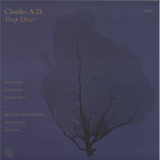
The sea has long been central to Japanese culture, symbolizing both sustenance and spiritual depth. Charles A.D.'s Deep Diver draws inspiration from this, channeling the ancient traditions of diving and fishing into his music. Historically, the sea has influenced everything from Shinto rituals to the livelihoods of coastal communities. In Deep Diver, this reverence flows through aquatic soundscapes, where rhythmic waves of 90s house and Detroit techno meet Japanese minimal production techniques, New Age and Pacific Jazz. Like the tides, the album ebbs and flows, creating a serene yet dynamic homage to the timeless connection between Japan and the sea.
The opening track 'Deep Diver' plunges into the depths, its abstract sound design capturing the sensation of deep-sea propulsion. Rhythmic bubbles pulse gently alongside slow-moving chords, creating an otherworldly atmosphere. The textures are lush yet restrained, setting a tranquil stage that pulls the listener into a submerged world. 'Underwater Ruins' builds on this aquatic theme, introducing rhythmic layers and bass-heavy notes reminiscent of mid-90s Japanese ambient techno. The smooth, melodic flow nods to pioneers like Mr.YT and Susumu Yokota, while subtly incorporating the Detroit techno influence through soulful, deep basslines.
The track feels like a fusion of ambient and techno, balancing serene tones with a rolling groove, emblematic of Japanese techno soul. As the album progresses into 'Bubble Ring', it becomes clear that Charles A.D. is a master of minimalism. The production is timeless, leaning
on analog techniques where echo-drenched chords and carefully layered soundscapes take on an addictive, hypnotic quality. The simplicity of the composition is deceptive, as each element carries weight, drawing the listener deeper into the rhythm and space between the notes.
'Merperson' is where organic rhythms truly come into play. Charles A.D. gently evolves the patterns, allowing each percussive hit to flow naturally into the next. Soothing melodies emerge from within the track’s structure, eventually reaching an emotional peak without ever feeling forced. The organic nature of the arrangement creates an effortless progression that feels deeply connected to the natural movement of water.Starting the second half with 'Deep Exploration', the theme of underwater excursions becomes even more pronounced. Light, steady drumming anchors the track, allowing the melodic layers
to develop gradually. It unfolds with a calm, measured pace, before ending softly, almost as if the sounds are drifting off into the oceanic depths. 'Diffuse Reflection' stands out as the most dub house-influenced on the album, with rolling rhythms and hypnotic elements reminiscent of Maurizio's deep, pulsing sound. Yet here, the production feels submerged, with aquatic effects swirling around the rhythmic core, blending dub house with a fluid, oceanic touch. 'Traitors' delves even deeper into dub-inspired territory. Deep, resonant bass hits combine with wooden drums, while static-like sounds evoke the image of a radio tuning through static to find clarity.
Chords shimmer briefly before fading back into the liquid depths, evoking the ebb and flow of the tide. The final track on Deep Diver 'Levitation', is a fitting conclusion, as the rhythms merge and overlap like waves gently lapping the shore. The minimalistic arrangement allows each element to blend effortlessly into the next, creating a sense of unity and closure. The sounds move with the gentle grace of water, ending the album in a way that feels both complete and
open-ended, like the infinite motion of the sea.
2024 Reissue
"Ellipses dans l"harmonie - Lights in the dark" is the last work released by Teho Teardo on his imprint Specula Records. This work is entirely inspired by the music contained in the pages of one of the iconic texts of the 18th century, the Encyclopédie by Diderot and D"Alembert, the original copy of which is kept in the archives of the Giangiacomo Feltrinelli Foundation, which produced and commissioned the album. This is the first time the Foundation has produced a musical work. In "Ellipses dans l"harmonie", there is not only a homage to the Encyclopédie, but also a political connection to the spirit of the Enlightenment that guided the genesis of the work and the current need for light in the face of the new obscurantism. At the origins of the Encyclopaedia"s cultural enterprise are three roots: memory, reason and imagination. They are three dimensions that draw attention to three needs that still interrogate us today: to know the past in order to understand the origins of the problems we face today; to exercise rational criticism in order to orient ourselves in reality without taking refuge in bewilderment in the face of the complex challenges it poses to us; to continue to think about different balances in order to want to design a different world.
A hard rock mash up - Bandleader Paul Ngozi's split album with his drummer and co-vocalist Chrissy Zebby Tembo. The set includes an oversized 8 page booklet detailing Ngozi’s arc, rare photographs, discography and annotations.
"Zambia’s Zamrock movement that exploded in the 1970s...provided young musicians access to European and American music, and created a unique sound. At its root, Zamrock melded fuzz-toned psychedelia, chugging garage rock and roiling funk with a broad mix of African cadences and beats...enlivening a scene that included bands like Musi-O-Tunya, Amanaz and the Ngozi Family” - New York Times
Zamrock was a bona-fide rock scene: on the African continent, only Nigeria can claim one so comprehensive, and Nigeria’s was largely catalyzed and funded by subsidiaries of the European major labels. Zamrock was as independent as the newly-named country, formerly known as Northern Rhodesia. Zamrock is starting in its completeness, especially for a scene that emerged, unfurled and disappeared so quickly. From Musi-O-Tunyaís fusion of Fela’s Afro-beat, Hendrix’s rock, South African jazz and traditional Zambian melodies and rhythms to Salty Dog’s acid folk/rock, Zambia’s rock scene contained all of rock’s subgenres. Zamrock was much more than an imitation of American and European rock music: it quickly became a uniquely Zambian movement, befitting of its name. WITCH, Paul Ngozi and Amanaz sound nothing like other rock music from the African continent - or elsewhere. Zamrock came from a nation's youth carrying forth the momentum of a political and social revolution with a musical revolution that maintained the fiery power of early rock - in the mid-to late-70s. From that era, Zamrockís energy is matched only by the punk and hip hop scenes of England and America.
Somehow, 15 years has passed since I worked on A Colour For Autumn.
This recording was, in many ways, a critical one for me. In some respects, it rounded out a period of work that was focused on a particular marriage of thematics and harmony. Like For Varying Degrees Of Winter, it dwelled on old world impressions of the seasons, something that, in the southern hemisphere, isn’t intrinsically part of our way of approaching place. I think it was this incongruity with my own lived experience that kick started the interest in making these recordings.
The intention had originally been to take Vivaldi head-on , as the holder of the Four Seasons terrain (I jest of course), but shortly after completing this album, it became resoundingly clear that even in the old world, seasonality was a thing that was known ‘then’, and unknowable ‘now’.
Climate change, as a lived experience and not merely as a ‘possibility’, suddenly came into focus with reports flooding in about the climatic dynamics since the turn of the century and events like the Black Saturday fires here in Australia. It felt like, and continues to feel like, seasonality as some predictable measure of our world is relegated to the ‘before’ times. This record is not about these climatic shifts however, more a recognition of how we have used patterns and predictability to guide us over the centuries and perhaps a realisation that the way forward is not the path we have known historically.
Listening back to the record with fresh ears, a process made completely delightful by Stephan Mathieu who has carefully remastered it, I am struck by how minimal some of the structures were. There are moments that strike me as uncharacteristically patient and even generous, allowing one element to hold without interference. I’m grateful to still feel a deep connection to this edition and to the people and places that helped shape it.
I hope you find some sense of your place here. It’s offered with that intention and invitation.