Fresh off a run of vinyl releases supported by legends of the scene like Gerd Janson, Todd Edwards, Move D and DJ Sprinkles, Skylax Records are mighty proud to present Sweden’s Lukas Lyrestam for our 150th release.
“When 2 Bodies Become 1” treads a fine line between raucous deep-house, balearic blues and straight-up sexy music. The opener “Raw Loop” channels classic Pepe Braddock vibes while “Moving Day” sounds like it could’ve come from the sonic experiments of a certain 90s house producer who loves to play keyboards. Lukas is a musician and singer first, which really shows on the flip side of the record – something which Mano Le Tough & Jimpster were very happy to support on a recent release for Clouded House.“Strange Beast” marries off-kilter chorus-kissed guitar riffs with a driving four-to-the floor arrangement while “2 Bodies Become 1” takes a step further away from house music to combine vintage new-order textures and shuffling deep-house. Lukas also builds digital synthesizers in his spare time, something which must’ve come in handy for “Bike Ride With U” an italo-banger closing out the record and sporting a very rubbery bassline. We are super happy to add yet another great house 12-inch to our catalogue and remember, stay underground, it pays!
Search:chan
- A1: Drugs & The Internet
- A2: Fuck, I'm Lonely (With Anne-Marie)
- A3: Lonely Eyes
- A4: Sims
- A5: Believed
- B1: Billy
- B2: Feelings
- B3: Canada (Feat Alessia Cara)
- B4: For Now
- B5: Mean It (With Lany)
- C1: Tell My Mama
- C2: Sweatpants
- C3: Who (Feat Bts)
- C4: I'm So Tired... (With Troye Sivan)
- C5: El Tejano (Feat Sofia Reyes)
- C6: Tattoos Together
- D1: Changes
- D2: Sad Forever
- D3: Invisible Things
- D4: Julia
- D5: Modern Loneliness
Der mit mehrfach Platin ausgezeichnete Singer, Songwriter und Produzent Lauv veröffentlicht endlich sein mit Spannung erwartetes Debütalbum.
Im Laufe der letzten Monate veröffentlichte Lauv unter anderem seine mit Spannung erwarteten Kollaborationen “Mean It” mit LANY, "I'm So Tired" mit Troye Sivan und arbeitete mit den K-Pop Megastars BTS. Lauvs letzte Single, “fuck, i’m lonely” mit Anne-Marie hat mittlerweile über 250 Millionen Streams erreicht und kletterte bis in die Top 20 der Airplaycharts.
Auch live bringt er ganz großes Kino auf die Bühne. Seine letzte Deutschland-Tour im Oktober wurde von rund 10.000 schreienden Fans besucht. 2020 werden sich die Ticket-Zahlen für Deutschland verdoppeln.
Und dabei bleibt er sich als einer der wenigen Independent-Künstler im Pop-Genre immer 100% treu.
The Distillers are excited to announce that the physical version of their 2018 single "Man vs. Magnet" b/w "Blood In Gutters" will be released on February 14, 2019 via Third Man Records. This vinyl 7', pressed at Third Man Pressing in Detroit, is the first chance to own new music from The Distillers in over 15 years.
To call The Distillers simply a punk band doesn't do justice to either the band or the word "punk'. Guitarist, lyricist, and vocalist Brody Dalle, uses her medium as a platform for a higher plane of visceral lyricism and independence. Few modern day punk icons have not only embodied the genre so truthfully but also transformed the depth of what it can mean so thoroughly. Originally formed in 1998 in Los Angeles, the energetic band, with Dalle at the helm, released a string of damaged and powerful albums, EPs and singles with California punk labels Epitaph and Hellcat, then released their third masterpiece of an album, Coral Fang, on Sire before going on an untimely hiatus and ultimately splitting in 2006. After breaking a 12-year silence on social media late last year, these two new tracks from the group are a triumphant return for their rabid and devoted fanbase.
'Man vs. Magnet' kicks off with crashing drums, thumping bass and melodious guitar, before transforming into a rough-and-ready punk anthem. The b-side 'Blood in Gutters' is full of a wistful, wild energy from start to finish, with Dalle's raw vocals gleaming as the chorus hits. Third Man is honored to be a part of The Distillers' continuing legacy by releasing the physical version of this single.
CHIWAX presents L-VIS1990 aka Dance System - Relentless EP (12").
We are very happy about this 5 track - banger! It contains a new Acid version of his 2014 hit track called "Flash Drive" and a great co-production with Leon Pard and last but not least a track together with Chicago Legend DJ Deeon!
- A1: Intro (Feat Aaron Crockett)
- A2: This Changes Everything (Feat Buddy & Denzel Curry, Terrace Martin & James Poyser)
- A3: Gone (Feat Ybn Cordae & Bilal & Herbie Hancock)
- A4: Let Me In (Feat Mick Jenkins)
- A5: In Case You Forgot
- B1: Indulging In Such
- B2: Fuck Yo Feelings (Feat Yebba)
- B3: Endangered Black Woman (Feat Andra Day & Staceyann Chin)
- B4: Expectations (Feat Baby Rose, Rapsody & James Poyser)
- C1: All I Do (Feat Sir, Bridget Kelly, Song Bird)
- C2: Aah Whoa (Feat Muhsinah & Queen Sheba)
- C3: I Want You
- C4: Trade In Bars Yo (Feat Herbie Hancock)
- C5: Daf Fall Out
- D1: Sunshine
- D2: Liquid Swords
- D3: Daf Ftf
- D4: Treal (Feat Yasiin Bey)
- D5: Cold
Legendary genre-bending, multiple Grammy and Emmy-winning artist and producer 'Robert Glasper' releases his newest project "Fuck Yo Feelings". It's the result of a 2-day session in which Glasper invited musician friends to stop by the studio and organically create together, the final result being this mixtape which sonically documents the lost art of improv and on the spot collaborations that can only come from authentic relationships and true artistry.
"Filterealism" starts from the territories where Gamayun haven't stepped before, from the music that only seems to be simple, but in fact it turns out to be very compound. Their recordings are not escapist in any sense of its meanings anymore; the whole album consists of divisions, explorations and adoptions through the personal and collective experience of music-making. The technical side of this sound acts likewise: you can hear a large amount of routine items (furniture, utensils and deformed recordings of the nature) among "conventional" electronic gadgets and live instruments.
"Filterealism" sounds just like some Soviet electronic music pioneer, which had shifted his focal grip from the modulations and synthesizers to all the simple things of surrounding and completed the piece with profounder shot of weirdness and commonplace wondering. And it literally works like a wonder.
B-tracks, the duo of Soren Jahan and John Barera, return with their first release together in many years. Unfolding across these six tunes is an extended EP of hard rocking, raw and rough house trax in the immutable b-tracks style – with no weak links. This loop digging, spliff making, track building duo have always been trying to channel the vibe of “real” and “proper” house and techno. B-Tracks are known for very successful and out of print club bombs like ìSpecializeî and ìCome Backî – as well as many headier and more techno oriented tracks. Here, they make their much welcome return to producing together.
Recorded in New York City and Berlin across a period of five years, these musicians were in no hurry to make this record. Rather, as always, they sought to make something timeless and classy that will make a lasting contribution to listeners and dancers. This record is a celebratory occasion, centered around the energy that could only come with two old friends working together, having fun and letting loose. ìWhat a Shameî is the B-Tracks vocal club bomb for 2020, hardwired to go off, catchy and bursting with energy. ìAlwaysî is vintage B-tracks – thumping, goosebump inducing house that expands and contracts. “What You Areî closes out side A with an introspective, yet still bumping slice of music.
On the flip, “Earth” unpacks their refined sense of melody, drama, and groove. ìSend Cashî is a pure beatdown for the DJs, and “Witness” closes out the EP in high style, with a soaring leads and strings, a celestial tune and a perfect end to this chapter. Don’t expect new releases to come very often from this Transatlantic duo, but when they do – it is something to really savor.
Calum Gunn has spent the past few years becoming a key figure in the European electronic avant-garde. As well as releasing his own music through labels like Entr'acte, FLUF and Tsuku Boshi, the Berlin-based Gunn also helms Conditional Records, one of the most forward-thinking computer-music imprints to emerge in recent times.
Gunn's Addenda EP, his debut drop for Central Processing Unit, contains some of his most dynamic work to date. While his commitment to experimentalism remains, these four tracks represent a clear shift in focus for Gunn - namely that, for perhaps the first time in his career, he is making music that is club-friendly. A whole host of dancefloor innovators are recalled when listening to Addenda - particularly Autechre, Analord-era AFX and several of Mark Pritchard's projects as well as Gunn's contemporaries Rian Treanor and Renick Bell.
These tracks never sit still, their rhythms constantly evolving and turning themselves over. Addenda's first two cuts use metronomic hi-hats to keep these ever-changing grooves in check. With its thwacking kicks and snares, opener 'Esephony' enters the fray with the heft of an early Wiley riddim. Atop these drums we find squeaky half-melodies interlocking and breaking apart, meaning that the overall effect is not dissimilar to the tweaking beats that Pritchard came up with as part of Africa Hitech. 'Esephony' is followed by 'Moebu', another track that harks to grime through its fluttering lead synth. The way that this single-note line snakes above a slow, steady drum pulse pitches 'Moebu' halfway between Last Japan and rRoxymore.
Gunn increases the tempo in Addenda's second half. 'Ternenmarz' introduces itself with more blarts of bass, but whereas these were steady on 'Esephony' they now jump around unexpectedly. Gunn holds the erratic kicks in place with twittering hats and snares - indeed, when you factor in its gnarly synth lines, 'Ternenmarz' steers closer than any other cut here to the high-grade electro drops that CPU has made its name with. Closer 'Pins' supercharges the snap of 'Esephony' to 145 bpm before Gunn softens up the track with reverb-drenched synths that nod to the sombre post-grime of Mr. Mitch's Gobstopper Records.
With the Addenda EP, Calum Gunn has achieved something that proves elusive to so many producers - making club tracks that are at once innovative and immediate, their experimental tendencies serving to elevate their dancefloor impact.
RIYL: Rian Treanor, Africa Hitech, Autechre, Renick Bell, Brainwaltzera
- A1: Johanna Knutsson - Synthsakral 03 14
- A2: Efdemin - Sequence 100 05 44
- A3: Sophia Saze - Same Sane 05 28
- B1: Dj Skull - Good Pain 07 38
- B2: Patrik Skoog - Echophenomena 06 00
- A1: Inland - Overthebrainbow 07 49
- A2: Joel Mull - Cerritulus 05 36
- B1: Arbitrage - Hon 07 11
- B2: Peter Van Hoesen - Twin Motive 05 08
- A1: P Lopez - Power G 05 22
- A2: Perm - Busak 07 22
- B1: Aiken - Second Law 06 02
- B2: Jamaica Suk - Drumtaktics 06 13
- A1: Rhyw - Chisel 05 50
- A2: Tripeo - Humble Bragging 05 37
- B1: Fred Mann - Nacre 04 18
- B2: Mark Broom & Discrete Circuit - Mbdc 4 04 52
- B3: Distant Echoes - Todo Muere (Edit) 04 45
British DJ and producer Inland (Ed Davenport) has compiled and mixed 'Stream State', his biggest project to date, bringing together over 20 artists in a DJ-ready compilation of colourful, diverse modern techno on his label Counterchange.
Complete with a 90 minute continuous mix by Inland himself, the project celebrates over 15 years behind the decks and cements Davenport's reputation not only as a tireless force in the studio, but as a trusted selector and curator of contemporary club music. Spanning deep idm-rooted studies, lush chord-driven euphoria, powerful modernist workouts and tough house-groove jackers, Davenport weaves an addictive mix full of character and his precision mixing style.
From veterans and heroes like DJ Skull, Efdemin, Joel Mull, Boddika, Peter Van Hoesen, and Mark Broom (alongside Discrete Circuit), to a new echelon of up-and-coming talent like Rhyw, Sophia Saze, Jamaica Suk, Johanna Knutsson, Aiken, DJ Sodeyama, Perm and Felix Fleer, there's an underlying thread of shimmering production values and close attention to detail in every track. Inland also selected debuts from Berlin based artists Fred Mann and Arbitrage, and welcomes back BNJMN, P. Lopez and Distant Echoes to the label, now in its 7th year of operation.
'Stream State' is Inland's celebration of the DJ mix / compilation format. Enamoured with UK dance music culture in the mid 90s, the burning, illicit energy of early rave mixtapes left a huge impression. Mystical bootlegs recorded at mass gatherings in fields or late night Radio One transmissions captured on cassette - their eternal spirit was absorbed and cherished. Now more than 2 decades later, Davenport has channeled that fascination into this weighty collector's item and a captivating continuous mix.
All 22 tracks included are new and original productions made by some of Inland's favourite artists and colleagues. A network and a community - complied and presented by an artist who continues to demonstrate his longevity and unique voice in the scene.
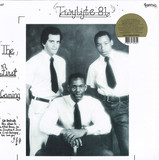
We are very proud to presents this official and first ever reissue of The First Coming, by Twylyte ’81, an extremely rare and underrated Soul-Jazz album produced and released in 1981. Twylyte ’81 was a 3 pieces band composed of Frank Jones Jr., Alfred Brown Jr. and John
Belzaguy, who, except for John, have never recorded anything else than this incredible album. The First Coming is primarily standing out by a superb composition, mixing touch of Soul, Jazz, and Disco together. It secondly shines thanks to the amazing deep and spiritual
voice of the band leader, Frank Jones Jr., whose vocals style can sometime remind of John Lucien. Even more impressive is the fact that these 3 fellas were all less or close to 18 years old when composing and recording this beauty. As did others brilliant hidden projects such as Ted Coleman Band, or Minority Band, it was also useful for Twylyte ’81 to receive the support of JSR Records, a kind of non-profit label dedicated to help young bands and artists in recording and producing their own records. Here are a few words from Al Brown Jr. about this release: “After 38 years, I still have the euphoric feeling while listening to this album. I would say that this was one of my greatest achievements. I want to say "Thank you" Pascal Rioux and associates for sharing the group's vision with the rest of the world. I pray the listeners will feel a portion of what we tried to convey through these songs. When I first began this project, I thought it was just killing time. Being 17 years old at the time, I didn't see the music we worked on being recorded. We (Frank and I) were in a basement practicing each song. Who knew that this music would be recorded let alone picked up 38 years later? I still remember every beat, drum roll, every stop/start; everything. Wow, the nostalgia of it all. I wish this album much successful and I hope in the future I can perform this album live.
'Postlude' is the second release on Solitary Dancer's new imprint, Private Possessions. After having released on some of the world's most esteemed underground labels such as Dark Entries, Graded, and Optimo, Private Possessions was borne out of a desire to control all aspects of output pertaining to the development, creation, and dissemination of their music, video, and other media. Following their debut LP 'Rites Of Passage', 'Postlude' is a three-track affair which juxtaposes two of the album's floor-focussed cuts with an extended version of 'Test Dream'. The latter has been processed into a 15-minute "Devisualization" using degradation techniques that slowly destroys the piece over time, harkening the ever-changing lucidity and memories of our own dreams.
- A1: Unstop (Feat Starrlight)
- A2: Kiss The Pain (Feat Myriam Sow)
- A3: Urban Chemistry (Feat Keny Arkana/Big Shug)
- A4: Reign On Me (Feat Mann)
- A5: Veni Vedi Vici (Feat Gavlyn)
- B1: War Chemicals (Feat Stranjah Miller)
- B2: Body's Jumping (Feat Celia Kameni)
- B3: Take Me Along (Feat Tairo)
- B4: Therapy (Feat Lmk)
- C1: Be Strong (Feat Dave Dario)
- C2: Lyrics Fly (Feat Lord Kossity)
- C3: Molecular (Feat Jah Mason/Rocca)
- C4: Lion Science (Feat Sr Wilson)
- C5: Money Change (Feat Skarra Mucci)
- D1: Firetricity (Feat Sizzla)
- D2: Rise Up (Feat Lyricson)
- D3: Me & My Sensi (Feat Charly B - Dj Niakwe Cuts)
- D4: I Try (Feat Q)
AFU-RA comes back with the project "Urban Chemistry" mixing Hip-Hop, Reggae and Soul, produced by Digital Cut, to be released in February 2020 on X-Ray Production. On this new album, AFU-RA has invited one or more guests on each of the 18 tracks such as Sizzla, Jah Mason, Keny Arkana, Lord Kossity, Big Shug or Mann... Thanks to an exclusive collaboration with the brand Canna, all songs have been filmed in 15 cities in 8 different countries.
Hailing from the New-York underground Hip-Hop scene, AFU-RA has sold more than 700,000 copies of its first 4 albums. Through these projects, he has collaborated with many artists such as Guru and DJ Premier but also Wu-Tang's RZA and GZA, Ky-Mani Marley, Saian Supa Crew ... to name a few. Over the years, the former member of the Gang Starr Foundation has created a style of his own: striking flows on militant and conscious lyrics and a visual universe inspired by martial arts.
- A1: Gregorio Garcia Segura - Harlem Pop
- A2: Los Brandis Con Maria Nevada - Life's Song
- A3: Lin Barto - Sax Pop
- A4: Blas & His Friends - Supermarket
- A5: Jorge Enrique - Go Go
- A6: Roberto Serrano - Retorno
- A7: Rafael Martinez - Funny Comics
- A8: Orquesta A Latorre - Hotel Don Felipe
- A9: Orquesta Miramar - Pop Song
- A10: Conjunto Nueva Onda - A Su Aire
- A11: Ramon Gil - Mercurio
- A12: Mesie Bato - Violeta
- A13: Red-Key - Morning
- A14: Unidades - Caballo Salvaje
· This compilation features the rarest and unknown instrumental tracks of that Funky Groove early sound.
· Light music along with wind section and keyboard ready to hit the dance-floor, that we call Spanish-Grooves.
· Composers, musicians & arrangers like Gregorio García Segura, Rafael Martínez, Antonio Barco, Antonio Latorre, Jaime Botey, etc.
During the 70's, an important number of orchestras and dance bands popped up in our country but not many of them released their own songs or covers on vinyl, so we can’t say that our music library has bulky volumes, rather it’s just the opposite.
You have to dig deep in the catalogue of obscure record labels to find some quality pieces, which we will usually attribute to Tinglado 13, Conjunto Nueva Onda, The Matches, Conjunto Don Pelegrin, Rafael Martínez, Carlos de Ros, Salgado y su Grupo, Mesié Bató, Pedro González, Jorge Enrique.
Most orchestras played bossa nova, soul, some lounge and easy listening, and a usual mix of light music with wind section and keyboards, something like “spanish-soul” or “rhythm'n'blues-pasodoble”.
It was a time when the bands survived playing shows with a repertoire based, mostly, on Spanish popular songs and international hits.
Many artists recorded with nicknames, many others used licensed songs paying rights to the original authors and some orchestras changed their names when they pressed their records, in an attempt to appear modern or simply for pure commercial purposes, that's why it is difficult to trace accurately the musical path of many of these artists. This scene was especially intense in Aragon and Catalonia, where a bunch of labels emerged, often simply as platforms for bands to promote their own music.
This compilation aims to discover to a wider audience some of the most sought-after instrumental gems by discjokeys and disco music collectors, eager for soul, groove and hot sounds.
- A1: Red-Key - While New
- A2: Ray Martin - Supergama
- A3: J Tenafly - You
- A4: Nick Wilson - Sugestion
- A5: Blas & His Friends - Todo Tu
- A6: Conjunto Olivino - Cataluna Rag
- A7: El Conjunto De Rafael Martinez - Ritual Song
- B1: Conjunto Nueva Onda - Chacal Blues
- B2: Greg Segura Y Su Orquesta - Safari
- B3: Jorge Enrique - Siero Pop
- B4: Orquesta Miramar - Sagitario
- B5: Dany Roy & His Band - Intermision Pop
- B6: Sarr Incony - Afro Special
- B7: Mesie Bato - Amanecer
· This compilation features the rarest and unknown instrumental tracks of that Funky Groove early sound.
· Light music along with wind section and keyboard ready to hit the dance-floor, that we call Spanish-Grooves.
· Composers, musicians & arrangers like Gregorio García Segura, Rafael Martínez, Antonio Barco, Antonio Latorre, Jaime Botey, etc.
During the 70's, an important number of orchestras and dance bands popped up in our country but not many of them released their own songs or covers on vinyl, so we can’t say that our music library has bulky volumes, rather it’s just the opposite.
You have to dig deep in the catalogue of obscure record labels to find some quality pieces, which we will usually attribute to Tinglado 13, Conjunto Nueva Onda, The Matches, Conjunto Don Pelegrin, Rafael Martínez, Carlos de Ros, Salgado y su Grupo, Mesié Bató, Pedro González, Jorge Enrique. Most orchestras played bossa nova, soul, some lounge and easy listening, and a usual mix of light music with wind section and keyboards, something like “spanish-soul” or “rhythm'n'blues-pasodoble”.
It was a time when the bands survived playing shows with a repertoire based, mostly, on Spanish popular songs and international hits.
Many artists recorded with nicknames, many others used licensed songs paying rights to the original authors and some orchestras changed their names when they pressed their records, in an attempt to appear modern or simply for pure commercial purposes, that's why it is difficult to trace accurately the musical path of many of these artists. This scene was especially intense in Aragon and Catalonia, where a bunch of labels emerged, often simply as platforms for bands to promote their own music.
This compilation aims to discover to a wider audience some of the most sought-after instrumental gems by discjokeys and disco music collectors, eager for soul, groove and hot sounds.
Despite working often alone, Savvas Metaxas is someone who rather thinks in terms of community and connectivity, who prefers alliances over ego, who is a sound artist as well as a musical activist.
Coming from Thessaloniki, Greece, he co-founded Granny Records, puts up local shows, worked with the Goethe Institute, did site-specific sound installations in London, collaborates with other experimentalists like Spyros Emmanouilidis and released brilliant albums on fellow tape travellers Coherent States and Falt, among others.
Why is it important for us to write down these trophies/landmarks/selling points? Because Savvas is not at all about trophies/landmarks/selling points, he is about connecting things, and this, in our humble opinion, is one of the most fundamental qualities of experimental music, and experimental art in general. It is about rearranging disparate materials, transcending different layers of reality, speaking without the use of words or clear significants.
On the four tracks of „Transmitter“, he is exploring sound in a classical set-up, experimenting with chance-operational radio frequencies and their impact on harmonic structures extracted from synthesizers.
The result are compositions with a haptic quality, a glimmering, grainy music that is directly effecting the room in which it is played in. So despite its broad frequential range: don’t play this tape too loud, as it really interacts with its surroundings. Hence, the names, or rather name tags of these tracks are mostly devoid of interpretation and are purely descriptive. „Words“ is, easy to suggest, a composition based on a voice talking in greek, while „Stormy And Colourful“ is a specification of what is heard on that piece. These two are framed by „Heterodyne“ and „Paradoxical“ - characterizations of the techniques used in the working process.
The artwork of the tape is a continuation of this work method. Clear structures, using the specially built typeface and the spinning of letters and words to manipulate perception and to obstruct a simplification, reducing the logic of words to a sign language that obliterates meaning and identity, a process which, as Simon Reynolds put it, induces ecstasy.
ISAN’s Robin Saville reveals an ambient album, which merges the Electronica aesthetics of his main project with field recordings, drones and acoustic instrumentation.
A lot of things have been written about what happens to the mind when the body starts moving. Instead of reciting poems of the inevitable self-help books, let’s get straight to the point: For many, taking walks on a regular basis is both liberating and empowering. It is not necessarily so much about the exercise, but rather finding one’s own rhythm in life. Robin Saville – of ISAN fame – is such an ambler His walks inspired him to base his third solo album – his first one for Morr Music – on the out of the way places he came to see and experience while being out and about.
Clocking in at just under 40 minutes in total, "Build A Diorama" is both a subtle culmination and a poignant antipode to what Saville has achieved together with Antony Ryan as ISAN. While the aesthetics might seem similar in places, Saville opts for a decisively different pace when it comes to writing and producing. Progress is steady, and change, however, is slow – like looking at a diorama for a long period of time in the ever so slightly changing light or as a flaneur focussing on one particular spot, a found object so-to-speak, waiting for the mind to orchestrate it appropriately, giving it sense and meaning.
Built around quiet field recordings, Saville’s six compositions transform this highly personal and, therefore, difficult-to-convey experience into a comprehensible exploration of beauty. Where ISAN almost exclusively uses electronics, Saville deliberately expands this well-established palette with acoustic instruments like bass guitar, chimes and glockenspiel, aiming for an even more suitable musical manifestation of what the walker sees and feels once he fully engages in his passion. Ranging from blissfully pulsing pads allowing for complete associative freedom ("The Deepdale Halophyte Economy") to the playful minimalism of an orchestra dominated by busy bells ("Bosky"), Saville’s "Build A Diorama" is not just a valuable addition to his musical output, but an essential audio guide for those striving to explore, learn and understand.
London-based folk-psych-country band The Hanging Stars return with their eclectic third studio album, A New Kind Of Sky, due out on 21 February 2019. Carrying on their exploration of transatlantic psychedelic folk and cosmic country, the new album blends twelve-string, harmony-laden lullabies with soft rock anthems to create a guilded box of bucolic folk-rock. As well as the band’s signature wistful pastoral escapism, there are lyrical concerns about the recent past; the systematic division of people, values, facts and humanity in The West in general - and the UK in particular. The band weave the same thread they have always woven but this time with a more unified vision, creating a kaleidoscopic poncho for these times.
The Hanging Stars comprise songwriter, singer and guitarist Richard Olson, Sam Ferman on bass, Paulie Cobra on drums, Patrick Ralla on guitars, keys and vocals, and renowned pedal steel player Joe Harvey-Whyte. Returning guest Collin Hegna from Brian Jonestown Massacre plays an instrument called a Marxophone on “Choir of Criers”. They also welcome Sean Read of The Rockingbirds and Dexy's Midnight Runners, who adds horns to “Three Rolling Hills” and “I Was A Stone”.
The main bulk of the recording for the new album was done live in the studio at Echozoo in Eastbourne with Dave Lynch. For the first time, the band decided to dive straight in to the recording studio following their German tour in 2018. Having lived in each other’s pockets and playing their new songs every night, the band were as tight and primed as they could possibly be. There ensued a few, very long, days of recording, capturing the essence of the band in their element.
The songwriting process was even more collaborative for this album, with the usual co-writes between Richard Olson, Sam Ferman and Patrick Ralla enhanced by Joe Harvey-White’s arrangements and Paulie Cobra’s harmonies. The biggest difference is that Sam Ferman sings lead on the first single “‘(I’ve Seen) The Summer in Her Eyes”, a song about lost love and self doubt channeled through two and a half minutes of garage pastoralism.
The album’s title track “A New Kind of Sky” tells a story from the point of view of somebody who idealises a past that never existed. The band go glam-rock on the stand-out track “I Will Please You”, a tale of a cult leader/world leader and his irresistible (for some) charm from the point-of-view of his most recent victim and “Heavy Blue” is a country music tale of drunken debauchery seen through the eyes of an inexperienced young man. The triumphant trumpet-driven song “These Rolling Hills” is a minor-key tale of a journey into the hills of Marin County, California undertaken by Paulie and Richard to visit friends Asteroid No. 4, with a most interesting outcome.
The Hanging Stars released their debut album Over the Silvery Lake in 2016, which received plaudits from broadsheets such as The Times, who described it as; "An album with enough of a hazy, sun-dappled charm to make the capital's dreariest weather bearable”, as well as The Guardian, who said; “Mersey-laced harmonies and just a whiff of the Gun Club.” They picked up a good amount of support at 6 Music and “The House on the Hill” scored a much-coveted 10/10 by John Robb on Steve Lamacq’s Roundtable.
Their second album Songs For Somewhere Else in 2017 received critical acclaim from the likes of Uncut (Revelations article), Shindig (several features and 4* review) as well as The Quietus and The Line Of Best Fit, plus radio support from Gideon Coe and Bob Harris (they performed an Under the Apple Tree Session for Bob Harris in January 2019).
Whilst playing their own successful sold-out headline dates, the band were invited to share the stage with Teenage Fanclub, The Clientele, Wolf People, The Long Ryders and GospelbeacH, as well as playing festivals such as Liverpool’s International Festival of Psychedelia, Red Rooster, Ramblin' Roots, UK Americana Festival and The Long Road.
Collocutor enter a new decade with the timeless, introspective Continuation. Continuation is a remarkable work in which the interplay of emotional experience and life motion experienced by band leader Tamar Osborn AKA Tamar Collocutor is channelled and explored by Collocutor.
The band's third LP assuredly strides forward following the critical acclaim awarded to 'The Search' from 2017 from the likes of The Wire, Vinyl Factory and Gilles Peterson. Continuation is an album about coping with grief and loss/bereavement: The music charts the many (and sometimes surprising) emotional states encountered, moving from acknowledgement, trying to keep 'normal' life going, the need to sometimes put a pause button on the world/existence and let the waves of feelings crash and roll, sudden anger & confusion, finally to moving (perhaps with uncertainty) forward.
Tamar Osborn has led Collocutor through a line-up shift from septet to quintet for Continuation. The modified line-up creates space for the musicians to express themselves through the shadows of Continuation's movement. The quintet allows for more group improvisation, based on just a few motifs and thereby giving the musicians more space to converse. The tracks Lost & Found and in particular the album's title track, Continuation (the only piece with 3 horns) hark back to the intricate arrangements of 'The Search'. It's a deeply personal album, the writing of which acted as Tamar's way of processing and understanding experience and the need to channel feeling.
In listening truly 'Continuation' bares that rare and precious gift of a morsel of the human experience being illuminated by artistic genius.
Zenit is a jazz ensemble from Krems in Lower Austria, founded in 1976 by Hannes Treiber and Willi Langer. Their music was celebrated locally, but to reduce them to their local fame would be a shame: After all, their first two LPs, Stimmungswechsel (Change of Moods) and Früchte (Fruits), quickly gained them a much wider audience of discerning listeners. Arguably, however, Zenit’s third and final LP Straight Ahead is the most special of their records. It initially came out in 1986 on the producer’s label Spray Records, and is today one of the hardest-to-find Austrian jazz records. Its centrepiece is the infectious slow-motion disco piece “Waiting,” with vocals by American jazz singer Linda Sharrock. Effortlessly bringing together pop, soul and new age vibes, this is a record that is as unique as it is difficult to date. Does it sound like from the 80s? We’re not sure. To our minds at least, it could also be from the future.
Changes, always changes! That is the path than an artist travels in his musical career. But road always as a goal. And Jesus Gonsev gives us one of them in his first album as an artist. Eight tracks for enjoy this long tour and see his influences on it. An album where different styles are played, Deep House, Breaks, Electro, Techno. But harmoniously converge with that characteristic Gonsev's touch. Now is the time to start this journey by placing the needle on the vinyl. Do you want to change your life? A new life...
Molecular Meditation is a bespoke light and sound environment featuring the voice of the Fall's Mark E Smith. Smith is heard making observations on mundane objects, events and a range of meditation techniques basically associating his discontent with an apolitical british upper class. His voice forms the narrative component of an electroacoustic composition by Jan St. Werner placed in a hyper-real scenario evoking a state of transformation and deceleration.
Molecular Meditation premiered at Cornerhouse, Manchester in 2014. This album presents a re-edited and remastered stereo version of the original multi-channel piece. Voice and guitar feedback were recorded at Blueprint Studios Manchester, electronics in Werner's St.udio in Berlin. The B-side consists of unreleased new work partly written around the same time as Molocular Meditation in context of Werner's Fiepblatter Catalogue on Thrill Jockey. Back to Animals is a non-metric rhythmic exercise frantically hybridizing percussive accents with synthesized pulse.
On the Infinite of Universe and Worlds is an electronic opera based on Giordano Bruno's Renaissance writings which Werner was asked to conceptionalize for new music festival Music Nova in Finland. VS Canceled finds Mark E. Smith reading an email from Domino Records explaining their discontinuation of the Von Sudenfed project a band Mark E. Smith had founded with Mouse on Mars' Jan St. Werner and Andi Toma in 2006. Their debut album Tromatic Reflexxions came on Domino out in 2007. The vinyl record, cut with a diamond needle, provides as much acoustic depth as the digital version.
17 Steps present ‘New Atlantis’, a 5 track EP from versatile DJ, producer and dance music historian Chrissy.
The EP takes its name from an unexpected source – a 17th century utopian novel of the same name by Sir Francis Bacon, depicting a future society in which science has become the ruling principle. It’s an inspiring idea for Chrissy – an antidote to the assault on truth and intellectualism led by climate change deniers, anti-vaxxers, flat earthers, creationists, unfit-for-office demagogues and the slow suffocation of fact-based journalism.
‘New Atlantis’ explores the utopian worldview implicit in early rave music, drawing on classic Chicago house, UK hardcore and Drexciyan electro. The result is a collection of jacking breaks and bass infused dance music washed with a bittersweet euphoria – celebrating and lamenting an era’s forgotten optimism.
Melodies International are glad to step forward with their latest reissue and 19th release, exploring the sounds of London locals Synchrojack: Daylight and 900th Lifetime, two slabs of mid 90s UK house at its best. MEL019 will be available in January in vinyl 12-inch format.
Melodies International is a reissues record label based in London founded by Floating Points in 2015, dedicated to unearthing, restoring, contextualizing and offering new leases of life to the best of scarcer and lesser known soul, disco, jazz, house and beyond.
Originally from Portsmouth in the UK, Synchrojack is a London based production duo formed by Dean Slydell and Greg Wheeler in the mid 90s. Both deeply into records and production gear, they connected through figuring out how to set up a shared studio in Dean's parents' home and starting to produce electronic music in their late teens.
They were completely taken over by the sounds of Detroit and Chicago that were getting imported at the time. Starting out trying to emulate those sounds they loved, tracks by Model 500, Glenn Underground, Lil Louis, Steve Poindexter and Mike Dunn among many others, what came of Dean and Greg's sessions wasn't a carbon copy but their own distinctive sound.
They began releasing on Russ Gabriel's mythical UK label Ferox records in 1995 and would go on to release a string of releases throughout the 90s, using the moniker Downlink as well. MEL019 presents two tracks by Synchrojack, one from each of their two first EPs released on Ferox, both in 1995.
Above anything, what's clear listening to Synchrojack is their deep love, knowledge and appreciation for music and their talent as producers, channeling their many influences into their own sound. Daylight is a bouncy, stripped back drum heavy banger that just steams ahead with percussive synth patterns and a hypnotic deep bassline whilst 900th Lifetime brings a dramatic sci-fi vibe reminisent of some of the best out of Detroit.
A member of popular techno trio Agents of Time, Italian artist Fedele goes solo AF on his Turbo debut, No Mercy for Beginners. Against the backdrop of a nightmare international tour experience, Fedele channeled his negative feelings away from people and into creating darkly euromotional dancefloor catharsis. Try it sometime.
Sharp-eared lovers of listening may notice that lead track “Riot Revolte” purloins the loin jewels (the street-tough vocals) from Tiga’s 2004 classic, “Pleasure from the Bass.” DJ Hell noticed the shit out of this, introducing a mutant variation on the PFTB baseline into his lurid after-hours remix. Moreover, the entire EP recalls the legendary run of killer electro records that kicked off what many, many people refer to as Turbo’s Silver Age in the early-mid 2000s. This may be utterly meaningless, or it may herald the coming era of compressed cyclical time that will dictate dance music taste in the 2020s with the sort of mathematical precision rarely found outside pie chart software. Either way, you heard it here first.
- A1: Electrify
- A2: Paradise
- A3: Everyday Folk
- A4: Small Farm
- A5: Tnt
- A6: Songbird
- B1: Mariner
- B2: Happening For Love
- B3: Change For Tomorrow
- B4: Viva
- B5: Island
John Power is the singer, songwriter and guitarist known as the frontman of Cast and previousle from the La’s. Following the split from Cast, Power released three solo albums, his first solo album is
Happening For Love (2003). Highlights include; ‘Small Farm’, ‘Mariner’, ‘Happening for Love’, ‘Paradise’ and ‘Electrify’.
* "The Longest Sleep Through The Darkest Days" is the sophomore album from Plymouth shoegaze post-pop electronic project Winterlight. The project was originally a solo endeavor started by Tim Ingham back in the mid-oughts but now sees his daughter Isabel taking on bass guitar duties.
* This new album is the culmination of nearly seven years of on and off creative spurts, false starts, and second guesses reflecting the turmoil hinted at in the album's title. Yet those that follow Winterlight know Tim's been making music pretty much all along and releasing occasional demos via his Soundcloud.
* This lengthy process has yielded one resounding result: If it ain't broke, don't fix it. "The Longest Sleep Through The Darkest Days" has all the Winterlight earmarks: divine organs, thoughtfully constructed drums, the occasional electronic flourish and, Oh... Those immaculately soaring guitars! While Ingham considers Winterlight to be post-pop, and for the most part the duo still brings those melodies to the table in spades, there are some unique changes happening under the surface in the album's bookends that move way beyond simple ear candy. This shows The Inghams are starting to take risks while still staying true to the original vision for the project.
Multi-instrumentalist and composer David 'Dijf' Sanders combines a broad mix of styles with a boundless approach full of multicultural blends. The Ghent based artist has always been working on various projects, collaborations or productions at the same time - lately he worked with Warhaus, Sylvie Kreusch, Mattias De Craene's MDC III and Wim Vandekeybus (Die Bakchen - Lasst uns tanzen), to name a few - but that did not keep him from releasing successful solo records as well.
Dijf, who was a member of the (synth)pop bands Teddiedrum and The Violent Husbands, already raised excitement with the exotica-oriented 'Moonlit Planetarium' (2016), an album that created an experimental clash between percussive, ethnic sounds and rather Western beats, occasionally topped off with his mysterious vocals.
After the acclaimed eclectic gem Java (2017) for which he recorded in Indonesia, Dijf Sanders sets off on another musical adventure to another part of the world. This time it is a world infused by Nepalese, Tibetan, Chinese and Indian culture. Dijf traveled to Nepal, and used his field recording and impressions to create a new universe together with drummer Simon Segers, Saxophone player Mattias De Craene and sitar player Nicolas Mortelmans.
Expect a sound trance where monk chanting, eclectic beats but also mantra style techno will be fused. Namaste!
* Carlton Livingston, is a well known Jamaican Reggae artist, who started his career in 1978 at Channel One (Ja) with the track: ‘Tale Of Two Cities’. Subsequently he recorded for many JA ‘labels’, Studio One, Thirllseekers, Taxi, Dynamite and others. His most notable and best known recording is ‘100 Weight Of Collie Weed’ for Percy Chin (Jah Life Rcds). The album which features the track is still available (Greensleeves).
This release, recorded for producer Phillip ‘Gadd 59’ Whittaker, features a new song on an up-dated original mid 1960’s Rock Steady rhythm, ‘Bum Ball’, courtesy of Derrick Morgan OD. The Vocal & Dub have been mixed by Russ (Disciples) at …studio..
This album was recorded during Thollem's 2017 residency at Brooklyn-based multi-discipline mecca Pioneer Works. It's the second by Radical Empathy, which combines three uncategorizable improvisors. Michael Wimberly has been astonishing folks since his days in Charles Gayle bands and Steve Coleman & Five Elements in the early '90s, and has gone on become a composer and educator of note. Nels Cline has spent decades changing people's ideas about the role of the electric guitar in multiple contexts, ranging from Wilco to Anthony Braxton (think about that!) as well as many projects as a leader; this is his fourth album in trio with Thollem, and a fifth will follow next year, also on ESP. Some people have given ESP-Disk' flak (and "flak" was not the first word choice here) about putting out Thollem McDonas albums. "He's not in the jazz tradition," they say, and even though their idea of the jazz tradition includes Albert Ayler, we like to think that this album will make their little, closed minds explode.
Led by some of Senegal's most famous singers, like Youssou N'Dour and Laba Sosseh, Star Band achieved the perfect gumbo of Cuban and Senegalese sounds. Changüí, Guajira, Salsa, and Son mingled with cosmic Mbalax guitars, Sabar rhythms, Afro-Latin horns, and Spanish vocals spiced with a Senegalese twang.
With just two microphones and a four-track Revox tape recorder, Ibrahim Kassé, Star Band's founder and owner of Le Miami nightclub, recorded their entire catalog in his venue. Each album contained one stand-out Afro-Cuban tune, often covers of Cuban classics or original compositions using the deep, layered sound that had evolved over centuries from the roundtrip journey across the Atlantic. Six of Star Band's most psychedelic Afro-Cuban tracks, an ode to their finest hour, are selected here.
Remastered in the original mono, and accompanied by 12-page booklet containing an essay on Cubanismo in Senegal, a rare interview with Star Band guitarist Yakhya Fall and vintage photos from his personal collection, this album is the soundtrack to a time when Cuban music was the future for 1970's Senegal and commemorates the anniversary when another way — the Cuban way — was possible.
At home, in the islands of Cabo Verde, there was grog, or grogu, a strong sugarcane moonshine not dissimilar to Colombian aguardiente, copiously consumed at Funaná parties. In the diaspora, in Europe, there was leite quente (hot milk). "I can still remember the taste of the first leite quente I drank in Lisbon," says Antonino Furtado Gomes, Pilon's drummer and current band leader.
Synthesize the Soul, Ostinato Records' second compilation, revealed chapter one of the Cabo Verde cultural story in Europe, zooming in on visionaries like Paulino Vieira who made Lisbon the headquarters spearheading the musical revolution taking place within Cape Verdean emigre communities across Europe in the 1980's. Musicians from across the diaspora would eagerly travel to the Portuguese capital to record.
Grupo Pilon represents the second chapter of the Krioulu diaspora story. In smaller pockets, second generation musicians were independently contributing to one of the most lush periods of cultural innovation by immigrants in Europe. In Luxembourg, in 1986, a group of teenagers formed the largely unknown (outside of Cape Verdean circles) but consistently brilliant band named after the blunt instrument used in the islands to pound corn for Cabo Verde's national dish, cachupa.
With only five members, Pilon combined searing estilo Krioulu drumming and the hybrid ColaZouk style with blissful synth work and rugged guitar licks, creating a stripped-down, addictive sound that masterfully straddled two worlds, a seductive electro-Funaná carnival born from the first few sips of hot milk.
The band drew from the inspiring political changes of the day: the release of Nelson Mandela in South Africa and the fall of the Berlin Wall. The right to democracy became a constant theme in Pilon's songs.
With access to better opportunities than their parents' generation, Pilon's roster were part time musicians. Music was not part of their academic upbringing nor a full-time gig. Their rhythm and style were wonderfully imperfect, made out of rawer skills and inexperience. Pilon did not follow the templates established by revered Cabo Verde bands. Keyboard player Emilio Borges played off beat and the band preferred arranging their songs to start from the beat normally heard in the middle of a composition rather than the beginning.
These two elements made Pilon's music simple, unique, and inimitable. From 1997-2015, a lack of concerts and professional musicians proved near fatal. Today, Antonino and what remain of the original quintet are slowly piecing back together the puzzle of their once mighty outfit from an unlikely pocket of Europe. In it's heyday in the 90's, Pilon serenaded audiences in Paris, Lyon, Marseille, Lisbon, Rotterdam and Frankfurt, securing their reputation as a respected and unifying cultural force.
This LP, drawing from the six most powerful songs from Pilon's three-album catalog, is the serving of still fresh leite quente to spice the summer and maybe even fuel the next generation of musicians in the Krioulu corners of Europe.
White Vinyl 10"
A new release this winter marks a landmark moment in an important musical story. Way back in little 2009, the label hfn music was born in Hamburg, and made its introduction to the world with the release of the Trentemøller compilation Harbour Boat Trips: 01 Copenhagen.
Founder Tobias Lampe wanted to start a label that was more broad in scope than his previous, more electronic-focused projects, and the compilation provided the perfect opportunity to launch one. In the 10 years since then, the label has survived the whirlpool waters of the early 21st century’s constantly changing music industry, and released everything from pop to art-punk, with artists ranging from New York to the Faroe Islands.
Now, they’re about to put out their 100th release. Fittingly, given the label’s focus on new and innovative music, and the historic aspect of the release, hfn100 sees one of hfn’s best songs of 2019 put into the hands of the man it all started with, Anders Trentemøller. His Danish compatriots Blaue Blume’s new album Bell Of Wool is one of hfn’s standout releases this year, and so hfn100 sees Trentemøller remix one of that record’s standout tracks, the fragile, but soaring “Lovable”.
In Blaue Blume’s original, “Lovable” is an airy, tormented song, a gossamer-delicate composition that carefully stitches together layers and layers of shining synths that gradually build up and up into a peak, before crashing into a subtle beat, a musical journey that mirrors vocalist Jonas Smith’s trip from anguish to numbness. Whereas the original’s music sounds woven together from light, Trentemøller takes it into darker territory. He hooks the song to a harsh, sparse beat leaving Smith’s vocals bare and isolated in the burnt-out, dystopic musical landscape he creates.
Trentemøller mirrors the original’s careful building up, adding new elements to fill in the song’s sound, before it collapses into a tough, noir disco groove. It’s a perfectly realised remix – Trentemøller keeps the original song’s skeleton and soul, but fills in the space with sonic touches that could be no one else’s but his.Ultimately, it’s a fitting song for hfn’s hundredth release. For a label that’s always been a platform for its boundary-pushing artists, a collaboration between two of them, that sees an already innovative song pushed into a bold new shape is the perfect way for hfn to step into the next 100 releases..
To call Marcos Valle 'a legend' of Brazilian music is much more than just easy press-release hype. As singer, writer, musician and record producer, Marcos has played an integral role shaping the sound of the country’s music from the 'golden era' of the 60's and 70's, through to the modern day. Alongside his brother, Paulo Sergio Valle, they have penned a huge catalogue of classic songs, not just for themselves but for other greats such as Elza Soares, Astrud Gilberto, Claudia to name a few.
‘Braziliance!’ takes things back to the early heady days of Marcos’ career with the bright and optimistic sound of Rio's Bossa Nova scene. It includes an instrumental version of ’Crickets Sing For Anamaria’ or 'Os Grilos’ in Portuguese, which would also be re-recorded with vocals. Though only in his early twenties at the time, ‘Braziliance!’ depicts very sophisticated production for a musician so young. Recorded in 1966, produced by Louis Oliveira and Ray Gilberts with arrangements by the very talented Emir Deodato, the album was released on Warner Bros. Records.
The artwork presents a very clean-cut, wholesome looking Marcos but darker things were around the corner for Brazil. The ‘Tropicalica’ movement was on its way and about to shake thighs up both musically and politically.
Unlike some of his Bossa Nova contemporaries, Marcos continued to stay relevant, surfing the changes and adapting to the musical developments that culture and society projected and needed, without comprising his art. Under exclusive license to Light In The Attic Records & Distribution, LLC | Mr Bongo Records.
- A1: Venus Loon
- A2: Sound Pit
- A3: Explosive Mouth
- A4: Galaxy
- A5: Change
- A6: Nameless Wildness
- A7: Teenage Dream
- B1: Liquid Gang
- B2: Carsmile Smith & The Old One
- B3: You Got To Jive To Stay Alive - Spanish Midnight
- B4: Interstellar Soul
- B5: Painless Persuasion V The Meathawk Immaculate
- B6: The Avengers (Superbad) (Superbad)
- B7: The Leopards (Feat Gardenia & The Mighty Slug)
Zinc Alloy and the Hidden Riders of Tomorrow is the 1974 album by Marc Bolan and T. Rex. The album was preceded by hit singles “The Groover” and “Truck On (Tyke)” includes the follow-up hit “Teenage Dream”. The results of listening to black radio stations whilst touring the US during 1973 are apparent on this album, something of an oft-overlooked treasure trove.
Remastered by co-producer Tony Visconti and Ted Jensen.
- A1: Adam E Eve (Feat Patrick Tulippe)
- A2: Ansanm Pou Demen (Feat Henri Louis)
- A3: Konsyans (Feat Patrick Tulippe)
- B1: Elwa (Feat William Casse)
- B2: Yenki Sa An Pa Enme (Feat Leonard Zozio)
- B3: Kan La Line Leve (Feat Francois Dinane)
- C1: La Gwadloupeyen (Feat Thierry Dernault)
- C2: Latilye Valo (Feat William Casse)
- C3: Lekiri A Misie O (Feat Francois Dinane)
- D1: O La Ou Te Ye (Feat Francois Dinane)
- D2: O Moman Lesclavaj (Feat Patrick Tulippe)
- D3: Yo Pe Ke Jen Chanje (Feat Patrick Tulippe)
Soul Jazz Records continues its journey into the world of Afro-Caribbean roots music with this album of newly recorded music of Gwo Ka music recorded and produced by Soul Jazz Records on the island of Guadeloupe, French West Indies.
Gwo Ka music is a fantastic fusion of African-derived musical form ( call and response), with vocal styles that draw upon the equally powerful French chanson singers to create a truly unique combination.
Tradition Ka, made up of some of the island’s finest singers and master drummers, is part of a powerful network of politicised Gwo Ka groups on the island – upholding the traditions and cultural importance of Gwo Ka as part of a larger process of defining the identity of Guadeloupe and its culture.
This album is newly studio recorded in Pointe-A-Pitre, Guadeloupe by Soul Jazz Records. Like the cult music of Haiti’s Vodou and Cuba’s Santeria or the roots music of Belize’s Garifuna (all of which Soul Jazz have also released), Gwo Ka is the musical and cultural product of the region’s African ancestry, forcibly brought to the Caribbean through slavery.
Gwo Ka exists only in Guadeloupe, a very different island from much of the Caribbean, in that it remains a ‘department’ of its original colonial master, France. Here, the currency is the Euro and the baker sells croissant and café au lait.
This constant ‘European-ising’ of the island means that Gwo Ka plays a fundamental and important role in the defining of Guadeloupean identity. As an African-derived music, its position as a counter-balance to French influence means that the definition of how and what Gwo Ka represents is also in a constant state of flux.
These new recordings show how Gwo Ka is both a modern Caribbean music form and one firmly rooted in ancestral history.
Over the last 20 years Soul Jazz Records have been documenting and presenting the often hidden histories and deep musical worlds of Cuba, Haiti, Jamaica, Belize, Trinidad, the Bahamas and more. This documentation encompasses reissuing lost recordings, such as the mighty Studio One catalogue of reggae, producing films/dvds (such as the 3-hour documentary Mirror To The Soul in conjunction with British Pathé, and Dub Echoes), books (check the forthcoming photography book on the Caribbean 90 Degrees of Shade, with text by Paul Gilroy, and Kanaval) as well as travelling to the region to produce new recordings.
- A1: Concrete & Glass
- A2: Back To Your Heart (Feat Kate Nv)
- A3: We Forgot To Love (Feat Kadhja Bonet)
- A4: What Makes Me Think About You
- A5: Time On My Hands (Feat Kirin J Callinan)
- B1: The Foundation (Feat Cola Boyy)
- B2: Catch Yourself Falling (Feat Alexis Taylor)
- B3: The Border
- B4: Turn Right, Turn Left
- B5: Cite Radieuse
- C1: Concrete & Glass
- C2: Back To Your Heart (Feat Kate Nv)
- C3: We Forgot To Love (Feat Kadhja Bonet)
- C4: What Makes Me Think About You
- C5: Time On My Hands (Feat Kirin J Callinan)
- C6: The Foundation (Feat Cola Boyy)
- C7: Catch Yourself Falling (Feat Alexis Taylor)
- C8: The Border
- C9: Turn Right, Turn Left
- C10: Cite Radieuse
When Air’s Nicolas Godin released his debut solo album, Contrepoint (2015), he channelled the influence of Bach into a rich, resonant and hugely rewarding spread of musical explorations. One soundtrack (A Very Secret Service) later, Godin builds on equally fertile conceptual foundations for the follow-up. Released through Because Music on 24th January, Concrete and Glass is an exquisitely crafted set of variations on architectural reference points: mounted with minimalist precision and delivered with an abundance of pop warmth, it finds Godin in his element, working seductive wonders with poise and style to spare.
For Godin, the album circles back to his formative work as half of ground-breaking French electronic group Air. Revered modern architect Le Corbusier was an influence on the young architecture graduate’s music, notably on his 1997 debut “Modular Mix”. Twenty-plus years later, Le Corbusier featured on a list of modernist architects Godin was invited to compose tributes for, tributes intended to be heard as the soundtrack to site-specific installations around the world.
In its soft ambient pulse and melting minimalism, lead track “The Border” is a perfect entry-point to Godin’s hymns to buildings, arranged and co-produced with Pierre Rousseau. Its levitating synths, vocoder vocals and scudding bass hove into view with understated elegance, all the better to accommodate the discreet slow-build of delicate details within. As with Air, Godin makes gorgeously light work of every angle: this is music that seems entirely unperturbed by gravity, occupying an elevated atmosphere of its own.
Elsewhere, the title-track’s clean synth lines, crisply apportioned arrangements and tender timpani offer another inviting entry-point, sculpted with architectural clarity. While Godin’s vocoder vocals also hark back to Air’s early work, the album accommodates a diverse spread of guest vocalists elsewhere. Hot Chip’s Alexis Taylor guests on the falsetto-soul dream-pop of “Catch Yourself Falling”, one of Godin’s sweetest melodies yet. Oxnard singer/activist Cola Boyy brings soul to the righteously engaged “The Foundation”; the squelchy synths and buoyant grooves burn slow, allowing the stealthy arrangements and message room to resonate. Psychedelic soul singer Kadhja Bonet sings with measured serenity over tremulous synths on “We Forgot Love”, while Russian experi-pop artist Kate NV brings a gracefully aching romanticism to the blissful swoon-pop of “Back to Your Heart”.
Additionally, Australian conceptual provocateur Kirin J Callinan contributes a vocal of restrained drama to “Time on My Hands”, a midnight-drift soft-pop ballad with a silky allure. One of the quickest tracks to record for the album, it emerged in collaborations between Los Angeles (”During some lively sessions in Mac DeMarco’s studio,” notes Godin) and Paris. After he missed his flight home, Callinan stayed in France for a day as the guitar solos were recorded, complementing the song's air of sleek luxuriousness.
Between its title-track and the sultry, smoky jazz stylings of closer “Cité Radieuse”, Concrete and Glass is an album that truly travels, in tune with its global pitch. For Godin, it marks another milestone in a musical journey that began when Air’s 1998 debut album, Moon Safari, became the sublimely weightless soundtrack of its time. For Concrete and Glass, Godin builds on his storied past with tremendous finesse, charm and fluency, opening fresh windows of perspective at every lovingly executed turn.
Andras’Joyful is a cornucopic vision rooted in the decay of dance music from one of Australia’s most distinct yet understated voices. Cutting a path through an overgrowth of nostalgia around 70's acid folk and 90's acid house, Joyful is an invitation to till a n old garden in a glistening new light.
A thirteen year old Andrew Wilson sits in the back of his parents’ sedan, driving down the coast from Melbourne. Headphones covering his awkwardly aged ears and connected to a jam-packed mp3 player, he experiences an intense synchronicity when the car careens over a mountain crest in the Otway Ranges right as the track in his ears peaks. A momentary vision of a “first rave rush,” in which Australia’s lauded party history dances tellingly with this dreamer’s destiny.
Not so much later but perhaps more worldly and certainly more aware, Wilson returns home from touring, now a “veteran” of the dance world, to realize a different synchronicity in his record collection. Finding Ian Van Dahl nestled next to John Fahey, William Orbit spine-to-spine with Shira Small, the harmony between folk music of the early 70's and dance music from the 90s becomes perfectly audible in unimaginable ways.
Through an afterglow from both summers of love seeped in shared sonic soil, on Joyful, Wilson cultivates melodic drama and tenderness, memorable hooks and rapturous arpeggios; sentimental strings summon both joyful aspirations and the shadows of faded dreams. Using folk songs as fodder—lyrics, samples, note progressions—each entry of Wilson’s debut album under his Andras moniker is a return to a different springtime of the mind.
Many artists working in Australia can relate to the feeling of “not quite being there,” as Wilson describes it. Always a couple years behind trend. Turning up at the party as it’s winding down. Fearing that in many ways the culture is looking backwards, confirming the narrow outlook of a parochialism that many have worked tirelessly to disprove. Using this disconnect as an invitation to dream another dream, Joyful becomes the soundtrack of early teen Andrew’s fantasy of Utopic parties past, specifically the late discovery of a bygone warehouse rave scene, as well as a return to a guileless chapter of personal history as heard through plain, sane, and simple folk melodies. Joyful is a homecoming, a testament to the evolving euphoria of a flower garden rooted in earth’s tender rot, of birds and bees flying free but not without a changing landscape in sight.
Andras’Joyful is available on LP and digital formats on January 31, 2020 via Beats In Space. On behalf of Andras, a portion of proceeds from this release will benefit the Invasive Species Council on the recommendation of Tim Low, author of the book Feral Future and Where Song Began.
Released in April 1987, the Happy Mondays debut album was a perfect snapshot of a very different kind of pop culture coming from beyond the fringes. It would be an underground album but a game changer. Produced by Velvet Underground legend, John Cale, this was the accidental sound track for the endless housing estates sailing away from Manchester City centre and into Salford-perfectly captured by this gang of misfits.
With artwork lovingly replicated by original Manchester designers Central Station Design, this album is on vinyl for the first time since it's original release. Featured the singles "Tart Tart" and "24 Hour Party People"
For the first time, Len Faki decides to dish out a full foursome of his Deepspace-mixes, sharing one of the most profound entries into the series yet. Originally released within the last couple of years. The atmospheric and dubbed-out ’Biker Scene’ is one of riding blissfully under a sky illuminated by the milky way, followed by a streamlined update on the soaring metallic shuffle that is ’Depth Charge’, its tribal undertones prowling in the underbrush. The flip tucks NYC‘s Craft‘s wild synth work into a tight corset, channeling its lively energy even more effectively for the floor. Closing out with A Sacred Geometry, the Berlin/Rome-connection‘s finely plucked synths glide above elated pads and a skittering rhythm.
LP IN STOUGHTON JACKET, PRINTED INNERS, OBI STRIP WITH FOUR OF SAMANTHA KEELY SMITH'S INCREDIBLE CONSCIOUSNESS MEMORY LANDSCAPES GRACING THE ALBUM SLEEVE.
The Pyroclasts album is the result of a daily practice which was regularly performed each morning, or evening during the two week Life Metal sessions at Electrical Audio during July 2018, when all of the days musical participants would gather and work through a 12 minute improvised modal drone at the start and or end of the day’s work. The piece performed was timed with a stopwatch and tracked to two inch tape, it was an exercise and a chance to dig into a deep opening or closing of the days session in a deep musical way with all of the participants. To connect/reconnect, liberate the creative mind a bit and greet each other and the space through the practice of sound immersion. The players across the four pieces of Pyroclasts are Tim Midyett, T.O.S., Hildur Guðnadóttir, and as always Stephen O’Malley & Greg Anderson.
The music on Pyroclasts is inextricably woven to Life Metal. It exists on the very same tape reels, was explicitly recorded by Steve Albini. The brightness and vividity of that glorious session glares through these four tracks, the precision and radiance, prismatic lustrousness of the saturation, the elemental sculptural shapes, the abstract renderings. It is a sister, or perhaps a shadow album. Or perhaps the now apparent miasma or aether. But it also exists in a form of a pause, a time space which exist in between and around the compositional structures of Sunn O)))’s titanic works.
For the listener or recipient/participant there are deep rewards within the patience of pulling down the walls and letting the music feel, and feel the music. To be immersed will reveal great detail and colour, clarify image, encourage a depth of focus and stillness which may lead to a quite profound experience. Sitting inside the space of time. A deep form of elementalism, even atomism, and connection with presence moment, time and reality.
Sunn O))) would invite their audience to consider these points of perception when experiencing and listening to Pyroclasts. Sunn O))) would also invite and encourage the audience to use Pyroclasts as a lens to review and reexperience the complexity of the Life Metal album, and even to interrupt its sequence with Pyroclasts. This elaboration can bring the astute listener both abyssal, hallowed rewards.
Pyroclasts was recorded and mixed by Steve Albini at Electrical Audio on two inch tape July 2018, and mastered by Matt Colton through all analogue AAA process at Metropolis July 2019.
Stephen & Greg would like to dedicate this album to the memories of Ron Guardipee, Kerstin Daley & Scott Walker.
- A1: Get Funky 1933 (Feat The Color Grey, Pomrad)
- A2: Oh Baby 1939
- A3: Royale With G's 2013 With Gramatik
- A4: Roller Disco 1980 (Feat Hi Levelz)
- A5: Overview Effect 1972 With Møme (Feat M I.l.k.)
- A6: Kanagawa Waves 1831 With Fakear, Balkan Bump
- B1: Payeng's Ark 1979
- B2: Cloud Nine 2000 (Feat The Color Grey)
- B3: Time Machine 1985
- B4: Electric City 2015
- B5: Keep Moving Up 1978
- B6: Paris Jazz Club 1920 (Feat Anomalie)
For The Geek and VRV, everything is a matter of time. Since they first met six years ago, the two beatmakers have been broadcasting their music to the four corners of the world, and their collaboration is as strong as ever after the years. Vanguards of the French instrumental hip-hop scene, they’re coming out today with their first album, Time Machine, a synthesis of the sounds and the ideas they’ve been working on from the very beginning of their careers. A trip back through time, as its name suggests, demonstrating the range of sound possibilities that they created in previous projects and on their international tours.
The release of their hit “It’s Because” in 2013 launched them on the scene as French producers who managed to break into the United States, with sampling as their musical base. Closer to home, the Coachella, Osheaga, and Solidays music festivals were won over by the pair’s complementarity, which made the success of their BTOS beat tapes and their EPs, Electric City and Origami.
But since everything is a matter of time, it was sometimes necessary to just let things go, take a break and think things over before coming back even stronger. A year and a half ago, The Geek and VRV started to slow things down, in order to take a step back and concentrate on this new album. With one overriding idea: to explore different eras and time periods, and transpose them into our modernity. Each track is associated with a pivotal year in music. With “Paris Jazz Club 1920”, the first single on the album, we're plunged into the cozy atmosphere of the cabarets, featuring the virtuoso Montreal pianist Anomalie. A meeting made possible thanks to the famous beatmaker Gramatik, who was a fundamental inspiration for their music, and who is also present on the album, as well as the flagship producers Fakear and Møme.
On Time Machine, The Geek and VRV have turned on their time machine to bring us to the year of James Brown’s birth, and find the unstoppable groove of “Get Funky 1933”. Always with hip hop in sight. The explosion of disco inspired them to record “Roller Disco Party 1980”, and the film Back to the Future was behind “Time Machine 1985”. The mixing of different time periods means that the styles, genres and atmospheres are channeled to perfection. The Geek and VRV have been preparing for this trip for five years now. With Time Machine, the time has come for them to begin their exploration, and to take us along for the ride.
Wah Wah 45's are proud to present "Cages", the third album from southern soul boys The Milk. Having released "Favourite Worry", their critically acclaimed sophomore album and first for independent label Wah Wah 45's, in 2015, the band are able to trace the seeds of the latest LP back to their recording sessions with producer Paul Butler (Andrew Bird, Michael Kiwanuka, Nick Waterhouse) almost five years ago, blending elements of soul, funk and rock together to create their own unique sound, inspired by some of their favourite artists such as Bill Withers, Traffic and the Isley Brothers.
"I can't wait to hear you write songs that look outward" - these words from Paul subconsciously had a lasting impression on the band. To atone for more inward-looking sentiments on "Favourite Worry", there had to be a shift in perspective. During the formative stages of the new album The Milk started pursuing a Nichiren Buddhist practice. The values and principles they discovered during this have informed every aspect of the record.
"We wanted to write an album that looked outside of the walls, to people, society and the environment - embracing real freedom in musical expression by utilising more complex rhythmic structures, extended harmony and dissonance to paint an original and authentic-sounding record" explains If their debut, "Tales from the Thames Delta", was inspired by hedonism and "Favourite Worry" by introspection, "Cages" is an impassioned conversation with the world. Racism and division are all on the rise. British society is being pulled apart by forces that seek to divide us and rip the compassion and empathy from our minds and hearts. We have become distracted from the more urgent challenges of boundless consumerism, climate change, and the mental health emergency reeking havoc on our streets.
We are the birds in the cage, tied by cheap thrills and fake news to a limited world vision that is no longer fit for purpose. The good news? We can all choose to challenge this view. "Cages" is equal parts the dark black shadow of how far we've fallen and the blazing sunlight whose rays of hope can still change the world. Four life-long friends, Ricky Nunn (vocals), Mitch Ayling (drums) Luke Ayling (bass) and Dan Le Gresley (guitar) formed their first band when they were still at school in Essex, playing countless working men's clubs, and finally became The Milk.
The band have built up a following of dedicated fans around the UK, which has resulted in them selling out venues such as Scala, Koko and Shepherds Bush Empire. Keen to get back on the road where they feel most at home and where the guys really shine, the band offer up a compelling set of diverse styles, matched with an ability to effortlessly intertwine songs together, gives their music a continuous feel to it. Since signing to Wah Wah 45's, the band released their second album "Favourite Worry", which became one of BBC 6 Music's albums of the year, sold out London's Union Chapel, toured with the Fun Lovin' Criminals and completed a sell-out UK tour climaxing at London's KOKO in Camden town. ... More live dates coming very soon!
- A1: Way The World Is
- A2: You Tear The World In Two
- A3: Sea Of Sound
- A4: True Coming Dream
- A5: Little Hammer
- B1: Insubstantial
- B2: A Deep Sleep For Steven
- B3: Language Of Flowers
- B4: Fell From The Sun
- B5: Sight Of You
- B6: Time Thief
- C1: Sight Of You
- C2: Way The World Is
- C3: Language Of Flowers
- C4: You Tear The World In Two
- C5: Fell From The Sun
- C6: A Deep Sleep For Steven
- C7: Time Thief
- D1: Sea Of Sound
- D2: Insubstantial
- D3: Little Hammer
- D4: True Coming Dream
- D5: She Rides The Waves
- D6: You Tear The World In Two
- D7: Way The World Is
- D8: Time Thief
On the eve of a post-Thatcherite Britain, the Pale Saints, alongside the likes of Lush, Ride and Slowdive, were ushering in a new wave of British indie. And in 4AD, they found a perfect home for their music - an exciting & undeniable meld of noise and dream-pop.
Their debut album, The Comforts of Madness, didn’t disappoint, now standing as one of the best of its era. Pitchfork placed it in their Best 50 Shoegaze Albums Of All Time saying, “There’s a restless urgency, particularly when the volume swells and the rhythms intensify. That energy not only keeps (it) vital, it emphasizes Pale Saints’ inventiveness, how they channelled softness and rage into something distinctive.”
Nearly 30 years on and The Comforts of Madness is finally getting the reissue treatment. Having been remastered, a faithful LP repress on black vinyl is being released as well as double CD and double clear vinyl editions, both of which come with a bonus disc of previously unreleased demos and the band’s only John Peel Session, recorded in 1989.
'Active Imagination' is a result of the bringing together of musicians for a day in the studio, with minimal rehearsal, to collectively experiment and improvise in the moment - in contrast to the more composed and structured recordings of the Paradox Ensemble album 'Awakening' from January 2019. All musicians contributed their distinctive individual voices, creating a united force of spiritual, freeform jazz. Each composition is based on a different mode, all with their own distinctive flavour: "So Long Chef" nod's to Coltrane with its chords jumping by major thirds, before a more static middle section,offering a chance for Walters and Jeff Guntren (tenor sax) to explore the Lydian mode."Ahimsa" is a meditative reflection and group improvisation, based around a simple theme in the mixolydian mode, resulting in a spiritual journey steered by Rebecca Nash's hypnotic piano solo. "Gordian Knot" was conceived as a vehicle for Ed Cawthorne (aka Tenderlonious) to cut loose on soprano sax in the phrygian mode, which he achieves with devastating effect, backed up by Nim Sadot's infectious bass hook and complimented by an equally striking trumpet solo from the band leader. Finally, "Dansoman Last Stop" uses the dorian mode to channel the spirit of a bustling travel interchange in southern Accra, Ghana, conceived further by another exquisite trumpet solo from Walters.
- A1: Heartbeats
- A2: Sleep Chamber
- A3: Black Marble
- A4: Garden Of Hera
- A5: Zenith
- B1: Chess Pieces
- B2: Echoes Of The Past
- B3: Of Hades
- B4: The Eye Of The Needle
- B5: Flashback
- B6: Heartbeats (Reprise)
- C1: Death
- C2: Moonrise
- C3: Vapor
- C4: The Taste Of Skin
- C5: Andromeda
- C6: Twilight
- D1: Run
- D2: Nightfall
- D3: Opening Flower
- D4: Heartbeats (Lullaby) (Lullaby)
“…Voices Heard From The Year Of Thirteen Moons…”
Beyond the decay of ruins hums the subtle sound of Vapor, a suite of dystopian instrumentals by Italians Do It Better visionary Johnny Jewel. His trademark analog synthesizers have never sounded more crystalline, their landscape never more evocatively barren. Chiming bells slowly twirl like the rusted music box of a child’s nightmare, a pitch-black bleak that is utterly frightful — Jewel channels the beauty & horror of a world that long ago abandoned its own destiny. This is a fever dream flashback. The kind that strikes you in the blur of night & refuses to weaken its grip until the sheets are drenched in sweat. This soundtrack is as elegant as it is violent, conjured in the deepest blacks & most vivid reds. These 21 celestial tracks clock in at just over an hour. Warping wind from a spiraling pinwheel…The sound of dust in the Garden of Hera, walking the tightrope between Life & Hades. The thin line that divides the Heavens from the Earth. Breathe Deep.
Produced & Mixed By Johnny Jewel
Mastered By Mike Bozzi At Bernie Grundman Mastering
Cut By Bernie Grundman In Hollywood
Artwork By Johnny Jewel
Producer duo Hudson Mohawke and Lunice stare at the moon for too long, get abducted and return just in time to deliver their second EP ‘II’. Following the release of the mysterious ‘Serpent’, a lunar chart that was decrypted by fans in minutes and a dangerous Radio 1 Essential Mix, TNGHT’s crescent moon is appearing once again from behind heavy clouds. It has been seven years since Hudson Mohawke (Ross Birchard) and Lunice’s (Lunice Fermin Pierre II) prodigious debut which accidentally changed the sound of the pop music caught in its wake. The pair of bedroom-producers-cum-superproducers hail from Glasgow and Montreal and have aligned once again on a record which aims to chew up and spit out every influence across a single 12”.
When was the last time EDMX served you what you expected? Maybe you drop the needle down in anticipation of some slick boogie-inflected synth pop and get walloped in the face with hellfire techno. Perhaps you were itching for body-popping electro and got cerebrally hijacked by pagan coldwave.
On this latest magnum opus, his first on Queen Nanny. Ed Upton is in the mood to get down low in every sense of the word. On the frequency range, this is a record dripping with lard-fed bass at every turn. The arrangements too are devilishly low in channel count – raw riddims with just a few key ingredients to do the necessary damage. Then there are the tempos, which predominantly set cruise control at 90 BPM and glide.
It’s not hard to tell where EDMX’s inspiration has sparked from on this album – in the spirit of celebrating the compatability of oddball sonics from all corners of the globe, he’s patched his sound into a specific vibe and struck gold with some of the most distinctive riddims you’re likely to hear all year.
The new album by Robert Piotrowicz does not fit any category. What this multicoloured electronic instrumentation aims to channel is the acoustic experience and energy of the performing musician. As a result of a wide range of creative means used, the narrative language of the compositions bursts withtension and mystery.
The album includes slow hypnotic passages of stone electronics (“To Fleh”), vigorous tempos and circular repetitions (“Euzo Found Gitar”), sprawling artificial soundscapes, back-to-origins ethnicity (ethnical subsoil and elements) liberated from any geographical identity (“Ocarina Wars”), as well as dreamlike minimalism with unpretentious cinematographic traits (“Flares Et Wasser Hole”). Some of these unusual melodic patterns may resemble the corporality of the animal throat rather than any human-created instrument (“Electros Spong”).
Although Euzebio was recorded with synths, the final shape of individual tracks and the album’s overall acoustic image go far beyond any electronic genre. The instruments have not become a goal in itself. They were merely a building block, a tool that helped achieve the album’s extended structure - a diverse whole with rich spatial features.
All sounds performed and recorded by Robert Piotrowicz on Buchla and Serge synthesizers at EMS Elektronmusikstudion in
Stockholm 2013/2014. composed, mixed and premastered by Robert Piotrowicz artwork and photos: Robert Piotrowicz design
and layout: Lasse Marhaug special thanks: Ocarina Jones and Tomasz Gil mastered and cut by Rashad Becker at D&M Berlin
Produced by Musica Genera
After well received releases on Shadeleaf, Dead Horse and Hot Peas And Butter last year, Preston's finest soul brother Simba comes through Quintessentials with the 'Box Room Perspective' EP.
Leading the way is „Can You Free Me?“ featuring the beautiful vocals of Maddie Ellerby taking a distinct soulful flex a la Kerri Chandler.
The dub takes things a lil deeper for the heads stripping back to the essentials much like a Matthew Herbert dub. On the flip we have „True“, what has been described as „90's Planet E meets Broken Beat“, an excursion between the lines of house, disco and techno.
It’s hot up north!
As electronic musician Lorenz Brunner sketched his vision for the first Recondite full-length on Ghostly in five years he took a step back to assess who and where he was as an artist. 2013’s Hinterland accelerated a progression — he’s since been touring around the world and releasing music with labels such as Hotflush and his own Plangent Records — yet, for him, the album cast a shadow of pressure that widened over time. As with most art forms, perhaps especially music, there is an expectation to change, to creatively pivot elsewhere with each project. After careful consideration, Brunner rejects this notion with his new work, opting alternately to use the icy Hinterland as an aesthetic and tonal template for a like-minded map of evocative compositions aptly titled after the German word “stillstand,” now presented as Dwell.
“I am coherent with what I do, even if I’m not reinventing myself,” Brunner says contentedly. In regards to the album title, he adds, “It’s like when you’re on a hike and you stop and look at the scenery; you may know which path you want to go next but right now you are dwelling.” The title also doubles as a reference to everyday domestic life, a restorative haven for Brunner between tours. Like Hinterland, he incorporates a subtle range of field recordings to intensify the textural atmosphere. While he worked at home on “Mirror Games,” Brunner noticed the buzz coming from across the room, where his wife was using an electric toothbrush, naturally harmonized with the track. He decided to push that frequency further and record the device directly, syncing vibrations for added urgency across the propulsive piece as well as parts of the ambient “Interlude 2.”
Windswept, moody, and melodic, moments on Dwell linger with emotional resonance. The title track sends an eerie synth loop through a field of techno kicks. The beats recede for a breather four minutes in as if to survey the surroundings. If Brunner pivots anywhere — possibly just a new perspective afforded by being confidently stationary in his craft — it’s by leaning more into hip-hop structures. He’s an avid rap fan and his love for those production techniques is notably present on “Nobilia,” a queasy shuffler (titled in reference to the Super Nintendo game Secret of Evermore), “Interlude 1,” which skitters in lockstep with contemplative synth chords, and “Surface,” an isolatory, ruminative sequence. The closer “Moon Pearl” soothes and shimmers like its namesake, a cherished gem in The Legend of Zelda series that allows carriers of the gem to retain their shape and essence in the Dark World.
In an era where constant reinvention and highly self-reflexive brand awareness reigns supreme in the music industry, Brunner as Recondite does something many artists try to avoid, he dwells in his own established identity, one that has garnered him a devoted fanbase. His murky electronic productions, built around mirage-like pads and clipped drum programming, have proven to be highly functional and spectrally enveloping; Dwell is not a return to form, it is a further study of the shapes, it is the modes, and the structures Brunner has trademarked.
As electronic musician Lorenz Brunner sketched his vision for the first Recondite full-length on Ghostly in five years he took a step back to assess who and where he was as an artist. 2013’s Hinterland accelerated a progression — he’s since been touring around the world and releasing music with labels such as Hotflush and his own Plangent Records — yet, for him, the album cast a shadow of pressure that widened over time. As with most art forms, perhaps especially music, there is an expectation to change, to creatively pivot elsewhere with each project. After careful consideration, Brunner rejects this notion with his new work, opting alternately to use the icy Hinterland as an aesthetic and tonal template for a like-minded map of evocative compositions aptly titled after the German word “stillstand,” now presented as Dwell.
“I am coherent with what I do, even if I’m not reinventing myself,” Brunner says contentedly. In regards to the album title, he adds, “It’s like when you’re on a hike and you stop and look at the scenery; you may know which path you want to go next but right now you are dwelling.” The title also doubles as a reference to everyday domestic life, a restorative haven for Brunner between tours. Like Hinterland, he incorporates a subtle range of field recordings to intensify the textural atmosphere. While he worked at home on “Mirror Games,” Brunner noticed the buzz coming from across the room, where his wife was using an electric toothbrush, naturally harmonized with the track. He decided to push that frequency further and record the device directly, syncing vibrations for added urgency across the propulsive piece as well as parts of the ambient “Interlude 2.”
Windswept, moody, and melodic, moments on Dwell linger with emotional resonance. The title track sends an eerie synth loop through a field of techno kicks. The beats recede for a breather four minutes in as if to survey the surroundings. If Brunner pivots anywhere — possibly just a new perspective afforded by being confidently stationary in his craft — it’s by leaning more into hip-hop structures. He’s an avid rap fan and his love for those production techniques is notably present on “Nobilia,” a queasy shuffler (titled in reference to the Super Nintendo game Secret of Evermore), “Interlude 1,” which skitters in lockstep with contemplative synth chords, and “Surface,” an isolatory, ruminative sequence. The closer “Moon Pearl” soothes and shimmers like its namesake, a cherished gem in The Legend of Zelda series that allows carriers of the gem to retain their shape and essence in the Dark World.
In an era where constant reinvention and highly self-reflexive brand awareness reigns supreme in the music industry, Brunner as Recondite does something many artists try to avoid, he dwells in his own established identity, one that has garnered him a devoted fanbase. His murky electronic productions, built around mirage-like pads and clipped drum programming, have proven to be highly functional and spectrally enveloping; Dwell is not a return to form, it is a further study of the shapes, it is the modes, and the structures Brunner has trademarked.
Since relocating from Amsterdam to Bergen on the Netherlands’ north west coast, Tom Trago has gone back to basics. Every day he jams out tracks in his home studio using a small selection of electronic instruments, drum computers and effects units, a process that allows him to quickly capture ideas, emotions and the intense moments he experiences while making music.
It’s these diverse and sometimes surprising musical moments that will be showcased on Trago’s new DIY record label, Jong Nederland. The imprint is named after the building where he now lives and works, an historic and storied place that has been home to artists of all descriptions since the 1960s. Each vinyl release will feature tracks made by Trago using his improvised, straight-to-tape technique, packaged in handcrafted sleeves illustrated by internationally renowned Dutch artist – and fellow Bergen resident – Pieter Bijwaard.
The Jong Nederland story begins with two tracks of undulating, slowly shifting dancefloor voodoo rich in crunchy drum machine hits, lilting electronic melodies and instinctive dancefloor warmth. On the A-side you’ll find “Whisper”, a hypnotic but fluid affair where hushed melodies tumble down over off-kilter polyrhythmic machine drums, spaced out effects and bubbly, ever-changing analogue electronics.
B-side “Belltower” sees Trago up the tempo a little and bounce us towards the farthest reaches of the galaxy. Utilizing a rubbery rhythm track full of sturdy but supple kick-drums and hissing cymbals, Trago layers up fizzing synthesizer lines, poignant minor key chords, wiggling acid-style motifs and starburst electronics to fire the synapses and stir the senses. Like its’ A-side companion, “Belltower” gently twists and turns throughout, reflecting the real time, hands-on changes made by its creator during the spontaneous sessions that led to its creation.
Releasing his first ever vinyl release 'El Sunset' on James Holden's, Border Community back in 2007, Chilean producer Ricardo Tobar has since been held in high regard by the seminal UK producer. Intricately constructing his way around the parameters of emotionally-lead, highly atmospheric electronic music, Ricardo has brought his sound forward to grace the rosters of Jennifer Cardini's, Correspondant, ESP Institute and MUSAR Recordings. Continuing to extend his already significant discography, he now returns to MUSAR Recordings for a third time with the 'After The Movie' EP.
Ricardo's 'After The Movie' EP forms a selection of cuts that have been held in his locker for quite some time. Uncovered by MUSAR Recordings label head, David on a podcast from way back, it seemed only natural that this unreleased music from Ricardo would find its home on the Amsterdam-Tel-Aviv label.
"This EP is quite special to me because it reflects a long timeline in my work. The 'After The Movie' track had been in the vault for ages until David from MUSAR found it in an old podcast; it really takes me back to those first steps in recording music." Ricardo Tobar
Across his EP, Ricardo plays with varying textures and arrangements that in turn provide a cross-section of his sound that has expanded and developed over time. 'After The Movie' presents the experimental ambience synonymous with his early works, whilst 'Parques' brings an idyllic, cinematic feel with strictly crafted synth arrangements riding high, post-rock influences also show through. 'Regain Your Power' represents a change of course, whilst also channeling a political message punctuated by social unrest taking place in Ricardo's home country, Chile. He abandons experimentalism in favour of tougher 4x4 elements, allowing his machines to run riot.
"The mixture of ideas and feelings on this EP have a politically charged spirit, as electronic music always does. A few weeks after I finished 'Regain Your Power' the whole Chilean social explosion took place with the same ideals I had in mind when recording the track." Ricardo Tobar
Stepping up on the remix is a pair whose names are etched into the history of UK electronic music, Andy Turner and Ed Handley a.k.a. Plaid. Reworking title track 'After The Movie', they produce an emotive, soundscape complete with droning basslines and ex-terrestrial flourishes.
Award-winning bassist Daniel Casimir and vocalist Tess Hirst release their debut album via pioneering London-based record labe Jazz re:freshed. Following the success of Daniel Casimir's critically acclaimed debut EP 'Escapee' which featured Hirst on vocals and fellow rising stars on the scene Moses Boyd, Joe Armon-Jones and Shirley Tetteh, this album - 'These Days' is inspired by the duo's London surroundings, delivering thought-provoking lyricism, neo-soul and modern jazz
Casimir, a former Birmingham Conservatoire student, has collaborated with Julian Joseph, Jason Rebello, Benet McLean, Lonnie Liston Smith, Nathan Facey, Shane Forbes, Chihiro Yamanaka, Ashley Henry, David Lyttle, Nubya Garcia, The Tracey Quintet (Meantime Jubilation), Tom Harrison (Unfolding In Tempo), Jasmine Power (Stories And Rhymes), Camilla George and Art Blakey Jazz Messenger saxophonist, Jean Toussaint.
Named Young Jazz Musician of the Year by the Musicians' Company in 2016, Casimir has received plaudits for his arrangements and recital, while Hirst has made a name for herself with her vocals on the jazz circuit having moved between London, Leeds and LA to hone her craft. What sets Hirst apart as a musician is not only the originality of her music but her perspective of herself as an artist. She is an Ethnomusicology Graduate of SOAS and her writing style walks us through her upbringing in West London and down the halls of academia
Casimir and Hirst fuse traditional jazz sounds into beautiful compositions, narrating their way through a political and cultural landscape across these twelve tracks. The frenzied groove heavy'Security' addresses the need to trust one another and how we protect ourselves personally, while the rich atmospherics of 'Freedom' combined with Hirst's vocals, explore liberation and the rejection of duty - from a female perspective.
At the heart of 'These Days', Casimir plays with a passion and power that resonates throughout each composition. His knack for complex chord changes are highlighted in 'What Did I Do', bringing an energy and enthusiasm to the track while Hirst decries our changing capital. Elsewhere, references to John Agard's poem 'Listen Mr. Oxford Don' in 'The Magic Money Tree', explore the past and its relevance to now while a re-imagining of Charles Mingus' 'Fables Of Faubus' further ensures this theme remains central to the essence of the album.
Daniel Casimir and Tess Hirst have already received radio support from BBC Radio 3, BBC Music Introducing and Jazz FM, along with coverage in the London Evening Standard and Jazzwise Magazine
'Don't Let Them' interpolates elements of 'Fables Of Faubus' written by Charles Mingus (c) 1959. Published by Jazz Workshop Inc. Administered by BMG Rights Management (UK) Ltd. Used by permission. All rights reserved.
Close to 30 years ago in Copenhagen lived a trio of musicians who sought some sort of progression to the stereotypes of the city's concurrent techno and house music scene. At the time Copenhagen was a vibrant city primed for a transformation in culture, music and lifestyle. Giovanni Campagna, Giuseppe De Bellis and Rodrigo Passannanti found themselves riding the crest of this wave of change and in 1991 Electrodelia was born.
French duo Double Mixte bring their digital thunderstorm of neon lit noire to the Italians Do It Better family on their debut EP. Mixed and produced by label head Johnny Jewel, Romance Noire opens the door to a new wave of Italians Do It Better artists coming in 2019.
Fresh Blood. New Tears. The title track arpeggiates and boils as waves of bass flow beneath. Rhythms are carried to the ceiling by a searing cascade of disintegrating color. A heavy backbeat anchors Clara Apolit’s poetry, ready to wear for a night in the face of oblivion.
The cinematic “Arlette” is a call for discovery through a darkness lit only by the glare of headlights in digital rain. Through all of this, Thomas Maan’s incantations search for the lonely, lost in the void of electronic fog. “November” finds in Clara an Anglophonic chanteuse, meditating on the cycles of time.
A blend of suspended sound and an uncertain melody contracts and expands before dissolving. Romance Noire is art that both contemplates and tanscends time’s firm grip. It’s a filmic journey inducing a vague sense of future nostalgia. Happy Valentine’s Day. Double Mixte is Clara Apolit and Thomas Maan.
The duo met in Paris and there was an immediate pull to create music together. They pooled their combined interest in powerful narrative & dark 70’s French film music to write lyrically vivid songs. In 2017, Thomas reached out to Johnny Jewel for what soon became a collaboration that expanded their vision into a haunting debut EP, out today on Italians Do It Better.
- A1: Intro (Featuring Eddie Griffin)
- A2: Return Of Da Livin' Dead
- A3: From Ruthless 2 Death Row (Do We All Part) (Do We All Part)
- A4: Secret Plan
- B1: Komurshell (Mo' Hair) (Mo' Hair)
- B2: 4 My Doggz
- B3: 45 Automatic
- B4: Sonz O' Light
- B5: Bitchez
- C1: Interlude (Feat Voodoo Einstein)
- C2: Da Hereafter
- C3: Erotix Shit
- C4: Welcome To The New World
- D1: Killa Instinc
- D2: Komurshell
- D3: Brand New Formula
- D4: Outro
- D5: Crazy Bitchez
Tracy Lynn Curry, better known by his stage name The D.O.C., is an American rapper, songwriter, and record producer, who released his second studio album Helter Skelter in 1996.
After a 1989 car crash accident which damaged his vocal cords, this was his comeback album. His voice had changed a lot, but with a fantastic live band the gangsta rap comes alive. His lyrics are still great and worthwhile to listen to.
After a digital single on Optimo Music Digital Danceforce, Optimo Music welcomes Bergsonist to the main label with a full album. Ridiculously talented and prolific, Bergsonist is one of thee most interesting, thoughtful and important artists of our times.
Bergsonist aka Selwa Abd is a New York–based artist and musician originally from Morocco. She is the founder of Bizaarbazaar, a music platform and publication that publishes podcasts and interviews by DJs and producers from around the world.
Under the guise Bergsonist (derived from Deleuze’s Bergsonism),
she uses a variety of media to investigate social resonance through divergent conceptual aesthetics (minimalism, techno, and music concrete, to name a few). Through her work, she explores notions of identity, memory, and social politics.
In 2017, she started Pick Up The Flow, a resource to promote congregation and exchange between peers. Currently, co-run with Stephen Decker. In 2019, she co-founded 3afak with DJ Sanna, a collective that aims to empower Arab women’s creative vision in
New York.
Words about the album:
Middle Ouest is an ode to my history, present and future self. Like a sonic autobiography, It’s the first body of work that realistically depicts my identity. It’s a statement towards all the people who tried to put me into a box. I’m not a box but a genre-less ocean. I don’t make genres, I just make music I feel making in the moment.
It’s all about capturing the moment in a given time. If the aesthetic happens to be house or techno then it is. But I’m not a techno artist... I’m just a free sonic ‘voyageur’. I make music as i feel the world; it can be dark, jovial, weird… I mirror the feelings into sonic compositions. However, the only variables that never change in this equation are the message and intention.
- non-gatefold sleeve without 7"
Rush Hour announces their second artist compilation Patchwork, curated by one of the label’s most loved family members, Sassy J. The Swiss DJ is the very embodiment of passion and long-standing dedication to the craft of the DJing, but also to the community surrounding the music that she lives and breathes. For the past fourteen years Sassy J has run the Patchwork night in her native Bern and in London, with guests ranging from Theo Parrish and Little Dragon to Floating Points and MF Doom invited to share their respective musical visions. Her collaborative approach stands out in a DJ world that is too often weighted in favour of promoting the individual. This compilation grows out that unique sensitivity, foregrounding a theory of curation that centres on long-term bonds, articulated through Sassy J’s personal relationships with the contributing artists.
Patchwork speaks to the grass roots values that Sassy J espouses, showcasing music by many of the artists that have joined her throughout the years in clubs, on the radio, and at home. It is an expression of Sassy J’s individual musical path that casts its gaze firmly in the future: Patchwork is made up almost entirely of new and unreleased songs that are exclusive to this collection. Patchwork captures a sound that has continued to evolve in its restless search for new musical directions. Across thirteen tracks we find forward thinking electronic music rubbing elbows with cosmic jazz and deep percussion workouts from Brazil and beyond.
There are irresistible calls to the dancefloor: 2000 Black’s UK boogie and the syncopated rhythms of WaH-chU-kU nod to the West London sound, whilst the early rave of Nu Era and Aardvarck’s sub-rattling techno channel the grittier edges of the club experience. We find machine music imbued with humanity in Larry Heard’s deep house classic “Survivor” and in Ron Trent’s WARM project, whose gentle breeze points to a different side of the legendary producer. Patchwork also opens a more immersive listening space in which the radical indie soul of Georgia Anne Muldrow, the ambient spiritual jazz of bandleader Carlos Niño & Friends, and the lament for the Amazon rainforest by Azymuth’s drummer Ivan Conti can channel the overall spirit of group interplay and solidarity. Patchwork also includes Sassy J’s collaboration with veteran producer Alex Attias, marking her own place in a universe that is held together by her singular thread.
"This is the compilation of the year!" - DJ Spinna
Direct from the Midwest CLEAR is proud to present four tenacious hardware workouts from Juzer.
In theory the 12” starts slowly, with the 100 bpm rattle of Old Reliable, although it’s fitful energy is anything but, while the following track September coils itself into a tightly wound circuit freak-out. Busy Bees and We Work Hard We Play Hard are the buildup and climax of the record’s machinedriven anxiety, fit for a chase scene in a post apocalyptic megacity thriller.
Juzer is the joint project of two artists central to the underground musicscene in Chicago, Beau Wanzer and Dan Jugle. The work of both straddles the fault-lines between, noise, techno, industrial, EBM, and the more frenzied shades of house. In addition to a prolific number of solo releases, Wanzer is a member of Mutant Beat Dance with Traxx and Steve Summers, Civil Duty with Shawn O’Sullivan, and many more. Like Wanzer, Jugle was a habitual collaborator and his untimely passing last year shocked Chicago’s electronic music community. Jugle was a natural collaborator, the sort of person for whom creating music was a daily act, and even better with friends. In addition to Juzer he was also a member of Dar Embarks, Chandeliers, and Ghost Arcade. Previous Juzer material was issued on The Corner and Dog In The Night.
A truly special reissue of a fantastic and incredibly rare Afro-disco 12” from 1978, Tumblack - 'Caraiba/Invocation'. Originally released on the seminal French disco label Barclay, you'd be hard pressed to even find an original copy in the UK, let alone for a reasonable price, so it's high time an officially licensed, remastered reissue came around.
Taking the A side of this EP Stefano Ritteri provides a “Spaziale Version” of 'Caraiba' that seamlessly blends elements of African, Afrobeat, Funk and Disco styles, with segments that continually morph and evolve into new tracks. Irresistibly funky and percussive drumming patterns and melodies hypnotise the listener, with only the occasional outbreak of African chanting breaking up the grooves.
The B-side contains the original version of “Invocation” that is effectively one long drum track broken down into 7 segments that never drop a beat alongside the original version of 'Caraiba' in all it's glory. As EP's go, this really does take the listener on a journey to Africa, via 1978 New York, and is a true one of a kind. And for all those sample-spotters out there, there's no end of complex drum patterns and basslines to dive into.
- A1: Fort Van Walem
- B1: Pipistrellus Pipistrellus & Myotis Daubentonii | Mono-Rubber Extrusion Line And Fire At Varec 2017
- B2: Pipistrellus Pipistrellus & Myotis Daubentonii | Fire At Varec 2019 (Includes Fire Engine)
- B3: Pipistrellus Pipistrellus & Myotis Daubentonii (Including Feeding Buzz) | Rubber Mixing Chamber & Mono-Rubber Extrusion Line
- B4: Pipistrellus Pipistrellus & Myotis Daubentonii | Cnc Machining Center & Rubber Injection Press
- B5: Pipistrellus Pipistrellus & Myotis Daubentonii (Time Expansion Recording) | Mono-Rubber Extrusion Line
- B6: Pipistrellus Pipistrellus & Myotis Daubentonii (Time Expansion Recording) | Mono-Rubber Extrusion Line & Fire At Varec 2019
- B7: Outro
The record sleeve of Dark Loops was injected with carbon powder by the artists. Please be aware of this on purchase and handling of the record and inlays.
Dark Loops is the third instance of Carbon Theater, an ongoing research project by the Institute of Incongruous Translation (Natascha Sadr Haghighian and Ashkan Sepahvand). As the other acts in the series, Dark Loops unfolds from a found site, the abandoned Fort Walem, which was now turned into a bat habitat. The field recordings and synthesised loops on the record further investigate the discrepancies between sensing and knowing and challenge the anthropocentric narratives within current discussions on planetary climate change.
A DECLARATION IS NOT A REENACTMENT. A Pastime For Semi-Gods is an evidence to a new mythology, is the genesis of a collisions. Of waves to a statement on the static, extending in perpetual change. With this album, Ekman is describing the chaos of erotic imagery that is unbroken. On the border of mythology and science fiction.
A Pastime For Semi-Gods is Ekman's fourth release on Bedouin Records and his album debut on the label.
- A1: Mumming (Feat. Mark Van Hoen & Mike Harding)
- A2: Influence Machines (Feat. Mark Van Hoen & Mike Harding)
- A3: Vitula (Feat. Mark Van Hoen & Mike Harding)
- A4: Sunder (Feat. Mark Van Hoen & Mike Harding)
- B1: In The Eye (Feat. Mark Van Hoen & Mike Harding)
- B2: The Stilling (Feat. Mark Van Hoen & Mike Harding)
- B3: Hyper Sun (Including Every Day Comes And Goes)
It's the third album by drøne for Pomperipossa Records - Anna von Hausswolff's label. drøne is called 'Mark Van Hoen' and 'Mike Harding' - and for 'The Stilling', guest musicians include Charlie Campagna (Player for Cello & double bass), Katt Newlon (Also Cello) & Zachary Paul (Player of Violin). With the trademark drøne sounds of static, radio voices, field recordings, modular synths and found sounds, recording chance sounds right up to the final mix add to the dynamism and energy of the album.
- A1: Why Spend The Dark Night With You?
- A2: Moondog Nocturne Suite (Part 1)
- A3: Moondog Nocturne Suite (Part 2)
- A4: Moondog Nocturne Suite (Part 3)
- A5: Avenue Of The Americas (51St Street)
- A6: 2 West 46Th Street
- A7: Lullaby (2 West 6Th Street)
- A8: Fog On The Hudson
- A9: Utsu
- A10: On & Off The Beat
- A11: Chant
- A12: From One To Nine
- B1: Untitled Chant #1
- B2: Untitled Chant #2
- B3: Untitled Chant #3
- B4: Untitled Percussion Solo #1
- B5: Untitled Percussion Solo #2
- B6: Untitled Percussion Solo #3
- B7: Untitled Chant #4
- B8: Untitled Percussion Solo In Traffic #1
- B9: Untitled Percussion Solo In Traffic #2
A survey of Moondog’s earliest recorded works - many of them unreleased until now - through a collaboration by Mississippi Records and Lucia Records. From 1954 - 1962 eld recordist Tony Schwartz frequently checked in with Moondog, his favorite street musician.
Tony Schwartz made recordings of Moondog’s earliest com- positions as they were coming into focus. Sometimes these recordings were made right on the street as Moondog busked, sometimes they were made in Schwartz’s studio, and sometimes they were made on NYC rooftops. The resulting recordings, many of which had never been released, were deposited at the Library Of Congress as part of the Tony Schwartz Collection in 2006 when Schwartz passed away, and this record was culled straight from these original tapes.
Side one kicks o with an unreleased version of Moondog’s classic composition “Why Spend The Dark Night With You?” fol- lowed by the rst ever complete recording of his “Nocturne Suite,” a beautiful piece of classical music performed with members of the Royal Philharmonic. The side ends with the complete “On The Streets Of New York” 7” EP, which was released on Mars records in 1955 and subsequently re-released by Honest Jon’s Records in 2004 on their excellent Moondog anthology. Side B features sketches of Moondog compositions never released, many with the man himself howling and chanting over his homemade percussion set.
Moondog’s music is as universal as it gets - part classical music, part Native American, part European folk, and part something completely unique. Moondog is one of the towering gures of 20th century music. This record comes with liner notes featuring never before released interviews with Moodog by Tony Schwartz and is housed in an old school “tip on” cover. All tracks fully licensed from the Library of Congress.
Havazelet's story is both fascinating and mysterious. She was born in Aden, Yemen, in 1936 as Havazelet Damari, she immigrated to Israel when she was 8 years old and grew up in the disadvantaged Ezra neighborhood, in south Tel Aviv. Havazelet discovered her love for singing when she was a teen, when she would sing at feasts and family events. At one of these events she was discovered by an impresario who decided to take her under his wing.
He asked her to change her family name from Damari to Ron, as there was already a young singer called Shoshana Damari in Israel, who was becoming quite popular. In March 1960 Havazelet Ron's only Israeli album, "The Music of the Desert" was released, produced by the "Makolit" label, featuring Yemenite folk songs. Both songs on this 7" are from that album. The identity of the promoter, the album's recording date and location, and the identity of the musicians, could not be found.The album was ahead of it's time in that it introduced an innovative sound, comprised of drums, electric guitar and an organ, making it one of the first albums in Israel to record this type of composition.
... However, it confused the Israeli audience of the time: The vocals were in Yemeni-Arabic, preventing it from being played on the radio, which mainly played Hebrew music, moreover, it was too innovative and far from traditional music for the Yemenite scene. The album fell between the cracks and her big breakthrough to mainstream did not happen.
Following the album's failure, Havazelet left Israel in 1963 and went to Germany, where she performed in festivals, TV shows and recorded several more albums. All of this was made possible by her unique singing talent in five languages - Hebrew, Yemeni-Arabic, German, English and Yiddish, her impressive appearance and remarkable stage charisma. The European audience enjoyed the original music she produced and her Yemenite-style cover versions of Hebrew songs.
In 1968 Havazelet married and a year later retired from the music scene. In 1980 she returned to Israel but she left again four years later, this time to Los Angeles, where she worked as a kindergarten teacher. Havazelet Ron passed away in Los Angeles, in 2013, after a long battle with cancer. In Israel, her name is almost unknown among music lovers in general and among record collectors in particular.
- A1: Piper Spray & Ebb Loops & Dritter Verkehrsring - Daunen Und Federn
- A2: Piper Spray - Remove This Later
- A3: Piper Spray - Category
- A4: Piper Spray - No Money In This Room
- A5: Piper Spray & Pedro De Pakos & Blue Stork & Ann Dunham - Dogheads Clowns
- B1: Piper Spray - Realists
- B2: Piper Spray - They Broken This Track
- B3: Piper Spray - Knives On Cars
- B4: Piper Spray - How Late It Was, How Late
- B5: Piper Spray - Boat With Milk
C/D Side[7,52 €]
"Drugstore phones" is a double LP from Russian wizard Piper Spray. This enigmatic producer is a hidden gem of Russian electronic underground. The album is taking you on an unexpected trip in many ways - it's hard to define the genre but one can feel the author's willingness to experiment and explore new sounds. This sonic documentary of Piper's world is breathing and constantly changing, though it's the most balanced and mature work of the author. A spectacular opener for GOST ZVUK's gatefold LP series.
- C1: Piper Spray & 23 Million Pigs Worldwide - Trimmed Eyes
- C2: Piper Spray - Stash Box
- C3: Piper Spray - I Still Hate Summer
- C4: Piper Spray - Aerial Gymnastics
- C5: Piper Spray - December
- D1: Piper Spray - First Snow
- D2: Piper Spray - Drugstore Phones
- D3: Piper Spray - Hello
- D4: Piper Spray - New Sneakers
- D5: Piper Spray - Autumn In Chertanovo
Side A/B[7,52 €]
"Drugstore phones" is a double LP from Russian wizard Piper Spray. This enigmatic producer is a hidden gem of Russian electronic underground. The album is taking you on an unexpected trip in many ways - it's hard to define the genre but one can feel the author's willingness to experiment and explore new sounds. This sonic documentary of Piper's world is breathing and constantly changing, though it's the most balanced and mature work of the author. A spectacular opener for GOST ZVUK's gatefold LP series.
Fifteen folk tales from 7 albums made over 7 years by an imbued composer, conjurer & channeler of cosmopolitan Blues. Downtown Castles received “Best of 2018” honors from WIRE Magazine, Liberation France, The Quietus, Gilles Peterson, The Vinyl Factory, Aquarium Drunkard, and AV Club.
- A1: Après Le Vin
- A2: Philadelphie Story (With Soko)
- A3: La Dispute
- A4: L'enfer
- A5: Elle S'échappe
- A6: Le Cadeau
- A7: Le Sacre Du Printemps (With Asia Argento)
- B1: Le Souvenir
- B2: Les Trois Cloches
- B3: Bonbon
- B4: L'ennui
- B5: Bonbon
- B6: La Question
- B7: Au Sommet
Musique de film imaginé (music for film imagined) is a soundtrack that pays homage to the great European film directors of the late 50's and 60's, such as François Truffaut & Jean-Luc Godard (to name but two), created by Anton Newcombe on behalf of the Brian Jonestown Massacre for an imaginary French film. Guests on this daring symphonic experience are French chanteuse and multi-instrumentalist SoKo and Italian actress, singer and director Asia Argento. SoKo is signed to Because Music and her track 'We Might Be Dead by Tomorrow' was featured in the viral video 'First Kiss', which has garnered over 63 million views and debuted at number 9 in the Billboard Hot 100 last year. Asia Argento, who has starred in music videos for Marilyn Manson, Placebo and Tim Burgess, recently wrote the storyline for ASAP Rocky's music video and short film 'Phoenix', which has had over 5.5 million hits. Both vocal performances are in French. Anton Newcombe recorded Musique de film imaginé in Berlin in August 2014, after a successful European tour for the Brian Jonestown Massacre.
When 'Push Comes To Shove' is the seventh studio album by Artist 'Soft Riot', he's the stylised musical alter-ego of Glasgow-based Canadian artist JJD.
Resonating with references from all corners of the synthpop’s origins (DAF, Fad Gadget and John Foxx to name a few), Soft Riot’s latest release nonetheless manages to retain its own individual voice, melding and reinterpreting its antecedents with a personal twist and an impressive demonstration of synth-craft and programming. Following on from 2018’s The Outsider in the Mirrors, these eight tracks represent a change in themes and an evolution in production and sound.
The forthcoming single and album opener “Taking The Edge Off” sets out the Soft Riot manifesto, a propulsive future-synth tale of forging ever-forwards in an increasingly noisy world.
“It’s No Laughing Matter” is a hedonistic yet propulsive dance-floor slammer — shades of minimal synth and metallic Belgian new beat condense in side one closer “Fate’s Got A Bone To Pick With You” and the dizzying italo-matic muscle workout “Don’t Get Yourself Bent Out Of Shape” is the ultimate self-help smack down.
The outcome has been a sideways step into more new wave pop aesthetics, and a looser sound (underpinned by the warmth of the production). This overall makes the album groove into a more dance-floor orientated full sound, thawing some of the cold-wave angularity The Outsider In The Mirrors.
Soft Riot has previously released six studio albums, including a wide range of remixes for other artists including Lebanon Hanover, Keluar, Celebration and Attrition.
He is also regularly touring the European underground synth/wave/post-punk circuit and sometimes beyond -
(Possession Records with UPC 'PSSN04').
Ecke Records returns with its fourth release this November, the four-track ‘Grit’ EP coming courtesy of Xantrax with a remix from Addison Groove.
Taking the lead is ‘Tekline’, a murky, unfurling cut fuelled by off-kilter tribal drum work, bubbling bass delays and modulating synth flutters. Addison Groove steps up next on remix duties, reshaping ‘Tekline’ with choppy vocal cuts, dubbed out chord stabs and organic percussion floating atop the originals hypnotic groove.
‘Linetek’ opens the flip, as the name would suggest acting as a counterpart to the lead track, taking a 4/4 approach rhythmically while introducing a similar modulating bass line alongside chanting vocals.
‘0121’ then rounds out the package, an angsty, dynamically unfolding composition laid out over four and a half minutes with droplet synth delays, heady bass swells, spoken word vocals and crunchy broken drums.
- A1: Kiddus I - If You Love Me
- A2: Winston Mcanuff - Malcolm X
- A3: Cedric Myton - Row Fisherman
- A4: Ken Boothe - Everything I Own
- B1: The Viceroys - Ya Ho
- B2: Horace Andy - Ain't No Sunshine
- B3: Judy Mowatt &Jah9 - Black Woman
- C1: Kiddus I - Survive
- C2: Cedric Myton - Rebellion In Heaven
- C3: Var, Derajah & Winston Mcanuff - Be Careful
- D1: Derajah - Tribute To My Sista
- D2: Ken Boothe - Speak Softly Love
- D3: Var - Live Good
Stripped down to the roots, these 13 contemporary new versions of classic Jamaican recordings, originally from the likes of the Trojan and Studio One studios, are triumphantly fresh and channel Jamaica’s rebel music history.
With Rastafari sewn into its sonic seams, Inna De Yard remind us of Jamaica’s vast contribution to popular music around the globe with a cast of golden-generation roots artists whilst introducing a new class of roots-enthused artists from the island.
Following the release of the album is a feature-length Inna De Yard documentary-film directed by Peter Webber (3 Oscar nominations for Girl with a Pearl Earring), set for its UK and international cinema release alongside European tour and summer festival dates including a special beach performance at the music industry Midem Festival in Cannes.
After a sell-out debut tour in France in 2017, the trailblazing quartet of Ken Boothe, Cedric “The Congos” Myton, Kiddus I and Winston McAnuff join forces to front a cross-generational super-group of roots-reggae visionaries, featuring Jamaican vocal trio The Viceroys and Bob Marley backing vocalist and artist Judy Mowatt, as well as Jah9, Var and Derajah, three of Jamaica’s most stirring and spiritually-connected artists on the scene today.
A chance meeting in a New York club led to the conception of Mowgan’s debut album, in collaboration with renowned African Benin-born Nigeria raised singer and multi-instrumentalist, Kaleta (Leon Ligan-Majek) an ex Fela Kuti, Sunny Ade, Lauryn Hill cohort who also fronted Akoya Afrobeat Ensemble and presently heads up a 70s style afro funk band called Super Yamba based in NYC.
The Frenchman was working at Lina Frey when he overheard a Beninese salsa singer called Laurent Hounsavi channeling Afro-centric vibes through his performance. He approached the singer and was put in touch with Kaleta, who lives in the Big Apple, too. What happened next was pure magic, as the two men got to work in the studio to bring their two worlds together.
It’s the kind of mystical alchemy that only happens once in a blue moon; Kaleta was given carte blanche over Mowgan’s extensive collection of Africa-inspired electronic instrumentals.
He selected his favourites and performed on each one, delivering an original vocal, and his own guitar licks, over the top. To stir up even more electrifying vibes, Kaleta also invited several of his talented friends to join the recordings sessions - they included vocalists Shade Myers Emmanuel, Justin Masters and Gbenga Wise, Freddie Deboe on sax, Mic Dada assisting Mowgan on synth pads and Takuya Kuroda, the infamous Japanese trumpet player from Kobe who specialises in neo-soul, hip hop and electronica.
The result is ‘Karoussel’, a vibrant, dynamic, soul-enriching hybrid between electronica and deep African musicality that sets the standard for contemporary collaborations between western and African artists, and the first in a series of album projects from Mowgan on his fledgling label Mow Records...
“Beautiful, beautiful. Magnificent desolation.”
(Buzz Aldrin’s first words when he joined Armstrong on the surface of the moon) Now that the world has come to a standstill please let us guide your attention towards this special 12”. Round and ever-turning like the moon, it rests on the record player. Move the tonearm and the disc will ooze strangely comforting tones.
Exuberant, yet melancholic at the same time.
RSS Disco have created a psychedelic, blissful jam that moves currents & constantly changes shape. Meandering voices inhabit the sphere, a pumping bassline secures the foundation. The warp core is frail at this power level but seems to be holding up.
Frequencies unravel, the bridge heats up. This must be fairy dust made of moon rocks.
On the dark side of the moon, we find ?Aera (Permanent Vacation, Innervisions) ?with his signature arp-fest. Elevating the original track form the surface to the stars, we have left home and there is no intention of ever coming back.
“Osondi owendi. What is cherished by some is despised by others. One man’s meat is another man’s poison. Different strokes for different folks. To each their own. Osondi owendi.
It’s a conventional aphorism in the Igbo language but if you utter the word “osondi owendi” in Nigeria today, the first thing that comes to anybody’s mind is the cucumber-cool highlife music maestro Chief Stephen Osita Osadebe and his legendary album that takes its name from the adage. Released in 1984, Osondi Owendi was instantly received as Osadebe’s magnum opus, the crowning event of an exalted career stretching back to the early years of highlife’s emergence as Nigeria’s predominant popular music.
Stephen Osadebe first appeared on the music scene in 1958 as a spry, twenty-two year-old vocalist in the Empire Rhythm Skies Orchestra, directed by bandleader Steven Amechi. With his dapper suits, urbane Nat King Cole-influenced vocal stylings and jaunty, uptempo, calypso-scented dance tunes, he personified the frisky spirit and anxious aspirations of a young, educated generation that had come of age in the wake of the Second World War, in a Nigeria that was rapidly shaking off British colonization and marching towards an independent future. 1959 would be the year that he truly made his mark in the business with his debut solo single “Lagos Life Na So So Enjoyment.” A giddy exhortation of the music, sex, fun and freedom availed by life in the big city, the song became a sensation and an anthem, and Stephen Osadebe became the leader of his own popular dance band, the Nigerian Sound Makers.
Osadebe would ride this wave of acclaim through most of the nineteen sixties, but a change in direction would be called for at the dawn of the seventies. As Nigeria emerged from a devastating civil war, so did a new generation of youth inspired by rock and funk, confrontational sounds reflective of a more violent, less idealistic era. All of the sudden, the idioms of the post-WWII dance orchestras that nurtured Osadebe’s cohort seemed quaint, the stuff of nostalgia. Osadebe needed to evolve to respond to the new tumultuous, turned-up times.
His response? He cooled it down.
Abetted by a new crop of fire-blooded young players, Osadebe slowed his music to a mellow, meditative tempo, brought forward the lumbering, Afro Cuban-accented bass and percussion, from the rockers he borrowed searing lead lines on the electric guitar. Over this musical bedrock, doesn’t so much as sing as he dreamily muses, coos, sighs aphorisms, words of wisdom and inspiration. “When one listens to my music, all I say appears meaningful,” Osadebe explained his lyrical approach, “at times they are in the form of proverbs which provoke much thought afterwards.” The result is a blend that is both rollicking and soothingly languid. Osadebe christened the style Oyolima—a tranquil, otherworldly state of total relaxation and pleasure. Osondi Owendi represents oyolima at its finest, and possibly Nigerian highlife in epitome.
Osondi owendi. What is cherished by some is despised by others. In some way, the album’s title constitutes a paradox. Because Osondi Owendi is a record that it’s almost impossible to imagine being despised by anybody."
“Lugar Alto presents their very first release: the incredibly rare and absolutely stunning “Homenagem”, by Leonardo V. Boccia. This is a forgotten gem from the eighties that examines traditional Brazilian themes such as choro, northeastern folk, and capoeira with touches of eighties electronics and new age.
Leonardo Boccia is a musician, multi-instrumentalist, composer, researcher and university professor of Culture and Society at the Federal University of Bahia, whose interests include sound studies, manipulation of sound media, audiosphere and aesthetics, musical theatre, audio culture and neuromusic.
Born in Italy, this respected academic studied music in Berlin, moved to Rio de Janeiro and established himself in Salvador where he was invited to research the northeastern music of Bahia. There he created the experimental group Macchina Naturale, an eclectic combo that performed regularly during his stay. In November 1980, Boccia participated in the first Instrumental Music Festival of Bahia as a soloist where he performed works of his own.
But it was in 1983 that Professor Boccia composed, directed and produced the LP Homenagem. With photos by renowned photographer and artist Mario Cravo Neto for the front and back cover of the booklet, the album presents new and original compositions for instrumental ensembles, such as: Choro Fantasia – for guitar and berimbau -, Canção para Iracema, Homenagem and Lenda do Sertão. The LP was originally released on January 3rd, 1984, with a live performance in the main hall of the Castro Alves Theatre under the title Tribute to Brazilian Music, with the participation of vocalist Sueli Sodré, who contributes to the album, instrumentalists Zeno Millet and Onias Camardelli, accompanied by choreography and visuals.
Much of Homenagem examines the genre of Brazilian music known as Choro, or Chorinho, a genre which appeared in Rio de Janeiro in the 19th century. Choro is regarded as the first typically Brazilian urban music and, over the years, it has come to be considered one of the most prestigious genres of national popular music. Stylistically, it originates from Lundu, a percussion-based rhythm of African inspiration but also influenced by European genres. The instrumental composition of choro was based on the trinca flute, guitar and cavaquinho. Over time, other wind and string instruments were incorporated.
Here, in Homenagem, Professor Boccia deliberately mixes the old and the new, the traditional and the innovative; the album is the environment of Chorinho reconsidered and recontextualized, and its melodies and harmonies still capable of surprises. Just listen to “Terra e Povo” – it has an almost proto-acid-house quality to it, while the synth washes on “Mãe Natureza” with the ethereal vocal stylings of Sueli Sodré ushering in the progressive quality of the album.
Too long out of print, new label Lugar Alto now offers you the chance to reappraise this fascinating reissue of yet another forgotten chapter in Brazilian music.”
- A1: Miss Love (First Version)
- A2: Here Come I, Here Is Me (First Version)
- A3: Hospitals
- A4: One Moment It Will Last
- A5: North South East The West
- B1: The Rose (First Version)
- B2: Mister Nothing
- B3: Looking For
- B4: Roots Of Life
- B5: What's There Left
- C1: Twinkling Stars
- C2: Blinded By The Lies
- C3: Bullshit
- C4: Foolin
- C5: How's About The Aims In Life
- D1: Intro (Live In Queekhoven 1982)
- D2: Miss Love (Live In Queekhoven 1982)
- D3: Here Come I, Here Is Me (Live In Queekhoven 1982)
- D4: The Rose (Live In Queekhoven 1982)
- D5: Something Between You & Me (Live In Queekhoven 1982)
Early Days maps out Nine Circles interpretation of Cold Wave and Minimal Synth. Unbelievably the tracks are mostly from a brief time period, ’80—’82. Alienation and uncertainty course through the 2LP with heavy Yamaha chords, metallic machine beats and brittle vocals.
Nine circles was formed in the early 80s by Peter Van Garderen and Lidia Fiala. In 1980 there was a band called Genetic Factor. This band split up when their three members got girlfriends and they started to make music together with their girls. So at that time there were 3 bands living together in one house.
One of the couples were Peter van Garderen and Lidia Fiala. Lidia had been writing lyrics since she was 15 years old. Nine Circles was born. Within 2 years they wrote about 60 songs.
Also living in the house was Richard Zeilstra, who had a job at the VPRO radio, hosting a show called „Spleen“ where he gave New Wave bands a chance to play. He asked bands to send tapes to him and the best bands had the opportunity to play live at the radio and also got the chance to be on the „Radio Nome“ compilation. Peter and Lidia sent their tape to him and were the only ones from this house to be on the show. Richard knew their music was special. Nine Circles never played a live show on stage, only one concert live at the radio which is also featured on this LP.
Two years later Peter and Lidia split up and Nine Circles disappeared. In 2009 Lidia’s son googled her name just for fun and found a lot about the band Nine Circles. Lidia was surprised, she never knew how popular Nine Circles have been over the years. She got herself on Facebook and since then she got in touch with many people and decided Nine Circles should come back! Peter was not able to join the band these days, he had a different life but he was supporting Lidia and liked that she enjoyed doing music again. Peter still had all the old recordings and sent Lidia a lot of the music they made together back in the days. The best tracks are collected on this 2LP.
Together with Per-Anders Kurenbach Lidia revived Nine Circles. They recorded new material (released on the album „Alice“) and played live until Lidia had to stop playing live for health reasons in 2016. Nevertheless they‘re working on a follow-up album called „Emerge“ which is planned to be released in 2020 and hopefully Lidia will be able to go on stage again soon.
‘Wild Slide’ is the debut album from techno supergroup, Better Lost Than Stupid, aka 3 of the world’s finest producers and DJs - Martin Buttrich, Davide Squillace, and Matthias Tanzmann.
Released on 13 September by Skint/BMG, the 11 track album follows a slew of singles - ‘Back From The Desert’, ‘The Sky Is Too Low’, and ‘Inside’ – which have won praise from the likes of Mixmag, Dancing Astronaut, RA, Radio 1 (Pete Tong and Danny Howard), Marco Carola, Dubfire, Nicole Moudaber, Kolsch, Joris Voorn, Claptone, Eats Everything, Adam Beyer, and many more.
Electronic music underpins ‘Wild Slide’, but Better Lost’ look beyond it with a varied collection of song ‘Wild Slide’ is the debut album from techno supergroup, Better Lost Than Stupid, aka 3 of the world’s finest producers and DJs - Martin Buttrich, Davide Squillace, and Matthias Tanzmann.
Released on 13 September by Skint/BMG, the 11 track album follows a slew of singles - ‘Back From The Desert’, ‘The Sky Is Too Low’, and ‘Inside’ – which have won praise from the likes of Mixmag, Dancing Astronaut, RA, Radio 1 (Pete Tong and Danny Howard), Marco Carola, Dubfire, Nicole Moudaber, Kolsch, Joris Voorn, Claptone, Eats Everything, Adam Beyer, and many more.
Electronic music underpins ‘Wild Slide’, but Better Lost’ look beyond it with a varied collection of songs that combine synth-pop (‘Inside’, ‘Wild Slide’), electronica (‘Boys & Girls’, ‘Harder Than Gold’), indie rock (‘Back From The Desert’), and downtempo (‘Without The Feeling’, ‘Bender’), with the kind of euphoric techno moments they’re individually known for (‘Inside’, ‘Right Now’).
‘Wild Slide’ shows that the comparisons made between Better Lost’ and stadium techno acts like The Chemical Brothers, and Underworld, stand up. The production quality is every bit as good as you’d expect from Buttrich and co, and the songs have been crafted and written by three people who’ve spent their lives making music and then playing it to hundreds of thousands of people.
"The first series comprises six related movements, usually organised in pairs, electronic sounds with instrumental and more rarely, concrete sounds: Incidences/resonances brings into play controlled resonances akin to sounds of concrete origin in a process that helps to expand the variable electronic sound sources.
Here, 'incidents' are opposed to one-off 'accidents' in the second movement: Accidents/Harmoniques (Accidents/Harmonics). In the second movement, very short events of instrumental origin change the harmonic tone of the continuum they interrupt or overlap.
Moreover, the high notes are underplayed, which stimulates the attention given to other phenomena generally hidden by the melodic form applied to the instrumental play. Géologie sonore (Sound Geology) is similar to a flight over an area where different 'sound' layers come to the surface one after the other.
When seen from high above, instrumental and electronic sounds seem to fuse ... Dynamique de la resonance (Dynamics of Resonance) is a microphonic exploration of a single sound resonating through different forms of percussion. L'Etude élastique (Elastic Study) places together various sounds produced by 'touching' elastic or instrumental skins (baloons, doumbeks) or vibrating strings and a number of instrumental gestures close to this 'touch', using electronic processes to generate white noise.
Conjugaison du timbre (Conjugated Tone), the last movement in the series, uses the same substance to apply rhythmic forms onto a perpetually varying tone continuum. "The second series of movements draws its inspiration from concrete and electronic sources rather than instrumental ones. Incidences/battements (Incidences/Beatings) is a reminder of the first movement in the first series which then quickly moves into Natures éphémères (Ephemeral Natures): ephemeral play on instrumental and electronic sounds, singled out by their internal trajectory rather than by the material itself. Matières induites (Induced Matters): just as molecular effervescence triggers a changes of state, it seems that the different states of these sound materials can be generated by each other or through induction processes.
In Ondes croisées (Crossed Waves), the pizz vibrations interfere with somehow 'visible' water drops on the surface of a similar material. Pleins et déliés (Downstrokes and Upstrokes) can be listened to as the energies absorbed in the motion of bouncing bodies, while hollow 'bubbles' and points bring together some people's gravity and others' downwards movements. The work finishes with Points contre champs (Reverse Angle Points).
Here, the notion of perspective of the different sound threads weaving a kind of network, or field, traps the occasional iterative elements in the foreground and progressively absorbs them, giving more space for the angle - and the chanted sound - to grow." (B.P.).
Hoshina Anniversary is conquerer of the mind, creating the most beautiful sound, other than silence.
This is his first offering for the ESP Institute.
Side A’s 'Sagano' is fairly representative of the Hoshina sound — raw organic samples and instrumentation, of traditional Japanese origin, mercilessly bent and tweaked to suit the needs of his obsessively precise arrangement. Midway through the track, we’re bewildered by his demonic breakdown on the Rhodes, which daringly tags the bassline and strings into a synchronized trio of jazz-funk noodles, and he even throws in a key change before dropping us back into the main hook for the duration of the dance. It's a major flex, and indeed makes an impression.
On side B’s 'Haru Wa Akebono', Hoshina displays an alternate and equally significant side to his songwriting, merging optimistic twinkles and arpeggios with slightly detuned dry percussion for an overall uneasy vibe, not dissimilar to early video game aesthetics or circuit-bent toys. Across both sides, there lies an unhinged overtone, such that we feel one small step from spiraling deep into a demented quicksand, a freak-out where hallucinations get the better of us.
Initiating a breadth of releases planned with the ESP Institute, this single summarizes a few of Hoshina’s most compelling modes, and though there is a whole circus yet to unfold, we hold his cards close, no spoilers before the main act.
These two songs will have you drinking moon juice and dancing naked at the Mardi Gras.
SC-164 is a project based out of Brooklyn, NY. The Channel series will include music exclusively by Greg Schappert aka Donor, under his SC-164 alias, and will be focused around Electro, Industrial and Experimental music.
The vitality you hear on Antique Blacks is a testament to the unique energy of the community around The Foxhole Cafe in Philadelphia, as Ra honed his unique brand of Afro-Futurism through the late 60';s and 70's. Cosmic theatre, spiritual chants, and experimental electronics make this record an essential document that was ahead of its time. Ancient to future! BIG TIP !
The 1970s saw change in Sun Ra's recorded output, and as far as we can tell, the content of his live performances. By the middle of the decade, Sun Ra's music no longer seemed comprehensible as part of the jazz New Thing – quirkier, more idiosyncratic elements were more to the fore.
At this time, 1974, every Sun Ra record still surprised, and seemed radically different from everything else he had released up to then. The musical universe proposed by free jazz had never circumscribed Sun Ra. He had been part of the movement, but was able to use the possibilities it suggested without being limited by its conventions.
The Antique Blacks illustrates this well. Recorded as a radio broadcast in Philadelphia, according to Dale Williams, it has a well defined but oddball structure. Sun Ra was a master architect, very concerned to use the unfolding of an album, a broadcast or a live performance to create a satisfying structure.
Song No 1 starts on an upbeat note, it's a lively, tonal introduction, featuring John Gilmre on tenor saxophone, Sun Ra on roksichord, Dale Williams, then aged 15, on guitar, and Akh Tal Ebah on trumpet.
Sun Ra's poetry is featured on There Is Change In The Air, a track which has on occasion been used for the album title: in its original incarnation as a Saturn LP, there was no dedicated sleeve artwork, and this record appeared under many names. Ra's poetry is allusive, elusive and paradoxical, and this was its first major appearance on a record. During instrumental passages, Dale Williams' guitar is heard, along with the saxophones of Marshall Allen and Danny Davis.
The Antique Blacks is a similar setting for a Sun Ra poem, which encompasses "spiritual men", and Lucifer as a dark angel. The Arkestra is heard in conducted improvisational ensembles, in between the sections of the poem.
This Song Is Dedicated To Nature's God has Arkestral vocals, with John Gilmore's voice in th foreground. Williams' guitar is once again prominent in the instrumental passages.
Sun Ra's poetic declamations provide the structire for The Ridiculous I and The Cosmos Me, which also has a fine unaccompanied tenor solo by John Gilmore, keyboard improvisations by Sun Ra, and closes with bass clarient from Eloe Omoe.
Sun Ra's keyboards are heard with minimal Arkestra support on Would I For All That Were – a fine synthesiser improvisation, with electric piano left hand accompaniment.
Tension is resolved by Space Is The Place, which rounds the album out in an upbeat mood, with Akh Tal Ebah, James Jacson and Sun Ra prominent among the vocalists. The closing section includes the chant Sun Ra And His Band From Outer Space, often used at the close of live performances. This isn't strictly live, though: in one line the vocal is played backwards on tape!
So what’s the deal now - are we all just going under? And if so, what will we find below? On his second EP for the label, Leibniz immerses himself deeply in the subject matter with three tracks that draw on the titular »Hydron« as an alternative source of energy, with three tracks offering more water displacement than a regular Typhoon-class submarine - it’s that cold, clear bottle of Fuji in a desert full of uninspired memes.
The hundert co-founder overtakes the discussion about electric cars and those damn scooters by cruising down the aquabahn with his hydrogen car at 132 to 134 knots per minute. There’s a coming changeover of power to be felt in the air here for sure, yet there is much more to be gained from the water - the fuel for your deep dive into the unknown once we’ve gone under. In the meanwhile however, you have two options: become conscious of the impact that we as a species have on this planet or find the one gadget that will serve as a fix for everything. Just remember to stay hydrated along the way.
Following a string of releases via his own bbbbbb recors, along with bodies of work on трип Recordings, February 2019 saw Bjarki debut on !K7 Records with the ‘Happy Earthday’ album.
With the album considered to be the Icelandic producers first full debut LP, ‘Happy Earthday’ offered a conceptual collection of music which Bjarki thought he would never release. Influenced by his home country of Iceland as well as the planet’s environmental issues, the album received support across the board from the likes of The Quietus, DJ Mag, Pitchfork, XLR8R, FACT and CLASH Music, along with being crowned Mixmag’s ‘Album of The Month’.
As part of the limited edition 200 copy box set version of ‘Happy Earthday’, a secret album of original music was available to hear unbeknown to listeners. Now receiving a full release this December on double vinyl and digital platforms, Bjarki will release his second full album of the year via !K7 Records. ‘Psychotic_Window’ is a further extension of the experimental artists creative vision whilst continuing to address environmental themes and nature.
Combining influences from techno, breakbeat, IDM, electronica and more across all of his studio output, ‘Psychotic_Window’ is Bjarki’s final signoff for 2019. The new 14-track album follows in line with one of his most significant years to date, highlighted by performances at major events including Dekmantel and DGTL Festival, along with pioneering eclectic new sounds via his bbbbbb recors label.
“After ‘Happy Earthday’, people have been asking me about the secret tracks and it made me feel that they deserve a proper release. Each track means a lot to me as I made them during a depressing phase in my life; I was pretty broke, working many shit jobs and also just being super lazy, uninterested in leaving my apartment.
Before I started touring, I had these periods where I could write so much music without thinking, pouring my heart out to comfort my thoughts and feelings without trying. I doubt that this kind of window will come back to me anytime soon, my way of music making has changed a lot after going on tour. At that time, I was listening to a lot of Coil, Chris Carter and Cosey Fanni Tutti. I think every struggling artist goes through these phases of being sleep deprived, staying up and making music all night. This was my psychotic window.” -
Bjarki
RAVE026 is a double hammer of blitzkrieg gabber and seething acid trance/schranz from Service
Animal (Vereker) and Crime Unit, featuring material previously issued on impossible-to-find
tapes by the cult, DIY label; Live Adult Entertainment
The punkish reputation of Live Adult Entertainment precedes them as one of the underground’s
keenest yet elusive operations to emerge in recent years. Based in Thessaloniki, a port city in
northern Greece, they’ve released some 28 tapes, CDR’s and lathe cut vinyl of musick ranging from
psy-trance to industrial noise and concrète since 2017, and always in editions ranging from zero
to 20 tops, leading to feverish and frustrated reactions from those listeners who’ve chanced upon
their YouTube videos before they get taken down. Finally, this 12” features the first readily available
and properly mastered LAE material on a physical format.
On the A-side, Endangered Species label boss Oliver Vereker adopts his gabber alias Service
Animal for his first outing proper since appearing as Renoir on his label’s 2017 CD, ‘Death Always
Follows’. Revolving material originally available on tape in edition of 20 copies, it boots off with
the 12-hp hoof and dive-bombing drones of ‘Core Of Reality’ next to the evil Arcardipane styles of
‘F.T.W’, which are both produced with the same, powerful conviction in charred black metal, noise
and hardcore techno that made his 2015 releases as Restraint and Grace so vital, only with added
acceleration and syncopation.
The B-side follows with a pair of seething workouts from the ‘Cyber Afterbirth Vol.1’ mix by
LAE co-owner, Crime Unit. Hearkening back to a sound that was ubiquitous between Hackney
Warehouses and small-town UK/European techno clubs in the late ’90s/early ‘00s, they are
ravenous examples of the LAE aesthetic, applying scuzzy DIY principles to gnashing German
schranz and adrenalising acid trance with ruthlessly direct results that pack one of the meanest
breakdowns you’ll hear this year. Trust they will mercilessly sort the dancers from the posers.
Domenico continues on it's way telling us about his Napoli Techno, this time with a new release called CUBE, which was an historic venue in Naples where you had the chance to hear djs like Richie Hawtin, Marco Carola and Gaetano Parisio.
Artworks are always curated by Mariangela Levita known for projects like "Self Definition" at Metro line 6 of Naples. Here "One Who Became Lost" meanings of life, death, sacred and profane.
J A surfaces on RUBBER with six disorienting wave tracks, reigniting the catalogue after a short hiatus. Crafted by Andrea Noce (Eva Geist, As Longitude) and Jonida Prifti (Acchiappashpirt, Opa Opa), these productions find elegance in their noir aesthetic and sketch-like composition, breathing filmic atmospheres of its creative process and the hedonist self alike. Straying away from the societal drift for efficiency and make belief, this record was produced over a timespan of five years, while shifting between Berlin and Rome. Dancing and loafing, mirrors were splintered and scattered shards reflected a new light. Here, Noce her serpentine sense of melody guides uncharted signatures of reverberating syncopated drums, while soundscapes move in and out as apparitions fogging the mind. The poetic spoken-singing of Prifti subdues the tracks, through a linguistic form where Albanian and Italian intertwine, channeling her scientific field into art. Cleverly processed, the vocals take on many shapes, blurring lines between instrumentation and recognition, creating meaning where language ends.
Radically shapeshifting and surrealist, as spinning sonic prisms taunting the ears, 'Cercle Vicieux' and 'Cercle Vertueux' channel Fluxus artistry, straying past jazz-licked drones, avalanching low end and blood red scatting. Scenes both condescending and anxious -- this release is carried by its interwoven conflicts, where strange attractors reveal knots at each listen. The fifth Plafond is a special joint project tying the synchronicity of two contemporary minds. Both Zoe Mc Pherson and Rupert Clervaux are known to actively transgress art forms, reconstituting production methods through respective audiovisual and literary pursuits. The listener is relocated in their musical interzone, bordered by avant-garde experimentalism on one side, and bass-heavy club mutations on the other. This ambiguation lays out a gateway, one through which modern producers can re-adopt the revolutionary energy of those who unraveled conventions on music and sound in the first place -- a 'Cercle Vertueux', indeed. Comes in a hand printed sleeve with multiple tints grey and silver, including an Obi-strip, by the BAKK Interzone Alcazar.
We always try to bring something special when it comes to release a single on vinyl. This time, we are pleased to announce the return of one of the most obscure and talented vocal group from the early 80's: Time Unlimited. It's been more than twenty years that Donovan Joseph, Hugo Blackwood and Orville Smith, have been off the musical scene as Time Unlimited. During the recording sessions of the Roots Architects project in 2017, we had the chance to meet Donovan Joseph passing by the studio. Straightaway, we were telling ourselves that we had to see his legendary group name written on black wax again. Here it is, with a deep rub a dub cut backed by the High Times Players remembering the golden years of the group!
Following January’s acclaimed vinyl debut from Exterior and summer’s much-loved Kota Motomura EP, Edinburgh’s Hobbes Music label ends 2019 with its first album release, also a debut, from GAMING, a fresh new braindance electronica project straight outta Glasgow.
GAMING is a new solo outing that brings together a lifelong love of music and technology and creating left field, rhythmic electronica. It’s the sound of IDM, nineties techno and mensch maschine computer music that is as spontaneous as it is programmed. It's a bit of a grower and may take time to get under your skin....
“Scenes From A Deserted City is a collection of tracks that started as a set of riffs, loops, rhythms and grooves and unfurled around a sense of growing unease about the future of the urban environment around me.
It’s an album that started out as sound…and ended up as a way of telling stories about the age of anxiety we live in, how our world is changing, and how we find a way through that.
This is DIY electronica from Glasgow – it was made on a growing collection of digital and analogue synths and FX units, including a bunch of modular racks, each with its own idiosyncrasies and character that belies the assumption of the binary.
The studio where it was recorded – an abandoned, and often very cold, school building reclaimed by the community some twenty years ago – offered up stories of resilience, even when all seems lost. (I’m not sure what the mice contributed but they definitely climbed in and out of some synths).
This album is ultimately about my changing relationship with Glasgow, a city I’ve lived in for more than 25 years. It’s about how I feel now about the increasing sense of urban decay and how the city can be a very isolating place. It’s about how I reflect on my younger creative self trying to find a direction but mainly feeling a sense of dislocation and not fitting in. And it’s about the questions I have about how that relationship is changing, how it will be forced to move forward.
The result is a soundtrack for walking home on your own, in that headphone bubble when it’s just you focusing on that music that makes sense to you alone. It’s for early in the morning, after the night before, or going to work with the memories of that slipping and sliding inside your head. It’s about how it feels to be both elated and lonely, to be lost in the familiar, despairingly hopeful.”
- A1: Leftfield - Not Forgotten (Dub Mix)
- A2: One Tribe - Is This All (Instinctstrumental)
- B1: Lennie De Ice - We Are Ie (Original Mix)
- B2: Zero B - Lock Up (2012 Re Master)
- C1: Wots My Code - Dubplate
- C2: Foul Play - Being With You
- D1: Noise Factory - The Future
- D2: Fallout - The Morning After (Sunrise Mix)
Fabio & Grooverider have been at the forefront of UK dance music for over 3 decades. This is the roots of their story told through music.
The 2 London DJ's are part of the DNA of the global Jungle / D&B movement and they have remained relevant, cutting edge, authoritative and essential to this truly underground art-form since it's inception. RAGE could arguably be the ground zero of Jungle. The party was started at London's cavernous Heaven club by Fabio & Grooverider in 1988, at the height of Acid House fever that was making it's way up and down the motorways, slip-roads, fields and warehouses of the M25 and further beyond every weekend, troubling the nation, the police, your parents and the press as it went. RAGE was a different beast, it certainly channelled some of that Acid energy but pitted it against the new and exciting sounds emanating from Belgium, Amsterdam, Detroit, Sheffield, Essex and Hackney and in turn created a new style, a new sonic attitude and energy in the process. Rumbling bass-lines, narcotic synth rushes and roughly chopped and sped-up breakbeats all merged into a style that we now know as Jungle. Nothing like this had been heard before, this was a brand new style and it was coming out of London's West End and Fabio & Grooverider were the people firmly behind it.
RAGE is approaching it's 30th anniversary. It's sonic and cultural legacy is still being felt today, Fabio & Groove are still shutting down raves and festivals every weekend all over the world with their superior DJ sets and musical knowledge guided by their pioneering spirit. This musical selection you hold in your hands, the first of 4 parts, sees them delve into their prodigious memories and record boxes to select a true musical representation of the very beginning of one of the UK's most unique and influential musical movements of the last 50 years. Across 4 x 2 x 12"s compilations we are taken on the journey through the sounds of RAGE, accompanied with track by track notes from Fabio & Groove themselves. This is the sound of the underground, from the inside out.
This is a masterclass in the old-school. The roots. There is no filler here, it's simply ALL killer. Lovingly selected and programmed by the masters - 'The Living Shock' & 'The Ladies Choice'. Produced in conjunction with Above Board distribution and Fabio & Grooverider. All tracks mastered from original sources and fully licensed. Mastering by Optimum, Bristol. Artwork and design by Atelier Superplus. 2019
Dead Air is Marconi Union's tenth studio album of a career that began in 2002.
Starting with the following year's Under Wires And Searchlights, they've created an explorative body of instrumental work that's shifted between electronica, dub, minimalism, avant-jazz and ambient music. Along the way they've collaborated with the likes of Jah Wobble, remixed Max Richter and Vök and provided soundtracks for art installations and other visual media. They've also had their own music remixed by Biosphere and Japan's Steve Jansen, among others.
The new album offers ample evidence of a band in its prime. Marconi Union still sound vital and original, enthused by the possibilities that music has to offer. "We've never wanted to repeat ourselves," states Talbot. "We've made ten albums and have been going for 17 years, but it still feels fresh. That's been so important for us all the way through. We're looking to do new things all the time" co-founder Richard Talbot says.
Indeed, the exquisite Dead Air bears only a passing resemblance to its 2016 forerunner, Ghost Stations. The trio have dispensed with beats, brass and guest musicians this time around, opting instead for a more intimate and textural approach, a constantly evolving soundworld of tones and sensory impressions.
Dead Air also bears little resemblance to the trio's initial vision for it. "The album we set out to make had far more of a rhythmic element," explains Talbot, " but fairly late in the process, we decided to completely change direction." This is entirely in keeping with Marconi Union's guiding methodology. Ideas remain fluid throughout the writing process, until Talbot and bandmates Jamie Crossley and Duncan Meadows ultimately settle on what feels right to them.
As such, Dead Air is a sublime testament to their collective instinct.
Yes, at last! Kinky keyboard porn! Whisper porn! Vinyl Porn! And all at the same time.! And what an ASMR treat we have for you here.
Recordings of 12 incredible bespoke mechanical keyboards made and recorded by the master of this modern art, Taeha Types. Yes, this is actual typing sounds on amazing future/retro/cutting edge keyboards. Every track different. Every keyboard different. Listen and weep - Or sleep - Or something ... An INCREDIBLE & UNIQUE listening experience. The first mechanical keyboard album EVER !!!
For the last few years a small scene has been growing. The mechanical keyboard scene. It’s now quite a big scene actually.
It makes total sense as most of us use keyboards everyday, so why not have an amazing keyboard to use instead of the total crap one you have. I mean just look down. It’s shit isn’t it. So, some people worked out that things could be improved - A lot. - So they started to make incredible, kinky keyboards, using both old and new tech: and the possibilities and options in construction are endless.
There are key cap options (GMK ABS, PBT etc etc), spring options (Cherry MX, Pandas, Alps etc etc) and even backplate options (steel, aluminum, copper etc etc), and of course case options too. And all these options make a big or little difference. And once made these keyboards are carefully lubricated spring by spring to give them that little extra smoothness and “ping”.
The results are beautiful, fetishistic, futuristic in an odd retro style, and they sound AMAZING when they are typed on. This is classic ASMR / whisper porn, the gentle click and rattle of carefully lubed springy keyboards make the hairs on the back of your neck rise. Either that or they gently woo you into a peaceful, sublime state. This is a classic and groundbreaking new Trunk album for our modern stressful times.
The recordings on this album are the first ever release of mechanical keyboard sounds. They are from a selection of (enhanced) keyboards from the 80s, 90s and now. They were recorded by the master maker of the modern mechanical keyboard, Nathan from Taeha Types.
He has a large following on Instagram, YouTube (videos of his hands typing on his keyboards hit 10K in just a couple of days after upload), and he now has over half a million views on his Twitch channel where he constructs keyboards live.
Sleevenotes on the album have been put together by Jonny Trunk and Stu London (AKA Futurecrime) from the London mechanical Keyboard scene. He knows what the fuck he is talking about. And you might not understand it, but you can catch up real quick - like I did.
- Album mastered by Jon Brooks, who also really understand these
sounds. And if you don’t, don’t worry - lots of others will.
Elkka - the London based DJ, producer and founder of record label and DIY art collective femme culture - has announced her latest EP ‘Every Body Is Welcome’ on her imprint, following a very strong year constallated of live perfromances and DJ sets throughout Europe, and a growing radio presence in London and beyond.
‘Every Body Is Welcome’ will be released on 22nd of November. Smudging the boundaries between eras and styles, Elkka’s free-wheeling dance tracks float between club beats, earthy sounds, full of warmth, soft edges and lovely instrumentation which all lead to a completely captivating and blissful listen. The infectious new five-track EP looks set to further solidify her status as one of the artists changing the shape of dance music in 2019.
The EP kicks off with an acid-sounding dance thumper that elegantly moves along the piano melody, for a beautiful house start to the whole project. In typical Elkka style, the EP moves from the atmospheric, sun-soaked rhythms of ‘Compromise for What’ and ‘LVURSLF’ Interlude, to the more club-oriented, 4am nightscapes of ‘Avant Garde’ - ending with ‘Breathe’, the perfect union to these two different sides of her artistry in one elegant, thumping, soulful track.
‘Every Body Is Welcome’ was informed by Elkka’s own deeper understanding of who she is as an artist and what the dance floor means to her, claiming that “Arriving in London in my early 20s I was a completely different person in every possible way and discovering club culture, the rave scene and queer spaces allowed me to explore myself fully as a woman and as queer person. For me, the dance floor has been a place where I have felt the most liberated, the most myself, unified with friends and strangers by the music and moment we are sharing. This EP is a celebration of those moments, of the dance floor, of dance music that has inspired me creatively and personally. Every Body Is Welcome symbolises what I hope the dance floor to be - a music utopia or haven, somewhere for everyone to feel safe to express themselves, to find themselves, to be whoever they want to be and feel part of a community of acceptance and tolerance. Idealistic? Yes but I think art should be a space to express idealism and where we hope to be.”
Her previous EP ‘Full Circle’, released via femme culture, received acclaim and support from Annie Mac, Pete Tong, Tom Ravenscroft and Elkka was also named as one of the artists to watch in 2019 by Mixmag. In addition, Elkka has garnered playlist and radio plays from acclaimed producers Four Tet, Floating Point’s and George Fitzgerald.
Elkka founded the femme culture label and collective in 2016 in response to the lack of support for womxn DJs, producer and artists, later teaming up with fellow DJ and creative Ludo who she now co-runs the platform with. Since then, the progressively minded collective have been swiftly gaining recognition with their boundary-free ethos that champions women, women-identifying, artists and the LGBTQ+ community whilst pushing forward-thinking music through their carefully, curated club nights and events.
Earlier this year they released their second label compilation ‘HeForShe x femme culture.’ Compiled in aid of the UN Women, the compilation featured fresh new sounds from the likes of Lone, Elkka herself, Martin Bootyspoon, India Jordan, Ouri, Nightwave and more - and earlier this summer they hosted their annual alternative Pride after-party ‘PROUD’, in which all the proceeds went to The Albert Kennedy Trust (a charity for homeless LGBTQ youthsworthy causes).
When acclaimed South African musician Guy Buttery first sought out Dr. Kanada Narahari in late 2016, it was as his patient.
“It was a dark time.” Buttery recalls, “I had been bedridden for months and had been suffering from debilitating bouts of fatigue which no diagnosis or medication could help me get to the bottom of. When I first met Kanada, I was at the stage where even picking up my guitar to make music had become a joyless and taxing exercise.”
As Buttery’s searched for a cure, a family member recommended he see Kanada an Ayurvedic doctor who had relocated to South Africa from India and set up a practice in Durban. It was during this consultation, that the musician first experienced how Narahari infused the healing properties of Indian Classical music into his practice. Rather than treating him with a smorgasbord of pharmaceuticals, Narahari played his sitar and set Buttery on a strict daily diet of Raga’s to fast track his recovery.
Buttery was not only struck by his doctor’s musical talents but by the powerful healing properties inherent in his sitar compositions. When he left Narahari’s doctors room that afternoon, he asserts he was feeling decidedly clearer, lighter and stronger.
“Diving into Kanada’s music was definitely one of the reasons I'm still here today.” he admits. “The consistent tonal centre at the heart of Indian Classical Music, literally became my support pillar over this period. A central core of sorts in which to fall back on, strengthen and discover.”
Narahari as it turned out, was not only a prominent music therapist (and one of the only Ayurvedic doctors practicing in South Africa) but like Buttery, a highly accomplished musician with a devoted following back in his homeland.
Born in a small village along the Western Ghats in Karnataka, India, Narahari, at the age of nine, had enrolled to study Carnatic classical vocal and developed an interest in Hindustani Classical music with a particular passion for the sitar. While Buttery had secured his reputation as one of South Africa’s musical treasures, a multi-instrumentalist who commands sold-out performances both locally and internationally and more recently had been awarded the prestigious 2018 Standard Bank Young Artist for Music.
From this consultation, a friendship developed between the two musicians with Buttery soon inviting Narahari to join him in his studio. But it wasn’t all plain sailing in the beginning. While Buttery and Narahari’s sensibilities were very much aligned, there were a range of cultural and musical influences, nuances and inflections that first needed to be navigated and understood.
“I suppose we had to find a common ground.” Buttery says, before adding, “Which in the end turned out to be pretty "uncommon ground" for the both of us.”
It was after a few intensive sessions together that something exhilarating began to emerge. What began as a few idle improvisations soon evolved into feverish and lengthier jams. Whenever time permitted, the musicians would meet, descending deeper into the emerging sounds, while reimagining the realms that existed between their African and Indian heritages.
Over the next few months, the duo would rack up over fifteen hours of recordings in studio, and it was up to Buttery to shape the material into an album which they collectively titled Nāḍī, which Narahari translates from the Sanskrit as "The Channel" or "An Internal River".
During this period, Narahari bestowed upon Buttery, the moniker Guruji while Guy would refer to him, in affectionate return, as Panditji. Each time the musicians would meet, the studio space would be cleared by an impromptu ritual, with Guruji burning African Imphepho while Panditji would chant a Sanskrit mantra dusting Indian Agarbatti clouds over their instruments.
Once the room had been made hazy with this aromatic alchemy (with the ancestors welcomed in) the musicians would pick up their instruments and plunge into shimmering tides of sound. Reflecting on these sessions, Narahari recalls the immense creative freedom he felt throughout: “Guy and I tried to wander as much as possible, without any speculative, preoccupied ideologies or limitations. Love remained at the forefront of our journey together.”
“Those evenings we spent together in the studio” adds Buttery, “felt incredibly rich with purpose and a profound sense of freedom. While improvising, anything could happen and mostly did.”
On a first listen, the tracks on Nāḍī emerge as salty, humid invocations to the inscrutable depths and misty myths of the Indian ocean-- that vast body of water that stretches between, and laps the shorelines, of the artists’ respective homelands.
When asked to describe the sound him and Narahari refined, Buttery prefers to relay a series of evocative images.
“For me” he explains, “Nāḍī is a lighthouse, a beacon that resides at the bottom of the ocean.” As Buttery envisions it, “what once offered light to guide ships to safety, has been submerged and re-purposed by marine life as a coral-reef temple. Similarly, this sunken lighthouse exists as a concealed cenotaph, memorializing the ancient sea-routes and passages that once connected the two distant lands.”
On paper this may sound obscure but listening to the songs, it serves as an apt metaphor.
Across each meditative movement, listeners are able to relive the journey, immersing themselves in a series of incantations, replete with high dynamics, delicate African-Indian inflections and virtuoso string playing of an entirely new order. Further complimenting the fusion of musical dialects are a range of guest artists including Shane Cooper on bass, Thandi Ntuli on vocals, Chris Letcher on organ, Ronan Skillen on tabla and percussion and Julian Redpath on guitar, synth and backing vocals.
Now like the submerged lighthouse, the recordings stand as a monument, a marker and snapshot of this fortuitous meeting, a tribute to the healing gifts of Guruji and Panditji in performance. It’s a process that already, both musicians look back on with reverence and nostalgia.
Buttery ruminates in closing, that when he first met Kanada his illness correlated with the biggest drought South Africa had experienced in many years “…for whatever reason, whenever we would connect and make music together, the sky would tend to open. Even if it was just a few drops. This went on for months, until finally the drought dissipated and my health had been restored.”
By the time the heavens did open across the East Coast, a deep friendship had been forged and with it abundant musical offerings poured down. A treasured sample of which we able to share in every time we press play and immerse ourselves in the sacrosanct musical universe that is Nāḍī.
With its latest release Matasuna Records continues to explore contemporary Afrobeat from different countries. After the last trip to the Swiss Mittelland, this time the journey goes across the English Channel to discover more new & authentic Afrobeat and serve it on a tasty vinyl single.
Heroes of Limbo is a new studio project from long-time collaborators, producer and multi-instrumentalist Glenn Fallows (The Impellers, Disposable Breaks, Andres y Xavi) and trombonist/arranger Gram 'Canyon' Treldavs.
Reimagining classic and contemporary pop as authentic 70's Afrobeat and Highlife from Nigeria and Ghana, this first release asks you to fire up your time machine in your mind and wonder what would the Happy Mondays sound like if they'd played at Fela Kuti's Afrika Shrine, rather than Manchester's legendary Hacienda Club? What if Disclosure were not a Mercury Prize-nominated electronica duo, but a Highlife Orchestra based in Accra, Ghana?
Madchester Woman takes Ebo Taylor's African Woman and uses it as a chassis for a cut 'n shut reworking of Happy Mondays' 1990 classic 'Loose Fit' - a hot and explosive mixture as you can easily hear!
White Noise, featuring vocals from Clair Fallows (The Impellers, Soul Grenades), re-works Disclosure & Aluna George's electro-house anthem into an uplifting slice of afro-disco dancefloor shuffle.
Huren returns to the Zhark Catalogue with his latest fory ‘ELEKTRONISCHE SELBSTDARSTELLUNG’ his first in five years since the ‘MRTVI’ release.
Whith this outing Huren explores further uncompromising Terrain…
While the Signature layers of distrortion and heavy kick drum burials retain his distinct Hardline Approach – with ZHARK032 Huren layeers complex Masses of Sound into Ominous textural electronic compüositions….Drawing interdisciplinary from the works of Marker, Kayn, Ligeti and Penderecki…
Disconcerting and challenging ‘Elektronische Selbstdarstellung’ galvanizes Huren’s place as an artist operating on his own wavelength.
n 1980, dutch outfit Renée came out with the album "Reaching for the sky". It`s made of delicate pop-songs, with lovely little hooks and ice cold guitars. From songs that sounds almost ABBA, to more Reggae-sounding stuff, and avant pop. In the middle of it all you`ll find Anja Nodelijks hypnotic voice.
The albums highlight is the song "Change your style", already a semi-classic on the Balearic scene. The song can probably be described as "wonky pop funk", with a twist. On the A-side you get the original. On the B-side Prins Thomas has stretched the greater parts, giving the song the length it probably deserves. Almost six minutes of bliss.
Renées "Change your style" is the second release by norwegian label Neppå. This piece of music has never been presented like this before, with the song cut over a whole side of 12" vinyl. The music is remastered, and licensed from CNR entertainment.
Second release for Neppå, Oslobased label focusing on lost and overseen recordings.
Edit by Prins Thomas, recording artist for Smalltown Supersound and labelowner of Full Pupp, Internasjonal, Rett i fletta and Prins Thomas Musikk.
Since debuting on the label in May 2017, East London duo Earthboogie has been part of the extended Leng family. In rhat time, Izak Gray and Nicola Robinson have delivered a swathe of superb singles and a fine debut album, 2018’s critically acclaimed Human Call. Here they present their sole single of 2019, a two-track fusion of intergalactic, terrestrial and tribal elements reflective of their by-now trademark style. Fittingly, lead cut “Creepy Steve” – a previously unheard workout recorded during the sessions for Human Call – contains many of the musical ingredients that made Earthboogie such an enticing proposition. It boasts a raw, fuzzy and driving analogue bassline, densely layered tribal percussion, dub disco-influenced guitars, woozy electronics and sporadic blasts of African style chanting. As if that wasn’t enough to get the blood pumping, Gray and Robinson have also thrown in some extended, rock style guitar solos and more cowbells, bongos and timbales than you can shake a stick at
It comes accompanied by a previously unheard remix of “Human Call”, the title track from their superb debut album, by friend and fellow musical fusionist Joel Harrison. His version is warm, woozy, driving and percussive, brilliantly re-imagining Earthboogie’s original version as a supersonic slab of peak-time ready deep house. The band’s original chanted vocals, guitars and melodies slowly rise above bustling, all-action drums, weighty bass, alien-sounding electronic flourishes, poignant trumpet parts and seriously dreamy sustained chords.
Reissue of the fantastic debut LP from France's pioneer avant-electronic unit ART & TECHNIQUE. Originally released in 1981 by Hi-Tech records. Haunting obscure minimal electronic sounds, ambient and atmospheric ventures, abstract minimal wave with some ethnic elements. And excellent use of rhythm boxes, sound generators and strange vocals, reminds of 23 Skidoo's “7 songs”, early Muslimgauze, O Yuki Conjugate´s sound and the atmospheres of Jon Gibson or Jon Hasell.
Re-mastered by former member Bernard Filipetti. Limited edition of 300 copies.
I remember the first time I read W.E.B. DuBois eclectic masterpiece The Souls of Black Folk. The way in which this Weberian scholar flowed from personal account to prose to sociological analysis to music and even political intervention has had a lasting impact on my own work as a cultural anthropologist. It made me understand that as scholars we must use different means in order to give expression to the totality of the lived experience: There is only so much in an academic text.
The experience of alienation has always been at the heart of my scholarly and artistic practice. I have used academic writing, lecturing, theatre performance and electronic improvisation to understand and represent it as a theoretical concept, postcolonial condition and lived experience. I believe, some issues need to be told like a story, some analyzed in most abstract terms and others need to be sung like a gospel. The medium changes the message.
In this sense, I guess, I’m a singing cultural anthropologist.
For some time now I have been engaged in the use of dystopian themes and sounds to paint a sonic picture of structural racism and whiteness of our present. But recently I have grown weary of this Ballardian idea of Future Now and the resulting phantasmagorian aesthetics myself and others have been invested in. The widespread availability of Digital Audio Workstations, sequencers, loopers and delay pedals has lead us into a futuristic cul de sac best described by Mark Fisher as the very absence of future.
Likewise, I am most skeptical of the “naturalist” countermovement, the return of folk. Especially in Germany, I am convinced there is no such thing as an innocent or progressive folk musical expression as it is always connected to the idea of the homeland (“Heimat”) which in turn produces the colony. It seems to me, the current zeitgeist is stuck between a “museum of a dystopian future” and a “museum of an idealized past”, but I wanted to sing about the present.
So, I involuntarily returned to pop music in its two-folded meaning of something popular and addressing not an essentialist notion of “Volk” or its woke cousin “communities”, but society as a whole.
I entered the studio just with a few lo-fi sounding melodies and rhythms from my circuit bent CASIO synthesizer. I had no clue what the finished product would sound like. But as soon as Markus started drumming, in a way strangely reminding me of CAN’s Ethnographic Forgery Series, my uptight sounds were suddenly embedded within a warmer global sound spectrum. The alien at home and abroad and the strange overlapped: We were seeing one and the same sound differently but were gently held together by Tobias’ producing.
Making music is about building coalitions. It’s about suggesting an articulation of styles, sounds and people, that hasn’t materialized, yet, but may help us in the current crisis: I wanted Amon Düül II to send their drug induced archangel thunderbird to rescue the refugees, that had tried to escape the police by climbing up a tree in Munich in 2016. I wanted Sun Ra to taunt far-right protesters in Chemnitz in 2018. And I wanted to mourn the loss of a former kebab shop cum discotheque that served as proof that there is such a thing as a minoritarian universalism.
SCHLAND IS THE PLACE FOR ME is a pop album featuring songs of alienation, not only as a tragic experience, but as a pop-cultural promise. Maybe Bill Callahan sung it best, “I am Star Wars today, I am no longer English grey”. I want those who suffer from alienation to stand in alliance with those who seek alienation, and vice-versa. A coalition, that tolerates the possibility that we are moved by the same groove for contrary reasons.
Fehler Kuti
Munich, Autumn 2019
Music by Julian Warner, Markus Acher & Tobias Siegert
Saxophone on RINDERMARKT by Franz Brunner
Trombone on RINDERMARKT and IL by Matthias Götz
Recorded and mixed by Tobias Siegert in Munich.
SONTAGSFAVORIT mixed by Dario Albiez in Dusseldorf.
Mastered by Duphonic in Augsburg.
Artwork by Atelier Grande, Munich.
Available for the first time outside Japan, Phosphorescent Dreams is another epic album of symphonic schizophrenic avant-rock from Univers Zéro. Originally released in 2014 - only on CD - through the Japanese label Arcàngelo.
Phosphorescent Dreams presents at the same time, in the same track, even on a single moment, the complex musical schemes and ways of Univers Zéro, ranging from maximalism to minimalism, classical avant-garde with a 2020 vibe in a constant flux.
In a blend of tension constantly emerging from a subtle dialogue between avant-rock and contemporary influences, harmonies and dissonance, Phosphorescent Dreams is a balanced formula of old-school know-how reshaped almost 40 years after the released of the seminal LP Univers Zéro.
Univers Zero represents one of the longest-living bands in Belgium. It was established in 1974. Drummer Daniel Denis had the brilliant idea to gather together a team of professionals sharing the same taste for music. The band has adopted an instrumental progressive style. Over the last couple of decades, the band has also implemented a series of influences from chamber music - most commonly, chamber music from the 20th century. Even if the line-up changes a lot over the years, the overall sound of UZ remained fairly consistent.
The music of Chel White is celebrated in Automaton, a collection of mostly unreleased recordings from 1985 to 1991, by this innovative animator, film maker and visual artist.
Having studied music theory in grade school, White taught himself drumming and played in a new wave band until, in 1981, together with Dan Gediman, they formed the minimal wave duo Process Blue (Alternative Funk, 1985 / Dark Entries, 2018). Here their experimentation went way beyond playing drums.
His interest in industrial music, fostered in the late '70s and early '80s while working in factories as a way to put himself through college, informed his use of electronic instruments, tape manipulation, noise and unconventional percussion.
By 1985, as a now solo artist buoyed by newly affordable audio sampling technology, White tapped into his earlier teenage fascination with the art and films of both the Surrealist and Dada movements - in particular their disparate and fragmented imagery and sound - as a means to create striking new sonic palettes.
Science & Industry - a track largely influenced by Balinese monkey chanting and the consumer excess of American in the 1980's - is a clear example of "music collage". Photocopy Cha Cha, made for the short animation film Choreography for Copy Machine (Berlin International Film Festival, 1992 / Sundance Film Festival, 2001) moved his music into the realm of early multi-media.
Experimenting further, tracks like Liquid Shadows and Pensive provide minimalist moments, before the drone-like Dream #630 and Forest Song point to a future that included music video works (David Lynch/Thom Yorke).
THE WRAITH's Gloom Ballet delivers twelve infectious tracks drenched in the band's '80s UK post-punk (Death Cult, Killing Joke, Sisters Of Mercy) and SoCal deathrock (T.S.O.L., Samhain) influences.
THE WRAITH was founded by imposing frontman Davey Bales, formerly of Virginia peace-punks Lost Tribe, and Kaz Alvis shortly after they separately washed up in Los Angeles. Their irresistibly distinctive sound - skeletal basslines and tribal beats propelling Alvis' textured swathes beneath Bales' poetic, anguished bark - immediately gained a following, with homemade demo Comatic Romance racking-up thousands of YouTube views.
Convulsive, chaotic West Coast shows honed the songs that became THE WRAITH's lauded 2017 EP, Shadow Flag. A couple of videos and line-up changes later - the band is now completed by Belgian drummer Jef Pauly and Brit bassist Paul Rogers - their evocative songwriting and pure-punk authenticity earned the ear of Mat Mitchell, who has worked with Love And Rockets, The Flaming Lips, Meat Puppets, King Crimson, and more. Mitchell recorded the band's debut LP, Gloom Ballet, and earlier this year, the band signed to Southern Lord Recordings for the worldwide release of the album.
Recorded by Pucifer guitarist/producer Mat Mitchell, Gloom Ballet was mastered at Audiosiege by Brad Boatright (From Ashes Rise, Tragedy, Alaric) and the artwork was handled by Rebecca Sauve.
A collection of side notes, a tale of the little stories. Compiled over the course of years, renewed, revisited, enlarged and extended, a very personal collage of single frames and flickering motion. Long overdue to find its place in the shelf, Kleintierschaukel‘s first album is ready to accompany the season change. The perfect fit for upcoming golden hours and longer lasting nights.
Microdosing is a series of compilation 12”s selected by Julienne Dessagne aka Fantastic Twins, and designed in collaboration with French visual artist Geff Pellet. Microdosing is a collective experiment aimed at helping you fighting back your modern obsession with happiness. You may deserve a nice day but the day does not need a nice you, nothing should be forced, everything is permitted. Microdosing will provide you with sonic healing weapons on regular basis and at irregular dosage. Those doses will favour psychedelic social techniques against self help tyranny, creation over soma, provoking over numbing, our outer-selves over our inner-selves. Microdosing refuses the fatality of the pleasure principle. Life is a struggle, time to embrace it. —— “The cure 4 pain is in the pain” The Microdosing community is an endless Tibetan geometric tattoo on a thousand backs, a black well opening on infinite space. Let us embrace the void in our lives as it is fruitful. Cooper Saver hails from L.A, a city of fallen angels. “Phase 0” is a demonic weapon of choice, its beauty rising from urban ashes. Borusiade’s “Worlds” is an industrial mantra, tribal rhythms driving you through the seven circles of agony, the voyage being the destination itself. Zillas On Acid’s “S-Test” slowly pours acid into your retina, its groove showing you that the blind are the true see-ers. Scott Fraser’s “Deliria” concludes this chapter with the serenity only known to true martyrs. This is not a soothing piece, just the realisation that peace comes from eternal damnation. Microdosing is happy to lead you through the dances that know no threshold. To the chant of “the only cure for pain is in the pain”, you will travel further through an empty eternity. (Ivan Smagghe)
‘Portuguese electronic alchemist Bruno Silva aka Ondness aka Serpente lands his first ever vinyl release as Ondness on the ever-evolving SOUK imprint. The last year couldn’t have been better for Bruno Silva. Two major releases under his moniker Serpente, “A Noiva” (Tormenta Eléctrica) and “Parada” (Ecstatic) and a Ondness tape, “Not Really Now Not Any More” (Holuzam). “O Meio Que Sumiu” is the first vinyl release by Ondness, following more than a dozen releases on tape, CDRs and digital. He’s also graduating to vinyl on the Discrepant family, after his 2018 tape “Celas Death Squad” combining Serpente and Ondness works as a split.
“Meio Que Sumiu” can be translated as the “community that disappeared” and it alludes to the disappearance of outdoors communities and how it affects the music we listen (and how we listen to it). Ondness wanted to release an album less about himself and his inspirations and more about his aspirations about how dance music could be in an era of constant interactivity and information.
But also, how it fails to be that aspiration. Once again, like in “Not Really Now Not Any More”, Bruno works in the territory of science fiction. Investigating the present and future with nostalgia about how things could be and could evolve.
It’s music in the realm of non- existing, instead of raving nostalgia about dance music from the 1990s, Bruno explores the idea of possible futures with different approaches to dance/electronic music in each song.
In “Meio Que Sumiu” it’s obvious his music has matured and found its listenes. Bruno is no longer a bedroom musician. (He never was, but he sure worked on that idea. And very well, we might say). The dancefloor is now his, with music that explores the deeper immersion of ourselves. Communities may be changing, but the principles of dance music are always the same. Even with motion sickness for future nostalgia, like the music in “Meio Que Sumiu”.
This leganday EP was originally entitled “No New Ideas” and was released as a very limited CD back in 2012. It is one of a very few Kniteforce catalogued releases that never saw vinyl. Each track on the EP has been rebuilt, and remade, with slight changes made to the tracks in either tempo or style, and is only available in limited numbers. Plus it has one new idea, for those that look for it….
On the hunt for timelessness we travel far and wide and realise only the wisest and stupidest of men never change. Brilliance borders lunacy. Extreme wisdom and extreme stupidity are the same. When u know everything u know nothing. Just as minus infinity reaches plus infinity and forms a circle. Just as extreme right wing and extreme left wing are basically the same but arrived from a different angle. Extremely bad taste becomes good, and extremely good taste is contrived. The truth is in the middle (yes i have come at an age where i can say that) so we have to embrace change to be the only constant. Everything and everyone always changes. So what does it mean “to be timeless”?
A very special thanks to Efdemin.
The story goes like this:
He gave us the strong winds remix. We told him its a bomb. We also said its a little sad maybe perhaps that it contains so little of the original. “Oh let me try something” was his answer. And the very next day we got sent the good winds mix. Of course we asked if we could include both mixes. How could we choose?
- A1: Roy Head & The Traits - Treat Her Right
- A2: The Bob Seger System - Ramblin' Gamblin' Man
- A3: Deep Purple - Boss Radio (Feat Humble Harve)
- A4: The Village Callers - Hush
- A5: Buchanan Brothers - Mug Root Beer Advertisement
- A6: Chad & Jeremy - Hector
- A7: Paul Revere & The Raiders - Son Of A Lovin' Man
- A8: Paul Revere & The Raiders - Paxton Quigley's Had The Course
- B1: The Box Tops - Tanya Tanning Butter Advertisement
- B2: Mitch Ryder & The Detroit Wheels - Good Thing
- B3: Deep Purple - Hungry
- B4: Buffy Sainte-Marie - Choo Choo Train
- B5: Simon & Garfunkel - Jenny Take A Ride
- B6: Paul Revere & The Raiders - Kentucky Woman
- B7: Los Bravos - The Circle Game
- C1: Dee Clark - Boss Radio (Feat The Real Don Steele)
- C10: Summer Blonde Advertisement
- C11: Brother Love's Traveling Salvation Show
- C2: Buffy Sainte-Marie - Mrs Robinson
- C3: Neil Diamond - Numero Uno Advertisement
- C4: Robert Corff - Bring A Little Lovin
- C5: Paul Revere & The Raiders - Suddenly/Heaven Sent Advertisement
- C6: Jose Feliciano - Vagabond High School Reunion
- C7: I Cantori Moderni Di Alessandroni - Khj Los Angeles Weather Report
- D1: Don't Chase Me Around
- D2: Mr Sun, Mr Moon (Feat Mark Lindsay)
- D3: California Dreamin
- D4: Dinamite Jim (English Version)
- D5: You Keep Me Hangin' On
- D6: Miss Lily Langtry
- D7: Khj Batman Promotion
- C8: Vanilla Fudge - The Illustrated Man Advertisement/Ready For Action
- C9: Maurice Jarre - Hey Little Girl
The soundtrack for Quentin Tarantino’s heavily anticipated music laden film Once Upon a Time… in Hollywood, personally curated by Tarantino himself, the soundtrack is a love letter to the music of 1960s era Hollywood. The Once Upon a Time… in Hollywood soundtrack features over 20 standout tracks from artists such as Paul Revere & The Raiders, Deep Purple, and Neil Diamond, as well as vintage radio advertisements, creating a true time capsule of a golden era of filmmaking.
Quentin Tarantino’s Once Upon a Time… in Hollywood visits 1969 Los Angeles, where everything is changing, as TV star Rick Dalton (Leonardo DiCaprio) and his longtime stunt double Cliff Booth (Brad Pitt) make their way around an industry they hardly recognize anymore. The ninth film from the writer/director features a large ensemble cast and multiple storylines in atribute to the final moments of Hollywood’s golden age. Written and directed by Quentin Tarantino. Produced by David Heyman, Shannon McIntosh and Quentin Tarantino. Georgia Kacandes, YU Dong and Jeffrey Chan serve as executive producers. The film also stars Margot Robbie as Sharon Tate plus Al Pacino, Emile Hirsch, Timothy Olyphant, Dakota Fanning, Bruce Dern, Lena Dunham and more.
Girl is the second album from the North London band Girl Ray, released on 8th November 2019 via Moshi Moshi. Recorded at Electric Beach Studios in Margate with Ash Workman (Christine and the Queens, Metronomy), the album is a delightful, sun-kissed tribute to their love of pop and R&B.
The three-piece, comprising Poppy Hankin, Iris McConnell and Sophie Moss, today share a taster of the new record with “Show Me More”. According to the band, the song is about “crushing really hard but having to play the long game and wait it out because your boo is playing savage games. It’s your classic pop banger. Steamy dance floor. Drinks on me.” The accompanying video was directed by Crusoe Weston and features the band cycling around the city at dusk.
It was Ariana Grande’s explosion into pop culture that kickstarted a new era for Girl Ray, as well as the realisation that their most-listened-to Spotify playlists contained pure pop music. When Poppy began experimenting with writing songs on a computer using keyboards, a collection of shimmering, foot-tapping, sparkling pop bangers poured out. With this new set of songs, Girl Ray have been brave enough to completely change their sound rather than play it safe, yet still remain unmistakably themselves - it’s Girl Ray, but with added synths.
The modern, avant synth/dance-pop frolics of ‘Moi’ catch Steven Warwick (Heatsick) at his impish but droll best for PAN. Returning to PAN six years after his standout Re-Engineering album,
Warwick returns to similar zones of enquiry as 2016’s ‘Nadir’ - the first release under his birth name. With ‘Moi’ (which we definitely hear enunciated with a playful pucker), Warwick further emphasises the personal, playful nature of his work with 10 melodic, danceable and pop-tart arrangements accompanied by a range of vocal personas; from his naturally droll singing voice to more alien and leaned-out styles, plus a guest platitude by Turner Prize nominee, Jo Pryde.
Bubbling up with the pickled 2-step and Lolina-esque lilt of ‘Open Fire Hydrant’, Warwick clearly draws upon a UK dance music heritage - and its Afro-Caribbean and US inspirations - with the
freshest, exceptional style that percolates throughout the album, strongly informing its biggest dancefloor highlights such as the warped trancehall bumps of ‘Salvation’ and the crooked crankshaft of ‘Kaleidoscope’, along with the the brittle boned shimmy of ‘Rush’ and the hard but elegant drive of ’Silhouette.’
But they’re only half the story, which really comes together with contrasts in the fizzy downstroke of ‘Kind of Blue’, on the Black Zone Myth Chant-like psychedelic daze and blunted vocals in
‘Consolatio’, and the album’s standout ‘Danke’, which revolves around Jo Pryde’s gentle utterance of the title weft into ominous ambient clag, connoting a sort of humility that knowingly becomes
both less and more meaningful with each reiteration
Infinite Tape Loops Vol.1" immediately brings to mind the emotional and gorgeous series of Albums "The Disintegration Loops" by William Basinski.
The records revolve around a very short melodic loop of approximately N/A seconds, that plays through the whole pieces from the beginning to the end. Around them, strings and pad harmonization fill the gaps with a gentle tapestry of long diluted sounds becoming the primary element of the compositions.
Timbric variations are the push that gets these compositions to flow, amplitude automations and gradual filtering develop a certain movement and introduce changes in the background-figure relationship of the two main sound actors. This floating, a heavy sound is lightly elevating, into light sounds that become grounded in appearance and disappearances, underlining a static, eternal landscape that will never change its behavior.
Issam Hajali is most known as the singer and composer of the Lebanese band Ferkat Al Ard. While they recorded 3 albums only their classic „Oghneya“ saw a vinyl release and is highly sought after in the Lebanese record collector scene (A copy changed hands in Beirut this year for 5000 USD). Before the band came together, he recorded this debut album in Paris in 1977 . This rare album fuses jazz and folk with Arabic and Iranian influences into unique beauty. It was only released in a limited run of 75 cassette tapes and is now officially licensed and reissued by Berlin based Habibi Funk Records.
Back with a vengeance, Cimm returns to the imprint with a highly anticipated succession to his Sentry debut from last year, stamped on a irresistible 2 x 12" vinyl release. Infernal halftime beats and top-notch Dubstep shells, firmly entrenched at the frontier of sound system music and its invaluable heritage. The London-based producer and DJ rose to swift and significant acclaim in the last few years with releases on institutions like Tempa, J:Kenzo's Artikal and Wheel & Deal as well as notable residencies at Rinse FM and the renowned Fabric night club, among other recent achievements. Now coming to a turntable near you, Cimm delivers four bespoke cuts, primed for the dance and your enjoyment, battle-tested by the scene's foremost tastemakers.
Diving into unidentified transmissions, 'Unknown Caller!!' sets the pace with eerie reverberations and filtered resonance. Amid the faint hiss of machinery, larger-than-life drums set up shop alongside subterranean pressure emissions. Hefty breaks, hold tight! Retro synth melodies keep us on track within the monstrous switch-ups and unquestionably meticulous arrangement, sure to shut down any dance in style. Cutting no corners with the B-Side, Cimm teams up with veteran vocalist Rider Shafique for a dystopian sub-bass onslaught, swaggering militant chants and the apocalyptic ambience to go with it. Steaming low-frequency oscillations bubble and hurl their weight, stripped of all restraints, coveted in freezing harmonies and ethereal atmosphere. Vibrating in a more uplifting spirit, the dedication to the Jamaican roots of sound system culture unfolds in the Londoner's signature style - dubbed out soundscapes ahead. 'Tosh Dub' keeps it a laid back, with vintage instrumentation, scattered skanks and swirling organ chimes. Taking an ultimate trip through unremitted grit and off-kilter grooves, 'I Am Jack Travis' lures us in with rainy undertones and hypnotic foley sampling. Promptly revealing its true nature with plenty of pressure and scrupulous syncopation, a ghostly heavyweight ensues and closes the deal.
Reissue of this 1976 LP from Zambia. Deep minimal African music, lovely compositions over scarce drum machines and (fuzzy) guitars.. Beautiful music with a deeper message in the lyrics which is explained better in the long review below. Some words from the label. There is music that falls right into place, a perfectly articulated expression of a few distinct influences. Then, there is another kind of median music, something more mysterious, the result of time, place, technology, and alchemy. Zambian writer and musician Smokey Haangala’s Aunka Ma Kwacha (The Money is Gone) released in 1976 is an example of this more mystical metallurgy, falling somewhere between psychedelic Zamrock, US folk, Kalindula, and Sundown Beat (music played after dark) from Tongaland. The unique mix of languages on the album (Bemba, Tonga, Lozi, and English) also suggest this complex cultural crossroads. Underlying the whole album is the insistent beat of a simple drum machine, which was totally unheard of in Zambia at the time, and parallels pioneering experiments by Francis Bebey, Sly Stone, and Shuggie Otis, utilizing a technology which would later come to define dance music. Then there’s the album’s original artwork by Peter Kependa, done in style similar to the infamous Jamaican dancehall illustrator Wilfred Limonious, interpreting the album’s title and primary theme; the burden of financial inequality.
In this sense the album is political, but the theme is extrapolated and explored through its impact on personal life; love, marriage, social status, and diet. The album is full of cautionary tales, folklore and references to magic, aspects of Zambian culture simultaneously mystifying and alluring to outsiders, part of what attracted Western readers to Nigerian writer Amos Tutuola’s hallucinatory Yoruba folktales. After becoming a household name in Zambia for his music, writing, and television appearances, Smokey Haangala died at the age of 38, the very week his book The Black Eye was published, abruptly ending his brilliant and ascending career. We are lucky to have his inimitable work to remember him by, Aunka Ma Kwacha resting comfortably in the pantheon of re-visionary works by Rodriguez, Kissoon Ramasar, TJ Hustler, and William Onyeabor.
We’ve been waiting a while for this one… Dark Sky return after a brief hiatus with this incredible EP featuring band of the moment Afriquoi. Many of you will already know one particular tune here: ‘Cold Harbour’ used by Bonobo on his Fabric mix compilation back in January. This gem is now backed with three more blissful, vital fusions. All created with different members of the deeply-rooted London-based live band.
‘Valmer’ sets the tone with its chimes, bells and chants, featuring the drumming of percussionist Andre Marmot aka Minioca. It's measured, restrained and impossible not to get goosebumps to, a near-spiritual experience the deeper you get into the groove. Elsewhere ‘Love Walk’ takes a much more subdued sojourn into the cosmic dusk. Mid tempo and much more focused on the rich layers of atmospherics than the beats, this will disarm a crowd at 50 paces. Next our minds are altered by eight-minute synth-striking mystique marathon ‘Cambia’ featuring the Kora playing of Jally Kebba Susso. Finally, ‘Cold Harbour’, one of the highlights from Bonobo’s evergreen mix from the London club institution, the combination of those rattled strings, pregnant bass staccatos, rolling percussion and deep undulating bass make it one of the most versatile and touching tracks Dark Sky have given us so far. And that’s saying something.
Breaking the Dark Sky silence that’s been almost two years, the ‘Clod Harbour’ EP opens up a whole new page in the London act’s legacy. And there’s plenty more to come. Watch this space...
"Kiska" is the lead single off Kedr's sophomore release, Your Need. The album is a celebration of life and rebirth. It's about a fighter's spirit, and if you will, a little audacity and courage. DJ'ing and early forms of dance music inspired a furious burst of creative energy after months of melancholy, sadness and reflection to record the album in only a matter of weeks. After her breakout album, Ariadna, which put her on the forefront of Russia's burgeoning electronic scene, Kedr felt lost with her identity and was searching for the direction of her next chapter. For a while she felt trapped by her own image and needed quite some time to resolve this internal dissonance - to grow, to evolve. DJ'ing was the main catalyst to pull her out of this rut. The art form shifted her inspiration to mainly old school styles of dance music: ghetto, house, breakbeat and UK garage. For the prior year and a half she was listening to ambient, kraut-rock and more experimental genres - one can hear the brighter, more energetic influence of early electronic music in the songs on Your Need. One day she was talking with her friend Flaty (Zhenya), a very talented artist from St. Petersburg who's signed to the GOST ZVUK label, and they decided to do a single together. He came to visit her in Moscow, but they ended up spending 10 whole days writing music together, from dawn to dusk. They vibed off each other's musical ideas perfectly and understood each other even without speaking. Zhenyais a beatmaster and pays attention to even the smallest details of a track. He brought incredible richness to the composition and Kedr considers him her teacher in this area. Kedr was in charge of the melodies and vibe of the tracks, and the vocal elements. Your Need is like a chapter of life. It's a story that illustrates different scenarios and moods that our mythical hero experiences, living in an urban jungle. From lost love to a bad trip on the dance floor, from euphoria to deep introspection. Our hero sometimes feels bold, lost or devastated, but also tender and full, like all of us at some point in life. The ending is joyful and bright. The last song gives hope and faith that a new day will come and wash away the old. You can feel like new every day. Your Need reflects an array of genres and a mix of cultures - a harmonious combination of differences. Everything Kedr loves about ghetto music, in the traditions of house, dub, breakbeat, 90s electronic music and modern sounds - she's embraced and expressed it all throughout. Your Need is Kedr's ode to music from different eras and changing periods.
Thousand Knives Of Ryuichi Sakamoto's Landmark First Solo Album From 1978 Issued On The Better Days Label And Featuring The Synth Classics "plastic Bamboo," "end Of Asia" & "thousand Knives" Is Reissued Outside Of Japan For The First Time In Decades.
Wewantsounds is proud to announce the release of Ryuichi Sakamoto's first solo album originally released in 1978 on the soughtafter Better Days label. Sakamoto was a member of Yellow Magic Orchestra at the time but the group hadn't released their first album yet. Featuring Sakamoto on a wide range of synthesizers and keyboards programmed by Hideki Matsutake, and accompanied by a few musicians including Haruomi Hosono and Pecker, "Thousand Knives" was a blueprint for the YMO sound and includes cult classics that were to become live favourites. Save for a small-scale release in 1982, this is the first time the album is being released on vinyl outside of Japan. Remastered from the original tapes by renowned producer and engineer Seigen Ono, the LP edition comes with original artwork including OBI and 4p insert with new introduction by Paul Bowler. 1978 was a key year for Japanese music. Haruomi Hosono, one of the country's most innovative musicians had just formed Yellow Magic Orchestra pursuing the sonic experimentation he had started with his solo album "Paraiso." The album, credited to "Harry Hosono and The Yellow Magic Band," had been recorded between December 77 and January 78 and featured both Ryuichi Sakamoto and Yukihiro Takahashi. Hosono quickly invited both musicians to form YMO but before the group could release their first album, Sakamoto entered the Nippon Columbia studios in April 1978 with a plan. Sakamoto had become an in-demand session musician after studying composition at the Tokyo University of Art and had played in many key albums of the time: Taeko Ohnuki's "Sunshower" and Tatsuro Yamashita "Spacy" to name just two famous albums. This led to an invitation by Hosono to feature on "Paraiso". A penchant for avant-garde and improvisation had gotten Sakamoto interested in Electronic Music early on and with “Thousand Knives”, he decided to get Hideki Matsutake on board as he had mastered the art of synth programming following a stint with Electronic Music pioneer Isao Tomita. “Thousand Knives” took several months to record as Sakamoto would be busy during the day with his session work and would only record at night. Named after Belgian-born poet Henri Michaux’s description of a mescaline experience, the album is a reflection on how synthesizer technology might come to change the face of music. The first side conceived as a long suite opens with the title track and a recitation of the Mao Zedong poem "Jinggang Mountain" filtered through a vocoder, before morphing into a mid-tempo synthpop instrumental. It is followed by "Island Of Woods", a ten minute track buzzing with insect-like synth sounds reminiscent of the tropical exotica of "Femme Fatale" on “Paraiso” (also featuring Sakamoto). Side one ends with "Grasshoppers," a beautiful acoustic piano melody underlined by a subtle synthesizer soundscape. Side two opens with "Das Neue Japanische Elektronische Volkslied," acknowledging the influence of the German sound spearheaded by Kraftwerk. The track features a mid-tempo metronomic beat skilfully intertwined with a Japanese folk sounding melody. The album ends with two catchy uptempo synthpop tunes in the form of "Plastic Bamboo" and "The End Of Asia," which both became staples of YMO’s and Sakamoto's live shows. Although "Thousand Knives" sold modestly upon release, it was hugely influential in setting the agenda for what was to follow. YMO's sound included various influences from its three members but there is no denying “Thousand Knives” paved the way for the group's Computer Music sound. Thousand Knives remains a fascinating insight into the making of a music revolution.
Crepuscule presents The Scottish Affair (Part 2), a vibrant live album by iconic Scottish guitar group Josef K recorded at the historic Beursschouwburg arts centre in Brussels on 8 April 1981.
Pressed in a limited edition of 1000 copies in clear vinyl, the sleeve features original 1981 poster artwork by designer Jean-Francois Octave printed in black overlaid with metallic gold pantone. The inner bag includes period flyers and images, as well as quotes by Paul Haig, Malcolm Ross, Alan Horne, Michel Duval, Annik Honore, Allan Campbell and Bert Bertrand.
Best known for their association with Postcard Records, Josef K also recorded two singles for Belgian indie Les Disques du Crepuscule (Sorry For Laughing; The Missionary), and also taped studio album The Only Fun In Town in downtown Brussels. The group first performed in the city on New Year’s Eve 1980, playing a riotous show with Orange Juice and Marine at legendary warehouse venue Plan K, and resumed their ‘Scottish affair’ with Crepuscule the following April, cutting their album in a matter of days and performing at the Beursschouwburg as well as a small youth club in Lier three nights later.
At the Beurs show Jokay rattled off 10 songs in just half an hour, with journalist Bert Bertrand noting “several good reasons to get excited” about the visiting quartet. Adds guitarist Malcolm Ross: “We played four dates in Holland on our way to Brussels and then recorded the album in about five days. So we were pretty tight and Paul was in good voice.”
Recorded from the mixing desk, all 10 songs have now been newly re-mastered for issue as a vinyl only album, The Scottish Affair (Part 2).
- A1: Lotus Eater - Tripholium
- A2: Shifted - K Pop
- B1: Efdemin - Entropie
- B2: L.b. Dub Corp - Look Shiny
- C1: Rrose - The Myth Of Purity
- C2: Lucy - The Goat God
- D1: James Ruskin - From Here On
- D2: Denise Rabe - Paralysed Spheres
- E1: Zeitgeber - Double Down
- E2: Adriana Lopez - It All Adds Up
- F1: Chevel - Va Lavorar
- F2: Alessandro Adriani - Two Journeys
- F3: Serena Butler - Giubia
Stroboscopic Artefacts releases ‘X – Ten Years Of Artefacts’, a 13-track album curated by Lucy, the nom de techno of Luca Mortellaro. It celebrates ten years of his label by boldly confirming its raison d’être: a continual redefinition of modern techno.
‘X – Ten Years Of Artefacts’ is a various artists album in which the label’s key artists respond to its tenth anniversary with fresh compositions. Artists with divergent perspectives and MOs are equally at home expressing themselves. These tracks’ timbres, tempos and moods differ greatly yet—somewhat improbably—they seem together, ideologically unified.
The album will be later complemented by a special remixes EP, with four new reworks of pivotal back catalogue material from the label (Donato Dozzy, Caterina Barbieri, Xhin and Klock). And from fall 2019, Lucy and an incredible cast of Stroboscopic Artefacts artists will begin an extended club tour to mark the anniversary.
On ‘X – Ten Years Of Artefacts’, Mortellaro features solo as Lucy, in collaboration with Rrose as Lotus Eater and together with Speedy J as Zeitgeber. (Rrose also appears alone with “The Myth of Purity.”) Shifted, Efdemin, L.B. Dub Corp (Luke Slater), James Ruskin, Denise Rabe, Adriana Lopez, Chevel, Alessandro Adriani and Serena Butler each feature, representing a group of singular artists whose relationships with the label range from years to months—Stroboscopic Artefacts’ past, present and future must exist simultaneously.
Back in September 2009, Lucy released “Why Don’t You Change/Dub Man Walking,” the first record from Stroboscopic Artefacts, which began a discography that, ten years later, is almost unparalleled in its ambition and vision. Put simply, Mortellaro wanted to create something that didn’t exist. Stroboscopic Artefacts would be respectful of, and indebted to, the great techno and electronic music artists of the past but would develop new paths forward for the label and the genre. The label refused to perpetuate the established dichotomies of electronic music — between the dance floor and home listening, between club music and experimental music, between the past and the future. It took risks knowing it wouldn’t always work. But within a year or so of the label’s inception, it was obvious Stroboscopic Artefacts’ approach had captured imaginations far beyond its Berlin base, showing us that the boundaries of techno are often constructs of limited imagination.
The label pursued constantly evolving methods of releasing music. It created concept-driven series like Monad, Stellate and Totem, establishing frameworks that would give freedom in limitation. Standout albums by Lucy, Xhin, Dadub, Zeitgeber, Chevel, Kangding Ray, Lotus Eater and Alessandro Adriani were deeply considered longform presentations.
With this new album, remix EP and tour, now is the moment for Stroboscopic Artefacts to look fondly at its past while drawing breath, reenergised, and hinting at new chapters.
- A1: Music To My Ears
- A2: Little Journey
- A3: Birds Of A Feather
- A4: Golden Dream
- A5: Chubby Cheeks
- A6: Guiding Light
- B1: Saskamodie
- B2: Somehow Someway
- B3: Jiinti
- B4: Music To My Ears (Reprise)
- B5: Sleepy Time
- B6: For Pepecito
- A1: Birds Of A Feather (Single Edit) 7
- A2: Guiding Light (Gonzales Solo Piano Version) 7
- B1: Birds Of A Feather (Vulfpeck Version) 7
- B2: Birds Of A Feather (Remix Feat Gza) 7
12" + 7"
In 2009 Mocky made a radical decision: after having become one of the cult figures of the leftfield Berlin electronic music scene of the early 2000s, Mocky retired his sampler and travelled to Paris to embark on an all acoustic journey with the producer Renaud Letang in the vintage Studio Ferber, previously inhabited by the likes of Nina Simone and Serge Gainsbourg.
Named after a song he made up when he was 7, using imaginary words, "Saskamodie" was an instant new future/retro classic: a return to pure musical expression by a cutting edge artist who was no longer bound by the electronic music scene. "Saskamodie" was a brave step into unchartered waters, the sound of a musician exploring where his talent can take him with rare confidence and authority. At different points you could hear a vintage soundtrack suite, a debonair jazz record (minus the solos) or a golden era '60s soul ballad recording ... yet, as if all these charming stylistic sorties weren't loveable enough, cut "Saskamodie" through the middle and you'll find that sweet, inescapably infectious melody is the lifeblood trickling through its core.
Mocky is listed as playing drums, bass, rhodes, piano, guitar, percussion, bells, recorder, vocals, whistle, organ and toys as well as writing string arrangements. Taylor Savvy, Gonzales, Jamie Lidell and Feist contribute additional instrumental and backing vocal performances that make this record sound more like a live performance than a studio creation.
"Saskamodie" has definitely stood the test of time and Mocky still successfully follows the path he started with this recording - be it on his series of digital Moxtapes, his album "Key Change", his recent "recorded-in-one-day" jazz album "A Day At United", his score for the japanese Netflix anime "Carole & Tuesday" or his writing and production work for the likes of Feist or Kelela.
Originally only released as CD/Digital Download, this 10 years anniversary limited vinyl edition brings us "Saskamodie" in it's original form, re-mastered for deluxe 180g vinyl and accompanied by an exclusive bonus 7" with a new single edit of the album's hit "Birds Of A Feather", a solo piano version of "Guiding Light" by Chilly Gonzales, the recent coverversion of "Birds Of A Feather" by LA's underground funk sensation Vulfpeck and a remix featuring a collaboration with noone less than the Wu Tang's GZA.
"An exceptionally musical album – there’s no other word for it – that could fail to seduce only the hardest of hearing, or the hardest of hearts" (Pitchfork, 8.0 review)
"An amazing record…a big hit for me" (Gilles Peterson)
"If Saskamodie was a film, it would undoubtedly be The Science of Sleep by Michel Gondry. Please take that as a wholehearted endorsement" (BBC)
- The Secret Of Christmas
- Hard Candy Christmas
- Snowqueen Of Texas
- Holiday Dreaming
- Last Christmas Ft. John Early & Kate Berlant
- I'll Be Home For Christmas
- The Coldest Night Of The Year Ft. Jesse Woods
- What Do The Lonely Do At Christmas?
- New Year Love
- Have Yourself A Merry Little Christmas
- Happy New Year
- Auld Lang Syne
GOLD VINYL[22,27 €]
On this collection of holiday songs, Austin chanteuse Molly Burch does Christmas with a twist. Quite an omnibus, the album features classics like “I’ll Be Home for Christmas” and “Auld Lang Syne” alongside heartland hits like “Hard Candy Christmas” and “Snowqueen of Texas”.
“This is the most fun I’ve had making a record yet,” Burch says. And you can hear that joy on tracks like ABBA’s “Happy New Year” as well as a playful cover of Wham’s “Last Christmas” with two special guests: actor / comedians John Early (Search Party, Wet Hot American Summer) and Kate Berlant (Sorry to Bother You) add a blithe intro and backing vocals throughout.
Recorded by Will Paterson (RF Shannon, Jesse Woods) and Jarvis Taveniere (Woods, Martin Courtney, Purple Mountains), the album also features two beautiful originals penned by Burch to add to your holiday canon. “I hope it’s a Christmas album for people who love Christmas music and people who don’t love Christmas music. May these songs welcome in a fresh new year and many warm, happy nights.”
- The Secret Of Christmas
- Hard Candy Christmas
- Snowqueen Of Texas
- Holiday Dreaming
- Last Christmas Ft. John Early & Kate Berlant
- I'll Be Home For Christmas
- The Coldest Night Of The Year Ft. Jesse Woods
- What Do The Lonely Do At Christmas?
- New Year Love
- Have Yourself A Merry Little Christmas
- Happy New Year
- Auld Lang Syne
CANDY CANE VINYL[22,27 €]
On this collection of holiday songs, Austin chanteuse Molly Burch does Christmas with a twist. Quite an omnibus, the album features classics like “I’ll Be Home for Christmas” and “Auld Lang Syne” alongside heartland hits like “Hard Candy Christmas” and “Snowqueen of Texas”.
“This is the most fun I’ve had making a record yet,” Burch says. And you can hear that joy on tracks like ABBA’s “Happy New Year” as well as a playful cover of Wham’s “Last Christmas” with two special guests: actor / comedians John Early (Search Party, Wet Hot American Summer) and Kate Berlant (Sorry to Bother You) add a blithe intro and backing vocals throughout.
Recorded by Will Paterson (RF Shannon, Jesse Woods) and Jarvis Taveniere (Woods, Martin Courtney, Purple Mountains), the album also features two beautiful originals penned by Burch to add to your holiday canon. “I hope it’s a Christmas album for people who love Christmas music and people who don’t love Christmas music. May these songs welcome in a fresh new year and many warm, happy nights.”
With 'Onto Duat' Maenad Veyl sculpts Dark Eroticism. Four tracks that encode a vibrating sensuality within the scope of an insistent staccato, enforce a radical cancellation of the smooth. Proclaiming the quality of instincts, Maenad Veyl redescribes impulsiveness in music by a total cancellation of the smooth. An interplay between impulsiveness and violent positivity. 'Onto Duat' is an EP that will be released on Bedouin Records in late September.
It includes 4 tracks / Artist: Maenad Veyl / Title: Onto Duat Cat.
No: BDN024 Format: 12'' EP / Digital Label: Bedouin Records (2019) Tracks: A1. Change Your Mind (06:02 Min.) , A2. Onto Duat (06:38 Min.) , B1. Take Nothing With You (06:13 Min.), B2. Riot Patrol (05:06 Min.) .
High in demand this 7" from LUCID PARADISE (FUNK NIGHT RECORDS): ERIC BOSS/ E DA BOSS and ISHTAR/GIZELLE SMITH. Hot modern soul boogie record produced by SOUL SUPREME (AKA LOVE'S HIGH). B/w "TONIGHT (LOVE'S HIGH REMIX)". Peak boogie delights for a dancefloor near you courtesy of STAR CREATURE!
This is some serious top shelf material out of Baltimore and a certified masterclass in sweet symphonic soul. Optimistics was originally released in 1970 on Turbo and it’s every bit as essential as The Chi-Lites, The Delfonics and The Moments yet nowhere near as known. Those original copies are ridiculously rare and, of course, the prices are equally ridiculous.
Optimistics is a killer LP throughout, beloved of discerning hip-hop producers worldwide and routinely championed by the legendary Pete Rock. The genius George Kerr has handled the production on what is an album of beautiful, naïve soul for mind and body. It’s bursting with goodness and, like the best of its genre, it radiates a heart-breaking ambience that cuts right to the core.
The band of Billy, Harold, James, Charles and Jerome are described on the back cover as “five young, black knights who have embarked on a musical crusade and they're gonna slay a lot of dragons along the way”. We’re not entirely sure how many mythical serpents were dispatched during the making of this album but we can certainly attest to the sense of evangelical drive.
Evergreen opener “You Put Something New In My Life” is a heart-stopping ode to a transformative love. A ballad with spine-tingling chord changes and melodic switch-ups to spare, its sweeping strings and precise drums complement the falsetto delivery perfectly.
It’s followed by the equally beguiling “Let’s Love”. Another string-drenched harmony ballad, it revolves around delicate piano and distinctive guitar lines, crying out to be recontextualised by the best sampling technicians. Closing out the A side, the wonderfully restrained “Love Is God Almighty” is harp and horn-driven, barely-there soul from a higher plain. Heavenly.
Ushering in the flipside, “Should I Let Myself Go”, sampled recently by Knxwledge, is sensational guitar-soul with a yearning that could bring the most hardened soul to tears. It’s followed by the uptempo, Temptations-funk of “Man” and quietly-great “If I Could Influence Man”, where the competing vocals ride a chugging, funky breakbeat and delicious guitar licks. The refreshing, groovy “Say It Baby” is an appropriately positive, upward looking closer. Its sentiment and feel speaks directly to both the band name and the title of this, their only album. Truly optimistic.
The whole LP is a winning blend of slow, spine-tingling ballads and joyously upbeat tracks. It’s a case of A+ vocals, melodies and harmonies over beautiful playing and arrangements. It deserves to be canonical.
This fresh reissue has been mastered with the usual care by Simon Francis and cut by the legendary Pete Norman. The artwork has been lovingly reproduced by the Be With team.
Optimistics should be known to a much wider audience. We’ve hopefully gone some way towards rectifying that.
There are certain records you have to earn the right to play. After buying the right kind of warehouse, you have to build the energy in the room for what feels like an eternity until the precise moment the vape circle starts gettin’ out of control and Dionysus the Greek God of Greek Promoters tears through the very fabric of reality and screams “t??a!” right in your goddamned face. All of which brings us to Color Code, the latest EP from new Turbo sensation Dean Grenier.
Every single one of these four tracks is killer, a term industry demands have forced us use lightly in the past, but not this time, mister. This is sexually-viable sci-fi techno that rewrites your genetic code to give future generations a better chance at exhibiting club-friendly phenotypes like dance antlers or even more powerful sweat glands. At the snap of a glowstick, any of these selections will take your next set from “good” to “very good” on a scale of “good” to “shitty” to “very good.” That is our promise to you, no matter who you are or how much we care what you think.
Ross Ferraro is a seasoned producer from Australia that has been making waves as 1/2th of The Posse, - after a Posse remix on the Pulp side of things, Ross Ferraro now presents his first outing as Rosario on the Saft mothership. "Keep On EP" contains three originals and a remix by Adam Feingold's under his Ex-T moniker.
The title track is a breezy affair that combines crazed synth swirls with oddball disco FX and a tight section of drums which serves as the perfect opening track for this overall outgoing record.
"Ex-T's Phunqy Mix" starts off in a more timid way, but as the name suggests - quickly gets more extrovert and freakish. Vocals and experimental sounding blips and blops take over and cleverly come together in an original fashion.
"Lo" revolves around an tribal sounding chant, chord hits and an array of fx, and quickly becomes - while remaining quite stripped down - the most euphoric track in this collection. The chords sit beautifully with the bouncy drums and evolving arpeggiator that floats on top.
"Follow Me" is a silky smooth work with a soothing vocal and piano sample that work as the main sounds. Rosario is constantly altering the bass sound throughout this cut and creating a modern boogie ambience. The trance inducing synths suggest a relaxing evening atmosphere and cause for "Follow Me" to be the perfect farewell cut.
Industrial techno doom jazz meets Touareg percussion and mantric chanting
Soundway presents the unique results of a one-off 2018 meeting in Marrakech between Belgrade-based tribal/ techno/industrial outfit Tapan and the nomadic Touareg electrified desert-blues group Generation Taragalte.
Tapan is not an ordinary “techno” project, rather it escapes easy categorization. It is the Belgradebased production duo of 20/44 club resident Nebojša Bogdanović (Schwabe), and Goran Simonoski, a producer behind music projects such as Belgradeyard Sound System, Piece of Shh and more. Both have been active in the Belgrade music and nightlife scenes since the 1990s, and since 2015 have brought together their diverse musical experience under the collaborative moniker of Tapan.
While performing at the Atlas Electronic festival in Morocco in 2018, they encountered Generation Taragalte of southern Morocco, and recorded the initial music for the Atlas EP in an improvised studio on the festival grounds, followed by final production on returning to Belgrade. The result was the 4-track EP “Atlas”, a dark, desolate and potent collision of the electronic drone-jazz of Belgrade and the windswept, desiccated psych-guitar riffs of the Moroccan Sahara.
Luciano Berio/Pierre Boulez/Olivier Messiaen/Karlheinz Stockhausen
Serenata I / Sonatine / Cantéyodjayâ / Zeitmasze
The avant-garde composer and conductor Pierre Boulez was a titan of post-War experimental classical music. Born in the small cheesemaking town of Montrbrison in central France in 1925, Boulez studied at the Paris Conservatoire with the composer and organist Charles Messiaen and received private tuition from pianist Andrée Vaurabourg; after moving to the Marais district in 1945, he briefly studied with Schoenberg disciple, René Leibowitz, and further influence came from immersion in Balinese gamelan, Japanese classical music and African drumming, among other sources. Earning money by playing an early electronic keyboard called the ondes Martenot on theatre productions, Boulez soon became music director of the Renaud-Barrault theatre company (led by actor/direction Jean-Louis Barrault and his actor wife, Madeleine Renaud), leading to tours of Belgium, Switzerland, Britain and both North and South America. American composer John Cage became an ally, though they subsequently clashed over Cage’s commitment to the role of chance in his compositions, paving the way for an intense and lasting friendship with the German composer, Karlheinz Stockhausen, who arrived in Paris in 1952 to study with Messiaen. In July of that year, the pair attended the International Summer Course for New Music in Darmstadt, leading to contact with Italian composer Luciano Berio and other noteworthy figures. Then, in 1954, with backing from Barrault and Renaud, Boulez began staging a series of concerts of experimental music at the Petit Marigny theatre, titled Le Domaine musical. The pieces collected on this album are all taken from performances staged for the 1957 Domaine musical season, beginning with Berio’s “Serenata I,” conducted by Boulez, which debuted in Paris in March of that year; arranged for flute and fourteen instruments, Berio said that the idea behind the piece was for the solo flute to be confronted by continuously interchanging elements, rather than mere accompaniments or oppositions. Boulez’s own “Sonatine,” composed in 1946 for flute and piano, is a 12-tone piece that evidences Messiaen’s influence, with shades of Asian classical music in places; then, Stockhausen’s monumental “Zeitmasze” or “Time Measures,” a serial composition for five woodwinds, played in different combinations of tempos and speed, was partly inspired by Webern’s principles of homogenous and harmonic textures. Finally, Messiaen’s 1949 work “Cantéyodjayâ,” delivered by pianist Yvonne Loriod, takes it shape from the classical Hindu rhythms of ancient India, as with much of the composer’s oeuvre.
The Vibe Drops (Emcee G Roc Gayle & Moar) presents Higher Frequency vinyl LP. The album features guest vocals from Rita J and Finsta (Finsta Bundy). Also live instrumentation from Remi Schnell on guitar and Jean Louis Potin on the Flute. The Vibe Drops explore with various sound vibrations, live instrumentation, turntablism, records, sampling and advance lyrical content: rhymes, word-play and poetry, blended to perfection with the beats. The Vibe Drops drops first musical offering Higher Frequency
will have the listener fulfilled, hoping the message comes across and resonates to move, elevate, in order to cope and defeat the everyday stressors of life. Higher Frequency delivers boom bap, jazz hop and soulful Hip-Hop stimulation for the mind, body and soul.
Electronic pioneers Rick Smith and Karl Hyde announce the conclusion of their groundbreaking fifty-two week DRIFT series: a new single, a new album and their biggest ever live headline shows
Released on October 25th 2019, the new album DRIFT SONGS marks the conclusion of their hugely ambitious 52-week DRIFT Series. During that period, music, film and text pieces are created and published every Thursday as part of the band’s on-going, very public recording process; a unique and visionary space Smith and Hyde have created for themselves to exist within. By the end of the DRIFT series, more new music and film will have been released by Underworld in its one-year duration than in the last fifteen years.
DRIFT SONGS expands and enhances a selection of the recordings the duo have released since they began their audio/visual experiment in November 2018. The album will be released as a single CD, double vinyl and crucially an all-encompassing box-set featuring the music, visuals and text pieces released throughout the entire 52-week DRIFT.
DRIFT SONGS is Underworld’s first album release since 2016’s Barbara, Barbara we face a shining future (“an album full of heart, soul and brilliant noise” The Observer ) and the first physically released music since 2018’s Q award winning collaboration with Iggy Pop, Teatime Dub Encounters (“Born of the friction from a restless need to create… others of their standing may choose the wallowing legacy of safety. These guys do not.” NME ).
Underworld are Rick Smith and Karl Hyde. The press say they are: “Electronic heroes” The Observer “Hugely ambitious and unimaginably relentless” Q “True mavericks” Prog “Thrillingly relevant” The Times “(Underworld) boast a breadth and attack largely lacking in contemporary laptop electronica ” The Guardian
“The Drift experience is one of a torrent of ideas, with its own internal logic… (where) instinct, experience and chance lead to a strange kind of harmony” Mojo
- A1: Sceechie Dan - We A Don
- A2: Lone Ranger - My Number
- A3: Dennis Alcapone - Riddle I This
- A4: Kentrus - It A Fi Bun
- A5: Lone Ranger - Apprentice Dentist
- B1: King Sporty - Dj Special
- B2: Prince Jazzbo - Little Joe
- B3: Jim Brown - Ragga Muffin
- B4: Mad Roy - Universal Love
- B5: King Sporty - Choice Of Music
- C1: King Stitt - Rhyming Time
- C2: Prince Jazzbo - Fire Coal Version
- C3: Dillinger - Fountain On The Mountain
- C4: Michigan & Smiley - Thank You Jah
- D1: Prince Garthie - Raindrops
- D2: Jah Buzz - Automatic Clapping
- D3: Dennis Alcapone - El Paso
- D4: Big Joe - Nanny Version Skank
Featuring Prince Jazzbo, Dillinger, Dennis Alcapone, Lone Ranger, Michigan & Smiley and many more. Soul Jazz Records’ new Studio One DJ Party is the latest installation from the mighty Studio One Records catalogue, a wicked new collection of the finest DJs and toasters ever to inhabit the world of reggae – seminal Jamaican artists including Prince Jazzbo, Dillinger, Dennis Alcapone, Michigan & Smiley, Lone Ranger as well as a host of lesser known artists and rare cuts from Studio One. From the earliest days when Clement ‘Sir Coxsone’ Dodd ran his Downbeat soundsystem up and down the length of Jamaica, DJs and toasters such as King Stitt and Count Machukie were always a part of the sound of Studio One, introducing new records and exciting audiences with catchphrase lines such as: “No matter what the people say these sounds lead the way It's the order of the day from your boss deejay” King Stitt So when DJ emerged as a distinct reggae style at the start of the 1970s, Studio One was, as always, way ahead of their competitors. Legendary artists of the calibre of Dillinger, Dennis Alcapone and Prince Jazzbo all queued up to record for the equally legendary label. At the end of the 1970s, as dancehall exploded onto the island, Clement Dodd was once again able to maintain Studio One’s position on the throne as the number one sound in the Jamaica, fighting off upstart competitors such as Channel One and Joe Gibbs who tried to replicate Studio One’s unique sound. During this period Clement Dodd released a series of stunning dancehall releases from young DJ/dancehall artists at the label including Lone Ranger and Michigan & Smiley. This selection spans the early 70s up until the mid-1980s, from the earliest days of deejay toasting right up until digital dancehall, ground-breaking tracks over the finest selection of the ultimate Studio One rhythms and tracks. Who could ask for more? Studio One DJ Party includes specially commissioned sleevenotes by Chris Lane, founder of the legendary British reggae label Fashion Records, as well as fantastic original artwork commissioned by the illustrator Ski Williams. The album is released as double heavyweight vinyl (+download code), and distinctive Soul Jazz Records CD with slipcase
Photonz is the alias of Marco Rodrigues a DJ, producer and driving force of Lisbon's underground scene. For little over a decade now, he's been crafting his own deeply personal style of Portuguese house and techno. As a DJ, Photonz grew a reputation for deep crates and intensely euphoric sets and in 2017, together with Violet (co-founder at his Radio Quantica) and Lisbon's own Rabbit Hole collective, he started the now infamous Mina parties - a monthly, sex-positive, queer and intersectional-feminist techno party aimed at using the dissociative potential of intense raving to create a temporary space of suspension away from patriarchal expectations. 'Nuit' is Photonz?s debut album and a simultaneous reference the Egyptian Goddess of the Stars or Night. Marco was really swept away by the concept of ?freedom of form under the night sky?, the accepting embrace of Nuit. Ancestral, but also socially advanced and utopian; a deification of the night time. These ideas manifest themselves as eleven songs spread across two LPs that wax and wane like the moon. Photonz channels early techno, Drexciyan rhythms, balearic & atmospheric house; layering sounds, creating moments. All songs have been mastered by George Horn at Fantasy Studios in Berkeley. The vinyl comes housed in a royal blue and neon yellow jacket with duality/birth symbolism and trance-hieroglyphs designed by Eloise Leigh. Each copy includes a glow-in-the-dark sticker and a postcard with notes
It’s the unexpected that fascinates us, letting our curiosity grow stronger than the urge for safety and control. The magic of new encounters and unplanned turnarounds helps us switch
off the autopilot of everyday life and grants us an unbiased, curious glimpse at ourselves and the world around us. In these brief moments we accept the chaos surrounding us, allow
ourselves to embrace it and see the beauty of it.
This delightful chaos is the vibrant fabric woven into “Pleasant Clutter”, the debut album of Vienna-based DJ and producer B.Visible. With an endless love for detail, he masterfully
condenses familiar and strange sounds into a fascinating collection of moments, each one in itself as beautiful as volatile – again and again you find yourself wanting to hold on to something
you’ve only just grown fond of, yearning to stay just a little longer. Leaving space for the unexpected, the album bit by bit reveals the beauty that lies in the harmony of the whole.
Using playful little melodies and decontextualized fragments of sounds, B.Visible conjures up a wide range of moods and emotions: he tells mesmerizing instrumental stories full of
unexpected twists and turns, evoking lively images within the mind. In constant flux between weightlessness and dead-aim beats, structures are being broken up and put back together on
the fly – always changing, always evolving.
Change as a constant and the symbiosis of contrasting elements are omnipresent on “Pleasant Clutter”, and beyond that. Running through the entire work of B.Visible, these stylistic devices have shaped the musician’s creative output over the years, and this distinctive sound has long become his trademark. Colorful Illustrations by Viennese artist Daniel Triendl complement the
music and add a visual dimension to the album, making the project’s intentions visually accessible.
In order to celebrate 5 thrilling and inspiring years, we gathered well-known artists, Goldmin regulars and emerging talents. It was really important for us to express the elusive nature of the Goldmin sound, in the form of a compilation tracklisting. Over the past 5 years, we had the chance to meet most of these guys in person, follow their very own creative path, share ideas, thoughts and there's no doubt that they all had their part to play in crafting our sound. This intimate and stimulating kind of collaboration had to be expressed and there couldn't be a better way to capture what we've been busily working for, than a serie of Various Artists 12". What it comes down to is a quintessential, hard-to-follow Goldmin selection devoid of any specific standard or norm. And this whole compilation seems to reflect that non-septate artistic direction, this little something, which has grown throughout our whole catalogue, since the label's birth.That's why, picking these select few tracks, that could illustrate Goldmin Music's essential freedom was probably our toughest work yet. It was also important to pick only the most original and iconic tracks from each artist. In the end each track had to be their most Goldmin one and they all have been tried in all types of situations, in club at 1 and 5 AM, on the highway at night or even staring at the ceiling during a sleepless insomnia session. They all fullfilled their duty.
- A1: Kool & The Gang - Get Down On It
- A2: Shalamar - A Night To Remember
- A3: Gwen Mccrae - All This Love That I'm Giving
- A4: Oliver Cheatham - Get Down Saturday Night
- A5: The B.b. & Q. Band - On The Beat
- A6: Fat Larry’s Band - Act Like You Know
- B1: Imagination - Music & Lights
- B2: Grandmaster Flash & The Furious Five - The Message
- B3: The Fatback Band - (Are You Ready) Do The Bus Stop
- B4: Positive Foce - We Got The Funk
- B5: Midnight Star - Midas Touch
- B6: Change - You´re My Number 1
- C1: Stretch - Why Did You Do It
- C2: Greyboy Feat. Sharon Jones - Got To Be A Love (Paul Nice Remix)
- C3: Gill Scott-Heron - Home Is Where The Hatred Is
- C4: The Temptations - Papa Was A Rolling Stone
- C5: James Brown - (Get Up I Feel Like Being A) Sex Machine, Pt.1
- C6: Jackson 5 - I Want You Back
- D1: Instant Funk - I Got My Mind Made Up (You Can Get It Girl)
- D2: Roy Ayers - Running Away
- D3: Commodores - Brick House
- D4: Cymande - Brothers On The Slide
- D5: Lyn Collins - Think (About It)
- D6: Bob James - Nautilus
- A1: Coyu Feat Lazarusman – You Don’t Know (Intro)
- A2: Coyu Feat Mike Leary – We All Try
- A3: Coyu – Out Of The Pain
- B1: Coyu Feat The Black 80S – The Three Chimney
- B2: Coyu Feat Thomas Gandey – 1+1 (Album Mix)
- B3: Coyu – Insania
- C1: Coyu & Moby – I May Be Dead, But One Day The World Will Be Beautiful Ag Ain
- C2: Coyu – Waking Up From Anxious Dreams (Metamorphosis)
- C3: Coyu – Dia Uno (The Beginning Of A New Era
- D1: Coyu - Volare
- D2: Coyu – Happiness? Go Ahead
- D3: Coyu – La Coherencia De No Ser Coherente
- E1: Coyu Feat The Horrorist – My First Pill
- E2: Coyu Feat Gabriella Vergilov – Unite
- F1: Coyu – Fear Is Gonna Be A Player In Your Life
- F2: Coyu – Wanna Do Right, Wanna Do Wrong
Influential Spanish artist Coyu is stepping out on his own Suara label with a long overdue debut album entitled ‘You Don’t Know’ that is going to shatter all conceptions about him. Due for release this September 23rd, the 16 track affair showcases his broad range and takes in collaborators like Moby, Lazarusman, The Horrorist, Thomas Gandey and many more.
Coyu quickly rose through the ranks to become one of the most prominent names in underground dance music. The Spanish man famous for his love of cats has established his Suara label as a go-to outlet for the most essential house and tech tracks, as well as releasing his own expressive grooves on Cocoon Recordings, Diynamic, Bedrock Records, Turbo Recordings and MORE. Now he really stretches his legs across a fantastic full length album that goes way beyond the dance floor and shows many new sides to his sound. The artist has been working on it since 2012 and aims to show people that whatever they think about him is wrong.
Says the artist himself, “the album is named ‘You Don't Know’ because many people have a preconceived idea of who I am. Until now, maybe I wasn't smart enough to show them my roots, what I love and what I can offer to the music. I'm not just a DJ or a producer who can play or make grooves – I love many different genres and many different kinds of music. With this album I want to change that preconception.”
The album kicks off with a dramatic spoken word from legendary vocalist Lazarusman before exploring low slung and sleazy grooves on ‘The Three Chimney’, floaty light melodic and dreamy house on ‘Out of The Pain’ and more club focussed but just as dreamy fair on ‘We All Try’ with Mike Leary.
Proving he can do everything from poolside gems to peak time techno, ‘Fear Is Gunna Be A Player In Your Life’ is one to get you in a trance with its sonar like synths and rolling deep space drums. Thomas Gandey aka Cagedbaby then steps up to guest on ‘1+1’ which is a hands in the air piano anthem to pump the party, and ‘Wanna Do Right, Wanna Do Wrong’ is a techno cut with brilliantly energetic drum programming and a big, perfectly placed vocal sample.
Switching up the vibe is ‘I May Be Dead, But One Day The World Will Be Beautiful Again’ with none other than dance legend Moby. It is a heavenly track with break beats, angelic melodies and a celestial feel that leaves you refreshed. The second half touches on raved-up drum & bass, gurgling minimal techno and harder techno with mind melting acid synths. The Horrorist contributes to the banging ‘My First Pill’, while the techno journey continues with ‘Unite’ featuring Gabriella Vergilov before the album finishes on the fluttering ambient track ‘Insania’, with mad church bells and manic percussion all bringing things to a close in style.
This is a broad, adventurous album that covers plenty of music ground and takes you on a true electronic trip from one of dance music’s most accomplished names.
How could we describe multi-instrumentalist Penelope Antena ? From her Lo-Fi sounding EP ‘Down the Habit Hole “, to her soul infused duo “Honey Drips” with Swiss producer Deheb, to the fragile and tormented melodies of “33-1 Oak” her first single out on the new Parisian label Kowtow Records.
Penelope can proudly say she takes from her mother Isabelle Antena when it comes to cross musical genre. Though the commun thread between all the worlds she cleverly navigates, would definitely be her vocals. Experimenting instinctively with different techniques, Antena uses her voice as a harmonic lab of emotions. Sometimes intimate, sometimes haunted. Always Original.
Her first LP Antelope - entirely self-produced - comes as proof that the music she makes changes and evolves to perfectly match her personal story. After a painful heartache, Antena settles alone in her parents house, lost in the woods somewhere in the south of France. Surrounded by her grand father’s instrument (Marc Moulin- great Belgian Composer from the 70’s ) she writes this 10 tracks album field with melancholia and broken love. Like on the branches of the Cedars around her house, It’s a folky electronic breeze that hallows onto this record.
New sound, same familiar feeling when listening to Antena (be it Mother or Daughter) : acoustic and electronic have rarely been so intertwined, beautifully combined. And if Bandcamp placed her song “Abuse” as one of the best of 2018, 2019 is sure set out to be a good year for this multi-facetted artist with narrative propension.
A mind-bending blend of modular synth performance, Anthony Baldino’s dynamic Twelve Twenty Two LP is a treat for all ears. Baldino’s transcendent album is available both digitally and on vinyl on Thursday, October 24 via MethLab Recordings.
“The record focuses heavily on the modular synth as a composition tool and instrument. I originally approached this as a collection of tracks that were recorded straight out of the machine with little to no editing. The work flow of generating a complex patch and then figuring out the overall arch and performance of the piece was really exciting. The Tip Top Audio Circadian Rhythms was a key compositional tool in this process and was used to organize the overall structure of these pieces. It wasn’t until I stumbled upon a patch, the opening synths in ‘Fading Quickly Now,’ that I went back to how I used to write and shifted to harvesting sounds and rhythms from the modular and arranging and editing them in the box. That patch was originally created for a different track on the album, which I’ll let you find, but IH ad accidentally changed the clock rate before tearing the patch down. Hearing it in that new way triggered a whole new thought process and emotional reaction for me.” - Anthony Baldino
Originally approached as a collection of tracks recorded straight out of Baldino’s machine with little editing, Twelve Twenty Two is a complex piece of thoughtful modular work. A truly stunning display of masterful sound design, Baldino’s sound resonates with listeners from first note to last. Existing in a unique space where ambient sounds meet vivacious bass, Baldino seemingly exists in an impressive league of his own, with Twelve Twenty Two standing apart powerfully from the masses. With an already powerful arsenal of artists and releases, MethLab Recordings adds a brilliant 10-track addition to their already wild playbook.
“From the beginning, it was important for me to keep this record musical and emotional and not just an exercise in technicality, so using both the modular and the computer to arrange felt really good both emotionally and sonically and created a different balance to the record that I really liked. Switching the process up a bit halfway through kept things interesting and I think the body of work really benefits from it. This record is split in half with performance based/straight out of the machine tracks and the other half organized in the box. But when listening back, the two approaches overlap so much that it’s hard to tell where one approach ends and the other begins.” - Anthony Baldino
About Anthony Baldino:
Born and raised in New York, Anthony Baldino is an LA-based composer and sound designer whose work spans an enormous range of production avenues. The likelihood that you haven’t heard his world is nearly impossible, with music and sound design in too many trailer campaigns to list, including Prometheus, Interstellar, Ex-Machina, Star Wars: Rogue One, and Avengers: Infinity War and End Game just to name a few. From there, his work ventures to the opposite pole of production with custom sound design based compositions for Dolby Labs mixed in Atmos, beautifully glitched out remixes, and continues on to mind-bending modular synthesizer performances.
With his debut artist release, he delivers a devastatingly beautiful album grounded in IDM that focuses on modular synthesizers/ While a vast amount of modular synth music is currently being released, this album goes far beyond the typical beeps and boops that one may expect when they hear “modular IDM record.” This record is as technical as it is emotive. Tasteful and incredibly detailed, Twelve Twenty Two bridges the gap between sound-design laden beats and cinematic motifs and ambiences. This record does not disappoint and is sure to become a favorite of electronic music fans.
The album opens up with a slowly unfolding melody that seems to be within grasp, but never actually repeats itself. Incredibly tasteful glitchy sound design leads us into a build that one would only expect to be in a movie, and then drops into a full-on sonic assault of impeccable drums and rich synths. From there, the record traverses a wide array of texture, time and technique. Closing with a track that makes you feel like you could actually reach out and touch the sound and float in its space, the sonic landscape created in Twelve Twenty Two is a true treat for ears.
* Emika releases a remix EP of her 6th studio album ‘Falling In Love With Sadness’, (Originally released on World Mental Health Day Oct 2018)
* The remix EP explores 4 sound worlds in electronic music today. Experimental bass music, hypnotic & dark techno, and electro.
About the remixers:
* Pinch, a pioneer of UK bass-driven music, is considered to be one of the most groundbreaking, explorative producers to emerge from the UK dubstep scene.
* Rising techno star Julia Govor is an artist doing things differently, paving her own way with her own label, receiving recognition from the global dance music scene.
* Rebekah needs no introduction, pioneering her own intense sound, now entering her 20th year in the business, she is a serious artist with some seriously heavy vibes.
* Underground Berlin talent Headless Horseman, all though shrouded in mystery, is in high demand world-wide to perform his unique live sets at some of the biggest clubs and festivals.
* Emika produced original album material with cult electro icon The Exaltics.
* Solid remixes from solid underground artists.
About the remixes:
* Pinch creates a seductive environment for a scene from which could have been from David Fincher's Fight Club, one which threatens to overload at any given time, but retains tension until the end.
* Julia’s mix transports us into the next part of our journey, beyond conflict and tension, she gives us the chance to breathe, open up, be free and to dance.
* Rebekah's remix brings us hurtling back down to Earth at a tremendous pace, with crystal clear drums that wake up the soul and synths that energize the mind, this version is more than a dark techno track, it has the spirit of a self-confident grown woman running through it.
* Headless Horseman brings Emika’s original into a beautiful new song space, revoicing the harmony and finding completely fresh chords and backing.
* The artwork hits the mark with a message important for Emika: Equality. With 3 female artists and 3 male artists all featured on the cover, this is a way in which Emika highlights her love for collaboration and sharing of the spot-light.
* Green coloured vinyl (1st edition) 500 copies pressed..
‘’We are moving into a new century where collaboration is going to bring music forwards and exclusivity is going to become a thing of the past.’’ - Emika
Black Truffle invite you to an evening of drunken revelry in the Batcave! After a chance meeting at a local supermarket in Poughkeepsie, New York, Joe McPhee and Graham Lambkin have performed together as a duo extensively in recent years, in addition to their joint work excavating some of the wildest tapes from McPhee’s archive for Lambkin’s now defunct Kye label. Live in the Batcave documents an evening the two friends spent together in the company of Joe’s brother Charlie and Lambkin’s son Oliver in November 2017 at Charlie’s house in Poughkeepsie. The LP captures seven increasingly drunken snapshots of the four shooting the breeze, playing flutes and whistles, drumming on anything at hand, and playing records.
Edited together in Lambkin’s distinctive style of lo-fi domestic tape collage, the multiple simultaneous cassette recordings of the shenanigans abruptly cut in and out and fall out of sync, creating disorientating, woozy echoes. Mics are bumped, stories are told, drinks are poured, text messages arrive, and AACM-esque flute jams are interrupted by violent bursts of laughter and wet-mouthed sound poetry. All the while, classic soul records play, initially in the background, but coming increasingly to the fore until the record culminates in a strangely moving free-associative singalong. Presented in a gatefold sleeve with extensive photographic documentation and liner notes from Joe McPhee, Live in the Batcave is a truly unique document that exists somewhere between free jazz, audio verité, performance art, and everyday life. File next to your copy of Das Kümmerling Trio. ‘Our music was born from the sounds of jazz, funk, soul, noise … sounds with no other reason so exist, except because they did, sounds which occurred like putting one step in front of the other to see if the way was clear to take the next step. The plan was, there is no plan, just start at the beginning, end at the end and party like it’s 1999’ – Joe McPhee
Field Recordings, carefully chosen percussion, electronic spice and acoustic ingredients. This is the foundation for every recipe that Bolivian Belgian artist Suso Perez aka Susobrino creates. In 2018, he presented his debut EP “Mapajo” on Global Hybrid Records. Since then he has won several awards; the “Champion Sound Beat Battle” and “Most Promising Artist” at the Red Bull Elektropedia Awards of Belgium. He introduced his creations to numerous festivals in Belgium and abroad.
His new album “La Hoja de Eucalipto” brings alive a more energetic and aggressive part of Susobrino and presents a work focused on the ethnic and world sounds, mixing his masterful percussion with electronic beats to create a unique and distinctive sound. For fans of the organic electro-latino sound of Chancha Via Circuito, Nicola Cruz and Dengue Dengue Dengue.
In this album Susobrino created a story of 5 beings looking for answers in their individual lives.
The first track “La Hoja de Eucalipto” is the ceremony right before the journey. It’s a three part composition to set the tone of the entire album: question, answer and interpretation.
“Despertar” (wake up in spanish) is the realisation of the journey these beings are getting into. The guitar interprets the rain as a cleansing. A fresh breath in, breath out.
“La Marcha” is the physical start of a long journey. They will be walking for days, weeks or even months. The exciting, courageous travellers leave their families and friends towards unknown lands that they never dared to enter. Many days of walking pass and they reach a new habitat. A dense jungle.
“Dispersion”. This brings tension and fear out of the 5 travellers. A 6min long repetitive song that interprets walking in circles. Everyone gets separated from each other and they question with doubts of getting out of the unknown jungle. Eventually, the 5 beings survive the unknown jungle. Exhausted and lost, they keep walking with no idea where to go. That’s when they stumble upon “Polahimán”. A mysterious entity who’s very eager to help and knows exactly where they have to go. With riddles and poems, he gives them directions.
“El Desierto de Pazmancú” A new habitat. An endless dessert. Yet, the beings are refilled with courage, crossing the entire dessert. That’s where Polahimán is waiting for them.
“El Enfrentamiento de Polahimán”. This is the endboss; The Final Chapter. The 5 grown travellers find themselves in many challenges. This is where you, as a listener, can interpret if it’s a good or bad ending. Or an open ending?
Susobrino plays and records everything in his humble studio in Belgium. Percussion, quena (flutes), guitar, charrango, field recordings and a yamaha dx9.
After their brilliant label debut with "Grow Yes Yes" in 2017, Professor Wouassa now returns with their brand new third album on Matasuna Records.
The Swiss band's career spans more than 15 years, where they have played at many major festivals in Switzerland and abroad. The 11 members of the band have perfected their musical qualities over the years and captivate as a well-rehearsed live band with their energetic and rousing shows. So it isn't surprising that they supported concerts of Afrobeat legends like Ebo Taylor or Seun 'Anikulapo' Kuti.
Their still exuberant creativity can also be heard on their new work entitled Yobale Ma!, which in Wolof's language can be translated as "take me" or "get me". With their new album they take the listener to their musical island to explore the borders of Afrobeat and beyond.
The song Fallou Fall opens the album in a jazzy & big band way, and quickly switches to an afrobeat theme and solo. In the middle the song breaks into an Afro-style pattern, which is performed by Thaïs Diarra in Bambara (Malian dialect) in a traditional Mandingo way of singing. The track ends with a Sabar percussion part - a traditional Senegalese drum.
Yobale Ma is the single of the album, which is inspired by the funky guitars of a Nile Rodger and some typical fast Ghanaian highlife of Ebo Taylor.
The track Thiaroye Gare is about the Tirailleurs sénégalais, a unit of the French army who fought for France in WWII. After returning from captivity they were taken in Camp Thiaroye northeast of Dakar. Corrupt and racist colonial officials led to a revolt, which was bloodily suppressed by French troops.
From the musical point of view the song shows a link between afrobeat and funky James Brown rhythms, which ends in a fast afrobeat style with baritone saxophone and trombone solos.
Beguente Len in the middle of the album is a kind of interlude that represents Wouassa's own way of interpreting traditional afro beats and rhythms.
With the two songs Djongoma and Sama Yone Professor Wouassa leaves his usual afrobeat path to explore the "sound of the islands" (Mauritius, La Réunion, Cape Verde or Cuba) and blend it with their personal and unmistakable style.
With Iba Niawoulo the professors investigate a kind of Ghanaian highlife medium tempo with a chord progression from Serge Gainsbourg's song "Initial BB". The tracks change in the middle to a fast Rhythm'n'Blues beat, which is accompanied by afro guitars. The singer "Mamadou Diagne" talks about his alter ego in Dakar.
In Djougoudja typical afro rhythms are mixed with pure Ethiopian 70's brass sounds and funk guitars. As heard several times in other songs, the track breaks into a very personal and hard to describe Wouassa beat in it's middle. At this time, Mamadou Diagne recites a big slam about the spiritual ideas and the history of the famous senegalese theologian and poet Serigne Touba (Cheikh Ahmadou Bamba). Under his flow some sabar percussions (typical senegalese percussions) build a strong and intense musical rug.
Acid bordello keeps on scooting the legnds as well as the newskool unknown artists... with crzay collabs and bizarre choices... to keep music excitation alive:) That Low Entropy And MF Machinist tune, for instence is a pure melt of too mutch VS never enough... superb tune for a dancefloor as well as for a listener... Chaos goes on with a total hazardeous with printed sleeve or without printed sleeve (serygraphied actually)... No difference and no discrimination, just the big lottery of what you will get in your package. And just consider this is a total gamble thing (ahaha gamble 303 special casse-dédi) : hasardeous for real. One chance on 2 ^^
Here we are with our 12th vinyl release. We're really proud of our back catalogue, and even prouder to be able to add more to it. And what better way to expand our portfolio than by inviting yet another exciting artist to join our 12" club. And this artist is Ricky Force - a man who's seen it all in the more breakbeat-oriented face of drum & bass, pushing his trademark intricate percussion programming since 1999, releasing quality music on labels such as Reinforced, Repertoire, Omni Music, Pinecone Moonshine, DSCI4 or 117, and now finding home with us.
Without further ado, here's Ricky Force and his latest single - a pair of not your usual 170-BPM masterpieces leaning heavier towards roots vibes, jungle, halfstep, and dub (Ricky's from DUBlin, so it makes total sense). "Ecstasy" starts with a looped vocal bit that leads the listener on towards a thick bush overgrown with full-bodied kicks, sharp, frantic breaks, and a bassline composed of massively booming bits that are bound to keep you on your toes, especially if you have the chance to enjoy it on some proper soundsystem.
"Firehouse Dub" is, in turn, a solid halfstepper strongly rooted in jungle revivalism. It marches slowly and steadily, unfolding some interesting stories on the way - a series of thickly-arranged broken beats, a pack of blares, some vocal bits here and there. Put together, they create an amazing mixture of classic sounds organized up to modern-day standards with surgical precision only Ricky Force is capable of. A true feast for all those into the less polished and more true-school shades of drum & bass.
The Small Faces are incredibly important to us here at Acid Jazz.
The epitome of mod style, with a love of great American soul music which they made their own, turning out some of the greatest records on God’s green earth. There’s also a personal connection as well with label founder Eddie Piller’s mum Fran being in charge of the original Small Faces fan club. So it is with pure delight and unadorned joy that we are releasing our exclusive EP ‘Four To The Floor’ In addition to their joyous and timeless songs the group also had a killer line in instrumental brilliance, channelling Booker T & The MGs through the explosive prism of mod and making us all dance. The four finest of these, ‘Grow Your Own’, ‘Almost Grown’, ‘Own Up Time’ and ‘Plum Nellie’ have been gathered together by Tosh Flood (Pugwash, The Divine Comedy) to create this killer EP.
Approved by surviving band member Kenney Jones (who also pens sleeve notes) and put together as part of Rob Caiger’s critically acclaimed Small Faces reissue series, ‘Four To The Floor’ has been mastered by Nick Robbins directly from the original Decca tapes with lacquers cut by Barry Grint at Alchemy Mastering - and sounds astounding! For this release we have revived our Rare Mod Series so the disc comes in a laminated flip-back sleeve, resplendent with a Tony Gale photo of the group in their prime 1966 glory. Kenney is available for selected interviews. The EP will be launched at the Modcast Weekender where Eddie Piller will be interviewing Kenney.
The sought after LP from Zann ‘Strange Ways / Inside Jungle’ originally released as a private press in 1990 finally receives a full reissue.
Zann started life as a 7-member live band in 1982. Founder member Udo Winkler had been a part of New Wave & Post Punk band Konec touring extensively and releasing one LP on Polydor titled ‘Schrille Blitze’. Zann was an outlet for more experimental works heavily influenced by Brian Eno's collaborations with David Byrne and Jon Hassell, German bands like Embryo and Dissidenten, David Sylvian and middle & far eastern music.
In 1988 Udo and Hjalmer Karthaus built a small basement studio with a 4 track tape machine and musical experiments began in earnest. After the limitations of playing live it was an acoustic wonderland and they gave themselves no musical boundaries. The unlimited studio time meant they could pick up ideas and develop pieces gradually, friends would come to the studio to play and songs evolved from extensive jamming sessions. The resulting LP has Middle Eastern instrumentation at its core, particularly wind & string instruments such as the Tabla and Gong, and is a melting pot of influences incorporating elements of Ambient, Jazz and Folk with strong synth programming on a number of tracks. The band pressed up a handful of copies and sold them exclusively at record fairs in Germany and in the intervening years the LP has become highly sought after with copies changing hands for 150 Euros.
The LP has been fully remastered from the original DAT tapes with new full sleeve artwork from Bradley Pinkerton and is pressed on 180 Gram Vinyl.
‘Synth Expressionism/Rhythmic Cubism’ LP from Chicago’s Jamal Moss aka Hieroglyphic Being is a collection of idioms that have no past and no future, his jarring use of polyrhythmic polyphony imbues a sense of timelessness.
The prolific catalog of Moss’ covers many musical dialects from his hometown and beyond. Never standing in one artistic sphere for too long, this adventure for On the Corner Records sees Hieroglyphic Being exploring a multitude of expressions of the American Avant-garde.
Abstractions Of The Future Past — Afro-Cubism: The Designation, conceived by an African With A Mainframe — An Etude Of Effigy — A Hieroglyphic Being.
Rhythmic Cubism: In this ‘Dissertation Of Disorientation’ Neal Andrew Emil Gustafson temporal considerations are put aside as polyrhythmic propulsion is the current flowing through the work. As prelude the fastidious ‘Rhythmic Cubism’, Moss enacts a flurry of white noise and musical coda as it phases in-and-out of synchronicity.
The disjointed dance of an alternative Black Music, ‘The Spiritual Or ‘Electromagnetic Worlds’ takes the meter down a fraction to exonerate a granular groove of visceral refracted complexity. Sonorus static sits alongside spastic shards of synthesis to reveal a melancholic medley before its conclusion.
‘Apocrypha’ collages distinct rhythmic source materials in an entrancing abstraction of ‘Hypersonic Hemiola’. An assertion of Art Blakey proportions. Perpetually pushed forward through the building of distorted percussion, Moss precludes into syncopated synapsis before and end of reductive symmetry.
Evolving into a studdered off-kilter groove, ‘The Redemption Project’ flows as a dissipating organ medley dissolves into a deluge of layered sonic textures, creating an indiscernible metric center before fading to a distant vanishing point.
Departing with a common-time ‘Timbuk2’ takes off like a classic Chicago Acid track, then makes a left turn towards the center as it drives the rhythmic motion into a dystopian dreamland, as the sax line surges forcing the track to break free from it’s charted course.
The Fragmented Fantasy of The Synth Expressionism/Rhythmic Cubism LP is a conclusive work that has no end, a conundrum of conceptual calculated improvisation. Drifting through time, this fragmented abstraction of Afro-Cubism leaves room for posterity, as each listen summons a new perspective on the suite. Something ever so common in the work of Jamal Moss. Charting new sonic directions, the very nature of its precedent makes it a truly Hieroglyphic affair.
Words By Neal Andrew Emil Gustafson
Destiny is made. Realised. Driven by the acts of vision. Hireroglyphic Being is a seer. Atomic resonance echoing from the big bang defies the conceptual reality of purity. The nuclear static of ‘white noise’ is HBs canvas. Channeling poly rhythms into the universe. Experience, repetition and eternal decay. From purity back to the absolute by way of a deluge of slurry across time. Infinite layers of distortion and refracted complexity. This is HBs canvas. Sound of eternity channelled through a bass bin, represented by its own impure reflection and fragments. Always more than it's whole but never as was before.
This album seeks to reach beyond ideas and emotions, beyond the comprehension of a human archetype. Beyond ultimate history, forwards and back. To ends and a singular beginnings. Timbuk2 is the frenetic intersection where the call and response of these ideas lock and dissipate back into the void.
Another fine slab of that Disco goodness from the mighty Kojak stable. Toronto party machines & re-edit maestros The Patchouli Brothers step up to the plate this time with 2 monstrous sides of peak-time Disco heat.
'BDSM / Gert A Chance' will not leave your bag, these cuts are primed, ready and able to lift the roof off of your discotheque, road-tested by the bros and deemed suitable the gods at Kojak Giant Sounds & Disco Promotions. Say no more. Essential wax for the discerning mirror ball fiend right here. Limited, as always. Do it!
Moon Diagrams is the solo recording project of Deerhunter co-founder and drummer Moses John Archuleta. Two years after his acclaimed debut album Lifetime Of Love, Archuleta returns with Trappy Bats, a mini-LP that interweaves three brilliant new Moon Diagrams tracks with radiant reworks from Shigeto, Angel Deradoorian and Jefre Cantu-Ledesma. Trappy Bats was largely recorded in a single night as a means to process the intense intersection of Archuleta’s social, political and personal hysteria. Having been arrested for an unremembered missed court date, Archuleta spent 24 hours in a holding cell, offering ample time to reflect on his life, the current state of the nation (the jail televisions were showing a constant feed of the then-active Unite the Right rally in Charlottesville) and the other inmates. Upon being released the next day, Archuleta found himself suffering from a bout of insomnia and feeling the need to process everything through music. Here, Archuleta is in his freest and most grateful state, channelling the turmoil and confusion he was experiencing into an unencumbered fit of creativity. It’s pure, unadulterated escapism with an even more callous palette of sounds than before, clearly split between two moods. On what you might call the ‘up’ side, the title track could be the sonic spawn of Not Waving and Terrence Dixon: a snarling mix of percussive clatter and washes of orchestral tones coalesce into a pulsating groove across its almost 12-minute runtime, the underlying ’80s aesthetic making it feel like a turbo-charged Shep Pettibone remix of New Order, looped to infinity. Detroit electronica don Shigeto goes even further and implodes the track into a kaleidoscope of bone-jarring, viscerally giddy dance music. Over on the ‘down’ side, ‘Wipeout’ is a slow-motion waltz of dusty piano and clattering percussion loops that coolly stumble along with the woozy, nocturnal flare of The Caretaker or Philip Jeck. The haunted reverie ventures even deeper with a beatifically electrified ambient re-imagination by Jefre Cantu-Ledesma. Daisychain’ goes almost completely off the grid, offering up a sweetly submerged slab of constantly evolving murkiness in the vein of Demdike Stare or a dosed Andy Stott. The sweet shuffle levitates even higher with a celestial re-interpretation by sonic visionary Angel Deradoorian, formerly of the Dirty Projectors. The end result is an extended traipse through Saturday evening fever-dream techno, Sunday morning cigarette jazz-pop and every blank thought in between.


![Piper Spray - Drugstore phones [C/D]](https://www.deejay.de/images/l/4/8/944748.jpg)