Blending Afro-Brazilian roots, electronic textures and transatlantic songwriting, Yemamaya is the debut album by French-Brazilian duo Luizga & iZem, born from a chance meeting on the shores of the Atlantic Ocean in Lisbon. The project brings together the melodic and spiritual sensibility of Brazilian singer Luizga with the urban, hybrid touch of producer iZem, creating a musical journey that feels both grounded and universal.
At the heart of the album is the title track “Yemamaya”, a word whispered to Luizga in a dream. It pays tribute to Yemanjá, the Afro-Brazilian sea goddess. The song is a joyful and healing incantation, carried by Luizga’s luminous voice and subtle electronic arrangements that bridge the sacred and the rhythmic. It’s an ode to the feminine, to the ocean, and to vital energy.
“Say My Name” boldly reimagines the Destiny’s Child classic through a fresh and soulful lens. Silky R&B vocals glide over warm Brazilian acoustic guitar, while Afrobeat-inspired rhythms bring an irresistible pulse. A surprise horn section blossoms mid-track into a deep, sultry bass drop. The result is both nostalgic and forward-thinking — a perfect snapshot of the duo’s aesthetic.
On “Feelings Going Through”, the instantly recognizable voice of Curumin — a key figure on Brazil’s alternative music scene — adds a new dimension. The track is a smooth, soulful meditation on emotion, wrapped in organic percussion and refined production.
Rooted in the legacy of Brazilian popular music while embracing the global sounds of today, Yemamaya is a free-spirited and luminous musical statement. An album that sits at the crossroads of genres and continents, where introspection meets celebration.
quête:chance
A long-lost masterpiece of Yugoslavian jazz-funk and disco finally returns! Originally released in 1979 on the iconic Jugoton label, YU Disko Expres by Igor Savin and Orkestar Stanka Selaka is a rare gem—an electrifying fusion of jazz, funk, electronic music, and traditional folk elements. Decades ahead of its time, this album remains a strikingly modern and danceable exploration of sound, seamlessly blending synthesizers with tight horn arrangements and deep, infectious grooves.
Igor Savin, one of Croatia’s most respected composers and pioneers of electronic music, was a driving force in blending contemporary jazz with emerging electronic sounds. A classically trained musician with a deep love for jazz, he left a lasting mark on the region’s music scene, working across film, TV, and avant-garde composition.
Backed by an all-star ensemble featuring some of Yugoslavia’s finest musicians—trumpeter Stanko Selak, bassist Miljenko Prohaska, drummer Silvije Glojnarić, saxophonist Stjepan Mihaljinec, and more—YU Disko Expres delivers an unparalleled groove that has remained a collector’s favorite for decades.
For the first time ever, this sought-after album gets an official reissue, fully remastered from the original tapes. DJs, hip-hop producers, and groove aficionados take note: YU Disko Expres is back, sounding fresher than ever. Don’t miss your chance to own a piece of Yugoslavian music history!
"Quit to Play Chess" is the final studio album of Cola Boyy, who tragically passed away in March 2024 after winning the hearts of neo-disco and funk enthusiasts, from Los Angeles to Paris, from Coachella to London.
After a critically acclaimed EP (Black Boogie Neon, 2018), a debut album (Prosthetic Boombox, 2021), and collaborations with the likes of MGMT, Benny Sings and The Avalanches, the self-proclaimed Disabled Disco Innovator was able to finish his new album, groovier than ever.
Without boundaries of styles, tinted with hiphop, R'n'B and drum & bass, and faithful to his very unique flow, Cola Boyy offers one last record in his image: 12 generous, inventive, psychedelic and passionate tracks. An album painting a nuanced yet lyrical portrait of its era, drawing on the diversity of the contemporary world to offer anthems for those who are in lack of them.
The album is a work of goldsmith on the production side, with music craftsmen like Andrew VanWyngarden (MGMT), Jared Solomon (producer of SZA, Lola Young, Remi Wolf, Fousheé...), Nate Fox (Chance The Rapper, Lil Wayne) and Lewis OfMan, who build "Quit to Play Chess" as the most current and genuine project of its author...
Efficient Space charts Ghost Riders’ North American roadmap, crashing into 1973 New York to ignite the unfiltered teen dreams of Dennis Harte.
In the late ’60s, 11-year-old prodigy Dennis Harte was handed a Sears-bought Silvertone 1448, its in-case amplifier primed for street-level incantations. Recruiting two neighbourhood friends, the trio hammered out raw rhythms, drawing in Brooklyn’s wandering bohemians, keen to glimpse a prepubescent Alex Chilton in the making.
Also jamming with his older brothers, Bart and John, a family friend introduced the siblings to budding music exec Carl Edelson, who had spent the better part of two decades hustling through a string of local labels. A father figure of sorts, Edelson backed them immediately, facilitating sessions at the famed A-1 Sound Studios and Sanders Recording Studio and pressing four 7”s on his newly minted Roundtable Records. To maximise his chances of courting major labels, he strategically assigned each release a different artist name - Dennis Harte, Pure Madness, Harte Brothers and the wryly titled Harte Attack.
Dennis’ emotional maturity and sheer talent bleed into the defining ‘Summer’s Over’, penned by Edelson and once recorded by mid-'60s New Jersey garage vocal group The Wouldsmen. Morphing into an unfathomably teenage, blue-eyed soul/psych lament, it aches for a season slipping away forever. Its Harte Attack edition counterpart - the candied ballad ‘Running Thru My Mind’ - delivers unison harmonies and kinetic guitar interplay with a streetwise punch, channeling the spirit of NYC-area icons The Rascals, The Lovin’ Spoonful, and The Youngbloods.
Roaring like the Spencer Davis Group, Pure Madness’ organ-driven bruiser ‘Freedom Rides’ screams of biker gangs, yet its true subject - ’60s civil rights activists the Freedom Riders - looms as another towering theme for an adolescent perspective. Meanwhile, the loose, bluesy ruckus ‘Treat Me Like a Man’ digs back into Edelson’s catalogue, covering the Beatles-inflected Levittown group The Shandels.
Though Dennis later found success touring with Wilson Pickett and now doubles as a piano tuner to the stars, these four snapshots frame ambition on its outer edge - a heartfelt homage to an unbreakable brotherhood.
The highly sought after 'Tech This Out Pt. 1' by Karizma is back again on Atjazz Record Company. This limited blue vinyl edition will give people a chance who weren’t fortunate enough the first-time round, to now have a copy for themselves. With the first pressing selling for £50 on the second-hand market, this new version will not be around for long. As always, buy or cry.
Black Vinyl[14,08 €]
Imagine having a song go viral for 17 years - without even knowing it. That's exactly what happened to the German 1980s band FEX. And this isn't just any song - it's The Most Mysterious Song on the Internet, a track that puzzled music detectives for decades before finally being identified in November 2024. Now, it has been officially released - twice.
The Story in Brief:
Sometime around 1984, a song was broadcasted on NDR Radio. The name of the song was Subways Of Your Mind - only found out 40 years later in November 2024. Back then, a listener recorded the NDR show on cassette, a common practice at the time. Decades later, the tape resurfaced, but while most songs from the recording were identified, one remained an enigma. On March 18, 2007, the track was uploaded to the internet in an attempt to uncover its origins. Due to its now-iconic opening lyric, it was tentatively titled Like The Wind. Over time, the mystery deepened, and the song was given a nickname: The Most Mysterious Song - or simply TMMS.
Starting in 2019, a dedicated Reddit group, TheMysteriousSong, now boasting over 63,000 members, took up the search. They meticulously documented every lead, hoping to solve the riddle of the song's origins. Then, in 2024, the breakthrough: Reddit user marjin1412 reached out to musician Michael Hädrich after discovering a reference to his band FEX in an old newspaper article. Hädrich, FEX's keyboardist, provided a recording from an old demo cassette which included an alternative version of the song. On November 4, 2024, the mystery was officially solved: FEX was the band, Subways Of Your Mind was the title.
What Happened Next:
Since then, FEX has released two singles - both featuring Subways Of Your Mind - through the Berlin-based independent label The Outer Edge. First, the demo cassette version was pressed onto vinyl, as the original NDR radio recording remained lost (see EDGE-028). The Remastered Demo Mix single instantly topped Bandcamp's global charts, holding the #1 spot for several days. By then, it was clear: this was more than just an internet curiosity. A real fanbase had formed. Enthusiastic comments on the sales page ranged from "best post-punk song to ever exist" to "FEX themselves (are) perhaps the most underrated musicians of all time."
But the story didn't end there. A higher-quality version of the NDR radio recording was rediscovered in late december, remastered, and now sent for a second vinyl pressing: the TMMS Version. This new vinyl 7" is backed with Talking Hands another great and unissued song that was found on the demo cassette.
Fame Comes with a Price
Suddenly, time isn't standing still for FEX. The band had to come to terms with the fact that they had become Lostwave super stars. A FEX fan club quickly formed on Reddit, fan-hosted FEX parties are popping up, and the internet is demanding more - an album, merchandise, live performances. But how does a band prepare for a comeback after a 40-year hiatus?
For now, FEX is carefully considering their next steps. Their demo cassette contains six songs - and a few other recordings have resurfaced which probably could be restored and compiled. But foremost, a brand new re-recording of Subways Of Your Mind is in progress.
One thing is certain: The Most Mysterious Song will continue its unstoppable journey around the world. Don't miss this (second) chance to own a piece of music history!
- A1: Design - Premonition
- A2: Vision - Lucifer’s Friend
- A3: Richard Bone - Alien Girl
- A4: John Howard - I Tune Into You
- A5: Ian North - We’re Not Lonely
- A6: Selwin Image - The Unknown
- B1: Harry Kakoulli - I’m On A Rocket
- B2: Rich Wilde - The Lady Wants To Be Alone
- B3: Billy London - Woman
- B4: Alan Burnham - Science Fiction
- B5: The Microbes - Computer
- B6: The Goo-Q - I’m A Computer
- C1: Gerry & The Holograms - Gerry & The Holograms
- C2: The Warlord - The Ultimate Warlord
- C3: Die Marinas - Fred From Jupiter
- C4: Dee Jay Bert & Eagle - I Am Your Master
- C5: Peta Lily & Michael Process - I Am A Time Bomb
- C6: Sole Sister - It’s Not What You Are But How
- D1: Alasdair Riddell - Do You Read Me?
- D2: Karel Fialka - Armband (The Mystery Song)
- D3: John Springate - My Life
- D4: Incandescent Luminaire - Famous Names
- D5: Disco Volante - No Motion
- D6: Dream Unit - A Drop In The Ocean
MB Crystal Vinyl[32,73 €]
LTD Trans Pink Vinyl[32,82 €]
LTD Trans Pink Vinyl[27,69 €]
Compiled by Philip King
“And then came the rise of synth pop : blokes with dodgy haircuts hunched over keyboard-operated
machines stuffed with wires and do-it-yourself tone oscillators making sounds like a brood of geese
passing gas in a wind tunnel. Whoopee! This is the way the ‘70s ended : not with a blood-curdling bang
bang but with a cheap, synthesized, emasculating whimper.”
NICK KENT, NME.
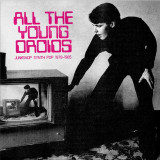
All The Young Droids: Junkshop Synth Pop 1978-1985 is a new compilation that charts the
underbelly of the epoch-defining sound of the synthesiser in 80s popular music. Compiled by Philip
King (previously seen compiling All The Young Droogs, Glitterbest and Boobs - The Junkshop
Glam Discotheque), the music here connects the dots between DIY synth enthusiasts grappling with
new, cheap synthesisers at the tail-end of punk and wannabe, jobbing songwriters enthral to the new
music pioneered by Gary Numan, Depeche Mode and Daniel Miller’s Mute Records. Featuring rare
tracks of auto-didactic progressive pop music, proto-techno punk, shoot-for-the-stars-land-in-the-gutter
chart flops and heralded, underground synth classics, School Daze paints a picture of beautiful failure.
Complete with extensive sleeve notes written by King and never before seen imagery, all 24 tracks
were remastered by RPM in-house engineer Simon Murphy, many from vinyl copies due to lost master
tapes. The story told on All The Young Droids is one of the dawning opportunity presented by both the
emergence to the market of cheaper analog synthesisers and the distribution networks plus indie labels
that exploded with the advent of punk music in 1976. While the music that sprouted out all over the
globe in the wake of these factors was decried as fake, plastic, a refutation of punk’s guitar-led
revolution, it’s telling that much of the music on All The Young Droids.. was created in bedrooms,
ramshackle studios and home-made set ups with often borrowed equipment. In the era of record labels
jumping to capitalise on the success of The Sex Pistols, The Clash (both on major labels, of course)
these artists struggled to stand out from a new gold-rush with next to no budget or PR team. With radio
and labels desperate for the new Yazoo, what resulted was a testament to necessity being the mother
of invention.
At the time, the synthesiser was the music of the future, a shiny new machine that could paint like an
orchestra with a single finger and a 4-track. In the hands of Manchester avant-pranksters Gerry & The
Holograms it’s a pulsing, sardonic weapon.. the only instrument on the Messthetics classic lampooning
of New Wave fashion. In Hamburg, a 16 year old Andreas Dorau used it to write and record (with his
female classmates on vocals) a global smash in Fred Vom Jupiter (later licensed to Mute Records).
The hard-to-find English version (Fred From Jupiter, natch) is included here. Many artists with alreadystoried careers caught the bug and recorded synthesiser-fuelled peons to space, computers, the future
and, of course, love-interests. Harry Kakoulli, late of Squeeze, recorded a solo album in 1979 that
included the incredible power-synth-pop smash-that-never-smashed I’m On A Rocket. Similarly, Ian
North of Neo and American Power Pop stalwarts Milk ’n’ Cookies bought a Korg MS20 and used a
tape machine to record We’re Not Lonely, an absolute lost-classic of minimal synth pop. We’re Not
Lonely also features on the Junkshop Synth Pop sampler 7” twinned with John Howard unreleased
track You Will See, released April 12th 2025.
There are plenty of compilation debuts in evidence. Sole Sister were a mysterious trio who were
featured on the Scaling Triangles compilation of female-fronted, queer-adjacent post-punk /
underground music that also featured The Petticoats. Selwin Image were from San Francisco and
featured members of the recently defunct power pop/punk group The Pushups. Their stupidly catchy
The Unknown fizzes with New Wave energy - think XTC to Sparks but remains unreleased until now.
Dream Unit’s A Drop In The Ocean is an early synth wave cut, positively teaming with Joy Division
instrumentation, previously only released on a long-forgotten and super rare, self-released EP.
Incandescent Luminaire’s Famous Names belies an archetypal struggle of a small-town trying to
make it in a cruel industry but is a thrilling New Romantic-Synth Wave cross over with a OMD
gloominess that’s a joy to hear. Feminist Minimal Wave track I Am A Time Bomb by performance artist
Peta Lilly and Michael Chance is a revelation destined for new found cult status. It was released on 7”
and lost until now.
The flipside to the subterranean, never-made-it synth pop mentioned above are the ambitious, even
fruity attempts at success that have a perennial elegance to their confidence. New Jersey-ite Billy
London (real name Ed Barth) tried to cash in on the synth boom with Woman, released by a major
label, a lurching new wave track built on the Louie Louie rhythm and a wonderfully camp Lou Reedstyle sleazy vocal before exploding in the synthesised chorus. The song bombed but with a chorus like
this, you have to wonder why? Ex-Glitter Band member John Springate’s My Life is truly epic, with
doomed chord progressions and massive sounding drums turning into at least 3 different songs in the
course of the track. Before you wonder what’s going on the song resolves with a glorious return to the
main refrain.
The dry-ice-dressed dance floor is well catered for too. Design’s Premonition and Vision’s Lucifer’s
Friend are stone-cold minimal synth bangers, well loved but given a new lease of life here. The
Warlord’s The Ultimate Warlord was released in 1978, a homespun proto Hi NRG banger that was
later re-recorded by The Immortals in Canada who had a club hit with it. One-man- band Disco
Volante’s No Motion was re-issued by Synth wave label Medical in 2012 but makes its first vinyl
compilation appearance here. Close your eyes and you can imagine what Lawrence of Felt would have
sounded like with some cheap Korgs a little earlier in his career. Gibraltar-based trio The Microbes
imagined a computer programming people to dance - how prescient - and ended up with a propulsive,
robo-funk track with splendid rubbery bass playing over a tectonic drum machine. Previously picked up
by Belgian label Stroom TV, Dee Jay Bert & Eagle’s heavily Euro-accented I Am Your Master
demands the listener to “come to paradise!” In a frankly terrifying manner.
All The Young Droids is the first compilation to peel away from the narrative that dour, Minimal Synth
and Cold Wave were the only musical children of the first rush of synth pop. Philip King and School
Daze Records describe a much more complicated world: along with the austere, Brutalist children of
Daniel Miller (who produced Alan Burnham’s Bowie-Low-influenced Science Fiction here) was a
plethora of desperate cash-ins, accidental mainstream hits, ambitious pop dramas and major label
punts that went nowhere. Crucially, the compilation blurs the line between junk and treasure. What if the
two things are interchangeable. What if it’s all science fiction?
Greville returns to Mad Habitat, consorting with the enigmatic Lonely Voices to realize a four-song suite steeped in vivid acoustic psychotomimesis. Each track is underpinned by Greville’s unerring sensitivity to sonic texture and atmosphere. The snappy, febrile drum programming of “I Miss Terry” is a deft counterpoint to the thrumming bassline. The chords of “Purgatory” swirl around the stereo field like hypnopompic hallucinations. On the flip side, vocals bleed in and out of the mix, spectral and elusive, threading through both tracks. “Electric Push” follows the monologue of “Dad’s Folk,” nudging it into even more surreal territory. It evokes a chance encounter between Ifach-era Baby Ford & the occult industrialism of late-period Coil.
- A1: Coaster - Simon Park
- A2: Rippling Reeds - Wozo
- A3: Leaving - Sam Spence
- A4: Northern Lights 1 - John Cameron
- A5: Spaghetti Junction - Peter Reno
- A6: Space Walk - Rubba
- A7: Prospect - Paul Hart
- B1: Tomorrow's Fashions - Geoff Bastow
- B2: Blue Movies - Brian Wade
- B3: Videodisc - Trevor Bastow
- B4: Interface - Astral Sounds
- B5: Starways - Brian Chatton
- B6: Optics - Unit 9
- B7: Atomic Station - Wozo
- C1: Future Prospect - Adrian Baker
- C2: Planned Production - Warren Bennett
- C3: Future Perspectives - Anthony Hobson Aka Tektron
- C4: Waterfall - Chameleon
- C5: Telecom - James Asher
- C6: Eagle - Simon Park Aka Soul City Orchestra
- C7: Astral Plain - Alan Hawkshaw
- D1: Drifting In Time - Paul Williams
- D2: Earth Born - Brian Bennett
- D3: Soft Waves - Harry Forbes
- D6: Infinity - John Cameron
- D7: Morning Dew - Andy Grossart & Paul Williams
- D4: Topaz - Astral Sounds
- D5: Eternity - Alan Hawkshaw
Nothing said new or modern or futuristic quite like a synthesiser in the 70s and 80s. If you were shooting an advert and you wanted your product or your company to appear forward-thinking and ahead of the game, then you would want something electronic, something out of the ordinary. When TV producers and advertising directors started searching for music that sounded like “Tubular Bells” – and then Tomita, and later Jean Michel Jarre – music libraries such De Wolfe, Bruton, Parry and Chappell had to have the tracks readily available.
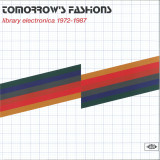
Compiled by Bob Stanley, “Tomorrow’s Fashions” varies from advertising jingles and TV themes to space exploration and gorgeous, beatless ambience. Though it’s 40-to-50 years old there’s a real freshness to this music. Older jazz players Brian Bennett, John Cameron, Alan Hawkshaw and others seized the chance to operate a synth; younger pups including John Saunders and Monica Beale were simply intrigued by the new technology being wheeled into the studios. There’s a tangible sense of adventure.
“Tomorrow’s Fashions’” brand of electronica anticipated new age and ambient music. It also had both a direct and indirect influence on pop – the early Human League and the future sounds of Warp Records are all over this collection. Electronic library tracks have been sampled by everyone from MF Doom to Kendrick Lamar.
One person’s primitive and experimental is another person’s space-age lullaby. This was music made in the shadows – in Soho’s secretive music library studios – that has now become desirable and influential. The chances are chunks of it will be sampled and used on hit records that have yet to be written. If the musicians’ aim was to soundtrack tomorrow’s fashions, they couldn’t have got it more right.
Celebrating its 20th anniversary this June, Jamiroquai’s ‘Dynamite’ is to be released as a double-LP set on Dynamite Smoke vinyl featuring the original album alongside a bonus CD of the original promo album sampler which features different pre-release track versions.
‘Dynamite’ was the hotly anticipated sixth album from the band. It followed the release of their 2001 album ‘A Funk Odyssey’ that had garnered critical and commercial success globally. Also in the intervening period between the two albums, the band were exposed to rafts of new fans when their 1999 track ‘Canned Heat’ became the focal point of cult-turned-smash-hit movie Napoleon Dynamite (2004) when the movie's namesake lead performed his now infamous dance.
Originally released in the UK on 20 June 2005, its lead signal and first track on the record ‘Feels Just Like It Should’ became the bands fourth number-one on the US Dance Chart that also broke into the UK Top 10 Singles Chart and was accompanied with a Grammy Award nominated video that features Jay Kay going from nerd to himself and also adopt the role of the Candyman - all of who adopt Jay’s unique style and moves.
‘Dynamite’, like all of their previous albums, continued their great album chart success, this time entering at number three. The second single, ‘Seven Days in Sunny June’ entered the top 15 and in 2006 saw the band’s relationship with smash hit movies continue, appearing in The Devil Wears Prada. ‘(Don't) Give Hate A Chance’ was released as the third single, once again featuring a hugely captivating video this time with an animation of the band’s infamous ‘Buffaloman’ logo throwing some signature Jay dance moves .
- A1: Eddy Huntington – U S. S. R
- A2: Tullio De Piscopo – Stop Bajon (Primavera)
- A3: Hipnosis – Pulstar
- A4: Max-Him – Lady Fantasy
- B1: Koto – Jabdah
- B2: Scotch – Disco Band
- B3: P Lion – Happy Children
- B4: Savage – Don't Cry Tonight
- C1: Doctor's Cat – Feel The Drive
- C2: Ken Laszlo – Hey Hey Guy
- C3: Scotch – Delirio Mind
- C4: Valerie Dore – Get Closer
- D1: Silver Pozzoli – Around My Dream
- D2: Baltimora – Tarzan Boy
- D3: Sabrina – Boys
- D4: Valerie Dore – The Night
- E1: Lee Marrow – Shanghai
- E2: Raf – Self Control
- E3: Ryan Paris – Dolce Vita
- E4: Miko Mission – How Old Are You?
- F1: Gazebo – I Like Chopin
- F2: Den Harrow – Don't Break My Heart
- F3: Radiorama – Chance To Desire
- F4: P4F – Medley (P Machinery - Relax)
- H3: Righeira – Vamos A La Playa
- H4: Time – Shaker Shake
- G1: My Mine – Hypnotic Tango
- G2: Fun Fun – Happy Station
- G3: Martinelli – Cinderella
- G4: Spagna – Easy Lady
- H1: Ivan Fotonovela
- H2: Joe Yellow – Lover To Lover
vol 2[50,00 €]
Tauchen Sie ein in die faszinierende Welt des Italo Disco mit unserer exklusiven 4 LP Box „The Italo Disco Collection“.
Diese einzigartige Sammlung bietet Ihnen eine Auswahl der größten Hits aus den 1980er Jahren, präsentiert von einigen der bekanntesten Künstlern dieser Ära. Diese limitierte Auflage umfasst vier hochwertige Vinylplatten, die mit den zeitlosen Klassikern von Gazebo, Sabrina, Scotch, Koto und Valerie Dore gefüllt sind. Jeder Titel wurde sorgfältig ausgewählt, um die Essenz des Italo Disco einzufangen und Ihnen ein unvergessliches Hörerlebnis zu bieten.
Die Box enthält speziell ausgewählte Versionen der Songs, die speziell für diese Edition remastered wurden. Die Klangqualität wurde optimiert, um den authentischen Sound des Italo Disco zu bewahren und gleichzeitig das bestmögliche Hörerlebnis auf Vinyl zu bieten.
Das hochwertige Box-Set wurde mit großer Sorgfalt und Liebe
zum Detail gestaltet.
Holen Sie sich jetzt Ihre Kopie dieser exklusiven 4 LP Box „The Italo Disco Collection“ und erleben Sie den unverwechselbaren Charme des Italo Disco auf eine ganz besondere Weise. Tauchen Sie ein in die Welt der pulsierenden Beats und mitreißenden Melodien, die diese Ära geprägt haben.
This time, Vintage Pleasure Boutique is reviving a high-energy Eurobeat classic straight from the vaults of Hotsound Records – the legendary “Say You’ll Be Mine” by the one and only Kim Taylor.
Originally produced by Rob Van Eijk in 1987, this track marked a shift in the Euro Disco sound, paving the way for the Eurobeat explosion in Japan while also becoming a cult anthem in the LGBTQ+ club scenes of the U.S. Its high-speed, melodic energy set dancefloors on fire across the globe. In 1988, a special U.S. remix by Frank Del Rio and Victor Flores pushed it even further into dance music history.
Now, thanks to Vintage Pleasure Boutique, “Say You’ll Be Mine” is back on vinyl – packed with stunning remixes. Alongside the original versions and the rare 1988 remix, this edition features fresh reinterpretations by Electro Potato, Chris Van Buren, A.P. Mono, and Albiero – all staying true to the high-energy spirit of the original.
This vinyl won’t stay in stock for long! If you love Italo disco, Hi-NRG, and vintage 80’s dancefloor magic, this is a must-have for your collection. Don’t miss your chance.
Simon Herody put together a live solo performance sequencing electronic devices on stage for him to jam over with acoustic instruments. He played a lot in hotels and lobbies. The music had to be present but not too intrusive. Subtle electronics to guide his saxophone and flute playing. The setup proved successful and inspired him to compose the works that would become 'Hard Lounge'.
'At the same time, I was working at a bar/record store in Neukölln called Motif. Everything changed when I discovered the album "Heisei No Oto - Japanese Left-field Pop From The CD Age." I remember this guy, Jamie, who would sometimes bring new releases to the shop. This album really changed things for me; I was constantly playing it and it inspired the creation of these works tremendously.
The composition process for "Hard Lounge" was pretty unclear. I never really made conscious choices; I wanted to escape the conflicts that come with picking the right chords. I aimed to create music that transports your imagination to a sort of retro 80s jazz lounge, where people feel comfortable and at ease just sitting and listening. I wanted to act like a music designer, giving people a chance to listen without demanding too much of their attention.'
To survive the AI’s purge, humanity encoded its memories into sound and launched them to the farthest corners of the galaxy. Planet Boom is one such archive. A world made of dreams, memories, and fractured timelines, reassembled through sonic fragments.
Planet Boom is the arena. The Serpent has issued a challenge: four warriors, one chance to shift the balance of power through sound alone. Each codebreaker brings their weapon. Sweater with his nimble footwork and striking rhythm combos. Reyer with a crushing, tactical onslaught. Poten with cerebral unpredictability. Lukey with a flowing, adaptive style that reads the room like an open circuit. Only one will decode the final key. The rest will be echoes. Planet Boom is the battleground. Let the soundclash begin.
When you’re running a label, a demo occasionally comes across your desk that makes you reconsider everything you thought your label was all about. For Balmat, such was the case with this stunning album from Stephen Vitiello, Brendan Canty, and Hahn Rowe. It sounds like nothing we’ve released so far—and that very otherness opened up a whole new world of possibilities for us.
Fans of ambient, experimental electronic music, and sound art will be familiar with Vitiello, a New York native, long based in Virginia, who has collaborated with a cross-generational list of greats: Taylor Deupree, Steve Roden, Lawrence English, Tetsu Inoue, Nam June Paik, Ryuichi Sakamoto, Pauline Oliveros, and many more. On labels like 12k, Room40, and Sub Rosa, he has explored a wide range of minimalism, microsound, lowercase, ambient, improv, and other styles. But this album is something different. It may begin in ambient-adjacent territory, but it quickly veers off, and it just keeps zigzagging, taking on elements of krautrock, post-punk, dub, and the groove-heavy interplay of groups like Natural Information Society and 75 Dollar Bill.
This stylistic turn is thanks in large part to Vitiello’s choice of collaborators. “We’re coming from three different schools,” Vitiello says: “sound art, art rock, and punk rock.”
Active since the early 1980s, Rowe—a violinist, guitarist, and producer/engineer—has played with, or manned the boards for, a frankly jaw-dropping list of musicians: Herbie Hancock, Gil Scott-Heron, the Last Poets, Roy Ayers, John Zorn, Glenn Branca, Swans, Live Skull, Brian Eno, David Byrne, Anohni, R.E.M., Yoko Ono, and many more. But he might be most closely associated with Hugo Largo, a one-of-a-kind New York quartet—two basses, vocals, and Rowe’s violin—that in the late 1980s helped lay the groundwork for what would eventually become known as post-rock.
Canty, of course, is the legendary drummer of Fugazi, the visionary DC post-hardcore group, as well as Rites of Spring before them, and, currently, the Messthetics, a Dischord-signed instrumental trio with guitarist Anthony Pirog and Fugazi bassist Joe Lally.
Vitiello’s trio first collaborated on First, a 17-minute piece released on the Longform Editions label in 2023. Second picks up where the freeform drift of First left off, channeling the trio’s exploratory energies into more intentionally structured tracks and—in a real first for Balmat—some almost shockingly muscular grooves. “Sometimes my projects are more conceptually driven,” Vitiello says, “but I think this was more musically geared. I just wanted to open up the references and bring in an incredible drummer, bring in some melodies, and I’m sort of the center.” But his collaborators, he stresses, are “vastly creative in making anything I might suggest better.”
Like its predecessor, Second took shape in phases, shifting between improvisation and collage. Vitiello laid down the skeleton of the music at home, sketching out initial ideas on Rhodes keyboard and acoustic and electric guitar; he then fed the parts through samplers and his modular system, recording 10- or 20-minute jams. Once he had edited them into more structured forms, he hit the studio with Canty, who added not just drums but also bass and piano; finally, Vitiello took the results of those sessions to Rowe, who played violin, viola, electric bass, and 12-string acoustic and bowed electric guitar, and assisted in some of the final structuring and mixdown.
A few more surprises along the way: Reanimator’s Don Godwin, the studio engineer where Vitiello recorded with Canty, contributed what he calls “resonant dustpan”; and none other than Animal Collective’s Geologist, who just happened to be in the studio that day, sits in on hurdy gurdy on “Mrphgtrs1,” the album’s gorgeous, stunningly atmospheric drone closer. “I love these chance encounters,” Vitiello says. “Somebody I admire, a group I admire—that was an unexpected gift.”
An unexpected gift is a great way of describing Second as a whole: three veteran musicians venturing outside their usual zones and finding a new collaborative language together. The results can’t be neatly slotted into any given genre; they belong not to any given category, but to the spirit of conversation itself.
Greetings, the producer known for blending captivating electronic sounds with heartfelt storytelling, steps into the spotlight with his debut album, Dance Music For Elsewhere. Featuring original vocals and analog textures, the album is an electrifying journey through love, life, and beyond.
Donald’s House transforms Greetings’ track My Paradise into a dreamy Australiana dub mix, with rolling basslines and echoing M1 keys that transport you straight to the bush. Meanwhile, Romain FX delivers a monumental seven-minute reimagining of the album’s lead single, End of the Night, featuring Naarm-based vocalist Indigo King. This remix captures the essence of dancefloor romance, taking listeners on a journey through the night. This vinyl-only release marks Volume 1 of the Dance Music For Elsewhere remixer series. With limited pressings available, don’t miss your chance to escape into your own paradise.
Belgium's iconic DJ and producer, Yves Deruyter, who celebrates his 40th DJ career in 2025, makes a triumphant return to the music scene with the much-anticipated remaster of his seminal second album: "2001".
Renowned for his pioneering influence on techno and classics, Deruyter's re-release is packed with timeless tracks, including the unforgettable anthem "Back To Earth" and also including but not limited to: "Music-Non-Stop", "Rhythmic Bazz", the much sought after Transfusion and as a special bonus "Born Slippy".
Available in an exclusive 2 x 12" vinyl release, collectors and fans alike can choose between a special light blue edition, limited to 500 copies, or an ultra-limited faded smoked black-to-transparent white 180-gram audiophile version, limited to just 200 copies.
Each version comes repackaged in a stunning, redesigned sleeve, making it a must-have collector's item for true enthusiasts. Don't miss the chance to own a piece of techno history!
Darren Allen is a North Ireland electronic music artist recognized for his minimalist and experimental approach to electronic music. Founder of the Underlying Form label, he has contributed to the underground scene by producing tracks that explore the boundaries of minimalism and techno.
Darren Allen influence the contemporary electronic scene through his authentic artistic approach and dedication to sound exploration. That’s why KAIROS CORP choose his music for your time travel.
Have you ever wanted to have a second chance ? Time is no longer a limit, be a part of time itself. Book now for a timeless adventure !
Mastering > Analogue Cut Mastering
Released in 1975, Teddy Lasry's Action Printing is a fascinating album where jazz-fusion, synthesizers and sonic experimentation intertwine to create immersive, cinematic music. A former member of Magma, Teddy Lasry's audacious syncopated rhythms and futuristic melodies evoke both film music and avant-garde electronics. Long under the radar, this visionary album has now been reissued on vinyl, offering a new chance to plunge into its captivating, hypnotic universe.
Limited to 200 copies worldwide exclusive at The Pusher Distribution!
Bomj Diego had one simple dream – to spend a lazy summer weekend at his friend’s dacha, kicking back in a plastic lawn chair, sipping on Ovip Lokos, and letting the world spin as slowly as the rusty ceiling fan in the old guest house.
One Friday, he finally got his chance. He loaded up a plastic bag with a few cans of Ovip Lokos, an ancient Bluetooth speaker, and a single flip-flop (he’d lost the other one in a heated game of dominoes the week before). But as soon as he got off the train at the dacha station, Diego realized he had no idea where the actual dacha was. No address, no signal, just the distant sound of a chainsaw and the smell of freshly cut grass.
Undeterred, he followed the smoke of a barbecue like a hungry wolf. After an hour of wandering, he stumbled into a random backyard where a group of old timers were playing cards around a makeshift table. “Ah, Diego! You made it!” one of them shouted, raising a can of Ovip Lokos. Diego had no idea who the guy was, but he immediately sat down, cracked open his own can, and joined the game.
Hours later, as the sun dipped behind the trees and the mosquitoes started their evening shift, Diego realized – this wasn’t his friend’s dacha. In fact, it wasn’t even the right village. But the old men insisted he stay for shashlik, and as the Ovip Lokos flowed, Diego figured, “Eh, close enough.”
He never did make it to the right dacha, but sometimes, it’s the wrong turn that makes the best story.