Paula revels in the ocean of space.
Each star a story, each galaxy a poem,
Paula's spirit danced among them, forever changed by the celestial ballet.
Her soul feels at home among the constellations.
out of Stock
Last delivered 7 months ago available to reorder, subject to availability
The Cold Stares are from Evansville, Indiana, formed in 2009. The duo (now recently a trio) has
released seven studio albums. The band's 2012 release A Cold Wet Night and a Howling Wind sold 25,000 copies and reached #1 on Amazon Music's Blues Rock albums chart. For almost ten years, The Cold Stares had toured the world relentlessly as a duo, blowing away
audiences across the US and Europe with a fierce, blistering live show that belied their bare bones,
guitar-and-drums setup. In 2023 the band began embracing a whole new kind of chemistry and
launched into their next chapter, adding a third member and channeling the classic power trio sound they grew up on with their explosive acclaimed album,
Voices. Working off the international success of Voices which was voted one of the best albums of 2023 by Classic Rock Magazine, The Cold Stares went into Memphis Magnetic Studio
in Memphis Tennessee and recorded the band’s next chapter and progression, the sprawling album The Southern. Now they are back with The Southern Part 2
which has already bolstered the
blues rocking tracks “Automobile”
and “Little More Rope”.
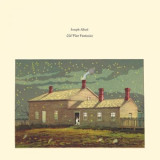
The songwriter Joseph Allred is always prolific, but breaks up their string of solo releases for one of the most orchestrated offerings since the excellent Branches And Trees. Allred’s often monastic guitar works are fleshed out here on Old Time Fantasias, turning them towards ensemble visions of country, Americana, and Appalachia. Album opener, “The Groundhog,” features the distinctive piano of Hans Chew, with bass from Daniel Kimbro and brass from Mikey Allred. Elsewhere the new album features Kelby Clark, Courtney Werner (Magic Tuber String Band), Evan Morgan (Magic Tuber String Band), Lydian Bramblia, and Jack Bird in the mix. “I started recording this album in Spring ‘23, thinking I might be making a mostly solo acoustic album with a couple of duets thrown in for good measure. I met Hans Chew at a Nashville show a few months earlier and sent him a few tracks to see if he wanted to add anything to them. Before long the ‘solo acoustic album’ had given way to what’s probably the most involved and densely orchestrated album I’ve made to date. “I enjoyed following some threads of influence that aren’t as easily discernible in my solo playing—I hear some classic country and psychedelic flourishes, baroque pop glockenspiel and horns, percussion ideas that may be cribbed from Danny Elfman and Tom Waits albums, nods to post-rock-filtered western guitar twang, and a little Cocteau Twins dreaminess. “All in all this was a satisfying record to make. I’m especially grateful to the collaborators for adding their touches and making it a less solipsistic affair than it would have been otherwise. The political climate has changed so much over the last two years that I find it hard to imagine I could make a record with this kind of fantastic mood if I started now. I hope that it can maybe re-enchant those of us who are felling disillusioned.” —Joseph Allred
‘You are behind the damn wheel every day and you don’t even know it’ , weightily remarks Powerplant’s band leader Theo Zhykharyev on the reading of his latest single. London-based project signals the return to signature formula of marching drum machines and wailing synthesisers, matured by life experiencing of prolonged touring. ’Car is life, brother. Sometimes you drive it, other times - the car drives you. And, statistically, we’ll all see the airbags go off sooner than later as consequence of choices made by us or onto us, consciously or not.’
Crashing Cars breaks out the gates to the heavy low end driven dance floor. ‘I was listening to a lot of Bladee when I wrote it and needed a similar thick kick to get you moving’, says Theo. Its an emotionally loaded cannon of a track that will keep you in its grip until it has run its course and told its story. Yearning from connection unfulfilled, rings out through the heartbroken and weeping synth and choir lines. The ever-morphing and dynamic bass works in tandem with razor sharp guitars. The instrumentation, through combined ‘no looking back’ forward charge and immediacy, conjure a manic and emotional forward momentum, which rings out in the song’s lyrics. The vocal performance ranges from the trademark Powerplant goblin squeaks, to more mature, tour-hardened singing. On a sonic aesthetic level, Crashing Cars vibrates in a familiar fashion to Powerplant’s biggest hit Dungen. However, this time far less playful and harder hitting. Described as the fallout of “avoiding, chasing and running away”, lyrically it paints a dead end in human relationships concluding it car-crash heading for the scrapyard. The song concludes with a loaded four line spoken word poetry segment, that hangs over the fleeting outro.
The B side of the single, Never Smile, rolls the speed back, but throws in jangly guitar hooks and bouncy bass lines. Zhykharyev’s vocals sit in a lower register, hence are more stoic and melancholic. If this track had to be a day of the week, it would be a calm, introspective Sunday. With lyrics about looking into evil omens, the sky and reading people as ‘not something different’, it paints an ambiguous, but heavy conclusion about the world and its people. It tells a story about circumstantially settling into an identity and playing the assigned part for the convenience of the external world. It’s easier to fit than to stand apart. It's a perfect balance of mid-tempo radio-rock that builds and changes, before exploding into a shaggy guitar solo, only to go into an unexpected ethereal outro and this 7”s crescendo.
‘Both of these songs are kinda old now, sitting at around 4 years old. And although I haven’t changed the lyrics since then, I somehow find new meaning in them as time goes on. Being Ukrainian and going into the fourth year of the full scale Russian invasion back home, the chorus “my death to you - a better price to pay” makes a lot of sense looking at how the world powers are trying to spin the devastation of my people for a quick profit and an easier life for themselves. This single coming out now at this very point in my life feels both profound and very ironic. Life never ends’, summarises Zhykharyev.
'Clover' is the debut LP from Sleeper's Bell, the project of vocalist/lyricist/librarian-by-day Blaine Teppema & guitarist Evan Green. Recorded with Jack Henry (Friko, Horsegirl), 'Clover' is a product of Chicago's reliable DIY scene, offering a more confessional & folk-influenced lens. Instrumentation spans from fiddle to saxophone, combining an expansive sound with laser-focused lyrics. Praised by New York Times ("Sleeper's Bell captures the lingering wounds, self-doubt and distrust") , Stereogum, ('Clover' is shaping up to be the perfect heartbreak album"), Chicago Reader ("tender"), NPR Music and more, ‘Clover’ spit-shines dive bar wisdom into polished folk-rock. These songs date back as far as 10 years, having changed form countless times throughout the year. As the duo continued steeping themselves in the city’s storied independent scene, their newfound momentum expanded initial conceptions of what Sleeper’s Bell could be. Sleeper's Bell "shine in layers of musical finery" (For The Rabbits) and have cultivated a strong fanbase in their hometown of Chicago, supporting the likes of beloved twangers Merce Lemon, Fust, @, and more.
Give bread and circuses to Brazilians in 1968, and they"ll turn it into an anthem. Under the yoke of a monstrous dictatorship, this foundational album of the tropicalist movement forever changed the way music was thought of and made. Looking for bossa nova and bolero? Fine, but they added Batman, macumba, yé-yé, and psychedelic rock. With an album cover inspired by Sgt. Pepper"s, Caetano Veloso, Gilberto Gil, Gal Costa, Tom Zé, Nara Leao, Torquato Neto, Capinam, Os Mutantes, and their brilliant arranger Rogério Duprat etched their names into history.
out of Stock
Last delivered 16 months ago available to reorder, subject to availability
Give bread and circuses to Brazilians in 1968, and they"ll turn it into an anthem. Under the yoke of a monstrous dictatorship, this foundational album of the tropicalist movement forever changed the way music was thought of and made. Looking for bossa nova and bolero? Fine, but they added Batman, macumba, yé-yé, and psychedelic rock. With an album cover inspired by Sgt. Pepper"s, Caetano Veloso, Gilberto Gil, Gal Costa, Tom Zé, Nara Leao, Torquato Neto, Capinam, Os Mutantes, and their brilliant arranger Rogério Duprat etched their names into history.
out of Stock
Last delivered 16 months ago available to reorder, subject to availability
o encapsulate the themes. “Aseurai means around you in the atmosphere, hard to reach, fading away,” Choi says. “It’s a poetic expression. You wouldn’t say it in normal conversation, but I like that.”
Following the four-piece band’s 2024 self-titled EP, Aseurai adds disco and city-pop influences while staying true to dream-pop roots. While Phoebe Rings was originally a solo project of Choi’s, Aseurai marks a shift with contributing songwriting credits from the whole band. The four musicians cut their teeth working on other notable NZ projects such as Princess Chelsea, Fazerdaze, Tiny Ruins, AC Freazy,, Sea Views and Lucky Boy.
With a more ambitious collection of instruments, Choi says this album heralds the start of true collaboration: “I feel more precious about this LP because it includes everyone’s gems.” Guitar/synthesist Simeon Kavanagh-Vincent spearheads unexpected arrangements, with bold fuzzy guitar textures, to spice up the mix. Benjamin Locke adds maturity to the lyrics, paired with perfectionist bass lines. And drummer Alex Freer’s slick production soars Aseurai to diverse and synergetic heights. The broth is richer with more cooks in the kitchen, and the brewing of textures creates a distinct ‘Phoebe Rings’ sound.
If the EP was spacey, then Aseurai settles on earth, rooted in tangible moments. “Without getting too gloomy, it’s a weird world out there. A lot has changed in the world since the EP came out,” says Kavanagh-Vincent on this transformation. The album delves into hope and longing across all possibilities, and this exploration of holding on and letting go is organically threaded throughout. Across ten songs, Phoebe Ring’s storytelling ranges from tongue-in-cheek musings on gentrification to tender autobiographical memories.
아스라이 흩어지는 하늘의 별이 (May the falling light of faraway stars) / 그대의 손 끝에 닿아 숨이 돼주길 (Reach your fingertips and let you breathe),” Choi sings in the title track “Aseurai.” Imagined as a breezy track inspired by a 90’s Korean pop band, Choi discovered, when fleshing out the lyrics, that it was about yearning for people she couldn’t see anymore. In the old-school disco track, “Get Up,” Locke addresses struggles with mental health in a Matrix-inspired driven mantra: ‘Just get up / Just get up.’ The groove persists with ‘Fading Star,” a quirky ballad filled with steely jazz/rock guitar solos dedicated to a suburban aging musician. Kavanagh-Vincent’s lead single ‘Drifting’ is an unrequited celestial love song with bouncing bass and playful synths.
The band wrote, produced, and engineered the album across studios and band members’ homes in 2023/2024 in Tāmaki Makaurau (Auckland). It features mixing/mix production by local legend Jeremy Toy (Bic Runga, Aaradnha, Princess Chelsea) and mastering by Kelly Hibbert. With Aseurai, Phoebe Rings mark out a brilliant new constellation in their sky, bringing their individual compositions to the fore whilst seamlessly threading them into one celestial body - launching skyward on Carpark Records in June 2025.
Ukrainian composer Katarina Gryvul presents her third LP, SPOMYN, on Subtext. SPOMYN ('recollection') is an exploration of memory’s fragile, fragmented nature, revealing how it shapes the core of who we are. Each track is a fragment — a flicker of something lost, distorted, or forgotten — brought to life through unmediated emotion, acting as an invocation of continuity, connecting us to those who came before us and the fleeting moments of their existence that still resonate within us, and become elements in the lattice of our own selves. Gryvul’s corrupted choral pop compositions, augmented with full frequency electronic and organic experimentation, characterize SPOMYN’s uncanny and chimeric sound. Much like the blurred edges of memory itself, SPOMYN resists resolution, inviting listeners to disintegrate into worlds that linger in shadow and evoke the beauty of the unknowable.
Following her last LP Tysha (‘silence'), released in early 2022 on the Ukrainian imprint Standard Deviation, SPOMYN finds itself in a changed and fractured world in which the urgency to maintain a clear remembrance of the past in the face of erasure and misinformation is ever increasing.
Katarina Gryvul explores the simultaneously fixed and fluid nature of collective and personal narratives by filtering the remembrances of her cultural and musical experience through an idiosyncratic and intuitive approach to music production. The result is aggressively iconoclastic while holding dear the essence of the traditions she has inherited. Katarina Gryvul is a classically trained composer, violinist, and music producer. She blends concept of holophony with avant-garde techniques to develop distinct soundscapes through instruments, voice, analog synths and spatial audio.
Dr. John's Gumbo is the fifth album by New Orleans singer and pianist Dr. John, a tribute to the music of his native city. The album is a collection of covers of New Orleans classics, played by a major figure in the city's music.
Dr John's Gumbo was released in 1972 and is in many ways a tribute by Dr. John, aka the Night Tripper, to his hometown of New Orleans. It features excellent interpretations of New Orleans traditionals ("Iko Iko", "Tipitina", "Junko Partner" and "Stack-O-Lee") and contemporary R&B written or played by the likes of Huey Piano Smith ("Blow Wind Blow" and "Huey Smith Medley") and Earl King ("Big Chief" and "Those Lonely Lonely Nights").
Dr. John delivers a strong set of infectious songs drenched in good vibes and spiced with a pinch of voodoo. His eccentric (stage) appearance adds unique color to his stature as master of the ivories and as an entertainer.
We expect this definitive deluxe 180-gram 45 RPM 2LP Analogue Productions (Atlantic Series) reissue of Dr. John's Gumbo to be a cherished addition to the music collections of all fans of New Orleans classics.
Mastered by Matthew Lutthans at The Mastering Lab from flat copies of the original U.K. and U.S. analogue master tapes Third studio album featured advanced studio recording techniques Featuring original U.S. tracklisting with bonus track "Alive And Well And Living In" from U.K. release Plated and pressed at Quality Record Pressings Gatefold old-style tip-on jacket by Stoughton Printing Jethro Tull's 1970 classic Benefit was their third studio album in as many years, following the successes of This Was (1968) and Stand Up (1969). For Benefit, Ian Anderson (flute, guitars, vocals), Martin Barre (guitars), Glenn Cornick (bass), and Clive Bunker (drums) were joined by John Evan on piano and organ.
Evan would go on to play on all of Jethro Tull's albums throughout the '70s. It was also the last to include Cornick, who was fired from the band upon completion of touring for the album. Recorded at Morgan Studios, where the band recorded Stand Up, the album featured more advanced studio techniques, such as a backward-recorded flute on "With You There To Help Me" and a sped-up guitar on "Play In Time." Frontman Ian Anderson said Evan had changed the band's style: "John has added a new dimension musically and I can write more freely now.
In fact anything is possible with him at the keyboard." Compared to Stand Up, although containing a similar mix of bluesy hard-rockers and melodic acoustic numbers, Benefit had, as Ian Anderson put it, a "harder, slightly darker feel" compared to previous material. The eclectic fusion of folk, rock, and progressive elements creates a sonic tapestry unlike any other. Anderson's virtuosic flute playing intertwines with Barre's electrifying guitar work, weaving intricate melodies that transport listeners to a world of introspection and imagination. From the hauntingly beautiful "With You There to Help Me" to the whimsical energy of "To Cry You a Song," each track invites exploration of both the inner self and the world beyond.
This Analogue Productions 45 RPM release, plated and pressed at Quality Record Pressings, gives this historic album the rich sonic presentation it deserves. The dead-quiet double-LP, with the music spread over four sides of vinyl, reduces distortion and high frequency loss as the wider-spaced grooves let your stereo cartridge track more accurately. Benefit stands as a testament to Jethro Tull's pioneering spirit, pushing the boundaries of musical expression and leaving an indelible mark on the landscape of rock music. This reissue is clean, balanced and richly detailed, the way an Analogue Productions reissue should sound.
Fit for Consequences: Original Recordings, 1984–1987 is the first ever archival release from Repetition Repetition, the “two-man electric minimalist band” consisting of Ruben Garcia and Steve Caton hailing from Los Angeles in the mid 1980’s. Repetition Repetition’s unique blend of cosmic art-rock minimalism / maximalism was self-released across a series of cassettes produced in micro editions, and while garnering the attention and participation of luminaries such as Harold Budd, remained under the radar during the band’s existence. Fit for Consequences: Original Recordings, 1984–1987 collects select material from across the duo’s catalog.
It was over a plate of Mexican breakfast food when Ruben Garcia and Steve Caton first told Harold Budd of Repetition Repetition and the worlds they intended to explore by respective way of synthesizers and guitars --- a rendezvous instigated by the former’s fan mail to the legendary composer. If the upstarts entered this restaurant from a one-way street of admiration, they would leave with not only Budd’s interest but, sometime later, a blessing in the wake of many hours shared by the three in Garcia’s Los Angeles home recording studio: “This is going to be difficult, but God help them, I think they’re great,” noted Budd in a USC lecture in 1985. Now several degrees removed from prior rock music aspirations, the real game was afoot.
Between 1984 and 1988, Repetition Repetition operated within something akin to the underground of the experimental underground, although even that designation perhaps overstates the case. The duo’s sparse output consisted of three cassettes self-released on Garcia’s Third Stone Music label: Repetition Repetition (1985), Lakeland (1987), and The Machinist (1987). Their songs would also be included during this period on Trance Port Tapes’ vital scene-scanning compilations assembled by A Produce. Live performances occurred with similar infrequency, but Garcia and Caton counted converts in quality over quantity, numbering among them the aforementioned Budd, a Chambers Brother, and, judging by a memorably drop-jawed reaction following a rare Repetition Repetition gig, Jackson Browne.
Likewise, critical support materialized in the form of KCRW deejays Brent Wilcox and Dean Suzuki, whose steady airplay positioned Repetition Repetition’s music amidst fearless company like Jon Hassell, Hiroshi Yoshimura, and Richard Horowitz. Yet, to hear fellow Trance Port featured players like Tom Recchion and Bruce Licher of Savage Republic tell it, Garcia and Caton moved as ghosts --- a notion more vexingly endorsed by the silence of record companies that failed to come knocking --- and therein lies an overarching truth to the work itself.
Journey to the heart of Repetition Repetition and one discovers a collective ear impossibly attuned to the hypnotic possibilities of stylistic convergence, the resulting music possessed of seamless multimodalities which beckon to a glimmering plane of the disembodied. Where Caton sought his artistic fixes at an intersection of popular genres, Garcia zoned in on the sonically spare, drawing from the same wellspring as the Enos and Rileys of his personal avant-garde pantheon, and in their coming together the two tapped into a deeper cosmic source. Synthetic walls of keyboard sound in forever states of reprise met waves of shimmering --- and at times even punishing --- guitar in reply, their soundscapes hovering convincingly between, as suggested in fittingly dualistic fashion in a press kit assembled by Garcia, such disparate sensations as bird flight in one song and oil drilling in the next.
But don’t call it a push-pull dynamic, as this was a creative partnership founded upon fluidity and organicism by way of, naturally, repetition. In contrast to, say, the Bressonian ideal of repetitive motion as a great stripping away, the concept in the hands of Garcia and Caton equated to ascendancy via continuous unfolding, a maximal route to minimalism. To be sure, their recording philosophy morphed over the course of the act’s short history, and what started as a process defined by consistent in-person interplay developed into a more isolated method formulated by Garcia, who eventually took to his own one-man bedroom-studio sessions in order to fully chart any and all potential ostinato-loaded paths which he could travel down, the Tascam-captured resonances subsequently provided to Caton as blueprints from which to take flight himself, adding layer upon layer of steel to the proceedings.
If the practice and execution changed, however, the evidence certainly didn’t rest in the results: The seamlessness remained, and, despite the brevity of their time together, so has Repetition Repetition. With this finely calibrated collection of songs in Fit for Consequences: Original Recordings, 1984–1987, Freedom To Spend sees to it that the private worlds of Garcia and Caton can now be visited by all rather than just the count-‘em-on-both-hands lucky few whose musical endeavors or collector vocations carried them into this once-distant dimension.
Repetition Repetition’s Fit for Consequences: Original Recordings, 1984–1987 will be released on Freedom To Spend in vinyl and digital editions on May 30, 2025. The collection includes extensive liner notes from Bill Perrine, and wil be offered alongside Over & Over, a supplemental collection of music available exclusively as a mail order cassette from Freedom To Spend and RVNG Intl.
Singer James Ambrose Johnson, born on February 1, 1948, in Buffalo, New York, fled to Toronto, Canada, to avoid the draft. There, he started The Mynah Birds, a rhythm & blues band and changed his name to Rick James. In 1966, Neil Young joined the band, but their journey ended when James was exposed as a draft dodger and jailed. After serving his time, Rick James joined several bands, including The Great White Cane, and developed his unique funk style. In 1978, Motown signed him to their Gordy Records, releasing his debut solo album Come And Get It! featuring the hits “You and I” and “Mary Jane.” The album climbed to number 13 on the U.S. charts. Rick released multiple successful albums, such as Bustin’ Out Of L Seven and Fire It Up, with hits like “High On Your Love Suite' and “Bustin’ Out (On Funk).” His 1981 album Street Songs marked his internationally breakthrough, blending funk, rock, and new wave. It produced hits like “Ghetto Life,” the massive “Give It To Me Baby,” and “Super Freak,” earning gold records and Grammy nominations.
His follow-up albums included Throwin’ Down, featuring “Dance Wit’ Me” and "Standing On The Top" with The Temptations, and Cold Blooded, with “Ebony Eyes”a collaboration with Smokey Robinson. Furthermore Rick wrote and produced “Party All The Time” for Eddie Murphy, reaching number 2 on the Billboard charts. Also included on this Collected album are the hits “Glow”, “Loosey’s Rap” featuring the queen of hip hop Roxanne Shanté and his collaboration with Busta Rhymes of “In The Ghetto”
Rick James Collected includes most of his hits and early songs and the 2LP, is available on black vinyl and includes liner notes.
Musique Pour La Danse is proud to present the definitive edition of the highly acclaimed and globally beloved Donkey Kong Country soundtracks, meticulously recreated by composer and producer Jammin' Sam Miller. Released in 1994 for the Super Nintendo Entertainment System (SNES), Donkey Kong Country was celebrated not only for its groundbreaking quasi-3D graphics but also for its exceptional soundtrack.
The soundtrack featured a variety of compositions, and has been highly praised for its diverse and high-quality music, with tracks like "Aquatic Ambiance" and "Fear Factory" standing out as fan favorites. The influence of the Donkey Kong Country soundtrack extends beyond the gaming world, having inspired modern artists and changed the way video game music was perceived.
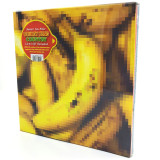
This limited edition boxset, limited to 500 copies, comes as a triple DLP set, containing Volumes 1, 2, and 3. Pressed on red, green, and blue marbled vinyl, it is housed in a hardboard slipcase featuring new and original artwork by Andrew Beltran.
Don't sleep on this ultimate release-the previous boxset edition has been sold out for a long time, and if you can find it, it's being sold for crazy money.
Using hex SPC data converted to MIDI, Jammin' Sam Miller painstakingly recreated the DKC soundtrack note by note, sourcing the original equipment used to create it. He then translated the MIDI into a modern studio context, incorporating keyboard samples, remixing the sounds with added effects, and mastering the tracks. To learn more about his process, watch the explanatory video here: cutt.ly/ulUHE6J.
out of Stock
Last delivered 3 months ago available to reorder, subject to availability
'The greatest man that came from Jamaica and changed the whole beat from Ska to Rock Steady was Lyn Taitt.He was from Trinidad but Bryon Lee did bring him come to Jamaica as an organist but he started playing guitar and the rest is history! We should call him Rock Steady...Its Lyn Taitt as he was the man! He played lead guitar and Ska at the same time'...Bunny Lee
Rock Steady only lasted for a brief period from 1966 to 1968,but its significance to the subsequent development of Jamaican music is incalculable and it would go on to shape each successive musical movement over the next four decades.
Deejays,Digital and Dance hall all stepped to the tune and pace of rhythms whose origins were grounded in the Rock Steady beat and it is impossible to ever overstate its importance...or its beauty
out of Stock
Last delivered 2 years ago available to reorder, subject to availability
Hyldon, Brazil’s highly revered vocalist, musician and producer, has partnered with Adrian Younge to create a new psychedelic soul album, HYLDON JID023. The duo, highly inspired by Hyldon’s seminal work in the ‘60s and ‘70s, revisits’ the spirit of this epoch while creating a modern-day classic. Hyldon’s unique voice and lyrical depth, combined with Younge’s innovative analogue production, ensures this album will not be forgotten. JID023 is one of the last recordings featuring Hyldon’s long-time collaborator and friend, the late drummer Ivan “Mamao” Conti of Azymuth.
Hyldon, a musical pioneer and early contributor to the “Black Rio” movement is a genius in synthesizing the sounds of MPB, Tropicália and Black American R&B. His unique voice, coupled with his rich arrangements and laid-back grooves set him apart from the contemporaries of the time. In ’75, his remarkable debut album, Na Rua, Na Chuva, Na Fazenda changed the sound of Brazil forever. Hyldon’s earnest and experimental approach in creating that album served as the inspiration for Younge’s production on the new JID023.
Months before Mamão's untimely passing, Adrian Younge and Hyldon invited the legendary drummer to join them at Younge’s Linear Labs studio in Los Angeles. Mamão and Hyldon shared a rich musical history — Azymuth, Mamão’s group, served as the rhythm section for much of Hyldon’s work, including his iconic 1975 LP, Na Rua, Na Chuva, Na Fazenda. Their goal was ambitious: to craft an album that would stand alongside Hyldon’s finest achievements, one that would captivate fans who love his unique blend of psychedelic and soulful “Música Brasileira.” The result is nothing short of remarkable.
“Producing a Hyldon album was a dream come true. I’ve studied his catalogue for so many years and highly respect the way he mixed the sound of The Beatles, with that of Marvin Gaye and Tim Maia. I’m still enamored by the fact that he is even a better singer now than he was, in what many deem, his prime. Also, we greatly miss our dear friend and contributor Mamão, the late drummer of Azymuth. We dedicated this album to his memory, and we wish he could have had the chance to hear the finished album.” – Adrian Younge
Songs such as “Olhos Castanhos” evoke the ethereal nature of The Beatles “Strawberry Fields” as the mellotron flutes and Hyldon’s vulnerable performance captivates our hearts. Mamão’s gritty and funky drumming on “Nhanderuvucu (The Creator of God)” showcase what made him a leading pioneer in Brazil’s samba funk scene. Apart from the remarkable drumming, multi-instrumentalist Younge accomplishes the unthinkable by playing every other instrument on JID023. The experimental fusion of horns, analog synthesizers and acoustic instrumentation on songs like “Viajante de Planeta Azul” take listeners on a funky journey to the blue planet; a fictional space that Hyldon lyrically describes with passion and conviction.
Hyldon JID023 is an unexpected, yet remarkable addition to the canon of Brazilian Music. Hyldon’s emotional resonance, coupled with Younge’s sophisticated production and Mamao’s outstanding drumming make this a standout album within the deep catalogue of Jazz Is Dead.
out of Stock
Last delivered 17 months ago available to reorder, subject to availability
En pakt med naturen is Tusmorke's first ever live album, recorded live at Oslo's biggest independent record store Big Dipper, as part of their 25th anniversary celebration last October. "We knew we had to do something special with Tusmorke. Benediktator and Krizla have since the early 2000s been building their record collections and releasing their own music simultaneously. We like to think the records we sold them in our store somewhat influenced their musical output, at least we know that the albums they released had a huge impact on us!" (Andreas Leine Jakobsen, Gerenal Manager, Big Dipper Musikk & Hi-Fi "Is this Folk Horror? Silly question, perhaps, but we need you to mutter certain phrases while listening: Bucoloc, acoustic, ancient, uncanny; acid, pagan, peasant, occult; wildness, wilderness, wildestness, Wicker Man. Ever since the start of Tusmorke, we've wanted to make an acoustic album. In Skien, Telemark in the 90s, we wanted to record in an ancient loghouse with an open hearth (årestue) in the local folk museum Brekkeparken. Years passed and line-ups changed. Then, when we supported Ved Buens Ende at Blå in the Autumn of 2021, we were joined by Åsa and Dauinghorn. They played some of the arrangements that we finally managed to record here, after several attempts to find a suitable time and place to make it happen. Again, time had passed and line-ups had changed, but the spirit of Folk Horror remained. We ask you to close your eyes and picture yourself in a windowless low dwelling, open to the sky through a hole in the roof. Acrid smoke curls upward and occasional sparks fly from the smoldering fire. Music wafts through the gloom in this serene scene of timeless primitivism. There is no electricity. There are no synthesizers. I won't even mention digital things, because they don't exist. There is only Folk Horror and you are in League with Nature." (Benediktator)
Berlin-based French-Irish multimedia artist Zoe Mc Pherson levels up on their third full-length "Pitch Blender", mangling years of experience DJing and performing live into a tight set of cybernetic soundsystem experiments that flicker between the rave and the art space.
Cast your mind back to February 2020 for a moment, when Mc Pherson released their last album "States of Fugue". The world seemed less tangled somehow, and yet Mc Pherson's precision-engineered fusion of exploratory sound design and visceral club pressure seemed to hint at a cataclysmic event none of us were really expecting. Only a few weeks after its release the world changed forever, and the majority of us were grounded - forced to consider our lives and the movement (or lack thereof) surrounding us. The philosophy of this extended time period is welded into the bones of "Pitch Blender", Mc Pherson's supple third album. They have learned plenty in the last two years, and infuse all of that anxiety and spiky emotionality into a spread of tracks that sound as powerful in headphones as they do over a well-tweaked soundsystem, soldering vocals, environmental recordings and instrumental flourishes to unpredictably pneumatic, cybernetic beats.
Anyone that's caught one of Mc Pherson's energetic live performances over the last few months will have an idea of what "Pitch Blender" is made of. They're an artist who's somehow able to match the raw energy of post-punk and no-wave music with the brain-altering potential of the best experimental club tracks, vocalizing an incongruous post-lockdown reality over beats that sound as if they're in a permanent state of flux. 'On Fire' splutters to life in a frenetic patter of drums that blur into oddly soothing hoover sounds, snaking lysergically towards a drop that's teased constantly, and never comes. We're forced to wait until 'The Spark' for that, fighting through choppy, pitch-mangled guitar and rolling beats until a gruesome kick drum forces its way through the psilocybin mists and heaving Bristol-inspired bass clonks. Backed up with just the inverted traces of recognizable breaks, this vigorous pulse lies at the heart of "Pitch Blender", the driving force that powers Mc Pherson's sound even when it's only hinted at.
'Blender' is the moment where Mc Pherson show their full hand, using crackling sound effects, ghost vocals and uneven rhythms to build a textural landscape that's so evocative you can almost taste it. Squealing modular synth effects sound like gameshow buzzers being triggered in another dimension and propel the track forward - it's club music, just about, but Mc Pherson's motivation is world-building, and their world is colorful, abstract, and dizzyingly surreal. "Obsolete user," their voice echoes over driving airlock kicks. But they take a swift left turn with 'Lamella', reducing the kinetic club rhythms to a longing simmer and letting loose with powerful vocals, intoning with robotic, gender-fluxed intensity. On 'Wait', New York City's clacking crosswalk signal - already an effective club track on its own - is transformed into a reminder to slow down, juxtaposed with booming sub-heavy kicks, acidic synths and effervescent percussion that rattles in time with the vibrations. It's foley rave, built for pure psychedelic intensity to blur the line between real life and sonic fiction.
One of the album's most galvanic tracks, 'Power Dynamics' curves a double-time rhythm around breathless HQ sound design squiggles until it hits a polyrhythmic crescendo, striking a queasy balance between rave hedonism and ritualistic hand drum energy. It all builds towards eerie closing track 'Outside' that acts as an important wind down, spotlighting Mc Pherson's ability to operate outside of the rhythmic spectrum, using cinematic scrapes and flickering neon synths to create music that's tense but never terrifying. The track feels like the end credits of a particularly bewildering movie - something between the cyberpunk dystopia of "Ghost in the Shell" and the vivid, sky-scraping beauty of "Koyaanisqatsi". Mc Pherson has managed something special with "Pitch Blender": mashing together genres with rare focus, and sharpening their engineering skills to a fine point, they've concocted an antidote to contemporary malaise - a wakeup call that's begging us to loosen our limbs and move.
out of Stock
Last delivered 11 months ago available to reorder, subject to availability