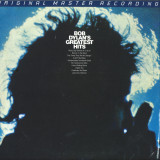
Ten songs that ultimately changed the world. Ten songs pulled from precedent-establishing albums recorded between 1963 and 1966. More than five-million copies sold. In every way, Bob Dylan's Greatest Hits is a fundamental collection for every music lover, and the perfect choice for those seeking an introduction into the legend's vast career. For this is a collection so prized, even the cover photo won a Grammy.
Greatest-hits volumes are often hit-and-miss propositions not because of what they contain, but because of what's missing. Filtering the top selections from the six formative, life-altering albums Dylan made between 1963 and 1966 is an arbitrary process but one performed impeccably on this set. Home to his biggest chart successes as well as his most influential songs, Bob Dylan's Greatest Hits is a veritable template for any aspiring singer-songwriter, an American history lesson, and a seminal release for anyone new to his work – as well as for audiences that find some of his deeper cuts an acquired taste. Every signature facet of Dylan is represented, and done so authoritatively. Serious, protest folk anthems ("Blowin' in the Wind," "The Times Are A-Changin'") sit alongside defiant rock statements ("Positively Fourth Street"), landscape-changing epics ("Like a Rolling Stone"), beautiful blues-inspired odes ("I Want You"), and surrealist dreamscapes ("Subterranean Homesick Blues"). Infused with literary poetry, impassioned emotion, and career-making performances, this material doubles as a definitive account of American culture and society, and functions as a soundtrack to the era's social movements.
Gathered in one place, it's no wonder the songs here gave Dylan what remains the biggest-selling album of his career.
GRAILS don’t mince words. Awesomely communicative but entirely instrumental, this dynamic band’s violin, guitars, piano, and drums collide with sober melodies and massive emotion. At alternate moments, Grails can sound vaguely classical, Eastern European, Irish, like the lost tapes of Pauline Oliveros, and, you know, rock. They’re not really like anything else on the Neurot roster, but they’ve got something in common with all the Neurot bands: a commitment to intense music that forges new paths and, yeah, communicates in the most real way possible.
Grails have their fair share of ambient noise - shivery violins, a trickle of a high-hat, the amplified scrape of a guitar string - but their music is based on strong, narrative melodies that resonate in the heart. At times it sounds delicate, but they never cower; Grails ROAR, even when they’re being quiet.
The Burden of Hope is the debut LP, following a pair of self-released, eponymous ep’s in 2000 and 2002. The LP is the culmination of a year’s worth of recordings, including a reinterpretation of Sun City Girls’ classic “Space Prophet Dogon.”
Grails are gathered in Portland, Oregon from Baltimore, Little Rock, Louisville, Chapel Hill, and Reno. As an ensemble, their respective backgrounds in hardcore, classical, folk, and rock blend seamlessly. Formed in late 2000 to execute live the bedroom recordings of guitarist Alex Hall, the once-tentatively-assembled group found unexpected success with both audiences and local press. Originally formed under the moniker Laurel Canyon, the name of the group was changed to Grails to coincide with the release of The Burden
Pauline Hogstrand's music – and Áhkká, in particular – is deeply inspired by both inner and outer influences, by the mystical as well as the rock-solid, by fictitious conversations and the queen mountain of Lappland (Áhkká).
Meaning "the old lady" in Lule Sámi, Áhkká is a barren, wild, exciting, beautiful, and sometimes grumpy mountain regardless of the season. Over the years, the mountain peaks, moss, birch forests, paths, streams, birds and people have shaped the surroundings, and the massif changed them in return - a reflection of a constantly ongoing development and emerging into greatness, surrounding and within. Speaking about why this mountain is so dear to her, the Denmark-based musician shares: "The nature there is harsh and raw and you can easily feel how it's so much bigger than you. Some people might feel overwhelmed or intimidated, but I feel that when acknowledging the greatness and the power nature consists, I can feel one with it. We come from the same source: I am a part of universe, and universe a part of me."
The music appearing on Áhkká (the album) simulates the dualities of ascent and descent, tension and release, inhale and exhale. Through implementing extended structures for analog and digital synthesis and processed acoustic instrumentations – strings, recorder, pipes and field recordings – Hogstrand expertly navigates these dual motions across two side-long pieces.
The opening "Herein" is slow, difficult, at times jagged and unwelcoming; just like climbing up a mountain early in the morning. Hogstrand shares that this piece is "about surrendering and letting go of control", especially during the last 10 minutes of the track which consist almost solely of an insistent and pulsating drone leading you to no man's land. "Magnitude" offers a release, glimpses of beauty, a softer, easier presence; descending, you're able to see beauty where previously you saw obstacles, perhaps the sun is up, breathtaking views in every direction... This piece is "about all that becomes available after letting go. Suddenly sight clears up in front of your eyes," shares the Swedish composer.
The magic ultimately lies in Hogstrand's perception and portrayal of contrasts – she does not view the two as opposites, but as one reality. "One greatness is not compromised by another greatness." In fact, the opposite is true – one without the other loses meaning, depth and context.
Life has changed in the eight years since the release of II. In ours, yours and Gala Drop themselves. Most times without noticing it, partly due to those two years of a semi-existence that still resonates and with the ongoing predatory gentrification process changing the landscape and life of Lisbon, home to the band since ever. Close to a decade and a half of existence, with various mutations along the way enacting new perspectives and moments of stillness and reflection to a sound that's been mutating itself to its own internal rhythm and agency under the guiding light of the core duo of Afonso Simões and Nélson Gomes. Now a trio, with Rui Dâmaso transitioning from II after the departure of Jerry the Cat and Guilherme Canhão, Gala Drop sound even more focused as a working band, with their new album title Amizade – friendship in Portuguese – making perfect sense in a celebration of their, by now, patented soundworld of cosmic inspiration: krautrock's endless and hypnotic potential, dub's sense of transient space, the throb of house, balearic dreams, polyrhythms and a communal sense of belonging.
Again, this sprawling sphere of influence opens itself to new shapes and inspirations, but there's a deeper sense of accuracy and direction, with the band channeling those legacies into something we can only grasp as the Gala Drop sound. An organic outcome of working steadily as a trio, made possible by a residency promoted by gnration in Braga, Amizade dwells on the psychedelic nature of the group through seven tracks made up of dreamy synth washes, loads of percussion, echoes, chilled guitars under a radiant aura. Gala Drop have never sounded as openly dubby as on 'Dub da Meia Noite' and 'Areal Dub' or capable of converging different tropes of the hardcore continuum – rave stabs and cut up vocals – on a slow burner as memorable as 'Monte do Ouro'. Or given free reign to electricity as on the narcotic guitars of 'Guitarra Voadora' – excepting the one off with Ben Chasny on 2012's Broda. 'Amizade' points towards all of that with comforting escapism and wrapping things up 'Raio' turns dubstep's original bass weight meditations into a cosmic funk workout. One last hug before we leave. An album that feels like a collective moment of celebration, just when we most need it.
Afonso Simões - Drums, percussion and synthesizers
Nelson Gomes - Electric guitar and electronics
Rui Dâmaso - Electric bass & guitar and synthesizer
Recorded by Budda Guedes at Estúdio Mobydick, Braga
Mixed by Gala Drop and Hugo Valverde at Estúdio Cão Andaluz, Lisboa
Mastered by Anne Taegert at Dubplates & Mastering, Berlim
Cover photo by Sara Graça
Design by Nicolai Sarbib
Josh Milan has been recording music professionally for over 30 years.He's played every role from artist to engineer in the studio.This project, Honeysweet, focuses on his production and musicianship.Utilizing only one musician on sax, Josh plays every instrument and sings every note on this project. His songs are packed with soulful dance floor grooves inspired by iconic, soulful groups like Brian Auger, Cymande, Pleasure, Africano, Santana and others.
"I wanted to do music that made me and my family feel good when I was growing up. It's the kind of music that families dance to at gatherings with a record player and no DJ”, says Josh. “Intros, Accents, Breakdowns, Bridges, and endings were all part of the music.” This music will transport Josh's audience to a place of musical freedom. This is music with, seemingly, no rules.
Josh Milan describes each track on the Honeysweet EP “Exodus” in his own words :
"Last Night Changed It All featuring Lawrence Clark on sax is the kind of groove that keeps its dance floor value while holding up the banner of true musicianship. This song was written after hearing a DJ set,where the DJ didn’t seem to be concern about staying within a musical box. He played all sorts of music in one set. I knew then that I’d branch out musically when recording.Rhodes, picked bass guitar, rhythm guitar and drum kit is all that's needed on this one.”
"Exodus the manipulation of major and minor chords in this groove make it complex and interesting. The listener is lead by the organ solo featured here. The song is a mental escape. A mental exodus complete with bongo section.”"Being Free is a message that captures the point of this entire project. Musical freedom and expression is where this project gets its
fuel. Horns, are included on this production. A true expression of soulful music. Being free should be all the time I'm your mind all the time.”
“Cranberries and Cream is my tribute to funk grooves as they were featured on records in 70’s. I’m a fan of that sound and I like to play by own funk grooves when I’m alone. This is one of the tracks on the ep I prefer to rock.”
“And So She Waits has eerie sounding pads in the background. They linger throughout the track. Popping in and out, as though they’re waiting for something. You will hear the change in mood once she is no longer waiting. The groove returns to it’s original state. Only she is no longer waiting, he is.”
“Crazy is me bringing the funk to dirty house music. Complete with house piano in the mix. The chords are unsettling. They are, in fact,Crazy. I though adding a horn arrangement to a house track like this would sound interesting and different.”Honeysweet “Exodus” out at all digital outlets and double pack vinyl set.
American rapper from Oak Park, Sacramento, California. He started rapping in 2004 under the name Lil Tim. The artist eventually changed his stage name to Mozzy in 2012. Until 2015, he had received little
attention until the release of this album which Rolling Stone magazine ranked as the 22nd best rap album of 2015. The same year also saw Mozzy being recognized by Complex as having "the best run of 2015." And 2018 found him appearing on the “Black Panther” soundtrack which introduced him to a mainstream audience. He has evolved over the years to become one of the most influential voices in his era of West Coast hip-hop.
*MILKY CLEAR VINYL - 300 COPIES ONLY FOR WORLD!!* Technology + Teamwork’s fizzling synths, interweaving textures and punchy rhythms are beguiling on their long-awaited debut album We Used To Be Friends. However, at the heart of it all it’s the connection between the group’s two members, Anthony Silvester and Sarah Jones, the friendship the much-travelled duo have managed to maintain for nearly 15 years and a showcase of the slow-burning construction of the electronic world that they’ve surrounded themselves with. We Used To Be Friends is ultimately the tale of two storied artists in their own right, holding onto each other through personal and career twists and turns, relocations and broader movements through respective phases of their lives. Silvester and Jones first met and then collaborated as part of biting post-punk five-piece XX Teens in 2008, eventually breaking off to forge their own path together even as the latter’s demand as a drummer grew. Performing with everyone from Hot Chip, Harry Styles and Bloc Party among many others, Jones has been a constant percussive presence across the sphere of alternative UK pop music – she’s also found time for her own solo project Pillow Person and played on records by the likes of Puscifer and Kurt Vile. Silvester meanwhile has performed in art galleries across Europe including: Fridericianum in Kassel, Kölnischer Kunstverein in Cologne, and Vleeshal in Middelburg, as well as providing sound design and composing work for several art films. Technology + Teamwork is the constant throughout all of that though. “Technology + Teamwork's name perfectly describes how we work” Silvester explains. “Sometimes the teamwork is between each other and sometimes it’s between us and the technology.” Although going by the name Technology + Teamwork as far back as 2014, two events conspired that pulled the project into focus for the pair of them: firstly, Silvester spent a year constructing a soundproof studio shed on the border of London and Essex where he lives. Secondly, inevitably, the pandemic brought the globe-trotting Jones back home to just seven miles away from her long-time collaborator and friend. “We probably hung out more than we had for a few years” says Silvester. “Also, after all her Pillow Person releases Sarah had gotten really good with recording vocals and knowing what did and didn’t work and had a really good home studio set up. We still worked separately though, exchanging ideas via email and WhatsApp.” As with many artists through 2020 and early 2021, working separately was a new necessity that they were forced to adapt to. However, it became clear that there were creative benefits to it. “It really changed our sound and our sounds became a lot more focused as a result” Jones says. “I wanted to use the same ideas of improvisation that I might use while playing the drums for myself and apply that to melodies and lyrics.” The album bristles with hyperpop modernity. You can hear it in the manipulated vocals most prominently on Big Blue’s disco strut and on Moving Too’s heady mix of pitched up voice and burrowing sub bass. However, the pair also looked to San Francisco and the West Coast synthesis movement of the 60s, Silvester inspired by the likes of Suzanne Ciani and Don Buchla. The plaintive lo-fi and melancholy of Amsterdam incorporates Mutable Instrument’s Marbles by Émilie Gillet which – inspired by Buchla’s own synthesis work – outputs random voltages to give the track an air of unpredictability. It’s something that occurs throughout the album, the duo revelling in the happy accidents that disrupt the flow of their hook-laden pop. “The ‘Buchlian’ ideas of music having randomness and uncertainty, completely freed us up” Silvester explains. “It felt a bit like having more members in the band, machines that didn't do what you expected or intended.” Perhaps more subtly, is the influence of 17th and 18th century Baroque music, with Silvester drawing a line between it and the 90’s R’n’B he and Jones both love – exemplified perhaps best on K+B’s percussive claps and sultry grooves. The portentous juddering synthpop of the title track, meanwhile, alludes specifically to Handel’s Sarabande. It’s typical of an album that only needs a scratch of its seemingly glossy surface to unearth a myriad of contorted touchstones and reference points that’ve fermented beneath it. Thematically there’s an anxious sense to the record, with tracks often balancing above a quiet sense of unerring tension even at their most bombastic. Moving Too is the result of an existential doubt that hit Silvester while out cycling, with the outro refrain "it's not enough to die you also have to be forgotten" a take on something Samuel Beckett once said. These worries are echoed on the album’s closing track What A Year, which borrows a lot of lines from the late drag performer and fashion designer Dorian Corey including the grimly defiant "you're gonna leave your mark somewhere in this world just by getting through it”. Those clouds offer a counter point to We Used To Be Friends, but then isn’t that what great pop albums do? Technology + Teamwork undoubtedly love the craft of the hook and the song, but they always position themselves left of centre, prepared to scuff things up, pull something out of shape or manipulate something to leave it sounding warped. Much like their friendship, nothing here is particularly linear – and it’s all the better for it. Bio: Anthony Silvester & Sarah Jones first collaborated as part of biting post-punk five piece XX Teens in 2008, eventually breaking off to forge their own path together even as the latter's demand as a drummer grew. Performing with everyone from Hot Chip, Bat for Lashes, Harry Styles and Bloc Party (among many others), Jones has been a constant percussive presence across the sphere of alternative UK pop music - she's also found time for her own solo project Pillow Person and played on records by the likes of Puscifer and Kurt Vile. Silvester meanwhile has performed in art galleries across Europe including Fridericianum in Kassel, Kölnischer Kunstverein in Cologne, and Wleeshal in Middelburg, as well as providing sound design and composing work for several art films. Technology & Teamwork is the constant throughout all of that though. "We Used To Be Friends" proves that Technology & Teamwork undoubtedly love the craft of the hook and the song, but they always position themselves left of centre, prepared to scuff things up, pull something out of shape or manipulate something to leave it sounding warped. Much like their friendship, nothing hear is particularly linear - and it's all the better for it.
Back in 1993 Alex Neri and Marco Baroni decided to follow the path of experimentation, crossing the bridge between Melodic Italian Deep House and Progressive Music.
This concept is better expressed in the name “Kamasutra” itself, because their music has changed shades, evolving in different “positions” for each version released.
Repressed today including two remixes by Gene on Earth and Mennie.
Angelo is an LP, named after a car, featuring nine songs Brijean have crafted and carried with them through a period of profound change, loss, and relocation. It finds percussionist/singer Brijean Murphy and multi-instrumentalist/producer Doug Stuart processing the impossible the only way they know how: through rhythm and movement. The months surrounding the acclaimed release of Feelings, their full-length Ghostly International debut in 2021 which celebrated tender self-reflection and new possibilities, rang bittersweet with the absence of touring and the sudden passing of Murphy’s father and both of Stuart’s parents. In a haze of heartache, the duo left the
Bay Area to be near family, resetting in four cities in under two years. Their to-go rig became their traveling studio and these tracks, along with Angelo, became their few constants. Whereas Feelings formed over collaborative jams with friends, Angelo’s sessions presented Murphy and Stuart a chance to record at their most intimate, “to get us out of our grief and into our bodies,” says Murphy. They explored new moods and styles, reaching for effervescent dance tempos and technicolor backdrops, vibrant hues in contrast to their more somber human experiences. Angelo beams with positivity and creative renewal — a resourceful, collective answer to “what happens now?”
Angelo the car is a 1981 Toyota Celica they got off Craigslist during their first stint in Los Angeles, where Murphy and Stuart have since settled. “Such a bro-y, ‘80s dude car, it’s been super fun to drive around in a new town,” Murphy says. “He’s older than us, he’s a classic, he’s got a story.” It is a spiritual vehicle with a cinematic appeal, first dropping them off in an alleyway for the scene-setting intro, “Which Way To The Club.” The question is quickly resolved by “Take A Trip” as a cruising bassline mingles with crowd sounds, hand-claps, cuíca hiccups, whip-cracks, even a horse neigh. Brijean have found some club on this cross-dimensional trip — the kind of
imagined space or chamber within one’s self capable of “shifting a fraction of who you are,” says Murphy. They wrote the track with the simple intention to be “as free as we could be,” adds Stuart, likening the flip on the B section to a realm unlocked: ”What if the world changed completely? You open the door to a new room.”
Next is “Shy Guy,” a motivational anthem for the wallflowers among us. Murphy sets up the daydream: “We are in junior high, we’re on the dance floor, what’s going down, who is dancing, who is not, how are we gonna make them dance?” The narrator, the MC, hypes up the room as conga-driven rhythms bounce between languid synth and guitar lines. “Show me how to move...I feel something...I know you feel it too,” Murphy sings sweetly, calling back to the opening lines of Feelings, and this time the audience chants it back. It is easy to picture Brijean performing this one — something they only got to do a handful of times until more recently, opening shows for Khruangbin and Washed Out, an experience they found informative. Murphy explains, “It was inspiring to be out there and let loose more. To see how people can expand their expression on stage gave me more liberty with how I viewed my musicianship. My role for so long was to be a backup percussionist, so why would I ever leave the drums, you know? But then after playing all these runs, you see these artists and realize you can, you have permission.”
“Angelo” and “Ooo La La” deliver the danciest stretch in Brijean’s catalog to date. The title track adopts a deep house pulse replete with strings, hi-hats, and kicks. The latter opts for a funkier groove that foregoes verses in favor of warbled hums and extended breakdowns. What follows is perhaps the duo’s dreamiest run, a comedown initiated with the honey-hued interlude “Colors” drifting into “Where Do We Go?”, a tropicália reverie where Murphy contemplates the passage of time and space.
It all culminates in “Caldwell’s Way,” a fond farewell to their Bay Area community — “a part of my life that I knew couldn’t come back,” says Murphy. Above shimmering organ sounds, lush strings, and the birdcall of their former neighborhood, she wistfully articulates the uncertainty of moving on by remembering the characters dear to them. There’s the wisdom of their neighbor, Santos, who refused payment when helping them move out: “I’d rather have 100 friends than 100 dollars.” And the song’s namesake, Benjamin Caldwell Brown, a friend and club night cohort for many years. “I’m only miles away, maybe I’m just feeling lonely,” the line resigns to warm nostalgia, and “Nostalgia” runs the closing credits to this healing and transportive collection.
SHIFTING - The brandnew album by FRANK POPP ENSEMBLE, the first since 2005! It has been quiet during the last years, apart from an album as „Frank Popp“ called „Receiver“ in 2009 on his own label TV Eye Records. Frank Popp was always busy tho, working as a producer for other bands (Odd Couple, Sun And The Wolf, etc), designing hundreds of posters and booking top notch concerts in Berlin (The Jesus And Mary Chain, Billy Childish or 60s legends The Pretty Things, just to name a few. Once a month Mr. Popp runs several dance partys since many years. Now he is back at his desk for his own musical project FRANK POPP ENSEMBLE! And again he got help from many wonderful special guests lending this project their voices, such as Jesper Munk, Aydo Abay, Lucy Kruger, Kat Ott from 24/7 Diva Heaven, Anna Glahn and classic FPE singer Sam Leigh-Brown. Mr. Popp wrote, recorded, produced and mixed „Shifting" in Spain between january and march 2021, accompanied by Jascha Kreft (Odd Couple) for the songwriting sessions. The 16-song heavyweight takes us on a colourful journey through vintage soul scorchers, psychedelic soundtrack scapes, spector-esque sound walls, bootboy glamrock and even a riviera space-disco tune can be found on the new longplayer. Of course lotsa things changed in that many years. Many lyrics are written by Popp himself, out for trouble in impertinent phrasing here and there. The music has become mature and deeper and his voice can be heard on two songs, the first time ever. It sure is a remarkable piece of high quality music, that’s been delivered here. Watch out, world!
I’ve started to work on this album before I knew it.
During June 2018, I was in Japan for a month to release my previous album "Cairn" as well as my first solo exhibition of drawings in Tokyo.
Everyday on my way to the gallery I passed in front of the same building, its name kept haunting me : Rogue Hill.
Back then I was digging for cheap 80’s Japanese CD’s (Balearic, New Age, Ambient,...) in second hand stores. Most of them set the tone of this album and the direction I wanted to follow. I feel there’s a direct connection between these original sources and the sound I pursue by their meditative aspect.
Most of the demo songs were done before my daughter’s birth on August 2019 and were finalized since then. Many of the titles refer to this main event and relate to how it changed my position in life : being a link through time by becoming a father.
Opaz celebrates 30 years in urban music with a compilation featuring some of their most sought after tracks. Featuring Martine Girault, Mica Paris, Maysa Leak, Cartier Fraser, Imaani, Natasha Campbel, Patrick Jean-Paul-Denis, George Howard, Mary Jane and Ray Hayden.
The compilation will be supported with a month advertising on Solar radio, as well as a two hour show featuring Ray's Productions, remixes and songwriting for the likes of Will Smith, Marvin Gaye, Omar, Mary J Blige, Incognito, Tyrese, Sade, Swing Out Sister, Guru and artists from the label. We expect some support from online magazines and soul music sites. Opaz has a FB promo page with 294 DJ's and taste makers from around the world who support the label and have contributed to the 1.2 million streams on average a year.
Today we have a piece from Kharkiv. Yes, THAT Kharkiv, the hometown of the Ukrainian dynamic duo of Komponente and Kurilo with their Trance Pandemic label, also the city on the frontier of the Russian/Ukrainian war. Living in a much calmer city in Ukraine, it’s really hard for me to imagine making any production plans there, in this case, it means nothing but honor and respect for the guys. Red and black colouring was changed to yellow and blue (the colors of the year), the music is still great.
Joseph Capriati is to release a selection of remixes of his epic 2020 album Metamorfosi. They arrive on limited edition triple vinyl on April 29th 2022 on his Redimension Music label, and feature the likes of DJ Stingray, Frank Wiedemann & Toto Chiavetta, Steve Rachmad, Dave Clarke, Carl Cox, Francois K, Masters at Work and more.
30 years as a full-time touring nightclub DJ sounds like one hell of a career, and for Kenny Summit it's as much of a milestone as it is a turning point. Having shared the stage with greats such as David Byrne, Stevie Wonder, Chaka Khan, George Michael, Kylie Minogue and Prince over the years, Kenny took that influence and inspiration and decided it was time for him to get behind the mic too.
‘Burnin’ is a song written, produced and performed by Kenny Summit that speaks on a desire that's been burning inside of him for three decades. Across those 30 years he’s made many an influential friend too, three of which come on board to remix ‘Burnin’ - the late great Paul Johnson, D&B icon DJ Aphrodite and Brooklyn legend DJ Spinna.
"I caught the fever for house in 1990 and by 1992 I was booked for my first DJ gig at New Jersey's famed Zanzibar nightclub where house legend Tony Humphries held court on a weekly basis. Something changed that night, a fire started and its been building, growing inside of me and now it's time to put paper to pen and write my own songs."
Clearly influenced by the artists Kenny's worked with over the years, ‘Burnin’ is a culmination of one man's journey through dance music; from the Nile Rogers-ish 70s guitar riff to the whining Steely Dan-like keys, to the lush strings and synth pop stabs that would make Moroder blush, the track itself is masterfully produced and punctuated with Kenny's unique uplifting vocals, sang in a manner as if David Byrne and Boz Scaggs were put together and yet still very uniquely Kenny Summit.
Up on remix duties the late great Paul Johnson, Chicago's shining star, serves up a dark, very much after house vibe, that still keeps that trademark Paul Johnson sound. Drum & Bass icon DJ Aphrodite applies his unique sound to ‘Burnin’ with a stellar remix the D&B community has been patiently waiting over three years for. And finally, long-time friend, Brooklyn's DJ Spinna steps up, who after hearing the track commented 'this needs a dope DUB! Leave it to me, imma hook you up bruh!'. The Discoelectric Dub does not disappoint.
Its been more than 2 years since I did an original release on my own label. Its been 9 months since I had an original NOIR release.I wanted some time without releases. Some time to breathe, to think and most importantly time to be creative and to experiment.I have picked 2 productions I felt sounded different to everything else out here. Eruption was already made in the fall 2017 and I have been road-testing it since ADE17 and changed it quite a lot over the 6 months period from when I thought it was finished to what it actually sounds like now. I wanted the track to be brutal like a volcano erupting but at the same time have beautiful and peaceful elements. Hence the breakdown lava sliding into the middle of the track before it all erupts again. I have spent many hours trying to make it sound raw and unpolished. Disruption is build around a super simple sequence loop I played by hand while jamming with new pluck sounds. As the sequence got layered and washed in effects it became a quite haunting loop and that led me to add a boys choir to give that feel bigger impact.This track sounds simpler than Eruption but its actually stacked with layers. Disruption is meant to make you close your eyes, follow the rhythm, the simple sequenced loop and get hypnotized.
It’s been a year since I released originals and since then I also gave my studio a big make-over. I have gone back to being more analog/hardware based in my production methods again and I guess in some ways you can hear that in this release. For “Damage Control” i chose 3 tracks I felt had different vibes to them. Psychosis carries a familiar Noir Music sound and if you know my
“Eruption” track I think you can hear similarities in the production and overall vibe. Damage Control is a more groovy track build around modular synths and a filthy bass that hits right in the gut.
Autophagy is a fast-paced monster with percussive intensity and FM synthesis filtering in and out through the entire journey.
The tracks have off-course been roadtested and believe me even the smaller details changed a lot over time to fit my personal taste 100% After a long process I am finally happy with the tracks and ready to present “Damage Control”.
As the liner notes in this special Anniversary Edition of DUB SIDE OF THE MOON begin: This is the reggae record that changed it all. Some day music histortians may look back and divide a time in reggae before Dub Side and after. Celebrate a decade plus of this timeless and ingenious musical experiment with this release, which includes two new bonus tracks (including a new version of 'Breathe' that features Rebelution's Eric Rachmany along with Metric Man, Ruff Scott and Sluggy Ranks), new artwork, and a 12 page booklet that tells the history of the project and catches fans up on what the people involved have been up to in the years since.
Die legendäre „The Italo Disco Collection“ geht in die vierte Runde! Vol. 4 präsentiert erneut eine exklusive Auswahl großer Italo-Disco-Klassiker der 80er Jahre – zeitlose SynthesizerSounds, treibende Beats und unverwechselbare Melodien, die das einzigartige Lebensgefühl einer ganzen Ära verkörpern.
Auf 4 LPs versammelt die Box zahlreiche Highlights der ItaloDisco-Geschichte. Mit dabei sind unter anderem Ken Laszlo, Valerie Dore, Radiorama und Koto – echte Kultnamen und unverzichtbare Vertreter des legendären Genres.
Als besonderes Extra wartet auf alle Italo-Disco-Fans neben der hochwertigen Vinylbox ein exklusiver „Italo Disco“-Fischerhut. Damit wird die Collection nicht nur zum musikalischen Highlight, sondern auch zum echten Sammlerstück.
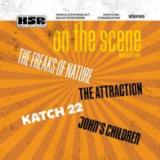
'On The Scene '66 Part One' highlights four of these acts with roots in the previous years and how the music changed: The wild freakbeat sound of THE FREAKS OF NATURE, the heavy R&B 45 from THE ATTRACTION, the pop- pysch from KATCH 22 mixed with the unique sound of JOHN'S CHIDREN pulled together to give a taster of future releases coming with this series.....
'Quiet Pieces' initiates Abul Mogard’s personal imprint Soft Echoes with a definitive self-portrait of calm, contemplative, and discreet inner landscapes made audible. It is the first solo album on vinyl in four years. RIYL Alessandro Cortini, William Basinski, The Caretaker.
While sifting through archived material left idle from earlier projects, a chance encounter with a late uncle’s trove of beloved 78rpm classical and opera records prompted the reworking and completion of what would eventually become the album. Spinning dusty records at 33 and 45rpm, Abul Mogard recombined their enduring spectres with unfinished sketches from his archive. The resulting soundscape blurs distinctions between his memories and those of another, exquisitely short-circuiting the senses with its waking, dream-like lucidity.
This was a process I hadn’t explored in my earlier works. I began sampling brief moments from these records, altering them with studio effects and playing them at slower speeds. In many cases, I wasn’t entirely sure how the original music sounded. These fragments, once further processed, became a source of inspiration for my new compositions. Over time, I realised that the old pieces from the archive and the new material derived from the samples naturally complemented each other.”
The resulting pieces hover over a threshold, a liminal space that harmonises the old and older material. Voluminous waves of quiet and loud undulate between consonance and dissonance, conjuring imagery of a decaying grandeur that humanity’s decadence has surrendered to the elements. Abul Mogard’s seemingly abandoned yet vast landscapes are nevertheless intimate with timbral frissons of red-lined distortion. Elusive, yet as tangible as sea spray or smog, they affect the olfactory senses with a rarified, synesthetic quality that modestly engages one’s emotional register – a hypnotic, distinguishing feature long hailed as one of the hallmarks of his work. A fidelity to memory and dream recall is sensitively probed in the journey from the stately symphonic stasis of 'Following a dream' to the almost industrial, untethered brutality evoked by a looming silhouette that’s never fully visible in 'Constantly slipping away', culminating in the foreboding coda of 'Like a bird'. Those pieces appear to shield the album’s sentimental core, where the tempestuous play of light and shadow of 'In a studded procession' escalates to breathtaking, panoramic climax, while 'Through whispers' evokes an out-of-body-like experience encountered with visceral poignancy.
Looking back, Mogard notes an unexpected influence: “I realise being inspired by Phill Niblock, whose work I had barely known at the time but explored after his passing in 2024. His album 'Boston Tenor Index' changed the way I approached dissonance. It encouraged me to push my sound further, to the edge of a space where I began to feel uncomfortable.”
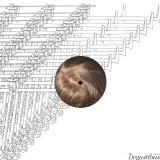
The album artwork, created by longtime collaborator Marja de Sanctis, features a photograph taken at the Temple of Jupiter Anxur, an archaeological site overlooking the Mediterranean Sea. Captured with an iPhone, the image traces the residual presence of construction techniques and architectural forms of the Romans, where material history is transcribed through contemporary tools. The convergence of ancient and modern technology aims to reverberate the site’s lasting spiritual presence – an echo persisting in what is now perceived as a quiet, emptied space. The spiral gestures towards infinity and light. Past and present dissolve into one another, reflecting 'Quiet Pieces' meditation on sound, memory, and time.
RIYL Alessandro Cortini, William Basinski, The Caretaker
out of Stock
Last delivered 8 months ago available to reorder, subject to availability
The original intention of the Builders and the Butchers was to make funeral music, but on the way to the cemetery something changed. An album, like any piece of art, is an artifact of a time. In a world where the process of listening to and obtaining music has never been cheaper or easier, vinyl is a last hold out. You can tell when you\'re holding the weight of wax in your hand, that you\'re connected to what you are doing. The first Builders and Butchers record is also an artifact of a time. Recorded in the living room of a house on SE Division St. in Portland, Oregon in 2007. It was recorded with no expectation, just wanting to document the songs folks had been gathering to sing along to since our first shows in the fall of 2005. The songs having been played only on the street up to that time. At those shows anyone who showed up was handed an instrument and quickly made part of the band. During the recording we attempted to bring that organic singalong rowdiness of the live show into the recording. We brought in about 20 close friends for a Sunday morning booze soaked choir session. We made sure that every instrument of the recording was made of wood and powered by a musician, there are no electric instruments and hardly any effects on this record.
Around seven years ago I became a father and that changed my life. E Dee has always been about my son Carlo’s world seen through my eyes, and this third and final chapter closes the series as he is now seven years old and about to start his second year of primary school.
As with the previous volumes, all the titles come from our family’s own little dictionary. “Cazia” is the name used to call his mother, while “Wager” and “Illu” are two nicknames invented by his sister Camilla for Carlo.
Words that once belonged to a child’s private language have stayed with us over the years. E Dee Vol. 3 is the last chapter of that small family archive.
Tucked in the heart of Koreatown, Los Angeles, lies The Libra Hotel—the titular architecture of Nick Malkin's new album and site of his musical and psychogeographic exploration. Unlike most musical "site-specific" studies, Malkin remains wholly ambivalent to the documentarian approach, instead sharpening an auteur-like focus on the site as a conceptual and highly expressive backdrop. The Libra is musically explored as a space that houses a noir fragmentation of identity—the exhausted trope of a complicated protagonist walking through rain-soaked street corners and fumy neon lights—where an inner monologue is rendered in both miniature and at a cosmic scale. Casting aside stifling tropes around field recording, ambient, and improvised music, Malkin's work finds its own unique fidelity and emotional core through the assembly and reassembly of memory. Nearly every sound on the album—from frayed saxophones, lambent pianos, and dissected jazz drum kits—are multiplied, shattered, and reconstituted into shapes that adorn The Libra in a motion-blurred fog. The narrative of the Hotel suddenly appears as if out of the mist, with intersecting characters interacting within its walls by happenstance. Adminst the languid set pieces, wraith-like sonic grains gravitate around wide subbass beams that give structural form to The Libra, a narrative tension like when a scene is shot from hundreds of different perspectives: an image both luminous and veiled.
Much like Frank Sinatra's own spatial residency immortalized on "Live at The Sands," "At The Libra Hotel" showcases an exuberant view of entertainment, hospitality, and a form of masculinity, one that can quickly detourn into darkness. Knowing this, Malkin extracts a melancholic core out of The Libra locale. The flickering shadows of American decadence are shown in their ephemeral honesty, lines that trace how even in everyday life virtue is tested, sanity is tested, even reality is tested within the confines of desire, within the night. The album is draped in fleeting textures, carefully arranged with a trance-like microtonality, the faint inflections and articulations of a jazz band cascading into dissipated stillness. Voicemails about changed locations and covert eavesdropping on guests' whispered conversations provide an atmosphere of missed connection and voyeurism—a purloined letter of desire receding into a vanishing point. Like the music itself, The Hotel, a chapel perilous at the intersection of desolation row, the center of it all, yet simultaneously at the edge of town, becomes a structure between libidinous virtuality and actuality—our inevitable half-light.
Ultimately, the pensive atmosphere of "At The Libra Hotel," powerfully asserts a plea for the kinds of intimacy only possible in transient spaces. Here, memory cascades into a force that feels like something supernatural, perhaps even religious, yet always subject to the infidelity of our imagination. Here, the album opens into its primary psychodrama, the transient nature of subjectivity itself and how this becomes fractured in the tumult between our commitments and desires. Within this nocturnal space, to quote Louise Bourgeois, "you pile up associations the way you pile up bricks. Memory itself is a form of architecture."
On July 20, 1993, Los Angeles hip-hop legends Cypress Hill unleashed their sophomore opus Black Sunday on the unsuspecting masses. The record changed rap music with its dark undercurrent, Latin inflection, no-holds-barred storytelling, and the inimitable interplay between B-Real and Sen Dog cast over psychedelically spun rap soundscapes courtesy of DJ Muggs.
Now to mark the 30th anniversary, two new remixes are available for fans on 12” black vinyl; “Insane in the Brain” from the esteemed DJ/Producer Statik Selektah, and “Hits From The Bong” crafted by the album’s original producer himself, DJ Muggs.
K-LONE returns to Wisdom Teeth with “Have a few days off” - a mini-LP of vivid, 4K club music that seeks out precious moments of release in an increasingly restless world.
The record marks his first outing on the label since 2023’s Swells, and in that time - once again - the world has changed. Thousand acre data centres. Multirotor drones. These long hot summers. K-LONE’s music has always played with escapism, but this time the question is: can music and creativity continue to provide escape when the world gets too loud to block out?
Stylistically the record absorbs the full range of K-LONE’s key musical touchstones - from swinging minimal house through to autonomic d’n’b and drifting ambient techno. Many of his established calling cards are on display here: his bright resounding chords, buoyant basslines, and fragmented vocal hooks. The record is full of joy and rapture, yet something feels off. Amongst the glowing melodies is a creeping dissonance. ASMR vocals float in and out of the mix like eerie audio hallucinations, and synths melt and detune as if warped from excessive heat. Amongst the idyll, life creeps in at the edges.
Colourful yet discordant; familiar yet strange. “You’re looking kinda sleepy. Have a few days off.”
out of Stock
Last delivered 6 days ago available to reorder, subject to availability
Anushka Chkheidze + Robert Lippok continue their collaboration with »The Sky Was Out of Tune«. Its eight movements form a long-form ambient piece in constant flux: soundscapes emerge from electronic synthesis and layered textures, while small melodies, rhythmic patterns, metallic noises, or distortions drift through like clouds across the sky. But a sky that is out of tune is still a sky. What shifts is the register in which it speaks.
»The Sky Was Out of Tune« emerges from a live performance for »Festival of Future Nows« at Berlin’s Neue Nationalgalerie. Its organically tangled sounds mirror the artists’ attention to nature as a system that is never quite in equilibrium. Ecosystems lean, compensate, tip, and recover—balance, in the natural world, is not a fixed state but a perpetual negotiation. Chkheidze and Lippok take this as both subject and method. Their sounds shift weight between one another, approach resolution and then withdraw from it, hold tension without release—they find form in the unstable. »Preparing something unstable completely changed the method of how we would normally split our skills or roles,« Chkheidze says. »I think in this one looong piece you feel how much we listen to each other.«
Anushka Chkheidze + Robert Lippok continue their collaboration with »The Sky Was Out of Tune«. Its eight movements form a long-form ambient piece in constant flux: soundscapes emerge from electronic synthesis and layered textures, while small melodies, rhythmic patterns, metallic noises, or distortions drift through like clouds across the sky. But a sky that is out of tune is still a sky. What shifts is the register in which it speaks.
»The Sky Was Out of Tune« emerges from a live performance for »Festival of Future Nows« at Berlin’s Neue Nationalgalerie. Its organically tangled sounds mirror the artists’ attention to nature as a system that is never quite in equilibrium. Ecosystems lean, compensate, tip, and recover—balance, in the natural world, is not a fixed state but a perpetual negotiation. Chkheidze and Lippok take this as both subject and method. Their sounds shift weight between one another, approach resolution and then withdraw from it, hold tension without release—they find form in the unstable. »Preparing something unstable completely changed the method of how we would normally split our skills or roles,« Chkheidze says. »I think in this one looong piece you feel how much we listen to each other.«
Time Heals Everything is the fifth studio album from Blu and Exile, a duo that first connected in 2007 and has spent nearly two decades refining a chemistry that continues to evolve. The ten-track LP follows 2024’s Love (the) Ominous World and leans deeper into their core strengths: soul-forward production, incisive writing, and left-field choices that feel instinctive rather than experimental.
The album opens with “Soul Unusual,” a mission statement that builds on the lineage of “Soul Provider” and “Soul Amazing,” reframed through Blu’s present-day perspective. “The word special comes to mind,” Blu explains. “This is my perspective of those songs now.” Exile adds that the record went through multiple iterations before landing in its final form. “Once I changed the beat, it really came together for me, and his words hit differently,” he says, setting the tone for a project rooted in refinement and intention.
“Crumbs” pairs Blu with Rome Streetz and ICECOLDBISHOP on a golden era-inspired backdrop, taking aim at the ‘crumbs’ people are expected to accept from corrupt systems of power. The track underscores one of the album’s central themes: clarity through experience, and the perspective that comes with time.
Time Heals Everything finds Blu and Exile honoring their foundation while continuing to push forward, proving once again that soul and risk-taking can coexist without compromise. “We took a different approach with the direction while still staying true to the culture our music has built with our fan base,” Blu says. In 2026, that culture remains alive, evolving, and resonant as ever.
Somewhere Between Heaven and Hell is the fourth studio album by the American band Social Distortion. It continues the melding of country and rockabilly influences with punk that began two albums before with the album Prison Bound. Clear influences include Hank Williams and Johnny Cash.
The album also marks the first time that a Social Distortion line-up had not changed in three consecutive studio recordings. The American punk rock band Social Distortion formed in 1978 in Fullerton, California and is fronted by vocalist, guitar player and main songwriter Mike Ness.
This pressing of Somewhere Between Heaven and Hell is available as a limited edition of 3000 individually numbered copies on yellow vinyl. The record is packaged in a deluxe sleeve finished with linen laminate and includes an insert with lyrics.
out of Stock
Last delivered 35 days ago available to reorder, subject to availability
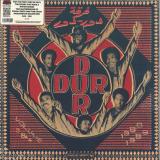
Analog Africa follows up its Dur-Dur Band Volume 1 & 2 reissue with the next two volumes and they again capture the Mogadishu group at their creative peak. Formed by drummer Adan Handal and Isse Dahir Qassim after their military band days, Dur-Dur became a house band at the legendary Jubba Hotel where they fused Somali melodies with funk, disco, reggae and soul into colourful new fusions. This music was recorded amid personal tragedy, including Qassim's death and key members' departures, and pushed further into electronic percussion. It's a unique window into Mogadishu's golden era, presented as ever in excellent style with photos and liner notes.
out of Stock
Last delivered 35 days ago available to reorder, subject to availability
Amelie Lens' debut album 'AURA' is the first full-length studio album to come from the Belgian artist despite being one of the most respected and sought-after acts in electronic music today.
Of the album, Amelie says:
"'AURA' is my story. Aura is about the connection between the crowd and me. Music has always been my escape, my way of turning my emotions and energy into something new. When I was younger, I would disappear into nightclubs and create myown world in my head. Being in the nightclubs gave me this feeling of belonging somewhere, I felt connection and freedom I had never experienced before. That feeling changed my life completely. So this album really reflects that whole journey. From playing tiny local clubs and driving myself through the night for gigs, to standing on huge festival stages, becoming a mother, building EXHALE and learning how to balance it all in life.
I wanted 'AURA' to feel emotional but still powerful, uplifting but raw. From big festival tracks to the trippy tracks I'd play at 4am at RSO. Although making this album is one of the biggest things I have ever done in my life, I wanted to keep it light and somehow playful. Because that is also how I am as a person. This is the most honest version of myself I've ever shared. I hope it brings some light, happiness and connection to others as it does to me. Because Aura is and always will be about my connection to you."
The album will consist of 11 brand new tracks, all produced by Lens - with one stellar collab, who will be announced in due course.
out of Stock
Last delivered 5 days ago available to reorder, subject to availability
Ein Konzert ist ein Ereignis, bei dem Songs zu neuem Leben erwachen. Deshalb trägt dieses Album den Titel "Live!", erklärt Jarvis Cocker zu diesem besonderen Werk im Pulp-Kanon. "Es ist sowohl eine Tatsachenfeststellung (es handelt sich um die Aufnahme einer Liveband) als auch eine Herausforderung (kommt schon! Alle sollen lebendig werden!)." Gleichzeitig ist es auch sowas wie der erste Filmsoundtrack von Pulp: Der von Garth Jennings inszenierte Film "What Do You Do For an Encore?" erscheint weltweit am 25. September. Die Zusammenarbeit zwischen Pulp und Garth Jennings reicht bis ins Jahr 1997 zurück, als er das Musikvideo zu "Help the Aged" drehte. Als Pulp 2023 ihre Rückkehr auf die Bühne ankündigten, nahm Garth Kontakt auf und bot an, das Bühnenkonzept mitzugestalten. Im Juni 2025 filmte er schließlich die beiden Auftritte der Band in der Londoner O2 Arena, die das Herzstück des Films bilden. Diese Konzerte liefern auch das Material für das Livealbum. Es waren die 566. und 567. Shows der Bandgeschichte und zeigen eine Gruppe auf dem Höhepunkt ihres Könnens. Aufgenommen in der Woche, in der "More" - Pulps erstes Album seit 24 Jahren - Platz 1 der offiziellen UK-Charts erreichte, fängt das Album genau den Moment ein, in dem die Band als kreative Kraft zurückkehrt: alte und neue Klassiker erstmals vereint.
Some people change your life in every way that a life can be changed. David Lynch is one of those people. When Alicia Witt first worked with him at age 7 in his classic Dune (1984) she had no idea what he meant to anyone as a filmmaker, nor that she would work with him 3 more times over the course of his life and that he would become one of her greatest influences. She only knew that she had found a kindred spirit and that she loved him. Between Heaven & Earth is a tribute to his energy, his legacy, and most of all, his love. When Alicia attended his memorial gathering shortly after his passing in 2025, she was struck by the depth of the relationships in that space. The knowing that if you were loved by David, you stayed loved. As those in the room spoke of their shared experience that David was still among them - directing from beyond - Alicia became ever more aware that she was being encouraged to create an album from this space of eternal unconditional love. ‘Use my name,’ David whispered. And so it was. Produced by renowned producer and singer-songwriter Joe Henry (Emmylou Harris; Milk Carton Kids; Bonnie Raitt; Rodney Crowell), this album was recorded live in studio in 5 days in New York City in January 2026. Alicia Witt on piano and vocals, accompanied by a band of 5 musicians, take you on a sonic journey that could never be recreated, channeling the energy that was brought together in this moment to honor the immeasurable effect that David Lynch had and still has on the world. He was palpably present in every moment of the making of this album. The 13 songs that were chosen reflect everything Alicia feels she learned about love from David - the acceptance, the insistent optimism, the curiosity, and the permanence. The final song, The Director, recounts messages he has sent to her from beyond over the year since he passed away.
John Tchicai (1936 – 2012) was one of the most important free improvising saxophonists of the 20th Century: an artist of rare vision and aptitude whose lines soared and stood out even in the most hallowed company, and whose body of work as a leader / composer is among the most singular and distinct within the entire canon of that music. But Tchicai’s importance doesn’t end there. Born in Copenhagen, Denmark, to a Danish mother and a Congolese father, his life and career represent a crucial bridge between the European and American traditions of free jazz. Initially trained on violin as a child, Tchicai shifted his focus to the clarinet and alto saxophone during his mid-teens, and began touring Europe as a professional musician by his early 20s, which landed him at a socialist youth festival in Helsinki, Finland, where he met the trumpeter Bill Dixon and saxophonist Archie Shepp. Impressed by what they heard, Dixon and Shepp encouraged the young saxophonist to move to New York, and in so doing changed the history of jazz forever.
Tchicai’s arrival in New York marks the rare occurrence of a European player joining the intimate circle that was first wave of American free jazz. Following his landing in the city in November of 1962, in addition to regularly sitting in with Don Cherry’s group, Tchicai began playing with Bill Dixon's band alongside Archie Shepp and Roswell Rudd, forming the nucleus of the foundation of the New York Contemporary Five - one of the most important groups of the era - which counted Tchicai, Shepp, Cherry, Don Moore, and J. C. Moses as its members. From the ashes of this group, Tchicai would go on to found the legendary ensemble, New York Art Quartet, with Roswell Rudd, Milford Graves, and Lewis Worrell, as well as working within Albert Ayler's band, recording “New York Eye and Ear Control”, Shepp’s band, recording “Four for Trane”, the ensemble that recorded John Coltrane's “Ascension”, and the Jazz Composer's “Orchestra”.
By the time he decided to return to Denmark in 1966, had Tchicai chosen to record little else, his legacy within the history of music would have been ensured. Incredibly ambitious, his arrival home marked the beginning of an incredible period of activity which saw him radically expanding his creative explorations, which by the end of the decade would include becoming a founding member of Amsterdam's Instant Composers Pool and helping to record John Lennon and Yoko Ono's “Unfinished Music No.2: Life with the Lions”. This, however, was proceeded the formation of a new orchestra, Cadentia Nova Danica, led by Tchicai, dedicated to radical cross-disciplinary exploration. Remaining together between 1966 and 1971, the group and its shifting membership regularly fell into collaboration with artists and composers, notably Musica Elettronica Viva, who existed beyond the realms of jazz, as well as participating within multi-media events that incorporated the visual realms.
Cadentia Nova Danica’s only two LPs - “Cadentia Nova Danica” (Polydor, 1968), and “Afrodisiaca” (MPS, 1969) - are effectively Tchicai recorded efforts as a leader, and are legendary. There’s little mystery, once heard, why the later landed on Thurston Moore’s iconic “Top Ten from the Free Jazz Underground”, published by Grand Royal in 1996. Sadly, despite playing extensively during their five year run, with exception of a CD documenting a performance at Jazzhus Montmartre, in 1966, until now there has been no other publicly available recordings that allow us to capture a glimpse of this astounding band at work. Alga Marghen / Formalibera’s vinyl pressing of a never before released body of recordings, made in Copenhagen between 1969 and 1970, changes that in the most exciting of ways.
Comprising three pieces - “Mc Gub Gub, (I–VIII)”; “Ode to Skt. John”; and “Pladepip” - the material on this stunning LP comes from two specific events. The first, which encompasses the first side, “Mc Gub Gub, (I–VIII)” was recorded by Cadentia Nova Danica - in this instance, Tchicai, Sune Weimar, Theo Rahbek, Christian Kyhl, Niels Holt, Jørgen Thorup, Michael Schou, Morgens Bollerup, Allan Gregersen, Ole Matthiessen, Pierre Dørge, Willy Jaegert, Anthony Barnett, and Jon Finsen - on May 29th, 1969, at the ABC-Theatre in Copenhagen. Penned by Tchicai, the piece is a sprawling, evolutionary composition at the outer reaches of free jazz, rooted in large blocks of colliding tonality and rhythm - a sound only accessible to larger ensembles - that push territories explored by Charles Mingus to previously unimagined heights, threaded by moments of hard blown fire. Writhing like a stormy sea - skronking and devilish - “Mc Gub Gub, (I–VIII)” is a work of profound complexity that singlehandedly illuminates not only Tchicai’s singular vision as a composer, but also the power and uniqueness of Cadentia Nova Danica during the band’s most vital period.
The two pieces - “Ode to Skt. John” and “Pladepip” - taking up the flip side, were recorded on February 21st, 1970, at the Danish Broadcasting Corporation’s Radio House, and are the outcome of Cadentia Nova Danica’s extended residency there between 1969 and 1970. In many ways, these two recordings offer some of the best insights into the broad collaborative approaches that defined the band, in this case encountering them working with Danish experimental composer, Svend Erik Werner, who was among the earliest in his country to embrace stylistic pluralism and the use historical forms within a modern context. “Ode to Skt. John” - based on aspects of Gregorian music - was penned by Werner, incorporating heady improvisation by the members of Cadentia Nova Danica, this time made up by Tchicai, Sune Weimar, Hugh Steinmetz, Theo Rahbek, Christian Kyhl, Michael Schou, Morgens Bollerup, Ole Kühl, Torben Enghoff, Mauritz Tchikai, Kjeld Ipsen, Willy Jaegert, Ole Matthiessen, Ole Thilo, Pierre Dørge, Steffen Andersen, Jon Finse, and Clause Bøje. The piece is a fascinating binary of the composed and improvised, utilising the band’s large scale to introduce a remarkable sound within its slow progressions and furious, driving free moments, in this incredible meeting of worlds.
The album’s final piece, “Pladepip”, is arguably its most historically significant: an entirely singular piece, unlike anything in Tchicai’s recorded canon as his foray into musique concréte. Drawing upon two recordings of full-band improvisations by Cadentia Nova Danica, for its creation Tchicai also gouged the surfaces of 78rpm records in his collection to skip and create repeated phrases and patterns, creating a stunning sound collage of hard angles and abrupt phrase, that creates a striking counterpoint to the band’s flowing improvisations that bookend those passages. The result is an engrossing listen and easily one of the most unique and culturally important gestures in the entire history of musique concréte.
Truly incredible, Alga Marghen / Formalibera’s vinyl pressing of this never before released body of recordings, made by John Tchicai’s Cadentia Nova Danica, in Copenhagen between 1969 and 1970, offers an unprecedented window into one of the most important groups working in Europe during that period, significantly expanding their rare and slim discography to date. Accompanied by extensive exploratory liner notes by veteran jazz writer, Ed Hazell, this is easily one of the most historically important archival releases of the year and is impossible to recommend enough. Absolutely essential on every count.
Ein Konzert ist ein Ereignis, bei dem Songs zu neuem Leben erwachen. Deshalb trägt dieses Album den Titel "Live!", erklärt Jarvis Cocker zu diesem besonderen Werk im Pulp-Kanon. "Es ist sowohl eine Tatsachenfeststellung (es handelt sich um die Aufnahme einer Liveband) als auch eine Herausforderung (kommt schon! Alle sollen lebendig werden!)." Gleichzeitig ist es auch sowas wie der erste Filmsoundtrack von Pulp: Der von Garth Jennings inszenierte Film "What Do You Do For an Encore?" erscheint weltweit am 25. September. Die Zusammenarbeit zwischen Pulp und Garth Jennings reicht bis ins Jahr 1997 zurück, als er das Musikvideo zu "Help the Aged" drehte. Als Pulp 2023 ihre Rückkehr auf die Bühne ankündigten, nahm Garth Kontakt auf und bot an, das Bühnenkonzept mitzugestalten. Im Juni 2025 filmte er schließlich die beiden Auftritte der Band in der Londoner O2 Arena, die das Herzstück des Films bilden. Diese Konzerte liefern auch das Material für das Livealbum. Es waren die 566. und 567. Shows der Bandgeschichte und zeigen eine Gruppe auf dem Höhepunkt ihres Könnens. Aufgenommen in der Woche, in der "More" - Pulps erstes Album seit 24 Jahren - Platz 1 der offiziellen UK-Charts erreichte, fängt das Album genau den Moment ein, in dem die Band als kreative Kraft zurückkehrt: alte und neue Klassiker erstmals vereint.
out of Stock
Last delivered 48 days ago available to reorder, subject to availability
Studio Barnhus presents Fold, the first full-length release on the label from Stockholm-born, Berlin-based DJ and producer MOLØ: a patiently unfolding album of club-adjacent lullabies, soft-focus breakbeats and open-window electronics. Following 2024’s Aqua Lull and 2025’s Don’t Change EP with Slackin Beats, MOLØ returns to Barnhusgatan with her most fully realised work yet – an album built like a night slowly finding its shape, starting somewhere quiet and letting the music grow and shift. The result is Fold: eight tracks moving freely between rooms and tempos, held together by MOLØ’s sense of atmosphere, melody and pace. There are pads with endless skies in them, field recordings whispering from the corners, melodies suddenly appearing, having been waiting patiently for the right light.
As often with Studio Barnhus, friends old and new are invited in. Swedish jazz pianist Albin Söderbäck leaves his mark on Cloud and Sväva, bringing a warm, searching musicality that nods gently towards MOLØ’s favourite jazz-fusion records. On Le, Diane Emerita’s fragile voice slips in between the breaks, making the track feel at once human and unreal. Off The Meds frontman Kamohelo keeps it cool as ever on the dynamic stepper Bump.
Then there is Malmö, featuring Norwegian songwriter and vocalist Ane Brun. MOLØ sent Brun the instrumental because she could already hear her voice inside the music – what came back felt so natural, it was as if the whole track had been written around it from the start.
Elsewhere, DJ favourite Fluff captures a different kind of magic: made in MOLØ’s Berlin apartment one spring evening, barely changed since its first draft, then road-tested immediately on a late-night walk through the city with the demo on repeat, strangers moving through the frame.
Fold is a record about trusting the long way round. In a time of shrinking attention spans and growing impatience, MOLØ chooses the scenic route, with curiosity, generosity and enough confidence to let the listener get a little lost
A decade after its original release, Be Nothing. still stands as the breakout record that launched Boston Manor from the UK underground onto the global alternative scene. Blending emo vulnerability, pop-punk energy, and sharp post-hardcore intensity, the album became a defining release of the 2010s with fan-favorite tracks like “Lead Feet,” “Burn You Up,” and the massive “Halo.” Now, this 10 Year Anniversary Edition celebrates the legacy of Be Nothing. with newly recorded acoustic versions of the band’s biggest songs, reimagining the album’s most emotional moments with a raw, stripped-back approach. Equal parts nostalgic and refreshed, it’s a tribute to the record that changed everything for Boston Manor while showcasing how timeless these songs have become.
“If there is one thing you can always count on with Alex Lahey, it’s that the Melbourne-born indie singer-songwriter is going to provide fans with a hell of a good time.” – Billboard
Impressed Recordings is proud to present a world exclusive variant of Alex Lahey's original EP, 'B-Grade University'. In addition to the original EP, this repress includes brand new re-recordings of “You Don’t Think You Like People Like Me” and “Let’s Go Out,” alternate versions of “Wes Anderson” and “Let’s Go Out” taken from Lahey’s 2020 Between the Kitchen and the Living Room EP, plus a version of “You Don’t Think You Like People Like Me” recorded in 2017 live in-studio at triple j in Australia for their Like A Version series.
"I vividly remember writing this collection of songs in my childhood bedroom at my mum’s house next to a small window where I could catch glimpses of the ever expanding edges of the Melbourne city landscape in the years I lived there. I sold my trusty blue Toyota Corolla (aka the Corolls Royce) and gathered every single dollar I could from random day jobs to pay for studio time and will the project into existence.""
"I am not exaggerating when I say this EP completely changed my life. These songs found their place in the world in a way I could have never fathomed and have forged a life of their own over the last decade. They’ve taken me to corners of the world I could only have dreamed of seeing, let alone playing music in, given me the privilege of meeting so many people who have found their own stories in the songs and they have enabled me to keep making the next thing. I feel indebted to all of these songs and treat them with extra care and love whenever I play them live."