- One 140 gram RED Vinyl Disc in plain white paper inner sleeve
- 4/color Single-pocket jacket - shared with 093624903444
- 4/c over 4/c Lyric Insert - shared with 093624903444
- 2/c (PMS 186 + Black) 2.0' x 4.0' FYE Exclusive Marketing Sticker
- 1/c (Black) UPC sticker and affix directly on jacket over existing barcode.
Global superstar Michael Bublé is scheduled to release(pronounced love) as his first studio album in two years on November 16th following a two year break from public life to spend time with his family.
The Canadian singer-songwriter returned to the studio with a new perspective on life and a renewed commitment to honouring the music he has always loved.
I didn't anticipate returning to recording or performing and I was fine with that. My entire world view has changed completely these last few years. I wanted to spend all my time with my wife and kids. That was my focus. During that time, I also learned how much love and humanity is out in the world from the prayers and good wishes we received. But slowly, along with understanding what my priorities in life are, I began to feel a new commitment to express the emotions and lessons I've embraced. Whether I am the narrator, the observer, the main character, the dreamer, the broken hearted guy at a bar or having the night of a lifetime, I have stories to tell on this record. It's all there in the songs. I have had so many blessings in life and one of them is that I hold the torch to keep these songs alive for generations to come. I take the responsibility very seriously. My end game for the new record was to create a series of short cinematic stories for each song I chose and have it stand on its own. I'm so proud of what we accomplished,' commented Bublé.
Bublé co-produced his new album and brings new love to several rich classics from the American Songbook. The album opens with the idealistic and dreamy 'When I Fall In Love.' It also includes a haunting take on another Rogers & Hart standard, 'My Funny Valentine.' Other standouts are an ebullient 'When You're Smiling,' a swinging 'Such A Night' as well as Bublé's hand-picked favorites including 'Unforgettable,' 'Help Me Make It Through The Night,' and 'I Only Have Eyes For You.' Two standout tracks are Charlie Puth's swinging 'Love You Anymore' and an achingly poignant 'La Vie En Rose' -a Bublé duet featuring singer Cecile McLorin Salvant. A touching Bublépenned original 'Forever Now' demonstrates his songwriting skills, which were previously shown in such Bubléwritten hits like 'Home,' 'Haven't Met You Yet' and 'Everything.' The album closes with a show-stopping version of 'Where or When.'
was produced by David Foster, longtime collaborator Jochem van der Saag and Michael Bublé. The trio brought Bublé's visions to life with luscious arrangements surrounding his rich vocals. Michael Bublé has sold over 60 million records worldwide, performed hundreds of sold-out shows around the globe, and won four Grammys and multiple Juno Awards during the course of his extraordinary career.
quête:changed
- A1: Throbbing Gristle – Dead On Arrival
- A2: Deutsch Amerikanische Freudschaft – Der Musolini
- A3: Cabaret Voltaire – Walls Of Jericho
- B1: Polyphonic Size - Zas
- B2: The Neon Judgement - Chinese Black
- B3: Da Davo - Sex Head
- B4: Borghesia - No Hope No Fear
- C1: Chris & Cosey - Exotika
- C2: Click Click - Headf
- C3: Front 242 - Body To Body (1988 Mix)
- C4: The Cassandra Complex -One Millionth Happy Customer (Ebm Mix)
- D1: The Weathermen - Poison (Lethal Mix)
- D2: Nitzer Ebb - Control I’m Here (Strategic Dancefloor Initiative Mix)
- D3: Meat Beat Manifesto - Radio Babylon
Electronic Body Music, abbreviated as EBM, is a term whose origin stems from the Belgian group Front 242, chosen to describe their electronic music; cold and dancing, free of the dominant influences of the time. Powerful, cold and minimalist electronic rhythms were the hallmarks of this new genre.
The movement quickly garnered followers with the British group Nitzer Ebb but also in the rest of Europe, with the likes of Borghesia and The Neon Judgment, later signed to labels like PIAS, Antler- Subway, Wax Trax!, Mute, Off Beat, Zoth Ommog, Pendragon and Metropolis.
EBM’s popularity grew rapidly in the underground scene during the 1980s and early 1990s, especially in Europe, before breaking through in the rest of the world, also influencing the subsequent electro-industrial scene.
‘Dancing In Darkness: EBM, Black Synth & Dark Beats From The 80s’ - to give it its full title - is a compilation of some of these bands; bands that changed contemporary music in terms of ideology, politics and aesthetics.
CD version in digipack with poster booklet. 2LP version in gatefold sleeve.
WYLLOWE is Anna Sheard and Rory More – a nascent writing duo with a shared enjoyment of all things folky and groovy (think early '70s Sergio Mendes, '60s sunshine pop and modal jazz versions of Scarborough Fair). The new 7-inch release Fortunate Fool is a rolling and loping affair with a lilting melody accompanied by a chiming 12-string Fender, electric piano and Lowrey organ; its soaring lament and understated groove is an open-road elbows-in-the-wind driving song.
The B side, Berwick Street Blue, brings to the fore Anna's alluring lyricism and Rory's oscillant motifs calling to mind the compositions of continental soundtrack composers and the sonorous femme-fronted productions of the late 1960s. Lush choral harmonies, layered guitars and resonant piano and organ ebb and flow over a soulfully intoned lyrical paean to a part of London lost and changed forever.
RE-pressed and available again on 9th november 2018! The Gunesh Ensemble was founded in 1970 in Ashkhabad, Turkmen Soviet Socialist Republic, then part of the Soviet Union. They started out as a vocal group with supporting musicians from Turkmenistan State Radio and TV. Later several young musicians came to play with them and the band's music became much more modern. The group began to play jazz-rock tightly intertwined with traditional Oriental music. With that new musical style the band participated in some popular festivals around the Soviet Union. They received various awards and became very popular. Gunesh has always been in the process of developing and was one of the first and best local jazz-groups to organically combine the principles of jazz and melodic improvisation. The remarkably beautiful arrangements and polyrhythmic compositions were always further developed thematically. This process was highly praised at the Moscow competition With A Song On Life in 1977 where the ensemble became a prize-winner. The Organizing Committee of the Festival Spring Rhythms in Tbilisi (1980) called out members Rishad Shafi as best drummer and Stanislav Morozov as best saxophonist. This, their very fine first LP was originally released in 1980 on the Soviet state label Melodyja and contains traditional Central Asian music in jazz-rock arrangements plus a Vietnamese singer. The line-up has changed many times. Around 65 musicians have been a member of the group at some point in time.
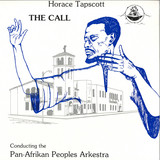
Available on vinyl for the first time in 40 years, Outernational Sounds is proud to present a masterpiece from the Los Angeles jazz underground - Horace Tapscott's burning, spiritualised 1978 set, The Call.
One of the unsung giants of jazz music, the composer, bandleader, arranger, pianist and community activist Horace Tapscott was the undisputed keystone in the grassroots Los Angeles jazz scene. Throughout the 1960s and 1970s, his radical community arts and music formations the UGMA (Underground Musicians Association, later changed to UGMAA - Union of God's Musicians and Artists Ascension), and his protean big band, the Pan Afrikan Peoples Arkestra, were at the epicentre of music, culture and politics in the Los Angeles area.
From their 1960s base at the Watt's Happening Coffee House on 103rd St, to their decade-plus- long 1970s residency at the Immanuel United Church of Christ on 85thE St and Holmes Ave, Tapscott's groups were the beating heart of underground music in LA. Hundreds of musicians passed through and played their part. Major figures in LA jazz such as Arthur Blythe, Azar Lawrence, Jimmy Woods, John Carter, Bobby Bradford, Sonny Criss, Ndugu Chancler and dozens of others all paid dues or just got down with Tapscott, not to mention the core Arkestra regulars who have since become celebrated names - Nate Morgan, Jesse Sharps, Adele Sebastian, Dadisi Komolafe, Gary Bias, to mention only a few.
Tapscott and the Arkestra were down on the ground - playing fundraisers in park and street, organising teach-ins and workshops for young and old, mixing it with radical theatre groups, firebrand poets, political radicals, Black separatists, community groups and churches. They lived communally, and built an ark for the Black arts in the heart of the city. But as a result of this grassroots community focus and Tapscott's antipathy to the music industry, the Arkestra didn't record for nearly two decades. That only changed when long-time jazz fan Tom Albach started Nimbus Records. The label was initiated specifically in order to document Tapscott and his circle, and the first three records showcased Horace and the Arkestra.
The Call was put together from two studio sessions in April 1978, one at Hollywood Sage and Sound, one at United Western - the latter session had the addition of a string section, who can be heard on the moody Cal Massey composition 'Nakatini Suite' and Jesse Sharps' swinging modal trip, 'Peyote Song No. III', with its swirling soprano solo. In keeping with the communal nature of the Arkestra, the other two compositions, 'The Call' and 'Quagmire Manor at Five A.M.' are also by Arkestra members. But at the centre of the music is the builder of the Ark, the visionary whose original call to action started a movement whose legacy continues to this day - Horace Tapscott.
Heed The Call!
- A1: You Make It Better
- A2: Been Thru
- A3: Weed Gunna
- A4: Voice Note #1
- B1: Strane Roses
- B2: Best Friend
- B3: Something To Say Feat. Frankie Stew
- B4: Outro
Recorded in Stockholm and produced by FAMILY_TIME and Maths Time Joy, who produced 'Best Friend', the mixtape follows the release of Ady's critically acclaimed debut album, 'Memories' in March 2018. Having worked on his debut album for some time, Ady wanted to release a collection of songs, ahead of writing and recording his second album.
A deft songwriter and a singer with soulful brilliance, Ady Suleiman has a rich era-spanning appreciation of music, and an innate need to turn life experiences into narrative. His timelessly classic yet fresh sound and lyrical distinctiveness has garnered him a broad range of influential fans from both sides of the Atlantic - from Chance the Rapper, Leon Bridges and Joey Bada$$ through to Labrinth, Michael Kiwanuka, Laura Mvula and Lianne Le Havas. Awarded 'Breakthrough Act of the Year' at Gilles Peterson's Worldwide Awards, Ady has been supported by the likes of The Fader, NME, Complex, The Line of Best Fit and Mahogany to The Independent and GQ (to name but a few).
A collection of songs which originated as voice memos on his phone, Ady comments, 'I wanted to make a project that is a bit more free, I originally wanted to do an interludes or outtakes project, but over time it changed form. 'Thoughts & Moments Vol 1' is the result."
Big John K began singing in church at age five and taught himself to play piano. His performing career actually began in Dayton, Ohio around 1957 where he played with Ray Charles and several members of Count Basie's band. In the late 1950s he recorded around twenty different songs but only six singles were released. He then changed his name to Johnny K. and was signed to Epic Records in 1969. He played shows with Jerry Lee Lewis, Charlie Rich, B.J. Thomas and opened for Jimi Hendrix but left Epic Records in 1971. "Poor Souls" and "Marching Home" were both released on tiny indie labels and remained unknown even in collector circles to this day. The Tramp crew is extremely happy to finally re-release these two cuts - 110% rhythm & blues dynamite!
- A1: Bars & Hooks (Intro)
- A2: Genesis
- A3: Drive Thru (Skit)
- A4: Rock Dat Shit
- A5: What U Rep (Feat. Noreaga)
- A6: Keep It Thoro
- B1: Can't Complain (Feat. Chinky & Twin Gambino)
- B2: Infamous Minded (Feat. Big Noyd)
- B3: Wanna Be Thugs (Feat. Havoc)
- B4: Three (Feat. Cormega)
- B5: Delt W/ The Bullsh*T (Feat. Havoc)
- C1: Trials Of Love (Feat. B.k.)
- C2: H.n.i.c
- C3: Be Cool (Skit)
- C4: Veteran's Memorial
- C5: Do It (Feat. Mike Delorean)
- D1: Littles (Skit)
- D2: Y.b.e. (Feat. B.g.)
- D3: Diamond (Feat. Bars N' Hooks)
- D4: Gun Play (Feat. Big Noyd)
- D5: You Can Never Feel My Pain
- D6: H.n.i.c
Black Friday LP now made a regular catalogue item. When it comes to authentic, ride-or-die hip-hop, few crews have as much resonance as Mobb Deep. Featuring two double-threat MCs who also produced - Havoc and the sadly-departed Prodigy - the crew changed the hardcore rap game in 1995 with their sophomore classic The Infamous, and went on to rule the dark corners of hip-hop for the second half of the 90s and well into the 2000s. After multiple Mobb Deep platters in the '90s, Prodigy entered the 2000s as a solo artist with force, rolling over a stomping, piano-freaked backdrop laced by producer The Alchemist, with Keep It Thoro.' It has held up over time, proving itself as an anthemic classic that the streets and clubs still respect. Flaunting a smooth-but-menacing flow, Prodigy's no-nonsense lyricism on Keep It Thoro' is prototypical modern age brag rap. Countless MCs have followed his flow, from Fabolous to Joey Bada$$. The song is short and sweet, clocking in at just over 3 minutes. There are no wasted verses, just hardcore rhymes that stay with you. But Thoro' was the tip of the iceberg on what proved to be one of the more coveted rap full-lengths of the era. The album boasted other charting singles, including Rock Dat Shit' and Y.B.E.' (featuring B.G.), but it can be argued that the album's real gems are buried deeper. Genesis,' What U Rep' (featuring Noreaga) and Three' are all sinister yet pensive. Wanna Be Thugs' and Delt With The Bullshit' are strong and evocative Mobb Deep cuts, featuring production and vocals by Havoc. And alongside other standouts, perhaps the deepest cut of all - especially in light of Prodigy's way-too-soon passing due to complications from Sickle Cell Anemia - is You Can Never Feel My Pain,' which details the health issues and challenges this talented MC and producer had been facing his whole life. H.N.I.C. was Prodigy's first solo album, but it is perhaps his best. Among fans he will never be forgotten, for his skills, his storytelling and his no-B.S. approach to the art of MCing.
'Chris Carter's Chemistry Lessons Volume One.1: Coursework' was created using a newly-formed piece called 'Bongo Glow' and reworkings of three tracks from the original album.
'Bongo Glow', a work in progress at the time, was finished using the same processes as 'CCCLV1' so that it could appear on the Japanese release of the album.
The additional three reworkings were created without direct instruction as an experiment to see how they changed with input from external sources.
Daniel Avery's remix of 'Usyring' is a slow building majestic tome that comes full circle.
The Radiophonic Workshop took 'Blissters' and created a more experimental reworking in their unique style.
Chris Liebing gave 'Tones Map' a brooding anthemic feel, adding his Slow Burn remix technique
Black Vinyl[27,69 €]
When the new Halloween movie hits theaters in October 2018, it will have the distinction of being the first film in the series with creator John Carpenter's direct involvement since 1982's Halloween III: Season of the Witch. Carpenter serves on the new David Gordon Green-directed installment as an executive producer, a creative consultant, and, thrillingly, as a soundtrack composer, alongside his collaborators from his three recent solo albums, Cody Carpenter and Daniel Davies.
The new soundtrack pays homage to the classic Halloween score that Carpenter composed and recorded in 1978, when he forever changed the course of horror cinema and synthesizer music with his low-budget masterpiece. Several new versions of the iconic main theme serve as the pulse of Green's film, its familiar 5/4 refrain stabbing through the soundtrack like the Shape's knife. The rest of the soundtrack is just as enthralling, incorporating everything from atmospheric synth whooshes to eerie piano-driven pieces to skittering electronic percussion. While the new score was made with a few more resources than Carpenter's famously shoestring original, its musical spirit was preserved.
john Yancey' Is The Second Album Illa J Will Release On Jakarta Records, Following The Successful
Release Of Home Last Year. The Project Is The Second Collaboration With Los Angeles
Based Producer Calvin Valentine, Who Once Again Contributed All Of The Production For The Long
Player. While home' Was Largely Inspired By Illa's Native City Of Detroit, john Yancey' Now
Focuses On His Time In California.
(this Album Is) Definitely More Personal Than All Of My Projects, Nothing Specific, But I Basically
Talk About About The Ups And Downs Of All My Relationships Over The Past 10 Years, Still Grieving
About My Bro, Etc. This One Is Trippy Because The First Single Comes Out A Day Before My 32nd
Birthday And The Original Title Was 32 Because This Is A Special Year To Me Because My Brother Died
At That Age So It Had A Lot Of Meaning. But It Makes Sense That It Ended Up Being Called John
Yancey Because For So Long In My Career I Felt Like I Was Tryna Be Me And My Brother, And I'm Finally
At Peace, Like I'm Not J Dilla's Younger Brother Illa J, I'm James Younger Brother John.'
While The Story Of The Album Might Have Changed, There Are Certain Continuities As Well, Built
Around The Strong Foundation Of The Combination Of Illa's Voice And Calvin Valentine's Soulful
Sample Based Production. The Previous Album Already Saw Illa J Incorporate More Singing Into
His Raps And He Goes Down This Path Even Further: i Wanted To Emphasize The Singing But Use
More Of My Natural Singing Voice, As Well As Rap More Than On Home.' In Regards To The Music,
Calvin Wanted To Make The Project Sound a Bit More Polished Where Home Was Purposely
Rough Around The Edges.' Still, The Production Remains Soulful And Rich With Layers To Leave Things
Interesting For The Listener, The More Spins You Give The Record.
The Cover Was Created By Robert Winter, A Cologne Based Photographer Who Was Also Behind The
Visual Appearance Of Home.
Recorded live at The Village Vanguard in New York on June 25, 1961, this was the fourth album by the Bill Evans Trio, composed of pianist Bill Evans, bassist Scott LaFaro, and drummer Paul Motian. Scott LaFaro was one of the supreme jazz bassists, a virtuoso player whose playing changed the very conception of his instrument. This album unfortunately also represents one of LaFaro's last performances, recorded just days before his tragic death at the age of 25 by automobile accident. Interestingly the album also contains tracks that Evans had recorded prior to working with LaFaro, so that this recording provides a very accurate index of the bassist's great contribution to the trio.
Numbered first pressing limited to 500 copies.
Bear Bones, Lay Low links up with Pizza Noise Mafia's Carrageenan and comes with a monster of a miniLP. BIG TIP!
.
Matthieu Levet (Carrageenan / Pizza Noise Mafia) and Ernesto González (Bear Bones, Lay Low / Tav Exotic / Maitres Fous ...) are two musicians based in Brussels who have cut their teeth in the city's freeform underground for well over a decade. Having spent time at numerous shows and parties together, they solidified a friendship after a two week tour around Europe with fellow electronic explorer , Accou, in April 2017.
It was shortly after this moment that the label Random Numbers approached the two with the initial intention of releasing a split cassette with music from their respective solo projects. Several exchanges later, the plan quickly changed into realizing a full-fledged collaboration between both musicians who, while having deep respect and interest for each other's music since they first met, had never found the opportunity to create something together.
The result is the CARCASS IDENTITY EP: a combination of Levet's raw and dub-infused electronics with González's kosmische psychedelic touch. This is music meant for strange parties: the kind where dancing and laying down are equally accepted and ncouraged, where there might be more silence than talking between participants, where small gestures and events reveal their transcendental meaning...
Optimo Music is delighted to release the new album from Lia Mice, Australian-born but UK-residing DJ, producer and instrument designer.
Here's a few words from Lia - "When I moved to London in 2015, many things changed at once - I started going to more techno and electro nights, I changed my live-set setup, and I had access to a fully-equipped recording studio through my music masters programme. At the same time I was reading a lot of books on time travel, not just science fiction but also psychology and neuroscience - like how the human brain perceives time from moment to moment, how we can experience overlapping time, and how we interact with our past and future through memory and imagination. 'The Sampler As A Time Machine' is the result of all these new influences coming together. The tracks were developed out of ongoing studio experiments interpreting these different ideas of time travel by using samplers and tape to re-sample and manipulate original music performed by me on various instruments including my voice."
Fast-moving Times, In Which Popularity And Quality Are Often Equated Or Commonly Confused With One Another, Aids And Abets This Imitation Game Some Call Conformity, Others Professionalism. In The End, Both Paths Will End Up In Predictability. Here's Where Stathis Kalatzis, Aka Mr. Statik, Comes To Play. The Resident At Athens' Multi-purpose Cultural Space Six D.o.g.s Has Not Only Been One Of The Scene's Pivotal Figures, But Since He Started To Release His First Solo Releases In The Mid-00s, The Now Berlin-based Greek Dj Has Earned A Reputation For Being A Trend-ignoring, Unconventional Producer.
Whether His Output For Bpitch Control, Rotary Cocktail, Or Even Last Year's Debut Ep "rogue
Cherub" For Away - Mr. Statik Enjoys Thinking Outside The Box By Crossing His Diverse Pop-cultural Interests And Pulling In Expertise And Perspective From Beyond The Usual Functional Formulas. After A Decade Of Not Staying In One Comfort Zone Or Sticking To One Musical Direction, He Finds Himself More Comfortable In His Producer Shoes Presenting His Debut Album "metamorphose". Housing A Few Film References In This For Mr. Statik Typical Nebulous Fashion, The Ten Tracks Not Only Carrying The Narrative Potential Of An Imaginary Score, But Primarily Exploring A Versatile Array Of Influences, Themes, And Contradictions (which Mr. Statik As An Illustrator Also United On The Albums' Artwork). Ranging From The Sci-fi Infused Album Opener "insomnia", The First Non-dancefloor Piece He Ever Produced Around 7 Years Ago, Over "atastrophe", An Homage To Ancient Greek Theater, To Collaborate With Others Such As Beatrice Ballabile, Jan Niklas Jansen (locas In Love), And Rbma Alumnus Claude Speeed, Who Contributed Synth Work On "soulfur".
"metamorphose" Succeeds In Constantly Changing Its Tones, While Maintaining An Emotional
Frame, In Which Mr. Statik's Melancholic, Introvert, At Times Hopeful And Euphoric, Bottom End
Inclined Electronic Music Can Elaborate.
Mr. Statik On His Album Debut:
"i Have Always Tried To Approach Producing As Storytelling Exercises. This Allowed Me To
Experiment Finding Myself In Uncharted Territories, More Specifically In Music That Doesn't
Necessarily Fit To A Dance Floor - Unless It's A Very Adventurous One. 'metamorphose'' Is Loyal To That Mindset. I Usually Draw Inspiration From Cinema And Comic Books And Have Always Been Fascinated With Sci-fi, South Asian Culture, Surrealism And The Dreamworld. Initially The Album Was Supposed To Be A Collage Of The Various Influences That Had Shaped My Life, But Ended Up Being Something Very Different. During The Conceptualization And Recording Process A Lot Of Things Around Us Have Changed, Primarily For The Worse. I Became More And More Sensitive And Susceptible To Pessimism And Trendy Visions Of 'dystopian Futurism', So That The Lp Emerged Being An Exercise In Positivity: 'metamorphose' Is A Verb Describing The Act Of
Conversion, But In Greeklish It Is Describes The Urge Towards Others To Start Transforming Their
Environment, In This Case For The Better."
- A1: Intro
- A2: Halloween Theme
- A3: Laurieas Theme
- A4: Prison Montage
- A5: Michael Kills
- A6: Michael Kills Again
- A7: The Shape Returns
- A8: The Bogeyman
- A9: The Shape Kills
- A10: Laurie Sees The Shape
- A11: Wrought Iron Fence
- A12: The Shape Hunts Allyson
- A13: Allyson Discovered
- B1: Say Something
- B2: Ray's Goodbye
- B3: The Shape Is Monumental
- B4: The Shape & Laurie Fight
- B5: The Grind
- B6: Trap The Shape
- B7: The Shape Burns
- B8: Halloween Triumphant
Blood Knife Coloured Vinyl[27,69 €]
When the new Halloween movie hits theaters in October 2018, it will have the distinction of being the first film in the series with creator John Carpenter's direct involvement since 1982's Halloween III: Season of the Witch. Carpenter serves on the new David Gordon Green-directed installment as an executive producer, a creative consultant, and, thrillingly, as a soundtrack composer, alongside his collaborators from his three recent solo albums, Cody Carpenter and Daniel Davies.
The new soundtrack pays homage to the classic Halloween score that Carpenter composed and recorded in 1978, when he forever changed the course of horror cinema and synthesizer music with his low-budget masterpiece. Several new versions of the iconic main theme serve as the pulse of Green's film, its familiar 5/4 refrain stabbing through the soundtrack like the Shape's knife. The rest of the soundtrack is just as enthralling, incorporating everything from atmospheric synth whooshes to eerie piano-driven pieces to skittering electronic percussion. While the new score was made with a few more resources than Carpenter's famously shoestring original, its musical spirit was preserved.
Solipsism is an archival release of music from Mike Simonetti's
tenure as owner of Italians Do It Better Records, spanning from
2006-2013. During that time Mike wrote a lot of music. Some of it
was used for films, some for TV commercials, some for fashion
shows and he even released a record or two.
Influenced by the intersection of 80's arena rock bands like AC/DC and Judas Priest, glam rock/dance bands like Rockets and Supermax, and especially the underground Italian producer Piero Umiliani - the album is chock-full of atmospheric rock-inspired arpeggiated riffs. The mixture of metal and chugging dance music makes for a unique listening experience. Every song has a riff, every song is heavy and dense. Only one song goes above 118 BPM. These are heavy chuggers that make for a tense emotional experience that exceeds your standard, easy-to-write-off 'soundtrack' fare, mainly because it was never written with that in mind. It was meant to be a fist-pumping arena rock inspired thumper! You can hear that in the one two punch of 'A Prayer For War' into 'Illusions", which is an outtake from his "The Magician"
sessions. Other songs like 'Solipsism' showcase the airy melodies
of that were to come with his other project Pale Blue, but that is
not typical on this album. If you listen closely, you can hear how
Simonetti's music and dark vibes inspired his then label partner
Johnny Jewel to take his own bands Chromatics and Glass Candy in a different, more cinematic direction.
This was written and recorded years before the Drive soundtrack and all the hoopla around the sudden soundtrack resurgence. In
2011 Mike was asked to submit some songs for a soon to be
released Hollywood remake. He submitted most of the songs from this album, and they were slated for release on the soundtrack,
but the project fell apart, and the film went in a different direction
and changed producers. Soon after, because of all the drama and foolishness, he left Italians Do It Better to start over with 2MR and Pale Blue. This is the nail in the coffin. Godspeed.
Solipsism is an archival release of music from Mike Simonetti's
tenure as owner of Italians Do It Better Records, spanning from
2006-2013. During that time Mike wrote a lot of music. Some of it
was used for films, some for TV commercials, some for fashion
shows and he even released a record or two.
Influenced by the intersection of 80's arena rock bands like AC/DC and Judas Priest, glam rock/dance bands like Rockets and Supermax, and especially the underground Italian producer Piero Umiliani - the album is chock-full of atmospheric rock-inspired arpeggiated riffs. The mixture of metal and chugging dance music makes for a unique listening experience. Every song has a riff, every song is heavy and dense. Only one song goes above 118 BPM. These are heavy chuggers that make for a tense emotional experience that exceeds your standard, easy-to-write-off 'soundtrack' fare, mainly because it was never written with that in mind. It was meant to be a fist-pumping arena rock inspired thumper! You can hear that in the one two punch of 'A Prayer For War' into 'Illusions", which is an outtake from his "The Magician"
sessions. Other songs like 'Solipsism' showcase the airy melodies
of that were to come with his other project Pale Blue, but that is
not typical on this album. If you listen closely, you can hear how
Simonetti's music and dark vibes inspired his then label partner
Johnny Jewel to take his own bands Chromatics and Glass Candy in a different, more cinematic direction.
This was written and recorded years before the Drive soundtrack and all the hoopla around the sudden soundtrack resurgence. In
2011 Mike was asked to submit some songs for a soon to be
released Hollywood remake. He submitted most of the songs from this album, and they were slated for release on the soundtrack,
but the project fell apart, and the film went in a different direction
and changed producers. Soon after, because of all the drama and foolishness, he left Italians Do It Better to start over with 2MR and Pale Blue. This is the nail in the coffin. Godspeed.
- A1: First Overture (Spiritual Atom) (4:59)
- A2: Annotation (4:04)
- A3: Carbonb 12 (5:05)
- B1: Unorthodox Elements (3:35)
- B2: Anamenesis (Part 1) (3:30)
- B3: The Abyss Of Doubt (3:35)
- B4: Mutation (5:03)
- C1: Fist Interlude (Absence Of Measure) (4:40)
- C2: Permutation (4:39)
- C3: Kundalini (4:48)
- D1: Anamnesis (Part 2) (4:05)
- D2: Blue I (4:01)
- D3: Second Interlude (The Choosing) (6:26)
By now, the story of how Jlin went from working in a steel factory in Gary, Indiana to being one of the most widely appreciated electronic musicians is well known. 'Black Origami' was one of the most reviewed and lauded albums last year. Seriously prolific and seriously hard-working, she has toured constantly since its May 2017 release and despite being involved in a wide range of projects, still manages to find a balance and 'do some personal healing and growing.'
Here we are over a year later with 'Autobiography,' the score for her collaboration with renowned British choreographer Wayne McGregor arranged by Unsound. This isn't technically her third album (that's due to arrive in 2019 or 2020), but the soundtrack stands up on its own with all the emotional peaks and troughs of a well-sequenced longplayer.
For Jlin, making music for dance is the fulfillment of one of her lifelong dreams - and remarkably, Company Wayne McGregor's performance was the first show she'd ever seen. She describes the process of working with Wayne: 'We first met face to face in October 2016 in a downtown Chicago hotel, talking for about a solid two hours. Immediately, I saw Wayne was very friendly and energetic. He's brilliant, witty, and knows exactly what he wants; an absolute gem to work with. Before I even started composing for Autobiography, Wayne told me so gently that he trusts me completely with my direction of creating the score. That was the best feeling in the world. I would wake up at two in the morning and work until six in the evening until I completed all the pieces. We were both very happy with the outcome. Creating the score for an impeccable piece of work such as Autobiography changed my life as an artist.'
'Autobiography' is a highlight in an evolving and growing career. During the last year, Jlin has also become an in-demand remixer, securing her place among a roster of music heavyweights. Unsurprisingly, given her positive and outgoing nature, she also developed friendships with the artists she has remixed such as Björk, Max Richter and Ben Frost.
Jlin will be touring with Company Wayne McGregor performing 'Autobiography' this year in addition to completing a commission for the Kronos Quartet titled 'Little Black Book.' She still approaches every performance 'with the same attitude of doing my best to execute a good show, no more, no less. Doing my best is what's most important to me.' She also still lives in Gary, Indiana, which keeps her grounded. She notes with her typical humility, 'The local community is a little more knowledgeable of me now. But I don't mind my community taking its time.'
Mannequin Records is proud to present a trilogy of reissues from the avantgarde Italian-born producer Doris Norton, "Norton Computer For Peace" (1983), "Personal Computer" (1984), "Artificial Intellingence" (1985).
Apple's first music "endorsement" (later IBM consultant) and early Roland affiliate, Doris Norton is one of the most important women pioneer in the use of synths and in the early electro / computer music.
While the beat-oriented style of Norton's music aligns her with such global fellow-travelers as Yellow Magic Orchestra and Kraftwerk, her championing of the personal computer as a tool for self-sufficient musical creativity also connects her to more artsy musicians such as Pietro Grossi, Laurie Spiegel, and the League of Automatic Music Composers. Norton's predilection for the bright, glossy timbres of early digital instruments also recalls Hubert Bognermayr and Harald Zuschrader's bizarre 1982 one-off Erdenklang.
1 year after "Personal Computer", Doris Norton released 'Artificial Intelligence' (previous title: From Art-Physiol to Artificial Intelligence, changed before publishing) in 1985, setting a step up in her deep electronic music research and innovation.