Francesco Farfa's timeless club EP "Learn To Fly" freshly remixed 3 decades after its original release in 1991 by 4 of Berlin's finest DJs and producers. A generous arsenal to choose from in terms of dance floor tools, from DJs, for DJs, equipping the record bag with something for a wide range of occasions, can't go wrong. A-side descends into big room darkness with Trent's re-interpretation, effectively complimented with Juan Ramos' bulging trancey approach playfully collaging elements from multiple tracks in the original EP. B-side goes in more ravey/progressive directions with an elevating elucidation by E-talking while Hamsa produces a more stripped down enhancement to the original theme.
Suche:choose
- A1: Lizzo - Pink (2 25)
- A2: Dua Lipa - Dance The Night (2 56)
- A3: Nicki Minaj & Ice Spice - Barbie World (With Aqua) (1 48)
- A4: Charli Xcx - Speed Drive (2 00)
- A5: Karol G - Watati (Feat Aldo Ranks) (2 46)
- A6: Am Smith - Man I Am (3 04)
- A7: Tame Impala - Journey To The Real World (1 25)
- A8: Ryan Gosling - I'm Just Ken (3 47)
- B1: Dominic Fike - Hey Blondie (2 32)
- B2: Haim - Home (3 44)
- B3: Billie Eilish - What Was I Made For? (3 38)
- B4: The Kid Laroi - Forever & Again (2 18)
- B5: Khalid - Silver Platter (2 46)
- B6: Pinkpantheress - Angel (2 05)
- B7: Gayle - Butterflies (2 15)
- B8: Ava Max - Choose Your Fighter (2 20)
Waxwork Records is proud to present BARBIE Score From The Original Motion Picture Soundtrack composed by Mark Ronson and Andrew Wyatt! The score is featured in the juggernaut film Barbie, directed by Greta Gerwig and starring Margot Robbie and Ryan Gosling as Barbie and Ken.
On composing the score, Ronson says, “Greta’s Barbie overflows with emotion in a way that inspires us to no end, not just with harmony and melody but also textures, sonics and rhythms. Sometimes Greta wanted us to elicit tears, sometimes she wanted it to feel like a disco. Sometimes she loved the warmth of vintage analogue synthesizers, sometimes she wanted the richness of the orchestra. Often, she wanted both.
“The late nights and crazy hours we put into Barbie were all worth it to us, because we were so in love with this film. And we truly hope listening to our score from beginning to end will give others the same emotional, whimsical experience they had watching this magical film.”
The highly anticipated film score vividly brings Gerwig’s vision to life and adds the perfect layer to the film that immerses fans into the Barbie Universe.
Tracklist:Creation of Barbie , Pink ("Barbie" Opening Theme) *Lizzo Cover , Beach Off , Ken Thinks , Stairway to Weird Barbie , Thoughts of Death , Send Me Through the Portal , Ken Makes a Discovery , Bus Stop Billie *Billie Eilish Cover , Mattel , Meeting Ruth *Billie Eilish Cover , You Failed Me! , Alan vs Kens , Deprogramming , Warmth of Your Gaze , An Ending , I Don't Have an Ending , What Was I Made For? (Epilogue) *Billie Eilish Cover
Indignation Meeting are punky rail fans from Leeds. 15-year-old Peter is the driver - he's the drummer and lead singer, writes most of the songs, and also plays bass and trumpet on the album. The rest of the crew is his dad Michael on guitar, Hugo on bass, and with Keith, Heather and Sally often along for the ride when they play out. Here at DGHQ we loved listening to their self-released debut album Trouble In The Shed so much we eventually released it on vinyl for the first time. They now have a second album! Vocalist/drummer Peter very kindly talks us through the (train) tracks_ * "The Trainspotting Song" - Now, as a train geek, I go out filming trains an awful lot, and one thing you can't help noticing whilst out in the wilds of Staffordshire or the moors of Lancashire are a whole load of unnecessary 'Private Land' signs. This song is my response_ * "The Talyllyn Railway" - The history of the Talyllyn Railway is a fascinating one that I've long since wanted to explore, due to its unique nature as the first railway to ever be taken over by volunteers. This is the result! * "The Middleton Railway" - As a volunteer at the Middleton Railway, I had felt that a song needed to be written for quite a while. However, our guitarist Michael, ended up beating me to it! * "A Model World" - It was late one night, and I was lying on my sofa, trying my hardest to gain an ounce of enjoyment from 'Hornby; A Model World.' It was proving quite hard, due to the alarming lack of substance in the programme, so instead I decided that its name was rather good, and could be the basis of a song explaining my 'model world.' And, well, here it is! * "The Fifth Black Five" - This song is dedicated to the railway preservationists of old, who spent countless hours in cold, damp, dreary sidings, all to make sure us future generations would be able to enjoy the smell of a steam train. Thanks guys! * "Case Study" - This song is a commentary on the sensationalisation of disasters, when there's a massive tragedy and people at home just sit in their comfy sofas, watching the news and drinking tea. We know what's going on, but we can just choose to turn off the TV and forget it ever happened and continue with our lives. It also relates to the dehumanisation of those disasters you experience in school, where you have to write essays on someone who's just become homeless. It seems quite heartless sometimes_ * "Loco Motives" - This song is a fictional story of a man's personal struggle with a railway company, and the drastic measures he took to fix them_ * "That Would Never Suit His Grace" - With model railways, you always seem to get a few people who can never be satisfied with a layout or a model - no matter how hard someone's tried, there's always something to improve on, and they're never nice about it either. This song is a reality check for them_ * "Small Black Shunter" - This is our second homage to Zounds - Electrification would never be truly complete without its B-side. And this B-side is the story of a little loco who wanted to see the world. * "Rhydyronen" - Slowly but surely, we're going to pick off all of the stations on the Talyllyn Railway. Starting where Abergynolwyn left off, this is the story of our second favourite station on the TR. * "Typically English Day" - This is an homage to Mark Astronaut, a true punk genius who was gone before his time. Although there were many songs we could've picked to cover, it only seemed right to punk up one of his most popular tracks, and one of the main ones that got me into the Astronauts in the first place - Typically English Day, a heart-wrenching tale of an elderly couple trapped in the middle of a nuclear war, following their last moments before their inevitable demise. * "Just For The Record" - There is too much misinformation in the media these days, and one case I found particularly egregious was the gross misrepresentation of the strikers, who aren't so evil as the media want you to believe_
- A1: Nasty Ain’t It
- A2: Get It Started
- A3: My Old Label
- A4: Cold Steel (Feat. Elzhi)
- A5: Danger (Feat. T3 & Black Milk)
- B1: Vessels (Feat. Truth Hurts)
- B2: Lovely (Feat. Melanie Rutherford)
- B3: Cash Em Out (Feat. Loe Louis)
- B4: Game Time
- C1: Survival Kit
- C2: Nightmare (Feat. Guilty Simpson)
- C3: Hard Enuff (Feat. Fat Ray)
- C4: True Story Pt. 2
- D1: Don’t Nobody Care About Us
- D2: World Premiere *
- D3: It Don’t Get No Liver Than This (Feat. La Peace) *
“For fans old and new, they can expect to be reintroduced to some raw, authentic, classic Detroit Hip-Hop from beginning to end.”-Phat Kat on the Deluxe Edition re-release of “Carte Blanche”.
Phat Kat’s phenomenal sophomore solo LP, “Carte Blanche”, first released in ’07 via Look Records, is the sound of Detroit. It’s gritty, soulful, and raw, three key ingredients in bringing the blue-collar city’s vibe to life in music form. It’s also a modern classic that is getting the deluxe edition re-release it deserves, Below System Records is adding two rare bonus tracks produced by late Detroit legend, J Dilla.
Anyone familiar with Kat or Dilla’s work knows the two shared a special bond. In fact, Dilla would often go to the gruff-voiced emcee whenever he was looking to create a particularly tough track. This friendship led to them forming the group 1st Down, and this re-release’s two bonus cuts, “World Premiere” and “It Don’t Get No Liver Than This (feat. La Peace),” which were recording in 1996 and ’97, respectively. Despite 1st Down never taking off due to label issues, Kat and Dilla remained close and recorded a number of underground classics. Those include several joints off “Carte Blanche”, such as the stirring “Don’t Nobody Care About Us”, “Game Time”, and the Elzhi-featured “Cold Steel”. It’s actually that last track that Kat picks as his favorite cut off the record.
“If I gotta choose one, it would have to be ‘Cold Steel’ because it makes you wanna wild out as soon as the beat drops”, he says, adding that this was the first time he got to choose a Dilla beat to rap over. “He would never let me rock over beat tape beats-he use to say ‘Nah Kat, just write to them cause I’m gonna make all ya shit from scratch.’ ”
The album also boasts collaborations with other Detroit rap heavy-hitters, such as Black Milk, Guilty Simpson, Nick Speed, and T3 & Young RJ (of Slum Village). With Kat as their host, they were able to not only capture the sound of the Motor city in 2007 (when the album was originally released), but also cement its place in the greater canon of hip-hop as we know it today.
Inspired by Dua’s own self-discovery, Radical Optimism is an album that taps into the pure joy and happiness of having clarity in situations that once seemed impossible to face. The hard goodbyes and vulnerable beginnings that previously threatened to crush your soul, become milestones as you choose optimism and start to move with grace through the chaos.
Infused with the energy of Dua’s hometown, London, the attitude of the album embodies the rawness, honesty, confidence and freedom of ‘90s Britpop. Radical Optimism transports its listener to a dreamy pop world rich in musicality, lyrically unapologetic and sonically liberating.
The 3x GRAMMY and 7x Brit Award-winning global pop powerhouse worked with a team of core collaborators throughout the project including Caroline Ailin, Danny L. Harle, Tobias Jesso Jr. and Kevin Parker.
Water ripples all around, and echoing sounds stretch out into a shady sub aquatic habitat. Its dark corners slowly burst into view as cresting noises reveal fresh caverns teeming with liquid life. This is Sueños acuáticos, the latest sonic exploration from Lamina, a musical project by French artist, Clarice Calvo-Pinsolle. Built from years of carefully gathered field recordings, the album constructs immersive, detailed soundscapes where watery environments, caves, and forests intertwine with digital manipulations.
Rooted in the myth of the ‘Lamina’, a creature from Basque folklore, the project blends this oral tradition with technology to build a geological myth. The Lamina’s world—a nocturnal ecosystem of water and stone—serves as the foundation for the album’s sound design. Lamina reshapes these natural recordings into something new: stretching, pitching, and layering them to build intricate sound environments that feel simultaneously organic and synthetic. “I transform these sounds much like I would sculpt in ceramics,” explains Calvo-Pinsolle, “by adding, removing material, and imagining landscapes.
Drawing from hydrofeminist and posthuman ideas, particularly those in Astrida Neimanis’ Bodies of Water, the album treats sound like water—shifting, flowing, connecting, and buoying life. Tracks flow into one another without clear boundaries, much like the natural currents they represent. The result is a continuous listening experience, inviting deep focus on texture above melody.
Lamina is exploring the potential of the field recording as a compositional tool. Natural sounds, like trickling water or wind through trees, are processed out of recognition—or cliché. A sense of weightless immersion takes hold as Lamins’a music unfolds, and listeners float freely and choose their own adventure in the Lamina’s home. Less a set of songs than its own evolving environment, Sueños acuáticos (‘Aquatic Dreams’ in English) is a meticulously constructed work in which we can freely float.
LOOSE CATTLE, the five-piece roots rock outfit declared "favorite Americana cowpunks in New Orleans" by OffBeat Magazine. work to make music that matters, aligning themselves with, and advocating for, people at the margins of our society. In the band's mind, if "Americana" is to mean anything, it should mean inclusion and a diverse music scene populated by the people the American Dream crushed. The misfits and outcasts are who they sing for, and choose to dance with. On "Someone's Monster", two-time TONY and GRAMMY Award winner Michael Cerveris turns up the volume and the urgency.
Pedals is the second studio album from post-hardcore band Rival Schools, released 10 years after their debut record United by Fate was first released. Pedals was recorded by the entire original cast, whom were seen as a tremendous influence within the post-hardcore movement. Where United by Fate was an album often ready to burst at the seams with energy, Pedals shows a more matured and controlled feel, even somewhat experimental at moments with bass tones and frequent use of acoustic guitars and distortion effects. Much like the 2022 reissue of Rival School's first LP, this reissue features packaging updates curated specifically by the band to create the definitive version of this record. The album's artwork has been updated with new gatefold packaging and a slip-case cover along with an updated set of lyrics and liner notes. In addition to all ten original tracks, the second disc of this edition includes three b-sides and four live tracks.
DJ Support from Danny Howard, Annie Mac, Mistajam, Pete Tong, Charlie Hedges, Kraak & Smaak, Maxinne, Todd Terry, Alex Preston, Full Intention, GW Harrison, DJ Rae, Rudimental, Alaia & Gallo, Illyus & Barrientos, Johan S, David Penn, Sam Divine, Riva Starr, Claptone, Nice7, Dario D’Attis, Mousse T, S-Man, Huxley, KC Lights, Friend Within, Dombresky, Gorgon City, Chris Lake, Format:B, Pirupa, TCTS, Alan Fitzpatrick, Low Steppa, Mat.Joe, Raumakustik, Eskuche
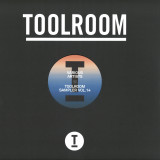
The next of Toolroom’s 4 track vinyl sampler series kicks off with a bang(er!). Welcoming CHANEY back onto the label with possible his finest release to date in the shape of ‘I Choose You’. On Toolroom alone he has amassed over 40m streams across leading streaming stores in just 3 years and can add massive imprints like Defected, Insomniac and Perfect Havoc to his list of musical successes. Everything in this record is 100% original and written by CHANEY himself from the self-played bass line, lush rhodes chords and distinctive, poignant vocals.
Next up is Gene Farris who has been a mainstay on Toolroom in recent years and is a regular artist at our label events all over the World. ‘In My Heart’ lands as an exciting collab with the Basura Boyz, a duo also hailing from Gene’s hometown of Chicago and the chemistry between the 3 of them is evident from the first beat! A super cool, stripped back vocal tech house track that sits in that sweet spot of club and specialist radio.
Kicking off the B-side is Deeper Purpose who returns to Toolroom alongside Jalja & Lazy Joe, after his debut club weapon ‘Stutter’ dropped on the label last year. He has had success across all the scene’s leading imprints over the past 12 months including Fisher’s Catch n Release, Experts Only and Repopulate Mars and this record is an anthem in the making! Jalja is on vocal duties, the vocalist that shot to fame after her huge ‘Hanging Tree’ record alongside Michael Bibi. She adds her trademark ethereal vibe to the record and delivers a typically killer hook - This is a real EAR WORM!!
Wrapping things up on Sampler 14 is a very exciting collaboration from 2 of the scene’s brightest shining new stars; Tony Romera and Crusy. Having been die-hard Toolroom fans for many years, this record came about during a conversation about old Toolroom records, and how they collectively wanted to emulate that slightly progressive tech house but bring it right up to date. And they have certainly done that! A real peak-time dance floor moment here with insane production and a unique, intense build up that is already causing maximum mayhem!
Countless radio plays on Radio 1 from Danny Howard, Sarah Storie, Pete Tong
Other notable radio plays – Kiss FM, Toolroom Radio, Sirius XM, Data Transmission Radio, Radio 1 Dance Anthems, Radio 1 Party Anthems, Rinse FM, Select Radio, Tomorrowland Radio
On Still + Bright, her highly-anticipated follow up to, Wary + Strange, Amythyst Kiah shares a dozen songs that mark an evolution in her sound. Kiah says, “With this album, I’ve always been incredibly interested in stories and philosophy. Lots of the songs are inspired by the cosmos, space, meditation, and mindfulness. It’s a way to piece out what it means to be a human being in the modern world. It’s the general idea that we should all have the freedom to decide what path we want to choose.” Still + Bright is produced by Butch Walker (Fall Out Boy, Green Day, Weezer) and features special guests including SG Goodman, Avi Kaplan, and Billy Strings. All of the songs were brought to life by Kiah and co-writers, including Sean McConnell, Avi Kaplan, Sadler Vaden, and Tim Armstrong, among others. Still + Bright is set for release on October 25, 2024. “Years in the making, Still + Bright explores what it means to be a human being in the modern world. Songwriting is my way to marry big, overarching philosophical ideas and questions into a musical, more organized arrangement. Inspired by the cosmos, space, meditation, and mindfulness – this record directly challenges religious and political dogma, stating that we should all have the freedom to decide what path we want to choose.” Recently Kiah featured in Salon talking about her love of country and bluegrass music and was included in a New York Times T Magazine spotlight and documentary: The Next Generation of Black Folk Singers. Her episode of PBS’ The Express Way with Dulé Hill aired nationally on April 30, Kiah is featured in Episode 2: “Appalachia”. She recently appeared on a panel at the Television Critics Association Press Conference which was attended by over 200 television critics around the globe. This June she will be on the road opening for Iron & Wine.
In 2007 an Italian film festival invites Mouse on Mars to score a film of their choice. The organizers claim to be able to clear the rights for any movie the band chooses. Werner Herzog’s fictional documentary Fata Morgana, which merges footage of several desert explorations by Herzog and his team into one continuous association, has long been a band’s favorite. The film comes with a soundtrack by Mozart, Leonard Cohen, Third Ear Band and field recordings. Andi Toma and Jan St. Werner are sent a DVD to Düsseldorf and start working. The idea is to score the film in real time so instrumentation has to be readily at hand: guitar, percussion, electronics, mouth harp, pedals, software, tapes, samplers. Once the arrangement for the three-part film is sorted Mouse on Mars bring their score to stage. Herzog Sessions is performed twice: first when the band still thought the rights had been cleared, and a second time at London’s Southbank Center knowing that Herzog would have never approved a new score.
--
Mouse On Mars – London Queen Elizabeth Hall soundtracking Werner Herzog.
By Mike Diver, 24.04.2009
Filmed in 1971, Fata Morgana is perhaps not one of Herzog’s best-known works (think Grizzly Man, Rescue Dawn, et cetera…), but then Mouse on Mars have never been ones to embrace the mainstream, quietly letting their modern, experimental take on krautrock do the talking over the years, thus producing some quietly brilliant electronica that far outweighs their modest profile.
The film itself is not altogether dissimilar to the wonderful, Phillip Glass-scored Koyaanisqatsi, with sweeping landscape shots and no obvious plot or narrative, though Fata is concentrated purely in one place – in and around the Sahara Desert, switching from images of barren wasteland to desert tribes and dead, skeletal cattle.
The obvious thing to do when soundtracking such powerful imagery is to vie for dreamy electronic soundscapes which can be sustained for a long period, and whilst this ambient shoegaze approach was present and correct (also carefully constructed and highly effective), Mouse on Mars added a human element to the performance, incorporating a live dimension by using and looping guitars, harmonicas, processed vocals and even a live horn player (quite possibly a flugelhorn. Look it up if you don’t believe me) for the final section of the film.
Some of the most interesting points arose when the duo suddenly switched from solemn, ambient tones to glitchy, bouncing electro (reminiscent of their more upbeat work) whilst on the same film shot – causing the audience mood to flick from tripped-out bliss to attentive semi-wired, utterly subverting any idea of a narrative the film may have possessed. Clever stuff.
Ranging from sinister to surreal to humorous, all the moods portrayed in Fata Morgana were successfully matched by Mouse on Mars’ live rescore – no mean feat. The duo also went above and beyond the call of duty with their own soundtrack, adding a fascinating personal signature to an already unique film.
The Wild Classical Music Ensemble is a Belgian experimental rock band formed in 2007 by artists with mental disability within the social-artistic non-profit organisation Wit.h in Kortrijk. Their unique sound is a blend of punk/rock riffs, fanatical rhythms and soaring flutes and fiery synths, over which gravitate multiple, multilingual voices that scratch harshly as much as they comfort. There's something very Belgian about this harshness and noisiness. We often think of compadre Arno, from the TC Matic era. During the Covid crisis, the disabled members of the Wild Classical Music Ensemble were undoubtedly subjected more than others to the harsh conditions of confinement, alone in their rooms. Damien Magnette was still able to visit them with sound equipment. This was one of their all-too-few windows onto the world. Forbidden to meet, let alone play together, the members of Wild were nevertheless able to compose songs in tandem with Damien. The tracks were then sent to musician friends - Fabrice Gilbert, Ava Carrère, Wim Opbrouck, Shht, Arthur Satàn, Nathan Roche and Julien ZLDR - who added their artistic touch. Jean Lamoot and Carl Roosens joined the adventure, one as mixer, the other as video director. It's a result of the conditions under which it was created, this is the band's most highly-produced album, and perhaps its most accessible: frankly rock, with a great deal of freedom in production, and sometimes with a certain pop allure. Jean Lamoot's contribution to the mix had a lot to do with it. In addition, the forced slowdown allowed us to devote much more time and attention to writing the lyrics. Leader Damien Magnette says: "For over a year, we were all confined. But what about when you're a mentally handicapped person? Well, it's very different from you and me... We have the right to choose, the luxury of deciding for ourselves what rules we want to follow or not. We have free will. They don't. This series of confined songs is dedicated to all the people who have gone through this crisis, deprived of their free will. We send them our thoughts, hugs and kisses full of true love! The songs respond to a deep desire to look out for each other in adversity (the so obvious "Comment ça va?" by Johan Geenens and Wim Opbrouck, or "Waarom ben je boos" by Sébastien Faidherbe with Wim Decoene, the latter full of empathy). A sense of loneliness is logically present on the album ("Dat is mijn verdriet" by Linh Pham, a very real, very concrete and particularly touching poem, or "Loneliness", whose text was improvised by Wim), if not an understandable rage ("Je ne veux pas" and "My Frustrations"). It worth noting that on "On reste heureux", Sébastien Faidherbe composed all the parts in one go, with an optimism that stands out from the anger expressed in his other songs. Let's make no mistake: none of this is really over. All these emotions, suffering, pain and hope, speak to us far beyond this grim story of covid.
- Where Hides Sleep (Key Version)
- All Cried Out (Key Version) 03. Such Small Ale
- All Signs Of Life (Key Version)
- Can't Say It Like I Mean It (Key Version)
- Fire (Key Version)
- Filigree (Key Version)
- The Impervious Me
- More (Key Version)
- Is This Love? (Key Version)
- Tongue Tied (Key Version)
- My Right A.r.m. (Key Version)
- So Am I (Key Version)
- My Best Day (Key Version)
- World Without End (Key Version)
- This House (Key Version)
- Love Resurrection (Key Version)
- You Don't Have To Go (Key Version)
white 2x12"[25,17 €]
To celebrate 40 years as a solo artist, Alison Moyet releases Key, a collection of 16 reworked singles and deep cuts, alongside two brand new tracks. Key is a blazing showcase of the depth and breadth of Moyet"s song writing ability that unlocks who she is as a creative artist. With nine studio solo albums to choose from to celebrate her fortieth year as a solo artist, Moyet wanted "to look at the trajectory of those decades and explore songs that, in their original form, were never fully realised or have had their relevance to me altered by time." The album distils 40 years of music making, presenting a cohesive overview of a long and dazzling journey.
- Where Hides Sleep (Key Version)
- All Cried Out (Key Version) 03. Such Small Ale
- All Signs Of Life (Key Version)
- Can't Say It Like I Mean It (Key Version)
- Fire (Key Version)
- Filigree (Key Version)
- The Impervious Me
- More (Key Version)
- Is This Love? (Key Version)
- Tongue Tied (Key Version)
- My Right A.r.m. (Key Version)
- So Am I (Key Version)
- My Best Day (Key Version)
- World Without End (Key Version)
- This House (Key Version)
- Love Resurrection (Key Version)
- You Don't Have To Go (Key Version)
splattered 2x12"[30,67 €]
To celebrate 40 years as a solo artist, Alison Moyet releases Key, a collection of 16 reworked singles and deep cuts, alongside two brand new tracks. Key is a blazing showcase of the depth and breadth of Moyet"s song writing ability that unlocks who she is as a creative artist. With nine studio solo albums to choose from to celebrate her fortieth year as a solo artist, Moyet wanted "to look at the trajectory of those decades and explore songs that, in their original form, were never fully realised or have had their relevance to me altered by time." The album distils 40 years of music making, presenting a cohesive overview of a long and dazzling journey.
Readers of encyclopedic tomes are obviously familiar with exploding animals – there are numerous reports of torn-apart toads (even in Hamburg, Germany!), actual ants exploding altruistically – but humans that decide to jointly detonate, and with no harm done, that’s rare: Kobe’s own o'summer vacation are unique (and volatile) like that, and they’re back to light the fuse for the second time, presenting 13 more musical quarter sticks that have already blown up venues in Europe and Japan.
“Keep it lean, keep it mean,” they say, and that’s what this band loves to take to the extreme: breakneck concision and collective combustion meet freeform noise punk hazards on o'summer vacation's second (not quite) full-length – as the Kobe-based three-piece’s “Electronic Eye” is set to arrive on October 11, 2024. Following a bunch of trips to Berlin, Munich etc., the Japanese fire starters have found a new home with Alien Transistor, and it’s the perfect launch pad for their latest set of guitarless pyrotechnics. Going right for max q (maximum dynamic pressure), “Electronic Eye” is (unlike those Starships) actually supposed to explode right after lift-off ;)
Even though there have been some line-up changes since the group recorded its sophomore album, the energy caught by producer Shinji Masuko (DMBQ, Boredoms) is still unmatched: a very physical and hard-knocking barrage of mosh-inducing madness that leaves you speechless + inevitably twitching towards the pit. Mastering was done by Masaki Oshima aka Watchman (Melt-Banana).
Opening with sizzling hi-hats and heavy ripples of breathless bass, singer Ami presents a non-sequitur kind of lullaby over the math rock-style interlocutions of “宿痾 (Shuku - A)” – which at 6+ minutes makes up more than a quarter of the album. A shapeshifting frenzy of voice (Ami), unbridled, pedal-powered bassline insanity (Mikkki, formerly Mikiiiii), and hot-blooded drums (Manu, meanwhile replaced by Karry), the album features mosh-inducing blows (previously released “Luna,” “Anti Christ 大体 Super Star”), 30-sec mini noise punk anthems (“竦(shou)”, “Days Go By Fast”), and continues to surf at breakneck pace up and down scales (“@ The”), which often feels like catharsis served with a hammer (“Ultra”). Whereas some tracks are bigger more song-y than others (“Song#2,” that full-throttle “Poodle”), “Vs I” is on time like Tierra Whack (exactly 60 seconds of pick-grinding action), and “Rage” indeed feels like Zack is about to join the party – only to see Ami wipe the floor with pure onomatopoetic fire. Finally, “Aloooooone” and “Humming” (that opening lilt!) are sure going to be live favorites, shifting up and down via hardcore speeds and various break-downs.
Quite hotheaded and terminating things on a high note, o'summer vacation point out that the quick-fire lyrics of their “songs have no meaning. It’s called onomatopoeia in English. Ami, our vocalist, does not like to communicate her thoughts through her music.” Although she considers her contribution “a part of the instrumentation,” they still have strong messages and concerns (unrest, discontent, willingness to shake, wake up, enliven anyone near the audible bomb crater): “That doesn’t mean we don’t have a point of view, but we choose to express ourselves through sound rather than words. Generally, but not exclusively, we are anti-racism, anti-war, gender-free, angry at the companies we work for and their bosses, etc., which are very common sentiments held by so-called rock bands.”
It’s only three ingredients, just like sonic gunpowder: bass, drums, voice – but they tend to explode a few bars into each new track. In a perfect world, there’d be giant colorful clouds of dust gracing the sky over each venue they descend upon.
Sasu Ripatti presents the fourth volume in his "Dancefloor Classics" series with five 10" releases coming throughout 2023. Music for imaginary dancefloors, released on Ripatti's own label "Rajaton".
”Look up, into the light” she said, while the camera shutter clicked. ”Like this? Does it look holy?” His neck felt stiff. Her reply: ”Yes, just like that. What do you mean holy? Like religious? ”No, more like trying to look very far, somewhere beyond what we can see.” ”Okay, stand still, I’m going to come close to you now. The light hits your face great.” click, click, click.
He noticed her fingernails. They were not polished. Natural. Even somewhat rugged, as if something wore out the fingers slightly. What had these hands held besides the camera? What made the edges of her fingernails drift off?
He thought it’s weird to look straight into the camera. The photographer had closed her left eye, the one not looking into the lens. Then it opened, she looked up, perusing the surroundings, then she closed her eye again, then looked up, closed, looking up, very quickly. It all seemed very professional. Maybe she calculated the light, making sure it’s close to perfect. ”What will these photos look like?” – the thought popped into his head briefly. It was liberating to think it wouldn’t matter.
”What’s that song playing?” he asked. ”Wait a sec, Ol’ Dirty Bastard?” she replied. ”Oh yeah, right. But the sample?” ”Hey, could you look up again, like that. No, lower.”
New directions: ”Look out from the window, turn left.” ”My left or yours?” ”Yours, I always try to think from the direction of my model.” How professional! This is a good shoot, so natural. Should I worry about how the photos look like? No, I don’t want to. His thoughts bounced around. What would the story be like? It’s a big newspaper, everyone will read it. Maybe someone drinks coffee and eats a stroopwafel while they do it. Will they place the waffle on top of the mug for a brief while, so that it gets hot and the syrup melts a little? Then it feels wet, and you can bend the cookie.
She broke his train of thought off midway through: ”Now turn right, but look left, and slightly up, but don’t turn your face right.” ”Umm, like this? Sounds like a set of pilates instructions.” she laughed ”You do pilates?” ”Yeah, it’s hard sometimes. Have you tried?” ”No”, she said. ”I’m not good for sports that are done in groups.” ”Yeah, but in pilates you can just be inside your mind, drowning in your private thoughts.”
”What are you thinking in pilates?” she asked, taking more photos. ”Well, mostly just which way is right. And which left.” click, click.
Q&A with Sasu Ripatti:
1) Tell us something about the EP series ”Dancefloor Classics”, what’s the idea and what can we expect?
I’ve been slowly writing these sort of dance music pieces and finally curated them together for a conceptual release. I like to create music for a dancefloor that exists only in my imagination and doesn’t try to suck up to the standardized reality.
2) Your vinyl format is 10” which is quite special (as opposed to LP / 12”). Why did you choose it?
It’s my favourite format, absolutely. The size is perfect, and you can make it sound really good @ 45 rpm. And you still can make great artwork.
3) You seem interested in sampling/repurposing, what does it mean to you as an artist to approach something already existing from a new angle? How does the source material inform you about the approach to take?
I guess i could flip it around and just say I’ve outgrown synths or electronic sounds to a great extend, and having gotten rid off all my synths already good while ago I’ve used samples as my main source material a lot. It’s obvious on this series that i’ve sampled existing music, but I also sample instruments and things in the studio and resample my own library that I have built over the years, it’s quite large. To me the end result matters, not so much how I get there. Once I have something on my keyboard and play around, it’s all an instrument, though with sampling other music it becomes a really interesting and complex one as you’re possibly playing rhythm, but also harmonic content and maybe hooks or whatever, all at once.
I never sample premeditadedly, like listening to records and looking for that mindblowing 3 sec part. I just throw the cards in the air and see what lands where, just full intuition and hopefully zero mind involved, playing tons of stuff, trying things, just recording hours of stuff. Then comes the interesting part to listen to hours of mostly crazy stuff and finding that mindblowing 3 sec part.
4) What is your relationship with the dancefloor (conceptually and/or in experiences / as a performer)?
Very complicated. I have never really felt comfortable on a dancefloor but have always wanted to. There’s something in club music, in theory, that really speaks to me. It has never really materialized for me – speaking mainly from a performer’s point of view who goes to check on a dancefloor for a moment after a concert. I never have DJ’d or felt much interest towards it. But again, I love the idea and concept of DJing. As well as producing music for imaginary DJs. Lately, as in the past 10+ years, I haven’t even performed in any sort of club spaces. So my relationship to the dancefloor is quite removed and reduced, but there’s quite a bit of passion and interest left.
All tracks composed and produced by Sasu Ripatti.
Artwork & photography by Marc Hohmann.
Mastering by Stephan Mathieu for Schwebung Mastering.
Vinyl cut by SST Brueggemann.
Publishing by WARP Music Ltd.
With "The Mirrored Mask", Dutch band Harlem Lake announces their highly anticipated second album, set to be released on September 27th under Jazzhaus Records Following their critically acclaimed debut album "A Fool's Paradise, Vol. 1" from 2021, the band from Haarlem, near Amsterdam, once again presents an eclectic mix of blues, rock, and Americana. However, Harlem Lake refuses to be pigeonholed, using these genres definitions merely as loose creative inspiration, resulting in a fresh and timeless sound. "The Mirrored Mask" is an energetic work, opening with two outstanding singles: "Carry On" and "Fooled Again." While "Carry On" impresses with powerful vocals by frontwoman Janne Timmer and sophisticated brass arrangements, "Fooled Again" showcases a funkier side of the band, with guitarist Sonny van den Berg displaying his distinct skills. The album features a wide range of styles and moods, from danceable tracks like "Beggars Can't Choose" to moving ballads like "The Thought Of You." The latter is characterized by its gentle instrumentation and melancholic lyrics, reminiscent of folk- Americana greats like Kacey Musgraves or Katie Pruitt. With tracks like "Crying In A Desert," Harlem Lake then also surprises listeners with a uniquely atmospheric road song a la J.J. Cale, complete with an impressive guitar solo. The highlight of the album is undoubtedly the title track "The Mirrored Mask," which showcases the full range of Harlem Lake's musical abilities. Concluding the album, the band presents two more highlights, "Temptation" and "Jack In The Box," skillfully rounding out the album with blues, jazz, and Americana flair. Harlem Lake, consisting of Janne Timmer (lead vocals), Dave Warmerdam (keyboard), Sonny van den Berg (guitar), Kjelt Ostendorf (bass), and Benjamin Torbijn (drums), created "The Mirrored Mask" as an album that impressively demonstrates their musical maturity and passion for songwriting. From powerful rock numbers to intimate ballads, the album offers a multifaceted listening experience that will captivate both fans and newcomers alike. Known for their dynamic live performances as winners of the European Blues Challenge 2022, the band will be presenting the songs from "The Mirrored Mask" on an extensive tour through Europe.
For a final time, accompanied by her musicians, Cesária’s voice sweeps us away on yet another voyage of nostalgia. Entitled Mãe Carinhosa, meaning “Mother Tenderness”, this was the very last album by the Queen of Morna that was released posthumously. It includes 13 unused tracks, covering a period that goes from the recording sessions of the album Cabo Verde in 1997 to those of Rogamar in 2006.
From 1995 on, each time Cesária Évora went into the studio, her producer José da Silva got her to record more tracks than were needed for a new album. The aim was to choose a set of songs that fitted together naturally and formed a harmonious record that would delight listeners from start to finish - one of the reasons for Cesária’s commercial success. Some of the surplus tracks were left incomplete for technical reasons or because Cesária so decided. A year after her passing, this extra material was used to produce an album of 13 previously unreleased tracks, beginning with a first, unpublished version of the morna “Sentimento”, recorded in 2003.
• 180 GRAM AUDIOPHILE VINYL
• DELUXE SLEEVE WITH GLOSS LAMINATE FINISH
• INCLUDES INSERT WITH LYRICS
• CESÁRIA ÉVORA’S POSTHUMOUS ALBUM
• AVAILABLE ON VINYL FOR THE FIRST TIME
• 10TH ANNIVERSARY EDITION OF 1000
INDIVIDUALLY NUMBERED COPIES ON BLUE
& RED MARBLED VINYL
SIDE A
1. Sentimento
2. Tchon de França
3. Mãe Carinhosa
4. Dor Di Sodade
5. Talvez
6. Dos Palavras
To celebrate its 10th anniversary, Mãe Carinhosa is available on vinyl for the very first time as a limited edition of 1000 individually numbered copies on blue & red marbled vinyl.
This LP is a compilation of songs from five different digital-only demo collections I released on Bandcamp between 2021 and 2023. I relied on the ears and judgment of my old friend Dom at Feral Child to curate this comp, allowing him to choose his favorites from over 60 songs. While I might have chosen an entirely different batch of tunes, I was happy to defer to Dom, as I’ve never had much perspective when it comes to assessing my own material. All of the songs on this album were recorded at home, mostly on the same day they were written. Most of them are first takes, intended to provide a template for a theoretical band to follow if and when the songs were to be re-recorded “properly” at a later date. A few have since been re-recorded for studio records, and a few others remain in contention for future studio records.