Chris Goss is one of the elusive geniuses of American music As the singer, guitarist and driving force behind Masters Of Reality, he's spent more than 40 years charting his own musical journey, travelling from mystical blues to desert rock to psychedelia-edged beauty via all points in between.
Now Goss has returned under the Masters Of Reality banner with The Archer, their frst new album in 16 years.
Since the start of the 21st century, Goss has balanced his work as a producer with his Masters Of Reality output. There have been three more studio albums under the Masters Of Reality name: 2001's Deep In The Hole, 2004's Give Us Barabbas and 2009's Pine/ Cross Dover. Each was a self- contained musical universe, reafrming Masters Of Reality as a band outside of the mainstream music industry.
Now, 15 years after his last release under the name, Chris Goss has fnally returned with Masters Of Reality. Like everything they've released since their inception over 40 years ago, it's another step on a journey that has continuously moved forward, never repeating itself or being swayed by external infuences.
First Masters Of Reality album in 16 years
Chris Goss is considered "The Godfather Of Desert Rock" having produced records for Kyuss and Queens Of The Stone Age among many others. Extensive touring in 2025
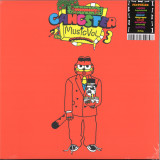
**Gangster Music Vol.3: The Most Gangster Music Trilogy of All Time Comes to a Triumphant Close**
Imagine curating a dream lineup of MCs and producers from every corner of the rap world—sounds impossible, right? Not for artist and illustrator Gangster Doodles, who has been bringing this vision to life for the past decade. Now, with “Gangster Music Vol.3”, the trilogy reaches its grand finale, and it’s bigger, bolder, and more unpredictable than ever before.
Gangster Doodles himself puts it best:
"It’s hard to believe that I’ve been actively working on this Gangster Music series for the past 10 years. The most gangster music trilogy of ALL TIME is almost complete!! And in my humble opinion Vol.3 is the most exciting out of the 3, both from a music standpoint (special shout-out to all my music heroes on Vol.3) and artistically speaking this is the most fun I’ve had in years”
Since launching Volume 1 in 2019 and following up with the second volume in 2022, Gangster Doodles has been shaping the Gangster Music series into a one-of-a-kind sonic universe—an unfiltered mix of underground titans, unsung legends, and rising stars. Volume 3 is the biggest installment yet, boasting a staggering 30 tracks that traverse the entire spectrum of rap and beat culture.
This time around, the lineup is as eclectic as ever. From legendary pioneers like Lee Perry and Tommy Wright III, to veteran producers such as Mr. Scruff and Peanut Butter Wolf, the album pays homage to hip-hop’s roots while pushing forward into fresh territory. The roster also includes established up-and-comers like Devin Morrison, Low Leaf, DJ Harrison, Quelle Chris, Homeboy Sandman, and Suzi Analogue, ensuring a mix of classic flavors and new-school innovation. The bubbling underground is well represented too, with artists like Raz Fresco, Atlanta’s 645AR, and Pro Era’s Chuck Strangers bringing their own distinct heat.
From pioneering SoundCloud rappers like Pouya to genre-bending composer John Carroll Kirby, from Birmingham’s Romderful to Chile’s RVYO, the album encapsulates a truly global soundscape, proving once again that Gangster Doodles’ ear for cutting-edge talent is second to none.
As always, the cover art is a vital piece of the puzzle. This time, Bootleg Garfield & Friends take center stage, bringing the same playful irreverence that has defined Gangster Doodles’ artwork for years. Fans are encouraged to engage, remix, and make the cover their own, staying true to the spirit of interactive creativity that has always fueled the series.
After years of meticulous curation, countless DMs, emails, and behind-the-scenes wrangling, Gangster Music Vol.3 is here to complete the trilogy in legendary fashion. Expect boundary-pushing beats, next-level lyricism, and a lineup that celebrates hip-hop in all its many forms.
“Thanks to everyone who’s actively supported and continues to tap-in. Believe & trust when I say I've got more dope stuff cookin’. STAY TUNED!! GANGSTER DOODLES 4EVER. 1LUV."
Gangster Music Vol.3 is out April 7th on All City. Stay tuned, stay tapped in, and get ready for the most gangster music experience yet.
out of Stock
Last delivered 15 months ago available to reorder, subject to availability
Wewantsounds is delighted to release Dibango 82 an unreleased live recording by Manu Dibango tapedin Marseille, Dec 1982. The electrifying live concert features the African legend alongside his stellar 8-piece group, blending funk, jazz, and African rhythms. Highlights include "Africa Boogie" and "Waka Juju." This album released in partnership with INA and Soul Makossa, Dibango"s label captures the African legend at the top of his game. Remastered from the original tapes with liner notes (Eng/Fr) by Graeme Ewens and concert organiser Christian Ducasse, it features a front cover photo by key African paris-based photographer Bill Akwa Bétotè.
Cold Specks kehrt mit ihrem vierten Album 'Light for the Midnight' zurück.
Nach den Erfolgen ihrer ersten drei Alben 'I Predict a Graceful Expulsion' (2012), 'Neuroplasticity' (2014) und 'Fool's Paradise' (2017) hat Cold Specks (Al Spx) ihren Ruf als einzigartige Stimme der modernen Musik gefestigt. Von ihrer fesselnden Acapella-Performance bei Later... with Jools Holland bis hin zu Kollaborationen mit Moby, Massive Attack und Michael Gira von Swans hat Cold Specks immer wieder Kunstwerke geschaffen, die nachhallen.
Mit 'Light for the Midnight' begibt sie sich auf ihre bisher persönlichste Reise. In seinem Kern ist das Album eine rohe und zutiefst emotionale Reflexion über Ausdauer, Überleben und Transformation. Es ist eine Sammlung von inbrünstigen Balladen und atmosphärischen Popsongs, die Spx' gefühlvolle Stimme in weitläufige Klangwelten kanalisiert.
Das Album entstand in einer herausfordernden Phase in Spx' Leben. Die Arbeit begann 2019 inmitten von Kämpfen mit der psychischen Gesundheit, Erfahrungen, die tief in die Musik eingebettet sind. Doch trotz seiner persönlichen Ursprünge betont Spx seine Universalität: „Ich wollte auf jeden Fall über die letzten Jahre reflektieren, weil sie mich so sehr beeinflusst haben, aber ich wollte auch, dass das Publikum mit diesem Album weggeht. Die Songs gehören ihnen, sobald ich sie veröffentlicht habe.“
Das Album wurde in Toronto und Bristol aufgenommen, wobei Spx zusammen mit Adrian Utley von Portishead und Ali Chant (bekannt für seine Arbeit mit Perfume Genius, Dry Cleaning und Aldous Harding) als Co-Produzent fungierte. Es enthält Streicherarrangements von Owen Pallett (Taylor Swift, Lana Del Rey, Sampha) und zusätzliche Beiträge von Graham Walsh von Holy Fuck. Spx arbeitete auch mit einer Reihe von hervorragenden Kollaborateuren zusammen, darunter Chantal Kreviazuk (Drake, Kendrick Lamar), Malcolm Middleton von Arab Strap, Ben Christophers, Ed Harcourt und Jonathan Quarmby.
'Light for the Midnight' zeigt Cold Specks von ihrer verletzlichsten und kraftvollsten Seite, indem sie die Geschichten ihres Kampfes in atemberaubende Kompositionen verwebt, die einen tiefen Eindruck hinterlassen. Es ist ein Album der Hoffnung und der Transformation.
Mark Rae is a well respected artist and has woked with, and alonside many legends in the music industry. Originally finding success with Rae & Christian, Mark grew his record label Grand Central Records into one of the biggest indies of the late 90's. Now writing novels with soundtracks Mark is proving himslef to be a true renaissance man. Expect big things from this project. It is unique and filled with universal emotion.
£8000 booked spend on singles plugging to radio and book PR. Expect coverage on BBC Radio 6 and 4. Expect press coverage across major publications. Supported by Chris Hawkins. This release is backed with a vinyl that comes with a free novel, and a novel that comes with a free acoustic CD.
Songs of Silence is a beautiful turn-based strategy game of fantasy warfare. Leading one of the game's distinct factions, it is the player's task to conquer randomized maps through military might, subterfuge or arcane means. Intriguing hero stories grounded in a rich fantasy world create emotional bonds and give meaning to the player's actions. Roguelike meta-game progression, based on heroes' personal stories and unlocking new features and content via playing, ensuring long-time motivation and keeping the game excitingly fresh. The atmospheric soundtrack of the game is composed by Hitoshi Sakimoto, the famous artist behind all-time favourites such as Final Fantasy Tactics, Final Fantasy 12 and Valkyria Chronicles. Sakimoto describes his way into creating the soundtrack for Songs of Silence: "Regarding Songs of Silence, the stage design and the world-building are incredibly detailed and meticulously crafted. The settings are thoroughly developed and each region has its own unique culture. Given this highly refined world, I believe that my role was primarily to support and enhance the atmosphere with sound. At the same time, I wanted to ensure that the music conveys the uniqueness of this world. When people see it, I want them to feel its strong presence while also recognizing that it is a world unlike anything they have seen before. Expressing this uniqueness and reinforcing the impression it leaves is, in my view, the role of music and sound." But Sakimoto's music isn't just pushing the gamer's experience, it aims to add a little extra in a way that only his profession is able to: "It's a bit difficult to describe the specific 'feeling' I was aiming for, but I intend to create sounds and music that people have rarely heard before. Since the world itself is already well-defined, my approach was to add an extra layer - something that cannot be conveyed through visuals or text alone - through music."
Bryan Beller's (Joe Satriani, Aristocrats, Dethklok) epic progressive double concept 2019 album feat. 26 all-star musicians now on Blue Swirl 2LP in gatefold jacket available! Bassist/composer Bryan Beller (The Aristocrats, Joe Satriani, Dethklok, Steve Vai) presents a sweeping, epic-scale modern progressive double concept album that asks the question: When the storm comes for us, the big one after which things will not be the same, who are we and what do we become in those defining moments? What do we keep, and what do we let go? "Scenes From The Flood" employs an all-star cast of 26 musicians to explore themes of ambition and loss, intentionality and reality, hope and disillusionment. It uses every second of its 18-song, 88-minute running order to tell an emotionally consuming and unforgettable musical story. Produced and composed by Bryan Beller (except "Angles & Exits," composed by Janet Feder), mixed and mastered by Forrester Savell. "Scenes From The Flood" is performed by: Christopher Allis, Bryan Beller, Nili Brosh, Paul Cartwright, Darran Charles, Julian Coryell, Mike Dawes, Janet Feder, Guthrie Govan, Ray Hearne, Gene Hoglan, Mike Keneally, Jamie Kime, Fred Kron, Teddy Kumpel, Jake Howsam Lowe, Evan Mazunik, Nate Morton, Rick Musallam, Mike Olekshy, Griff Peters, John Petrucci, Matt Rohde, Joe Satriani, Rishabh Seen, Joe Travers, Leah Zeger.
Mazy Fly, the second full-length by the Bay Area artist SPELLLING, explores the tension between the thrill of exploring the unknown and the terror of imminent destruction. Chrystia Cabral spent the summer of 2018 in her Berkeley studio reflecting on the thresholds of human progress and longing for a new and better tomorrow. She was struck by the way the same technologies that have given humans the ability to achieve utopian dreams of discovery have also brought the world to the precipice of dystopic global devastation. Despite the darkness of this reality, Mazy Fly is defiantly optimistic. It is a celestial voyage into the unknown, piloted by Cabral. Mazy Fly musically traverses the spaces between languid, honey-soaked vocals and distant angelic whispers, from thumping 808 club beats to crunching tape loops, and from silky, smooth R&B to whirling organ sonatas. Cabral became enamored by the idea of flight as a harbinger of both progress and apocalypse, and that was expressed in the textures and compositional techniques she utilized. Swarms, flocks, flies, angels, spaceships, flying saucers - all are represented sonically by Cabral and her Juno-106 synthesizer.
Limited Edition to 200 copies incl. Remixes by DALO, Benedikt Frey and Nathan Dawidowicz
R.i.O. welcomes Brainwave Research Center, a NYC-based duo consisting of house/techno producer Chase Smith and documentary filmmaker Christa Majoras. In early 2023 they freed their debut album "figure 1" via their own label BRC. Two more albums followed. All documenting their love for experimental yet charming music of all kinds.
Their influences span a vast spectrum, from Steve Reich, Laurie Spiegel, and Edgar Froese to Martin Rev, John Carpenter, early Kraftwerk, or the ambient techno of Pete Namlook's Fax +49-69/45046 label. Yet, Brainwave Research Center forges a sound distinctly their own, seamlessly blending analog synthesis with electro-acoustic experimentation.
On "Psychic Antenna", the duo takes a gentle rawer approach. The tracks range from the manic verbal Die-Tödliche-Doris-like loops of "I Find Myself" to the meditative cosmic trance of "Open Your Mouth." "Orange Drop" and "Transmitter Park" toy with the dancefloor, channeling slow-motion acid trance and krautrock echoes.
The release is rounded out by three remixes: R.i.O.'s own Benedikt Frey delivers a deep, trippy groover full of inner musicality, while close companion DALO crafts a dark, echo-drenched pop rework, and Berlin's Nathan Dawidowicz injects psyched nu-disco rhythms, expanding "Psychic Antenna" into seven notions of intense neural oscillations.
ML
out of Stock
Last delivered 6 months ago available to reorder, subject to availability
Chronicles of the wasteland, an ode to those who remain in the shadows, a nod to the wild beauty of 40 rue Marceline. Solo looser project, Dimanche Midi goes fast (not always), and can be listened to in one go (as you like), at full throttle on your bike (or on the bus). Drum machine, electric bass, synth, guitar, cassette loops, samples and radio archives! This second release still speaks about our society in a light and relaxed way :) Peace
Rising Swiss black metal malfeitors Malphas have been working their way through the underground for several years now and with their 4th full length studio album 'Extinct' they are raising the stakes even further
What you get is 9 tracks of astral black metal dissonance fred upon humanity as a cosmic storm!
Rising Swiss black metal malfeitors Malphas have been working their way through the underground for several years now and with their 4th full length studio album 'Extinct' they are raising the stakes even further
What you get is 9 tracks of astral black metal dissonance fred upon humanity as a cosmic storm!
Songs about the unity of Sudan, peace between Muslims and Christians and the fate of war orphans, backed by grooves equally taking influence from Arabic sounds, American funk as well as neighboring Ethiopia.
Kamal Keila was among the first artist we met in Sudan during our two trips to Khartoum and Omdurman last year. He is one of the key figures of the Sudanese jazz scene that was a vital part of the musical culture in Sudan from the mid 1960s until the islamist revolution in the late 1980s. When we meet Kamal he luckily presented us with two mold covered studio reels.
Each tape included five tracks. One with English lyrics and another with Arabic ones. Musically you can hear the influence of neighboring Ethiopia much more than on other Sudanese recordings of the time, as well as references to Fela and American funk and soul. His lyrics, at least when he sings in English which gave him more freedom from censorship, are very political. A brave statement in the political climate of Sudan of the last decades, preaching for the unity of Sudan, peace between Muslims and Christians and singing the blues about the fate of war orphans called "Shmasha".
A note inside one of the boxes specified the track titles, durations and the fact that the sessions were recorded on the 12th of august 1992. Both sessions stand as a hearable testament how Kamal Keila stuck to a sound aesthetic from decades ago, while incorporating current events into his lyrics.
Kamal Keila's album is the first in a series of releases covering the Sudanese jazz scene on Habibi Funk. Be on the lookout for albums by The Scorpions and Sharhabeel coming soon.
The Passion of the Christ is a 2004 biblical drama film by Mel Gibson with music composed by John Debney. The soundtrack received an Academy Award nomination for Best Original Score and it was on the first place in both Top Christian Albums and Top Soundtracks in 2004. In 2005, the album won a Dove Award for Instrumental album of the year at the 36th GMA Dove Awards. The soundtrack succeeds as a coherent, moving, well-executed musical statement whether or not one has seen the film. The album is a combination of folk instruments, Eastern-tinged harmonics, solo, and choral voices. Debney worked together with Indian master violinist and vocalist L. Shankar, and singer/double-violinist Gingger Shankar. The Passion of the Christ is available as a limited edition of 750 numbered copies on gold coloured vinyl and includes a 4-page booklet.
»Even The Horizon Knows Its Bounds« explores sound’s relationship with architecture, inspired by the Naala Badu building at the Art Gallery of NSW. Created from sound prompts responded to by artists like Jim O’Rourke and claire rousay, the work reflects on space, collaboration, and the fluid nature of sonic environments.
I like to think that sound haunts architecture.
It’s one of the truly magical interactions afforded by sound’s immateriality. It’s also something that has captivated us from the earliest times. It’s not difficult to imagine the exhilaration of our early ancestors calling to one another in the dark cathedral like caves which held wonder, and security, for them.
Today the ways in which sound occupies space, the so-called liquid architecture, holds just as much wonder, albeit one that is often dominated by functionality and form. Beyond those constraints however, how sound operates in the material world is something that exists at the fundament of our understanding of music, and moreover within the broad church we know as the canon of sound arts.
Even The Horizon Knows Its Bounds is a record born out of these relations. In a direct sense, the record is the product of an invitation by curator Jonathan Wilson to create a sound environment, reflecting on the Naala Badu building at the Art Gallery Of NSW. The building’s name, which translates from the Gadigal language to ‘seeing water’, was opened in 2022 and this piece was offered as an atmospheric tint to visitors walking through the building throughout the year following its opening.
It’s also a record born out of a recognition for the porousness sound affords, especially as a device for collaborative endeavour. This composition is one born out of generosity and acoustic solidarity. Even The Horizon Knows Its Bounds is comprised not just of my sounds, but also that of an incredible array of artists who have also operated in the orbit of the Art Gallery Of NSW. The players include Amby Downs, Chris Abrahams, Chuck Johnson, Claire Rousay, Dean Hurley, Jim O’Rourke, JW Paton, Madeleine Cocolas, Norman Westberg, Stephen Vitiello and Vanessa Tomlinson.
The piece was constructed around two long form sound prompts that each musician responded and contributed to. These materials there when digested into the final piece you hear. The work could not exist without the substantial offerings these artists made, and I am immensely grateful to each of them.
I’ll finish with a little note that appears on the LP itself.
Place is an evolving, subjective experience of space. Spaces hold the opportunity for place, which we create moment to moment, shaped by our ways of sense-making.
Whilst the architectural and material features of space might remain somewhat constant, the people, objects, atmospheres, and encounters that fill them are forever collapsing into memory.
Lawrence English
Performed by Amby Downs, Chris Abrahams, Chuck Johnson, Claire Rousay, Dean Hurley, Jim O’Rourke, JW Paton, Madeleine Cocolas, Norman Westberg, Stephen Vitiello, Vanessa Tomlinson
Kaum hatte Stella Chronopoulou mit dem Schreiben von Adagio, ihrem fünften Album als Σtella, begonnen, wusste sie, dass die Zeit endlich gekommen war, um in ihrer Muttersprache Griechisch zu singen. Es wäre eine Premiere. Sie begann mit dem Album fast zufällig im Jahr 2019, während einer 11-stündigen Bootsfahrt zur Insel Anafi. Σtella hatte kürzlich eine persönliche Krise durchgemacht und brauchte eine Pause von zu Hause. Auf der Fähre zückte sie ihr Handy, während das Boot durch das Mittelmeer glitt, und begann mit einer einfachen Melodie, aus der sie nach und nach ein grobes Instrumentalstück zusammensetzte.
Als psychedelische Keyboards über stakkatohaften Drums flimmerten und schwankten, suggerierte der Track ein tiefes Ausatmen, als ob Σtella lange überflüssigen Ballast loslassen würde. Für eine Weile legte sie das Instrumentalstück beiseite. Sie war noch nicht so weit und hatte es auch nicht eilig. ?tella ist schließlich in einer langsamen Umgebung aufgewachsen. In ihrer Jugend in einem relativ ländlichen Vorort von Athen, Griechenland, spielten sie und ihre Freunde ungehindert auf leeren Straßen, machten sich keine Gedanken über Autos oder Genehmigungen, und das Leben fühlte sich einfach an. Doch in den letzten zehn Jahren ist das Leben von Σtella, die jetzt im Herzen von Athen lebt, immer geschäftiger geworden. Mit drei anspruchsvollen, verspielten und mit internationalem Elan vorgetragenen Pop-Alben ist sie zu einem der beliebtesten Musikexporte des modernen Griechenlands geworden.
Nach ihrem Sub Pop-Debüt Up and Away im Jahr 2022 überschritt sie die Marke von drei Millionen monatlichen Spotify-Hörern. Dieser Erfolg war ein Segen, aber Σtella sehnte sich manchmal nach dem langsameren Tempo ihrer Jugend. Diese Sehnsucht ist der rote Faden, der ihr fünftes Album, das bezaubernde Adagio, locker zusammenhält. Der Name leitet sich von dem Begriff für Musik ab, die langsam gespielt werden soll, Adagio ist dabei ein Pop-Album, das sich wie eine warme Decke anfühlt; es umhüllt seine Hörer mit nylonbesaiteten Gitarren, federleichter Percussion, psychedelischen Keyboards und Stakkato-Schlagzeug.
Geschrieben und aufgenommen über einen Zeitraum von fünf Jahren mit einem Konsortium von internationalen Kollaborateuren, darunter Rafael Cohen von !!! und der britische Songwriter Gabriel Stebbing, ist Adagio eine 27-minütige Meditation über Liebe und Sehnsucht, Ruhe und Zeit. Obwohl der Großteil des Albums auf Englisch gesungen ist, wie alle ihre Alben, wartet Σtella auch mit ihren ersten beiden Songs auf Griechisch auf: „Omorfo Mou“ und eine Coverversion eines griechischen Kultklassikers von 1969, „Ta Vimata“ von Litsa Sakellariou. Es ist ein Zeichen des Selbstbewusstseins, das diese zarten und verliebten kleinen Stücke ausstrahlen. Von Anfang bis Ende klingt Σtella auf Adagio entspannter und wohler als je zuvor. Diese bezaubernden Songs werden ihre Karriere nicht bremsen oder ihr den Wunsch des Titeltracks erfüllen, aber für eine halbe Stunde lockert die Zeit ihren Griff, auch auch wenn sie nicht langsamer wird.
Wenn sie nicht gerade aus dem Fenster auf die stürmische Skyline von Manhattan blickte, verbrachte Margo Guryan ihre dreißiger Jahre damit, Ohrwürmer für Leute wie Bobbie Gentry, Jackie DeShannon, Claudine Longet, Carmen McCrae und Julie London bei CBS's April Blackwood Music zu schreiben. Guryans zeitlose Gedanken über Liebe, Sonntage, Erdbeben, Weinen und Jungs namens Timothy haben unzählige Filme und virale Videos unterlegt. Meisterwerke aus früheren Zeiten. 28 ihrer Songwriting-Demos aus den 60er und 70er Jahren sind auf dieser 25-jährigen Jubiläums-Doppelalbum-Edition.
If the jazz of François Tusques is “free”, his spirit is even more so: having recorded Free Jazz with other like-minded Frenchmen (Michel Portal, François Jeanneau, Bernard Vitet, Beb Guérin and Charles Saudrais), the pianist had covered a lot of ground, with Barney Wilen (Le Nouveau Jazz) or even solo (Piano Dazibao and Dazibao N°2), so as not to repeat himself…
In 1971 he founded the Inter Communal Free Dance Music Orchestra which, as the notes the this album stated, “is an interpretation of a music which synthesizes the different communities living and working in France.” In 1976, on the first album (L’Inter Communal) we can already hear Tusques playing without borders in the company of Carlos Andreu (vocals), Michel Marre (trumpet and saxophone), Jo Maka (saxophone) and Ramadolf (trombone). It is a meeting between jazz and music from Catalonia, Occitanie and Africa. So far so good, but what about Brittany, that, Tusques knows “by heart”? Having lived for a long time in Nantes, he would expand his ‘brittanitude’ on the canal linking the city to Brest by playing with, for example the Diaouled-Ar-Menez. With these “devils from the mountain” who, under the baton of Yann Goasdoué, worked throughout the 1970s on the renewal of music from Brittany, Tusques met, notably, Tanguy Ledoré and invited him one day, with trois bombards and some bagpipes (Jean-Louis Le Vallegant, Gaby Kerdoncuff and Philippe Lestrat), to join the ranks of the Intercommunal. And so they set of towards a new music from Brittany, as the title states; Vers une Musique bretonne nouvelle!
With percussion from Samuel Ateba and Kilikus, the association launches the ‘bombardier’: the repetitions and dissonance of the different members all serve a common cause however: the dance, which is always the reason for the party. This sets a whole universe spinning, which can bring to mind Chris McGregor’s Brotherhood of Breath (“La rencontre”) when not taking on board waltz, swing, blues and gavotta or even revealing mysteries like those of Gurdjieff (“Les racines de la montagne” or “Le cheval” sung by Andreu). Only one thing to say to this Brotherhood Of Breizh: Mersi!
Almost as soon as Σtella Chronopoulou began writing Adagio, her fifth album as Σtella, she knew the time had finally come to sing in Greek, her native tongue. It would be a first. She started the record almost by accident in 2019, during an 11-hour boat ride to the island of Anafi. Σtella had recently gone through a patch of personal turmoil and needed a break from home. On the ferry, she pulled out her cell phone as the boat clipped through the Mediterranean and began with a simple melody, steadily piecing together a rough instrumental. As psychedelic keyboards twinkled and swayed above staccato drums, the track suggested some deep exhalation, as if Σtella were letting go of long-unnecessary baggage. For a spell, she set the instrumental aside. She wasn’t ready yet, or in a rush. Σtella, after all, grew up in a slow place. During her youth in a relatively rural suburb of Athens, Greece, she and her friends played unfettered in empty streets, not worried about cars or permission, and living felt easy. But in the last decade life has steadily become busier for Σtella, now based in the heart of Athens. She has become one of modern Greece’s most popular musical exports, with three sophisticated, playful pop albums rendered with international élan. After her Sub Pop debut, Up and Away, in 2022, she catapulted beyond three million monthly Spotify listeners. That success was a blessing, but Σtella sometimes found herself pining for the slower pace of her youth. That longing is the thread that loosely binds together her fifth album, the entrancing Adagio. Borrowing its name from the term for music that’s meant to be played slowly, Adagio is a pop record that feels like a very warm blanket, its nylon-string guitars and featherlight percussion swaddling its listeners for three minutes at a time. Written and recorded over the span of five years, with a consortium of international collaborators including !!!’s Rafael Cohen and British songwriter Gabriel Stebbing, Adagio is a 27-minute meditation on love and desire, rest and time. Though the bulk of it is sung in English, Σtella delivers her first two songs in Greek here—“Omorfo Mou,” the one that began on the boat, and a cover of a 1969 cult classic of the Greek New Wave, Litsa Sakelariou’s “Ta Vimata.” It is a sign of the self-assurance that radiates throughout these tender and smitten little tunes. Start to finish, Σtella sounds more at ease and comfortable than she’s ever been on Adagio. These fetching songs will not slow her career or grant her that title track’s wish. But, for half an hour, Adagio adds a measure of warmth to the world, with time loosening its grip even if it doesn’t slow down.● Athens, Greece-based Σtella’s new album Adagio is a pop record that feels like a very warm blanket, its nylon-string guitars and featherlight percussion swaddling its listeners for three minutes at a time.● Features Rafael Cohen and British songwriter Gabriel Stebbing.• Σtella’s breakout hit “Charmed” from her 2022 album Up and Away has nearly 100 million streams, and was recently featured in the hit Max show Industry.• On Spotify, Σtella has 3.4 million followers, 66k monthly listeners.
This is a recorded document performed by Mark Holub, Johanna Pärli and Sofía Salvo.
As a trio, they had not met until sound-checking for their gig at Berlin’s Cashmere Radio on September 1, 2023 — a fact that may be concealed by their immediate understanding as a musical entity but is obvious by their artistic freedom and curiosity towards each hoc encounters, flexible and steadfast in its performance, and that culminated in an experience that shook the floor of the radio station’s headquarters.
The day after, Sofía, Johanna and Mark gathered in Adam Asnan’s studio and deepened their quest for a communal language. They ignored any musical fetters or conventions, enjoyed the possibilities of a wider time frame without a live audience — and exceeded all hopes of what three personalities can achieve when they are given the space and time to experiment, detached from any restrictions.
Mark Holub is a drummer of outstanding versatility and responsiveness, full of ideas and quick on his feet. Through his playing as well as his experience as a band-leader and composer he is able to steer this coequal group towards thundering crescendo, but sits equally comfortable in the centre of complex and fine rhythm probing in response to impulses thrown in by his companions.
Johanna Pärli makes use of her double bass’s entire body, extracting an armada of multi- layered sounds with an immensely high sonic spectrum that is also reflected in the diversity of her musical projects. She is both patient and wildly adventurous in her performance, and in this trio her contribution wanders from considerate bow work to brisk fingerpicking, gnarly string strikes and pedal use to startling effects.
Sofía Salvo unleashes the full unbounded potential of her voice by taking advantage of her baritone saxophone’s broad range of possibilities. She is one of Berlin’s most singular musicians and her widely proven capabilities cover gentle additions to support and underline pulsive interplay just as masterfully as rapid licks and roaring bursts of noise, spurring the collective to unpredictable intensity.
If music of this particular kind often gives the impression of a constant search, this international trio certainly managed to find common ground and capture a special moment in time for listeners to (re-)discover. Contrary to what frequent misconception sometimes suggests, it’s also tremendous fun.
NERR — Filling Open Spaces was instantly composed and performed live in studio by Mark Holub on drums, Johanna Pärli on double bass and Sofía Salvo on baritone saxophone, recorded in Berlin on September 2, 2023 and mixed by Adam Asnan. Mastered and cut by Rashad Becker, vinyl pressed at Pallas. Artwork and design by Stefan Lingg, produced by Christoph Berg and Stefan Lingg.
Chris Ryan Williams (trumpet & electronics) and Lester St. Louis (cello & electronics) work together as HxH (H by H). Their skills have seen them move smoothly across various situations, constantly carving out new terrain and working in new configurations of musicians at a rapid pace. While worth reading, their biographies capture only a part of their complex rhizome.
HxH started about three years ago. The project is a direct response to all their activity with others and more importantly all their future leaning sonic desires. Their debut album STARK PHENOMENA is both their first studio recording and their first physical release. The album is appropriately set to be released by KMRU on his growing label OFNOT. It’s an ideal introduction to their sound world and their approach.
HxH describe their music as “electroacoustic,” but until recently the presence of Black musicians in this field has been greatly overlooked and largely ignored, making this phrase only partially appropriate. What HxH do really is to always be unpredictable. Every gig is a new soundscape. Sometimes you might hear echoes of Autechre or Robert Hood but then the sound-field will open up into a new terrain all their own. Chris and Lester bring together techniques from across the sound spectrum of electronic music and also draw on their deep backgrounds in Jazz, Improvisation, Classical and Noise scenes to create a sound that is true to them. After all, these two have worked with the likes of Bennie Maupin and the music of Black Fluxus artist Ben Patterson. Their rhizome is deep.
One of the ways that their unique approach manifests is in their merging of both acoustic instruments and electronic instruments in real time. This is something few have managed to do – but their spontaneous leanings work in both complex and accessible ways because of their deep understanding of landscape crafting. You can hear this clearly on the track “Pyrex Vision.” Their approach makes it tempting to compare their music to Sun Ra jamming with Laurel Halo – a comparison that would be only partly accurate.
Chris and Lester note that the sounds on STARK PHENOMENA are “imbued with such hopeful, gracious care; one that is far flung from obsessive carefulness or fuck the world carelessness, but more a caring embrace without the fuzziness of nostalgia.”
They note that when they began working together, they would “always come back to speaking on our concepts of an architecture of the expanse,” noting that their live sets often take on the joyfully noisy task of “dreaming big.” For HxH it was essential that STARK PHENOMENA have a quality that is “almost sculptural.” They consider the album “an object to be viewed from all sides.” This kind of thinking has resulted in them directly engaging with numerous sculptors and artists including Torkwase Dyson. Shape wise HxH’s sound fields work in a parallel to Dyson’s black architectural works.
They also note that the opening cut “BEACH” (the opening and longest track from the album) was “written weeks after our first gig in a studio session donated to us by our dear friend jaimie branch.” And that Pyrex Vision “was continually being edited months after sending our ‘final mixes’ to KMRU.” Their sound sources and samples come from studio sessions, live gigs, durational installations, 3am improvised downloads and more.
KMRU notes: "I think there is an in-between layer on this record. I was first caught by the Pyrex Vision track which organically flows between monologue, subtle field recording, and instrumentation. It's such a beautiful track, evoking deep emotion through simplicity. STARK PHENOMENA effortlessly glides in between imaginative mosaics of sounds — free yet complex — unlocking memories within its layers."
out of Stock
Last delivered 5 months ago available to reorder, subject to availability
Gianni’s diverse profile is reflected both in his scene-hopping as well as his music. Besides producing Cologne Popbands like “Keshavara,” “Woman” and “Xul Zolar,” Gianni has released a number of EP and LP’s since 2017, culminating most recently with “Filigrani” EP in 2023 on Jakarta. Gianni’s new LP, “Sprechiamo!” is a meditation around Marvin’s relationship with Italian culture accompanied by research into Italian music such as Napoli Exchange, the Periodica label or Giuliano Sorgini. Within the album Gianni was looking less for his roots and moreover for his existing Italian bonds & vivid cultural exchange in his current habitat of Cologne, which he is rediscovering time and again by wandering through his neighborhood Ehrenfeld, Cologne. The quarter hosting a vivid scene of Italians who came in the 1950s, such as Gianni’s grandparents once did. “Sprechiamo! is a timeless release, one that would sit just as well in 1979 as it does in 2025. Vivid Italian references from composers of the 60’s / 70’s to recent Peridoica, allways mixed with a bit of Khrunagbin & Sven Wunder to give it Gianni’s own touch. Jakarta Records is ecstatic to share such a high-water mark of an album, arriving physically and digitally March 28th, 2025.
Credits:
Alt Sax: Johanna Klein & Inga Rothammel
Flute: Connie Trieder
Percussion (Hold The Wine): Gabriel Rodriguez
Piano (Chronos): Dario Bassolino
Piano (Via Xifonia): Simon Below
Percussion (Hold The Wine): Gabriel Rodriguez
Rhodes Piano: Jan Alexander
Synthesizer (Bapha): Eva Sviderski
Tenor Sax: Florian Fries
Violin (Bapha): Florian Meier
Vox (Chronos): Linda Feki
All songs written & produced by Marvin Horsch.
Fine With Me written by Simon Below & Marvin Horsch.
out of Stock
Last delivered 16 months ago available to reorder, subject to availability
Selena Gomez and Benny Blanco team up to release their first project as a couple, "I Said I Love You First" set to be released on March 21st via SMG Music LLC & Friends Keep Secrets under exclusive license to Interscope Records. The album celebrates the pair's love story, giving fans a unique window into their relationship. This album came together organically as a direct result of the comfort that they both felt when working together creatively, allowing them to produce art that authentically reflects their experiences. It chronicles their entire story - before they met, falling in love, and looking to what the future holds.
out of Stock
Last delivered 18 months ago available to reorder, subject to availability
Two deep and hypnotic grooves from the mysterious TJAQU alias launch this ten inch series! Expect two tracks full with synths & unconventional basslines, meant for DJs who like to encompass a story with their sets.
out of Stock
Last delivered 15 months ago available to reorder, subject to availability
Bugge Wesseltoft has long been a shaper of his own jazz idioms, through his diverse solo albums, his group projects such as New Conception of Jazz, OKWorld! and RYMDEN, and collaborations with artists such as Sidsel Endresen, Henning Kraggerud or Henrik Schwarz.
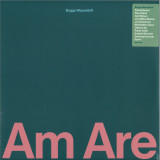
"Am Are" features special constellations of superb musicians that spans both generations and styles, and is an exploration of sonic textures, dynamic contrasts of mood and style, and ranges from sparse arrangements through to complex layers of dubs and loops and improvisational interplay.
The album begins with Bugge alone on "How?" with layers of undulating atmospheric synth, brought into focus by Bugge's piano at the forefront, creating a minimalist miniature that is both emotive and serene. For "Villrein" Bugge is joined by Elias Tafjord on drums, beginning with a santur-like synth figure, floating over ominous formant sci-fi bass synths bubbling and pulsing, and overlaid by phrenetic piano that only stops to lock into the santur figure before relaunching on its own journeys, all underpinned by Elias Tafjord's expressive drumming. "Is Anyone Listening?" demonstrate's Bugge's songcraft, layering muted percussive piano behind Rohey's distinctive and beautiful vocals punctuated by Martin Myhre Olsen's tenor saxophone, creating a soulful mood tinged with desperation.
"BAG" presents the first classic piano trio of the album - Bugge on piano and synths, Arild Andersen on bass, and Gard Nilssen on drums - announcing itself with an insistent riff, chattering drums, breaking into a progressive rock-style passage of bass and piano in unison. "Reel", the second track from this trio, is a mellow soundscape that evolves to become hazy urban downbeat jazz.
The second piano trio of Bugge (Rhodes and Korg MS20 synth), Sveinung Hovensjø (Electric Bass), and Jon Christensen (Drums and Bells) offers a completely different perspective. The first track "Render" features Bugge's Zawinul-esque Rhodes and monosynth leads, Sveinung's fuzz bass in something of a leading role, all carried with chattering gusto by Jon Christensen's dynamic drumming that brings texture and space as well as rhythm to the piece. "Vender" begins as an atmospheric piece, with reed organ-like synth washes, and octave-processed bass with a somewhat sitar-like tone, meandering until the track breaks down into drums and bass weaving around an insistent drum machine loop, dripping with synth pads and monosynth lead.
"JazzBasill" introduces the third piano trio - featuring Bugge (Piano), Jens Mikkel Madsen (Acoustic Bass) and Øyunn (Drums) - and offers a classic piano trio style with urban sophistication, that is lyrical, and interspersed with staccato cadences, giving a feeling of broken swing, slightly staggered yet driving forwards. The title track "AM ARE" is late night jazz, with baroque whispers, and distinctly melodic.
The final track, "Think Ahead" features the non-standard trio of Bugge (Piano/Organ), Oddrun Lilja (Guitar) and Sanskriti Shrestha (Tablas/Harp). Beginning with a minimalist piano figure, table, and sustained guitar, the track breaks down to a noise surge and ambient windscape, with guitar birds and abstract grinding, before returning to minimalist melodicism.
The shifting personnel across the album, as well as the three different studios in which it was recorded - Village Recording in Copenhagen, Rainbow Studios in Oslo, and his own Buggesroom Studio - creates a feeling of dynamic change and musical variety that is unified by Bugge's piano and keyboards. His playing moves between foreground, where he allows the music to elevate him, and background, where he move gently like a beneficent presence, tending to the demands of the spirit of the musical moments he has captured. It is an album powered by restless exploration and shaped by distinctive musical personalities; it is a journey through different moods, illuminated and brought into focus by Bugge's measured approach and guiding hand.
out of Stock
Last delivered 15 months ago available to reorder, subject to availability
ANORAX sticks to its’ #eatsleepcollect mantra with this limited edition 7” by UK Techno pioneers NEXUS 21. Both tracks were stuck in the NETWORK vaults (well a metal box full of DATS) since being recorded in 1991 before greeting the World on the NEXUS 21 MIND MACHINES LP released last December.
Both stood out on that album so much that issuing them on a 300 press run 7” single for collectors seems the obvious thing to do.
SELF HYPNOSIS has long been a signature anthem for early UK Techno but the version here is radically different from the original,and fascinatingly gives a glimpse of the Rave machinations that Mark and Chris would champion as they transformed into ALTERN 8.
The studio recording of SILICON was not released on any format until the recent album.
It was left on the shelf as both label and artist focused on ALTERN 8 instead of NEXUS 21. Part bleep and part clonk it’s a classic snapshot of the North Of London UK soundscape in 199.1. And that makes the fact that this version was recorded live at London’s much loved Brain club in April of that year somewhat ironic. It’s incredibly clear for a live record and incredibly good.
out of Stock
Last delivered 16 months ago available to reorder, subject to availability
- Also available on black vinyl - First ever official reissue - Produced in full cooperation with Hiroshi Yoshimura's estate - Liner notes by contemporary music writer and professor Junichi Konuma - Remastered from original sources by John Baldwin - First time on vinyl, cassette, and streaming - 2xLP vinyl housed in gatefold jacket - Discs cut at 45 rpm for optimal sound quality // Following their 2024 reissue of Hiroshi Yoshimura's classic album, Surround, Temporal Drift proudly presents the first-ever reissue of FLORA, Yoshimura's underappreciated ambient classic. FLORA was originally recorded and completed in 1987, and remained unreleased until 2006, nearly three years after Yoshimura's passing in 2003. The album is chronologically and stylistically a follow-up to his acclaimed 1986 works GREEN and SURROUND, wherein Yoshimura continues to play with the ambience of sound and the sound of ambience, underscoring his mastery in the field of environmental music. Yoshimura's other recorded works include Music For Nine Post Cards (1982), originally produced to be played back inside a museum space, and Pier & Loft (1983), commissioned as accompaniment to a contemporary fashion show.
out of Stock
Last delivered 10 months ago available to reorder, subject to availability
Madronas’ debut LP Erogenous Biome is an amorphous, murky, cathartic offering. A duet of modular synthesizer and winds that’s equal parts doom and ecstasy, it’s the sound of a majestic butterfly emerging from it’s slimy chrysalis just in time to catch the sun setting on the end of days, a bewitching, heavy ceremony, a power-wash of both mind and spirit.
Tracked in one continuous take at Brooklyn’s Heavy Meadow studio, individual tracks were gleaned from the purge and eschew predictable structures, making for a dense, fluid suite of improvisation, like dancing smoke ribbons in the dark. The duo's chosen sound sources are seemingly opposite - Ry Fyan’s modular’s coming from electronic oscillators, Isaiah Barr’s saxophone and various flutes originating with the breath - but the visceral, imprecise, alive quality to the sound of both lends the record a thrilling combination of rapturous harmony and gritty, intense friction.
Opening the session in ritualistic, foreboding fashion, Voluntary lurches to life with rattles and wandering, bassy arpeggios before a suona’s cry signals the seance has officially begun. Ostraca Loam spits explosive modular rhythms and eerie shrieks for the flute to float above, while Detritus Harp smudges mechanical whirring, pensive horn and wind chimes for an untethered drift. Petrified Microdot swells with menacing sci-fi sequences and breathtaking sax runs until they both run out of breath, and Negative Lingam starts out in a panic of breathy riffing before exhaling into one of the most sublime passages on the record. Rhythmic pounding and undulating flutes punctuate Lenticular Shroud, before The Preparation Of The Novel sets the winds aside for a synthesized dual fit for electric dreams. The title track dominates the B-side, it's shimmering levity slowly unfurling to reveal itself as a kind of post-apocalyptic devotional music, deep space drifting grounded by earthly flutes, and Vale Of Cashmere offers an ascetic, contemplative closure, sparse flute and chiming rhythms organic or electronic - by this time it’s hard to know, it doesn’t matter either way.
Erogenous Biome is a world of it’s own, and one Impatience is honored to offer a window into.
RIYL - Senyawa, witchcraft, Colin Stetson , Civilistjavel, Mars (the planet), Finis Africae, raga, Stephen O’Malley, modular synthesizer, Anthony Braxton, Shabaka.
Madronas is Ry Fyan and Isaiah Barr. Fyan is a painter and tattoo artist, this is his first release. Barr is a prolific instigator of the downtown New York scene, producing and playing saxophone in jazz circles with his group Onyx Collective, as a player and/or producer on records by Nick Hakim, David Byrne and Wiki, performing live with William Parker and as part of his projects Universal Space Jam and Cafe Dewanee.
Erogenous Biome was recorded and mastered by Griffin Jennings at Heavy Meadow, Brooklyn.
Vinyl was cut by Beau Thomas at Ten Eight Seven Mastering, Berlin.
Artwork is by Ry Fyan, typography and layout by Nicolas Turek.
out of Stock
Last delivered 7 months ago available to reorder, subject to availability
Googling “paradise house”, the first results to pop up are an endless list of European b&b’s with whitewashed lime façades, all of them promising “…an unmatched travel experience a few steps from the sea”. Next, a little further down, are the institutional websites of a few select semi-luxury retirement homes (no photos shown, but lots of stock images of smiling nurses with reassuring looks). To find the “paradise house” we’re after, we have to scroll even further down. Much further down.
It feels like yesterday, and at the same time it seems like a million years ago. The Eighties had just ended, and it was still unclear what to expect from the Nineties. Mobile phones that were not the size of a briefcase and did not cost as much as a car? A frightening economic crisis? The guitar-rock revival?! Certainly, the best place to observe that moment of transition was the dancefloor. Truly epochal transformations were happening there. From America, within a short distance one from the other, two revolutionary new musical styles had arrived: the first one sounded a bit like an “on a budget” version of the best Seventies disco-music – Philly sound made with a set of piano-bar keyboards! – the other was even more sparse, futuristic and extraterrestrial. It was a music with a quite distinct “physical” component, which at the same time, to be fully grasped, seemed to call for the knotty theories of certain French post-modern philosophers: Gilles Deleuze, Félix Guattari, Paul Virilio... Both those genres – we would learn shortly after – were born in the black communities of Chicago and Detroit, although listening to those vinyl 12” (often wrapped in generic white covers, and with little indication in the label) you could not easily guess whether behind them there was a black boy from somewhere in the Usa, or a girl from Berlin, or a pale kid from a Cornish coastal town.
Quickly, similar sounds began to show up from all corners of Europe. A thousand variations of the same intuition: leaner, less lean, happier, slightly less intoxicated, more broken, slower, faster, much faster... Boom! From the dancefloors – the London ones at least, whose chronicles we eagerly read every month in the pages of The Face and i-D – came tales of a new generation of clubbers who had completely stopped “dressing up” to go dancing; of hot tempered hooligans bursting into tears and hugging everyone under the strobe lights as the notes of Strings of Life rose up through the fumes of dry ice (certain “smiling” pills were also involved, sure). At this point, however, we must move on to Switzerland.
In Switzerland, in the quiet and diligent town of Lugano, between the 1980s and 1990s there was a club called “Morandi”. Its hot night was on Wednesdays, when the audience also came from Milan, Como, Varese and Zurich. Legend goes that, one night, none less than Prince and Sheila E were spotted hiding among the sofas, on a day-off of the Italian dates of the Nude Tour… The Wednesday resident and superstar was an Italian dj with an exotic name: Don Carlos. The soundtrack he devised was a mixture of Chicago, Detroit, the most progressive R&B and certain forgotten classics of old disco music: practically, what the Paradise Garage in New York might have sounded like had it not closed in 1987. In between, Don Carlos also managed to squeeze in some tracks he had worked on in his studio on Lago Maggiore. One in particular: a track that was rather slow compared to the BPM in fashion at the time, but which was a perfect bridge between house and R&B. The title was Alone: Don Carlos would explain years later that it had to be intended both in the English meaning of “by itself” and like the Italian word meaning “halo”. That wasn’t the only double entendre about the song, anyway. Its own very deep nature was, indeed, double. On the one hand, Alone was built around an angelic keyboard pattern and a romantic piano riff that took you straight to heaven; on the other, it showcased enough electronic squelches (plus a sax part that sounded like it had been dissolved by acid rain) to pigeonhole the tune into the “junk modernity” section, aka the hallmark of all the most innovative sounds of the time: music that sounded like it was hand-crafted from the scraps of glittering overground pop.
No one knows who was the first to call it “paradise house”, nor when it happened. Alternative definitions on the same topic one happened to hear included “ambient house”, “dream house”, “Mediterranean progressive”… but of course none were as good (and alluring) as “paradise house”. What is certain is that such inclination for sounds that were in equal measure angelic and neurotic, romantic and unaffective, quickly became the trademark of the second generation of Italian house. Music that seemed shyly equidistant from all the rhythmic and electronic revolutions that had happened up to that moment (“Music perfectly adept at going nowhere slowly” as noted by English journalist Craig McLean in a legendary field report for Blah Blah Blah magazine). Music that to a inattentive ear might have sounded as anonymous as a snapshot of a random group of passers-by at 10AM in the centre of any major city, but perfectly described the (slow) awakening in the real world after the universal love binge of the so-called Second Summer of Love.
For a brief but unforgettable season, in Italy “paradise house” was the official soundtrack of interminable weekends spent inside the car, darting from one club to another, cutting the peninsula from North to centre, from East to West coast in pursuit of the latest after-hours disco, trading kilometres per hour with beats per minute: practically, a new New Year’s Eve every Friday and Saturday night. This too was no small transformation, as well as a shock for an adult Italy that was encountering for the first time – thanks to its sons and daughters – the wild side of industrial modernity. The clubbers of the so-called “fuoriorario” scene were the balls gone mad in the pinball machine most feared by newspapers, magazines and TV pundits. What they did each and every weekend, apart from going crazy to the sound of the current white labels, was linking distant geographical points and non-places (thank you Marc Augé!) – old dance halls, farmhouses and business centres – transformed for one night into house music heaven. As Marco D’Eramo wrote in his 1995 essay on Chicago, Il maiale e il grattacielo: “Four-wheeled capitalism distorts our age-old image of the city, it allows the suburbs to be connected to each other, whereas before they were connected only by the centre (…) It makes possible a metropolitan area without a metropolis, without a city centre, without downtown. The periphery is no longer a periphery of any centre, but is self-centred”.
“Paradise house” perfectly understood all of this and turned it into a sort of cyber-blues that didn’t even need words, and unexpectedly brought back a drop of melancholic (post?)-humanity within a world that by then – as we would wholly realise in the decades to come – was fully inhuman and heartless. A world where we were all alone, and surrounded by a sinister yellowish halo, like a neon at the end of its life cycle. But, for one night at least, happy."
out of Stock
Last delivered 3 months ago available to reorder, subject to availability
"Volcanic Tongue" war ein Plattenladen, der von 2005-2015 in Glasgow von David Keenan und Heather Leigh betrieben wurde und zeitgenössische DIY-Musik aus der ganzen Welt in kleinen selbstgemachten CD-R-Auflagen veröffentliche. Parallel versuchte man, vergessene Künstler aus der Vergangenheit ins Rampenlicht zu rücken, die ihre Musik oft als Privatpressung veröffentlicht hatten. Der Laden war für seine wöchentliche Mailingliste bekannt, in der Keenan enthusiastisch über Neuankömmlinge rappte, insbesondere über die Platte der Woche, die den Spitznamen "tip of the tongue" (Zungenspitze) erhielt. Dieser eklektische Sampler mit 20 "tips of the tongue" - von Outsider-Synth über Psych-Folk bis zu kaputtem Rock'n'Roll, aufgenommen zwischen 1968-2013 - ist eine Hommage an eine lebendige und vielseitige Underground-Avantgarde. Black Vinyl 2LP in PVC-Hülle, von Julian House designt, mit bedruckten Innentaschen samt Linernotes von David Keenan zu jedem Künstler.
PS: Gleichzeitig erscheint beim White Rabbit-Verlag eine Deluxe-Ausgabe des gleichnamigen Buches mit einer CD-Version des Samplers, limitiert auf 1.000 Exemplare, und signiert von Autor David Keenan und Designer Julian House.
out of Stock
Last delivered 18 months ago available to reorder, subject to availability
If every significant artist has an underrated gem in its catalog, then Mirage is that album for Fleetwood Mac. An obvious return to relative simplicity after the dramatic tension of Rumours and experimental ambitions of Tusk, the 1982 album finds the band re-grouping after a brief hiatus and again climbing to the top of the charts. Extremely well-crafted, well-produced, and well-performed, the double-platinum effort distills the group’s hallmark strengths into a filler-free set that never runs short of addictive pop hooks or daft accents.
Sourced from the original analog master tapes, pressed at Fidelity Record Pressing in California, and housed in a Stoughton jacket, Mobile Fidelity’s numbered-edition 180g 45RPM 2LP set presents Mirage in reference sound for the first time. The efforts co-producers/engineers Ken Caillat and Richard Dashut went to capture the splintered albeit formidable band can be heard with stunning accuracy, range, depth, and detail.
Though Rumours understandably gets a permanent spot in the audiophile hall of fame, the smooth, clear, and dynamic sonics on Mirage confirm that the record that stood as Fleetwood Mac’s last effort for five years deserves a place in the same vaunted arena. The presence and imaging of Mick Fleetwood’s percussion alone on this reissue might have you wondering how this slice of soft-rock bliss has gone under-noticed for decades. Other prized aural aspects — separation, definition, impact, tonal balance — are also here in spades.
Like much surrounding Fleetwood Mac in the 1980s, arriving at Mirage was not easy. Caillat searched for studios located outside of Los Angeles on a mission to change up the vibe of the band’s prior recording sessions. Everyone settled on Le Chateau in France, where relations between some members remained icy — and cooperation with the producers strained. Battles with exhaustion, bitterness, and addiction further informed the proceedings at the 18th century complex in the French countryside, where even communal meals were allegedly eaten in silence.
Inevitably, the feelings that co-producer Lindsey Buckingham, Stevie Nicks, Christine McVie, and company harbored — as well as the situations in which they found themselves — drifted into the songwriting. In its rapid ascent to rock-star royalty status, Fleetwood Mac drifted apart, embarked on solo pursuits, and found it was lonely at the top. Emptiness, the illusion of dreams, the longing for love, the want to escape to bygone times of innocence and happiness: Such themes inform a majority of the narratives. Even if the lyrics regularly take a back seat to easygoing arrangements that allow Mirage to come on like a refreshing breeze on a sunny summer afternoon.
Home to three Top 25 singles in the U.S. and having occupied the pole position of the Top 200 album charts for five weeks, Mirage rightfully resonated with the mainstream and attracted listeners on both sides of the pond. And how, via a smart blend of sugary melodies, warm harmonies, interlaced notes, nimble rhythms, taut structures, and passionate vocals. Not to mention the presence of what arguably remains Nicks’ signature song, the biographical “Gypsy,” a meditation on the loss of her close friend Robin Anderson that teems with majesty, mystery, and mysticism — and which gets an assist from Buckingham’s shaded tack piano and richly strummed guitar chords.
Its ranking as an all-time classic aside, that No. 12 hit has plenty of company when it comes to brilliant pop turns on Mirage. On the subject of Nicks, the raspy singer gets a little bit country on “That’s Alright.” Its clip-clopping pace and two-stepping progression complement subtle vocal swells that emerge during the final verse of a tune that is ostensibly about leaving but still conveys forgiveness and grace. And what would a Fleetwood Mac record be without Nicks drawing on the tools of the supernatural — cards, dreams, wolves, and the like — on the twirling “Straight Back.”
Despite the potency of Nicks’ primary contributions, Mirage seemingly unfolds as a tight competition between Buckingham and McVie — and one that ultimately ends in a draw. Buckingham’s salvos include the contagious “Can’t Go Back,” a yearning to time-travel back to the past that’s complete with hall-of-mirrors backing vocals; “Oh Diane,” out-of- left-field ear candy sweetened with hiccupped vocals and salt-and-pepper-shaken grooves; the chiming “Eyes of the World”; and “Empire State,” a delightfully fluttering track whose high-range vocals, lap harp notes, and ringing xylophones hint at the galaxies of sound that would erupt on Tango in the Night.
Then there’s McVie. As elegant, understated, and coolheaded as she’s ever been on record, she pours her heart out on cuts that revolve around her inevitable split with Beach Boy Dennis Wilson. In the process, she punctuates Mirage with a characteristic not always associated with catchy pop music: emotional weight, and the sense of dreaded acceptance in the face of dreams deferred.
“I wish you were here/Holding me tight,” McVie sings over a delicate melody on the album-closing piano ballad “Wish You Were Here.” Though they hoped otherwise, for the members Fleetwood Mac, distance and separation were always close at hand. Believing otherwise, inviting nostalgia, and pretending everything was fine only amounts to a mirage.
Because Sound Matters' meticulous One-Step process creates the definitive sounding audiophile version of k.d. lang Ingénue. This all-analog release comes from the original first-generation master tapes for the first time. Vinyl guru and editor Michael Fremer says, "This k.d. One-Step is insane – It's otherworldly great!"
This One-Step version is strictly limited to 3,000 copies. The album is housed inside a top-quality, foil-stamped, uniquely designed numbered slipcase. The enclosed gatefold jacket will feature an "old style" tip-on jacket with the original artwork.
Special care has been taken to faithfully preserve the original sound with exceptional clarity and depth, capturing the recording's nuances and subtleties at every step to create the best sounding record possible.
The One-Step process is highly regarded among audiophiles and collectors for its unparalleled sound fidelity and represents the pinnacle of vinyl manufacturing craftsmanship.
Ingénue was originally released March 17, 1992 and is k.d. lang's second solo album.
Upon release, the album charted at #18 in the US, #13 in Canada, #3 in the UK and Australia and #1 in New Zealand. Nominated for six Grammy® Awards with the breakout single "Constant Craving" winning a Grammy® Award for Best Female Pop Vocal Performance. "Miss Chatelaine" and "The Mind of Love" were follow-up singles.
k.d. received universal critical acclaim for the album from publications like Mojo, Pitchfork, Rolling Stone, Uncut and dozens more! Today, Ingénue is a true classic album and considered one of the great audiophile recordings of the modern era. This One-Step version certainly proves that!
Notes for This Release:
Ingénue was originally recorded and mixed on analogue tape and produced by Greg Penny, Ben Mink and k.d. lang. The original analogue master tapes were directly used as the audio source for this One-Step pressing! This is the first time the analogue tapes have been used as a vinyl source for this brilliant recording. The results are stunning.
Because Sound Matters used the Neotech VR900-D2 180g High-Performance vinyl compound, which is the same as what is known as Super Vinyl – the best in the world.
Chris Bellman at Bernie Grundman Mastering cut the lacquers with meticulous care! He also did the original mastering of the CD release in 1992.
Dorin Sauerbier at Record Technology, Inc (R.T.I.) has been plating records for decades and is considered the best in the world – he also has done more One-Step processing than anybody. This is a vital step in the process to ultimately delivering the absolute best sounding version of Ingénue ever.
Record Technology, Inc did the pressing – using the exact pressing machine used for so many other One-Step releases. The QC team is constantly monitoring each copy as it comes off the press.
Because Sound Matters' slipcases and gatefold "old style" tip on original art jackets were printed by world-renowned Stoughton Printing Company.
This new all-analogue edition will draw you into the music as never before—at least it did me. The sonic picture is rich, well-textured, harmonically saturated, spatially deep and all the rest of the audiophile buzzwords that no doubt the producers (who include lang) intended to give listeners but until now couldn't fully deliver. The musical flow will have you swooning in your seat. Before the opener 'Save Me' concludes you may already feel overwhelmed and in need of lifting the stylus to catch your emotional breath...What a treat!
-Michael Fremer, Tracking Angle, Music 11/10, Sound 11/10