Budapest based concept label Blue Sun arrives with the 3rd edition of their annual VA series, showcasing a colorful taste of the local underground music scene, with some international sidenotes.
Following up on the label’s customs, the 19-track selection is not only released digitally, but also on a limited 200-piece cassette series. Curated by the label heads, the tracks follow Blue Sun's listening-oriented concept without genre restrictions with downtempo, trip-hop, jazz, dub, balearic, ambient, experimental, and electronica as highlights, with pieces that are more difficult to classify.
As before, instead of the usual A-B markings, the two sides are divided by the label's colors: “ORANGE” contains more organic and high-energy music, while “BLUE” contains more pensive and experimental tracks. Moreover, the selection has been carefully curated so that it can be listened to as an endless loop: the end of a side always resonates with the beginning of the other, wherever the listener begins.
The list of contributing artists this year are truly various and just as impressive. From uniqe debuting local artists to internationally recognised performers, it gives a taste of how the Hungarian underground scene sounds like atm. Important to note, that the release marks another debut: the label’s new visual identity by Blue Sun’s new designer, Péter Tóth.
Welcome to THE VAULT for 1985. A collection that digs deeper into the year’s musical landscape – uncovering singles that may not have always reached the highest chart positions but remain essential to the rich and diverse pop story of 1985. Some were overshadowed at the time, some were highlights from albums that had already sold huge amounts, some found greater success internationally – but all deserve their place in this continued celebration of 80s pop.
45 tracks across 3-LPs – pressed in gorgeous green vinyl – NOW Yearbook – The Vault: 1985.
LP1 opens with a trio of tracks from huge-selling albums:- Bruce Springsteen’s ‘My Hometown’, the sixth single in the UK from ‘Born in the U.S.A’ - one of the best-selling albums of the decade, followed by Bryan Ferry with the stunning ‘Windswept’ from ‘Boys And Girls’ and Sting’s ‘Love Is The Seventh Wave’, taken from his solo debut ‘The Dream Of The Blue Turtles’. Next up, Go West with a U.S single release ‘Eye To Eye’, Scritti Politti with ‘Perfect Way’ – their biggest hit in America, and ABC with ‘Be Near Me’. The first side closes with two established bands; Heaven 17 and Orchestral Manoeuvres In The Dark… Flip the LP over for Adam Ant with ‘Vive Le Rock’, Midge Ure, Blancmange and the second collaboration between Philip Oakey & Giorgio Moroder with ‘Good-Bye Bad Times’. The Style Council’s ‘Welcome To Milton Keynes’ leads to LP1’s closer’s from Simply Red and Fine Young Cannibals who followed their debut ‘Johnny Come Home’ with ‘Blue’.
LP2 opens with Cocteau Twins and the dream-pop atmospherics of ‘Aikea-Guinea’, ahead of The Jesus And Mary Chain with ‘Just Like Honey’, and The Dream Academy with ‘The Love Parade’.
Brilliant with their cover of James Brown’s ‘It’s A Man’s Man’s Man’s World’ and jazz-influenced pop from Matt Bianco are up next ahead of the sublime ‘Castles In The Air’ from The Colourfield and Elvis Costello & The Attractions, who released the 1979 track ‘Green Shirt’ to promote their ‘Best Of’ collection … and the side closes with The Clash’s ‘This Is England’ which would become their last originally released hit…whilst on the other side…celebrate the dancefloor, with a vibrant mix of Hi-NRG, soul, electro and club-influenced pop:- Opening with Sheryl Lee Ralph’s ‘In The Evening’ and Barbara Pennington’s equally superb ‘On A Crowded Street’, the hi-energy continues with Miquel Brown and Hazell Dean ahead of a US hit from Laura Branigan (‘Spanish Eddie’) and Divine’s cover of ‘Twistin’ The Night Away’. LP2 finishes with a massive U.S. dancefloor smash for Eddie Murphy with ‘Party All The Time’.
The final LP kicks off with a bunch of singles that achieved bigger hit status in the US than here and opens with Billy Joel’s ‘You’re Only Human (Second Wind)’, a track written exclusively for his ‘Greatest Hits – Volume I & II’ compilation, ahead of pop-rock from John Mellencamp plus an anthemic smash from Bon Jovi. Pat Benatar’s ‘Invincible’ features ahead of The Power Station’s third US Top 40 hit…whilst back in the UK Chris Rea enjoyed his biggest chart hit to date with ‘Stainsby Girls’ and the side is completed by Marillion with ‘Heart Of Lothian’ the third hit from their huge ‘Misplaced Childhood’ album… Flip to the final side for the stellar vocals on ‘Act Of War’, the huge collaboration between Elton John & Millie Jackson ahead of dancefloor smash ‘New Attitude’ from Patti Labelle and ‘Show Some Respect’ a U.S. single from Tina Turner. Sophisticated pop-R&B from Michael McDonald and Daryl Hall & John Oates come ahead of the collection’s closers- and two outstanding vocal performances: Chaka Khan’s ‘Through The Fire’ and the U.S. breakthrough hit from Whitney Houston with ‘You Give Good Love’ – signalling the arrival of one of the decade’s brightest new stars.
NOW Yearbook – The Vault: 1985 – A deeper dive into an unforgettable year in pop.
Mit gerade mal 17 Jahren releaste Joey Bada$$ sein erstes Mixtape "1999" welches den Sound der goldenen Hiphop-Ära der 90er Jahre adaptierte, so authentisch und selbstverständlich als sei er mit dabei gewesen.
Die Kritiker überschlugen sich in ihren begeisterten Rezensionen und es folgten Features mit Asap Rocky, Kendrick Lamar, Mac Miller & Action Bronson. Der junge Brooklynite ist schon längst mehr als nur ein Geheimtipp. Die ersten audiovisuellen Kostproben gab es in den vergangenen Monaten in Form von "Big Dusty" und "Christ Conscious". Am 20. Januar erscheint nun sein Debütalbum, das den Titel "B4.DA.A$$" trägt.
Following Parnell March’s Back Bar Grooves EP in February and November’s release of the Dust Tears (lead song from Sarah/Shaun’s debut) remixes, Edinburgh’s Hobbes Music label returns with a second EP of dream pop from husband-and-wife duo Sarah/Shaun (pronounced simply Sarah Shaun), alias Sarah and Shaun McLachlan (pronounced McLochlun), who wooed hearts and wowed critics with debut EP ‘It’s True What They Say?’ last year.
‘It’s True What They Say?’ attracted fans across the board: Artist Of The Week in The Scotsman, rapturous reviews from The Skinny and Tokyo's Ban Ban Ton Ton blog, BBC 6Music airplay courtesy of Nemone (Mary Anne Hobbs' Morning Show), more radio play from Radio Scotland's Roddy Hart & Vic Galloway, plus Simone Butler (Primal Scream) and Jim Sclavunos (Bad Seeds) via their respective Soho Radio shows, not forgetting ringing endorsements from the likes of David Holmes, Youth, Kevin Bales (Spiritualized), Brent Rademaker (Beachwood Sparks) and Julian Corrie (Franz Ferdinand).
They played gigs supporting Glasgow's huge Glasvegas, at festivals (Kendall Calling, Dunbar Music, Hidden Door), plus a slew of venues across the Scottish capital, ending the year with a trio of shows supporting Glaswegian 80s pop legends The Bluebells at Aberdeen’s Tunnels, Dunfermline’s PJ Molloys and Edinburgh’s Liquid Rooms, while The List magazine tipped them among their Ones To Watch For 2025, with journalist Fiona Shepherd suggesting they were “blending the starry-eyed pop of Sonny & Cher with the electronic experimentation of Chris & Cosey.”
Very much the companion piece to the debut EP but arriving a full twelve months later, Someone’s Ghost is emblematic of the duo’s desire not to rush things or release anything half-baked.
“I’ve always wanted to create the perfect pop record and I do really feel that we’ve achieved that with this one,” says Shaun. And he’s clearly not the only person who thinks so.
REVIEWS, FEEDBACK ETC:
"I LOVE that! Dreamy dreamy pop." ROY MOLLOY (Marvellous Crane/Alex Cameron) on BLAST RADIO, Sydney
“the Scottish music scene’s cream of the cool... buzzy drum beats, high, distant chimes, and heavenly electronics…. very ethereal.” THE SKINNY
"Listening to Sarah/Shaun is like eavesdropping on a noir dreampop, long-distance phone call between them both, across two separate sonic locations. On this stunning 4-song EP, Sarah’s voice, effortlessly mesmerising, draws you into these big beautiful and haunting passages of perfect dream-pop. All beautifully produced in a multi-layered-scape of low-fi analogue textures, epic cinematic crescendos, intense electro-pulse grooves and warped psycho-pop guitar riffs. Within the songs lurk a sense of unresolved emotions, longing and pathos. There are shades of classic Lee Hazelwood & Nancy Sinatra but also Post-Punk Electronica and Beach House. But what a unique sound they’ve created of their own. I love it" DAVID MCCLUSKEY (The Bluebells)
"Absolutely beautiful" SEAN JOHNSTON (A Love From Outer Space)
"Lovely stuff here! Total quality." MARTYN 'MASH' HENDERSON
"Ooooh. Everything the last record promised is here. Well done" GEORGE T aka George Demure (Accident Machine)
"Vince clark Era Depeche Mode in places" KEVIN BALES (Spiritualized)
"Sounds cool. Well done" PETE KEMBER (Sonic Boom, Spacemen 3)
"Glorious, it (Debbie Harry) grabs hold of you and doesn't let go." IAIN DAWSON aka RAVECHILD (Everyone Wants To Play The Hits Podcast)
SOMEONE’S GHOST
Born out of an incredibly anxious, stressful time, the songwriting process for these recordings has been something of a personal tonic for Shaun…
“There was a period when I was having nightmares,” he reveals. “Apparently I was saying there was someone in the room, I was talking to that person and Sarah was seeing all this while I was still asleep.
So, I was thinking that this was my ghost. I started writing songs because I was going through something and I was dealing with something and writing songs was a comfort. My ghost was a comfort, whether it was real or not. The idea of it was a comfort.”
“I firmly believe that everyone has someone who watches over them but all of the songs are essentially about being there for someone,” he says. “Everybody needs someone but also everyone needs to stay real and keep what you have, keep it close, never let it go. If you don’t have it, continue to tell people you’re there for them. It’s about loving and hoping people will be good to you in return.”
While Shaun took the songwriting lead on Filter Of Love and EP closer The Sound Which Stresses The Sound Of My Ears, Debbie Harry was originally instrumentally conceived by producer Jaguar Eyes, alias Ali Chisholm, later lyrically completed by Shaun, and the EP’s lead track, Anhedonia, and one of its stand-outs (much like Starbed on the debut) was conceived by Sarah, as a result of experiencing a bit of a spiritual epiphany of her own.
“When I first heard the word Anhedonia, I didn't know what it meant but when I found out I thought about it quite a bit. How sad it would be to have no enjoyment in anything,” she explains. “This song is really about my own personal beliefs. When I have been down, that's one of the things that helps me the most. It talks about trying to make amends but realising, for some things, you can't. But I think with any kind of faith comes hope… which is always a good thing.”
A record about hope, truth, honesty, a belief in something bigger than oneself… and all set to a soundtrack that wouldn’t feel out of place in a David Lynch or Eighties feature film. What more could anyone ask for, really?
There’s equally a desire to offer something universal and positive to anyone who tunes in. The labels for the 12” edition reveal the dual mantras “Who just wants to survive?” and “It’s about time to live a little”, with both messages also engraved in each record’s run-out grooves. T-shirts accompanying debut EP It’s True What They Say? bore the slogan “Kill Them With Kindness” - leading caps intentional. Shaun carries the acronym KTWK everywhere he plays, as a reminder: it’s stitched into his guitar strap. And this particular wee pebble has already caused a few ripples: people have been approaching him at gigs to acknowledge their appreciation and respect for it.
"We feel we have made an honest, open, colourful, body of work,” say the duo. “We hope to go out and play the songs with the guys (our band) and then potentially make more records. We are taking things as they come. Everything has been organic so far, after all. We are looking forward to whatever this brings."
Breidenbach returns with its third vinyl release, a four-track V.A. titled Nothing Can Go Wrong — a confident outing from the Heidelberg-based imprint, built around minimal house aesthetics, dub accents, and deeply hypnotic cuts. Uniting artists from Japan, Germany, and Sweden, the EP brings together three distinct voices aligned by a shared sense of groove, texture, and restraint.
On the A-side, Sasaki Hiroaki opens with "Groove Keep Practice", a warm, rolling Deep House track laced with sensual female vocal snippets and dubby pads. Subtle delays, spaced-out beats, and a fluid rhythm create the perfect recipe for dancefloor hypnosis. FilOu follows with two cuts: "Stampede" on A2 is crisp and crunchy, driven by a syncopated, funk-leaning bassline and surrounded by micro-glitches, sampled stabs, and airy textures that keep things moving. On the flip, "Astral" expands the palette with similar percussive tightness, but the basslines hit deeper, growling through the arrangement with attitude — hypnotic, consistent, and built for long blends. Chris Llopis closes the V.A. with "Aetherial Haze", a bright and melodic entry full of FM-style synths, scattered vocal snippets, and dubby echoes. It’s the most playful moment of the EP, but still rooted in the heady minimalism that runs through the entire release.
With Nothing Can Go Wrong, Breidenbach continues to define its space — thoughtful, functional records built for DJs who know that less is often more.
Pressure is the medium of wind players. Wind instruments all sound thanks to pressure differentials, whether that’s the rush of wind over a lip plate or a steady, buzzing exhalation through pursed lips. Ka Baird and Chris Ryan Williams (HxH) are wind players well- schooled in the power of using pressure and movement to amplify the mystery of an invisible force animating a metal tube. They augment their instruments, flute and trumpet respectively, with electronics, sometimes obscuring the acoustic sound source, sometimes making it hyperreal. Flutters of lip and tongue slither over the listener’s ear, and sustained tones become a dense fog, pushing on other kinds of visceral, emotional pressure points.
On Enthalpy, Baird and Williams’ first album as a duo, the energy they conjure feels barely contained, the pressure built up to a breaking point before spilling out in multiple directions at various speeds. They borrow the title from thermodynamics, referring to the total energy of a system based on its pressure and volume. The music flies out in bursts; it seeps and oozes, flows with intention. It is an incredibly rhythmic work without any hint of meter, full of sounds that punctuate with the thud of a dart hitting a bullseye. Williams’ capability to conjure swirling atmospherics, as well as his remarkable ability to pull fragments of melody from the haze, fit puzzle-like into Baird’s exclamations and the eruption of electronics that often dovetail them. The duo draws on tones from nearly the entire range of human hearing, from nimble but bulbous throbs of sub-bass to pinprick flickers of ultra-high end.
The sessions that produced Enthalpy were completely improvised, showcasing a degree of mind-meld that belies each participant’s thrill at approaching the unknown. This isn’t a casual conversation, but an omnidirectional tangle that ties and reties itself into new knots as the album progresses. Williams and Baird have both become ubiquitous presences throughout the New York City experimental music communities, collaborating with innumerable others and learning how their unique approaches work in tandem with similarly expansive thinkers and players. Even in the album’s most spacious moments, there’s a tension between the feeling of being unmoored and yet completely locked in, like the abyss is just one more river to cross. They ford it together before moving on to the next idea in lock step.
For the listener, Enthalpy is often felt in the body as much as it reverberates within the ears. We’re tossed from side to side, made to shoulder the impact of detonating electronics, absorbing these sounds with the feet, gut, and crown. Baird reaches into the back of their throat for guttural growls, and we can almost feel the scratch. As we tread the border of the synthesthetic, it's a reminder of the physical nature of sound, that the space between our ears and the speakers is its own enthalpic system of energy conduction. Move with it, let it move you, and see how it feels.
Faith and Fate, Destiny and Devotion, Dark Nights and Dazed Illuminations. Josephine raises a stained-glass lamp and shepherds us spelunking the depths of spirit in this four-part double album. Following the fame of her voice are choruses of winged entities (and a space shuttle) that ascend and descend a maze of spirituals: ritual prayers, blues laments, vestal hymns and jubilant benedictions. The edges of the natural world are revolving backdrops from which our narrator perches upon symbolic precipice or saunters desolate snow-blanched forest, exploring eternal themes of mortality and morality, beneath the moon and in occasional dialogue with a mysterious lord of love, an ambiguous mystical figure. Accompanying herself on guitar, piano, organ, harp & autoharp, this cycle of 18 new songs hearken back to various facets of Foster's anachronic oeuvre (the esoteric balladry of This Coming Gladness, native rhythms of Blood Rushing, somnambulist waltzes of I'm a Dreamer, the Shaker primitivism of Hazel Eyes, I Will Lead you). Celestial humor and devastating innocence are delivered with contributions from Victor Herrero (lead guitars), Gyða Valtýsdóttir (cello), Chris Scruggs (pedal steel), Jon Estes (bass), as well as cameos by members of The Cherry Blossoms and others. Recorded, engineered and mixed by Andrija Tokic at his Nashville Bomb Shelter Studio, mastered by John Baldwin, and produced by Josephine herself.
Faith and Fate, Destiny and Devotion, Dark Nights and Dazed Illuminations. Josephine raises a stained-glass lamp and shepherds us spelunking the depths of spirit in this four-part double album. Following the fame of her voice are choruses of winged entities (and a space shuttle) that ascend and descend a maze of spirituals: ritual prayers, blues laments, vestal hymns and jubilant benedictions. The edges of the natural world are revolving backdrops from which our narrator perches upon symbolic precipice or saunters desolate snow-blanched forest, exploring eternal themes of mortality and morality, beneath the moon and in occasional dialogue with a mysterious lord of love, an ambiguous mystical figure. Accompanying herself on guitar, piano, organ, harp & autoharp, this cycle of 18 new songs hearken back to various facets of Foster's anachronic oeuvre (the esoteric balladry of This Coming Gladness, native rhythms of Blood Rushing, somnambulist waltzes of I'm a Dreamer, the Shaker primitivism of Hazel Eyes, I Will Lead you). Celestial humor and devastating innocence are delivered with contributions from Victor Herrero (lead guitars), Gyða Valtýsdóttir (cello), Chris Scruggs (pedal steel), Jon Estes (bass), as well as cameos by members of The Cherry Blossoms and others. Recorded, engineered and mixed by Andrija Tokic at his Nashville Bomb Shelter Studio, mastered by John Baldwin, and produced by Josephine herself.
John Tchicai (1936 – 2012) was one of the most important free improvising saxophonists of the 20th Century: an artist of rare vision and aptitude whose lines soared and stood out even in the most hallowed company, and whose body of work as a leader / composer is among the most singular and distinct within the entire canon of that music. But Tchicai’s importance doesn’t end there. Born in Copenhagen, Denmark, to a Danish mother and a Congolese father, his life and career represent a crucial bridge between the European and American traditions of free jazz. Initially trained on violin as a child, Tchicai shifted his focus to the clarinet and alto saxophone during his mid-teens, and began touring Europe as a professional musician by his early 20s, which landed him at a socialist youth festival in Helsinki, Finland, where he met the trumpeter Bill Dixon and saxophonist Archie Shepp. Impressed by what they heard, Dixon and Shepp encouraged the young saxophonist to move to New York, and in so doing changed the history of jazz forever.
Tchicai’s arrival in New York marks the rare occurrence of a European player joining the intimate circle that was first wave of American free jazz. Following his landing in the city in November of 1962, in addition to regularly sitting in with Don Cherry’s group, Tchicai began playing with Bill Dixon's band alongside Archie Shepp and Roswell Rudd, forming the nucleus of the foundation of the New York Contemporary Five - one of the most important groups of the era - which counted Tchicai, Shepp, Cherry, Don Moore, and J. C. Moses as its members. From the ashes of this group, Tchicai would go on to found the legendary ensemble, New York Art Quartet, with Roswell Rudd, Milford Graves, and Lewis Worrell, as well as working within Albert Ayler's band, recording “New York Eye and Ear Control”, Shepp’s band, recording “Four for Trane”, the ensemble that recorded John Coltrane's “Ascension”, and the Jazz Composer's “Orchestra”.
By the time he decided to return to Denmark in 1966, had Tchicai chosen to record little else, his legacy within the history of music would have been ensured. Incredibly ambitious, his arrival home marked the beginning of an incredible period of activity which saw him radically expanding his creative explorations, which by the end of the decade would include becoming a founding member of Amsterdam's Instant Composers Pool and helping to record John Lennon and Yoko Ono's “Unfinished Music No.2: Life with the Lions”. This, however, was proceeded the formation of a new orchestra, Cadentia Nova Danica, led by Tchicai, dedicated to radical cross-disciplinary exploration. Remaining together between 1966 and 1971, the group and its shifting membership regularly fell into collaboration with artists and composers, notably Musica Elettronica Viva, who existed beyond the realms of jazz, as well as participating within multi-media events that incorporated the visual realms.
Cadentia Nova Danica’s only two LPs - “Cadentia Nova Danica” (Polydor, 1968), and “Afrodisiaca” (MPS, 1969) - are effectively Tchicai recorded efforts as a leader, and are legendary. There’s little mystery, once heard, why the later landed on Thurston Moore’s iconic “Top Ten from the Free Jazz Underground”, published by Grand Royal in 1996. Sadly, despite playing extensively during their five year run, with exception of a CD documenting a performance at Jazzhus Montmartre, in 1966, until now there has been no other publicly available recordings that allow us to capture a glimpse of this astounding band at work. Alga Marghen / Formalibera’s vinyl pressing of a never before released body of recordings, made in Copenhagen between 1969 and 1970, changes that in the most exciting of ways.
Comprising three pieces - “Mc Gub Gub, (I–VIII)”; “Ode to Skt. John”; and “Pladepip” - the material on this stunning LP comes from two specific events. The first, which encompasses the first side, “Mc Gub Gub, (I–VIII)” was recorded by Cadentia Nova Danica - in this instance, Tchicai, Sune Weimar, Theo Rahbek, Christian Kyhl, Niels Holt, Jørgen Thorup, Michael Schou, Morgens Bollerup, Allan Gregersen, Ole Matthiessen, Pierre Dørge, Willy Jaegert, Anthony Barnett, and Jon Finsen - on May 29th, 1969, at the ABC-Theatre in Copenhagen. Penned by Tchicai, the piece is a sprawling, evolutionary composition at the outer reaches of free jazz, rooted in large blocks of colliding tonality and rhythm - a sound only accessible to larger ensembles - that push territories explored by Charles Mingus to previously unimagined heights, threaded by moments of hard blown fire. Writhing like a stormy sea - skronking and devilish - “Mc Gub Gub, (I–VIII)” is a work of profound complexity that singlehandedly illuminates not only Tchicai’s singular vision as a composer, but also the power and uniqueness of Cadentia Nova Danica during the band’s most vital period.
The two pieces - “Ode to Skt. John” and “Pladepip” - taking up the flip side, were recorded on February 21st, 1970, at the Danish Broadcasting Corporation’s Radio House, and are the outcome of Cadentia Nova Danica’s extended residency there between 1969 and 1970. In many ways, these two recordings offer some of the best insights into the broad collaborative approaches that defined the band, in this case encountering them working with Danish experimental composer, Svend Erik Werner, who was among the earliest in his country to embrace stylistic pluralism and the use historical forms within a modern context. “Ode to Skt. John” - based on aspects of Gregorian music - was penned by Werner, incorporating heady improvisation by the members of Cadentia Nova Danica, this time made up by Tchicai, Sune Weimar, Hugh Steinmetz, Theo Rahbek, Christian Kyhl, Michael Schou, Morgens Bollerup, Ole Kühl, Torben Enghoff, Mauritz Tchikai, Kjeld Ipsen, Willy Jaegert, Ole Matthiessen, Ole Thilo, Pierre Dørge, Steffen Andersen, Jon Finse, and Clause Bøje. The piece is a fascinating binary of the composed and improvised, utilising the band’s large scale to introduce a remarkable sound within its slow progressions and furious, driving free moments, in this incredible meeting of worlds.
The album’s final piece, “Pladepip”, is arguably its most historically significant: an entirely singular piece, unlike anything in Tchicai’s recorded canon as his foray into musique concréte. Drawing upon two recordings of full-band improvisations by Cadentia Nova Danica, for its creation Tchicai also gouged the surfaces of 78rpm records in his collection to skip and create repeated phrases and patterns, creating a stunning sound collage of hard angles and abrupt phrase, that creates a striking counterpoint to the band’s flowing improvisations that bookend those passages. The result is an engrossing listen and easily one of the most unique and culturally important gestures in the entire history of musique concréte.
Truly incredible, Alga Marghen / Formalibera’s vinyl pressing of this never before released body of recordings, made by John Tchicai’s Cadentia Nova Danica, in Copenhagen between 1969 and 1970, offers an unprecedented window into one of the most important groups working in Europe during that period, significantly expanding their rare and slim discography to date. Accompanied by extensive exploratory liner notes by veteran jazz writer, Ed Hazell, this is easily one of the most historically important archival releases of the year and is impossible to recommend enough. Absolutely essential on every count.
After the wild Afro-jazz fusion of Trancedance (reissued as BT118) and the meditative solo Christer Bothén Donso n’goni (BT133), legendary Swedish multi-instrumentalist Christer Bothén returns to Black Truffle as part of a dream quartet completed by the three members of Ghosted: Oren Ambarchi (guitar), Johan Berthling (bass) and Andreas Werliin (drums). Recorded at a rustic studio built by Werliin and Hans Fredriksson in the sylvan surrounds of Hamburgsund, Sweden across a few days in September 2023, Serpentine offers up four generous slices of hypnotic repetition and shimmering resonance, cut through with wild bursts of Bothén’s bass clarinet.
The depth and ease of the quartet’s rapport is evident from the first moments of the opening title-track. Berthling’s resonant upright bass locks into a head-nodding ostinato that makes sensitive use of a prominent end-of-phrase rest, opening spaces through which Werliin’s continually shifting statements of the pulse shine through. Having worked together in various groups for many years, Berthling and Werliin are masters at playing subtle games of difference and repetition, creating a driving rhythmic flow animated by perpetually changing details: here, you can never step in the same groove twice. Weaving through it all is Ambarchi’s now-signature Leslie-cabinet guitar tone, sounding out long chords at times strikingly close to a Hammond, while also creating intricate cross-rhythms through the play of his tremolo modulations against the bass and drums. When Bothén enters five minutes in, the growl of his bass clarinet at first works deep in the collective brew, carving off brief staccato phrases and twisting them into fragmented melodies. As he moves into the instrument’s higher registers, Bothén’s playing becomes wilder, twinning with Ambarchi’s guitar in shimmering arcs like a 21st century update of the Garbarek-Rypdal pairing immortalised on Sart.
Each of the four pieces explore different possibilities of a shared language. On ‘Antigorite’, another hypnotic bass riff emerges gradually from an atmospheric haze, eventually developing into a frenetic rhythmic workout propelled by Werliin’s cowbell. Berthling sits out for ‘Lizardite’, while Bothén moves from bass clarinet to the Donso n’goni, the sacred Wassoulou hunter’s harp he has studied for half a century; the resulting performance streamlines the approach heard on other tracks into pure modal propulsion, sparkling with harp-like arpeggios from Ambarchi’s guitar. On the closing ‘Chrysotile’, the bottom drops out, leaving a swampy, churning mass of wavering organ-like chords, roaming bass runs, and distant toms, over which Bothén floats bass clarinet figures by turns bluesy and abstract, the whole thing landing somewhere between classic ECM and the most blasted freeform moments of early Amon Düül II. Bearing a delicate calligraphic abstraction by Bothén on its cover and beautiful documentation of the recording sessions on its inner sleeve, Serpentine is a powerful reminder of the magic that can happen when inventive musicians just get together and play.
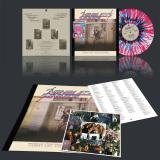
Purple Haze started out in Linköping in 1981. When singer Christer Göransson joined them towards the end of the year, they soon changed their moniker to Genocide (after the Judas Priest song of the same name) and supported local metal heroes Axewitch. A final name change was to follow: In August 1983, the band, now called Mindless Sinner, recorded a four-track demo entitled »Master Of Evil«, consisting of the title track, “Broken Freedom”, “Key Of Fortune” and “Screaming For Mercy”. This attracted Swedish label Fingerprint Records, and they in turn released the NWOBHM-inspired material as a mini-album with an awful cover and getting the band’s name wrong (spelling it Mindless Sinners). By then, the line-up of the band was Anders Karlsson (bass), Magnus Danneblad (guitar), Jerker Edman (guitar), Tommy Johansson (drums) and vocalist Christer Göransson. »Master Of Evil« originally saw the light of day on Fingerprint in January 1984. This was followed by the second album »Turn On The Power« in 1986 as Christer Göransson explains: “Well, »Turn On The Power« was actually recorded in October 1984, the same year as »Master Of Evil« was released. But the record label was almost out of business by 1985, so as a result »Turn On The Power« didn’t come out until January 1986, and shortly after the label went bust.” Just like on the debut, the cover was once again pretty weird. “Same story,” says the singer. “Blame the label again. We wanted a band photo for the cover but once more Fingerprint didn’t listen. We didn’t know who this girl was at all. And once again we saw the cover for the first time when we visited our local record store.” “I guess »Turn On The Power« was more of a straight heavy metal album compared to »Master Of Evil«,” describes Christer Göransson the band’s follow-up record, “better playing and better songs on »Turn On The Power«. Even though we love »Master Of Evil«. I guess it didn’t sell that much as the label went bankrupt, but the reactions were great.” Mindless Sinner played as much as they could in Sweden at the time but didn’t venture outside their home country. Over the years, their music has often been compared to the Tygers Of Pan Tang from England but Christer Göransson doesn’t see too many similarities: “We really love Tygers Of Pan Tang but I don’t think they were a big influence. It was more Judas Priest, Iron Maiden, Saxon, Black Sabbath, Ozzy Osbourne and Dio.” Shortly after the release of »Turn On The Power«, the band cut their name short to Mindless. According to Christer Göransson, this is why: “It was the sign of the times really. We wanted a more melodic kinda style and we just thought it was better to change the name to Mindless. But looking back now we should have stuck to our guns.”
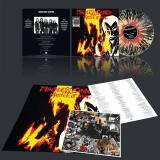
Purple Haze started out in Linköping in 1981. When singer Christer Göransson joined them towards the end of the year, they soon changed their moniker to Genocide (after the Judas Priest song of the same name) and supported local metal heroes Axewitch. A final name change was to follow: In August 1983, the band, now called Mindless Sinner, recorded a four-track demo entitled »Master Of Evil«, consisting of the title track, “Broken Freedom”, “Key Of Fortune” and “Screaming For Mercy”. This attracted Swedish label Fingerprint Records, and they in turn released the NWOBHM-inspired material as a mini-album with an awful cover and getting the band’s name wrong (spelling it Mindless Sinners). By then, the line-up of the band was Anders Karlsson (bass), Magnus Danneblad (guitar), Jerker Edman (guitar), Tommy Johansson (drums) and vocalist Christer Göransson. »Master Of Evil« originally saw the light of day on Fingerprint in January 1984. Christer Göransson takes us back to the early days of Mindless Sinner saying: “We wanted to record an album, but we couldn’t afford the studio cost. We were lucky to win a music contest, and the price money paid for the studio. I remember walking into the studio, and we thought it was like a spaceship in there, with all the buttons and flashing lights everywhere. We recorded the four songs that would become »Master Of Evil«. We then gave the tape to the Axewitch guys, and they played it to their record label at the time Fingerprint/Web Records and they liked it so much that they signed us as well.” Over the years, the music of Mindless Sinner has often been compared to the Tygers Of Pan Tang from England but Christer Göransson doesn’t see too many similarities: “We really love Tygers Of Pan Tang but I don’t think they were a big influence. It was more Judas Priest, Iron Maiden, Saxon, Black Sabbath, Ozzy, Dio etcetera. That kinda stuff.” In addition to the four tracks of the original edition of »Master Of Evil«, the current High Roller Records pressing also contains the five songs of the band’s first demo tape from early 1983 (including “Mindless Sinner”, “Higher And Higher”, “We All Go Back”, “Heavy Metal Will Never Die” and “City Games”). All nine tracks were mastered by Patrick W. Engel at his Temple Of Disharmony in November 2025. Cutting by SST Germany on Neumann machines for maximum quality on all levels ... The ultimate audiophile re-issue of this Swedish metal classic!
Following the strong reception of their second album, Totem of Quiet Mystic (2023) Jiyu have earned praises from outlets such as Jazzwise, Enlace Funk and The Chillout Tent, as well as support from a wide range of iconic DJs including Patrick Forge & Chris Coco. The singles to this new album, Cumulus & the Subterranean, Smell of Fire and Deep Woods, have immediately been embraced—drawing glowing reactions and airplay from dj's like, Phil Cooper, Dj Vadim, Fred Everything, David Patterson, Jon Kennedy and Curtis Colin
On this third album from Jiyu, the Copenhagen band stretch their cosmic–spiritual jazz language into deeper, wilder terrain. Dropping April 10th on vinyl and digital via Dubsoul Records, the record captures six musicians in full telepathic flight, recorded at 12 Ton Studio in Copenhagen. Across eight tracks, elastic basslines, jazz-dub-soul—tinted drums and percussion, Wurlitzer and jazz-guitar glow and flute-swept atmospheres drift between grounded groove and open-sky improvisation, while guest vocalist Mai Lan Doky adds dreamlike textures on Cumulus & the Subterranean. From the shuffled broken-beat pulse of Smell of Fire to the slow-burn haze of Deep Woods, the Wild Things album is a rich analogue-soul excursion—earthy, exploratory and tuned to the outer frequencies.
Back when the first white labels started floating through the hands of German, British, American and Canadian DJs in late ’84, nobody was ready for what was coming. The official drop hit in early ’85 and the scene was never the same again. This was the moment Mike Mareen broke through the static. Yeah, he’d been working with Chris Evans-Ironside since the ’70s but nothing hinted that together they’d channel something this futuristic. “Dancing In The Dark” sounded like it had slipped through a wormhole: melancholic, hypnotic vocals wrapped in vocoder haze, riding an arrangement so razor-sharp it made most releases of the era feel prehistoric. It didn’t need the pop charts… It owned the clubs. And the clubs listened.
One drop of that electro bassline and DJs were hooked. Crowds were hooked. The whole underground was hooked. Soon Europe’s radio charts caved under its pressure, and the track crossed borders on mixtapes, becoming a cult anthem behind the Iron Curtain. It was everywhere, even where it technically wasn’t allowed to be.
Fast-forward four decades and the spell hasn’t faded. “Dancing In The Dark” still shows up in indie dance, italo wave, house and deep house sets. Producers keep re-editing it like it’s sacred material. It’s one of those tracks that DJs treasure, a timeless weapon, one of the top three defining singles of Mareen’s entire career.
And now for the 40th anniversary of its official release, Vintage Pleasure Boutique and Night’n Day Records drop the vinyl every collector and selector has been waiting for: a special reissue loaded with four brand-new remixes spanning the full spectrum of today’s underground indie/disco/italo/house energy.
Tallac – the American Berlin dweller – dives deep into the hypnotic soul of the original, pulling out its buried deep-house DNA and carving out a spacious, emotional roller.
Luksek, Italian producer & DJ, goes raw and dirty: loop-driven, gritty, underground, hypnotic, the kind of edit that eats dancefloors alive.
Flemming Dalum, the Danish Italo grandmaster, finally gets to remix the track he’d always dreamed of touching and of course it’s pure Flemingish electro-italo magic.
And the Polish sparkle: A.P. Mono delivers a shimmering mix of italo disco, glitterbox groove, disco glamour and synthwave glow, all while keeping the spirit of Mareen’s original heartbeat intact.
The wax also features two historical heavy-hitters: the 1985 Jens Lissat’s team remix and Luis Rodriguez’s original arrangement, essential cuts in the Mareen universe.
This release isn’t nostalgia. It’s a resurrection. A celebration. A reminder. “Dancing In The Dark” didn’t survive 40 years by accident, it survived because it still moves bodies, breaks hearts and lights up floors in ways modern tracks can only wish for.
If you’re an indie, italo, wave, house or disco DJ… This record isn’t just worth owning… It’s mandatory.
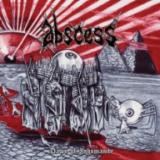
FIFTEENTH ANNIVERSARY CD REISSUE, INCLUDING THIRTEEN BONUS TRACKS / RED VINYL LP. The legendary Abscess hailed from Oakland California & started life in 1994 with their very own brand of Sickodelia. Chris Reifert & Danny Coralles began Abscess after their infamous gore metal band Autopsy disbanded in the mid 90's (before resurrecting in 2009). Chris started his career with the highly influential extreme metal band, Death. The line-up was completed by Clint Bower (Guitar/vocals), with Joe Trevisano joining on bass for the band's later releases. In October 2009, Abscess descended upon the famous Fantasy Studios, CA, to record the follow- up to their 2007 Tyrant Syndicate album, 'Horrorhammer', with engineer Adam Munoz. 'Dawn Of Inhumanity' was released in 2010, leading the listener on an unrivalled nightmare of raw experimental extremity, whilst also including special guest vocal appearances by the Nocturno Culto & Fenriz of Darkthrone. 'Dawn of Inhumanity' was to be the swansong release from Abscess, leaving a legacy of twisted, dirty punk/ death without limits !
Ston Elaióna is John Also Bennett’s first album for Shelter Press since his 2019 solo debut Erg Herbe. The American born, Athens, Greece, based flautist, synthesist, and composer weaves a strikingly singular electroacoustic excursion for bass flute and Yamaha DX7ii, largely recorded in the golden haze of the early morning hours - bending time at the otherworldly juncture of consciousness and place. Translating from Greek as “in the olive grove”, Ston Elaióna is permeated with the ambiences of the ancient and present world, guided into form by a playfully rigorous approach to sound.
Initially emerging during the mid 2000s as part of Columbus, Ohio’s noise scene, before relocating to NYC around 2010, Bennett’s diverse activities picked up an increasing sense of pace over the following decade - performing and recording as a solo artist (JAB), with the trio Forma and with CV &JAB, his prolific duo with his partner Christina Vantzou, as well as playing in Jon Gibson’s ensemble among many other multifaceted collaborations. However, since 2020 the flautist and electroacoustic composer has existed in a semi nomadic state: drifting between Brooklyn, Brussels, extensive tours, and Greece, where he finally came to rest in Athens last year.
Drawing upon a carefully honed attentiveness to the environments and experiences of everyday life, Ston Elaióna is a suite of nine pieces (with an additional track exclusive to physical formats), many of them composed and played live as the early morning sun touched the Parthenon, in full view from Bennett’s studio window in Athens. Bennett’s refinement and restraint, honed over his years adrift, led him to adopt a limited palette focused on his primary instrument, the bass flute, and a Yamaha DX7ii synthesizer tuned to just intonation scales. Alongside a handful of other keyboards, digital oscillators triggered by his flute, and occasional field recordings, this simple palette is reflected by the deeply emotive sense of minimalism that permeates the album’s two sides. Following two solo albums defined by outward facing temperaments - 2022’s Out there in the middle of nowhere (Poole Music), which used a lap steel guitar and generative oscillators to evoke the surreal landscapes of the South Dakota badlands, and the largely synthetic atmospheres of the 2024 anthology Music For Save Rooms 1 & 2 (Editions Basilic) - the shift in Bennett’s worldly circumstances offered an intuitive return to the calm, inward states of creative exploration that have historically defined JAB’s sound. In parallel, context provided clear sources of inspiration for many of the album’s themes, as well as sources for some of its sounds. The aura of Greece, from the ancient to the present, from its stones and olive groves to its traffic, figures heavily across Ston Elaióna’s two sides. John Also Bennett’s Ston Elaióna forms an elegantly rigorous world of electroacoustic sonority, bridging the expanse of time with the immediacies of environment and happening in the here and now: a profound sonic mediation on the countless dimensions unlocked by life in Greece.
nicht am Lager
Zuletzt vor 5 Monaten geliefert unverbindlich nachbestellbar
Returning with its final instalments, Die Schachtel's Decay Music series extends its explorations of inspired contemporary experimental efforts of the ambient, ethereal, and emotively abstract with Luigi Turra and Elio Martusciello’s “Liminale” and Sergio Armaroli and David Toop’s “And I Entered Into Sleep”, two astounding electroacoustic gestures of blurred space and time, plumbing complexity of meaning bound to sonority. Creatively groundbreaking and inspired, radically rethinking the terms of what ambient music can be perceived to be, they stand among the most striking efforts to appear within the series to date.
An aural bridge between two distinct generations of Italian experimental musicians, “Liminale” is the debut collaborative outing from the creative partnership of Luigi Turra and Elio Martusciello. Active within the context for roughly two decades, Turra (b. 1975) is a reductionist/electroacoustic composer, noted from his tense deployment of concrete and acoustic sources — particularly small sounds and noises — whose work threads the balance between silence, tactile auditory perception, and aleatoric music. Martusciello (b. 1959), on the other hand, is a musician and composer working across the fields of acousmatic and electroacoustic composition, sound installation, multi-media and audiovisual art, and computer music improvisation, who is widely celebrated for both his solo efforts and his collaborations with Eugene Chadbourne, Mike Cooper, Alvin Curran, Chris Cutler, Rhodri Davies, Iancu Dumitrescu, Michel Godard, Tim Hodgkinson, Lawrence D. "Butch" Morris, Jérôme Noetinger, Tony Oxley, Evan Parker, Z'EV, and others.
A single, nearly 40 minute work, extending across the two sides of the LP, “Liminale” — as its title eludes — is an exploration of the liminal through sonic means: “places that exist on the threshold, transitional spaces suspended between a before and an after, between the real and the evanescent” conceiving the soundscape as “a liminal place, a space to be inhabited without the certainty of where it leads.” Unfurling like a labyrinth navigated in darkness, the piece’s first half is marked by sparseness and restraint, as slow-paced guitar tones and harmonics thread silences and resonant ambience within a sprawling sense of space, delicately populated by tiny sounds, fleeting punctuations drawn from undeterminable sources, vocal utterances, and the unexpected appearance of intoxicating piano tones.
As “Liminale” progresses into its second half, Turra and Martusciello enter a more densely populated notion of the in between. No less defined by the presence of space and mystery, discreet textures rustle and writhe within passages of pure concrete abstraction and a fragmented, stretched sense of musicality: long-tones, metallic pulses, minimal vibrations, processed vocalizations, guitar harmonics, and deconstructed piano melodies, buried in spectral, gauzy hazes drifting from beyond arm’s reach within an imagistic and immersive landscape of profoundly meditative scope, where each sonic element flirts the line between emergence and disappearance.
Intimate, fragile, and achingly beautiful, “Liminale”, Luigi Turra and Elio Martusciello’s debut collaboration, is a masterstroke in sound-craft and composition, revealing the potency of meaning locked within transitional spaces and the undefined, and imbuing silence with monumental gravity and weight. Mastered for vinyl by Giuseppe Ielasi, and taking electroacoustic minimalism to an etherial extreme, “Liminale” is issued as the ninth entry in Die Schachtel’s Decay Music series, highlighting inspired contemporary experimental efforts of the ambient, ethereal, and emotively abstract.
nicht am Lager
Zuletzt vor 12 Monaten geliefert unverbindlich nachbestellbar
Tough Love brings to vinyl for the first time April Magazine's Sunday Music For An Overpass, a nine track collection originally issued on cassette in vanishingly small number by Paisley Shirt in 2021. The kind of mythical recording you might have once needed to know the band to own. Alas, no longer... Can the universe have two centres? Because if it's not Gothenburg it's San Francisco... It's impossible for me to think about what's going on in that particular part of the west coast right now without immediately being drawn to April Magazine, a comparatively loosely assembled three (sometimes four) piece centred around artist/musician Peter Hurley, who seem to simultaneously operate at both the heart and the margins of the current Bay Area underground. On the one hand they share members with many other bands, their guitarist/singer runs a gallery that functions as some kind of focal point/social space, and Cindy even have a song named after them. On the other hand, their music is resolutely lo-fi and invariably couched in a mysterious haze, the live footage available online seems to suggest that they sound slightly different each time they play, and there are reports they have dozens of songs (possibly albums?) that have not and may never be released, hidden inside their own private universe. On its initial release, Sunday Music For An Overpass was an early attempt to drag the group a little closer into the light, yet inevitably made them feel as endearingly enigmatic as ever. Typically, this vinyl reissue some four years later only goes part way in clearing that alluring fog. April Magazine channel the greats - Spacemen 3, The Pastels, early B&S, Mary Chain, Rainy Day/Opal/Mazzy et al - but submerge their obvious melodic capabilities within seemingly infinite spray can hiss, as if the songs are being pulled backwards through some vortex to the past. Half of these tracks are instrumentals, and it's in those moments that the band are perhaps at their most expressive, suggesting a very inviting melancholy that can't quite be figured out. Though the LP remasters the original recordings and is a little cleaner sounding as a result, no secret is being given away. The appeal is that the more you hear from them, the less you really know, and all the better for it. Maybe, then, it's that April Magazine are here to show there is no centre to the universe, that instead it's always just off to the side...
Over the past near-decade, Lancashire's medieval metal phenomenon WYTCH HAZEL have been honing an uncommonly wholesome, rustic and devotional brand of timewarped hard rock that's all their own, with 2016's Prelude and 2018's II: Sojourn summoning to mind fevered images of Robin Hood and his Merry Men grooving to Jethro Tull and Thin Lizzy. Yet within moments of pressing play on their third LP, III: Pentecost, the musty mystical minstrelsy takes a back seat in favour of a rich, sumptuous, anthemic late-night drivetime vibe, passionately embracing the most high-end smash-hit classic rock and metal circa its late 1970s heyday. "I thought I put a lot into the second album, but this album has been an absolute obsession," stresses the band leader, Colin Hendra. "Every aspect had to be as good as possible. We've gone back and forth, Ed was tinkering with it for months on end. There's quadruple tracking going on with the rhythm parts, then we've doubled, tripled and quadrupled all our lead parts to get that richness and fullness of sound, all meticulously planned with pages and pages of organisational notes. It wasn't just `get in the studio and see how it goes!'" he laughs. "One day I did 14 hours of vocal recording. All vocals are double-tracked, I can't express how much hard work that is. The last album feels like a breeze compared to what we've done with this - and I don't plan on ramping it down!" Musically there are gorgeous self-professed touches of Black Sabbath, Blue Öyster Cult, AC/DC and early Scorpions_"With the soloing I was trying to go for Michael Schenker" beams Colin_while the scampering headbanger I Will Not initially took a nod from Angel Witch, who Hendra was helping out on second guitar back in 2015 when the track was composed, before studio treatment made it sound "a lot more Wytch Hazelly". But perhaps the most lateral comparison is to a band from the opposite spiritual realm, with Archangel an explicit homage to Swedish faux-Satanic devil cult Ghost. "I find them fascinating, Ghost; musically great, the songwriting is spot-on," enthuses the frontman. "We share an intrinsic connection, with Bad Omen honcho Will Palmer being the person who discovered us both. "Music is created for all, it's a common grace for everyone," he affirms, "which is why the music that shows the glory of God the most, in my opinion, is not music created by Christians. It's Black Sabbath!"
Wytch Hazel's stellar 2016 debut Prelude confirmed these Lancastrian apprentice wizards to be Britain's most promising new hard rock band. Two years on, that promise comes to abundant fruition on II: Sojourn, an album that moves Wytch Hazel on from the innocence and exuberance of the debut to a darker, more profound and complex place, carefully wrought into optimum shape by the band's singer, guitarist, songwriter and mastermind Colin Hendra. "I'm really into the idea of an album," notes Colin. "I don't do mix-tapes, I don't listen to singles, I'm interested in albums. I want to make a good, listenable, cohesive work, that is the whole thing." Asked what inspirations were brought to bear this time, Colin has good news, and even better taste: "I was listening to plenty of Judas Priest, Thin Lizzy and Wishbone Ash last year," remarks the frontman. "This seems to be more of a hard rock album, where the last one was more rock-folk. It's definitely more rock than folk!" The most crucial influence fully expresses itself via Les Paul guitars in sweet twin harmony through cranked Super Lead Marshalls - "Exactly the same type of amp that Thin Lizzy would have used," beams Colin - a benefit of working in James Atkinson's Hand Of Law Studio, a converted gaolhouse in Leeds. "We knew there would be a lot more great gear, more amps, more options," enthuses Colin of this productive new work environment. "We were more prepared, we planned better. I had a lot more vocals to record on this album, pretty much every song has at least three harmonies, but James is a really chilled out guy, he made it easy for us. I had a very clear idea of how I wanted each song to sound, I thought about every single aspect. I probably over-prepared for this album, and it paid off!" Wytch Hazel's proud, avowed Protestant Christianity continues to set them apart from the occult hocus-pocus of their peers, and the very title Sojourn has a Biblical inspiration: "It's used a lot in the Old Testament, people would travel somewhere to stay for a short period of time," explains Colin, comparing the idea to Wytch Hazel's development since Prelude. "We're going to reside here with this sound for a while, and the next album might not sound the same. Come and have a listen to this aspect of Wytch Hazel - it's a temporary stay. We'll be here for a while, then there will be something else. I'm always writing, it's a constant stream, but I'm always trying to raise the bar, because I don't want the next album to be not as good as the other ones!"
The Freedom Affair hat von Anfang an tiefe Wurzeln in der Soulmusik geschlagen, aber nach fast einem Jahrzehnt gemeinsamer Arbeit konzentriert sich der Sound der Gruppe auf ihrem selbstbetitelten zweiten Album genau dort, wo Muscle Shoals und Memphis Soul aufeinandertreffen. Es ist eine Meisterleistung an leidenschaftlicher Message-Musik, die zeitlose Themen wie Ungerechtigkeit, Liebe und Zusammengehörigkeit erforscht. Eine schicksalhafte Begegnung mit dem Grammy-prämierten Toningenieur Boo Mitchell (Mark Ronson, Bruno Mars, Al Green) in den Royal Studios im Februar 2023 löste einen Funken aus, der die Band mit neuer musikalischer Überzeugung zurück nach Kansas City schickte. Im November kehrte die Band zurück, um in dem legendären Studio in Memphis völlig neue, vom Southern Soul inspirierte Songs aufzunehmen. Das stets starke weibliche Trio an der Spitze der Band - Paula Saunders, Seyko Groves und Shon Ruffin - ist das Markenzeichen des Sounds und der Identität von The Freedom Affair, und ihr kollektives stimmliches Können ist in vollem Umfang zu hören - von hart bis zart, von Herzschmerz und Hoffnung. Die Erfahrung in den Royal Studios hat die Band davon überzeugt, dass es keinen besseren Raum gibt, um Bläser aufzunehmen. Die ,One-Take"-Bläser von Pete Carroll an der Trompete und Brett Jackson am Saxophon beweisen, dass sich ihre jahrelange Zusammenarbeit mit ihrer Präzision und den perfekt auf die Stimmung abgestimmten Linien ausgezahlt hat. Das Personal der Rhythmusgruppe ist das gleiche wie auf dem Debütalbum "Freedom is Love", aber Chris Hazelton wechselt vom Bass zu seinem Hauptinstrument, der Hammond B3-Orgel, sowie zu verschiedenen Keyboards. Branden Moser tauscht den Bass, der auch sein Hauptinstrument ist, mit seiner früheren Rhythmusgitarre aus. Cole Bales greift an der Leadgitarre weiterhin zu zeitlosen Riffs, und Dave Brick sorgt am Schlagzeug für das Rückgrat mit dem schweren Boom-Bap. Dieses Album hat den Sound von The Freedom Affair zementiert: beständige Melodien mit reichhaltigen Arrangements, unterstützt von einem düsteren Puls. Royal war der perfekte Ort für dieses Album, und die Band nutzte die Geschichte des Studios in vollem Umfang, indem sie Studiogeräte und Relikte während des gesamten Prozesses einbezog. Da die Band nur vier Tage Zeit hatte, um das zehn Songs umfassende Album aufzunehmen, bestand sie darauf, das gleiche Ampex 1"-Bandgerät zu verwenden, mit dem alle Hi-Record-Hits von 1974 und davor aufgenommen wurden, um die Authentizität zu wahren. Es war das erste Mal seit 1974, dass dieses Gerät für ein Album verwendet wurde. Die Einschränkungen und Macken, die sich aus der Verwendung alter, analoger Geräte ergeben, machten Platz für magische Momente, die den Charme des Albums ausmachen. Die Platte erweckt den klassischen Southern Soul zu neuem Leben, mit all der Gemütlichkeit und Wärme, die man erwarten würde, wenn man Al Green oder Ann Peebles Aufnahmen aus dem selben Raum hört. Abgemischt von Vince Chiarito (Hive Mind, Jalen Ngonda, Charles Bradley) und gemastert von JJ Golden (Sharon Jones & the Dap Kings, The James Hunter Six, Antibalas), ist dieses Album eine wahre Lektion in Sachen Soulmusik.
Tobacco City is a Chicago-based band that blends cosmic country with a mix of psychedelic rock and honky-tonk soul. Their sound captures the essence of small-town nostalgia while embracing modern-day themes, exploring heartache, longing, and the bittersweet nature of life. With their uplifting energy and authentic songwriting, Tobacco City continues to carve out a unique space in the countrytinged Americana scene. On Horses, the highly anticipated follow-up to their critically acclaimed debut, Tobacco City, USA, the band takes listeners on a nostalgic journey through the haze of youth, where time feels suspended and plans are nonexistent. The album’s lyrics conjure vivid images of small-town life—smoking schwag behind the grocery store, drinking cream from a gas station with your first love—capturing that carefree, uncertain time when the future felt distant. The music channels the spirit of ’70s country with influences from legends like Gram Parsons and Emmylou Harris, bringing a timeless, uplifting energy to each track. At the same time, the lyrics intersect with modern-day themes, blending the beauty and innocence of youth with the harsh realities of life. Horses feels like a contemporary take on classic country, merging a nostalgic past with the complex world of today, all while remaining undeniably authentic and heartfelt. This follow-up to Tobacco City, USA—which received high praise from NPR and Rolling Stone— cements the band’s place at the forefront of a new wave of countrytinged Americana. “...Like the Chicago band’s namesake, a slow smoke hangs in the air, heavy with heartbreak and feather-blue eyeshadow, but puts a brave face on. Lexi Goddard sings with a far-away look over a pedal-steel cry, a melody that sways to country songs on jukeboxes of yore...” —NPR “Chicago’s Tobacco City do more with less... spacious grooves as pedal steel wafts through like a gentle breeze. Vocalist Lexi Goddard and Chris Coleslaw sounds simultaneously wistful and playful throughout...” —Rolling Stone
As Jess Sylvester finished his Hardly Art debut as Marinero in the fall of 2020, he realized it was time for a change. Sylvester grew up in Marin County, on the doorstep of San Francisco. It was a nurturing community for a high-school punk with a pompadour and, later, for a sober songwriter with a proclivity for moody psychedelia. But he wanted to be challenged and inspired by a new setting and scenario around strangers who prompted him to approach his music in unexpected ways. So in September 2020, as the world continued to reel in lockdown, Sylvester headed several hours south to Los Angeles, a city that, despite the relative proximity, the film buff knew largely from classic and cult films situated there. When he arrived, he kept digging into that cinematic past-Robert Altman's The Long Goodbye, with John Williams' classic theme, or classic 90s movies about East LA, many featuring Edward James Olmos. They shaped his understanding of his new town just as it began to open. This is one pillar of the multivalent and endlessly lush La La La, Marinero's new album about sobriety, identity, and fantasy that is playfully named both for the city that helped shape it and the sophisticated pop it contains. Sylvester wrote about characters outside of himself, whether considering the heroine reckoning with her own version of keeping clean or the screenwriters whose work was deemed communist simply as a political convenience. He linked those songs with motivational anthems about self-acceptance and playful numbers about flirting through food, shaping a 12-song set rich with humor, empathy, and encouragement. Sure, La La La is a continuation of the slippery genre play Sylvester started with 2021's Hella Love, 2019's Trópico de Cáncer, or even before that. But it also feels like a fresh beginning for Marinero, as Sylvester realizes how boundless this project can be. He began to think about the music of his childhood, how his mother is from San Francisco with Mexican roots, and how he'd heard so much salsa growing up as an impetuous teenager. So he wrote "Taquero," a red-hot salsa tune that uses tacos and their trappings as a source of endless metaphors for come-ons. And then there was the Ray Barreto or Santana-inspired "Pocha Pachanga," with organ gliding and percussion pulsing beneath his yearning vocals, warped as if by desert winds. In Los Angeles, he found a wealth of players who spoke this music like language itself (including Chicano Batman's Eduardo Arenas), all ready to play with and push these familiar forms. Sylvester has also been sober for 21 years, since a cross-country sojourn to attend college in Boston ended in a chemical haze. Today, he sees friends facing the same decisions he made two decades ago, and he brings bits of that experience to bear in songs that feel like self-help anthems. Recorded with a musical hero (and labelmate) of his, Chris Cohen, "Sea Changes" feels like sunshine breaking through dark clouds, as Sylvester acknowledges the newfound confidence and clarity in a friend who has stepped away from destructive habits. In the past, Sylvester has been intractably linked to his identity as a Mexican-American, born to parents from Mexico and Irish- American descent who settled in San Francisco. That can be limiting, of course, tying him to notions of sound and style that aren't always correct. On La La La, he simultaneously steps into and out of those preconceptions, singing tracks above salsa in joyous Spanish or pondering the dynamics of the Hollywood Ten and blacklists above mysterious lap steel and teasing trumpet. His identity, then, should now be clear: He is a Californian, making music shaped by the diversity of encounters and experiences that are a central part of that state's fabric. Never before has he presented himself so fully and unabashedly on tape as with La La La, an album Sylvester built with new inspirations to deliver new charms.
The influence of the UK’s Steel City on electronic music is well documented and undisputed and continues to push the envelope with key figures such as Winston Hazel (Forgemasters, The Step), DJ Parrot/Crooked Man, Richard Benson (RAC, SWAG, Altern 8), Chris Duckenfield (RAC, Popular Peoples Front, SWAG, All Ears Distribution), a thriving underground club scene and the likes of Synaptic Voyager reinforcing the city’s rich musical legacy.
Matt White and Paul Baines have been making off-kilter, emotive, late night electronic jams since meeting in the early 90’s and while life took them on different paths for a while, they have recently blown the thick layer of dust from their synths and drum machines and got busy in the studio to create some amazing new music which draws influence from that classic UK techno sound which played such an important part in the development of dance music culture around the world. With recent releases on Frame Of Mind, Acquit and Telomere Plastic the duo are clearly on a roll, wearing the heritage of their city on their sleeve and delivering what can only be described as heartfelt, authentic machine music made with love and soul.
From the opening beats of lead track Dawn Till Dusk we are drawn in to another place which feels comfortably familiar yet organic, fluid and loose in a way that tugs on the heartstrings. A million miles from cookie-cutter tech house, this is two guys in a bedroom studio, digging deep on hardware machines to create a sound to get completely lost in. Lonely Promontory takes things deeper still with immersive pads, taught electro beats and blissed-out melodic lines which give just hint of optimism and recall those beloved sounds of B12, Redcell and Likemind.
Flipping over we have Stellar Engine which goes a littler heavier on the beats and bass whilst still retaining a floating quality, once again highlighting the hardware jam workflow that Synaptic Voyager utilise in their studio. Once Exposed takes us back to those heady days of the early 90’s when techno, house and ambient electronics combined to create a heady blend of deep atmospherics and driving beats which could work on both dance floors and car stereos alike. Rounding off the EP we have Cognitive Network which goes for a straighter four on the floor techno groove and a killer bassline to lose yourself in. These recordings were delivered to the label in unedited long form (some tracks totalling 15 minutes or more in length!) which Jimpster lovingly edited into the versions which you hear on this release.
nicht am Lager
Zuletzt vor 19 Monaten geliefert unverbindlich nachbestellbar
Oscar Smit (DJ Oscar) has been a fan and collector of, especially the latest, Christmas music
since the 1980s. As a connoisseur, he is invited almost annually by the national Dutch radio.
As a journalist, he writes for the Christmas blog Christmas A Go Go and music magazine
OOR.
“Nowadays, there are many young acts active in the Dutch underground scene that I find
original and good. I enjoy their concerts, which usually take place in small clubs. Being a
huge fan of Christmas music, I got the idea to ask a couple of my favorite young artists to
record a contemporary Christmas song. They could do this with complete freedom. Dutch
electro-garage duo De Delegatie chose to cover a song by Daniel Lohues (singer of Skik) and
Herman Finkers from 2009. The choice of the Haarlem electro-wave band Dorpsstraat 3
goes even further back. In 1976, Dutch ‘volks’singer Andre Hazes had his very first hit with
this Christmas song. The Amsterdam punky female trio Earwurms recorded a contemporary
and adapted version of ‘Jingle Bells’. Schlager punk trio Yodel Queen also includes two
women. They provide an impression of a flexitarian at the Christmas dinner. Both girl bands
are appearing on vinyl for the first time. XA4 is Xavier Boot. He has already released an
album on Philip Glass’s label and treats us here to minimal Christmas music. In contrast,
there is the maximal danceable dark-electro from the Amsterdammer Raderkraft. He has
already released a few records and is quite well-known abroad. On this record, Stippenlift,
a one-man project from Amsterdam, has the most experience with Christmas music. Every
year, he writes a new Dutch-language track, usually sad or melancholic in tone. This very
danceable song sounds optimistic for his standards. Truus de Groot is a category of her
own. She has been making music since the early eighties, in bands like Nasmak or Plus
Instruments. She is still active and proves that you can still make urgent music after such a
long time. She is an example for many young musicians. Her song is a variant of the music
from the timeless Charlie Brown Christmas film.” — Oscar Smit.
Oscar Smit (DJ Oscar) has been a fan and collector of, especially the latest, Christmas music
since the 1980s. As a connoisseur, he is invited almost annually by the national Dutch radio.
As a journalist, he writes for the Christmas blog Christmas A Go Go and music magazine
OOR.
“Nowadays, there are many young acts active in the Dutch underground scene that I find
original and good. I enjoy their concerts, which usually take place in small clubs. Being a
huge fan of Christmas music, I got the idea to ask a couple of my favorite young artists to
record a contemporary Christmas song. They could do this with complete freedom. Dutch
electro-garage duo De Delegatie chose to cover a song by Daniel Lohues (singer of Skik) and
Herman Finkers from 2009. The choice of the Haarlem electro-wave band Dorpsstraat 3
goes even further back. In 1976, Dutch ‘volks’singer Andre Hazes had his very first hit with
this Christmas song. The Amsterdam punky female trio Earwurms recorded a contemporary
and adapted version of ‘Jingle Bells’. Schlager punk trio Yodel Queen also includes two
women. They provide an impression of a flexitarian at the Christmas dinner. Both girl bands
are appearing on vinyl for the first time. XA4 is Xavier Boot. He has already released an
album on Philip Glass’s label and treats us here to minimal Christmas music. In contrast,
there is the maximal danceable dark-electro from the Amsterdammer Raderkraft. He has
already released a few records and is quite well-known abroad. On this record, Stippenlift,
a one-man project from Amsterdam, has the most experience with Christmas music. Every
year, he writes a new Dutch-language track, usually sad or melancholic in tone. This very
danceable song sounds optimistic for his standards. Truus de Groot is a category of her
own. She has been making music since the early eighties, in bands like Nasmak or Plus
Instruments. She is still active and proves that you can still make urgent music after such a
long time. She is an example for many young musicians. Her song is a variant of the music
from the timeless Charlie Brown Christmas film.” — Oscar Smit.
Oscar Smit (DJ Oscar) has been a fan and collector of, especially the latest, Christmas music
since the 1980s. As a connoisseur, he is invited almost annually by the national Dutch radio.
As a journalist, he writes for the Christmas blog Christmas A Go Go and music magazine
OOR.
“Nowadays, there are many young acts active in the Dutch underground scene that I find
original and good. I enjoy their concerts, which usually take place in small clubs. Being a
huge fan of Christmas music, I got the idea to ask a couple of my favorite young artists to
record a contemporary Christmas song. They could do this with complete freedom. Dutch
electro-garage duo De Delegatie chose to cover a song by Daniel Lohues (singer of Skik) and
Herman Finkers from 2009. The choice of the Haarlem electro-wave band Dorpsstraat 3
goes even further back. In 1976, Dutch ‘volks’singer Andre Hazes had his very first hit with
this Christmas song. The Amsterdam punky female trio Earwurms recorded a contemporary
and adapted version of ‘Jingle Bells’. Schlager punk trio Yodel Queen also includes two
women. They provide an impression of a flexitarian at the Christmas dinner. Both girl bands
are appearing on vinyl for the first time. XA4 is Xavier Boot. He has already released an
album on Philip Glass’s label and treats us here to minimal Christmas music. In contrast,
there is the maximal danceable dark-electro from the Amsterdammer Raderkraft. He has
already released a few records and is quite well-known abroad. On this record, Stippenlift,
a one-man project from Amsterdam, has the most experience with Christmas music. Every
year, he writes a new Dutch-language track, usually sad or melancholic in tone. This very
danceable song sounds optimistic for his standards. Truus de Groot is a category of her
own. She has been making music since the early eighties, in bands like Nasmak or Plus
Instruments. She is still active and proves that you can still make urgent music after such a
long time. She is an example for many young musicians. Her song is a variant of the music
from the timeless Charlie Brown Christmas film.” — Oscar Smit.
Cardinal Fuzz / Feeding Tube Records in collaboration with Deep Water Acres and in tribute to Sunrise Ocean Bender Records bring to you: Elkhorn – ‘Other Worlds.’ Drew Gardner and Jesse Sheppard, the two-guitar duo of Elkhorn, share a musical brotherhood that spans several decades. From their nascent high school socialist-realist post-punk band Mayfirst, to teenage scavenger trips to the Princeton Record Exchange and City Gardens, the two came of age goofing along to the Dead Kennedys, the Butthole Surfers, and Sonic Youth in the dank Jersey/Philly-scene music holes. Elkhorn has long traversed the valleys between fried cosmic psychedelia and American Primitive, particularly the latter style’s reverence for a wide range of folk and blues idioms ranging from County Records compilations to the Mississippi Sheiks. While the pair is best known for their acoustic guitar explorations, ‘Other Worlds’ continues their recent experiments with other instrumental possibilities. For instance, on the previous Elkhorn release ‘On the Whole Universe in All Directions,’ Drew switched to vibraphone and drums, with Jesse playing 12-string guitar. ‘Other Worlds,’ on the other hand, finds them in a recognizable ‘rock trio’ format (in improvisational mode)—Drew is on electric guitar, with Jesse playing bass, and they are again joined by Ian McColm on drums, with the free-flowing groove he brings. On the opening track ‘Watching the Skies’ you can feel the forward propulsion this—dare I say—power trio sets up, a cosmic widescreen which Elkhorn proceed to rock and groove across the whole of ‘Other Worlds.’ Three flawless musicians in their own right, together they form a telepathic psychic link that taps into the otherworldly flow that is ‘Other Worlds,’ as the synergy created by Jesse and Ian leaves Drew plenty of space to take off on exhilarating and soaring flights of fuzzy haze fire that results in a musical journey toward transcendence. Elkhorn demonstrate again and again that there is no height they won't scale, no direction they won't travel. Have Elkhorn ever sounded as heavy or as on fire as the recordings laid down here? You be the judge. The trio is multitudes. The trio is one. Mastering - Chris Hardman Artwork - Brett Savage
After his debut album 'Happy Floating' in 2022, Leipzig-based producer Damian Dalla Torre returns to Squama with 'I Can Feel My Dreams'. Developed during a residency in Santiago, Chile, it incorporates electronic, jazz and ambient influences utilizing Andean quena flutes, synthesizers and field recordings and again centering on collaborations with fellow artists like Ruth Goller, Miriam Adefris and Christian Balvig.
A wistful haze runs throughout the album, coming out at the end, there's both light and darkness and no need to choose.
nicht am Lager
Zuletzt vor 2 Jahren geliefert unverbindlich nachbestellbar
Third studio album by the Munich-based band Dune Pilot. Fuzzy stoner/desert rock at its finest! Founding members Andris Friedrich on vocals and Christian Schmidt on guitar are focusing again on earthy stoner roots rock with a ‘fat fuzz’. Munich scene veterans Veit Schlembach on drums (ex-Password Monkey) and Konst Fischer on bass (ex-Smoke The Sky) brought freshness into the team, enriching the sound and songwriting of the band in a multi-layered and positive way. The gods of desert rock - read Kyuss - are duly honoured here. The new album "Magnetic" has been completely recorded live in the studio by the well-rehearsed musicians. The four-piece ensemble has already done many live-shows, mainly in Germany, and has shared stages with scene greats such as Karma To Burn, Orange Goblin, Greenleaf, Colour Haze and Rotor.
A1 - Permeate
JLM returns to Spatial with another superb selection of old school inspired tracks. Kicking us off is Permeate, with anxious melodies evocative of 90's sci-fi introducing proceedings before filtered old school breaks slowly rise into the mix. An early breakdown with the playful bassline flying solo for a spell precedes superbly executed amens adding a thick layer of detail to an eclectic beat pattern.
A2 - Orogeny
Orogeny opens with a lush old school riff, classically off-key melodies and echoing pads as the varied beats takes shape - effortlessly navigating a range of breaks to create a unique, bouncy pattern evoking a dynamic mid 90's energy with a captivating rhythm. Tuneful synth work and jazzy drum samples deliver an entertaining breakdown before the breaks resume for the latter half, airy pads adding further texture to the track.
AA1 - Subsidence
A contemplative, introspective tone is set by a delicate melody in the introduction to Subsidence, a track which showcases the variety of atmospheres JLM Production scan glean from his unique brand of drum & bass on Spatial set to the usual high standard of classic breaks and bass. Majestic pads and synths envelop the listener in a solemn haze, while a more intense, darkly melody counters, creating a divergent synergy to the vibe.
AA2 - Laminar Flow
Closing the EP in style, we are treated to a jazzy, melodic introduction to Laminar Flow with rising strings and vocal samples, before inspired 80's style synth sounds zip around the mix to a subtle, clean 2-step breakbeat. JLM ups the ante with a crisp Hot Pants break layered over the top while the jazz-inspired Rhodes key shifts craft a tuneful aura as cow bells ring throughout, rounding off another sublime and varied experience for the ears.
Words by Chris Hayes Spatial/Red Mist
nicht am Lager
Zuletzt vor 20 Monaten geliefert unverbindlich nachbestellbar
Significant Other unveils a new project: Pain Management. A new imprint presenting music and visual media across a variety of formats. The outlet launches with an original 4 track EP: When It Rains.
Christening the label with his first full length release since 2021, the subversive producer steps out from behind the curtain with a batch of tracks guaranteed to soothe psychic woes and challenge sound systems alike.
True to the name of the label, this debut release delivers a healthy dose of leftfield club weight. Tough and tender in equal measure, it’s a record that explores in-between zones. A fever dream of narrative experiments at the outer edges of club music, packing enough punch to shake a dancefloor, but enough delicacy to soundtrack the ride home. The final product is a meeting of outsider sonics and sleazy dance tropes, body music for restless minds.
The record begins with the lead single ‘RPG’ (A1). A smoked out, drug chug power ballad featuring fellow NYC underground alum James K. Anchored around a growling 4/4 battle beat, swells of dub and inchoate vocal cries rise intermittently from the haze. Within the fever dream fugue of thuggish sub weight and engine-room crud, a tender, sustained warmth shimmers.
A2’s ‘I Get Such Bad Headaches’ is a twisted club thumper built around a questioning vocal refrain. It’s a tongue in cheek nod to the label’s origins that takes shape in a sleazy beat track with some serious club weight. Slowed n’ chopped to the maximum, it’s a low slung sleeper-hit with attitude. DJ Screw meets Tylenol PM, a bass-boosted anthem for the neural punishment enjoyer.
The B-side opens with the title track, ‘When It Rains (It Pours)’, a droned out mess of distant voices and textural grit. Anchored around the titular looping axiom, the track has a deathly, abyssal weight to it. A claustrophobic hymn of surrender, faithful to its stark refrain.
‘Bad Blood’ wraps the record on a tender note. A sluggish heartbeat pumps beneath the fog of dub delays and distortion, propelling forward a lethargic rhythm. Out of nowhere a blissed out synth line pierces the tension. A sharp, emotive melody disrupting the paramnesia with something new. If the record’s title track suggests a downward spiral through some psychic storm, then ‘Bad Blood’ shows the outline of dry land coming slowly into focus.
Art Direction by Ciaran Birch
nicht am Lager
Zuletzt vor 18 Monaten geliefert unverbindlich nachbestellbar
BALANCE OF POWER are back with new band members and a brand-new album! Founding members Tony Ritchie (bass) and Lionel Hicks (drums) are joined the band's new lead vocalist Hazel Jade as well
as guitarists Chris Young and Adam Wardle, who have since taken over the reins from guitarists Chris Masimore and Stoney Wagner, with whom the band worked on and recorded the upcoming album
"Fresh From The Abyss"
BALANCE OF POWER melden sich mit neuen Bandmitgliedern und einem brandneuen Album zurück!
Zu den Gründungsmitgliedern Tony Ritchie (Bass) und Lionel Hicks (Schlagzeug) gesellen sich die neue Leadsängerin Hazel Jade sowie die Gitarristen Chris Young und Adam Wardle, die inzwischen in die Fußstapfen der Gitarristen Chris Masimore und Stoney Wagner getreten sind, mit denen die Band am kommenden Album "Fresh From The Abyss" gearbeitet und es gemeinsam aufgenommen haben.
"Fresh From The Abyss" ist eine Kollektion von Songs, die entweder die Uhr anhält und auf einen bestimmten Moment in der Zeit verweist oder zurückblickt und die Unendlichkeit von Zeit und Raum, des Lebens und des Sterbens thematisiert.
RIYL: Sigur Ros, Explosions in the Sky, Bark Psychosis, Caspian, Mogwai, This Will Destroy You. Exclusive vinyl colour (Opaque Mix Hellfire), limited to 1000 copies, and features a gatefold jacket, printed two-sided Euro sleeves, four art prints, and download code. Breaking from the strange monotony and abnormal norms that took hold during two years of pandemic life, Hammock returns with Love in the Void, an album that looks to the future, seizes the present, and unabashedly relishes the experiences and bonds that bring meaning to our days. Known for crafting orchestral works of stirring cinematic ambience, on Love in the Void the Nashville-based duo of Marc Byrd and Andrew Thompson bring guitar-forward, heart-pounding urgency to songs that shout through and shatter the static of complacency. Since forming as Hammock in 2003, Byrd and Thompson have released 14 critically-acclaimed albums and are renowned for their unique talent for bringing inexpressible emotion to life. The Covid-19 pandemic followed closely after one of Hammock’s career-defining works, the Mysterium, Universalis, and Silencia trilogy that chronicled the incomprehensible loss of Byrd’s 20-year old nephew. At their homes and apart, Byrd and Thompson then recorded Elsewhere, an album of shimmering ambience that channelled alienated longing and displacement into avenues that gave way to worlds and possibilities yet realized. Shaken awake and needing to break free of frustrations and longings, Love in the Void pulses with an unbridled spirit for action and experience and a burning desire for connection. Across songs that hammer home the keenly felt emotions of life’s highs and lows, Byrd and Thompson crest soaring crescendos awash in reverb and delve to keenly felt moments of quiet introspection, with unflinching lyrics on tracks like “Undoing” and “Denial of Endings’’ that weigh choices made and circumstances that can’t be changed. Lush and dramatic string orchestration from Matt Kidd (Slow Meadow) and emphatic drumming from Jake Finch heighten the stakes in play, and Christine Byrd’s (Lumenette) ethereal vocals leave mysteries lingering in the haze. Love in the Void is Hammock’s loudest album to date, embracing daring and vulnerability with palpable vitality at its core, and moving into an unknown future without fear.
CHRIS CARTER & COSEY FANNI TUTTI’s remastered limited edition vinyl series continues on 4 August 2023 with the release of Technø Primitiv (1985), Trust (1989) and Pagan Tango (1991) – all available on vinyl for the first time since their original release. The remastered albums will be available on coloured vinyl, each with a printed inner sleeve of archival photos, via CTI. Elemental 7, Muzik Fantastique!, and Feral Vapours of The Silver Ether were released earlier this year, and the series has seen many of Chris & Cosey’s influential albums available on vinyl for the first time, giving listeners a new opportunity to revisit some of their celebrated catalogue.
The remastered releases for August includes 1985’s Technø Primitiv, originally released on Rough Trade, the album is from Chris & Cosey’s whiplash minimal ‘80s icy synth period
nicht am Lager
Zuletzt vor 7 Monaten geliefert unverbindlich nachbestellbar
Multiple GRAMMY® Award winners Bruno Mars and Anderson .Paak are releasing their award-winning album An Evening With Silk Sonic on vinyl for the first time on 12th August 2022. The track list includes the hits “Skate”, “Leave The Door Open” and “Smokin Out The Window”. Silk Sonic won International Group of the Year at the 2022 BRIT Awards and are set to open the 2022 GRAMMY Awards. The album entered the UK Album Chart at #9 and remained in the chart for 16 weeks. The focus track on album launch “Smokin Out The Window” peaked at #12 on the UK Singles Chart.
Their debut single “Leave the Door Open,” earned them Best Group at the 2021 BET Awards, entered the UK singles chart at #20 and is now certified Gold in the UK. They released the live version “Leave The Door Open (Live)” and serenaded audiences three times over at the GRAMMY® Awards, iHeartRadio Music Awards, and the BET Awards. The track was followed by a hugely popular social media campaign, #LetSilkSonicThrive and was immediately welcomed by unprecedented critical acclaim. “What’s new, smooth as silk on the ears, and features two stars of R&B?” wrote Billboard, praising Silk Sonic as “a groovy duo” and the single as “lounge at its heart.” Consequence of Sound enthused, “Mars has a voice like a liquid whip, while .Paak raps and sings through a foggy haze. They sound like smoke on the water.”
ABOUT SILK SONIC:
The seeds of the collaboration were planted in 2017 when Anderson .Paak and Bruno Mars toured together on the European leg of his 24K Magic World Tour. One late-night jam session on the road unlocked immediate chemistry. Just before the world slipped into quarantine, Bruno called Anderson: “Remember that idea we had back in 2017? Let’s do it.” One studio session grew into to a months-long collaboration, culminating the “setlist of doom.” Legendary Bootsy Collins christened Silk Sonic and came in as the “special guest host” for An Evening With Silk Sonic, their debut album.
Silk Sonic was finally set free on March 5th, 2021. Within less than a month, their debut single “Leave The Door Open” cracked over 230 million streams, and currently sits at 2 billion streams with over 510 million official video views. It reeled in rave reviews, including Variety who noted it “could be a Best R&B Song GRAMMY® winner from 1974.” After petitioning the GRAMMY® Awards to #LetSilkSonicThrive, they made their debut performance with “Leave The Door Open” and served up a powerful tribute to Little Richard.
nicht am Lager
Zuletzt vor 23 Monaten geliefert unverbindlich nachbestellbar
When he‘s not writing or recording, Baba Stiltz immerses in fearless fiction by the likes of Denis Johnson and Dodie Bellamy; prose where pedestrian details become transcendent in aggregate and the inner lives of marginal characters are examined as though they were kings.
A similar thesis runs through „Paid Testimony“, the essential second tape of minimalist guitar music from the FilipinoAmerican-Swedish artist.
In recent years, Stiltz has made like Lee Hazelwood‘s Cowboy In Sweden in reverse, making annual pilgrimages from Stockholm to California and reconnecting with his roots via a guitar and a Fostex 4- track. He‘s drawn to the less glamorous corners of the golden state, an observant habitué of unkempt streets and dive bars stretching from LA to Vacaville. It‘s a long stretch from the jetset techno clubs
where Baba originally plied his musical trade, but it‘s where he finds characters and ideas worth writing about.
The characters on „Paid Testimony“ are on the edge and on the run. Surrounded by flawed men with big schemes since childhood, he extrapolates characters who plot bank heists and order milk and vodka in AM hours, the type of confrontation- prone characters who „say some shit, make everyone uncomfortable and then just split.“ To focus on the rawness of this document would discount the humor and sympathy with which he treats his characters, not to mention the subtly- psychedelic songwriting recalling David Berman, early Smog, the original indie rock minimalist poets.
On the final song, Stiltz looks back on the city that raised him „Stockholm,“ referencing „young professionals carelessly living“ before adding „I can‘t say I‘m not jealous even though I live my life just like they do.“ There‘s an honesty in the small details revealed on „Paid Testimony“, and a defined sense of place, be it Stockholm, Sacramento or some dim barroom across from the Bank Of America.
Baba doesn‘t quite fit in anywhere. This outsider quality has often been used as a marketing tool, yet here, it lends a writerly aspect to the proceedings, an unreality to the everyday.
nicht am Lager
Zuletzt vor 3 Jahren geliefert unverbindlich nachbestellbar
Fuzz is Ty Segall (drums/vocals), Charlie Moothart (guitar/vocals)
and Roland Cosio (bass). They’re heavy rock lifers—three Californiabred dudes who have been refining their riffs and getting weird together since high school (which wasn’t that long ago, actually). If you are not already aware of Segall, well, what’s up? He’s one of garage rock’s most prolific sons. He said he was going to take it easy this year, but by the time you finish reading this, the onesheet for his next record will have already arrived in your inbox. Moothart
plays guitar in The Ty Segall Band and was also a member of The Moonhearts, which included Cosio on guitar.
Way back in the early ’00s, all three played in the Epsilons. Fuzz was formed a couple years ago as a collaboration between Segall and Moothart, but only recently did the pair have sufficient time to guide
the band out of side-project limbo and into a recording studio. Since then, they have released two singles, “This Time I Got a Reason” (Trouble In Mind) and “Sleigh Ride” (In The Red). Around the time of the latter, Cosio joined on bass.
They are not dabblers or dilettantes. Fuzz flipped through used bins,
hard drives and record collections of the world, seeking out the finest
weirdo cuts. The band’s self-titled debut LP, which was recorded by Chris Woodhouse (Thee Oh Sees, The Intelligence), dives deep, drawing inspiration from the more esoteric reaches of heavy metal pre-history. There are Sabbath and Hendrix nods, obviously, but on “Sleigh Bells” you might also catch a whiff of UK progressive blues business like The Groundhogs, particularly when the song quits its 10/4-time intro and reboots into fullbore choogle.
Maybe you’ll even glimpse the ghost of Australian guitar legend/sharpie guru Lobby Lloyde sniffing around “Raise.”
The mood is not light. The songs project a state of perpetual paranoia
and eroding mental health. And as it should be, you know? It’s a record for the burners.