Cerca:chris rhythm

Generi
Tutto
FYI Chris - Back In The Millenium

As spring dawns, Rhythm Section International go from Local Artist to a pair of very 'local' artists - Peckham's very own Chris Watson + Chris Coupe; otherwise known as FYI CHRIS , who present the 'Back In The Millennium' EP as the labels 5th offering.The EP was born after a rather hazy late night listening session at Rhythm Section HQ, where bossman Bradley Zero was instantly beguiled by the Duo's hypnotic and rhythmically complex arrangements.The record begins abrasively with the trance-inducing mechanical stutter of 'back in the millennium', before shuffling into downbeat number 'Jeru' and then picks things up with the peak time groove of 'need i say more' before bringing us back down to earth with the melancholic acid bump of 'dedication'. Early support from Osunlade, MR.G, Ryan Elliott & Damiano Von Eckhert
Ready for Club Use..

non in magazzino

Ordina ora e ordineremo l'articolo per te presso il nostro fornitore.

11,35

Last In: 5 years ago
Christina Kubisch - TUNING

Christina Kubisch

TUNING

12inchFAIT-41LP
Faitiche
17.04.2026

Faitiche welcomes a new artist: Christina Kubisch belongs to the first generation of sound artists. Her practice ranges from performances, concerts, to works with video and visual art, but she is best known for her sound installations and electro-acoustic compositions.

TUNING brings together three pieces by Christina Kubisch from different periods of her oeuvre. What they have in common is the way they transform sound phenomena originally considered “non-music” into compositions.

Jan Jelinek: Gaming in Silence (2024) is the most recent work on this compilation. It’s a collage of electromagnetic waves, voice, and abstract sound textures. How did this combination come about?

Christina Kubisch: Gaming was commissioned as a fixed-media composition for the Sound Dome at ZKM Karlsruhe. Since Resonances: The Electromagnetic Bodies Project (2005), I’ve been making recordings in the old and new server rooms at the ZKM and in their permanent collection of historical computer games. Computer games like Asteroids (Atari, 1979) and Poly-Play (VEB Polytechnik, 1986) have specially generated analogue electromagnetic waves that interest me in particular on account of their density, rhythms and textures. I originally studied painting and to me the work of composition often feels like painting an abstract picture. I alter my source material as little as possible, layering and overlapping until a distinctive sound space emerges. In recent pieces, I sometimes combine magnetic waves with field recordings or live instruments. In Gaming it’s my recording of a Chinese song about silence.

JJ: Two persons walking through a street in Madrid (2004) is a recording from your Electrical Walks series. Here we should give a brief explanation of one of your best known works: participants in an Electrical Walk move through public spaces wearing prepared headphones that allow them to receive electromagnetic waves from their surroundings – for example from security gates, ATMs or neon signs. They discover a situation that normally is inaudible to the human ear and they can actively shape it by choreographing their movements. I really admire this piece, not least because there’s no clear dividing line between participants and artist. What exactly do we hear in Two persons walking through a street in Madrid (2004)?

CK: With this early work, I wanted to understand what is heard by people participating in an Electrical Walk in the same place but moving in different ways. The Spanish composer Miguel Alvarez-Fernàndez and I set off from opposite ends of a major shopping street in Madrid, met briefly in the middle, and then continued to the end. We both recorded our walks and I then layered them over one another. You might call it a work of electromagnetic conceptualism.

JJ: Diapason (2009 version) is an installation that plays a composition based on sounds from fifteen tuning forks. This setting is audible in the recording: there’s no dramatic arc, no beginning or end – instead, it recalls a piece of aleatoric music focussing on the decay phase. How did you come to make this work and could you tell us something about your compositional method?

CK: Diapason is part of a series of three pieces that deal with “non-instruments” or instruments that no longer exist: electrical mine bells used to send signals to the workers underground; a historical glass harmonica originally used for medicinal purposes; and tuning forks that were used by doctors to test people’s hearing. All of these methods are no longer in use. The sound of the tuning forks, audible only if held close to the ear, was recorded at the electronic studio at Berlin’s Technical University in such a way that even their decay remained audible. The frequencies range between 64 and 2048 Hertz and they can be adjusted at micro-intervals using small movable weights. The sequence and the duration of the pauses are dictated by chance and were not defined in advance. The 2009 version was created for an installation in the historic Holy Cross Church (Korskirken) in Bergen. Visitors could enter and leave the space at any time, deciding for themselves where and for how long they wished to listen to the sounds played back over an array of small loudspeakers placed on the floor of the apse.

Credits:

Gaming in Silence: commission of the ZKM/Hertzlab, Karlsruhe 2023
elektronic sound processing: Tom Thiel
sound engineering and mixing: Eckehard Güther

Diapason: produced at Elektronisches Studio of TU Berlin
rearrangement: Eckehard Güther

Christina Kubisch, published by Edition Christina Kubisch / Random Musick Publishing

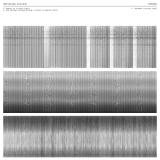
image front: Transitionen 2021 by C. Kubisch, sonagrams of electronic waves (courtesy: Galerie Mazzoli Berlin)
image back: Diapason Tuning Fork, property of Folkmar Hein, Photo: Archiv Christina Kubisch

design by Tim Tetzner
mastered by Giuseppe Ielasi
Thanks to Miguel Álvarez-Fernández, Folkmar Hein, Dominik Kautz and Mario Mazzoli

pre-ordina ora17.04.2026

dovrebbe essere pubblicato su 17.04.2026

27,31
Various - Tchic Tchic: French Bossa Nova 1963-1974  Colored Edition LP 2x12"
  • A1: Les Masques - Il Faut Tenir (1969)
  • A2: Isabelle Aubret - Casa Forte (1971)
  • A3: Christianne Legrand - Hlm Et Ciné Roman (1972)
  • A4: Jean Constantin - Pas Tant D'chichi Ponpon (1972)
  • A5: Billy Nencioli & Baden Powell - Si Rien Ne Va (1969)
  • B1-: Marpessa Dawn - Le Petit Cuica (1963)
  • B2: Jean-Pierre Sabar - Vai Vai (1974)
  • B3: Sophia Loren - De Jour En Jour (1963)
  • B4: Isabelle - Jusqu’à La Tombée Du Jour (1969)
  • B5: Sylvia Fels - Corto Maltesse (1974)
  • C1: Frank Gérard - Comme Une Samba (1972)
  • C2: Ann Sorel - La Poupée Des Favellas (1971)
  • C3: Charles Level - Un Enfant Café Au Lait (1971)
  • C4: Andrea Parisy - Les Mains Qui Font Du Bien (1970)
  • C5: Audrey Arno - Quand Jean-Paul Rentrera (1969)
  • C6: Aldo Frank - T’as Vu Ce Printemps (1970)
  • D1: Christianne Legrand - Cent Mille Poissons Dans Ton Filet (1972)
  • D2: Clarinha - Lemenja (1970)
  • D3: Hit Parade Des Enfants - Aquarela (1976)
  • D4: Jean-Pierre Lang - Tendresse (1965)
  • D5: Magalie Noël - Une Énorme Samba (1970)
  • D6: Françoise Legrand - La Lune

Ever since the late 1950s bossa-nova revolution, Brazil’s influence on French music has been undeniable. Pierre Barouh, Georges Moustaki and a vast array of lesser known artists, all made the Musica Popular Brasileira (MPB) an axis of promotion at the service of a cool and metaphysical, modern and mixed Brazilian lifestyle. Some were seduced by the poetic languors of the bossa, some were looking for fun, and others just loved the American hybridization of jazz-bossa, jazz-samba.


What is bossa nova? One of its creators, Joao Gilberto said: "Its style, cadence, everything is samba. At the very start, we didn't call it bossa nova, we sang a little samba made up of a single note - Samba de uma nota so .... The discussion around the origins of bossa nova is therefore useless”. It is nevertheless useful to remember that these magnificent Brazilian songs, which the guitarist describes as samba, were shifted and balanced around improbable chords. "I like things that lean, the in-betweens that limp with grace," said Pierre Barrouh, quoting Jean Cocteau.


With emotion, arrangements for violin and supple guitar licks, bossa nova rapidly changed. A transformation that can be heard in the Tchic, tchic, French Bossa Nova 1963-1974 compilation, the result of a cultural reappropriation, which traveled through the United States and supplemented itself in France.

A musical revolution that has remained significant, bossa nova was born in Rio. From 1956 to 1961, Brazil lived through its golden years. In five years, the country had invented its modernist style. Elected president in 1956, Juscelino Kubitschek de Oliveira, an elegant man with a broad forehead, brandished a promising slogan: "Fifty years of progress in five years". He quickly got to work. Not worried about increasing debt, he launched the project for a new federal capital, Brasilia, designed by the communist architect Oscar Niemeyer. Volkswagen opened state-of-the-art factories and created the “fusquinha”, the Beetle. In Rio, the Vespa made its first appearance. The Arpoador Surf Club crew run into the “girl” from Ipanema, Helô Pinheiro - the tanned garota ("chick"), between a flower and mermaid, who at 17 walked by the Veloso bar, where the fiery author and composer, Tom Jobim and Vinicius de Moraes, were getting drunk on whiskey. From then on, bossa symbolized cool.

In 1958, Joao Gilberto recorded Chega de Saudade, which the directors of Philips denied, calling it "music for fagots". The marketing director, who believed in it, secretly pressed 3000 78-inch vinyls and distributed them at schools around Rio, creating a tidal wave.

American jazzmen then took over. In particular, trumpeter Dizzy Gillespie and guitarist Charlie Byrd. In November 1962, the Brazilian Ministry of Foreign Affairs funded a "Bossa-Nova" concert at Carnegie Hall in New York, inviting the genre’s pioneers. Unprepared, the show soon turned to disaster. But the troupe was invited to the White House by Jackie Kennedy. The first lady loved "the new beat" and in particular Maria Ninguem, a song by Carlos Lyra, later covered by Brigitte Bardot.

In Brazil, the 1964 military coup quickly ended this euphoria. The destructive atmosphere that ensued pushed many Brazilian musicians to leave, if not to exile. Thus, Tom Jobim, Sergio Mendes and Joao Gilberto arrived to the United States. In New York, Joao Gilberto met saxophonist Stan Getz. At the time, he was married to the Bahianese Astrud Weinert Gilberto, who had a German father. She had never sung before, but she knew how to speak English. Getz therefore asked her to replace her husband on The Girl From Ipanema. The Getz/Gilberto record with Tom Jobim on piano, was released in March 1964. Phil Ramone, the "pope of pop" was in charge of sound.

Bossa nova arrived in Paris through the classic “guitar-voice” channel (Pierre Barouh, Baden Powell, Moustaki…) But France loved jazz and Paris had already welcomed its American contributors. All these good people were to pass through Saint-Germain-des-Prés. The cabaret l'Escale became the Mecca of Latin American sound where one could find Pierre Barrouh and his friends, such as the Camara Trio, samba-jazz aces, whose only record was published by the Saravah label. With a band strangely called Les Masques (a band that included Nicole Croisille and Pierre Vassiliu, among others), the Camara Trio recorded an interesting Brazilian Sound, including the track Il faut tenir which is present on this tasty compilation of rarities.

Other enlightened musicians can also be found on the compilation, such as Jean-Pierre Sabar (songwriter for Hardy, Auffray, Leforestier ...) and the French pop rock organist Balthazar. In 1975, Sabar recorded Aurinkoinen Musiikkimatka on a Finnish label, which featured the crazy Vai, Vai, included on this record. We are now following the footsteps of Brazilian electronic musicians such as Sergio Mendes, Eumir Deodato or Marcos Valle who created funk and disco sounds on their keyboards and synthesizers. A style that influenced Véronique Sanson when she wrote Jusqu’à la Tombée de la nuit in 1969 for Isabelle de Funès, the niece of Louis and a great friend of Michel Berger - Sanson did end up singing this track on her 1992 Sans Regret record.


The pinnacle of exoticism and travel, Sylvia Fels’ Corto Maltese includes bongos, sea mist and ocean sounds. The title was taken from Jacky Chalard’s concept album written in 1974, Je suis vivant, mais j’ai peur (I am alive, but I am scared), based on Gilbert Deflez’s science fiction novel.


However, bossa nova extended the scope of popularity. "In the 1970s, I was a fan of Sergio Mendes, Getz / Gilberto. I fell in love with this music that I knew because I had been an orchestral singer, " explained Isabelle Aubret, who in 1971 delivered a composite record of covers by the very funky Jorge Ben, Orfeu Negro, Tom Jobim, Vinicius de Morais and Jean Ferrat. "I recorded this album for Meys Records in Paris, far from Brazil, with wonderful musicians, François Raubert, Roland Vincent, Alain Goraguer...". The latter wrote the arrangements for Casa Forte, a very percussive title borrowed from Edu Lobo, one of the initiators of the bossa who spent time in California. "Jazz and bossa came together and produced very rhythmic music. I love singing, it allows me to dream, to have fun, to feel a high on stage, and these songs brought me joy, made me swing, my singing felt like a dance.”


The world tours of French singers and their desire for the tropics, often brought them to Rio with its hills, forests, caipirinhas and tanned bodies. There are surprises though, like this Iemenja (Iemenja is the goddess of the sea in the Afro-Brazilian candomblé religion). Not unlike the composer and musician Jean-Pierre Lang, based in Sao Paulo, Claire Chevalier taught Brazil to Brazil. In 1970, the singer and painter published a 45-inch vinyl, Mon mari et mes amants (My husband and my lovers), under the improbable pseudonym of Clarinha (little Claire). She was then living in Rio, with her husband, Joël Leibovitz, who founded a band called Azimuth, and who owned a record label specialized in "sambas enredos" songs for samba school parades.


For its B side, she asked Pierre Perret to come up with lyrics for a song composed by Carlos Imperial: "Oh goddess of the sea, o goddess Iemenja, I bring a white rose to adorn your long hair ..." . "Perret came to see us, and we had fun, remembers Joël Leibovitz. We wrote Lemenja for fun, we recorded it at the Havaí studio, behind the Central do Brasil the central station. Erlon Chaves, the arranger who worked with Elis Regina, joined us" adding his share of Afro-Brazilian percussions and funky brass to the mix.

There is a common misunderstanding in Franco-Brazilian history: that bossa, admittedly hedonistic, is perceived as funny, even though the poets who wrote the texts are often philosophizing on the human condition. Its French interpreters pull it towards a carnival inspired universe, far removed from its fundamental essence. Thus, Jean Constantin covered the famous Samba da minha terra, an ode to the art of samba written by the classic Bahian composer Dorival Caymmi, renaming it with the enticing title of Pas tant de tchi tchi pompon: "On your pier there is no tchi tchi / when you arch your back, you know everything is alright ”(lyrics by Gérard Calvi). This expedited bossa aims for the absurd, but retains a certain elegance.

Indeed, Jean Constantin was not an idiot, the rather large man had a huge mustache and liked fantasy, (Les pantoufles à papa, Le pacha, inspired by cha-cha-cha-cha, salsa and jazz) but he was also the lyricist of Mon manège à moi interpreted by Edith Piaf, the composer of Mon Truc en plume by Zizi Jeanmaire and the soundtrack of François Truffaut’s 400 Blows. Le Poulpe, published in 1970, from which this bossa is extract, was arranged by Jean-Claude Vannier, an accomplice of Serge Gainsbourg’s Melody Nelson. In short: "There is enough of samba / By looking at the parasol / Because my poor cabeza / Is going to die in the sun".

Even the American actress Marpessa Down, who was at the heart of the bossa nova revolution with her role as Euridyce in Marcel Camus’ film Orfeu Negro, winner of the 1959 Cannes Palme d'or, fed the clichée with Je voudrais parler au petit cuica - "Tell me how you manage to always make people want to dance / It's true, I must admit that I cannot resist your magic" - in consequence, once can hear the cuica, a little drum inherited from the Bantu.


But bossa nova had many angles. Societal, of course, pushing actresses who were symbols of women's liberation like Brigitte Bardot, Jeanne Moreau, or Sophia Loren to engage in the exercise of accelerated bossa. In February of 1963, Sophia Loren made a record in French in Rome, Je ne t'aime plus, featuring the song De jour en jour, a bossa written by two Italians, Armando Trovajoli and Tino Fornai, which was released a little later by Barclay. Bossa accompanied the 1960s, a decade of moral liberation. Ann Sorel, who interpreted La Poupée des favellas, caused a sensation with L’amour à plusieurs, a provocative song written by Frédéric Bottom and Jean-Claude Vannier. As for the actress Andrea Parisy, she displayed her bourgeois cheekiness in Marcel Carné's Les Tricheurs before interpreting Les mains qui font du bien. And Magalie Noël, the friend of Boris Vian, who sung Johnny fais-moi mal, was hired to sing Une énorme Samba, composed by Alain Goraguer (arranger to Gainsbourg, Bobby Lapointe and Jean Ferrat) with lyrics by Frédéric Botton.

But in the end, of what wood is bossa nova made of? The answer is given by Christianne Legrand, daughter of Raymond the conductor, and sister to Michel the composer: "With me, with jà" - jà means "immediately" in Portuguese. In 1972, the singer, an expert in vocal jazz and a member of the Double Six, published Le Brésil de Christianne Legrand. Two songs included on the Tchic Tchic compilation that demonstrate how bossa, jazz, funk, rock, etc. work like a swiss army knife: the music is used to denounce broken systems, or miracles, HLM et ciné roman, Cent mille poissons dans ton filet, two songs from the O Cafona soundtrack, a successful telenovela broadcast, at the time in black and white, on TV Globo. The first was adapted in French by the fighter and friend of the Legrand tribe, Agnès Varda. The second is content with a play on words, jostling them into a summer fun.


Véronique Mortaigne

pre-ordina ora17.04.2026

dovrebbe essere pubblicato su 17.04.2026

27,31
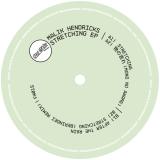
Malik Hendricks - Stretching EP
  • A1: Stretching
  • A2: 物の哀れ (Mono No Aware)
  • B1: After The Rain
  • B2: Stretching (Beringei Remix)

Making his first appearance on Flat White Records, NYC’s Malik Hendricks arrives with Stretching, a four-track EP that leans comfortably into the grey space between Deep House and Techno. Across three original cuts, Hendricks delivers warm, hypnotic, and quietly confident sounds that are unmistakably his own.

Rounding out the release is a remix from London-based, Spain-born producer Beringei. Known for his broken-beat excursions, Beringei with a 4x4 workout that still carries his unmistakable percussive touch, proving that even when stepping outside his usual lane, his identity remains firmly intact.

With previous releases on respected imprints like Eglo, Darker Than Wax, and Phuture Shock Muzik, Hendricks arrives in trusted company, thus making it an easy call to hand him the reins for our 15th release.

Born in the ’80s and raised in the ’90s, Malik Hendricks is a product of transatlantic club culture, drawing inspiration from Detroit’s futurism, New York’s grit, and the UK’s rhythmic experimentation. A DJ for over a decade, he approaches music with an almost academic curiosity, seeing the dancefloor as a shared space for cultural exchange.

Recently, his work has caught the attention of heavyweights like Eli Escobar, Byron the Aquarius, James Bangura, and Roy Vision, all stepping in to remix his material. With Stretching, Hendricks continues to prove that subtlety, craft, and groove still go a very long way.

Early DJ Support from: Shy One, LDLDN, Louise Chen, Dam Swindle, LTJ Bukem, Christophe Salin, Franck Roger, Jazzanova, Mr Redley, Last Nubian, Glenn Davis, Seven Davis Jr, Stonie Blue, Stu Clark (WOLF), Adriatique, Marco Weibel, Mr Ties, Tereza, Cottam, Joyce Muniz + MORE

pre-ordina ora17.04.2026

dovrebbe essere pubblicato su 17.04.2026

15,34
Aural Imbalance - Unknown Universe

Spatial stalwart and ambient master Aural Imbalance returns for a fresh slice of atmospheric heaven with Unknown Universe. A1 - Alien Lifeform A serene, distinctly atmospheric synth intro with light hats introduces Alien Lifeform, Aural Imbalance toying with filtered breaks and a deep bassline which ushers in trademark melodic pads and a thoughtfully constructed amen pattern. Rolling and intense, the track embodies Spatial’s love for the floor as well as the absorbed listener, nodding along to the laid-back rhythms on the 2am train home. A2 - Indigo Soothing, calming synths create an evocative introduction peppered lightly with cymbals and gentle intrigue, before the Circles break takes center stage with a delightfully constructed and crisply programmed pattern. A spirited breakdown with a subtle trance-like quality ensues before the breaks take over again, all set to a suitably earthy 808 bassline humming away below. AA1 - Empty Universe Deliciously clean and chunky Hot Pants breaks provide a DJ-friendly intro to Empty Universe, a blissful rolling track which sees Aural Imbalance fusing incredible 80’s synthwave vibes, rolling deep basslines and micro melodies with that timeless and evocative break - programmed to perfection - culminating in a stunningly atmospheric piece, fresh for the discerning listener - just as we like it at Spatial. A2 - Lunar Phase Kick back as Aural Imbalance closes the EP in fine form with a leisurely trip to the dark side of the moon. Lunar Phase opens with a short intro featuring sullen tones and light hats before a hypnotic break pattern takes over proceedings, and airy padwork circles above. A meandering melody builds throughout the piece and develops its final form during a luscious breakdown, and through the closing stages of this truly beautiful track. Words by Chris Hayes (Spatial/Red Mist)

pre-ordina ora24.04.2026

dovrebbe essere pubblicato su 24.04.2026

14,71
Dub Specialists - Dubplate #11 : Beat To Beat

Mysticisms’ returns to the music of the Conscious Sounds label and their short-lived but highly prized Dub meets Funk project, Dub Specialists. Created by label head Dougie Waldrop and Chris Petter (Love Grocer) to explore their interest in samplers and a love of Funk and Jazz.

A hugely respected “Digital” and “Roots Reggae” label, Conscious Sounds has been a mainstay of the East London digidub sound for over 30 years. Dub Specialists released 3 albums on the Crispy Music sub label, they have recently gained considerable interest in digger circles, with rising prices to match.

As with their first Dubplate outing, the release features extended re-edits by the label and friends, this time featuring versions by Lexx, Miles J Paralysis, Chuggy and Vanity Project. Working with the simplicity and skill of his studio craft, Dougie utilised the Atari 1040, Cubase and Soundcraft mixer to effect. Petters’ chords sit atop reggae basslines, funk samples, loops and this time, a heavy dose of cut up vocals in to the mix.

While the first EP came from their debut album, Breat To Break, here the source material for the re-edits comes, in the main, from their second outing “Dub To Dub Beat To Beat”. A more expansive album that also dipped in to 4/4 rhythms and touches of House / Techno.

Opening track Dynamic Duo is a 4/4 stepper bomb – with samples from Adam West’s iconic interpretation of Batman – expertly extended by long-standing DJ, producer and edit master, Zurich’s own Alex Storrer aka Lexx, who dials things to max for a club stop. A new name on many lips, Miles J Paralysis takes it all back down with a beautifully drawn out, acid-tinged tripper. Bumpin’, the mid-tempo groove sucks you in, psychedelic and mind expanding.

The flip returns to the more traditional Dub Specialist vibes of Breaks’n’Funk’ cut ups, first with (co-)label head Chuggy’s faithful extension of Heavy Dub. Featuring the classic Ijahman Levi’s vocal, the breaks flow and piano / horns stab, a dance floor shaker for the discerning. To close, secret studio fixer to many, Matt Bruce again dons his Vanity Project moniker to perfectly tease and live dub (out) the half-stepper, Reality Dub and close this latest in the Dubplate series.

Beat The Mystery.

pre-ordina ora27.04.2026

dovrebbe essere pubblicato su 27.04.2026

17,44
Ochre - Oversail

Ochre

Oversail

12inchMQWAW04ORANGE
Mystic & Quantum
27.04.2026

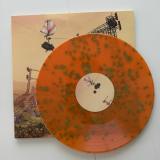
The open skies of Ochre's new album, Oversail, replace the dense canopies of his last, Understory back in 2020. This time, UK-born, Netherlands-based talent Christopher Leary trades rhythmic intricacy for something more exposed and reflective on a record that unfolds in measured steps, with each passage revealing fragile melodies set against sparse, shifting frameworks. There's a tactile quality to the sound design, hardware elements clicking and sighing like ageing machinery still in motion. Tracks feel suspended and the focus is on slow revelation across the quietly affecting 'Casadastra', airy beauty of 'Meristem' and hopeful synth sequencing of 'Canthropa.'

pre-ordina ora27.04.2026

dovrebbe essere pubblicato su 27.04.2026

19,29
Ochre - Oversail

Ochre

Oversail

12inchMQWAW04ORANGEGREEN
Mystic & Quantum
27.04.2026

The open skies of Ochre's new album, Oversail, replace the dense canopies of his last, Understory back in 2020. This time, UK-born, Netherlands-based talent Christopher Leary trades rhythmic intricacy for something more exposed and reflective on a record that unfolds in measured steps, with each passage revealing fragile melodies set against sparse, shifting frameworks. There's a tactile quality to the sound design, hardware elements clicking and sighing like ageing machinery still in motion. Tracks feel suspended and the focus is on slow revelation across the quietly affecting 'Casadastra', airy beauty of 'Meristem' and hopeful synth sequencing of 'Canthropa.'

pre-ordina ora27.04.2026

dovrebbe essere pubblicato su 27.04.2026

19,29
ColorJaxx - In Between LP

ColorJaxx

In Between LP

12inchFLIPS009
Flipsight
30.04.2026

As one of the foundational artists of Flipsight, it is only fitting that ColorJaxx gives the first major 2 x 12" gatefold statement on the label. The debut album 'In Between' of the Belgian producer gives a full overview of his trademark deep grooves with a re-invention of his club sound.

The first record is your invitation to the beach. The A-side kicks off with the ambient "Playamer", setting a scene of salt air and warm breeze. The shoreline waves combine with an electric piano groove to "Out The Door". This is where a slick trumpet gets the parole and cuts through the atmosphere, signalling to the dancefloor. "Never Enough" serves as a spiritual successor of his first EP on the label "Tales of never": shimmering guitar samples, a warm, everlasting groove, and that unmistakable "ColorJaxx" swing that we fell in love with initially.

The B-side is where Jordy catches the first hints of Spring with "Just Around" by blending uplifting trumpets and sax melodies with a fresh forward-moving baseline. "Higher" elevates the mood further with smooth rhodes keys and a jazzy piano lead. As the evening chill sets in, the first disc concludes with the literal end of the day: "The Beach Is Closed".

Time to grab the second wax out of your gatefold: leave the sand behind for the strobe light as this is where the maestro gets in club mode. "Back Then" serves as the bridge into "Discotheques," a heavy-hitting wink to the old-school Belgian club scene that shaped the underground of the early 2000's. This vibe created "Moving On," a sophisticated French-like house tune with Chris Farmer where the vocalist enters into a constant conversation with rhythmic elements, creating a versatile track that fits in any part of a DJ set.

The finale is reserved for heavy hitters: "This This" and "Disco Trouble" are pure, pumpy club rollers. Peak-time bangers designed for maximum impact, before the album dissolves into the hazy, cinematic outro of "Blurred Lines."

pre-ordina ora30.04.2026

dovrebbe essere pubblicato su 30.04.2026

21,81
Gluten People - Gluten People 02

The mysterious Gluten People return to the fold, handing over their next vinyl-only transmission. For this second helping of "glutenous" dancefloor heat, the duo has paired up with Giacomo XL, following the massive demand for their debut EP.

Expect more of the same raw, rhythmic energy that made their first outing a must-have for heads and selectors alike. This is essential, no-nonsense club material built specifically for the wax-only connoisseur.

Early Support from: Archie Hamilton, Liquid Earth, Enzo Siragusa, Huxley, La Fleur, Sean Johnston, Make A Dance, Baby Rollen, Ysanne, Eliza Rose, Bartolomeo, Ryan Clover, AGELESS, Alec Falconer, Call Super, Bas Ibellini, ADMNTi, Gearmaster (fka Abdul Raeva), Timo Maas, Christopher Ledger, Moodymanc, Nathan Colinet, Gabski, Greogorio Soave, and many more.

In Stock

Disponibile in Stock e pronto per la spedizione

11,72
BEN VIDA - OBLIVION SEEKERS
  • 1: Be Yr Own Abyss
  • 2: New Distortion Properties
  • 3: Oblivion Seekers
  • 4: Unmake A World

Ein aufmerksamer Zuhörer der Welt zu sein, bedeutet, von Sprache umgeben zu sein. Sprache hallt durch fast jeden Raum, in dem sich Menschen aufhalten, ob unerwünscht oder erwünscht, banal oder tiefgründig. Worte stehen auf der Seite und klingen im Ohr nach, vermehren sich endlos. Diese Überfülle fasziniert den Komponisten und Musiker Ben Vida schon lange, aber in den letzten Jahren hat sie zu einer neuen Art des Musikmachens geführt, die die Vorrangstellung der Sprache in unserer Klang- und Kulturwelt gleichzeitig hervorhebt und hinterfragt. Sanft und spielerisch bricht Vida die Hierarchie von Bedeutung und Klang der Sprache auf, bis sie in egalitärer Harmonie existieren. Oblivion Seekers ist Vidas neuestes Album in diesem Kompositionsstil, nach der Zusammenarbeit mit dem New-Music-Ensemble Yarn/Wire The Beat My Head Hit aus dem Jahr 2023. Wie bei seinem Vorgänger liegt der Fokus der Musik auf koordinierten Duetten aus gesprochenem Wort in neutralem Ton, wobei die variablen Rhythmen der bewegten Worte komplexe interne rhythmische Strukturen schaffen. Er wird von den Stimmen von Nina Dante, Christina Vantzou, John Also Bennett und Félicia Atkinson, die einen einzigartigen Klang erzeugen, der weder ihrer noch seiner ist und in seiner Geschlechtsdarstellung, seinem Akzent und seiner Aussprache fließend ist. Die instrumentalen Kompositionen, die den Hintergrund des Albums bilden, haben den ungezwungenen Fluss eines Dialogs, gesprächig, aber zurückhaltend, selten als Motor der Veränderung. Es herrscht eine ruhige, konzentrierte Stimmung, die durch den zurückhaltenden Rhythmus der Stimmen noch verstärkt wird, sodass man das Gefühl hat, die Musik sei ein langes Mantra, das nie ganz zu seinem Ausgangspunkt zurückkehrt. Der Effekt ist bezaubernd, gleichermaßen einschläfernd und fesselnd, und suggeriert Wiederholung, ohne sich jemals genau gleich zu bewegen. Die Instrumentierung der vier Stücke des Albums variiert; ,Be Yr Own Abyss" wird durch den wellenartigen Kontrapunkt der Saxophone geprägt, während der mehrdeutige Klang des Vibraphons über ,Oblivion Seekers" schwebt und Frasers anschwellender Bass den einzigen dramatischen Auftritt des Albums liefert. Die Musik verändert sich im Ohr, während der Text die Form und Bewegung der Komposition ständig neu definiert und in einen neuen Kontext stellt, auch wenn sie in ihrem jenseitigen Glanz konsistent bleibt. Der Text besteht oft aus Sprachfetzen, denen Vida während seines Lebens beim Komponieren begegnet ist: zufällig mitgehörtes Gemurmel in der Schlange im Supermarkt, eindrucksvolle Sätze aus einem Roman, den er gerade las, Eindrücke von Musik, die er immer wieder auf seinem Plattenspieler hörte. Kleine, ansonsten unbedeutende Details sammeln sich an, nicht um eine Erzählung zu bilden, sondern um einen Eindruck vom komplexen Prozess der Bedeutungsfindung zu vermitteln, der im täglichen Leben stattfindet. Charaktere und Szenen tauchen im Bild auf und verschwinden wieder, und Sätze, die nach einer Erklärung verlangen, dürfen einfach vorbeiziehen. Vidas Liebe zu Robert Ashley ist gut dokumentiert, aber vielleicht noch bedeutender sind Mark E. Smith und The Fall, Neil Tennant und die gesprochenen Verse der Pet Shop Boys, die gesamte Geschichte des Hip-Hop und Meredith Monk. Die Art und Weise, wie die Worte dargeboten werden, ist genauso wichtig wie die Worte selbst und offenbart eine Intentionalität und Direktheit, die Vida mit den abstrakten Konstruktionsmustern des Textes hervorhebt und untergräbt. Auf Oblivion Seekers ist der omnidirektionale Lärm der Marmor, den Vida abträgt, um zu beleuchten, wie wir die unermessliche Fremdheit der Welt verarbeiten. Der Triumph des Albums besteht darin, dass wir nichts von dem schönen Geheimnis verlieren, wie diese Zeichen unsere äußere und innere Welt miteinander verbinden.

pre-ordina ora01.05.2026

dovrebbe essere pubblicato su 01.05.2026

24,79
Gun Outfit - Process and Reality LP 2x12"
  • A1: Unfelt Loss
  • A2: So Easy To Love
  • A3: Teardrops (Classic Hell On Earth)
  • A4: Whiplash
  • A5: Morning Doctor
  • B1: Cherry Blossoms In Leschi
  • B2: Southward Equinox
  • B3: Velvet Rope
  • B4: Backward Path
  • B5: Don’t Remind Me
  • C1: Season Of The Wish C2. The Last Resort
  • C3: Two Rivers
  • C4: A Little Game
  • C5: Lilies Of The Field
  • D1: Lifelong Sellout
  • D2: Out Of My Mind
  • D3: Golden Era
  • D4: Sweet Routine

For two decades, Gun Outfit has been a band defined less by genre than by continuity, patience, and a commitment to making music that reflects their lived experience.
Formed in Olympia, Washington in 2006 but long since rooted in Los Angeles, the group has evolved from a raw duo into a quietly formidable five-piece, their sound growing from scrappy post-punk beginnings into something spacious yet intimate, and always underpinned by an experimental edge.
On Process & Reality, Gun Outfit return with their most ambitious and immersive work to-date, a sprawling 80-minute double album shaped by time, environment, and philosophy. Recorded over the course of a single month in the late summer of 2020, on an 80-acre ranch in Pine Flat, California, while a massive forest fire burned less than ten miles away, the seeds of these songs were stark and strange.
Its title, Process & Reality, draws from the central work of philosopher Alfred North Whitehead, whose philosophy places intuition, experience, creativity, and relationality at the center of existence.
The band’s current lineup reflects both longevity and openness. Sharp and Keith remain the band’s primary architects, joined by longtime drummer Daniel Swire, multi-instrumentalist Henry Barnes, and bassist Kayla Cohen. Additional collaborators include Chris Cohen, Warren Lee, and Danny Sasaki all of whom add further depth, leaving subtle fingerprints across the album.
Musically, the album expands the band’s palette without abandoning its core sensibility. Dulcimer, autoharp, sitar, melodica, keyboards, homemade electronics, and a wide range of acoustic and electric textures appear throughout. The sound is mellow yet expansive, songs move between fragility and hefty atmospheric passages.
Influences surface obliquely rather than overtly. Elements of reggae and dub inform the production’s spatial sensibility. Echoes of long-form European jam bands coexist with sharp post-punk. British folk traditions, American country, and classic West Coast songwriting drift in and out of focus; the band is never afraid to lead or follow.

pre-ordina ora08.05.2026

dovrebbe essere pubblicato su 08.05.2026

24,16
Kasper Bjørke Quartet - Passages in Time LP

Passages in Time, the third album from Kasper Bjørke Quartet, traces the contours of a blend of spiritual jazz reverence and the calming grandeur of '80s ambient. Inspired by Christopher Nolan's observation that "time is the most fundamental part of our human experience," the compositions are approached as fragments of time and memory. Meditations on the elusive nature of time form the heart of the work, merging freeform jazz improvisations with cyclical synthesizer patterns that mirror its quiet undulations.
Dreamy synths intertwine with guitar, harp, trumpet, flugelhorn, saxophone, and flute, creating a spacious environment for contemplation. The music invites reflection on the choices that shape our lives and the lives of those closest to us, and on the quiet weight of our priorities within the brief span we call life on this planet. Each passage unfolds as a fleeting moment suspended in time. The subtitles hint at fragments from someone's diary, tender observations of love, parenthood, and connection. Together, the passages form a musical memoir of sorts, where memory and emotion are gently woven into the compositions.
Passages in Time does not impose structure or meaning, it reflects them, offering an open space as the instruments drift in and out of focus, tracing time's subtle rhythms and inviting the listener to infuse their own memories and meaning into these passages.
The album also marks a transformation for the Quartet project itself. Langstrakt (Claus Noreen), part of the original ensemble, continues to operate the synthesizers alongside Bjørke, while the wider constellation of contributing musicians has evolved. Strings and piano give way to flute and saxophone by Oilly Wallace, guitars by Danish ambient composer Anna Roemer, trumpet and flugelhorn by Malthe Kaptain, and cascading orchestral harp by Katie Buckley, principal harpist with the Icelandic Symphony Orchestra.
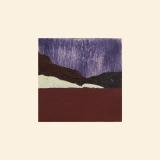
The cover painting is by American artist Marcus Leslie Singleton, courtesy of V1 Gallery, and reflects the meditative and timeless atmosphere of the music.
Passages in Time is released on Bjørke's own imprint, Sensitive Records, following the two previous Quartet albums released on Kompakt Records: The Fifty Eleven Project (2018), a debut that introduced Bjørke's ambient and neoclassical explorations, and Mother (2022), which expanded the ensemble's sound with emotive choir compositions and guest appearance by Sofie Birch (Unsound / Stroom). Together, these three albums trace a journey of artistic growth, from introspective experimentation to a fully realized, contemplative expression of time, memory, and human connection.

pre-ordina ora08.05.2026

dovrebbe essere pubblicato su 08.05.2026

20,97
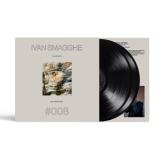
Various Artists - Ivan Smagghe presents: The Sound of Love International #008

The Sound of Love International 008 curated by Ivan Smagghe.

The next chapter of Love International's compilation series with Test Pressing arrives through the lens of Ivan Smagghe. Guided by his long-standing mantra, “the style of no style,” the 12-track selection drifts effortlessly between shadow and light - a reflection of the festival as he knows it.

This is Smagghe’s version of Love International: unpolished in the right places, intuitive, and deeply attuned to the stranger corners of the Adriatic experience. The compilation captures the balance at the heart of the festival: connection, curiosity, and a shared rhythm that holds it all together. Slightly out of reach yet exactly where it should be.

pre-ordina ora08.05.2026

dovrebbe essere pubblicato su 08.05.2026

28,99
M’BAMINA - AFRICAN ROLL

Gatefold Sleeve

M’Bamina – African Roll (1975)
The story of an album born between Africa, Italy, and the nightclub culture of the 1970s
In the heart of 1970s Italy — a country undergoing profound social change and a music scene just beginning to open itself to distant sounds and cultures — an extraordinary, almost improbable story took shape. It is the story of a group of young African musicians who found their way to Europe, of a Turin nightclub that became a crossroads for communities and experimenters, and of an album which, released in small numbers and largely unnoticed at the time, is now considered a rare jewel of Afro-fusion.
The band called themselves M’Bamina — an ensemble of musicians from Congo, Cameroon, and Benin, who arrived in Italy in the early Seventies. Settling between northern Italy and the Pavia area, they began performing in small clubs and community events, bringing with them a vibrant rhythmic heritage: African polyrhythms, call-and-response vocals, funk-infused bass lines, and Caribbean or Afro-Latin colours absorbed along their musical journeys. Their raw, contagious energy on stage quickly drew attention.
Meanwhile, in Turin, another story was unfolding. There was a venue becoming almost legendary: Voom Voom, one of the city’s liveliest nightclubs, run by Ivo Lunardi. The club attracted an eclectic crowd — students, artists, foreigners, night owls — and Lunardi quickly understood that the dancefloor wasn’t just a place for music, but a melting pot for a new kind of cultural energy. Out of this vibrant atmosphere came his idea: to turn the club’s name into a small independent record label, Voom Voom Music, capable of capturing the spirit of those years and giving voice to unconventional projects.

When Lunardi heard M’Bamina, he immediately sensed that this was the sound he had been searching for: fresh, different from anything circulating in Italy at the time, and capable of blending African tradition with funk and European sensibility. He brought them into the studio.
Production was handled by Lunardi along with Christian Carbaza Michel, while the engineering was entrusted to Danilo Pennone, a young sound technician with a sharp, intuitive ear.
The recording sessions — held in Turin in 1975 — produced a remarkably warm and direct sound. The music feels almost live: grooves rooted in African tradition, but open to funk-rock structures and modern arrangements. It is a natural fusion, never forced. Tracks move between tribal rhythms, funk basslines, light electric guitars, congas and Afro-Latin percussion, with call-and-response vocals and melodies that echo both Congolese tradition and the lineage of Latin jazz. Not by chance, one of the album’s most striking tracks, Watchiwara, reinterprets a Latin standard through M’Bamina’s own rhythmic language.

The album was titled African Roll — a name that was already a statement of intention. It is African music that “rolls,” that moves, adapts, transforms within a new geographic and cultural setting. It is not strictly Afrobeat, nor Congolese rumba, nor Western funk: it is a spontaneous, hybrid blend, shaped more by lived experience than by any calculated aesthetic program.
When African Roll was released, the world around it barely noticed. Distribution was limited, and 1970s Italy had yet to develop a cultural framework for receiving such music. The national music press rarely paid attention to African or “world” productions. The album slipped into silence — though the band’s own story did not.

M’Bamina continued performing across Europe and Africa, even sharing a stage in Cameroon with none other than Manu Dibango. By the late Seventies, they moved to Paris, signed with Fiesta/Decca, and recorded a second LP, Experimental (1978). Meanwhile, the peculiar record they had made in Turin began to resurface quietly among vinyl collectors, Afro-funk enthusiasts, and DJs hunting for forgotten grooves.
That is when the album’s fate began to shift.

Over the decades, African Roll emerged as an almost unique document: a snapshot of an intercultural Italy before the word “intercultural” even existed, a fragment of migrant history, a spontaneous experiment in musical fusion born far from major industry circuits but rich in authenticity. Original copies began commanding high prices on the collector’s market, and the album became recognized as one of the hidden classics of European Afro-fusion from the 1970s.
Today, more than fifty years later, this reissue finally restores visibility and dignity to a project that deserves to be heard, studied, and celebrated. It is not simply an album: it is the testimony of a rare cultural encounter, born in an Italy unaware of how fertile such exchanges would one day become.

It is the story of a visionary producer, an extraordinary band, and a fleeting moment in which music, migration, and nightlife came together to create something genuinely new.
African Roll is — now more than ever — the sound of a bridge: between continents, between eras, between cultures. A record that, after rolling far and wide, has finally come home.

In Stock

Disponibile in Stock e pronto per la spedizione

23,49
Shlomi Aber - Schema EP

Be As One boss Shlomi Aber returns to Chris Liebing's CLR with the 'Schema' EP, arriving 24th April 2026 alongside a remix from James Ruskin. Active since 1994, Aber has been a cornerstone of underground techno for over three decades, with his focused, hypnotic approach in both the studio and DJ booth leading to releases on some of the scene's most respected labels, including Cocoon, Ovum, Nonplus, and Figure. With the 'Schema' EP, he follows his recent 'Retrospective' EP for Ben Klock's Klockworks, as well as previous CLR outings such as the 'Limelight' EP (2025), and the 'Remote 101' EP (2023), which both kept a spot in the Beatport Techno chart for over two years after release, while winning support from the likes of Carl Cox, Alienata, Dave Clarke, and many more.

Shlomi Aber's 'Schema' EP opens with the title track and heads straight into subterranean territory, pairing weighty low-end pressure with tightly controlled tension. Rattling bass foundations are o?set by sharp hi-hats and static-laced textures that flicker through the mix, keeping the groove locked and the atmosphere charged.

On remix duties, James Ruskin, founder of the seminal Blueprint, delivers a shadowy, atmospheric rework. Eerie pads hang in the background as swampy bass anchors the rhythm, with haunted melodic elements slowly unfolding to create a deep, immersive take built for late hours and dark rooms.

Closing track 'Gasolina' sees Aber shifting into broken-beat territory, where warm, glitchy rhythms loop with hypnotic precision. Ghostly synth motifs drift in and out of focus, giving the track a cinematic, heady quality that rounds out the release with understated intensity.

Founded by influential techno lynchpin Chris Liebing in 1999 and reemerging in 2021 after a five-year hiatus, Create Learn Repeat (CLR) has hosted a range of artists like Dubfire, Flug, Bjarki, DJ Dextro, and more while also focusing on developing newer acts in the scene, such as Risa Taniguchi, The Southern, and Klint.

pre-ordina ora15.05.2026

dovrebbe essere pubblicato su 15.05.2026

15,92
KETTAMA - Archangel LP 2x12"

One of electronic music’s most sought-after names, producer and DJ KETTAMA today announces the release of his long-awaited debut album, Archangel, out 3rd of October. The announcement arrives in tandem with new single “Sort It Out” featuring Clouds, and a landmark moment in his career: his biggest ever London headline show, taking over Brixton Academy on Saturday, October 4th, followed by an expansive tour across Europe, North America, and Australia.


A decade in the making, Archangel is the definitive statement from KETTAMA (Evan Cambell), the Galway-born, London-based artist. The 15-track project is a powerful blend of hard-house energy, trance-inflected euphoria, hip-hop sample-based attitude, and unmistakable emotional depth—sonic signatures that have placed KETTAMA at the cutting edge of contemporary dance music.


The album showcases a curated roster of collaborators who reflect KETTAMA’s reach and relevance across today’s underground and mainstream scenes, including Interplanetary Criminal, Fred again.., Clouds, Prospa, DJ HEARTSTRING, Shady Nasty, SØLV and seantommy. Their contributions amplify the project's scope, offering a multi-sided view into KETTAMA’s musical universe.


Among its early singles, the Interplanetary Criminal collaboration “Yosemite” is a high-velocity anthem marrying speed-garage grit with ecstatic rave melodies, while his track “Air Maxes” with Fred again.. And Shady Nasty blends introspective vocal sampling with wide-eyed club emotion. On “If U Want My Heart” with DJ HEARTSTRING featuring KLP, the ensemble channels high-energy trance, breakbeats, and vocal euphoria into a soaring anthem that fuses emotional intensity with peak-time club energy. Meanwhile, his collaboration with Clouds, released today, “Sort It Out” dives headfirst into industrial-techno territory, conjuring a dark, cathartic energy destined for warehouse euphoria. And reigning as one of the undeniable anthems of the summer so far, “It Get’s Better (Forever Mix)” delivers euphoric waves of uplifting synths and relentless rhythm, bringing an irresistible surge of energy that’s become synonymous with this summer’s club moments.


Archangel has already found a home on the world’s biggest stages and radio airwaves, with early support from key tastemakers including Jack Saunders, Danny Howard, Sarah Story, and Tim Sweeney. Simultaneously, a grassroots groundswell continues to bloom across social platforms—where viral snippets and show footage capture the visceral reaction of a fast-growing, global fanbase.


This year, KETTAMA has elevated his status to a full-blown festival phenomenon, performing at major stages including Coachella, Glastonbury, Creamfields, Portola, Seismic, and ARC Festival, to name a few. In June, he played to 20,000 people in Belfast for a b2b with Chris Stussy—one of the UK’s largest DJ events in recent memory—and is currently mid-way through a 16-week Ibiza residency at Amnesia, playing every Monday night throughout summer. Full list of upcoming live dates can be found below.


Perhaps the clearest signal of his surging popularity is the jaw-dropping response to his upcoming Boiler Room live set, with over 15,000 fans signing up to attend— the set’s release is now highly anticipated as a time capsule moment in a breakout year for the artist.


KETTAMA’s rise to prominence has been anything but conventional. Eschewing the traditional gatekeepers of the industry, KETTAMA cultivated an underground following through the likes of SoundCloud and TikTok, where raw uploads, bootlegs, and viral edits generated a tidal wave of grassroots momentum. Over the years, these platforms became launching pads for a fiercely loyal global community, drawn to his unfiltered energy and boundary-pushing sound. This subversive path to recognition has made him not just a fixture of the scene but a symbol of how new-generation artists can forge success on their own terms.


From his humble roots in the Irish underground to the world stage KETTAMA is now pushing the limits of what a next-gen DJ-producer can achieve. With Archangel, he fuses the sound of his native ‘G-Town’ with a futuristic vision that’s unapologetically global—marking a creative milestone that cements his place among electronic music’s most compelling voices.

pre-ordina ora15.05.2026

dovrebbe essere pubblicato su 15.05.2026

33,19

Last In: 71 days ago
Various - Vienna EP

Various

Vienna EP

12inchRHYME10
Rhythm Trax
10.03.2026

Since last year's EP “rhyme09,” a quiet storm has been brewing around the label. This release is not only long overdue, but Vienna is also home to numerous new talents as DJs and producers. The label boss makes the selection here and kicks off this release with a completely crazy track that is unlike anything else out there. There is virtually nothing else like it, making this track unique with its bassline, offset kick drum, and acid grooves. The second tune on the A Side comes from Fabiano Jose’, a well-known DJ in Vienna who, with his brand “Merkwürdig” has been an important player in the local party scene for several years. A catchy tech house tune, “step in” if you can!

The first tune on the B Side is a collaboration between ZentaSkai, well known for his label MASK Berlin, and Thomas Grün, also a long-time DJ and producer in Vienna who releases house and tech house tunes also on his own label “Untitled100 records”.

With Manu Script on B2, we have a debut here. With his great taste as a DJ and producer, he delivers a powerful groove. Another true Party stepper! Be ready...

In Stock

Disponibile in Stock e pronto per la spedizione

12,82
Flying Lotus - BIG MAMA

Flying Lotus

BIG MAMA

12inchBF157
BRAINFEEDER
10.03.2026
  • A1: Big Mama
  • A2: Captain Kernel
  • A3: Antelope Onigiri
  • A4: In The Forest - Day
  • A5: Brobobasher
  • A6: Horse Nuke
  • A7: Pink Dream

Limitiertes blaues 12“ Vinyl mit Siebdruck auf B-Seite inklusive 12“ Stickerbogen.
Artwork von Christopher Ian Macfarlane

Flying Lotus, der Produzent – auch bekannt als Steve Ellison – veröffentlicht Anfang März seine neue ‘BIG MAMA’ EP auf Brainfeeder: dem Plattenlabel aus Los Angeles, das er vor fast zwei Jahrzehnten gegründet hat und das seitdem Alben von renommierten Künstlern wie Thundercat, Hiatus Kaiyote, Kamasi Washington und vielen anderen veröffentlicht hat.
BIG MAMA fängt Ellison in einem Moment spontaner, ungezügelter Dynamik ein. Die EP ist dicht gepackt mit unterschiedlichen Sounds, Rhythmen und Effekten und liefert, wie er es selbst beschreibt, „experimentelle, maximalistische, hyperschnelle, elektronische Energie“, wobei sieben dynamische Tracks zu einer einzigen durchgehenden Komposition zusammengefasst sind, in der jeder Takt einzigartig ist und es keine Loops gibt.

Die EP, die innerhalb von zwei Monaten fertiggestellt wurde, zeigt Ellison mit einem deutlich anderen Ansatz bei seiner Produktion. Anstatt sich hinzusetzen und an einzelnen Tracks zu arbeiten, stattete er sein Studio mit einer Vielzahl neuer Tricks und Spielzeuge aus, nutzte Software-Synthesizer, um FM-, Wavetable- und Granularsynthese zu erforschen, sowie Second-Hand Drum Machines und verbrachte den ersten Monat damit, ein Skizzenbuch mit einzelnen Sounds für die nächste Phase des Prozesses zu erstellen. Von dort aus begann er, die akribischen Details der BIG MAMA-Welt aufzubauen, wobei er täglich nur 10 bis 15 Sekunden Musik fertigstellte, bevor er die Fragmente zu ihrer endgültigen Form zusammenfügte: ein mehr als dreizehnminütiger Strom des Bewusstseins, der weder durch Tempo noch Stil eingeschränkt ist.

In Stock

Disponibile in Stock e pronto per la spedizione

23,49
Articoli per pagina:
N/ABPM
Vinyl