A world premiere of AI-generated symphonic music!
All three audio files are compiled from two live recordings with different microphone settings. The cover image is generated by algorithms trained with the following image searches: migration, mediterranean, boat, Libyan coast, EU. Different search engines were used. »Land der Musik« celebrated its world premiere on 7 October 2018 at steirischer herbst '18 - volksfronten in Graz, Austria. Commissioned and produced by steirischer herbst in cooperation with ORF Musikprotokoll.
A1. soundalikeStrauss (an audio reverse-engineering tool is used after the initial cross-fade) A2. AIstrauss (algorithms are trained with midi-files of Johann Strauss waltzes) B1. AImahler (algorithms trained with midi-files of Gustav Mahler symphonies) B2. (untitled)
A new standard of beauty. Artificial intelligence (AI) algorithms can now group photo pixels or audio waves into meaningful categories. This is similar to how our brain operates, yet the outcome seems distinctively non-human. At the same time it appears that the sphere of our appreciation and imagination may just have expanded. The question of whether we are still able to see and hear the difference between automated and so-called autonomous artifacts should be left to historians. On the other hand, producing this analog audio record with this image on the front cover really is an antagonism. A more appropriate medium might be a tracking chip of your online and offline activities generating customized results in real time—be it images, music, or whatever.
If AI is communist (to quote the libertarian Silicon Valley entrepreneur Peter Thiel), then this statistics-based technology might actually reinforce centralized monopoly capitalism and the coming crisis of inequality, just as it might accelerate into Deleuze's notion of the Society of Control. But it might also be seen and heard as a demo, a new standard of beauty, for the redistribution of wealth and for solidarity; in short as a utopia freed from exploitation, nationalism, and racism, liberating us from our own perception of this world. »Land der musik - The Graz AI Score« demonstrates how machine learning might help us to finally create the perfect Austrian national music identity. Yet in doing so, our ultimate aim is to get rid of the construction of national identities all together.
»God created man because he dreamed him. / But man forgot God and created the machine because he dreamed it. / At the end of the twentieth century, however, the machine has forgotten man. / Who could predict who or what she dreams of« (Friedrich Kittler)
Search:christian martin
Bait kicks off their 2026 release schedule hot and heavy with a split EP from Andy Martin and Christian Coiffure. With both producers coming through with the next generation of artists exploring the dub-tech connection, the EP starts with two tracks from Mexican-Jamaican artist Andy Martin with the murky 'Waterhouse' and the hypnotic stepper 'The Ark'. On the other side, French producer Christian Coiffure lands with two sleazy minimal-tech tracks nodding to the early 2000s with 'Lure' and 'Decoy'.
2024 repress
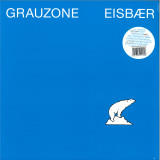
WRWTFWW Records is very honored to announce the official reissue of Grauzone's essential 1981 maxi single with timeless classic "Eisbär", proto-techno beast "FILM 2", and romantic synth ballad "Ich Lieb Sie", just in time for the 40th anniversary of the Swiss band's formation. The three-track vinyl is sourced from the original reels, cut at 45rpm, and comes with its iconic artwork on a 350gsm sleeve.
Ich möchte ein Eisbär sein...Written by Martin Eicher after a nightmare in which he saw talking polar bears on the walls, and with music by the Grauzone crew consisting of Martin and his brother Stephan Eicher, Marco Repetto, Christian "GT" Trüssel, and Claudine Chirac (on saxophone), "Eisbär" is the most recognizable title from the band, a sublime mix of ingredients reflecting the transitional era it comes from - the raw energy of punk music still palpable, combined with the audacity of early electronics, the warm groove of a disco gem, beautifully fragile lyrics, and one of the best basslines ever. It became a mega hit, totally unplanned, but how could you resist such a track
"FILM 2" is the ultimate b-side monster, a menacing all-instrumental pre-techno masterpiece, slowly building to a magnetizing frenzy. An instant underground favorite, it was famously heard played at both speeds depending on the scenes and DJs you were frequenting, 45rpm as it was first intended, and 33rpm for the cosmic experience (search Daniele Baldelli's Cosmic C75 1982 mixtape online for a great example of this).
The maxi single ends with "Ich Lieb Sie", a synth-pop meets doo-wop ballad, a true love song oozing with innocence. Simple, stylish, and just right.
At the crossroads of post-punk, new wave, pop, and electronic experimentation, the Eisbär maxi offers three songs that are technically different but hold the same spirit, the perfect embodiment of Grauzone's music - wild, unpredictable, and youthful, yet sophisticated, catchy, and ingenious. The magic recipe for the good stuff.
Stephan Eicher went on to be, arguably, the most successful Swiss musician ever, with an international career extending from pop chanson to experimental escapades and collaborations with Moondog, artists Sophie Calle and John Armleder, and author Martin Suter among many other luminaries. Marco Repetto flourished as a techno and ambient producer, releasing multiple projects including releases on Aphex Twin's Rephlex label.
Grauzone and WRWTFWW will continue to collaborate on the band's 40th anniversary reissue campaign, with numerous projects planned for the year, including a vast selection of music, visuals, and literature never available before.
- A1: Film 2
- A2: Schlachtet!
- A3: Hinter Den Bergen
- A4: Maikäfer Flieg
- A5: Marmelade Und Himbeereis
- B1: Wütendes Glas
- B2: Kälte Kriecht
- B3: Kunstgewerbe
- B4: Der Weg Zu Zweit
- B5: In Der Nacht
- C1: Eisbär
- C2: Ich Lieb Sie
- C3: Moskau
- C4: Ein Tanz Mit Dem Tod
- D1: Traüme Mit Mir
- D2: Ich Und Du
- D3: Wütendes Glas (Maxi Version)
- D4: Raum
- D5: Film 1
Cassette[33,74 €]
Double LP: Heavy 350gsm Sleeve, Liner Notes, Sticker
WRWTFWW Records is very happy to reissue Swiss cult band Grauzone's self-titled album in an expanded 40 Years Anniversary Edition packed with the original 1981 album plus 9 extra songs, as well as extensive liner notes by Swiss music historian Lurker Grand. The 19-track album is available as a double LP vinyl in heavy 350gsm sleeve and a digipack CD, both sourced from the original reels and put together under the supervision of band member and all around legend Stephan Eicher.
The pioneering band from Bern (Switzerland) had a short-lived but highly-regarded career which birthed a cult discography that still fascinates and resonates today. Consisting of core members Martin Eicher, Stephan Eicher, and Marco Repetto, and on-and-off participants Christian GT Trüssel, Claudine Chirac, and Ingrid Berney, the elusive group broke new grounds in the early 80s, experimenting with punk and industrial music, early techno sounds, minimalism, new wave, pop, and various electronics. With an innovative and polished approach to design, visuals, performance, and all around style and philosophy on top of their superb music, the constantly transforming unit developed a whole experience - the Grauzone experience: wild and unpredictable, yet sophisticated and cohesive, or as Swiss music historian Lurker Grand would call it, "an Art band with a Punk attitude".
Completely rejecting the music industry rules and refusing to play the game of promotion, touring, release schedules, and TV appearances even though they had a multi-platinum international hit with the song "Eisbär", the band quickly disintegrated in full convention-defying glory, leaving behind an inspiring music legacy for the world to discover and discover again, one generation after the other.
This extended version of their debut (and only) album beautifully crystallizes the Grauzone miracle/accident - where pop and youthful experimentation meet at (new/cold/no) wave and industrial crossroads, and where classic hits ("Eisbär", "FILM 2", "Raum", "Träume Mit Mir", "Der Weg Zu Zweit"…) flawlessly mesh with unconventional deep cuts ("In Der Nacht", "Film 1", "Maikäfer Flieg"…). Very simply put: GOOD timeless music with an edge.
Stephan Eicher went on to be, arguably, the most successful Swiss musician ever, with an international career extending from pop chanson to experimental escapades and collaborations with Moondog, artists Sophie Calle and Sylvie Fleury, and author Martin Suter among many other luminaries. Marco Repetto flourished as a techno and ambient producer, releasing multiple projects including releases on Aphex Twin's Rephlex label.
- A1: Why Don’t You Do Right - Cleo Jons & Dick Reynolds Orchestra
- A2: Fiche Le Camp Jack - Richard Anthony & Les Angels, Dir. Christian Chevallier
- A3: I Pawned Everything - Walter Spriggs & Jesse Stone Orchestra
- A4: Don’t Play No Mambo - The Charioteers & Sid Bass Orchestra
- A5: Mr. Sandman - Chris Powell & The Blue Flames
- A6: Teen Age Rock - Pete Rugolo & His Orchestra
- A7: The Rhinoceros - Osie Johnson & His Orchestra
- B1: Lady Be Good - Knud Jörgensen & The Metronome Singers
- B2: Walk Softly Children - Elizabeth Lands, Orchestra Cond. By Dave Martin
- B3: Timber’s Gotta Roll - The Deep River Boys Feat. Harry Douglass
- B4: Blues In The Closet - The Tritones
- B5: The Baggage Room Blues - Tom Kennedy
- B6: Write Me Baby - The Metrotones
- B7: Rat Race - Little Norman (Norman Kaye)
Auf dem komplett unübersichtlichen Markt der Vinyl-Wiederveröffentlichungen rarer Aufnahmen aus dem im weitesten Sinne Rock & Roll/Rhythm & Blues/Popcorn-Umfeld hat sich die Serie DOWN AT THE UGLY MEN’S LOUNGE mit einer komplett eigenständigen konzeptionellen Farbe etabliert. Das authentische 10“-Format und die Covergestaltung mit obskuren und anonymen Musikerfotos der ersten fünfzig Jahre des 20. Jahrhunderts sind gleichermaßen unverkennbar wie unwiderstehlich.
Das stilistische Spektrum der neuen Auswahl rarer und rarster Trouvaillen aus dem legendären Archiv von Prof. Bop bleibt dem Ursprungskonzept treu: Zwischen Boogie und Mambo, zwischen Blues und Bop, zwischen Exotica und Egozentrik...weniger amateurhaft gespielter Teenager-Rockabilly, eher Rock & Roll etc. von musikalisch versierten und Jazz-geschulten Vollprofis. Allesamt Aufnahmen der goldenen Epoche 1950 – 1962.
- A1: Robert Pico - Le Chien Fidèle
- A2: Annie Girardot - La Femme Faux Cils
- A3: Spauv Georges - Je Suis L'état
- A4: Zoé - Zoé
- A5: Jacques Da Sylva - Fou
- A6: Valentin - Je Suis Un Vagabond
- A7: Jacques Malia - Histoire De Gitan
- A8: Bernard Jamet - Raison Legale
- B1: Jean-Pierre Lebort - Barbara Au Chapeau Rose
- B2: Les Concentrés - Fils De Dégénérés
- B3: Les Missiles - Publicité
- B4: Hegessipe - Le Credi D'hegessipe
- B5: Marechalement Votre - Ethero Disco
- B6: Mamlouk - Decollez Les
- B7: Mozaique - L'amour Nu
- B8: Jean-Marc Garrigues - Je Dis Non
- B9: Penuel - Astronef 328
The journey through French-speaking pop archives continues with this fifth volume, packed with fuzz, gimmicks, and dissent. Far from the charts, the selected tracks display a great creative freedom, often backed by corrosive humor. Welcome to the surprising, kaleidoscopic, and colorful world of the late sixties and early seventies, Wizzz!
Born in Montauban, Robert Pico stumbled into music by chance when he met René Vaneste, then artistic director at Pathé-Marconi. René brought him to Paris to record his first 45 RPM EP in 1964. A year later, Pierre Perret introduced him to Vogue, where he recorded his second album with Claude Nougaro’s orchestra. Sylvie Vartan then introduced him to RCA, where he recorded four singles, including the astonishing "Chien Fidèle," a track backed by a hair-rising fuzz guitar. Alongside his solo career, he also composed for other artists like Alain Delon (the song was recorded but remains unreleased), Magali Noël, Bourvil, and Georges Guétary. In the Paris of the sixties, he mingled with Mireille Darc, Elsa Martinelli, Marie Laforêt, France Gall, Françoise Hardy, Petula Clark, Régine, Dani, Serge Gainsbourg, Joe Dassin, Franck Fernandel, Charles Level, and Roland Vincent. Despite his efforts and winning a Grand Prix Sacem for his final record, Robert Pico didn’t achieve the expected success in show business and decided to leave Paris and return to the Southwest, where he devoted himself to writing. He is the author of 23 books (including Delon et Compagnie, Jean-Marc Savary Editions 2025, a memoir about his youth and his many encounters). Today, he is relieved to never have become a celebrity and devotes himself to his work with passion.
In 1969, the Franco-Italian movie Erotissimo was released, directed by Gérard Pirès (who later directed Taxi in 1998, written and produced by Luc Besson). This pop comedy features Annie Girardot, Jean Yanne, Francis Blanche, Serge Gainsbourg, Nicole Croisille, Jacques Martin, and Patrick Topaloff. The soundtrack was written by Michel Polnareff and William Sheller, with lyrics by Jean-Lou Dabadie. "La Femme Faux-cils," performed by Annie Girardot. It recounts the feelings of a rich CEO's wife who seeks to develop her sex appeal under the influence of advertisement and magazines. Groovy, sparkling and light, this track, with ITS lush arrangements humorously critiques consumer society and feminine beauty standards.
“Je suis l’Etat” (1967) is the flagship track of the first EP by singer-songwriter Spauv Georges, aka Georges Larriaga, better known as Jim Larriaga (1941-2022). Born into a family of bakers, the young man was initially planning to become a hairdresser when he discovered English-speaking music through Elvis Presley and the Beatles. After this revelation, he decided he would become a songwriter and gave himself five years to succeed. He recorded his first two EP’s independently for RCA under the pseudonym Spauv Georges; meaning “that poor George”, a nickname given to him by the mother of her friend Jean-Pierre Prévotat (future drummer of the Players, Triangle, or Johnny Hallyday). Portraying a depressed and eccentric young man, Spauv Georges created corrosive and amusing songs that didn’t reach a wide audience, despite a TV appearance with Jean-Christophe Averty.
Supported by his loyal friend and fellow songwriter Jean-Max Rivière, Georges Larriaga met the future singer Carlos in the early '70s, then Sylvie Vartan’s assistant. He wrote songs for Carlos, including the popular "La vie est belle," "Y’a des indiens partout," and "La cantine", which went onto become a huge hit in 1972. He also composed for Claude François (“Anne-Marie”, 1971), Charlotte Julian (“Fleur de province”, 1972), helped launch child singer Roméo (who sold 4 million records), and later wrote the hit "Pas besoin d’éducation sexuelle" (1975) for the young Julie Bataille. In 1971, Jim recorded an album for Disc'Az: “L’univers étrange et fou de Jim Larriaga”, which featured pop gems like “La maison de mon père”.
The story of the song "Zoé" began when Pierre Dorsay, artistic director at Vogue Records, asked Swiss singer and musician Pierre Alain to write a song for a new female singer. The inspiration came when he realized that Zoé (the artist's name) was also the name of France's first atomic battery, created in 1948, which consisted of uranium oxide immersed in heavy water! The lyrics reflect a bubbling energy that must be handled with caution, while the instrumentation echoes this atomic theme, notably with the use of a theremin.
Zoé’s career lasted only as long as a single 45 RPM, but it seems Christine Fontane was the vocalist behind this pseudonym, who is known for several EPs, a good "popcorn" album in 1964, and a handful of children’s singles in the '70s. Regardless, the photograph on the cover is of a different girl entirely.
Later, Pierre Alain continued his career, writing songs for himself, Marie Laforêt, Danièle Licari, Alice Dona, Arlette Zola (3rd place in Eurovision 1982), and achieving multiple gold and platinum records in Canada. Also an inventor with several patents, president of the Romande Academy, and head of the French Alliance in Geneva, he now composes atonal music, books, and poetry. Moreover, he is also the host of "Les Mardis de Pierre Alain" at "Le P'tit Music'Hohl" in Geneva.
Filled with oriental choruses and fuzz guitar, "Fou" is from Jacques Da Sylva's only EP released by Vogue in 1967. Despite the quality of this recording, all traces of this singer disappear after this first effort.
Valentin is a baroque pop singer born in Belgium. He is the songwriter and composer of most of the tracks on his three singles released in the late 60s in Canada. A legend says that he reincarnated himself as Jacky Valentin during the 1970s for a rock'n'roll revival career in Belgium, but his older brother sadly debunked this story. Valentin's first two singles were arranged by Claude Rogen, a Parisian session pianist who had come to Canada to promote the song “Mister A Gogo”, a cover of David Bowie’s “Laughing Gnome”, adapted by singer Delphine, his wife at the time. Far from his usual network, Claude Rogen arranged music for Polydor, including the arrangements for “Je suis un vagabond” in 1969, a jerk tune with string arrangements and a furious optimism.
Jacques Malia wrote, composed, and recorded his only 45 EP for Festival in 1966. “Histoire de gitan” is an incredible beat track with bohemian scat that tells the story of a gypsy musician who came to Paris to make it in the Music-Hall, to no avail. The hero of the song and its author probably shared a similar fate, as Jacques Malia faded into anonymity after this remarkable attempt.
Bernard Jamet recorded two EPs for Barclay in the late sixties and co-wrote several songs with Christine Pilzer, Pascal Danel, and prolific songwriters Michel Delancray and Mya Simile. The track “Raison Légale” (1968), his masterpiece, immerses the listener in a courtroom right when a murderer is being judged, with jerk rhythm and free arrangements. A unique, paranoid, judicial, and psychedelic oddity.
Jean-Pierre Lebrot-Millers started his career in show business in 1967 as a singer and songwriter for the Philips label. After three singles, he wrote several songs of a new kind with his friend Pierre Halioche, in the midst of the sexual liberation movement and the democratization of drugs. With provocative lyrics, “Les filles du hasard” and “Barbara au Chapeau Rose” were released on a Philips singles in 1968. The character of Barbara was inspired by a queen of Parisian nightlife during the psychedelic years: model Charlotte Martin, who dated Eric Clapton from 1965 to 1968, then Jimmy Page from 1970 to 1983. Jean-Claude Petit’s arrangements, with a table-filled intro, soul brass, and Hendrixian guitar, emphasize the flamboyance of a hedonistic and sexy character, whose dog is named Junkie because “Junkie est un nom exquis”! The track was recorded live in three takes with a full orchestra.
Upon its release, the record was censored by Europe 1 and RTL due to its references to drug use. Jean-Pierre Lebrot was then banned from the airwaves and later dismissed by his record label. He changed his artist name to Jean-Pierre Millers, while his companion Pierre Halioche became D. Dolby for a new dreamy composition, “Chilla”, which Jean-Pierre produced himself with arrangements by Jean Musy. Once again, the song was immediately censored everywhere. After this setback, he decided to stop singing and started taking on odd jobs to support his Swedish wife and their son until the day he met Jean-Pierre Martin, then production manager at Decca, who had worked with Manu Dibango. Martin offered Jean-Pierre Lebrot-Millers, then employed at Rank Xerox, the position of artistic director at Decca. He accepted and became, a year later, promotion director (radio, press, TV). He worked on Julio Iglesias’s first album for Decca, which became a massive hit and allowed him to meet Claude Carrère. The latter asked him to write new songs and find their performers, much like a “talent scout.” It’s through him that Jean-Pierre discovered Julie Pietri and Corinne Hermès. He composed “Ma Pompadour” for Ringo, Sheila’s husband, and took the microphone again for the syncope hit “Rendez-Vous” in 1982.
That same year, Jean-Pierre Lebrot-Millers tried to release a track for which he had heavily gone into debt: “Si la vie est un cadeau”. Having recorded it in London, he presented it to numerous professionals, all of whom refused to get involved. The same thing happened with Antenne 2 and the Sacem when he proposed the song as France’s entry for Eurovision. He then met Haïm Saban, who was producing cartoon soundtracks and had just launched the Goldorak theme song. Saban, having listened to the song, declared it had the potential to become a hit. He sent Jean-Pierre and Corinne Hermès to meet the CEO of the Luxembourg radio and television network. The latter received them, asked to hear a verse and chorus a cappella in his office, and immediately hired them to represent Luxembourg at Eurovision 1983. They reworked the arrangements and recorded a new version with Haïm Saban as co-producer. The song ended up winning Eurovision 1983, a great comeback for our hero. He continued producing and hung out with the band Nacash in Belgium when a couple came to introduce their daughter for an impromptu audition in a hotel room. The girl sang “Les démons de minuit” while dancing to a radio cassette. Impressed, he had her take singing lessons for a year and composed a song for her (for which he had the melody and title, but no lyrics). This required him to go on the hunt for a lyricist, who ended up being Guy Carlier. They recorded the song, which was initially a ballad, at Bernard Estardy’s CBE studio, and gave the singer a new name: Melody. They showed the song around their industry network without success. Later, Estardy called Jean-Pierre to suggest changing the rhythm and making it pop-rock. Orlando, Dalida’s brother, liked the result and decided to co-produce the track. “Y’a pas que les grands qui rêvent » became a classic hit. The song has since been covered by Juliette Armanet (as a ballad, like the original) and Valentina.
Born into an aristocratic Breton family, Hervé Mettais-Cartier worked as a DJ at Queen Kiss, a nightclub in Poitiers, where he formed the band Les Concentrés with Michel (an actor) and Christian (a radio technician). Together, they created a repertoire of whimsical songs (“Ma bique est morte”, “J’suis un salaud”, “Fils de dégénéré”...) that they performed on stage dressed in white (in homage to “concentrated milk”). They performed at Bliboquet and Olympia in 1968 for the 10th edition of the “Relais de la chanson Française” organized by L’Humanité-Dimanche and Nous les Garçons et les Filles, sponsored by Pepsi Cola. Winners in the author-composer category, alongside Danish singer Dorte, their visibility allowed them to record a 45, and appear on television in Jean-Christophe Averty’s show. The A-side of the disc features Bruno le ravageur, a casatchok dedicated to Bruno Caquatrix, the director of Olympia, nicknamed in the song “Coq Atroce” or “croque-actrices”. The B-side is dedicated to “Fils de dégénéré”, a quirky tribute to Hervé's aristocratic roots, mixing absurdity with sophisticated vocal harmonies.
After Les Concentrés, Hervé Mettais-Cartier formed the duo La Paire et sa Bêtise with his friend Olivier Robert. They performed in Parisian cabarets and toured with Pierre Vassiliu. In the late 1970s, Hervé began a solo career. He recorded two albums for the Motors label in 1978 and 1979, which did not achieve their anticipated success due to lack of promotion. In 1980, he met Bernadette, with whom he started a family and created a “Chansons à voir” (songs to see) show that he performed until his death at the end of 2024.
Publicité comes from the final EP by the Missiles (Ducretet Thomson, 1966), a disc that also includes “La (nouvelle) guerre de cent ans”, featured on Volume 4 of our Wizzz! series. Please refer to the booklet for the story of the band.
“He’s 1.82 meters tall, 28 years old, weighs 135 kg, is black and Belgian”: this is the description of singer Hegesippe on the back of his sole single (Decca, 1967). He appears on the album cover wearing a Greek toga, like a hippie gag – we are at the end of the year 1967. In “Le crédo d’Hegesippe”, this former bodyguard of Antoine and the Charlots plays the delightful card of the thick brute converted to Flower-Power and non-violence, with arrangements by Jean-Daniel Mercier, aka Paul Mille.
“Ethéro-disco” was released on a promotional record for clients of the Maréchal company (Liège, Belgium) for the New Year 1979. Over a funky rhythm, celebrity impersonations (Brigitte Bardot, Jacques Dutronc, Fernandel…) deliver an enigmatic text about pharmaceutical products like ether, bismuth, and aspartate. The track was composed by Dan Sarravah (responsible for Joanna's “Hold-up inusité” featured on Wizzz! Volume 3) and Tony Talado, who was also a singer (one 45 in 1967), songwriter (with over a dozen credits between 1964 and 1985 in various styles from surf music to disco), author (Devenez Végétarien, Dricot Editions, 1985), ad designer, and psychologist.
Décollez-les is on the A-side of Mamlouk's only single, a pseudonym for Marsel Hurten, who is known for his work on several EPs in the late sixties, as well as composing music for Hervé Vilard’s “Capri, c’est fini”, Claude Channes' “La Haine”, Annie Philippe’s “On m’a toujours dit”, and Nancy Holloway’s “Panne de Cœur”.
This strange song, with Afrobeat horns and absurd dialogues between a chef and his kitchen staff, is the result of a collaboration between Marsel Hurten and one of his neighbors, a photographer from Pavillon-sous-Bois (93), where the musician settled after returning from the Algerian War. A music video was shot to promote the record.
Marsel Hurten was born in Tourcoing (59) into a musical family. At a young age, he joined the brass band founded by his grandfather, playing the piston before studying trumpet at the conservatory, as well as teaching himself how to play the guitar. As an orchestra musician, he toured in France, Belgium, Germany, and England. He released a series of solo 45’s between 1965 and 1968 for the DMF and Az labels before stopping recording to focus on working for other artists (Gilles Olivier, Noëlle Cordier…).
“L’amour nu” (Vogue, 1971) is the work of the short-lived Belgian band Mozaïque. The track, written by singer Jacques Albin, closely resembles another of his compositions, “Carré Blanc”, which he recorded in 1969 for Disc’AZ.
Represented by the Lumi Son micro-label based in Marignane (Côte d'Azur), Jean-Marc Garrigues released two 45 RPMs in the late sixties, defending the French jerk sound. The song “Je dis Non” is a short, joyful ode to youth, pop music, and rebellion.
Songwriter and performer Jacques Penuel released three singles. The first one, “Astronef 328” (Fontana, 1969), features a dizzying series of chords punctuated by sound effects, a sci-fi story, and arrangements by Jean-Claude Vannier.
We would like to sincerely thank Pierre Alain, Moon Blaha, Marsel Hurten, Bastien Larriaga, Jean-Pierre Lebrot-Millers, Bernadette Mettais-Cartier, Robert Pico, Olivier Robert, Claude Rogen, Micky Segura.
- A1: Hi-Lo - Feverish (Original Mix)
- A2: Jeremiah - The Wanna Do Track (Unreleased Extended Mix)
- B1: Jeremiah - Sun (Original Mix)
- B2: Hi-Lo - Pieces (Original Mix)
- C1: Jeremiah - In Your Eyes (Unreleased Extended Mix)
- C2: The Last Disco Superstars - True Experience (12” Mix)
- D1: Hi-Lo - Another One (Original Mix)
- D2: Jeremiah - Only Dubbin' On My 808 (Original Mix)
- E1: Hi-Lo - He Didn’t Know (Original Mix)
- F1: Jeremiah - Dope Eyes (Extended Mix)
Founded in early 1995, Grow! quickly established itself as a key player in the underground house music scene. The label was created by Christian Mahringer (aka Jeremiah) along with Michael Peter (Duke) and Martin Retschitzegger (Tin). Together, they released a steady stream of 12" records, often under various pseudonyms, focusing entirely on the music rather than individual profiles.
While Grow! remained their main creative outlet, the founders were also active beyond the label: Mahringer released music on Chez Damier’s Balance Alliance and the renowned Chicago label Guidance, while Peter and Retschitzegger collaborated on records for Daniel Bell’s 7th City and Robert Hood’s influential M-Plant label, and also launched their own imprint, Central.
This new compilation presents a first carefully curated selection of the most notable tracks from the label’s catalog, alongside previously unreleased versions. All tracks were edited and remastered from the original tape recordings. It offers a deep dive into the raw, analog-driven sound that defined Grow!’s identity.
With its consistent focus on quality, anonymity, and artistic integrity, Grow! Records has left a lasting impression far beyond Austria’s borders. This release is both a celebration and a rediscovery of one of the country’s most respected underground imprints.
- A1-: Mirror House
- A2-: Djinn Dance
- B1-: The Dictionary Of Lost Meanings
- B2-: The Spell
- C1-: Fragmented Realities
- C2-: Three Dimensional Spirits
- D1-: Ila3Sab
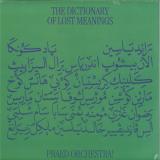
PRAED return to Discrepant, after their 2017’s entry Fabrication of Silver Dreams (CREP44)
Known for their signature blend of Egyptian Shaabi, free jazz and improvisation, the Lebanese duo behind PRAED - Raed Yassin and Paed Conca - now assemble a full orchestra for the second time taking the music to a deeper, rooted level.
Following their 2020 release Live in Sharjah, also under the PRAED Orchestra! moniker, the duo now revisit their unique blend of Arabic heritage and free jazz sensibilities with an album that keeps pushing further into strange and unexpected directions.
The Dictionary of Lost Meanings is just that, seven fully composed pieces and large-scale improvisations, performed by an expanded ensemble of musicians from across the globe. The result is dense and playful, unpredictable but familiar, a record where Arabic rhythms and microtonal melodies collide playfully against electronics, warped vocals and orchestral textures.
It’s less about genre than about memory — like tuning into a radio station broadcasting from somewhere between the past and the future.
PRAED continue to blur the line between popular culture and experimental music in ways that feel both grounded and completely their own.
PRAED ORCHESTRA! are
Raed Yassin: Synthesisers, Vocals, Beats
Paed Conca: Clarinet, Electric bass
Alan Bishop: Alto saxophone, Electric bass, Vocals
Andreas Bral: Harmonium, Electronics
Elisabeth Klinck: Violin
Christian Kobi: Soprano and Tenor Saxophones
Hans Koch: Bass Clarinet
Martin Küchen: Alto and Sopranino Saxophones
Maurice Louca: Synthesizer, electronics
Stan Maris: Accordion
Radwan Ghazi Moumneh: Buzuk, Vocals, Modular Synth
Youmna Saba: Electric Oud, Vocals
Sam Shalabi: Oud, Electric Guitar
Els Vandeweyer: Vibraphone
Khaled Yassine: Drums, Percussion
Michael Zerang: Drums, Percussion
Recorded by Jasper Jan Peeters at the Summer Bummer Festival, DE Studio,
Antwerp August 26, 2022
Mixed by Adham Zidan
Mastered by Mark Gergis
Produced by PRAED
Photos by Geert Vandepoele
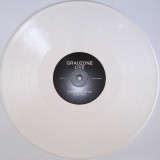
WRWTFWW Records is very happy to release Swiss cult band Grauzone’s recording of their April 12th 1980 live show at Gaskessel in their hometown of Bern. The 9-track album, documenting the very beginnings of the group, is available as a limited edition white vinyl LP in heavy 350gsm sleeve with special artwork by band member Stephan Eicher.
Experience the early Grauzone days, live from Bern, Switzerland, with a concert recorded at legendary local venue Gaskessel, with Martin Eicher on guitar and vocals, Christian G.T. Trüssel on bass, Marco Repetto on drums, Stephan Eicher on synth, and Claudine Chirac on saxophone. The performance is a true time capsule of the early 80s underground, showcasing the punk side of Grauzone with renditions of songs that were never officially released, as well as future fan-favorite “Moskau”. A piece of Swiss music history, This limited release is a must have for all Grauzone fans and DIY archivists.
About Grauzone:
The pioneering band from Bern (Switzerland) had a short-lived but highly-regarded career which birthed a cult discography that still fascinates and resonates today. Consisting of core members Martin Eicher, Stephan Eicher, and Marco Repetto, and on-and-off participants Christian GT Trüssel, Claudine Chirac, and Ingrid Berney, the elusive group broke new grounds in the early 80s, experimenting with punk and industrial music, early techno sounds, minimalism, new wave, pop, and various electronics. With an innovative and polished approach to design, visuals, performance, and all around style and philosophy on top of their superb music, the constantly transforming unit developed a whole experience - the Grauzone experience: wild and unpredictable, yet sophisticated and cohesive, or as Swiss music historian Lurker Grand would call it, "an Art band with a Punk attitude".
Completely rejecting the music industry rules and refusing to play the game of promotion, touring, release schedules, and TV appearances even though they had a multi-platinum international hit with the song "Eisbär", the band quickly disintegrated in full convention-defying glory, leaving behind an inspiring music legacy for the world to discover and discover again, one generation after the other.
Stephan Eicher went on to be, arguably, the most successful Swiss musician ever, with an international career extending from pop chanson to experimental escapades and collaborations with Moondog, artists Sophie Calle and Sylvie Fleury, and author Martin Suter among many other luminaries. Marco Repetto flourished as a techno and ambient producer, releasing multiple projects including releases on Aphex Twin’s Rephlex label.
Ein Mensch verbringt den ganzen Tag damit, eine Maschine zu bauen, nur damit sie ihn die ganze Nacht hindurch quält. Als ob das nicht schon verdreht genug wäre, gefällt es ihnen auch noch. Es gefällt ihnen sogar so gut, dass sie am Morgen verjüngt aufwachen und eifrig an der Maschine feilen, bis sie in ihrem Kopf perfekt läuft.
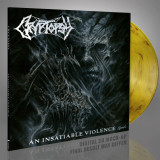
Dies ist die nächtliche Vision, die Cryptopsy zu ihrem neunten Album Nightmare inspiriert hat. "Hüte dich vor dem Scheinwerferlicht", warnt Sänger Matt McGachy, bevor "Dead Eyes Replete" mit einem schmerzerfüllten Breakdown vor deinen Augen aufblitzt. An Insatiable Violence spiegelt unsere toxische Beziehung zu den sozialen Medien wider, aber obwohl es unheimlich vorausschauend ist, ist das Album von den vielen Mutationen beeinflusst, die die Hall of Fame-Diskografie der Band geprägt haben. Inspiriert von einem Mukbang, der furchtbar schief gegangen ist, ist der gefräßige Opener "The Nimis Adoration" ein Sammelsurium an Blasts, Christian Donaldsons Fishhook-Riffs und einer kräftigen Portion Groove, der die Boxen zum Beben bringt.
Cryptopsy wissen, dass nicht jede brutale Technical-Death-Metal-Band lange genug durchhält, um nach 30 Jahren einen kanadischen Grammy zu gewinnen. Das Cover von "An Insatiable Violence" wurde von dem verstorbenen, großartigen Martin Lacroix gestaltet, der mit unheiligem Vergnügen über die frischen, fetthaltigen Tiefen von McGachys falschem Akkordschrei grölen würde. Ein anderer ehemaliger Sänger kehrt auf "Embrace the Nihility" zurück, um alle flüsternden Zweifel an seiner Vormachtstellung zu zerstören. Doch obwohl Cryptopsy bereits auf ihrem zweiten Studiowerk die Krone der abscheulichsten Death-Metal-Band für sich beansprucht haben, gehen sie immer noch an die Grenzen des Extremen.
Die Leadsingle des Albums rumpelt und knirscht zu Olivier Pinards schaurigen Bassschlägen - und doch erhebt "Until There's Nothing Left" im Kern den Anspruch, Cryptopsys größter Ohrwurm zu sein. Selbst Flo Mounier - der buchstäblich das Buch des extremen Metal-Drummings geschrieben hat - hat neue Techniken verfeinert, um die Blasphemie von An Insatiable Violence frisch zu halten. Zum Abschluss kommt "Malicious Needs" im Schneckentempo daher, bevor es wie eine Fledermaus in eine schwarze Rauchwolke aufsteigt.
Verbeugt euch vor der neuen Abscheulichkeit der Könige des extremen Metal.
FFO: Suffocation, Dying Fetus, Nile
- Ecstasy
- Guilt
- See That Girl
- Die Die Die
Legendary shoegaze band Chapterhouse will share their first ever recordings on a new EP, White House Demos, released via Sonic Cathedral on May 9.The four tracks were laid down at The White House studio in Weston-super-Mare on January 15, 1989, when the band were only four gigs old. "They were the first songs we wrote as a band," says the band's singer and guitarist Stephen Patman. "At the time our live set consisted of Stooges and '60s garage-psych cover versions which we mixed with these original songs." The tracks weren't included on 2023's career-spanning Chronology boxset because they had been forgotten about - until the intervention of Slowdive guitarist Christian Savill. He and Patman worked together in an office in Reading as their respective bands were starting out and he says the demo remains "their best record"."When the boxset was released, Christian got in touch and reminded me of these demos and how much he loved them," says Stephen. "He was probably the first person I gave a cassette copy to. He still rehearses and records at The White House and was going in for a session the following week, so I asked if he could ask the owner/engineer Martin Nichols to check if he still had them in his archive. Thankfully he did." Of the four tracks that make up the EP, `Ecstasy' has appeared in various versions and permutations on Chapterhouse compilations over the years, but never in its full eight-minute glory; a much later version of `Guilt' was included on the band's 1991 debut album and shoegaze classic Whirlpool; a version of `Die Die Die' was also included with that album on a bonus 12", and remained part of the band's live set for a while. The stunning `See That Girl', however, has never been released before. With 36 years of distance, it sounds like something of a lost classic, and the White House Demos as a whole feel like a brief moment in time captured forever.
Hermon Mehari and Tony Tixier first met in 2010, in their early twenties, in a club on Paris's Rue des Lombards for a concert with saxophonist Rodolphe Lauretta. Over the next decade, the two musicians took opposite paths, while continuing to collaborate on two continents. The American trumpeter moved to France to discover European culture and the world cultures that coexist there, while the Parisian pianist of Martinican origin spent several years in the USA, immersing himself in the roots of jazz and Afro-American music.
In June 2024, the two musicians, who had been working for fifteen years on numerous albums and collaborations, and whose musical understanding had continued to be forged in clubs, festivals, and on recordings, met again for a duet at the TOC-TOC festival in the Puisaye region, where Antoine Rajon was a collaborator. Enthusiastic about the idea, the artistic director of the KOMOS label invited them back to his home in this corner of Burgundy to record this Fender Rhodes/trumpet formula. He called on sound engineer Christian Hierro, who traveled with his mobile studio for the album recording, then mixed and produced the master in his studio in Lyon, using the best analog equipment and his expert ear.
At dusk on November 12, 2024, the duo played eight tracks in a single, direct take on a 33-minute magnetic tape.
Four unusual cover versions were carefully chosen. "Maimoun" is a composition emblematic of pianist Stanley Cowell's style, also recorded by Marion Brown. George Duke's "The Black Messiah" was captured live by Cannonball Adderley's band on an album of the same name but has never been released as a studio version. "Hello To The Wind" was created by Bobby Hutcherson in 1969, sung by Eugene McDaniels. Finally, "Laini," dedicated by the great Martinican pianist Marius Cultier to one of his daughters, is a mazurka dear to Tony's heart.
Each of the musicians also contributed a composition: Hermon with "This Is Our Fantasy," written especially for the session, and Tony with "Poem For The Oppressed," a moving composition with an explicit title. Lastly, the duo improvised two tracks, without repetition, in mutual symbiosis and echo.
SOUL SONG captures a moment without enhancement, transformation, or additives, far removed from contemporary virtual technologies.
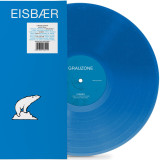
2025 Blue Vinyl Repress
WRWTFWW Records is very honored to announce the official reissue of Grauzone's essential 1981 maxi single with timeless classic "Eisbär", proto-techno beast "FILM 2", and romantic synth ballad "Ich Lieb Sie", just in time for the 40th anniversary of the Swiss band's formation. The three-track vinyl is sourced from the original reels, cut at 45rpm, and comes with its iconic artwork on a 350gsm sleeve.
Ich möchte ein Eisbär sein...Written by Martin Eicher after a nightmare in which he saw talking polar bears on the walls, and with music by the Grauzone crew consisting of Martin and his brother Stephan Eicher, Marco Repetto, Christian "GT" Trüssel, and Claudine Chirac (on saxophone), "Eisbär" is the most recognizable title from the band, a sublime mix of ingredients reflecting the transitional era it comes from - the raw energy of punk music still palpable, combined with the audacity of early electronics, the warm groove of a disco gem, beautifully fragile lyrics, and one of the best basslines ever. It became a mega hit, totally unplanned, but how could you resist such a track
"FILM 2" is the ultimate b-side monster, a menacing all-instrumental pre-techno masterpiece, slowly building to a magnetizing frenzy. An instant underground favorite, it was famously heard played at both speeds depending on the scenes and DJs you were frequenting, 45rpm as it was first intended, and 33rpm for the cosmic experience (search Daniele Baldelli's Cosmic C75 1982 mixtape online for a great example of this).
The maxi single ends with "Ich Lieb Sie", a synth-pop meets doo-wop ballad, a true love song oozing with innocence. Simple, stylish, and just right.
At the crossroads of post-punk, new wave, pop, and electronic experimentation, the Eisbär maxi offers three songs that are technically different but hold the same spirit, the perfect embodiment of Grauzone's music - wild, unpredictable, and youthful, yet sophisticated, catchy, and ingenious. The magic recipe for the good stuff.
Stephan Eicher went on to be, arguably, the most successful Swiss musician ever, with an international career extending from pop chanson to experimental escapades and collaborations with Moondog, artists Sophie Calle and John Armleder, and author Martin Suter among many other luminaries. Marco Repetto flourished as a techno and ambient producer, releasing multiple projects including releases on Aphex Twin's Rephlex label.
Grauzone and WRWTFWW will continue to collaborate on the band's 40th anniversary reissue campaign, with numerous projects planned for the year, including a vast selection of music, visuals, and literature never available before.
- A1: Sadi Lancreot - Dou Se Vou Ki Siwo
- A2: Max Et Henri - Sé Pou Demen
- A3: Dominique Panol - Come On Baby
- A4: Mariz - Si On Jou
- B1: Jocelyn Mocka Et Kassav - Mizik Maladi
- B2: Christian Yéyé - Misyé Zanndo
- B3: Ramon Pyrmée - An Mwe
- B4: Expérience 7 - Bel Toubonman
- C1: Ka Lévé - Apre Nou Byen Cheche
- C2: Horizon - Neg Mawon
- C3: Ti Celeste - Testaman
- D1: Yo - Fo'w Maye
- D2: Alex Rosa - L'appel Des Champions
- D3: Gwo Siwo - Bèlè
Strut introduces the highly anticipated third volume in the Disques Debs International series, diving deeper into the archives of one of the greatest French Caribbean labels, Disques Debs, based in Guadeloupe. Founded by the visionary Henri Debs in the late ‘50s, the label and studio operated for over 50 years, releasing more than 300 7” singles and 200 LPs, making it a cornerstone of Caribbean music history.
By the dawn of the 1980s, Henri Debs had already established himself as a prolific producer, with a record of releases unmatched in Guadeloupe and Martinique. From its humble beginnings with a 2-track tape machine in the back of a clothes shop, Disques Debs evolved into a powerhouse, boasting a state- of-the-art studio in downtown Pointe-à-Pitre, retail shops for records and musical instruments in Guadeloupe, Martinique, and Paris, a nightclub in Gosier, and international distribution deals reaching Europe, the U.S., and South America.
Disques Debs played a pivotal role in shaping modern Caribbean music. The label bridged traditional genres like biguine and gwoka with contemporary styles like cadence, compas, and zouk, the latter becoming a global phenomenon in the 1980s with contributions from iconic acts like Kassav’ and Zouk Machine. The period also saw Disques Debs champion a new generation of artists while maintaining ties with legendary figures from earlier decades.
Volume 3 in this series spotlights one of the label’s most dynamic and influential periods as it expanded its global reach during the 1980s. Across 2 LPs, the release features a curated selection of tracks from the Disques Debs circle, highlighting both emerging talents and established artists who defined the era.
This collection not only celebrates Henri Debs’ unmatched legacy but also offers a snapshot of Caribbean music’s golden age, cementing Disques Debs as a cultural institution.
"Thin Peaks" is the sixth album by the microtonal tuba trio Microtub, featuring Robin Hayward (UK/DE), Peder Simonsen (NO), and Martin Taxt (NO). Initially developed during an artist residency in Andersabo, Sweden, the two pieces "Thin Peaks" and "Andersabo” underwent several adaptations before being recorded in 2022. The pieces draw on the acoustic phenomena of half-valve combinations, creating distinctive timbres and harmonic spectra based on the unique half-valve signature of each tuba. Whilst "Thin Peaks" hockets between the pitches arising from a single half-valve combination, each of the four movements of "Andersabo""results from a different half-valve combination, sometimes resulting in surprisingly consonant harmonies.
Formed in 2010, Microtub have performed at prestigious festivals such as Sonic Acts in Amsterdam, MaerzMusik in Berlin, Wien Modern, FIMAV in Victoriaville, and Intonal in Malmö. Their music works particularly well in reverberant spaces. Some of the most memorable venues have been the Ex Teresa Cathedral in Mexico City, Brønshøy Water Tower in Copenhagen and Wasserspeicher in Berlin. Their latest performance in Sweden was at Lumen Projects in the Eric Ericson Hall in March 2024, where they also collaborated with Paris-based Egyptian singer Abdullah Miniawy. While Microtub primarily perform their own compositions, often in Just Intonation using the Hayward Tuning Vine software, they also frequently collaborate with composers such as Ellen Arkbro and Catherine Lamb. At the Ultima Festival in Oslo in September 2024, they will premiere seven new works by emerging composers from Norway, Poland, Iran, and the USA.
The band members are all very active in the experimental music scene worldwide. Hayward has collaborated with legends such as Eliane Radigue, Alvin Lucier and Christian Wolff, Taxt has performed with Verdensteateret, Tetuzi Akiyama and Toshimaru Nakumura, and Peder Simonsen has worked with Jo David Meyer Lysne and Bendik Giske.
- Das Blanke Entsetzen!
- Die Spur Des Pick-Ups
- Rapper
- Ein Wahrer Freund
- Fall Gelöst?
- Eine Dunkle Nacht Der Schlüssel Zu Allen
Cassette[7,98 €]
Peter sitzt mit Kelly im Park, als ihm mulmig zumute wird. Irgendetwas stimmt hier nicht: Bobachtet die Statue des Dreiäugigen Schakals sie etwa? Die beiden nehmen die Bronzefigur genauer unter die Lupe, als plötzlich etwas geschieht, mit dem niemand gerechnet hat! Peter und Kelly verlassen vor lauter Schreck fluchtartig den Park. Die Statue mit dem Schakalkopf hat eindeutig ein dunkles Geheimnis. Was verbirgt sich hinter der kalten Hülle? Justus und Bob stehen ihrem Freund zur Seite - die drei ??? beginnen ihre Recherche. Trackpunkte:01 Das blanke Entsetzen! 02 Die Spur des Pick-ups 03 Rapper 04 Ein wahrer Freund 05 Fall gelöst? 06 Eine dunkle Nacht 07 Der Schlüssel zu allem Buchautor: Ben NevisSkriptautor: André MinningerSprecher:innen & Mitwirkende:Erzähler Axel MilbergJustus Jonas, Erster Detektiv Oliver RohrbeckPeter Shaw, Zweiter Detektiv Jens WawrczeckBob Andrews, Recherchen und Archiv Andreas FröhlichKelly Juliane SzalayKommissarin Merryweather Anne MollNina Radamus Astrid Kollex Luke Kingsbury Mars Saibert Jana Anika Baumann Ryan Ford Michael Grimm Constantin Krueger Martin May Mick Manson Patrick BachOnkel Titus Erik SchäfflerTravis Fabian Harloff Breezy Sonja Stein Big Rock Patrick Baehr Joe Jürgen Holdorf Hank Fabian Müller Wächter Achim SchülkeBankangestellter Martin Rowedder Buch und Effekte: André MinningerRegie und Produktion: Heikedine KörtingRedaktion: Maike MüllerTitelmusik: Simon Bertling & Christian Hagitte (STIL)Musik: Jan-Friedrich Conrad, Jens-Peter Morgenstern, Andris Zeiberts, Detlef Oels, Bert Brac, Fabian Harloff, Nathaniel SteinbrecherCover-Illustration: Silvia Christoph - Design: Atelier SchoedsackBasierend auf dem gleichnamigen Buch von Ben Nevis, erschienen im Kosmos Verlag, Stuttgart. © 2024. Based on characters created by Robert Arthur.Mit freundlicher Genehmigung der Universität Michigan.
- Das Blanke Entsetzen!
- Die Spur Des Pick-Ups
- Rapper
- Ein Wahrer Freund
- Fall Gelöst?
- Eine Dunkle Nacht Der Schlüssel Zu Allen
2x12"[26,68 €]
Peter sitzt mit Kelly im Park, als ihm mulmig zumute wird. Irgendetwas stimmt hier nicht: Bobachtet die Statue des Dreiäugigen Schakals sie etwa? Die beiden nehmen die Bronzefigur genauer unter die Lupe, als plötzlich etwas geschieht, mit dem niemand gerechnet hat! Peter und Kelly verlassen vor lauter Schreck fluchtartig den Park. Die Statue mit dem Schakalkopf hat eindeutig ein dunkles Geheimnis. Was verbirgt sich hinter der kalten Hülle? Justus und Bob stehen ihrem Freund zur Seite - die drei ??? beginnen ihre Recherche. Buchautor: Ben NevisSkriptautor: André MinningerSprecher:innen & Mitwirkende:Erzähler Axel MilbergJustus Jonas, Erster Detektiv Oliver RohrbeckPeter Shaw, Zweiter Detektiv Jens WawrczeckBob Andrews, Recherchen und Archiv Andreas FröhlichKelly Juliane SzalayKommissarin Merryweather Anne MollNina Radamus Astrid Kollex Luke Kingsbury Mars Saibert Jana Anika Baumann Ryan Ford Michael Grimm Constantin Krueger Martin May Mick Manson Patrick BachOnkel Titus Erik SchäfflerTravis Fabian Harloff Breezy Sonja Stein Big Rock Patrick Baehr Joe Jürgen Holdorf Hank Fabian Müller Wächter Achim SchülkeBankangestellter Martin Rowedder Buch und Effekte: André MinningerRegie und Produktion: Heikedine KörtingRedaktion: Maike MüllerTitelmusik: Simon Bertling & Christian Hagitte (STIL)Musik: Jan-Friedrich Conrad, Jens-Peter Morgenstern, Andris Zeiberts, Detlef Oels, Bert Brac, Fabian Harloff, Nathaniel SteinbrecherCover-Illustration: Silvia Christoph - Design: Atelier SchoedsackBasierend auf dem gleichnamigen Buch von Ben Nevis, erschienen im Kosmos Verlag, Stuttgart. © 2024. Based on characters created by Robert Arthur.Mit freundlicher Genehmigung der Universität Michigan.
Das mit Spannung erwartete neue Album von Dark Tranquillity, "Endtime Signals", kanalisiert all die Unruhe, Angst und Verwirrung der Welt in 12 fesselnden, kraftvollen Tracks. "Endtime Signals" ist Katharsis und Dunkelheit, Entschlossenheit und Zustimmung. Die wiedererstarkte Besetzung - Joakim Strandberg Nilsson (Schlagzeug) und Christian Jansson (Bass) gesellen sich zu Mikael Stanne (Gesang), Martin Brändström (Keyboards) und Johan Reinholdz (Gitarren) - bedeutet, dass eine neue Ära für Dark Tranquillity angebrochen ist. Die Singles "The Last Imagination", "Unforgivable" und "Not Nothing" kündigen dies durch raumgreifende Refrains, fiebrige Aggression und unverkennbare Melancholie an. Mit einem wundervollen Cover-Artwork von Sundin und einer "gelebten" Produktion von Brändström (Rogue Music) und dem Engineering von Alexander Backlund (Fascination Street Studios), sowie einem hochoktanigen Mix und Master von Jens Bogren (Ihsahn, At The Gates), setzt "Endtime Signals" die gesamte innovative Songkunst von Dark Tranquillity in ein unvergleichliches, breitgefächertes Erlebnis um. "Endtime Signals" ist erhältlich als Gatefold 180g LP (12 Tracks) in schwarzem Vinyl sowie als strikt limitierte Gatefold 2LP-Deluxe-Edition mit dem Hauptalbum auf einer mehrfarbigen 12"-Vinyldisc (12 Tracks) plus zusätzlicher schwarzer Bonus-Vinyldisc (Seite A: 2 Tracks, Seite B: Motiv-Ätzung).
LP[43,66 €]
Das mit Spannung erwartete neue Album von Dark Tranquillity, "Endtime Signals", kanalisiert all die Unruhe, Angst und Verwirrung der Welt in 12 fesselnden, kraftvollen Tracks.
"Endtime Signals" ist Katharsis und Dunkelheit, Entschlossenheit und Zustimmung. Die wiedererstarkte Besetzung - Joakim Strandberg Nilsson (Schlagzeug) und Christian Jansson (Bass) gesellen sich zu Mikael Stanne (Gesang), Martin Brändström (Keyboards) und Johan Reinholdz (Gitarren) - bedeutet, dass eine neue Ära für Dark Tranquillity angebrochen ist. Die Singles "The Last Imagination", "Unforgivable" und "Not Nothing" kündigen dies durch raumgreifende Refrains, fiebrige Aggression und unverkennbare Melancholie an. Mit einem wundervollen Cover-Artwork von Sundin und einer "gelebten" Produktion von Brändström (Rogue Music) und dem Engineering von Alexander Backlund (Fascination Street Studios), sowie einem hochoktanigen Mix und Master von Jens Bogren (Ihsahn, At The Gates), setzt "Endtime Signals" die gesamte innovative Songkunst von Dark Tranquillity in ein unvergleichliches, breitgefächertes Erlebnis um. "Endtime Signals" ist erhältlich als Standard CD (12 Tracks), als Ltd. Digipak CD Deluxe Edition im Schuber (12+2 Bonustracks), als Gatefold 180g LP (12 Tracks) in schwarzem Vinyl sowie als strikt limitierte Gatefold 2LP-Deluxe-Edition mit dem Hauptalbum auf einer mehrfarbigen 12"-Vinyldisc (12 Tracks) plus
zusätzlicher schwarzer Bonus-Vinyldisc (Seite A: 2 Tracks, Seite B: Motiv-Ätzung).
LP[21,81 €]
Das mit Spannung erwartete neue Album von Dark Tranquillity, "Endtime Signals", kanalisiert all die Unruhe, Angst und Verwirrung der Welt in 12 fesselnden, kraftvollen Tracks.
"Endtime Signals" ist Katharsis und Dunkelheit, Entschlossenheit und Zustimmung. Die wiedererstarkte Besetzung - Joakim Strandberg Nilsson (Schlagzeug) und Christian Jansson (Bass) gesellen sich zu Mikael Stanne (Gesang), Martin Brändström (Keyboards) und Johan Reinholdz (Gitarren) - bedeutet, dass eine neue Ära für Dark Tranquillity angebrochen ist. Die Singles "The Last Imagination", "Unforgivable" und "Not Nothing" kündigen dies durch raumgreifende Refrains, fiebrige Aggression und unverkennbare Melancholie an. Mit einem wundervollen Cover-Artwork von Sundin und einer "gelebten" Produktion von Brändström (Rogue Music) und dem Engineering von Alexander Backlund (Fascination Street Studios), sowie einem hochoktanigen Mix und Master von Jens Bogren (Ihsahn, At The Gates), setzt "Endtime Signals" die gesamte innovative Songkunst von Dark Tranquillity in ein unvergleichliches, breitgefächertes Erlebnis um. "Endtime Signals" ist erhältlich als Standard CD (12 Tracks), als Ltd. Digipak CD Deluxe Edition im Schuber (12+2 Bonustracks), als Gatefold 180g LP (12 Tracks) in schwarzem Vinyl sowie als strikt limitierte Gatefold 2LP-Deluxe-Edition mit dem Hauptalbum auf einer mehrfarbigen 12"-Vinyldisc (12 Tracks) plus
zusätzlicher schwarzer Bonus-Vinyldisc (Seite A: 2 Tracks, Seite B: Motiv-Ätzung).