Japanese crossover and fusion are hot again now. As either an outgrowth of, or a spin-off phenomenon from, the global reappraisal
of city pop, Japanese fusion has been rapidly rising since around last year.
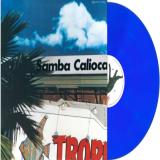
This is the 1978 debut album by Carioca, one of Japan’s leading Brazilian fusion units of the 1970s and 1980s.
The group began as the backing band for Kiyoshi Hasegawa, and on this debut release they used the name "Samba Calioca." True to that
band name, they were quite unusual at the time for presenting samba and bossa nova with a resort-flavored sound, and they also
produced specialists such as drummer Antonio Ishida and guitarist Masami Sato. This highly club-popular first album also features a
diverse lineup of guest musicians including Masayoshi Takanaka, Ryuichi Sakamoto, Shuichi "Ponta" Murakami, and Shigeharu Mukai.
Japanese crossover and fusion are hot again now. As either an outgrowth of, or a spin-off phenomenon from, the global reappraisal of city pop,
Japanese fusion has been rapidly rising since around last year.
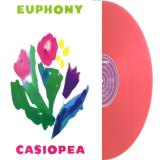
This was the second release on AURA, the band’s own label established under Polydor, and their 13th studio album overall.
Because they had continued recording overseas for some time, they chose not to bring in guest musicians for this album, instead settling into their
home base at STUDIO JIVE and creating it solely with the band members.
As a result, the album offers a fresh and lively sound that returns to the group’s roots.
Alongside the live staple "SUPER SONIC MOVEMENT," it is also packed with new attempts, including the Japanese-flavored "Old Times," the technodriven big band-style jazz track "SOLID SWING," and the high-speed Latin funk number "RED ZONE."
This also became the final CASIOPEA album for the duo of Tetsuo Sakurai and Akira Jimbo.
Albert Bouchard is best known as one of the founding members of Blue Öyster Cult. The original band sold millions of albums for Columbia Records with such
classic songs as “Don’t Fear the Reaper” and the #1 hit on the Billboard Mainstream Rock chart “Burning For You”. As a songwriter, he wrote many BÖC songs including the very popular “Astronomy” (which was covered by Metallica on their 1998’s release Garage Inc) and the live staple “Cities on Flame with Rock and Roll”, which he also sang lead vocals.
Albert’s famous cowbell on “(Don’t Fear) The Reaper” was the basis of the popular SNL skit with Will Ferrell and Christopher Walken, which has gained over 32 million views and spawned the phrase “More Cowbell”. Imaginos IV–Rhyme Of The Starclock sees Albert continuing the story of Imaginos, a concept album about an alien conspiracy that is brought to fruition during the late 19th and early 20th century through the actions of Imaginos, an agent of evil. The album weaves scripts and poems by the late Sandy Pearlman. This is the follow up to the initial Trilogy and goes back to a young Imaginos. It features guests Blue Coupe, Ross The Boss (Dictators), Joe Cerisano (Silver Condor, TSO), and many others. The first single “Four Winds Bar” is due out July 31st, with the follow up single “Germany Minus Zero” coming on August 28th.
The Yummy Fur’s first album of new material in over 25 years is seductive and ambiguous; a fast-paced flip through scenes from art, myth, life and fantasy; a witty whole made from glittering scraps. The band’s original incarnation – fronted by singer, songwriter and guitarist John McKeown from 1992 to 1999 – morphed from making quick-hit cartoon-art songs to Eno and Cale-influenced creepers, populated by characters from McKeown’s life in Glasgow and the films, books and poetry that he lived a parallel life through. Everybody Talks About The Weather delights in using every past iteration of the band as potent collage material: a melee of sounds and ideas existing at once, revealing themselves then dipping back into hiding.
Recorded by the original core trio of McKeown, Brian MacDougall (guitar) and Paul Thomson (drums), Everybody Talks About The Weather comes 17 years after the band reformed for sporadic live shows, and seven years after the release of their sorta-greatest hits compilation Piggy Wings (Rock Action). Ten tracks long with nothing to spare, it is as condensed and vital as their best songs, with a new clarity of sound that allows their ambiguities to come into the light.
The album begins with “Cogs”, a taunting inquisition from within. As McKeown stages a fight between his id and ego, the tension heats up between conversational guitar lines and minimalist repetition; threatening sing-song melody and real, palpable menace. The band members are forced in tandem only to break apart, sustaining a genuine sense of just-hidden danger throughout the whole record – except, arguably, “Headphones”, a looser moment which sees McKeown make an existential something out of nothing while waiting for someone in the car (“I should have brought a book.../My ears are bleeding from the compression on your album”)
The songs are riots of reference: “Unity Over Europe” is a slyly complex two act play about the Mitford sisters – Diana, Unity, and Nancy, in a wink to the YF canon – smashing tragic biographical detail together with allusions to Thomas Pynchon and Francis Bacon. Pynchon is also lifted to serve “Blue Sunshine”, a collision of school shooters, serial killers and fictional fuck-ups (“Fast forward to Compton/Fast forward to Pynchon/Fast forward to Columbine'”) whose buzzy guitar lines are taunting and confrontational like a smarmy teenager. The innocuous title of “My Lasagne” belies a song that exists in several time periods at once: a visit to see Guernica, 50 people with their backs to the portrait of Dora Maar; the time that Picasso painted from; the Reina Sofia and the dirty streets of the Malasaña; myth-making musicians and the myths they’re riffing off overlapping and leering at each other.
All this could be laboured in lesser hands, but cultural verbosity is second nature to The Yummy Fur, who transform all this source material into songs that are weird, sexy, funny and absurd. Meaning is not happily understood or flattened. Susan Sontag's essay Against Interpretation accompanied McKeown as he wrote this album, and she’s paraphrased in “Semolina Ballerina”, the album’s justification of artistic ambiguity. Thomson’s motorik beat leads a gathering of back-and-forth instrumental phrases – including a wiry contribution on saxophone – embodying the futility of trying to parse something definitive from repeated action. “Listen to the very first thing that’s in your head,” Sontag-via-McKeown commands directly, then slinks sideways: “Interpretation is a conversation in an unmade bed”
The album features two more focused portraits, or at least The Yummy Fur’s version of such a thing. “Wanda” merges the life of filmmaker Barbara Loden and the title character of her semi-autobiographical 1970 feature film, with Loden’s then-husband Elia Kazan joining the fray of no-good men in her film. It’s a mix of adaptation and avant-criticism, with McKeown’s wordplay and mannered pronunciation mirroring the way that non-fiction and fiction twist around each other in the song. The title track is a series of vignettes and impressions from the lives of the band’s ‘90s inner circle, positing painter Mac McNaughton as a kind of Falstaffian ringleader. As with Piggy Wings and the recent single “New T-Shirt”, McNaughton painted the cover of Everybody Talks About The Weather – like the album’s music, the image of a coy girl in a white dress is an uncanny amalgamation of styles, suggestions and references just out of reach, as though seen in an art museum in a dream.
The album ends with two reads of the same frustration. “King of Nothing” is the closest The Yummy Fur will ever get to sludge-rock: the band melts together into a dusty, dreary haze as McKeown drowns in a drudgery of personal struggle (“Two jumpers on in Babylon/And only cats to talk to”) and the rhythmic toppling of heroes (Rowlands, Duvall, Munro). The majority of visible dirt is cleaned off for “Say Hello”, an uncharacteristic depiction of throwing the windows open after a dark night of the soul. Here, the situation is still cold and hard (“When the sun burns gold, but the heat never reaches your fingertips”) but it feels surmountable. Everybody Talks About The Weather is an unpredictable album from an unpredictable group, but ending on a moment of almost uncomplicated light is maybe its biggest surprise. - Claire Biddles (2026)
This album is the soundtrack to Absolum, a fully hand-drawn universe with a unique story, created by the team behind Streets of Rage 4, TMNT: Shredder's Revenge, and more.
Known for Ori and the Blind Forest and Halo Infinite, lead composer Gareth Coker brings his signature emotional depth, blending dark fantasy orchestration with medieval-inspired themes and somber atmospheres.
From orchestral soundscapes to thrilling boss battle themes, this soundtrack features guest tracks from Mick Gordon (DOOM 2016, Wolfenstein: The New Order, Atomic Heart), Yuka Kitamura (Elden Ring, Dark Souls III, Dark Souls II), Motoi Sakuraba (the Dark Souls series, Mario Golf, Star Ocean), and Rachel Hardy (Stray Gods, Eternal Strands), setting the tone for the events unfolding in this cute yet twisted fantasy world.
Magic may be forbidden in these lands, but the music is no less enchanting!
Trá Pháidín are a mutable collective of musicians who are geographically, culturally and mentally torn between Conamara Theas, Cathair Chorcaí, Ciarraí, Uíbh Fhailí, Sligeach and Port Láirge, active in one form or another since 2019. The music they make, which to date has mostly been self-released, is of an ambitious breadth, embracing traditional Irish absurdity, jazz, folk and krautrock influences, whilst remaining tantalisingly beyond any one specific understanding of either the world around them or even themselves. More defined however, is their overall conceptual approach, focusing upon original Gaelic music and what lies beyond simply “conas atá tú?”.
Cloch ‘s Claí (trans. Stone & Wall), their first record to be released by World of Echo, develops their established interests into more adventurous waters (and walls!) than ever. Based on the historical significance embedded into dry-stone walls, the album presents a satirical view of Éire’s relationship with her native tongue and the Gaeltacht (regions where Gaeilge - Irish Gaelic - remains the primary language). Constructed of ten tracks, each representative of a stone in a metaphorical stone-wall, Cloch ‘s Claí draws from styles of improvisation in Irish traditional music, exploring avenues of ornamentation and accompaniment in the tradition. As such, the arrangement changes in every performance, a new stone-wall articulated each time - the recording on this album represents just one such arrangement in one such performance. Inspired by Myles na gCopaleen’s An Béal Bocht, the wall comes to embody a variety of themes scattered across the landscape and psyche of na Gaeltachtaí - tokenism, housing, gentry politics, ribbon developments and so on. The result is a music expressive of regional styles in traditional music, krautrock, free jazz, post-rock, minimalism and drone presented in a way that feels instinctively fluid and reflective of a hushed existentialism from the west of Ireland.
On Cloch ‘s Claí, Trá Pháidín are: Conal Ó hAinmhuighe, Ultan Ó Labhradha, Peadar-Tom Mercier, Micheál Fitzgerald, Pól Ó Lionáird, Ruairí De Búrca. Cloch ‘s Claí will be released digitally and as a limited edition LP on 25th September via World of Echo. This record was created through the support of the DEIS Recording Grant & Ealaín na Gaeltachta.
Pressure is the medium of wind players. Wind instruments all sound thanks to pressure differentials, whether that’s the rush of wind over a lip plate or a steady, buzzing exhalation through pursed lips. Ka Baird and Chris Ryan Williams (HxH) are wind players well- schooled in the power of using pressure and movement to amplify the mystery of an invisible force animating a metal tube. They augment their instruments, flute and trumpet respectively, with electronics, sometimes obscuring the acoustic sound source, sometimes making it hyperreal. Flutters of lip and tongue slither over the listener’s ear, and sustained tones become a dense fog, pushing on other kinds of visceral, emotional pressure points.
On Enthalpy, Baird and Williams’ first album as a duo, the energy they conjure feels barely contained, the pressure built up to a breaking point before spilling out in multiple directions at various speeds. They borrow the title from thermodynamics, referring to the total energy of a system based on its pressure and volume. The music flies out in bursts; it seeps and oozes, flows with intention. It is an incredibly rhythmic work without any hint of meter, full of sounds that punctuate with the thud of a dart hitting a bullseye. Williams’ capability to conjure swirling atmospherics, as well as his remarkable ability to pull fragments of melody from the haze, fit puzzle-like into Baird’s exclamations and the eruption of electronics that often dovetail them. The duo draws on tones from nearly the entire range of human hearing, from nimble but bulbous throbs of sub-bass to pinprick flickers of ultra-high end.
The sessions that produced Enthalpy were completely improvised, showcasing a degree of mind-meld that belies each participant’s thrill at approaching the unknown. This isn’t a casual conversation, but an omnidirectional tangle that ties and reties itself into new knots as the album progresses. Williams and Baird have both become ubiquitous presences throughout the New York City experimental music communities, collaborating with innumerable others and learning how their unique approaches work in tandem with similarly expansive thinkers and players. Even in the album’s most spacious moments, there’s a tension between the feeling of being unmoored and yet completely locked in, like the abyss is just one more river to cross. They ford it together before moving on to the next idea in lock step.
For the listener, Enthalpy is often felt in the body as much as it reverberates within the ears. We’re tossed from side to side, made to shoulder the impact of detonating electronics, absorbing these sounds with the feet, gut, and crown. Baird reaches into the back of their throat for guttural growls, and we can almost feel the scratch. As we tread the border of the synthesthetic, it's a reminder of the physical nature of sound, that the space between our ears and the speakers is its own enthalpic system of energy conduction. Move with it, let it move you, and see how it feels.
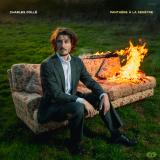
After releasing two EP, Charles Dollé reveals an ambitious and cinematographic album with his label Tricatel. He reinvents his musical language, undulating across ethereal sound landscapes in a style bordering film music. The self-titled "singing composer" lets his dreamy lyricism lead his creations: at the crossroads between indie pop, soft rock, electronic music, and ambient, Charles bends music genres with subtlety and contrast.
Auf ,Nearly" lässt sich Bullion von der Schönheit der Unvollkommenheit verzaubern. Nachdem er jahrelang als Kultproduzent den Sound des zeitgenössischen Avant-Pop mitgeprägt hat (Avalon Emerson, Carly Rae Jepsen, Westerman, Ben Howard und Oliver Sim von The XX), tritt Nathan Jenkins nun hinter dem Mischpult hervor, um sein bisher ausgefeiltestes Album zu präsentieren - eine Sammlung von verträumten, zeitlosen elektronischen Popsongs über Veränderung, Sehnsucht, Verantwortung und Kreativität als unwiderstehliche Kraft. Es ist eine Hommage an das Songwriting und das handwerkliche Können eines Künstlers, dessen unverwechselbare Vision von Pop schon immer Komplexität in der Zurückhaltung gefunden hat.
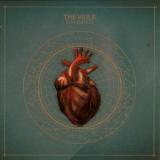
The Veils' first three albums are returning to vinyl thanks to Rough Trade Records.
The Runaway Found (2004), Nux Vomica (2006) and 2009's Sun Gangs established the New Zealand band as purveyors of lush, romantic indie, able to sweep through cinematic vistas into intimate emotional corners, via gothic orchestration and atmospheric driving rhythms.
Founded and fronted by singer-songwriter Finn Andrews while still a teenager, over their first three albums, The Veils carved out a musical landscape of their own that was in turn deep and enveloping yet emotionally raw and direct.
Having only enjoyed a limited vinyl run on their releases, due to the format's neglected commercial status during the 2000s, the repressing of The Runaway Found, Nux Vomica and Sun Gangs, offers audiences a fresh opportunity to enjoy these records with the full depth, fidelity and artwork they deserve, and reminding listeners of the musical secrets The Veils revealed to the world.
“It is a sincere joy to see these records that are so important to us and to so many others reissued on vinyl by the label that nurtured us right from the start. I remain hugely grateful to them and to all the songs on these searching, impassioned, and magnificently youthful first attempts.” - Finn Andrews, The Veils
Courant Zéro is the new moniker of Montréal multi-media installation artist and Kohlenstoff label co-founder Maxime Corbeil-Perron, signalling his return to purely recording-based electronic music production following several years focused on award-winning experimental film and audio-visual works. Solari channels his cinematic sensibility and decade-long exploration of sound art and electroacoustic counterpoint into deep cuts of maximalist ambient electronica. Drawing on his early background as a pianist and jazz drummer, Corbeil-Perron weaves a fabric of melodic and rhythmic vectors with his unique timbral palette, intersecting modern composition, IDM, ambient, glitch, and noise on a debut album brimming with sonic detail and emotive resonance. A fixture of Montréal’s sound art community as both creator and curator since the early 2010s, Corbeil-Perron’s work has ranged from “hypnotic A/V onslaught” (FACT Magazine) to the “richly nuanced acousmatic journey” of his 2018 EP Polychrome (Bandcamp Best Contemporary Classical Of The Month), with earlier electronic and techno-adjacent projects like Political Ritual, Dresden, and Le poisson d’argent garnering accolades from avant-music outlets A Closer Listen, Silence and Sound, and Musicworks, among others. Courant Zéro mobilizes this cumulative wealth of explorative sonic experience in the service of distinctive compositional architectures and electronic music pathways that fans of Floating Points, Jan Jelinek, Squarepusher, Tim Hecker, and Oneohtrix Point Never should find compelling.
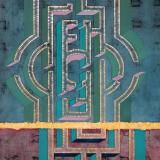
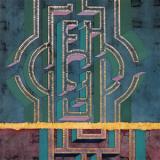
Courant Zéro’s debut is a vibrant sonic rebus at the junction of electronic, electroacoustic, noise and ambient music that resists easy categorisation. Solari strikes a compelling balance of unsettled disorientation and hospitable warmth, teeming with real feeling throughout. The album’s cover art painting Cryptography I by Yen-Chao Lin represents this prevailing sensibility, its mazelike circuitry distinctly carved and crisply rendered, while filigreed with handmade detail and artisanal patina. Thanks for listening.
The Montréal psych-ambient synth-droners return with Sequence Three, their first album in five years and the final instalment in the group’s opening trilogy of records that began with Sequence One in 2019. The spectral supergroup co-founded by Stephen Ramsay (Young Galaxy) and Jace Lasek (The Besnard Lakes), usually joined in some capacity by Lasek’s Besnard bandmate Olga Goreas, deliver another dose of its trademark longform slowburn jams, forged from restored vintage synths and analogue electronic gear. Lasek and Ramsay don their seasoned producer hats to apply rockist sound design to minimalist tracks, saturated with tube compression, drenched in pink and brown noise, all queasy modulation, sparse beats, and languorous melodic lines. Evoking a humid dawn on a gas giant, these alien drone anthems meld the numinous transcendentalism of Spiritualized and Cluster with the eroded grit of William Basinski and GAS. Light Conductor has been tagged “heavyweight analogue synth nirvana” by Uncut Magazine and praised for its “fabulous, epic, shimmeringly radiant kosmische” by Electronic Sound, among other accolades. Sequence Three consolidates these strengths, while leaning into the darker disquietude that has always been an undercurrent of Light Conductor’s aesthetic.
Sequence Three rounds out a satisfying trio of full-lengths that Light Conductor has released on Constellation, featuring vibrantly minimal geometric cover art designed by label co-founder Ian Ilavsky that integrates the trilogy as a visual series as well. In keeping with the previous two albums in the set, the Deluxe 180gLP includes a 12”x24” art poster. Thanks for listening.
Courant Zéro is the new moniker of Montréal multi-media installation artist and Kohlenstoff label co-founder Maxime Corbeil-Perron, signalling his return to purely recording-based electronic music production following several years focused on award-winning experimental film and audio-visual works. Solari channels his cinematic sensibility and decade-long exploration of sound art and electroacoustic counterpoint into deep cuts of maximalist ambient electronica. Drawing on his early background as a pianist and jazz drummer, Corbeil-Perron weaves a fabric of melodic and rhythmic vectors with his unique timbral palette, intersecting modern composition, IDM, ambient, glitch, and noise on a debut album brimming with sonic detail and emotive resonance. A fixture of Montréal's sound art community as both creator and curator since the early 2010s, Corbeil-Perron's work has ranged from "hypnotic A/V onslaught" (FACT Magazine) to the "richly nuanced acousmatic journey" of his 2018 EP Polychrome (Bandcamp Best Contemporary Classical Of The Month), with earlier electronic and techno-adjacent projects like Political Ritual, Dresden, and Le poisson d'argent garnering accolades from avant-music outlets A Closer Listen, Silence and Sound, and Musicworks, among others. Courant Zéro mobilizes this cumulative wealth of explorative sonic experience in the service of distinctive compositional architectures and electronic music pathways that fans of Floating Points, Jan Jelinek, Squarepusher, Tim Hecker, and Oneohtrix Point Never should find compelling. Title track "Solari" opens the album with a cavernous ambient glitch-drone soundscape that envelops ever-shifting timbres of modular arpeggiation, serving as introduction to the clarion call of "En deçà du réel", an homage to video artist Manon Labrecque, where layers of interweaving melodic counterpoint played on Buchla and other synths slowly build to widescreen immersive intensities; "I have this vision of Labreque vibrating eternally between two frames of magnetic VHS tape_ the slow pace of the piece also inspired by Tarkovsky's approach to scenography" says Corbeil-Perron. "Strange Aorta" is ectoplasmic ambient with wistful melody lines transmuting along a central filament, awash in shifting waves of low-end and ricocheting tonal glitch, the title a reference to "the thumping rhythm beating around the main melody_and the heavy remnants of grief related to my father's passing and a brutal confrontation with my own mortality a few years back." Tracks like "La peau des dents" and "Eroding Us" are more firmly rooted in electroacoustic and aleatory systems music, where colliding loops are shaped into unstable flows of deconstructed slippage and reconvergence. Those two pieces bookend the album's pivotal center: the gorgeous piano digitalia of "Horizon n'arrête" and the skittering electronica of 9-minute opus "Unyeldd", its loping broken beat and cascading melodic glitter like a cluster of wind-up music boxes in a dappled forest _ and for Corbeil- Perron also partly inspired by now fellow Constellation labelmates Do Make Say Think: "I spent a lot of time rediscovering their records after seeing them last September 2024 which definitely influenced this piece." Courant Zéro's debut is a vibrant sonic rebus at the junction of electronic, electroacoustic, noise and ambient music that resists easy categorisation. Solari strikes a compelling balance of unsettled disorientation and hospitable warmth, teeming with real feeling throughout. The album's cover art painting Cryptography I by Yen-Chao Lin represents this prevailing sensibility, its mazelike circuitry distinctly carved and crisply rendered, while filigreed with handmade detail and artisanal patina. Thanks for listening.
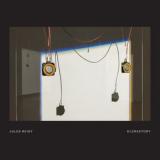
A clerestory - a bright or "clear" level or "story" - is an upper section of wall, most often in a church punctuated by windows. It is a powerful image for grasping this luminous new music from Jules Reidy. Light casts shadows, of course, and logics of shadowing, mirroring, and distorted reflection - of key importance for Reidy"s work as a whole - inform the sumptuous surfaces of Clerestory. "Shadow Symmetric" is a string quartet commissioned and performed by the JACK Quartet as part of their JACK Studio program. The piece makes simultaneous use of two pitch sets, beginning from the same starting point but expanded using different scaling to produce what Reidy describes as "two offset spectral layers." "Clerestory Windows" offers up a distorted mirror image of the string quartet, arranged as a series of episodes that each remake the material in their own way. It begins with an arrangement of the string quartet material for MIDI strings and voices, repositioning its rigorous harmonic exploration somewhere between the Lovely Music Ltd universe and a 90s RPG soundtrack. This episode derives from Reidy"s installation Inside, Crystals and Circuitry, held in Stockholm in 2025. The piece moves into a lyrical 12-string acoustic guitar air performed at the installation opening, before the strings from the first side reappear. From this emerge flickering arpeggios, achieved by arranging the string quartet material for the RMI, an early digital synthesizer. Clerestory is a meditation on fundamental dynamics of human experience: orientation and disorientation, the hazy borders the hazy borders between the material and the spiritual, and the instability of identity.
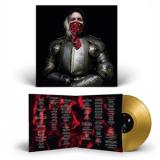
Repress auf goldenem Vinyl. Limitiert auf 300 Exemplare. Vergesst alles, was ihr dachtet, über Postpunk zu wissen - BERLIN 2.0 zünden die Endstufe in der Punk-Evolution. Nach dem szeneübergreifend gefeierten Debüt "Scherbenhügel" droppt die Stuttgarter Band mit "Kaltental" jetzt ein zweites Mal eine Bombe über Postpunk Germany - und mit diesem Monster eines Longplayers ist klar: Hier wird keine Welle geritten. Hier wird eine Welle ausgelöst werden. "Kaltental" ist der dystopische Soundtrack einer brennenden Welt im Endspiel kapitalistischer Ideologie, zwischen Endzeit und Aufbruch, Resignation und Kampfbereitschaft. Härter, düsterer, dringlicher. Mit einer Mischung aus rasenden Hardcore-Ausbrüchen, klassischen Rock-Elementen, Post-Hardcore-Gitarrenwänden und melodischem Endzeitpop kracht "Kaltental" unverschämt souverän durch Genremauern und zerbombt mit radikal-klarsichtigen Texten von Ausnahmesängerin Elena Wolf Gabionenzäune in Vorgärten und Köpfen "ganz normaler" Deutscher im Aufrüstungswahnsinn. Ferdinand Führer von Fieser Schwan Recordings hat "Kaltental" aufgenommen, gemixt und gemastert und in eine rohe, dröhnende Elegie verwandelt, die aber auch keine Gefangenen auf dem Dancefloor macht. Die antifaschistische Bladerunner-Jeanne d'Arc in mittelalterlicher Rüstung auf dem Cover ist dabei mehr als eine Reminiszenz an revolutionäre Frauenfiguren in Geschichte und Kunst. Das neo-retrofuturistische Artwork der Wiener Fotografin Doris Himmelbauer ist die cineastische Visualisierung eines Albums, das Gewalt, Verletzbarkeit und die Sehnsucht nach einer besseren Welt verhandelt. "Kaltental" ist Krieg. Innerlich wie äußerlich. Aber auch ein Urschrei nach Liebe und Solidarität in der unbeirrbaren Überzeugung, dass alles auch ganz anders sein kann.
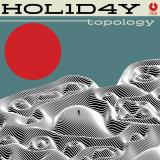
HOL1D4Y’s debut album "Topology" explores the invisible connections that bind us together in an increasingly fractured world. Created by Scott Holiday, lead guitarist of Rival Sons, The record blends dreamlike textures with cinematic psych-rock, while embracing dance rhythms and free-form instrumentals, themes of love, technology, identity, and healing. Both expansive and intimate, Topology looks for meaning and human connection beneath the noise of modern life.
Die Neuauflagen von The Runaway Found (2004), Nux Vomica (2006) und Sun Gangs (2009) geben Fans und Sammlern die seltene Gelegenheit, diese einflussreichen Alben in hochwertiger Vinyl-Qualität neu zu entdecken. Die Re-Releases sind besonders bemerkenswert, da die Originalausgaben auf Schallplatte in den 2000er-Jahren nur in begrenzter Stückzahl erschienen. Zu einer Zeit, als Vinyl kommerziell noch eine untergeordnete Rolle spielte, waren die Veröffentlichungen nur schwer erhältlich. Die neuen Pressungen ermöglichen nun ein Hörerlebnis mit der Klangtiefe, Detailtreue und dem Artwork, die den atmosphärischen Kompositionen von The Veils besonders gerecht werden. Unter der Führung von Sänger und Songwriter Finn Andrews, der die Band bereits als Teenager gründete, entwickelten The Veils mit ihren ersten drei Alben einen unverwechselbaren Stil. Zwischen üppigem Indie-Rock, romantischer Melancholie und filmischer Dramatik schufen sie einen Sound, der von orchestralen Arrangements, eindringlichen Rhythmen und emotionaler Intensität geprägt ist. Mit The Runaway Found, Nux Vomica und Sun Gangs etablierte sich die neuseeländische Band als eine der eigenständigsten Stimmen der internationalen Indie-Szene. Die Alben verbinden weitläufige, cineastische Klanglandschaften mit intimen, persönlichen Momenten und zeigen eine beeindruckende kreative Entwicklung während der frühen Bandjahre. Finn Andrews freut sich über die Wiederveröffentlichungen: "Es ist eine große Freude zu sehen, dass diese Alben, die uns und vielen anderen so viel bedeuten, von dem Label, das uns von Anfang an unterstützt hat, erneut auf Vinyl veröffentlicht werden. Ich bin Rough Trade und den Songs dieser leidenschaftlichen, suchenden und wunderbar jugendlichen ersten Jahre sehr dankbar."
Die Neuauflagen von The Runaway Found (2004), Nux Vomica (2006) und Sun Gangs (2009) geben Fans und Sammlern die seltene Gelegenheit, diese einflussreichen Alben in hochwertiger Vinyl-Qualitat neu zu entdecken. Die Re-Releases sind besonders bemerkenswert, da die Originalausgaben auf Schallplatte in den 2000er-Jahren nur in begrenzter Stuckzahl erschienen. Zu einer Zeit, als Vinyl kommerziell noch eine untergeordnete Rolle spielte, waren die Veroffentlichungen nur schwer erhaltlich. Die neuen Pressungen ermoglichen nun ein Horerlebnis mit der Klangtiefe, Detailtreue und dem Artwork, die den atmospharischen Kompositionen von The Veils besonders gerecht werden. Unter der Fuhrung von Sanger und Songwriter Finn Andrews, der die Band bereits als Teenager grundete, entwickelten The Veils mit ihren ersten drei Alben einen unverwechselbaren Stil. Zwischen uppigem Indie-Rock, romantischer Melancholie und filmischer Dramatik schufen sie einen Sound, der von orchestralen Arrangements, eindringlichen Rhythmen und emotionaler Intensitat gepragt ist. Mit The Runaway Found, Nux Vomica und Sun Gangs etablierte sich die neuseelandische Band als eine der eigenstandigsten Stimmen der internationalen Indie-Szene. Die Alben verbinden weitlaufige, cineastische Klanglandschaften mit intimen, personlichen Momenten und zeigen eine beeindruckende kreative Entwicklung wahrend der fruhen Bandjahre. Finn Andrews freut sich uber die Wiederveroffentlichungen: "Es ist eine große Freude zu sehen, dass diese Alben, die uns und vielen anderen so viel bedeuten, von dem Label, das uns von Anfang an unterstutzt hat, erneut auf Vinyl veroffentlicht werden. Ich bin Rough Trade und den Songs dieser leidenschaftlichen, suchenden und wunderbar jugendlichen ersten Jahre sehr dankbar."
Ein modernes Blue-Note-Werk mit ausgefeilten Beats, Grooves und harmonischer Raffnesse! Keyboarder
und Produzent Kiefer arbeitete unter anderem mit Dr. Dre, Drake, De La Soul, Pete Rock, KAYTRANADA
und Stanley Clarke zusammen. Für seine Arbeit mit Anderson .Paak erhielt er einen Grammy. Gerade erst
sorgte er als Mitglied des neuen Blue-Note Projekts FATHERS gemeinsam mit Nate Smith, CARRTOONS
und Kenny Beats für Aufmerksamkeit. Nun folgt der nächste Schritt: Der Kalifornier veröffentlicht mit
„Memory Bomb“ sein erstes Soloalbum für Blue Note.
Darauf verbindet er Jazz, Hip-Hop, Soul und elektronische Klangwelten zu einer organischen musikalischen
Sprache. Es entfaltet sich eine schwebende, cineastische Atmosphäre, in der improvisatorische Offenheit auf
präzise produzierte Beats trifft. Groove und harmonische Raffnesse stehen gleichberechtigt nebeneinander.
Zu den Album-Gästen zählen unter anderem Nate Smith, Walter Smith III, Erick the Architect, Planet
Giza, Tony Stone, Luke Titus, Amber Navran (Moonchild), Cisco Swank, Rae Khalil, Phil Beaudreau und
Gareth Donkin.
Der Soundtrack des von Jon Favreau inszenierten Weihnachtsklassikers „Elf“ mit Will Ferrell in der Rolle
des Buddy, eines Menschen, der am Nordpol als Elf aufgewachsen ist, kommt in einer brandneuen, festlichen
Picture-Disc Vinyl und Deluxe Edition CD wieder! Nachdem Buddy entdeckt, dass er in Wirklichkeit ein
Mensch ist, macht er sich auf den Weg nach New York City, um seinen Platz in der Welt und seinen Vater
zu finden. Dabei findet er nicht nur seine Familie wieder, sondern schafft es auch, den Weihnachtsgeist in
der Stadt wieder aufleben zu lassen. Die mitreißende Originalmusik stammt vom legendären Komponisten
John Debney, der auch an Familienklassikern wie „Hocus Pocus“, „Spy Kids“, „Das Dschungelbuch“ und
vielen anderen mitgewirkt hat.
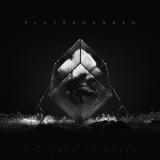
A Flower to Water, the staggering new album from Greek Progressive-Post Metal outfit Playgrounded, finds the five-piece pushing their boundaries even further; welcoming the unquantifiable depths of loss, grief and finitude into their meticulous, fractal process as friends in defiance of neglect. Hailing from Athens, Greece but predominantly based in Rotterdam, Netherlands, Playgrounded have never ceased to push the envelope of Post Metal with genre-defying contemporary electronic and cinematic neo-classical elements since the band's inception almost two decades ago. A Flower to Water is Playgrounded's third full-length offering and sees the band thriving in their creative relationship with Pelagic Records. Recorded and produced by the band across multiple studios back home in Athens and Rotterdam, Playgrounded enlisted the help of longtime collaborators C. Cederberg (Leprous, Anathema) who mixed the album at Cederberg Studios in Kristiansand, Norway and George Tandero (Madrugada, Satyricon, Jaga Jazzist) who mastered it in Oslo. A profound sense of patience is keenly felt throughout the album. The deliberate spaces between each hammerblow guitar riff, pulsing bass line or hypnotic drum groove; each heavy, breathless pause and fizzing glitchy whisper all tell of unspoken loss and absence as an indelible part of A Flower to Water and indeed of Playgrounded forever more. In marking this absence however, in embracing loss head on, Playgrounded reify memory in defiance of neglect. By extracting such a colossal, breathtaking piece of work from a seemingly unassuming collection of sounds, clips and sonics; the quintet slow time to a standstill to present grief in bloom; a beautiful, perpetual flower with its roots in loved ones lost. FOR FANS OF Karnivool, Katatonia, Nine Inch Nails, Deftones, Moderat, The Ocean, Vola, Leprous, Skyharbor, Anathema
A Flower to Water, the staggering new album from Greek Progressive-Post Metal outfit Playgrounded, finds the five-piece pushing their boundaries even further; welcoming the unquantifiable depths of loss, grief and finitude into their meticulous, fractal process as friends in defiance of neglect. Hailing from Athens, Greece but predominantly based in Rotterdam, Netherlands, Playgrounded have never ceased to push the envelope of Post Metal with genre-defying contemporary electronic and cinematic neo-classical elements since the band's inception almost two decades ago. A Flower to Water is Playgrounded's third full-length offering and sees the band thriving in their creative relationship with Pelagic Records. Recorded and produced by the band across multiple studios back home in Athens and Rotterdam, Playgrounded enlisted the help of longtime collaborators C. Cederberg (Leprous, Anathema) who mixed the album at Cederberg Studios in Kristiansand, Norway and George Tandero (Madrugada, Satyricon, Jaga Jazzist) who mastered it in Oslo. A profound sense of patience is keenly felt throughout the album. The deliberate spaces between each hammerblow guitar riff, pulsing bass line or hypnotic drum groove; each heavy, breathless pause and fizzing glitchy whisper all tell of unspoken loss and absence as an indelible part of A Flower to Water and indeed of Playgrounded forever more. In marking this absence however, in embracing loss head on, Playgrounded reify memory in defiance of neglect. By extracting such a colossal, breathtaking piece of work from a seemingly unassuming collection of sounds, clips and sonics; the quintet slow time to a standstill to present grief in bloom; a beautiful, perpetual flower with its roots in loved ones lost. FOR FANS OF Karnivool, Katatonia, Nine Inch Nails, Deftones, Moderat, The Ocean, Vola, Leprous, Skyharbor, Anathema
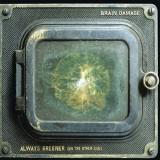
"The grass is greener_ elsewhere_" Brain Damage told us with their debut album, released in 2002. Yet here, they've reached full maturity. Rarely has a "made in France" dub album strayed so far from the Jamaican model while still harboring, in every detail, so many references and tributes to the inventors of the style (King Tubby / Lee Perry), as well as to many of the key figures in its evolution (Tikiman / Rhythm & Sound, Dub Syndicate, etc.). The recording studio, 7/11 Laboratory, is used here as a true musical instrument. The optimal use of three-dimensional stereo effects will immerse the listener in soundscapes ranging from classic space echoes and Mont Blanc tunnel-style reverberations to crackles, electronic interference, exogenous samples, and other parasitic noises coming straight from Babylon. For this album, continuing in the vein of his previous collaborations with the international dub scene (Zion Train, Alpha & Omega, Disciples, Spectre, Lab°_), Brain Damage traveled to London to record two tracks at Conscious Sounds Studio with Jamaican-born singer Tena Stelin. With the melancholic "Spirit World," one is reminded of the fruitful collaborations between Massive Attack and Horace Andy, while on "Genetic Weapon," the tone becomes more overtly assertive. Two vocal tracks, then, woven into these ten compositions, where the emotional moods and atmospheres will shift with each listen. "Always Greener (On the Other Side)" emerges as the manifesto of music conceived as cinema for the ear...
A queer Black musician and daughter of Nigerian immigrants, Oladokun has become a vital cultural voice, writing songs that explore identity, faith, mental health, and social justice with honesty and restraint. Since her 2020 breakthrough, she has released two critically acclaimed albums, earned a finalist nod for Americana Artist of the Year, and saw her protest anthem "iseeamerica" named a finalist for the Recording Academy's Special Merit Award for Best Song for Social Change. Praised by The New York Times and Billboard for her ability to turn quiet introspectioninto lasting impact, Joy Oladokun has brought her music to national television on The Tonight Show Starring Jimmy Fallon, CBS Saturday Morning, and Austin City Limits, while her songs have been featured across major TV series. With collaborations spanning artists like Chris Stapleton, Brandi Carlile, and Maxo Kream, she is entering her next chapter by bringing an even broader, bolder sound to the table, continuing to prove herself as an artist who not only bends genre but bridges culture.
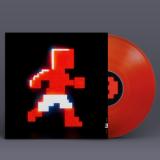
Featuring Nicholas Semrad (Empire of the Sun), Stu Brooks (Nine Inch Nails, Danny Elfman), Tim Lefebvre (David Bowie) and vocalist Gretchen Parlato, this new hardhitting, synth-fueled album distills Guiliana's vision into eight cinematic compositions that fuse retro production with futuristic playing. Transmitted through an original 8-bit visual universe created by artist and long-term collaborator Steve Wall, BEAT MUSIC 2.0 draws inspiration from early gaming culture and electronic music, looking both to the past and the future for answers. Guiliana's compositional voice is on full display alongside the energetic and precise grooves that define his singular approach. In an age increasingly shaped by automation, BEAT MUSIC 2.0 keeps its focus on human connection and collaboration.
Simplicity floods itself in textured imperfection and anointed noise on the debut oracular folk guitar album released under the UK’s 5 Gate Temple.
A roughly recorded stack of improvisations on a classical-style guitar, God Spill embodies the broken, all while un-doing the expectations around traditional guitar folk. Mingot's fingerpicked tones meld with unsteady pedal loops and hissed drones rotating through flawed circuitry. A slow to becoming repair that is translucent, cryptic and oblique.
Mingot's misty glitched landscape paints the polarity of both presence and disappearance, all cyclically mirroring the unseen. Honesty, discordance, impatience, and certainty all find home alongside blurred vocal drones.
Since 2022, the EU-based, Queens NY native has released music elusively as hardcore high priestess St Agnis and now swims waters of the acoustic - with soft rage and pursuit.
As always at U JAZZ ME Records we have limited edition (100 numbered copies) of 180g black vinyl with insert.
Astrocyrk (Astrocircus) is the next chapter in a story that began in 2123, when Captain Harrison Focus, after an emergency landing, finds himself on the mysterious planet Carmin. Following the events described in the previous album, the main character – Triceradiplodocus – leaves the planet's surface, following Ropuch’s instructions. However, the light on the horizon turns out to be the beginning of a new nightmare, and the dinosaur is trapped in the Astrocyrk. Under Klown’s guidance, he begins exploring this dark place. Only the finale reveals the true history of the Astrocyrk and
surprisingly intertwines Triceradiplodocus's fate with events from years past and the character of Captain Harrison Focus.
Musically, the album develops Twoosty Mayonez's distinctive style – one that focuses on improvisation and cinematic storytelling. Each composition represents a new chapter in the story, creating a cohesive musical journey through the world of Astrocyrk. Subsequent tracks lead the listener through the ship's dark attractions.
The new album is a natural continuation of the story from planet Carmin, while also opening a completely new chapter in the Twoosty Mayonnaise universe – one that is bigger, darker, and even more unpredictable.
The album features guest appearances by Szymon Białorucki (oud), Marek Konarski (sax), and Bartłomiej “Eskaubei” Skubisz (rap). The recordings were made at the Twoosty Room studio in Warsaw by the band's drummer.
Violeta García & Hora Lunga return with 4ever, their second album and the follow-up to I’ll Wait For You In The Car Park. Released in 2025 on -ous, their debut received airplay on BBC and NTS and was selected for Bandcamp’s Best Experimental Music year-end list. 4ever picks up where that record left off: in ordinary moments, small scenes and the strange emotional weight of being somewhere between places. But here, these moments are stretched across a much larger, darker screen. A night flight, a terminal, a bad connection. When too many feelings are carried from one place to another, everyday situations begin to feel epic, empty, or apocalyptic.
Built from García’s cello and Hora Lunga’s synths, samples and field recordings, the album pushes further into emotion, letting fragile melodies, orchestral cello gestures, heavy low-end and compressed noise melt into something both dystopian and strangely familiar. Its warmth is not meant to be an escape from this world, but something that appears within it. Acoustically, the album lives through the closeness of the materials, the way sounds stay with each other, and in the feeling that even the most unstable moments are being carried together. The album presents itself in scenes that fade into each other: quiet melodic fragments that are interrupted and restarted, unpredictable changes of direction, held together by an inevitable melody, a bright synth harmony unfolding into an almost orchestral cello arrangement. Later, a broken organ-like sample turning in circles, cello melodies appearing as if they were trying to remember a song that never belonged to one voice alone. An endless loop that is placed under changing lights, briefly opening into emotional chords, then slipping back into emptiness.
It is this instability that Violeta García and Hora Lunga place at the center of their collaboration. They do not decorate the cello with production, or place electronics around an acoustic centre. They explain: “On 4ever, we become part of the same unstable surface. What holds the record together is not resolution, but the trust in staying together as things distort, overload, disappear and return.”
Violeta García, an Argentinian cellist known for her solo work and for her role in the punk band Blanco Teta, brings the instrument close to the body, as melody, pressure, texture, noise and sudden emotional weight. García has brought her distinct musical voice to KEXP, Rewire, Le Guess Who?, Bad Bonn Kilbi, Silent Green, TransMusicales, Roskilde and more.
Hora Lunga, a Zurich-based producer and composer working across unstable song forms, treats electronics less as a frame than as a weather system: something that can hold a scene together, distort it or make it disappear. In recent years, his compositions have ranged from experimental song forms, sound performances, ensemble compositions and film music. His ensemble WIRREN consists of up to fifteen performers.
Rochester, NY's The Jet Black Berries existed at the strange and fertile intersection of post-punk restlessness, roots-rock mythology, psychedelic revival, and science-fiction dread. Emerging from the band’s earlier incarnation as New Math, the group refocused in the mid-1980s with a new name, a new vision, and a sound that moved beyond the limits of punk rock and new wave. What followed was darker, stranger, and more ambitious: country-rock ghosts, rockabilly swing, western balladry, psych-punk atmosphere, and beat-inspired storytelling fused into one singular vision. After feeling stymied in their previous form, the renewed band set its sights on breaking out to other countries and, conceptually, other planets.
Recorded in two days in August of 1984, Sundown on Venus was originally released by Enigma/Pink Dust after the newly reconfigured band signed with Enigma. The original 1985 release, however, arrived with complications. Enigma wanted additional material included, so the album was packaged with a bonus 12-inch featuring extra tracks, including a song written for the film The Return of the Living Dead, ill-chosen cover songs, and re-recordings of older New Math material.
Now, the Sundown on Venus Definitive Edition restores the album to what the band originally envisioned it in 1985. Released on CD for the first time with 12 songs newly remastered & re-presented with focus, this "Definitive Edition" brings attention back to the album’s dark narrative arc & unusual genre chemistry. Though the original album received press coverage on both sides of the Atlantic in outlets including Cash Box, Billboard, CMJ, Interview, and the UK’s SOUNDS, Sundown on Venus never found the commercial audience its ambition deserved. What once slipped through the cracks of underground rock history now stands as a missing link between cowpunk, psych revival, rockabilly, goth, post-punk, Americana, & cinematic sci-fi storytelling.
Since launching the edit and remix focused Brooklyn Lathe Cuts imprint last year, Patrick Sullivan aka P-Sol has not put a foot wrong. He's already released a swathe of superb two-trackers this year and here returns with another notable entry to the label's growing catalogue. A-side 'Canvas' is simply superb, with effects-laden Godfather of Soul vocal samples rising above a slipped beatdown-house groove, dreamy deep house sonics and jazzy, sun-baked instrumentation. He once more reaches for Brown vocal snippets on the even stronger 'Circles', a languid, break-powered slab of summery and shuffling deep house excellence.
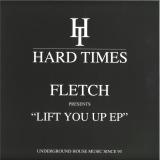
For his debut on Hard Times Records, Manchester's FLETCH delivers 'Lift Me Up’ - a four-track EP rooted in rolling grooves, warm musicality and a refined dancefloor energy.
The release follows a busy run for FLETCH, with releases on Circoloco, Three Six Zero, MVSON and ANOTR's No Art, where his Play House EP reached the top of the download charts. His connection with Hard Times began behind the decks at the label's sold-out Miami Winter Music Conference showcase, where a shared appreciation for the music soon developed into plans for a release.
"After playing for the Hard Times crew in Miami, I told them how I'd been a fan of the label for years and that i’d love to release something with them one day," says FLETCH. "I sent over some tracks that I felt were a natural fit and the guys signed them on the spot. The rest, as they say, is history!"
The title track sets the tone for the EP with rolling drums, elastic basslines and understated vocal hooks, while 'Stand Up’ leans into swung percussion and classic chord stabs. On the B-side, 'Touch Me' shifts into deeper territory with stripped-back, late-night groove, before '1000 Years' closes the EP with dusty scratches, crisp hats and an understated sense of drive.
Since its digital release, lead track "Lift You Up" has received strong support on BBC R1, plus heavy DJ support from the likes of TSHA, Hilit Kolet, Laurent Garnier, Jamie Jones, Groove Armada, Riva Starr, and more.
FLETCH's sound continues to evolve while remaining firmly rooted in the traditions of house, making 'Lift Me Up' the perfect debut on Hard Times.
out of Stock
Last delivered 12 days ago available to reorder, subject to availability
Tsuyushi Hamada, a.k.a. Dayzero, has been producing and DJing for well over a decade, dropping deep heaters on labels including Livity Sound, ZamZam, and many more. We’re very happy to welcome him to the Tectonic family with this epic six-tracker, which sees Dayzero explore the deeper outer reaches of dubstep, techno - and the spaces he gravitates to in between.
‘Ego’ opens the EP at 134 BPM with a primal calling, conjuring spirits from the fire around a delicate but deliberate pitter-patter of interlocking drums and finely tuned delays. Moving up to 140 BPM for the rest of the EP, we’re skirting through the city lights with the techno-compatible energy of ‘Midnight Train’ and taking in old-school grime echoes with ‘Furious Dogs’.
Flip the vinyl here (if you have one!), and ‘Blur’ generates a light disorientation with its polyrhythmic melody. ‘Kingdom’ soundtracks a brooding sense of dread on a late-night drive, before we close with the title track, ‘Soaring’—a conga workout with a thousand-mile stare on it!
out of Stock
Last delivered 26 days ago available to reorder, subject to availability
Gi Gi describes his process as “dubwise sampledelia.” It begins with fragments and ends somewhere else entirely, destabilizing its source material until it stops pointing backward. A borrowed sound, looped and bent, eventually forgets where it came from; it stops referencing anything but itself.
This liquid sensibility shaped his earlier work, music that hovered between drift and propulsion, suggesting the dance floor without fully stepping onto it. Presence was implied, edges stayed soft. The center was always there, but diffused like mist on a screen.
With In Lieu, that center comes into focus. Half written in Texas, half in Australia, the shift isn’t simply geographic, but internal. The record moves with a coiled, anticipatory energy; the drums arrive with more force and the bass organizes the room instead of melting into it. It's dense with the feeling of more bodies in the frame. Textures still smear and refract, but they move around a clearer axis.
Where past records circled their core, these inhabit it, pulling closer to the body. “Some Of” and “Arque” lean into low-end pressure without abandoning his instinct for drift. "Pink Dirt" circles around mechanical drums and dizzying vocal chops, head-down and visceral. Elsewhere, voices gain newfound contour, materializing in “Downswept” with intimate musings and nearly forming a lead vocal on the title track before dissolving again.
In Lieu moves with a newfound confidence, compressing inward, sounding closer to the source of its own pulse.
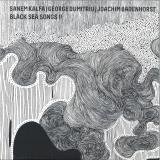
On this new album, the trio of Sanem Kalfa, George Dumitriu, and Joachim Badenhorst invites you on a poetic and sonic voyage. While their debut Black Sea Songs (2021) drew from traditional folk melodies, this work is a collection of original compositions and one improvisation, inspired by the rich cultures and emotions surrounding the Black Sea.
The music of this trio is elegant yet adventurous, blending jazz, improvisation, world traditions, and contemporary classical influences. Kalfa's distinctive voice and cello, Dumitriu's versatile viola and guitar, and Badenhorst's expressive clarinet and occasional vocals create a unique, dreamlike atmosphere. From the melancholic dance of "Denizi Özleyenler ?çin" (inspired by Orhan Veli Kan?k) to the hypnotic rhythms of "Intermezzo" and the narrative depth of "Fisherman" and "Black", each track breathes the freedom, longing, and interconnectedness that the Black Sea symbolizes.
This album is not just a collection of songs but a living story of travel, encounter, and belonging-whether evoking the ports of Istanbul, the shores of Bulgaria, or the emotional landscapes that connect us all. Black Sea Songs is a celebration of spontaneity, familiarity, and the universal language of music.
out of Stock
Last delivered 27 days ago available to reorder, subject to availability
For its third release, Ambient Sans turns to one of the most quietly beloved works in Japanese ambient music.
Recorded at Biwa Studio in 1989, White Morning is the work of Fumio Miyashita — composer, arranger, and multi-instrumentalist whose output through the late 1980s and early 1990s occupies a singular space between healing music, environmental sound, and meditative ambient. Where his contemporaries were mapping the exterior world, Miyashita turned inward: his music was designed for the body as much as the ear, conceived explicitly for rest, focus, and presence.
White Morning distills that vision into its purest form. Two extended pieces — 目覚め (See The Light) and 朝の祈り (Morning Prayer) — built from soft synthesizer layers, delicate acoustic textures, and a stillness that feels less composed than discovered. Music that doesn't impose itself. Music that simply stays.
Originally released on CD in 1991 and circulated quietly ever since among devotees of kankyo ongaku and Japanese new age, White Morning has never appeared on vinyl — until now. Essential listening for anyone drawn to the environmental music of Hiroshi Yoshimura, the meditative depth of Satoshi Ashikawa, or the healing ambient of Klaus Wiese.
out of Stock
Last delivered 28 days ago available to reorder, subject to availability
Curses' dark, romantic take on electronic music is often linked to EBM, new beat, synth-pop, and the offshoots in between - but, as the artist states, it's feelings, not genres, that motivate his music. Especially the underground and its niche sounds, brimming with collective energy, drive and passion, make for a major impetus. It's no coincidence that he's drawn to the era when man turned to the machine, as a collaborative force, and a new kind of liveliness, timelessness, emerged. In Curses' practice, this synergy translates into an enticing mix of synthesisers and voices, electronic drums and guitars. Nostalgia operates as an influence rather than a motive, though: despite its affinities with the past, his music is stridently contemporary and idiosyncratic. On the "Perfect High" EP, this approach is rendered in a resolutely dancefloor-oriented selection. It's rich in detail and constantly evolving; each time a new element appears, it's treated with such delight and care that you could imagine the track to flit off and turn it into the main theme. This doesn't happen, however, as the sense of cohesion and momentum is paramount: there's a relentless forward drive that keeps engagement tight from start to finish. The detuned, chorus-heavy leads of title track "Perfect High" and the clockwork-tinged percussion of "Weapon Of Time" jell with lustrous hooks. The ominous choirs on "Dare To Dream" and the proto rolling-and-scratching squelches of "Killer Instinct" similarly fall into place. Bravado never stands in the way of flow. Everything is kept in check by gated R-50 rhythms, and in the vocal department, Curses finds the sweet spot between his own voice and a slew of off-kilter samples. On closer "Blasted" NYC royalty Andi joins for a slab of synth-driven groove. It's shiny and sensuous, like patent leather - a perfect distillation of club music channeled through pop aesthetics, and thus a right coda for ALT028.
out of Stock
Last delivered 28 days ago available to reorder, subject to availability
Dance Protocol keeps his foot down after an EP on Butter Side Up, serving three more cuts with plenty of bounce in the suspension for Long Vehicle here. "Heads Off" is going deep, wrapping crisp drums in lush pads and a warm streak of high-tech soul, best served as late-night snack or healthy breakfast. On the flipside, "Zero Gravity" loosens the bolts with percussion-heavy liquid funk and a disembodied vocal circling through the mix with a nod to Mr. Baby Ford. New Job (P45 Edit) clocks out on a lighter note, opening the windows to breezy grooves, loose claps and an easy, summery swing. Night shift done. See you outside!
out of Stock
Last delivered 5 days ago available to reorder, subject to availability