Since 2013 - Brighton & Barcelona duo PAYFONE have been releasing records on respected NYC and UK labels GOLF CHANNEL , LENG and DEFECTED.
Now releasing on their own OTIS imprint - PAYFONE deliver another deep 12 in preparation for their debut album.
In September 2024 PAYFONE released their WILD BUTTERFLY EP which appeared in many best of 2024 end of year DJ charts whilst gaining the support from the likes of Richard Dorfmeister, Leo Mas and Daddy G.
Phil Passera and Jimmy Day's productions continue to gain fans across the disco world with a template of synth and bass that equates to a heady and intoxicating excursion into early electronic soul disco circa late 70's / early 80's.
Known for their atmospheric, mid-tempo sultry selections, PAYFONE offer up another deep dive of synth-driven drum machine pleasure with remix duties courtesy of San Francisco trio 40 Thieves: Corey Black, Layne Fox and Jay Williams.
Latest offering VOLT to VOLT is a moody meltdown of Moog bass and full frontal vocals featuring the talents of North Carolina's JO GABRIEL HARRIS and New York City's TERI JACKSON.
Always a cut above, this Payfone release will be VINYL ONLY.
Get with it !
Payfone have released over 16 individual 12" releases, including Phonica's 'Record of 2023 - 'I Feel You'
quête:city deep records
- A1: Dear John
- A2: Angel Artist Feat Tom Misch
- A3: Ice Water
- A4: Ottolenghi Feat Jordan Rakei
- A5: You Don't Know Feat Rebel Kleff & Kiko Bun
- A6: Still
- A7: It's Coming Home
- A8: Desoleil (Brilliant Corners) Feat Sampha)
- B1: Loose Ends Feat Jorja Smith
- B2: Not Waving, But Drowning
- B3: Krispy
- B4: Sail Away Freestyle
- B5: Looking Back
- B6: Carluccio
- B7: Dear Ben Feat Jean Coyle-Larner
Loyle Carner will release his highly anticipated sophomore record, 'Not Waving, But Drowning' on 19 April via AMF Records.
'Not Waving, But Drowning' follows Loyle's BRIT (Best Male, Best Newcomer) and Mercury Prize nominated, top 20 debut 'Yesterday's Gone'. The bedrock of honest and raw sentimentality that you heard on 'Yesterday's Gone' left an inextinguishable mark on music in general and UK Hip Hop in particular, standing out as an ageless, bulletproof debut.
'Not Waving, But Drowning', Loyle's new album, gives yet more evidence - as if it were needed - of his razor-sharp flow and his unique storytelling ability. Yes, he can rap, but he allies that with the sensitivity of a poet, the observational skills of a novelist, and warmth of your best friend. The album opens with 'Dear Jean', a letter to his mother in which he's telling her that he has found the love of his life, 'a woman from the skies', and he's moving out.
It goes without saying that Loyle's music is hard to categorise, but what is even more impressive is that for someone who grew up listening to Mos Def, Biggie Smalls, Roots Manuva, and Wu Tang Clan, he doesn't sound like any of them. Although he might from time to time give lyrical nods to them, he's no imitator.
Loyle loves cooking. There are two tracks on this album named after chefs. The British-Israeli chef Yotam Ottolenghi, and the now deceased Italian chef Antonio Carluccio. 'Ottolenghi' the first single from the album was featured on the BBC Radio 1 B-list, BBC 6 Music A-list and has already been streamed over 5 million times.
Loyle refers to real life for everything, the title of 'Yesterday's Gone' came from a song of his step father, the title of his new album 'Not Waving, But Drowning' comes from a poem by his grandfather, which in turn came from a Stevie Smith poem. What you hear on the track 'Krispy' is real. He is pouring his heart out to his best friend Rebel Kleff after their relationship went downhill, he invites him on the track to say his piece but he doesn't turn up, so we get a flugel solo instead.
Loyle also has his own personal black consciousness movement. When he refers to his 'fathers' in the track 'Looking Back' he really is referring to two fathers. His biological father, a black man who he knows, but knows very little of, and his step father, a poet and musician who happens to be a white man but died a sudden unexpected death from epilepsy (SUDEP). With no real emotional ties to his biological father, but a deep connection with a deceased step-father, where does a young child turn He succinctly captures many of the great, unspoken, cultural and historical paradoxes of multicultural Britain on 'Looking Back'.
An album like this is hard to find. It is for those who like their Hip Hop to have soul, and their soul to have spirit. This is because it works on so many levels, but it is reflecting the personality of its creator. There are a host of collaborators here, Jorja Smith, Rebel Kleff, Kiko Bun, Kwes, Jordan Rakei, Sampha, Tom Misch and more, but none are overpowering. They blend righteously into place.
Loyle is not bitter with people who have let him down, or a society that lets so many down, but the combination of anger and love he has gives his voice the perfect blend of strength and vulnerability. This might be a coming of age album, but it's also a coming of ageless album. Loyle's 2019 Spring tour - which includes London's Roundhouse - sold out within 20 minutes of being on sale.
Not Waving, But Drowning
A rapper that raps about family is hard to find. The boys in the 'hood' tend not to be that interested in how much a 'brother' loves his mother, or how much he misses his dad, or even how much he misses his best friend. The boys in the 'hood' tend to be obsessed with the size of their cars, girls, bank accounts, and other personal 'possessions'. Loyle Carner's Mercury and BRIT Prize nominated debut 'Yesterday's Gone' (Released 2017), made it clear that he wasn't that kind of rapper. In fact, every time I talk to him about his work we talk about the world, and we tended to confuse ourselves by calling his work rap, poems, or songs, sometimes in the same sentence. They are in truth all of these things.
Here's some poetry.
Honestly I need them.
I hate them but I grieve them
I think I've finally found the reason
Trust
Like the fire needs the air.
I won't burn unless you're there.
'Not Waving, But Drowning', Loyle's forthcoming new album, gives us yet more evidence, (if it were needed), that he still has what rappers call, flow, but he hasn't lost any of his story telling qualities. Yes, the boy can rap, but a rapper with the sensitivity of a true poet, the observational skills of a novelist, and warmth of your best friend. The album opens with 'Dear Jean', a letter to his mother in which he's telling her that he has found the love of his life, (a woman from the skies), and he's moving out. He really loves the woman from the skies, but he still loves his mum, and so he reassures her that there is no competition, and tells her that 'She's not behind me or behind you, but beside we and beside two', his words. Or to put it another way, moving out without moving out. My words.
It goes without saying that Loyle's music is hard to categorise, but what is even more impressive is that for someone who grew up listening to Mos Def, Biggie Smalls, Roots Manuva, and Wu Tang Clan, he doesn't sound like any of them. Although he might from time to time give lyrical nods to them, he's no imitator. He says finding his own voice was something he always found easy. Although young, (in terms of a musical career), he has confidence in his own words and his own voice, and has never been tempted to sound like he's been hanging out in the USA, or rolling in 'Grime' on the mean streets of East London. And so when it comes to the creative process he doesn't simply find a beat to jump on and ride. Beats are important, but they are tenderly layered with samples, keyboards, or live drums, all imaginatively assembled for the laying on of words. Some tracks start with the idea, some with poetry, and some with a verse from a singer or some other melodic inspiration, but there is no formula.
Here's some poetry.
Don't hold any memories of us
Rather hold you everyday until the memories are dust
Yo we only caught the train
Cos you know I hate the bus
A prolific reader, who has dyslexia is hard to find. Add ADHD (Attention deficit hyperactivity disorder) to that and life should become even more difficult. To deal with your difficulties you devise coping strategies, which can differ from person to person. Loyle loves cooking. There are two tracks on this album named after chefs. The British-Israeli chef Ottolenghi, and the now deceased Italian chef Antonio Carluccio. Loyle describes himself as 'weird' because he is happy to read a cookbook as if he was reading a novel or a book of poetry. He has opened a cookery school for young adults not just because he loves food and wants to make more of it, but because it is one of the few things that can focus the ADHD mind. And when it comes to his other love, football, his approach is the same. Focus. He wanted to be a striker he says, up front scoring goals, but found his best position was in midfield because he was able to focus, check options, and see passes ahead of time, providing passes for other players just when they needed them. He says, 'You don't grow out of ADHD, you grow into it.' Loyle is also working with Levi's® on their music project where he is mentoring young musicians over a six month period, culminating at Liverpool Sound City festival.
More poetry.
When the going is tough
I wait till it falls on deaf ears
Hearsay
Without the boundaries of love
He also said, 'Ask most people and they will say that they love their mothers, but most are not going to rap about her'. On his first album Loyle's mum Jean wrote about the 'scribble of a boy' that growing up would take things apart to see how they worked. On this album she speaks with pride about a man who has found his place in the world.
Yes, poetry.
I'm still looking for the answers
Trying to find the right questions
Still waiting for my fathers
But can't break them in to sections
This poetry is serious. Loyle has his own personal black consciousness movement. He told me that he always felt safe at home, and being the darkest one in the family never meant a thing, but then when he had to face the outside world he felt hostility. It shook him up. Now he had to start asking questions, but what were the questions. This is serious. When he refers to his 'fathers' in the verse above taken from the track 'Looking Back' he really is referring to two fathers. His biological father, a black man who he knows, but knows very little of, and his step father, a poet and musician who happens to be a white man but died a sudden unexpected death from epilepsy (SUDEP). So to whom would a young black (or mixed race) kid turn He succinctly captures many of the great, unspoken, cultural and historical paradoxes of multicultural Britain when he says, 'My great grandfather could of owned my other one.' We are a people descended from enslaved people on one hand, and enslavers on the other, something we are still struggling to come to terms with, and this can be apparent in one family. A big book could have told you that, but here we get it in one line on the track, Looking Back.
Loyle refers to real life for everything. The album is peppered with captured moments that he records on his phone. These moments can range from conversations with taxi drivers, to capturing the moment when England scores a goal in the world cup. The title of 'Yesterday's Gone' came from a song of his step father, the title of his new album 'Not Waving but Drowning' comes from a poem by his grandfather, which in turn came from a Stevie Smith poem. What you hear on the track 'Krispy' is real. He is pouring his heart out to his best friend after their relationship went downhill, he invites him on the track to say his piece but he doesn't turn up, so we get a flugel solo instead. Yes people, this is real.
An album like this is hard to find. It is for those who like their Hip Hop to have soul, and their soul to have spirit, this is an album for those who have, (I'm sorry, I'm going to say it), emotional intelligence. This is because it works on so many levels, but it is reflecting the personality of its creator. There are a host of collaborators here, Jorja Smith, Rebel Kleff, Kiko Bun, Jordan Rakei, Sampha, Tom Misch and more, but none are overpowering. They blend righteously into place. Loyle is not bitter with people who have let him down, or the society that has let him down, but the combination of anger and love he has gives his voice the perfect blend of strength and vulnerability. This might be a coming of age album, but it's also a coming of ageless album. His first album worked, and this second album is a continuation of that work. Not creating a form, but being formless, as someone like Bruce Lee once said.
And here's some poetry from mum.
We talked long in to the darkest hours
Until we saw the burnished sky
And our eyes stung
As our words blurred and became thoughts
As we were silenced by the dawn
We clung to each other like sailors in a storm
Berlin based label "Matasuna Records" kicks off the new year 2025 with a soulful 7inch featuring songs by Barcelona's "The Blaxound" and singer "John Vermont". Their common love for vintage soul from the 60s and 70s brought them together for this project to compose and record classic soul sung in Spanish. This 45 shows that the concept worked out wonderfully: Spanish Soul at its best, sounding authentic and contemporary at the same time!
Matasuna Records, known for its reissues of musical treasures from the past, also has an eye for exciting new discoveries in contemporary music. With "The Blaxound & John Vermont" the label has once again found an interesting project for soulful & contemporary music that fits perfectly into the label's sound spectrum and will appeal to lovers of authentic soul music.
The two songs "No Es Por Ti" and "Qué Más Te Da?" from their recently released album will be released for the first time as a 7-inch vinyl single on Matasuna Records. The instrumentation and the lovely harmonies are the ideal basis for John Vermont, who with his versatile voice, sometimes powerful, sometimes smooth - but always soulful - can fully develop his vocal spectrum and fill the songs with his presence. Instrumental and vocal arrangements are beautifully balanced and harmonious. Beatific!
Artist info
"The Blaxound" is a Barcelona-based music project with deep ties to the city's Funk and Soul sceney. The project started in 2003 under the direction of musician, songwriter and producer "Marta Roman". The Blaxound has released four studio albums between 2007 and 2024 on different labels.
Years ago, Marta focused on the idea of recording a classic soul album sung in Spanish, respecting as much as possible the original production and sound of the late 60s and early 70s. Luckily, she met singer "Ivan Espejo" aka "John Vermont", which was the turning point and led to the full vocal album "Déjalo Ir" released on "Love Soul Productions" in 2024.
All songs were composed, recorded and produced by Marta Roman in her own studio, Black Flamingo Recordings, in Barcelona, Spain.
- A1: Progetto Tribale - The Sweep
- A2: Onirico - Echo Giomini
- A3: Open Spaces - Artist In Wonderland
- B1: Alex Neri – The Wizard (Hot Funky Version)
- B2: M C.j. Feat. Sima - To Yourself Be Free - Instrumental Mix Energy Prod
- B3: Mato Grosso - Titanic Expande
- C1: Dreamatic - I Can Feel It (Part 1)
- C2: Carol Bailey - Understand Me Free Your Mind (Dream Piano Remix)
- C3: The True Underground Sound Of Rome - Secret Doctrine
- D1: Don Carlos - Boy
- D2: Lazy Bird – Jazzy Doll (Odyssey Dub)
Vol 2[28,99 €]
Volume 1 of this expertly curated project of 90s Italian House - put together by Don Carlos.
If Paradise was half as nice… by Fabio De Luca.
Googling “paradise house”, the first results to pop up are an endless list of European b&b’s with whitewashed lime façades, all of them promising “…an unmatched travel experience a few steps from the sea”. Next, a little further down, are the institutional websites of a few select semi-luxury retirement homes (no photos shown, but lots of stock images of smiling nurses with reassuring looks). To find the “paradise house” we’re after, we have to scroll even further down. Much further down.
It feels like yesterday, and at the same time it seems like a million years ago. The Eighties had just ended, and it was still unclear what to expect from the Nineties. Mobile phones that were not the size of a briefcase and did not cost as much as a car? A frightening economic crisis? The guitar-rock revival?! Certainly, the best place to observe that moment of transition was the dancefloor. Truly epochal transformations were happening there. From America, within a short distance one from the other, two revolutionary new musical styles had arrived: the first one sounded a bit like an “on a budget” version of the best Seventies disco-music – Philly sound made with a set of piano-bar keyboards! – the other was even more sparse, futuristic and extraterrestrial. It was a music with a quite distinct “physical” component, which at the same time, to be fully grasped, seemed to call for the knotty theories of certain French post-modern philosophers: Gilles Deleuze, Félix Guattari, Paul Virilio... Both those genres – we would learn shortly after – were born in the black communities of Chicago and Detroit, although listening to those vinyl 12” (often wrapped in generic white covers, and with little indication in the label) you could not easily guess whether behind them there was a black boy from somewhere in the Usa, or a girl from Berlin, or a pale kid from a Cornish coastal town.
Quickly, similar sounds began to show up from all corners of Europe. A thousand variations of the same intuition: leaner, less lean, happier, slightly less intoxicated, more broken, slower, faster, much faster... Boom! From the dancefloors – the London ones at least, whose chronicles we eagerly read every month in the pages of The Face and i-D – came tales of a new generation of clubbers who had completely stopped “dressing up” to go dancing; of hot tempered hooligans bursting into tears and hugging everyone under the strobe lights as the notes of Strings of Life rose up through the fumes of dry ice (certain “smiling” pills were also involved, sure). At this point, however, we must move on to Switzerland.
In Switzerland, in the quiet and diligent town of Lugano, between the 1980s and 1990s there was a club called “Morandi”. Its hot night was on Wednesdays, when the audience also came from Milan, Como, Varese and Zurich. Legend goes that, one night, none less than Prince and Sheila E were spotted hiding among the sofas, on a day-off of the Italian dates of the Nude Tour… The Wednesday resident and superstar was an Italian dj with an exotic name: Don Carlos. The soundtrack he devised was a mixture of Chicago, Detroit, the most progressive R&B and certain forgotten classics of old disco music: practically, what the Paradise Garage in New York might have sounded like had it not closed in 1987. In between, Don Carlos also managed to squeeze in some tracks he had worked on in his studio on Lago Maggiore. One in particular: a track that was rather slow compared to the BPM in fashion at the time, but which was a perfect bridge between house and R&B. The title was Alone: Don Carlos would explain years later that it had to be intended both in the English meaning of “by itself” and like the Italian word meaning “halo”. That wasn’t the only double entendre about the song, anyway. Its own very deep nature was, indeed, double. On the one hand, Alone was built around an angelic keyboard pattern and a romantic piano riff that took you straight to heaven; on the other, it showcased enough electronic squelches (plus a sax part that sounded like it had been dissolved by acid rain) to pigeonhole the tune into the “junk modernity” section, aka the hallmark of all the most innovative sounds of the time: music that sounded like it was hand-crafted from the scraps of glittering overground pop.
No one knows who was the first to call it “paradise house”, nor when it happened. Alternative definitions on the same topic one happened to hear included “ambient house”, “dream house”, “Mediterranean progressive”… but of course none were as good (and alluring) as “paradise house”. What is certain is that such inclination for sounds that were in equal measure angelic and neurotic, romantic and unaffective, quickly became the trademark of the second generation of Italian house. Music that seemed shyly equidistant from all the rhythmic and electronic revolutions that had happened up to that moment (“Music perfectly adept at going nowhere slowly” as noted by English journalist Craig McLean in a legendary field report for Blah Blah Blah magazine). Music that to a inattentive ear might have sounded as anonymous as a snapshot of a random group of passers-by at 10AM in the centre of any major city, but perfectly described the (slow) awakening in the real world after the universal love binge of the so-called Second Summer of Love.
For a brief but unforgettable season, in Italy “paradise house” was the official soundtrack of interminable weekends spent inside the car, darting from one club to another, cutting the peninsula from North to centre, from East to West coast in pursuit of the latest after-hours disco, trading kilometres per hour with beats per minute: practically, a new New Year’s Eve every Friday and Saturday night. This too was no small transformation, as well as a shock for an adult Italy that was encountering for the first time – thanks to its sons and daughters – the wild side of industrial modernity. The clubbers of the so-called “fuoriorario” scene were the balls gone mad in the pinball machine most feared by newspapers, magazines and TV pundits. What they did each and every weekend, apart from going crazy to the sound of the current white labels, was linking distant geographical points and non-places (thank you Marc Augé!) – old dance halls, farmhouses and business centres – transformed for one night into house music heaven. As Marco D’Eramo wrote in his 1995 essay on Chicago, Il maiale e il grattacielo: “Four-wheeled capitalism distorts our age-old image of the city, it allows the suburbs to be connected to each other, whereas before they were connected only by the centre (…) It makes possible a metropolitan area without a metropolis, without a city centre, without downtown. The periphery is no longer a periphery of any centre, but is self-centred”.
“Paradise house” perfectly understood all of this and turned it into a sort of cyber-blues that didn’t even need words, and unexpectedly brought back a drop of melancholic (post?)-humanity within a world that by then – as we would wholly realise in the decades to come – was fully inhuman and heartless. A world where we were all alone, and surrounded by a sinister yellowish halo, like a neon at the end of its life cycle. But, for one night at least, happy.
X-Coast unveils 9-track 2xLP The Riviera Collection on his label Riviera Records.
Hot on the heels from remixing instant dance hits such as Shygirl's '4eva' and DJ Gigola's 'La Batteria' and spotted in the studio with adored vocalists Eartheater and Miss Bashful, Serbian-born, NYC-based DJ/producer X-Coast returns with a collection of signature tracks that feel like the lost treasure chest of his dance island.
X-Coast is your favorite DJ's favorite producer, whose tracks you’ve undoubtedly danced to, whether on a massive festival stage or at an intimate, underground rave. Over the past decade, he has quietly but consistently shaped the pulse of dancefloors worldwide, with a distinctive style that traverses genres like house, techno, electro, drum and bass, and trance. This rare versatility has led X-Coast to release on the likes of Mall Grab’s Steel City Dance Discs, Diplo’s Higher Ground, Anetha’s Mama Told Ya and DJ Haus’s Unknown To The Unknown, to name a few.
What sets X-Coast apart is not just his ability to move fluidly between styles but the unique character embedded in every track. His productions have an undeniable warmth and authenticity, often evoking the raw, euphoric spirit of the 90s and 00s rave era. This nostalgic yet forward-thinking approach makes his music feel timeless, effortlessly blending old-school rave energy with modern production techniques. It's a quality that has made him a go-to for DJs across the board, whether they’re playing peak-time techno sets or deep, groovy house sessions.
On The Riviera Collection, released on his own label, Riviera Records, X-Coast opens the vault to reveal a diverse range of tracks that showcase his deep connection to multiple eras of electronic music. This collection reflects the breadth of his eclectic DJ sets, where various sounds and styles converge into a cohesive journey. Each track feels like a contemporary reimagining of a classic moment in dance music history.
From the early 2000s tribal influences layered with X-Coast’s signature chord work on ‘Neapolis,’ to the soaring, synthetic trance energy of ‘Desert Storm,’ and the infectious, camp vibe of the diva house ‘Hold Me Baby,’ the collection takes us on a nostalgic trip back to the origins of rave culture. It echoes a time when DJs crafted a journey through genres, playing everything from house to trance to techno in one seamless night.
The collection’s first hidden gems and long-awaited singles are “Da Boing Boing Trak” and "Put Your Hands Together". Both staples in his sets at iconic venues and festivals like Pitch Music & Arts, fabric, Circoloco, AVA Festival, Melt!, and Intercell, this track has been in high demand among fans, finally seeing its release. With The Riviera Collection, X-Coast continues to cement his status as a versatile producer capable of bridging the gap between past and present, while delivering music that moves crowds everywhere.
- A1: 4-11
- A2: A Space Love Affair
- A3: Acid Outpost (Album Version)
- A4: Archive 80 (Album Version)
- A5: Misty
- B1: 1981
- B2: Again (W/ Ammawhat) (Album Version)
- B3: I.c.c. (Inner City Children)
- B4: Nothing Broken (W/ Angel-A)
- B5: Reminisce (Sign Of The Times)
- C1: Herbie (Vick's Extended Time Traveler Mix)
- C2: Play (Vick's Jazz Playground Vamp Mix)
- D1: Flame (Vick's Extended Time Traveler Mix)
- D2: Rise I Rise (Vick's Extended Time Traveler Mix)
“My introduction to “noise” came from a record shop in Lake Worth, Florida ran by a musician named Kenny 5. Kenny had left Detroit sometime in the mid nineties and had begun selling used records and CD’s from the downtown strip of this tiny southern Florida city in a humble shop sandwiched between a deli and a dog grooming business. Kenny previously was on labels like Amphetamine Reptile and timeSTEREO, and the records and videotapes that would be on repeat at his shop were a vast sonic expanse that spoke to the eclecticism of his experience as a touring musician participating and adjacent to American noise culture through the early to late 90’s. In 1998, I was eleven years old and I would order a pizza with him and watch VHS tapes of Japanese noise and deathmatch bootlegs, as well as any other sonic and subcultural rarities that far outstripped my age to comprehend (notably the RRR “Journey Into Pain” compilation and various Vanilla Tapes videos). This widecast net of information formed an introduction to a reality that did not fall deaf on me, but it took many years later for me to reorient the specific freedoms of what this dense and cathartic sound culture had imparted on my life and would continue onward to.
What does this have to do with this selection of choice recordings from the Secret Boyfriend catalog for the enmossed label? For the uninitiated, Secret Boyfriend is the long running moniker of Ryan Martin, North Carolina musician and label proprietor of the Hot Releases imprint. For over a decade from this writing I have watched Secret Boyfriend, and Hot Releases by extension as a curatorial and archival effort, embodying the multiplanal capacity that noise loosely functions from as an umbrella ideology and formalist avenue for sound creation. For anecdotal purposes, from (before) 2006 until roughly 2023 the East Coast of the United States showcased a vibrant network of eclectic regional festivals that saw wide swaths of artists addressing and negotiating the notion of what qualified “noise” from a conceptual and ideological perspective. Some festivals honed in on particularities in aesthetics and tropes, and others had a kind of “catch-all” implementation that allowed for a salvation of the sort of alienated and singular artistry that was amassing throughout these territories. While clear guidelines had been set from regional predecessors as to how noise with a capital “N” should maneuver, Secret Boyfriend is emblematic in the spirit of fluidity that was either implicitly coupled to the notion of the genre, or grew to evolve towards or devolve from.
Within Secret Boyfriend performances, I have seen and admired a mirroring from a ravenous appreciator of this culture at large back towards itself. Typical of a Secret Boyfriend set is an interchangeable narrative arc wherein blistering feedback laden scrap metal improvisations are forayed into naive ambient or “pop” songs, or skipping CDs, or mixer feedback play, or delayed Roland 707 drum workouts all at once and in a unique hegemony. Secret Boyfriend's stylistic mastery of each endeavor is at once an homage to a history of loving listening and enacting, while a brave step into the realm of actualizing the unique fluidity of his own practice. In performance and the action of network engagement, Secret Boyfriend operates a survey of that which he sought to hear and that which he cultivates around his work. His operations are mirrors, and the project (alongside his other peers) is a reflection on the ethos of his time.
Conversely his recording practice narrows in on these moments and allows for a different kind of intimacy or alienation for the non live listener. This record of selected “pop songs” (let's call them that) is particularly poignant at a time when the culture Martin mirrors is at a strange crossroads with itself. The aforementioned festival networks necessarily change and shift. The onlookers become the artists, the artists find new horizons, and the spaces for these cycles fade into locales of a distant memory. It seems, from my perspective, that audiences currently yearn for a more bottlenecked experience, searching for some ontologically vetted manifestation of an idea, of a sound and less for an experience that functions in opposition to our collective banalities. This makes sense in the face of general global catastrophism that plagues us. We need certainty of what something is somewhere, don’t we? Noise as an idea has expanded and contracted to so many iterations of itself it is hard to tell what it even is, and it is particularly difficult to identify in the absence of solid network activations a moment to reflect on its own complexities and nuances. In the face of so much change, I argue that the language of noise culture at large has on one hand become increasingly didactic and predictable, and laughably inclusive and non linear on the other. Probably has always been this way, but now we are in the midst of a moment of extreme access and indexicality, which somehow cauterizes expansion and naivety and chance.
This record highlights the Secret Boyfriend that obscures didacticism by highlighting output that opens up for more challenging catharsis and emotive signal processing. It provides an entry to the materialism of a cultural field full of ecstatic complexity and beautiful inconsistency. In these muted moments Secret Boyfriend has given us over his career we have an argument for evolving languages that further challenge our notions of what is supposed to happen and how it is supposed to be presented. In his more song oriented expansiveness, we can punctuate the ability to think in new modalities. Listening to these recordings reminds me of the polarity of sitting in the record store as a kid and understanding that His Name Is Alive is on 4AD and (gasp!) timeSTEREO. This trite early impression that nothing is really as different as our imaginations might want them to be, and that we can do whatever we want mostly within the creative realms we work through is an important filter to look through Secret Boyfriend as a project and a vessel. If we can achieve abandon and vulnerability through our artistic endeavors, then we have a sound model for, maybe, new potentialities. If that’s too much projection, or just complete liberal bullshit, I am fine with that. Secret Boyfriend's oeuvre at best offers us moments of reprieve to ponder these complexities, or at least a moment to zone out on a drive through North Carolina Highway 54.
You have one pocket of life that you must do whatever you want to inside of. Secret Boyfriend does it affectionately, in a variety of forms, and always with deep sentimentality. These recordings are a wonderful set of songs to begin further investigation from. Thank you Ryan for allowing as many avenues as possible to continue a broad cultural exchange and conversation that intersect and refract while being the kind of artist that is brave enough to not phone in the effort.”
- Nick Klein , May 2024
- I See Through You
- Waiting For Blood
- Deaths Door
- Shockwave City
- 13: Candles
- Dead Eyes Of London
- Pusher Man
- Ritual Knife
- Slow Death
- Crystal Spiders
- Blood Runner
- Desert Ceremony
- I'll Cut You Down
- No Return
14 songs deep and proudly devoid of gimmicks or distractions, Slaughter On First Avenue is a riveting and raw account of Uncle Acid in full flight. From early classics like I'll Cut You Down and Death's Door (both from Blood Lust), to more recent works of lysergic aggro like Shockwave City (from Wasteland) and sinister epic Slow Death (from The Night Creeper), this amalgamation of two fiery and unforgettable live shows has a mesmerising momentum all of its own. A throwback to the days when live albums were magical things, rather than cynical stopgaps, Slaughter On First Avenue is a jolting dose of dark electricity and psychedelic terror. Swollen with the greatest of riffs and performed with grit, power and haughty disdain, it loudly confirms that Uncle Acid & The Deadbeats have the raw, fuzzed-out power to drag everybody into their bewildering, bewitched vortex of doom. A dazzling, devilish squall to mark the beginning of a new chapter, Slaughter On First Avenue also clears the decks for this band's next malevolent move. Don't say we didn't warn you. "Yes, There will be another record which will hopefully appear at some point without warning or explanation," Kevin Starrs avows. "It will be completely different to anything else we've done. You can think of it as a late-night detour. Its appeal will be extremely limited but that's OK... 'When you're slapped, you'll take it and like it!'".
While autumn is slowly getting its grip on the city of Vienna, the Luv Shack bakery hasn’t been sitting still, and now there’s a delicious new batch of Disco Biscuits!
This time with lots of surprising new flavors by Rising Seed (“Back For More” - Indian spice, extra Disco sprinkles!), B.Visible (“Suffering of KP” - bold and crispy with a bittersweet aftertaste!), Peletronic (“Drifting” - robust and very deep, good for late hours!) and Jon Gravy (“When You Leave”) - LOTS of sugar, 90s bubblegum!
Get yourself a biscuit, will ya?
Obscure & outstanding free jazz album reissued for the first time since it’s original release in 1969. Old-style gatefold sleeve LP, with liner notes by Ed Hazell.
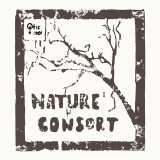
In the late 1960s, young jazz musician Bobby Naughton, a keyboardist and vibraphonist, faced significant challenges as he sought to record his first album. With major record labels and jazz clubs catering only to big names, Naughton and other creative musicians of his generation found themselves sidelined by the mainstream music industry. They turned to self-reliance and self-production, becoming part of a movement of independent musicians. Naughton’s debut album, Nature’s Consort, was a DIY effort in every sense—recorded on home equipment and featuring a hand-printed woodblock cover. The album was distributed independently at concerts and by mail, receiving little attention initially, but over the years it gained a reputation as a rare, sought-after artifact of the period.
Though recorded during an outdoor concert in Connecticut, Nature's Consort reflected the "loft jazz" scene in New York City. This avant-garde jazz movement centered around musicians who lived and played in loft spaces in lower Manhattan. Naughton commuted from his home in Southbury, Connecticut, to play with his bandmates Mark Whitecage, Mario Pavone, and Laurence Cook in New York's lofts. These musicians regularly performed at venues like Studio We, a key gathering spot for free-form jazz, where musicians could experiment and develop their sound, often with no audience present.
Naughton’s journey into jazz was a winding one. Originally from Boston, he played rockabilly and blues-rock before transitioning into free jazz. Inspired by avant-garde artists like Carla Bley and Paul Bley, Naughton sought to explore new forms of music that went beyond traditional jazz structures. His bandmates, Mark Whitecage and Mario Pavone, were both deeply affected by the death of John Coltrane in 1967, which prompted them to quit their day jobs, attend Coltrane’s funeral, and move to New York to pursue jazz full-time.
Nature’s Consort was a collective project, with band members sharing equally in any profits. However, Naughton was the driving force behind the group’s creative direction. He composed much of the original material and selected pieces by Ornette Coleman and Carla Bley for the band’s repertoire. Jazz critic Nat Hentoff praised the album for its “high-risk improvisation” and the musicians' ability to anticipate each other’s moves. Though Nature’s Consort received little press at the time, it has since been recognized as a significant early document of the loft jazz era, representing Naughton’s disciplined, improvisational approach to music.
Coming off a successful transatlantic exchange, Brian Kage and his Michigander label keep the momentum, and the collaborative spirit, moving with an EP that hits closer to home. For any Detroit artist, working with Delano Smith would be on the bucket list, as one of the city's original, more influential DJs — before the D developed any of its "waves" — who would come into his own as a producer later to, once again, help mold the Techno City's sound. Make no mistakes about it, this tastemaker had a ripple effect back before techno even had a name, when it was just "progressive" music and mixing. The thing is, the feeling of admiration and respect here is mutual, from the moment Smith first stumbled across one of Kage's records and had to know who was making these sounds. This meeting of the minds happened organically and timely, with Keep 'em Movin’ as the result.
Opening the release is the title track, a driving number with pulsating synth tones and deep, call and response piano stabs. The ever so slightly pitched down vocals are modern and effortlessly cool, a style that resonates with today's dancefloors, but done tastefully, and with lyrical content that sets the record straight about what it really means to represent Detroit.
"D Spirit" takes an ancestral turn. This is spaced-out Detroit techno meets afro deep at its finest. Forward moving keys are bathed in deep, celestial pads as shuffling hats accented by light hand percussion beckon the body to move. Lively marimbas cut through the hypnotic undertones and awaken the senses with soulful appeal. A fluid bassline rumbles beneath while baroque pianos add tension and heighten the atmosphere.
The final track rounds the release out with an exclamation mark. For lovers of Delano Smith's infamous remix of "A
Red Brut’s third album, "On Bare Ground", is a sonic tapestry woven from the final threads of her Rotterdam existence. Entirely composed of soundscapes captured during her last two years in the city, the album evolves into a poignant farewell as its creation mirrors the passage of time, culminating in a profound departure from her life there.
A Coherent States, Dead Mind Records and Econore co-release. 200 copies on white vinyl, comes with obi-strip.
“On Bare Ground” is a sculptural work blending its lo-fi with haunting melodies, field recordings, and ethereal soundscapes. Uncompromising in its approach, the album evokes the echoes of experimental music from a spectrum that ranges from dark bedroom pop to rhythmic noise, crafting a cloudy and dreamlike atmosphere. With meticulous attention, it unfolds as a strong hypnotic journey, where intricate sounds emerge from a hidden center, while, in a parallel narrative, they gradually expose On Bare Ground’s underlying deep melancholic core.
Red Brut is the artistic alias of Dutch artist Marijn Verbiesen, who recently moved to Groningen and has been a vital force in Rotterdam's art scene. Her work reveals a particular sensitivity to everyday sounds, the soundscapes of cassette music, musique concrète, and spontaneous sound collage, combining these elements into a unique and truly personal avant-garde expression. This expression is present in various forms, in a wave of releases that began with limited-edition underground cassette releases in the mid-2010s and culminated in her two full-length albums, "Red Brut" (2018) on the Belgian label (K-RAA-K)³ and "Cloaked Travels" (2020) on the Finnish labels Lal Lal Lal and Ikuisuus. She has appeared at many important European festivals such as Rewire, KRAAK festival, Inversia, Colour Out Of Space and in numerous smaller venues worldwide. In addition to her career as Red Brut, Marijn is a member of the free improv/weirdo electronic pop duo Goldblum and before in the experimental no wave/noise trio Sweat Tongue.
“On bare Ground works as like an homage to self discovery amid urban malaise” The Wire
10 years after their debut, City Of All Times audio-visual enquirers John B McKenna and Richard Greenan re-appear as Devonanon, to share the findings of a decade-long sonic experiment. Like its predecessor, Richard & John is a living, breathing collection of field recordings and compositions, gathered gradually from remote corners of the pair's lives. Familiar waypoints - interwoven microtonal synths, regurgitated live performances, polite whispering, and the gurgling hum of vehicles (land and sea) - all fold into the perpetual stew.
Where City read like a crumpled postcard account of fraternal reportage, Richard & John is a tone poem on something more amorphous, and out of time - a garbled history of human closeness, upheaval and mark-making, that seems to buckle and creak like a tapestry with no beginning or end. No two spoonfuls are the same, as our story reels through kosmische library stylings ('Wilderness Engine'), to cortex-quieting free association ('Generate Countryside'), and baroque instrumentation ('Blood Laughing', which features beautiful turns from Masayoshi Fujita on vibraphone, and Rosa Juritz on bassoon).
Amp Fiddler was one of Detroit's most prominent musicians of the past 40+ years, widely known as a longtime member of George Clinton’s Parliament Funkadelic touring outfit, a collaborator with luminaries like Prince, Raphael Saadiq and J Dilla, and was a co-writer and performer on classic singles such as Seal’s “Kiss from a Rose” and Maxwell’s “Til The Cops Come Knockin.”
Amp was well known for teaching a young J Dilla to play the Akai MPC drum machine, as well as effectively catapulting him towards a successful career by introducing him to Q-Tip from A Tribe Called Quest in 1994 on the Lollapalooza tour.
Amp Fiddler passed away in December 2023, shocking the music world and receiving published obituaries in the New York Times and Los Angeles Times, as well as nationally-televised recognition at the Grammy Awards and BET Awards.
Detroit City Council declared May 16 as Amp Fiddler Day in the city of Detroit, planned as a yearly event, as defined by the Detroit Free Press as "a “collective acknowledgment” by the Detroit community of his impact and legacy."
Will Sessions are a mainstay on the Detroit music scene, having released masterful full-length projects in vastly different styles, from the faithful hip hop recreations of “The Elmatic Instrumentals,” the futuristic jazz of 2022’s “Electromagnetic Reality,” and the deep 70’s funk of 2017’s “Deluxe.”
Dames Brown is a Detroit-based vocal trio who have a forthcoming full-length LP ”As I Am” on dance-music powerhouse Defected Records, as well as a self-titled EP on Sessions Sounds dropping in 2025.
The overlooked 2018 boogie masterpiece from Detroit maestro Amp Fiddler and jazz/funk virtuosos Will Sessions is finally back on vinyl! "The One" transports you to a time when rich arrangements and big-studio production values didn’t mean sacrificing the funk!
Fronted by powerhouse lead vocals from Amp, "The One" features everything you want out of a roller disco classic: analog synths, snappy guitars, air-tight percussion, Fender Rhodes & Clavinet mastery, and plenty of slap bass. Sprinkle in some lush string and horn arrangements, and the cherries on top are supreme background vocals from the unstoppable female trio Dames Brown.
"Sympathy Pain is an unusual animal, as their collective backgrounds come from hardcore, drone, and experimental pop in Salt Lake City, Utah. Sympathy Pain began as Skyler Hitchcox’s gloomy drone project which was later joined by Casey Hansen (of Cult Leader) to explore and expand the sullen space that the project initially carved out. Sympathy Pain is rounded out by Chaz Prymek (Lake Mary) and Nora Price. The deep connections to Salt Lake City’s underground well of experimental music have deep entanglements. Sympathy Pain has emerged from those entanglements with a clear eyed thesis, transmuting the often oppressive cultural climate of Utah through a personal veil of heavy sorrow.
Swan Dive is the product of years of excavating that space into a cavern, yielding their self-described “emo)))” (a nod to the preeminent doom/drone band Sunn) while still holding onto the submerged soundscapes that began as the core of the project. The album is expansive — a winding ride that travels from minimalism, to claustrophobic ambient, to triumphant passages that all underscore its forlorn undercurrent.
Originally released in January of 2024 as a CD by The Ghost is Clear and cassette by Diabolical Records, Swan Dive finally finds a new life on vinyl - reissued by the Cincinnati, OH record label Whited Sepulchre Records.
Tracked with Wes Johnson at Archive Recordings in SLC, UT and mixed/mastered by longtime friend and co-conspirator Ben Young, the album features a haunting guest spot by Madeline Johnston of Midwife on “Heaven + Hell” to close out the album."
Lily Seabird is a perceptive songwriter who can channel moments when everything feels raw and overwhelming into something healing and galvanizing. With Alas, the Burlington, VT-based artist's sophomore album, she confronts grief with palpable clarity on tracks that careen from delicate folk to blistering indie rock. While it's her second LP, it serves as a proper introduction to an undeniable and idiosyncratic voice. "Alas, sounds way more like me," she says. "This is the album I wanted to make in the first place." Though Seabird is now known as a solo artist and collaborator in Burlington's vibrant music community as the bassist for Greg Freeman and other acts, her journey started in Pennsylvania when she picked up the saxophone as a kid. At 14, she learned guitar and started performing as Lily Seabird. After a brief stint in New York City playing in bands, she moved to Vermont, which has been her home since 2018. "When I came to Vermont, I was playing solo a lot but then I started a band with Greg Freeman," she says. "Since 2018, it's been me and Greg and a bunch of different casts of characters have been in the band since then it's an ever-evolving thing. It's just us playing my songs."The songs on Alas, came from a particularly unmoored period for Seabird. "I wrote this album in 2021 and 2022 on the road, trying to figure out who I am," she says. "A lot of them also deal with the time when my close friend passed away. The title Alas, meant a lot to her." Even if the songs don't always directly tackle this specific loss, there's a sense of mourning in how relationships change and dissolve. Take "Grace," a reflection on female friendship, which features the lines, "I hope she's happy now she should be 25 / She taught me something that I thought I'd always hide." Elsewhere, the knotty and unpredictable "Dirge" finds her singing, "I don't know if I believe in god / I don't know if I know how to go on." Seabird and Benny Yurco produced Alas, which was recorded at Burlington's Little Jamaica Studios with Freeman and drummer Zack James (Benny Yurco). It's a quietly expansive album full of subdued, organic textures and moods. Songs like "Cavity" are lush and inviting with silky guitar and Seabird's expressive saxophone playing. The 10 songs on Alas, stretch out and leave space for introspection and deep listening with some tracks taking nearly seven minutes to mesmerizingly unfold. It's a remarkably assured and vital statement from one of the most promising new songwriters alongside peers Merce Lemon, Squirrel Flower, and Allegra Krieger."The album is about loss, coming of age, and sadness but there are also all these moments where happiness takes over," says Seabird. "It can be two things at once: life isn't just pain and sadness, there's also joy. They can all exist at the same time. Alas, is an expression of grief but it's also for letting go."
- 1: Cypress Crossing
- 2: Pink River Dolphins
- 3: Ride To Cerro Rico
- 4: Dust From The Mines
- 5: The Shadow Song
- 6: Irene, Goodnight
Ava Mendoza has never made an album quite as personal as her second solo full-length, The Circular Train. Through her decades of collaborations with Nels Cline, Carla Bozulich, William Parker, Fred Frith, Matana Roberts, and Mick Barr—plus years leading her power trio Unnatural Ways and playing in Bill Orcutt’s quartet—the guitarist’s name has become synonymous with virtuoso technique, raw passion, and visceral resonance, a player pushing the edges of the guitar’s possibilities. Along the way, from 2007 to 2023, Mendoza was writing these slow-burning, incandescent songs. The Circular Train is comprised solely of her single-tracked guitar playing and, on two songs, her corporeal singing. Her first solo LP of original material since relocating from California to New York City a decade ago, much of The Circular Train was honed amid pandemic years that clarified the virtues of slowing down. This expressive avant-rock is a definitive introduction to one of the most uncompromising and inquisitive visions in creative music. Mendoza’s thrilling melange of free jazz, blues, noise, classical training, and blazing experimental rock’n’roll all coheres with ecstatic feedback, with picking and solos that crest with shimmer. Sometimes she sounds like a one-woman Sonic Youth with guttural and poised vocals that equally evoke Patti Smith and blues greats like Jessie Mae Hemphill. Conceptually, The Circular Train is presented as a psychogeographical train ride through certain of Mendoza’s musical homelands. The songs draw on ancestral and recent familial memories, notably of her parents’ roots in mining towns—in her father’s home country of Bolivia and mother’s hometown of Butte, Montana, each country with its own history of colonialism, racism, forced labor, the eradication of culture and the subsequent excavation of it. These adventurous songs were composed in cars and planes, in the heart of the Mississippi Delta, in Los Angeles and upstate New York—which is to say in motion. “Ride to Cerro Rico,” named for the mountain and silver mine at the center of Potosi, Bolivia, was inspired by Mendoza’s great grandmother’s life there in a Quechua mining family. “Dust From the Mines” drew from that history as well as Mendoza’s familial lineage of miners in Montana, building up to stunning swaths of shredded iridescence. “Pink River Dolphins” was inspired by a visit to the Amazon rainforest, swimming with dolphins alongside her father—the pink bufeos that inhabit both Bolivia and Columbia—and the song is dedicated to the memory of Mendoza’s late friend, the Colombian-American trumpeter jaimie branch. They shared a fascination with those intelligent and agile creatures who often communicate by echolocation. “Make a sound, it comes back around,” Mendoza sings, and later, “Echo, echo/The answer in a sound,” evoking what branch knew well: through music we navigate life. The Circular Train contains one cover, “Irene, Goodnight,” composed by Gussie Lord Davis and popularized by Leadbelly; Mendoza has been performing it for over 20 years. Almost as deeply embedded in her repertoire is the penultimate track, “The Shadow Song.” “Treat your shadow kind and it might treat you good,” Mendoza sings on this song that she’s been reworking for over a decade, an emblem of devotion. “Treat your shadow kind and it might treat you right,” she repeats, becoming a blues mantra. What is a shadow self if not one’s secret world, which, once laid bare, awaits an echo, a return?
- In A Name
- The Spook
- Slugger
- Lucky
- Water's Edge
- Genius Of Crack
- 460:
- Valentine
- Skinny
- Waxed
- Writing Letters
- Stupid Like A Fox
- Loud Is As Loud Does
- Quietnova
- Be Like That
- Fast Food Medicine
- Kidding On The Square
- Slaw
- Cowed By The Bla Bla
- The Heart's Tremolo
- Le Bride D'elegance
- Fits And Starts
- Old Grey Mare
- Great Mimes
- Double Shift
- Enter Misguided
- The Match
- Unbridled
- Dmfh
- David Foster Wallace
- Hockey
- Pbs
- Flameproof Suit
- World Tour
- Ski Trip
- Kickball Babe
- Candyman
- Jonathan
- Writing Letters
- Breakdown
- Genius Of Crack
- Answerman
- Left Behind
- Punk Means Cuddle
- Crackers
- Could Have Been Christmas
- Load Hog
- Goldigger
- Sometimes A Notion
- Walking Tour
- Courage
- Beauty Pt. 2
- Brick Book Building
- Not Living
- Kidding On The Square
- Bossa Nova
- Poodle
- Old City
- Newspaper
Grey Vinyl[95,76 €]
Beeinflusst von DC-Punk und der Politik, die Dischord, TeenBeat und die Riot Grrrl-Revolution inspirierten, stürzten Tsunami aus Arlington, Virginia in die 90er Jahre mit Witz, Verzerrung und einem scharfzüngigen feministischen Geist. Diese Box mit fünf LPs enthält Songs von elf Singles, 4-Track-Demos, die Alben "Deep End" von 1993, "The Heart's Tremolo" von 1994 sowie die allererste Vinyl-Pressung des gefeierten "A Brilliant Mistake" von 1997. Aus dem Kofferarchiv ihres eigenen Labels Simple Machines Records schöpfend, sind Tsunamis Ambitionen - von Kellerkonzerten bis hin zur zweiten Bühne des Lollapalooza - in Essays, Fotos und Ephemera festgehalten, die diesen Teil der DIY-Geschichte der alternativen Musikrevolution belegen.
- In A Name
- The Spook
- Slugger
- Lucky
- Water's Edge
- Genius Of Crack
- 460:
- Valentine
- Skinny
- Waxed
- Writing Letters
- Stupid Like A Fox
- Loud Is As Loud Does
- Quietnova
- Be Like That
- Fast Food Medicine
- Kidding On The Square
- Slaw
- Cowed By The Bla Bla
- The Heart's Tremolo
- Le Bride D'elegance
- Fits And Starts
- Old Grey Mare
- Great Mimes
- The Match
- Unbridled
- Dmfh
- David Foster Wallace
- Hockey
- Pbs
- Flameproof Suit
- World Tour
- Ski Trip
- Kickball Babe
- Candyman
- Jonathan
- Writing Letters
- Breakdown
- Genius Of Crack
- Answerman
- Left Behind
- Punk Means Cuddle
- Crackers
- Could Have Been Christmas
- Load Hog
- Goldigger
- Sometimes A Notion
- Walking Tour
- Courage
- Beauty Pt. 2
- Double Shift
- Brick Book Building
- Not Living
- Kidding On The Square
- Bossa Nova
- Poodle
- Old City
- Newspaper
- Enter Misguided
Black Vinyl[89,87 €]
Beeinflusst von DC-Punk und der Politik, die Dischord, TeenBeat und die Riot Grrrl-Revolution inspirierten, stürzten Tsunami aus Arlington, Virginia in die 90er Jahre mit Witz, Verzerrung und einem scharfzüngigen feministischen Geist. Diese Box mit fünf LPs enthält Songs von elf Singles, 4-Track-Demos, die Alben "Deep End" von 1993, "The Heart's Tremolo" von 1994 sowie die allererste Vinyl-Pressung des gefeierten "A Brilliant Mistake" von 1997. Aus dem Kofferarchiv ihres eigenen Labels Simple Machines Records schöpfend, sind Tsunamis Ambitionen - von Kellerkonzerten bis hin zur zweiten Bühne des Lollapalooza - in Essays, Fotos und Ephemera festgehalten, die diesen Teil der DIY-Geschichte der alternativen Musikrevolution belegen.
Skylax Records Proudly Introduces the "Cold Summer Ep" by Peter Lc, an Electrifying Collection of Five Tracks That Showcase the Artist's Mastery in the European House Music Scene. Emerging From the Enchanting Landscapes of Apulia, Italy, Peter Lc's Sonic Expedition Begins With "Hasta La Playa." This Track, Reminiscent of Rhythmic Tides Against the Shore, Captures the Essence of Carefree Summer Days With Its Sun-Soaked Vibes and Lively Percussion, Setting the Stage for an Energetic Dance Floor Filled With Joy. as the Journey Continues, "Piano Ipnotico" Unfolds, Revealing a Hypnotic Dance Between Rhythmic Piano Chords and Pulsating Beats.
Peter Lc's Enchanting Melodies Create an Immersive Atmosphere, Guiding Listeners Through a Spellbinding Journey That Seamlessly Blends Classic Elements With a Modern, Entrancing Flair. "Time in Cologne" Marks a Temporal Shift, Resonating With Echoes of the City's Historic Charm. the Track Weaves Intricate Sonic Tapestries, Capturing the Unfolding Essence of Time in Each Beat.
Layers of Sound Interlace, Creating a Rich and Immersive Experience That Stands as a Sonic Exploration, Evoking Both Nostalgia and Forward Momentum Simultaneously. "Dive Into the Ethereal Realm of "Your Dreams," Where Dreamlike Melodies Intertwine With Pulsating Rhythms. This Nocturnal Odyssey Invites Listeners Into a World of Introspection and Reverie, Transcending Boundaries With a Seamless Blend of Atmospheric Elements and Rhythmic Patterns.
"Your Dreams" Becomes a Musical Voyage That Resonates Deeply With the subconscious.The Ep Concludes With "With Nobody," a Venture Into Darker Territories That Maintains an Undeniable Energy. Pronounced Beats Create a Driving Force That Propels the Listener Forward, With Mysterious Undertones and Intricate Arrangements Unfolding Like a Narrative. "With Nobody" Encapsulates a Perfect Balance Between Intensity and Allure, Leaving an Indelible Mark as the Grand Finale of the Ep.
Peter Lc's "Cold Summer Ep" Is a Testament to His Boundless Creativity and Mastery, Poised to Carve an Indelible Mark on the Global House Music Landscape. Each Track Is a Testament to His Unique Style—a Captivating Blend Reminiscent of Dj Sneak, Coupled With a Nod to the Golden Era of Italian Dream House From the Early '90s, but Elevated in Production Quality. Whether Basking in Sunny Vibes or Venturing Into Darker Territories, Every Composition Stands as a Bona Fide Banger....