It's been already 10 years since the first DJ's Choice parties in basements and squatted social centers in Rome. Many things have changed, but the approach remains the same: using music as a form of expression and a means to affirm one's identity.
RM stands for "Rebel Music" (i.e., music by DJ's Choice founder The Rebel), but is also short for "Rome", a city represented in track one by the 'Jedi Master' of Roman hip hop: Danno, from the pioneering underground crew Colle Der Fomento.
Also performing on The Rebel's instrumental are New York hip hop duo The Good People in track two, ''Body Rockin''', remixed by another Italian hip hop legend, Ice One.
Rome and New York are two worlds, two styles, but two sides of the same coin. Our Rebel Music brings them together as if they were two stops on the same subway line.
e 05: Body Rockin' (Hip Hop Room Remix) feat. The Good People
Buscar:city people
Few people have managed to become quite so celebrated worldwide, quite as quietly as JOSÉ GONZÁLEZ has. LOCAL VALLEY, his long awaited fourth album, serves as a relieving reminder that you don’t have to be loud to be heard.
Since his debut single ‘Crosses’ back in 2003, both he and his music have remained dependably quiet and unassuming. LOCAL VALLEY calmly exhibits his singular ability to communicate with such modesty and power.
Over the past decade or so, Chris Forsyth has produced a series of perennially year-end list haunting studio albums of expansive art-rock, from 2013’s Solar Motel to 2019’s All TimePresent , in the process becoming one of the leading lights of the so-called “indie jam” scene, musicians combining omnivorous influences with post-Dead sprawl.
These critically lauded albums have established Forsyth as one of today’s most unique and acclaimed guitar player/composers - a forward thinking classicist synthesizing cinematic expansiveness with a pithy lyricism and rhythmic directness that makes even his 20-minute workouts feel as clear, direct, and memorable as a 4-minute song.
Pitchfork has called his music “a near-perfect balance between 70s rock tradition and present day experimentation,” NPR Music named Forsyth “one of rock’s most lyrical guitar improvisors,” and the New York Times calls him “a scrappy and mystical historian… His music humanizes the element of control in rock classicism (and) turns it into a woolly but disciplined ritual.”
But the studio records are just the tip of the iceberg.
You see, in a live setting Forsyth’s music is never really finished.
He hasn’t had a fixed band in years and plays with a rotating cast of characters. Regulars in Forsyth’s bands have included bassists Doug McCombs (Tortoise) and Peter Kerlin (Sunwatchers), and drummer Ryan Jewell (Ryley Walker, too many others to mention), among others - basically, whoever is available for the given gig or tour.
These are not groups that rehearse, exactly. Operating more like a jazz band, Forsyth and his players treat the songs as frameworks that remain identifieable but morph based on who’s playing them, like weather to a landscape.
Embracing this flux has become a cornerstone of Forsyth’s live sets, rendering every performance special and thereby catching the attention of tapers from his home base in Philly to New York City, Chicago, and Minneapolis. In fact, most of his live performances over the last few years are recorded and posted on the Live Music Archive site.
But the taper recordings, though many are high quality and full of character, are not professionally recorded and mixed multi-tracks.
Which brings us to Peoples Motel Band , the new live LP culled from a set that Forsyth played with NY-based group Garcia Peoples as his band, and is self-releasing on his own Algorithm Free label in a limited pressing of 500 copies.
Recorded September 14, 2019 before a packed and enthusiastic hometown crowd at Johnny Brenda’s in Philadelphia, Peoples Motel Band catches Forsyth and Garcia Peoples (plus ubiquitous drummer Ryan Jewell) re-imagining songs from Forsyth’s last couple studio albums with improvisatory flair.
Forsyth and Garcia Peoples played a number of 2019 shows together, beginning with a semi-legendary jam set at Nublu in NYC in March, through a couple dates on Forsyth’s month-long weekly residency at Nublu in September and concluding with a five-date tour of the Northeast in December. The chemistry between the players is tangible.
As is often the case with Forsyth shows, the gloves come off quickly and the players attack the material - much of it so well-manicured and cleanly produced in the studio - like a bunch of racoons let loose in a Philadelphia pretzel factory.
Recorded and mixed with clarity by Forsyth’s longtime studio collaborator, engineer/producer Jeff Zeigler, the record puts the listener right in the sweaty club, highlighted by an incredible side-long take of the chooglin’ title track from 2017’s Dreaming in The Non-Dream LP (note multiple climaxes eliciting wild shouts and ecstatic screams from the assembled).
This is not the new Chris Forsyth album, exactly, but then again, it kinda is because whenever he sits down to play, something new comes out.
Mystery Jets announce that their sixth studio album ‘A Billion Heartbeats’ will be released on 27th September on Caroline International. The band also release ‘Screwdriver’, the first single to be taken from the album.
Screwdriver is an uncompromising look at the rise of the rebranded alt-right in the UK, built around a powerfully positive message: "Fight them with love / then the world will be ours".
Lead singer Blaine Harrison says of the song, “Screwdriver is about the mechanics of intolerance. Looking back at times of economic instability in history, we see how easily deep chasms grow in society and the population seeks change wherever it is most convincingly promised. Conflict arises as cultures and belief systems clash, unwilling to accept one another’s place in society, because we are fed the rhetoric that our neighbours are those responsible for our problems: then inevitably nationalism once more raises its ugly head above the parapet. But whereas political agendas fuel divisiveness, music unites and reminds us of all that we have in common. The message of Screwdriver is not a pessimistic one - because perhaps faced with confrontation we can find understanding, and even maybe learn how to listen to, and love one another.”
Each room of the house in the video is a metaphor for the different sections of society in the UK. It wraps around the narrative of the song, that in order to overcome adversity, you have to “Fight Them With Love”. The visual showcases the song’s inherent message, clashing aggressiveness with tenderness, and culminates in showing after anger, we can always come together through love.
All great albums start from a unique perspective. But try a window on the Strand, in an abandoned office block, overlooking the kind of political upheaval London hasn’t seen in a generation. Blaine Harrison was living as a property guardian right around the corner from Trafalgar Square when he found himself witness to an entire year of protests. Every weekend from January 2017 on, people were marching for a different cause: "In the space of six months it was Black Lives Matter, the huge ‘Our NHS’ march, Unite for Europe," he recalls. "Then the solidarity sleep-out organised by Help Refugees, where we slept in Whitehall for the night... The protestors would wake me up in the morning. I’d just walk down and join in.”
Over the course of that year, Mystery Jets' sixth long-player, A Billion Heartbeats, was born. "This album wasn’t about making pointed opinions,” says Blaine. “It was about being a mirror for what’s going on, reflecting back the way people are feeling.” By turns tender and fierce, abstract and full of classic rock energy, A Billion Heartbeats achieves a balance of passion, fear and hope. Amid the colourful cavalcade of rich harmonies, heavy guitars and rallying cries, the album’s essential message - about personal responsibility, and the power in becoming engaged. In a sense, it's not just their "state of the nation” record but their “state of a generation” record too.
We increasingly hear from musicians that music should be an escape these days - that there’s enough suffering in the world, enough misery on the news, without writings songs about it too. A Billion Heartbeats makes all that sound like a bit of a cop-out. These are songs of protest that get the heart racing in joy; high on hope, and serious in their message. Proof, basically, that music speaks louder than words.
In the afterglow of her acclaimed 2020 album Silver Ladders, Los Angeles-based harpist Mary Lattimore returns with a culminating counterpart release, Collected Pieces: 2015- 2020. The limited-edition LP features new and previously unreleased material, Bandcamp-only singles, and other obscurities alongside standouts from her 2017 tape Collected Pieces. Beyond the vinyl compendium, an expanded tracklist on the cassette/digital version brings more of Lattimore's archives together for the first time. Lattimore has described the process of arranging these releases as akin to "opening a box filled with memories," and here that box continues to populate, accessible for both the artist and fans. Evocative material separated by years, framed as a portrait of an instrumental storyteller who rarely pauses, recording and often sharing music as soon as it strikes her. Seemingly in constant forward motion for the last five years since her Ghostly debut, Lattimore glances back for a breath, inviting new chances to live in these fleeting moments and emotions; all the beauty, sorrow, sunshine, and darkness housed within. Opening the cassette version is "Mary, You Were Wrong," which mirrors an author's bout with a broken heart. "It's about how you have to keep on going even if you make some mistakes," she says. The bittersweet refrain cycles throughout, a little brighter every time, slowly, like the way time tends to heal. Unreleased track "Sleeping Deer" came together during Lattimore's artist residency on a cattle ranch in Wyoming. She remembers, "a small deer whose mother I think had been run over by a car would hang out in the yard. I called him Lollipop and would leave vegetable scraps out." Lollipop returned daily to eat, rest, and wait for more. The music this vision inspired is patient and droning, with light plucks giving way to deeper, vibrating tones, permeating with a sense of anticipation. Next is a newer single, "We Wave From Our Boats," which she improvised after walking her neighborhood during the early days of lockdown in 2020, and shared on her Bandcamp. "I would just wave at neighbors I didn't know in a gesture of solidarity and it reminded me of how you're compelled to wave at people on the other boat when you're on a boat yourself, or on a bridge or something. The pull to wave feels very innate and natural." The heart of the track is a somber loop, over top which Lattimore's synth notes ruminate, each a gentle shimmer of optimism in the most anxious and absurd of days. Also recorded in 2020, "What The Living Do" is inspired by Marie Howe's poem of the same name, which reflects on loss through an appreciation for the mundane messiness of being human. The echoed, slow-marching track has a distant feel to it, as if the listener is outside of it, watching life play out as a film. "Princess Nicotine (1909)" scores actual footage, a dream sequence Lattimore imagined for J. Stuart Blackton's surreal silent film Princess Nicotine; or, the Smoke Fairy. She adopted the same approach for "Polly of the Circus," explaining it was the name of one of the old silent films discovered in permafrost in the Yukon featured in the documentary Dawson City: Frozen Time, "the only copy that survived and it kind of warped in the aging process." A trove of pieces are collected here, most recorded in the moment, just Lattimore and her Lyon and Healy Concert Grand Harp, contact mics, and pedals. Like her most affecting work, these songs showcase Lattimore's gifts as an observer, able to shape her craft around emotional frequencies and scenes. Her power as a musician is rooted in how she sees the world: in vivid detail, profoundly empathic, with deep gratitude for nature and nuance.
- 1: Worlds Beyond (English Version)
- 2: Adrenaline Oasis (English Version)
- 3: Let Go (English Version)
- 4: City Life (English Version)
- 5: If I Had Wings (English Version) 00:04:23
- 6: Electric Sheep (English Version)
- 7: Daily Heroes (English Version)
- 8: Kindred Souls (English Version)
- 9: Transhumance (English Version)
- 10: Transhumance Jam (English Version)
- 1: Mondi Paralleli (Italian Version)
- 2: Umani Alieni (Italian Version)
- 3: Ombre Amiche (Italian Version)
- 4: La Grande Corsa (Italian Version)
- 5: Atmospace (Italian Version)
- 6: Pecore Elettriche (Italian Version)
- 7: Mr. Non Lo So (Italian Version)
- 8: Il Respiro Del Tempo (Italian Version)
- 9: Transumanza (Italian Version)
- 10: Transumanza Jam (Italian Version)
The making of “I Dreamed of Electric Sheep” was heavily influenced by the situation everyone had to face lately. “We were forced to work under very peculiar circumstances, often interrupting our studio activity because of the lockdown”, says Franz Di Cioccio (lead vocals, drums). The whole process took one year spent mostly working at home, sharing ideas and meeting at Patrick Djivas’ (bass, keyboards) home studio, before the band was able to record the album at White Studios in Milan, Italy. Being the rhythm section Cioccio and Djivas make a perfectly working team. “We both have a great passion for SciFi movies. In the past we watched many of them together. In the case of ‘Blade Runner’ we were hit by the question: Do Androids dream of Electric Sheep? - The world has been changing around us. Computers are taking over and Covid has accelerated the process. However, we strongly believe in the power of people to use their imagination and fantasy. To us this is what really makes the difference between human beings and androids.” The band considers themselves being in a similar place when it comes to music that Impressionists were in when it comes to painting: They didn’t paint fixed somatic traits for their figures with their brush strokes while PFM (Premiata Forneria Marconi) do not consider themselves limited to a specific genre. While the album tells multiple stories they are all linked to passion, love and the power of imagination. As a real treat PMF invited a couple of musicians they have been friends with for a long time: Ian Anderson (Jethro Tull) on flute and Steve Hackett (ex-Genesis) on electric guitar. “I Dreamed of Electric Sheep” is simultaneously released in both English and Italian versions, hence the Italian subtitle, “Ho Sognato Pecore Elettriche". PMF’s “I Dreamed of Electric Sheep” is available in the following formats: Special 2 CD Digipak with O-Card, Gatefold 2LP+2CD & Special LP-Booklet and Digital Album.
Listening to the story of Canadian duo cleopatrick is a bit like hearing the plot of the best, most righteously validating coming-of-age film never made. Two friends meet aged four in Hicksville, Nowheretown (real name: Cobourg, Ontario, population 19,000), grow up completely inseparable, form a band and, against numerous obstacles, blossom into a genuine, global underground sensation. There are heroes and villains, highs and lows and, crucially, some of the most poetic plot twists that could seem almost too perfect, were they not completely true. Take the story of 2017 breakthrough track ‘hometown’ for example. “It’s one of the craziest, most ironic things that’s ever happened,” begins vocalist and guitarist Luke Gruntz. “I was going to college because I was too scared to put all my chips in the band pile, and that’s what ‘hometown’ is about: it’s a song about feeling like we’re doing all this stuff and we’re working so hard and we’re just never going to be heard. It’s literally a song about people probably never hearing our songs. And then by some act of the universe, that song ended up unlocking all the doors for us.” Today, cleopatrick has logged 77 million streams and counting - all from an increasingly dedicated fanbase who’ve found the duo, completed by drummer Ian Fraser, their own way: no major label, no big budget, just two best pals knuckling down, cementing a unique sonic alchemy and filling a space of honest, empathetic yet undeniably heavy-hitting rock music that they’d been searching for themselves for years. Between multiple sold out tours in Canada, the US and the UK/EU and appearances at Lollapalooza, Austin City Limits and Reading/Leeds, the pair have been crafting BUMMER: a debut album that sees cleopatrick harness all the magic they’ve been brewing over their two-decade friendship and funnel it into a record that aims to reinvigorate the rock landscape from the ground up. Taking the ethos of their New Rock Mafia collective - a group of friends and fellow bands, united in making a more inclusive, equality-driven space in rock music - and imbuing it with the sonic ambition and ferocity of a record designed to be played hard and loud, it’s an album about two friends, who’ve been with each other since the formative first steps that adorn ‘BUMMER’’s heartwarming cover image and made something that’s a testament to the power of sticking to your guns.
- A1: & Beverley Knight (Feat London Community Gospel Choir) - Everything's Gonna Be Alright
- A2: Feat Chenai - Bit By Bit
- A3: Feat Shingai - Feel The Pressure
- A4: & Michael Gray (Feat Gia) - Love Is All We're Living For
- A5: Feat Damon Trueitt - You Saw Me
- A6: Feat Alex Mills - It's A Wonder
- B1: Feat Clementine Douglas - 10,000
- B2: Feat Gene Farris & Jafunk - Untold Business
- B3: & James F Reynolds (Feat Mike City) - Fire Burning
- B4: & D Ramirez (Feat Robert Owens) - Pass It Up
- B5: & Rene Amesz - All 4 Love (Feat Tasty Lopez)
- B6: Feat Laura Davie & Melody Men - If It's Love
- B7: Feat Chenai, & Mr V – Tonight
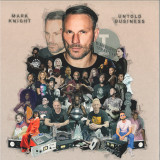
Toolroom founder and Grammy-nominated producer Mark Knight announces his new album Untold Business: 13-track collection of vocal house music which aims to inject a much-needed dose of meaning and longevity into the world of dance music.
Mark Knight has gone back to his roots on his new album Untold Business, reprising the sounds and records that made him the artist he is today. Diving through his extensive collection of classic Funk, House, Soul and Disco records from the 1970s and 80s has provided the bedrock for the album, which is an homage to the soulful, vocal-led house music that Mark first fell in love with in the 90s.
Step forward Mark Knight with a collection of meticulously crafted, positive, life-affirming records with a focus on real instrumentation and properly crafted songs that will stand the test of time. Untold Business is the antithesis of the functional, cookie-cutter dance music that has become increasingly ubiquitous over the years, and it sounds absolutely glorious.
Lead single ‘Everything’s Gonna Be Alright’ features vocals from Beverley Knight as well as the London Community Gospel Choir, who together bring a powerful message of positivity, solidarity and hope: themes that echo throughout the rest of the album.
“I wanted to write a song of hope as we come out of this incredibly tough time. I feel that musicians and producers have a responsibility to provide the soundtrack to people’s lives, and with this glimmer of hope on the horizon, I wanted this song to be a moment of positivity for the future ahead.” Mark Knight
From the string section, to the 14-piece London Community Gospel Choir, to the incomparably brilliant Beverley Knight on lead vocals – Mark worked with some incredible musicians on the single: an approach that informs his approach for the entire album. Untold Business features further collaborations with the likes of Shingai (Noisettes), Michael Gray, Robert Owens and many more.
In addition to the 10 new tracks recorded especially for the album, Untold Business also includes three of Mark’s singles from 2020, including one of the biggest releases of his career to date. All 4 Love was a collaboration with Rene Amesz and Tasty Lopez which became firmly lodged on the Radio 1 A list for six weeks with worldwide success following soon after. Picking up more than 10 million streams on Spotify it was without doubt one of the biggest house records of the year. Also included here are ‘If It’s Love’ - a joyous celebration of a soulful house sound that came to prominence in the 90s – and ‘Tonight’, which took inspiration from the brisk, looping, filtered house music of the early 00s.
Nashville’s Caitlin Rose celebrates the 10-year Anniversary of
her debut album ‘Own Side Now’ with a deluxe, fully remastered
version.
Rose released ‘Own Side Now’ in 2011 to instant acclaim from
critics, who praised her crystal-clear vocals and her ingenious
lyricism - equal parts heartbroken and defiant - and compared
her to her musical heroes Stevie Nicks and Linda Rondstadt.
This deluxe Anniversary edition of the incredible ‘Own Side
Now’ is pressed on cloudy clear vinyl with an embossed
gatefold sleeve including a hologram ‘80s style sticker, a lyric
insert featuring an unreleased photo of Caitlin, plus a bonus 7”
with two unreleased tracks.
Caitlin says of 7” bonus track ‘Whatchoo’: “This album came out
of a city that didn’t need people telling it who it was. ‘Whatchoo’
is the lament over a city that seems to have forgotten itself.”
Album track ‘Shanghai Cigarettes’ is a break-up song featuring
Rayland Baxter, about which American songwriter wrote,
“Rose’s vocals are so sweet and the beat is so contagious, you
might be tempted to break up with your beau just to have an
excuse to listen to it on repeat.”
Events currently taking place throughout the world only serve to stoke a fire under the likes of Pillow Queens, who find themselves continually inspired by a Dublin that is no stranger to fighting social injustice. Street artists, fashion designers, musicians, film makers and more comprise a scene which routinely champions queerness and marginalized groups, and engages with and activates young people in response to the likes of the city’s ongoing housing and mental health crises. Pillow Queens’ songs of togetherness and unity ring out louder than ever before.
In their short lifespan as a band they've released two demo EPs, performed on a successful string of UK & Irish dates & festival appearances, had playlisting from BBC 6 Music, and found themselves opening for the likes of American Football and Pussy Riot, as well as stadium performances opening for IDLES and Future Islands.
With all this under their belt, the band began working with Mercury Prize nominated producer Tommy McLaughlin for their single 'Gay Girls' – which received a nomination for the RTE Choice Music Prize song of the year, as well as International pickup from NPR’s World Cafe and KEXP. The song also found its way into the heart of actor Cillian Murphy and his BBC6 mixtape show.
2019 saw Pillow Queens venture into mainland Europe, as they lit up the Eurosonic festival and completed a string of tour dates opening for Soak. The tour was a messy and joyous affair captured beautifully in the DIY video for the bands summer single 'HowDoILook'.
In Waiting is Pillow Queens’ debut album, the result of four years of brotherly love in a sisterly unit from Ireland’s most urgent, yearning, rock band. Crafted from our lives, and honed in a studio in rural Donegal in the northwest of Ireland, this is a record by queens in waiting and kings in the making. It’s an album about love; self-love, queer love, the anxiety-inducing fault lines of romantic love, and the love for a city and a country that simultaneously has your back and is on your back.
Session Victim and Erobique join forces once again for a beautiful cover version of Mark- Almond's "The City", starring Jamie Lloyd's enticing vocals and featuring Linnart Ebel's subtle rhythm guitar. Ever since Hauke Freer stumbled over Mark- Almond's final studio album Other People's Rooms at Montreal record store Death Of Vinyl a few years ago, the pair would regularily finish DJ nights with this 1978 recording of their hit single "The City" - and since then, the idea of recording their own rendition had been tossed around frequently. Carsten "Erobique" Meyer was not the first but really the duo's only choice to see this through and well, just listen to the impeccable Rhodes/Clavinet combination he came up with. However, it is Sydney's Jamie Lloyd who steals the show and takes the song into his realm, putting his very own stamp and character on this certified classic. Long time collaborator Linnart Ebel complete's the band with his ever subtle rhythm guitar. The two, three, four, five man house, not house band branches out for all the right reasons and this is the result.
- A1: Der Sumpf (Sinfonie Der Gross Stadt)
- A2: Im Licht
- A3: Der Rhythmus Der Maschinen" (Feat Blixa Bargeld)
- A4: People, Let's Dance" (Feat Eera)
- A5: Blue Heaven" (Feat Andreya Casablanca)
- A6: Gib Mir Das Licht" (Feat Eera)
- B1: The Visitor
- B2: Lichtspiel I: Opus
- B3: Lichtspiel Ii: Schwarz Weiss Grau
- B4: Lichtspiel Iii: Symphonie Diagonale
- B5: Ich Und Die Stadt" (Feat Nina Hoss)
Nearing 100,000 UK sales for their breakthrough album ‘The Race
For Space’, indie phenomenon Public Service Broadcasting return
with their fourth album, ‘Bright Magic’, the follow up to 2017’s ‘Every
Valley’, which entered the chart at Number 4 on release. Inspired by the Rory McLean book ‘Berlin: Imagine A City’ and named
after a collection of short stories by Alfred Döblin, the record
celebrates one of the greatest cultural capitals of the world, Berlin. Written and recorded entirely at Hansa Studios in Berlin, the album is
split into three parts - Building A City / Building A Myth / Bright Magic
– and Side B of the album is a homage to Side B of David Bowie’s
‘Low’. Side A of the record includes the singles ‘People, Let’s Dance’
and ‘Blue Heaven’. The album features guest appearances from Berlin legend Blixa
Bargeld (The Bad Seeds, Einsturzende Neubauten), Andreya
Casablanca of Berlin band Gurr and Berlin Based artist EERA. Hansa is world renowned as the studio responsible for classic albums
including ‘Low’ and ‘Heroes’ by David Bowie, ‘The Idiot‘ and ‘Lust For
Life’ by Iggy Pop and Depeche Mode’s third, fourth and fifth albums
‘Construction Time Again’, ‘Some Great Reward’ and ‘Black
Celebration’. The artwork is designed by Berlin artist Torsten Posselt, who has a
long relationship with the Erased Tapes label, designing art for the
likes of Nils Frahm, Olafur Arnalds and Rival Consoles, among
others.
This summer, Saft welcomes Dubbyman after a three-year hiatus from releasing music. He serves up a gorgeous new EP in the SAFTX series that features a remix from Detroit mainstay FIT Siegel.
Dubbyman is a master of the deep. As a DJ and producer, he explores warm and heady soundscapes that are rooted in house and techno but decorated with much more. His musical synths and compelling rhythms have resulted in countless vital EPs on labels like Ferrispark, Soul People Music and the Deep Explorer label he co-runs. Now, after a break, he is back and in brilliant form.
Opener 'En La Ciudad' is an effortlessly loose and languid house track. The hip-swinging claps and funk bass riffs bring a sunset vibe, with wordless vocals from Carlito Brigante Rojo and dreamy pads really soothing the soul. Remixing is legendary FIT Sound label head, FXHE associate and pillar of the Motor City scene FIT Siegel. His famously no-nonsense approach results in a track here that is laced up with smoky soul. The dusty beats roll deep, the twisted synth work brings light and lush pads soften the whole groove with a real sense of heart.
"Up Again" strikes another perfectly seductive pose with its jazzy keys, soulful vocals, and rough-edged beats that make you want to dance. It's a tune packed with feelings and irresistible funk, and is sure to be the soundtrack to many outdoor parties this summer. The Deep Explorer Mix is a little more direct, with dynamic house drums, sunkissed motifs and warm pads taking you straight to the Mediterranean. Last of all, "Tropic" featuring Arturo Sanchidrian on bass is a downtempo classic, with beachy vibes, gently breaking synth waves and soft-focus melodies sinking you deep into a
reverie.
This is an EP of life-affirming, heart-warming house sounds that take you to a better place.
Early support by: Laurent Garnier, AME, Marco Bailey, Jennifer Cardini, Terrence Fixmer, Kyle Geiger, Marcel Dettmann, Apparat, Richie Hawtin, Vril, Charlotte De Witte, Sasha, Benjamin Demage any many more..
Fresh off of a remix for Grimes’ “My Name is Dark”, producer Julien Bracht has been powering through CV19 studio seclusion on full-power, with a distinct vision for brighter days ahead. Bracht’s new album, “Now Forever One,” an emblem of dark analog synthwave, is set to drop June 11. Bracht’s first solo album under his own namesake is cut with surgical precision for the shoegazing astral sound travellers who long to break out of their pandemic quarantines, and reconvene for techno-induced ascension. The album’s first single, “Melancholia,” and it’s accompanying video, is already breaking hearts and charts. An exquisite sonic hybrid of communal revelry and profound introspection, “Now Forever One,” focuses Bracht’s multilayered craftsmanship on resolving this era’s angst with sensory exploration and optimism.
As a lifelong drummer, Bracht’s insatiable musical energy lead him to bang out his first 3 EPs within one year of first being signed in 2011-12. In 2015 he founded the band Lea Porcelain with Markus Nikolaus in London. Their hypnotic post-rock debut release in 2017, “Hymns to the Night,” gained instant acclaim from UK tastemakers Lauren Laverne, Steve Lamacq and Zane Lowe, to name a few. The lads broke back onto the international stage with dates on several major festivals around Europe, including the Leeds/Reading Festival, Great Escape Brighton and Latitude. Rich output combined with the inclusion of live drums in his solo live sets quickly gained Bracht recognition and slots on the global tour circuit.
“Now Forever One” forges Julien Bracht’s transition from techno djing, while continuing the explorations of texture and timbre over functional song structures from Lea Porcelain, to a more open-ended search for the aural sublime — the substrate on which music, life and light glide to create momentary nodes of meaning in an increasingly meaningless sociopolitical atmosphere. These are crucial themes to Bracht’s process and approach. “The intention in my music is to strengthen people’s awareness and minds… I want us all to gather in spirit and stick together.”
The album exemplifies Bracht’s hunt for elemental juxtaposition with the warm Prophet 6’s sawtooth howls and bright pads against chillingly indifferent pulsing basslines and percussion. Clocking in at just under 65 minutes, “Now Forever One’s” tracks are sequenced to take the listener through the full emotional arch of a 15-hour rave, with an emphasis on those moments of collective epiphany where heaving techno floors become the perfect microcosm for an idealistic and interconnected future. Interspersed with improvisational one-takes, the album submerges the listener in polyrhythmic meditations, of which “Streets” and “Nocturne” are standout examples, and soars on the vaulted synth melodies of future dance floor favourites “Melancholia” and “Dreams of Euphoria.” Sascha Ring of Apparat & Moderat puts it perfectly: “I played “Melancholia” the night I got it at Mutek Festival in Mexico City, and instantly knew it’ll shine on a big floor at the right time. It’s just the right balance of majestic melodic deepness.” The sounds are both triumphant and exploratory.
Greater than the sum of its parts, Bracht’s latest release hints at the artist’s emerging potential for nailing our moment’s zeitgeist; learning to live smaller while constantly seeking higher heights. Inhabiting the fertile ground between solitary rumination and dance-floor convenance, the launch of “Now Forever One’s” lunar expedition into the techno oblivion of pandemic lockdown is oddly fitting.
Back In Love City, the new album produced by Daniel Ledinsky (Rihanna,
Carly Rae Jepson), Andrew Maury (Lizzo, PostMalone) and Fryars (Pharrell
Williams, Mark Ronson), sees The Vaccines both perfecting their winning
formula, and pushing their sound forward, evolving from their previous
foundations with an album that reflects on escapism as a necessary
part of modern living.
With 4 Top 5 UK Albums, including a #1 with 2012’s Come Of Age, and 19 singles playlisted on BBC Radio One, The Vaccines’ fifth album creates a place
where people go to find solace, satisfaction, safety, and connection: Love City.
Produced by Benny Yurco (Michael Nau, Grace Potter & the Nocturnals), mixed by Dan Molad (Lucius, Emily King) and recorded live at Little Jamaica Recordings in Burlington, VT, Liz Cooper’s highly anticipated sophomore album Hot Sass marks multiple departures—from her nine-year home of Nashville, from her band addendum of the Stampede, and from the genre-based expectations she’s accumulated throughout her career. With these twelve new songs, Cooper comes into her own—both musically and as a person—embracing a newfound sense of independence, honesty, maturity and creativity. In addition to Cooper and Yurco, Hot Sass also features Cooper’s longtime bandmates and collaborators Joe Bisirri (bass), Ryan Usher (drums, percussion) and Michael Libramento (guitar, synthesizer). Reflecting on the album, Cooper shares, “It’s me learning about what kind of woman I am and it’s not pretty all the time…I’m still processing these songs. Still reflecting. And I think that’s the thing—Hot Sass is just a stamp in time of what was happening in my life. I just want to continue making art that displays myself, the moments, and the people around me.” The new record follows Cooper’s 2018 full-length debut album, Window Flowers, which was released to widespread critical acclaim. Of the album, NPR Music praised, “a gorgeously arranged and performed bouquet of psychedelia-tinged folk-rock,” while Rolling Stone hailed, “Cooper pushes her strand of folk rock deep into psychedelic territory by merging her idiosyncratic vocal style with swirling, droning guitar effects and lacerating solos that feel dusted with otherworldly magic,” and Paste declared, “If we’re lucky, we are going to hear a lot more artists in the future like Liz Cooper.” Originally from Baltimore and now based in Brooklyn, Cooper has continued to tour consistently since her debut, performing alongside artists such as Dr. Dog, Shakey Graves, Bermuda Triangle, Lord Huron and Phosphorescent as well as special festival performances at Austin City Limits, Newport Folk Festival, BottleRock Music Festival, Lockn’ and more.
In 1970, Kevin and David met whilst they were working in the Labour Exchange Office on Aytoun St, Manchester. Both played guitar and had been searching for other musicians who played atmospheric music. Kevin had been playing in small clubs in Manchester and David performed in a few local bands. One evening, they jammed together at Kevin’s family home, and quickly realized that their playing blended together to form the basis of the sound they had been looking for. In the late ‘70s, the music scene in Manchester was bursting with new bands and music.
However, Kevin and David had little in common with the local acts, being disciples of a more meditative approach. They followed a path of their own, reaching for an otherworldly sound that they heard from artists like John Martyn, David Crosby, Erik Satie, Terry Riley, Eberhard Weber, Alice Coltrane, and Ralph Towner. They experimented combining their acoustic guitars and David’s bass with various effects pedals and techniques to try and achieve a warm and expansive sound that rides the line between ambient, jazz, and psychedelic folk Music.
Towards 1981, they had written eleven songs and accompanied a few with Moog synthesizer laid down by Rob Baxter. All were recorded on cassette decks in their simple home studios. They named this collection of music “Light Patterns”, after a poem Kevin had written. With Light Patterns complete, they set out to find a label to represent their music. They started playing a few gigs in Manchester; Band On The Wall, the Gallery, and other venues, such as Rotters which local promoter Alan Wise had organized. They set up with small amps along with their effects and played as though they were back at home. As Kevin remarks, “It was unusual, to say the least, to play such venues in a low volume chilled out way. However, people listened, often in shocked curiosity, and some even asked for tapes.”
Peter Jenner, of Blackhill Enterprises, eventually picked up the album for his new label, “Sheet”. Peter had managed lots of experimental bands and solo artists, including Pink Floyd in their early Syd Barrett days. He always favored outsiders! The tapes were taken to Strawberry Recording Studios in Manchester, who were surprised when Kevin and David walked in with just a couple of home-produced cassette tapes. Fortunately, they liked them and agreed to master the album. It was then sent to Portland Recording Studios in London for final mastering to vinyl. George Peckham, aka “Porky”, did the pressing with a personal message in the deadwax; “Kaftans, Candles and be Cool Man”. The artwork for the album cover was done by the late Barney Bubbles, a truly visionary artist.
After the album’s release, the pair continued to play together regularly until David moved away from the city. Kevin still resides near Manchester in the rolling hills outside of the city. He continues to experiment with dreamy music in his loft, and we are set to share a selection of his ethereal archival and current compositions in the coming months. David lives a quiet life in a small coastal town in the South, he likes to sail and is an avid cricket fan. We’re excited to make Light Patterns accessible again for the first time in nearly 40 years, remastered from the original tapes. As the original press release said, “Put the album on, lie back and enter the land of no floors”.
New York City 4-piece deliver a modern blues rock masterclass on their feisty debut album.
“A timeless classic rock sound that revels in lean riffs and raw emotion.” – Afropunk
In an age where artistic merit is awarded to those who shout the loudest, Dakota Jones pride themselves on an unwavering ability to leave a lasting impression. Spearheaded by Tristan Carter-Jones fierce and unashamedly uncensored songwriting, the band’s fast-growing reputation as formidable live act has stamped Dakota Jones with the hell-hath-no-fury power of Chaka Khan, the wild spontaneity of Janis Joplin, and the honey-dripping sensuality of Marvin Gaye. Their debut album’s message of proud black heritage and triumphant queerness manifests itself in Carter-Jones’ ability to challenge norms of adulthood and femininity as she takes a deep dive into some of life’s most visceral emotions.
Tristan Carter-Jones: “I’m a black, queer woman expressing myself through love and music. Some folks still find that to be a transgressive act in and of itself. I work to fight that idea. I write a lot about my
Continued over…
sexuality and the ways in which I express it. Songs about sex and love bounce back and forth between songs about heartache, hangovers and self-medication, and the pleasure and pain of truly finding yourself. I don’t think we get to hear these things from a woman’s mouth as often as we should.”
Serving as an instant tone setter, the album opens with the line "Stretch marks from growing pains" with Carter-Jones lamenting the woes of adjusting to adulthood on lead single ‘Did It To Myself’ - her husky and commanding vocal instantly asserting its place in the spotlight. The atmosphere soon turns steamy on the flirtatious title track ‘Blacklight,’ whilst fantasising over a modern-day Bonnie & Clyde love affair the funk-laden ‘We Playin Bad Games’ packs a punch with its tale of free spirits entwined in a haze of late-night revelry.
Elsewhere, stories of caustic heartache twist the knife into wounded blues guitar riffs on ‘Like That’ and ‘Black Magic (That Power)’, in which Carter-Jones’s stoical voice never once faulters as she mourns the memories of a previous flame. Personal prayer ‘Lord Please’ recites empowered words of reassurance, and solidarity in the face of injustice erupts into a rallying cry for change on the classic sounding ‘Noise’ – written as a reaction to the 2016 US election. “I woke up after the election feeling pure panic and fear in my body,” remembers Tristan. “I wanted people in a place of privilege to stand up for what I was feeling, stand up for injustice, stand up for all of the things we need to change as a country. I wanted their rage, and I wanted their noise.”
Finally, the band’s tender tropes of togetherness eventually boil into gritty, guitar-slung balladry on hidden bonus track, ‘California,’ where, knees buckling under the weight of past trials and tribulations, Carter-Jones sets out on one final journey of self-discovery, hastily pulling out from reality and leaving only a dust cloud in her wake.
Production comes courtesy of the Grammy-winning John Wooler, ex Virgin Records A+R and founder of the Blues label Pointblank who has worked with everyone from John Lee Hooker and John Hammond to Isaac Hayes and Van Morrison. The album also features a wealth of hugely talented and accomplished musicians, including backing vocalist Kudisan Kai, former backing vocalist for the likes of Elton John, Chaka Khan, Anita Baker, Natalie Cole, Beck, Sting, Mary J. Blige and Jill Scott. Also present; Grammy winning keyboardist Jon Gilutin, who has spent years working with some of the industry’s most respected and iconic artists including Linda Ronstadt, James Taylor, Lady Gaga, Willie Nelson, Aretha Franklin, Diana Ross, Jackson Browne, Celine Dion, Bonnie Rait and Carole King. You’ll also hear the talents of acclaimed guitarist Michael Toles. Most well-known for being a part of the Stax Records group The Bar Kays, and for his contributions on famous records by Issac Hayes, Al Green, BB King, Johnny Taylor, Rufus Thomas, Albert King to name just a few.
Dakota Jones are a rising funk, soul and blues rock band from Brooklyn, New York City. Comprising of Tristan Carter-Jones (vocals), Scott Kramp (bass) Steve Ross (drums), and acclaimed musician Randy Jacobs (guitar) - former member of Was(Not Was) who has recorded for Seal, Bonnie Raitt, Tears for Fears, Elton John and many others. Though Carter-Jones and Ross first met in 1999 whilst at primary school, the band formed years later following a series of home jam sessions in 2016. The band’s collective alias originates from Carter-Jones’s middle name, ‘Dakota’. Dakota Jones have since released a string of acclaimed singles and EPs as well as received international attention for their track, ‘Have Mercy’ after it featured on Netflix’s 2019 film, Always Be My Maybe starring Ali Wong and Randall Park – and now after years of hard work and determination, the band are finally set to reveal their long awaited debut album. “We’d been regularly releasing EPs, waiting for our chance to come, and wondering what that would look like,” says Carter-Jones. “We didn’t realise until we started making this record that we needed to stop waiting for some break to come along, and just do it ourselves, independently.”
“Black Light really dives into a place of funk soul and everything that comes with it. There’s joy and dancing, sleek guitar licks and funky bass slaps. There’s pain and longing, and there’s the feeling of relief when you come out of that place and find your joy and purpose again. Black Light is my story.”
Fractal City, the latest Cubenx album is a collection of terrestrial jams and arachnean ambient ballads that are particularly apt for urban listening. If its predecessors cracked the musical codes in force and shone by the versatility of their references, this new opus offers its listener an intense and symbolic sound environment.
The raw material of Fractal City was first conceived as a series of sound patches, designed to run in parallel with Canadian digital artist Maotik's installation. Broadcasted in real-time by generative patches reacting to various external and non-human data, those musical excerpts have been rendered in hundreds of nuances and extended over infinite durations. This unusual approach confers to the recording of the finished album's outstanding immersive strength.
Recorded live on a single track over a short period of a few weeks, the nine compositions of Fractal City capture the obsessions of its author for postmodern urban landscapes, and the revelation of new perspectives on the city of Paris.
The opening piece `Ssarg´ seems to hide the figure of the Mexican ambient producer Jorge Reyes. Cubenx built a cocoon of energetic layers, a new home of the mystical kind harmoniously integrated in a flourishing rainforest ecosystem.
`Transect ´refers to the urban development model of the same name, which is based on a division of the city into autonomous "fractal" zones. It also echoes the concept of "metro polarities" which considers the city as a mosaic of social groups. "By cycling in the evening with a friend, we could get away from the city centre to the suburbs of Paris. The contrasts are striking. You move from chic districts to bedroom communities, from industrial zones to improvised caravan camps. But there is a kind of energy in this heterogeneity that pushes you to always pedal further."
A few miles away, it would look like Art and urbanism have tried to level the cultural and social discrepancies of the outskirts of Paris. "Architectural sites like the Arcades of Bofill are splendid. There are completely extravagant projects, which seem to emerge from nowhere."
These buildings with ambitious aesthetics off the beaten tourist track, deteriorate over time and often remain far from the expectations of the local population. A feeling of nostalgic beauty is particularly perceptible on the slowest and most introspective ballads of the album as 'Urban Decay', 'Hagel' or 'Axe Majeur'. The producer leaves nonetheless no room for melancholic emptiness. "Every time, I have the impression that urban culture is taking its rights back and that young people appropriate the places in one way or another."
Just like `Transect', ` Quantified' and `Fractal City' present themselves as mirrors of a daily urban life in constant motion. All three are empowered by an overheated factory, which dispatches hypnotic beats and burst of analogue compressors with a clinical precision and direct them straight away to the reptilian areas of their listener's brains.
The sequencing leaves however space and time to take breath and makes way for aerial sonic excursions of spiritual and enlightened nature. On `Human Dilemma', Cubenx shows some concerns to opening the Pandora's box of transhumanist theories. While a long cosmic wave gives the listener a feeling of perfect fullness, a dizzying guitar distortion cast doubts on long term outlooks. `Smash Other' on the other way alternates gentle dissonances over an ocean of white noise and concludes the album on ethereal note.
With ´Fractal City", Cubenx eludes his irreconcilable love for shoegaze pop song and techno to concentrate exclusively on the production of mutant experimental materials. The result is an uncanny musical object, rich in image and sensation. Cubenx give us a guiding framework, enthralling enough to engage the listener to a tour of town. But he leaves it to the sole listeners to design their own projection of the city.
- A1: Branko Over There (Feat. Miles From Kinshasa)
- A2: Branko - Movimento
- A3: Branko - Stand By (Feat. Umi Copper)
- A4: Branko & Sango - Hear From You (Feat. Cosima)
- A5: Branko & Pedro - Mpts (Chords Version)
- B1: Branko - Sempre (Feat. Mallu Magalhães)
- B2: Branko - Amours D'été (Feat. Pierre Kwenders)
- B3: Branko - Tudo Certo (Feat. Dino D'santiago)
- B4: Branko - Bleza
- B5: Branko - Agua Con Sal (Feat. Catalina García)
- B6: Branko & Dengue Dengue Dengue - Lucuma
The first thing that strikes you when hearing 'Nosso' is its feeling of intimacy and warmth. The title, which means 'Ours' in Portuguese, is apt since he sees the record as the result of letting a wild variety of people into his world. João notes that 'I didn't know most of the collaborators before meeting up with them in a studio somewhere in the world, so most of these songs are coming from a very immediate and honest sense of collaboration where you spend an afternoon with someone learning about each other at the same time as you're making music. It's a shared experience, a moment where two or more people came up with ideas together, that they probably wouldn't have had if they were in their comfort zone.' These meetings were turned into songs at home in Lisbon once the main ideas were created collaboratively elsewhere. 'On this album, like in everything else I did so far, the focus on the instrumental side of things was experimenting with rhythmic patterns and genres from the Portuguese-speaking universe while applying them to songs created with other artists from completely different backgrounds and places.' There's something in this process that has left the album sounding super fresh as this is a sound without borders that pulls you in. It's music everyone can be a part of, where even the most rugged up-tempo cut sounds welcoming. It's an overwhelmingly positive and joyous experience to immerse yourself in 'Nosso.' It's no wonder that the central motif of the album artwork shows a less common view of Lisbon, one where instead of looking at the historic city centre we face the suburbs, where these musical and cultural experiments have been and still are occurring, undeniably shaping the musical and cultural landscape of Lisbon in the process. As much a soul record as it is a record infused with the beats of the Portuguese-speaking world, 'Nosso' is a reflection of Branko's ongoing musical explorations and his vision of Lisbon as a privileged cultural hub for the Portuguese-speaking world and beyond. Branko fuses local rhythms from kizomba to baile funk and afrohouse through European electronic genres with a clear accessible pop sensibility and the aim of creating a unified sound that puts all these individual musical expressions in perspective as part of a greater whole. For João, this is the logical next step in his musical evolution.