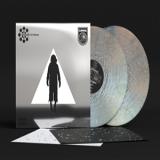
Life and Death welcomes Italian synth wizard Lucy, for the label's inaugural release of 2017. Luca Mortellaro's cavernous techno offering comes equipped with a DJ Sotofett version and a rendition by Planetary Assault Systems, further cementing the diversity of the label's scope. DJ Sotofett recalls fine nineties loop techno while Luke Slater once again confirms his pioneer status.
Suche:clash
Following the successful collaboration on Several Reasons Recordings' first vinyl release, Scalameriya & Dubit team up once again for a stunning, uncompromised techno project, this time on Genesa Records' third vinyl release.
The whole package gets a big boost with the remix delivered by the Japanese master, Go Hiyama.
Digitalism has done a mix for the legendary K7! DJ Kicks series. And it is not a lie, on the contrary, it is nothing short of the truth to say, this is a dream come true for two young fellows from Germany. Twelve years ago, when they originally met, two record store workers in Hamburg, admiringly selling the DJ Kicks series to their customers adoring not just the event of each release, the dexterity of the mix but most importantly the protagonists behind each release, the artist, the DJ, the mixer. Their favourites over the last two decades are Tiga's ("His mix was a great essence of edgy and cold electro-techno."), Trevor Jackson's Playgroup ("More really playful stuff.") and Erlend Oye ("Cause he sung over a lot of stuff and had some favs like Jürgen Paape, the collab with Morgan Geist and Avenue D (2D2F) on it.").
Mysticisms’ Dubplate series reaches number 10 with the first in a series of specials, taking the genre blurring music of Persian and presenting updated remixes and versions by up-and-coming producers, as well as friends and family of the label.
Started as a sporadic offshoot of Mysticisms’ main releases, with the idea to highlight the wonderful sounds of dub influenced dance music, Dubplate has now become an integral part of the mission.
To start, South London’s Picasso joins the label, showcasing his declared abstract grooves and an EP of Dub and Tech House movers. While his productions aim for the dance floor, they are often characterized by complex rhythms and unconventional structures, prioritizing atmosphere and texture over traditional melodies.
Drawing inspiration from ambient, jazz, experimental influences and the heavy hand of dub, Sam “Andrews” McKay has crafted an EP of immersive “soundscapes”. Joining the legendary Persian (Peter Reilly) as co-selector, his retakes are all warped grooves, wide bass and dubby atmospherics.
Opening with Space Within Art, the street soul meets reggae rhythms are jettisoned, and a Dub House swing drives the track. The love, homage and vibration for Sound System culture remains, enchanting trippy reggae sampledelic vocals weaving in the brain.
Dunya 2 sees a shift, minds expanding. A jazz influenced breakbeat, harp, strings, building to a psychedelic swirl, driven by a dub bass in a clash, morph and glow.
The deep Digi Dub of D Dub Twist grows, warping the ‘JA riddim meets English hedonism’ in true Soundclash style. Touches of drone underlay, highlighting Sam’s experimental leaning, utilising Persian’s love of Eastern mystical samples to marry perfectly for a deep dub excursion.
The self-prescribed “odd-fellow” completes his versions, exploring his love of depth and abstract sound in closer, Jacob’s Dub. The warm roots vibrations in original form develop into a scatter gun House bumper. Dubwise, Lovers, Stepper, all merge around shuffling, trippy beats and skippy hats, Picasso’s groove is laid bare, driving the EP to finale.
Abstract the Mystery.
- Miss Maybelle
- Going Down South
- Long Haired Doney
- Peaches
- Black Mattie
- Out On The Line
- Jumper On The Road
- Over The Hill
- Alice Mae
- Skinny Woman
- 44: Pistol (Bonus Track)
TOO BAD JIMS - Over The Hill ist eine leidenschaftliche Hommage an den legendären North-Mississippi-Bluesman R.L. Burnside. Das britische Trio aus Brighton - bestehend aus Little Victor, Son Jack Jr. und Nick Simonon (Bruder von Paul Simonon, The Clash) - verbindet rohe Energie, hypnotische Grooves und den unverkennbaren Hill-Country-Sound zu einem zwingenden, rauen und erdigen Blues-Erlebnis. Was einst als spontane Zusammenarbeit zweier vielfach ausgezeichneter US-Musiker begann, entwickelte sich zu einer Band, die den Spirit der Juke Joints aus Nord-Mississippi in die Gegenwart transportiert. Minimalistische E-Gitarren, treibende Bottleneck-Soli und ungeschliffener Gesang formen einen Sound, der "absolutely scorching" (Living Blues Magazine) und "relentlessly upbeat" (Blues Blast Magazine) genannt wurde. Over The Hill erscheint streng limitiert und liefert einen kompromisslosen, unmittelbaren Blues, der gleichermaßen Tradition ehrt und vor roher Spielfreude strotzt. Für alle, die echten, unverfälschten Hill-Country-Blues lieben.
Undisputed legend of the dubstep scene Commodo collaborates with Jazz aficionado Alfa Mist on Deep Harbour. “I’ve admired Alfa Mist’s work for some time and I had a couple of avenues I wanted to explore using keyboards. One being a darker, dissonant take on a jazz flavoured half-step. The release also features two mixes by Anz. "Anz is a real producer’s producer with a broad range and felt like the perfect remixer.” Commodo has seen support from DJ Mag, Crack, Clash, BBC Radio 1, BBC Radio 6, NTS and played likes of Boiler Room Festival, Outlook Festival Boomtown Festival, Keep Hush and more.
300 pages, 175 x 129mm paperback book w/ french flaps.
DINTE mint their short run book publishing imprint, The End books, with this vast collection of flyers for dances, clashes and blues parties from across the UK between the early 1970s and mid 1990s. Comes complete with intro by David Katz (People Funny Boy: The Genius of Lee 'Scratch' Perry, Solid Foundation: An Oral History of Reggae) and outro by Kevin Le Gendre (Don't Stop the Carnival: Black British Music, Children of the Ghetto: Black Music in Britain). Colour scans sit alongside scuzzy photocopies amassed over several years with the assistance of multiple archivists. The material presented in A Night to Remember is not just valuable musical history, but the story of a community and a culture that revolutionised sound culture in the UK.
"The flyers collected in A Night To Remember speak to the burgeoning sound system underground that flourished in Britain in the 1970s, 80s and early 90s. There are held events on hallowed ground as well as lesser-known sets. Flyers for house parties remind that shebeens remained an important feature of social life in black communities and the many sound clash and cup clash events emphasise the rivalry and camaraderie that has always been at the heart of the culture, as friends go head-to-head with their dub plates, vying for that definitive crown. Dances featuring guest appearances by name-brand artists such as Sugar Minott, Lone Ranger, Barrington Levy and Admiral Bailey, as well as sound systems such as Jack Ruby, King Jammies, Ray Symbolic, Arrows, Black Scorpio and Metro Media remind how closely the local sound systems remained to their Jamaican roots, even as sounds such as Saxon, Unity, Java and Diamonds carved out a distinctly British niche. All hail the enduring sound systems of Britain – long may they reign!" — David Katz
Internal Battle sees Indra MC and Jman united over the riddim, each bringing their own unmistakable lyrical fire to the table. This is a heavyweight steppa built for the soundsystem!
Opening with an epic, cinematic intro that builds tension bar by bar before dropping into a thunderous steppa style and pattern. Deep subs, militant drums, and razor sharp flows collide as both vocalists dive into both the chaos and clarity of the mind’s internal war.
Internal Battle captures that raw clash between doubt and determination, shadow and strength. Crafted for late night sessions, stacked speaker boxes, and conscious crowds, this one hits with purpose and power.
Often cited as the strongest Tribe 69db live recording, this cassette emerged from a tense and pivotal moment in the early 90s free party scene.
At the time, Techno Import was the largest electronic music shop in Paris, and arguably in France. The shop planned to release a CD compilation titled Sound Of Teknival, featuring Spiral Tribe. As the project progressed, disagreements over money, copyrights and control led Spiral Tribe to withdraw their approval.
Despite this, Shark Records, the label linked to Techno Import for the project, proceeded with the CD release without full artist consent. In response, 69db released a tape titled "Fuck Techno Import". This cassette stands as raw testimony to the clash between underground culture and commercial structures, capturing both the sound and spirit of an era when autonomy mattered more than compromise. Originally released in 1997, specially remastered for tape.
- A1: Ajate-Babasse Feat. Toshihito Tsushima
- A2: Ajate-Waya Yawa(Akio Nagase Skacid Remix)
- B1: Stepak Takraw-Ogogorogo
- B2: Stepak Takraw-Moa
AJATE from the East and STEPAK TAKRAW from the West. A historic encounter between Afro-groove bands from East and West!!!
A powerful split album born from the clash of diverse cultures.
The A-side features two tracks by AJATE, a group hugely popular not only domestically but also in Europe and America, who create a unique atmosphere using
Japanese festival music instruments, handmade bamboo guitars, and balafons.
The B-side features two tracks by STEPAK TAKRAW, whose hard-hitting technique rivals authentic Afrobeat bands, breakbeat-inspired approach, and original
sound effects will leave you spellbound.
- 1: Räudige Post
- 2: Freedom
- 3: Dunkelheit
- 4: Eine Band Namens Schuld
- 5: Schas Ins Hemd
- 6: Alles Ist Besser Als Wir
- 7: Go Boomer Go!
- 8: Wiss Ma Ned
- 9: Umzingelt
- 10: Warum!
- 11: Wollten Wir Nicht
- 12: Es Muss Sich Was Ändern
Mit ,GO BOOMER GO!" liefert die Wiener Band POST ein kompromissloses Statement zwischen spätem 70er-Punk und kantigem New Wave. Roh, direkt und mit scharfem Schmäh zerlegt die Band Generationenmythen, Selbsttäuschungen und den ganz normalen Wahnsinn der Gegenwart. Gesungen wird auf Deutsch und im Wiener Dialekt - bissig, poetisch, ungeschönt. POST verorten sich musikalisch zwischen der schnörkellosen Energie von Wilko Johnson und der unbändigen Energie von The Clash, kombiniert mit der gesellschaftskritischen Haltung eines Sigi Maron. Harsche Gitarren, minimalistische Arrangements, stoischer Groove und eine rotzige Attitüde prägen den Sound - keine Retro-Show, sondern ein wütend-zeitgenössisches Update des späten Siebziger-Feelings, das - wie wir ja alle wissen - in Wirklichkeit zeitlos ist. ,GO BOOMER GO!" ist keine bloße Generationskritik, sondern eine Zustandsbeschreibung: Zwischen Wut und Witz, Zynismus und Selbstironie seziert POST gesellschaftliche Spannungen, Bequemlichkeit und kulturelle Stillstände - immer mit Wiener Unterton und einer klaren DIY-Haltung.
Suburban Architecture continue their series of sought after 4 track EP releases with their 8th offering, 'Purpose'. This latest release is the most stylistically varied of the duo's releases to date, drawing on inspiration from a multitude of styles which emerged during Drum & Bass's mid to late 90s golden years.
The E.P opens with title track 'Purpose', clashing Jazz influenced instrumentation with deep atmospherics and sharp, angular drum programming, not to forget a tone-setting vocal sample. 'Tones' meanwhile puts the drums at the forefront: Lush keys, melancholy horns and subtle, shifting synth lines underpin an unconventional drum track, packed with rattling percussion and raw energy.
Over on the flip 'Focus' goes harder and darker. Eery synths, atmospherics and a driving drum track set the scene for an explosive second half drum switch. 'Stairways' closes out the EP, marrying uplifting atmosphere with live instrumentation in a style which will appeal to fans of 4hero and the like.
Following her acclaimed 2023 release Flood City Trax, a dreamy, lo-fi take on footwork inspired by the crumbling rust-belt city she calls home, Nondi returns to Planet Mu with her second self-titled album, Nondi…While Nondi… retains some of the hazy, nostalgic atmosphere of Flood City Trax, it pushes her sound in bold new directions. “I made this album to capture the sense of freedom I used to get from music when I was first discovering it all,” Nondi says. “It’s meant to be cute, fun, kinda weird and emotional — but most of all, it’s a presentation of some of the prettiest tracks I’ve made.” Though she hasn’t really experienced club culture where she lives, her impressionistic productions evoke the surreal, lingering sounds of a night out — the melodic haze that hums in your ears as you drift off to sleep. Lo-fi and melodic, yet fluid and free, her music carries a sense of flight and intuitive logic. Nondi’s influences range widely — Actress, Aphex Twin, footwork, and the stranger edges of dub techno are all felt, yet she hallucinates them through her own weathered, dreamlike lens. Her tracks often build from clashing loops that evolve and transform organically, or from familiar genre elements reshaped by her instinct for misty, heart-wrenching melody. Some moments stay closer to genre, like Broken Future 175, a drum-and-bass tear-out that dissolves into lush, blurred chords, or Just Hanging Out, a bruised and beautiful take on 2-step. Lead single Tree Festival feels like a blown-out fusion of rave energy and sped-up new-age bliss, while Death Juke drifts through off-beat vocal samples, pulsing drums and 8-bit FX, reminiscent of early Steve Reich reimagined through a Game Boy. Nondi… is a uniquely moving and exploratory album that expands her sonic world even further. Lo-fi yet luminous, playful yet profound.
The Fuga compilation returns to Token with its seventh installment by a fresh batch of artists emphasizing the cryptic sound of the Belgian record label. The V/A displays urgency as its focal point, expanding and contracting its acoustic space throughout to channel instability. With eight contributions, Fuga VII sifts through nail biting arpeggios, frenzied percussion, and obscure ambiance to recalibrate techno's current soundscape.
Opening the compilation is contemporary techno mainstay Rene Wise with his debut contribution to the record label 'Rough Rider'. In this A1, Wise plays to his strengths by blending deep techno influences with hyper-focused rhythmic work. With a hint of tribalism, he conjures up synthwork from far off to whip motion into heavy drum patterns. Following this first track, STIPP and Sandrien take control in presenting 'Corrie', a sequence-forward groover that slides through drum programing to streamline rhythm. A shrill pad comes in at the halfway mark, completely lifting the energy of 'Corrie' to strain the track's obscurity with an ethereal counterweight. The brief passage of these kinds of elements provides a lot of dynamic to what would otherwise be a powerfully straightforward piece. Diving deeper, Red Rooms unveils 'Limited Sensory' as the next chapter of the compilation. Always swift and exact, the German artist continues to push into the ultra immersive with a web of elements that whiz by for a peaktime lock in. Cold in attitude, Red Rooms tunnels through 'Limited Sensory' with quick drumsand far-off percussive hits that rumble through the track. Stepping up afterwards is Lindsey Herbert with 'Oscillations in Space' - an appropriately named recording that experiments with mania as a tool for the dancefloor. Fast and spiraling, Herbert keeps her hands on the arpeggio's filter to contain tension through thunderous reverb transitions, balancing panic with pace. AgainstMe then stretches out the followup with the commanding 'Phase Shift' to double down on weight. Textural intimidation and stomping percussion is given the space it needs to perform on heavy weight sound systems, making it an austere middle point for Fuga. MAL HOMBRE then guides the listener to more elastic sound design in 'Critical Velocity', in a most appropriate Token fashion. Snowballing in intensity halfway through, MAL HOMBRE pushes the cutoff of his melody and programs snare rolls for vintage craze through the second section. Bells clash with ringing hats to fly the track along its course without looking back or letting go. Conor Wall takes control with 'The Strategy' that focuses on pace rather than melody, weaponizing metallic texture for a deep dancefloor experience. The ambiance does a lot of story telling here, marking breaks and riding through drops to provide grit to an already substantial record. This leads us to the final contribution in Fuga VII - 'Ad Libitum'. Here, Porteix emphasizes the conclusion of the compilation with mystery. The synths slither around pulsating rhythm, creating uninterrupted motion throughout the track's entirety. Porteix draws the curtains on an inquisitive note, keeping the suspense high until the next Fuga compilation comes around.
Welcoming prolific and essential Mexican artist Andy Martin to Animalia, with his mesmerising, mind-bending musical interpretation of the Nahual, a common & integral figure of the belief systems of ancient Indigenous peoples of the Americas, which embodies the spiritual connection between humans & animals. In some traditional stories, this connection is so strong that they are said to transform into one of them. Tierra de Nahuales refers to a region of ancient America inhabited by these mythological beings, which in this EP become part of the Animalia universe, shaped by psychedelic broken rhythms, tribal sounds, and dub influences. A release that feels both deeply personal to Andy's musical & cultural identity as well as the label's own - a telling ode to the abilities of the depth & outer worldly sense to his music - a world-building, shapeshifting & one of a kind artist who feels truly at home in the Animalia family.
For the 10th 3AM Eternal release FFF returns with his signature amen ambush.
Designed to win every soundclash! Switching between ruff and smooth.
Hardcore breaks, Rare groove vibes, clash samples and ending the ep with full on riotbeats.
Mastered as always by Hue Jah Fink at Binary Feedback.
Lapalux (Stuart Howard) is a UK-based experimental electronic music producer known for his emotionally charged sound design, intricate textures, and immersive sonic storytelling. With releases on Brainfeeder and widespread critical acclaim, Lapalux has built a loyal global following and earned consistent airplay on BBC Radio 1, BBC 6 Music, and NTS. His work has been championed by DJs including Mary Anne Hobbs, Benji B, and Tom Ravenscroft, and praised by outlets such as The Guardian, Resident Advisor, XLR8R, and Clash. Lapalux's music occupies a unique space between IDM, ambient, and leftfield electronica — rich in atmosphere, detail, and feeling.
On the Grid is Lapalux's latest EP — a deeply intricate, hardware-driven exploration of rhythm and emotion that fuses fragmented IDM with warm analogue tones and deep dynamics. The EP showcases Lapalux's continued evolution as a producer, balancing intricate sound design with powerful melodic undercurrents. It follows years of refinement in the studio, drawing on his signature use of modular synthesis, Digital and analogue hardware and organic imperfections. With a limited vinyl pressing and strong fan demand, On the Grid stands as a key release in Lapalux's catalogue and a compelling addition to any store's forward-thinking electronic selection.
- A1: Hurts And Noises
- A2: Wake Up
- A3: I Don't Wanna Be A Rich
- A4: Terrorist Bad Heart
- A5: Provocate
- A6: Lucifer Sam (Pink Floyd)
- B1: Happy!?
- B2: So Lazy
- B3: I Feel Down
- B4: Stupido
- B5: Guilty
- B6: Caroline Says (Loo Reed)
UILTY RAZORS, BONA FIDE PUNKS.
Writings on the topic that go off in all directions, mind-numbing lectures given by academics, and testimonies, most of them heavily doctored, from those who “lived through that era”: so many people today fantasize about the early days of punk in our country… This blessed moment when no one had yet thought of flaunting a ridiculous green mohawk, taking Sid Vicious as a hero, or – even worse – making the so-called alternative scene both festive and boorish. There was no such thing in 1976 or 1977, when it wasn’t easy to get hold of the first 45s by the Pistols or the Clash. Few people were aware of what was happening on the fringes of the fringes at the time. Malcolm McLaren was virtually unknown, and having short hair made you seem strange. Who knew then that rock music, which had taken a very bad turn since the early 1970s, would once again become an essential element of liberation? That, thanks to short and fast songs, it would once again rediscover that primitive, social side that was so hated by older generations? Who knew that, besides a few loners who read the music press (it was even better if they read it in English) and frequented the right record stores? Many of these formed bands, because it was impossible to do otherwise. We quickly went from listening to the Velvet Underground to trying to play the Stooges’ intros. It’s a somewhat collective story, even though there weren’t many people to start it.
The Guilty Razors were among those who took part in this initial upheaval in Paris. They were far from being the worst. They had something special and even released a single that was well above the national average. They also had enough songs to fill an album, the one you’re holding. In everyone’s opinion, they were definitely not among the punk impostors that followed in their wake. They were, at least, genuine and credible.
Guilty Razors, Parisian punk band (1975-1978). To understand something about their somewhat linear but very energetic sound, we might need to talk about the context in which it was born and, more broadly, recall the boredom (a theme that would become capital in punk songs) coupled with the desire to blow everything off, which were the basis for the formation of bands playing a rejuvenated rock music ; about the passion for a few records by the Kinks or the early Who, by the Stooges, by the Velvet mostly, which set you apart from the crowd.
And of course, we should remember this new wave, which was promoted by a few articles in the specialized press and some cutting-edge record stores, coming from New York or London, whose small but powerful influence could be felt in Paris and in a handful of isolated places in the provinces, lulled to sleep by so many appalling things, from Tangerine Dream to President Giscard d’Estaing...
In 1975-76, French music was, as almost always, in a sorry state ; it was still dominated by Johnny Hallyday and Sylvie Vartan. Local rock music was also rather bleak, apart from Bijou and Little Bob who tried to revive this small scene with poorly sound-engineered gigs played to almost no one.
In the working class suburbs at the time, it was mainly hard rock music played to 11 that helped people forget about their gruelling shifts at the factory. Here and there, on the outskirts of major cities, you still could find a few rockers with sideburns wearing black armbands since the death of Gene Vincent, but it wasn’t a proper mass movement, just a source of real danger to anyone they came across who wasn't like them. In August 1976, a festival unlike any other took place in Mont-de-Marsan – the First European Punk Festival as the poster said – with almost as many people on stage as in the audience. Yet, on that day, a quasi historical event happened, when, under the blazing afternoon sun, a band of unknowns called The Damned made an unprecedented noise in the arena, reminiscent of the chaotic Stooges in their early adolescence. They were the first genuine punk band to perform in our country: from then on, anything was possible, almost anything seemed permissible.
It makes sense that the four+1 members of Guilty Razors, who initially amplified acoustic guitars with crappy tape recorder microphones, would adopt punk music (pronounced paink in French) naturally and instinctively, since it combines liberating noise with speed of execution and – crucially – a very healthy sense of rebellion (the protesters of May 1968 proclaimed, and it was even a slogan, that they weren’t against old people, but against what had made them grow old. In the mid-1970s, it seemed normal and obvious that old people should now ALSO be targeted!!!).
At the time, the desire to fight back, and break down authority and apathy, was either red or black, often taking the form of leafleting, tumultuous general assemblies in the schoolyard, and massive or shabby demonstrations, most of the time overflowing with an exciting vitality that sometimes turned into fights with the riot police. Indeed, soon after the end of the Vietnam War and following Pinochet’s coup in Chile, all over France, Trotskyist and anarcho-libertarian fervour was firmly entrenched among parts of the educated youth population, who were equally rebellious and troublemakers whenever they had the chance. It should also be noted that when the single "Anarchy in the UK" was first heard, even though not many of us had access to it, both the title and its explosive sound immediately resonated with some of those troublemakers crying out for ANARCHY!!! Meanwhile, the left-wing majority still equated punks with reckless young neo-Nazis. Of course, the widely circulated photos in the mainstream press of Siouxsie Sioux with her swastikas didn’t necessarily help to win over the theorists of the Great Revolution. It took Joe Strummer to introduce The Clash as an anti-racist, anti-fascist and anti-ignorance band for the rejection of old-school revolutionaries to fade a little.
The Lycée Jean-Baptiste Say at Porte d’Auteuil, despite being located in the very posh and very exclusive 16th arrondissement of Paris, didn’t escape these "committed" upheavals, which doubled as the perfect outlet for the less timid members of this generation.
“Back then, politics were fun,” says Tristam Nada, who studied there and went on to become Guilty Razors’ frontman. “Jean-Baptiste was the leftist high-school in the neighbourhood. When the far right guys from the GUD came down there, the Communist League guys from elsewhere helped us fight them off.”
Anything that could challenge authority was fair game and of course, strikes for just about any reason would lead to increasingly frequent truancy (with a definitive farewell to education that would soon follow). Tristam Nada spent his 10th and 11th unfinished grades with José Perez, who had come from Spain, where his father, a janitor, had been sentenced to death by Franco. “José steered my tastes towards solid acts such as The Who. Like most teenagers, I had previously absorbed just about everything that came my way, from Yes to Led Zeppelin to Genesis. I was exploring… And then one day, he told me that he and his brother Carlos wanted to start a rock band.” The Perez brothers already played guitar. “Of course, they were Spanish!”, jokes their singer. “Then, somewhat reluctantly, José took up the bass and we were soon joined by Jano – who called himself Jano Homicid – who took up the rhythm guitar.” Several drummers would later join this core of not easily intimidated young guys who didn’t let adversity get the better of them.
The first rehearsals of the newly named Guilty Razors took place in the bedroom of a Perez aunt. There, the three rookies tried to cover a few standards, songs that often were an integral part of their lives. During a first, short gig, in front of a bewildered audience of tough old-school rockers, they launched into a clunky version of the Velvet Underground's “Heroin”. Challenge or recklessness? A bit of both, probably… And then, step by step, their limited repertoire expanded as they decided to write their own songs, sung in a not always very accurate or academic English, but who cared about proper grammar or the right vocabulary, since what truly mattered was to make the words sound as good as possible while playing very, very fast music? And spitting out those words in a language that left no doubt as to what it conveyed mattered as well.
Trying their hand a the kind of rock music disliked by most of the neighbourhood, making noise, being fiercely provocative: they still belonged to a tiny clique who, at this very moment, had chosen to impose this difference. And there were very few places in France or elsewhere, where one could witness the first stirrings of something that wasn’t a trend yet, let alone a movement.
In the provinces, in late 1976 or early 1977, there couldn’t be more than thirty record stores that were a bit more discerning than average, where you could hear this new kind of short-haired rock music called “punk”. The old clientele, who previously had no problem coming in to buy the latest McCartney or Aerosmith LP, now felt a little less comfortable there…
In Paris, these enlightened places were quite rare and often located nex to what would become the Forum des Halles, a big shopping mall. Between three aging sex workers, a couple of second-hand clothes shops, sellers of hippie paraphernalia and small fashion designers, the good word was loudly spread in two pioneering places – propagators of what was still only a new underground movement. Historically, the first one was the Open Market, a kind of poorly, but tastefully stocked cave. Speakers blasted out the sound of sixties garage bands from the Nuggets compilation (a crucial reference for José Perez) or the badly dressed English kids of Eddie and the Hot Rods. This black-painted den was opened a few years earlier by Marc Zermati, a character who wasn’t always in a sunny disposition, but always quite radical in his (good) choices and his opinions. He founded the independent label Skydog and was one of the promoters of the Mont-de-Marsan punk festivals. Not far from there was Harry Cover, another store more in tune with the new New York scene, which was amply covered in the house fanzine, Rock News (even though it was in it that the photos of the Sex Pistols were first published in France).
It was a favorite hang-out of the Perez brothers and Tristam Nada, as the latter explained. “It’s at Harry Cover’s that we first heard the Pistols and Clash’s 45s, and after that, we decided to start writing our first songs. If they could do it, so could we!”
The sonic shocks that were “Anarchy in the UK”, “White Riot” or the Buzzcocks’s EP, “Spiral Scratch” – which Guilty Razors' sound is reminiscent of – were soon to be amplified by an unparalleled visual shock. In April 1977, right after the release of their first LP, The Clash performed at the Palais des Glaces in Paris, during a punk night organised by Marc Zermati. For many who were there, it was the gig of a lifetime…
Of course, Guilty Razors and Tristam were in the audience: “That concert was fabulous… We Parisian punks were almost all dressed in black and white, with white shirts, skinny leather ties, bikers jackets or light jackets, etc. The Clash, on the other hand, wore colourful clothes. Well, the next day, at the Gibus, you’d spot everyone who had been at this concert, but they weren’t wearing anything black, they were all wearing colours.”
It makes sense to mention the Gibus club, as Guilty Razors often played there (sometimes in front of a hostile audience). It was also the only place in Paris that regularly scheduled new Parisian or Anglo-Saxon acts, such as Generation X, Siouxsie and the Banshees, the Slits, and Johnny Thunders who would become a kind of messed-up mascot for the venue. A little later, in 1978, the Rose Bonbon – formerly the Nashville – also attracted nightly owls in search of electric thrills… In 1977, the iconic but not necessarily excellent Asphalt Jungle often played at the Gibus, sometimes sharing the bill with Metal Urbain, the only band whose aura would later transcend the French borders (“I saw them as the French Sex Pistols,” said Geoff Travis, head of their British label Rough Trade). Already established in this small scene, Metal Urbain helped the young and restless Guilty Razors who had just arrived. Guitarist for Metal Urbain Hermann Schwartz remembers it: “They were younger than us, we were a bit like their mentors even if it’s too strong a word… At least they were credible. We thought they were good, and they had good songs which reminded of the Buzzcocks that I liked a lot. But at some point, they started hanging out with the Hells Angels. That’s when we stopped following them.”
The break-up was mutual, since, Guilty Razors, for their part, were shocked when they saw a fringe element of the audience at Metal Urbain concerts who repeatedly shouted “Sieg Heil” and gave Nazi salutes. These provocations, even still minor (the bulk of the skinhead crowd would later make their presence felt during concerts), weren’t really to the liking of the Perez brothers, whose anti-fascist convictions were firmly rooted. Some things are non-negotiable.
A few months earlier (in July 1978), Guilty Razors had nevertheless opened very successfully for Metal Urbain at the Bus Palladium, a more traditonally old-school rock night-club. But, as was sometimes the case back then, the night turned into a mass brawl when suburban rockers came to “beat up punks”.
Back then, Parisian nights weren’t always sweet and serene.
So, after opening as best as they could for The Jam (their sound having been ruined by the PA system), our local heroes were – once again – met outside by a horde of greasers out to get them. “Thankfully,” says Tristam, “we were with our roadies, motorless bikers who acted as a protective barrier. We were chased in the neighbouring streets and the whole thing ended in front of a bar, with the owner coming out with a rifle…”
Although Tristam and the Perez brothers narrowly escaped various, potentially bloody, incidents, they weren’t completely innocent of wrongdoing either. They still find amusing their mugging of two strangers in the street for example (“We were broke and we simply wanted to buy tickets for the Heartbreakers concert that night,” says Tristam). It so happened that their victims were two key figures in the rock business at the time: radio presenter Alain Manneval and music publisher Philippe Constantin. They filed a complaint and sought monetary compensation, but somehow the band’s manager, the skilful but very controversial Alexis, managed to get the complaint withdrawn and Guilty Razors ended up signing with Constantin with a substantial advance.
They also signed with Polydor and the label released in 1978 their only three-track 45, featuring “I Don't Wanna be A Rich”, “Hurts and Noises” and “Provocate” (songs that exuded perpetual rebellion and an unquenchable desire for “class” confrontation). It was a very good record, but due to a lack of promotion (radio stations didn’t play French artists singing in English), it didn’t sell very well. Only 800 copies were allegedly sold and the rest of the stock was pulped… Initially, the three tracks were to be included on a LP that never came to be, since they were dropped by Polydor (“Let’s say we sometimes caused a ruckus in their offices!” laughs Tristam.) In order to perfect the long-awaited LP, the band recorded demos of other tracks. There was a cover of Pink Floyd's “Lucifer Sam” from the Syd Barrett era – proof of an enduring love for the sixties’ greats –, “Wake Up” a hangover tale and “Bad Heart” about the Baader-Meinhof gang, whose actions had a profound impact on the era and on a generation seeking extreme dissent... On the album you’re now discovering, you can also hear five previously unreleased tracks recorded a bit later during an extended and freezing stay in Madrid, in a makeshift studio with the invaluable help of a drummer also acting as sound engineer. He was both an enthusiastic old hippie and a proper whizz at sound engineering. Here too, certain influences from the fifties and sixties (Link Wray, the Troggs) are more than obvious in the band’s music.
Shortly after a final stormy and rather barbaric (on the audience’s side) “Punk night” at the Olympia in June 1978, Tristam left the band ; his bandmates continued without him for a short while.
But like most pioneering punk bands of the era, Guilty Razors eventually split up for good after three years (besides once in Spain, they’d only played in Paris). The reason for ceasing business activities were more or less the same for everyone: there were no venues outside one’s small circuit to play this kind of rock music, which was still frightening, unknown, or of little interest to most people. The chances of recording an LP were virtually null, since major labels were only signing unoriginal but reassuring sub-Téléphone clones, and the smaller ones were only interested in progressive rock or French chanson for youth clubs. And what about self-production? No one in our small safety-pinned world had thought about it yet. There wasn’t enough money to embark on that sort of venture anyway.
So yes, the early days of punk in France were truly No Future!
- A1: Rage
- A2: More Real
- A3: Like No Other
- A4: Driving & Talking At The Same Time
- A5: Aeiou
- A6: Sahara
- B1: Europe
- B2: State-Of-The-Art
- B3: The Finish Line
- B4: Detroit Tonight
- B5: On The Run
- B6: Paceways
- C1: Law & Order
- C2: I Feel Tension
- C3: I Do
- C4: Dancing Out Of Time
- C5: Runaway Child (Minors Beware)
- C6: Detroit Tonight
- C7: Snake Dancing
- D1: Working
- D2: Back To You
- D3: My Baby's Explosive
- D4: Born Yesterday
- D5: Paceways
- D6: Big Sky
- E1: The Dark Side Of Me
- E2: Tachito In The White Meredes Benz
- E3: New Strangers In Town
- E4: Skylife
- E5: The Dancing Girls Of Windsor
- E6: My First Idea
- F1: 3Rd Generation
- F2: The Exterminator
- F3: A Detective Story
- F4: Jerry Leaves The Small Town
- F5: Mona Lisa On My Arm
- F6: The World Is Loud
“The group has no niche, it doesn’t fit in anywhere,” explains Necessaries drummer Jesse Chamberlain in a 1980 Melody Maker interview. “We just state the facts about life in America, like The Clash did about England, but we’re not so heavy about it.” The Necessaries rose from the ashes of Harry Toledo & The Rockets, a little-known New York art-rock band playing gigs at Max’s Kansas City during glam’s metamorphosis into punk. —From the liner notes by Michael IQ Jones The Necessaries came together in 1978 and in the too-brief lifespan of the band counted among their members, Ed Tomney (Rage To Live, Luka Bloom), Jesse Chamberlain (Red Crayola), Ernie Brooks (Modern Lovers), Arthur Russell (The Flying Hearts), Randy Gun (Love Of Life Orchestra). First championed by John Cale on the strength of Tomney’s songs, Cale produced their first single for Spy Records (under the I.R.S. umbrella) which was released in 1979. With the forward momentum brought about by the single, the band set about tracking demos intended for Warner Bros., but The Necessaries ultimately would sign to Seymour Stein’s Sire Records. These rough demo basic tracks lacked overdubs, mixes and any finishing touches that would have made them viable for commercial release, but due to tour commitments, the band had to put the sessions on hold to hit the road. While on tour, the band was shocked to discover that Sire had issued the unfinished tracks as their debut album Big Sky (issued in 1981). The band had Big Sky withdrawn and replaced with Event Horizon (issued in 1982) which included half the original tracks from Big Sky and continued to record throughout 1982 aiming for a follow-up. It was not to be and their final studio sessions remained unissued until now. Completely Necessary (Anthology 1978–1982) is the first authorized collection of recordings by The Necessaries and includes 37 tracks, 28 of which are previously unissued. Completely Necessary represents the most accurate musical history of the band laid out across three albums. Disc one is the band-approved first album Event Horizon, followed by Pilots Facing North, a disc collecting studio recordings spanning 1978–1981 and disc three finally sees the release of their final sessions, Songs From The Blue Colony. Album notes by Michael IQ Jones trace the history of the band for this compilation produced by The Necessaries’ Ed Tomney and Cheryl Pawelski (Omnivore Recordings). The audio has been restored and mastered by Michael Graves at Osiris Studio, and both the 3-LP and 2-CD sets feature previously unseen photos across the package. Finally, an essential missing piece of the late ’70s/early ’80s New York scene that was just slightly ahead of the college alt-rock soon to come, is finally available to rediscover—this time it’s authorized and absolutely necessary. BUY! HERE’S WHY! • The first authorized and comprehensive anthology by The Necessaries. • Mid-’70s/early ’80s New York rock/punk/art scene band included members: Ed Tomney, Ernier Brooks, Arthur Russell, Jesse Chamberlain, and Randy Gun. • 37 tracks, 28 previously unissued. • Liner notes by Michael IQ Jones, plus unseen photos.
- A1: Design - Premonition
- A2: Vision - Lucifer’s Friend
- A3: Richard Bone - Alien Girl
- A4: John Howard - I Tune Into You
- A5: Ian North - We’re Not Lonely
- A6: Selwin Image - The Unknown
- B1: Harry Kakoulli - I’m On A Rocket
- B2: Rich Wilde - The Lady Wants To Be Alone
- B3: Billy London - Woman
- B4: Alan Burnham - Science Fiction
- B5: The Microbes - Computer
- B6: The Goo-Q - I’m A Computer
- C1: Gerry & The Holograms - Gerry & The Holograms
- C2: The Warlord - The Ultimate Warlord
- C3: Die Marinas - Fred From Jupiter
- C4: Dee Jay Bert & Eagle - I Am Your Master
- C5: Peta Lily & Michael Process - I Am A Time Bomb
- C6: Sole Sister - It’s Not What You Are But How
- D1: Alasdair Riddell - Do You Read Me?
- D2: Karel Fialka - Armband (The Mystery Song)
- D3: John Springate - My Life
- D4: Idncandescent Luminaire - Famous Names
- D5: Disco Volante - No Motion
- D6: Dream Unit - A Drop In The Ocean
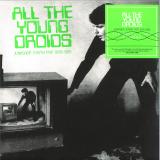
2025 REPRESS ON TRANSPARENT GREEN VINYL
Compiled by Philip King “And then came the rise of synth pop : blokes with dodgy haircuts hunched over keyboard-operated machines stuffed with wires and do-it-yourself tone oscillators making sounds like a brood of geese passing gas in a wind tunnel. Whoopee! This is the way the ‘70s ended : not with a blood-curdling bang bang but with a cheap, synthesized, emasculating whimper.” NICK KENT, NME. All The Young Droids: Junkshop Synth Pop 1978-1985 is a new compilation that charts the underbelly of the epoch-defining sound of the synthesiser in 80s popular music. Compiled by Philip King (previously seen compiling All The Young Droogs, Glitterbest and Boobs - The Junkshop Glam Discotheque), the music here connects the dots between DIY synth enthusiasts grappling with new, cheap synthesisers at the tail-end of punk and wannabe, jobbing songwriters enthral to the new music pioneered by Gary Numan, Depeche Mode and Daniel Miller’s Mute Records. Featuring rare tracks of auto-didactic progressive pop music, proto-techno punk, shoot-for-the-stars-land-in-the-gutter chart flops and heralded, underground synth classics, School Daze paints a picture of beautiful failure. Complete with extensive sleeve notes written by King and never before seen imagery, all 24 tracks were remastered by RPM in-house engineer Simon Murphy, many from vinyl copies due to lost master tapes. The story told on All The Young Droids is one of the dawning opportunity presented by both the emergence to the market of cheaper analog synthesisers and the distribution networks plus indie labels that exploded with the advent of punk music in 1976. While the music that sprouted out all over the globe in the wake of these factors was decried as fake, plastic, a refutation of punk’s guitar-led revolution, it’s telling that much of the music on All The Young Droids.. was created in bedrooms, ramshackle studios and home-made set ups with often borrowed equipment. In the era of record labels jumping to capitalise on the success of The Sex Pistols, The Clash (both on major labels, of course) these artists struggled to stand out from a new gold-rush with next to no budget or PR team. With radio and labels desperate for the new Yazoo, what resulted was a testament to necessity being the mother of invention. At the time, the synthesiser was the music of the future, a shiny new machine that could paint like an orchestra with a single finger and a 4-track. In the hands of Manchester avant-pranksters Gerry & The Holograms it’s a pulsing, sardonic weapon.. the only instrument on the Messthetics classic lampooning of New Wave fashion. In Hamburg, a 16 year old Andreas Dorau used it to write and record (with his female classmates on vocals) a global smash in Fred Vom Jupiter (later licensed to Mute Records). The hard-to-find English version (Fred From Jupiter, natch) is included here. Many artists with alreadystoried careers caught the bug and recorded synthesiser-fuelled peons to space, computers, the future and, of course, love-interests. Harry Kakoulli, late of Squeeze, recorded a solo album in 1979 that included the incredible power-synth-pop smash-that-never-smashed I’m On A Rocket. Similarly, Ian North of Neo and American Power Pop stalwarts Milk ’n’ Cookies bought a Korg MS20 and used a tape machine to record We’re Not Lonely, an absolute lost-classic of minimal synth pop. We’re Not Lonely also features on the Junkshop Synth Pop sampler 7” twinned with John Howard unreleased track You Will See, released April 12th 2025. There are plenty of compilation debuts in evidence. Sole Sister were a mysterious trio who were featured on the Scaling Triangles compilation of female-fronted, queer-adjacent post-punk / underground music that also featured The Petticoats. Selwin Image were from San Francisco and featured members of the recently defunct power pop/punk group The Pushups. Their stupidly catchy The Unknown fizzes with New Wave energy - think XTC to Sparks but remains unreleased until now. Dream Unit’s A Drop In The Ocean is an early synth wave cut, positively teaming with Joy Division instrumentation, previously only released on a long-forgotten and super rare, self-released EP. Incandescent Luminaire’s Famous Names belies an archetypal struggle of a small-town trying to make it in a cruel industry but is a thrilling New Romantic-Synth Wave cross over with a OMD gloominess that’s a joy to hear. Feminist Minimal Wave track I Am A Time Bomb by performance artist Peta Lilly and Michael Chance is a revelation destined for new found cult status. It was released on 7” and lost until now. The flipside to the subterranean, never-made-it synth pop mentioned above are the ambitious, even fruity attempts at success that have a perennial elegance to their confidence. New Jersey-ite Billy London (real name Ed Barth) tried to cash in on the synth boom with Woman, released by a major label, a lurching new wave track built on the Louie Louie rhythm and a wonderfully camp Lou Reedstyle sleazy vocal before exploding in the synthesised chorus. The song bombed but with a chorus like this, you have to wonder why? Ex-Glitter Band member John Springate’s My Life is truly epic, with doomed chord progressions and massive sounding drums turning into at least 3 different songs in the course of the track. Before you wonder what’s going on the song resolves with a glorious return to the main refrain. The dry-ice-dressed dance floor is well catered for too. Design’s Premonition and Vision’s Lucifer’s Friend are stone-cold minimal synth bangers, well loved but given a new lease of life here. The Warlord’s The Ultimate Warlord was released in 1978, a homespun proto Hi NRG banger that was later re-recorded by The Immortals in Canada who had a club hit with it. One-man- band Disco Volante’s No Motion was re-issued by Synth wave label Medical in 2012 but makes its first vinyl compilation appearance here. Close your eyes and you can imagine what Lawrence of Felt would have sounded like with some cheap Korgs a little earlier in his career. Gibraltar-based trio The Microbes imagined a computer programming people to dance - how prescient - and ended up with a propulsive, robo-funk track with splendid rubbery bass playing over a tectonic drum machine. Previously picked up by Belgian label Stroom TV, Dee Jay Bert & Eagle’s heavily Euro-accented I Am Your Master demands the listener to “come to paradise!” In a frankly terrifying manner. All The Young Droids is the first compilation to peel away from the narrative that dour, Minimal Synth and Cold Wave were the only musical children of the first rush of synth pop. Philip King and School Daze Records describe a much more complicated world: along with the austere, Brutalist children of Daniel Miller (who produced Alan Burnham’s Bowie-Low-influenced Science Fiction here) was a plethora of desperate cash-ins, accidental mainstream hits, ambitious pop dramas and major label punts that went nowhere. Crucially, the compilation blurs the line between junk and treasure. What if the two things are interchangeable. What if it’s all science fiction?
Replicant Memories is the seismic fallout from the clash between bvdub and East of Oceans: two of Brock Van Wey's three aliases representing different stylistic directions, while being vessels for the same unbridled oceanic creativity.
Within the four chapters of this epic, the bottomless emotion of bvdub melts into the euphoria of East of Oceans, electricity discharging and mists rising from their collision while they together reach new heights of intensity.
This music changes you. Like being exposed to forces of nature, there is no holding back and no place to hide within its wild embrace. It is music for surrendering into. And be left in gratitude for.
On the heels of their breakout earlier this year, the enigmatic duo Soundboy Dead step up for their first release on Dub-Stuy with Soundclash Story, a fierce tribute to the art of clashing featuring UK veteran Don Cotti.
The title track captures the heat of the dance, Cotti at the mic delivering a vivid tale of dubplate warfare over a menacing steppers riddim built for the battlefield. On the flip, Soundclash Dub pushes the pressure even deeper, with a stripped down, FX-laden version that will test the heaviest rigs.
With Soundclash Story, Soundboy Dead continue their mission of crafting uncompromising bass music rooted in sound system culture. Pure energy. No gimmicks.
The Punky Rocking Christmas came over two different Xmas’s for the punk connoisseur. The first back in 1977 when the Sex Pistols took themselves up to Huddersfield to play a gig for the firemen but also as they arrived in the afternoon a gig for the local kids. After much cake throwing and high jinks and with the kids all cleared out the Pistols played the evening show for the adults. This it would turn out to be the Sex Pistols last show in England, as they went to America in January 1978 and imploded. That as they say is another story.
The second Christmas Punk bonanza took place in London’s Ladbroke Grove area when The Clash, possible inspired by the Sex Pistols previous Xmas gig, decided to play their own Xmas gig in 1979 on
Christmas Day at The Acklam Hall. The added bonus was they also played at the venue on Boxing Day. So there you have it the two biggest punk bands giving two xmas treats to their fans. To celebrate these festive treats Mal-One has written two songs to celebrate both events and dubbed up both versions for this Maxi-12” special. He has also provided two sleeves a Sex Pistols sleeve 250 copies and a Clash sleeve 250 copies plus a signed print in each. As they say what more could you want in your xmas stocking.
Ho Ho Ho and a punky rocking happy Xmas to you all.
a fascination flows down the chemical gradient. songbirds take flight from a colonial square in montevideo and fall as acorns in the foothills of the sierra nevada. the moon aches, holding a teeming darkness to the edges of the clearing as we make quick work for the machines. first a pulse, then an armature is spun up around it while the whipping plasma of virtual half-thoughts cools and hardens into something more familiar. a gleaming clash of frogsong begins to reveal its cadences, unspooling into regular striations. it forms a grid in the air, the water rises to meet it, and pressed between these mirrored planes of disappearance we find our vector and glide towards the horizon.
Break 3000 - Human Nature EP
A special collaboration with Partout records from Paris. Break 3000 digged deep in the archives for this one and found some old unreleased music on his dusted DAT tapes ranging from 1993 to 2002.
Now released for the first time ever on vinyl 12” and digital.
“Human” and “Komputerok were produced in the same project in his Maastricht bedroom studio back in 2002 and reflect to great influence artists like David Caretta and The Hacker had on his sound back then, a mix of banging Electro Clash meets EBM, 80s Proto House.
“Overdrive” opens the B-side and a window to the late 90s. This track was produced together with his classic “Plastique People” around 98/99 and was an instrumental track luckily found again, Break 3000 added a new vocal and made a fresh shorter Edit. Thanks to the excellent mastering by Salz Music this one is back in todays sound standards.
The next pearl from the past is a real favourite and is the oldest track featured on this EP. “Ambizone” was recorded back in 93/94 and marks the transition from his first musical project Amazone to becoming Break 3000. Recorded in an amazing analog studio in Venray Netherlands where Break 3000 worked on a full album.
More music will follow from these old sessions! Stay tuned.
Closing out with “Nature”, a true hommage to the early Rephlex sound and produced around 97/98. Acts like Bochum Welt, D’arcangelo and µ-Ziq had an immense influence on Break 3000 and are a reason why he started to make more electro orientated music.
All tracks mastered by Salz Mastering in Cologne.
N1_SOUND & Ras Yunchie join forces on an 8-track LP that transcends both definition and generation. INNA DJ STYLE, out November 7th, marks the Toronto veteran singer’s first-ever vinyl release.
Pairing four vocal cuts with four dub versions on the b-side, INNA DJ STYLE bridges experimental dub, digi, and roots, embodying what Ras describes as an “open” sound—one that draws from reggae traditions while boldly breaking new sonic ground.
N1_SOUND first encountered Ras’ distinctive voice and soaring falsetto at Toronto sound system parties. A cornerstone of the city’s reggae scene, Ras Yunchie has been performing since 1983 and remains a vital presence more than 40 years on. His contributions have been recognized with a Lifetime Achievement Award from the National DJ Association, alongside titles such as DJ of the Year, DJ Sound Champion, and winner of the 1985 DJ Sound Clash.
While the rhythms pulse with heavy bass and the three-dimensional lead melodies synonymous with N1_SOUND, it’s Ras’ vocals that make INNA DJ STYLE truly shine. Each track was recorded in a single take and left largely untouched—a testament to the raw talent and enduring artistry of the 61-year-old singer. Across the four vocal cuts, the alchemy of contrasting styles, influences, and lived experience highlights how collaboration can push sound and genre into bold, unexpected territory.
Sports Records is back on the pitch for its 6th installment — a five-track heater from the legendary SkyJoose. A true veteran of the game, SkyJoose has been running the field since 1989, racking up a discography that spans Jungle, 2-step, and UKG with championship-level precision. Known for his prolific output and rare collector’s cuts, he’s still pushing the tempo with fresh, limited-run vinyl and digital drops. This release proves why his technical style leaves rivals on the sidelines — SkyJoose is still playing at the top of his league.
Die Cinematic-Funk-Visionäre The Diasonics liefern mit ihrem neuen Album ,Ornithology", das am 3. Oktober über Record Kicks veröffentlicht wird, ein weiteres solides Set aus östlich angehauchtem Psychedelic, Cinematic und Disco-Funk. Nach ihrem 2022 von der Kritik gefeierten Debütalbum ,Origin of Forms", das von PopMatters zum Library Music Album of the Year gekürt wurde, kehren die in Moskau ansässigen Instrumentalisten The Diasonics mit ,Ornithology" zurück, einem zweiten Album, das ihre klanglichen Grenzen erweitert und gleichzeitig ihrem unverwechselbaren Stil treu bleibt. Aufgenommen in ihrem eigens errichteten Studio 23, das sich in einer umgebauten Lampenfabrik aus der Sowjet-Ära befindet, ist das Album das Ergebnis von zwei Jahren intensiver kreativer Erkundungen und Experimente. Mit ihrer ganz eigenen Mischung aus cineastischem Funk, östlich angehauchten Melodien, instrumentalem Hip-Hop und analogem Soul haben sich The Diasonics einen einzigartigen Platz in der globalen Funkszene geschaffen. ,Ornithology" markiert ein neues Kapitel: Inspiriert von wiederkehrenden Vogelmotiven in ihrer Umgebung, von Zügen und Bahnhöfen bis hin zu lokaler Folklore und den Schreien der Vögel, die über ihrem Studio kreisen, kanalisiert die Platte Ideen von Bewegung und Freiheit, sowohl thematisch als auch musikalisch. ,Das Thema Vögel und Ornithologie ergab sich ganz von selbst - wir fingen einfach an, überall um uns herum vogelähnliche Namen zu bemerken: Züge und Bahnhöfe, Geschäfte, Orte, Nachnamen von Menschen, Bücher und Filme", sagt die Band. "Wir besorgten uns ein paar alte Synthesizer und stimmten die Oszillatoren, während wir den Schreien der Möwen lauschten, die um die Fabrik flogen, in der sich unser Studio befand. Die Ideen von Flug, Freiheit und Raum wurden zentral für die Musik des neuen Albums." Klanglich gehören zu den wesentlichen Merkmalen von Ornithology nicht nur die Synthesizer, sondern auch Diana Grebs hypnotischer Gesang, der sich nahtlos in die Klangpalette einfügt und dem instrumentalen Funk Leben und Seele einhaucht. ,In unserer Vorstellung balancieren wir wie Vögel zwischen der Erde und dem Himmel und haben versucht, unsere eigene musikalische Sprache innerhalb des Konzepts der Ornithologie zu erschaffen, die den Wunsch eines jeden Menschen widerspiegelt, den Vögeln näher zu kommen und frei zu schweben, jenseits von physischen oder mentalen Grenzen." Die 2019 gegründete vierköpfige Band, bestehend aus Daniil Lutsenko (E-Gitarre), Kamil Gazizov (Keyboards), Maksim Brusov (Bass) und Anton Moskvin (Schlagzeug & Perkussion), erlangte durch eine Reihe von begehrten 45er-Scheiben auf Mocambo Records und Funk Night Records schnell Kultstatus. Ihr von der Kritik hochgelobtes Debütalbum Origin of Forms,, das von Henry Jenkins, dem Produzenten der australischen Kultband Surprise Chef, gemischt wurde, erschien 2022 auf Record Kicks und wurde von PopMatters (US) zum Library Music Album" des Jahres und von FIP (Radio France) zum Album des Monats gekürt. Das Vinyl war innerhalb weniger Wochen ausverkauft und ist nun in der internationalen Cinematic-Funk-Szene sehr gefragt. ,Origin of Forms" erhielt begeisterte Kritiken von Zeitschriften wie Wax Poetics, Mojo, Rolling Stone FR, Clash, Uncut und wurde von Jamie Cullum (BBC2), KEXP, Radio France und Huey Morgan, Don Letts, Cerys Matthews und Tom Ravenscroft von BBC 6 Music, um nur einige zu nennen, unterstützt und gespielt. Mit dem neuen Album Ornithology tauchen The Diasonics in üppige Synthesizer, stripped-down Grooves und rohes instrumentales Zusammenspiel ein, schöpfen aus der Library-Musik der 1970er Jahre, sowjetischer Jazz-Fusion und Disco-Funk und liefern eine weitere supersolide Veröffentlichung, die all die Einzigartigkeit bestätigt und vorantreibt, die ,Origin of Forms" so verlockend machte. Unverzichtbar für Fans von Khruangbin, Surprise Chef und instrumentalen Funk-Grooves.
- A1: Design - Premonition
- A2: Vision - Lucifer’s Friend
- A3: Richard Bone - Alien Girl
- A4: John Howard - I Tune Into You
- A5: Ian North - We’re Not Lonely
- A6: Selwin Image - The Unknown
- B1: Harry Kakoulli - I’m On A Rocket
- B2: Rich Wilde - The Lady Wants To Be Alone
- B3: Billy London - Woman
- B4: Alan Burnham - Science Fiction
- B5: The Microbes - Computer
- B6: The Goo-Q - I’m A Computer
- C1: Gerry & The Holograms - Gerry & The Holograms
- C2: The Warlord - The Ultimate Warlord
- C3: Die Marinas - Fred From Jupiter
- C4: Dee Jay Bert & Eagle - I Am Your Master
- C5: Peta Lily & Michael Process - I Am A Time Bomb
- C6: Sole Sister - It’s Not What You Are But How
- D1: Alasdair Riddell - Do You Read Me?
- D2: Karel Fialka - Armband (The Mystery Song)
- D3: John Springate - My Life
- D4: Incandescent Luminaire - Famous Names
- D5: Disco Volante - No Motion
- D6: Dream Unit - A Drop In The Ocean
Compiled by Philip King
“And then came the rise of synth pop : blokes with dodgy haircuts hunched over keyboard-operated
machines stuffed with wires and do-it-yourself tone oscillators making sounds like a brood of geese
passing gas in a wind tunnel. Whoopee! This is the way the ‘70s ended : not with a blood-curdling bang
bang but with a cheap, synthesized, emasculating whimper.”
NICK KENT, NME.
All The Young Droids: Junkshop Synth Pop 1978-1985 is a new compilation that charts the
underbelly of the epoch-defining sound of the synthesiser in 80s popular music. Compiled by Philip
King (previously seen compiling All The Young Droogs, Glitterbest and Boobs - The Junkshop
Glam Discotheque), the music here connects the dots between DIY synth enthusiasts grappling with
new, cheap synthesisers at the tail-end of punk and wannabe, jobbing songwriters enthral to the new
music pioneered by Gary Numan, Depeche Mode and Daniel Miller’s Mute Records. Featuring rare
tracks of auto-didactic progressive pop music, proto-techno punk, shoot-for-the-stars-land-in-the-gutter
chart flops and heralded, underground synth classics, School Daze paints a picture of beautiful failure.
Complete with extensive sleeve notes written by King and never before seen imagery, all 24 tracks
were remastered by RPM in-house engineer Simon Murphy, many from vinyl copies due to lost master
tapes. The story told on All The Young Droids is one of the dawning opportunity presented by both the
emergence to the market of cheaper analog synthesisers and the distribution networks plus indie labels
that exploded with the advent of punk music in 1976. While the music that sprouted out all over the
globe in the wake of these factors was decried as fake, plastic, a refutation of punk’s guitar-led
revolution, it’s telling that much of the music on All The Young Droids.. was created in bedrooms,
ramshackle studios and home-made set ups with often borrowed equipment. In the era of record labels
jumping to capitalise on the success of The Sex Pistols, The Clash (both on major labels, of course)
these artists struggled to stand out from a new gold-rush with next to no budget or PR team. With radio
and labels desperate for the new Yazoo, what resulted was a testament to necessity being the mother
of invention.
At the time, the synthesiser was the music of the future, a shiny new machine that could paint like an
orchestra with a single finger and a 4-track. In the hands of Manchester avant-pranksters Gerry & The
Holograms it’s a pulsing, sardonic weapon.. the only instrument on the Messthetics classic lampooning
of New Wave fashion. In Hamburg, a 16 year old Andreas Dorau used it to write and record (with his
female classmates on vocals) a global smash in Fred Vom Jupiter (later licensed to Mute Records).
The hard-to-find English version (Fred From Jupiter, natch) is included here. Many artists with alreadystoried careers caught the bug and recorded synthesiser-fuelled peons to space, computers, the future
and, of course, love-interests. Harry Kakoulli, late of Squeeze, recorded a solo album in 1979 that
included the incredible power-synth-pop smash-that-never-smashed I’m On A Rocket. Similarly, Ian
North of Neo and American Power Pop stalwarts Milk ’n’ Cookies bought a Korg MS20 and used a
tape machine to record We’re Not Lonely, an absolute lost-classic of minimal synth pop. We’re Not
Lonely also features on the Junkshop Synth Pop sampler 7” twinned with John Howard unreleased
track You Will See, released April 12th 2025.
There are plenty of compilation debuts in evidence. Sole Sister were a mysterious trio who were
featured on the Scaling Triangles compilation of female-fronted, queer-adjacent post-punk /
underground music that also featured The Petticoats. Selwin Image were from San Francisco and
featured members of the recently defunct power pop/punk group The Pushups. Their stupidly catchy
The Unknown fizzes with New Wave energy - think XTC to Sparks but remains unreleased until now.
Dream Unit’s A Drop In The Ocean is an early synth wave cut, positively teaming with Joy Division
instrumentation, previously only released on a long-forgotten and super rare, self-released EP.
Incandescent Luminaire’s Famous Names belies an archetypal struggle of a small-town trying to
make it in a cruel industry but is a thrilling New Romantic-Synth Wave cross over with a OMD
gloominess that’s a joy to hear. Feminist Minimal Wave track I Am A Time Bomb by performance artist
Peta Lilly and Michael Chance is a revelation destined for new found cult status. It was released on 7”
and lost until now.
The flipside to the subterranean, never-made-it synth pop mentioned above are the ambitious, even
fruity attempts at success that have a perennial elegance to their confidence. New Jersey-ite Billy
London (real name Ed Barth) tried to cash in on the synth boom with Woman, released by a major
label, a lurching new wave track built on the Louie Louie rhythm and a wonderfully camp Lou Reedstyle sleazy vocal before exploding in the synthesised chorus. The song bombed but with a chorus like
this, you have to wonder why? Ex-Glitter Band member John Springate’s My Life is truly epic, with
doomed chord progressions and massive sounding drums turning into at least 3 different songs in the
course of the track. Before you wonder what’s going on the song resolves with a glorious return to the
main refrain.
The dry-ice-dressed dance floor is well catered for too. Design’s Premonition and Vision’s Lucifer’s
Friend are stone-cold minimal synth bangers, well loved but given a new lease of life here. The
Warlord’s The Ultimate Warlord was released in 1978, a homespun proto Hi NRG banger that was
later re-recorded by The Immortals in Canada who had a club hit with it. One-man- band Disco
Volante’s No Motion was re-issued by Synth wave label Medical in 2012 but makes its first vinyl
compilation appearance here. Close your eyes and you can imagine what Lawrence of Felt would have
sounded like with some cheap Korgs a little earlier in his career. Gibraltar-based trio The Microbes
imagined a computer programming people to dance - how prescient - and ended up with a propulsive,
robo-funk track with splendid rubbery bass playing over a tectonic drum machine. Previously picked up
by Belgian label Stroom TV, Dee Jay Bert & Eagle’s heavily Euro-accented I Am Your Master
demands the listener to “come to paradise!” In a frankly terrifying manner.
All The Young Droids is the first compilation to peel away from the narrative that dour, Minimal Synth
and Cold Wave were the only musical children of the first rush of synth pop. Philip King and School
Daze Records describe a much more complicated world: along with the austere, Brutalist children of
Daniel Miller (who produced Alan Burnham’s Bowie-Low-influenced Science Fiction here) was a
plethora of desperate cash-ins, accidental mainstream hits, ambitious pop dramas and major label
punts that went nowhere. Crucially, the compilation blurs the line between junk and treasure. What if the
two things are interchangeable. What if it’s all science fiction?
2026 Repress
Been wanting to release Murder Most Foul on 3AM Eternal since hearing his amazing EP on Soundcrumpet. He delivered 2 amazing tunes "Dogfish" has his expertly blend of rare groove and hardcore ragga jungle. Raw but oh so smooooth. "Cosmic Love Birds" is something else, otherworldly vibes with an insane amen workout equals 100% fire!
FFF returns with "Never In A million Years" which brings, rare groove, soundclash amen choppage in known FFF fashion, You can't stop the drum and you can't stop the bass!! "Hustlers pt 2" Brings manic filtered amen workout with rare groove clash vibes. Hustlers of life, never survive!
2026 Repress
After releasing on a variety of labels for a few decades FFF presents the "Control Tower EP" the first release on his own "3AM Eternal" label. This 3 track EP brings a mixture of styles from within the hardcore & jungle universe. The titel track "Control Tower" is a mix of dub infused amen jungle, clash vocals and rare grooves. Followed by "Cut Bwoy" hectic, stomping, moshpit ready, hardcore & dubby. The final tune Obedience goes a bit deeper, a synth heavy, moody amen roller but still with plenty of choppage.
Once upon a car park.
In the mid-90s, DJ Steve and Luca Lozano bonded over Mobb Deep, Droors, and the finer points of frontside flips. Soundtracked by skate videos and boombox freestyles, those formative years were more about asphalt than machines.
Time moved on. Steve found his way to stages from Sheffield to Sonar as half of an electro duo; Luca chased underground frequencies from London to Berlin. Life zigzagged. Contact faded.
Fast forward a couple of decades and a random reconnection just before lockdown sparked version 2.0 of their friendship—and a new chapter of collaboration. What started as nostalgia turned into studio marathons and shared sonic visions. The result: Closed Circuit.
This is the sound of two old friends channeling 20-year loops—where electro meets B-boy attitude, house nods to early Warp, and vocoders clash with vintage drum machines. Think sun-bleached jeans, fuzzed-out tape hiss, and that pre-internet rush of discovery.
To top it off, Running Back’s own Roman Flügel contributes a sharp remix flip, and the sleeve features archival photos taken by Lozano during his early London days (2002–2005)—moments frozen in grain and sweat from some of the city’s first DIY parties.
Friendship. Frequencies. Full circle.
Closed Circuit.
The first new Electro Clash tracks from Break 3000 since 2003! After a string of re-issues of old gems on Italy's "Mondo Phase", the Argentinian label "Calypso's Dream" and his own "Electron Feel" last year, Break 3000 is finally back with some new original cuts!
The A-side "Electronique" has all the ingredients you would want from a hard-hitting Electro Clash track. EBM style drums and a powerful raw bass line topped with soaring rave leads and pads and added original (Vocoder) vocals by Break 3000 himself. This one is road tested already on dance floors and big systems and a guaranteed crowd pleaser! Second up is the driving "Continua", leaning more towards Break 3000 Techno classics like "Flash" and "Fix" this filtered rave lead will make a wild crowd go even wilder. Dark and twisted Electro Techno at its best.
The B-side opens with another aspect of the Break 3000 sound spectrum. We look back to the early years here and to songs like "The Wait" and "Spacemaschinenreise" that were produced in 1999. In a Detroit meets Rotterdam styled Electro setting this song uses a lot of the old sounds from 26 years ago, mostly coming from his original EMU sampler used at the time and a great 80s vocal sample gives this track it's title. We are transported back to the golden era of Cold Wave here. Closing out this new EP is the wonderful Marcello Giordani from Parma, Italy who build a strong reputation with his "Italo Deviance" label over the years. He gives the original "Electronique" a great funky "Proto House" bass line in best "Bobby Orlando" manner, what a brilliant crossover track this one is! With the Vermona drum sounds his - Dark Disco meets Early House - jam will certainly be on many DJ's want list.
We hope you enjoy these new tracks! There is more to come… stay tuned!
All tracks are mastered by Salz Mastering in Cologne. Music, Photography & Art by Break 3000.
Single Sided Vinyl
Meet Camy Huot: a French performance artist, music producer, and DJ currently based in Utrecht, The Netherlands. Known for driving the pulse of the underground scene via her events, radio shows and DJ sets at live shows & festivals (e.g. Best Kept Secret, Gothic Pogo and Grauzone)
The night stretches elastic, twisted. You’re a hostage to the rhythm, riding the edge of something primal and broken. Neon shadows flinch and fold into your peripheral vision. A voice, your own maybe, says you don’t have to worry about it. The night insists. The echoes pile up in your skull, turning themselves inside out. –It’s boring here, and I don’t wanna go home–
For her debut EP “Echoes in my Room”, Camy Huot set out to write about what she knows, channeling a primal collection of fucked up thoughts through an invigorating, brutally honest clash of feverish noise, cavernous textures and arpeggiated beats.
For fans of Sexy Sushi, L.F.T.
Marie-Pierre Rixain and David Fenech form an unexpected and captivating duo, pushing the boundaries of alternative music. Together, they embark on an unclassifiable sonic journey, blending industrial downtempo, steady kicks, cold percussion, field recordings, and electric guitar feedback. Their music, often dark, carries flashes of warmth inspired by British dub—like an imaginary collaboration between The Bug and This Heat. At times, it echoes the world of La Perversita by Hector Zazou & Co.
Their debut album, Insane Ghosts, due out in spring 2025 on the Parisian label Hublotone, was recorded in 2024 in the intimate privacy of the bedroom. Mixed by David Fenech, it also benefits from the participation of Alexandre Berly (La Mverte) on the track ‘Toi en Moi’, adding a sub and experimental touch. The mastering was handled by the legendary Noel Summerville, whose sonic signature graces iconic albums by The Clash, My Bloody Valentine, Kraftwerk, Aphex Twin, and Nick Cave and the Bad Seeds.
The album cover features a striking work by French photographer and filmmaker Antoine d’Agata (Magnum Photos). His poetic and abstract image adds another layer to Insane Ghosts, a project already shaping up to be a must-have for fans of introspective, dark and cold music. Like if Lost in Highway from David Lynch had a new soundtrack.
Scottish techno thunderbolt Mha Iri returns to Adam Beyer’s Drumcode with her explosive new futurist three tracker EP ‘Neon Storm’. A Drumcode veteran warrior, Mha Iri boasts standout bestselling tracks on DC’s debut Elevate compilation, A-Sides Vol. 12 (‘Bell’), her debut EP ‘The Unexpected’ and 2024’s ‘Bombay’ EP. A YOZE remix of ‘Bell’ also featured on Elevate Vol II.
Now ‘Neon Storm’ launches another rip-roaring year for the Edinburgh artist, following early 2025 shows at fabric and Gashouder for Awakenings New Year, and an incredible 2024: an Australian tour inc. Carl Cox’s Eat The Beat festival alongside Lilly Palmer and Chris Liebing; her EP debut for PIAS Électronique supported by Mixmag, Clash, DJ Mag, Jaguar/BBC Dance; plus releases on Filth on Acid and TRICK.
‘Neon Storm’: the title track juxtaposes rampaging techno beats of pure primitive power, with futurist dystopian elements – fuzzy hoover growls and stabs, doppler builds, and an unsettling robot girl’s vocal riffs. A mysterious operatic choir surprisingly dovetails with the resulting soundscape as the dark sounds become increasingly ominous.
‘Moving Machines’ keeps up the energy with galloping techno, metallic stabs and a chopped melody with a 90s vibe as a rising doppler siren you can feel in your teeth spans a gargantuan breakdown… another shot of dance dynamite.
‘No Return’: similarly powerful, its resistless onslaught of thudding beats, bass snarls and regiments of rattling hi-hats herald spacey FX and an alien-like melodic vocal, alongside a suitably almost-Scottish-influenced melody.
'Neon Storm' is an apt description to this colourful yet chaotic set of tracks that have been making serious impact in my sets across the last months of touring. I wanted to create an EP that represented my energy but drew from the best Drumcode groove style and I’ve been so happy to watch how they go down in Adam’s peak time sets too.’
Founded by Robbie Redway and psychedelic researchers Mathieu Seynaeve and WaiFung Tsang, UK-based 'United Freedom Collective' has grown into a network of artists including Jordan Stephens, Falle Nioke, Eliza Shaddad, Labdi, William Rees and Facesoul. Originally conceived around psychedelic therapy sessions, online yoga and breathwork channels, the musical scope has expanded on each of the four EPs released on Maribou State's 'Dama Dama' label, and here continues with their debut on Multi Culti. This time Robbie takes the lead on production and sole vocal duties on all five tracks, presenting a range of influences and style. Lead single 'Between Memories' blends tropes of ecstatic dance with uplifting vocal piano house, somehow making flutes fit in with Detroit strings to epic, hands-in-the-air effect.' Title track ‘Bright Patterns’ bridges the gap between Jungle, Jai Paul, and Jamiroquai, a fusion of funky filtered disco-house and electroclash with side-chained pop vocal hooks. ’El Yo’ smooths things out, a dope, laid back groove with a measured reflection on psychedelic healing and the perils of spiritual bypassing. ‘Higher Drums’ warms things back up for the dancefloor with trumpet, afro-latin percussion, and flute flourishes. Finally, ‘Moonshine’ is a soaring, Amapiano-inflected post-desert-house ballad. Influenced, in their words, 'by birds, trees, Buddhism, yoga, headless way meditations, Jungian analysis, Zen Taoism, Chinese plant medicines, indigeneity, Amazonian and psychedelic cultures, icaros and world healing traditions,' the music is eclectic, ranging from afro-inspired jazz to Chinese folk, psych-rock to dub and dance music, an ambitious and inclusive range, collabs that extend well beyond the borders of western musical traditions. Their sound was described by Clash Magazine as an 'aural mosaic that glitters with colour and potential,' and while the sheen of the production and precision of the arrangements might seem a departure from Multi Culti's left-field endeavours, the psychedelic idealism and global connectivity make it a natural fit with the open-ended ethos of the label. Having already had radio support from KEXP, BBC6 Music (Laverne, Ravenscroft, Charles, Nemone, Letts), Jazz FM and Worldwide FM (Gilles Peterson), with a live show that sold out Dalston Curve Garde and The Waiting Room as well as supporting Maribou State for their recent comeback show at Islington Assembly Hall in London the collective's future is looking exceptionally bright.
The album’s title deftly gestures to the sheer vastness of astronomical dimensions, while simultaneously capturing the musical breadth within, where the eight planets are imagined as the eight notes of an octave. The work draws inspiration not only from earlier compositions —most notably Gustav Holst’s The Planets—but also from the rich astronomical and cultural contexts surrounding these celestial bodies. Here, the focus transcends direct citation of melodic motifs, instead embracing an intriguing conceptual approach on a meta level, unfolding in a series of vividly contrasting soundscapes. These contrasts shape a sweeping sonic journey, one that fully embraces the album format with both arms, inviting the listener to venture into realms both strange and wondrous, feeling the immensity of the interstellar space that lies between them. Contrast, after all, is the brushstroke that enriches our world.
Embarking on an auditory voyage, "Astral Guide" establishes the sonic framework that propels us into the boundless expanses of the cosmos. Its ethereal tones evoke the vastness of space, crafting a mood ripe for exploration within the realms of sci-fi. The subsequent tracks unfold like constellations, weaving a rich tapestry of sound that seamlessly marries cinematic soundscapes with pulsating, club-oriented rhythms. This album invites listeners to traverse its immersive landscapes, whether nestled in the comfort of home or dancing under the starlit sky, each note a guide through the transcendent experience of a nocturnal journey.
"Solar Flares" draws its inspiration from the awe-inspiring expanse of solar phenomena, capturing the majestic power of the sun as it reaches into the cosmos. This track resonates with the idea that energy, while vital, can also be a force of destruction when unleashed with overwhelming intensity. The composition beautifully mirrors the sun’s duality, where brilliance and devastation coexist, inviting listeners to reflect on the delicate balance between creation and annihilation. Through its rich textures and dynamic shifts, "Solar Flares" serves as both a homage to the celestial and a poignant reminder of nature's formidable power.
"Mercury – The Winged Messenger" embodies a meticulously crafted soundscape where artistry meets astronomy. The tempo of 173.6 BPM, derived from precise astronomical data, propels the composition into a vibrant realm that resonates with cosmic energy. Synthwave sound design intertwines seamlessly with the fluid rhythms of Drum’n’Bass, imbuing the piece with an uplifting dynamism that evokes the ethereal grace of Mercury itself. In this sonic exploration, listeners are invited to ascend on wings of sound, navigating the celestial tapestry of the universe with each invigorating beat.
"Venus, The Bringer of Peace" strikes a decidedly cozy note, presenting a poignant contrast to the more tempestuous themes often found in cosmic narratives. This composition evokes a nostalgic vision of an optimistic era, one in which humanity transcended borders and embraced the infinite possibilities of space exploration, where no destination felt too distant. The dense, languid atmosphere envelops the listener, creating a tangible sense of serenity that unfolds gradually, allowing for a meditative journey through sound. Each note serves as an invitation to linger in this tranquil embrace, reflecting on the harmonious potential of our collective aspirations and the beauty of connection in a vast universe.
The central theme of „Gaia, The Bringer of Life“ —originally not part of the planetary cycle— is the profound enabler of life on Earth. The arrangement delicately mirrors the slow, tentative unfolding of this potential, marked by an initially sparse orchestration that gradually builds in momentum. This progression crescendos, embodying the explosive dynamism of the Cambrian burst of life, ultimately culminating in a euphoric fanfare—a triumphant, celebratory flourish echoing life’s victorious emergence.
"Blue Moon" unfolds as a contemplative reverie on the tranquil clarity of a night sky, now seldom glimpsed in its natural purity, unclouded by the relentless haze of urban light. The listener is drawn into the vast embrace of the star-strewn firmament, a journey that sways between euphoric awe at nature’s sublime beauty and a profound melancholy for its fragile and imperiled state. Musically, this duality finds expression in the delicate interplay of modal mixtures, while an ever-shifting triplet groove, poised at the intersection of Outrun and melodic house, lends a pulse that is both nostalgic and forward-looking—echoing the beauty and transience of a world on the brink.
Rather than replicating the original composition of „Mars, The Bringer of War“, this interpretation seeks to evoke its profound, foreboding atmosphere. Cyberpunk emerges here as an ideal genre, channeling the dark, relentless march synonymous with Mars, the ancient god of war. The piece reverberates with intensity, as distorted vocalizations rise, embodying the anguish and visceral torment that shadow war’s violent crescendo. This auditory descent into conflict captures the relentless pulse of warfare, where sound itself becomes an embodiment of suffering and fury.
Majestically, "Jupiter, the Bringer of Jollity" emerges on the celestial stage, sweeping away the somber tones with its radiant vigor. Drawing inspiration from the triumphant strains of the original, and borrowing a melodic motif in the refrain, the piece expresses joy and buoyancy through a shift to a major key and the lilting sway of a danceable 12/8 meter. Spirited and exuberant, it leaps boldly from major to minor and back again, playfully shifting time signatures to capture a mood of unbridled festivity and jollity.
Here, a more conciliatory concept is chosen than in the original inspiration. „Saturn“ aligns with the number six, being the sixth planet from the Sun and bearing the iconic hexagonal pattern at its northern pole. What, then, could be more fitting than to render this piece in a 6/8 time signature? The arrangement unfolds with a multifaceted richness, mirroring the countless stones and ice fragments that form the foundations of Saturn’s majestic rings.

„Uranus“ adopts the theme of a light-footed, dancing instrumentation, giving the impression of perpetual motion, never quite settling. This musical choice harmonizes with the planet’s own orbit, as it spins with breathtaking velocity, teetering and swaying, seemingly unable to attain rest or stability.
The chill and vastness of the cosmos find expression in „Neptune, The Mystic“. At its core, an electronic soundscape envelops a classical arrangement, its unreachability intensified by an ethereal, otherworldly choir. Hovering at the outermost boundaries of the solar system, where warmth is but a distant memory, the composition lingers in a slow, contemplative tempo, evoking a realm where space for speculation stretches wide and silence reigns supreme.
Though Pluto may have lost its planetary status, and its companion Charon never achieved one, this shift in classification subtly aligns with the cosmic scale invoked here—one that mirrors the musical tradition of an eight-note sequence. Fittingly, the album closes with „Kuiper Belt“, a composition emblematic of the turbulence and vitality of countless smaller
celestial bodies that, though diminutive, find their rightful place within the vast architecture of the solar system.
They say nature is the greatest composer, shaping the universe with a symphony of chaos and order, beauty and danger. It is this duality that fuels the artistic vision of Edictum—a producer who, armed with a doctorate in chemistry, delves as deeply into the mysteries of molecules as he does into the depths of sound. In the tension between the vastness of the cosmos and the microscopic processes that dictate life’s rhythm, Edictum creates sonic landscapes that dissolve the boundaries between science and art.
His music is a story of contrasts—a sonic tale where the raw forces of nature clash with the intricate structures of human culture. Opposites intertwine to form a harmonious whole: the primal rhythms of the earth meet the celestial melodies of the cosmos, the rigid laws of physics blend with the boundless freedom of art. Edictum explores these polarities with meticulous devotion, each composition an expedition into uncharted soundscapes—a quest to give voice to the unfathomable.
With over 20 years immersed in the realms of electronic music, Edictum has honed a keen sense for rhythm and movement. His driving beats compel both body and mind into a hypnotic flow. Yet beyond the pulse of dance lies a complex framework of conceptual thought. Today, his creative focus revolves around holistic album projects—self-contained worlds with overarching narratives that embrace contrast and complexity. Each track stands alone as a fragment of the whole, but together, they weave a cohesive tapestry, much like the chapters of a novel that guide the listener on an emotional and sonic journey.
Edictum’s distinctive musical signature has earned him international recognition. With over 150 releases, many on prestigious platforms like the iconic *NewRetroWave* label, and collaborations with artists such as Jan Johnston, Azumi Inoue, Powernerd, and Turbo Knight, he has solidified his place in the global electronic music scene. His latest work, *A Cosmic Scale*, marks his seventh vinyl album and is released under his own label, *Echoes of Expanse*. The label’s name is no coincidence—it captures the essence of his art: echoes of infinity, the vibrations of the universe distilled into a singular sonic experience that carries the listener ever further into the boundless expanse of sound and space.
"The acclaimed 2007 album reissued on 1LP clear vinyl. Taken from the original 2007 masters when Pete Doherty was at the pinnacle of his creative powers, ‘Shotter’s Nation’ followed in the footsteps 'Down In Albion’, the band’s debut album, and Doherty’s first album outside of his first band - the era-defining Libertines. Both were met with commercial and critical acclaim, breaking into the top 10 of the album charts.
‘Shotter’s Nation’ is unmistakably Doherty. Melodic, stark, catchy, raw, brilliantly unique - his music has always created an unflappable loyalty from his many fans, remaining timeless, yet still sending a nostalgic excitement through its listeners. The album also features four songs co-written by Doherty’s then-girlfriend Kate Moss who also regularly performed live with them.
The approach to the recording and release of the album was an escape from Doherty’s previous methods. Stephen Street (The Smiths, Blur, Morrissey, The Cranberries) took over producer duties from The Clash's Mick Jones, and it was and his first album released by a major label, Parlophone."
Dub Shepherds met Echo Minott in 2016 through the Dub Master Clash project, a dub evening concept that saw several dub producers “battle it out”. A solid friendship was born between the Jamaican and the young Clermont-Ferrand producers.
From these reverb and echo clashes came a 12” maxi, ‘This World is inna Mess’, etching in wax the first collaboration between Dub Shepherds and Echo Minott.
In 2023, Dr Charty and I Fi travel to Jamaica with a bag full of riddims produced at the Bat Records studio, and are greeted on the spot by Echo Minott. Get the picture? We’ll spare you the photos of the trip here, and just select the fruit of this musical journey : five tracks and five dubs between roots and 80’s rub a dub that make up the Mango Tree showcase. Enjoy Music Lovers!