• CLASSIC LATE 80’S DIGI-ROOTS SET FROM THE LEGENDARY CULTURAL ROOTS PRODUCED BY KING JAMMY
• FOLLOW UP ALBUM TO THE BEST-SELLING GREENSLEEVES ALBUM “HELL A GO POP”
• INCLUDES THE HIT SINGLES “RUNNING BACK TO ME” AND “DISTANT LOVER”.
• RE-MASTERED WITH NEW COVER ART.
out of Stock
Last delivered 2 years ago available to reorder, subject to availability
On June 16th momentum continues apace for Alex Paterson’s Orbscure records, with the new album by Chocolate Hills – his duo project with Paul Conboy. Purveying world class melodic ambience and plenty beyond, colours in this high-fidelity-headphone-wonderland range from languid chill, kitsch exotica, library music, space age pop, ye olde folk and even drum and bass – all seasoned with (in)appropriately random plunderphonics from Paterson’s infinite goodie bag. Loosely based around a nautical journey to the Bermuda triangle and back, this is a fantastic voyage, but seas remain calm – more ‘Life Aquatic’ than ‘Moby Dick’. Tracks gently bob and float on bass which is roomy and buoyant like the hull of a ship, whilst luxuriously fluffy clouds meander overhead, before their vessel dives deep below to marvel at aquatic delights, guided by sonar. Paul Conboy’s approach as a member of cult analogue tinkerers Metamono – who use no computers, only old pre-digital gear – has carried over into his new joint venture. Both groups write, record and perform at same time, then later edit for release. For ‘Yarns from the Chocolate Triangle’ Paul set himself and Alex up with assorted gear, including a record deck, synths and drum machines, then the pair recorded the raw version of the album on the fly. These long live jams where then then discreetly augmented, embellished and edited, with a nip and tuck in Logic. As well as releases as A.P.E. on Dorado and Far Out recordings, TV and film scores plus his ongoing membership in Metamono, Conboy recorded three albums as part of Bomb The Bass, with whom he also toured Australia jointly with The Orb. On a boat trip over to Bali, Paul made Paterson pancakes, and their friendship was sealed. Having stayed in contact, many years later the duo began an exploration of ideas with their 2019 debut ‘A Pail Of Air’ on Painted World records (who’ve also released records by Nik Turner from Hawkwind, Youth, Roger Eno and Jaz Coleman). So far the duo have performed a low key gig at Paterson’s unofficial lair The Book And Record Bar, plus a bigger stage at the Roundhouse, alongside Leftfield, GAS, Ulrich Schnauss and System 7. Clearly making a lasting impression on Alex, the duo’s name was first referenced on The Orb’s own ‘Chocolate Hills Of Bohol’ remix of their single ‘Assassin’ in 1992, which was the same year Alex got blown away when visiting the prehistoric geological formations and enchanting jungles of the Bohol province in the Philippines.
out of Stock
Last delivered 22 months ago available to reorder, subject to availability
First Ever Vinyl Reissue (released in collaboration with the Numero Group)
180g BLACK vinyl limited to 500 copies (w/obi strip). Non-Returnable.
Little is known about the mythical band ‘Heart-Soul & Inspiration’ and their band leader, L.A. drummer and producer Vince Howard…The crooning Howard got his start in 1957 on Herb Newman’s Era label where he released a bunch of excellent Doo Wop, Funk & Soul singles. Over the ensuing decade Howard slowly began piecing together his “Orchestra” consisting of bassist Jimmy Soul, guitarist Ron Carr, and pianist John True.
Howard’s Heart-Soul & Inspiration Orchestra cut their self-titled (and only) album in 1974 for John Spriggs’ Los Angeles-based Viscojon concern under the watchful eye of R&B godfather Johnny Otis.
The result was the birth of an astonishing piece of art filled with playful sexy moans, climaxing grooves and soulful hooks. One of the many highlights on the album (and clocking in at an epic eleven minutes), Vince Howard’s “I’m Gonna Love You More” is a tantric reimagining of Barry White’s 1973 sexually charged classic. Where White was content delivering a subtle and syrupy innuendo, Howard transformed the break-heavy track into a meandering funk workout.
Sadly, after their Barry White/Isaac Hayes facsimile LP failed to gain traction, the group released their final recordings—“Funk on Down” b/w “Fallen Angel”—for Viscojon in 1975 which became a hit among prominent DJ’s in the nightclub circuit. This ushered in the end for Howard’s Heart-Soul & Inspiration project.
Heart-Soul & Inspiration was a true example of a bright light burning out way too quickly. Thankfully we are left with the unique (and very rare) document that is their self-titled album. Almost impossible to get ahold of…a well-deserved reissue has been long overdue. This is an album that deserves a prominent place in every serious Funk & Soul enthusiast’s record collection!
New studio album from Zion Train, featuring the world renowned Zion Train brass section, along with three passionate, politically aware songs from singer Cara Jane Murphy, and featuring Paolo Baldini playing guitar and bass on several tracks - alongside veteran musicians Trinny Fingers, Blacka Wilson, Dreada One and (from Crete) Professor Skank. For this album Zion Train return to their roots, with copious amounts of analogue Dub mixing performed by producer Neil Perch on his vintage TAC Scorpion desk. Artwork is by the acclaimed anarchist artist Marko Gin from Croatia.One of the most unique and enjoyable live dub acts on the planet, their use of dynamic onstage dub mixing whilst performing alongside acoustic instruments and exceptional vocalists, make Zion Train one of a kind.
Little Feat is the quintessential “cult” band. Started by Lowell George, 1972’s Sailin’ Shoes captures these musical rebels at one of their early peaks. The songs on Sailin’ Shoes are a masterful collage of inventive narrative, resplendent in countercultural irony and romance. Featuring the classic tracks “Willin’” (covered by Linda Rondstadt and many others), “Easy to Slip” (originally written for the Doobie Brothers) and the title track, it’s an album whose status has grown immeasurably, making it one of the most acclaimed releases of its era. With 1973’s Dixie Chicken, Little Feat found its signature sound as a band, producing a seductive, laid-back, funky record made up of what is arguably Lowell George's best-ever set of songs. With tracks that sound easy but are quite sophisticated, fans will enjoy hits like the rolling "Two Trains," the deeply soulful and funny "Fat Man in the Bathtub" and the country-funkified title track (which was covered nearly as frequently as "Willin'"). These deluxe editions include the original albums remastered and recut from the original tapes, alongside previously unreleased studio outtakes and demos, and complete unreleased live shows. It’s a treasure trove of material for their feverish fan base, and the first ever deep dive into one of the most influential bands from the 70’s Warner catalog.
[w] E1. TRIPE FACE BOOGIE (LIVE AT THE PALLADIUM, LOS ANGELES, CA 8/28/71)* [4:30]
[x] E2. HAMBURGER MIDNIGHT (LIVE AT THE PALLADIUM, LOS ANGELES, CA 8/28/71)* [3:41]
[y] E3. CAT FEVER (LIVE AT THE PALLADIUM, LOS ANGELES, CA 8/28/71)*[5:19]
[z] E4. WILLIN’ (LIVE AT THE PALLADIUM, LOS ANGELES, CA 8/28/71)* [4:06]
[xa] E5. STRAWBERRY FLATS (LIVE AT THE PALLADIUM, LOS ANGELES, CA 8/28/71)* [3:11]
[xb] F1. GOT NO SHADOW (LIVE AT THE PALLADIUM, LOS ANGELES, CA 8/28/71)* [5:08]
[xc] F2. TEXAS ROSE CAFÉ (LIVE AT THE PALLADIUM, LOS ANGELES, CA 8/28/71)* [4:05]
[xd] F3. SNAKES ON EVERYTHING (LIVE AT THE PALLADIUM, LOS ANGELES, CA 8/28/71)* [4:18]
[xe] F4. HOT ROD (ELDORADO SLIM) [LIVE AT THE PALLADIUM, LOS ANGELES, CA 8/28/71]* [5:08]
• CLASSIC LATE 80S DIGI-ROOTS SET FROM THE LEGENDARY WAILING SOULS PRODUCED BY KING JAMMY
• “STORMY NIGHT” TAKES IT’S PLACE IN A LONG LINE OF CLASSIC WAILING SOULS ALBUMS FOR GREENSLEEVES STRETCHING FROM ‘81’S “FIRE HOUSE ROCK” TO THE RECENT ALBOROSIE PRODUCED “BACK A YARD”.
• INCLUDES THE HIT SINGLE “DOG BITE”
• RE-MASTERED AND RE-SEQUENCED WITH NEW COVER ART
out of Stock
Last delivered 3 years ago available to reorder, subject to availability
Akhenaten was the first album Nat released on the fledgling Gondwana label back in 2009,
it was the second release on the label and has remained a hugely popular and much sought after album ever since.
Jazzman Records issued a vinyl version in 2016 (which quickly sold out and is now a collector’s item)
and Nat reissued a CD version a few years later, but this is a much needed and long awaited new vinyl pressing.
Featuring four original compositions the album is a deeply meditative offering of heartfelt Spiritual Jazz,
in the classic mode of late 1960s/early 1970s John & Alice Coltrane and Pharoah Sanders
Stimela were a popular and successful South African Afro-fusion outfit led by guitarist, vocalist, songwriter, producer and arranger Ray Phiri. The band was formed under the name ‘The Cannibals’ during the 1970s when Phiri got together with drummer Isaac Mtshali, keyboard player Thabo Lloyd Lelosa and bass player Jabu Sibumbe. They initially started out as instrumentalists, but later evolved to Afro-fusion when they joined forces with vocalist Jacob “Mparanyana” Radebe in 1975. The story of ‘The Cannibals’ ends when Radebe died in 1978 but the ‘Stimela’ story was only just beginning.
In 1979, after a life-changing experience in Mozambique (where they were stranded for three months) the band members had to sell all their belongings to take a train home. This trip was a watershed moment as it was here where they conceived the new name for the band: The Zulu word for “locomotive-train” STIMELA.
Stimela would soon become little short of an institution in their home country of South Africa. With soulful tunes and gripping lyrics, the band has recorded platinum-winning albums such as Fire, Passion and Ecstasy, Shadows, Fear and Pain & Look Listen and Decide. In addition to recording their own material, the group supplied instrumental accompaniment on albums by a lengthy list of legendary artists. Stimela would go on to gain global fame after being featured on Paul Simon’s iconic 1986 ‘Graceland’ album and the mega tour that followed.
Ray Phiri would enter into many successful collaborations with major acts and artists such as Harari, Joan Baez, Willie Nelson and Manu Dibango. In 2017 he was diagnosed with lung cancer and died at the age of 70. Phiri has received many awards in recognition for his contribution in the music industry, one of these is the Order of Ikhamanga awarded to him by the South African president. This was to honor his sterling contribution to the South African music industry and the successful use of arts as an instrument of social transformation.
Stimela is the tale of a South African band who have battled their way through dark days to take their rightful place in the forefront of the South African apartheid-era music invasion. One of their most memorable tracks “Whispers in the Deep” was even restricted from being broadcasted by the old South African Broadcasting Corporation.
On the album we are presenting you today (Fire, Passion and Ecstasy from 1984) the unique sounds of Ray Phiri’s Stimela are fully showcased. Expect infectious hypnotic build-up grooves, cinematic lowdown jazz-funk, Afro-soul, delightful reggae, gospel influences and funky synth-boogie sounds…all with a touch of early eighties new wave and hints of Island disco mixed with sensual bubblegum pop. It comes as no surprise that the album has now become a sought-after item due to its addictive and original-sounding nature, a must-have for any self-respecting record digger!
These recordings completely encapsulate Stimela’s fusion style. They managed to craft a modern South African sound that continues to influence SA musicians to this day. Never in a rush, yet always with a sense of purpose and direction – like the steam train after which they took their name.
Tidal Waves Music now proudly presents the first reissue of this fantastic Afro-fusion classic since 1990 (originally released in 1984 on Gallo Records) & this is also the first time the album is getting a release outside of the African continent. This rare record (original copies tend to go for large amounts on the secondary market) is now finally back available as a limited 180g vinyl edition (limited to 500 copies) complete with the original artwork. Also included is a double-sided insert containing rare pictures of the band.
Following on from the Bergisch-Brandenburgisches Quartett’s anarchic Live ’82 (BT095), Black Truffle continues its deep dive into the archives of legendary drummer/accordionist/photographer/composer/conceptual prankster Sven-Åke Johansson with Scheisse ’71. Recorded in November 1971 during the Berliner Jazztage at a heavy-hitting concert that also included the Spontaneous Music Ensemble and groups led by Peter Brötzmann, Manfred Schoof, and Masahiko Sato, Scheisse ’71 is the only document of a wild, otherwise unrecorded quintet featuring Johansson on drums, accordion and oboe d’amore, legendary free jazz vocalist Jeanne Lee, her husband Gunter Hampel on vibes, flute and bass clarinet, live electronics pioneer Michael Waisvisz on modified Putney (VCS 3) synthesizer, and the unknown Freddy Gosseye on electric bass. Part of a festival centred on giants of jazz like Duke Ellignton and Dizzy Gillespie, the radical performance shocked its audience, who can be heard heckling and yelling abuse at points, including the titular exclamation of ‘Scheiße!’ Clocking at just over half an hour and recorded in raw but detailed stereo by Johansson himself, the music burns with intensity while also making room for spacious passages and frequent dynamic movement. Beginning with Lee’s voice, Hampel on flute and Johansson on oboe d’amore in a bird-like game of call and response, the unexpected entry of Waisvisz’s tortured, squelching synth bursts prompts the first of many changes in energy and instrumentation, as Gosseye’s busy, roving bass enters and Johansson moves to the kit, his swinging cymbal work and juddering toms extending the approach of Sunny Murray or early Milford Graves. The presence of synthesizer, electric bass, and Lee’s highly amplified voice moves the quintet away from conventional free jazz textures, at times pushing into zones of abstract free sound reminiscent of what groups like MEV, AMM or Johansson’s MND were exploring in the same years. But the energy and joyful melodicism of the music keep it rooted in the tradition of American fire music and its European inheritors. Capable of changing gears in an instant from ferocious blow outs to fragile tapestries of chiming vibes and fizzing synth, the music finds space for Lee’s post-bop free scat (which integrates shrieks and howls just as a post-Ayler saxophonist might), Gosseye’s virtuosic bass runs (a rare attempt to apply the classic free jazz style of players like Alan Silva or Henry Grimes to the electric instrument), Johansson’s folkish accordion interjections, and even a sustained passage of unison bass clarinet and electric bass riffing in its second half. Special mention should be made of Waisvisz’s Putney performance, one of the earliest documents of this under-recorded instrument inventor and player, here playing a major role in giving the music its wildly exploratory, primordial air, his buzzing glissandi and bubbling filter sweeps at times howling like a distressed monkey. Arriving in an austerely stylish sleeve with beautiful black and white photographs by Johansson, Scheisse ’71 is an essential recording that adds yet another layer to our appreciation of this golden era of radical free music.
out of Stock
Last delivered 3 years ago available to reorder, subject to availability
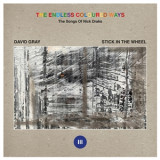
The Endless Coloured Ways is a collection of songs by legendary singer/ songwriter, Nick Drake, performed and recorded by over 30 incredible artists from a range of different backgrounds, genres, age groups and audiences. From Fontaines D.C to Guy Garvey, and Aurora to Feist, each artist has offered their own incredible take on a timeless classic. - Third in a collection of five 7" singles - - Limited stock - - Gatefold lancing sleeve -
The Endless Coloured Ways is a collection of songs by legendary singer/ songwriter, Nick Drake, performed and recorded by over 30 incredible artists from a range of different backgrounds, genres, age groups and audiences. From Fontaines D.C to Guy Garvey, and Aurora to Feist, each artist has offered their own incredible take on a timeless classic. - Third in a collection of five 7" singles - - Limited stock - - Gatefold lancing sleeve -
"Released in April 1966 by Decca Records, Aftermath was the Rolling Stones’ fourth British studio album. It was issued by London Records in the US in June 1966. Recorded at the RCA Studios in California, it was their first album released in true stereo.
It is also one of the first ‘popular’ albums to eclipse the 50-minute mark, and contains one of the earliest rock songs to exceed 10 minutes (the blues jam Goin’ Home). The album’s release was briefly delayed by controversy over the original packaging idea and title – Could You Walk on the Water? – due to London Reocord’s fear of offending Christians in the US.
The album was considered an artistic breakthrough for the band, being the first to consist entirely of Jagger–Richards compositions, (after their maverick young manager, Andrew Loog Oldham, had shut them in the kitchen of their flat until they had written some more original songs!).
It also featured strongly the immaculate guitar work of Brian Jones and the remarkably wry, observant song-writing of Jagger–Richards
Jones played a variety of instruments not usually associated with their music, including sitar, dulcimer, marimbas and Japanese koto, as well as guitar, harmonica and keyboards, though much of the music is still rooted in Chicago electric blues. The burgeoning influences of psychedelia, Bob Dylan and the tensions around the world, are evident in classics like Paint It Black, an eerily insistent number one hit, available on the US version of the LP.
Other classics included the jazzy Under My Thumb, where Jones added exotic accents with vibes, and the delicate Elizabethan ballad Lady Jane, with distinctive dulcimer, the wry observational Mother’s Little Helper with its unashamed lyrical drug references, and the overlooked gem – the brooding, meditative I Am Waiting.
The American edition was issued with a shorter track listing, substituting the single Paint It Black in place of four of the British version’s songs, in keeping with the industry preference for shorter LPs in the US market at the time."
Released in the UK in January 1967 by Decca Records and February by London Records in the US – Between The Buttons was the Stones’ fifth British and seventh US studio album. Released as the follow-up to Aftermath, this album marked a high point in the band’s career, continuing their ventures into psychedelia and baroque pop balladry, it is among the band’s most musically eclectic works. Brian Jones sidelined his guitar on much of the album, instead playing a wide variety of other instruments including organ, marimba, vibraphone, and kazoo. Piano contributions came from two session players: former Rolling Stones member Ian Stewart and frequent contributor and studio legend Jack Nitzsche. It was the last album produced by Andrew Loog Oldham, the band’s manager and producer of all of their albums to this point.
The album has one of the most striking sleeves of the period, featuring a classic Gered Mankowitz image on the cover. The photo shoot took place at 5:30 in the morning following an all-night recording session at Olympic Studios. Using a home-made camera filter constructed of black card, glass and Vaseline, Mankowitz created the effect of the Stones dissolving into their surroundings – according to Mankowitz… ""to capture the ethereal, druggy feel of the time; that feeling at the end of the night when dawn was breaking and they’d been up all night making music, stoned.”
The songs continued Aftermath’s lyrics of acute social observation and savage insight, their earlier raw, rootsy power enhanced by other influences of the period – notably The Beatles, The Kinks, and again Dylan. It is one of their strongest, most varied LPs, with many great songs that remain unknown to all but Stones devotees.
The inventive arrangements and innovative instrumentation on brooding near-classics like All Sold Out, My Obsession and Yesterday’s Papers brought a new dimension to the music. She Smiled Sweetly shows their hidden romantic side at its best, Connection is one of the record’s few pieces of more conventional driving rock and album closer Something Happened To Me Yesterday includes Keith’s first solo vocal.
The US version includes contemporaneous hits – the two songs that gave the group a double-sided number one in early 1967: the shameless and controversial Let’s Spend The Night Together and the beautiful, melancholy Ruby Tuesday.
Released in the UK in January 1967 by Decca Records and February by London Records in the US – Between The Buttons was the Stones’ fifth British and seventh US studio album. Released as the follow-up to Aftermath, this album marked a high point in the band’s career, continuing their ventures into psychedelia and baroque pop balladry, it is among the band’s most musically eclectic works. Brian Jones sidelined his guitar on much of the album, instead playing a wide variety of other instruments including organ, marimba, vibraphone, and kazoo. Piano contributions came from two session players: former Rolling Stones member Ian Stewart and frequent contributor and studio legend Jack Nitzsche. It was the last album produced by Andrew Loog Oldham, the band’s manager and producer of all of their albums to this point.
The album has one of the most striking sleeves of the period, featuring a classic Gered Mankowitz image on the cover. The photo shoot took place at 5:30 in the morning following an all-night recording session at Olympic Studios. Using a home-made camera filter constructed of black card, glass and Vaseline, Mankowitz created the effect of the Stones dissolving into their surroundings – according to Mankowitz… ""to capture the ethereal, druggy feel of the time; that feeling at the end of the night when dawn was breaking and they’d been up all night making music, stoned.”
The songs continued Aftermath’s lyrics of acute social observation and savage insight, their earlier raw, rootsy power enhanced by other influences of the period – notably The Beatles, The Kinks, and again Dylan. It is one of their strongest, most varied LPs, with many great songs that remain unknown to all but Stones devotees.
The inventive arrangements and innovative instrumentation on brooding near-classics like All Sold Out, My Obsession and Yesterday’s Papers brought a new dimension to the music. She Smiled Sweetly shows their hidden romantic side at its best, Connection is one of the record’s few pieces of more conventional driving rock and album closer Something Happened To Me Yesterday includes Keith’s first solo vocal.
The US version includes contemporaneous hits – the two songs that gave the group a double-sided number one in early 1967: the shameless and controversial Let’s Spend The Night Together and the beautiful, melancholy Ruby Tuesday.
"Released in April 1966 by Decca Records, Aftermath was the Rolling Stones’ fourth British studio album. It was issued by London Records in the US in June 1966. Recorded at the RCA Studios in California, it was their first album released in true stereo.
It is also one of the first ‘popular’ albums to eclipse the 50-minute mark, and contains one of the earliest rock songs to exceed 10 minutes (the blues jam Goin’ Home). The album’s release was briefly delayed by controversy over the original packaging idea and title – Could You Walk on the Water? – due to London Reocord’s fear of offending Christians in the US.
The album was considered an artistic breakthrough for the band, being the first to consist entirely of Jagger–Richards compositions, (after their maverick young manager, Andrew Loog Oldham, had shut them in the kitchen of their flat until they had written some more original songs!).
It also featured strongly the immaculate guitar work of Brian Jones and the remarkably wry, observant song-writing of Jagger–Richards
Jones played a variety of instruments not usually associated with their music, including sitar, dulcimer, marimbas and Japanese koto, as well as guitar, harmonica and keyboards, though much of the music is still rooted in Chicago electric blues. The burgeoning influences of psychedelia, Bob Dylan and the tensions around the world, are evident in classics like Paint It Black, an eerily insistent number one hit, available on the US version of the LP.
Other classics included the jazzy Under My Thumb, where Jones added exotic accents with vibes, and the delicate Elizabethan ballad Lady Jane, with distinctive dulcimer, the wry observational Mother’s Little Helper with its unashamed lyrical drug references, and the overlooked gem – the brooding, meditative I Am Waiting.
The American edition was issued with a shorter track listing, substituting the single Paint It Black in place of four of the British version’s songs, in keeping with the industry preference for shorter LPs in the US market at the time."
Francois Dillinger brings his futuristic visions to this classy new EP on EC Underground. It finds the sonic sculptor kick off with a warped bassline underpinning an eerie and slow motion electro cut on 'The Pilgrimage.' 'Tangential' is another snaking rhythm with mysterious pads and bouncing bass that makes for a truly original vibe.
'Message Failed To Send' has a hint of Kraftwerk retro-ism to its snappy snares and talk box vocals then 'When It Was Free' classes down with a gritty mix of celestial charm and deep space unknown.
These are next level sonics as always from Dillinger.
out of Stock
Last delivered 3 years ago available to reorder, subject to availability
Some records just stop you in your tracks. They resonate with you and feel instantly familiar like an old friend, even on the first listen. SOYUZ's third album ‘Force of the Wind’ is one of those records. It holds all the trademarks, beauty, and eccentricities of classic Brazilian recordings, from the 60s and 70s, that we have come to love. Think artists such as Milton Nascimento, Lô Borges, Burnier e Cartier, Arthur Verocai et al. But this record wasn’t made in Brazil and is in fact a brand-new release.
SOYUZ (which translates as 'union') is a creative collective from Minsk, Belarus, led by composer, arranger, and singer, Alex Chumak, multi-instrumentalist, Mikita Arlou, and drummer, Anton Nemahai. SOYUZ's previous albums explored and reimagined the legacy of jazz-oriented, non-English-language pop music of the 20th century. For their third album, there is a stronger focus, and it is influenced by 70s Música popular Brasileira and building bridges from it to present-day Belarus. Alex notes that from the moment he first encountered Brazilian music, he found in it a kind of concentrated emotion that felt as if it were familiar to him from his childhood. This non-verbal emotion and connection between the listener and musician echoes in the music, regardless of understanding of the language the album is recorded in.
‘Force of the Wind’ includes songs sung in Russian and Portuguese as well as instrumental compositions. Its musical palette is both acoustic and electroacoustic: rich warm Rhodes piano, soaring string arrangements, and a controlled drum swagger sounding both relaxed yet super tight. Alongside Alex's sublime vocals, that grace the majority of the tracks, the album features guest performances by multi-talented musician and vocalist Kate NV and rising Brazilian star, Sessa. Alex also recently arranged a number of tracks on Sessa's highly praised 2022 album 'Estrela Acesa'.
On the album, the trio is joined by a cast of friends; NY-based musician of Turkish origin percussionist, Cem Mısırlıoğlu, classically trained composer, Simon Hanes, who aided with string arrangements and conducting the string players, Netherlands-based Brazilian multi-instrumentalist, Gabriel Milliet, on flutes. With the collaboration of these friends SOYUZ have created nine songs/suites that are subtle and plenitude and like the best albums, leave you aching for more.
‘Force of the Wind’ is an enigma, Brazilian yet not Brazilian, vintage yet still contemporary, out of sync with modern culture yet completely relevant and necessary.
out of Stock
Last delivered 3 years ago available to reorder, subject to availability
Renaldo Domino
Chicago Soul Legend
Born March 27th 1950) from “The Valley” around 49th & Forestville.
He was nicknamed Domino because his voice was sweet as sugar, Domino being an American sugar brand name.
Renaldo Domino blasted onto the fertile Chicago soul scene of the late 60's with a voice as sweet as sugar and deep grooves that sound just as fresh five decades later. Releasing singles on Mercury subsidiaries Smash and Blue Rock, and later Twinight records, Renaldo’s all-too-brief career has still managed to leave an impact to all those lucky enough to hear it.
He had a relatively short recording career releasing only 7 singles between 1967-1971. His first 45 was recorded whilst he was still attending high school on a tiny label Arnell on a low budget.
The Arnell 45 did well enough for him to get signed to Smash (a Mercury subsidiary) where he released two 45s, re-recording 'I'm Hip To Your Game' for his second Smash single, as it's a different version to the one released on Arnell. His third 45 was released on another Mercury subsidiary, the now revived Blue Rock which had been 'suspended' since 1966 and reacivated in 1968. The records sold reasonably well locally but Dominio left to join Twinight, feeling that his material wasn't being promoted by Mercury, where he released a further three singles between 1969-71. Twinight released him in 1971 and despite trying to get another recording contract he was unsuccessful and left the music business to pursue another career.
He was managed by William Sandy Johnson who also managed LaShawn Collins and Wendy Woods who recorded on Johnson's Sincere label, the only 2 releases on the label. He also wrote Renaldo Domino's first 4 A sides: 'I'm Getting Nearer To Your Love', 'Just Say The Word', 'Not Too Cool To Cry', 'Let Me Come Within'. In addition he wrote 'Do It Now' for Wendy Woods and the flip to LaShawn Collin's classic 'What You Gonna Do Now', 'Girl Chooses The Boy'.
Renaldo returned to the spotlight in 2007 when the Chicago reissue powerhouse Numero Group put him on the cover of their deluxe box set Eccentric Soul: Twinight's Lunar Rotation (which included other greats Syl Johnson, The Notations, and many more). Renaldo’s performing career began to flourish once again with shows around country.
In early 2019 Renaldo teamed up with producer Jeremy Kay and arranger JB Flatt and set out to record new tracks that would live up to Renaldo’s great early records. Assembling a crack team of Brooklyn’s best they pulled out all the stops, creating a mix between the lush arrangements of Chicago’s early soul style and the hard-hitting beat of current Brooklyn soul. The new single “No Laggin’ & Draggin’” / “Give Up The Love”, released Feb 2020, is now available on Colemine Records.
Backed by The Heavy Sounds, Renaldo’s live performances continue to deliver with passion and precision, making new fans young and old.
Carolina’ is the Brazilian virtuoso Seu Jorge's debut full-length album from 2002. Originally released under the title ‘Samba Esporte Fino’, its release and subsequent international acclaim dovetailed with Seu Jorge’s ascent into movie stardom. He is probably best known outside of Brazil for his work on Wes Anderson’s 2004 film 'The Life Aquatic with Steve Zissou’, in which he played a starring role and his Portuguese covers of David Bowie records were a highlight of the soundtrack. Having initially found fame thanks to his standout performance as Knockout Ned in the revered movie ‘City of God’. ‘Carolina’ would cement his global fame and launch an illustrious musical career that has earnt him a Grammy nomination.
Co-produced by Mario Caldatto of Beastie Boys and Planet Hemp fame, the album presented a vibrant, contemporary combination of samba and funk, backed by guitar, bass, drums, percussion, and horns. It kicks off with one of Seu's most loved tracks 'Carolina', an anthemic feel-good classic with timeless energy, ending in a sing-along crescendo. Other highlights included the Brazilian-Funk of 'Mangueira' reminiscent in places of Tim Maia with its 80s inspired vibe, and the catchy jazzy-samba of 'Tu Queria' which always ignites the dance floor.
Rubinho E Mauro Assumpção's 'Perfeitamente, Justamente Quando Cheguei' has to be up there as one of the finest Brazilian-psych-folk-MPB records we know. Unfortunately, it's very hard to find in the wild; even on digging trips to Brazil, an original copy rarely shows up, and when it does, it comes with a hefty price tag.
This highly sought-after rarity was released on the Brazilian label Tapecar Records in 1972 and is the one and only album by the sensational pairing of Rubinho and Mauro Assumpção. Effortlessly blending folk, MPB, funky-psych, rock, and relaxed, swaggering samba, this record ought to be heralded as a true Brazilian classic. However, maybe due to its scarcity and the previous reissue predominantly being only available to the Brazilian market, it has not had a chance to fully shine and find the wider audience it deserves. Through our reissue we hope to put things right. Fans of records by Milton Nascimento and Lô Borges are sure to enjoy the same magic and allure in 'Perfeitamente, Justamente Quando Cheguei'.
In addition to being the album’s songwriters, Mauro Assumpção took on the role of producer and Rubinho was co-producer as well as playing piano, organ, acoustic guitar and performing vocals. The record features the drummer Gegê who worked with Milton Nascimento, Edu Lobo, Nana Caymmi, Dom Um Romão and more. It also features guitarist Rick Ferreira, who played with Erasmo Carlos, Gal Costa and other greats. Rounding off the players on the album are Darcy Da Cruz and Formiga who have graced many a fine recording on horns.
'Perfeitamente, Justamente Quando Cheguei' is a truly stunning work that washes over you with beauty. Delve in and savour.
out of Stock
Last delivered 3 years ago available to reorder, subject to availability
'Atlantis' is a smouldering jazz-funk, cinematic excursion courtesy of the Brazilian maestro, Daniel Salinas. A conductor, pianist, arranger, and producer, he has worked across several genres within Brazil’s rich musical tapestry, including the Beatles-inspired Jovem Guarda movement, jazz-funk, and MPB to name just a few. He featured on records by Franco, Célia, Perfume Azul Do Sol, Wilson Simonal, Juca Chaves and a whole host of Brazilian greats.
Released in 1973 on Top Tape Records, 'Atlantis’, features one of Salinas’ best-known recordings (at least in Europe), his much-loved interpretation of 'Also Sprach Zarathustra’ entitled 'Straussmania’. It was inspired by Eumir Deodato's global hit of the same year and went on to be adopted by various scenes becoming a classic within rare groove circles as well as amongst breaks and beats diggers.
Other highlights include the only original Salinas composed track on the album; the driving, orchestrated Brazilian groover, 'Baião', and an epic, head nod breakbeat interpretation of Donovan's folky 'Atlantis'.
'Atlantis' was also issued by the American record label Cadet in 1974 with alternative yellow sleeve artwork; this re-issue is a replica of the original Brazilian Top Tape version from 1973.
• Smouldering jazz-funk & cinematic excursions from the Brazilian maestro Daniel Salinas.
• Featuring his much-loved interpretation of 'Also Sprach Zarathustra' entitled 'Straussmania'.
• Replica of the original Brazilian Top Tape version from 1973.
out of Stock
Last delivered 3 years ago available to reorder, subject to availability
An Appointment with Mr Yeats sees the words of W B Yeats, one of Ireland's greatest literary sons, merged with the music of The Waterboys, one of Britain and Ireland's greatest rock bands, in a truly unique and ambitious musical undertaking. The album was originally released in 2011, and has been fully remastered for re-issue, and now contains 6 previously unreleased bonus tracks. The Waterboys vocalist Mike Scott, first delivered a new dimension to Yeats' poetry in 1988, when he wrote a musical accompaniment for the classic poem The Stolen Child, during the making of the Waterboys seminal album 'Fisherman's Blues'. Five years later he set another Yeats poem to music, Love and Death, which appeared on their 'Dream Harder' album. Over the years, Scott had been quietly crafting a wealth of material similarly based on the writings of Yeats. A number of these were performed by him at the Abbey Theatre during the Yeats International Festival in 1991, but most had remained in Scott's private songbook awaiting the right vehicle. An Appointment with Mr. Yeats was that long-awaited context. Scott's love of literature is firmly embedded throughout the work of The Waterboys. He has also put the writings of Robert Burns, James Stephens, Kenneth Grahame and George MacDonald to song. Speaking on his literary influences and loves, Scott explained: "I grew up in a house full of books so literature - and language - have always been important to me. Working with other peoples' words is something that comes as natural to me as working with my own. In a way it's even more immediate; I've always found writing music an easier process than the writing of lyrics, and setting words of the quality of Yeats' to music is an enormous privilege and treat." An Appointment with Mr. Yeats is a unique and memorable opportunity for lovers of great music and great literature to celebrate the union of song and word in one spectacular record.
Módulo 1000 were not messing around when they made 'Não Fale Com Paredes’. It holds its own, not just as a raw, heavy, experimental “Brazilian” psychedelic rock album, but as a raw, heavy, experimental psychedelic rock album, full-stop!
Formed in Rio de Janeiro in 1969, Módulo 1000 honed their craft as the house band in clubs and resorts in São Paulo where they predominantly covered American artists such as Jimmy Hendrix as well as British giants, Led Zeppelin. After acquiring a taste for fame following the performance of one of their tracks at the Rio International Song Festival, the band focussed their attention on composing original material. Their manager, Marinaldo Guimarães, encouraged the band to explore their experimental and creative sides. This, in parallel with the explosion of experimental music in Brazil, resulted in the band performing alongside heavyweights such as O Têrço; there was a happening in the air.
Módulo 1000 recorded just one album. Released on Top Tape records in 1972, it featured Eduardo Leal on bass, Candido Faria on drums, Daniel Cardone on guitar, violin and vocals, and Luiz Paulo Simas on organ, piano, and vocals. 'Não Fale Com Paredes' was produced by the popular DJ, Ademir Lemos, and came housed in a fold-out cover featuring tripped-out artwork and design by Wander Borges. However, due the uncompromising nature of its wild, heavy psychedelic rock sound, the album was destined not to be played on the radio in Brazil. Rumours suggest that the label didn't understand the album, and as a result, it wasn't promoted or marketed. Thus, like many other underground cult classics, it was lost in the ether, only later to be rediscovered by a new audience at a different time.
One thing is certain, you definitely know when you've heard Módulo 1000. The sound is raw, heavy and at points quite aggressive, more Black Sabbath than Os Mutantes. It floats between psychedelic rock, prog rock, early metal, and dare we say, displays elements of proto-math-rock.
The band’s discography includes a 7" single, as well as their music being featured on several compilations for Odeon Records, additionally they released a 7" single under their alias 'Love Machine' for Top Tape Records. These compositions are included as bonus tracks on the CD version of our reissue.
A+ record ... My first reaction was "since when is Tamil making dance music, what can't he bloody do", I'm so here for it. ‘Robert Street’ and ‘Burning So Hot’ are simply future classics IMO.’ - CC:DISCO!
Born in the heartland of Melbourne suburb Fitzroy, Steady Weather (comprised of scene stalwarts Ben Grayson and Tamil Rogeon) bring to light organic dance music from Melbourne’s rich neo-soul and jazz community. With a lineage that leads directly to the founding of groups like Australian funk royalty The Bamboos and orchestral beat music pioneers The Raah Project, Rogeon and Grayson not only bring that heritage to their music, they bring a philosophy of raw emotion and soulfulness to their productions. Tamil also plays strings for Harvey Sutherland’s Bermuda, with the group’s musical DNA echoing in Steady Weather’s productions.
The legendary Brownsville duo of Lil Fame and Billy Danze followed up their first group single "How About Some Hardcore" with their first full-length studio album, To The Death, in the Spring of 1994, and they haven’t let up the pressure since. While some solo offerings came earlier - most notably Fame’s appearance on The Hill That’s Real compilation- the classic aggressive energy the two emcees exhibit while trading rhymes back and forth is what street-rap fans have come to know and love from the group. If you are not into the that smash-ya-face-in style, then simply put, the Mash Out Posse is not for you. The album was produced entirely by DR Period, except for track "Guns N' Roses" (produced by Silver D), and it solidified what has become a successful 30 year career for M.O.P. Fame and Danze haven’t waivered from their grimy, crimey, high-energy boom bap style to this day, and the songs on this album established that fact early on. Tracks like "Rugged Neva Smoove", “Blue Steel”, “Guns N’ Roses”, and the robbery-story driven "Heistmasters" are early indicators of the ruckus they would later bring on anthems like “Stick To Ya Gunz” and “Ante Up”.
A floaty, smouldering underground bubbler, 'Quero Ver Você Sambar' is, to our knowledge, the only record by Homero França. Released on a 7" compacto on Chantecler Records in 1976; the song was co-written by Aloisio Silva, who was the composer behind the tripped-out, instrumental monster track 'Tema, R'. Hidden on the B-side of an obscure lost 7", 'Quero Ver Você Sambar' is soulful samba at its finest, with a beautiful call-and-response chorus, it brings the heat to the dancefloor.
Vocalist Silvinha Araújo graced us with a number of wonderful recordings in the 60s and 70s, including collaborations with her husband Eduardo Araujo. 'Mas Nao Deixe De Ir' is taken from Silvinha's 1969 album 'Caminho Sobre Nuvens' on Odeon Recordings. The backing track loosely resembles Archie Bell & The Drells classic 'Tighten Up', and here Silvinha's take gives the track a new twist, blessing it with her uniquely powerful, gravelly vocals that effortlessly ride the breakbeat. At just over two minutes long, it's short but powerful.
out of Stock
Last delivered 20 months ago available to reorder, subject to availability
On this 7”, we present two lost jazz tracks by the trombonist and Horace Tapscott-collaborator, Lester Robertson. Lester has worked with some of the greats of jazz including Gerald Wilson, Anita O'Day, Lionel Hampton and Roy Porter Sound Machine on the classic 'Jessica' album.
Lester was a member of Horace Tapscott's The Pan-Afrikan Peoples Arkestra and features on the iconic underground jazz albums 'The Call' and 'Live At I.U.C.C.'. The Arkestra was set up in 1961 in Los Angeles and over the years has included wonderful, inspirational musicians such as Adele Sebastian, Kamasi Washington, Dwight Trible, Phil Ranelin, Arthur Blythe, Jesse Sharps and Nate Morgan.
These two recordings have recently been discovered on an archived master tape that little information on it other than Lester's name and the track titles. Sadly, the other players on the tracks aren’t credited on the tape, so a line-up can’t be 100% confirmed. Still, the magic of what they laid down in the session pays testament to their artistry. First up is the lively popping track 'Akirfa' in which Lester gets space to let rip and exercise his talents. On the flip is the euphonious 'Untitled Ballad', a mellifluent lullaby for an end-of-the-day wind-down.
Lost for a while, but thankfully not forgotten, these beautiful recordings finally get their chance to shine.
One of the most violent thrash metal albums ever! Raging riffs, outraging drums, screaming solos and totally pissed vocals. Total aggression! Death metal wouldn’t sound like it does without that album. Then the 10 tracks on this legendary album... Let’s start with Side A: The opener “Malleus Maleficarum/Anthropomorphia” sets the tone and remains a classic to this day, with a switch after 50 seconds and then a full on thrash attack only comparable to the best and most intense moments on “Pleasure to Kill”. The mid-tempo part and the solo’s/leads are haunting still and hint at more melodies to come in the future. “Parricide” is brutal Thrash, surely echoing a bit of Slayer/Infernal Majesty as well, but just very intense and brutal. Next up is “Subordinate to the Domination”, another bulldozer song, that simply pounds you into ashes, very thrashy, but also brutal. As a short intermezzo we get “Extreme Unction”, which with it’s one and a half minute echoes a bit the crossover/thrash metal attitude of the late 80’s, and it is in its intensity and compactness a strange, yet fitting track that leads us to the closing song on Side A of the LP (yep, bands did think on closers on album sides when vinyl was the standard)... “Commandments” that is, starting with its acoustic intro, fully bursting out after 35 seconds into one of the standout songs of this album, to some possibly the best song on the album (who am I to disagree) because it is one of those brutal thrash songs that is among the best ever recorded, and a song that everyone knew back then, because of the “Stars on Thrash” compilation.
Sounding simultaneously from the past, the present, and the future, the debut album 'MLDE' by Marxist Love Disco Ensemble seeks to eradicate both the trite from disco and the sobriety from political music. Half poetic, half tongue-in-cheek, this stunning compact eight-track album is influenced by Eastern European and Mediterranean 70s disco records. In the words of band member Paolo, ''it was written in response to hearing 'I love America' by Patrick Juvet. The song prompted the question: why does disco, a genre originally created by oppressed minorities, eventually become synonymous with American capitalist excess?" MLDE seeks to break this connection.
Merging disco, post-disco 80s pop, and boogie into the fold, 'MLDE' was recorded using only analogue instruments, giving it warmth and space. Recorded on cassette, ¼ and ½ inch tape, this gives moments of lo-fi abstraction between the beats of an aggressive, tight drum kit. Instruments used for this recording range from saxophone, trumpet, harpsichord, guitar, and rare analogue synthesisers. The bass sound is shaped by early 80s boogie records, whilst the influence of artists such as Hamlet Minassian can be heard in some of MLDE's more driving-disco outings, such as 'Hues of Red'. In the tradition of Soviet vocal group records, which the band has studied, some songs are sung by a vocal quartet in homage to this tradition.
Tracks such as '1905' and 'Brumaire' have a greater pop aesthetic, with Paolo's vocal style on these more pop-driven songs evoking early 80s bands such as Orange Juice and Chas Jankel.
The format and message of pop and disco are commonly viewed just to entertain and move bodies around a dancefloor; however, lyrically, the subjects range from dialectical and historical materialism, class struggle, Marxist theory and praxis, as well as the concept of Marxist disco music.
Adding the icing to the cake, mastering don Joker aka Liam McLean dusted the album with his magic, giving the songs space where the room is needed, as well as the kick and punch demanded by the modern dancefloor.
Yes, this is a press release, and they are always full of hype, but we were blown away when we heard this album, and we hope it enriches you too.
out of Stock
Last delivered 3 years ago available to reorder, subject to availability
Zero T returns to the imprint with his Irish soul brother Steo for their much anticipated joint EP on wax.
In collaboration with Myth, the lead track ‘Go’ will be opening sets for days with its long and soulfully energetic intro that crescendos into full dancefloor epicness.
Title track ‘Stop/Start’ draws in on classic jungle-inspired drum and bass edits, beautifully executed with timeless appeal.
Much-hyped French foursome Visages also feature with their techno-inspired rework of the duos much loved ‘Can’t Hide’ – an impressive first outing on the imprint with their signature hypnotizing grit and edge.
Mark your calendars now with August X as the official release of Zero T & Steo’s Stop/Start vinyl EP.
out of Stock
Last delivered 3 years ago available to reorder, subject to availability
Glenn Fallows and Mark Treffel released their first album, ‘The Globeflower Master Vol. 1’, on Mr Bongo in September 2021. With its lush, warm and timeless productions paying homage to classic 60s and 70s soundtrack composers, it was very well received and struck a chord with the scene’s connoisseurs. Louder Than War emphatically stated, "It’s impossible not to like The Globeflower Masters Vol. 1.”, with Gigwise echoing that praise “slickly compelling retro vibes”.
The Globeflower Master Vol. 2 is the slightly edgier and more grown-up sequel to Mark and Glenn's 2021 debut album. For this excursion, the Brighton-based duo wanted to lean a little further into their European film soundtrack influences, with particular inspiration mined from the works of Stefano Torossi, David Shire, and Roger Webb. This expansion of their sound builds upon the rich tapestry of cinematic funk à la David Axelrod, Serge Gainsbourg and Morricone that fashioned Vol. 1. Here the arrangements, melodies, and harmonies have been refined; only what is needed is left. Pulled into its vortex for the ride. This record doesn’t pull any punches.
The recordings are drenched in visual imagery; they stimulate the senses and invite the imagination to roam. Ethereal, hazy memories of lost summers are triggered; the beauty of listening to music when driving along a deserted road in the Italian countryside lined with cypress trees heading towards the sun, and beyond. As the musical journey progresses, we even take a voyage to another planet. Whether these memories are real or constructed recollections of scenes from film and television, the tracks evoke a feeling of nostalgia and comfort. Like all the best music, 'The Globeflower Masters Vol. 2' takes us out of ourselves even if it's only temporarily.
To consolidate the shape of the sound, drummers Timmy Rickard and Ollie Boorman (who also featured on Vol. 1) and John Maiden (Tricky collaborator) sprinkled their magic and forged their stamps onto the recordings. Collaborating with other talented musicians contributed to the picture Mark and Glenn wanted to paint. The ‘Globeflower Master Vol. 2’ is a fitting tribute to the music they love and care deeply about and a glorious addition to their musical world.
out of Stock
Last delivered 4 years ago available to reorder, subject to availability
Sounding simultaneously from the past, the present, and the future, the debut album 'MLDE' by Marxist Love Disco Ensemble seeks to eradicate both the trite from disco and the sobriety from political music. Half poetic, half tongue-in-cheek, this stunning compact eight-track album is influenced by Eastern European and Mediterranean 70s disco records. In the words of band member Paolo, ''it was written in response to hearing 'I love America' by Patrick Juvet. The song prompted the question: why does disco, a genre originally created by oppressed minorities, eventually become synonymous with American capitalist excess?" MLDE seeks to break this connection.
Merging disco, post-disco 80s pop, and boogie into the fold, 'MLDE' was recorded using only analogue instruments, giving it warmth and space. Recorded on cassette, ¼ and ½ inch tape, this gives moments of lo-fi abstraction between the beats of an aggressive, tight drum kit. Instruments used for this recording range from saxophone, trumpet, harpsichord, guitar, and rare analogue synthesisers. The bass sound is shaped by early 80s boogie records, whilst the influence of artists such as Hamlet Minassian can be heard in some of MLDE's more driving-disco outings, such as 'Hues of Red'. In the tradition of Soviet vocal group records, which the band has studied, some songs are sung by a vocal quartet in homage to this tradition.
Tracks such as '1905' and 'Brumaire' have a greater pop aesthetic, with Paolo's vocal style on these more pop-driven songs evoking early 80s bands such as Orange Juice and Chas Jankel.
The format and message of pop and disco are commonly viewed just to entertain and move bodies around a dancefloor; however, lyrically, the subjects range from dialectical and historical materialism, class struggle, Marxist theory and praxis, as well as the concept of Marxist disco music.
Adding the icing to the cake, mastering don Joker aka Liam McLean dusted the album with his magic, giving the songs space where the room is needed, as well as the kick and punch demanded by the modern dancefloor.
Yes, this is a press release, and they are always full of hype, but we were blown away when we heard this album, and we hope it enriches you too.
out of Stock
Last delivered 4 years ago available to reorder, subject to availability
"The galloping technical progress in the second half of the last century dominated all spheres of daily life, art and culture. In the music industry machines took over the role of classical instruments and did not stop at RnR, punk nor industrial music. No one could resist the challenge, but also the prevailing trends in the 80s. The music industry was influenced by the electronic virus globally, not sparing even the remotest corners of the planet, producing bands like Depeche Mode, New Order, Soft Cell or lesser known ones like Liquid Liquid, Section 25, The Wake as well as the pioneers of the electronic music Silver Apples, Pierre Henry,etc .
What was going on in the music industry of former Yugoslavia and at Jugoton, the biggest YU music label at that time? The all over answer is given by a new release of Everland Music: Electronic Jugoton - Synthetic music from Yugoslavia 1964. - 1989. Vol. 1
Electronic Jugoton is the first part of two double albums, where the second part will even go back to pre-electronic music from 1964. Both double albums were initially released by Croatia Records (ex-Jugoton) in 2014 on a 2CD set with no less than two and a half hours of material (47 songs, 35 performers), showing the contemporary trend of Jugoton at that time towards avant-garde and provocative directions in electronic music. This untimely compilation is released for the first time on vinyl now on two double LPs, housed in gatefold sleeves by Everland Music, where part 2 will be released in 2023.
The brave and insightful creators of the compilation Electronic Jugoton, veteran crate diggers Višeslav Laboš and Zeljko Luketić, have excelled at reconstructing the musical past of electronic music in Yugoslavia from 1964 – 1989. Jugoton's extensive research included the most exciting and progressive moments of pop and disco music, early rap, electronic responses of new wave, RnR, post punk and industrial bands to the current trend of the 80s, but also pioneers of avant-garde electronic music.
Electronic Jugoton part 1 is officially opened by the band Laboratorija with the song Devica 69, which opens a window to a completely new and experimental world in former Yugoslavia.Laboš and Luketić have boldly chosen the material without reservations, suggesting that for the first time in one place we have a section of forgotten, unique underground bands like Beograd, Data, Brazil, The Master Scratch band, DU DU A and beyond.
Besides the excellent underground bands, we find popular performers of the time performing less well-known songs: Denis & Denis, Oliver Mandić, Slađana & Neutral Design.
Electronic Jugoton part 2 is partly dedicated to unique electronic music in the performance of important Yugoslav punk, new wave, RnR and industrial bands: Zana, Pekinška patka, Električni orgazam and Borghesia, while the second part of the material is focused on avant-garde early electronic music in Yugoslavia, where the works of composers Igor Savin, Branimir Sakac, Igor Kuljerić and Miroslav Miletić were presented. Luketić and Laboš rescued the obscure electronic tune Elektra by Zdenka Kovačiček, who was at that time Jugoslovska Soul and funk diva.
The uniqueness and quality of this compilation are also audio stories for children, which were extremely fertile ground for an experimentation with electronic sounds, as they should be highly imaginative to attract the attention of the childrens. Electronic Jugoton is also the first compilation in which the listener will find fragments of interviews with actors from the time gave for Jugoton Express. This was a series of promo vinyls printed in extremely small quantities in the 80's and intended to be exclusively for radio stations. An average of 30 minutes of promotion material and interviews with musicians were available for the first time through this compilation.
The value of this compilation is time and priceless. The only question is whether you will be fast enough to catch your copy of the limited double vinyl editions!"
out of Stock
Last delivered 3 years ago available to reorder, subject to availability
The Best Old School Death Metal album from the Netherlands gets a well-deserved re-issue! Crushing, aggressive, abrasive, pounding, bone crunching... In an age when blast speed drums were still mostly used by grindcore acts (and some pioneers such as Morbid Angel) and now classic bands such as Cannibal Corpse, Suffocation, Deicide were still tiny demo acts, Dutch masters Pestilence released one of the best old school Dutch death metal classics ever to be unleashed upon mankind, the album that made a huge impact upon its release. “Consuming Impulse” is one intense album. one could say this album is definitely up there with classic death metal albums such as Death’s “Leprosy”, Obituary’s “Slowly We Rot”, and Morbid Angel’s “Altars of Madness”. With “Consuming Impulse”, Pestilence created their greatest, most complete album, successfully marrying the primitive brutality of their previous effort ‘Maleus Maleficarum’ with the technicality of their later releases. Whereas their debut album “Malleus Maleficarum” had some hints of thrash metal, this was gone on “Consuming Impulse” although the up tempo beat was still of course very much present. The production was heavy yet remarkably transparent. The riffs of Patrick Mameli on “Consuming Impulse” are simply mind-blowing. Even though quite simple at times they still prove extremely deadly. Try the main riffs in the verses of ‘Process of Suffocation’ and ‘The Trauma’ for starters. Speed monsters like ‘Dehydrated’ and ‘Reduced To Ashes’ were simple compositions but the intensity of this material just oozes out of your speakers. The presence of these straight forward raging death metal tracks was perfect to balance the dynamics and variety of the album. Songs such as ‘Chronic Infection’ and the classic ‘Out Of The Body’ incorporated some great interacting differentiating guitars and much more diversity in pace and riffing.
The Globeflower Masters Vol. 1 takes its inspiration from classic soundtrack and cinematic composers such as Axelrod, Morricone, Gainsbourg, Jean-Claude Vannier and Piero Umiliani. Created during Summer 2020, this album is the product of a fruitful collaboration between Brighton-based musicians Glenn Fallows (The Impellers / Andres y Xavi) and Mark Treffel (Blue States / The Soul Steppers). These seasoned performing and recording artists have put their abundance of experience and skilful musicianship into effect with aplomb on this album. This is as accomplished a debut release as you will ever hear, and dare we say, a future classic in the making.
The Globeflower Masters project was borne from an idea Glenn had to create an album that leant on the influence of soundtrack and library composers - particularly of the late 60s and early 70s. This rich sonic palette had previously been innate in his writing and composition but, for this album, the direct inspiration was placed front and centre. After penning several sketches, Glenn contacted Mark to fulfil the vision he had for a complete sound. Mark had an arsenal of vintage synths, pianos and other fun toys which could supplement the drums, guitars and bass that Glenn had been working on. As the album progressed, the pair worked increasingly collaboratively, with each of them starting and sharing ideas to curate the final eight finished tracks.
The results are an album of lush, warm, timeless productions that are drenched in strings and classical instrumentation. Awash with atmospheric excursions, it is a listening experience that moves you through moods whilst transporting you to a world of deeply evocative settings and imagined scenarios. The Globeflower Masters Vol. 1 resonates equally as well on a dark melancholic Winter's day as it does sound-tracking a halcyon Summer day. Though influenced by 60s and 70s productions the record is not a simple pastiche, feeling both simultaneously brand new as well as authentically retro.
- Stunning debut album filled with lush, warm, timeless productions.
- Taking inspiration from classic 60s and 70s soundtrack, and cinematic, composers such as Axelrod, Morricone and Gainsbourg
out of Stock
Last delivered 4 years ago available to reorder, subject to availability
This previously unreleased album by the Horace Tapscott Quintet was unearthed from master tapes in the Flying Dutchman archives. Recorded in 1969 and was intended to be a follow-up album to the classic 'The Giant Is Awakened' which was released that year.
The iconic pianist and composer Horace Tapscott was one of the most unique and important figures in LA’s jazz world. This lost recording was produced by one of the pivotal figures in jazz, Bob Thiele, a leading behind-the-scenes star who worked with many of the greats in jazz, such as Quincy Jones, Duke Ellington, John Coltrane, Della Reese, Shirley Scott, Gil Scott-Heron, the list goes on. His name can be seen gracing, arguably the best, Impulse! releases and those released on his own Flying Dutchman imprint set up in 1969.
Joining Horace for this three-track, deep, heavy, avant-garde session is the same stellar cast featured on 'The Giant Is Awakened'; Arthur Blythe on Alto Sax, Everett Brown Jr on Drums, with David Bryant and Walter Savage Jr. on Bass. Kicking things off we have 'World Peace’, which starts with an almost baroque-esque melody, leading to an eruption in sound, it then ends in the same manner it began. The beautiful 'Your Child' is the jewel in the crown, skirting modal, deep jazz and introducing elements of free jazz. 'For Fats' with its bow bass and piano intro takes you on a journey, dropping into, at times dark, stormy melodies and developing a driving energy as the composition progresses.
After recording this album, Horace was said to be wary of the music industry, so he retreated and distanced himself from this world, recording only for the independent labels UGMAA, Interplay Records, and Nimbus West Records. He set up The Pan-Afrikan People’s Arkestra and reintroduced the pan-African-roots sound back into the heart of jazz. He also developed and promoted the art form through performances and recordings.
Thankfully, this session from these wonderful musical pioneers was preserved and finally has its time to shine.
Featuring brand-new artwork by the illustrious artist/designer/musician Raimund Wong (Total Refreshment / Floating World Pictures)
Mother Naomi and daughter Wynonna enjoyed an astounding run of 14
number one singles from 1984 to 1989, ranking them as one of the most
popular country acts of the '80s
Their music combined elements of traditional country harmony singing,
bluegrass, and Appalachian folk with pop, rock, and polished contemporary
production. Moreover, Wynonna's powerful, bluesy, often sexy lead vocals
established her as one of the finest female country singers of her era. But even
more important than their widely accessible sound -- or their considerable visual
appeal -- was their sympathetic understanding of working-class and small-town
women, earned through a long, hard struggle of their own.
We can't think of many other performers like the singer/songwriter/dancer/actress Asha Puthli who have excelled in such a broad range of genres. From 60s psych, Classical Indian music, Free Jazz, Pop, Soul, Disco, to Rock, the list goes on. A 'best-of' or an 'essential collection' is always going to be a subjective thing, but for what is unbelievably the first official compilation covering the full breadth of Asha's illustrious career, we aimed to provide a snapshot into her ever-evolving musical journey and a tribute to the vast richness of her catalogue.
Some singers want to be famous, others are pop star icons, and some are artists; Asha is the latter. Asha is a true force of nature, regardless of the genre she explores, she fully commits, moves on, and reinvents herself, always progressing. Looking back on Asha's career, it is evident what a trail-blazer she was, opening doors for her contemporaries and those who came later to step through. Whether it was conscious or not, you can recognise Asha’s influence in aspects of Kate Bush's ethereal image and performance, in Donna Summer’s high-smooth vocal sound and disco stylings, and in the gumption and power of Grace Jones.
Kick-starting the compilation is ‘Pain’, the Indian psychedelic garage rock sounds of The Savages featuring Asha. We have to admit, we had to strongarm Asha into letting us include this track at first; also due to its rare nature (and lack of any master tapes) the recording we present here is raw and low-fi. However, we felt its inclusion was important to fully represent the journey of Asha's career, the same consideration was also applied to two of the Asha & The Surfers’ songs that we have included in this collection.
Asha saw a link between jazz and classical Indian music "the improvisation, the minor chords, the free form, the liberalness of the art" we showcase her love of jazz here with seminal works with the legendary Ornette Coleman, taken from the revered 'Science Fiction’ album. Asha's 'CBS years' are represented here, how could we not include 'Space Talk' on this collection, and how these years progressed into her amazing disco offerings such as 'I'm Gonna Dance' & 'Music Machine'. The bizarre 'We're Gonna Bury The Rock With The Roll Tonight' from 1980 has also won us over. A pseudo-50s throw-back song that sounds not un-similar to the post-modern, leftfield, pop of an MIA production to come years later. Rounding off the compilation we have Asha's interpretation of a Michael Jackson classic that sat lost on a cassette-only released in India.
out of Stock
Last delivered 20 months ago available to reorder, subject to availability
1985 session by piano great Duke Jordan alongside bassist Jesper
Lundgaard and drummer Billy Hart
Duke Jordan (1922-2006) famous for his intense lyricism embarked on the world
jazz scene as a member of the classic Charlie Parker Quintet in the late 40s with
his trademark introduction to "Embraceable You". Jordan unlike many other
American jazz musicians in Bebop era found his artistic and personal living space
in Europe since the early '70s. His extensive recording output on SteepleChase
including this album from 1985 recorded in Denmark makes up the huge part of
his discography.
"A most agreeable set that is both eminently listenable and very
enterprising...Jordan was always a fleetly swinging but subtle pianist whose allround musicianship has never got the recognition it merits. This fine trio deserves
to sell well and spared his name further afield." - Richard Palmer, Jazz Journal
International