Already fifteen years that Cléa Vincent has been stepping on stage with that childlike fervor, that passion for pop and its elasticity, from her early days in Parisian bars to last year’s show at the Bataclan for the release of her third album Advitam Æternamour. You could say she needs no introduction, her name being inseparable from some of the most exciting work to emerge in contemporary French independent music. From the very beginning, she asserted her taste for spontaneous, candid, sunlit music, turning her songs not only into spaces of introspection but also into small capsules for dialogue. She collaborates constantly, with Kim Giani, Jeanne Balibar, Alison Wheeler, Jacques, NUSKY & VAATI, João Selva, Les Clopes…driven by a desire for sharing, for visions that meet and collide across genres. Alongside her work as a composer, she dedicates herself to giving a voice to the artists around her, notably through her show Sooo Pop, broadcast on YouTube in 2018 and 2019, where she welcomed guests as varied as Christophe, Moodoïd, Mathilde Fernandez, Katerine, and The Pirouettes. Like others of her generation, she claims the influence of francophone pop from the 1980s, but rather than being a successor to Jacno, Cléa draws from everything that shapes her era, fully plugged into the present, its faces, its energies, its collisions. She travels too, a way of reshuffling the cards of her inspiration, and her discovery of South America, of bossa nova and samba during her tour dates, became the catalyst for her series of EPs Tropi-Cléa.
Five years after her bossa nova single "Tes petites fesses" and a notable appearance at the Colors studio in 2023, singer LYNN releases her debut album: La vie me va si bien. Comprising eleven tracks, it blends French neo-soul, smooth R&B, and minimalist pop, with a confident and sincere approach. For LYNN, each song explores the fragility of moments when tenderness shifts into doubt, expressing the fatigue of loving, the fear of losing oneself, and the beauty of longing. Her writing, precise and nuanced, focuses on detail and restraint. Accompanied by guitars, pianos, and layered voices, she tells stories between childhood and lucidity, in an organic and harmonious soundscape. The album exudes a controlled sincerity, meant to be listened to in calm, establishing LYNN as a distinctive voice, ready to mix gentleness with truth in a hurried world.
As early as her first album, Retiens mon désir (2016), Cléa Vincent brought us her fresh new pop sound, and succeeded in speaking a universal language through her music – an achievement that she accomplished again in Nuits sans sommeil (2019). Tropi-Cléa 3, which concludes the trilogy with a tropical excursion begun in 2017, represents a new – and bright – demonstration of this.
A souvenir record from her tour in Central America, it draws its inspiration from latin music, from the jazz that makes up Cléa’s roots. Surrounded by her live musicians who participated this time with her in the songwriting, she plunges us into into an exotica à la française, in the legacy of the French Riviera of the sixties, where Cléa’s admiration for Nougaro, Sébastien Tellier, le Gotan Project, Baden Powell, Tito Puente, and Gilberto Gil shines through. As though in mockery of the quarantine, Tropi-Cléa 3 opens a door for us to a festive and salvational escape.
out of Stock
Last delivered 10 months ago available to reorder, subject to availability
Advitam Aeternamour, Cléa Vincent's third album, will be released on 29 March 2024 by Midnight Special.
If the 90s gave us “French touch,” then the 2010s ushered in “French pop,” and it was in the midst of this revival that Cléa began her artistic journey. As early as the music video for
“Achète-le-moi” from her debut LP Retiens mon désir (2016), we witness the singer striking selfie-like poses with her French pop comrades (La Femme, Bertrand Burgalat), appearing pell-mell on screen in the form of their vinyl records. Since then, whether singing with Philippe Katerine or co-producing (and composing) Jeanne Balibar's D'ici là tout l'été (2023), Cléa Vincent has effortlessly carved out a niche for herself in the French pop scene. The advantage of being a “jack-of-all-trades” — Cléa is a writer, composer, and producer — is that her music casts a wide net. Both highly acclaimed in the indie circuit and “as seen on TV” (on Quotidien, among others), she has also enjoyed a stint as the host for web-TV show Sooo Pop, for which she regularly interviewed a plethora of French artists. Beyond France, the singer tours extensively. After a run of concerts in Europe, Asia, North and South America, it was her visit to Latin and Central America that inspired Tropi-cléa (2017-2020-2022). The three EPs bathed in a tropicalist glow do more than just dip their toes in the water; they mark a deep desire to escape in a post-lockdown world.
In between these projects emerged Cléa’s LP Nuits sans sommeil (2019). The album quickly became an instant classic and lives up to its name, since Clea never seems to stop — writing, composing, singing, or dancing. Mixed by Stephane ALF Briat, who has lent his magic touch to records by Phoenix, Bonnie Banane, Air, and Flavien Berger, Cléa Vincent's third LP Advitam Aeternamour proves once again that her music is in perpetual renewal. The artist takes risks both in her pursuit for innovative sounds and in the themes she tackles: coming out, incest, grief...and of course, she will always be a true romantic at heart; there’s no need to be ashamed of loving love. Cléa’s songs are full of “explicit lyrics,” but not in the typical sense: rather than ringing harsh and raw, her words are tinged with sweetness and melancholy, at the risk of shocking less sentimental listeners.
Written hand-in-hand with Raphaël Léger, her creative soulmate for the last ten years who also recorded and produced the album, Advitam Aeternamour features lyrics charged with Epinal and equinox imagery. On the poignantly sober title track, sudden flashes of light are padded by tinkling synthesizers swathed in the voices of an angelic choir, as also heard on “Nuit de Yalda.” Cléa offers a modern take on 90s house music (“C'est Ok”) and 2-step garage (“Free Demain”). Particularly influenced by The Beloved, she is not above dipping pop songs into the electronic melting pot to get them through the club door (“État Second,” where we “turn up the BPM”). And whether on “Shut down ma tête,” or “Douce Chavirée,” Cléa pushes the champagne cork down even further so that the party never stops. The bass gets louder, the rhythm intensifies — the melodies of these eternal hits are an invitation onto the dance floor, lit up by her smile.
As depicted in the soothing embrace that appears on the album artwork, the bright psychedelic hues are the perfect complement to her therapeutically inclined synthetic pop. Even if they tackle themes such as breakups, Cléa's songs, which are vitamin-packed and deep on the surface, are intended to heal and repair. “Se laisser partir,” with its light vocoder echoes, emulating the vocal shadow of a loved one, is an optimistic breakup song. Advitam Æternamour gives us life, from birth to grief — and in the middle, wild, beating passion. If her songs resonate with us, it's because Cléa speaks to us in her songs, as heard on the girl power anthem “Free demain,” where she addresses the listener as a friend (“put the pedal to the metal and you’ll take off for the stars”). When she shares the microphone with Jacques on “État Second,” enveloped by the sounds of unidentified musical objects, the complementary nature of the two artists is evident. The album is as much a tribute to the healing virtues of music as it is a self-portrait of Cléa inhabited by her art. Ad vitam æternam and with love.
BAUGRUPPE90 return to their MONTAGE imprint with a four-track release built around different shades of peak-time functionality, moving between emotional warehouse pressure, stripped-back bounce and rolling club mechanics. A1 “Crowd Can’t Sit Down” sets the tone with an emotional big-room charge: a warehouse stomper driven by scale, tension and a sense of release without losing its physical weight. “The Bell” follows with a cleaner, more direct approach, pairing old-school energy with a bouncy, forward-pushing groove and a distinct FM-driven sound that gives the track its sharp, instantly recognizable character. On the flip, “Gummy Cluster” moves into more unconventional territory. Built around inventive sound design, shifting textures and an unusual rhythmic vocabulary, the track functions as a club tool while maintaining a character of its own. Closing track “Roller” is exactly what its title suggests: a locked-in, propulsive groove designed to keep moving without unnecessary detours. Across four tracks, BAUGRUPPE90 balance personality with utility, keeping MONTAGE firmly focused on music made for the floor.
Major figure in electronic music and pioneer of cosmic disco, Space was founded in 1977 by Didier Marouani.
"Magic Fly", its first single, embodies its futuristic DNA (a melodious, cosmic and disco-inspired composition). Following its worldwide success, 3 albums were released in 2 years :
- "Magic Fly" (1977), blending melodic richness with synthetic innovation, delivered both dancefloor hits and midtempo tracks.
- "Deliverance" (1977) is a typical 70s concept album, ranging from disco to cosmic electronic music.
- "Just Blue" (1978) is a more melancholic album featuring broader orchestrations and complex harmonies.
These 3 records sold over 10 million copies worldwide.
"The Art Of Space Disco (1977-1978)" presents Space's most iconic tracks and sums up two fruitful intense years of musical innovation.
- The Vinyl comes in as 1LP Crystal Clear. It includes 4 edits : Carry On Turn Me On, My Love Is Music, Deliverance & Running In The City.
- The Double CD features original versions . It includes 2 additional tracks (Symphony, Velvet Rape) and 8 remixes (never released physically before) produced in 2026 by artists whose musical careers were shaped by Space.
- CD & Vinyl Exclusive liner notes by Jean-Yves Leloup.
- All tracks have been remastered by Alex Gopher
Tenuous Links welcomes Torino’s very own VIOLA to the label with his new ‘Wrinkles’ EP. As the label owner of Reflue Records, VIOLA first caught my attention with his debut full-length release, a body of work that showcased a deep, rugged sound and a clear technical prowess shaped by his surroundings rugged coastlines and industrial landscapes of Torino in northern Italy. After speaking with Cristiano for over a year, it felt like a natural progression to bring his music to Tenuous Links. “The music I write almost always functions as a visceral soundtrack to whatever environment surrounds and infects me while I'm creating. Deeply rooted in the architectural contrasts of the places I’ve inhabited.”
‘Wrinkles’ is VIOLA’s second full-length body of work, yet the years of graft and dedication behind it are immediately apparent. Across three original tracks and a remix from London’s Jay Duncan, the EP delivers pure grit and crunch, inhabiting large, cavernous atmospheres grounded by pummelling bass, dynamic drums and intricate rhythmic detail.
The title track ‘Wrinkles’ is an ode to club spaces and the scene that revolves around them. Its broken rhythm channels the dancefloors of Cristiano’s formative years, spent partying in abandoned bunkers and warehouses in and around Torino. VIOLA explains: “Crafting such a raw, gritty bassline felt like an absolute necessity during the writing process, retracing memories of long nights spent dancing in silence.” The track’s cavernous atmosphere mirrors those pitch-black, unlit spaces, drawing us deeper and deeper into the abyss, with only brief glimmers of light offering reprieve from its relentless, all-enveloping bassline.
‘Mon Tom’ draws heavily from VIOLA’s hometown and his complicated relationship with Torino ,a city where tranquillity and beauty sit alongside heavy industry. The calm of the coastline is violently interrupted by vast steelworks and plumes of black smoke, leaving an imposing industrial mark on both the landscape and its people. The track reflects these contrasts. Metallic yet fluid, it moves at a faster pace, built around a driving 4/4 rhythm designed to suspend the listener while skittering percussion creates an increasingly uneasy sense of movement. It’s a meeting point between the beauty and brutality of the environment that inspired it.
‘P Maggiore’ was written between 2019 and 2020 while VIOLA was living in Rome’s chaotic Porta Maggiore district. Surrounded day and night by the grinding noise of trains, screeching tram brakes and beaten metal, he translated those raw auditory memories directly into high-pressure sound design. Yet, in contrast to the intensity of his surroundings, VIOLA deliberately pulls back the tempo.
Rounding off the EP is a skeletal remix of ‘Wrinkles’ from London’s Jay Duncan. She strips the original back into a techy, rolling cut, retaining its atmosphere and darkness while introducing a lighter touch of minimal-esque sound design. The result is a subtly transformed take on the title track that provides a fitting conclusion to the EP.
‘Wrinkles’ EP is a record shaped by place, by architecture, industry, memory and the physical spaces that leave their mark on us. From Torino’s industrial coastline to the chaos of Rome and the darkness of abandoned club spaces, VIOLA turns his surroundings into sound. Coming to vinyl and digital October 16th of October.
Bloodhound Gang’s irreverent brand of comedy-rock and rap-rock is collected here on this essential 1LP hits package, pressed on exclusive Milky Clear vinyl and including a collectible poster. Featuring the band’s biggest and most enduring tracks, the set is led by the international smash “The Bad Touch”, a multi-million-selling single that reached No.1 in Germany, Sweden and several other European territories, while also hitting the UK Top 5. Also included are fan favourites “Fire Water Burn”, “The Ballad Of Chasey Lain”, “Along Comes Mary”, “Foxtrot Uniform Charlie Kilo”, “Uhn Tiss Uhn Tiss Uhn Tiss” and “I Hope You Die”, spanning the band’s most successful era from the platinum-selling Hooray For Boobies through to Hefty Fine. Bloodhound Gang have sold millions of albums worldwide, with Hooray For Boobies reaching No.1 in both Germany and Austria and achieving Platinum certification in the US. Combining the group’s biggest chart hits, cult classics and live favourites, this specially curated single-LP edition delivers the definitive Bloodhound Gang experience in a concise, collector-friendly format.
180g Heavy double vinyl LP with liner notes by Tyran Grillo. Limited Japanese Obi for the first pressing. Original artwork by Russell Mills and photography by Jean-Baptiste Mondino.
The third Time Capsule is a body of dub reinterpretations by celebrated producer Bill Laswell of Ethiopian singer Gigi. Curated by Tokyo record collector, music researcher and seasoned reissue supervisor Ken Hidaka, it is the first time Illuminated Audio is pressed to vinyl after its CD release in 2003.
Ejigayehu Shibabaw was born in 1974 in Chagni, northwestern Ethiopia and by pursuing a career as a singer, went against her father’s strict, traditional gender roles. As Gigi, she embraced the same musical freedom she had strived for in her personal life, incorporating the Ethiopian church, funk, hip-hop, West and South African music into her work. She first settled in Nairobi, then Addis Ababa, where she quickly established herself as one of the city’s leading singers. A move to San Francisco in 1998 led to a long and fruitful creative partnership with bassist and producer Bill Laswell.
Around the same time, Chris Blackwell had stepped away from Island Records to start the art house film company and label Palm Pictures. He took an interest in Gigi and together with Laswell, pulled together an all-star cast of musicians for her self-titled US debut album, including Herbie Hancock, Pharoah Sanders and Wayne Shorter. It won international critical acclaim, not just for its musicianship but for making Gigi a “defining voice for the Ethiopian expatriate community”, as journalist Tyran Grillo praises in his Time Capsule liner notes. From the nation-defining 1896 victory over Italian invaders to the quiet revolutionaries who wear simple shemma garments, Grillo believes the themes in Gigi make it “a shower of sunlight on her homeland for those ignorant of its struggles.”
After its success, Blackwell encouraged them to go back into the studio to rethink the album and Illuminated Audio was born. “Anyone can make a voice sound worldly”, Grillo remarks, “but rare are those who can make one sound inner-worldly.” Gigi was clear with Laswell to give her vocals a minor role “because it’s already been done.” Instead her Amharic verse is fleeting, exhaling through the textures like ghostly fragments; soaring yet muted. Yet the album is still titled under her name, an assertion by Laswell of her central role in the album’s creation. Not only was it a fully endorsed project by Gigi, but she would be present throughout its development, giving feedback on half-finished ideas as Laswell played them back in the studio. “It works perfectly”, she reflected after the album’s release. “We wanted to capture the whole spirit of each track, and Bill’s remixes create a different music language that really puts you in a pleasant place”.
This new vocabulary takes its lead from a technical approach that Laswell had been perfecting during a furtive creative period at the turn of the millennium. Much like his ambient interpretations of Miles Davis (Panthalassa, 1998), Bob Marley (Dreams of Freedom, 1997), and Carlos Santana (Divine Light, 2001), Laswell approached Illuminated Audio by returning to the original multitrack masters. Gigi wasn’t just reworked, but recomposed into an expansive lattice of instruments, submerged in a watery ambience of dub and trance undercurrents.
Sonically, this new language that Gigi refers to, is manifested by the original album’s more understated parts being pushed to the fore. Explaining his contrasting methods, Laswell saw Gigi as being “put together in a way that fits”. Contrastingly, in Illuminated Audio, “a lot of things that I featured in the remix weren’t as audible in the original.” Instrumentation laying near-dormant, deep in the mix, are brought to the fore: the acid rock guitar and Wayne Shorter’s saxophone on ‘Tew Ante Sew’, Graham Haynes’ flugelhorn on ‘Nafekeñ’, Laswell’s bass on ‘Kahn’, the melodica in Mengedegna or the floating synths and talking drums in ‘Gud Fella’.
Brought to his attention by mentor DJ Nori, Hidaka describes Illuminated Audio as a “masterful sonic exploration into ethereal ambience and dub” and made sure this reissue also contained a full remaster to give its “deep musicality” much better dynamics and density in the overall sound. Hidaka admits that Laswell's music “is sometimes so out-there, it is often misunderstood” and, indeed, to dub album non-believers this might seem like a prolific producer imposing himself on another artist’s work; eternally developing rearrangements that never quite get to its destination. But that’s missing its true power and triumph. This is more than the reissue of a remix, but “a wholly unique musical entity”, as Hidaka describes. Illuminated Audio refers to the illuminated manuscripts that comprise the major part of Ethiopian art and its new compositions stand in proud solitude as a rare body of reworks that both informs and enhances their originals.
Dire Straits' arresting self-titled debut arrived in the midst of punk's reign but couldn't have been further removed from the era's slash-and-burn style. Recorded in West London in February 1978, the band's tasteful, jazz-inflected set embraces folk, blues, and pub rock while also tracing a direct line back to the beat-oriented sound of early rock n' roll. Country and roots accents further distinguish the British quartet's stripped-down music from any 1970s peers, as does the transparent production, which has remained revered among audiophiles the world over – and which has never been better than on this meticulous pressing.
Mastered from the original master tapes and pressed at RTI, Mobile Fidelity's 180g 45RPM 2LP version of Dire Straits features natural tonalities, superb balances, you-are-there imaging, deep-black backgrounds, and pristine clarity. Even if you've heard this album hundreds of times before, you've never experienced it with such lifelike sonics and premium richness. This numbered-edition collector's set immerses you within the smoky, laidback atmospherics of every song. This is how all vinyl should sound.
Crucial to every arrangement, Mark Knopfler's winding guitar lines emerge with supreme transparency and multi-hued textural detail. His intricate playing comes across as if it's being transmitted via his 60s-era Fender Vibrolux amplifier placed right before you. The cleanliness, dimensions, and live feel are that good. His bandmates, too, benefit from the extra groove space afforded by this 45RPM edition. Rhythms skate and swirl; percussive effects resonate with crispness and attack; the leading edges of notes naturally decay.
Dire Straits' strong, well-edited batch of original material further enhances the overall enjoyment and makes the record one whose pleasures go far beyond the organic sonics. Just as Knopfler's narratives pour forth with poetic and surrealist texts, the musical settings – an intoxicating combination of easygoing shuffles, back-hall boogies, and pop-honed ballads – mirror the old-fashioned soulfulness inherent in the classic recordings of the late 50s and early 60s. The lyrics are equally captivating.
Drawing from his time as a youth in Newcastle, Leeds, and London, Knopfler invests tunes with an autobiographical slant and emotional connectivity that become obvious the moment he opens his mouth to sing. "Down to the Waterline," "Wild West End," and "Lions" all feature colloquial touches that add to their reach. By extension, "In the Gallery" functions as a tribute to Leeds sculptor Harry Phillips (father of future Knoplfer collaborator, Steve Phillips) while the record's breakout smash, "Sultans of Swing," pays homage to struggling bar bands.
Through it all, Dire Straits performs with a subtle cool and clever poise that no band ever matched. Just how good is the chemistry? Bob Dylan heard the quartet and invited Knopfler and drummer Pick Withers to play on Slow Train Coming. But even Dylan himself didn't hear Dire Straits sound this magnetic back in its original heyday. Now, everyone can.
Djrum's first release since 2019, the Meaning’s Edge EP is an introduction to a whole new world. For the artist also known as Felix Manuel, it was created in the final stretches of six rather traumatic years work. Having carefully honed his techniques and aesthetics, and learned some hard-won emotional lessons over this time, finally he began to work in a quicker, lighter fashion – and to cleanse his palate a little by bringing in a fresh ingredient: his own flute playing. For listeners, though, it will serve as an appetiser, a way into the delights and complexities of this new phase of his creativity.
It’s a serious work in its own right, mind. The use of flutes – including Bansuri, Shakuhatchi, Western Classical, and synthesised all blending and blurring into one another – gives it a coherence and a sense of airiness that unites the five tracks over half an hour, however divergent their beats get. And as in all his music, Felix’s whole life is in here. Ethnomusicology studies, untold hours of DJing everywhere from the gnarliest squat raves to the most rarefied deep house clubs, explorations of his own neurological and emotional makeup, and the technical finesse of someone who is never not creating music or art, all roll into an experience that’s dazzling, delightful and keeps on giving.
Just the opening track ‘Codex’ alone touches on OG dubstep, Aphex Twin-like braindance, post-classical exploration, movie themes and more. The gentle tones and melodies that rise up out of it perfectly conjure Felix’s running theme of a protective bubble that provides a sense of safety and tranquillity even as the beats and acid gurgles and spurts all around it conjure up the slings and arrows of life’s difficulties.
The tone set, the EP moves through ultra-rarefied glass-like percussion in an almost ambient setting, hints of grime’s counterintuitive patterns, and even more hectic patterns influenced by Tanzania’s hyperspeed singeli style of dance music – but always with that perfect balance of chaos and control, unpredictability and protection. It rewards playing and replaying endlessly, it’s a profound and often joyous experience… and it’s only just the beginning. This is the return of a master craftsperson more focused than ever on his vision and vocation and ready to blow your mind all over again.
Mastered and cut on 140g black vinyl by legendary mastering engineer Matt Colton at Metropolis Studios, London. Pressed at optimal media, Germany.
Released in 1982, Upstairs at Eric's is the groundbreaking debut album by Yazoo. It features the international hits ‘Don’t Go’ and ‘Only You’, alongside fan favorites ‘Goodbye 70s’ and ‘Midnight’ plus the haunting ballad “Winter Kills.” Produced by Eric Radcliffe and Yazoo, the album is a masterclass in electronic pop, blending Vince Clarke’s innovative synth work with Alison Moyet’s idiosyncratic vocals. Pressed on limited edition Crystal Clear Vinyl.
In 1996, Busta Rhymes delivered his debut album, The Coming, three years after the Leaders of the New School unofficially disbanded. Though his talents were evident on those Leaders of the New School releases, Busta went on a series of features that only built up the public's desire for a solo Busta album. Right out of the gate, Busta dropped his classic debut single "Woo Hah!! (Got You All in Check)" that made it abundantly clear he was to be mentioned among Hip Hop's greatest solo artists. The energy and originality packed on that one song set a tone for the album that displays Busta's raw talent and ability to bend words with his ever rambunctious flow. The album features production by Easy Mo Bee, DJ Scratch, Q-Tip, and J Dilla. Songs such as "Everything Remains Raw", "Abandon Ship", and "Still Shining" all rise above as The Coming's stand-out tracks, but "Ill Vibe" is the album's crown jewel moment. Busta sounds right at home over this J Dilla beat, trading verses with his Native Tongue cohort Q-Tip. The Coming was a critical and commercial success for Busta Rhymes. It reached #6 on the Billboard 200 chart in 1996 and has since received a platinum certification from RIAA. As mentioned, The Coming boasts the hit single "Woo Hah!! Got You All in Check " which reached #8 on the Billboard Hot 100 chart in 1996. It was nominated for a 1997 Grammy Award for Best Rap Solo Performance. It also ended up sporting another hit single, It's a Party featuring Zhané. The Coming shows amazing variety where Busta can break free from the bells and the whistles of the Busta Dungeon Dragon flow to explore other ways of leaving our jaws open by his incredible lyricism. The Coming surely lives up to its title, as Busta delivers a performance that ignited his impeccable solo career.
This limited-edition remix of popular Hong Kong singer KENDY SUEN, featuring exotic breakbeats by top producer K.U.D.O, of Major Force
Productions, which relaunched in 2025, is now available in clear vinyl and special packaging!
This 7" remix of popular Hong Kong singer KENDY SUEN, by top producer K.U.D.O, of Major Force Productions, which relaunched in 2025,
is now available in a special edition!
KENDY's exotic vocals evoke danceable breakbeats over a dreamy sound reminiscent of the jungles of South Asia. A must-have limited edition
for all DJs from this club music legend! Mastered by Bernie Grundman Mastering
Italian cinematic funk heroes Calibro 35 announce a limited edition 45 rpm vinyl featuring two previously unreleased singles. The record is pressed on clear orange vinyl, limited to 600 copies, making it a must-have collector’s item.
On the A side, Calibro 35 reimagine Grover Washington Jr.’s jazz-funk classic “Mister Magic” with an ultra-groovy cinematic funk stormer, perfect for DJs and collectors alike. On the B side, the Milan-based combo revitalizes Can’s krautrock anthem “Vitamin C” with a fresh jazz-punk energy, a track recently brought back into the spotlight through Kanye West’s sampling. Both tracks are taken from the Deluxe Edition of their latest studio album Exploration, set for digital worldwide release on February 6th via Record Kicks.
Praised by Rolling Stone as “the most fascinating, retro-maniac and genuine thing that has happened to Italy in the past few years,” Calibro 35 have built an international reputation as one of the coolest independent bands around. Their music has been sampled by Dr. Dre, Jay-Z, and The Child of Lov (featuring Damon Albarn), and they’ve collaborated with icons such as PJ Harvey, Mike Patton, and Stewart Copeland, continuing to push their cinematic funk universe further.
To celebrate the release, Calibro 35 will hit the road starting mid-October, with two special U.S. shows in Miami and Los Angeles, followed by a European tour including Barcelona, Berlin, Paris, and London.
Devotional music most often gets distilled into earthy chants and ancient folklore, it doesn't always ascend to the sky like Julinko’s ‘Naebula’ an album that from the first organ note clearly trades in terrestrial dreams for ethereal visions. A feverish quality permeates the whole record, as if a ritualistic performance was being captured from start to finish, a collection of hallucinatory doom, synthetic neo-folk hymns and ghostly art-rock.
Julinko, stage name for Giulia Parin Zecchin, has long been one of the best kept secrets of the experimental community in North-East Italy, with three records that helped define her unique blend of heavy psychedelia, slowcore and dark ambient. On ‘Naebula’ what really stands out is how powerful and soaring her voice is, a weapon of undeniable force that can transform into a vessel of raw fervour or glide effortlessly as a delicate lament. Her unconventional approach shines through on tracks like ‘Jeanne De Rien’, where a marching pulse acts as a pillar for an extended mantra, almost verging into powwow territory. ‘Peace Of The Unsaid’ uses its arrhythmical structure to create space, a crepuscular night ode that reaches the heights of Sinead O’Connor’s most intimate force-fulness while retaining a sweet composure. Whether it’s glacial murderous shrieks or gospel-esque vitality, songs like ‘Cloudmachine’ or ‘Kiss The Lion’s Tongue’ seem to draw as much from a tradition of European minimalism, the use of drones and repetition, to the tradition of folksongs as hymns, where modal harmonies make way for an apparent stasis. Another key element in Julinko’s songwriting is the seamless blend of her minimalistic approach with these dense textures borrowed from a distant outsider metal heritage, Lynchean noir on steroids or wordless exorcisms with deep undercurrents.
Logistic Records proudly presents a special 30 years anniversary repress of one of its most iconic releases: “Brainstew” by Tom Ellis. Originally released in 2010 and instantly recognized for its unique blend of hypnotic melodies, raw basslines and the unmistakable voice of Suz, “Brainstew” quickly became a standout track — unclassified, emotional and deeply immersive. Revisited by UK legend Baby Ford, the remix delivers a deep, stripped-back and hypnotic version built for the dancefloor. This anniversary repress also includes a previously unreleased take: “Brainstew (Little Nest Mix)”, a deeper and more introspective version by Tom Ellis. A cult track, reissued and expanded.
Original Press Release: ‘Headsoup’ is a new compilation that deepens the legend of mysterious Swedish psych collective Goat even further. Collecting rarities from across band’s celebrated career, including standalone singles, B-sides and digital edits and two enormous brand new tracks. It’s a globetrotting acid trip of a record that’s even bigger in its scope than their acclaimed studio LPs.
From the incendiary heavy psych of their earliest work, like debut B-side ‘The Sun And Moon’, to the serene Requiem’-era alternate take ‘Union Of Mind And Soul’, to the simmering menace of their latest material, it’s a record as multifaceted as Goat themselves, packed with detours in every conceivable direction. Taking in jazz-flute solos, pounding Afrobeat rhythms, ferocious desert blues, drifting Ethio-jazz, this is, as the name of Goat’s first album made clear, ‘World Music’ in its most complete form, a sound unrestrained by genre boundaries. Yet the band are anything but lazy appropriators. They approach their forebears with upmost reverence, articulating a celebratory cultural cross-pollination.And what about these two new tracks? ‘Fill My Mouth’ is a scuzzy psychedelic funk knockout, the sleaziest thing the band have ever recorded. ‘Queen Of The Underground’, meanwhile, is truly herculean, a swaggering psychedelic powerhouse of the very highest order. Sometimes dark and heavy, at others joyous and beautiful, like Goat themselves ‘Headsoup’ is mysterious, and constantly shapeshifting, difficult to properly pin down but constantly enthralling. Almost a decade since Goat first emerged from the depths of Korpilombo, there is still no other band on earth that sounds quite like them.
Rhythm Section International proudly presents it's 8th offering from local boys Chaos in the CBD. Born in New Zealand, but based in Peckham for the last few years (literally just around the corner from Henry Wu and Bradley Zero), these brothers have made a real mark on the scene here in London town and with their latest set of productions are set to take this message further afield.
Having already released internationally on labels such as ClekClekBoom (Paris), Hot Haus (London) and Amadeus (Montreal), the duo's approach to production has matured immeasurably in the last year, as is evident in the restrained potency and poetic subtlety on the 4 tracks across this accomplished EP, Midnight in Peckham.
Taking it's title from the locale the boys have come to know as home, the record channels a delicate late night energy - equally indebted to the hypnotic incantations of Ron Trent as it is to the hazy suburban atmospheres of Burial. These 4 classic cuts pay homage to deep house in it's truest sense - at once sublime, melancholy and meditative . Chaos in the CBD have clearly taken their cue from the mid-west masters of the genre but have not been afraid to let their own influences and environ creep in, and in doing so have created something that is unmistakablely London and infact, timeless.
Cruise Music continues to serve up irresistible nuggets with its Vinyl Jams series, now reaching volume 15. Once again, it is a various artists affair that blends high production value with the right amount of emotional depth and dance floor kicks, this time looking at the warmer side of house. Keller's 'Stressed Out' is clean vocal house with a catchy wiggle and soulful bass roll, Mirko & Meex that layer a soaring diva vocal into 'There's A Light' that could well become an instant classic. Pianos rule on Oliver Knight & Angelala's 'Your Sunshine,' which is a perfect outdoor cruiser for the hotter days and Dino DZ closes down with the well-sampled 'I Like It.' These are refined, accessible summer house sounds but done with a touch of class.
Dina Summer is the Berlin-based collaborative project of Greek-German dark-disco couple Local Suicide and Bavarian electronic producer Kalipo. The supergroup began working together in 2019 and have since been refining their combined sound. It is a unique blend of their influences, drawing from 80s italo disco, new wave, EBM and early 00s electroclash for a dark retro-futuristic synth/wave pop sound that stands out with club-ready basslines, epic melodic hooks, and lyrics ranging from dadaist abstractions to empowering, thought-provoking themes.
The trio will return with their new mini album, “Children Of The Night”, bringing together all the elements that have defined their sound so far. From the disco infused synth pop of “Burning Heart” and “Bats In Paris,” recalling their debut album Rimini (2022), to the dark club driven tracks “Fuel”, “Komodo 3000”. and the title track “Children Of The Night,” which echo the atmosphere of Hide & Seek (2024), and the dark wave influenced indie songs “Rat Race” and “On The Road”, which would have felt right at home on “Girls Gang” (2025), the release showcases the full spectrum of the band's musical identity. The nine track record takes its title from and pays homage to Bela Lugosi's iconic line in Dracula (1931): “Listen to them. Children of the night… what music they make”.
Format: Ltd transparent clear vinyl
Dina Summer ist das in Berlin ansässige Gemeinschaftsprojekt des griechisch deutschen Dark Disco Duos Local Suicide und des bayerischen Elektronikproduzenten Kalipo. Die Supergroup begann 2019 gemeinsam zu arbeiten und hat seitdem ihren gemeinsamen Sound kontinuierlich weiterentwickelt. Dieser verbindet auf einzigartige Weise ihre Einflüsse und schöpft aus Italo Disco der 1980er Jahre, New Wave, EBM und Electroclash der frühen 2000er. Das Ergebnis ist ein dunkler, retro futuristischer Synth Wave Pop Sound, der sich durch clubtaugliche Basslines, epische melodische Hooks und Texte auszeichnet, die von dadaistischen Abstraktionen bis hin zu empowernden und zum Nachdenken anregenden Themen reichen.
Das Trio kehrt nun mit seinem neuen Mini Album „Children Of The Night“ zurück, das alle Elemente vereint, die ihren Sound bisher geprägt haben. Von dem Disco geprägten Synth Pop von „Burning Heart“ und „Bats In Paris“, der an ihr Debütalbum „Rimini“ (2022) erinnert, über die düsteren, cluborientierten Tracks „Fuel“, „Komodo 3000“ und den Titelsong „Children Of The Night“, die die Atmosphäre von „Hide & Seek“ (2024) aufgreifen, bis hin zu den von Dark Wave beeinflussten Indie Songs „Rat Race“ und „On The Road“, die ebenso gut auf „Girls Gang“ (2025) hätten erscheinen können, zeigt die Veröffentlichung die gesamte Bandbreite der musikalischen Identität der Band.
Das Album mit seinen neun Tracks trägt seinen Titel in Hommage an Bela Lugosis ikonische Zeile aus dem Film Dracula (1931): „Listen to them. Children of the night… what music they make.“
For the third release on Earthbound, Mihail P steps into a slightly different frame of mind with Silent Mirrors — an EP that pulls his atmospheric, emotive sound toward the rougher edges of 90s tech house, breakbeat and electro.
While Mihail P has become known for spacious productions, warm pads and mellow melodic detail, Silent Mirrors is about merging that side of his sound with something more direct and club-focused. There is a clear nod here to the halcyon days of UK tech house and labels and artists such as Primitive Urges and Pure Science, but filtered through Mihail P’s own sensibility rather than treated as an exercise in nostalgia.
Blume presents two pieces composed in 1970 by the American pianist and composer David Tudor (1926-1996), one of electronic music's most important pioneers, for the Pepsi-Cola Pavilion, a unique artist-designed and programmed space for Expo '70 in Osaka, Japan, created by Experiments in Art and Technology (E.A.T.). Pepsibird and Anima Pepsi deploy electronic technology as a means to experience sound in ways that are anything but matter of fact, rendering liberated environments within and through which one might democratically express and commune. Viewed through the lens of what was, is, and might have been, they offer the tools for time travel: an unmediated encounter with radical, optimistic ideas that gave way to the complex cultural landscape of our time.
Initially trained on organ and then piano, Tudor emerged as a leading figure within New York's musical vanguard after his groundbreaking 1950 performance of Stefan Wolpe's Battle Piece and the American premiere of Pierre Boulez's Second Sonata. Within less than a year he had joined the Merce Cunningham Dance Company as its accompanist, a role he kept until his death, and began one of his most lasting creative relationships with John Cage, who would state that his entire output between 1951 and the end of the 1960s was written with Tudor in mind. Christian Wolff, Earle Brown, Morton Feldman, Sylvano Bussotti, Mauricio Kagel, and Karlheinz Stockhausen all wrote works for him during the 1950s and '60s. Through indeterminacy and chance-based methods, Tudor was noted for radically intervening with the works he played, often making them entirely his own, and it was this same singularity of vision that led him to gradually abandon the piano in favor of electronic process, through which he began working as a composer in his own right.
His engagement with electronics dates to the early 1950s and Cage's Project for Music for Magnetic Tape. By the following decade the pair had moved to live electronics, with Tudor rendering works like Cartridge Music and Variations II through contact microphones and complex systems of feedback and amplification. Before modular synthesizers existed, he designed and built his own electronics, often with engineers from Bell Laboratories, producing dozens of unique instruments and processing tools that helped lay the groundwork for the technological needs embraced by most electronic musicians ever since. A clear marker of his emergence as a composer came in 1966 with 9 Evenings: Theatre and Engineering, where he premiered Bandoneon! (a combine), turning the cavernous performance space into a feedback instrument and a total environment. The event led directly to the founding of E.A.T. the following year by the engineers Billy Klüver and Fred Waldhauer, alongside Robert Rauschenberg and Robert Whitman.
Among the most ambitious of E.A.T.'s projects was the Pepsi-Cola Pavilion, for which Tudor composed four pieces between March and April 1970: Pepsibird, Anima Pepsi, Pepscillator, and Microphone. Together with Forrest "Frosty" Myers, Robert Whitman, the sculptor and filmmaker Robert Breer, and the architect John Pearce, he was tasked with the design and function of the building: a 120-foot diameter steel and polyvinyl dome, shrouded in mist and fog and lit in the evenings by a square of intense blue-white xenon light. Tudor worked with Gordon Mumma and Fred Waldhauer on a unique sound system capable of processing and variable distribution through 37 speakers, controlled both by automated means and by the performer, and with Lowell Cross on a sound-activated laser deflection system inside the pavilion's mirrored performance hall.
Both pieces are an advanced form of musique concrète: libraries of tape recordings, live mixed and processed through the pavilion's sound console and distributed through 8 channels of stationary and rotating patterns designated by Tudor's instructions (small circle, great circle, large rhomboid, spiral, small triangles, small ovals). Pepsibird is focused upon a physical interiority, its source tapes being recordings of the brain wave activity of humans and animals: cat's eye, nerve firing, bats, EKG, alpha waves, a modified nightjar. Recorded in situ in 1970 and mixed down to stereo, it retains a striking sense of the space and ambience that Tudor achieved in performance. For more than eighteen minutes he merges subtle textures and pulses, at times resembling birdsong, within a blanket of vast, resonant ambience of subaquatic density, foreshadowing the relationship to the natural world of later works like Rainforest IV (1973).
Anima Pepsi is centered on the exterior: field recordings that Tudor made of animal and insect sounds (mosquitoes in a jar, a fly on flypaper, a wasp chewing, a beetle walking) and a mix of human and animal sounds that he called the "funny tape". Where Pepsibird deploys interior sounds in ways that allude to the natural world, Anima Pepsi pushes the sounds of nature and humanity toward the otherworldly through the clear presence of electronic sounds and processing, moulding detailed, pointillistic patterns of abstract sonority into gauzy blankets of ambience and space.
The collaboration did not last: less than a month after the opening, Pepsi withdrew its support, fired E.A.T., and disregarded Tudor's tapes, which according to accounts had to be smuggled out by staff, playing its own soundtrack in the pavilion for the rest of the Expo. Heard today, Pepsibird and Anima Pepsi anticipate many territories of later electroacoustic practice, from field recording to live processing, while the terms on which they were made, radically unpredictable, indeterminate, and experimental to the core, reconfigure what we've come to expect from electronic process, making one wonder if the past was ahead. Issued by Blume in a highly limited vinyl edition of 300 copies on red vinyl, with a 20-page LP-size booklet containing You Nakai's essay and newly commissioned liner notes by Bradford Bailey.
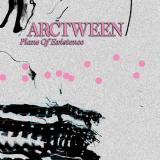
For some time I had hoped to release a full body of work from Tito. Ever since I heard him at Mr. Bean’s Music Club, and revisited records that started appearing around 2018, it felt clear that there was a
particular sensitivity behind the music — curious, rhythmic, spacious, unpredictable. Mostly in the sense that his references and musical background naturally pull from many places at once. When the idea of releasing Plane Of Existence on vinyl started becoming real, it immediately made sense for O Sótão Records.
Based in Porto, Tito Romão first built his path as a drummer, later expanding into composition andproduction through different instruments and collaborations. While drumsare his main instrument, he also studied cello and taught piano for a short period. Later he developed his Arctween project, DJing, and gradually shaping his own language under a new moniker. From Forbidden Cuts in 2018 to Dance Of The Spheres via Discotexas in 2020, his catalogue has slowly traced a path between groove-based experimentation and more immersive sound design.
The years that followed brought even more movement. Together with Gazpa, a longtime friend fromskateboarding days, he released Gaztween’s I through Jazzego Records in 2020, later followed by II in
2025. Around the same period he was also producing Ping Pong,eventually released in 2024 through
Jorge Caiado’s Mad Luv Records. For a couple of years he has held a Saturday residency at the iconic
Mr. Bean’s, still playing regularly with the house band and moving freely between instruments.A lot of that openness leaks into Plane Of Existence. Tito started producing the album during 2024, often late after work, without looking for a clear destination. By 2025 the concept slowly revealed itself. Therecord became an ode to Karlheinz Stockhausen, Manuel Göttsching, and to the modern ambient scene, while carrying traces of jazz, hip-hop and dub throughout its structure.
Argentinian artist Juan Hansen presents his debut album 'Ultrasonido'; twelve tracks spanning indie dance, tech house, and soft melodic house, released on his own newly founded label Ultrasonido, with the second single 'Inside My Mind' coming out via belonging by Innellea.
After his breakthrough Boiler Room appearance in 2019, Juan has been on a relentless quest to push the boundaries, playing major stages around the globe, becoming one of the figureheads of the Argentinian electronic music world. As an exceptional live artist, multi-instrumentalist and vocalist, Juan brings a real sense of groove to the stage, merging two worlds effortlessly: deeply emotional songwriting and direct, dancefloor-focused club tracks. 'Ultrasonido' brings both sides together. The album is a clear evolution of Juan Hansen, presenting a wider range of his sound, which he also presents in his live performances. A journey through the musical world of Juan Hansen.
Across twelve tracks, with contributions from Clér Letiv, Santi Portillo, Franco BA, Rocio Giorgi, Miko Franconi, Brigado Crew and Marley Waters, Juan shifts between club-focused tracks and more intimate, song-driven moments, moving naturally between Spanish and English. It’s a debut album that captures both his roots and the direction he’s evolving toward.
Juan Hansen's story doesn't start on the dancefloor, it starts with acoustic instruments. He built his foundation in the indie and rock scenes of Argentina before crossing into electronic music, a journey that's still audible in every track he makes. After years of building his profile with live performances, mesmerizing audiences from Cosquín Rock and Ultra in Argentina to Watergate in Berlin, Burning Man in the Nevada desert, and Grand Factory in Beirut.
His search is real and visceral; a search for the different, mixing genres without prejudice, with a seriously playful attitude. Positioned within a new generation of artists dedicated to improvising on stage, Juan fuses electronic sounds with analog instruments and organic soundscapes. There's no genre cage. 'Ultrasonido' is his debut album and the launch of his own label, also named Ultrasonido. A long-form statement after years of singles, EPs, and shows around the globe.
This special 3LP clear vinyl collates the “Back To Black” era in a definitive package. Featuring the original studio album, 4x unreleased demos, rare B-sides and demos, alongside the notable live performance from Paradiso, Amsterdam (February 8th 2007) from the Back To Black tour, never released in full and on vinyl.
This edition features brand new alternative cover artwork, including Amy’s handwritten lyrics, and never-before-seen photos by original album photographers Mischa Richter and Alex Lake, plus brand new, exclusive liner notes from Mark Ronson and Salaam Remi.
2026 celebrates the 20th anniversary of the 5x Grammy award winning album “Back To Black”, universally regarded as one of the greatest, most important and influential albums in pop history.
This special 3LP clear vinyl collates the “Back To Black” era in a definitive package. Featuring the original studio album, 4x unreleased demos, rare B-sides and demos, alongside the notable live performance from Paradiso, Amsterdam (February 8th 2007) from the Back To Black tour, never released in full and on vinyl.
This edition features brand new alternative cover artwork, including Amy’s handwritten lyrics, and never-before-seen photos by original album photographers Mischa Richter and Alex Lake, plus brand new, exclusive liner notes from Mark Ronson and Salaam Remi.
2026 celebrates the 20th anniversary of the 5x Grammy award winning album “Back To Black”, universally regarded as one of the greatest, most important and influential albums in pop history.
With his last three records all landing within a calendar year (2024-25), enigmatic Swedish producer Civilistjävel! (aka Tomas Bodén) is on a hot streak of releases, his singular vision increasingly ambitious and expansive. There are few artists working at this level so consistently right now, reinventing, revising and continually developing their language. Following on from 2025’s radically re-worked ‘Versions’ (of Mayssa Jallad’s ‘Marjaa…’), Bodén returns to break further fresh ground with his new album, ‘Älvgång’. Featuring contributions from Soccer Committee, Carrier and guest (aka Jabu’s Jasmine Butt), ‘Älvgång’ foregrounds a more brittle and insistent rhythm-based sound, whilst comprising his most broad-ranging collection of material to date.
‘Älvgång’ grew out of a series of sketches made from late ‘24 and throughout the whole of ‘25 at Stockholm’s renowned EMS Studios, which gave Boden free rein to its extensive collection of vintage analogue equipment and rare modular synthesizers such as the Serge and Buchla systems. As a loose framework of tracks began to take shape, so did a reflection of sorts, on family and foundations, underpinned or influenced by sounds that drifted into Tomas consciousness around this time - ancient Swedish pastoral music, Georgian lithurgical chants, gongs, chimes. An idea settled into place, a dedication to his Grandfather, as the earlier release Fyra Platser (tr. ‘Four Places’) was to his Grandmother. Älvgång is grounded with the sense of time and place of an old family photograph, with the tracks over each side bearing one of two names that are more or less the same location - Strinne was the old name for a this loose collection of villages. These days it is more commonly known as Bjärtrå. Metaphorically speaking, the river runs through both.
Civilistjävel! conjures so many adjectives and descriptors, ‘glacial’ and ‘ambient’ frequently among them - but while not altogether untrue, such terms belie the tension and drama so often present in Tomas’ music. Listening to ‘Älvgång’ is not a passive experience. The eight tracks here feel like a patchwork of memories that bathe in the same ethereal, otherworldly glow of Tarkovsky’s polaroids’.
The machine pulses that dominate this landscape are reigned in and tempered by a human hand; lithe, untethered coils, breathing in and out. ‘Strinne Ett’ sets out with purpose, sensing awe and wonder through the murk, but as the final tone unfurls like a question mark, another chapter begins, unfolding/building like a Tarjei Vesaas novel. These lyrical, abstract miniatures combine to reveal a wider context, fragile humanity standing alone against nature.
Guest appearances on Civilistjävel! records have become a regular occurrence (including recent collaborations with Mayssa Jallad, Laila Sakini, Cucina Povera, Thomas Bush, Eldon + Withdrawn), but are used sparingly and with increasing precision. On ‘Strinne Tre’ Mariska Baars’ (Soccer Committee) voice feels like a balm, a clearing. But as her simple, three-word incantation drifts further into fog, the meaning changes, and her words seem to curdle. Carrier’s beats widen the parameters on ‘Strinne Fyra’, a skittering promise that builds tension then refuses to release it; all false starts, Photek gongs, and trinkling modulars. Jabu’s Jasmine Butt pulls all the threads together for the final track, Thomas Tallis’ ghost walking over offset machine impulses, that work against their own symmetry.
Side two begins inquisitively, scanning bleached, alien surroundings, its sparse pads recalling Aphex Twin’s ‘Selected Ambient works Vol 2’. 'Bjärtrå Två’ picks up the baton from ' Strinne Fyra’ with a ruptured Simmons SDS200 analogue drum synth set free from its shackles, the rhythm eventually slotting into the spaces that were hiding in plain sight. What follows seems like an epiphany; ‘Bjärtrå Tre’ is achingly beautiful, a euphoric, winding ascent that leads to devotional plainsong. ‘Bjärtrå Fyra‘s final unheralded shift feels both tragic and haunting.
It’s rare for a hardcore punk band to make four full-length albums, and rarer still for the fourth album to be the band’s masterpiece. Yet Paratiisi, the fourth album from Helsinki punks Kohti Tuhoa, stands as the undeniable coup de grâce of a catalog overflowing with classic hardcore punk. If you’re already a fan, it’ll comfort you to know Paratiisi leans heavily on the strengths Kohti Tuhoa has possessed since their earliest releases: a timeless sound that combines UK82 drive and hooks with dramatic metal flourishes; a captivating vocalist with the perfect balance of grit and clarity, who can both howl like a banshee and carry a tune; and a particularly Finnish way with a driving, medium-fast tempo. But for all the continuities with Kohti Tuhoa’s excellent previous records, Paratiisi almost feels like the work of a new band. The riffs and choruses that anchor the album are impossibly catchy; Paratiisi bulges with huge moments that practically force you to air guitar and sing along (even if you don’t speak a word of Finnish), the band’s peerless chops and the rich and clear recording driving these climaxes to dizzying highs. But while the hooks are memorable, there isn’t a moment on Paratiisi that feels dumbed-down or overly familiar.
In fact, the album feels notably ambitious, pulling influences from across punk’s historical and aesthetic breadth and digesting them seamlessly into Kohti Tuhoa’s distinctive sound. The lyrics (don’t worry: English translations are included!) meet the same high bar as the music. They’re direct, assertive, and punk, but they’re also subtle and insightful, whether they’re tackling huge issues like microplastics or sharing a very personal account of a sexual assault and its aftermath. And then there’s Paratiisi’s most unexpected moment, “Eliitin Psykopatia,” a free punk freakout in the tradition of “Why (Reprise)” and “L.A. Blues.” If Kohti Tuhoa’s brief foray into free jazz tries your patience, though, don’t worry, because after three minutes of building tension, they reward you with what is bound to be the best riff of 2026, a clash of chords potent enough to blow holes through walls the world over. Paratiisi is the sound of one hardcore punk’s most exciting bands at the height of their powers.
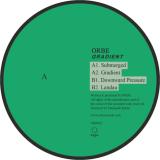
Orbe Records presents its most ambitious release to date: a special edition vinyl signed by its founder and main catalyst, Orbe. Comprising 4 meticulously crafted tracks, this record stands as the Andalusian artist's most mature work since his beginnings in the electronic music scene.
Far from looking back, this EP is a definitive statement of intent—a sonic manifesto that clearly outlines the artistic direction and evolution towards which Orbe is driving his sound. The record is a total immersion into hypnotic, deep techno, engineered for both physical trance on the dancefloor and mental introspection.
Through cyclical sequences, organic textures, and flawless rhythmic architecture, every cut on this vinyl shuns passing trends to reclaim a techno with a truly timeless vocation. An essential collector's item capturing an artist at the absolute peak of his creative maturity.
Melissa Weikart and her piano have proceeded through life in step, from her early classical
training to the experimental practice that defines her work today, a blending of sounds and forms that has never been so clear—and so fully realized—as on her new album, Contact. Across twelve shifting and evocative tracks that examine the connective tissue binding us to ourselves and others, the Franco-American musician’s voice and piano navigate personal and emotional terrain with clarity and nuance, forging a rich dialogue between artist and instrument, artist and self, and artist and listener.
Winner of the 2022 Nancy Jazz Pulsations emerging artist award and the instrumentalist prize at the 2023 La Défense National Jazz Competition, Weikart has released two EPs and an album as a solo artist, and one EP and an album—Surprise and Secret—with her electronic duo Beatrice Melissa. A student of jazz and ’70s folk-pop, and a keen lover of improvisation since her time at the New England Conservatory in Boston, Weikart has always conjured the confessional candor of the singer- songwriter in her music, even as she dispenses her lyrics across rich, shifting, dreamlike tableaux.
On Contact, written and arranged entirely by Weikart (aside from “New angles”), she pushes her sound further than ever before. The album is animated by a pressing need for connection, observing what brings us together and what drives us apart, and the life-saving revelations that emerge along the way. The album’s opener, “Crash,” is a dreamy telephone-hour ode, a message in a bottle, to connections new and old. On the wistful “Mesurer le vent,” Weikart conjures Debussy or Ravel, layering contrasting sounds like an Impressionist painting. The title track begins as a showcase of Weikart’s frank lyricism, a splice-reel of missed connections and wasted time, then glides into a hazy, euphoric galaxy of pleas, circling around her thesis—“I wanted to make contact”—that ushers us into “The Intersection,” a song that recalls her the beginning of her career, when it was just Weikart and her keys. “Appétit.e” is built around a sample of her down-the-hall neighbor’s drumming—another subtle, affecting gesture toward proximity and connection—while pulsating synths reminiscent of Air lend the track an unsteady atmosphere. On the Carpenters-inspired “Expectations,” Weikart muses on the relationship patterns, universal and specific, that have always been a hallmark of her songwriting.
The psychedelic “L’amour de construit” is a slow-motion fall down the rabbit hole, as Weikart
considers the way her own emotions are captured and commodified by the confining ways we think about love. The interlude—“L’amour pt. 2”—finds her near the end of that trip, shouting into the void as a last-ditch effort to rescue herself from the fall. The drums near the end of the interlude warn us that there may be no cushion for, until she is saved, again, by the power of revelation, on the confident, resilient “Not Right”—on which a show-stopping, frenetic conversation between singer and piano is gracefully interrupted by a rush of transcendent strings, lifting her back up.
On solid ground anew, “New angles,” featuring Manu Delta, creates a percussion-less groove that relies on experimental synth sounds. The 11-o’clock stunner “Catching up”—composed in a church—meets the singer in a state of ecstatic confession, bringing her to the formative memory that propels “Bicycle,” the album’s closer. Younger, more wide-eyed, she reflects on her move from Boston to Strasbourg, those early days, when Weikart had no other companion than that loyal hunk of scrap metal that took her to the shores of her own soul. She seems to suggest, on “Bicycle,” that a backward-glance is not always troublesome, not always anxiety-producing, but can be grounding: a reminder of where we come from, so that we can keep moving forward.
The title of the fourth full‑length by A SECRET REVEALED already serves as a dark omen: "The Ruin I Summoned Forth" sounds powerful, oppressive, and inescapable. And that very weight permeates all eight songs of the album. The band from Würzburg crafts a sonic landscape defined by immense emotional force, urgent intensity, and a density that feels almost impossible to contain. Their wall of sound is never an end in itself, but the foundation of an existential expression that hits immediately and resonates long after. Stylistically, the quintet moves within the tension field of post‑metal - a sound that doesn’t deny its core roots, yet highlights more clearly than ever their affinity for black metal, melodic death metal, and modern, forward‑driving heaviness. Time and again, fragile, searching passages open up, giving the massive sound room to breathe, occasionally interwoven with subtle, almost folkloric accents. Fittingly, the opener 'Disheartened' sets an early exclamation mark: with Nikita Kamprad of Der Weg einer Freiheit as guest vocalist, the track gains additional depth and sharpness. "The Ruin I Summoned Forth" marks the band’s third release on LIFEFORCE RECORDS, following "Sacrifices" (2019) and "When The Day Yearns For Light" (2021). Their debut "The Bleakness" was released in 2015 via Bastardized Records. Across all four records, a clear narrative thread emerges: A SECRET REVEALED consistently strive to craft strong thematic arcs and a massive, uncompromising sound that grips listeners from the very beginning and leaves a lasting impact. Once again, the band presents a cohesive work in which individual elements rise into an overwhelming whole, until, in the end, the inevitable unfolds: "The Ruin I Summoned Forth".
Time to turn on and turn it up, theres a brand new Carlton Melton in the offing… its been a good couple of years since the West Coast space/sike travellers have dropped new music.
‘Phantomize beyond the window, into the portal, the panes of eternal returns, wooden spirals, roots into the realms of everything and nothing, the reason beings’
With Anthony Taibi fully ensconsed in the metaphorical Melton Dome, this four piece is ready to soar, go deeper and wider into the sike psyche than on previous recordings, now fully recording live with drums, bass, guitars and keys...recorded at 3D Light in Freshwater, CA by Anthony Tiabi in 2025, and mastered by the inimitable John Mcbain in 2026.
We have a single LP of 40+ minutes spanning 4 tracks, that have textures, and waves and patterns to lull you into some fever dream of motorik psych! Touchstones like Träd, Gräs Och Stenar / Kandodo / Guru Guru / Eno & Fripp / Birds of Maya / Parson Sound come into view.
There are moments of gentle ambience bordered by speaker shredding guitar soloing, whole passages of Krautrock inspired jams that have form and focus.. you blink and your live flashes before you, the record ends, you want more..
There are moments of gentle ambience bordered by speaker shredding guitar soloing, whole passages of Krautrock inspired jams that have form and focus.. you blink and your live flashes before you, the record ends, you want more.. Carlton Melton masterfully blend hypnotic, long-form psychedelic jams with drone and Krautrock influences.
Band:
Rich Millman
Andy Duvall
Clint Golden
Anthony Taibi
Announced to celebrate summers solstice.. released on the Autumn equinox.. with a full UK tour to boot..
Celebrating ten years of independent music, Nerang Recordings returns with its sixteenth vinyl release, A Decade of Nerang Recordings - Mix Selections. Bringing together six artists from across the label’s history and extended community, the compilation showcases the diverse sounds that have shaped Nerang over the last decade. Featuring DJ Swagger, Nasty King Kurl, Subjoi, DOS, Low Tape and Moody McIvor, the release moves effortlessly between UK Garage, House, Tech House, Lo-Fi House, Electro and Synthwave while maintaining a clear identity throughout. Since its inception, Nerang Recordings has never been interested in following a single genre, scene or trend. Instead, the label has always focused on releasing music based on quality, individuality and atmosphere. Over the years that philosophy has resulted in a catalogue that crosses stylistic boundaries while remaining connected by a shared spirit. A Decade of Nerang Recordings - Mix Selections serves as both a celebration of the label’s first ten years and a statement of intent for the future. Each track represents a different corner of the Nerang universe, reflecting the sounds, influences and artists that have helped shape the label’s journey so far.
From rolling UK Garage rhythms and club-focused house cuts through to hazy lo-fi textures, cinematic synth work and darker electronic excursions, the compilation highlights the freedom that has always sat at the heart of the label. Rather than being confined by genre expectations, Nerang continues to embrace music on its own terms, allowing each release to find its own identity and audience. While thisrelease reflects on the past decade, it is equally focused on what comes next. The goal remains the same as it was on day one: support great artists, release music without limitations and continue exploring new territory wherever it may lead. Ten years in, Nerang Recordings remains committed to doing things its own way
CER015 sees Celestial Echo bring back one of the great modern soul 45s, Ramsey & Company – “Love Call”.
Coming out of New York in the late ’70s, Ramsey & Company was led by Mainor Ramsey, with the group originally playing the Catskills supper club circuit. Their only single was released privately on Ramsey’s own Ramco label, with copies sold at shows and barely making it into wider distribution. Like so many great soul records, it found its real afterlife much later, becoming a favourite across the UK modern soul and rare groove scene.
“Love Call” is the reason this record has carried such a reputation for so long. A beautifully arranged modern soul dancer, it has that perfect late ’70s balance of groove, song and musicianship. On the B-side, “Leg Grease” brings the funk.
Original copies are now almost impossible to find, often selling for serious money when it turns up and even the Lotus Land reissue has become expensive in its own right. This Celestial Echo edition puts the track back into circulation properly, cut loud and ready for the DJs and soul heads who have been waiting on a clean copy.
Celestial Echo is here to put proper soul records back into circulation — respectfully cut, properly pressed, and ready to play.
IRST ALBUM IN 10 YEARS.
TOURING WITH TROPICAL FUCK STORM IN NOVEMBER (DATES BELOW).
PRODUCED BY DAN LUSCOMBE (THE DRONES) WHO IS ALSO PART OF THE LIVE BAND.
PREVIOUS ALBUMS ON HARDLY ART/SUB POP AND REMOTE CONTROL.
VERY LIMITED BLACK VINYL AND INDIES ONLY PINK VINYL . NON-RETURNABLE.
‘Jarrod Quarrell, creator of Lost Animal, is one of the most underrated songwriters in Australia and one of our all-time favourites. He creates poetic expressions. His work is very interesting in a highly original way and richly emotional. The songs reveal themselves more over many listens and always feel fresh. His powerful, beautiful, transformative, and unforgettable songs possess the vast depth of the human spirit.’ - GIMMIE GIMMIE GIMMIE ZINE
‘Quarrell has developed a collaged techne that embodies a heart-on-sleeve attitude. Lush melodic delays wash with an influx of lyrics that pierce with uncanny imagery and diction.’ - VICE
It’s not every day you hear about a new Lost Animal album. In fact, it’s been ten years between drinks. The debut Ex Tropical (Hardly Art/Sub Pop) was released in 2011, and followed by You Yang (Remote Control) in 2016. So what happened, and where’s frontman/mastermind Jarrod Quarrell been for the last ten years?
From the horse's mouth, “I don't give a fuck about productivity”. A humbling reply. It confirms Quarrell's MO: here’s an artist as a non-conformist. And when he does see fit to bless us with his unique vision of what music can sound like, it has the ability to completely charm and disarm. Amongst a sea of rock bands, LA is essentially a solo act. Simply put; LA is JQ. But on the other hand, amongst an ocean of solo acts, LA possesses the grandiosity of a full band, punk in spirit, but without being fast, or heavy.
Armed with keys and synths, timbres align more with what a toucan might listen to, as opposed to what's heard commonly throughout Melbourne's gig economy. Strings are gently plucked and horns are tenderly blown. These are the colourful brush strokes that decorate the upper frequencies. They’re the ticket to a far away land;exotic, and potentially very dangerous. If the crew from Hear My Eyes are reading this, consider Lost Animal performing Give Some Get Some as the soundtrack to the next time you screen The Hangover Part 2. Yeah, the one where shit gets super fried in Thailand.
The album examines the underbelly of what a ten year journey might rub up against. As one may expect, a lot of that action is below the belt. Tracks like Do That Thing, and In
Rewinding, a few things have happened in the past ten years that are worth illuminating. Shags is no longer commandeering the bass full time. Though he does make an appearance on a couple tracks. The main difference from present day to yesteryear LA is Dan Luscombe (The Drones). Luscombe has jumped into the role of producer (and also part of the live band). One could say he’s a producer of the Spector-ilk: playing a hands-on approach and assisting Quarrell's song crafting. He may have suggested to add a chorus or two, but the chord progressions remain distinctly Lost Animal. You'll recognise them easily by their beauty, combined with either fragility or rigidity. Luscombe is arguably the defining force that made this album happen. Perhaps he had Quarrell at gunpoint. Yet to be confirmed. Regardless, thank fuck for Luscombe because it may have been another decade.
But the album's defining feature is arguably Quarrell's lyricism. He may not cross-examine where he's been, but his voice does unmask where he is: absolved and reincarnated. The decade-long journey has resulted in him looking inwards and unlocking himself. The album's many mantras suggest that he may be a bird (I'm a Bird Now), or that he is living on another planet (Never is Forever). Whatever and wherever he may be,
Give Some Get Some invites the listener to reflect on their own journey over the past decade. Because the game's got a price. So ask yourself what have you taken, and what have you given? Life ain't a box of chocolates. It's a bowl of berries. And when fruit symbolizes temptation, get some.
IRST ALBUM IN 10 YEARS.
TOURING WITH TROPICAL FUCK STORM IN NOVEMBER (DATES BELOW).
PRODUCED BY DAN LUSCOMBE (THE DRONES) WHO IS ALSO PART OF THE LIVE BAND.
PREVIOUS ALBUMS ON HARDLY ART/SUB POP AND REMOTE CONTROL.
VERY LIMITED BLACK VINYL AND INDIES ONLY PINK VINYL . NON-RETURNABLE.
‘Jarrod Quarrell, creator of Lost Animal, is one of the most underrated songwriters in Australia and one of our all-time favourites. He creates poetic expressions. His work is very interesting in a highly original way and richly emotional. The songs reveal themselves more over many listens and always feel fresh. His powerful, beautiful, transformative, and unforgettable songs possess the vast depth of the human spirit.’ - GIMMIE GIMMIE GIMMIE ZINE
‘Quarrell has developed a collaged techne that embodies a heart-on-sleeve attitude. Lush melodic delays wash with an influx of lyrics that pierce with uncanny imagery and diction.’ - VICE
It’s not every day you hear about a new Lost Animal album. In fact, it’s been ten years between drinks. The debut Ex Tropical (Hardly Art/Sub Pop) was released in 2011, and followed by You Yang (Remote Control) in 2016. So what happened, and where’s frontman/mastermind Jarrod Quarrell been for the last ten years?
From the horse's mouth, “I don't give a fuck about productivity”. A humbling reply. It confirms Quarrell's MO: here’s an artist as a non-conformist. And when he does see fit to bless us with his unique vision of what music can sound like, it has the ability to completely charm and disarm. Amongst a sea of rock bands, LA is essentially a solo act. Simply put; LA is JQ. But on the other hand, amongst an ocean of solo acts, LA possesses the grandiosity of a full band, punk in spirit, but without being fast, or heavy.
Armed with keys and synths, timbres align more with what a toucan might listen to, as opposed to what's heard commonly throughout Melbourne's gig economy. Strings are gently plucked and horns are tenderly blown. These are the colourful brush strokes that decorate the upper frequencies. They’re the ticket to a far away land;exotic, and potentially very dangerous. If the crew from Hear My Eyes are reading this, consider Lost Animal performing Give Some Get Some as the soundtrack to the next time you screen The Hangover Part 2. Yeah, the one where shit gets super fried in Thailand.
The album examines the underbelly of what a ten year journey might rub up against. As one may expect, a lot of that action is below the belt. Tracks like Do That Thing, and In
Rewinding, a few things have happened in the past ten years that are worth illuminating. Shags is no longer commandeering the bass full time. Though he does make an appearance on a couple tracks. The main difference from present day to yesteryear LA is Dan Luscombe (The Drones). Luscombe has jumped into the role of producer (and also part of the live band). One could say he’s a producer of the Spector-ilk: playing a hands-on approach and assisting Quarrell's song crafting. He may have suggested to add a chorus or two, but the chord progressions remain distinctly Lost Animal. You'll recognise them easily by their beauty, combined with either fragility or rigidity. Luscombe is arguably the defining force that made this album happen. Perhaps he had Quarrell at gunpoint. Yet to be confirmed. Regardless, thank fuck for Luscombe because it may have been another decade.
But the album's defining feature is arguably Quarrell's lyricism. He may not cross-examine where he's been, but his voice does unmask where he is: absolved and reincarnated. The decade-long journey has resulted in him looking inwards and unlocking himself. The album's many mantras suggest that he may be a bird (I'm a Bird Now), or that he is living on another planet (Never is Forever). Whatever and wherever he may be,
Give Some Get Some invites the listener to reflect on their own journey over the past decade. Because the game's got a price. So ask yourself what have you taken, and what have you given? Life ain't a box of chocolates. It's a bowl of berries. And when fruit symbolizes temptation, get some.
Blume presents The Days Pass Quickly Immersed in the Shadow of Eternity, a new work by Lea Bertucci commissioned by the ZKM Center for Art and Media Karlsruhe and premiered in Karlsruhe in November 2025. Written for, and created in collaboration with, the flutist Norbert Rodenkirchen, it draws on his collection of Renaissance, Medieval, and Neolithic instruments, harnessing sounds that have been largely absent from the modern world. What does it mean to employ one of humanity's oldest known technologies, the flute, appearing in human hands tens of thousands of years before the advent of the wheel, within an experimental, electroacoustic composition that is inherently forward-thinking?
Since her emergence within New York City's Noise scene during the early 2010s, Bertucci has balanced a fierce dedication to the DIY ethos and immediacy of the underground with a refined sense of creative rigor and ambition, moving from brittle, challenging compositions for saxophone, electronics, and tape toward investigations of acoustic phenomena, site-specific resonance, and complex harmonic interplay. Following her return to the rural environments of Upstate New York where she was born and raised, her work has entered a more introspective phase, with an expanded instrumental, technical, and vocal palette that has found her increasingly composing for others, as on 2023's Of Shadow and Substance and on Fata Morgana, a work for organ released earlier this year.
The piece grew from a meeting with Rodenkirchen after a performance by the early music ensemble Sequentia, to which he belongs. Struck by his ability to conjure "spirits from deep within human memory, as a clarion call into the present", Bertucci began a series of conversations that led the pair into the studio at ZKM in the summer of 2024. Conceived for ZKM's 42.4 speaker system, grouped into 8 discrete outputs before being mixed down to stereo, the work aligns with the collaborative process she has honed alongside her solo efforts, in duos with Ben Vida, Lawrence English, and Olivia Block: a dialog with personal and responsive agency offered to both musicians.
It carries forward her inquiry into the fundamentally human aspects of listening ("I am looking for sounds that call from somewhere deep within the listener and that tap into archetypal human knowledge and feeling") and her investigation of psychoacoustic phenomena and otoacoustic emissions through a meticulous alignment of pitches and timbres. Where many of her most celebrated efforts played, and played with, the room, this one is rooted in an implied space: the flutes recall and blur the boundaries between the eras and environments in which those instruments were originally played, from acoustically engineered Renaissance and Medieval halls to the naturally reverberant caves of the Neolithic, and those of the present.
Bertucci is not the first to bring ancient sound sources into experimental music: Harry Partch's instruments drew on Greek, Chinese, and Japanese precursors, Alvin Curran regularly plays a conch shell, and Walter Maioli has spent decades working at the borders of experimental music and archaeology. Her piece occupies a more rarefied position through its hybridity, combining advanced technology with archaic sound sources while sidestepping the exoticism and romantic primitivism that can hobble such efforts. Compared with its closest cousin, Phill Niblock's Four Full Flutes, where the instruments are manipulated beyond clear recognition, here the flutes remain recognizable and embrace the layers of history they carry. The result is an electroacoustic work that largely forgoes the auditory signifiers of the idiom: it could easily pass for a live ensemble, and only attentive listening reveals that it could only have been made through advanced technology.
As Rodenkirchen's playing interweaves with Bertucci's computer-facilitated arrangements of flute samples, ranging from pulsing clusters to dense combinations of sustained tones, timbres, and distances, the piece draws connections with folk and spiritual traditions across human history: Medieval polyphonic ecclesiastical music, Sardinian canto a tenore, Pygmy vocal music, Buddhist chant. By conjoining one of our earliest known technologies with our most advanced, Bertucci proposes that our tools are not the message, but rather the unending continuum of humanity itself. Issued by Blume in a highly limited vinyl edition of 300 copies on transparent light blue vinyl, with newly commissioned liner notes by Bradford Bailey.
To commemorate the 45th anniversary of Olivia Newton-John’s smash hit and album of the same name, ‘Physical’, a collectible colour 7” with the original packaging, upgraded with a new inner sleeve and remastered audio, is released on 23rd October.
· A massive cultural phenomenon, ‘Physical’ spent ten consecutive weeks at Number One on the Billboard Hot 100 and Billboard ranked it Number One on their Top 100 Songs Of The 1980s list.
· Most recently, the song was interpolated on Benson Boone’s 2025 hit‘Mystical Magical’.
Ever-evolving Amsterdam duo ANOTR continue their forward momentum with the release of their highly anticipated third studio album, ‘Withness’, out via their own imprint No Art. Rooted firmly in dance music, ‘Withness’ sees the pair refine their sound into their most dance-floor focused and cohesive project to date.
Born during their global tour, ‘Withness’ was shaped in real time: written, tested and refined on dancefloors across the world. Following the expansive, genre-blurring approach of their 2025 LP ‘On A Trip’, the duo felt a pull back toward the club - not as a limitation, but as a unifying space. “We really wanted to have a wide variety of songs that we can play out and create moments,” they explain. “Every track needed to make sense wherever people come together to dance.”
That intention sits at the heart of ‘Withness’. A title that reimagines the idea of “witnessing” into something more active and collective. ‘Withness’ is an album about experiencing life with others. It’s about the moments you share, the people who shape them, and the energy that becomes real only when you’re fully present. The album captures the collective high of friendship. Whether in a packed club, at a festival, or in a living room with friends, the album is designed to soundtrack moments of connection.
“The memories you make with people, they’re the witness of those moments. Withness is about being in it together.” - ANOTR
Sonically, the album marks a clear evolution. Drawing from their early club roots while building on the songwriting confidence developed on their previous records, classic drum machines and 909 samples sit alongside warm, 80s-tinged textures, layered vocals and modern production techniques, creating a sound that feels both nostalgic and forward-thinking.
A key part of the process was spontaneity. The duo embraced a free-flowing, collaborative studio environment, often working with a rotating cast of contributors. Their now-signature “open mic” approach encouraged anyone in the room to experiment with melodies, lyrics and vocal ideas. This energy translates directly into the album’s standout moments. From the euphoric pull of ‘Withness’ to the groove-led ‘Do It With Ya’, the uplifting ‘Paradise’, each track is built to live beyond a single setting.
The LP comes at a timely moment, as their single ‘Talk To You ft. 54 Ultra’ has become the biggest global breakout dance single this year. Sitting firmly in Spotify’s Global Top 200, it has surpassed 175 million streams, and is currently No. 21 in the UK Singles Chart. Spotify have tipped it in their much-coveted global ‘Sound Of The Summer 2026’ list and other highlights include peaking at No. 7 in Shazam’s Global Chart, No.1 on Beatport Top 100 and gaining over 600M UGC views so far.
Two of the most prolific remixers in the world of Disco,Dave 'Love' Lee and John Moraleshave teamed up for one of their biggest projects to date - 'Mixed To The Maxxx'. After gaining access from the legendary original artists, the pair take the multi-track tapes of many classic Disco, Funk & Soul tracks and re-work them...to the Maxxx!
Where Remixed With Love stands as Dave Lee's own gold-standard body of work, Mixed To The Maxxx sets that legacy alongside Morales' own decades-deep M+M body of work: Lee brings his musically dense, groove-first touch to the likes of Harold Melvin, Syreeta, Lenny Williams and The Brand New Heavies, while Morales applies his extended, dancefloor-built M+M treatment and crushes the likes of Barry White, The Temptations and Loleatta Holloway, plus Dennis Coffey's breakbeat classic "Scorpio" for the DJs and collectors alike. Both work from original tapes, surfacing parts barely audible or entirely unheard in the source mixes, and both know when to let a classic breathe rather than bury it under modern production. It's a pairing a long time in the making. Lee and Morales first talked about working together around a decade ago, and getting Mixed To The Maxxx off the ground took five years of patient work: tracking down usable stems, securing approvals, and navigating a licensing landscape where much of the best material is now tied up with major labels increasingly cautious about clearing remixes. What's landed here is the product of that graft as much as the pair's shared ear for a great record, the sound of two people who know exactly what they're looking for and are willing to put in the time to find it.
A double 12" sampler in summer 2025 previewed the record's range. A bass-driven overhaul ofThe Brothers Johnson's "The Real Thing" and an extended mix of Philly legends Bell & James' "Livin' It Up (Friday Night)" showcased Lee's side, while an anthemic take on Inner Life's "Ain't No Mountain High Enough" and a tempo-lifted Light Of The World"London Town" flew the flag for Morales. Both drew strong early support ahead of the full LP.
Wewantsounds is delighted to continue its Ziad Rahbani reissue program with Ana Moush Kafer, a classic album by the Lebanese legend Ziad Rahbani, recorded at his By-Pass Studio in Beirut during the height of the Lebanese Civil War in 1985. Showcasing Rahbani’s signature blend of Arabic music infused with touches of jazz-funk and bossa nova, the album has attained cult status over the years. Originally released on cassette, it has never before been available on vinyl. Newly remastered, this edition features the original Relax-In cassette artwork from 1985 and includes new liner notes by Mario Choueiry of the Institut du Monde Arabe in Paris.
Ziad Rahbani, who passed away in 2025, remains one of the most influential figures in modern Arabic music and a cultural icon in Lebanon. A musician, composer, pianist, producer and playwright, he helped modernize Arabic music over five decades. The son of composer Assi Rahbani and singer Fairuz, he shaped her late 70s–80s recordings producing Wahdon and Maarifti Feek, while building a major solo career with classics such as Abu Ali and Houdou Nisbi, which have become cult favourites for a new generation of DJs and music lovers.
Released in 1985 in Lebanon, Ana Moush Kafer stands as one of Rahbani’s key achievements. Recorded at his By-Pass Studio during the Lebanese Civil War, it blends Arabic melodic traditions with jazz-funk, bossa nova and Western arrangements. Originally cassette-only, it became one of his most revered releases. Throughout the album, Rahbani’s writing reflects the turbulence of wartime Beirut with a blend of sharp social observation, political satire and melancholy. It captures a moment in Lebanese cultural history where experimentation, satire and popular song intersected, giving the album its enduring influence among music lovers.
Sung by Rahbani and Sami Hawat, alongside Beirut-based musicians, the album features both Western and traditional Arabic instruments. It balances refined arrangements with lyrical irony, social commentary and political reflection, which remain deeply resonant in today’s context in Lebanon.
One of the highlights of the album is the song “Shou A’ada Ma Bada,” with lyrics by Joseph Harb, which reveals a clear bossa nova influence, while the closing track, “Al Mokawama Al Watania Al Lobnani,” offers a deeply human view of war, avoiding patriotic cliché in favour of a nuanced perspective rooted in lived experience.
As Mario Choueiry observes in his liner notes, “Ana Moush Kafer stands as one of the high points of modern Arab political songwriting, yet transcends its historical and geographical context through the universal relevance of its themes and the timeless quality of its music.”
Forty years on, Ana Moush Kafer remains a landmark of Arab music. Wewantsounds presents it on vinyl for the first time, newly remastered and featuring original artwork. This long-awaited reissue restores one of Ziad Rahbani’s most important works to circulation, reaffirming its place as a defining statement in modern Arabic music.
a 1. Ana Moush Kafer 5:03
b 2. Shou Hal Ayyam 5:46
c 3. A'anitham 4:37
d 4. Shou A'ada Ma Bada [3:45]
[e] 5. Yessa'ed we Yea'en [5:05]
[f] 6. Bi Halyawmayn [3:46]
[g] 7. Bharf Esheen [1:12]
[h] 8. Bhaneek [5:34]
[i] 9. Al Mokawama Al Watania Al Lobnani [3:06]
[a] 1. Ana Moush Kafer [5:03]
[b] 2. Shou Hal Ayyam [5:46]
[c] 3. A'anitham [4:37]
[d] 4. Shou A'ada Ma Bada [3:45]
[e] 5. Yessa'ed we Yea'en [5:05]
[f] 6. Bi Halyawmayn [3:46]
[g] 7. Bharf Esheen [1:12]
[h] 8. Bhaneek [5:34]
[i] 9. Al Mokawama Al Watania Al Lobnani [3:06]
[a] 1. Ana Moush Kafer [5:03]
[b] 2. Shou Hal Ayyam [5:46]
[c] 3. A'anitham [4:37]
[d] 4. Shou A'ada Ma Bada [3:45]
[e] 5. Yessa'ed we Yea'en [5:05]
[f] 6. Bi Halyawmayn [3:46]
[g] 7. Bharf Esheen [1:12]
[h] 8. Bhaneek [5:34]
[i] 9. Al Mokawama Al Watania Al Lobnani [3:06]
[a] 1. Ana Moush Kafer [5:03]
[b] 2. Shou Hal Ayyam [5:46]
[c] 3. A'anitham [4:37]
[d] 4. Shou A'ada Ma Bada [3:45]
[e] 5. Yessa'ed we Yea'en [5:05]
[f] 6. Bi Halyawmayn [3:46]
[g] 7. Bharf Esheen [1:12]
[h] 8. Bhaneek [5:34]
[i] 9. Al Mokawama Al Watania Al Lobnani [3:06]
[a] a1. Ana Moush Kafer [5:03]
[b] a2. Shou Hal Ayyam [5:46]
[c] a3. A'anitham [4:37]
[d] a4. Shou A'ada Ma Bada [3:45]
[e] b1. Yessa'ed we Yea'en [5:05]
[f] b2. Bi Halyawmayn [3:46]
[g] b3. Bharf Esheen [1:12]
[h] b4. Bhaneek [5:34]
[i] b5 Al Mokawama Al Watania Al Lobnani [3:06]
[a] a1 | Ana Moush Kafer [5 03]
[b] a2 | Shou Hal Ayyam [5 46]
[c] a3 | A'anitham [4 37]
[d] a4 | Shou A'ada Ma Bada [3 45]
[e] b1 | Yessa'ed we Yea'en [5 05]
[f] b2 | Bi Halyawmayn [3 46]
[g] b3 | Bharf Esheen [1 12]
[h] b4 | Bhaneek [5 34]
[i] b5 | Al Mokawama Al Watania Al Lobnani [3 06]
[a] a1 | Ana Moush Kafer [5 03]
[b] a2 | Shou Hal Ayyam [5 46]
[c] a3 | A'anitham [4 37]
[d] a4 | Shou A'ada Ma Bada [3 45]
[e] b1 | Yessa'ed we Yea'en [5 05]
[f] b2 | Bi Halyawmayn [3 46]
[g] b3 | Bharf Esheen [1 12]
[h] b4 | Bhaneek [5 34]
[i] b5 | Al Mokawama Al Watania Al Lobnani [3 06]
[a] a1 | Ana Moush Kafer [5 03]
[b] a2 | Shou Hal Ayyam [5 46]
[c] a3 | A'anitham [4 37]
[d] a4 | Shou A'ada Ma Bada [3 45]
[e] b1 | Yessa'ed we Yea'en [5 05]
[f] b2 | Bi Halyawmayn [3 46]
[g] b3 | Bharf Esheen [1 12]
[h] b4 | Bhaneek [5 34]
[i] b5 | Al Mokawama Al Watania Al Lobnani [3 06]
As intended from the start, Acid for the Grandma moves without a fixed direction. No clear starting point — just a path taking shape along the way.
No common ground, except the need to keep making music: instinctive, personal, at times compulsive. Each track stands as a standalone fragment, driven by the same impulse — turning tension into sound.
After a five-year-long hiatus, CVBox is back with six tracks between techno, acid, electro and IDM that are more suited to those super dark times we're currently living through than ever before. On "Pattern Based On", the Dresden-based artist and long-running Uncanny Valley-comrade (four EPs and one album) proves that he hasn't lost his touch when it comes to creating electronic cyberspaces that might drive you mad a bit. With majestic sounds and constantly evolving arrangements, the tracks are strangely entertaining on the dancefloor while you can't help but still feel a queasy sensation in your stomach. While some describe the tunes as milky, permeated by translucent membranes, for others they are an aural embodiment of urban landscapes in the post-apocalypse. Only two things are true: No one sounds like CVBox and all his tracks sound like CVBox. The title refers to structures derived from repetitions, sequences and, indeed, patterns. Although the sounds within these patterns usually follow clear paths, they are allowed to overlap and falter. At the same time, it is music through which CVBox comes to terms with his time as a paramedic. The artwork extends this idea with a special twist. A medical-based test pattern with its clinical functionality is set against a backdrop that is clearly placed in a natural environment. A process that creates a kind of artefact and triggers immediate reflection on what will remain of us many decades from now. What role will music play in defining this?
Since the release of DAMAGED in 2024, Michael Fiedler aka GHOST DUBS has been surfing intensifying waves of adulation, earning praise from such diverse underground legends as Justin Broadrick (Godflesh/Jesu), Regis, Stefan Betke (Pole) and Steve Von Till (Neurosis). With second album Oblique, his mastery of sculpting sound waves results in a spellbinding set of alien soundscapes: larger in scale, richer in tone and considerably more cinematic than its predecessor. Lower, deeper and moodier, its cloudy abstractions, shadowy pulsations and submerged rhythms find Fiedler reaching further into his own sonic void, crafting blurred melodies and addictive narco loops into something simultaneously heavyweight and hypnotic.
Lead single and album opener “Low Times” sets the atmospheric pressure to maximum, resembling a dream date between prime dirt-house era Andy Stott and Berlin dub-tech pioneers Basic Channel. From there, Oblique descends into a series of enchanting mood scenes: the furtive, balletic gyrations of “After All”, the haunting ambience and buried heartbeat throb of “Soft Collapse”, and the noirish atmospherics of “Blackout Dust”, which worms its way into the mind like some forgotten David Lynch scene. The spirit of reggae is more distanced here than on DAMAGED, but the ghost of Jamaican dub still permeates these foggy soundscapes, particularly on “Bombed Suburbs”, where Augustus Pablo-style melodicism is chopped, screwed and slowed into a magnetic lock groove.
Superficially minimal but maximal in its minute detail, Oblique is a record of contorted reflections, mesmeric echoes and tantalising audio mirages. By the vaporous mist of closing track “Almost a Structure”, obvious rhythm has been craftily filtered away, leaving a blurred and blunted residue full of mystery and implied narrative. Dense in the best possible sense and crushing when played loud yet equally potent played quiet, Oblique imagines dub techno burning its own rigid rulebook: sensual, funky and concussive rather than dry or alienating. Following Fiedler’s recent work scoring Sound of Falling, recognised at Cannes in 2025, Oblique finds Ghost Dubs shedding his influences and making it clear he has arrived at a sound entirely his own — essential deep listening and a bewitching dose of future shock.
Feeling both familiar and forward-looking, MBK004 expands its reach with an international lineup of
producers united by a shared appreciation for the New York underground sound.
Crafted by Tunisian producer Gringow, our first two tracks take listeners to the darker side of minimal.
Also owner of the HeardOf label, Gringow lends his talent to Minimal Brooklyn with 15 minutes of
hypnotic rhythms. “Black is the new color” gives chills, while “My K” triggers introspection.
Flipping the record will bring listeners to a brighter space. We begin with Chilean DJ/producer
Francisco Ruíz-Tagle and his original track “Primal Depths”. Francisco introduces textures that have
been cultivated throughout his life. His submission to Minimal Brooklyn holds nothing back, delivering
a multidimensional auditory experience to listeners.
MBK004 ends with “Bean Water”, an original track from Chicago-based producer Double Dipp. This
spell-casting production truly highlights the attraction of minimal. Dynamic instrumentals with clean
resolution. This is Double Dipp’s formula for timelessness.
The fifth edition of Meganesia’s annual vinyl release, this year featuring AWHM & Shugo Noss, two leading forces in the fast trance and psytek scenes.
Striving to imagine these two artists as creatures inhabiting the same environment and imbuing it with their sonic identity, we arrived at the idea of a tidal zone in which AWHM’s sound inhabits and defines the warmed, sunlit state of low tide, while Shugo Noss’ sound inhabits and defines the submerged, watery state of high tide.
The resulting release creates a trance-focussed environment inhabited by both the deep, multi-textured, audio-hallucinatory sound of Shugo Noss and the driving, energising force of AWHM.
This release comes out on vinyl and digital on October 27, 2026.
Mastering by Chris Scholz and Dave Miller at Audiosculpture NL
Artwork the THEAJM
Vinyl distribution by One Eye Witness
SHUGO BIO
Shugo Noss is a producer/DJ from Naarm who explores the intersection of sound and form through a blend of hypnotic rhythms, eclectic soundscapes and sonic experimentation. His work aims to exist outside genre binaries, weaving through a multitude of emotional experiences that both relate to, and contradict, one another in an attempt to formulate their own identity. There are no limits that restrain these journeys.
AWHM BIO
A dedicated consumer and creator of trance music, AWHM’s production style draws clear influence from old school goa, psytrance, jungle breaks, and tekno, most easily recognised by his ability to combine driving basslines, hypnotic rhythms, and scattered percussions to transport audiences through uncharted psychedelic realms of fast trance music.
Evolutionary by nature, he’s managed to leverage extensive experiences that led to a self-taught studio process which now stands out in one of the more niche corners of electronic music.
MEGANESIA BIO
Meganesia is an independent music label operating in the broad genres of trance and techno. Drawing its name from the continental plate beneath Australia’s landmass, Meganesia focuses distinctly on developing and platforming artists living and working in Australia.
Since the start of 2022 Meganesia has grown to a catalogue of 12 releases. Across these releases, the label has directly platformed over 40 individual artists on digital and vinyl gaining us recognition as one of Australia’s strongest and most dynamic electronic labels.
It Takes Two is at it again. The 45 duo consisting of Deejay Irie and Friss, founded in 2020, is here with a brand-new release.
Played by DJ Koco aka Shimokita, DJ Robert Smith, Marc Hype of Dusty Donuts, and many more. Edits by DJs for DJs, filled with scratch samples and perfect intros/outros. After 001, 002, 003, 004, and 005 sold out, they're back with 90 BPM of big fun with small records!
The A-side is an ode to one of hip-hop's first beef tracks, flipped with a reggae twist, a clean intro, and a scratch sample to get funky with.
The B-side contains an instrumental version of the A-side.
Renovat Records opens its vinyl catalogue with a four-track built around deep rolling rhythms, low-end pressure and deep, warm energy.
Side A brings together Remus and Drianu. Remus sets the tone with a rolling and percussive cut that moves with a deep, steady groove, while Drianu follows with a more hypnotic approach, driven by heavy sub pressure and a stripped-back, locked-in rhythm.
Side B shifts the mood through Lumieux and Vid. Lumieux brings a sharper and more kinetic edge, while Vid closes the record by slowing things down into a deeper, more spacious and dynamic trip.
Four distinct perspectives on minimal and microhouse, connected by groove, restraint and a clear focus on the dancefloor.
TECH043 brings A.B.E.L. and Eluna Vex together through a shared sense of rhythm and purpose.
Both authors have already developed a clear and confident approach, even if wider recognition has yet to catch up. Their music is ready to reach beyond the circles that already know their work.
Across both sides of the record, firm drums, driving percussion and deep atmosphere keep the motion steady. Each track has its own shape and detail, while the shared weight and mood allow the four tracks to be heard as one complete work. DJs get four reliable cuts that can build tension, hold the groove or move a set forward without a break in tone.
The difference between the artists is clear, but never disruptive. Eluna Vex and A.B.E.L. bring separate ideas to the record, yet their tracks feel closely related in character, depth and attitude. This balance gives TECH043 range without losing focus: two artists and one consistent physical drive.
A1. “Unsafe Road” opens the record by setting its rules: full pressure, forward drive and several lines developing at once. It tests the listener’s attention, offering a choice between following the whole structure or focusing on one thread within it.
A2. “Getting Away” works like a spell that pulls the dancefloor together. It follows one clear narrative and a direct sequence of events, building towards a climax where every element lands as one shared impulse.
B1. “Test And Run” opens a more exploratory side of the record. It moves through changing forms and gradually reveals its language, without showing the full picture at once. Structurally complete on its own, the track invites the listener into less predictable territory.
B2. “Subconscious” is built on balance, giving equal weight to every part of the sound without allowing one element to take control. It makes no loud statement, but closes the record with a complete and carefully held form.
Landing suitably on co:clear, At the Right Place at the Right Time is the spellbinding debut record from luminary figures of the Roman underground, Portamento.
As DJs and promoters of Scivoliii, the duo of Filipo Tosti and Álvaro Labao Garcia has been peddling a range of sounds over the last years. This time though, their attention firmly turns to transportative ambience, where melodic lines and mummering voices are rarely paired without weighty sub-bass. It's absolutely an ‘ambient’ record but the (soft) influence of the club sometimes peeks through.
Written between Forum Studios (fka Ennio Morricone Studios) and Álvaro’s tiny apartment in Trastervere during Rome’s torrid month of August, its sound owes itself as much to burning intimacy, as it does to the weariness of distance. It truly operates in those moments of devotion/desire between the late-night/early-morning, like a candle at the end of its wick that flickers, before it's finally extinguished as your eyes become too heavy to resist sleep.
There's a tendency in metal to mistake aggression for honesty, volume for depth. To confuse the performance of darkness with its actual weight. Hidden Fires Burn Hottest, the new album from San Francisco-based post-black metal band Bosse-de-Nage, sidesteps this entirely. It’s the group’s most fully realized work yet, precisely because it refuses to be pinned down.
Bosse-de-Nage have been working with The Flenser for over fifteen years. They were one of the first bands the label ever partnered with and have the longest active relationship in the label's history. But unlike most bands who build momentum through constant touring and visibility, Bosse-de-Nage has largely existed apart from the music world's usual machinery. They've evolved on their own terms, in relative isolation, allowing the work to develop without outside pressure or influence. What began rooted in black metal anonymity has mutated into something that actively defies categorization. The aggression is still there, but it's no longer the point. Hidden Fires Burn Hottest finds the band treating emotions like physical objects, feelings with spatial properties. “No Such Place"" describes a space that can't exist but does anyway, somewhere between thought and location. ""Immortality Project"" examines infinite possibility not as promise but as problem, endless options collapsing under their own weight. These songs don't use metaphor to describe emotion. They make emotion into something you could theoretically touch.
Tracked by Jack Shirley (Deafheaven, Oathbreaker) at Atomic Garden East and mixed and mastered by Richard Chowenhill of Agriculture, Hidden Fires Burn Hottest was years in development, with some tracks beginning in 2018.
The long writing process offered time that most records don't get. Time to live with ideas, revise endlessly, to let structures settle. For the first time, lyricist Bryan Manning wrote everything in advance, creating a surplus to pull from rather than working under deadline pressure. The difference shows.
Coming off Further Still, an album built on constraint and economy, Bosse-de-Nage sought the opposite: sprawl, strangeness, fewer rules. Space for ideas to develop without rushing them. Dynamics that move through quiet as much as noise. Presence earned through atmosphere instead of volume. The record even includes ""Mementos,"" which might be considered the first love song the band has ever written.
Nothing here coheres into a theme. These are pieces pulled from low moments and private feelings made public through sound. The band has never been interested in positivity, in music that resolves cleanly or offers comfort. But bleakness doesn't mean humorlessness. There's something darkly funny running through much of it, even when it shouldn't be.
Hidden Fires Burn Hottest doesn't explain itself. It just insists: what you feel is as real as what you can see."
STRICTLY CONFIDENTIAL: WE WRITE TO YOU WITH ALARMING NEWS ABOUT THE EXTRA-TERRESTRIAL SPECIMEN DISCOVERED IN THE FORBIDDEN FOREST IN JULY 2017. THIS LIFEFORM, CODE-NAME “DARLING”, ESCAPED FROM THE TOP-SECRET SAFE TRIP ORGANISATION HOLDING FACILITY LATE LAST NIGHT.
ALL THAT WAS LEFT INSIDE THE SUBJECT’S ENCLOSURE WAS A PRESSED POLYVINYL DISC CONTAINING TWO PIECES OF ELECTRONIC MUSIC. THE FIRST, WHICH WE HAVE TITLED “WHEN SHE HATES ME”, SOUNDS LIKE A CALL TO A DISTANT MATE OR PARTNER, COMPOSED AT SUNRISE AND SHOT THROUGH WITH BLISSFUL POSITIVITY. THE OTHER, NOW KNOWN AS “ISLE OF RED”, COMBINES SURGING DRUMS WITH POIGNANT AND MELANCHOLIC SOUNDS THAT ARE CLEARLY UNEARTHLY IN ORIGIN.
Mutual Dreaming label head and New York favourite Aurora Halal is back on her own imprint for the first time in some seven years. This new EP finds her in a cosmic mood and exploring new frontiers, starting with the journeying 'Red Alert' which is encircled by clean sci-fi melodies as slinky drums power onwards and upwards. 'The Spell' is less mobile, instead hunkering down in a deeper, slower, more inert groove, but one no less detailed by intergalactic melody. 'Airtrain To Jamaica Station' takes flight on liquid and linear deep techno grooves with a psychedelic synth wash and 'Mist' and 'PF Tek' bring anxious moods to restless grooves.
It’s Italian time! Sam Ruffillo is back. Sicilian producer doing smooth Balearic disco with Italian vocals. The direction is clear: Sam Ruffillo's music brings us back into the Italian riviera and the hippy days of Ibiza in the late 1970ies. Even his way of production is similar to how the early days disco producers in Italia used to work: No samples needed. Instead a few guest musicians come to jam over Sam's beats in his Italian studio space. Guitar, bass, percussions. Sam later makes the production and added keyboard solos and put together the vibes into what is this new EP.
The girl voice comes from NINFA. It’s the classic studio story: Ninfa is a singer and DJ and friend of Sam. She was hanging at the studio while Sam was finishing these tracks. She stated to sing along... the words came up spontaneously… so they decided to record her and finally decided to keep them. The vibe was too good. Why talk English if u can do it better: in Italian! :)
This is second for Toy Tonics after his Sport House EP from last year. Sam also appeared on the solo record of Joel Holmes on Toy Tonics. Together with Kapote Modica he co-produced and made the beats on that record. Now Sam is back with this pure Italian EP. Inclusive remixes by new German artists Gome and Italian Musemeci - known to many from his fabulous Italo-trance releases on Diynamic records.
The seminal psych-rock classic The Evil One by Roky Erickson And The Aliens is reissued by Fire Records in a deluxe 15-track edition, restoring the original front cover from San Francisco’s 415 Records release for the first time since 1981. Presented across two LPs cut at 45 rpm for maximum sonic depth and clarity, the release brings together the complete recordings from the legendary 1978 and 1979 sessions. The package includes a collector’s booklet with liner notes by acclaimed Austin music journalist Joe Nick Patoski, who attended a recording session for The Evil One in 1979. Alongside rare photographs and archival images from the collection of Roky’s then manager, Craig Luckin.
Following his release from Rusk State Hospital in 1974, Erickson formed The Aliens and channelled his experiences and fascination with horror and science fiction into a singular new sound. Moving beyond the psychedelic garage blues of the 13th Floor Elevators, the band created harder, more ferocious rock built around jagged guitars, strange melodies and a propulsive rhythm section.
Produced by Creedence Clearwater Revival bassist Stu Cook, The Evil One includes some of Erickson’s most celebrated recordings, including ‘Two Headed Dog’, ‘I Walked With A Zombie’ and ‘It’s A Cold Night For Alligators’. Erickson’s unmistakable voice and surreal lyrics, populated by zombies, demons, vampires and atomic monsters, gave the album a character unlike anything else in rock. Both the LP and CD editions feature rare photographs and images from the archive of Erickson’s then manager and the sessions’ executive producer, Craig Luckin.
The Evil One has since become a landmark of cult rock, with its songs covered by generations of artists and its influence extending across punk, alternative and psychedelic music. As Craig Luckin recalls, “Roky considers The Evil One to be his favourite album that he ever recorded. He really loves that album.”
Austin music journalist Joe Nick Patoski, who attended one of the album’s 1979 sessions, contributes a new essay to the LP and CD packaging, exploring Erickson’s extraordinary career, enduring influence and place in Texas rock history.
More than a standalone reissue, this deluxe edition of The Evil One opens an exciting new series honouring Roky Erickson’s extraordinary body of work, with Gremlins Have Pictures and Don’t Slander Me to follow in 2027.
The seminal psych-rock classic The Evil One by Roky Erickson And The Aliens is reissued by Fire Records in a deluxe 15-track edition, restoring the original front cover from San Francisco’s 415 Records release for the first time since 1981. Presented across two LPs cut at 45 rpm for maximum sonic depth and clarity, the release brings together the complete recordings from the legendary 1978 and 1979 sessions. The package includes a collector’s booklet with liner notes by acclaimed Austin music journalist Joe Nick Patoski, who attended a recording session for The Evil One in 1979. Alongside rare photographs and archival images from the collection of Roky’s then manager, Craig Luckin.
Following his release from Rusk State Hospital in 1974, Erickson formed The Aliens and channelled his experiences and fascination with horror and science fiction into a singular new sound. Moving beyond the psychedelic garage blues of the 13th Floor Elevators, the band created harder, more ferocious rock built around jagged guitars, strange melodies and a propulsive rhythm section.
Produced by Creedence Clearwater Revival bassist Stu Cook, The Evil One includes some of Erickson’s most celebrated recordings, including ‘Two Headed Dog’, ‘I Walked With A Zombie’ and ‘It’s A Cold Night For Alligators’. Erickson’s unmistakable voice and surreal lyrics, populated by zombies, demons, vampires and atomic monsters, gave the album a character unlike anything else in rock. Both the LP and CD editions feature rare photographs and images from the archive of Erickson’s then manager and the sessions’ executive producer, Craig Luckin.
The Evil One has since become a landmark of cult rock, with its songs covered by generations of artists and its influence extending across punk, alternative and psychedelic music. As Craig Luckin recalls, “Roky considers The Evil One to be his favourite album that he ever recorded. He really loves that album.”
Austin music journalist Joe Nick Patoski, who attended one of the album’s 1979 sessions, contributes a new essay to the LP and CD packaging, exploring Erickson’s extraordinary career, enduring influence and place in Texas rock history.
More than a standalone reissue, this deluxe edition of The Evil One opens an exciting new series honouring Roky Erickson’s extraordinary body of work, with Gremlins Have Pictures and Don’t Slander Me to follow in 2027.
Im Jahr 2026 feiert Big Crown Records sein zehnjähriges Jubiläum. In zehn Jahren kann viel passieren, und das ist auch geschehen. Aus sehr bescheidenen Anfängen hat sich Big Crown zu einem der angesehensten Independent-Labels der Welt entwickelt - mit einem unglaublich talentierten internationalen Künstlerstamm und einem unvergleichlichen Katalog zeitloser Musik. Leon Michels und Danny Akalepse gründeten Big Crown im Jahr 2016 mit einem einfachen Leitgedanken: gute Musik zu veröffentlichen, an die sie glauben - unabhängig vom Genre. BCR10 - Ten Years of Big Crown ist eine Mischung aus Retrospektive und Aktualität: bewährte Perlen aus dem Backkatalog, gemischt mit grundsoliden Stücken aus den neuesten Alben. Eine Doppel-LP mit ausgewählten Titeln von Bacao Rhythm & Steel Band, Lady Wray, Brainstory, Derya Yildirim & Grup ímcek, El Michels Affair, Thee Lakesiders, Dave Guy, Les Imprimés, Homer, Thee Marloes, Lee Fields & The Expressions, Bobby Oroza, Marco Benevento, The Shacks, Paul & The Tall Trees, Thee Heart Tones, Surprise Chef, 79.5, Liam Bailey und Holy Hive. Einen tieferen Einblick in die Geschichte von Big Crown vermittelt auf perfekte Weise der Begleittext des einzigartigen Journalisten und DJs Jeff Mao.
Hanne Lippard and Renato Grieco's Today's Special is a suite of language works synthesising melody and diction that integrates the literary and the audible in a repertoire of songs that bask in the melody of voice and the punctuations of structured composition. Working with methods of reduction rather than opulence in both tonal composition and rhetoric, each piece pegs the poetic to the musical with compositional schematics and methods. It is important to state that there is little to none improvisation here, instead, the duo set up matrices, rules and structural links that facilitated meaningful locus of exchange between their two practices. Lippard's texts are a collection of new and previously completed works. In these, as is typical for her work, she enjoys the easy pleasure of wordplay, iterative language, and decontextualised anecdote, as in opener Portrait of a Betrayal, a piece about the loss of a phone and the way it haunted the owner who dropped it, based on a lived experience. Grieco's instrumentation works with Lippard's language art as a form of acoustic typography. "I studied graphic design and I think about how you can express typography through voice," she says. "Renato's use of the viola da gamba becomes like an underline, or a font's brushstrokes, in ways that feel typographical." In this, the classically-trained composer Grieco often finds and echoes the pitch movements of Lippard's voice, intonation mirrored and revealed, linguistic meaning doubled and shadowed by plucked, strummed or bowed strings. His main instrument is the viola da gamba, the instrument considered closest to the human voice for its tonal range and ability to mimic inflections and timbre, and here he brings it even closer to the voice, building systems by which it moves with and around Lippard. He also plays piano and Wurlitzer, and joins her in speaking on Receiver and in conversation for final track The Black Rose. "Hanne's voice is an artist's voice, embodied as the artwork itself," he says. "But where my approach is from the perspective of a composer, hers is around rhetoric and language. We worked towards each other in this sense, Hanne finding a space to welcome my voice, and me designing an acoustic space to enhance her vocal persona." In some tracks the structural connections are obvious - the matched tumbling delivery and stepped pitches of voice and piano in Aficionado sounding like two tipsy friends descending a staircase. In others, like the triptych of tracks Three Rungs Ladder, structured with rules derived from nursery rhymes, or cumulative song (akin to the 12 Days of Christmas). For the Colour 1 and Colour 2 pieces, the duo worked from palettes of colours connected to clusters of harmonies, which underlined the power of the word and its articulation. The absurd Labradorable personifies a people pleaser, A Story About Being Blue is an imagined playful monologue from the Deep Blue supercomputer - requesting in sing-song stop motion to be called Debbie, and Larry - as Grieco echoes in factual reportage. Hurtbeat unpacks and recomposes a tweeted non-apology by a Russian art collector about owning a piece of racist art, Grieco shadowing Lippard's generating a third `drop-shadow' performer from the resonances between the duo, typographic re-articulation of the source material. The Receiver includes lines from Robert Ashley's Improvement (Don Leaves Linda), Ashley existing as a spiritual parent of sorts to the practices contained on Today's Special, and here interpolated as if he is being quoted and written through within the audible world of the piece in a palimpsest of borrowed sentences. Closing track The Black Rose contains its own self-aware comedy, a lightly distorted conversation sourced from a Reddit thread about whether black roses exist, recorded as if it were an internet radio or a low budget podcast, the casual exchange stilted in the delivery of platitudes as scripted speech. Today's Special was developed in person over the course of a series of small residencies - at Deutsche Akademie Rom Villa Massimo, Rome; Fondazione Morra, Napoli; Callie's, Berlin. In these limited periods that rarely stretched beyond a week, Lippard and Grieco developed strategies for the works, keeping tightly locked to musical concepts. This, for Grieco, is about maintaining a solid, meaningful connection within the compositions, and committing to everything having a purpose for existing within the work. Each element pulls its weight; has something to say, literally and metaphorically speaking. In the same way that Lippard's work leaves nowhere for her to hide, he wants the music to exist with its own naked purpose: "It's is about exposing nudity via reduced materials," says Grieco. "This is a form of courage we want to embrace. Once we take off everything, it needs to be extremely precise to maintain a connection with the audience. We have a lot of tools to hide behind now, to protect ourselves and our identities as artists, performers, and in life more generally. It's something I don't want to do. I want extreme reduction: no hiding."
Regelbau chief Natal Zaks, who you may better known as Danish house talent Central, returns to his Picture alias hot on the heels of a full-length under the same moniker on his usual home, Short Span. This EP comes on P-TON, NMP's sub label, and is pristine dub techno with clean lines and minimal fuss. 'Faaaaaaaaa' has the right amount of swing and pop under sleek chords, 'Gaaaaaaaaaa' is less about firmware demotion and more about locking you in an endless cycle of brain cleansing thought. 'Kaaaaaaaa' is a darker world of cavernous bass and icy futurism and 'Tuuuuuuuu' nods to the best of Basic Channel. Proper dub techno that reinvents nothing but does everything exceptionally well.
WHIMM formed around the shadowy heart of the Toronto post-punk underground over a decade ago. The partnership between Mounir Al Shami and Andrew Matthews has emitted sporadic musical shards over time, while slowly evolving into something so much bigger than its beginnings. Ideas seep out of every corner of No Promotion, showcasing a burning desire to explore and challenge while delivering very direct sonic offerings. The result is an album that feels as if you took the entire Coil discography and smashed it into pieces, assembling these precious songs from the fragments. Or as if Vangelis beckoned Section 25 to the studio in hopes of recording the score to a seedy film. The resulting LP is in a state of flux – equal parts motion and decay.
Patrick Flegel, of Cindy Lee, welcomed Al Shami and Matthews into REALISTIK Studios in Montreal to engineer half of the tracks for the album, including lending guitar to the opening track "Five in Decline." That influence is evident early on, as the first three songs are taken from those sessions. "Five in Decline" throbs and barks before racing through the hallways closing in around it. "Another Labour" slows to a spidery waltz as anxious melodies call out to one another. "Returnal" pulses, floats through the night sky and haunts you forever. "Rye" carves a percussive pathway toward similar travellers like Terry Riley and Jon Hassell, before the lament of "A Death Remembered" forms the perfect midpoint for the record. A slow build countered by twitching drums and blanketed by organs recorded at Metropolitan United Church in Toronto, it feels like emotion right on the edge of resolve.
"Rhymes of December" screeches through on a solitary train under the towering cityscape as the flickering lights blur past, its doors opening to the candlelit altar of "After the Last Sky" (those beautiful organs again) with an operatic swirl. "K'20" throws you into a claustrophobic and chaotic cab ride (Who is talking? Are those sirens?) until you finally find the quiet of the early morning, waiting at the window for the sun to join you once again as the first notes of "No Promotion" are delicately plucked. The final song from the Flegel sessions, it is over eight minutes of contemplative beauty. A restless heart that is ready to rest. Closing with a final apparition in the key of The Caretaker, "After the Last Sky (Reprise)" is a return to melody when words lose all meaning.
Al Shami and Matthews weave their lyrics throughout, words describing a search for lucidity, and of reactions and reflections. Al Shami – speaking from the Palestinian diaspora – ruminates on displacement, both personal and collective. His journey from having "been without a land and I can still see clearly" in "Rhymes of December" to a more defiant "we will be back again, no matter how it ends or where we've been" in "Returnal" takes a very insular turn on No Promotion. That sense of alienation pulls at the very center of a relationship when land and circumstances separate: "And after our last breath, all that's left in me is our flesh and fears, your last words would swim for years, you'll never find a home in me." Hearts on the outskirts that know the direction.
“Cue Blue”, the latest and fifth studio recording from Australian down under, gritty jazzfunk grooves ensemble Kerbside Collection sees a return to a more classic, stripped back, meat-and-potatoes, home-cooked, quartet formation sound of guitar, bass, drums and brass.
A sound formed on previous, recent recordings (incl. Golden Rules compilation tune “Fleet Streak” etc), seemingly harking back to the approach of the group’s first recordings (2013’s “Mind The Curb”, “Night in Tunisia” etc), whilst embodying inspirations from more ‘true school’, classic, bluesy New Orleans funk and soul groove flavours à la early Meters, Boogaloo Joe Jones, Melvin Sparks, Billy Butler etc. But it’s not all completely ‘retro’ and ‘looking back’, the album definitely taps into some of the current exponents and leaders of the contemporary deep funk sound – The Greyboy Allstars, Eddie Roberts, The New Mastersounds, The Mighty Mocambos, Breakestra and fellow Aussie funksters Cookin’ on 3 Burners, Lance Ferguson and The Bamboos etc.
The lead single and first tune “Shivers” gives us a clear, picture and definitive opening statement to the record with all the characteristics you’ve come to expect from the Kerbside gritty jazzfunk sound: silky guitar line phrasing, rubbery bass-lines, tight crusty drum breaks, and sweet brass arrangements. Then it’s straight into a frenetic, jangly, mod-funk workout complete with Northern Soul & Motown inflections in the surging B sections. “City Park Avenue” conjures up classic New Orleans funk flavours with its strutting brass, slinky guitar and swinging tambourine groove. There’s classic, b-boy funk territory covered in “Coffee Grinder” (a breakdance move) with its razor-sharp drum break groove and chunky riff complete with sizzling trombone solo. Before the pace of the record changes up with the finger-clicken’, hand-clappin’ boogaloo, reminiscent of early 60s Harlem x Puerto Rican Bronx sounds (à la Willie Bobo, Mongo Santamaria, Ray Barretto) loaded with a scintillating baritone sax solo from long standing part of the collection ‘Papa Joe’ Roberts.
“Sittin’ On The Porch” cools the temperature down even more, delving into slight Southern Louisiana Delta blues territory, while suggesting some of the hot and muggy atmosphere and imagery of their home town location in suburban Brisbane Australia, complete with kooky Casio percussion representing familiar yard sounds such as sprinklers (spinning lawn watering devices) and ‘mozzies’ (mosquitos), passing cars indicated by trombone, and guitarist TC Tyler, channelling some bluesy John Lee Hooker, R.L. Burnside guitar flavours - you can almost feel the humidity on your skin.
Then it’s time for a stroll down memory lane, with their version of a People Under The Stairs hip hop classic “San Francisco Knights”, bringing the tune full circle back into band mode, also with another tasty guitar solo. The album then enters its final stages with a mesmerising, soulful, jazz ballad “Shimmer”, complete with Elliott Parker’s sultry upright double bass, and trombone taking the melody for a gentle stroll down the street. The album finally closes and arrives at its title “Cue Blue”, a classic blue-eyed soul number (penned by bassist Parker), emitting the scent of true school, vintage R&B and soul (à la Donny Hathaway, Marvin Gaye).
An album of funky arrangements and refined compositions, mostly penned by recent new-ish member, guitarist Tyler (for fans of Tower of Power & John Scofield guitar playing) taking the ensemble through their paces with all the usual characteristics of the Kerbside sound, on top a groove that will take you round-the-block-and-back :P Gritty jazzfunk and rustic soul grooves with definite bluesy overtones, some classic 60s, 70s flourishes and down-home funk flavours.
Release 2: French Dub (Sound Klash Mix) / Don't Turn (Sound Klash Horror Edit) Stompa Phunk resident Sound Klash delivers a double-header of raw, analogue, weight-engineered music for heads. This isn’t clean; it's when vintage hardware is pushed to its limits. Built on a foundation of second-hand samplers, overdriven preamps, and tape-spliced editing, these tracks are raw and physical.
The Philosophy: This release is a pure distillation of the ethos that has sustained Stompa Phunk’s dancefloors since 1996. It is uncompromising electronic music built for the heads; rooted in heavy sampledelia, jackin' bodies, Acid energy, and a classic disco-dub mentality.No compromises, no trends. Just Jackinacidiscotech!
Clear w/ black splatter vinyl. Los Angeles speed metal pioneers Savage Grace return via Back On Black with the definitive 2026 reissue of their legendary 1986 sophomore full-length album, After The Fall From Grace.
Clear w/ Red Splatter Vinyl. Originally unleashed in 1985, Master Of Disguise by Los Angeles speed metal pioneers Savage Grace remains a benchmark of high-velocity American heavy metal.
“Quinto” is Escapismo’s finest release to date. An exceptional blend of shoegaze, darkwave and gothy electronics that poetically appeals to the emotions with thunderous guitars and captivating melodies. Limited edition of 99 numbered copies on 10″ vinyl (33 black, 33 crystal clear and 33 translucent red). No reissues planned.
“Neither from here nor from there” is often used to describe migrant identities in territorial terms. In the case of Siete Catorce, it works better temporally: his music has always been so far ahead of its moment that it ultimately carved out a space of its own within both Latin American and global electronic music.
Born in Mexicali and shaped between the Bay Area and northern Mexico, his musical identity emerged through hip hop, dubstep, and the independent borderland scenes. After several years in Mexico City — without a clear place inside the local circuit — he created his own space through his music, developing a distinctive DJ/live set and a singular vision of contemporary Mexican electronic music, becoming a key figure within the city’s most forward-thinking underground.
In 2026, he releases El Valle, his first album in nearly three years. The record moves through different currents of electronic music — ambient, techno, cumbia, and tribal — filtered through a unique rhythmic language marked by syncopation, unpredictable breaks, and a constant tension between restraint and energy.
The album opens with “Mexicali,” alongside Andre Pereda, a tribal track stripped down to its percussive essence, evoking the genre through an ambient and synthetic approach. From there, “Aragón” and “El Rancho” progressively increase the tempo and intensity, combining cadenced phrases with minimalist tribal beats and unexpected turns.
In the second half of the album, now moving through territories of 140 BPM and beyond, tracks like “Montecarlo 1” and “Tierra Roja” drift between futuristic bass music and large-scale techno structures. This is followed by the 8-minute epic “East LA,” where Siete Catorce expands the energy of syncopated techno before releasing it into a pre-Hispanic tribal journey with flute and all the drums required for the occasion.
The closing section arrives with “Tlatelolco,” accelerating into an epic cumbia infused with trance references, and “Los Pinos,” a direct and forceful finale sustained by some of the album’s most precise sound design.
More than genres, Siete Catorce’s work is defined by meticulous sound design and an exceptional rhythmic sensibility — qualities that have established him as one of the most respected drum programmers of his generation.
MALEDICTUS is a Portuguese metal band formed in Lisbon. Bringing together experienced musicians with a shared vision, the band creates dark, powerful and atmospheric heavy music. With a foundation of aggressive riffs, haunting melodies and emotional vocals, the band blends modern heavy metal with darker, more melodic influences.
The group was formed by musicians seeking to explore a heavier and more expressive sound, combining technical musicianship with compelling songwriting and a cinematic atmosphere. Their music strikes a balance between intensity and melody, moving between crushing guitar passages, dynamic rhythms, and dramatic vocal performances. ""Our music reflects who we are and how we process life and our own emotions. Music is life manifested through an artist's soul. We all process life with a sense of dark melancholy”, comments guitarist Ben Stockwell. As history has taught us, Portuguese metal bands are known for their melancholic sound, which reflects their cultural identity.
Since their formation, MALEDICTUS has been focused on creating music that reflects the darker and more emotional aspects of the metal genre. Drawing inspiration from classic and contemporary metal acts, the band aims to create a sound that feels familiar yet distinct, appealing to fans of powerful, atmospheric metal.
Boasting a line-up of seasoned performers and a clear artistic vision, MALEDICTUS is developing new material and establishing its presence in the Portuguese metal scene and beyond. Their debut album, „Lazarvs“, is set to be released on Friday 13th of November. The album title draws heavily on the biblical story of Lazarus in the Gospel of John, in which Jesus performs the great miracle of raising his deceased friend Lazarus from the dead after he had been in the tomb for four days.
With Rez on vocals, the band has an exceptional singer with a distinctive, powerful voice. „He is undoubtedly one of the best out there having power, soul, range and timbre. Everything fits perfectly with our sound. We couldn't have asked for a better voice or frontman"", says the guitarist. Rez’s lyrics are another perfect addition to the band's dark, epic and partly progressive sound. The lyrical themes focus on life's darkest moments. „Death brings an opportunity for renewal, as do our most difficult struggles, which require part of us to die in order to be overcome.
Legendary Children (All of Them Queer)" is a celebrated 1994 dance-pop track by former Frankie Goes to Hollywood frontman Holly Johnson. The song acts as an upbeat LGBTQ+ historical roll-call, honoring historical queer icons from Andy Warhol to Leonardo da Vinci, and was notably performed at London's Gay Pride in 1994. The song is based on the iconic Paris Is Burning and features the brilliant vocals of Helen Terry (Culture Club/2wo Third3).
Released on the album Soulstream, the song is famous for its spoken-word verses and euphoric chorus celebrating legendary figures like Oscar Wilde, Jean Cocteau, and Joe Orton. The overarching message is captured in its defiant lyric: "The answer is clear, they're all of them queer."
Now 2026 sees brand new versions by Luv Foundation (UK). George from the Sharp Boys, a dear friend of Holly's and Mark Loverush, mentioned to Holly that Luv Foundation (UK) should do the rework. Mark Loverush and Julian Napolitano wanted to capture as much of the original essence as possible, keeping that 90s flavor while giving the remix a big, classic feel reflective of how it would sound today.
This is a limited edition of 700 pink vinyl, including 2 of the original versions alongside 2 remixes by Luv Foundation (UK). It comes in brand new artwork by Philip Marshall.
For twenty-five years, A State Of—Trance has united trance lovers around the world, evolving from a radio show into a global movement and one of the most influential brands in electronic music.
To celebrate this remarkable milestone, Armin van Buuren presents A State Of—Trance 25 Years - Selected Highlights, a special mix featuring a personally curated selection of ASOT tracks that highlight some of the biggest moments, memories, and milestones from the past quarter century.
Bringing together timeless classics, scene-defining anthems, and exclusive new interpretations, the mix also includes brand-new remixes of beloved ASOT favorites by some of today’s most exciting trance artists, including Andrew Rayel, ReOrder, Matt Fax, and Dan Harrison.
Honoring the past while embracing the future, A State Of—Trance 25 Years - Selected Highlights is a celebration of the music, artists, and global community that have shaped the journey—twenty-five years together, all united by one sound: A State Of—Trance.
The Stockholm-based duo continues their flirtation with Chicago disco house, clearly indebted to DJ Sneak's bump-and-swerve school yet filtered through Scandinavian cool. It's affectionate without being slavish, and just irreverent enough to avoid museum-piece territory.
This EP is another testament to the soundscape Ari Bald & CJ Scott strive to showcase as a duo. Built on a deep love for digging through jazz, funk, soul, disco, and cinema, their sound captures a nostalgic vibe from the late '90s and early '00s. "Dart 2 Da Heart EP" highlights their playful approach to samples and raw, straightforward production. Produced and mixed in Sätra Studios in the southern suburbs of Stockholm, this record is made exclusively for the mobile-free dancefloor.
Finnish-American guitarist Raoul Björkenheim and Norwegian drummer Paal Nilssen-Love join forces on their new album PING, released by We Jazz Records on 30th October on LP, CD and digital formats. Recorded in Helsinki, the album finds the seasoned duo firing on all cylinders and delivering a remarkable set of contemporary free music.
PING brings together nine excursions beyond “guitar + drums” and way beyond “free jazz”. That being said, those are still good touching points for the music that is wild, imaginative, raw, yet also at times delicate and introspective. Friends and collaborators for decades in groups such as the lauded Scorch Trio, Raoul and Paal have the history and the trust to create memorable and original improvised music that stuns and moves the curious listener.
Raoul Björkenheim (b. 1956) is a Finnish-American guitarist and composer who has been creating original music for the past four decades living in New York City and Helsinki, where he is presently based. Describing his on-going work as investigative guitarism, he is best known for an expressionistic and lyrical guitar style. Björkenheim’s eclectic discography numbers 50+ albums, ranging from ambient soundscapes to visceral free jazz, from duo to big band. His large-scale works for symphony orchestra have yet to be recorded, and he has also composed scores for over ten films and dance productions. Björkenheim has collaborated musically with Bill Laswell, Toshinori Kondo, William Parker, Mats Gustafsson, Hamid Drake, Ingebrigt Håker Flaten, Gerald Cleaver, Henry Kaiser, Lukas Ligeti, Morgan Ågren, Paul Schütze, Edward Vesala and Juhani Aaltonen, for the labels ECM, Rune Grammofon, Cuneiform, Tum Records and Long Song records. Björkenheim has been awarded various prizes including the Emma prize for best jazz recording of the year, and been nominated three times for the Nordic Music Award.
Paal Nilssen-Love (b. 1974) is a Norwegian drummer, composer, bandleader, and producer known for his central role in Scandinavian free jazz and improvised music. Since the mid- 1990s, he has appeared on more than 280 albums, including 70 released through his label, PNL Records. He has performed with influential groups including Atomic, The Thing, Peter Brötzmann’s Chicago Tentet, Scorch Trio, and Frode Gjerstad Trio, and collaborates regularly with artists such as, Ken Vandermark, Akira Sakata, Otomo Yoshihide, David Murray, Arto Lindsay and more. Paal Nilssen-Love’s fascination with traditional and experimental music has taken him around the world. Since his first visit to Ethiopia in 2009, he has built strong connections with musicians and artists in Addis Ababa, leading to collaborations, performances, teaching, and artist exchanges with Norway. Since his first trip to Brazil in 2013, he has returned regularly, developing collaborations with artists and musicians across the country. His musical explorations have also brought him to Tsugaru and Aomori in northern Japan, where he has developed an interest in the region’s traditional music. Nilssen-Love is also an active organizer and educator. He started both Oslo’s all-Ears festival, the Blow Out festival and FRAM Kunstfest, and has led workshops internationally and in Norway.
Repress of since last 2025 sold out box set. Ltd edition Gold vinyl, 4 X 140g LP Box set, 24pp booklet, DL card. or Ltd edition 4xCD Bookback. Trees classic albums, beautifully packaged as a four-disc anniversary edition includes 12" book with liner notes from founder member David Costa and comedian Stewart Lee - Features two new discs of alternate mixes, early demos, BBC session tracks and 2018 live recordings in London - Includes lost demos of 'Polly On The Shore' and 'Streets Of Derry' It's now over fifty years since Trees' formation and, although 'Acid Folk' has now become a sub-category in the lexicon of record dealers and music critics, and although founder member David Costa feels the original noughties reissue helped consolidate a gathering wave of curiosity, they themselves remain in the shadows. Earth's new Trees collection brings together both albums adding shiny alternate mixes of key tracks along with a selection of radio sessions and demos, all sounding brighter and cleaner than ever before. Trees first album, 'The Garden of Jane Delawney' (1970) snuggles nicely into contemporary nu-folkies' idea of the genre, and shares some of the pastoral-whimsy that characterised The Incredible String Band or Donovan, offset by some stunning interpretations of traditional material and Bias' own songs, which were somehow part of the tradition Trees had adopted. Readings of 'Lady Margaret', 'Glasgerion' and the old standard 'She Moved Thro' The Fair', and the extended fade of the group's own 'Road', presage the explosive instrumental duelling that would come to characterise the follow up album, 'On The Shore'. There's a definite shift between the records, the second being darker and more ambivalent. Here Trees don't tell you what to think. You're left to formulate your own response to this odd, opaque music. The 'Streets of Derry' session version leans into the brain vibrating drone-groove they somehow found at the traditional tune's centre. 'Polly On The Shore', another traditional tune, is one of the definitive moments of English folk rock. This special expansive collector's edition celebrates the bands 50th anniversary. "A beautiful hybrid, Trees found a unique space between intimate folk and freewheeling psychedelia. Musically ambitious yet brilliantly balanced, they have left an enduring legacy for those lucky enough to be in on the secret" - Edd Gibson, Friendly Fires
EPILOGUE is the culmination of more than four decades of music-making by Japanese composer, producer and multi-instrumentalist Ken-ichiro Isoda, an album in which environmental sound, electronics, contemporary classical composition and memory converge into a deeply personal late-career statement. Isoda moved through video-game music, film composition, classical production, Okinawan music, television and collaborative projects, continually developing an approach in which acoustic instrumentation, field recordings and electronics could coexist naturally.
His collaborative album Interwoven with aus, released through WRWTFWW, further demonstrated the openness of a musical philosophy Isoda describes as being rooted in fluctuation, imperfection and organic movement.
EPILOGUE brings those threads together while refusing to function simply as a retrospective. The album consists largely of older compositions that Isoda has returned to, reconstructed and reinterpreted from the perspective of the present.
Opening track “TANEKOMA” refers to the Izu Robin, a rare bird native to Hachijō-jima, the volcanic island where Isoda lives. Its song, recorded by Isoda in the mountains, becomes part of the composition itself. Placed at the beginning of the album, “TANEKOMA” becomes both document and prayer.
Elsewhere, “Circulation 2” develops from a work created around the relationship between forest, sea and the movement of water. Flutist Dogen Kinowaki replaces Isoda’s original piano melody with a performance that gives the piece a distinctly Japanese sense of place. Kinowaki also appears on a newly reimagined version of “Beach of the Pliocene”, one of Isoda’s most recognised compositions.“STEPS”, first composed for film in 2008, looks back toward the electronica of that period. For this definitive version, Tsutomu Sonoda of maya ongaku provides vocals, bringing new emotional and lyrical depth to a piece Isoda had wanted to properly complete for more than a decade.
The title track from Isoda’s 1991 New Age album “Yume no Sazanami” is similarly reconsidered. Originally recorded with a small chamber orchestra, the new arrangement replaces elements of the harp and cello with layers of nylon-string guitar performed by Tatsuro Murakami. Perhaps the album’s clearest meeting point between past and present is “WATERWAYS.”The mysterious European ambient artist Aiko Takahashi, transforming an abandoned demo into what is simultaneously the oldest and newest work on the album.
“A Flowering Tree,” written for film in 2013, is reconstructed around multi-tracked flute performances by Dogen Kinowaki. Isoda carries that association into his own arrangement, allowing the piece to function as another quiet meditation on memory, loss and hope.
The album closes with “EPILOGUE” —less a grand conclusion than a moment of acceptance. Isoda chose it as the album’s title piece to hold what he describes as the complex emotions that accompany the twilight of a life spent making music. EPILOGUE is not simply a look back. It is the sound of older music continuing to move, change and breathe in the present: a lifetime of ideas distilled into Isoda’s own form of pure music, shaped by memory, collaboration, nature and the world immediately outside his home on Hachijō-jima.
Prolific British multi-instrumentalist William Dorey makes music emphasising traditional means of recording under the Skinshape moniker, referencing influences ranging from Ennio Morricone to The Beatles, and a variety of genres including but not limited to retro funk, soul, reggae, psychedelic rock, African music and folk. Far from carrying an anything goes attitude, Dorey's is an evocative melting pot moulded in an orderly fashion, creating output that keeps categorisation open-ended. Whilst tackling a busy tour schedule over the past 18 months, Skinshape has continued to find time to make music in his studio based in North London. The latest endeavour is titled Chapman's Pool - named after a bay on the Jurassic coast in Dorset, located walking distance from where Dorey grew up. Chapman's Pool carries a sense that Skinshape is reconnecting with the sound which formed his musical identity, drawing inspiration from spaghetti westerns, trip-hop, `60s+'70s Ethiopian Jazz, '80s South African bubble gum and so on, all while the multiple years of recording, songwriting and production experience are clearly audible.
CEPX003 continues the X-Series on CEP Records with a four track release by Elyas. As a long standing figure in the international techno scene, he has built a strong name through many years of dedication. Known for releases on labels such as Soma Records and Player, Elyas stands for raw and uncompromising techno with influences from ghetto and acid. Alongside vinyl and digital releases, he also runs two own labels and continues to shape the scene with a clear and functional sound. A1 'Cabale' and A2 'Bop Gun' move in a similar direction. Bouncy kicks meet acid lines and atmospheric pads that give both tracks a deep and driving feeling. Straight forward 4 to the floor techno for sweaty warehouse mornings. Small twists, rough transitions and unexpected moments keep the tracks moving from start to finish. On the B side, 'Gimme The Loot' and 'Ghetto Sneak Assault' bring a strong ghetto influence. Playful arrangements, raw vocals and sharp one shots create a loose but powerful groove. The tracks feel direct and slightly chaotic in the best way, while still keeping full control.
Quiet, from the Latin quies, evokes a state of being still. In its verb form, quiet means to clear so that something can gradually come into focus. Kind Stranger by Amedeo Cappelletti is where quiet materializes in a more transient, even foreign, way. Each track takes a step back from noise, borne out of a slow return to music, a different pace, and a familiar place left behind for years.
Kind Stranger, released on Aurora Edition on July 24th, is about the strangeness of a return. Cappelletti's melodic scores work their way between faint noise and disquiet, and sonically muse upon the familiar. That is, when given enough time and distance, the familiar can become unrecognizable, demanding stillness to resituate oneself within it.
The album began taking shape when Cappelletti performed at Aurora Edition at Silent Green, just after he had returned to music following a three-year hiatus. In one month, he wrote forty-five minutes of new material from scratch. Then Cappelletti left Berlin after eight years and returned to the Tuscan countryside where he had grown up, back into slowness.
The album develops as an atmosphere in the truest sense. Resampled voices, found sound, and years of sound design practice converge as compositions form by overlapping texture with spatial depth. Kind Stranger cultivates a quietude that envelops the listener.
Vocal recordings made with Matthew Walsh and Sarah McInerney, collaborators Cappelletti met by chance in a Berlin ice cream shop, appear throughout the album like a current, shaped during a residency at MONOM, Berlin's spatial sound institute. Thematically, the record moves through digital addiction, fragmented attention, and the grief of work done in the darkness.
Kind Stranger is an offering to whoever finds themselves here within the quiet, in this particular quality of sound between return and lingering.