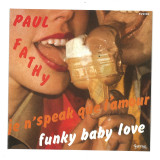
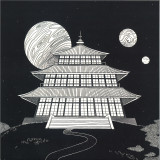
Introducing Jaisiel; The Canary Islands’ answer to Bacalao. After years modestly honing his craft in Madrid and Tenerife and re-appropriating forgotten dollar bin gems for his label Ears On Earth, Jaisiel has found a home on Antinote with his shimmering ‘On the Universe’ EP. Tinged with a late 80s sound are 3 tracks of convertible top down, shirts unbuttoned, neon glow dance music.
Opening the Maxi 12” is the ecstatic ‘Talk To Nature’ replete with chirps, coos and woofs. Its catchy melody a subtle nod to ATB’s seminal anthem 9PM (Till I Come) which was once quoted as sublimating sexuality with its “purring titillation”. There is an equally evocative fluidity to ‘Talk To Nature’ found in Jaisiel’s use of pitch bent guitar, climaxing snare rolls and pounding kick drum. However it’s all very lighthearted when compared to ‘Embrace The Unknown’ a driving and mystical track filled with vocoder commands, tinny drones and synth stabs whose accompanying pointed bass line makes this the perfect song for peak time transitions. Raving into the sunrise on the Carretera El Saler is ‘On The Universe’ a contemplative and melancholic closer. Still vibrating with residual dance NRG, the central vocoder breakdown beckons you to reach for trance, to consider The Universe, as it were.
What ties together this On The Universe EP is Jaisiel’s penchant to upcycle 80s and 90s trance dance sounds in a clear and fresh flavour, distinctly Spanish, while simultaneously using just-enough-cheese catch phrases without being too cliché or pastiche. Talk To Nature, Embrace The Unknown, On The Universe…
Search:climax
Frogs 11 A side 'Studios, Squats and Trucks' is an epic 'Frogs' classic. You can only wiggle and smile once the fanfare driven groove starts. This tune will take you from a cabaret gipsy step to a hektic jungle knees up banger and finally wrap its cushty dub vibes around you. This progressive yet cohesive anthem nails the definition of Clown-Step once and for all.
This huge dance floor killer is the result of the collaboration between Ed Cox (Accordion/Prog), DJ Stivs (Drum Prog), Bang Crosby (Vox), Freddyfrogs (Prog), Waynes Maslin (Trombonne), Carl Davies (Clarinette/Sax) Frogs 11 B side 'Fucked up with you' will convince any raver to stand up and dance! This hard techno banger rests on its bassline to deliver the mighty vocal 'Get Get Get fucked up with you'. The huge drop transitions from the DnB beat tand tips your rave into its darkest hours.... Frogs 11 B side 'The way to go' offers a radically different atmosphere from the other tunes on this release. Freddyfrogs explores here the tribal force of an emotional heart beat. The nagging build up reaches it's climax to fall into death itself and rebirth into the light. Let your mind wonder into its deepest corners....
- A1: The Poet Acts
- A2: Morning Passages
- A3: Something She Has To Do
- A4: “For Your Own Benefit”
- B1: Vanessa And The Changelings
- B2: “I'm Going To Make A Cake”
- B3: An Unwelcome Friend
- B4: Dead Things
- C1: The Kiss
- C2: “Why Does Someone Have To Die?”
- C3: Tearing Herself Away
- D1: Escape!
- D2: Choosing Life
- D3: The Hours
‘Was there ever a more perfect film for Glass’s lyrical manner? He refers to his own past, but the way in which the material is treated transforms it inevitably into that eternal present. Such a feeling of fragile beauty is a rare achievement.’ – Gramophone
‘Simple and complex by turn, Glass’s score adds dignity and depth to the movie, and to the tragedies and triumphs, big or small, of ordinary life.’
– Guardian
‘Underpinning the anguish at the heart of The Hours a beautiful score. Glass’s motifs capture the passage of time and the universality of human experience.’ – Classic FM’s Best Soundtracks
Nonesuch releases Philip Glass’s award-winning soundtrack to The Hours on vinyl for the first time to coincide with its 20th anniversary and Glass’ 85th birthday concert season. Originally released in December 2002, Glass’s score to the Academy Award-winning film was itself nominated for an Academy Award, as well as a Golden Globe and a Grammy, and went on to win a BAFTA and a Classical BRIT.
Directed by Stephen Daldry, The Hours is the story of three women searching for more potent, meaningful lives. Based on Michael Cunningham’s 1999 Pulitzer Prize–winning novel, with a screenplay by David Hare, the film interweaves the stories of three women – a book editor in New York (Meryl Streep), a young mother in California (Julianne Moore), and the author Virginia Woolf (Nicole Kidman). Their stories intertwine, and finally come together in a surprising, transcendent moment of shared recognition.
Philip Glass’s score was conducted by Nick Ingman, with Michael Reisman on piano and the Lyric Quartet, and recorded at Abbey Road Studios and Air Studios, London. The score was a key element in this acclaimed triptych of dramatic tales. ‘The inter-cutting of personal stories over a wide span of time,’ said NPR, ‘is held together by a single music approach.’
In his original liner note, Michael Cunningham wrote, ‘Each novel I’ve written has developed a soundtrack of sorts; a body of music that subtly but palpably helped shape the book in question. The one constant since I started trying to write novels, however – my only ongoing act of listening fidelity – has been the work of Philip Glass. I love Glass’s music almost as much as I love Woolf’s Mrs. Dalloway. Glass, like Woolf, is more interested in that which continues than he is in that which begins, climaxes, and ends; he insists, as did Woolf, that beauty often resides more squarely in the present than it does in the present’s relationship to past or future. So, when I heard he’d agreed to contribute the music to the film version of The Hours, it seemed both inevitable and too good to be true. I’m not sure if I can offer any higher praise than this: When I saw the movie with the music added, I thought automatically of how I could use the soundtrack, when it came out, to help me finish my next book.’
“This is a movie about art and how art affects life," explains Philip Glass. “The story is very complicated and the music could take on a very important role in the film, as I saw it – to make it viewable, to make it comprehensible, so the stories of the three women in the film didn’t seem separate, that they were tied together. The music had to be the thread that tied the movie together. There’s no question that the emotional point of view is conveyed by the music. Music is the arrow you shoot in the air. Everything follows that.’
Born in Baltimore, Maryland, in 1937, Philip Glass is a graduate of the University of Chicago and the Juilliard School. By 1974, Glass had created a large collection of music for The Philip Glass Ensemble. The period culminated in the landmark opera, Einstein on the Beach. Since Einstein, Glass’s repertoire has grown to include music for opera, dance, theater, orchestra, and film. His scores have received Academy Award nominations (including Kundun and The Hours, both released on Nonesuch, as well as Notes on a Scandal) and a Golden Globe (The Truman Show). Recent works include Glass’s memoir, Words Without Music, Glass’s first Piano Sonata, opera Circus Days and Nights, and Symphony No. 14. Glass received the Praemium Imperiale in 2012, the US National Medal of the Arts from President Barack Obama in 2016, and 41st Kennedy Center Honors in 2018.
Nonesuch’s relationship with Glass began in 1985, with the release of the score for Paul Schrader’s Mishima. In addition to The Hours (2002) and Kundun (1997), over the years other Glass works on Nonesuch have included Einstein on the Beach (1993), Music in Twelve Parts (1996), the soundtracks for Powaqqatsi (1988) and Koyaanisqatsi (1998), Glass Box (2008), and Kronos Quartet’s Performs Philip Glass (1995), amongst others.
Limited Edition LP re-press on White Vinyl. At the core of Death Valley Girls, vocalist/multi-instrumentalist Bonnie Bloomgarden and guitarist Larry Schemel channel a modern spin on Funhouse’s sonic exorcisms, ZZ Top’s desert-blasted riffage, and Sabbath’s occult menace. On their third album Darkness Rains, Death Valley Girls churn out the hypercharged scuzzy rock every generation yearns for, but there is a more subversive force percolating beneath the surface that imbues the band with an exhilarating cosmic energy. Album opener “More Dead” is a rousing wake up call, with a hypnotic guitar riff and an intoxicating blown-out solo underscoring Bloomgarden’s proclamation that you’re “more dead than alive.” The pace builds with “(One Less Thing) Before I Die”, a distillate of Detroit’s proto-punk sound. At track three, Death Valley Girls hit their stride with “Disaster (Is What We’re After)”, a rager that takes the most boisterous moments off Exile On Main Street and injects it with Zeppelin’s devil’s-note blues. Darkness Rains retains its intoxicating convocations across ten tracks, climaxing with the hypnotic guitar drones and cult-like chants of “TV In Jail On Mars.” “Death Valley Girls are a gift to the world.” - Iggy Pop
Tracklisting 1. More Dead 2. (One Less Thing) Before I Die 3. Disaster (Is What We’re After) 4. Unzip Your Forehead 5. Wear Black 6. Abre Camino 7. Born Again and Again 8. Street Justice 9. Occupation: Ghost Writer 10. TV in Jail on Mars
Temples is a tempting invitation into another world, full of light and movement. From the second the synth comes in this track has got us deep in its pocket. Shotter manages something that is hard to achieve - he has us floating completely, yet steadily carried by tip-toeing metallic rhythm elements and the relentless swells of bright synths. The game changer in the second half is a new, gritty bass quality, which couldn't roll in any more fiercely. At its fullest the track has us in an uncompromising trance, a relentless movement that we don't ever want to escape from. Breaking back down to pleasantly gentle hi-hat reverb-tails and inducing synth patterns Temples lets us down easy, with the unspoken promise to return.
Ueno claims the room to itself completely and immediately. The rise and fall of melodic synth lines lead us through a labyrinth at first, leaving plenty of space for imagination. Before we notice playful call-and-response rhythms are teasing our ears, until the track surrenders itself to an ever-growing wave of synth patterns and their behind-the-beat-delay. It climaxes into a haunting silence with tenuous high-pitched sounds and a clear outer space feel. Finally, all elements lock into a comforting groove, driving us forward, not too fast, not too slow - exactly right.
The track starts off with a blissfully nostalgic vintage-feel - slightly muffled, like the humbling quality you get from an old Technics playing your favourite LP. But don't be fooled, Cube March is bold. And unexpected. Stomping rhythms take over quickly and full-blown gritty synth-stabs cut the air effortlessly, like blades. An unapologetic and careless pumping bass line makes us want to move with every cell in our body. Shotter demonstrates his fearlessness in experimenting with heavy contrasts and elements from different genres here. A break with tastefully placed repetitive rhythm elements is complemented by the constant ebb and flow of melody lines. Both in volume and presence they fluctuate, one handing over the spotlight to the other seamlessly, keeping us hooked until the very end.
This remix lures you away from reality in a matter of seconds, with Definition's signature heavy hitting bass dominating. He expertly weaves shimmery fills into buoyant synth lines and brings us a skilful mix of dark minimal techno, breaks and infectious monster synth lines. Every so often, he adds a new layer, increasing the depth of the track, before letting it all crumble in a breakdown where time stops and tension grows, as we impatiently await the next rise to carry us away. The lengthy build-ups give this remix the energy to fill any room, easily. It is subtle, yet propulsive, too - a lane that Definition seems to manage regularly.
Jackie Cohen decided the only way forward was to succumb to crisis, to
relax into it instead of fighting, to find beauty even in the flame an
approach that fuels her sublime new album, Pratfall
Because of the record's pandemic origins, Cohen was only aided in studio by two
collaborators: her husband, Foxygen's Jonathan Rado, and engineer Rias Reed.
"We were a tight pod," she laughs. The three musicians holed up at Sonora
Recorders in Los Angeles, tapping into the studio's vaulted ceilings and haunted
feeling to amplify Cohen's widescreen songwriting. "Elliott Smith recorded some
stuff there, and it always seemed like there was a ghost banging around in there,
turning lights on and off," she says, before adding a cheery followup: "Shakira
recorded there too, can't forget another 5'2" icon." On Pratfall, Cohen renders both
extremes of that range of experience in warm, inviting indie pop. "I didn't want to
write a dirge inspired by the darkest moments of my life, I wanted a cathartic
moment, to experience the emotion and build from it," Cohen says. "This record is
a climax where everything becomes explosive and you can just close your eyes,
give in, and dance it off."
LP Tracks: Two Days / Coup De Grace / The Valley / Pratfall / Ghost Story /
Moonstruck / Dire Love / Lost Without Fear / Some Days / Extra Credit / Scraps
Of Love
repress
Mohamed Abdel Wahab wrote another big score for Om Kalsoum in 1972. In “Laylet Hob” (A Night of Love) we hear Arabic music and poetry in perfect symbiosis. The rich and lengthy instrumental intro is just a precursor of the emotion present in this song. The talent of the composer is underlined by how he utilises the traditional style of singing poetry in a more open and creative way. Abdel Wahab’s infusing of long and groovy interludes with varied tonality, rhythmical patterns and an overall unique approach, carries Om Kalsoum’s powerful voice and brings the song to an incredible climax. In this way, he gives more colour and depth to the music and the skilled soloists in the orchestra are finally able to breathe. Sensual rhythms, breaks and breathtaking solos of accordeon, guitar (Omar Khorshid), violin and organ (Hany Mehanna), have ensured this song is an all-time classic for belly dance routines. Souma Records thought it was time to re-release this monument on a high quality vinyl format, together with a repress of “Enta Omri”, another classic song by Souma.
Part 3[24,79 €]
Rhythm master Klaus Weiss knew he had a good thing going with NIAGARA. The first album was a gathering of every outstanding drummer and percussionist he could get hold of and despite the fact that there were only rhythm instruments featured , it became quite a memorable and unique record. Now for the second album “S.U.B.” he felt he had to go other ways, and recorded with a complete rock outfit plus the one or another brass instrument. ‘S.U.B.’ is definitely worth being traded for 180,00 Euros and more among collectors for a clean original and when the needle hits the groove you will realize why. There is a tightly woven web of rhythms from drums and percussions, as the solid and ever pulsating base with a laid back but really present bass guitar adding more depth and power to the beats and clean rhythm guitars with a nifty wah wah effect for the extra kick. From time to time the guitars fire off a memorable steaming riff on top of the rhythm pulse and the horns answer the call for arms. You really have to look at the backcover to find out that this is a German outfit instead of one of these utterly hot and hip US funk rock cult bands of the time. NIAGARA aka Klaus Weiss waive the vocals so it is an instrumental record you face with ‘S.U.B’, but then this band goes so wild in some of the compositions, that you will be left breathless on your knees by all these simmering performances. Each musician participating in this project is a professional, but they all let the music erupt into a climax of sound you can only achieve, when you put your whole heart and soul into it. A masterpiece of funky and utterly unleashed rock music from the early 70s.
Pretty Girl is in some sort of purple patch. Storming off the back of stellar releases ‘Arc’ and ‘Sun Phase’, the Naarm neophyte has officially arrived with her debut EP ‘Middle Ground’. What is now becoming somewhat of a signature, the artist lathers the debut in her very own saintly vocals. This is a four-track exposé of emotive dance music.
The A1 ‘Arc’ sets the tone. Flexing her muscles in sound design, PG pieces together a shimmering house runner. Featuring laser-like chords and delectable drum patterns, ‘Arc’ sends you skyward. Racking up giant streaming numbers and snaring features on more than 20 Spotify Editorial playlists, this one’s an underground bullseye.
'Empathy’ is the next to arrive. A call and response record that walks a lovely tightrope, perfectly balanced in both vocals and production. As the name suggests, the piece is stacked with deep motif’s that act as a window into Pretty Girl’s day-to-day. Her standout vocal production to date is met with her distinctive driving percussion and melancholic chord progressions.
'Lavender’ is a sharp percussive creation and a fitting welcome to the B-side. A one-line affair that burrows deeper and deeper. Once again, showing off her prowess in production, PG plays masterfully with sub-bass and glitchy drums resulting in a stellar display of late-night audio.
Although devoid of lyrics ‘The Only Way Is Through’, brims with feeling and is the perfect climax. Here’s a record full of hope and promise. Manipulating an array of judiciously chosen synths, PG shapes a vast interstellar space. Over the 8 minute trip, a palette of tight drum patterns come knocking, pleasantly surprising you with each visit. With time on her side, the producer gives each sonic element its moment in the spotlight. And girl do they shine! Where there is light, there is darkness and PG plays with both moods to perfection. Listen closely and you can almost hear the concentration involved in piecing this moving galaxy together.
With staggering streaming numbers across multiple platforms along with additions to some of the world’s most sought-after playlists, the time is now for Pretty Girl and the release of ‘Middle Ground’.
Svart Records to release new album by rising stars of eclectic heavy rock, Messa on the 11th of March 2022. Messa’s rising trajectory hits the stratosphere on their immense new album “Close”. Soaring up out of the Italian Doom Rock underground in 2014, Messa have been rapidly garnering a frenzied throng of devotees, in thrall to their monumental and broad-ranging sound craft. Releasing two widely celebrated cult records, the latest of which “Feast For Water” in 2018 was a critical breakthrough success, with Rolling Stone calling the whole album “captivating, wringing maximum drama out of its savvy stylistic clash,” Messa have had everyone on tenterhooks, waiting for what was next. New album “Close” draws us further into Messa’s spellbinding textures and immersive dynamics. Described as “Stevie Nicks fronting Black Sabbath,” singer Sara’s colossal voice omnipotently carries the listener on an emotional rollercoaster ride where the sonic cauldron of Iommi guitars gives way to Arabian oudh and progressive solos in a masterful style-clash that well befits Messa’s incendiary reputation. The hushed Fender Rhodes piano intro on opener “Suspended,” picks up where Messa left off on their previous album “Feast For Water” but then collapses gloriously into Jazz guitar and widescreen impassioned crushing riffs, lighting our way for the odyssey ahead. The scene is set magnificently for the journey that “Close” expertly takes the listener on, with Messa’s obvious care and passion for the album as a pilgrimage of sonic experience. Heavyweight tracks like “If You Want Her To Be Taken” or “0=2” are modern Doom Rock classics that expertly upgrade and leave the genre reeling in their wake. “Pilgrim” and “Orphalese” are woven with tapestries of Mediterranean sounds where oudh and eastern chord phrasings expand Messa’s cinematic palette with a panache that is all their own. Atmospheric and grandiose belters like “Rubedo” and “Dark Horse” build into an almost limitless climax of discord and harmony where blast beats and saxophones descend into a thrilling cacophony that’s a masterclass in artful cutting edge Doom. Referencing bands like Dead Can Dance, Swans and Om, Messa have created an album where song, experience and atmosphere are focused into a crystalline modus where high art flawlessly embraces good old fashioned riff-worship. Transcending the occult and noir-tinted atmospheres of their past works, “Close” confidently weaves Messa’s multifarious influences into a singular breath-taking sound that leaves the listener enthralled. Perfection or something extremely close, Messa’s “Close” is not just a Metal record, but it’s definitely one of the best things to break out of the confines of Metal in a long time.
Labyrinth is dark, brooding, beat-heavy, melancholic mood music courtesy of Ian Carr and the Nucleus crew. A favourite of Madlib, it goes without saying that this is one magnificent record. Originally released on Vertigo in 1973, Labyrinth was never re-pressed and of course those original copies are now very tricky to score. Like all the Nucleus records, it’s aged ridiculously well and this Be With re-issue, re-mastered from the original analogue tapes, shows off just why this deserves to be back in press.
Genius trumpeter and visionary composer Ian Carr was one of the most respected British musicians of his era. He was a true pioneer and saw the potential in fusing the worlds of jazz with rock, just as Miles Davis and The Tony Williams Lifetime did in the US. In late 1969, following the demise of the Rendell-Carr quintet, and tiring of British jazz, Carr assembled the legendary Nucleus. Regarding music as a continuous process, Nucleus refused to “recognise rigid boundaries” and worked on delivering what they saw as a “total musical experience”. We can get behind that.
Under bandleader Carr, Nucleus existed as a fluid line-up of inventive, skilled musicians. This constant evolution and revolution was all part of the continuous musical exploration and discovery that took jazz to new levels. And the music has kept relevant. To steal a line from a recent review of our re-issue of Roots, when it comes to anything Nucleus “it’s basically already hip-hop”.
At this point Carr had parted ways with guitarist Alan Holdsworth and as a result the Nucleus sound found itself returning to the core elements of groove and melody. Carr had become bolder and more self-confident in his compositions and it shows in the sheer ambition of Labyrinth. Composed by Carr, and with lyrics written by his wife Sandy, Labyrinth was the result of a commission from the Park Lane Group and funded by the Arts Council of Great Britain. Originally a live performance by an augmented Nucleus, some of the expanded cast were brought back for the recording sessions, including vocalist Norma Winstone. So as the front cover of the finished album says, this is literally “Nucleus Plus”.
Labyrinth is presented as a suite, based on the ancient Greek legend of the Minotaur with musical instruments representing the various elements of the mythology. According to the LP’s original sleeve notes, the bass clarinet represents the tragic element, the trumpet represents the heroic element and the voice represents the human element. The rest of the musicians represent the two societies of Athens and Crete and their comments on the story as it unfolds.
The album opens with the experimental, sumptuously dissonant “Origins”. Teasing strands of atmospheric bass clarinet introduce the first theme before swiftly fading out with a startling blast of staccato fanfares and big drums. Heavy. The album soon finds its rhythm as it alights on the spell-binding and groove-friendly “Bull-Dance”, showing off the best Nucleus has to offer: subtle trumpet melodies, compelling rhythms, a psych-rock vibe and tight soloing. And of course there’s Norma Winstone’s stunning wordless vocals, that also take the lead in the next track “Ariadne”, a spacey-jazz song with beautiful piano, flute and clarinet, and the only recognisable lyrics on the album. You might recognise a snatch of it being looped by Madlib on Quasimoto’s “Astro Travellin”. The first part of the improvised “Arena” closes out the first side of the album, a short experimental piece with piano and horns.
Over on the flip-side, the powerful second part of “Arena” introduces a new theme. It swiftly builds, with vocal melodies, piano and horns all pronounced over the thick drums snapping your neck. It comes on like an alternate take on “Bull-Dance”, noisier, with a looser rhythm. The triumphant, shuffling Latin-jam “Exultation” leans on more scintillating vocals from Winstone, and a chunky counter melody from the rhythm section. It’ll get you moving.
The final track, the haunting, twelve minute “Naxos”, is an incredible way to close out this remarkable record. A circling bass guitar loop inspiring the group to a meditative psychedelic jazz rock improvisation in a silent, Miles kind of way, with a great flugelhorn solo from Carr and an ace synth climax.
This Be With edition of Labyrinth has been re-mastered from the original Vertigo master tapes, Simon Francis’ mastering working together with Pete Norman’s cut to weave their usual magic with these wonderful recordings. Another great Keith Davis sleeve has been restored in all its airbrushed Golden Age of comics, gatefold splendour. Complete with Minotaur of course.
"What took you so long?" might be a valid question concerning the ten year gap between Zanshin's new album "In Any Case By Any Chance" and his first album "Rain Are In Clouds".
Of course it is a question that the Viennese musician has asked himself quite startled in his usual self-critical manner, just to realize at a closer look that it has not been a lack of creativity or laziness at least. He used the Zanshin moniker on four EP releases and several remixes, plus a game soundtrack. Not to forget all his output as one half of producer duo Ogris Debris (the album "Constant Spring" from 2016 and roughly two dozen singles and remixes) and the many, partly award-winning audiovisual installations and performances with Leonhard Lass as DEPART (depart.at). Furthermore he has also built two sound installations in 2021, "I Gong" at Elevate Festival and "Cymatic Sands" at Ars Electronica. In addition, Zanshin performs with the Max-Brand-Synthesizer from time to time as part of the compositions by Elisabeth Schimana, and together with label mate Dorian Concept he has also composed and performed the piece "Half Chance/Music for Moogtonium" for this unique instrument, built by Bob Moog himself.
Not spared by certain global developments of recent years, but rather invigorated by exploring his own resilience, Zanshin had a talk with Affine Records Operator Jamal in the beginning of 2021, speaking of future ideas and releases. And what was initially a single release spawned into a whole album in seemingly no time. An old skit ("Polar Polychrome") on the Roland MC-505 groove-box that had never really been forgotten, but was rather waiting patiently somewhere in the back of his mind, suddenly proved to be the initial spark for the album.
The term "Zanshin", roughly translated as un-focussed attention, is in fact more than just a pseudonym but rather a directive in the artists life. Zanshin really likes to go in several directions at once, kind of according to Wittgenstein's claim that "The world is everything that is the case.", to find out where his love for music might lead him this time. He also somehow went back to his roots with this album. Not necessarily in the sense of certain musical influences or genres, because then the album would be even more eclectic than it already is. More like a focus on the core values in the fabrication process of the music itself, the freedom to rather follow the structures and sounds than to shape them in a completely predetermined way. Somebody once called it, "to weave what the music demands."
In this regard, Zanshin often feels more like a sculptor and tries not toadhereto strongly to the rules of specific sub-genres of electronic music. Searching for sounds and designing them is one of the energies that fuels his interest the most, thus at the beginning of a lot of tracks there are small skits and ideas that have the freedom to grow in whatever direction.
Hence this album has no elaborate story to tell, there is no extensive "narrative" or big time "storytelling" at work. "In Any Case By Any Chance" is not a novel but rather a collection of short stories (which are certainly dense and have complex plots nonetheless). The result is a long-player where playful electronica, skillful songwriting, extrovert dance music and symphonic film music enter into a symbiotic relationship. Returning to another Wittgenstein quote, "Whereof one cannot speak, thereof one must be silent", the emotional impact of music is the main focus and the results can be quite solemn at times, but around the corner always lurks the next bone-breaking rhythm pattern and gnarly sound design.
The infamous saying, "writing about music is like dancing about architecture", is another brick in the wall of sound in Zanshin's approach to music. He rarely roots himself in traditions or uses them too overtly, he really likes to agglomerate sounds, to challenge the listeners. It seems like he tries to avoid classification on purpose, because he knows that everyone has their own perception anyway. The only thing that this music demands implicitly is a willingness to listen attentively.
Very dense, at times really heavy and massive, then again airy and playful. "Music for clubs that don't exist.", might be another fitting caption to describe this album, which lasts for a little more than an hour.
The opener "Heatseeker" rushes to a sudden head start with its steel pan extravaganza, tropical vibes meet a bass line drenched in electro funk, and electrified synth stabs support the declaration of love in the lyrics. Kind of Jamie XX meets Electro meets Diva House. The monster that is "Bronteroc Brawl" is up next, a serious test for the speakers and a wild ride with metallic, growling sounds. The aggressive sound design reminds of suspense ridden shark chases, vicious dogs and cunning dinosaurs, in any case a track for people who love a proper bass stomper.
A new approach for the "indie discotheque" brings the emotional roller-coaster "In Gloom" with snappy drums and hypnotic synth motives á la Alessandro Cortini, creating an epic atmosphere together with the multi-layered vocals. A psycho-acoustic treat is position 4, the crisp instrumental "Polar Polychrome", you could even go as far as calling this a Zanshin signature track. Like mentioned before, the roots of this track go back to 2002 and you can hear the unmistakable influence of beat wizards like Photek, a piercing bass line is supported by poly-rhythmic drums, while dense pads try to escape the claustrophobic lockdown mood of winter 2020/21.
Another round of intense pathos waits for the listeners in the ensuing track "In Search Of". Moderat say "Hello", a melancholy piano melody is rushed to a climax by a wild bass arpeggio and forceful drums, the desire for a perfect sunrise at the next after-hour to the max. Initially just an appendix to the preceding track, "Time After Thought" swiftly developed from a mere improvisation to an ambient epic with a croaking alien piano, as if Keith Jarrett were on his way to Alpha Centauri.
Up next is the first single "Because Why", a breakbeat driven, synth-heavy track with winged vocals and a popular film quote. The title refers to the movie "Alphaville" by Jean-Luc Godard, a dystopian science fiction film noir, in which an omniscient computer system named Alpha 60 is ruling society and humans can only say "because" but never "why". As if the gears of a galactic mechanism were spinning into motion sounds "Identity Slices". A raspy chord structure finds its counterbalance in a kind of stumbling, wonky beat, and Zanshin would never deny the huge influence that Autechre's sounds and structures always have had on his music. Micro- and macrocosm meet on the same level and this friction is also a metaphor for questions of identity and self-awareness, without using voices or lyrics.
Off we go into the IDM bubble bath of "Enzyme Enigma", the bass drum is stomping and a fizzy acid-line is twisting in all directions behind rolling dub-techno chords. "Corrosion Creak" is a kind of acoustic degradation process, the rave dogs are finally let loose and everything happens at once, funky synths shred, string sounds wail and then there is this bass that sounds like smashing a rusty metal plate in the junk yard with a vengeance.
Towards the end everything slows down a bit, the beat in "Whatever Words" is Warp school cerebral hop at its best and therefore loads of glittery, creaky sounds swarm out until the synapses are overloaded, cumulating in a mighty bass ending. Last but never least, "Rebus Redux" guides us into the limitless night sky, with long indulgent pads dotted by an aimlessly wandering piano, while a compact net of tamed resonances and meandering sub frequencies unfolds in the background, enticing navel-gazing imagination.
Copenhagens own dj legend and veteran producer KIM KEMI releases another jacking and euphoric banger- ONLY SMOKE - his stylish and subtle sound design and varied arrangement take hints of Robert Hoods minimal riffs and flesh out a full funky arrangement taking us on that classic luxurious sonic journey. Pres play and trigger the
smoke machine - or the soap bubbles.
Martinez ́s remix is a more electro affair that could blend well with classic Underground Resistance releases. Watch out for the acid topline. Martinez is a Swedish electronic music producer and DJ, currently based in Copenhagen. Martinez kick started his carrier
in 2000 with his "Laidback Grooves EP" on the notorious Chicago based Deep-House label Guidance Recordings.
Asmus Odsats remix of SMOKE KILLS is taking the track in a more broken but funky IDM territory, breaking the track down adding avantgarde dub details over the stuttering beat.
Asmus Odsat is a former resident at Culture Box and co-founder of Ritual Malmö as well as the BULK club night releases via. FALK DISKS, the club focused sub-label of FALK (Fuck Art Lets Kill) with his ‘Ecstatic Half Truth’ EP, is played by Courtesy - even in her BBC Radio 1 show mix.
An added bonus to these 3 unique remixes is Kim Kemis beautiful
Tropical Tucan, a perfect opening track fusing sensual chilly Detroit pads and jacking understated beats into a growing glowing mind-state that is worthy of a Carl Craig spin - let it ride - don't miss the climax - you will end up looping it. An essential tool. Enjoy!
repressed !
It's no understatement that London Grammar's forthcoming album is one of the most highly anticipated debuts this year. Confirmed for release on September 9, the album is a result of 18 painstaking months spent writing and recording. Each of the 11 tracks is testament to the trio's innate understanding of the roles that subtlety, contrast and restraint have played in the creation of memorable, timeless and transcendent music. 'That's how this all started,' says Dan, 'and it's always been our primary goal, to keep space in the music. The way that, say, the guitar and vocal interact is massively important to us.'
Heavily involved in every decision made on the album, the band handpicked their team, working closely with producers Tim Bran (The Verve, Richard Ashcroft, La Roux) and Roy Kerr AKA The Freelance Hellraiser. Drafting in Roc Nation's KD (Outkast, Beyoncé, Jay-Z) to mix the album, with Grammy-winning Tom Coyne (Adele's 21), joining them to master.
Tracks like If You Wait and Flickers possess that strange duality of lament and defiance, filled with textures, colours, shadings and interjections that are subtle yet deliver devastating power. The next single, Strong, out on September 1 is the final, killer blow. Building - as you would expect from London Grammar - from nothing, from the barest of bones, Hannah's soaring vocals propels the song to its crashing climax.
More than delivering on their promise, London Grammar's electrifying debut solidifies them as being one of the most exciting and innovative bands to emerge in 2013.
Following the release of Netflix's inspiring documentary short 'Hold Your Breath: The Ice Dive', Galya Bisengalieva presents her official soundtrack. To accompany the gruelling journey of freediver Johanna Nordblad as she tries to break the world record for distance travelled under ice with one breath, Galya has crafted an expert ambient narration that highlights the rising intensity toward the films looming climax. She uses warped solo violin techniques and electronically manipulated strings to produce compelling and emotive compositions that induce complete submersion. Aiding in the use of the dive to make comment on both global warming and the pandemic, the soundtrack commands attention while giving the characters their own space to breathe. Galya explains; "Composing music to Joanna's story was a completely new challenge. Until now my writing has been based on more abstract concepts but now I had the opportunity to engage closely in a clearly defined journey of an individual. A story of the freediver and her attempt to break the world record (men's and women's) for distance travelled under the ice, no fins, no wetsuit, on a single breath. What Joanna achieved is truly inspiring and incredibly brave. It would have been extremely easy for me to focus on the jeopardy of her record attempt. However, the story that is being told is her love of the cold water, her sister, family, and the nature she communes with every day. My music needed to reflect the personality of an extremely determined and loving woman. In order to achieve this, I used the violin as her voice, high harmonic soaring melodies. This I juxtaposed against layers of low warped drone and nature sounds, using field recordings of underwater, cutting of the ice for the dive and the howling wind in extreme weather conditions in Finland. The music hints at danger and the power of nature but always comes back to Joanna's intimacy with the icy water."
- A1: Sisters! Brothers! Small Boats Of Fire Are Falling From The Sky!
- A2: This Gentle Heart Like Shot Bird's Fallen
- B1: Built Then Burnt
- B2: Take These Hands & Throw Them In The River
- C1: Could've Moved Mountains
- C2: Tho You Are Gone I Still Often Walk With You
- D1: C'mon Come On (Loose An Endless Longing.) (Loose An Endless Longing.)
- D2: The Triumph Of Our Tired Eyes
Back in soon, note new price. The second Silver Mt Zion album featured an expanded band, with a similarly expanded band name. The addition of cello, second violin and second guitar allowed SMZ to develop richer, denser arrangements while preserving live ensemble playing. The opening instrumental pieces picked up where the debut left off, with found-sound loops and treatments introducing repeated melodic themes that move slowly through various counter-melodies the greater breadth of instrumentation brought extra subtlety, complexity and harmonic range to bear on these neo-classical dirges. Guitars and vocals moved to the fore on the album’s centerpiece tracks. “Take These Hands And Throw Them In The River” is an astounding juxtaposition of rhythmic thrust and ricocheting vocals, driven by a battered lyrical paranoia that conjures equal parts fear and rage. The calm after this storming piece comes by way of another vocal tune, this time fragile and near-whispered, with dual lines that alternately mask and reinforce each other. A piano and cello interlude prefaces the last side of the record, which features two guitar-driven songs, the first a blazing rock piece that builds to an exuberant distorted climax, the second as close to a pop masterpiece as this band is likely to craft, highlighted by a lovely arpeggio guitar riff and the defiant refrain “musicians are cowards”. While remaining anchored in an underlying sadness and mourning over this failed world, this album reveals an angrier, more urgent face as this unique ensemble charted ever-widening sonic and emotional terrain.
[c] B1 . Built Then Burnt [Hurrah! Hurrah!]
Josh Hughes (Cub\cub) returns for his second album of a long hot summer, Radiant Crush. Following the glimmering enchantments of his previous outing, Nothing New Under The Sun, this latest chapter brings things to a dizzying climax. While Josh's palette champions the lo-fi, it's his ability to unveil rich melody, seemingly spilling through ever shifting sliding doors, that leads the listener on a merry dance of intangible delights. As Radiant Crush continues to build, we increasingly discern hazy voices coming through the divide: Through a Narrow Window resonates like a lost gem from This Mortal Coil; until Drift finally breaks through with Louisa Osborn's blissful vocal performance, pulling everything into focus to stand as the album's glorious centre piece. While Radiant Crush is very capable of speaking for itself, when pressed Josh describes his work as "music for an incurably ambiguous world", and we can see how nothing is quite what it seems when he goes on to describe this latest album in similarly evasive terms: "Radiant crush is a series of nebulous concepts designed to make the listener think about the way in which we as human beings can idealise a past that never existed. The album focuses on the fragility of the human brain and the power emotions have over recollection through tracks that leave you with a feeling of longing, for something you can’t quite put your finger on. I think more than any other work I’ve made, this album feels the most human. Vocals feature quite prominently throughout the record, most of them are distorted, veiled or fragmented in keeping with the theme of a loss of connection and meaning. Drift is the only track on the album with intelligible vocals, this was intentional as it honestly and tenderly deals with the theme of living in an incurably ambiguous world." Radiant Crush will be released on 2nd September, via digital platforms and limited edition pressed vinyl. Genre: Electronic / Ambient
- A1: We Belong (Squarepusher Remix)
- A2: Happy (Little Snake Dying In The Club Edition)
- A3: Happy
- A4: Sorry (Kid606 Remix)
- A5: We Belong (Rafiq Bhatia Remix)
- B1: Kick Me (Zach Hill Remix)
- B2: Insects (Machine Girl Insecticidal Tendencies Remix)
- B3: Serious Ground (Xiu Xiu Remix)
- B4: Cruel Compensation (The Locust Remix)
- B5: Everybody Loves You (Boris Remix)
- C1: True (Feat Trent Reznor)
- C2: In Time (Feat Blixa Bargeld)
- C3: In Time (Kaitlyn Aurelia Smith Remix)
- C4: Native Intelligence (Feat Trent Reznor)
- C5: Kick Me (Feat Iggy Pop)
- C6: Kick Me (Feat Fever333)
- D1: In Time (Health Remix)
- D2: Happy (Boy Harsher Remix)
- D3: Native Intelligence (Feat Trent Reznor - Ghostemane Natural Selection Remix)
- D4: True (Feat Trent Reznor - Stu Brooks Remix)
- D5: Happy (Little Snake Lunar Climax Edition)
Following his triumphant performances at the 2022 Coachella Music and Arts Festival, Danny Elfman delivers Bigger.Messier., an ambitious double -album collection of remixed and reimagined tracks from his highly acclaimed Big Mess album. This sprawling, 23 track collection (available on 2 LP or 2 CD) features tracks reworked by some of the most groundbreaking and subversive artists around today. Bigger.Messier. views the Grammy and Emmy Award-winning composers songs through the lens of luminaries from diverse sides of the music business, including Trent Reznor, Iggy Pop, Squarepusher and Ghostemane. Elfman once again has achieved a kind of artistic liberation on the record that had been eluding him for decades, and connecting him to brand new audience. Born and raised in southern California, Elfman began his career as part of a surrealist, avant-garde musical theater troupe known as The Mystic Knights of Oingo Boingo. The group would eventually morph into the critically acclaimed rock band Oingo Boingo, whose high-energy performances and genre-bending sound garnered them a fanatically devoted cult following in the 1980s and '90s. Among the group's early fans was fledgling director Tim Burton and Paul Reubens (aka Pee-wee Herman), who enlisted Elfman to score their first feature film, Pee-wee's Big Adventure. The collaboration would prove to be the start of a long and fruitful partnership for Elfman and Burton, with Elfman going on to score a string of iconic Burton features like Batman, Beetlejuice, Big Fish, Edward Scissorhands, and The Nightmare Before Christmas. To date, Elfman has scored more than 100 films
- 1: Gabi
- 2: Moneymaker Lady
- 3: On Tour
- 4: Lucifer
- 5: Maiplatz 3
- 6: Liebe Ist (Das Kotzlied)
- 7: Der Dumme
- 8: I Rgendwohin
- 9: Autogrammstunde
- 10: Scheissegal
- 11: Arbeitslos
- 12: Ich Hätte Da Ne Frage
40th Anniversary Edition
-erste Wiederveröffentlichung dieser vergessenen Hardrock- und
Deutschrock-Perle aus dem Jahr 1982 -inklusive der raren 7“ Single von 1980 -aufgenommen im Olympia Studio, München (Amon Düül II, Oktagon, Zoff) Krautrock- und Heavy Metal-Sammler wissen es schon lange: Viele verborgene Schätze findet man in den regionalen Szenen der Siebziger und Achtziger. So sind die meisten raren Singles und Alben der NWOBHM (New Wave Of British Heavy Metal, 1978-1984) von lokalen Acts, um bei Auftritten und im ansässigen Plattenladen etwas verkaufen zu können. Auch in Deutschland kann man fündig werden. Golden Core haben wie immer tief gegraben uns sind dabei auf Limerick aus Pirmasens gestoßen.
Limerick wurden 1978 gegründet und durchlebten bis zur Aufnahme
ihrer ersten Single „Hard Work“ / „Alaska Nights“ aus dem Jahr 1980
einige Besetzungswechsel. Diese Rarität, hier als Bonustracks zu finden, zeigt bereits mit der rockenden A-Seite, dass die jungen Herren dem Hardrock durchaus zugewandt waren, während die Rückseite an einige der damaligen Glamhelden erinnert. Eine durchaus gelungene und gerade heute sehr spannende Visitenkarte! Der Saarländische Rundfunk wurde auf Limerick aufmerksam und so spielte man 1981 beim Schülerfestival des SR1 (u.a. mit Thomas Orner) auf dem Johanner Markt und wurde vom Kultmoderator Manfred Sexauer unterstützt. 1982 teilte man sich in Saarbrücken bereits die Bühne mit Größen wie Kim Wilde, was die SWR-Sendung „Glaskasten“ auf den Plan lief, wo man in Folge mehrfach auftauchte. Der überregionale Erfolg winkte bereits, was auch Ralf Siegel nicht verborgen blieb, der sich für die Produktion einer LP einsetzte. Die LP „On Tour“ wurde in den Olympia Studios in München aufgenommen und enthält 12 deutschsprachige Eigenkompositionen. Das teilweise
durchaus harte und ruppige Material wurde 1982/1983 u.a. als Special
Guest der Climax Blues Band und der Teenie-Stars Speedy (CD/ LP-Wiederveröffentlichung auf Golden Core) vorgestellt. Vierstellige Besucherzahlen waren bei Limerick keine Seltenheit mehr. Außerdem
durfte man im bekannten Quartier Latin in Berlin auftreten. 1984 zerfiel
die Band, ohne sich offiziell aufzulösen. Beide Gitarristen wechselten zur Metalband Steel. Seit 2013 sind Limerick wieder im LP-Line Up aktiv und haben, erneut regional, eine neue Single veröffentlicht. „On Tour“ ist eine vergessene Perle des deutschen Hardrock, teilweise mit 70s-Schlagseite.
Vergleiche mit einigen Raritäten der NWOBHM sind nicht von der Hand zu weisen, auch wenn Limerick den Heavy-Pfad hier und da auch verlassen und dann perfekten Deutschrock bieten. Die LP und die Single wurden von Patrick Engel (Metal Blade, High Roller Records etc.) überspielt und von Neudi restauriert und remastert.
Ever Crashing, the second LP by Kennedy Ashlyn aka SRSQ pronounced ‘seer-skew’, is the summation of a nearly three-year journey of soul searching, songwriting, and self-discovery: “I became myself in the process of making this record.” From the first choral swells of opener “It Always Rains,” it’s clear this collection exists on an ascendant plane, capturing an artist in super bloom. Every song hits like a single, heaving with guitar, synth, strings, live drums, and oceans of Ashlyn’s astounding voice, balletic and illuminated. The tracks gleam with detail, often assembled from as many as 100 separate tracks, all of which were written and played solely by Ashlyn – a feat of world-building as daunting as it is devastating.
For her, however, the process is intrinsic and intuitive – even a matter of survival. Her 2018 solo debut emerged in response to the tragic Ghost Ship fire in Oakland, which took the life of her bandmate and best friend Cash Askew. Similarly, Ever Crashing began materializing in the wake of an ADHD and bipolar disorder diagnosis, prompting a profound personal overhaul. Ashlyn cites such periods of turmoil as a muse of sorts, when “songs begin to echo within me,” gradually reverberating clearer and more vividly. As melodies and arrangements come into focus, the songs act like containers, vessels in which to externalize and exorcise tumultuous emotions, a transformation she memorializes in the climax of “Élan Vital:” “Reeling in and out of deep despair / I am saved by song.”
From swooning end credits balladry (“Dead Loss”) to orchestral slow-burn torch songs (“Abyss”) to dizzying shoegaze heavens (“Someday I Will Bask In The Sun”), the album exudes a sense of aching grandeur and bewildered joy, rich with triumphs hard won and lost loves never forgotten. Melodies pirouette and crescendo in dazzling, elevated acrobatics, somewhere between Kate Bush and The Sundays, threaded with ethereal undercurrents of shimmering shadow. Riffs brood and sparkle over crystalline synths, buoyant bass, and patient percussion, steadily building to holy moments of tidal power, finessed to perfection by producer Chris Coady (Beach House, Slowdive, Zola Jesus). Ashlyn’s is a dream-pop of questing catharsis, vulnerable but orchestral, as dense with hooks as heartbreak.
The album’s title refers to Ashlyn’s recurring sensation of being trapped in the crest of a wave, turned and churned in the surf, mirroring the cycles of self-flagellation and surrender that she battles being bipolar. But as the poetic raptures of these songs attest, her creative process thrives at transmuting trauma into potent music of arresting beauty and hidden divinity. Ever Crashing is an aching, rare work, shaded with gradients of reverie and regret, loss and letting go, “mourning the person I thought I should be, mourning the person I never was.” But even in its pain, Ashlyn’s voice exerts a redemptive gravity, yearning to transform and transcend: “Even on the inside / I’m bracing for impact / I’m waiting to destroy my life / To become sunlight.”
Ever Crashing, the second LP by Kennedy Ashlyn aka SRSQ pronounced ‘seer-skew’, is the summation of a nearly three-year journey of soul searching, songwriting, and self-discovery: “I became myself in the process of making this record.” From the first choral swells of opener “It Always Rains,” it’s clear this collection exists on an ascendant plane, capturing an artist in super bloom. Every song hits like a single, heaving with guitar, synth, strings, live drums, and oceans of Ashlyn’s astounding voice, balletic and illuminated. The tracks gleam with detail, often assembled from as many as 100 separate tracks, all of which were written and played solely by Ashlyn – a feat of world-building as daunting as it is devastating.
For her, however, the process is intrinsic and intuitive – even a matter of survival. Her 2018 solo debut emerged in response to the tragic Ghost Ship fire in Oakland, which took the life of her bandmate and best friend Cash Askew. Similarly, Ever Crashing began materializing in the wake of an ADHD and bipolar disorder diagnosis, prompting a profound personal overhaul. Ashlyn cites such periods of turmoil as a muse of sorts, when “songs begin to echo within me,” gradually reverberating clearer and more vividly. As melodies and arrangements come into focus, the songs act like containers, vessels in which to externalize and exorcise tumultuous emotions, a transformation she memorializes in the climax of “Élan Vital:” “Reeling in and out of deep despair / I am saved by song.”
From swooning end credits balladry (“Dead Loss”) to orchestral slow-burn torch songs (“Abyss”) to dizzying shoegaze heavens (“Someday I Will Bask In The Sun”), the album exudes a sense of aching grandeur and bewildered joy, rich with triumphs hard won and lost loves never forgotten. Melodies pirouette and crescendo in dazzling, elevated acrobatics, somewhere between Kate Bush and The Sundays, threaded with ethereal undercurrents of shimmering shadow. Riffs brood and sparkle over crystalline synths, buoyant bass, and patient percussion, steadily building to holy moments of tidal power, finessed to perfection by producer Chris Coady (Beach House, Slowdive, Zola Jesus). Ashlyn’s is a dream-pop of questing catharsis, vulnerable but orchestral, as dense with hooks as heartbreak.
The album’s title refers to Ashlyn’s recurring sensation of being trapped in the crest of a wave, turned and churned in the surf, mirroring the cycles of self-flagellation and surrender that she battles being bipolar. But as the poetic raptures of these songs attest, her creative process thrives at transmuting trauma into potent music of arresting beauty and hidden divinity. Ever Crashing is an aching, rare work, shaded with gradients of reverie and regret, loss and letting go, “mourning the person I thought I should be, mourning the person I never was.” But even in its pain, Ashlyn’s voice exerts a redemptive gravity, yearning to transform and transcend: “Even on the inside / I’m bracing for impact / I’m waiting to destroy my life / To become sunlight.”
Of the many great talents of the classic Nigerian highlife scene, none contained the existential depth, transcendence and grace of Celestine Ukwu. During his brief time in this world, he pursued education, music, and philosophy; first as a school teacher, then ultimately a singer, lyricist and musician, first as a member of Gentleman Mike Ejeagha's Premier Dance Band, and eventually fronting his own groups, The Music Royals and The Philosophers National. Beginning in the early 1970s, The Philosophers National established a radical shift in the possibilities of Nigerian highlife by moving away from the typical mid-century style and cutting a new path with a distinctly hypnotic and cerebral atmosphere. This sense of depth was apparent in the lilting, multi-layered and pulsing music of The Philosophers National, as well as the concise and clear-eyed lyrics sung so beautifully by Celestine Ukwu. The arrangements establish a living, breathing environment for each song; muted trumpet solos, hypnotic guitar runs, driving percussion; every instrument gracefully following a tide of patience, tranquility, wonder, climax, knowing and unknowing. "Celestine ditched the jaunty dance rhythms and relatively facile lyrics typical of the reigning highlife tunes, and ignoring the soul music tropes most of the highlife bandleaders were appropriating in an effort to inject new life to their ailing format. Instead Celestine concocted a new highlife style that was more contemplative and lumbering; with the layering of Afro-Cuban ostinato basslines and repetitive rhythm patterns that interlocked to create an effect that was hypnotic, virtually transcendental. Meanwhile, Celestine himself sang as he stood coolly onstage in a black turtleneck and a sportscoat, looking like a university professor. The message was clear: this was not necessarily music for dancing_even though the rhythms were compelling enough. This was music for the thinkers." - Uchenna Ikonne This LP compiles some of Celestine Ukwu's deepest and most affecting songs from the 1970s, which have been gorgeously restored and remastered by Tim Stollenwerk to highlight the brilliant details of Celestine and the entire Philosopher's National. Pressed on 160 gram black vinyl at Smashed Plastic in Chicago, and comes in heavy 3 spot-color jacket, with fold-over insert with bilingual lyrics and notes by Uchenna Ikonne (Comb & Razor Sound).
Belgian instrumentalists Glass Museum have found the perfect balance between piano and drums, where jazz and electronics collide, uniting the surgical precision of the best contemporary jazz, à la Gogo Penguin and Badbadnotgood, with the electronic influences of Jon Hopkins or Floating Points.
In motion since 2016, the duo consisting of keyboardist Antoine Flipo and drummer Martin Grégoire, have a rich history written around a powerful connection to duality. From the initial impact of the 'Deux' EP in 2018, to the synthetic and organic textures of the critically acclaimed 2020 album 'Reykjavik', Glass Museum has found its balance in symmetry.
Released 29th April via the groove-obsessed Sdban Ultra label, 'Reflet' was born out of a desire for freedom, a wish to innovate and travel differently. This new piece stands out as an artistic climax crafted at the crossroads of time and genres, an electronic proposition wrought by two brave hearts, tempered by the organic reflections delivered through computer free melodies. An album which places the human at the core of its compositions and in order to return to a more instinctive and instantaneous means of creation, the duo retreated to a secret location in one of the most remote parts of the Ardennes. It's there, in the shade of spruces, that the album was first born.
Extremely cinematographic, 'Reflet' delivers a panoramic view point: jazz, breakbeat, minimal techno and deep house, collide on neo classical grounds. From the dynamic instrumentation of album opener 'Caillebotis' to the absorbing oscillations of 'Shiitake' and grand gestures of the album title track, 'Reflet' is an odyssey running through troubled times, an ode to night time, to life, dreams and to all rhythms that convey emotions beyond words. Like its immersive creative process, the album offers a counterpoint and, above all, endless perspectives. Elsewhere, the pulsing, melodic 'Auburn' and entrancing electronic textures of 'Opal Sequences' continue the exploration before the strutting 'Kendama' showcases the electronic sensibilities that are buried within their productions.
Shining as a true instrumental tour de force, 'Reflet' also takes inspiration from the progress of the Ohme Collective. At the crossroads of art disciplines, science, new technologies and societal challenges, this creative community draws the future of visual arts and created the album artwork for this resolutely futuristic album.
Having initially won the opportunity to perform at the Dour Festival, Tournai back in 2016, Glass Museum have picked up a series of awards and distinctions back home in their homeland and they now find themselves dining at the top table of Europe's contemporary music scene. The international music scene opened itself to the band once again in 2019, with the duo performing at Elb Jazz in Hamburg, the legendary Ancienne Belgique in Brussels and the Iceland Airwaves Festival, Reykjavik.
In 2020, Glass Museum distinguished themselves by remixing a track for electronic artist, Rone. Having recently received a César Award for his soundtrack to the Jacques Audiard film, Les Olympiades, the French producer called on the Brussels duo's know-how - a mark of confidence which once again underlines the international reach of Glass Museum. Germany, Iceland, Turkey, Romania, Greece, France or Czech Republic have already approved Glass Museum's singular recipe.
Following a live debut at Berghain and standout shows at De School and Institut fuer Zukunft, Daniel Martin-McCormick returns as Relaxer with the fourth installment in the project's eponymous EP series. Jamie Lee' takes over the a-side, harrowing screams are framed by strobing chords and a deadly groove. Simultaneously euphoric, agonizing and cathartic, Jamie Lee' was written as the climax of Relaxer's live set and is a prime example of the artist's uniquely feral techno. Drawing equally on punk confrontations and more haunting emotional explorations, Jamie Lee' is a lacerating and visceral descent.
On the b-side, Unwind' oozes from the speakers, a miasmic cut that builds on the white knuckle tension of Jamie Lee.' A lone synth figure worms its way through pulsating 3D drones, shimmering dissonances and hiccuping drums, rocking out into a quasi catatonic infinity. Finally Regime Change' gently floats on the surface of a trash-filled sea, a fading, smog choked reverie.
Arriving on Cheeky Sneakers and bringing the essence of UK rave with him is UK based producer Ravetrx who deliver four huge cuts of breakbeat, jungle and trance-licked hardcore for the masses.
'Run 'N' Hide' begins with fairly familiar territory for the producer. Sitting somewhere between techno, breaks and speed garage, this peak-time warper is a sure-fire party starter, before 'Show Me' transitions into breakbeat completely; it's deafening bass-kicks, euphoric builds and jungle-percussion providing a throwback to a golden era for dance music.
The familiar chords of the M1 ring out on 'Mind Games' - a classic trance love-cry brimming with emotion - before the 160bpm jungle riddims of 'Shebeen' provide a lairy and screwface-inducing climax.
The musical vortexes of Caterina Barbieri rewire time and space. Listening to the Italian composer and modular synth virtuoso has felt like traveling at light-speed and slow-motion all at once since 2017's breakthrough double-album Patterns Of Consciousness. 2019's acclaimed Ecstatic Computation pushed even further with the lead single "Fantas", where a haunting melody hurtling towards its supernova climax felt like witnessing the life and death of a burning star. Far beyond any new age trope or modern synth trend, her music stands alone in its ecstatic intensity and cataclysmic emotional impact. Marking the debut album on her new label light-years, Barbieri now delivers her most profound work yet - a journey through inner-space as vast as a universe and as intimate as a heartbeat. The Spirit Exit opens and we fall in.
Coming hot on the heels of his debut on Distant Horizons, London breaks-master Yosh joins the core label family with a killer 4-tracker on Lobster Theremin.
As one of the most recognisable names from the emerging UKG re-rise (it never went away, y’know), Yosh has developed a reputation for dutty 2-steppers and screw-face breakbeats designed to delight and devastate the rave.
‘My Fire’ is a jungle-influenced cut of broken breaks - malfunctioning, soulful and electric - the perfect accompaniment as day turns to night, the atmosphere loosening as it does. A sun-setting stepper brimming with v i b e s.
‘Hold On’ sees Yosh venture towards his traditional garage territory - low-swung percussion, wubby stabs and ambient dreamscape aesthetics spraying contemplative thought patterns into the air as we sway from side-to-side, before ‘I Feel’ reignites the junglist inspiration with its rumbling bassline, bouncing breaks and underground energy.
We reach our climax with the most ‘heads down’ cut on the record; ‘Outa Sight’ maintains that light and dark sensibility that has become such a staple of Yosh’s productions, simultaneously taking us from moments of sweaty intenseness to moments of blissed-out ecstasy.
Höga Nord Rekords kindly welcomes Teecwa back to the label, following up his last full length-album “Beyond the Altai” with “Elysian on Moon Lake”. He is still exploring the intersections between house, electro, techno and dub and once again he manages to harness the analogue electronics in his machines to produce modern psychedelia.
“Elysian On Moon Lake” is rawer, less airy and not as sparkling as his last album. This is a tighter, and slightly darker experience than Teecwa’s previous work, maybe caused by being in quarantine for extensive time during production, letting some of the dreaminess aside for the harsher reality in a pandemic world. Still, you get a mind-altering experience in a lot of tracks since the album starts off in a lighter tone than how it later develops. Switching from the A- to the B-side works as a rite of passage going from dusk to night; the sun rays through the blinders are replaced by neon light dancing on the walls and ceiling.
Regarding the dramaturgy of “Elysian On Moon Lake”, this album has movielike qualities; a well-directed piece from the opening impact and setup through the confrontational part where intensity builds up to the climax in “Hythmdoser” to the cooling down effect of the peaceful closer “Celestial Trails”. The trip eventually ends up in a safe and happy place after the cathartic finale.
This is not a just collection of songs, this is an album made to experience in full length without interruptions.
white vinyl repress
jamesjamesjames hovers somewhere between Y2K house and super-sugary PC music, creating a unique and sexy sound that just feels expensive. The Melbourne-based artist has built a large following with poppy earworms and pounding house, and now joins Shall Not Fade's Classic Cuts series for a full EP of hits.
james2007EP starts with the anthemic "It's Not You, It's Me"; pairing the rumble of jungle breaks with melancholic, airbrushed vocals that show their SOPHIE influence, it's an eye catching opener. "My Purple iPod Nano" has a sound palette which will transport you straight back to a 00s club night, teasing a climax that stays just out of reach with pumping synth stabs and a kick drum that packs a punch.
On the B-side, "Orange Tesla" is a high-pressure roller that centers a pacey melody - sure to be a 3am dancefloor energiser. The record closer, "I Dunno Her", brings back the emotive edge with spaced out pads and glittery little ear candy moments overarching the still-racing beat. Ballad-like vocals that are barely perceptible add depth. This EP showcases jjj's talent for catchy and clever hybrid music, which is sure to make him one to watch.
Greg Dowling and Shane Johnson return to the Go Deep label for their third album, ‘This Bit of Earth’. Beginning work in the relative normality of 2019 and finishing over the strange summer of 2020, the resulting music mirrors the thoughts that such upheaval brings out - our world and our place in it - while also functioning as a kind of travelogue of journeys past and planned, real and imaginary.
Mixing samples with modular synths, programmed drums with jazz loops, and quirky plugins with outboard gear, the album ranges far and wide while retaining a warm, natural core sound.
The title track opens proceedings on an ambiguous note. A simple double bass motif weaves around a misheard vocal sample, layers of piano and vibraphone take up the call, and the whole thing gradually spins off axis to a distorted, disjointed finish. ‘Suburban Key’ follows on a groove of busy drum work and deep sub bass, the stately piano and strings setting the stage for an undulating synth solo.
Further in, ‘Alice on Jupiter’ takes a deep breath and blends field recordings, gently swelling pads, modular bursts and a recurring picked melody.
‘Back Trace Dub’ strolls the imagined streets of Irish author Kevin Barry’s ‘City of Bohane’, noting the “taint of badness” in the air and revelling in the tense, dub-noir atmosphere. Later on, the spoken word intro of ‘I Could See’ expresses the dread of confinement and the relief and ecstasy of release, a theme the music reflects as it steadily builds to a joyful climax.
And closing the album on an optimistic note, the languid, emotional Culatra Ferry remembers better, beautiful days in the sun and looks hopefully forward to more.
“Highlights are the stunning sonics of Suburban Key, with its dusty groove and fast paced drums, stately piano, and cinematic strings reminiscent of a Four Hero orchestral masterpiece. High As Scaffold is full of warmth and soul and is yet another example of Fish Go Deep going even deeper into the dark blue waters of their brilliant musical minds.” Ban Ban Ton Ton review, Japan
“So good. Real beauty” Laurent Garnier, Radio FG, France
“Really liking this, would love to support on radio” Colleen 'Cosmo' Murphy, WorldwideFM, UK
“Lovely album” Osunlade, Yoruba Soul, US
“Very very nice album...love the new directions here” Charles Webster, Openlab, SA
“Absolutely beautiful piece of work” Darimont, RWAV, Germany
“A lovely LP of eclectic sounds” Jimpster, Freerange Records, UK
“Delightful album this. Very much appreciate the musicianship and we need that in the world right now as the commercial music world starts to fire up its nonsense for the new beginning” Vince Watson, Yoruba, Netherlands
“Such a fucking great body of work, and on par with ANY of the great albums I've listened to recently” Billy Scurry, Ireland
“There’s some REAL magic here. Possibly the deepest year from this duo” Charles Levine, Soul Clap, US
“A fabulous surprise. I'm sure if he were still alive Jose Padilla would have hailed this as his number one album of the year, it certainly is mine” Steve Miller, Afterlife, UK
“Great album... will play in next shows” Franck Roger, Real Tone, France
“Beautifully produced and great atmospherics” Ashley Beedle, Black Science Orchestra, UK
Radio and DJ support from Ron Trent, Hector Romero, Ame, Cian Ó Cíobháin, Bill Brewster, DJ Sprinkles, Harri, Honey Soundsystem, Alexkid, Moodymanc, Hifi Sean, Kassian, Freddie Garcia, 6th Borough Project, Stuart Patterson, Lars Behrenroth, Fred Everything, Mark Roberts, Cut n Shut, Will McGiven, Stefano Tucci, Tristan Jong, Matthias Schober, Trevor Fung, Ben Davis, Max P and more.
This second release on Heads High brings an EP from label owner Mike Misiu under the moniker Day Out Of Time. Four diverse tracks forged from a year of studio jams, road tested on airwaves and discerning dancefloors and now honed and available for your delectation.
Opening 4/4 cut 'Rising Tide' builds the atmosphere and tension with synth stabs, morphing arps and a throbbing sub-bass. 'The Urge' struts in on a hybrid electro-funk tip, twisting, chopping and vocoder-ing an 80's rock vocal and sax into a dance-floor detonator.
On the flip side 'Private Ay' chugs along on a mid-tempo Moog bass groove that re-imagines and re-works some infamous guitar licks, before the E.P. climaxes with 'When Love Beckons' - a pulsing electro-discoid ode to love, powered by moody analog bass, acid lines and an impassioned poetic vocal.
All tracks produced by Mike Misiu, mastered by Curved.
Piezo returns to Facta and K-LONE’s Wisdom Teeth imprint with a 5 track EP of experimental, warping, majestic club music. Since his last outing on the label, the Milanese producer has refined and consolidated his aesthetic considerably: through a spree of crucial releases on his own label, Ansia, and then with the release of his essential debut LP, Perdu (released in 2020 on experimental powerhouse Hundebiss). LSD Superhero sees him bring together the goofy, club-ready aspects of his output on Ansia with the meticulously crafted cybernetic sonics of his debut LP, but with the addition of something new: melody. The title track opens the record with house lights up: glitching percs build around gasseous pads and trembling subs in a drawn out climax that finally collapses into a rolling technoiddembow beat at its midpoint. Next, ‘Unto’ squeezes the producer’s wonky, sub-heavy sonics into a 4x4 template - one of those special 5 am tracks that will appeal equally to dubsteppers and minimal heads. (Remember that time Shackleton appeared on Perlon?). ‘TB2’ - a collaboration with label head K-LONE - balances nectar sweet melodies with bust-up drums and glitching FX hits, while ‘Dijitz’ sees him flex his full melodic knack for an eyes down, half-stepping synth workout. To close, ambient wobbler ‘Xxx^_^x’ refracts bass music sonics into something sprawling and shadowy - like an old Benga track exploded and
Loraine James' new ambient-minded alias, Whatever The Weather, follows her 2021 solo LP Reflection (Hyperdub). In contrast to her club music sensibilities, this mode embraces keyboard improvisations and vocal experimentation, foregoing percussive structure in favor of shaping atmosphere and tone. From this divergent headspace emerged new coordinates and climates, a new outlet: Whatever The Weather. A longtime fan of ambient-adjacent Ghostly International artists such as Telefon Tel Aviv (who she'd ask to master the album), HTRK (whose singer Jonnine Standish features on Nothing), and Lusine (whom she remixed at the start of 2021), James saw the label as the ideal home for this eponymous album of airy, transportive tracks as they began to formulate. The titling on Whatever The Weather works in degrees; simple parameters allowing James to focus on the nuances as a mood-builder. Her suspended universe fluctuates; freezing, thawing, swaying and blooming from track to track. James describes her jam-based approach for the sessions as "free-flowing, stopping when I felt like I was done," allowing her subconscious to lead. The improvisations have an intrinsic fluidity to them, akin to sudden weather events passing over a single environment - the location feels fixed while the conditions vary. The album opens at "25°C," a sunshower of soft hums and keys. As the longest piece, it serves to establish stability, the inflection point where any move above or below this temperate breeze breaks the bliss. Given James' proclivity for organized chaos in her production, this scene is fleeting, naturally. From that utopia, we plummet to the most melancholic read on the meter, "0°C," its isolated synth line traversing a hailstorm of steely beats and static. Next, the dial jumps for the propulsive standout "17°C." Like a timelapse of springtime in the city, the single accelerates across a frenzy of frames; car horns, screeching brakes, and crosswalk chatter fill the pauses between rapid jolts of multi-shaped percussion. For portions of the work, James leans neo-classical, rendering pensive vignettes of cascading piano keys and warm delay. "2°C (Intermittent Rain)" ends the A-Side on a short and stormy loop; a resulting sense of reset permeates the B-Side's opener, "10°C." The producer mingles intuitively on echoed organ, locking into and abandoning atypical rhythms that suggest her jazz-oriented interests. "4°C" and "30°C" display the range of James' vocal experiments. The former chops and pitches her voice to a rhythmic, otherworldly effect, the latter reveals James at her most straightforward (she cites Deftones' Chino Moreno and American Football's Mike Kinsella as inspirations), singing tenderly and unobstructed for nearly the duration before beats collide in the climax. Whatever The Weather closes at "36°C," while a sweltering heat by any standards the track eases along comfortably on a chorus of synth waves, acting as an apt bookend for this evocative, sky-tracing collection that started in a similar state. Cyclical, seasonal, and unpredictable, true to its namesake.
Trauma Collective returns to shock to your system on their fifth release, which comes courtesy of Spain's Rafael M. Espinosa aka Geistform. The Barcelona-based artist, also known for his exploits under the Univac alias, has crafted a singular style that exists at the interzone of IDM, digital noise and electro and having earned him releases on Pi Electronics, Femur and Hands Productions in recent years.
Espinosa executes four programs in sonic warfare on the Antena EP, all sounding akin to complex bitstream amplification. A multi-level barrage of frequencies play offense on opening cut "Proxima B", which sets the theme for more widescreen pulsations that gash the senses, as heard on the syntax error of "Note Repeat" and building up to a climax on the monochromatic soundstage of "Norc" - a jagged and angular exploration in bass artefacts and static redux.
Since unleashing the austere techno of Birmingham legend Mick Harris (as Monrella) and hometown hero Kwartz on unsuspecting ears, the Madrid-based collective has now ventured into more experimental spheres, as heard on the off-kilter mentalism of ASC's Loop Research and the brooding atmosphere of Makunaimadama's limited cassette release last year. Antena is the logical progression for the label's next chapter, where it continues to push the threshold of electronic music's outer limits.
Detroit/Chicago and odd techno/house sounds influenced French producers Marius Cyrilou and Popodi Venturi to come back with a new banging crossover project called MOTORBREMSEN. Marius and Popodi already had many digital and vinyl releases on various labels like People Potential Unlimited records, Omega Supreme Records, Outrun records and on their own labels, La Maison Venturi, Bazaar Records under the names of Spaced Out Krew, The Ceeofunk Band or
Westbrook (and many others more).
This 5 tracks EP gathers many influences such as Theo Parrish, Moodymann ("So Confused") or Drexciya-n sounds ("Sanctuary"). Some deep and dark bassy house mood concludes this ep ("Human Freaks" , "Riding Over The Darkness"). Besides this, the marvellous voice of Mae Rojas (The Ceeofunk Band) comes with a sensual touch on the track "Tiger Prey (Radio Edit)". This EP gives an instant deep feeling of a happy-to-sad mood, with mysterious and sexy moments.
On A1 "So Confused", Don’t be confused, this is music to drive by in the hood with your low-rider. Gangsta boogie house at his climax for fans of Moodymann, Theo Parrish and all the raw house music mood.
On A2 "Tiger Prey (Radio Edit)", with the help of Mae Rojas (Cee-O-Funk Band) on the mic, Motorbremsen keep pushing their unique vision of house music : soulful but raw, relaxed but not so slow, catchy but weird at the same time.
On A3 "Sanctuary", let’s get on an electro-funk territory here. The guys explore a sound that can be rooted in seminal Arthur Baker’s productions and Drexciya’s mood but this a strong psychedelic feeling that is truly unique. All this comes with the special Motorbremsen’s touch of course. One for the B-Boys on acid...
On B1 "Riding Over The Darkness", get in the D’s train for a cruise. Laidback house with a monstrous bass and this almost G-Funk feeling. Hmmmm… delicious ! One for the lovers.
On B2 "Humanfreaks", let's get a bit darker. What begins like a bumpy beat get you little by little in real moody trip in a hot warehouse. Detroit techno muscular funk-infused inna 2021 style (by two guys who never listen to a Transmat record of their lives).
Tape
Alexandre Bazin's second album for Cassauna is a compelling minimal/experimental/electronic album consisting of one piece separated into several movements for the purpose of stronger narrative and aesthetic coherence. The album explores the concept of percussion and resonance through the spectrum of electronic frequencies and densities with a plunge into the sound.
Percussion-Resonance makes use of a new alphabet, a simple vocabulary in order to create innovative and personal music, with a clear and emotional subject. Structured architectural sequences give way to the experimental. Different climaxes punctuate the work in order to keep grabbing the listener’s attention.The record title tackles the theme of musique concrète developed by French composer Pierre Schaeffer as well a nod to Bernard Parmegiani’s De Natura Sonorum
Alexandre Bazin is a member of the Groupe de Recherches Musicales better known as the GRM, for which he writes documentaries about music for Radio France.
He is passionate about experimental music and more specifically the electronic music created by Bernard Parmegiani, Iannis Xenakis, Pan Sonic, Fennesz, Alva Noto and Ryoji Ikeda. His music is distributed by Important Records / Cassauna, Umor Rex Records and played at the Moogfest festival in the USA.
Hailing from Liege in Belgium, David Body has been put on our radar with releases on the fine Endless Music — but this EP for Exploited’s Black Jukebox series looks set to propel him to a new level.
‘I Bird You’ is a seriously charming affair, led by a colourful, sugary-sweet refrain that twinkles and sparkles in cute fashion. A warm deep house groove crafted through swirling Rhodes chords builds the vibe before the flowery melody explodes into life, pushing the track into an altogether more magical direction.
‘Jack Me Baby’ channels rubbery bass and a galloping house beat, with minor piano chords creating a dramatic feel as a classic vocal sample whoops away in delight. The enormous snare-rolled propelled build-up thrusts the track into overdrive, with a delightful, balmy synth line woven in to provide a mystical counterbalance.
‘The Talking Mouettes’ is a supremely feel-good slab of Balearic-tinged house, with choice piano chords cut up and cascading over a high-energy groove. Big squelchy melodic bass wiggles under the chords and shoulder-popping chime riff, with plenty of power and punch scattered throughout to keep the vibes rolling.
‘Endless Love’ is an absolute monster to close the EP, a soaring, triumphant electro beauty that overflows with euphoric melody and ecstatic, eyes-closed-and-rolling tingles. It just keeps building and building through layer upon layer of synth mastery to an explosive, epic climax.
For their 5th volume of the 'Downtownsounds Classics' series, Fatty Fatty Phonographics are proud to present these gems from the West End Records catalogue, the famed underground disco label that gave us so many of our dancefloor staples.
"Tell You Today" is probably the Downtownsounds anthem, a sweet song of yearning, regret and innocent joy married to Arthur Russell's wonky, wobbly percussive genius, with a perfect pop climax that has led to many moments of collective disco joy on the DTS dancefloor.
We didn't need to do much on this edit beyond adding some elements from Arthur's B-side dub, so the joy goes on for just that little bit longer.
On the flip is 'When The Shit Hits The Fan', a no-nonsense, hit-the-floor and forget your troubles disco-rap stompout from 1980.
A favourite with the likes of Theo Parrish and Dave Lee, this one always get the sneaky shebeen vibes a going...Check those lyrics!
Buckle in for an orgasmic Italo trip, courtesy of Argentinian duo Furor Exótica. The result of a sweaty and shaky journey in their Buenos Aires studio, here they deliver two stir-crazy babies, crafted for dancing lovers worldwide.
The title track ‘Macchina Bum Bum’ builds energy gradually from minimal beginnings, adding spine-tingling vocoder vocals, shimmering synth melodies and a familiar sample as it builds towards a euphoric climax. Prime sunset material.
Meanwhile ‘Fractal’ is a hot and heavy chugger, with its throbbing bassline, trippy vocals, and euphoric synth melodies swelling and swirling together. You can practically smell the sweat on leather.
On remix duties, Donald’s House kick things off with a brilliant reimagining of ‘Macchina Bum Bum’, complimenting the vocals with a squiggly, wiggly, funky and propulsive retro-futurist instrumental. Just try not to throw your hands in the air when the synth melody comes in around the halfway mark! A certified stone cold banger, ready for peak-time deployment.
Bringing things home, label founders Kayroy and GREETINGS deliver a dreamy, psychedelic rework of ‘Fractal’. The vocals are transformed into a trippy, gated refrain, taking center stage alongside mellow, warm synth lines, and underpinned by a robust 808 kick. The track ends in a final crescendo, which should please dancers in a club or lovers in a broom closet alike.