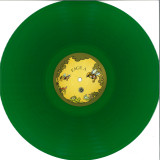
KosmoramaDisco Vol. 2 is the second of a series of compilations that KosmoramaDisco label begun to release in 2018. This is a follow up of what the label it's been trying to show in the last 2 years. For this we have a new bunch of artists which music styles fit again with the philosophy and taste of the label: from Italo to Dark Disco and Slow Mo all wrapped, as usual, in club dancing format.
Following the strong response to Late Checkout 001 and support from DJs including Louise Chen and Mafalda, Mark Sexton returns with four more hazy club excursions that blur the lines between deep house, UK Garage and sample-heavy soul. Warm, dusty and effortlessly musical, Late Checkout 002 builds confidently on the sound that made its predecessor a favorite among discerning selectors.
Celebrating a decade since its live debut, Detroit-based artist Rebecca Goldberg announces the first-ever vinyl release of her original score for A Trip to the Moon, the iconic 1902 silent film by Georges Méliès. Composed in 2016, Goldberg’s reimagining of the groundbreaking film—originally titled Le Voyage dans la Lune—translates early cinema fantasy into a minimalist electronic soundscape shaped by synthesis, texture, and composed foley.
Goldberg’s approach honors the wonder and theatricality of Méliès’ vision while grounding it in Detroit’s lineage of forward-thinking electronic music. The score premiered in Paris in 2016 with live performances at Silencio, the club founded by David Lynch, and at Bar à Bulles, located above the legendary Moulin Rouge. The Paris events were produced by Why So Serious Productions and marked a rare convergence of experimental electronic performance and historic cinematic space. Goldberg also presented the live score in her native Detroit, reinforcing the transatlantic bridge that has long shaped her conceptual record projects.
Now, ten years later, the score will be released for the first time on vinyl in a limited edition of 300 copies. The pressing captures the nuance of the original live compositions while offering listeners a new way to experience the interplay between silence, rhythm, and sonic illusion. As with Goldberg’s previous conceptual 12" releases, the vinyl format serves not only as a medium but as an artifact that preserves and reframes cultural memory.
Black Dot duo returns to Kri Records with six tracks ranging from EBM club domination to electro after-hours relaxation. Duo's signature futuristic melancholia on Lust EP is laced with melodic synth lines, a haunting Slavic vocal, and spiced with club-ready remixes by Innershades and Charlie.
Both CDG Rouge tracks feature duo's trademark mesmerizing electro mood that works both, on the dancefloor and the Autobahn. The darkly playful atmosphere and lyrics might evoke a memory of early Miss Kittin and The Hacker collaborations. The Innershades remix sees the Belgian producer at his top New Beat game, while Charlie reworked the sleazy No Harm Lust into a leather ripper. AI Climax is a self-explanatory EBM club stomper, while What Will It Be Boy rounds the release with a cheeky nod to the 80s.
Christian Kroupa & Le Chocolat Noir (Black Dot) return to Kri 3 years after their debut, picking up the thread where it all began. Since their first release, and outings on Mechatronica and Italo Moderni in between, the duo continues to refine their stripped, nocturnal electro sound— sharp, eclectic, and built for late hours.
Terence Fixmer returns with 4 tracks defined by his unique style. He dives back into a deep, hypnotic, and club-focused sound without losing his trademark energy. 'Blade' brings a cinematic, futuristic vibe, followed by two mind-bending tracks built for the dancefloor. The EP closes with a subtle dub-oriented cut.
After the inevitable success of L'Hiver des crêtes (aka season 1 of their major new project celebrating 40 years of approximate punk), Ludwig Von 88 are back for new adventures in a second season entitled Le Printemps du Pogo. This second vinyl album (of the four planned this year) is this time illustrated by LauL (iconic graphic designer of the 80s - Bérurier Noir, Ludwig Von 88, Mylène Farmer, Patrick Topaloff).
Fourteen tracks packed with love, joy, shitty jobs, noisy neighbours, flowery pogos, fried chicken, unsanitary dungeons and a negative carbon footprint.
There are some good traditional Keupon numbers, but also ska, reggae, yodelling (Yodel to Hell), a universal anthem of destructive punk (Youplapunk), swing, the follow-up to Fistfuck Playa Club (New Club) and Kaliman (Kaliman saves the world), and the long-awaited conclusion, 38 years later, to their interstellar hit J'ai tué mon père (J'ai sauvé mon père). Or the hit Let it burn, which we'll probably be able to sing along to during the long hot days to come.
Thirteen of these songs have already been released on the internet (at a rate of one a week, because the Ludwigs like periodicity, and that's why they keep coming back and coming back) but the fourteenth track, Casques Rouges, is completely new to the galaxy.
So here's something to liven up the weeks of holiday that are just around the corner. On the beach, in the mountains or in the forest, approximate punk remains salvific and Ludwig Von 88 are its most faithful servants.
“ In search for unseen colours beyond the visible spectrum, Kangding Ray explored the outer fringe of club music and came back with a set of prismatic sonic crystals ”
Phil is welcoming us with a repress of three collectors item tracks by Klovn - the studio partners of Trentemoller & one half of the most successful Danish electronic live act 'Lulu Rouge'.
'Cover Up' is a tough club track which drifts to a subtle, 'less is more' principle, where PF blends the organic sounds into the dreamy electronics but yet qualifies as a very functional opening anthem.
Melvins Beats rounds the release off with it's cinematic & shoe-gaze approach. Yet another, meticulously composed repress from this label with an idealist character, a must have.
It is very difficult to present David Duriez without writing an encyclopedic tome as its influence on the House music in France was decisive. Since its inception in 1992, David released over a hundred records under his name, tens under various pseudonyms, mainly on vinyls on the most renowned labels like 2020Vision, Ovum, Systematic, Pokerflat, F Communication, Under the Counter, Stickman, Crosstown Rebels, The End, etc .. (the list is long, see Discogs to be convinced) and as many remixes for some of the greatest artists (think Moby, Dj Sneak, Gemini, DJ Hell, Llorca, Telex, Random Factor, Johnny Fiasco, Paul Johnson, Jori Hulkkonen, Ralph Lawson, Random Factor, Kenny Hawkes or Mr.C).
Founder of the label Brique Rouge and a whole galaxy of other labels, he participated in the creation of internationally recognized labels such as Robsoul with Phil Weeks, Freak n'Chic with Dan Ghenacia (from Apollonia) or Rz Muzik. At a time when David had federated online the cream of the House producers via a forum (far and long before social networks), Ivan Smagghe had nicknamed him "the producer of the producers." , A true House Music activist,
But most of all David Duriez is a devastating dancefloor DJ, He did several tours around the world and played in some of the biggest clubs in the world between 1995 and 2010. Truly one of the most important players in the French electro scene, David is back on tracks after a few years hyatus. But don't call it a comeback because he has never really gone awol, he has been watching the scene and now he's back in the studio. You can expect a (very) long serie of releases for 2016, you have been warned!
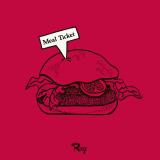
A great name. A great cover. And - of course - outstanding library music.
Soul City Orchestra's Meal Ticket houses titanic funk, mellow groove and symphonic disco-soul.
Released in 1977 on Rouge, a subsidiary of the prestigious and long-established British library label Music De Wolfe, Meal Ticket was crafted by the studio band Soul City Orchestra (a pseudonym for the De Wolfe in-house composers Chris Rae & Franck McDonald).
The driving instrumental funk-rock of the A Side is enhanced with strings and no little drama. However, it's undoubtedly the peerless flipside that makes this record an essential part of any collection.
Head straight to highlight "Chamber Maid"; insistent, conga-driven funky rock with lashings of string-heightened drama. It's sophisticated, classical and deeply classy.
The majestic, powerfully emotive "Sore Head" contains an excellent intro drum break and sultry slo-mo disco breaks throughout. It's low-key stunning. With a few melodic switch-ups, it's symphonic soul heaven and is comfortably the best and most beautifully crucial track on Side A.
The breezy, Philly soul-tinged "Short Change", its intense strings reminiscent of the Salsoul Orchestra and TSOP, presents an easy-glide funk that's just irresistible.
The funky, cool and slick AF "Wheeling And Dealing" is laconic flute and string-propelled sophisticated mid-tempo disco soul. It's worth the price of admission alone.
The breezy, mellowed out disco-funk workout "The Jam" is a deliciously slinky and sophisticated soul strut. Try not swaggering into the club with this in your head next time you venture into the murky world of "the night". Just ace.
The crowning glory is the sweeping, sublime symphonic disco breaks of horn-infused "Soul City Drive", an absolute monster of radiant heavy soul-funk à la Barry White with great string & brass arrangement.
Basically, this is essential for all groove-aficionados.
The audio for Meal Ticket has been meticulously remastered by Be With regular Simon Francis, ensuring this release sounds better than ever. Cicely Balston's expert skills have made sure nothing is lost in the cut whilst the records have been pressed to the highest possible standard at Record Industry in Holland. The original, iconic sleeve has been restored here at Be With HQ as the finishing touch to this long overdue re-issue.
нет на складе
Последняя поставка 7 месяцев назад доступно для дозаказа без гарантии
Alice is a vocal harmony trio made up of three persons, joined by a cheap synth and limited virtuosity. Together, they craft a kind of future folklore that’s part funny, part apocalyptic — half-soft, half-harsh, half-sad, half-simple, half-complex, half-controlled, half-Yvonne Harder, half-Sarah André, half-Lisa Harder.
Since their last album L’Oiseau Magnifique, Alice have spent time on the road — in cars, in trains, out in the open. Accustomed to writing outdoors, they slowly stitched together a collection of new songs. After two years of performing in clubs, bars, stairwells, carpentry workshops, activist agricultural fairs and roadside shoulders, they took their Oiseau Magnifique just about everywhere. It felt like time to sew these new pieces together — a quilt of humour and soft words, something we could really use in these half-sweet, half-fascist times.
Les Châteaux Faibles is the name of one of their latest songs, and naturally, the title of their new album. It captures the group’s ethos perfectly — a search for refuge in fragility, in a weakness that’s better when shared. A collective sensitivity to bring us closer, stronger — united in our Châteaux Faibles.
Die Erfolgsreihe geht weiter! Mit 80s Electro Tracks – Vinyl Edition 5 präsentieren wir die neueste Fortsetzung unserer beliebten Vinyl-Serie – randvoll mit elektrisierenden Club-Hits aus den 1980er Jahren. Diese exklusive LP richtet sich an Fans des klassischen Electro Sounds und Liebhaber kultiger
Synth-Pop-Klänge.
Mit dabei sind wieder namhafte Künstler der Szene:
Animotion, Visage, Moskwa TV und MCL liefern einige ihrer ikonischsten Tracks – sorgfältig ausgewählt und in extra langen Versionen, wie sie damals in den Clubs liefen.
Ein Muss für Sammler, DJs und alle, die den Sound der 80er neu entdecken oder wieder aufleben lassen wollen – stilecht auf hochwertigem Vinyl.
нет на складе
Последняя поставка 89 дней назад доступно для дозаказа без гарантии
The main series of Suckerpunch returns with it's «rst Various Artists EP «lled with 5 knockout, club ready tracks just in time for the sunshine months. Thanks to our welterweight champions for their contributions: Joe Koshin & Chez Papa Nugs Mixolydian Body Clinic Jimmy Rouge
нет на складе
Последняя поставка 10 месяцев назад доступно для дозаказа без гарантии
Sid Spada unveils his first project, STELLAGONY, a unique musical adventure. After several collaborative projects, the Geneva rapper withdrew to craft nine tracks. Nine unique pieces in the sonic puzzle that contemporary rap has become.
STELLAGONY is a chronicle of adolescence, its wanderings, its parties, its excesses, and a certain form of self-destruction. Entering a new phase of his life, Sid Spada scrutinizes his last ten years to narrate his mental and artistic evolution. This project is like a window to the past that allows its author to step back and embrace the future possibilities serenely.
This artistic maturity forged during long months in the studio opens a new era. Each track, shaped by RougeHotel's production (Stranacorpus), who co-signs all the instrumentals of the project, serves as a sonic exploration rather than following fleeting trends.
The album's atmosphere dances between melancholy and the fantasy permitted by hyperpop, drawing from Latin and club sounds. A skillful balance between dark emotions and avant-garde energy is established.
STELLAGONY, produced by Sid Spada's label iuven, is set for release in the spring on Les Disques Magnétiques, a Geneva-based label affiliated with Bongo Joe Records.
The qualities of that object may be summarized as follows: 1, Formal legibility of plan; 2, clear exhibition of structure, and 3, valuation of materials for their inherent qualities „as found“ “ Reyner Banham „The new Brutalism“ Architectural Review (1966)
Following on from our audio visual experiences in St. Gertruds church in cologne, this album contains eight excerpts from live sets, specially produced for the unique space of the building designed by Gottfried Böhm, in an attempt to capture its architecture and sound. Since 2015, our goal has been to establish a format at the interface between pop and club culture, as well as "academic" electronic music, in which media art, visuals, sound installations and dance performances play a central role in an immersive and architecturally memorable environment alongside the sophisticated musical program.
нет на складе
Последняя поставка 2 года назад доступно для дозаказа без гарантии
“Suddenly it’s ok to be a square” - Twelve Cubic Feet, a clear case of a band which should have been bigger than The Beatles but, for some malignant reason, became a blurry footnote in the history of underground music. Formed from the ashes of Exhibit A in the Spring of 1981, the band disappeared leaving no trace shortly after 1983. During their brief existence they released a series of stickers, a monthly newsletter, two cassette tapes and their incomparable ‘Straight Out Of The Fridge 10”, which was at the very top of our dream records to release since we started Sealed Records. Twelve Cubic Feet released this perfect 22 minute 7 track album in 1982 on Namedrop Records (home to Doof, Philip Johnson and Cold War and ran by Philip Johnson and 12CF guitarist Paul Platypus). It is a glorious scratchy DIY indie pop gem with a post punk spirit. The sound is naive and fragile yet very addictive. Based around jangly clean guitars, drums that are on the edge of falling apart, haunting keyboards and a female vocalist that has a knack for a golden pop hook. Hard not to fall in love with. It’s beautiful with a ragged charm that deserves to be heard by the masses. Anarcho Indie pop anyone?? The band played a lot of the anarcho punk haunts of the early 80’s - Autonomy Centre in Wapping, Centro Iberico and London Music Collective and were equally heralded by punks (Andy Martin from The Apostles released one of their tapes) and the DIY music crowd. The line up changed after the 10” and they recorded a Joe Foster produced demo and fell in with Alan McGee's Communication Club crowd. Twelve Cubic Feet burned bright for just a handful of years and now it’s time to burn bright again. Hopefully this reissue will help them reverse one of their sticker statements “today we’re nobodies but tomorrow you’ll know who we are”. This reissue comes with the 16 page booklet that came with the original 10". Twelve Cubic Feet feature members who did time in bands such as Khmer Rouge, The Reflections, Solid Space, Doof and What Is Oil? Amongst others. For fans of the Marine Girls, Girls at our Best, Hornsey At War, Swell Maps and Postcard Records
Iconic french punk band Ludwig Von 88 celebrates its 40 years birthday with a 4LP/CD box set including their recent albums "L'Hiver des Crêtes", 'L'Ete du No Future", "Le Printemps du Pogo" & "L'Automne de L'Anarchie".
Who managed the artistic feat of composing 56 cosmic hits in one year, recording them, engraving them with chisels on plastic discs that are not at all environmentally friendly, and packaging them in a magnificent box, with marvellous illustrations and sleeves of a taste that surpasses perfection? Who did?
Look no further than the Ludwigs, who could do it. And since they had no plans for 2023, apart from celebrating their fortieth birthday over a tasteless cake in a dingy old flat in a godforsaken suburb in the forbidden zone, they did it. And they're proud of it.
56 tracks. One album per season. The Mozart of pogo becomes the Vivaldi of stakhanovism!
Good rough punk, ska, swing, reggae, cumbia and even yodelling. What a gift to the universe before its final destruction.
Listen and enjoy. Sing along and get your groove on. After the Ludwigs, the music will have the flavour of a rosewater romance declaimed by Garou in Birkenstock and the colour of the cosmic void after his encounter with André Rieu's five poodles.
after SARS-CoV-2 and further pandemics, TR-LP01 is about to reach its destination. The first generation of interstellar immigration has taken place and some listening bars and clubs are about to open their doors. Terre Rouge...
нет на складе
Последняя поставка 4 года назад доступно для дозаказа без гарантии
“Vax!” – Reminiscent of all the slippery vinyl that glitched under so many sweaty wet fingers in a steamy basement before time – a picture that seems highly illegal in our current antiseptic climate of hopefully germ free adolescents. Vax-inate! Give them the needle! It’s time.
Deti Vechnosti – Pered Rassvetom opens the gates to plug into the socket of our collective deranged consciousness, generating frisky and flamboyant specks to brightening darkness that confines our lives. Offering glimpses of the great unknown we also carry within. The Track introduces Chikiss & Mustelide’s new group “Deti Vechnosti”.
Alexander Arpeggio & OhLandy’s “Der Anruf”, wich originally appeared as a French language version on a previous Sameheads / Diapason tape release tells those tales of hot and hotter heat. Karmic payback for the sweaty and long nights enveloped in the halo of resonating frequencies of silly and high-spirited mischief.
Rouge Mécanique – Down the Line – follows suite in the odyssey that is a demented night out, sitting in front of a club, realising that the leatherjacket you picked up a few streets ago from the ground doesn’t smell like adventure but like spew.
The B-Side opens with Automatenfall – a hardware electronic 3 piece, previously appearing live at Sameheads during a “My Friend calls it K-Jazz” event. A yearning that eventually gets us on a spiritual path and headed toward enlightenment through the meandering melange of chimes, that little sounds that usually overcome us in the weirdest of times.
Das Kinn – the new project from Toben Piel, who’s part of Frankfurt’s MMODEM family, and one half of Les Trucs evokes memories of better days, black leatherpants – think Falco meets DAF – Überpop for the Untergrund.
Stopping for a final coup d’œil is Alessandro Adriani’s – Preserved Data Space. A persuasive case of brutally but lovingly worked machines serenading sawtooth waves of an infinite Weiter, a dissolving timeframe – the longest after hour I’ve been to, it lasts more than a year now already and counting.
Written by Michael Aniser.
нет на складе
Последняя поставка 2 года назад доступно для дозаказа без гарантии
Brand new release from Parisian crew Coquelicot Records. French DJ and producer Mario Penati delivers here a 5 tracks EP, focused on his love of house music, including an acid remix from Herr Krank. A side contains 3 classic house tracks, influenced by italian and chicago 90's vibes, from deep to most clubby ones; 909 drums, percussions, synths combined to make you move... First track on B side is a simple vision of a more intimate and deeper feeling but asking to be played loud, and last but not least a rework by Herr Krank, providing banging acid beats!
нет на складе
Последняя поставка 6 лет назад доступно для дозаказа без гарантии
The „Sans rouge EP“ is a return to Greymatter’s sampling roots reminiscent of his early works on WOLF Music. A record that sits half way between house and hip hop, in terms of style and tempo. „Sans Rouge“ epitomises that mood: starting out with a hip hop groove that drops into a beat-down house chugger. „Royale“ drops things down to an even slower motion with another tough beat down groove, chopped and driven key samples and a catchy vocal chop. The B-side start with a nice goodie: this is the first time that the full length/12” mix of „Move Slow“ has a proper release (the short version appears on the „7 years who cares?“ 2x7“ on WOLF Music). Greymatter’s most popular track of recent years - more heavy soul chops this time pitched more towards peak time. „Billy O“ finishes things off with a slamming, choppy club jam laiden with strings and vocals. Another mighty fine Quintessetnials release that shows all the talent of Greymatter!
нет на складе
Последняя поставка 3 года назад доступно для дозаказа без гарантии
Charles Trees. Myth, tall tale, legend of a human being, one of those people who one minute you'll be scouring reddit for obscure content and the next, stepping on stage to casually DJ to thousands of people like “no big whoop” at a French music festival. Charles is unassuming, the kind of person who effortlessly mixes ghettotech into soul for lulz, who samples a speech (/rant) by Funkmaster Flex in an acid track, or rides BMG & Derek Plaslaiko’s “True Story of a Detroit Groove” with Velvet Underground’s “Sister Ray” for 8 minutes straight.
Charles' relationship with electronic music started early. In high school, Dave Shayman (Disco D) introduced Charles to DJing and he was a regular at Dubplate Pressure*– Todd Osborn's now-legendary record store in Ann Arbor. By 1998, he was already playing on raves in Detroit. A year later, he was the first person to show Zach Saginaw (Shigeto) to Ghostly International, arguably altering the course of our lives forever. In the late 2000s, they became label mates on Moodgadget, the record label of Jakub Alexander (Heathered Pearls).
Through out the years, Charles has been a musical mentor (whether DJing, producing or throwing shows) to many, danced at every weekly at every venue in Ann Arbor & Detroit, produced Hip Hop, and fronted a psych rock band. He has released music on Moodgadget (US), Musique Large (FR), Lovemonk (ES), Vanity Press (US) and JFX Lab (FR). Today, between DJing, hosting radio shows and producing new music, Charles regularly throws shows/parties/raves, and hosts a monthly at Deluxx Fluxx.
We love Charles Trees and we're proud to present "2019," the eighth record on Portage Garage Sounds.
*Additional reading: Dubplate Pressure: was the precursor to Technical Equipment Supply; how Todd Osborn was discovered by Richard D. James and signed to Rephlex Records; where Sam Valenti IV, the founder of Ghostly International, met Tadd Mullinix (Dabrye, JTC, Charles Manier, X-Altera); one of the reasons why we're all here
"Got No"
Hit the ground running.
Chopped up vocal stabs and a playful syncopated melody accompany this percussion heavy two-step shuffle as it speeds down the Lodge on a Friday night in Detroit.
"Think First"
Undeniable rhythm section pocket.
Acoustic bass and dirty ride symbols swing alongside lush keyboards and sprinkles of light melodicism in this psych house banger.
Think St. Germain with CAN playing a warped version of "Rose Rouge."
"In Arms"
Crave the rave. Whips crack and sizzle in this dubbed out techno slapper. A modern take on a classic sound. Trees conjures an era close to his heart: when the warehouse was church and service didn't stop until the sun came up.
"Acja feat. Marcus Elliot ("12 club mix)
Beautifully understated and triumphant.
This closer marks the return of Detroit Saxophonist Marcus Elliot (Detroit pt II - PGS 001). His notes dance and soar over a creeping acid line, while driving drums and warm pads effortlessly take you home in this powerful house anthem.
нет на складе
Последняя поставка 7 лет назад доступно для дозаказа без гарантии
The music on this EP was conceived in China, between 1989 and 1993. The original tracks were mixed to DAT in real time, in a small neighbour-proof studio inside my apartment in Macau, a 19th floor with a view to the hurricanes. There's a small, unexpected or improbable story behind each track, some little magic fused with the local atmosphere, certainly guaranteeing their lasting authenticity 25 years later.
TAIPEI DISCO
Late 80s Guangzhou was an exotic city where the traditional past coexisted in harmony with the present and even already with the future.
I'd rather spend my weekends in Guangzhou than diving into Hong Kong consumerism - as most ex-pats in Macau did. I took a cab at the border and travelled 150 Km through chaotic roads with family and friends until reaching the hot, humid, mega South China metropolis.
We ate on street joints in the evenings, went on to a karaoke bar and ended up at Taipei Disco, the only proper club in town. All the others were inside hotels and played generic music or they were seedy, sleazy, smoky cabarets.
Taipei Disco used to be a cinema and played cantonese pop music and anglo-saxon pop/rock (that was new). The spacious dance floor was generously lighted, the atmosphere was airy and modern. Boys and girls were in the habit of dancing in pairs, one in front of the other, observing a respectful yet sensual distance. When the girl took a few steps back, the boy went along and vice versa. With legs and feet (more than the upper bodies) synchronized with the music, they never exceeded in extroversion. Cool.
I always carried a MicroComposer and a portable DAT recorder in my travels through China and weekends in Canton. Any spontaneous musical idea was imediately recorded and memorized. The MicroComposer allowed multitrack recording, which was very handy on the road. Based on the emphatic choreography of Taipei Disco's dancers, i started to compose a rhythm track while sitting at a table, with headphones, listening to Cantopop in the background. As if by magic - not a rare occasion in music - everything began fitting together. Odd as it may seem, the track ended up sounding more germanic (Kraftwerkian) than Cantonese pop.
The story ends in a circle: the cantonese DJ at Taipei Disco, whom i used to ask to play certain records, wanted to play my music at the disco when it was basically only just a rhythm track and little else. From a cupboard under his set up he took out a battered keyboard (unrecognizable brand) and invited me to play over the track with the available sounds on the keyboard. The circle was complete, with Cantonese clubbers happily dancing forwards and backwards, as if it were another Cantopop hit.
I didn't get payed but the house offered us free ice cream cups in which little Portuguese flags were sticked.
The track would be finished later, in studio, with vocoder strings ensemble and synth solos.
TAIPEI DISCO (LIVE)
The live version of 'Taipei Disco' was recorded during a live set at the China Pop venue, in Macau, 1993. China Pop was a rock club built in the ample space of an old fishing warehouse, located in the labyrinthic Inner Harbour area. It was decorated with large Mao Zedong and Cultural Revolution posters and memorabilia and had a unique atmosphere, fusing Pop Art with film noir. We began our performance at 1AM, pretty early for Macau's nightlife standards. We were lucky. An audience showed up. And in Macau there were always several friends among the audience, which tranformed a musical performance into a relaxed party.
The atmosphere was particularly surreal on that night. The front row was dominated by French Crazy Horse dancers, a sort of Oriental Moulin Rouge. The girls had finished their last performance of the evening at the Crazy Horse and were still energized from their show. During our performance, right in front of us and perfectly synched, we could hear the famous irreverent screams of can-can dancers. You always had to expect the unexpected in Macau.
RED MAMBO (IMPROMPTU)
I was familiar with the Portuguese-speaking African countries well before having lived in China. I found myself returning several times to one in particular, always attracted by its magic and very distinct, identitary culture and music: Cape Verde.
During the early years of DWART a lot of the inspiration for drum machine rhythms (Roland's TR series) came from African music, especially from new musical trends that gained full autonomy with Cape Verde's independence from Portugal, as was the case with funaná.
I had the privilege of having known and befriended some of the greatest Capeverdian composers, musicians and singers during the 70s and 80s, such as Bana, Luís Morais, Cesária Évora, Paulino Vieira, Chico Serra, Tito Paris, and historical bands such as Bulimundo (ambassadors of funaná) and Os Tubarões (great innovators of morna, coladera and funaná, with the sonic impact of an afro-beat big band).
When Luís Filipe de Barros began playing Os Tubarões for the first time on Portuguese radio, that was the turning point for African music in Portugal. The 'Tabanca' album was so widely heard and talked about that it quickly got a Portuguese release through one of the big labels of the time.
The mystic of this band from the Santiago Island would reach the East. Os Tubarões played to a packed room in Macau in 1992, and after the bombastic gig we arranged a dinner and party at my place.
We ate and drank generously and the moment came for a jam session at the small studio on the 19th floor. Because Os Tubarões didn't all fit in the studio, we recorded an impromptu with only three of the musicians: Tótó Silva (electric guitar), Mário Russo Bettencourt (bass) and Zeca Couto (piano). And there we were improvising without barriers, suddenly detached from cultural roots, labels and constraints, a truly unique moment. The track is now being released exactly as it was recorded, imbued with the real communion between the musicians. And it could only be titled 'Red Mambo'. I wish to dedicate it to the memory of Ildo Lobo and Jaime do Rosário, founders of Os Tubarões, sadly and too soon departed from the land of music.
Romain Azzaro come's back on his own imprint with a Rouge Mécanique Extended Play compiled with cinematic shaded instrumentals and a heady mix of post-punk, ambient and noise. Bringing acoustic life to electronica, his signature sound rolls over the Ep with elegance and versatility.
"The kind of melancholia I'm talking about, by contrast, consists not in giving up on desire, but in refusing to yield. It consists, that is to say, in a refusal to adjust to what current conditions call 'reality' - even if the cost of that refusal is that you feel like an outcast in your own time." (Mark Fisher, Ghosts Of My Life, Zero Books 2014, p. 24) In Ghosts of My Life: Writings on Depression, Hauntology and Lost Futures', the author Mark Fisher outlines - to put it in a big way - a resistant melancholy. This stands in contrast to leftist melancholy resignation', as well as something which Fisher does not talk about: its common masculine counterpart, habitual post-left cynicism - as in seen it all before'. Fisher calls this hauntological melancholy. Haunting, spooks, ghosts and apparitions are an almost constant presence on I Started Wearing Black', the second album by the Cologne-based artist Sonae (pronounced so-nah'). The term hauntology shares a fate with retro-futurism when it comes to inflationary overuse and abuse. It's a conceptual container that looks good and can hold a lot, indeed, too much. Furthermore, hauntology has its peak season behind it, a term on the threshold of its expiration date. Nevertheless, I would like to rehabilitate hauntology and use it properly to characterize I Started Wearing Black', because the term is rarely as compelling to describe music as is the case here. The most recent other example could be Asiatisch' by Fatma Al Qadiri, but with a completely different frame of reference. What are the ghosts of this music It rustles, crackles, ruffles, crunches, rattles, scrapes, sometimes a beat emerges from the constant noise, sometimes an obscure voice mumbles incomprehensibly, sometimes a melancholy piano figure is prevented by this noise from coming too much to the foreground. It definitely is eerie - to bring into play another term used by Fisher in the title of his latest book, The Weird and the Eerie'. In British pop-jargon, eerie first occurred to me more often when referring to particularly leftfield, spooky and... well... ghostly dub, a bass-heavy, echoing noise, from Augustus Pablo to Creation Rebel to Burial. Unlike the Wald & Wagner records by Wolfgang Voigt, Sonae is not a kind of neo-romantic veiling with a tendency for escapist nebula. It is more a noise of latency. The noise signals a latent - not necessarily acute - threat, a latent uneasiness about... yes... about what About a System Immanent Value Defect' That's the name of a track on I Started Wearing Black' where something that sounds like a French Horn (or a foghorn) battles for attention through or against the background noise. An email from Sonae: The piece 'System Immanent Value Defect' should actually be called 'I See Turkey'. I wrote it for my fellow student Elif - she is a pianist and Gezi Park activist from Istanbul. Through her I witnessed the inner conflict and agitation that political circumstances can create: her feelings of guilt when there was an attack, with her safe in Germany as a student, watching the events from afar. It was horrible. When her mother begged her not to come home because she feared for her safety, I felt a cold shiver run down my spine. I started with the piece from this mood, beginning with the piano, then the noise (modulated sinusoidal curves), which reminded me of waves and the then heatedly discussed Mediterranean sea: atmospheric, melancholy motifs. In contrast is the anger, the pressure, represented in corresponding sounds - hopefully audible! - During this time I started to think about world views as they can be found around the globe, in how far they held by societies and their political representation. I realized that I know of no political system that is actually about the people and what would do them good. It's always about positions, power, money. I thought that was a lot more frightening on a global scale than merely viewing Turkey in isolation. That's why the piece is called "System Immanent Value Defect", because our world suffers from precisely that. Everywhere, it's all about the wrong things.' Between the wrong things there are happy moments. In the title track, after 184 seconds of rattling and hissing, a beat is unleashed, like an arrow released from a spanned bow, a beatific relief, if there is such a thing. White Trash Rouge Noir' first meanders along spookily, then after 144 seconds it transforms itself into a distant cousin of Einstu¨rzende Neubauten's Yu¨ Gung', but there is no Big Male Ego to be fed here, and the black in the album title is a completely different type of black from that of the Neubauten. Furthermore, I Started Wearing Black' was finished long before the black dresses were worn at the Golden Globes as a sign of protest against sexual violence. Sonae writes that she herself started wearing black some time ago. Her reasons are so-called personal ones: ... resulting from an individual situation (lovesickness), I started to wear black (gaining weight and feeling ugly).' The political dimension of gaining weight, feeling ugly and therefore dressing in black in I Started Wearing Black' lurks within the noise and never becomes explicit and only rarely manifest - or a manifesto. Sonae writes about the track We Are Here': A piece for minorities... in this case, considering the current pop-feminist discourse, explicitly for women. Female artists have long been saying loud and clear that 'we are here' and 'electronic music is not a boys club!' But this pop-feminist moment should only be seen as one part of the dedication of the piece. It is for minorities, for the oppressed, who didn't belong enough.'
KosmoramaDisco Vol. 1 is the first of a series of compilations that KosmoramaDisco label wants to release from this year to the near future. The Vol. 1 shows a sampler of few of the first tracks produced by different electronic artists. The label presents a wide range of electronic styles all with a spaceship common ground, from Italo to Dark Disco and Slow Mo all wrapped in club dancing format
2 track EP produced by Benales. Follow up of Elements EP released back in 2016 Raw, straight techno tools inspired by the likes of Robert Hood, Jeff Mills, Surgeon. BIO: Born in Normandy (France), and now based in Paris, Benales has been honing his craft since the end of the 90s. An avid record collector and enthusiast of Techno and House - his DJ sets and tracks combine the raw, dark and deep elements of these musical forms with a firm nod in the direction of Detroit. He already played at Concrete, La Machine du Moulin Rouge, Rex Club, Batofar, 101.