Syz launches his new label Vitalizm with VTLZM001, a 4 track sure-shot from its founder of wily club rhythms mutated anew through adventurous construction and intuitive dancefloor nous.
Club rhythms for the soul; a nourishing manifesto for the rave, and for Syz a vital spark through which energy and groove emanate. A prolific producer with a beloved back catalogue, he is no stranger to the sounds that embody the propulsive nature of UK club rhythms. Vitzalizm though is a new venture, his inaugural label founded on the promise of showcasing new and varied developments along the Syz sonic journey. It’s a wide-ranging ethos informed via a complex web of influences that continue to make afresh of club music, while also paying homage to the culture of yesteryears with small vinyl runs and limited lathe-cut dubplate specials.
On VTLZM001, the label’s inaugural release, its founder gets right to it. Down & Twist steps first with an all-round sexy affair, a 2 step mover that swivels deftly on its latin inclinations while updating the early 00’s garage template with fwd> attitude. Next, Bakayadaskunka writhes as a complex beast, busy through the broken beat while its tactile low end purrs and throbs within. Fidget goes faster, a tribal wonderland that pumps giddy yet nimble across its myriad of basslines. The Lizm sees us off, a supple percussive playground which swings playful and loose amongst a livewire of subs, weightless pads and a faint dub echo.
A succinct dancefloor statement of intent from Syz, and an exhilarating beginning for Vitalizm.
Buscar:club tribal
Danza Tribale opens a new chapter in 2025 with MAITAKE - ??, the debut EP from Italian sound explorer Lo.Sai. Rooted in sonic tactility and movement, the project draws from both ancestral rhythms and experimental structures to create something intimate, immersive, and future-facing.
Named after the "dancing mushroom" from Japanese folklore, MAITAKE is inspired by the interconnected growth of mycelial networks and the emotional ecology of shared experience. Developed in collaboration with choreographer Maria Combi, the EP is a meditation on collective motion - where dance, rhythm, and ritual coalesce.
Across five tracks, Lo.Sai weaves together broken percussion, deep bass, fieldrecordings, and global rhythmic language. Fragments of flamenco, muezzin prayer, and Central African everyday rhythms float through the record - artefacts gathered by the artist's close-knit creative circle in Lunigiana. What emerges is not just a club record, but a living, breathing sonic organism.
Remastered and repressed due to popular demand!! Dam Swindle return and not a minute too soon as far as we’re concerned!
The hardest working duo in house music have had a mental couple of years playing every club and festival known to man, having babies, seemingly buying up the entire stock of vintage studio gear off ebay and thankfully knocking out some banging tunes on top of all that. Well all club bangers gratefully received here at Freerange, so with open arms and ears we’re happy to be bringing you the Figure Of Speech EP.
Just as the non-believers think they know what to expect from these two they’ve thrown a rather large curveball and headed down a different road. Figure Of Speech wears some African influences on its sleeve with a bumping party groove punctuated by some nifty afro beat keys stabs and just a hint of acid. Victoria’s Secret treads more familiar Dam Swindle territory with the boys trademark shuffling beats and larger-than-life side-chained pads bringing the drama.
Finally, we have the suitably titled Live At The Cosmic Carnival where we’re treated to some peaktime tribal business with rolling bass, dubbed out dancehall science and some nifty conga work. All in all, some fiyah for the dancefloor from a pair of lads who know a thing or two about how to get a room jumping.
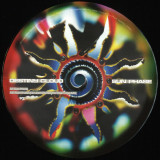
"Kindred spirits and loyal soldiers on the frontlines of the dub war Detroit's 2Lanes and Los Angeles' Cromie link up to present to the world, Destiny Cloud. With a project name inspired by a mystical vacant storefront in Cromie's neighborhood of Altadena (still standing after the fires, bless), the guys formed like a storm after being intro'd by a notorious LA promoter and hotboy producer matchmaker. Funnily enough, the first session was foiled by a missing cable, so it wasn't until the sexy summer of 2023 that the cloud seeds that went on to become Sun Phase/Moon Phase were planted. From the jump, their vision was lucid and their objective collective: lock in at the stu(s) to make the most jiggy, psychedelic, tripped out club shit they could muster. Fast forward to today, Destiny Cloud is proud to bring you the latest missive on 2Lanes' Auto Shop imprint.
On the A side, Sun Phase sets it off with searing stabs from the hands of session killer Ji Hoon on a heavenly Jupiter-8 (sorry not sorry, the real thing does sound better) before a bassline straight off the Adriatic's Argonaughty comes in to funk up the flow over a bed swung hi-hats and drum circle conga lines the Wickedest west coast house heads can appreciate (no hippy shit, but we ARE on Hipp-E's dick). A keep-it-simple-stupid *muah' organ line plays nice with a gang of embellishments to take this one through its duration (Joey pressed record and said "ooh-wah" into the vocoder; no lie, I was there). With his Toxic Love remix, NYC upstart DJ John Brooklyn injects the tune with the highest grade octane to up the revs. The aforementioned organ becomes a timeless trance lead, and new pipes are inserted reminding us all that house music is forever.
Day turns to night on the B Side with Moon Phase, where booming kicks let you know off the rip that this is some real deal late night trunk funk. We're talking dualities here y'all; Cromie's deep-as-the-Pacific bassline meets Joey's frozen-lake-cold Detroit stabs as the drums speak in tongues with those on the other side of the slab. Reverb ghosts and rhythmic acid have this one veering more psychedelic without losing the jiggy factor, while diving proggy synths will have the Global Underground saying, "yea this is our shit, for real." With a run time that allows for maximum fun time, the ambient outro gives you a kiss on the forehead to put that ass to sleep. The iconic DJ Miss Parker takes the wheel on the remix, taking this one straight down the Tunnel with new-school/true-school Tenaglia-isms that wouldn't sound out of place in 2000, 2005 or 2025.
Like all the work we do, this one's a team effort. Salar Ansari put's his deft touch on the mixdowns and Jack Anderson blesses the center of both sides of the disc. Out mid-May, just in time for when things start heating up
The first release of 2025 on Big Saldo’s Chunkers comes in hot with an all-killer, no-filler four-tracker from London’s Papa Nugs. All four tunes on Move it or Lose it are playful, upbeat house jams, with carefully arranged elements firmly aimed at the dancefloor. The seventh release on the label is a fully realized vision of Papa Nugs’ take on the classic chunkers style: big, boshy, hip-catching basslines, infectious vocal chops, party-starting percussion, and a generous helping of rave-ready samples and FX. Nugs’ masterful production chops shine through especially bright here. The canon of 90s club music is referenced with expert poise: subtle nods to early trance, progressive and hard house, turn-of-the-century Ibiza tribal, and insouciantly sleazy tech house are delicately woven into the tracks, along with the contemporary hip house vibe the label has gained notoriety for. As the lead vocal in Turn it Down repeats: “We’re here to have a good time, ” and the EP is exactly that. With festival season just around the corner, this one is sure to be a staple on main stages worldwide. Needless to say, now is not the time to sleep on the latest offering from BSC.
Dekmantel UFO Series continues its resurgent form with a new album of bruising, industrial wave and techno from Broken English Club. UK techno mainstay Oliver Ho debuted his dark and brooding alias more than 10 years ago with a release on Jealous God under the guidance of the late, great Juan Mendez (Silent Servant) — Songs Of Love And Decay is explicitly dedicated to Mendez, whose influence runs deep in this seductively sinister corner of underground, independent electronic music.
Within the overarching aesthetic of the Broken English Club sound, Ho finds the freedom to deliver a full spectrum album as diverse as it is consistent. You can sense the shadow of his roots in 90s tribal techno punching through on 'Crawling' and 'Death Cult', while 'England Heretic' leans on thick swathes of analogue synthesis indebted to Giallo soundtracks and the ever-compelling lure of 80s synthwave. In its grinding layers of distortion and dubbed out vocals 'Vessel Of Skin' speaks more to the post-punk influences which have set Broken English Club apart since the outset. This isn't a purely retro-fetishist expedition, though — 'Pacific Island Kill' and 'Lost Gods' exude stark modernism in their sharply-angled sequences and dramatic sound design, moving beyond the functional demands of 4/4 dance music to reach to more cinematic zones.
These are but some of the approaches Ho burrows into as he shapes out the depth and breadth of his muse on Songs Of Love And Decay. It's marked by the undeniable impact of his production, perfected over a decades-deep career at the bleeding edge of machine music. At times the album celebrates the addictive thrust of the dancefloor, while elsewhere it relishes the tension of suspended animation. Throughout, the gritty veneer binds together this accomplished, uncompromising body of work as both a fierce artistic statement and a loving tribute to Mendez — an artist who equally embodied the darker side of the dance.
Chontane returns with Set A Dot, the third release on his label, TANE. Offering a four-track statement of pure rhythmic intensity and intricate groove construction. Known for his precision-driven approach to techno, Chontane continues to refine his sound, fusing raw
percussive elements, hypnotic basslines, and evolving sonic textures into club-ready weapons that move both the mind and body..
From the outset, Magallanes asserts itself with rolling drum patterns and pulsating synths, locking listeners into its hypnotic rhythm. Hypnotic synth pulses weave through the track, building tension gradually until it breaks into a dense, rhythmic crescendo.
Next up, Turn the Tables lives up to its name, amplifying the energy with snapping hi-hats, deep bass momentum, and restrained synth modulations. A functional yet immersive trip through layered percussive textures.
The B-side offers a deeper, more atmospheric twist. Cycle Break channels a grooveheavy, tribal-infused flow, using intricate rhythmic interplay and distant, metallic textures to create a track that breathes and expands across the mix.
Rounding out the release, Set A Dot leans into pure forward motion, with skittering percussion, sharp synths, and a rolling low-end pulse, making it a go-to tool for seamless DJ layering and extended club sets.
With Set A Dot, Chontane refines his signature style, delivering tracks that are meticulously detailed and irresistibly powerful.
A journey through rhythm, texture, and raw energy.
After a five-year hiatus, JKS makes a triumphant return to the iconic French label Molekul with a highly anticipated solo EP. Leading the release is the standout track, The Cult, a testament to JKSs evolution while staying true to the essence of his sound.
Built for the club, The Cult channels an undeniable sense of power through its driving rhythms and immersive energy. The tracks tribal undertones create an
almost ritualistic atmosphere, pulling dancers into its pulsating core. With expertly layered textures and a commanding structure, The Cult keeps the momentum
unrelenting from start to finish.
True to his roots, The Cult brings a distinct old-school vibe, laced with a plurality of influences that have defined his sound since the beginning. Its a journey through raw rhythm and immersive layers, a bridge between past and present, aimed squarely at making people move.
- A1: Yousui Inoue - Umi He Kinasai 5 29
- A2: Keiko Nosaka / George Murasaki - Oritatamu Umi 5 17
- A3: Higurashi - Natsuno Kowareru Koro 3 56
- B1: Blue - Mangrove 6 45
- B2: Rehabilual - Yaponesia Sakura 5 07
- B3: Sachiko Kanenobu - Asano Hitoshizuku 4 36
- C1: E S.island - Yumefurin 3 47
- C2: Akiko Kanazawa - Esashi Oiwake(Maeuta) (Virtual Reality Mix) 5 53
- C3: Voice From Asia - Sweet Ong Choh 4 43
- D1: Nami Hotatsu - Asa Hikari Ame Yume 1 53
- D2: Nav Katza - Heaven Electric 5 26
- D3: Naomi Akimoto - Tennessee Waltz 3 01
compiled by tsunaki kadowaki
artwork by yoshirotten
mastering by kuniyuki takahashi
Tsunaki Kadowaki, a staff member at Kyoto’s record store Meditations, the supervisor of "New Age Music Disc Guide", and the founder of Sad Disco, curates the fourth installment of "Midnight in Tokyo" themed around Ambient Kayō.
The Midnight in Tokyo series by Studio Mule focuses on Japanese music, serving as a soundtrack for Tokyo nights—whether for home listening, club play, or as a driving BGM, transcending location and space. After a six-year hiatus, the fourth volume takes "Ambient Kayō" as its new perspective, compiling genre-defying tracks released between 1977 and 1999 to explore the intersection of Japanese ambient and pop music.
For this long-awaited fourth installment, selections were made regardless of record label status (major or independent), era, format (vinyl or CD), original release price, or prior reissues. Instead, the focus was on music that deeply moves the listener, is open-minded and evocative, brims with inspiration and spiritual insight, and embodies the "utagokoro" (singing heart) of Japanese artists.
Opening the compilation is "Umi e Kinasai" by Yōsui Inoue, a legendary Japanese singer-songwriter whose works have recently gained renewed interest as hidden gems of Walearic and ambient pop
Composed and arranged by Katsu Hoshi—who is also known for his arrangements on Inoue’s masterpiece Ice World—the track features renowned players such as Masayoshi Takanaka, Hiroki Inui, and Shigeru Inoue. The song embodies a yearning for Balearic horizons, tinged with youthful vibrancy and sentimentality.
Next, "Oritatamu Umi", compiled from Keiko Nosaka, a 20-string koto player, and George Murasaki, a pioneer of Okinawan rock, is an instrumental track from their album "Niraikanai Requiem 1945". As the title suggests, it carries themes of requiem and remembrance, conveying poetic lyricism even without words. Blending Ryukyuan/Okinawan harmonies and indigenous elements, it unfolds as an intimate and nostalgic piece of progressive rock.
Also featured is "Natsu no Kowareru Koro" by Higurashi, a folk-rock band led by Seiichi Takeda, formerly a guitarist of The Remainders of The Clover, the predecessor of RC Succession. Like the opening track "Umi e Kinasai", this song was also produced by Katsu Hoshi. It stands as a folk/new music piece that takes a step into an "otherworldly" realm, recommended for fans of Twin Cosmos and Masumi Hara.
From the enigmatic Blue, the only work left by the mysterious composer S.R. Kinoshita, comes "Mangrove", a hidden treasure of Japan's ambient/new age scene from the CD era. With an oriental and enigmatic atmosphere, the track evokes a mystical world of deep, uncharted jungles, unfolding as an otherworldly New Age Kayō.
"Yaponesia Sakura", selected from Rehabilual’s sole album New Child, is a masterpiece of Japanese new age music. Produced by Swami Dhyan Akamo, a disciple of Indian meditation teacher Osho and a renowned balafon player, the track features Michio Ogawa (Chakra) and Atsuo Fujimoto (Colored Music). Their collective artistry creates an exquisite spiritual ambient pop sound.
"Asa no Hitoshizuku", the opening folk song from Sachiko Kanenobu’s album Sachiko, is also included. Known for her legendary folk album Misora, produced by Haruomi Hosono, Kanenobu’s fourth album after resuming her career was inspired by her experiences living in San Francisco and revolves around the theme of "love." This track carries the same intimate poetic world as Misora, imbued with a pure, crystalline innocence.
From the synth-pop band E.S. Island, known for the Haruomi Hosono-produced *Teku Teku Mami", comes "Yume Fūrin ", selected from their long-lost new age classic Nanpū from Hachijo. Created while the band’s core duo was living in Hachijō Island, the album aimed to sonically capture "the high and happy vibrations of everyday island life." This track offers a dynamic, tribal-infused New Age Kayō experience.
Dubbed "the world's first Min’yō House Mix" "Esashi Oiwake (Maeuta) " comes from Kanazawa Akiko HOUSE MIX Ⅰ, a collaboration between Japanese house music pioneer Soichi Terada and Akiko Kanazawa, a renowned min’yō singer. Through the prism of club music, Hokkaido's Esashi Oiwake, one of Japan’s most iconic folk songs, is transformed into a futuristic ambient pop piece with intricate sound design.
The compilation also includes "Sweet Ong Choh", a track from Voice From Asia, a group active between 1989 and 1992 featuring vocal artist Shizuru Ohtaka. Taken from their imaginative minimal work Voice From Asia, released under Aoyama Spiral’s music label Newsic, the song presents a tranquil, tribal-minimal soundscape enriched by ethnic instruments.
Hailed by Haruomi Hosono as having “a shaman residing in her voice,” singer-songwriter Nami Hōdatsu also appears in the selection. Known for her collaborations with Henry Kawahara, her debut album featured "Asa-Hikari-Ame-Yume", a track that now stands as a precursor to modern vocaloid/synthesized vocal music—a hidden gem of post-choir aesthetics that deserves rediscovery.
Likewise, "Tennessee Waltz", from Naomi Akimoto’s album One Night Stand, supported by members of Mariah, serves as another early prototype of vocaloid/synthesized vocal music. The track weaves fragmented vocal samples, pastoral yet sweetly minimal synth sounds, and mechanical beats into a strikingly unconventional piece in the history of Japanese music.
Closing the compilation is "Heaven Electric", a track from Nav Katze’s album Gentle & Elegance, which featured remixes by Autechre, Seefeel, and Sun Electric. Merging elements of IDM, ambient techno, and chillout, the song embodies an optimism reminiscent of space music while seamlessly blending a mystical Japanese aesthetic—an ambient pop masterpiece.
---
The album presents 12 exquisite pop tracks infused with an ambient feeling, resonating deeply with the evolving landscape of the mid-2020s—a time of post-hyperpop and Y2K revival.
Tsunaki Kadowaki (Compiler)
Born in 1993 in Yonago, Tottori, Tsunaki Kadowaki is a staff member and buyer at Kyoto’s Meditations record store. He is the editor of New Age Music Disc Guide (DU BOOKS) and a contributor to Music Magazine, Record Collectors' Magazine, ele-king, and more. Kadowaki has written liner notes for multiple Japanese releases (Brian Eno, Masahiro Sugaya etc.) and runs the Sad Disco music label under Disk Union. He also curates Spotify’s official New Age Music playlist and performed as a DJ at YCAM’s Audio Base Camp #3 in 2024.
In 2017, Matthias launched his record label named Superluminal, after the astronomic motion observed in 1902 by Jacobus Kapteyn in the ejecta of the nova GK Persei, which had exploded in 1901. His discovery was published in the German journal Astronomische Nachrichten, and received little attention from English-speaking astronomers until many decades later. It appears to travel faster than light, its existence could conceal the most inexplicable mysteries of our universe which gave birth to many of the secrets hidden in the path of mysticism and esotericism.
The label celebrates its 8th Anniversary with Matthias’s first self-released album. The instalment pays homage to the roots and influences the artist has genuinely embraced throughout the years. An immersive composition which summons a line from the sounds of the past to the present, designed meticulously and displayed within gatefold cover.
It certainly manifests a polyhedral vein with some very cerebral, experimental songs among more dancefloor oriented music. The artist delves into a self exploratory leap of synth-driving notes, striking chords of late decaying dub pianos. Certainly a journey that pairs conceptual alignment with more clubby-essential, stripped-down recordings.
The song’s progression evokes atmospheres from the far out worlds, carved into a space-echoing psychedelic trip with sinister tribal-percussive rhythm. The song’s arrangements are simple-complex drum’s versatile patterns, forged and elegantly blended into cinematic soundscapes.
This is a one way ride to the forest of mysteries, from which, there is no return. The time of the day between dusk and night, when it gets dark.
- A1: Progetto Tribale - The Sweep
- A2: Onirico - Echo Giomini
- A3: Open Spaces - Artist In Wonderland
- B1: Alex Neri – The Wizard (Hot Funky Version)
- B2: M C.j. Feat. Sima - To Yourself Be Free - Instrumental Mix Energy Prod
- B3: Mato Grosso - Titanic Expande
- C1: Dreamatic - I Can Feel It (Part 1)
- C2: Carol Bailey - Understand Me Free Your Mind (Dream Piano Remix)
- C3: The True Underground Sound Of Rome - Secret Doctrine
- D1: Don Carlos - Boy
- D2: Lazy Bird – Jazzy Doll (Odyssey Dub)
Vol 2[28,99 €]
Volume 1 of this expertly curated project of 90s Italian House - put together by Don Carlos.
If Paradise was half as nice… by Fabio De Luca.
Googling “paradise house”, the first results to pop up are an endless list of European b&b’s with whitewashed lime façades, all of them promising “…an unmatched travel experience a few steps from the sea”. Next, a little further down, are the institutional websites of a few select semi-luxury retirement homes (no photos shown, but lots of stock images of smiling nurses with reassuring looks). To find the “paradise house” we’re after, we have to scroll even further down. Much further down.
It feels like yesterday, and at the same time it seems like a million years ago. The Eighties had just ended, and it was still unclear what to expect from the Nineties. Mobile phones that were not the size of a briefcase and did not cost as much as a car? A frightening economic crisis? The guitar-rock revival?! Certainly, the best place to observe that moment of transition was the dancefloor. Truly epochal transformations were happening there. From America, within a short distance one from the other, two revolutionary new musical styles had arrived: the first one sounded a bit like an “on a budget” version of the best Seventies disco-music – Philly sound made with a set of piano-bar keyboards! – the other was even more sparse, futuristic and extraterrestrial. It was a music with a quite distinct “physical” component, which at the same time, to be fully grasped, seemed to call for the knotty theories of certain French post-modern philosophers: Gilles Deleuze, Félix Guattari, Paul Virilio... Both those genres – we would learn shortly after – were born in the black communities of Chicago and Detroit, although listening to those vinyl 12” (often wrapped in generic white covers, and with little indication in the label) you could not easily guess whether behind them there was a black boy from somewhere in the Usa, or a girl from Berlin, or a pale kid from a Cornish coastal town.
Quickly, similar sounds began to show up from all corners of Europe. A thousand variations of the same intuition: leaner, less lean, happier, slightly less intoxicated, more broken, slower, faster, much faster... Boom! From the dancefloors – the London ones at least, whose chronicles we eagerly read every month in the pages of The Face and i-D – came tales of a new generation of clubbers who had completely stopped “dressing up” to go dancing; of hot tempered hooligans bursting into tears and hugging everyone under the strobe lights as the notes of Strings of Life rose up through the fumes of dry ice (certain “smiling” pills were also involved, sure). At this point, however, we must move on to Switzerland.
In Switzerland, in the quiet and diligent town of Lugano, between the 1980s and 1990s there was a club called “Morandi”. Its hot night was on Wednesdays, when the audience also came from Milan, Como, Varese and Zurich. Legend goes that, one night, none less than Prince and Sheila E were spotted hiding among the sofas, on a day-off of the Italian dates of the Nude Tour… The Wednesday resident and superstar was an Italian dj with an exotic name: Don Carlos. The soundtrack he devised was a mixture of Chicago, Detroit, the most progressive R&B and certain forgotten classics of old disco music: practically, what the Paradise Garage in New York might have sounded like had it not closed in 1987. In between, Don Carlos also managed to squeeze in some tracks he had worked on in his studio on Lago Maggiore. One in particular: a track that was rather slow compared to the BPM in fashion at the time, but which was a perfect bridge between house and R&B. The title was Alone: Don Carlos would explain years later that it had to be intended both in the English meaning of “by itself” and like the Italian word meaning “halo”. That wasn’t the only double entendre about the song, anyway. Its own very deep nature was, indeed, double. On the one hand, Alone was built around an angelic keyboard pattern and a romantic piano riff that took you straight to heaven; on the other, it showcased enough electronic squelches (plus a sax part that sounded like it had been dissolved by acid rain) to pigeonhole the tune into the “junk modernity” section, aka the hallmark of all the most innovative sounds of the time: music that sounded like it was hand-crafted from the scraps of glittering overground pop.
No one knows who was the first to call it “paradise house”, nor when it happened. Alternative definitions on the same topic one happened to hear included “ambient house”, “dream house”, “Mediterranean progressive”… but of course none were as good (and alluring) as “paradise house”. What is certain is that such inclination for sounds that were in equal measure angelic and neurotic, romantic and unaffective, quickly became the trademark of the second generation of Italian house. Music that seemed shyly equidistant from all the rhythmic and electronic revolutions that had happened up to that moment (“Music perfectly adept at going nowhere slowly” as noted by English journalist Craig McLean in a legendary field report for Blah Blah Blah magazine). Music that to a inattentive ear might have sounded as anonymous as a snapshot of a random group of passers-by at 10AM in the centre of any major city, but perfectly described the (slow) awakening in the real world after the universal love binge of the so-called Second Summer of Love.
For a brief but unforgettable season, in Italy “paradise house” was the official soundtrack of interminable weekends spent inside the car, darting from one club to another, cutting the peninsula from North to centre, from East to West coast in pursuit of the latest after-hours disco, trading kilometres per hour with beats per minute: practically, a new New Year’s Eve every Friday and Saturday night. This too was no small transformation, as well as a shock for an adult Italy that was encountering for the first time – thanks to its sons and daughters – the wild side of industrial modernity. The clubbers of the so-called “fuoriorario” scene were the balls gone mad in the pinball machine most feared by newspapers, magazines and TV pundits. What they did each and every weekend, apart from going crazy to the sound of the current white labels, was linking distant geographical points and non-places (thank you Marc Augé!) – old dance halls, farmhouses and business centres – transformed for one night into house music heaven. As Marco D’Eramo wrote in his 1995 essay on Chicago, Il maiale e il grattacielo: “Four-wheeled capitalism distorts our age-old image of the city, it allows the suburbs to be connected to each other, whereas before they were connected only by the centre (…) It makes possible a metropolitan area without a metropolis, without a city centre, without downtown. The periphery is no longer a periphery of any centre, but is self-centred”.
“Paradise house” perfectly understood all of this and turned it into a sort of cyber-blues that didn’t even need words, and unexpectedly brought back a drop of melancholic (post?)-humanity within a world that by then – as we would wholly realise in the decades to come – was fully inhuman and heartless. A world where we were all alone, and surrounded by a sinister yellowish halo, like a neon at the end of its life cycle. But, for one night at least, happy.
Paris-based talent Manda Moor arrives on Hot Creations for the first time this May with the three-track The Climax EP, continuing a standout 2022 for the Danish-Filipino artist.
Rustling with tribal undertones and a rolling four-four groove, The Climax instantly transports us to the dancefloor and beyond. Jungle-like melodies live beside infectious lyrical samples before the minimal-sounds of Sandy Groove soon arrive, as fast-paced drums drift beneath a pummelling bassline throughout. Besame rounds things off, ratcheting up the tempo with bell-like percussion and driving kick-hat combos, forming an upbeat, club-ready cut.
Manda Moor has fast-become an esteemed force in contemporary house circles. Racking up acclaimed releases on labels such as Kaluki, Tamango and DJ Pierre’s Afro Acid, her MOOD EDITS series - in conjunction with Sirus Hood - has garnered support from true industry heavyweights, including Pete Tong, The Martinez Brothers and Loco Dice to name a few. Each edition of MOOD EDITS has reached the number one spot on Bandcamp’s House / Deep House / Minimal chart, proof of Manda’s keen ear for production, whilst her club and festival sets include performances at Amnesia, The BPM Festival, Elrow and many more besides.
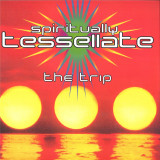
For their final release of the year, The Trip release their sixth EP 'Spiritually Tessellate' on their in-house label Tessellate. 'Funky Q Nice' takes techno and tribal influences and adds them to a classic house vocal. 'Do You Feel', is an end of the night track which is as good for the club as it is for listening at home. On side B we have 'Delightful Funk', which takes an iconic diggers organ anthem and flips it on its head. Finally we have 'Original Sound', which sees the duo dig back to some of the UKG and tech house sounds that they explored last year. The EP launches on Friday 13th December.
In making his long awaited return to Periodica, Milord steps away from the mysterious electro and new age mysticisms of past releases, and instead delivers the freaked out boogie funk free-for-alls brain-bending disco dubs, and summertime pop perfections of ‘Party Line’.
The club mix is an extended excursion through hypnotizing and ever-evolving club psychedelia, with wild phonecal detritus accenting a riffing and body-rocking banger led by svelte lyricisms, energized chants, and future gazing vocoder treatments. Elsewhere, the dub is a building body bomb of Afro-tribal grooves techno bass, echoing cascades of drum fx, and pianos soaked in interstellar aether. And for the ultra infectious radio mix, touches of Kraftwerk meet sunshine pop jam band as a molten bubblegum bass guitar bounces on an earworm drum groove, while all around, vocals soar and six-strings jangle through solar-soaked licks.
VSION 02 is the soundtrack to when the club's heartbeat matches yours; the first sip of water while cavernous drums engulf you. Kasra V's latest offering appeals to the glory days of the tribal side of 90s electronic music: sacred rhythms that echo influences from NYC clubs of past times and the freaky side of abstract dance music, while still retaining a unique flavor from his creative V-sion. Drawing a direct line from the shadowy corners of late 90s club culture to the avant garde, Kasra's world building is on full display, calling to mind both the full-bodied spirit of Victor Calderone's primal grooves and the voodoo beats of Exquisite Corpse. His most dancefloor oriented work to date, Kasra infused the energy of spontaneous jams into refined and layered sonic alchemy, utilizing vintage gear and pedals to evoke spiritually timeless flavors. The record is artistically represented by a Pierrot-esque visual, a perfect symbol for the playful psychedelia that is still entrenched in a hedonistic flair. There's more time in our ritual dance, take another sip.
2024 Reissue
The syndicate manifests its sonic potential in full glory. Giving rise to this collection of colossal heavyweights, Sentry demonstrates its spotless record of selecting certified heavyweights for the discography once again, twenty-fold. Stepping into the ring are some of the scene's most prolific artists alongside a plethora of promising, choice newcomers.
Boasting more than an hour of supercharged sound system pressure with names like Caspa, Truth, Bukez Finezt, Nomine and Youngsta himself on the controls - the subsequent inferno proves to be an authoritative display of quality bass music, that is sure to reach roaring stacks of speakers all around the globe for years to come."
"Vintage flavours transmute into fiery low-end excursions in 'Sun Ra' as Onhell reigns with fire and brimstone and makes way for what's to come. Rolling on, Taso lays waste with dimly lit half-time flows as we enter the smoke-filled mansion of Argo's meticulously crafted 'Since Then' - a prime cut of hip-hop infused breakbeats and bass.
Abstrakt Sonance & Substance set the heater into overdrive and blunts aflame as we proceed into the shelling of 207's 'Gypsy Dub' - then promptly being crunched to bits by 'Crocodile' - encapsulating Dayzero's cold-blooded dance floor armaments. Brace yourself for battle as we step to the drums of Caspa's tribal warfare, full-frontal assault engineered for the club.
Unrestrained power surges propelling us onwards in Coltcut & Ourman's decidedly high-grade collaboration as listeners march through Khiva's haunting sound system belter 'Teeth' and a zealous dosage of Dubstep as envisioned by Truth. Led through eerie alleys and pressure-ridden environments with LSN on the buttons, the onslaught proceeds with the relentlessly driving 'R U Broke' in Mr. K's signature style.
Opus merciless injects straight fury in an auditory form in the spiked 'Lime Pickle' - Bukez Finezt keeping pace with a murderous Cembalo-ridden thug anthem, lunacy! Minimal instrumentation to its fullest effect, Sukh Knight's 'Modulate' keeps it spicy - as does the claustrophobic sub-bass chiming by Leftlow. Thanom ignites what's left of the residual air in 'Tumble It' - dangerous goods.
The subsequent time bomb armed by A:Grade & Feonix, cast into the abyss that is Nomine's space-bending 'Judas' - big speaker business. The clock strikes its final hour - Youngsta & Cimm finish off the survivors with a no-holds-barred showdown, the 'Last Judgement' executing its massive verdict.
2024 Repress
Alleviated Records is proud to present the new Mr. Fingers EP. After many years of the moniker being dormant and a long journey trying to get back into a creative mindset, we have a new offering. First up, "Outer Acid" delivers up a Minimal-Space-Acid flavor. Next, "Qwazars" continues the Space motif with a Minimal-Tech touch. "Nodyahed" moves toward a Dark Club Bounce with a dash of Tribal flavor. "Aether" offers up a more late-night Ambient-Space-House flavor. Hope you enjoy these selections at the club and at home for a long time to come. Musically Yours...
2024 Repress
2 vinyl only tracks, 180g vinyl, printed kraftpack sleeve
Next up for Pornbugs is a collaboration project with Frink – ‘See Through My Eyes’. Remix support comes from Miroloja and Roger Gerressen.
DJ and production duo Pornbugs have been blasing a trail since 2005 and set up the label
Bondage-Music not long after to showcase their sound and the talented House artists around them. Frink is the epitome of underground. A talented artist with a steadfast fanbase that releases banger after banger with integrity and soul.
‘See Through My Eyes’ is a solid slice of contemporary house music. Deeply hypnotic and wildly addictive, its vibey bass, scattergun percussions and icy, cinematic pads feel like an warm audio blanket on a cold winters night. On the remix, Miroloja Strips away at the layers for a deeper groove.
‘Sigma’ sees the triplet explore the tribal side of House. Rubber bass wraps around the opening tribal framework and develops into a classy deep houser with bags of soul. Roger Gerresen takes the baton and runs on the remix. Dubbing out the stabs for an icy, hypnotic journey. Perfect for the early morning hours after a long club night!
2024 Repress
For Frenzy's third release, and the first solo release, the Uruguay-based William Arist is introducing us to his world of 'tribal techno'. Hailing from the city of Montevideo, this Southern-American-born artist already is a talent to watch overseas. Through their like-minded vision of electronic music, William bonded strongly with our Amsterdam-based Frenzy crew over the last couple of years. This warm connection evolved into Frenzy 03 - showcasing pure dance floor eclecticism that only William can deliver, including two remixes by no other than VIL and rising star Kenji Hina aka Alarico.
The A side instantly kicks off at full good vibe-throttle with two productions that reminisce about those iconic Love Parade moments during the very first days of rave culture. Balancing on the edge of house and techno, 'Chaka Chaka' loops the listener into a straight sense of movement. With rhythmic drums and uplifting vocals, 'Days' feels like stepping into an after hour dance-floor at the beach while the morning sun rises through the exotic vegetation. On the B side, William leans towards a more hypnotic sound. With a great tempo and a dark yet subtle mood, 'Tero' sets the tone for those murky clubbing moments where the boundaries dissolve and bodies merge. Slowly climbing out of the deep, 'Gultural' stays on the same energy level while adding dubby hints and a taste of freshness.
To top it off, the release is provided with two remixes that leave no room for interpretation. Portuguese producer VIL turned 'Chaka Chaka' into a true peak-hour beast while Italian multi-talent Alarico shows his versatile skill set with a speedy house remix of 'Gultural' under his Kenji Hina alias.
Dame Area's highly anticipated fourth studio album, "Toda la verdad sobre Dame Area" ("The Whole Truth about Dame Area"), a collaboration with the renowned labels Mannequin Records and Humo Records.
Formed in 2017 within the vibrant underground scene of Barcelona's Màgia Roja club, Dame Area comprises the Italian-Catalan duo Silvia Konstance and Viktor Lux Crux. They fuse industrial-tribal polyrhythms with minimalist synth basslines, drawing profound inspiration from avant-garde masters such as Esplendor Geometrico, Throbbing Gristle, Suicide, Einstürzende Neubauten, Can, Coil, Swans, Big Black, and Wolf Eyes.
This record represents a new phase in Dame Area's discography. It's a big step up in terms of sound, composition and ideas. This record it's the perfect representation of what they have been playing live the last three years and what most people know them for. Also it serves as a companion piece to 2022’s Toda la mentira sobre Dame Area ("All The Lies About Dame Area"), which had a stronger focus on melody, while this latest record is more aggressive and industrial-influenced, with a greater emphasis on percussion.
Tracks like the Suicide-influenced "Si no es hoy cuando es" and "Sempre Cambiare" are an onslaught of industrialism and experimentalism—formidable, volatile, and unpredictable avant-garde subversion. Silvia explains, "One of our biggest influences is doing what our influences wouldn't do. We're more into dynamics and structures atypical of electronic music, with changes in time signatures, starts and stops, and dynamics more typical of rock music. We use any musical idea from any genre. Some songs on the album are based on flamenco rhythms, others influenced by '60s experimental pop, heavy metal, or contemporary electronic music."
The confrontational "Vengo dall'aldilà" accelerates with heavy percussion, while "Tu me hiciste creer" builds into a rhythmic, transcendent noise of yelled vocals and hypnotic beats. Viktor adds, "This song took us more time to complete than any other we have recorded. It was a very organic process, evolving slowly from some instrumental percussive stuff we were doing live. Then we started using feedback as a rhythmic element (through a metallic sheet), and this was the first song where we incorporated this element, typical of noise-rock and experimental rock."
Elsewhere, "Esto Es Nuestro Ruido" represents a manic, eclectic form of contemporary industrial music, post-punk, and EBM. Silvia notes, "It's the first album we recorded outside a studio. Although we've been playing live with metallic percussion and floor tom from the very start, in the studio, with some exceptions, it was mostly sample-based until now. On Toda la verdad sobre Dame Area, all drums and almost all metallic percussion have been recorded live."
With a growing reputation as one of the best live bands around since their inception, Dame Area has toured extensively across Europe, performing at renowned festivals like Atonal, CTM, Nuits Sonores, Dour, and Fusion, as well as legendary clubs such as Berghain, Tresor, Apolo, and Spook Factory.
Recorded at Sol de Sants Studios and Estudio Hermetic between August and November 2023
Silvia Konstance: vocals, synths, percussions, electronics, production
Viktor L. Crux: synths, drums, percussions, electronics, production
Mixing and additional production by Guillermo Sánchez Rojo
Mastering by Paul Mac at Hardgroove Mastering
Designed by Leo Sousa
Photography by Fabio Calabretta
Photo concept by Dame Area