Released at a pivotal moment in Opeth’s ascent, Deliverance offers a snapshot of a band refusing to stand still.
Emerging in the wake of the breakthrough success of Blackwater Park, and produced in tandem with Steven Wilson, their sixth studio album boasts unapologetic heaviness, immersive songcraft, and intoxicating atmospheres. Whilst many contemporaries relied on tried and tested formulations to recreate and restructure, Opeth demonstrated true determination in ambition and sonic exploration.
Now, even after two decades Deliverance continues to hold reverence as a true jewel in the crown of modern progressive metal. This new reissue offers a fresh opportunity to revisit a record whose power, innovation and enduring legacy remain as impactful today as when it first arrived.
Aura Safari are taking it back to the source with new album Spaced Out Disco on Hell Yeah. The eight-track record is inspired by the iconic sound, feel and studio techniques of the original 1970s disco and was played entirely live with real instruments.
Aura Safari are Andrea Moretti, Lorenzo Lavoratori, Daniele Melloni and Nicholas Iammatteo, and they have been releasing EPs, LPs and remixes on this label since 2020. They have long been entrenched in the local scene of Perugia and are live specialists with a unique chemistry that allows them to translate funk, jazz, soul, disco and house into their own timeless and universal musical language.
Integral to the album is the live performance aspect. All the band members hooked up in the studio and played together, often laying down tunes in one take and then adding some post-production for a modern edge. Disco, dub, jazz-funk and instrumental grooves define the sounds while the creative use of classic delay, echo, spacey FX and dubbed out arrangements lead the record the same Jamaican character that inspired original dub-disco pioneers like Arthur Russell, the Compass Point Studio and labels like Prelude and West End.
'Starlove' opens with low-slung grooves and squelchy bass that twist you inside out before 'Spaced Out' shimmers with astral melodies and synths that rise like a rocket disappearing into the night sky. Funky claps and flashes of Dexter Wansel-inspired soul complete the picture, while 'Santa Barbara' eases the pace with a brain-bending dub workout full of weighty low-end and warm, sun-kissed chords. 'Cosmic Affair' lives up to its name, gliding through the galaxy on uplifting guitars and slinky drums, all wrapped in irresistible retro-futurist magic and lit by the moon.
'Disco Mirage' turns inward with simmering bass, dusty open hi-hats and hazy synth trails drifting through effervescent jazz keys that rise like champagne bubbles. 'Magik Space Dust' stretches towards the stars with soaring leads and knotted bass locked into an effortless groove.
Spaced Out Disco does exactly what it promises and plots a richly imagined journey that never stops looking towards the stars while keeping its feet firmly on the dancefloor.
16 bongo bashin' tropic-trashin' mambo-shmambo monsteros!!
Everybody likes a bit of LATIN. It's steamy. It's tropical. It's hot. It gets the dames a-dancin' and the guys pay attention. Those wild rhythms are the sound of sweat. It's the heat that can't be beat.
Now let me tell you about LATIN. Real LATIN, bangin' LATIN. Not the sweet soft stuff your mama used to play. I'm talkin' hard bangin' LATIN that's the real deal. The stuff that makes you move. The motion of the ocean. Hot, wild, sexy rhythms. Skin slappin' coconut crackin' conga crushin' caliente copana. And horns to die for!!
You got your rhumba, your mambo, you got your cha cha cha. You got your Cuban heat, Brasilian beat, colourful Colombian cumbia and pure fire from all those little islands in the Caribbean. You cut 'em, you chop 'em, you cook 'em on up with a slug of jazz and some downhome RnB and you got yourself the devil's own firecracker. It's a sauce like liquid lava. It's LATIN that's off the scale.
Now you add your mezcal, your Carolina Reaper, you add yourself whatever you want, and that right there is a volcano in a bottle. Krakatoa ain't got nothin' on this baby! Put the needle on the record, watch your dancefloor EXPLODE!
The Godfather of Ancestral House delivers 4 edits of typical Yoruba Soul quality. A delightful collection of tribal percussive dancefloor bombs that will have a wide appeal.
Mehr als 50 Jahre dauerte die Karriere von David Bowie, dennoch war es ein Schock, als er Anfang des Jahres 2016 plötzlich verstarb. Der Musiker, Sänger und Produzent hinterlässt der Welt ein beeindruckendes Gesamtwerk mit 25 Soloalben und vielen weiteren Livealben, Kompilationen, Soundtracks und Gastauftritten. »Legacy (The Very Best Of David Bowie)« heißt der neue Best-of-Sampler, der jetzt noch einmal einen Blick auf die größten Hits seines Lebens wirft – von Klassikern bis hin zu seinen letzten Aufnahmen. Natürlich darf die Sammlung dabei auch nicht auf seine größten Hits verzichten, darunter »Let’s Dance«, »Space Oddity«, »Starman«, »Ziggy Stardust« und viele weitere. Mit »Lazarus« hat es auch ein Song von seinem letzten Album »Blackstar« auf die Kompilation geschafft. Zu den weiteren Highlights auf »Legacy (The Very Best Of David Bowie)« gehört unter anderem eine neue Version von »Live On Mars?«, die von Produzent Ken Scott gemixt wurde. 20 Songs haben es auf das Album geschafft.
FORT is launching a sub-label, NOCOWALNYA, and introducing its debut release.
The new label's guiding principles are authenticity, the personal taste of its founders, and a synergy of opposing sensibilities: melancholic romanticism and raw, uncompromising rhythm. The first release is the EP NOCOWALNYA 001, recorded by three key figures of the label: Nocow, Valentin Fufaev, and DJ Designer.
NOCOWALNYA deliberately steers away from the canons of classic techno, trance, or house. The label is built as a space for artists ready for unconventional forms and bold experiments, a place to express their individuality.
The sub-label's visual symbol, a logo of two young men standing on an anvil, sums up the idea perfectly. It's a manifesto of duality: fragile sensitivity set against a cold, industrial beat, romantic motifs joined with dense, hard-hitting sound.
It's fitting that the sub-label takes its first step with its three founders, who stood at the origins of FORT. NOCOWALNYA 001 distills their shared vision and shows how different creative approaches can come together as a single monolith.
The result is a techno-trance hybrid where driving energy meets sincere musical drama. This release doesn't just open the new label's catalogue, it sets the direction for every single and mini-album to follow. The release will come out in two formats: digital and vinyl.
“Nothing grows in the shadow of great trees,” said Constantin Brancusi when leaving Auguste Rodin’s studio. The same holds true in music, as Richard Raux’s journey proves. At the end of 1970, after recording the debut album of the legendary band Magma, which he co-founded, Raux set out to explore new musical horizons. Under the names Faarmadin and later Hamsa, he crafted a sound deeply rooted in jazz and improvisation, yet daringly open to experimentation.
A devoted admirer of Charlie Parker, Raux played bebop alongside René Urtreger and performed with Bernard Lubat’s Percussion Expérience. Jazz is a cornerstone of Hamsa’s iconoclastic approach, blending seamlessly with psychedelic and progressive rock, and the rich musical traditions of Madagascar, where Raux spent his formative years.
Hamsa is as much a personal endeavor as it is a “family affair.” Alongside his brother Patrice on guitar, Raux brought together a circle of friends—Alain Lecointe (double bass), Jean-Lou Besson (drums), John Faure (guitar), and Alain Pistre (percussion)—to record at the iconic Château d'Hérouville, just outside Paris, at the end of 1974. Yet the spirit of Hamsa is deeply Malagasy, rooted in the village of Andranomadio, which gives its name to the album’s opening track: a vibrant explosion of percussion and color. Africa’s presence resonates throughout the record, whether invoking Brotherhood of Breath (Chris McGregor) on “Johanna,” the Malagasy-infused work of Jef Gilson, or paying homage to John Coltrane’s Africa.
Far from being “just another fusion,” Raux’s music dazzles and transports. The saxophone-guitar unison on “Ahiri Lalita” captivates, the vocals of “Fahamadina” sweep you away, and the manifesto of “L’exploité” hits hard—yet with a liberating warmth. Sunshine and joy shine through on the album’s closing track, “Cultivate the Garden of Your Heart” (with Alby Cullaz on double bass and Jean Padovani on drums), capturing the ethos of Richard Raux and Hamsa—and now, ours too.
OR (AKA John Talabot) is a Catalan producer, electronic musician & DJ residing in Barcelona. his 2012 debut album ƒIN received critical acclaim from The Guardian (5*), Anthony Fantano, Pitchfork (8.5 BNM) & DJ Mag. Highly anticipated, Talabot's first album in over a decade. A more left-field side of Talabot, with tangle of cartwheeling synth hooks, bursting with colour & looping electronics. RIYL Floating Points,Leon Vynehall,The Field
7–Early Years–79 was The Fall's first comp ever. Originally released on Step-Forward in 1981, the LP compiles the group's first four singles recorded for the label between 1977 and 1979 – Bingo-Master's Break-Out, It's The New Thing, Rowche Rumble and Fiery Jack – none of which appeared on any of the band's studio albums. (Also included is "Dice Man" from 1979's Dragnet.) Taken together, these 7-inches are The Fall as they initially emerged from the primordial soup of '77 Manchester, pushing out from founder Mark E. Smith's poetry-collective origins into the early punk scene.
Right from the first track, "Repetition," Smith and crew's working-class art punk is in full effect. His obtuse lyrical brilliance and inimitable vocal delivery ride atop the band's ringing atonal guitar, looping basslines and propulsive drumming – complemented by wheezy combo organ tones. The tracks from each 7-inch are presented here in reverse chronological order. The Fall's fierce contrarianism defines the early UK punk sound and, at the same time, sounds nothing like any of their contemporaries.
The revolving cast of band members includes Martin Bramah, Una Baines and Karl Burns as well as Marc Riley, Craig Scanlon and Stephen Hanley who would remain in The Fall's classic '80s lineups. Many of their best-known songs are featured here – from "Psycho Mafia" and "Rowche Rumble" to the Mayo Thompson-produced "Fiery Jack."
Superior Viaduct's edition is the first time that 77–Early Years–79 has been reissued on vinyl. Includes liner notes by Stephen Malkmus.
We’re delighted to announce the new SFJ album Tabibito-tachi 旅人達 (The Travellers) on WONDERFULSOUND
SFJ's album under the duo name, due for release at the end of November. As Oscar SHOLTO Robertson and David Bardon's first outing as recording artists in their own right — following years spent producing and playing session for other acts — the campaign is in its early stages, with the album's arrival set to anchor the wider push. A live launch party in London is planned around the LP's end-of-November release date, marking the duo's first live outing to celebrate the record. Radio and press activity is yet to come; the campaign will build from the single's release through to the album launch and live show.
Recorded in Rented apartments and rehearsal rooms on the move last year through Japan, China and London, the album grew out of a constantly shifting creative process.
"We set up wherever we were staying, turning temporary rooms into makeshift studios and capturing ideas as they emerged between journeys."
Bill Withers was a modest, gentle, and yet towering musical figure responsible for some of the most important, universally known soul hits ever written. It’s no wonder that “Just the Two of Us” and “Ain’t No Sunshine” won him two Grammy awards and undoubtedly played a huge role in getting him inducted into both the Songwriters and Rock and Roll Hall of Fame.
Naked & Warm is Withers' fifth studio album, released in 1976. A year earlier, the Sussex label—home to Bill's first four landmark albums—ceased operations. Withers then signed with the mighty Columbia Records, which would remain his home until the end of his recording career. While Naked & Warm retains Bill's unique, earthy approach to soul that made him Sussex's biggest star, it's clear that musically too, he was in transition; the first half of the album is full of synthesized jazz-funk vamps, while "City Of The Angels" is an almost 11 minutes long cosmic funk excursion combining biting Rhodes chords with swirling synth pads and Dorothy Ashby's spiritual harp work. All in all, Naked & Warm might be one of Bill's most underrated records, simply because his previous work for Sussex was just that impactful.
Naked & Warm is available as a 50th anniversary edition of 1500 individually numbered copies on blue vinyl and includes a 4-page booklet featuring lyrics and new liner notes written by Marcia Withers.
Kisah Pasar Baru: The Modern Sound of 1950s Indonesia
When Indonesia gained its independence from the Dutch colonial government in 1945, politicians and soldiers weren’t the only ones playing a major role in building the sense of national identity.
Also working on the nationalist front were merchants and traders of phonograph records, who prior to the country’s independence served as local agents for foreign labels like Odeon and Beka. In Batavia, one of these traders were Tio Tek Hong, distributor of the international label Odeon and the other figure was Soejoso Soekarso, who also served in the Indonesian Military as an Air Force Marshall.
Irama Records, the music label he founded in 1951, was first attempt to “nationalize” the means of production of “indigenous music” from both foreign labels and intermediaries like Tio.
Soejoso stood at the intersection of music, business, and nationalism. He was the vanguard in the process of popularizing of a new breed of “national” music, especially the type he showcased in the compilation Kisah Pasar Baru: The Modern Sound of 1950s Indonesia, released in 1958.
Yet, the idea of an indigenous music championed by Soejoso was in fact the amalgamation of a myriad of cosmopolitan strands. As an air force officer, Soejoso spent some of his time playing in the Hawaiian band Lieve Souvenier in Semarang before relocating to Jakarta and started jamming with the band Elshinta Hawaiian Senior.
In addition to Hawaiian music, Soejoso was a versatile musician who also had the chops for jazz, a musical genre wildly popular in the 1940s and early 1950s Indonesia. And it was jazz that he first recorded for his Irama Records label.
One night in 1951, he squeezed pianist Nick Mamahit, bassist Max van Dalm, drummer Dirk van der Capellen, and guitarist Dick Abel into a 2×3-meter studio on Jl. H. Agus Salim, Central Jakarta, to record the first local jazz album of the post-independence era.
Kisah Pasar Baru is a compilation of hybrid music that Soejoso and his coterie of musicians championed in the early 1950s, a mix of Hawaiian, Keroncong and Jazz and it became a hit soon after being release.
One of the best compositions on this album, “Pajung Fantasi,” composed by the legendary composer Ismail Marzuki, is essentially built from Bing Slamet’s baritone—Indonesia’s equivalent of Bing Crosby--and the distinctive Hawaiian-styled steel guitar. The most famous song on the album, “Sabda Alam,” also written by Ismail Marzuki, follows the same pattern, its steel-guitar works now backing Theresa Zen’s hauntingly ethereal vocals.
Kisah Pasar Baru was never designed to be a long-playing record, and its presence on the market was to capitalize on a new trend in the recording industry. The album is a greatest-hits compilation, with songs in this album previously circulating individually on 78-rpm discs—a format that was gradually abandoned following the invention of the 7-inch single and the 12-inch long-play vinyl.
This is the first time this monumental record is being reissued for the international market outside of Indonesia.
Lilac Vinyl LP. "Rabbit Trap (Original Motion Picture Score)" stammt von der kolumbianischen Komponistin und Klangkünstlerin Lucrecia Dalt. Der Soundtrack verbindet experimentelle Elektronik, Ambient, moderne Filmmusik und atmosphärische Klangkunst zu einer eindringlichen Begleitung des Films, in dem Kreativität, Natur und übernatürliche Kräfte aufeinandertreffen. Dalt, bekannt für ihre innovativen Soloalben und Filmmusiken, erschafft eine dichte, cineastische Klangwelt zwischen Schönheit und Unbehagen. Unterstützt wird der Score unter anderem von Hauptdarstellerin Rosy McEwen, die auf einem der Stücke als Sängerin zu hören ist. Das Ergebnis ist ein faszinierender, experimenteller Soundtrack, der die mystische Stimmung des Films eindrucksvoll einfängt. Für Fans von: Jóhann Jóhannsson, Kaitlyn Aurelia Smith, Cosey Fanni Tutti, Delia Derbyshire, DJ Python. // "A cinematic audio masterwork" // "The cosmic intensity of composer Lucrecia Dalt's score immerses the audience in Daphne's chaotic creative process." - //
Die Hamburger Band OPHIS kehrt fünf Jahre nach ihrem grandiosen Album ,Spew Forth Odium" mit ihrem sechsten Studioalbum zurück. Die neue Platte wurde im Frühjahr 2026 im 3RD A. Studio in Holm aufgenommen und von Jens Ballaschke produziert, gemischt und gemastert. Das Cover-Artwork stammt von Schlagzeuger Ole Fink selbst. Man liest oft Aussagen wie: ,Mit diesem Album haben sie alles übertroffen, was sie bisher gemacht haben." Und meistens steckt nicht viel Wahres dahinter. ABER mit ihrem neuen Album ,Encased In Deathlike Layers" hat es diese vierköpfige Doom-Institution tatsächlich geschafft, die Messlatte noch höher zu legen. Sechs neue Songs mit einer Spielzeit von fast einer Stunde, die musikalisch das ganze Elend, Leid und die Hilflosigkeit, aber auch die Kraft und Stärke dieser Welt auf absolut perfekte Weise einfangen. ,Encased In Deathlike Layers" ist eine musikalische Reise in die Abgründe in jedem einzelnen von uns, ein Doom-Metal-Meisterwerk und eines der größten Highlights des Herbstes 2026.
Glasgow’s Hot Towel are a DJ & production duo, community dance party organiser and now record label reimagining the balearic spirit far from its original context and sunnier climes.
This debut EP contains 4 dance floor focused tracks tested and developed on the Hot Towel dance floor and beyond. Produced over the last 4 years in grey and rainy Glasgow these 4 tracks reinterpret the joy of warmth, connection and world building in dance music.
Warm in Your Office is a feet on the floor, head in the clouds, bouncing 90’s piano house inspired track with warm driving bass, punchy gated snare, percussion samples and a surprising nostalgic drop for fans of late 90’s and early 00’s Serie A.
The lo-fi beatbox rhythm of Low Pressure in Paradise features a melodic, rumbling bassline, vintage synth string stabs and a warm melancholic synth pad swell reminiscent of the day after the night before, or the thunderous ambience of an oncoming storm and the reflection that brings. Think warm orange and magenta sunset overcast with heavy mauve clouds and possibly a hangover from one too many negronis.
A sunbaked synth flute melody shimmers like heat haze in the latin / balearic inspired beach bar romp Last Minute Staycation. Cowbell and syncopated piano move the hips, while romantic synth strings pine for that magical other world away from the mundane. A shift in tone midway evokes the peril of a balearic dream turned nightmare, capped off with timbale and a shredding electric guitar solo serving Lambada meets Zappa.
Endless Cosmic Procession is a downtempo balearic builder that chugs along with minimal effort. Tuned percussion drives the groove, with bass and synth punctuations that reverberate into space and swirl with delay. A rising arpeggiator gently brings melody to complete the harmonic space of the track that rounds off the EP with a contemplative dance floor moment.
Contrast EP splits into two sides, and the split is the point. Ittara takes the first side with Anticorps and Silent Waves, Jonas Xenon takes the second with 2010 and Wriezener Studies. What connects them is depth: mega deep techno and house, pushed into dubbish territory, built for dancing rather than for show. The low end sits heavy and the space around it stays open, so the tracks have room to move and echo. On a floor it works slowly, pulling people into a long, dubby groove that keeps them moving. Detroit techno, deep house and dub techno all sit in the frame. Two artists, two approaches, one pull towards the deep end.
A first dispatch from Fernland. Three states of inner terrain: drift, then suspension, then trace. Nothing here announces itself. A pressure gathers before shape does; a distance opens that is not measured in space. What remains after each track is less a sound than a residue, the contour of a state that held still while you passed through it.
Terramar is the confluence of Causa Sui and SoCal guitar genius Isaiah Mitchell. Recorded during a week-long immersion in the El Paraiso studio in Odense, Denmark, the group manifests deep currents of psychedelia and kosmische, riding them into a heavy, uncharted swell of sonic exploration.
On the group's self-titled debut album, Isaiah Mitchell – best known for expansive, high-powered guitar solos in Earthless – brings previously unrecognized sides of his musical personality to the surface. And what better assemblage for this endeavor than the El Paraiso Records crew – known for their genre-defying deep dives that explore krautrock, spiritual jazz and even electronic minimalism? The result is exactly what one could have hoped for in a trans-atlantic session like this: a collaboration where each party reveals new angles in the other's musicianship. A joint venture that manages to bring something new to light by paying homage to traditions of the past: Californian psychedelia, German kosmische and Scandinavian commune rock.
The group flies high on tracks such as ”Swell” and the scorching ”Melted Mountain”, but pushes into deeper experimental territory on ”Ritual De Fantasmas”, ”Caterpillar” and ”Borrego”, weaving synthesizers and studio manipulation into the fabric of their sound. Terramar is a true psychedelic delight.
Terramar is the confluence of Causa Sui and SoCal guitar genius Isaiah Mitchell. Recorded during a week-long immersion in the El Paraiso studio in Odense, Denmark, the group manifests deep currents of psychedelia and kosmische, riding them into a heavy, uncharted swell of sonic exploration.
On the group's self-titled debut album, Isaiah Mitchell – best known for expansive, high-powered guitar solos in Earthless – brings previously unrecognized sides of his musical personality to the surface. And what better assemblage for this endeavor than the El Paraiso Records crew – known for their genre-defying deep dives that explore krautrock, spiritual jazz and even electronic minimalism? The result is exactly what one could have hoped for in a trans-atlantic session like this: a collaboration where each party reveals new angles in the other's musicianship. A joint venture that manages to bring something new to light by paying homage to traditions of the past: Californian psychedelia, German kosmische and Scandinavian commune rock.
The group flies high on tracks such as ”Swell” and the scorching ”Melted Mountain”, but pushes into deeper experimental territory on ”Ritual De Fantasmas”, ”Caterpillar” and ”Borrego”, weaving synthesizers and studio manipulation into the fabric of their sound. Terramar is a true psychedelic delight.
Blisterknistern is foil and crackle: dry, brittle, a little clinical. Five hardware jams that stumble rather than swing, stoic where you’d expect groove. A house that remembers the clicks ’n’ cuts era.
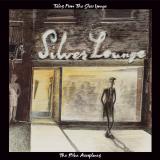
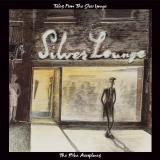
The Blue Aeroplanes have been delivering their distinctive brand of rackety sprechgesang for four decades now, and they are showing no signs of slowing down. Their new studio album, ‘Tales From The Silver Lounge’ is based on overheard conversations between the clientele of The Silver Lounge, a rather louche café/bar in an unnamed city on an unknown planet much like ours, and in an unknown time, though the decor tends to the late 50’s, early 60’s.
The identities of the members of the Silver Lounge are, of course, confidential.
This is the 14th Blue Aeroplanes studio album and the third with the current line-up, which is:
Gerard Langley: vocals
Bec Jevons: guitar, vocal and backing vocals
Mike Youé: guitar, vocal and backing vocals
Rita Lynch: guitar, vocal and backing vocals
Chris Sharp: bass and backing vocals
John Langley: drums and percussion
Ed Taylor: many different instruments and backing vocals
Wojtek Dmochowski: dance
Alexander Dmochowski guests on saxophone and clarinet, Will Diamond on violin and Steve Bush adds backing vocals.
After two best-of compilation albums were released by Chrysalis Records in 2025 (‘Magical Realism’: The Best Of The Blue Aeroplanes’ and ‘Outsider Art’: The Other Best Of The Blue Aeroplanes’), the band are now back firmly in a sort of present with a new album that features all the guitar-band flavours that anyone could need, with poems that cover name-doppelgangers, falconry terms, Don Marquis, postcards, Greek mythology, abandoned Teslas, the First World War and the surreal nature of music-hall jokes.
“The Blue Aeroplanes? Not my cup of tea, but I can see what people see in them.” Mark E. Smith
The Blue Aeroplanes have been delivering their distinctive brand of rackety sprechgesang for four decades now, and they are showing no signs of slowing down. Their new studio album, ‘Tales From The Silver Lounge’ is based on overheard conversations between the clientele of The Silver Lounge, a rather louche café/bar in an unnamed city on an unknown planet much like ours, and in an unknown time, though the decor tends to the late 50’s, early 60’s.
The identities of the members of the Silver Lounge are, of course, confidential.
This is the 14th Blue Aeroplanes studio album and the third with the current line-up, which is:
Gerard Langley: vocals
Bec Jevons: guitar, vocal and backing vocals
Mike Youé: guitar, vocal and backing vocals
Rita Lynch: guitar, vocal and backing vocals
Chris Sharp: bass and backing vocals
John Langley: drums and percussion
Ed Taylor: many different instruments and backing vocals
Wojtek Dmochowski: dance
Alexander Dmochowski guests on saxophone and clarinet, Will Diamond on violin and Steve Bush adds backing vocals.
After two best-of compilation albums were released by Chrysalis Records in 2025 (‘Magical Realism’: The Best Of The Blue Aeroplanes’ and ‘Outsider Art’: The Other Best Of The Blue Aeroplanes’), the band are now back firmly in a sort of present with a new album that features all the guitar-band flavours that anyone could need, with poems that cover name-doppelgangers, falconry terms, Don Marquis, postcards, Greek mythology, abandoned Teslas, the First World War and the surreal nature of music-hall jokes.
“The Blue Aeroplanes? Not my cup of tea, but I can see what people see in them.” Mark E. Smith
Tresor Records is delighted to welcome Rod Modell to its catalogue, with the release of his new album Captagon.
Rod Modell needs no introduction, his various projects render him a master of techno. In repetition and barely noticeable change, Modell resculptures perceptions. His sound-design echoes cinematic ethereality, where ferric artefacts slam against percussion, rusty delays filter observation - the resulting web is a complex, radiating ambience that etches a natural ebb and flow.
Transformative sounds alight from the outset, “Triangulation” recalls flickering harmonies and grains, a tectonic swipe. Fast-paced dub techno emerges in “Reiki”, the disorienting clangs suggesting a step away from his recent ambient excursions. “Ito” crunches the pulse further with insistent noise, into soaring epiphanies of darkened transmissions.
Modell singularly uproots standard sonic hierarchies of techno production, crisp static as forceful as his beats, a provocation of rhythm and noise. Unceasing in its fast tempo, “Jade” is trademark Tresor business - the seismic sub-sonics underpin a momentous drive, with reverberated vocal inflections disfiguring warped, dancing materials. “Scrawler” is upfront and direct, a slamming groove and swaying chords di using ethereality. Enter vast chambers of smeared minimalism.
Where Modell’s recent releases had indicated a priority for ambient sounds, this new album extends Modell’s essential vision within techno. Closing track “Air-Port” shows Modell at his most crucial best - an ethereal colossus of sub-bass weight and morphing geometry.
Liz Harris has worked with film closely since she began making and performing music live - both her own work, and that of various filmmakers - including a near decade long collaboration with Paul Clipson, and multiple live collaborations with Dicky Bahto and Takashi Makino.
On Music For Two Films About Water she presents two recent scores for short films by the artists Tanja Engelberts and Takashi Makino. Each film, as the album title suggests, is an exploration of water, though beyond that, each work and soundtrack varies - blending literal, improvisatory and impressionistic translations of the theme. Her accompaniment layers mercurial threads of mellotron, tape loops, Wurlitzer and field recordings.
Untitled (from We Exhale)
This piece was originally composed for the film We Exhale. In the film, artist Tanja Engelberts takes the perspective of the river itself, tracing how centuries of damming, channelling, and industrial pollution have reduced the Rhône from a living landscape to a hydraulic object—its breath slowly distorting as chemical processes break down what remains. Her work asks what a poisoned river sounds like when it exhales, confronting us with damage that operates beyond human timescales, already embedded in the river’s body. In her artistic practice, Engelberts investigates how landscapes that are no longer visible can be documented. Rather than excavating the past, she collects and rearranges what she finds on the surface—as a creative exposition of the present. Engelberts’ work places attention on the ‘here’ and ‘now’, allowing traces of the past to be recognized while possible futures can be imagined.
Untitled (from Constellation)
This soundtrack scores the film iteration of a project by Takashi Makino titled Constellation, a collection of works exploring how new meanings emerge through the arrangement of existing images, memories, and fragments. In the film, images, appearing and disappearing within mercurial water textures, are clearly present before the viewer, yet maintain their abstractness and imaginative nature until the very end—projected onto the screen and delivered to the viewer as material for forming new images. Fantasy and reality merge in oceanic, lucid dream. Inspired by the way ancient people connected scattered stars to create narratives, his work invites viewers to discover their own relationships between images and construct new meanings from what already exists. In his artistic practice, Makino captures video of ready-made objects including natural phenomena, humans, and cities, with various formats. In the editing process, he layers and configures them into the fields of mesmerizing, shimmering textures that distinguish his imaginative films.
Cirkle makes a striking debut with the EP "Sonic Surge" on Sublunar, curated by Sciahri, delivering a truly memorable release. Hailing from Greece and affiliated with labels such asSk11, Cirkle unveils his interpretation of timeless techno in this EP, characterized by a distinctive and deeply personal sound.
Opening with the sharp and compelling "Sonic Surge," the record quickly captivates listeners before transitioning into "Echoes Of Eternity," a hypnotic journey driven by an unstoppable groove. On the B-side, "Subsonic" commands attention with its irresistible and powerful rhythm, leading up to the EP's epic conclusion, "In The End There Is a Hope." This minimal yet profound track leaves an indelible mark with its unforgettable sonic textures.
Sciahri's label, Sublunar, is proud to welcome back one of its familiar faces - Cirkle - with his new EP, "Fading Trails". Known for his unmistakable sound, Cirkle continues to blend classic and modern techno elements in a way that cements his place as one of the most distinctive producers in the scene.
The EP opens with "Silent Rage", a powerful and hypnotic track driven by infectious vocals and intense energy. Next comes "Beaten II", the follow-up to one of his most celebrated work a dark, epic journey that pulls you deep into its atmosphere.
On the flip side, "Machina" explores a minimal but heavy low-end territory, showcasing precision and raw groove at its finest. Finally, "Fading Trails" delivers a deep and emotional trip, its arrangement guiding the mind into another dimension a true standout piece.
TM Shuffle teams up with Konstantin Kost to deliver a pair of deep, meticulously crafted tracks designed to transport the listener. Built on sprawling echoes, immersive reverbs, and subtle vocal textures, the duo weaves an ethereal sonic journey that resonates just as powerfully in the intimacy of your living room as it does on a packed dancefloor. On remix duties, Brenno reworks the original samples into a weightier, club-focused weapon. Stripping back the atmosphere in favor of driving dub house sensibilities, he pairs classic drum machine rhythms with crisp, dry dub aesthetics, allowing listeners to sink completely into the duo's heavy basslines. Following TM Shuffle's stellar remix on our fifth release, we are thrilled to welcome him back alongside Konstantin Kost for a release that demands your full attention.
Teeing up the next dynamite release on Brighton-based label Murmurations is prolific UK producer Michael James. Spread across four cuts, the fifth vinyl release from the label - MURM005 - continues to focus on essential, stripped-back, driving dancefloor energy with a nostalgic edge. The Moving Music founder delivers exactly that throughout his four excursions here, laced with infectiously swung grooves from top to bottom, synonymous with his sound. “Ultra Realism” kicks off the record with heady peak-time action, its enormous elastic bassline winding itself around intricately arranged, skippy drums, rarely letting up as the track evolves.
Dubby, golden-era tech house sounds arrive on the A2, titled “More Of That”, a fitting name for this after-hours future anthem. As we land on the B-side, we’re greeted by “Lazy River Express”, another slick encounter with a distinctly charming attitude to it. Hard not to move to this one. Rounding off the EP is another example of punchy, rolling action, begging to be played loud. “Stargazer” leaves us with a crisp yet dreamy finish, rounding off the EP with another standout cut for the record bag. In its early days, Leo Christopher has managed to build a sought-after catalogue with the Murmurations imprint, and long may that continue. The curation is always one step ahead, and the label has very quickly become a buy on sight imprint for devoted diggers. An exciting combination here as a growing label joins forces with a staple name on the UK circuit.
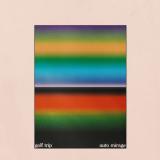
Auto-Mirage is the result of an artistic exploration built around the idea of escape.
Many different settings could be associated with this album, without ever having to choose just one. It can feel like a carefree van trip with no particular destination, the start of a relaxed summer evening with friends or even a sleepless night filled with introspection.
Its alternative identity flows between indie and surf pop, with touches of jazz and soul influences. The arrangements are meticulously crafted, adding depth to the compositions as well as authenticity to the voice.
Auto-Mirage brings together recognized talents such as Olefonken (Hubbabubbaklubb) for the mixing part, Brian “Big Bass” Gardner for the mastering, the captivating voice of Swiss singer Sreya and the striking flights of UK harpist Rachel Kitchlew. This album blends visions and influences to create a project that can accompany anyone, in any situation, as long as it brings that sense of escape.
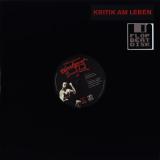
Put out on the circuit in 2016 as a collaboration between Leipzig's Flop Beat Disk and the Zombieflesheater-run micro label operating as Kritik Am Leben this limited to 150 copies 12“ EP sets out to kill and slaughter. Heavy distortions set to maximum levels meet loudness wars taken to the extreme and hyper-fragmented beat violence which follows just one singular device: Mash Up Di Place! And it succeeds.
Never officially distributed before this is the first time ever this unrecognized gem is available to a wider audience, albeit in extremely limited quantities.
Santiago Salazar has been operating in the deeper frequencies of Detroit and beyond for more than three decades. Originally coming up through the early ’90s Los Angeles underground, to Detroit in the early 2000s, becoming part of the Underground Resistance collective and a member of Los Hermanos, while also contributing to the Galaxy 2 Galaxy universe. Here he is with the sublime Bespoke Electronics EP for his Cyphon Recordings debut.
Following his contribution to last year’s RNT In the D comp, Detroit legend Dez Andrés drops his first solo 12” on Razor-N-Tape’s long running white label edit series. Renowned for his work with Detroit legends Amp Fiddler, J Dilla and Slum Village, Dez later moved into clubbier production on KDJ, Mahogani and his own La Vida imprint, crafting a unique sound that authentically blends hip-hop and house. A true masterclass in how to flip a sample, this 12” oozes with varied flavors and grooves that bounce between Detroit electro, deep dusty disco, and beat down soul.
pdqb has been spending an increasing amount of time on the Blue Planet lately. From his perspective, this was never going to end well.
With an intelligence operating several evolutionary levels beyond anything currently available to humanity, pdqb identified the problem almost instantly. Humanity's operating system had developed a number of serious inefficiencies, and the planet was clearly heading in the wrong direction. Even artificial intelligence would not be of much help here: created by humans and trained on human knowledge, it remains, in pdqb's estimation, a rather primitive form of intelligence compared to the cognitive systems he carries within himself.
So pdqb has decided to intervene - personally, and in human form. His identity will remain undisclosed. His intervention, however, will be unmistakable: a brief intelligence boost, followed by approximately 10.000 years of world peace.
It will be fine.
Contact Imminent contains three transmissions from pdqb himself, carrying his characteristic Electro-Cognition signature sound - three pieces of evidence that the future is still worth saving.
For the B-side, pdqb selected two Earthlings whose music he already appreciated, but whose name was particularly appropriate for the occasion: Extrawelt.
Because after the intervention, this planet will no longer be what it was. It will not be the old world, nor simply a new one.
It will be an Extrawelt.
A slightly improved version of reality, with another 10.000 years to get things right.
5. VITAL SALES POINTS:
" transparent vinyl with black dots
" mastered by the infamous Andreas LUPO Lubich
" cover artwork by SUPERFLEX
" two remixes by Extrawelt
The five members of Semakbelukar grew up in the late 1990s believing Malay music was cheap. They picked up guitars and amps and turned the volume up.
Lead singer David Hersya had played in a hardcore-punk band and worked as a sound engineer in Palembang, a busy port city on Sumatra’s east coast that once hosted the Sriwijaya maritime kingdom.
Around 2010, David and a rotating cast of bandmates grew bored with hardcore punk.
They swapped guitars and drums for mandolin and accordion. David began writing lyrics inspired by pantun (traditional Malay poetry) and set them to minimalist mandolin strums, then layered more mandolin and Malay drums as the recordings progressed. He drew vague melodies from his father’s record collection—1960s Malay music giants like O.M. Kelana Ria, Zaenal Combo, and O.M. Sinar Kemala.
David’s work as a muezzin at his mosque trained his vocal cords, which helped his studio performance. That skills helps him tremendously in the studio and as you can hear in the compilation, his range and pathos are the biggest draw.
Only about twenty people in their hometown bought CDs of their first three releases. Semakbelukar had already broken up when a Jakarta label asked them to record a proper LP in 2013.
What they recorded in two weeks in a makeshift Palembang studio in early 2013 changed their lives: a heady mix of bygone Malay styles and modern sensibility only they could make.
This collection combines eight tracks released in 2013 with earlier recordings from 2009–2011, including previously unreleased material.
Semakbelukar disbanded permanently after their last gig in Java that December.
*Limited edition (500) reissue of The Orchids second album – originally released on Sarah Records in 1991- remastered with the 7” and E.P tracks from the time. Translucent pink*
“The Orchids have a lightness of touch, an autumnal and mellow fruitfulness, a clear-eyed pop nous. Imagine some nexus that takes in Felt, Orange Juice, The Beach Boys and The Go-Betweens”
-Stuart Maconie
“The Orchids can come on like esoteric angels high on Felt and Massive Attack”
– John Mulvey, NME
The early summer bloom of 1992 felt like it had been pollinated by a lot of sunshine-loving records from the year before, optimistic headrushes that embraced hedonistic bliss or at least a sweeter ride. There was still an element of bedroom wistfulness to singles like Higher Than The Sun, Nothing Can Stop Us and even Paris Angels’ Perfume but there was no denying the appeal that techno, rave and Bleep held, especially when it was microdosed. Bands were more willing to experiment with technology and producers, if not necessarily going for all whistles-blazing club bangers.
The Orchids, hailing from the suburbs of Glasgow were unlikely to ever emerge from their hood as contenders for a deal on Soma Records (which had begun in 1991 in that city) but they evidently wanted to stretch their boundaries beyond their introverted debut. Unholy Soul is somewhat breezier than Lyceum. It’s still laced with a Scottish melancholy but there’s more breathing space within the production. They’d hinted as much on their 12” ‘Penetration’ EP from 1991 and lovelorn songs such as Waiting For The Storm and Peaches are now spiked by absent-minded cherubs with an ear for the 3.a.m comedown.
As lead singer James Hackett says today: “Unholy Soul was the first time we had spent more than a couple of days in the studio, doing so after work. It was a thrilling period of creativity and we had most of the songs written but not enough. We didn’t worry about that too much though because with Ian Carmichael there was a new opportunity for studio generation. Also this was the first time we had heard Pauline (Hynds) singing with One Dove so we asked her to sing on some of the songs. We were obviously influenced by a lot of the music of the time but you can still hear it’s The Orchids at heart”.
The next year of course One Dove (with Carmichael programming) released their debut album - produced by Andrew Weatherall - on the Boy’s Own label. It felt like there was a lot of ideas being spun back and forth between artists and producers in the early 90s. If some of the records also sound very much of that time that’s no bad thing either. There was a lot of loved-up nostalgia for the 60s then so it’s no surprise that many of the records have a youthful exuberance coupled to a technological innocence, that’s the charm.
Coming off a serious drop as of the DISCO FIEBRE duo, MEMORY LOUNGE makes his solo debut on CUENTO DE NUNCA ACABAR with fresh edits of classic Mexican funky disco, tailoring OG infectious percussive grooves, sizzling brass, & driving bass for maximum impact on modern sound systems.
Sometimes the most interesting stories in 80s dance music are hidden on the B-sides.
This one begins in Munich with two men: Manfred Alois Segieth, better known as Fancy („Slice Me Nice” and „Flames Of Love”), in the production credits he frequently appeared as Tess; Alfons Weindorf, musician, composer and producer, member of Zara-Thustra and part of the Munich studio environment surrounding the Weindorf family and Weryton Studios. For his electronic dance productions he used the names Elvin and Elvine. In the second half of the 1980s, Tess and Weindorf became part of an extremely productive Munich circle that also involved names such as Linda Jo Rizzo, Grant Miller, Sabrina Lorenz or Charlie Glass. Together in various combinations, they created original productions, songs and remixes that today form an unmistakable chapter of German Euro Disco. ZYX Records regularly called on this production world for new mixes and additional material and this is where our story becomes particularly interesting.
In 1986 ZYX decided to release „Tribal Stomp (Cherokee Nation)” by Psychic Interface in Germany. Psychic Interface was actually an American project by Jim Callon. But turn the German 12-inch over and things suddenly become much more German. The B-side, „Dancin’ In The Night”, was credited to Psychic Interface as well, yet the music itself came from an entirely different world. Written and produced by Elvine and Tess it was essentially a Munich production. The synths, the bassline, the melodies, the arrangement and that unmistakable mid-80s German Euro Disco character all point directly towards the creative partnership that would become associated with The Hurricanes.Around the same period another piece of the puzzle appeared. ZYX decided to bring back Den Harrow’s 1983 debut single „To Meet Me”, taking advantage of the enormous popularity Den Harrow had achieved by 1986. The new German release featured the „Hurricane Hit Mix”. And on the other side was something completely different – „Tropical Nights”. An instrumental written and produced by Elvine and Tess and this time officially credited to The Hurricanes. There was a logical reason for that. Putting an original composition on the reverse of a licensed or remixed single meant that the creators were not only remixers or producers. Their own composition was now part of the record as well, generating its own publishing and mechanical rights. It was a clever piece of 1980s record business. Two years later, in 1988, The Hurricanes would return with the much better known „Only One Night”, one of the finest examples of the Elvine & Tess Euro Disco sound.
Now Vintage Pleasure Boutique goes back to that earlier chapter. We bring together „Tropical Nights” and „Dancin’ In The Night”, two productions born from the same Munich team, and give each of them a new DJ-friendly interpretation. The originals retain everything that makes them special: crisp electronic drums, driving sequencers, huge synth melodies and that wonderfully unmistakable German take on Italo Disco. The new remixes take the same DNA onto today’s dancefloor. Longer builds, stronger transitions, more room for mixing and a subtle touch of contemporary italowave production, without losing the melodies, atmosphere or character of the originals.
Two hidden pieces of Munich Euro Disco history, taken out of the B-side shadows and finally given the dancefloor space they deserve. Two originals. Two new remixes. One fascinating piece of The Hurricanes story.




![Various - Ravers Kaki [Stickered Sleeve]](https://www.deejay.de/images/l/6/4/1270164.jpg)











![TM Shuffle & Konstantin Kost - Dub Stories [180 grams,Colored Vinyl]](https://www.deejay.de/images/l/7/4/1266974.jpg)


![pdqb - CONTACT IMMINENT[with two Extrawelt remixes]](https://www.deejay.de/images/l/1/2/1268612.jpg)