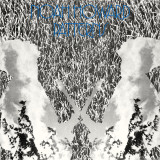
Thoughts of You, as a phrase, might immediately associate one with feelings of love, endearment, fantasy or even obsession. These are the very sentiments that lay as cornerstones in Salvator Dragatto's debut LP for Colemine Records. The allure and drama of black & white photography have always played a vital role in how Salvator (aka Joseph Reina) not only views the world but how he hears music. Parallels in film processing to his own recording methods started becoming more and more apparent as the record was being formed; Limitations in exposures rivaling limitations in tracks. Film grain and dust sediments rivaling tape hiss and dirty EQ pots. What most would consider to be imperfections, Dragatto leaned into and found inspiration. Opaque Natural Vinyl. This record is an homage to the likes of Andre' Kerte'sz, Robert Frank, Jean-Luc Godard and Rene' Groebli, who's works have impacted Dragatto's world so greatly both visually and sonically. Thoughts of You is an unabashed reflection of the noir. From the powerful thematic horn lines to the gentlest string passages, this record is a collection of themes and vignettes that explore the emotions set upon by black and white imagery.
Buscar:cole
Gregory Porter, with his customary class, elegance and sophistication, presents his new holiday album ‘Christmas Wish’ – a cool yule selection of festive favourites as well as brand new songs written by the singer himself. Backed by his long-time band, produced by repeat collaborator Troy Miller in New York and London, with orchestral contributions recorded at Abbey Road, and featuring powerhouse guest vocalist, double Grammy-winning sensation Samara Joy, Gregory Porter’s seventh studio album is a loving tribute to his favourite time of year – and to great songwriters, singers and interpreters including Nat King Cole, Ella Fitzgerald, Stevie Wonder, Marvin Gaye and Dinah Washington. Across its dozen tracks, ‘Christmas Wish’ encompasses the saintly and the secular, the funky and the fun, the Great American Songbook and the best of Motown.
With ‘Christmas Wish’, Gregory Porter has given us a whole new soundtrack to this most wonderful time of year.
- 1: The One & Only (Intro)
- 1: 2Unclouded Visions
- 1: 3Illusions
- 1: 4Eternal Cosmos
- 1: 5Hold Your Breath
- 1: 6Alpha Beth
- 1: 7Sons Of Light 2024
- 1: 8Mosaic Sky (Interlude)
- 1: 9Higher Learning (Interlude)
- 1: 0Brain Washed State
- 1: Good Memories
- 1: 2Sent By The Ancestors
- 1: 3Colonized Island
- 1: 4Radio Telepathy
- 1: 5Light Your Path
- 1: 6Aperture
All the music in the world is at your fingertips, and it's up to you to set the vibe_ So, what should we listen to? If you're having trouble deciding, turn on the radio. It's the perfect place to discover something new, or jam along to a tried-and-true station that'll never let you down.Tune In is due out 11/1/2024 via Chiefdom Records. The second of three installments in the Terrestrial Radio series, it's a carefully curated collection of instrumental fusion, designed to serve as the perfect radio mix for fans of jazz, hip hop, funk, soul, reggae and beyond. It's the latest release from Cincinnati based executive producer Doctor Bionic (Jason Grimez). As a DJ, producer, and former member of 90s rap group MOOD, Grimez' musical career revolves around hip hop. He's always preferred to sample songs from the late 60s and early 70s because of the authentic tone. "Growing up collecting and sampling records was an education, whether we realized it or not," he explained. Grimez records and produces music using analog gear to emulate the instrumentals that he's always loved as he works with some of the best musicians in the Cincinnati area to bring his ideas to life. Among others, Jonathan Luck Spaulding and Josh "Mojo" Cole made several appearances on guitar throughout the record. Every Doctor Bionic release is accompanied by a unique, thought-provoking album cover. For Tune In, Grimez worked with Refael Idan Suissa, a painter and digital artist based in Israel.Next time you're looking for some new instrumental tunes to set the tone, you can count on the growing catalog from Doctor Bionic. Tune In is available everywhere on 11/1/24.
Der Legende nach wurde Tjaders Musik in mehr als 200 Tracks gesampelt. Dafür gibt es einen Grund:
Seine Pionierarbeit als Bandleader und (meist) Vibraphonist im Latin-Jazz-Genre ist eine unwiderstehliche
Verflechtung von afro-kubanischen Rhythmen und Jazz-Grundlagen, die einen sofort in eine andere Zeit
und einen anderen Ort versetzt.
”Alles kocht auf eine fröhliche und doch disziplinierte Weise”, so AllMusic über Latin Kick, seine unvergessliche Veröffentlichung von 1956. ”Tjaders elliptische, swingende Vibraphonklänge führen das Ensemble genial an”. Das stimmt: Man muss sich schon sehr anstrengen, um beim Hören der beschwingten
Stücke wie seiner Cha-Cha-Version von Cole Porters ”I Love Paris” und dem ironisch-unbekümmerten
”Lover Come Back to Me”, einer Coverversion des Songs von Oscar Hammerstein II, keinen Kontaktrausch
zu verspüren.
- A1: Dean Martin - Let It Snow! Let It Snow! Let It Snow!
- A2: Frank Sinatra - Jingle Bells
- A3: Elvis Presley - White Christmas
- A4: Nat "King" Cole - The Christmas Song
- A5: Louis Armstrong - Christmas In New Orleans
- A6: Perry Como - Winter Wonderland
- A7: Bing Crosby - O Come All Ye Faithful
- A8: Sam Cooke - Wade In The Water
- B1: Elvis Presley - Blue Christmas
- B2: Paul Anka - It's Christmas Everywhere
- B3: Harry Belafonte - I Heard The Bells On Christmas Day
- B4: Bing Crosby & The Andrew Sisters - Santa Claus Is Coming To Town
- B5: Frank Sinatra - Silent Night
- B6: Ray Charles - The Snow Is Falling
- B7: Bing Crosby & Ella Fitzgerald - Silver Bells
- B8: Frankie Laine - I Believe
Wenn Dean Martin den Schöpfer dazu auffordert, es schneien zu lassen ("Let It Snow! Let It Snow! Let It Snow!"), Paul Anka weiß, dass nun überall Weihnachten ist ("It"s Christmas Everywhere"), Harry Belafonte Glöckchen vernimmt ("I Heard The Bells On Christmas Day"), Frank Sinatra die Heilige Nacht beschwört ("Silent Night") sowie Bing Crosby & The Andrew Sisters beobachten, wie der Nikolaus in die Stadt kommt ("Santa Claus Is Coming To Town"), nähern wir uns nicht nur dem 24. Dezember, vor allem hat dann die Stunde der Crooner geschlagen. Mit ihren schmelzend-beschwingten Swing-, Soul- und Gospel-Interpretationen bekannter Weihnachtstitel sorgen sie auf der LP-Kompilation "Noël Crooners" auf unterhaltsame Weise dafür, dass die Stimmung nicht ins Rührselige abdriftet, und dennoch eine besinnliche Note bewahrt bleibt. Das gilt auch für weitere Titel wie "Wade In The Water" (Sam Cooke), "Christmas In New Orleans" (Louis Armstrong), "Blue Christmas" (Elvis Presley) oder "The Snow Is Falling" (Ray Charles).
Cloudy Grey[11,56 €]
Classic free jazz album reissued for the first time since the 70s. Old-style gatefold sleeve LP, with liner notes by Ed Hazell.
Noah Howard, an alto saxophonist and composer, was known for weaving intricate and innovative musical patterns, often likening his work to "sound paintings." His 1971 album Patterns, the first LP he self-produced on his Altsax label, stands as a testament to his experimental and spiritual approach to music. In interviews, Howard frequently used visual terms like "patterns" and "shapes" to describe his compositions, emphasizing the importance of melody and structure even in highly improvisational settings. For Howard, patterns and melodies were essential to guiding listeners through his explorations without alienating them, maintaining a balance between innovation and accessibility. Howard's quest for an original sound was deeply influenced by jazz greats like Charlie Parker, Ornette Coleman, and Jackie McLean. While he admired these legends, Howard avoided imitation, striving instead to develop his own distinct voice. His sound was unmistakably his own, and he felt a deep obligation to carry the jazz tradition forward through personal expression, not by mimicking others. His music was also rooted in spirituality, a legacy he traced to his upbringing in the Black Baptist Church. He believed jazz had always contained a spiritual essence, from Louis Armstrong to John Coltrane, and his work aimed to channel this cosmic, spiritual energy.
Patterns was recorded in the Netherlands during Howard's second stint in Europe, where he found a more open, less racially charged environment compared to the U.S. For the album, Howard collaborated with Dutch musicians such as Misha Mengelberg (piano), Han Bennink (drums), and Earl Freeman (bass). Despite the challenges faced by guitarist Jaap Schoonhoven, who felt out of place in the session, the album came together as a powerful mix of blues, jazz, and classical elements.
The music on Patterns is a high-energy fusion of American free jazz and Dutch improvisation. Howard's saxophone work alternates between leading with passionate, lyrical lines and blending into the collective improvisation. The album’s dynamic interplay, particularly between Mengelberg’s dissonant piano clusters and Bennink’s thunderous drumming, creates a vivid "sound painting" full of contrasting forms and colors. Patterns remains one of Howard’s most unique and celebrated recordings, showcasing his visionary approach to jazz.
Obscure & outstanding free jazz album reissued for the first time since it’s original release in 1969. Old-style gatefold sleeve LP, with liner notes by Ed Hazell.
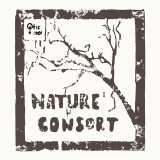
In the late 1960s, young jazz musician Bobby Naughton, a keyboardist and vibraphonist, faced significant challenges as he sought to record his first album. With major record labels and jazz clubs catering only to big names, Naughton and other creative musicians of his generation found themselves sidelined by the mainstream music industry. They turned to self-reliance and self-production, becoming part of a movement of independent musicians. Naughton’s debut album, Nature’s Consort, was a DIY effort in every sense—recorded on home equipment and featuring a hand-printed woodblock cover. The album was distributed independently at concerts and by mail, receiving little attention initially, but over the years it gained a reputation as a rare, sought-after artifact of the period.
Though recorded during an outdoor concert in Connecticut, Nature's Consort reflected the "loft jazz" scene in New York City. This avant-garde jazz movement centered around musicians who lived and played in loft spaces in lower Manhattan. Naughton commuted from his home in Southbury, Connecticut, to play with his bandmates Mark Whitecage, Mario Pavone, and Laurence Cook in New York's lofts. These musicians regularly performed at venues like Studio We, a key gathering spot for free-form jazz, where musicians could experiment and develop their sound, often with no audience present.
Naughton’s journey into jazz was a winding one. Originally from Boston, he played rockabilly and blues-rock before transitioning into free jazz. Inspired by avant-garde artists like Carla Bley and Paul Bley, Naughton sought to explore new forms of music that went beyond traditional jazz structures. His bandmates, Mark Whitecage and Mario Pavone, were both deeply affected by the death of John Coltrane in 1967, which prompted them to quit their day jobs, attend Coltrane’s funeral, and move to New York to pursue jazz full-time.
Nature’s Consort was a collective project, with band members sharing equally in any profits. However, Naughton was the driving force behind the group’s creative direction. He composed much of the original material and selected pieces by Ornette Coleman and Carla Bley for the band’s repertoire. Jazz critic Nat Hentoff praised the album for its “high-risk improvisation” and the musicians' ability to anticipate each other’s moves. Though Nature’s Consort received little press at the time, it has since been recognized as a significant early document of the loft jazz era, representing Naughton’s disciplined, improvisational approach to music.
Mischievous festa punk meets astral steppas, kalaedoscopic free ambient meets harsh noise, scattered amen breaks with IDM and free jazz trumpets meets the earthly plod of digidub. It can only be Felinto from Sao Paulo.
UTOPIA MILHÃO honors the life forces that allow us to transform the darkness where dreams reside. The album brings a new moment of intimacy for Felinto's musical expression flowing through dirty, raw, dense and brilliant dub fractals, ready to transform unexpectedly into a new shape then another, and another, and another... featuring collaborations with magical people: Sarine (Deafkids), Douglas Leal (Deafkids), Guizado (Afrobombas), Sandra X, Paula Rebellato (Rakta), Lorena Hollander, Yao Bobby, Kiko Dinucci, Paulo Papaleo, Cint Murphy, Rodrigo Lima.
Felinto is a political agitator and musician at the heart of the São Paulo underground - a movement that confronts the various effects of the capitalist system of racial, sexual, ,,,,, and 22222 lawand material oppression.
His provocations range from yoga for children and parenting studies (SACYOGA), theatre (PROJETO CRIOULOS and PROJETO JAMES BALDWIN), web series highlighting the black presence in electronic music in São Paulo (MODULAÇÃO PRETA), reflective groups on gender violence and masculinities, occupation of public spaces for political art q(Coletivo Sistema Negro), artistic curatorship (Residência SOMSOCOSMOS) and studies with sound as a tool in conflict mediation practices. Felinto composes for film, theatre and immersive installations such as MEGACITIES presented at the National Gallery of Victoria, Canada in 2023.
He is currently researching - as part of a masters project in clinical psychology - the collectivised dream realities of black people. A field of action that contemporary anthropology, psychoanalysis and psychology call ONIROPOLITICA.
His interest in affinity groups, autonomous networks of micro-political articulation and penal abolitionism led him to the questions: what do black people dream about within the permanent context of civil war and state violence (like the one in Brazil)? How does this experience create dreams and how does the dream affect the construction of identities beyond the boundaries established by the capitalist unconscious?
- Canto La Habana
- Ahora Vendo Otra Cosa
- Nunca En Domingo
- Al Compás De La Charanga
- El Cumbanchero
- Black Orchid
- Happiness Is A Thing Called Joe
- I've Waited So Long
- Out Of Nowhere
- Guajira At The Blackhawk
- A1: It's Always October On Sunday 10 12
- A2: Sleeping In Church - Tape 1 On A Warm Day I Turned To Tell You Something But There Was Nothing There 7 31
- A3: Fish Can't Tie Their Shoelaces, Silly 3 28
- B1: We Put Her In A Box And Never Spoke Of It Again 7 22
- B2: There Is A Science To Days Like These (But I Am A Slow Learner) 7 20
- B3: 4 Is An Okay Number 6 14
- B4: Thanks For Coming 1 14
- C1: To Die In The Country 2 05
- C2: Objects Lost In Drawers (Found Again At The Most Inconvenient Times) 3 10
- C3: From Gardens In The City We Keep Alive 4 57
- C4: Everything Is Wrapped In Cling Film 3 36
- C5: Are These Your Hands, Would You Like Them Back? 5 15
- C6: It Is 5Pm And Nothing Bad Has Happened To Us (Yet) 2 15
- D1: Three Clementines On The Counter Of A Blue-Tiled Sun-Soaked Kitchen 8 21
- D2: I Liked It Better When We Lived On See-Saw Hill 2 37
- D3: Jumana 5 42
- D4: Come Back Later 3 54
'We are thrilled to be able to bring you Yara Asmar's first two cassette releases in a deluxe remastered double vinyl gatefold package featuring all new art and design from Yara herself.
Both albums were originally released on Hive Mind Records in 2022 and 2023 and received critical acclaim around the world':
“Melancholic drifts sound through the overcast skies of synth waltzes and accordion laments, infusing ageless melodies with a sense of falling backward through time. History is stitched through gilded aural silhouettes and elegiac drones. Asmar’s music is visceral. While electronics beckon beyond the sunrise stretched through a metallic shimmer, synth waltzes and accordion laments sticks with us while we remain lost in the hazy doldrums, always crawling forward tethered to our past lives. Highest recommendation.”
Brad Rose, Foxy Digitalis
"...these tracks are a cushion against reality. Asmar creates music that unfurls in evanescent bliss, an invitation to a safe space both isolated and welcoming."
Daryl Worthington, The Quietus
"...a set that transmutes the instrument’s droning tones into a sweep of introspective, breath-catching moments of beauty"
Eric Torres, Pitchfork Best Jazz & Experimental Albums of 2023
"The combination and contrast of highly familiar and highly alien elements give Asmar's music a quality not quite like anything else I can name. The way she channels found voices into her surreal mix of sounds is particularly striking."
Byron Coley, The Wire
All the music in the world is at your fingertips, and it's up to you to set the vibe_ So, what should we listen to? If you're having trouble deciding, turn on the radio. It's the perfect place to discover something new, or jam along to a tried-and-true station that'll never let you down.Tune In is due out 11/1/2024 via Chiefdom Records. The second of three installments in the Terrestrial Radio series, it's a carefully curated collection of instrumental fusion, designed to serve as the perfect radio mix for fans of jazz, hip hop, funk, soul, reggae and beyond. It's the latest release from Cincinnati based executive producer Doctor Bionic (Jason Grimez). As a DJ, producer, and former member of 90s rap group MOOD, Grimez' musical career revolves around hip hop. He's always preferred to sample songs from the late 60s and early 70s because of the authentic tone. "Growing up collecting and sampling records was an education, whether we realized it or not," he explained. Grimez records and produces music using analog gear to emulate the instrumentals that he's always loved as he works with some of the best musicians in the Cincinnati area to bring his ideas to life. Among others, Jonathan Luck Spaulding and Josh "Mojo" Cole made several appearances on guitar throughout the record. Every Doctor Bionic release is accompanied by a unique, thought-provoking album cover. For Tune In, Grimez worked with Refael Idan Suissa, a painter and digital artist based in Israel.Next time you're looking for some new instrumental tunes to set the tone, you can count on the growing catalog from Doctor Bionic. Tune In is available everywhere on 11/1/24.
- Stolen Moments
- Hoe Down
- Cascades
- Yearnin
- Butch And Butch
- Teenie's Blues
The Blues and the Abstract Truth is not just a landmark album in Oliver Nelson's career but in the history of jazz itself
The album features an incredible ensemble of top-tier jazz musicians, often referred to as a "supergroup": Oliver Nelson (alto saxophone, tenor saxophone), Freddie Hubbard (trumpet), Eric Dolphy (alto saxophone, flute), George Barrow (baritone saxophone), Bill Evans (piano), Paul Chambers (bass), Roy Haynes (drums). The early 1960s were marked by a shift from the hard bop of the 1950s to more experimental forms, including modal jazz, free jazz, and the incorporation of avant-garde elements. Musicians like John Coltrane, Ornette Coleman, and Charles Mingus were all pushing the boundaries of jazz, and Oliver Nelson's work fits within this broader movement: in this album there's a perfect combination of modern compositional techniques, virtuosic performances, and emotional depth make it an essential listening experience for any jazz fan. It captures the moment when jazz was evolving into new, exciting directions while staying connected to its roots in the blues. The Blues and the Abstract Truth is considered one of the essential albums in modern jazz where Oliver Nelson's compositional style blends hard bop, modal jazz, and blues influences with sophisticated harmonic structures and striking arrangements. The album is noted for ts rich orchestration despite having a relatively small ensemble with use of textures and colours, particularly in tracks like "Stolen Moments," created a new standard in azz arranging.
Brilliant Corners is an exceptional example of Monk's distinctive approach to jazz, which was characterized by angular melodies, unusual chord progressions, complex rhythms, and an idiosyncratic sense of timing
The title track, "Brilliant Corners," for example, was so intricate that it took multiple takes to complete, and the musicians found it challenging to follow its unconventional structure. This difficulty speaks to Monk's originality and his pushing the boundaries of what jazz could be at the time. The LP is one of Thelonious Monk's most acclaimed and influential albums, recorded in 1956 and released in 1957. It stands as a cornerstone in Monk's discography, showcasing his innovative approach to jazz composition and performance, and is often regarded as one of his finest works. Upon its release, Brilliant Corners was met with widespread critical acclaim and remains a significant album in jazz history and helped solidify Monk's status as one of the great innovators of modern jazz. It was a breakthrough album for Monk commercially as well, attracting attention from jazz critics and listeners who were beginning to appreciate his genius more widely. Today, Brilliant Corners is considered an essential jazz record, often cited as one of the greatest jazz albums of all time: musicians like Ornette Coleman, Cecil Taylor, and Eric Dolphy were influenced by Monk's ability to push the boundaries of jazz without losing its essence. The album is not just a masterwork in Thelonious Monk's discography but a pivotal moment in the evolution of modern jazz.
Rejoice fiends, as this halloween Utter ventures into the darkness for its long-lost 13th release, a limited double LP by infamous electro sorcerer Labyrinthine.
'II-V' wrangles 11 daemonic invocations from the infernal vortex, cut loud at 45rpm on deep red vinyl and incarcerated within artwork by Alison Flora, painted in her own blood.
'II-V' is not for the faint of heart, as its cursed soundscapes have been known to intoxicate and overwhelm even the strongest and purest of minds. Listener beware!
The Invisible Road: Original Recordings, 1985–1990 compiles an unheard, previously unreleased body of recordings by Sussan Deyhim and Richard Horowitz, dissidents from diametric backgrounds who met during the heady days of Downtown New York in the 1980s. This collection reveals the creative and life partners’ radical shared vision of avant-garde pop in all of its boundary pushing freedom, combining Deyhim’s singular approach to vocalization, Horowitz’s invention of new musical languages, and touchstones of traditional music from around the world, creating a new music that ultimately retains a voice entirely its own. Despite their difference in backgrounds and respective journeys, at the time of their meeting in the early 1980s in New York City, Sussan Deyhim and Richard Horowitz were both products of the search for freedom and understanding (and resultant awakenings) that swept the globe and helped culturally define the late 1960s and 70s. Deyhim, born and raised in Tehran, spent her teens dancing with Iran’s Pars National Ballet company, performing weekly on Iranian national television, and travelling her home country studying with master folk musicians and dancers, before relocating to Belgium and joining Maurice Béjart’s prestigious Béjart Ballet of the 20th Century. Horowitz, born and raised in Buffalo, New York, had spent much of the decade before abroad, first departing for Paris under the shadows of the Vietnam War, where he studied piano, Eastern philosophy, and became entrenched the city’s free jazz scene, playing with the likes of Steve Lacy, Anthony Braxton, and Alan Silva, before embarking south to Morocco where his friendship with Paul Bowles helped cultivate a deep passion for the country’s musical traditions and a shift in his musical practice.
The pair met by chance sometime in 1981 at Noise New York, a small studio on West 34th Street founded by the musician and recording engineer, Frank Eaton, as a utopian creative laboratory that beckoned artists and bands like Arthur Russell, Christian Marclay, Liquid Liquid and Butthole Surfers into its orbit. Both artists had recently relocated to the city, Horowitz having recently released his debut album, Oblique Sequences (Solo Nai Improvisations), on the legendary Paris based imprint Shandar, and fallen in with members of New York avant-garde like La Monte Young, Jon Hassell, David Byrne, and Brian Eno, and Deyhim having begun to more actively incorporate singing into her practice, notably recording a vocal score for choreography she was doing at La MaMa Experimental Theatre.
Initially bonding over a cassette tape of field recordings made by Paul Bowles that had been given to mutual friend and writer Brian Cullman (seeking answers for Ornette Coleman’s question “what is the sound of sound”), their earliest collaboration was documented on Horowitz’s 1981 album, Eros In Arabia, with Deyhim contributing vocals to the track “Queen Of Saba.” Over the coming years, their deep connection would routinely gravitate them into the studio, culminating in the body of recordings that would appear on their 1986 album for Crammed Discs, Desert Equations: Azax Attra. Unknown to nearly all but the artists, laying in wait over the decades on numerous multi-track and stereo reels, DAT tapes, and reference cassettes, were a vast array of recordings made by Deyhim and Horowitz bookending Desert Equations. The 13 pieces represented on The Invisible Road: Original Recordings, 1985–1990 were recorded largely between Noise New York and Daylight Studio in Brussels, during a period that Deyhim describes the partnership between herself and Horowitz’s as seeking a music “free of any specific cultural reference, with a personal musical signature,” blossoming into a body of sonority that embraced the energy of contemporary boundary pushing pop and the avant garde, filtered through their mutual love and study of various musical traditions from across the globe and deep engagement with the ideas and tactics of experimental music.
Undeniably rooted in Horowitz’s study of the North Africa ney and the music of the Berber and Gnawa cultures during his time in Morocco, Deyhim’s deep engagement with the folk traditions of Iran, and the couple’s immersion in the interconnected Downtown underground music scenes, each piece on The Invisible Road offers its own vision creative and cultural hybridity. Deyhim sings in both English and Farsi, as well as a composite tongue that she developed by drawing upon numerous indigenous vocal techniques from around the world, intuitively responding to Horowitz’s simultaneous sound syntax forming and combining a wide range synthetic and acoustic instrumentation, and experimental tape techniques, within a visionary series of free-standing expressions.
- A1: Nat King Cole The Christmas Song (Merry Christmas To You)
- A2: Laufey Winter Wonderland
- A3: Jamie Cullum It's Christmas
- A4: Diana Krall Feat The Clayton-Hamilton Jazz Orchestra Jingle Bells
- A5: Tom Gaebel Last Christmas
- A6: Ella Fitzgerald Sleigh Ride
- A7: Kurt Elling Cool Yule
- B1: Gregory Porter Christmas Wish
- B2: The Puppini Sisters Here Comes Santa Claus
- B3: Louis Armstrong, Benny Carter Christmas In New Orleans
- B4: Robbie Williams, Jamie Callum Merry X-Mas Everybody
- B5: Silje Nergaard Feat Roger Cicero If I Could Wrap Up A Kiss
- B6: Nils Landgren, Johan Norberg, Jonas Knutsson Maybe This Christmas
- B7: Dean Martin Let It Snow! Let It Snow! Let It Snow!
- C1: Norah Jones Christmas Calling (Jollyjones)
- C2: Mel Thormé Comin' Home Baby
- C3: Tony Bennett Winter Wonderland
- C4: Perry Como, The Fontane Sisters, Mitchell Ayres & His Orchestra It's Beginning To Look A Lot Like Christmas
- C5: Frank Sinatra Jingle Bells
- C6: Bill Evans Santa Claus Is Coming To Town
- C7: Peggy Lee The Christmas Waltz
- D1: Melody Gardot Ave Maria
- D2: Samara Joy Have Yourself A Merry Little Christmas
- D3: Kenny G Silent Night
- D4: Louis Armstrong, Gordon Jenkins & His Orchestra White Christmas - Single Version
- D5: Andy Williams Happy Holiday / The Holiday Season
- D6: Ella Fitzgerald Frosty The Snowman
- D7: Seth Macfarlane & Liz Gillies We Wish You The Merriest
„aboutJAZZ – Christmas“: Dieses Album vereint die schönsten Jazz-Versionen beliebter Weihnachtsklassiker und liefert damit eine stilvolle Musikbegleitung für die schönste Zeit des Jahres. Ob stimmgewaltige Titel wie Nat King Coles „The Christmas Song (Merry Christmas To You)”, sanfte Melodien wie in Norah Jones‘ „Christmas Calling (Jolly Jones)“, verspielte Töne mit Jamie Cullums „It’s Christmas“ oder eine märchenhafte Atmosphäre wie in Peggy Lees „The Christmas Waltz“ – dieses Album vereint die beliebtesten Weihnachtstitel mit dem vielseitigen Genre der Jazzmusik. Echte Klassiker und neue Interpretationen von Künstlern wie Gregory Porter, Laufey, Diana Krall, Frank Sinatra, Mel Tormé, Tony Bennett, Melody Gardot, Dean Martin, Ella Fitzgerald und vielen weiteren sorgen für ein rundum stimmungsvolles Musikerlebnis. „aboutJAZZ Christmas“ ist ab dem 22. November als 2LP, 2CD und Download erhältlich.
Transcendental poetry meets Southern Nightmare Jazz on the third album by Alabama-based artist Johnny Coley Mister Sweet Whisper is the meeting of poet & artist Johnny Coley and the band Worst Spills, led by guitarist & arranger Joel Nelson. (Imagine "King Tubbys Meets Rockers Uptown," but more like "William Burroughs Meets Lounge Lizards in Ghost Swamp"). Joined by vibraphone player and recordist of the group, Jasper Lee, Mister Sweet Whisper centers Coley as a gifted writer and unique elder voice, supported by an eclectic cast of friends & collaborators. Tapping into French surrealism and transgressive American poets such as John Ashbery, the songs in Mister Sweet Whisper evolve, cinema-like, with Coley as an uninhibited, almost mystical, narrator. Textural, jazz-like playing complements Coley's decadent landscapes, which glide by like cigarette-inspired invocations. Echoing, and at times, dissonant notes of saxophone, crystalline tones of vibraphone, and jagged guitar arrangements punctuate Coley's dreamlike visions, populated by ballet dancers, haunting nightclubs, and ghostly car drivers. Wistful and expansive, the songs in Mister Sweet Whisper speak of Coley's talent and natural ability to channel his poetic world into songs. A remarkable follow-up to Coley's first two albums_Antique Sadness, from 2021, and Landscape Man, from 2022_which were praised as "exquisitely haunting, sublime, hilarious" and falling "somewhere between Robert Ashley, David Wojnarowicz, and Intersystems," Mister Sweet Whisper arrives in full form: unpredictable and brilliant. LP comes with a 4-page booklet featuring artwork and writing by Johnny. Pressed in black vinyl.