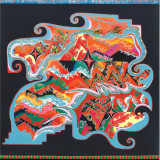
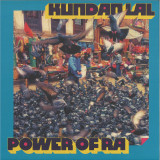
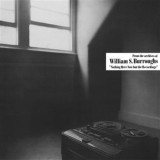
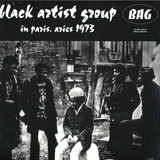
Ayahuasca: Music for Film, by Luis David Aguilar (1978-1983) compiles works by Luis David Aguilar, one of the most prolific composers of film scores in Peru. It shows the great versatility and avant-garde style that has distinguished his work. Luis David Aguilar (Arequipa, 1950) occupies a fundamental place in the history of film music in Peru, not only because of the prolific nature of his work (which also includes music for television and advertising), but because of the singular, experimental style found in many of his scores. Aguilar's music blends modern academic composition with the use of native instruments, synthesizers, sound collages and a diversity of resources, which identify him as a key figure to understand a period of Peruvian music marked by the imprint of the avant-garde and the use of native sounds, which developed during the late 70's and the early 80's. Aguilar belongs to the so called "Generation of the 70's", along with Peruvian composers such as Walter Casas, Seiji Asato and Aurelio Tello, who were then immersed in the languages of contemporary classical music. But he also shares the spirit of renewal of a generation of musicians who came from the world of jazz and electronic experimentation such as Manongo Mujica and Arturo Ruiz del Pozo. Ayahuasca is an album that collects pieces from 1978 to 1983 and offers an overview of the different musical paths that Aguilar followed during his career as a soundtrack composer. The album opens with music from the film El viento del ayahuasca The Wind of Ayahuasca (1983), by director Nora de Izcue, performed by the National Symphony Orchestra and Choir of Cuba under the baton of Luis David Aguilar, with Chucho Valdés on piano. Recorded at the ICAIC studios (Cuba), it is an ambitious orchestral and vocal composition, in which you can hear the beginning of the famous melody of "Mujer Hilandera" [Female Weaver], popularized by the Amazonian cumbia group Juaneco y su Combo, which serves as an introduction to the sound world of the jungle, a dense and hypnotic atmosphere that, without a doubt, places this work as one of the most important compositions of the author's repertoire. The next track is the music for the documentary Anónimo cotidiano [Anonymous Everyday] (1979), by director Jorge Rey, a unique experimental piece for synthesizers (played by Aguilar), drums and percussion (played by Manongo Mujica), with the addition of various Andean instruments (panpipes, charango, among others). It is a clear example of fusion of sound experimentation and timbres from the Andean world. And finally Los constructores [The Builders] (1978), by director José Carlos Huayhuaca, a salsa which incorporates unusual sounds of tubular bells and prepared pianos. Ayahuasca: Music for Film by Luis David Aguilar (1978-1983) is the second album by Aguilar released by Buh Records, following the celebrated Hombres de Viento/Venas de la Tierra (1978-1982), appeared in 2015. The album is published in vinyl format, in a limited edition of 300 copies, as part of the Essentials Sounds collection. It includes a booklet with notes by Luis David Aguilar. The audio has been remastered from the original reel tapes by Aldo Montalvo. The artwork and design is by About Studio.
Suche:collage
Jackson Ryland comes in focused and ecstatic with his first vinyl release under his technoid alias JR2K. Jackson is based in Washington DC as one-half of both Superabundance and Rush Plus. He’s recently released on Peach Discs and Pleasant Life, showcasing his knack for presenting energy as a delicacy. JR2K “Walking Backward” is another illustrious highlight in the savvy DC producer’s already-accomplished underground career. Played on Hör Radio by Kush Jones and supported by Peach, Ciel, Clarisa Kimskii, Ryan Elliott, CMD, Davis Galvin, livwutang, Furtive, Golden Medusa, Lychee, Miley Serious, and Jialing!
The A side opens up whooshy and hard with “ExoGeni Approach”. This illustrates perfectly what I love about Jackson’s style(s)...it sounds like the sickest mid-90s techno track, full of energy and movement while taking in the atmosphere with repose. After the rollercoaster intro, the acidic up-ticks, lush synth layering, and perfectly crunchy closed-hats sink your ass straight through the dance-floor to tumbling free-for-all in the green-screen collage of your daydreams. Wake up…A2 “Call Back” splashes you with a glass of refreshing water…you still got hours at the party, and you’re coming up on some healthE shit…time to get back to that business of dancing your soles and soul away to this driving monorail of euphoric acidic techno. Choo choo choose your own dance destiny, baby!
"Hyaline" is the debut album from Ohio-born, Oakland, CA-based artist and songwriter, Maria BC. Their classically-trained mezzo-soprano voice soars over raw, etherial guitars; audio samples from Prospect Park - now almost unrecognizable - settle alongside tender, transformative harmonies. Mixing together different sessions, tracks recorded directly into their phone and samples collected over the years, Maria BC likens "Hyaline" to a "sonic collage." It"s a project of patience and trusting the process.
Clear Vinyl
Originally released in 2020 on cassette and digitally. more eaze is the nom de plume of Austin, TX mainstay m.maurice, a roving experimentalist who’s explored an astoundingly diverse range of sounds, from drone and computer music to avant-pop and beyond. claire rousay is a San Antonio, TX-based percussionist/composer/sound artist who uses physical objects and their potential sounds as a way to explore queerness, human physicality, and self perception. Together—through a suite of deeply personal aural collages—two of Texas’ most vital and vibrant sonic searchers beg the eternal question: If I Don't Let Myself Be Happy Now Then When?
Although only their debut album together, If I Don’t Let Myself… reveals a profound and fruitful relationship between m and claire. But the symphonic symbiosis goes even deeper still. Outside of musical breakthroughs, the pair helped each other conquer intensely personal changes, with m and claire transitioning and coming out as non-binary and trans, respectively.
As m explains, “to me this record is very much about this process of becoming—trying to reach something and getting there but sometimes not being quite where you want to be but at least getting closer. It’s about feeling alternately empowered and insecure socially as you transition and trying to cope with these conflicting emotions.”
Musically, the album showcases startlingly sincere sets of serrated but sedative situational music. A-side epic Drunk is a sprawling but taut rove of aural duality. Passages of exquisite elegance subtly clash with shimmering shards of sound. Pre-op is a poised and pensive piece of solemn reflection, harrowingly honest and delivered with clarity and composure, while Post-op closes out the set in a wholly uplifting and optimistic flair.
If I Don't Let Myself Be Happy Now Then When? is ultimately about coping during the respective transitioning phase in both of their lives, obliquely blissful and fraught with freedom.
Bingo Harry sprang out of nowhere a few years back, when Martin Bramah of Blue Orchids was shocked by their opening set for his band, Blue Orchids. Bramah's enthusiasm went so far as to lead Blue Orchids to recording a then-unreleased Bingo Harry composition, "If They Ever Lay A Finger On Us", a subtle yet unusually powerful and enigmatic revolutionary song of caution to oppressors. The original recording was later released on Bingo Harry's self-titled debut, which sold well, and merited more studio sessions. These days, Bingo Harry is more a often solo vehicle for songwriter Benny Jones than a band. Currently living on a houseboat in northern England (which somehow manages to contain his home studio as well), Benny spent the past few years recording dozens of songs before winnowing them down to fit on Bingo Harry's second album, "Where Do We Go?", not to mention constructing the collage of the album cover. The cosmic inheritor of a certain Marc Bolan-esque knack for simple yet spiritual and thrilling tunes, Benny's songs span seemingly glam-induced groovers to a handful of gentle-but-trippy epics which would be overwrought in lesser hands, but here manage to capture a beautiful bit of the cosmos alongside their relevance to the wearying state of the world today. "Shine If You Can", the album's final track, works as well for an anthem of the times as anything you'll hear in the next few years. Tracks: Gullible / Fearsome Tannoy / Melted / Evolution / Rope Over The Wall / Where Do We Go? / Safe In Human Form / Weapon Against The Dark / Rabbit Hole / Did You Hear That? / Shine If You Can
Berlin-based producer Rampue has not released an album in 14 (in words: fourteen) years. Between 2008 and 2020 he toured the world and worked mainly on his live sets in the meantime. So now only a worldwide pandemic had the power to prevent the traveling musician from continuing this hustle and bustle and eventually share a new record with the public. Corona was what brought this standstill and the otherwise well- traveled individual experiences cabin-fever during lockdown. Hence, the new Rampue album "Tragweite" came into existence in February 2021, which portrays the artist's desire for experimentation.
Inspired by a modular synthesizer (Buchla), Rampue has seemingly put himself into a kind of trance, in which he lets the machines work and combines randomly created sounds with airy structures such as low drums or simple grooves. Rampue accomplished to break free by using random sounds as a new impulse and a way out of a creative crisis, which stemmed both from the enforced home isolation and from the self-perceived paralysis. The result is literally unique, as many of the sound products cannot be reconstructed and are preserved in album form for the general public.
Listening to "Tragweite" one gets the impression that the dialectical relationship between chaos and order, further supported by its production, is the defining theme of the album. After an initially perceived chaos, a delicate order, which is determined by structuring drum patterns and basslines, takes over throughout the course of the album.
Later, it frays and loses itself again in sounds and tones created mechanically However, it never seems arbitrary, but willful and skillfully staged. For instance, "Furo?" begins with apparent arrhythmia. The combination of bass and subtle percussion, however, gives this arrhythmia a shape, guiding the track which gradually becomes more and more driving without losing its original playfulness.
Although one might be inclined to think of genres such as Downtempo or Ambient at the beginning in the further course of the album results in such a diverse sound and rhythmic landscape that one willingly questions one's own perception of music while listening and finally throws every type of categorization overboard joyfully. The listening experience is too intoxicating and enlightening to stick to simple genre boundaries. The musical spectrum ranges from straight arrangements that live entirely without a drum foundation ("Fu?r Dich") to almost meditative sound collages ("Regengesicht") to the four-to-the-floor banger "Kembang" which adds a grimmer note with a certain industrial appeal to the overall rather melancholic-progressive curation. "Direct Faden" on the other hand, surprises with its simple guitar-based foundation on which the omnipresent synth snippets and pads are allowed to let off steam towards the end of the record. The track that most closely combines the progressive production style with a danceable club atmosphere is probably "Phobia". Wafting, partly breaking away synthesizer sounds rise higher and higher, while the driving mixture of bass and drums consistently march forward.
Rampue breaks with his old, musical habits as "Tragweite" creates the impression of improvisation and jam character without getting lost. Rampue takes his listeners on a journey that is stirring and moving, sometimes demanding or even a bit disturbing, yet always one thing: incredibly exciting.
Los Angeles Free Music Society (LAFMS) formed in the mid-1970s as a loose-knit experimental music collective and multimedia publishing vehicle. Founded by teenage Le Forte Four members Chip Chapman, Joe Potts and Rick Potts and soon joined by Tom Recchion of Doo-Dooettes, LAFMS incorporated free improvisation, modular synthesizers, tape music, sampling, musique concrète, homemade instruments, noise, mail art and avant-rock in permissive and anarchic sessions at the Raymond Building and Poo-Bah Record Shop in old Pasadena. Inspired by The Residents, LAFMS self-released records and periodicals, organized performances and connected with fellow outsiders via post in the years before punk. Their uninhibited, egalitarian ideal of music-making and DIY distribution would influence generations of underground musicians.
LAFMS primarily reached outside Los Angeles via word-of-mouth and the United States Postal Service, foreshadowing the self-publishing and cassette trading networks of post-punk and industrial subcultures. In 1976, Joe Potts solicited recordings from LAFMS affiliates and admirers to edit and compile I.D. Art #2, utilizing correspondence art's technique of "assemblings." (The first installment in this series was a magazine, and the third was a coloring book.) Potts received dozens of pieces by members of Le Forte Four, Doo-Dooettes, Smegma and Ace & Duce as well as painters, filmmakers and non-artists with few recording credits to their name, creating a delirious, winking sound-art collage of field recordings, voicemails and improvisations. Participants purchased time on the record and received one copy each of the finished LP, realizing the philosophy contained in LAFMS' motto: "The music is free, but you have to pay for the plastic, paper, ink, glue and stamps."
This first-time vinyl reissue is limited to 500 numbered copies. Comes with insert.
The prolific German musician Christian Schoppik is dropping his second solo album of 2022 under the moniker Läuten der Seele, following up his critically acclaimed self-titled debut album released at the start of the year.
Once again, “Die Mariengrotte als Trinkwasseraufbereitungsanlage” (The Mother Mary Grotto as a Drinking Water Treatment Plant) is a work based on a mix of sample collages and recorded instruments that are often used sparsely but as load-bearing elements. However, this time, Schoppik came up with two long tracks where the narrative evolves in multiple and intricate movements to tell mysterious stories that have to be imagined by the listeners as the music unfolds. If the title of the tracks “Opferkerzen weihen das Betonbecken” (Votive Candles consecrate the Concrete Pool) and “Der Heilige Geist aus der Leitung” (The Holy Ghost from the Water Tap) give a starting point to these stories, the ethereal, mystic and dreamy sounding minimal atmospheres presented in this record let each one of us contemplate our own soothing experience against the continuous chaos surrounding us.
Felix Laband’s The Soft White Hand is the masterwork of an artist who expresses himself through musical and artistic collage acting together to reinterpret his sources and to express significant elements of his own personal story.
Released by Munich-based Compost Records, the 14-track album is Laband’s first full-length offering since the critically acclaimed Deaf Safari in 2015. It is heralded by the single “Derek and Me”, and is being pressed on vinyl for distribution globally.
In The Soft White Hand Laband works with source materials that will be familiar to those who know his previous four records – Thin Shoes in June (2001), 4/4 Down the Stairs (2002), Dark Days Exit (2005) and especially Deaf Safari which reached deep into the South Africa scene and its political culture to inspire its vocal and music sampling. However, the disengagement he felt from his homeland during his latest album’s creation – an abiding sense of untethered-ness to place and space, exquisitely rendered in tracks like “Death of a Migrant” – is perceptible in Laband’s desire to illuminate instead aspects of his own life.
“For this album, my source material became almost autobiographical as opposed to African statements I’ve worked with previously,” says the artist. “I have sampled a lot from documentaries from the 80s crack epidemic in impoverished African American communities and believe my work speaks unapologetically for the lost and marginalised, for those who are the forgotten casualties of the war on drugs. In the past, I have had my issues with substance abuse, and I know first-hand about the nightmares and fears, what it feels like to be isolated and abandoned.”
Few artists have managed to air these intimate aspects of their life so luminously as Laband does in tracks like “5 Seconds Ago”, “They Call Me Shorty” and in the strange and meditative “Dreams of Loneliness”. “I’ve been building this weird, autobiographical story using other people talking. It’s kind of humorous but it is also sad and beautiful,” says Laband.
Yet, as in all of Laband’s recorded output, the delineations between emotions are never starkly drawn and The Soft White Hand is also shot through with beauty. Nature appears in recordings made in his garden in the intimate early morning hours, whether as in the calls of the Hadada Ibis and other birdsong in “Prelude” or of the vertical-tail-cocking bird in “Derek and Me”. The last is a wonderful track with Derek Gripper, the South African experimental classical guitarist of international renown, whose 2020 song “Fanta and Felix” imagines a meeting between Fanta Sacko and Laband.
Laband’s eloquence in reinterpreting classical composers such as Beethoven in “We Know Major Tom’s a Junkie” is another thrilling aspect of the new record. “I’ve been properly exploring classical music on this album,” explains Laband, “taking melodies from classical compositions and reinterpreting them”. A fresh quality comes to his work through this sonic adventuring: the tender manipulation of the mundaneness of the computer’s AI voice to reimagine and reinvent iconic lyrics and melodies in strange and unexpected configurations.
The Soft White Hand is Laband’s most cohesive body of work to date. Yet it remains, in its sheer artistic scope, impossible to describe fully. Darkness abuts the gossamer light. A song that summons the sunrise and all the hope of a new day could also be about the final dipping down of the sun that portends a troubled night ahead. Interludes are invitations to expand outwards or shift inwards. Mistakes and “weird fuckups” in the sound are cherished as convincing statements against what Laband calls the “grossness” of perfect sound in modern music.
For this world-leading electronic artist, the boundaries are unfixed. He is inspired by the German Dada artist, Hannah Höch, who memorably declared: “I wish to blur the firm boundaries which we self-certain people tend to delineate around all we can achieve.” His music consequently reflects a primal artistic impulse that is also visible in Laband’s considerable visual art output as seen recently in several solo exhibitions such as that held in the No End Gallery in Johannesburg in 2019 and in the works he produced during his 2018 Nirox Foundation Artists Residency. “My music is always about collage, as is my art,’’ he affirms. “Everything I do is collage. It is a medium I find very interesting because you are taking history and distorting it and changing its meaning and turning it upside down and back to front.” In her book Recollections of My Non-Existence, Rebecca Solnit calls collage “literally a border art”; it is “an art of what happens when two things confront each other or spill onto each other”.
With The Soft White Hand, Laband is confirming his singular ability to achieve this in both art and music, melting the divisions between the two creative disciplines until they become one. He is also affirming his belief that an album of music should be more than a collection of unrelated tracks, but should unfold a fully integrated, cohesive story as in the song cycles of the great classical composers. In doing so, he claims his position as one of the most significant artists working today.
Artist Statement – Felix Laband – August 2022
When the Khmer Rouge took their captives for processing, they identified their class enemies by looking at their hands. If they were sunburned, rough and calloused, they were those of a peasant, a proletarian to be spared. But if they were soft and white, then they were those of a city-dweller, an intellectual or bourgeois, an adversary to be liquidated.
In calling this album The Soft White Hand, I was reflecting on the Cambodian genocide and how it resonates in contemporary South Africa. The apartheid era is over, and gone with it is white political domination. Yet economic and social privilege is still held in soft white hands. But those who grasp it know just how tenuous is their hold, how it singles them out, and my music reflects their subconscious fears, the stress and guilt of clinging on to what others envy and desire.
The soft white hand of the title suggests to me a further image, one that relates to all of postcolonial Africa. In my mind’s eye, I see the soft, duplicitous handshake of the smooth representatives of the superpowers making deals and promising gifts that benefit only them, and not their African dupes.
Yet, soaring above the wailing of sirens sampled from the first day of the invasion of Ukraine, my music is also about love gained and passion lost. It is about the tender caress of a soft white hand that conducts you into a place of dreams to be enfolded by nocturnal melodies.
Limited Vinyl 500 copies
Mal-One’s first venture into 12’’ world pays homage to the great Debbie Harry and the Blondie Boys. The group back in the day had pushed the fact that they were a group and even had a badge that stated ‘BLONDIE IS A GROUP!‘. But they seemed to succumb to the fact that Miss Harry was the focal point and most of their sleeves carried her picture. Who could blame them? as the song title says… Never Seen A Bad Picture of Debbie Harry.
The artwork is a Mal-One collage of Miss Harry, and the release carries a poster that Mal-One has again put up around London as part of his continuous street galley series. The track has a `Rapture’ inspired Rap in which Mal-One fires out as many Blondie track titles that he can piece together in the allotted time. This four-track record contains what Mal-One calls the “Punk Rock Disco Beat” continuous play of both sides may cause ‘Pogo Dancing’ and / or ‘Enjoyment’.
You have been warned….
Deaf Safari is an audio collage of subjects that interest me and speak of the world I live in. It is an album composed of sampled recordings from the media landscape that has been the soundtrack to my life over the last ten years.
The most important development in my current music and as can be heard on Deaf Safari has been my understanding of the beauty and power of the spoken word. I have experienced severe indifference to contemporary pop and electronic music as a whole over the last many years, as I have felt that social comment of any relevance has been ignored by music in general.
Deaf Safari attempts to bring sociopolitical comment into my music without taking any specific stand.
Sampled outside of musical influence directly from the news; from preacher sermons or from contemporary African documentaries.
I have finally created a story with sound that I feel accurately conveys my personal experience with the African world I live in.
My musical influences on this album lie mostly with local Kwaito house. Deaf Safari is an experiment within certain boundaries of the 4/4 genre, to create my own South African "house" album.
I am proud and inspired about the South African Kwaito house scene.
However, as with my first three albums, "Thin Shoes In June“ (2001) - "4/4 Down The Stairs“ (2002) and "Dark Days Exit“ (2005), I am still interested in making strange and evocative music.
American Roots music from the earlier periods of the 20th century has deeply resonated with me during the making of this album.
The incredible field recordings by Alan Lomax of Negro prison and chain gang work songs, and the
beautiful early recordings of artists such as Leadbelly have had a major influence on Deaf Safari.
I am truly excited to release this album and to start performing in the music world again. It has been ten years since I released "Dark Days Exit , and although I have been purposefully absent from the music world, I have none the less never stopped making music.
I feel that I have finally arrived at a mature and challenging stage in my pursuit of making emotional music of relevance .
Felix Laband 13.02.2015
Quotes about the previous album "Dark Days Exit“:
“Dark Days Exit is an interesting blend of latin, ambient, folk, and lounge flavors. The production and composition is top notch throughout, but check the choppy clicks of "Crooked Breath" or the eerie, melodic "Radio Right Now" for signs of true inspiration. A talent to watch.” XLR8R
“One of South Africa's most gifted electronic artists” Resident Advisor
"It has the dark sparkle of Air`s `Moon Safari`, random trippy flashes of Pink Floyd´s earlier sounds, and if David Lynch had based `Twin Peaks` in Cape Town´s City Bowl, then this would work as the soundtrack." SA Rockdigest
“An insane swirling ambient dub glitch freak show.“ Dazed & Confused Magazine
“Dark Days Exit … will ingrain itself into your psyche until you have no choice but to listen to it over, and over, and over again. Every time, it will be worth hearing.” Pop Matters
“Laband´s superbly-layered, multi-tiered soundscapes are tantalizingly tranquil and intriguingly unique – they amble like ambient and slip into the bloodstream like liquid LSD.“ rage.co.za
"An album that will bewilder due to weird electronic nature, but by the same token has the power to melt the soul. Mindblowing." Jon Freer
“For the younger generation, Felix Laband became a mythical legend.“ Below The Lion
"So gehört hat man das noch nicht - die komplett klischeefreie Deepnesss dieser verzwickt-geschickt gefrickelten Elektronik mit Suchtfaktor zehn ist geradezu beängstigend." INTRO
“Elektronische Musik, die schwerlich nur natürlicher, menschlicher klingen kann. Oder kurz gesagt: ein mehr als ausgezeichnetes Album. Tricky Chillout…“ GROOVE
“Man nimmt “Dark Days Exit” einfach nichts übel, alles scheint hier zu funktionieren.” DE:BUG
Thomas Haines (TH) is a composer and sound editor who primarily works in film, TV and animation. TH has recently completed score and sound on cinema projects with artist film makers including Shezad Dawood, Georgina Starr, Noor Afshan Mirza, Brad Butler and Patrick Goddard. As well as writing music for picture, TH is a core member of the London Snorkelling Team, who recently performed the world Premier of Gavin Bryars' On Lassus for the Collège de Pataphysique in Paris. In 2022, TH wrote a large scale live percussion ensemble score for artist Georgina Starr's Gelato Balleto.
The two pieces on this LP were generated from musical material found within a 14-minute recording of Sainsbury's supermarket, Chingford, UK. The source recording contains music-like material, scanner bleeps and conveyor belt drones. This material, once isolated, cross-processed and re-recorded, reveals vivid extended electroacoustic versions of itself. The compositions use film sound restoration processing, mixed with compositional techniques popular in classic early electronic music and musique concrète including pointalist collage, and ring modulation.
*Ltd Coloured Vinyl on Transparent Blue Vinyl* London-based musician and producer Ryan Lee West, aka Rival Consoles, creates driving, experimental electronic music that makes synthesisers sound human. His consistent desire to create a more organic, living sound, sees him forming pieces that capture a sense of songwriting behind the machines.
‘Now Is’ marks a new chapter in an ongoing quest for refinement and evolution. More playful and melodic, the album draws from much experimentation in minimalist songwriting and seamlessly blends synthesisers and acoustic instruments. “There are some pieces that are influenced quite strongly by the isolation and anxiety of these times. There are also pieces which are more optimistic and vibrant, which I think is a consistent attitude of my records, as I want art to express many aspects of life.”
From the elevating arrangements of ‘Beginnings’ and motorik beats of ‘World Turns’, to the isolation of ‘Frontiers’, influenced by the barren landscapes of Iceland, Rival Consoles’ eighth studio album subtly morphs and evolves. “The title of the record ‘Now Is’ interests me because it is the beginning of a statement, but it is incomplete. I like art that is open and suggestive of ideas even if they are inspired by very specific things. With my previous record ‘Overflow’ being very dark, heavy and almost dystopian, I wanted to escape into a different world with this music and ended up creating a record which is a lot more colourful and euphoric.”
For the sonic ‘Vision of Self’, West looked to create the kind of movement and colour a string section in an orchestra would construct, but with synthesisers. “I think there’s a lot of synergy between the two worlds. I wanted to create a hypnotic journey, where the synths and sounds weave in and out of each other, so you get lost in the music and don’t know where one sound starts or another ends.” This “journey” West refers to is symbiotic of the way he has approached music throughout a progressive career – an ongoing project that is never static and always moving forward.
A sense of euphoria is reached with the pulsating title track which bursts into colour like the appearance of the summer sun, while ‘Echoes’ is a vivid exploration of rhythm and sound for summer nights. The track starts with a dense collage of modular synths, fragmented metallic tones, broken sounding drums and a downcast melodic synth line. “This is a piece where the main melody has been in my head for a long time and was just waiting to come out. I kind of think of it as the sonic equivalent to an impressionist painting in that I wanted to explore the sensation of lots of small layers of different colours and textures that are constantly moving around each other.”
Rival Consoles is set to appear at festivals across Europe this summer, with headline shows expected to follow in the autumn.
Mechanical Reproductions stay true to their original mission statement of being 'an outlet for editions of vinyl and print' and, for their third release, serve up a 48 page archive of some of the posters created by Young Echo's Amos Childs & Sam Barrett for the long running nights the collective have been running since 2010.
'Heavyweight Champion is the result of six years' collaborative collage works for Bristol's Young Echo collective.
The collective's 12 members have been running club nights, radio shows and releasing music since 2010. Two of them, Amos Childs & Sam Barrett (who also make music together as O$VMV$M), have been responsible for creating the posters to promote the club nights since the start.
These posters are a regular fixture in the visual landscape of the city, on walls, bins, bus stops and pretty much any other available surface in the lead up to each event. Their informal visual language immediately sets them apart from the other flyers vying for attention. They're intriguing: through not having the artist names featured as prominently as possible they encourage the viewer to take a deeper look. There's dense layers of images and cut-and-pasted phrases to be deciphered - ultimately a far more engaging experience than being shouted at by a generic and large-fonted neon specimen.
Thanks to the local council (and keen fans who would rather see them on their walls at home), more often than not these works are gone soon after they're tacked up, meaning the only archive of them is as low resolution images on various social media channels. 'Heavyweight Champion', then, aims to provide a lasting document of this unique and vital part of Bristol's musical culture...'
A Cocktail D'Amore resident - Trent - also a busy producer and mixing engineer based in Berlin, brings us some of his latest creations fresh from the studio. Heavy on the percussive side, the A-side distills a collage of disco samples overlayed with tripped out synth effects and bass lines under trance inducing vocals. At just under 130BPM Trent takes the foundations of dancefloor music and re-constructs a highly effective DJ tool that will set the tone for new things to happen on any dancefloor. On the B-side “Equinox” at 110BPM brings things down a notch with a darker tripped out chugger that might serve as a mild DMT trip soundtrack or a Monday morning session in the Cosmic Hole. Mastered by Man Made Mastering.
Black Vinyl[33,57 €]
Smoked Coloured Vinyl[36,09 €]
Strawberries & Cream Coloured Vinyl[28,15 €]
Raspberry Ripple Coloured Vinyl[28,15 €]
Yellow Vinyl[26,01 €]
Pink Vinyl[26,01 €]
Black Vinyl[26,01 €]
Red Vinyl[24,79 €]
Black feminist punk band Big Joanie have announced their upcoming second album 'Back Home', set for release 4th November on Daydream Library Series in the UK and Kill Rock Stars in the US. The brand new album 'Back Home' follows on from last month's one-off single 'Happier Still', and the release of their 2020 single ‘Cranes in the Sky’, a cover of Solange Knowles released on Jack White’s Third Man Records. Recorded at Hermitage Works Studios in North London, 'Back Home' was produced and mixed by Margo Broom (Goat Girl, Fat White Family) and features violin courtesy of Charlotte Valentine of the experimental art rock project No Home, who recently collaborated with the LA-based artist SASAMI. 'Back Home' is a dramatic leap forward for the band; the band build on their tightly knit, lo-fi punk formula to bring forth a collage of blazing guitars, down tempo dance punk, and melancholic strings that evoke the full depth of the band’s expansive art punk vision. The album title references a search for a place to call home, whether real or metaphysical. “We were really ruminating on the idea of a home and what it means,” explains Stephanie. “It’s about the different ideas of home, whether that’s here in the UK, back in Africa or the Caribbean, or a place that doesn’t really exist; it’s neither here nor there." The band worked with multidisciplinary artist Angelica Ellis to design the striking embroidered cover art, which is a depiction of Chardine’s nephew at the barbers. The artwork is a reference to the embroidered wall hangings popular in Caribbean homes post-Windrush that were a callback to the homes they left behind. The album’s strength lies in the band’s bold and varied new sound. Album opener ‘Cactus Tree’ is an eerie, gothic folk tale that tells the story of a woman waiting for her lover while a wall of euphoric harmonies and screaming feedback roll in the background. Lead single ‘Happier Still’ is a driving, Nirvana-influenced track that grapples with the idea of wanting to push through a depressive episode. Inspired equally by the melodic rock of Hüsker Dü and the mystical sensibilities of Stevie Nicks, closer ‘Sainted’ brings the club-ready sentiment of the 2018 single ‘Fall Asleep’ to its natural conclusion. Big Joanie live dates 2022 Sun 31st July - Liverpool International Festival @ Camp & Furnace Sat 20th August - La Route Du Rock Festival St Malo, France Sun 28th August - Greenbelt Festival, Kettering, United Kingdom Could the song splits across the sides be changed to this: Side A 1.Cactus Tree 2.Taut 3.Confident Man 4.What Are You Waiting For? 5.In My Arms 6.Your Words 7.Count to Ten Side B: 1.Happier Still 2.Insecure 3.Today 4.I Will 5.In My Arms (Reprise)6.Sainted
[l] 12 IN MY ARMS [REPRISE]
Black Vinyl[33,57 €]
Smoked Coloured Vinyl[36,09 €]
Strawberries & Cream Coloured Vinyl[28,15 €]
Raspberry Ripple Coloured Vinyl[28,15 €]
Yellow Vinyl[26,01 €]
Pink Vinyl[26,01 €]
Black Vinyl[26,01 €]
Black Vinyl[23,11 €]
Black feminist punk band Big Joanie have announced their upcoming second album 'Back Home', set for release 4th November on Daydream Library Series in the UK and Kill Rock Stars in the US. The brand new album 'Back Home' follows on from last month's one-off single 'Happier Still', and the release of their 2020 single ‘Cranes in the Sky’, a cover of Solange Knowles released on Jack White’s Third Man Records. Recorded at Hermitage Works Studios in North London, 'Back Home' was produced and mixed by Margo Broom (Goat Girl, Fat White Family) and features violin courtesy of Charlotte Valentine of the experimental art rock project No Home, who recently collaborated with the LA-based artist SASAMI. 'Back Home' is a dramatic leap forward for the band; the band build on their tightly knit, lo-fi punk formula to bring forth a collage of blazing guitars, down tempo dance punk, and melancholic strings that evoke the full depth of the band’s expansive art punk vision. The album title references a search for a place to call home, whether real or metaphysical. “We were really ruminating on the idea of a home and what it means,” explains Stephanie. “It’s about the different ideas of home, whether that’s here in the UK, back in Africa or the Caribbean, or a place that doesn’t really exist; it’s neither here nor there." The band worked with multidisciplinary artist Angelica Ellis to design the striking embroidered cover art, which is a depiction of Chardine’s nephew at the barbers. The artwork is a reference to the embroidered wall hangings popular in Caribbean homes post-Windrush that were a callback to the homes they left behind. The album’s strength lies in the band’s bold and varied new sound. Album opener ‘Cactus Tree’ is an eerie, gothic folk tale that tells the story of a woman waiting for her lover while a wall of euphoric harmonies and screaming feedback roll in the background. Lead single ‘Happier Still’ is a driving, Nirvana-influenced track that grapples with the idea of wanting to push through a depressive episode. Inspired equally by the melodic rock of Hüsker Dü and the mystical sensibilities of Stevie Nicks, closer ‘Sainted’ brings the club-ready sentiment of the 2018 single ‘Fall Asleep’ to its natural conclusion. Big Joanie live dates 2022 Sun 31st July - Liverpool International Festival @ Camp & Furnace Sat 20th August - La Route Du Rock Festival St Malo, France Sun 28th August - Greenbelt Festival, Kettering, United Kingdom Could the song splits across the sides be changed to this: Side A 1.Cactus Tree 2.Taut 3.Confident Man 4.What Are You Waiting For? 5.In My Arms 6.Your Words 7.Count to Ten Side B: 1.Happier Still 2.Insecure 3.Today 4.I Will 5.In My Arms (Reprise)6.Sainted
[l] 12. IN MY ARMS [REPRISE]
The Microphones, Bon Iver, Lomelda, Vegyn, Hovvdy, Dijon. “Lemon Cream” vinyl is for Indies Only. Follow up to 2019’s critically acclaimed ‘bunny’. Sam Hall’s new album as ghost orchard, ‘rainbow music’, is a collage of patience and meditation. It’s filled with nuances as quietly imperceptible as the seasons, or the profound movement of time, where one day looking back you realize your whole spirit has shifted. Where 2019’s critically revered ‘bunny’ was a love letter to a romantic relationship, ‘rainbow music’ documents the culmination of Hall’s first personal experience with loss in several forms. At the end of 2020, his longterm childhood pet passed away, and with it the last continuing threads of familiarity between being a kid and adulthood. Still based in the Grand Rapids, Michigan town he’d grown up in, the static ease of familiar living seemed to be coming apart at the seams, as friends moved on to bigger cities, relationships shapeshifted and in a short period of time, another kitten he’d adopted passed away prematurely, leaving Hall to question the trajectory in which he himself was headed. Like “songs in the key of life,” the title ‘rainbow music’ refers to the myriad of colors and qualities within Hall that are refracted throughout. It’s a symbolization of hope and the aftermath, the flickering light at the end of the tunnel (or “when a rainbow shows up after a big storm”). “Wish I could have fun anymore,” Hall ruminates on “dancing”, as well as confessing he “wish he made more upbeat bangers.” But reality packs more of a punch, and this collection of songs sees him finally be at peace with the current state of affairs. Relatable to anyone who has contemplated what it means to settle down, or even just catch your breath in an era where anguish is commonplace, the release of ‘rainbow music’ is a happy ending in its own right, a marker of survival that remains close to the bone. // Ghost Orchard’s “bunny” is a blushing, beatific beat. - The FADER // Fluttering and transportive, a swirl of beats and plucky guitar and strings that feels like a cocoon. - Stereogum // Hip-hop inflected, stream-of-consciousness confessionals that’ll have you swooning in the lazy summer sunlight. – Paste // Track listing: 01. Rest 02. Jessamine 03. Cursive 04. Maisy 05. Cut 06. soot 07. memory storage 08. Dancing 09. bruise 10. sweet song 11. comfort (rainbow)
2LP black vinyl in a gatefold sleeve, polylined inners and download code. 2 x CD in 6 panel digifile sleeve.
When Darren Hayman made his debut in 1997 with the acclaimed indie band Hefner his lyrical remit was the broken hearted. His early songs told the story of the lonesome and lost, and broken dreams of love on the back streets of London. After Hefner, Hayman’s palette grew to include a unique take on place and memory. In the early 2000s he wrote a trilogy of albums around the history of Essex. In 2012 he made an instrumental album describing the tranquillity of Lidos. In 2016 Darren was awarded ‘Hardest Working Musician’ by the Association of Independent Music for his epic project on Thankful Villages, the 55 villages that survived the Great War with no casualties. His most recent record, 12 Astronauts, tells the personal story of the only men to have walked on the Moon. Darren is continually obsessed with the idea of what songs can be, and the stories they can tell. As he explains, “With projects like Thankful Villages, I became interested in what a record could be, using field recordings, interviews and songs to make sound collages. I wanted to return to the stricter art of song writing and try and make the twelve best compositions I could. I wanted to make useful songs, words that could be comfort, not just thoughts that would depress.” // "bold and unique" The Sunday Times // "Its delicately observed song cycle unfolds like a novella or short film, with tracks that might seem slight in isloation gaining resonance in situ." Q // “Bugbears is a rich and warming curio, and there’s something quietly noble about Hayman dragging the thoughts of these long-dead writers back into the light.” Mojo // “uniquely intimate and very satisfying” - BBC // “Hayman has hit a creative purple patch… a treat”. Mojo
After a year of releases exploring recent musics from the USA, Europe and the southern hemisphere the Horn of Plenty presents a survey of archival private, demo, and live tapes from local avant-anarcho-punks The Apostles. The tapes were (poorly) recorded in Islington & Hackney squats between 1981-1983 and they capture the fledgling band exploring various line-up’s, styles & techniques with limited means and ability. In 1983 The Apostles released their first vinyl EP and switched mainly to a more straight-ahead anarcho-punk style. They gained a strong following then called it a day in 1989. Their vinyl output is still regarded highly by fans and collectors and their ‘official’ demo tapes have become highly sought-after, particularly since being namechecked by Ty Segall in a 2014 interview. In a 2009 article charting the band’s history (frontman) Andy Martin gives these early tapes a mere footnote and states that, in his opinion, they are ‘Best Forgotten’. With respect Andy, I beg to differ. Best Forgotten shows the band grappling with the political, racial and cultural tensions of the time whilst exploring radical politics and issues around homosexuality and mental health. Their sympathies with The Angry Brigade’s ‘direct action’ ethos extended to their involvement with the squatted Centro Iberico and The Wapping Autonomy Centre where they worked closely with Crass, Poison Girls, Flux of Pink Indians and The Mob among others. Viewed retrospectively, it’s easy to draw comparisons with early Fall records, The Door and The Window etc… but also at their melodic best they echo 60’s beat groups and even 70’s blues-rock. A keen interest in tape collage (supplied here by Ian Rawes who later became established with his London Sound Survey project) and the avant garde also inform the mix. Highlights include a bleak reworking of Lemon Kittens’ Chalet D’Amour and a live version of Simon & Garfunkel's I Am A Rock segueing into their take on Alternative TV’s Splitting In Two recorded at The Recession Club in Ponsford Street, Hackney. The short-lived Recession Club, which The Apostles co-ran and where Andy Martin worked the door, also hosted the first ever Coil concert. On that night he refused entry to Death In June on account of their ‘inappropriate attire’. Best Forgotten comes in a hand stamped, stickered and assembled edition of 500 copies and includes an A3 poster and 32 page A4 zine collecting archival photos and images from The Apostles tapes & zines along with liner notes and reflections on the tracks written by Steve Underwood (Harbinger Sound), Chris Low (former Apostles drummer) and The Apostles frontman Andy Martin, who thought this whole thing was daft.
If you ever wondered what ambient music of the 21st century could sound like, then you should explore the musical spheres of "ifsonever". This colorful debut-album draws a blueprint of an urban ambient club record of a parallel universe. A collage of beautifully improvised pieces, strictly recorded in "one takes". A gripping fusion that brings together the warm analog textures of classic vintage synthesizers and electronic urban ambiences.
Trying to appreciate the recent times of silence and deceleration, Daniel Helmer aka ifsonever has quickly developed a tonal language as a solo artist. With a non-compromising approach he would visit his studio, a cozy garden shed, to record one new track a day in strictly analog fashion as "one takes". His aim for this project was to capture the innocence and instinctive creative energy of the present moment. These 9 timeless pieces invite the listener to explore hypnotic and meditative atmospheres such as on the opener "transpose" or on "jonesy dreams of birds", as well as gloomy and almost mystical sounding tracks such as "total global" or "an unexpected error has occurred". ifsonever is a wonderful amalgamation of organic, laid-back sounds and electronic, club oriented elements.
Recorded at a time when social contact was forbidden and culture was at a standstill, many professional musicians felt challenged not to feel useless when performances and sessions in public were cancelled, while the need for expression, participation and communication persisted. What happens when you've read all your books, when you're tired of looking at screens, and when you're digitally saturated? Then the unbearable lightness of being will begin. Daniel Helmer decided to let his creativity flow into a picture depicting that moment in time. He gave himself the opportunity to reflect this period through the creation of music. Not always an easy thing to do when the only social interactions would be cats passing by or the sound of children playing nearby. However that can be exactly the perfect tranquil surrounding to ground oneself in the here and now and draw inspiration from the inside. This self titled album reflects a peaceful journey from start to finish.
Two old friends have been invited to contribute overdubs in hindsight. MillianX is a film composer and noise artist, a colleague from the viennese filmacademy. Both worked together on the film score for the science fiction movie "Rubikon" while the album was in its final stages. So a collaboration was an obvious choice. The creamy arpeggiated synthline created for "jonesy dreams of birds"' was extended by Millianx with some field recordings and a big cloudy synthwave that dips into a vast sea of noise.
Guido Spannocchi is a london based jazz musician. Both knew each other for several years but never had the chance to work together. When Daniel Helmer wrote "an unknown error has occured" he imagined a saxophone layer to accompany the existing synthline. But when the two musicians finally got together to record in the legendary jazz club "Porgy & Bess", Guido just let his creativity flow and jammed freely to the track with a totally unique jazz vibe.
Between film, music & sound Daniel Helmer is continuously searching for a spot to call his own. Expanding boundaries, pursuing the unheard and breaking genre definitions are byproducts of his curiosity and his drive to avoid repetition. Daniel Helmer resides in Vienna where he studied at the local film academy. He became one of the founding members of the techno-punk band "Gudrun von Laxenburg" with album releases on the legendary Skint label, collaborated with Sam Irl on "International Major Label" as the production duo "Mantra Mantra" and released an album as "Yogtze" on Gerd Janson's imprint "Running Back Incantations", together with Feater. At the moment he is focusing on his work as a film composer and is currently working on two feature films in Austria.
"ifsonever" offers a timeless ambience to help you slow down, reflect and enjoy the beauty of nothingness. It might help us to learn and accept a state of being unutilized without feeling futile and benefit from this rare silence.
The cover artwork is a collaboration between Jazz & Milk graphic designer Tim Schmitt and photographer Frank Hulsbömer. A scan of the artist's head, hand and foot was 3D printed, photographed and transformed into an otherworldly scenery that visualizes the musical atmosphere.
Promise & Illusion is the first LP from Ecka Mordecai, following the release of her solo Critique + Prosper on Takuroku in 2020. Cello, voice, horsehair harp, violin and field recordings combine to spin narrative melody, rich intimacy and melancholic landscapes. Composed around an exploration of la charnière (from the French ‘hinge’), Promise & Illusion begins with the sound of footsteps and a door opening and closing repeatedly, unsure whether to let us into the mysterious interior beyond. We are reminded of the house of Penny Slinger in An Exorcism, an abandoned mansion of gothic hallways and inky corridors. “woe are we” twists violin and voice together into the sort of tension and high drama heard in “The Executioner” - Henning Christiansen’s soundtracks made for the films of his partner Ursula Reuter Christiansen in the 1970’s. Then things begin to soften, almost despite themselves. Distortion on ‘a unit has no unity’ can’t quite smother a rising tune on warped harp. The cello on ‘indigos’ - its voice pizzicato with a velvety sustain - brings comfort and clarity. Mordecai hums a line, feeling out the edges of a song in an intimate release of tension. We are across the threshold - into a romantic sort of nocturnal gloom that feels somewhat out of place in London’s experimental music scene. Trained on viola da gamba as part of a renaissance youth group in the historic midland town of Stafford, Mordecai went on to study performance art in Brighton, later graduating in sound art in London. She performed with David Toop and Rie Nakajima as part of Allan Kaprow’s Yard at the Hepworth Gallery, as well as performing scores by Yoko Ono and George Brecht solo at White Cube Gallery as part of Christian Marclay’s Liquids exhibition. Later, various moves across the north of England found her working with Andrew Chalk and Tom James Scott (forming the trio CIRCÆA), Miles Whittaker (of Demdike Stare) and performing alongside free improvisers. A myriad of influences have crossed her path, her work slowly taking shape across music concrète, improvisation and performance art. A more recent recording with Valerio Tricoli as ‘Mordecoli’ made during the development of Promise & Illusion found its final form as a cassette - a collage of sustained tones, ominous atmospheres and brief 4th wall dissolving vocal interaction. With both CIRCÆA and Mordecoli, Mordecai deals with landscapes - playing with the imaginary over the real and using improvisation as a useful way to dream. On Promise & Illusion, Mordecai sharpens her focus and pivots toward the interior over the exterior - the landscape becoming a personal, psychological one - both comforting and strange. Tracks 4, 5, 7 & 10 recorded and mixed by Adam Matschulat in December 2020. All others recorded and mixed by Ecka Mordecai. Mastered by Shaun Crook at Lockdown Studios, London. Artwork by Ecka Mordecai. Layout by Zofia Sobota.
Track list: 1 la charnière I 2 woe are we 3 a unit has no unity 4 indigos 5 study of a flame 6 la charnière II 7 promise & illusion 8 hush now you say 9 tempera 10 mistakes & continue
City Of Light was recorded in Banaras, India, and mixed in Greenpoint, NY. It is about Banaras, a city older than history, tradition, and legends. It is Shiva's land, founded at the dawn of creation. It is India's oldest and most fabled city. The Hindus call it Kashi, the luminous... The City of Light. Music composed by Bill Laswell + Coil, Trilok Gurtu, Tetsu Inoue, and features texts and vocals from Lori Carson and an historical introduction by Hakim Bay. First time ever on vinyl, re-released in our Sub Rosa Blackcore series. City of Light is the sixth solo album by American composer Bill Laswell, released on July 29, 1997. While it may appear an anachronism in his catalog, fans of Bill Laswell will find City of Light an extension of ideas he has explored throughout his career. His strong interest in Eastern music and religion resulted in this 1997 collaboration with Janet Rienstra. Part sacred, spoken word, part meditative soundscape, City of Light takes as its inspiration the holy region of Banaras, India. Said to belong to Shiva, Banarasalso contains the Ganges river: a place sought by Hindus for their cremation. Surrounding the texts is some of the most compelling music this genre has produced featuring Trilok Gurtu on tablas, Coil (Peter Christopherson + John Balance) on electronic, Tetsu Inoue at sound collages and Lori Carson at vocals. Track Listing LP side 1 01 Nothing 13'03 02 Kashi 7'19 side 2 03 Kala 13'06 04 Above the Earth 11'19
To celebrate the 10th anniversary of Recital, we present Autumn Fair: A group LP comprised of 44 guest players (full list below), curated and edited together by Sean McCann.
Autumn Fair aptly embodies the feeling of Recital as a record label; the infusion of abstract sound art and sentimental beauty – performed by both younger and older generations of artists.
Oren Ambarchi - guitar, Ed Atkins - paper shredder, Jason Bannon - family, Derek Baron - keyboard, Karla Borecky - upright piano, Andrew Chalk - guitar, crys cole - birds, Loren Connors - guitar, Philip Corner - grand piano, Maxwell August Croy - whistle, Sarah Davachi - electronics, Aaron Dilloway - SFX, Delphine Dora - voice, Giovanni Fontana - voice, Scott Foust - trumpet, Peter Friel - impression, Malcolm Green - camera, Judith Hamann - cello / voice, Mark Harwood - speech, Forest Juziuk - voice, Johnny Kay - tapping, Kajsa Lindgren - hydrophone, Rob Magill - guitar, Lia Mazzari - whip, Molly McCann - flute, Sean McCann - editing / voice, Nour Mobarak - voice sampler, Azikiwe Mohammed - interview, Charlie Morrow - MIDI piano, Kiera Mulhern - SFX, Zachary Paul - violin, claire rousay - SFX, Michel Samson - violin, Troy Schafer - strings, Eric Schmid - tone generator, Ben Schumacher - SFX, Tom James Scott - keyboard / SFX, Asha Sheshadri - reading, Patrick Shiroishi - winds, Sydney Spann - voice, Matthew Sullivan - instruments, Flora Sullivan-Kelly - percussion, Connor Tomaka - SFX / synth, Alex Twomey - upright piano.
I won't go into too much detail on the album itself, but after many twists and turns, the album concludes with “Recital Program,” an intense track that manically collages two-second excerpts from every Recital album to date.
I extend a sincere ‘thank you’ for all the incredible support for Recital over the past decade.
Ltd. LP Edition of 350 copies on 175gram black vinyl, gold foil printing, incl. program notes, comes with printed ticket, mechanically numbered.
- A1: Blackbird
- A2: It's Not That Easy
- A3: Fix It
- A4: Ruler Of My Heart
- A5: Nobody's Sweetheart
- B1: Collage
- B2: Five Feet Tall
- B3: Lost & Looking
- B4: It'll Never Happen Again
- B5: Beware The Stranger
- B6: Black Acid Soul
- C1: Did Somebody Make A Fool Out Of You
- C2: I Am What I Am
- C3: Woman
- C4: Feel It Comin
- C5: Baby I Just Don't
- D1: Beware The Stranger (Chris Seefried Remix)
- D2: Collage (Greg Foat Remix)
- D3: Blackbird (Emma-Jean Thackray Remix)
- D4: Lost & Looking (Colleen 'Cosmo' Murphy Cosmodelica Remix)
- D5: Collage (Bruise Remix)
Standard Edition[23,74 €]
Set for release on 28th October, the deluxe edition of Lady Blackbird’s debut album ‘Black Acid Soul’ comes with a staggering 11 additional songs, encompassing brand new material such as stunning single ‘Feel It Comin’ and remixes commissioned by the likes of electronic, jazz, funk luminaries Emma-Jean Thackray, Colleen 'Cosmo' Murphy and Greg Foat.
Originally released in 2021, ‘Black Acid Soul’ received enormous critical acclaim; The Sunday Times named her their Breaking Act, stating that she “brings a singing voice of extraordinary nuance and immaculate phrasing to a selection of covers/reworkings and pindrop originals” in a 4* review. The Guardian awarded the album a 5* review, remarking that Blackbird “finds her calling with an extraordinary collection of songs and performances that burn deep into you”.
We Jazz Records presents the second volume of their reworks albums dealing with source material from the Helsinki-based label's catalog. This time around, it's Carl Stone's turn to tackle the source albums at hand and filter the label's output through his musical lens.
We Jazz Reworks is an idea that repurposes some of the label's output 10 albums at a time. That is, the label invites producers whose music they love on board, and one by one, they tackle 10 albums worth of source material, of which they are free to use as much or as little as they choose. The series evolves chronologically, so this volume being number two, the source material is pulled from We Jazz LPs numbers 11 through 20. The artist has complete freedom.
Volume 2 in the series happens with Carl Stone, a legendary figure in creative music. His career spans decades of unlimited musical innovation. Stone's recent output on Unseen Worlds, the label who has also been instrumental in issuing some of his remarkable earlier work, ranks among the most original art of our time and renders notions such as "genre" virtually meaningless.
Here, We Jazz originals by Terkel Nørgaard, OK:KO, Jonah Parzen-Johnson and more are met here with a fresh sense of discovery, spun around and delivered ready for the turntable once again.
Carl Stone says:
"It was wonderful that We Jazz gave me carte blanche to work with any materials from the set of ten releases in its catalog. This freedom to work with everything could have been a mixed blessing though, as it could be a challenge to try to deal with so much musical information. In the end I did what I almost always do: Let my intuition be my guide and to seize upon any musical items that seemed to fit into an overall approach."
"To make a new piece I usually start with an extended period of what really is just playing, the way a child plays with toys. Experimentation without necessary expectation, leading to (hopefully) discovery of things of musical interest, then figuring out a way to craft and shape these into a structured piece of music. Each track uses a different approach, which I found along the way during this play period."
This conceptual approach becomes complete with the design, in which album graphics are treated in a similar fashion, reworking what's there. This time around, the artwork is reinvented by Tuomo Parikka, a regular cover collage contributor for the We Jazz Magazine.
CURACAO BLUE TRANSPARENT VINYL, INSIDE OUT SLEEVE, OBI W/ LINER NOTES, PRINTED INNER SLEEVE WITH SOURCE ALBUM DESIGN REFLECTIONS.
What Are People For? make the perfect kind of dystopic dance music for our times. Born from a collaboration between artist Anna McCarthy and musician/producer Manuela Rzytki, the band could be the illicit lovechild of Tom Tom Club and Throbbing Gristle, displaying the ideal balance of hip shaking vibes and dark provocative content.
On their collaborative debut, McCarthy and Rzytki share songwriting duties. The album was produced by Rzytki herself. They are joined by Paulina Nolte on backing vocals and Tom Wu on drums, while Keith Tenniswood mastered the record.
The whole project stems from a publication and exhibition by McCarthy laying the foundations for the content and lyrics of the album, which is humorous, poetic and political. As a lyricist, McCarthy uses her storytelling ability to explore anxieties and desires, digging into free surreal word associations reminiscent of Su Tissues’ tongue in cheek experiments with Suburban Lawns, but also explosive and gripping like a Kae Tempest rap.
Rzytki’s precise sonic palette and talent at penning structured bangers perfectly complement McCarthy’s playful and subversive language manipulations. Rzytki's beats are rooted in old school Hiphop loop principles and an authentic love for the analog. Her use of an array of synthesizers and other "real" instruments adds to WAPF's depth, soul and sincerity.
The album opens with a joyful anthem, full of energy and melodic hooks. The audience is confronted with the quintessential titular question What Are People For? and told that they are just a mere disposable commodity. Throughout the album, lyrical themes revolve around underground aspects of society, violence, political ideologies, sexuality and mysticism. The content is deep but the album is as danceable as it is biting.
73, with its drum machine hysteria and hypnotic synth basses is a a text collage written on the 73 bus through London, consisting of situations and conversation snippets encountered along the way. Drones indulges in the narrator’s paranoia as they feel they are being watched by cigarette machines, whilst the haunting choir is half spoken, half sung, ending on the orgasmic chanting of the word “mummy”. Nursery Rhyme brings more soothing incantations. There is definitely an affinity for fairytales, albeit adult ones and especially the anarchistic ones such as The Moomins, who were a consistent influence on the band. The artwork for the record, created by McCarthy, is a beautiful children's book-style painting of the group in a forest, seemingly about to engage in a magical encounter to which we are invited.
WAPF? have absorbed and digested a variety of influences. Trip hop, Punk and Techno are rubbing shoulders on Party Time. 1977 was coined “Summer of Hate” in the UK and unsurprisingly in WAPF?’s Summer of War, ethereal singing alternates with a powerful marching Garage/Grime chorus reminiscent of street protests and UK culture.
Mz. Lazy starts like an invitation to meditation and references Gertrude Stein’s book Ida in which she develops the idea that publicity is a new religion and people are now famous for being famous. Repressed anger explodes into violence and freedom at the end of the song as our heroine eventually grabs an axe to destroy her oppressors.
Fantasize, on its part, is raw, sexual and liberating while the closing track Bring Back the Dirt is a welcome hymn into a world that is becoming more and more sanitised.
While exploring deep subject matters throughout their album, WAPF? manage to remain satirical, exciting and funny. Each and everyone of their songs have a cathartic quality.
The visual identity of the band is intrinsic to their appeal. Live, they are eccentric, wild and unapologetic, wearing see-through costumes, bright miniskirts and intricate headpieces while delivering their songs with sharp intensity. Their performances radiate queer sexiness and transcend B52's thrift store aesthetics, creating a space for collective dreaming.
WAPF? is a rare combination of contemporary punk energy, irresistible groove, absurdist dry humour and astounding depth of field. They have the mighty power to create a party with their music and soon you will find yourself lifting your arms as if controlled by an external force, to chant: WAPF? WAPF? WAPF?
– Marie Merlet (Malphino, Little Trouble Girls, London)
Time 2 Love is an album based on Irene’s many influences and foregrounds her sensitivities. All the tracks embody reminiscent of the 00s R&B vocals, inspired by legends like Brandy and Aaliyah.
The production has the signature of RSN, one of the music’s most influential artist and producer, who together with Irene bridge the gap between cinematic soul, R&B classics, Hip Hop and contemporary music scene.
Time 2 Love is about the journey we make from love to toxic relationships and independence. Irene’s journey goes through love to loneliness and shows how the reminisce of a past love may force to toxic old habits. Life pointed her back in the same old directions, but as she is ultimately the master of her own individual destiny, she progressed and moved from abandonment to a healing experience and she regained to be emotionally independent. The album features Anduze from Parov Stelar, MC Yinka, Word Of Mouth, Mr. Collage and the vinyl edition includes an extra track with BNC.
Time 2 Love is available on vinyl by the label Mind The Wax and on all digital platforms via Hidden Track as of September 16th 2022 and includes 10 tracks.
Irene is an R&B artist, born in Athens and based both in UK and Greece. Her debut album “Time 2 Love” is an album sank into her feelings about self-love, toxic relationships, love and independence.
Irene has received three Awards at Manhattan’s IMTA 2011 and released her breakout single ‘Like A Rainbow’ on 2016 with Ian Ikon which was included in the global collection “NOW 2016” from Universal.
In addition, Irene collaborated with celebrated artists such as Anduze (Parov Stelar) and MC Yinka and she released four songs ‘Familiar’, ‘Light It Up’, ‘Piece Of You’, ‘Whatsa Say’ (via Hidden Track Records).
featuring Tennishu and R4ND4ZZO BIGB4ND
Ihr neues Album Butcher Brown Presents Triple Trey featuring Tennishu and R4ND4ZZO BIGB4ND erscheint am 16.09.
Das fünfköpfige Kollektiv Butcher Brown aus Richmond veröffentlicht mit Unbelievable bereits ein weiteres Stück aus ihrem kommenden Big-Band-Album. Der Track ist ein Beispiel der dynamische JazzNeuinterpretation des gleichnamigen Songs von Notorious B.I.G. und wird von einem mitreißenden Video
der Band begleitet, die den Song live performt.
Das Album wurde ursprünglich vom MC und Multiinstrumentalisten der Band, Tennishu, als HipHopAlbum geschrieben und produziert und hat sich seitdem zu Butcher Browns eigener eklektischer Ode an
den Big-Band-Jazz entwickelt, ihrem ersten Ausflug in dieses Format. Butcher Brown Presents Triple Trey
ist bahnbrechend in seiner Annäherung an den klassischen Jazz. Die Band und die R4ND4ZZO BIGB4ND
spielen eine Collage aus Jazz-Suiten für ein HipHop-Album und integrieren gleichzeitig die ganz eigene
Mischung aus Soul, Funk und Rock-Elementen, für die Butcher Brown bekannt ist.
- A1: Delroy Wilson - Cool Operator
- A2: Leroy Smart - Mr Smart
- A3: Ken Boothe - I'm Not For Sale
- A4: Dillenger - Babylon Yard
- A5: Delroy Wilson - Better Must Coome
- A6: Dillenger - Leggo Violence
- A7: Leroy Smart - Mr Rich Man
- B1: Delroy Wilson - (Mash Up Illiteracy) Mash It Up (Mash Up Illiteracy)
- B2: Ken Boothe - You're No Good
- B3: Leroy Smart - God Helps The Man
- B4: Delroy Wilson - Can I Change Your Mind
- B5: Dillenger - Answer Me Question
- B6: Leroy Smart - Pride & Ambition
- B7: Delroy Wilson - You Must Believe Me
2022 Repress
The legendary gig that Joe Strummer, singer from the Punk Rock band 'The Clash' attended and inspired his writing their classic 'White Man In Hammersmith Palais' took place on the 05th June 1977.
At the Hammersmith Palais venue on Shepherd's Bush Road W6, London during the height of Punk Mania. The full line up for the show were all Jamaican artists Dillinger, Leroy Smart, Delroy Wilson (all the first time from Jamaica) and Ken Boothe.
'Ken Boothe for UK pop reggae' who had already scored some hits with 'Everything I own' and 'Crying Over You' in 1974. Joe Strummer was expecting Roots, Rock, Reggae but the Sound System this evening 'Admiral Ken Sound' was playing 'Four Tops all night' as in soul and northern soul that were staple crowd pleasers at the time to warm up the audience, but in Joe's eyes the music should have reflected more Jamaican roots based music. The song also deals with bigger issues of black and white unity, but some people including the Punk Rockers.
'They're all too busy fighting, for a good place under the lighting'. Joe Strummer himself was looking for fun. 'I'm the Whiteman in the Palais....Just Looking for Fun'
The artwork supplied by Punk Artist MAL-ONE has used the two posters that were made for this gig, the reggae promoters 'Star Promotions' poster, that contained a picture of Ken Boothe and the venue's own poster that used text to announce it's line up for that evenings performance. Alongside these lost relics he has also combined the groups own poster for the 'White Man In Hammersmith Palais' single that incorporated the use of rifle target sights, perhaps enhancing the air of violence contained in the songs message.
MAL-ONE has collaged these together joining the two stories as indeed the song lyrics reflected. People often forget that the songs release was in fact as year after the actual gig, we have tied this release to the 40th anniversary of the song's release. Joe Strummer was one of the few voices from the Punk Era that used his lyrics as a weapon to tell the events that were happening around him and their relevance to those times.
The song itsel a Clash Classic and also a Punk Anthem, released on the 16th June 1978. We have compiled this album with songs by these artists, most of which you would have heard that night. As a post script to this story when the Hammersmith Palais sadly closed its doors for the last time after 82 years' service in 1999, the owners thought it fitting to present Joe Strummer with a sign from the venue's entrance. Mr Strummer's understated reply 'I guess I'll have to send a man with a van round to pick it up'.
Hope you Enjoy the set....
We are happy to release another vinyl 12“ with Carsten Halm adding up to the series we have released with him so far. This ep marks the end of the series, but not the end of the relationship with Carsten. Carsten has been very successful with his releases on Traum starting with his "Taubenflug" ep in June 2020 followed by "Fuchsbau" and "Hammerhai". As we stated with his first ep: „His music has the unique quality to bring people together and experience something very positive“. Carsten showed this quality with all of his eps and last but not least this also makes him a popular DJ. Carsten plays clubs all over Germany but he still sticks to his roots and organizes parties in his hometown Cologne in his own dedicated space which he has rebuild with his friends after it was destroyed last year.
The fourth vinyl release with Carsten Halm "Licht Und Schatten" highlights another cover design by graphic designer Daniela Thiel and shows collages of the animals in a similar graphic context as his previous releases. The idea was to keep the graphic idea of the series but to use only artifacts of his previous designs to create a new cover.
The ep kicks off with "Licht" a track that has the quality to embrace you emotionally as well as musically with a massive warm and widening synth sounds that is a true a-side tune.
"Chimäre" instead is more jumpy and good natured, resulting in a nice break to carry the listener throughout the track.
"Schatten" kicks off with a rather dry drumming but in the course of the track is joined by a merry melody which is pushed aside by a bad ass rectangle synth sound that inflates the track with a techno spirit that is very welcomed at open airs.
The ep closes with the track "Notes" a horse ride though valleys of sparse vegetation with a happy sad Morricone inspired soundtrack that is very easy to like.
Australian art-punk combo Tropical Fuck Storm continues its hot streak of brain-bending releases with Moonburn, a maxi-single cassette on Joyful Noise Recordings. Side A offers the new song, "Moonburn," a ballad in the classic TFS style written and sung by Gareth Liddiard. Fiona Kitschin steps up to the microphone on "Ann," a cover of The Stooges that swaps Ron Asheton's scorching guitar part for a deranged sound collage of guitar freakouts, siren noises, and electronics. Side B includes an acoustic take on the fan-favorite song "Aspirin (Slight Return)" and a haunting cover of Talking Heads' "Heaven."
Hailing from Asheville, North Carolina, Town Mountain is the sum of all its
vast and intricate influences — this bastion of alt-country rebellion and
honky-tonk attitude pushed through the hardscrabble Southern
Appalachian lens of its origin
With their latest album, Lines in the Levee, Town Mountain creates a collage of
sound and scope within the same template of freedom found in the round-robin
fashion of the musical institution that is The Band — a solidarity also found in the
incendiary live shows Town Mountain is now revered for from coast-to-coast, this
devil-may-care gang of strings and swagger.Recorded at Ronnie's Place (part of
the Sound Stage Studios) on Music Row in the heart of Nashville, Lines in the
Levee is a bona fide workshop in the seamless blend of Americana, country,
bluegrass and folk roots — this crossroads of deep influences and cultivated
visions each member of Town Mountain brings to the table.
- A1: Nothing To Declare
- A2: Totally Spies (Feat Lafawndah)
- A3: Nightflame (Feat Orion Sun)
- A4: Anthology
- A5: Discipline
- A6: Blessgrips
- A7: Easy Jet
- A8: Candace Parker (Feat Muqata'a)
- B1: No More Kings
- B2: Capitol (Feat Alli Logout)
- B3: Sixteen
- B4: Spirit Airlines
- B5: Crown
- B6: More Victories (Feat M Tellez)
- B7: Seven
- B8: Lead Level 15 (Feat Ase Manual)
The LP version is limited to 1000 copies, pressed on blue vinyl, in a high grade spot-varnished gatefold sleeve.
700 Bliss is the forward-thinking duo of DJ Haram and Moor Mother. Their first full length for Hyperdub is an album of noise rap that ties together the raw edges of club music and hip hop with punk energy, jazz, house-party catharsis, percussion-heavy analogue sound design, and cheeky skits, ranging from experimental rap tracks with rolling hi hats and lyrical bravado, to poetry set to noise and sound collage.
Moor Mother and DJ Haram started collaborating in 2014 and eventually formed 700 Bliss, a blistering live act in Philly's DIY scene, releasing their 2018 debut, Spa 700 on Halcyon Veil / Don Giovanni Records. Since that time, both artists have grown global followings. Moor Mother is a prolific solo artist and collaborator, writer, and member of Black Quantum Futurism while Haram has been curating and creating radio shows, DJing, and producing (including an EP for Hyperdub in 2019).
‘Nothing To Declare’ is a smart, danceable revelation, a chiseled soundscape of dive bombing bass, piercing bleeps, crunchy distortion, and wavering synth lines. Welcoming in a variety of voices from their extended, cross-genre scene, 700 Bliss also bring along a cast of collaborators, including vocalists Orion Sun, Lawfandah, Ase Manual, and Ali Logout (from the band Special Interest), plus Palestinian producer Muqata'a, and writer M Téllez who delivers a surreal sci fi monologue over a pounding kick drum on ‘More Victories’.
‘Nothing To Declare’ is a deeply layered rewriting of hip hop and electronic music that gives more with each listen. You won't hear another rap album like it in 2022.
Kuedo wird sein neues Album, „Infinite Window“, am 29. Juli 2022 auf Brainfeeder veröffentlichen. Das Ende Juli erscheinende neue Album ist das erste seit „Slow Knife“, das 2016 bei unseren Freund*innen von Planet Mu erschien.
Mit einer Mischung aus Synthesizer-geladenen Avantgarde-Kompositionen und donnerndem Drum-Programming, verdankt das Album modernen R&B-Ikonen wie Frank Ocean und The Weeknd ebenso viel wie legendären Komponist*innen wie David Axelrod, Tangerine Dream und dem jüngst verstorbenen Vangelis oder zeitgenössischen Breakbeat-Aficionados wie Sully und Jlin.
Kuedo (englisch ausgesprochen: Q-dough) ist bekannt für seine Kompositions- und Sounddesign-Arbeiten für Unternehmen wie u.a. Fendi, Bvlgari, Iris Van Herpen oder Nike. Die Veröffentlichung seines kommenden Albums folgt auf eine Zusammenarbeit mit Brainfeeder-Chef Flying Lotus im Jahr 2017 für den Soundtrack von „Blade Runner: Black Out 2022“ (unter der Regie von „Cowboy Bepbop“-Regisseur Shinichiro Watanabe), wobei Kuedo auch die Filme „Eurasia (Questions On Happiness)“ und „The Sprawl (Propaganda About Propaganda)“ von Metahaven vertonte. Die Vorstellung von „Zeit“ - der Blick nach vorn und zurück - zieht sich wie ein roter Faden durch das Album und den Aufnahmeprozess. Die Entstehung von „Infinite Window“ begann Anfang 2021, als Kuedo sich hinsetzte, um ein komplettes Album für Brainfeeder zu komponieren. Die fertige Platte ber ist eine akribisch zusammengestellte Collage aus neuen Kompositionen und verschiedenen Demos und Tonaufnahmen, von denen einige fast zehn Jahre zurückliegen.
Die limitierte Auflage der gelben Vinyl-LP enthält Artwork von den aufstrebenden visuellen Künstler*innen Monja & Vincent und ein Cover-Design von Raf Rennie (Acronym, Prada, Nike).
On his fourth solo album, much as in Oh! (2020), the French composer, pianist and vocalist follows his ongoing exploration of the crossroads between poetry and songs, piano and synth, old-time verses and contemporary sounds. Inspired by the rhythms, effects and speech patterns of urban music, he also delivers, with a warm and moving voice, the texts of three poetesses from the past.
Since 2013, Ezéchiel Pailhès has been crafting a unique French synth pop. On his first three albums, he switched between songs inspired by poetry, instrumental ballads and electronica with hummed
choruses. This latest record is a collection of eleven new songs, two of which he wrote: "Opaline" and "Ni toi, ni moi" (neither you nor me). The others are adaptations of poems written in the 16th, 18th and
19th centuries by French poetesses Louise Labé (1524-1566), Marceline Desbordes-Valmore (1786- 1859) and Renée Vivien (1877-1909).
Poetesses from the past...
From classical music to songs, poetry adaptation is an old French tradition. "My universe has always embraced the musicality of this literary genre," the artist recalls. He actually started this project in 2017 with poems and sonnets by William Shakespeare, Pablo Neruda, Victor Hugo and above all Marceline Desbordes-Valmore, who can be heard again on songs such as "Dors-tu?" (Are you sleeping?),
"Élégie" or "L'attente" (The wait). A figure of romanticism, the author left her mark on the early 19th century through the quality of her texts and her formal inventions, particularly praised by Balzac, and
apparently a decisive influence on Verlaine and Baudelaire. "Marceline's poetry is very musical," says Ezéchiel admiringly. "Her use of rhythm and repetition sounds great and takes on a new perspective when set to music. In fact, she wrote some of her texts with singing in mind.”
“Ces longs secrets dont l'amour nous accuse, Viens-tu les rompre en songe à mes genoux ? Dors-tu, ma vie ! ou rêves-tu de moi ?”
“These long secrets for which love accuses us, Do you come to my knees to break them in a dream?
Are you sleeping, my life! or do you dream of me” (“Dors-tu ?”, after “Les pleurs” (the tears), 1833)
Besides her, we find the more famous, and rebellious, Renée Vivien, whose texts inspired three songs, "Regard en arrière" (Looking backwards), "Mélopée" (Melopoeia) and "La fille de la nuit" (The
night girl). Sometimes nicknamed "Sapho 1900", this figure of lesbian culture and, more broadly, of female genius, combined in her work the themes of desire, dreams, melancholy and the relationship with nature.
“Ta forme est un éclair
Ton sourire est l’instant Tu fuis, lorsque l’appel
T’implore, ô mon Désir !”
"Your shape is a spark of lightning
Your smile, the very moment
You flee, when the calling
Begs you, O my Desire!"
(After “Parle-moi, de ta voix pareille à l’eau courante” (Speak to me, with a voice like flowing waters) and “Ta forme est un éclair” (Your shape is a spark of lightning), Renée Vivien, 1901)
Lastly, with "Tant que mes yeux" (As long as my eyes), Ezéchiel was inspired by a 1555 poem by Renaissance poet Louise Labé, whose main topic explored female love, physical and spiritual desire,
and the torments and pains they generate.
" At the start of the project ", Ezéchiel continues, " I was interested in many poets, men and women, past and present, before my selection was narrowed down to these three female authors. Their works,
often written in difficult or secret conditions, express a raging romanticism, a passionate soul, fuelled by desperate and tormented love. I found it interesting, as a man coming from another world and time, to face this otherness, to trade viewpoints. Obviously, I could loudly claim that the album was the result of a concept, that it reflects today's world, and that it allows me to explore the notion of gender,
giving visibility to the work of a few women, while at the same time pairing these ancient texts with a more modern and rhythmic music, and obviously, there is some truth in that. But more than anything, I
wanted to serve the text itself, to express the emotion and connection I felt with these works.”
Today's rhythms and prosody...
Ezéchiel Pailhès combines texts from French literature with electronic music, its effects and rhythms, as well as a form of scansion that echoes rap, R&B or the current fusion between hip hop and pop,
which is part of our musical background and that of younger generations. "I wanted to cross-reference texts from the beginning of the century with this type of music. I wanted to use today’s techniques to tell the tale of different daily lives and experiences.
The album is thus marked by contemporary electronic orchestrations, in which he drops his favourite instrument, the piano, and his digital collage technique to use more extensive synth melodies, enhanced by drum machines, bringing a gentle and bright vibe to the romantic texts. Lastly, we can hear slight digital tones of Auto-Tune, which Ezéchiel uses sparingly and inventively.
Beyond its sophistication, the term "melopoeia" means a "sung declamation", a "recitative song", sometimes interpreted in a monotonous way. On this album, it could also refer to a sense of phrasing, which does not come from rap, but rather from jazz, Ezéchiel's first love. " In the past, I tried to hide my jazz culture, but it naturally came back on this new album, as can be heard, for instance, in Regard en arrière.” With its verses anchored in our literary memory, the following track "Mélopée", perfectly illustrates the album's vision. It manages to transcend eras, mixing past romanticism with a modern
prosody, fuelled by the nonchalance of hip hop and the warm chords of jazz.
“Qu’un hasard guide enfin mon désespoir tranquille
Vers l’eau d’une oasis ou les berges d’une île,
Où je puisse dormir, mon voyage accompli,
Dans la sécurité profonde de l’oubli”
"May chance guide my quiet sorrow, at last
To the water of an oasis, the shores of an island,
Where I may sleep, having traveled my way,
In the safe depths of oblivion".
(After “Sillages” (Trails), René Vivien, 1908)
- A1: Sugai Ken - Boundary
- A2: Andrew Pekler - Shima No Yume
- A3: The Dead Mauriacs - Differents Aspects D'un Aquapel Recompose (Edit)
- A4: Vica Pacheco - Taciturno
- B1: Mike Cooper - Lamma Island
- B2: Babau - Enshrined Underflow
- B3: Francesco Cavaliere & Tomoko Sauvage - Ficus Leaves In Apnea
- B4: Sculpture - Froth Surfer
- B5: Yannick Dauby - Navigation
Anthology introducing the first of a series of albums based on the concept of Aquapelago.
‘’ Since the earliest days of the planet there has been a rhythm of tides that creates coastal interzones where humans have foraged and pursued various livelihoods. Developing boats to fish from and technologies that enabled them to immerse themselves deep underwater, the aquatic realm has been one explored, experienced and imagined in various ways. In an effort to express the vitality and richness of this environment I coined the term aquapelago in 2012. The wordplay was deliberate. The neologism was designed to distinguish the liquid inbetweenness of this space from the dry, scattered, lands of archipelagos.
The concept of the aquapelago coalesced around themes taken from various places. Epeli Hau’ofa’s idea of an Oceanic “sea of islands’” was formative but a number of songs were also inspirational. Torres Strait islander Seaman Dan captivated me with his experiences of pearl diving in the Darnley Deeps in his song ‘Forty Fathoms’ and Norfolk Islander singer Kath King imaged how sea-turtles might have experienced ecological change in her song ‘Tech me how fer lew’. Other reflections on watery realms also appealed. Debussy’s solo piano piece ‘La cathédrale engloutie’ soundtracked me as I researched myths of lost Lyonesse while Mike Cooper’s Kiribati, an ambient exoticist album about the imperilled archipelago (recently re-released on Discrepant), caused me to reflect on the social and cultural impact of sea level rise before that topic became a high-profile concern.
This compilation album takes the concept of the aquapelago into new depths and breaches it on fresh shores. The tracks are soaked with the aquatic. Bassy sonorities boom as if heard deep underwater. Bubbly textures breach the surface, water drips and seabirds soar high above waves. Sugai Kei samples fragments of text concerning the Ningen, a fantastic humanoid/whale that reflects the ‘aquapelagic imaginary’ of modern Japan and its preoccupation with industrial whaling. Andrew Pekler continues the orientation of his Phantom Islands project - a sonic atlas of imaginary places - with a soundscape as if heard by a swimmer just offshore, mixing sounds of the island and the sea together. Mike Cooper’s sonic reflection on Hong Kong’s Lamma Island is similar, combining the island’s ubiquitous barking dogs with the slurp of waves on rocky shores, conjuring a languorous time before Chinese crackdowns on the territory.
Taking another tack, the Dead Mauriacs gleefully water-ski through collage of tropical island exoticisms, replete with glitchy orientalism, while Babau combines skittering idiophone melodies with resonant glissandi. Vica Pacheco moves between dense and airy sounds, as if crossing between surf lines and the space above. Yannkick Dauby’s track is also imbued with in-betweenness, evoking ambient sounds heard through a ship’s hull. Sculpture’s ‘Froth Surfer’ realises its title, with bubbling sounds and rhythms that evoke Hawaiian surfing filtered through layers of time and distance. Reminding us of the shore necessary for aquapelagic spaces, Franceso Cavaliere and Tomoko Sauvage’s composition anchors the album, centred around shaken rhythms and resonant ringing tones and drones.
Taken together, the album sketches the contours of the aquapelago as it might be imagined and conjured in sound – an endless oceanic realm that laps on to beaches and crashes against cliffs. The performers navigate this space under alternately starry and cloudy skies, orientating themselves with sounds, textures and sonic samples of their terrestrial homes while we float with them. ‘’
Philip Hayward December 2021