Musically and emotionally, Superpitcher's third full-length studio album, The Golden Ravedays is a one sound autobiography that exhibits the skill, feeling and depth of style that the artist has honed over a period of twenty years, musically, and forty-plus-years, emotionally.
And full-length it is:
The Golden Ravedays is an epic album of 24 tracks that was released in January 2017 and is stretching over 12 respective chapter albums during a one-year period by record label, HippieDance.
We are thrilled to bring you the third chapter of The Golden Ravedays saga, released in March 2017.
Number 3 of the series introduces two further tracks of the haunting sound adventure that Superpitcher is taking his fans on during 2017.
Side A features 1984.
It has nothing to do with George Orwell's magnificent book but it could remind some of how the apocalypse might sound one day.
1984 is as sweet as the very first track, Little Raver, of The Golden Ravedays album but it stresses the fact that even though Superpitcher produces music mainly intended for the dance floor, he creates sound that is bordering on the shamanic.
1984 might as well be the meeting of a group of supersonic bottlenose whales that are overly excited to see each other after being separated by many an ocean and moon.
Side B of this edition brings us Pocket Love.
Or shall we rather say, Side B gifts us Pocket Love
Because we believe this is nothing other than a gift to us all.
Imagine looking into a kaleidoscope and turning the dial and experiencing all those colors as pockets of love rushing your way and exploding in satin wonderment the moment they past your eyes and ears. Imagine how it must sound like if all the e mails, tweets, facebook posts, instagrams, pinterests, grandma's postcards, text messages, letters on rice paper, hearts scratched into trees, declarations of eternal loyalty written in sand, phone calls and videos of the whole universe were all messages of love stuffed into pockets and sent to you.
Imagine the treasure you will receive!
Imagine being one big ear drum and listening to the very energy that this love exists of - imagine it and you will find yourself inside Pocket Love.
comes in deluxe gatefold edition with lyrics sheets and colored vinyl limited to 500 copies
Early 20th century. Barbarism on an industrial scale. After the final shots had rung out Europe was left a husk, a shell to be rebuilt. And she did rebuild. Slowly, but surely, normality returned. Different zones. Different ideologies. One Europe. Yet not everyone was happy. Within this struggling continent there were those who saw the hand of authoritarianism at the wheel, past criminals ruling and lands being led back to dictatorship. The solution: the sub machine gun.From Reason to Ritual is Rude 66´s most ambitious album to date. Amsterdam´s premier electronic musician maps the rise and fall of terrorism over two slabs of wax. Gruesome naivety, one that led to countless deaths, is given an electro beat on the first record, 'Reason.' Warbling wave vocals from Ruud's wife Shaunna tell a bitter tale of paranoia and looming violence. That violence is truly realised on the second record 'Ritual.' Beats rain like shards of broken glass, constricted acid and echo as the enemy closes in for the final hollow defeat. An album that takes you from manifesto to death march.
out of Stock
Last delivered 4 months ago available to reorder, subject to availability
Visible Cloaks' Reassemblage is a collection of delicately rendered passages of silence and sound that invokes - and invites - consciousness. The foundation of the duo's second album is gently poured upon the ground their musical predecessors explored, using the materials of chance operations, MIDI translation,' and other generative principles that favor inclusive musical environments over the narrowly constrained.
In 2010, Spencer Doran, one part of Visible Cloaks alongside Ryan Carlile, prepared the first volume of Fairlights, Mallets, and Bamboo, a mixtape indicated by Doran as an investigation into fourth-world undercurrents in Japanese ambient and pop music, years 1980 - 1986.' These mixes contextualized the outré orbit of Yellow Magic Orchestra-related solo projects and their abstract, radiant forays as forever futuristic modes of music.
Reassemblage evokes similar musical futures celebrated on the Fairlights mixes, but does so observantly rather than reverently. The title Reassemblage, for example, is taken from a film essay by Trinh T. Minh-ha, which explores the impossibility of ascribing meaning to ethnographic images. The author aims to speak nearby' rather than speak about.' In other words, to embrace lapses of understanding, and realize that the impulse to map direct meaning across a cultural gap often results in further disconnect.
In an effort to speak nearby' rather than speak about,' Visible Cloaks filters and forms source material to become young again. Often the duo strip tonal elements of their specificity or randomize melodies so they become stirring and lucid. Essential patterns emerge, conscious experience heightens. In these moments, the musical language of Reassemblage finds unlimited resonance and presents a path to uninhabited realities.
The origin of this language could be described as translingual or polyglottal, working within the eastern / western feedback loop of influence, Fourth World ambiguity, and the universality of human emotion. Incorporating an international array of virtual instruments to advance the idea of panglobalism through digital simulation, tones and colors cohere into a living, breathing pool of sensorial experience in Visible Cloaks' environs.
Beyond embracing the fluidity of worldly musical influences, Visible Cloaks works fluently between mediums. The contribution of stalwart digital and installation artist Brenna Murphy's dream dimensions to Reassemblage's cover artwork and surrounding videos extends the album's exploration of global headspace into a visual, visceral reality.
After a first collaboration focusing on the City of Angels, LA legend John Tejada and acid innovator Tin Man (Johannes Auvinen), this time brooding on the latter's home city, and former's birthplace, Vienna. The Austrian capital is known as "the city of music" and the "city of dreams," two broadly aligning concepts that go far in describing this beguiling 12-inch. The four songs were mixed down live to 2 tracks, created in the real world without a daw, or multi tracking, which has really captured the spirit of performance and improvisation. Succeeding "Railjet," a tense drum workout, comes "Bim," referring to the colorful trams that run through Vienna. Here, Auvinen sculpts his 303 into near-pizzicato form. The acid box is accompanied by stately pads making for one of the duo's most memorable tracks yet. The next cut, "Danube Nights," references the mighty, ancient river, the flow motion mirrored by a couple of widescreen acid lines. A pensive lead and some melancholy chords emerge, but the drums roll right along like the water- tough enough for a heaving floor with a hint of fragility for the headphones. The record concludes with the acidic "Prater Allee," named after idyllic, sprawling park on the banks of the Danube. The duo's love letter to Vienna is well-suited for travel, for the dance and for dreaming.
Bla Bla Music is coming up with something new, something special The upcoming 3 releases will be colored vinyl They will be released one after another In a later stage they will come out as a box This special set will be called RYB. The records will be totally in red yellow and blue with matching artwork in the exact same colour The releases will be done by Swiss producer Digitaline, the German Christian Burkhardt and Slovenian Valentino Kanzyani All heavyweights with an impressive discography Each release will be supported with remixes of Pascal Benjamin Vincenzo Perez University of Nowhere and Mirko Loko Every release will come out as 300 limited copies including a plastic sleeve
Stirred up from deep within, from an abstract spiral of sound and movement, from a sensation of time and space absolving and converging at once, the Black Flower musicians have molded a tangible matter: the album Artifacts. Their second full album sounds international and ageless. Eastern influences, Ethiodub and jazz effortlessly merge. Fantasy and reality seem to fuse. In a word: nourishment for body and soul.
"Psyche-delicious and accessible 20th century Ethiodubjazz. As if John Zorn put on Fela Kuti's shoes and imbibed Mulatu Astatke's whirls."
Piloted by saxophonist /flutist /composer Nathan Daems (Ragini Trio, Dijf Sanders, Antwerp Gipsy-Ska Orkestra), this instrumental band aims for originality. Fellow musicians and 'brothers down the road' are Jon Birdsong (dEUS, Beck, Calexico) on cornet, Simon Segers (Absynthe Minded, De Beren Gieren, Stadt) at the drums, Filip Vandebril (Lady Linn, The Valerie Solanas, Antwerp Gipsy-Ska Orkestra) at the bass and Wouter Haest (Los Callejeros, Voodoo Boogie) playing keys.
For many of us, the Ethiopian aspect once made known to the world by Mulatu Astatke will stand out. Still, Black Flower further adds oriental scales, Afrobeat à la Fela Kuti, jazz in a John Zorn way and varied western music traditions such as rock and dub. The resulting melting pot is undoubtedly inspired by Nathan's distant travels and the multifariously colorful city of Brussels.
...Pretty legit if you ask me - LeFto, Studio Brussel
After their well-received debut album Abyssinia Afterlife (2014, W.E.R.F. / Zephyrus Records) that created an atmosphere of mythical figures and psychedelia, Black Flower now reflects on ancient and modern cultures. The album title Artifacts refers to centuries-old fragile objects or tools that empowered the development of human culture. The world today would look entirely different without those artifacts. The seemingly brittle suddenly becomes a powerful welding cornerstone. Add the musicians' personal musical backgrounds and the result is an album with an ageless mystique. Artifacts is the synthesis of different cultures, of the past and present, and personal and collective memories. It is the soundtrack to modern reality, based on the elements that connect us.
Brilliant - Gilles Peterson, BBC Radio 6
One of Belgium's Best Bands of these past years (...) Black Flower does not simply play a tune, they always groove! - Kurt Overbergh, Ancienne Belgique
Uncomplicated originality, plenty of space for fantasy and an organic tone: those are the ingredients for Black Flower to lay claim to an age-old human ritual: dancing! Still, Black Flower also stands out in various other settings. Their audience at a jazz club will have felt exalted, their audience at a late-night show will not have resisted dancing. The band wields influence over their surroundings in a way only heart-and-soul musicians can. This mastery has repeatedly taken them to United Kingdom, France, the Netherlands and Germany.
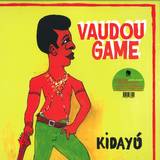
When faced with the decision to take a different direction at the risk of getting lost in a synthetic sound or to further explore the same musical path, Vaudou Game didn't need to consult the oracle for very long when putting together their new album. Since their first acclaimed album, Apiafo and its irresistible single "Pas Contente", these Lyon natives never turned down the heat on over 130 stages across Europe, Africa, America and Asia. Peter Solo has displayed his amulets, charisma and yellow pants around the globe.When time came for them to harness their Afro-Funk sound for the second time, they turned their attention once again to their analog strengths. Vintage material, instruments produced in the 70's and cassette tapes were the "grigris" (or lucky charms) which proved most effective to ward off digital corruption of their music and return them to a tight-knit group with a solid groove.This unbeatable trance rhythm, inherited from James Brown and Fela, icons of Funk and Afrobeat, becomes trident when joined by Mawu, the creative voodoo divinity hidden in each of the group's notes. This inspiration transcends their spirit of communion, plunges them deeply into Mother Earth and results in the telepathic trance which is directly connected to Togo Peter's native Togo.Each song then becomes a celebration where the listener becomes the group's voodoo doll, embraced by the rhythm, submitting itself to the mercilessly metronomic cutting of guitars, struck by the copper-colored flashes of lightning forged by the African voodoo deity Hevioso, pierced by the psychedelic visions generated by the organs and a six-string guitar, cheerful songs, and hypnotic incantations.KIDAYU means "sharing" in Kabye, the language spoken in northern Togo. Sharing, is the philosophy of Vaudou Game - both in their recorded music and on stage.Vintage African funk tinged with voodoo chanting: Togolese Peter Solo and his fellow musicians from Lyon electrify us in a frenzied ceremony" - Télérama
Giant Step/De Ole Folks at Home is the third studio album by American Blues artist Taj Mahal. A double album, the first disc (Giant Step) is electric, while the second (De Ole Folks at Home) is acoustic.
The nine cuts on Giant Step feature support from the instrumental trio of Jessie Ed Davis (guitar/keyboards), Gary Gilmore (bass) and Chuck Blackwell (drums). The arrangements are unique and offer the artist's distinctive approach.
Those who are searching for an introduction when discovering Taj Mahal's voluminous catalogue are encouraged to consider Giant Step as a highly recommended starting point.
Third release of Dancing like Quagmire, italian white label (vinyl only) born to make you dance shouting 'GIGGITY GIGGITY GO'!!! Mini-album with five tracks deeply rooted in 20th century Russian culture in which Neotnas is showing his poetic music style wandering between rough drum patterns, old dusty samples (hard to dig for sure) and hypnotics saxophone melodies. A-side starts with dreamy downtempo intro Elin, followed by crispy broken rhythms of Colourful Tension and closes with breezy and fluffy Don't Rush with Dubjazz. B-side contains mighty deep house trip Morning Way, and outro Come, where the main character is undoubtedly Ivan Pona's magic sax which created an illusory atmosphere over Neotnas's soul beat.
out of Stock
Last delivered 11 months ago available to reorder, subject to availability
Chances are you've already danced to one of his sets at Panorama Bar - Matthew Styles has been a regular guest DJ at the club for several years -, but you've probably also come across at least one record with music that went through the Englishman's meticulous hands. While Matthew has released great but small numbers of 12"es on various labels since 2007, his credits in mixing, engineering and mastering exceed his solo discography by far.
With the Metro EP we're finally offering a full solo release by Matthew Styles on Ostgut Ton, accounting for his consistent productional finesse, especially with his original track "Liquid Sky" (on Nick Höppner's Panorama Bar 04, 2012) and his 'Dub Mix' of Dinky's "Planes" (on Ostgut Ton / Zehn, 2015).
"I've never worked on a sequential set of songs that came out on the same record," Matthew commented on this 12". As with his productional approach in general, the Metro EP has a certain timelessness: "One piece is from 8 years ago, one from 3 years ago and another from around the time of the recent birth of my second son. I'll leave it up to the listener to guess which is which."
The eponymous "Metro" on A is an elated seven-minute, trippy, meandering analogue synth exploration in House and Cosmic Disco. "Wave 6" opens the flipside with a simple yet beguiling melody: 6 notes dancing completely beatless in 5/4 time, meandering repetitively and escalating towards a blissful - yet only anticipated - climax. "Border" on B2 is a solid addition to the long history of Dub Techno - smooth, steady, super layed back, but also offering many colorful melodic elements.
(de) Gut möglich, dass du schon einmal zu einem seiner DJ-Sets in der Panorama Bar getanzt hast - Matthew Styles spielt seit Jahren regelmäßig am Wriezener Bahnhof -, aber sicherlich hast du wenigstens eine Platte gehört, die vorher durch die akribischen Hände des Engländers gegangen ist. Obwohl Matthew seit 2007 tolle aber wenige 12"es auf verschiedenen Labels veröffentlicht hat, übertreffen seine Credits als Mixer, Engineer und in Mastering seine Solodiskografie bei weitem.
Mit der Metro EP hat Ostgut Ton nun endlich ein volles Solorelease von Matthew Styles im Angebot, das seiner konsistenten Produktionfinesse - besonders bei seinem Track "Liquid Sky" (auf Nick Höppners Panorama Bar 04, 2012) und seinem 'Dub Mix' von Dinkys "Planes" (auf Ostgut Ton / Zehn, 2015) - Rechnung trägt.
"Ich habe noch nie aufeinanderfolgend Stücke produziert, die dann auf derselben Platte erschienen wären", kommentierte Matthew diese 12". Wie generell bei seinen Produktionen besticht die Metro EP durch eine gewisse Zeitlosigkeit: "Ein Stück ist acht Jahre alt, eines von vor drei Jahren, ein anderes von kurz nach der Geburt meines zweiten Sohnes. Die zeitliche Einordnung möchte ich dem Hörer überlassen."
Das gleichbetitelte "Metro" auf A ist eine beschwingte 7-minütige, trippige, mäandernde Analog-Synth-Erkundung in House und Cosmic Disco. "Wave 6" beginnt die B-Seite mit einer einfachen aber betörenden Melodie: 6 Noten tanzen beatbefreit im 5/4-Takt, treiben repetitiv und ansteigend auf einen beseelten - aber nur erhofften - Höhepunkt zu. "Border" auf B2 ist eine solide Dreingabe zur langen Geschichte von Dub Techno: sanft, stetig, super entspannt, aber mit vielen melodischen Elementen.
Lunapark is the trio of Burkhard Ballein, Klaus "Schlips" Gebauer, Reinhard "Zoppen" Benisch from Wuppertal, Germany. Formed in 1981 when the boys were dissatisfied with their surrounding musical environment. They packed their instruments and a cassette recorder and set off to create their own brand of Neue Deutsche Welle (NDW "New German Wave'). Their influences included The Beatles, Colloseum, Roxy Music, Frank Zappa as well as Sex Pistols, Ian Dury & The Blockheads, Blondie and The Cure. Gefangene Vögel' ('Prisoner Birds') is their debut album released by Intakt Records, Stuttgart in 1982. Utilizing a simple set up of guitar, bass, drums, drum-computer, Korg MS-10 and Korg MS-20 they recorded 10 tracks that make up the album. Songs bridge the Belgian-type industrial and cold sounds with NDW quirkiness. In the vein of Sad Lovers and Giants, and Schleimer K they blend post-punk and new wave music with electronic influences. All songs are sung in German with monotone vocals and epitomized the urban Zeitgeist of the Cold War. All songs have been remastered for vinyl by George Horn at Fantasy Studios in Berkeley. The vinyl comes housed in a replica of the original jacket design, which features a drawing of birds on a grid. There are 4 different color versions of the screen printed jacket: blue, yellow, magenta and turquoise. Each LP includes a copy of the double sided 11x11 insert that was included with the original pressing with lyrics and photos.
out of Stock
Last delivered 10 years ago available to reorder, subject to availability
Thomas Blanchot, 40 years old percussionist and drummer, started his production structure Mato Production in 2001, where he collaborated and directed for many projects.
Composer, music publisher and producer of music for TV, advertising, films and records, he also began a career as reggae producer since 2006, under the name "MATO". Since then he's released music through various projects concepts, coming out through labels such as Makasound, EDR Records or Big Singles. In the meantime he developed a real trademark: taking over classics French, Hip-Hop, or Pop song, into roots reggae-dub new versions.
Besides since 2010, Mato has built a solid reputation thanks to his hot remixes of Hip-Hop classics on Stix Records. And in 2014, he presented Homework Dub, giving his own vision of the multiplatinum classic album by Daft Punk, quickly acclaimed internationally as a true performance.
Today, Mato is back with another target for his special skills as a tailor of reggae music, this time focusing on classic musical themes from original soundtracks. Imagine if Lalo Schiffrin, Nino Rota, Gorgio Moroder, Ennio Morricone or John Williams had been blunted at Lee 'Scratch' Perry's Black Ark studio... there you go, this is Hollywoo Dub!!
out of Stock
Last delivered 2 years ago available to reorder, subject to availability
All Tracks Written and Produced by S3A
Mastered by Kuniyuki Takahashi
This house project, based on the idea that electronic music is a blend of different cultures and music, started 15 years ago when Max began jamming on analog machines and samplers with different projects from techno (FriendShip Connection) to house (S3A).
It is through this project that he expresses, among other things, his taste for soul and House music. Such as his beloved artists MCDE, Floating Points... he uses the process of sampling as a basis to color his music with sounds of all his inspirations, he always add his own touch and groove to get his own vision of electronic music: dynamic, warm, emotional and dirty.
Although he discovered electronic music in 92 through UK hardcore with DJ as Tanith or Producer, his culture is based on a solid knowledge of house music, soul, funk, hip hop, making him one of the most promising house artists of the French scene since 2009.
He first came to Paris with Zadig to realize his childhood dream: building a studio and later collaboration, Frendship Connection (All is just a matter of time has actually been playlisted by Marcel Dettmann).
His residency at Concrete helped him to confirm his DJ position since the last 4 years adding as well releases on Lazare Hoche Records, Hold Youth, Concrete Music, Local Talk, Phonogramme and Faces. With these releases, his remix for Laurent Garnier on Music Large and his booking request from the French legend to play with him for his residency at Rex club and Concrete, gave him legitimacy and visibility in all over Europe.
In 2014 he decided to make his own label Sampling As An Art Records and focus on finding new-blooded artists and release his very personal music. A perfect definition between underground quality emotional house music and dancefloor efficiency!
In 2015, he released a collaborative EP on Uncanny Valley Label with Max Graef and Cuthead (whom released S3A RECORDS 03 the same year), made his first live representations and currently continue to spread his vision of music.
Bret Winans (aka CB-R & CB Radio) produces music out of a studio in Brooklyn. Using a variety of gear that has been amassed over the past decade, he's experimented with house, italo, techno and more. 2014 saw the release of CB-R's Inside Existence, an EP of dub techno and ambient textures that launched the S//P//A imprint. He's also appeared on the 100% Silk 2015 label comp, Sunset Silk, as CB Radio with the more italo leaning Pacific Ocean Blues.' With each release we're opened up to another side of the producer's world. Available on Full Color Jacket LP by New York based visual artist and musician Jay Goitia.
A sweet groover from the Italian scene of the 70's - music that's got a lush feel, but a funky one too - a great mix of strings and electric instrumentation that rivals the best cop/crime work of the time - yet also has a nice sexy feel too! There's almost a blaxploitation vibe to the record at times - and although some instruments solo at points, the real groove lies in the tight vamping of the orchestra - which hits all the right notes to really send the whole thing soaring - often with a nice use of tone and color too!
Defined as an independent entity, drawing its inspiration from the deconstructed walls of an imaginary and utopian society where music is king and artist is servant, Forsaken Cell is a Paris and Lyon based structure composed of a small ravers community, aimed to show an indie, radical and experimental face of the french underground scene.After showing a raw and anarchic vision of techno with Deikean's debut release, the Forsaken Cell keeps on exposing a radical and experimental face with, this time, a brighter and oniric aspect. This EP, debut of TheSolid System, presents itself as a fine mix of industrial and psychedelic textures inspired by the diversity and eclecticism ubiquitous in the rave culture. Thus this character, as discreet as he is, shows up at the scene: naked, assuming from the outset to be as much influenced by the bass music sharp rhythmic and dusty textures of industrial dub techno, that warm colorings and transcendent sounds of psychedelic music.
out of Stock
Last delivered 10 years ago available to reorder, subject to availability
Gatupreto, enigmatic duo, hiding their identity while exploring the common ground between an idealized African feeling and the classic references of the dance movement from the 80's and 90's. The art Gatupreto generates is simple, unpretentious and sincere, it owes to the classic rave vibe as much as to the rawness of hip hop.. as much to the sunset of Cape Verde as to the sunrise of the Lisbon riverside.
Gatupreto is a binomial entity that refers to itself as one, it was rescued from anonymity by TINK! Music, newly founded label split between Amsterdam and Lisbon. To the extend of most people's knowledge, Gatupreto comes from a colorful Lisbon suburb where they inhabit a luxurious house, on an isolated hill where music is made every day.
Those who have seen them perform live say they are frenetic and deep in their sound. At night all cats are black.
This is the story of C POWERS. To understand OYSTERS, you must understand the man behind it all...
THE UNITED STATES TERRITORY OF GUAM, ca. 1989
Abandoned at the island nation's only beachfront techno club as an infant, young Christoph (C POWERS) was adopted by the club's owner, Geraldo Powers. During Geraldo's time as a naval officer, he traveled the world throughout rave's formative years, secretly going to the underground parties when arriving to European ports after having originally fallen in love with early house music as a teenager in his native Chicago via roller-rink parties and the legendary Music Box headed by Ron Hardy. Rear Admiral Geraldo, outed as a gay homosexual during the discriminatory days of Ronald Reagan's U.S. military, was forced to retire, but spared a dishonorable discharge thanks to his roster of medals earning during his exemplary leadership for the invasion of Grenada in 1983.
Throughout his three year stay at the local naval base, the now 30-something Gerry Powers had been struck by the natural beauty and unsettling mysticism of Guam and its peoples and made the choice to permanently set up shop on the island after his unexpected retirement. Taking his partner and newly-crowned Supreme Butch Queen of the New York vogue circuit--Amadeus Lector--with him and financed with $6669.69 in prize money, the new era of DAS POUNDHAUS LTD. was to begin.
In 1990, Gerry founded the notorious Guamanian club DAS POUNDHAUS (the name of which was strongly influenced by a two-week long ecstasy and Polish speed-fueled bender during 1989's inaugural Love Parade in West Berlin). Located inside a decrepit lighthouse originally built during Spain's reign over the island, the club played host to a steady stream of closeted, Pacific-touring U.S. military personnel and later, the party-craving barons of the dot com bubble. Outed in private usenet circles for its off-the-charts hedonism, the club's infamous parties would inevitably lead to its perilous demise, and the eventual deportation of Gerry Powers and his family to the mainland.
But there was one thing that could never be taken away from them...
...synesthesia...
You see, young Christoph was diagnosed with the "disorder" as a pre-teen after having been exposed to nearly a decade of DAS POUNDHAUS first-hand and at such a young age. The youngster was like a fish in water during his childhood in Guam, but when the family was deported in 1999, he began to show signs of anxiety and depression. His ability to hear colors and see sounds had simply turned into a stream of incomprehensible, uncontrolled static. He was now a pariah among his peers. Shunned and admonished. Assigned to sit by himself during school lunch. One of "those" kids.
By this time, his two dads' relationship was on the rocks and would quickly unravel. Amadeus, frustrated with Gerry's incessant ramblings about bunkering in Montana because of the Clinton-Illuminati conspiracy to enslave the middle-class, decided to leave Gerry in an attempt to become a backup dancer for Madonna during her "Drowned World Tour" in 2001 (which would have provided a significant sum of financial security to the family, considering their life savings had been destroyed thanks to the toppling of the NASDAQ from its peak of 5048 in March of 2000--and thanks to those dot com baron stock tips, the Powers were all-in). However, Amadeus' unflinchingly "authentic" vogue style was considered obsolete, and he would go to die in a Reno Motel 6, a victim of drug abuse and that kind of thing apparently.
>>>>Fast-forward to the year2012ish>>>>
Inspired by the success of last summer's retrospective on Poker Flat, Steve Bug takes up his Traffic Signs moniker once more for a fabulous jam that more than merits the 10-year wait. The uncredited tunes that first came out under this name were classic jack tracks that devastated dancefloors - and 'Cookie Jar' is a more than worthy successor. This is stripped-down house, Chicago-esque, direct and determined to make you move. Berlin legend Jake The Rapper adds downright dirty humour with a spoken vocal fit for an age of internet sextapes and celebrity photo hacking. 'I like what you're cookin. Those cookies smell goooood,' he rascalously declares. Three mixes sprinkle the musical equivalent of chocolate chips, pecans and Brazilian stardust over the original. Steve Bug makes fine adjustments for the club, bouncing around the kick drums and doubling the synth riff with strings, while Joyce Muniz's dark, strobing treatment adds a dirty bass line for sexy, sweat-drenched dancefloors everywhere. Stripping away the vocal on the dub, Muniz's production talents are all the more scintillating, irresistibly kinetic from beginning to end. The brilliant video for 'Cookie Jar' has been created by swiss-french duo Ben & Julia, who let us take part in their playful, colorful and surreal world that suits the song so well.
New York City-based DJ, producer and The Corner label owner Anthony Parasole makes his debut on Ostgut Ton with three new percussive-heavy Techno tracks on the My Block EP.
"Percussive music, that's my ground, my foundation but I am missing the feeling of tribalism in Techno today. I've been using a lot of different drum techniques over the past years, implementing them to Techno. The record 'Quickstrike', that I've released on my own label The Corner, was an edit record of an old sample-based house release. To me this was a test if people would gravitate to this sound and it was the biggest record on The Corner so far. From there I knew I could do this and two tracks off my new EP on Ostgut Ton work like this: 'Typhoon' features bongos, congas and all kinds of skin percussion, 'My Block' uses a different kind of percussive color.
HipHop in general and the Cut-up technique in particular have also heavily inspired me as a producer. During the 1990s music seemed really profound - a little bit tougher too. I listened to a lot of HipHop when I was writing the music for this new release and applied its methods to my own music. Many producers at that time were very forward-thinking. Wu-Tang Clan's RZA uses a sixteenth note technique that made me realize that I wanted this kind of hypnotizing sound to work in a Techno format. Another big influence were late 1970s Horror movie trailers. I was watching them while I was working on 'Bizarre' in the studio, I was inspired to capture the eerie tones and textures of those short clips in 'Bizarre'.
At the end of the day I work within certain parameters. Everytime I make a sample, I drop it into my personal folder - so all my music has a similarity of up to 50 or 60%. Maybe I'll use the same drumkit or kickdrum. I apply limitations to myself, but doing this also gives me my own voice. When I was learning how to produce, Levon Vincent taught me to make my own drum kit, to make my own synth kit and to work within this. Sample-based music is inspiring, and creating something out of found sound is very interesting to me. I think a sound signature is something that will always refine ones sonic pallet and skill set."
You Know Who You Were Multi-faceted producer and DJ Ben Westbeech has accomplished something that eludes most artists - after ten years in the industry he successfully stands with 'one foot in the underground, one in the commercial' - and nowhere is this more apparent than on his first release on Aus Music as Breach which see's Ben digging deeper than ever before. After a year of high-power, unshakably catchy chart topping singles ("Jack' and 'Everything You Never Had"), a killer collaboration with Naked Naked cohorts Dark Sky and a well-received DJ-Kicks mix, Breach indulges some of his more underground and experimental tendencies on the 'Artis' EP. Bringing in bits of his past (the exotic, colorful vibe of 'Fatherless' can be detected in the lush atmosphere of 'Artis") along with some sounds newer to the moniker, Breach gets beautifully moody here and will once again keep people guessing as to what's coming next...
"Between Stars" is the debut album from Barcelona based Venezuelan producer and DJ Maurice Aymard. More than two years in the making, 'Between Stars' has been a labour of love for Aymard as he travelled the globe to collaborate with musicians and singers in Barcelona, Berlin, London and Venezuela who could help to bring his vision to life. Released on Aymard's own Galaktika Records (Garnica, James Teej & more), 'Between Stars' was recorded entirely live and features contributions from the likes of Brazilian star Gui Boratto, Columbian singers Andrea and Paulo Olarte, Argentian guitarist Mariano Godoy and many more, the resulting album takes the house music template and expands it to a grandiose level. In an age when anything that isn't packed full of buzzsaw bass and 'sick' drops gets labelled as Deep House, "Between Stars" is the real deal, and from the first bars of the albums opening (and title) track, 'Between Stars' quickly establishes itself as something truly special, a 'house' album that not only works as a coherent whole but sounds as good at home, by the poolside or in a club at 4am. If 'live' house albums have in the past had a tendency to verge on the polite, Aymard's skill as a producer and experience as a DJ keeps things rooted in club culture and nearly every track off 'Between Stars' deserves to find its way into DJ sets over the coming months. Rather than smooth things out the live instrumentation instead adds an energy to the tracks and the subtle touches, that the likes of guitarist David Rondon brings to 'El Final', lift the album up to another level altogether. Since moving from Venezuela to Spain and launching Galaktika Records, Aymard has become an integral part of the European house music scene. With releases on the likes of Berlin's Moodmusic, Hamburg's Einmusika and Denmark's Tic Tac Toe Records, and remix credits for artists such as Mario Basanov, Compuphonic and Combo, Aymard has built a reputation for delivering quality underground house music and with his debut album Aymard looks set to secure his position as one of the scene's most innovative artists.
Some friends think that Shihab the man owes the balance of his soul to his beautiful Danish wife. They may be right; for Eros is the very essence of what Shihab plays.Yet Eros is a god with many a face. A tale of tender mournings Shihab's flute is telling in MAUVE - a piece that translates its title into delicately changing colors of sound. In UMA FITA DE TRES CORES he has his instrument wooing with the proud self-reliance of Latin grandezza. Calmly, softly, almost blandishly Shihab blows the solo flute in the Jimmy Woode composition MY KINDA WORLD. Serene and somewhat playful his own title ANOTHER SAMBA comes along - a most uncommon composition by the way: lasting for sixty bars as if growing independent out of itself, with solos that appear to be additional spinnings rather than improvised choruses; and yet; a perfect, self sustaining melody no element of which is superfluous. In the last of the pieces for flute, in Klook Clarke's THE WILD MAN, which is based on a flourish of trumpets, Shihab for the first time reminds of the sombre, the demon-like face of God Eros. He contrasts flawlessly intoned passages with challenging phrases, phrases raucously sung into the flute - really, he is a 'wild man' who is playing like that. This raucous challenging sound prevails throughout the four baritone-titles ('Shihab never withholds long to caress', Campi says). Shihab blows the instrument the same way he speaks: without any delay, directly coming to the point. And he treats it like a voice, not aiming at an artificially homogeneous sound in all the registers, but at their different modes of expression. In the high pitches the horn gains a brilliant tenor-like quality - for instance in PETER'S WALTZ, dedicated to Shihab's son Peter, and in Kenny Clarke's simple drum fills comprising theme JAY-JAY. In the deep register Shihab produces snotty sounds filling lady's ears with horrors like Pan - thus in JAY-JAY and in the boppy blues SET UP . Shihab's sense of a scurrilous humor breaks through in SEEDS (which reminds of the West-African heritage of jazz with its multiple rhythms and its renunciation of harmonious development - only the eight bars of the bridge base on a progression of chords): not only does he omit the notorious bombastic chord by the ensemble after his own final cadenza, he even ends with a minor second above the keynote. Seems as if Shihab now unrestrictedly conveys to his music all the experiences and emotions he formerly did not deal with in a musical way. Shihab the man need not be disturbed so that Shihab the musician may improvise passionate choruses. It would be unjust, however, to forget the choruses of the four other musicians for those by the 'born leader'. Francy Boland, taciturn and always introverted: he plays an extrovert, a masculine piano. Even with spare single note lines he produces a piercing and ringing sound that hitherto nobody except him has discovered, a bluesy sound bespeaking the very element of frustration that lies within the title of the trio number WHO'LL BUY MY DREAM. The unfailing feeling for rhythm the musicians of the CBBB praise with the arranger Boland, becomes manifest in the piano solo on SET UP. Francy's improvisation is rhythmically styled in a Monk-like manner, and yet no accent could be set differently. Maybe this is the secret of the Shihab-Combo. 'Rhythm is our business', this credo of Jimmy Lunceford could be the one of the five musicians as well. Sadi hits his vibes as dryly as if wanting to bring its ancestors to memory, the wooden chimes of West Africa's coastal tribes. To reach the fullest poignancy possible, he intentionally calms down even the resonance in MY KINDA WORLD. In UMA FITA DE TRES CORES Jimmy Woode bears out the crispy jazz beat against Sadi's Bongos and Klook's Latin-American percussion all by himself. Moreover - and that, too, is connected with the school of the Duke who was the first in the history of jazz to discover the instrument's potential as a melody instrument - Woode rips a marvelous counterpoint to the inventions of the other melody instruments, take for example PETER'S WALTZ. And then there is Kenny Clarke. Klook. On the entire record he only uses his brushes. Means by which different drummers only know to bring forward impressionistically blending noises: He drums a vigorous beat with them, fanciful fills, a solo, melodious and at once skillfully playing with cross rhythms in JAY-JAY. The 'born leader', the 'outstanding baritone saxophonist of modern jazz' (Joachim-Ernst Berendt), he could not wish himself different sidemen for this record overdue since some years.
Sascha Kloeber & Partina Records... a secret hint for superb produced
songs in highest quality with a lots of feelings and musical emotions.
From deep to nice. Be careful with "Nights of the Sun" - it turns into a
surprise by a heavy synthesizer sound.
Limited white colored Vinyl with a special mastering: much more
dynamic and smoother sound than the digital release.
Early support by: Pig&Dan (Cocoon), Max Cooper (Traum), Laurent Garnier, Patrick Kunkel (Cocoon), Tim Green (Get Physical, Cocoon), Microtraum (Traum), Beatamines (Keno), André Kraml (Dirt Crew, Trapez), Homebase (Beatwax, Playhouse), Broombeck (Terminal M), Anderson Noise, Philipp Wolgast (Kompass Musik), Oscar Barila (Bondage Music), Martin Dacar, Turm 3 (Seenplatte) and more
Scott Mou, known as one half of the duo Jane - the folk techno drone duo he had with Panda Bear - aswell as part of Manhattan's famous record store Other Music, debuts with his Soloproject Queens.
Johan Jacobsen describes the wonderful music of Queens "in oxymorons; "colorful monochrome," "myopic depth," "sad joy," "driven slowness," "enlightened darkness," "universal intimacy ' , "ethereal earthboundness" ... As it should be. Queens is one of those wonderful artists who are hard to catch on the fly, who escapes easy definition. His music is an unexpected and unimagined universe ready to be explored, and it's a universe that is wonderful to be in."
When Dial Records' David Lieske and Peter Kersten listened to a performance of their New York based friend in 2009, it was one of those unforgettable unique experiences you only have once in a long while these days. The idea of releasing an album was born. The production of "End Times" involved other labelmates such as Phillip Sollmann aka Efdemin (recording), Kassian Troyer (mixing) and Hendrik Weber, who once joined a life performance on stage with Scott Mou in 2012.
Hui Terra. The dreamlike shape of the half-heard word, abstracts with faint impressions of bucolic landscape, or handfuls of translucent and brightly-colored gemstones that hold odd, elusive, asymmetrical form. This enchanting, gently surreal debut album from Alex Cobb's Etelin project explores the power and playfulness of impulsive action diffused through electro-acoustic and ambient sound.
This music was created with digital synthesizers and a sampler in the four months immediately following the birth of his first child, a hazy period marked by a lack of regular sleep and a diet of INA-GRM, Nuno Canavarro's "Plux Quba", and Microstoria's "Init Ding" - records that appeared to produce both stimulating and soothing effects on a newborn's nascent consciousness. Recorded and arranged at all hours, this is an album that reflects on moments of tumult and fragility. Cobb sews small sharpnesses and surprises into its movements to uncover different aspects of each sound source, doubling as hypnic starts cast to advance and variate the narrative in subtle and unexpected ways. Sound and atmosphere manifest in eccentric, alchemical fashion, as though forming in processes of sublimation - solids dissipating into vapor - and deposition - clouds resolving and dropping to the ground in piles - to an obscure and domestic rhythm. There's the purveying sense of moving within the boundaries of small, hermetic ecosystem. This is underscored and doused by a slow, blooming sense of warmth; growing joy without bombast. Even the more startling textures conceal this same truth and emphasis, such as the alien, sour salt-butter electronic babble in "Little Rig", largely sampled from Cobb's son's voice at just a week old. It is emotional music - devoted, affectionate, and playful.