James Brandon Lewis is a New York-based jazz tenor saxophonist, composer, and bandleader. His instrumental voice marries the emotional power of gospel and the grit and groove of blues and R&B to the modal and vanguard influences of Albert Ayler and John Coltrane, and Sonny Rollins" expressive melodic and tonal discipline. Moments, his 2010 debut, was followed by two outings for Sony Masterworks" revived OKeh imprint: Divine Travels in 2014 and the widely celebrated Days of Freeman the following year. After working American stages and clubs, he toured European and Asian festivals. Radiant Imprints, a duo outing with drummer Chad Taylor, appeared in 2018 and was followed by the quintet offering An UnRuly Manifesto a year later. In 2021, after he was selected as the "Rising Star Tenor Saxophonist" in the Downbeat International Critics Poll, Lewis issued The Jesup Wagon, his debut for Tao Forms. Along the way, Lewis drew the attention of many improvising artists, most notably the saxophonist and jazz deity Sonny Rollins, who doesn"t offer effusive praise very often. Moved by Lewis" deep, spirit-seeking sound, Rollins said "When I listen to you, I listen to Buddha, I listen to Confucius ... I listen to the deeper meaning of life. You are keeping the world in balance." Eye of I opens with 44 seconds of gritty, high-throttling low-down groove, an ear pulverizing opening designed to cleanse all traces of ordinary from the palette. From there, Lewis offers a prayerful cover of Donnie Hathaway"s "Someday We"ll All Be Free" and then the first of his disarmingly addictive originals, "The Blues Still Blossoms" in addition to many others.
Suche:colt
All-star jazz session WINNERS CIRCLE recorded in New York, September & October 1957. Featuring the musicians who came first or second in Down Beat’s critics’ poll of 1957. Reproduction of rare 1961 alternate album art and title credited to JOHN COLTRANE IN THE WINNERS CIRCLE. Featuring Donald Byrd, Kenny Burrell, Art Farmer, Philly Joe Jones, Oscar Pettiford and more. Remastered 96 kHz/24 bit audio H Pressed on 180 gram black vinyl at GZ Media in Czech Republic.
Jazz Saxo Session is one of the first connected discs of Jazz Collection.
Grouped by instrumental theme, this jazz compilation features the greatest names in jazz: Charlie Parker, John Coltrane, Stan Getz...
The podcasts on the history of jazz offered in the Viny application (on IOS or Android) are fascinating.
And if jazz is in you, you'll love to continue the experience with the Jazz Collection by Vinyl & Media suite.
Australian 9-piece Spiritual Jazz group Menagerie announce their highly anticipated third album 'Many Worlds', released 15th January 2021 on esteemed U.K label Freestyle Records.
Menagerie is the Melbourne-based Jazz ensemble founded by producer, songwriter, guitarist, DJ and recording artist Lance Ferguson, also the driving force behind The Bamboos, Lanu, Rare Groove Spectrum and Machines Always Win.
Recorded at Union Street Studio by award-winning engineer John Castle, 'Many Worlds' features some of Australia's finest musicians, including pianist Mark Fitzgibbon (a regular performer at Gilles Peterson and Patrick Forge's original Dingwalls sessions), drummer Daniel Farrugia and renowned saxophonist Phil Noy (The Bamboos).
Inspired by both the post-Coltrane generation of the 70's, labels like Strata-East, Impulse! and Tribe, along with the current 'New Wave Of Jazz', Menagerie aligns with the world of Kamasi Washington, Shabaka Hutchings and Nubya Garcia, whilst also bringing their own unique twist.
Lead single 'Free Thing' leans heavily into the spiritual side of the band's sound. The hypnotic spoken word-poem is evocative of The Last Poets, an earthy yet futuristic meditation on the universal theme of freedom itself, set to a backdrop of insistent percussion, double bass and brooding piano voicings.
'Hope' carries forward the sound of spiritual jazz into the 21st century, with its epic vocal harmonies and melodic fanfare, it is an uplifting anthem for this period of global worldwide upheaval and uncertainty.
The title track 'Many Worlds' is a perfect example of how Menagerie incorporates their myriad influences, but manage to create a sound that feels uncannily fresh and contemporary. Book-ended by ambient, ethereal sections, the slow-burning groove builds over its 11-minute duration to create a standout crossover track.
Menagerie have received airplay and radio support from Gilles Peterson (BBC6/Worldwide FM), Don Letts (BBC6), Jamie Cullum (BBC Radio 2), Simon Harrison, Paul Miller and Ennio Styles (3RRR).
'Many Worlds' will be released on legendary U.K imprint Freestyle Records - home to jazz contemporaries Courtney Pine, Jessica Lauren, and keyboard legend Brian Auger.
Soul Jazz Records are releasing Count Ossie and The Mystic Revelation’s seminal 1975 album Tales of Mozambique in an expanded double album/single CD/digital format, fully remastered and with the inclusion of two bonus rare single-only tracks, full sleevenotes, exclusive photographs and interview.
Count Ossie is the central character in the development of Rastafarian roots music, nowadays an almost mythical and iconic figure. His importance in bringing Rastafarian music to a populist audience is matched only by Bob Marley’s promotion of the faith internationally in the 1970s.
Count Ossie’s drummers performed on the first commercially released single to integrate Rastafarian traditional music with popular music: the vocal group The Folkes Brothers’ groundbreaking song ‘Oh Carolina’, recorded for producer Prince Buster in 1959. In 1966 his drummers greeted the momentous arrival of Haile Selassie at Kingston airport.
His legendary jam sessions up in his Rastafarian compound in the hills of Wareika, Kingston, are famous for the many Jamaican musicians who attended including The Skatalites players – Roland Alphonso, Don Drummond, Johnny Moore, Lloyd Knibbs – and many others.
The Mystic Revelation of Rastafari formed in Kingston, Jamaica, in 1970, a union of Count Ossie’s Rastafarian drummers – variously known as his African Drums, Wareikas or his Afro-Combo – and the saxophonist Cedric Im Brooks’ horns group, The Mystics.
The Mystic Revelation of Rastafari are the defining group in bringing authentic Rastafarian rhythms into the collective consciousness of popular music, their unique music is at once rooted in the deep traditions and rituals of traditional drumming and chanting alongside a forward-thinking, even avant-garde, artistry influenced by the likes of John Coltrane, Sun Ra, Pharoah Sanders and other pioneering African-American jazz artists radicalised and charged by the civil rights movement of the 1960s.
Tales of Mozambique is a truly unique and fascinating ground-breaking album.
Count Ossie and The Mystic Revelation of Rastafari are the central group featured on Soul Jazz Records recent "Rastafari - The Dreads Enter Babylon” a collection showing the influence of Rastafari in Reggae and Jamaican popular culture.
Soul Jazz Records will also be releasing Count Ossie and The Rasta Family 'Man From Higher Heights’ in the near future.
* Bonus tracks
REVIEWS
" All roads in Rastafarian roots music lead to Count Ossie.He’s the lead character in this compelling subplot, the musician who was one of the first to put Rasta tenets into the heart of popular music.
He did so from his camp in the hills above Kingston, Count Ossie and his drummers casting a spell on the musicians who gathered to check him out and then went on to spread the word about the powerful nyabinghi rhythms and mesmerising percussion.
This is a reissue of the 1975 album Count Ossie made with his Rastafarian drummers and saxaphonist Cedric ‘Im’ Brooks’s group The Mystics.
It’s a groundbreaking, majestic work, by turns righteous in tone and joyous in execution. It’s the sound of Ossie and his ensemble narrating a history lesson and you’d be daft not to want to find out more." IRISH TIMES
This Is For You, John is an album by saxophonist/composer
Benny Golson, recorded at Vanguard Studio, New York City in
1983 and released the year after. For the recordings, Golson was accompanied by Pharoah Sanders on tenor sax, Cedar Walton on piano, Ron Carter on bass and Jack DeJohnette on drums. The album features tunes associated with, or inspired by the famous American Jazz saxophonist John Coltrane, including “Times Past (This Is For You, John)”. “Origin” is an original, composed by Pharoah Sanders.
This Is For You, John is available as a limited edition of 1000 individually numbered copies on green coloured vinyl. The back of the sleeve contains extensive liner notes by Benny Golson, reflecting meetings with John Coltrane and the inspirations behind the songs.
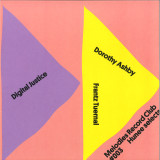
We're glad to be back with the third instalment of our new series of DJ and Artist curated 12" mini compilations: Melodies Record Club.
Following Ben UFO and Four Tet's selections last year, Hunee helms volume three which includes three tracks this time including music from Digital Justice, Dorothy Ashby and Frantz Tuernal. Available early November in loud 12" format.
In his own words: " These three distinct pieces of music tap into different layers of my memory. One being part of the imagination, the other two rooted in the memories of a special morning in the woods of Houghton (and other times and places). On one side we have a beatless ecstatic piece of electronic music by Digital Justice called Theme From 'It's All Gone Pearshaped'. Originally released in 1994 on Rob Gretton's (ex-manager of Joy Division and New Order) label Robs Records, Pearshaped is a 13 minute live jam from two friends messing around in a loft studio full of synths, inadvertently creating magic that can "take many shapes and forms in the hands of a DJ and the movement of a dance floor, whilst its harmonic counterpoint shines through the wildest mixes and combinations"
On the flip, we have Dorothy Ashby's spiritual piece featuring Koto and spoken word "For Some We Loved" from her classic album "The Rubáiyát Of Dorothy Ashby" originally released in 1970 on Cadet and Frantz Tuernal's "Koultans" originally released in 1986 by l'AMEP (Association Martiniquaise d'Enseignement Populaire) which was also a school in Martinique. "After dancing to a set from Cedric Woo at an intimate, after-closing dance party at Brilliant Corners called "Freedom Suite" which completely re-calibrated my sense of experiencing and dancing to music, I went home and immediately searched through my collection for music to listen to and potentially play with these new found sensitivities - the very physical experience of music, the pulling force pushing one into the transcendence of time and space. Dorothy Ashby's "For Some We Loved"immediately took me back to that feeling and opened up in front of me an otherworldly-world through it's free flowing polyrhythms and sparkling Koto playing. I have yet to play my own "Freedom Suite"night, but I hope when that moment comes, I can give back what I have received back then, and "For Some We Loved"is a first step in trying just that.""I have been shown Frantz Tuernal's privately pressed 12"containing "Koultans" by my trusted music friend Nicolas Skliris from Paris a few years ago. An unlikely piece of music (a Zouk song with flamenco-inspired guitar playing) from Martinique that was both a highlight back at Giant Steps when I played the song 3 times in a row in the early morning, and a few weeks later in the woods of Houghton where a few thousand dancers were deeply moved to its melody, when the sun came up in the morning and started descending upon the lake behind the DJ booth, bathing the smiles upon the dancers faces with its reflection."
Hunee's instalment is out early November in loud 12" format, and the first press comes with a folded A2 insert with words from and about the Artists. Graphic design by Atelier ChoqueLeGoff, illustration and animation by Nevil Bernard and for the audiophiles out there, remastered and cut at half speed by Matt Colton at Metropolis Studios!
Pharoah Sanders‘ drittes Impulse!-Album, „Karma“ von 1969, ist ein Meilenstein der Spiritual-Jazz-Bewegung
und eine natürliche Weiterentwicklung der musikalischen Erkundungsreisen, die Sanders, zusammen mit
John und Alice Coltrane, in den fünf Jahren zuvor geführt hatte. ”The Creator Has a Master Plan”, einer
der beiden langen Tracks auf dem Album, wird oft als Hymne des Spiritual Jazz bezeichnet.
VERVE ACOUSTIC SOUNDS SERIE: Stereo, komplett analog von Ryan K. Smith bei Sterling Sound
von den Originalbändern gemastert, QPR-Pressung (180 g), stabiles Tip-On-Gatefold (Stoughton Printing), wattierte Innenhülle
33 rpm version[92,40 €]
100% Analogue 33RPM 180g 1LP
Remastered from the Original Analogue Stereo Masters for the First Time!
Hear this album as it was meant to be heard! Absolutely Stunning!
The greatest assembly of musical talent ever on one album! Features Performances by John Coltrane, Miles Davis, Bill Evans, Ben Webster & 27 More Jazz Greats!
In 1958, a young, successful French composer-arranger with a major infatuation on American jazz, worked his way to New York and convinced the very best players of the time to record an album of largely jazz standards. Michel Legrand would go on to win numerous prizes and accolades (3 Oscars, 5 Grammies, 2 Palmes D'or, etc.), but little of what followed matched the sheer brilliance of Legrand Jazz.
Miles Davis, John Coltrane, Bill Evans, Ben Webster, Phil Woods and practically every other session man in town signed up for sessions with Legrand to record his idiosyncratic arrangements of standards ("Django", "Don’t Get Around Much Anymore", "Night in Tunisia", etc.). Instead of regurgitating then current bop styles, he reinvented the very nature of orchestral jazz band repertoire to make a unique and forward-looking statement on the genre.
The sound of Impex's all-analogue LP preserves the wide soundstage of late 50’s Columbia recordings while creating intimate spaces between players on the stage for maximum definition. This rare, highly-praised recording has never sounded as good as it does now. Go big with Legrand Jazz.
Legrand Jazz was greeted by an enthusiastic review in the magazine Down Beat. Dom Cerulli awarded it five stars out of a possible five.
The meticulously recreated outer jacket is packaged in a gatefold with an original photo montage inside honoring Michel Legrand's masterpiece of reinvention and sublime fan-boy enthusiasm.
"The music is luscious and this just may be one of the best-sounding records you'll ever hear." - Ken Kessler, Hi Fi News, Rated 95/100 Sound Quality!
The phenomenal debut album by an extraordinary keyboardist and
composer Surya Botofasina.
Surya was taught in the tradition of Alice Coltrane, by Swamini
Turiyasangitananda herself, at her Ashram in California where he grew up.
Produced by and co-performed with Carlos Ni o in Los Angeles, this is a unique, deep listening masterpiece of spiritual jazz and meditative sounds from a progressive Sonic Artist devoted to: "OneLove. Family. Music."
Social Joy Records presents Natural Lateral's new album "Tapestry of life", a superb excursion in fusion jazz with a wonderful blend of electronics and subtle elements of spiritual Jazz.
Undeniably on the rise after the success of their first album, "Cogito Ergo Jam", which received support from the British Jazz scene and was featured on Gilles Peterson's BB6 broadcast,the North London Based collective goes a step further this time by carefully crafting a new release of a tapestry of music stemming from rich jam sessions at the Lazy Robot Studio and representing the band's phenomenal musical canvas. Echoing jazz legends like Azymuth, Roy Ayers, Alice Coltrane and Miles Davis by paying tribute to those who paved the way but always searching for new musical territories, this six-track LP is moving, thought-provoking and engaging. It is a musical questing where each band member searches for meaning through sounds and rhythms - giving a new life to Jazz music and dropping the full spectrum of a vibrant tapestry of life into the listener's ears.
The band's work ethic is based on a sense of freedom in the studio filled with live jam sessions where it's all about "catching a moment" and letting the inspiration flow. "We just want to feel a sense of freedom and connection through playing. In the studio, it's the music which connects us all, and we just want to allow that process to unfold".
Strut present 3 separate reissues of the 1970s album trilogy from Idris Ackamoor & The Pyramids. As students at Antioch college, Ohio, alto saxophonist Idris Ackamoor, flautist Margaux Simmons and bass player Kimathi Asante created three lasting monuments in sound — Lalibela, King of Kings, and Birth / Speed / Merging, a trio of albums produced without any label backing or distribution between 1972 and 1976. Their music is unique among the varied canon of avant-garde and experimental music of 1970s America: high intensity African-styled percussion topped with songs, chants, and horns, laced with African instruments and arranged into long, flowing suites that surge and roll.
The debut album by the Pyramids was inspired by the group's visit to the Lalibela monastery in Egypt, and was recorded in Yellow Springs Ohio in early 1973. Drawing on the teachings of Cecil Taylor and the influence of John Coltrane, combined with a barrage of intense percussion, the album evolves over several long-form pieces, Initially only 500 copies were pressed and sold to friends and followers in the local area.
- 1: Ella Fitzgerald - How High The Moon
- 1: 2 Etta James - I Just Want To Make Love To You
- 1: 3 Ayo - Throw It Away
- 1: 4 Andrews Sisters - Rum And Coca Cola
- 1: 5 Peggy Lee - Black Coffee
- 1: 6 Cyrille Aimée - Three Little Words
- 1: 7 Dinah Washington - Mad About The Boy
- 1: 8 Nina Simone - Love Me Or Leave Me
- 1: 9 Hailey Tuck - Coltrane
- 1: 0 Marilyn Monroe - I Wanna Be Loved By You
- 1: Nancy Wilson - Fly Me To The Moon
- 1: 2 Rosemary Clooney - Bali Ha'i
- 1: 3 Sarah Vaughan - Shulie A Bop
- 1: 4 Carmen Mcrae - Yardbird Suitelp
- 2: 1 Billie Holiday - Lover Man
- 2: Rose Murphy - Baby, Baby
- 2: 3 Anita O'day W. Gene Krupa - Tea For Two
- 2: 4 Cecile Mclorin Salvant - You're My Thrill
- 2: 5 Lavern Baker - Nobody Knows You When You're Down And Ou
- 2: 6 June Hutton - My Baby Just Cares For Me
- 2: 7 Chris Connor - All About Ronnie
- 2: 8 Irene Kral - Comes Love
- 2: 9 Della Reese - My Heart Belongs To Daddy
- 2: 10 Joan Chamorro & Andrea Motis - Moon River
- 2: 13 Doris Day - Keep Smilin', Keep Laughin', Be Happy
- 2: 14 Helen Merrill - Summertime
- 2: 11 Etta Jones - I Love Paris
- 2: 1 Dinah Shore - Mood Indigo
The exceptional 100% TSF Jazz collection is embellished with its latest " 100% Women " volume dedicated to the great female Jazz performers. Let yourself be carried away by the finesse of this selection which honors the women of Jazz. With: Cecile McLorin Salvant, Carmen McRae, Ayo, Nina Simone, Doris Day, Dinah Washington
AN EXCLUSIVE NEW LABEL DEDICATED TO JAZZ, HARD BOP, R&B AND SOUL MASTERPIECE IN STRICTLY LIMITED CLEAR VINYL EDITION.
Limited Clear Vinyl edition, 500 copies! Recorded in NYC in 1958 and originally released in 1959 as “The Cecil Taylor Quintet - Hard Driving Jazz” this is in fact the only existing document of the meeting between John Coltrane and Cecil Taylor. Even if caught at an early stage in their career the two masters show great personality and deep respect for each other while trumpeter Kenny Dorham sticks more to his familiar bop idiom.
Cordially backed up by Chuck Israel on bass and Louis Hayes, Coltrane swings madly on Taylor’s dissonant comping producing a rare, fascinating friction between two worlds. A must for every Coltrane maniac out there.
ATALAYA is new work by bassist Dezron Douglas, and it is alive. Alive in all the ways that jazz is at its best - as a pure and personal expression of Black Music filtered through time-honored traditions by a group of musicians who practice sonic coherence through musical unity. Followers of contemporary jazz might recognize Dezron for his bass work behind Pharaoh Sanders, Louis Hayes, or Ravi Coltrane. Steady International Anthem listeners might remember him from the New York side of Makaya McCraven"s Universal Beings. More recently we presented Force Majeure, his sublime duo record with harpist Brandee Younger which compiled the best of livestream performances from their Harlem apartment during the original covid lockdown. That album reflected the speed and feeling of the moment while somehow simultaneously distracting from the harsh reality of it. It also captured a very vulnerable, intimate, and real impression of Dezron on double bass, sharing his power and truth without abandon.
Die neue VERVE BY REQUEST-LP-Serie präsentiert rare Kultalben, die von den Fans immer wieder gefordert wurden, gepresst in audiophilem 180-Gramm-Vinyl bei Third Man Pressing/Detroit.
„Ptah The El Daoud“, Alice Coltranes viertes Album, wurde 1970 im Kellerstudio des Hauses der ColtraneFamilie in Dix Hills aufgenommen und ist ein transzendentes Meisterwerk des spirituellen Jazz. Der Titeltrack ist eine Ode an den ägyptischen Gott Ptah (El Daoud bedeutet „der Geliebte“). Gatefold-Hülle, gepolsterte Innenhülle.
„Beat“ wurde für Berry Gordys kurzlebiges Workshop-Jazz-Label im Hitsville-USA-Studio aufgenommen. Schlagzeuger Roy Brooks, zusammen mit seinen Detroit-Landsleuten George Bohanon und Hugh Lawson, sowie seinen Bandkollegen Blue Mitchell, Junior Cook und Eugene Taylor vom Horace Silver Quintet, mischt eine ordentliche Dosis Souljazz in die Hard-Bop-Wurzeln dieses mitreißenden Albums von 1964. Gemastertvon den analogen Originalbändern, gepolsterte
Innenhülle.
Broadway in Soho to perform a wholly improvised concert. This ensemble’s solos spring from collective improvisations and a tumultuous backbeat, loosely inspired by the creations of Coltrane, Coleman, Albert Ayler, and their brethren. The de facto leader was Richard “Dickie” Landry, a saxophonist and keyboardist who joined composer Philip Glass’s group in 1969. Landry had become a fixture in downtown New York’s loft and art scenes at the close of the 1960s, after he high-tailed it by car from Louisiana to the Lower East Side and auspiciously encountered Ornette Coleman at the Village Gate the night of his arrival.
For this concert, fellow Glass reedists Jon Smith and Richard Peck joined in, alongside Rusty Gilder and Robert Prado, both doubling on bass (upright and electric) and trumpet. The drum chair was occupied by New Orleans firecracker David Lee, Jr., who brought alto saxophonist Alan Braufman along for the session (Braufman was the only non-Louisiana player in the band). The ensemble stretched
out in the gallery for several hours in a configuration reflecting those that took place at Landry’s Chinatown loft, documented in photos by artists Tina Girouard and Suzanne Harris that adorn the inside of the original gatefold album jacket. Recorded live by Glass’ sound engineer Kurt Munkacsi, the album was released as a double LP on Chatham Square, the small imprint Landry and Glass co-ran, in a stark greyscale cover and simply titled Solos. The order of the players’ improvisations was laid out on the album inner labels, though unsurprisingly there’s a fair amount of blend. At the end of the day Solos is beyond category, a rousing exploration of instrumentation, rhythm, and life.
Limited Clear Vinyl edition, 500 copies! Besides playing with the likes of T. Monk, J.Coltrane, A. Blakey and R. Weston, bassist and oud player
Abdul Malik is mostly remembered as one of the first to explore how elements of Middle Eastern and North African music can integrate with Jazz
idioms. Originally released in 1963 on Prestige Records, this is his fifth studio effort featuring Bilal Abdurrahman - alto saxophone, clarinet, Korean
reed flute, percussion, and William Henry Allen - bass, percussion, A peculiar combination of different instruments and sounds for a step into the
Eastern side of Jazz.
This performance by Waylon Jennings was no April Fool's joke - This was the "new" Waylon, both personally and professionally - He had kicked a 20-year drug habit, split with RCA and signed a new deal with MCA Records - He discovered a passion for songwriting, teamed with
legendary producer Jimmy Bowen, and produced some of the best work of his 30-year-plus career
He credited his wife and soul mate, Jessie Colter, for much of his inspiration. This was Waylon's second trip to the ACL stage, but the one that best captures the raw edge and driving urgency that pushed country music way past its
Nashville boundaries starting in the mid-1970's. He was described as the leader
of the country "Outlaw" movement, which he often dismissed as just another
marketing scam, but there's no denying that he turned the music on its head and
took it way beyond its rural southern roots. This West Texas boy who worked as a
DJ and started his own band at 14, then later played with Buddy Holly, left an
indelible mark on the music he loved. He was a class act, this man called Hoss --
Terry Lickona (Producer Austin City Limits).
Repress expected. Date TBA
By 1980 when this was originally released Pharoah Sanders was solidly entrenched with his own voice on tenor. The passing of John Coltrane and Sanders's fruitful years of playing with the prolific saxophone genius resulted with an unmistakable influence on his sound and explorations of the instrument. Beginning with "Greetings to Idris" the structure of the music is one that follows tradition yet opens up for the musicians to improvise within the arrangements. "Greetings to Idris" is in reference to the featured drummer Idris Muhammad who also played with Coltrane during his late period. Naturally Sanders is featured as the main instrument and his horn can be bold and demanding of your full attention. Always interested in other instruments from other cultures, much like Trane, he incorporates the Japanese instrument the koto, a beautifully harmonic stringed instrument to counter his soft rich blowing on tenor with only wind chimes and a harmonium for a delicious peaceful bit of music on "Kazuko"(Peace Child) that has the qualities of a meditative offering. Most of the music, eight tracks, is composed and arranged by Sanders and demonstrates his leadership. There is one John Coltrane composition entitled "After The Rain" that gets the Tranesque treatment by Sanders that makes it hard for even the most discerning listener to distinguish between the original version and Sanders impression. It is a bluesy duet featuring only sax and piano and leaves you wanting to hear it over and over again because of it's simple and haunting melodies. Another song that Coltrane recorded entitled "Easy To Remember" has a gentle swing to it built around a classic quartet (drums, bass, piano, sax) like that employed by Coltrane that results in a superb standard. Sanders incorporates the use of another "foreign" instrument to jazz by working in a tabla and sitar on "Soledad " that takes center stage before Sanders joins in on the music. The result is a thing of genius as the East and West merge and interface for composition that is peaceful. Sanders music on this LP fluctuates between the tranquil sounds of his mellow horn to the outer limits where he left off with the explorations of Trane's late period. What separates this LP from others is that it is a group playing under his leadership where he gives all others close to equal billing. The uptempo, "You've Got To Have freedom" is one such song where Sanders gets out there on some of his solos but works within the group structure as the other musicians, most notably Eddie Henderson on flugelhorn, bring the music back home. There is a chorus sung much of the time throughout where the the proclamation "Ya gotta have peace and love, ya gotta have freedom" is presented in Manhattan Transfer style but with much more soul. The use of vocalists is done again on the track entitled "Think About The One." The chorus features vocalese specialist Bobby McFerrin. This LP shows the different sides of Pharoah Sanders, a man always willing to explore the music, explore his soul and share it with you. The closing track "Bedria" is a mellow exploration of the various ranges of the tenor. It is a ten minute song that displays all the grace of his being, a gentle giant who can manipulate the horn to do extraordinary things, reverberating out and back in undulating waves of harmonic bliss. Sanders on this LP is next to perfect. One of his best recording from his post Impulse career. It belongs in your jazz collection right next to John Coltrane.
Mondays at The Enfield Tennis Academy, x2 LPs of long-form, lyrical, groove-based free improv by acclaimed guitarist & composer Jeff Parker's ETA IVtet. Recorded live at ETA (referencing David Foster Wallace), a bar in LA’s Highland Park neighborhood with just enough space in the back for Parker, drummer Jay Bellerose, bassist Anna Butterss, & alto saxophonist Josh Johnson to convene in extraordinarily depth-full & exploratory music making. Gleaned for the stoniest side-length cuts from 10+ hours of vivid two-track recordings made between 2019 & 2021 by Bryce Gonzales, Mondays at The Enfield Tennis Academy is a darkly glowing séance of an album, brimming over with the hypnotic, the melodic, & patience & grace in its own beautiful strangeness. Room-tone, electric fields, environment, ceiling echo, live recording, Mondays, Los Angeles. Jeff Parker's first double album & first live album, Mondays at The Enfield Tennis Academy belongs in the lineage of such canonical live double albums recorded on the West Coast as Lee Morgan’s Live at the Lighthouse, Miles Davis' In Person Friday & Saturday Night at the Blackhawk, San Francisco & Black Beauty, & John Coltrane's Live in Seattle.
While the IVtet sometimes plays standards &, including on this recording, original compositions, it is as previously stated largely a free improv group —just not in the genre meaning of the term. The music is more free composition than free improvisation, more blending than discordant. It’s tensile, yet spacious & relaxed. Clearly all four musicians have spent significant time in the planetary system known as jazz, but relationships to other musics, across many scenes & eras —dub & Dilla, primary source psychedelia, ambient & drone— suffuse the proceedings. Listening to playbacks Parker remarked, humorously & not, “we sound like the Byrds” (to certain ears, the Clarence White-era Byrds, who really stretched it).
A fundamental of all great ensembles, whether basketball teams or bands, is the ability of each member to move fluidly & fluently in & out of lead & supportive roles. Building on the communicative pathways they’ve established in Parker’s -The New Breed- project, Parker & Johnson maintain a constant dialogue of lead & support. Their sampled & looped phrases move continuously thru the music, layered & alive, adding depth & texture & pattern, evoking birds in formation, sea creatures drifting below the photic zone. Or, the two musicians simulate those processes by entwining their terse, clear-lined playing in real-time. The stop/start flow of Bellerose, too, simulates the sampler, recalling drum parts in Parker’s beat-driven projects. Mostly Bellerose's animated phraseologies deliver the inimitable instantaneous feel of live creative drumming. The range of tonal colors he conjures from his extremely vintage battery of drums & shakers —as distinctive a sonic signature as we have in contemporary acoustic drumming— bring almost folkloric qualities to the aesthetic currency of the IVtet's language. A wonderful revelation in this band is the playing of Anna Butterss. The strength, judiciousness & humility with which she navigates the bass position both ground & lift upward the egalitarian group sound. As the IVtet's grooves flow & clip, loop & repeat, the ensemble elements reconfigure, a terrarium of musical cultivation growing under controlled variables, a tight experiment of harmony & intuition, deep focus & freedom.
For all its varied sonic personality, Mondays at The Enfield Tennis Academy scans immediately & unmistakably as music coming from Jeff Parker‘s unique sound world. Generous in spirit, trenchant & disciplined in execution, Parker’s music has an earned respect for itself & for its place in history that transmutes through the musical event into the listener. Many moods & shapes of heart & mind will find utility & hope in a music that combines the autonomy & the community we collectively long to see take hold in our world, in substance & in staying power.
On the personal tip, this was always my favorite gig to hit, a lifeline of the eremite records Santa Barbara years. Mondays southbound on the 101, driving away from tasks & screens & illness, an hour later ordering a double tequila neat at the bar with the band three feet away, knowing i was in good hands, knowing it would be back around on another Monday. To encounter life at scales beyond the human body is the collective dance of music & the beholding of its beauty, together. – Michael Ehlers & Zac Brenner
- A1: John Coltrane & Art Blakey's Big Band - Pristine
- A2: Cécile Mclorin Salvant - One Step Ahead
- A3: Serge Gainsbourg - Black Trombone
- A4: Marcus Miller Feat Corinne Bailey Rae - Free
- A5: Anne Paceo - Smile
- B1: Neue Grafik Ensemble Feat Brother Portrait - Hedgehog
- B2: Mel Tormé - Comin' Home Baby
- B2: Michel Legrand Feat Bill Evans, John Coltrane & Miles
- B4: Yaron Herman Trio - Heart Shaped Box
- B5: Miles Davis - Générique (B O.f "Ascenseur Pour L'echafa
- B6: I | Brahim Maalouf - True Sorry
- C1: Melody Gardot & Seth Kallen - My Sweet Darling
- C2: Norah Jones & Joel Harrison - Tennessee Waltz
- C3: Laurent De Wilde - Misterioso
- C4: Mélanie De Biasio - Afro Blue
- C5: Ella Fitzgerald - How High The Moon
- C6: Quincy Jones - Soul Bossa Nova
- D1: Térez Montcalm - Sweet Dreams
- D2: Biréli Lagrène & Sylvain Luc - So What?
- D3: Sandra Nkaké & Jî Drû - Always The Same
- D4: Youn Sun Nah - Jockey Full Of Bourbon
- D5: Nina Simone - Love Me Or Leave Me
- D6: 2Charlie Parker & Miles Davis - A Night In Tunisia
BROWN VINYL VARIANT
"Flight of the Behemoth" is the third album by sunn O))).
The band collaborated with legendary Japanese noise artist Merzbow, who mixed tracks 3 and 4. The first ever use of a drum machine on a sunn O))) track is heard on "F.W.T.B.T.", a deconstructive interpretation of Metallica's "For Whom the Bell Tolls”.
This punisher also features the first ever vocals heard as evoked from the band themselves.
Contains full color 24”x36” folded poster and all this grimness is housed in a glorious case-wrapped gatefold jacket. Also contains the vinyl only bonus track: "Grimm & Bear It”.
Vinyl/metal cut by Matt Colton (Alchemy Mastering) who also cut the vinyl for the bands 2019 releases: “Life Metal” & “Pyroclasts.
The first progressive girl group of the French Occitan language
pop scene bring you folk funk, sun-baked bossa, Coltrane jazz and
their own brand of punky ‘Dizco Rural’ against an untouched
French Balearic backdrop spanning the late 70s and 80s.
If even the most assiduous of European record collectors consider
the Occitan language music scene to be France’s best-kept secret
then it’s as fair to say that the incredible multifaceted recordings of
langue d’oc prog girl group Lei Chapacans have spent the last four
decades hiding in plain sight. In all fairness this overlooked
treasure chest of minority language excursions into folk funk,
Balearic, bossa, John Coltrane-penned jazz, baroque psych,
Palestinian poetry, comedic synth skits (and even the rawest form
of femme-fronted multilingual punky disco) has been stowed away
in inconspicuous photographic record sleeves, falsely evoking
something closer to contemporary C&W while oft-misplaced in
record shop cassette racks alongside ‘traditional’ spoken-word and
scholastic albums.
So, for the uninitiated, don’t be too hard on yourself. The fun starts
here. For those who are familiar with the rare and sought-after
one-off solo album by Occitan singer Miquela and have craved for
more, then you’ve come to exactly the right place. Lei Chapacans
(a name that roughly translates to The Vagabonds) is the all-girl
vocal group assembled by Miquela herself just two years after her
debut release, having toured the word and snubbed major label
record deal offers with a steadfast allegiance to the protection of
the Occitan language in which this album is primarily penned and
performed (minus a small amount of German and sarcastic
English in one rebellious instance).
For European collectors with a penchant for French savoir faire,
but have further yearnings for folkloric femme funk, then it’s time
to look towards the Occitan sunset where you will meet Lolo,
Miquela, Sophie, Irena and Denise.
These amazing, and undeniably culturally important recordings
might have taken some time to find a wider audience, but for
music lovers, crate diggers and vinyl vultures alike there are still a
lot of tasty morsels out there to be scavenged and devoured, ask
any self-respecting Chapacan and they’ll concur wholeheartedly.
- A1: Splashscreen 01
- A2: Welcome To Blackreef
- A3: Menu - Break The Loop
- A4: Karl's Bay
- A5: The Revenant (By Frank Spicer)
- B1: Updaam
- B2: Colt Win
- B3: Anonymous (Aleksis Dorsey)
- B4: Invasion Started
- B5: Ubiquity (Wenjie Evans)
- B6: Julianna Win
- C1: Fristad Rock
- C2: A Band Apart (Frank Spicer)
- C3: Rocket Man
- C4: Ode To Somewhere (By Frank Spicer)
- D1: The Complex
- D2: Eternal Deathwish
- D3: Final Confrontation
- D4: Déjà Vu
The visionaries at Bethesda, Arkane and Laced are bringing the twisted ’60s soundtrack for award-winning looper-shooter DEATHLOOP to wax.
The complete 59-track soundtrack has been specially mastered for vinyl and will be pressed onto heavyweight discs. These will come in spined inner sleeves housed in a rigid board slipcase. Tracklist curation and stunning original sleeve artwork is by the team at Arkane Lyon.
This Standard Edition quadruple LP box set features traditional black discs.
Lead composer Tom Salta has built an enviable credits list, with entries in the Prince of Persia, Tom Clancy and Halo universes to his name. For DEATHLOOP’s original score, he immersed himself in the music of Jimi Hendrix, Pink Floyd, Nelson Riddle and a host of other late-’60s influences. Layers of period-appropriate organs, synths and other instruments (including Rhodes, Wurlitzer and Hammond B3) help maintain the tension as Colt picks off Eternalists from the shadows. As things get dicey, or Julianna intervenes with extreme prejudice, tracks explode into furious guitar and drum grooves that propel the zany, supernaturally enhanced gunplay.
Ross Tregenza’s multi-genre diegetic cues perfectly complement the psycho-sophisticate stylings of Blackreef’s artistically aspirational inhabitants, while songwriter Erich Talaba and singer Jeff Cummings brought to life the vicious visionary Frank Spicer with catchy in-universe songs. Music agency Sencit teamed up with powerful yet soulful vocalists for trailer and credits songs, including Bond-ish banger “Déjà Vu” (featuring FJØRA), “Pitch Black” (featuring Lady Blackbird) and “Down the Rabbit Hole” (featuring Samantha Howard & Haqq.)
- A1: Bongo Man
- A2: Narration
- B1: Narration (Continued)
- B2: Mabrat
- B3: Poem 1
- B4: Four Hundred Years
- C1: Poem 2
- C2: Song
- C3: Lumba
- C4: Way Back Home
- D1: Ethiopian Serenade
- D2: Oh Carolina
- D3: So Long
- E1: Grounation
- F1: Grounation (Continued)
- G1: Blacker Black (Traditional) (Traditional)
- H1: Grounation (Excerpt) (Traditional)
LTD DELUXE BOXSET[66,18 €]
Like Sun Ra's Arkestra and John Coltrane are to jazz, the Mystic Revelation of Rastafari are to reggae – the ultimate expression of roots music and Rastafarian ideology in reggae music, music functioning at a high level of spiritual consciousness combined with an equally avant-garde and forward-looking approach to sound.
The group's stunning, unique and groundbreaking 1973 album ‘Grounation’, a mighty conceptual triplealbum (the first ever reggae triple!) is, similar to Marvin Gaye's 'What's Goin' On', a definitive allencompassing cultural statement of its time and place. A sprawling album of raw and unique cultural expression that combined Rastafari consciousness with deep spiritual jazz music – an absolute and essential classic of Reggae music.
The Mystic Revelation of Rastafari group came into existence at the start of 1970s, the union of two artists (and groups) of equal repute – Count Ossie and his African Drums and saxophonist Cedric ‘Im’ Brooks’ and his group,
The Mystics. Both Ossie and Brooks were alumni from the great Studio One Records. Master drummer Count Ossie and his collective of Rastafarian drummers performed for Haile Selassie on his
momentous visit to Jamaica in 1966. Cedric Brooks came out of the Alpha Boys School – the fertile breeding ground of musicians who dominated the Jamaican music scene from the 1960s onwards; Tommy McCook,
Don Drummond, Johnny Moore, Headley Bennett, Johnny Osbourne, Yellowman, Leroy Smart, Bobby Ellis, Joe Harriott, Eddie Thornton, Vin Gordon, Rico Rodriguez, Owen Gray, Leroy ‘Horsemouth’ Wallace and more.
The Mystic Revelation of Rastafari’s ‘Grounation’ is a massive opus, a work of profound musical genius that tells the story of Jamaica through music and words. The album is a cornerstone in the history of reggae, a unique and other-worldly album the like of which has never been made since.
Soul Jazz Records are releasing this long-revered album release in two unique vinyl formats: a one-off pressing limited-edition deluxe box set triple-vinyl edition complete with a free 45 single + art print + an exact-replica reproduction Mystic Revelation 1977 mag/zine + download code; And secondly as a triple album + download
code. There is also a deluxe 2 CD version
complete with large format booklet encased in
double-walled slipcase. All editions come with
extensive new sleevenotes, photography, exact
reproductions of the original text and artwork
This one is highly recommended for fans of Khruangbin, Lord Echo, Leon Bridges or Fat Freddy's Drop.
Open is the sixth studio album from acclaimed composer, producer, filmmaker and multi-instrumentalist, Kutiman. It is an addictive & irresistible twelve-track trip taking in elements of classic soul, Middle Eastern psychedelia, Afrobeat, Thai funk, jazz fusion, cosmic library soundscapes and more.
The uptempo “Vanishing Point” opens proceedings, recalling both Abstract Orchestra’s 2017 Dilla tribute and the lounge OST/library music flips of Tosca and DJ Vadim fame.
My Everything introduces prominent guest & frequent Kutiman collaborator, Dekel, whose soul-pop vocals coupled with jangly acoustic guitar riffs tip to contemporary indie artists such as Michael Kiwanuka and SAULT. “A Day Off passes through” Anatolian psych and Khruangbin-esque Thai funk whilst the afrobeat/jazz fusion “Confetti” pays tribute to Kutiman’s other namesake, Fela Kuti.
Dekel rejoins for the beatdown, lilting dub-soul “Believe In You” with hints of Lord Echo and the sun-inflected New Zealand dub-soul sound. The Tuareg-leaning guitar lines on “Canoe” travel across the Saharan desert easterly towards Sudan and Ethiopia by the end, whilst meditative and Coltrane-adjacent album closer “Ripples” provides a final moment of reflection from a truly global excursion of soundscapes.
- 1: Selah Sue - This World
- 2: Jordan Rakei - Say Something
- 3: Anaiis & Azekel - Learn To Love
- 4: Sarah Mccoy - Beautiful Stranger
- 5: Al Jarreau - Lean On Me
- 6: Greyboy & Quantic Feat. Sharon Jones - Got To Be A Love
- 7: Gil Scott-Heron - Lady Day And John Coltrane
- 8: Alice Russell & Tm Juke - Hurry On Now
- 9: Mysie - In My Mind
- 10: Marvin Gaye - (I'm Afraid) The Masquerade Is Over
- 11: T Om Misch - It Runs Through Me (Feat. De La Soul)
- 12: Júníus Meyvant - Beat Silent Need
- 13: Aloe Blacc & King Most - With My Friends
- 14: Terry Callier - Running Around (Fug City Mix)
- 15: Otis Junior & Dr.dundiff - The
- 16: Kimberose - I'm Sorry
- 17: Aaron Neville - Hercules
- 18: Jamie Lidell - Another Day
- 19: Sam Cooke - (What A) Wonderful World
- 20: Normanton Street - Take A Walk With Me
- 21: Moonchild - Cure
- 22: Asa - The Beginning
- 1: Giant Steps
- 2: Naïma
- 3: My Favorite Things
- 4: Aisha
- 5: Soul Eyes
- 6: Tunji
- 7: Nancy (With The Laughing Face)
The Music Legend, the collection presenting the history of modern music, is back with a nice gatefold vinyl presenting no other than John Coltrane - the American jazz saxophonist and composer. He is among the most influential and acclaimed figures in the history of jazz and 20th-century music.
3rd volume in Luaka Bop’s critically acclaimed World
Spirituality Classics series, illuminating the relationship between
music and belief following Alice Coltrane and “Time For Peace Is
Now”
Alhaji Waziri Oshomah begins his sermon before a dancing crowd. His
lyrics warn about the vice of jealousy but the congregation is here to get down. We’re in a small part of Edo State in southern Nigeria called
Afenmailand, which is known for being a harmonious region where Muslims and Christians live and dance together. The atmosphere is one of enjoyment, excitement, and pleasure, because to see Waziri perform is to be addressed, body and soul. He’s the creator of a unique dance music that’s fused with local folk styles, highlife, and Western pop, and imbued with Islamic values— and he’s the greatest entertainer in all of Edo State.
They call him the Etsako Super Star.
3xLP + 7" SINGLE, DOWNLOADCODE, ART PRINT, MAG/ZINE Like Sun Ra's Arkestra and John Coltrane are to jazz, the Mystic Revelation of Rastafari are to reggae - the ultimate expression of roots music and Rastafarian ideology in reggae music, music functioning at a high level of spiritual consciousness combined with an equally avant-garde and forward-looking approach to sound. The group's stunning, unique and groundbreaking 1973 album 'Grounation', a mighty conceptual triplealbum (the first ever reggae triple!) is, similar to Marvin Gaye's 'What's Goin' On', a definitive allencompassing cultural statement of its time and place. A sprawling album of raw and unique cultural expression that combined Rastafari consciousness with deep spiritual jazz music - an absolute and essential classic of Reggae music. The Mystic Revelation of Rastafari group came into existence at the start of 1970s, the union of two artists (and groups) of equal repute - Count Ossie and his African Drums and saxophonist Cedric 'Im' Brooks' and his group, The Mystics. Both Ossie and Brooks were alumni from the great Studio One Records.
Issued on BBE Music, “Reflections” is the new album by London based harp player and composer Alina Bzhezhinska, alongside her HipHarpCollective. Following up her critically acclaimed debut album “Inspiration” (Ubuntu 2018), Bzhezhinska puts together a second long player, collaborating with British jazz stars Tony Kofi (Saxophones), Jay Phelps (Trumpet), Julie Walkington (Double Bass) and vocalist Vimala Rowe, strongly supported by international talents Mikele Montolli (Electric Bass), Joel Prime (Percussion), Adam Teixeira (Drums) and Ying Xue (Violin & Viola).
Alina creates a unique sound on the harp with layered effects and electronics, combining original works and covers to pay homage to some of jazz, funk and hip-hop’s greatest innovators. Throughout the record she draws from a variety of influences, including the likes of Dorothy Ashby’s ‘Afro-Harping’, Alice Coltrane’s spiritual outputs, Joe Henderson’s free-form jazz experimentation, 90s Acid Jazz and Trip Hop.
“This album is very vibrant and reflects directly on London’s multicultural community. We had so much fun making this recording - it truly built up our morale in the middle of the pandemic and I hope our fans will feel this energy too. For ‘Reflections’ I tried to break from any stereotypes and limitations - what you hear is my own choice of sounds and influences, taken from the many mixtapes I've been making since I was a teenager. I put together the music I like to listen to when I am happy or sad, when I feel like dancing or meditating. The tunes we play are my own reflections on what I love the most - a free spirit, courage, innovation and all the beautiful things life gives us. I hope our music can reach people’s hearts and evoke all the spectrum of colours and emotions that only the arts can do.” - Alina Bzhezhinska
Reflections is released on double LP vinyl, limited edition CD & digital formats.
Perc returns to Perc Trax with 'Dirt', one of his most raw and uncompromising works to date. Across three versions of the track, one remixed in collaboration with rising US star EAS, Perc fuses together dry looped techno with caustic industrial sounds and just a splash of rave euphoria.
Opening up the release is the original mix of 'Dirt' layering searing top end percussion over cropped breakbeats before dropping unexpectedly to an unmistakable classic piano riff. The riff has been completely replayed and reproduced rather than sampled and provides the kind of sudden jolt that Perc's productions are famous for.
On the B-side Perc teams up with Los Angeles DJ and producer EAS who returns to the label for the first time since his devastating remix of Perc's own 'Dumpster' in early 2021. Perc provides the beats and EAS serves up the 303 lines, as the hedonism of the original mix's piano drop is swapped for a screw faced slice of warehouse acid.
Rounding off the release is Perc's own 'Crowd Mix' which focuses on the beats with additional layers of percussion and atmospheric crowd samples filling the space taken by the piano hook and acid lines of the first two mixes.
'Dirt' will be released as a hand-stamped white label release in a stickered black paper sleeve. The release was mastered by regular Perc Trax mastering engineer Matt Colton at Metropolis studios with Adult Art Club handling visual presentation and design.
To mark the 65th anniversary of the album’s recording, Blue Train will be released in two special editions on September 16 as part of Blue Note’s acclaimed Tone Poet Audiophile Vinyl Reissue Series. A 1-LP mono pressing of the original album will be presented in a deluxe gatefold tip-on jacket, while the 2-LP stereo collection Blue Train: The Complete Masters will include a second disc featuring seven alternate and incomplete takes, none of which have been released previously on vinyl, and four of which have never been released before on any format. The Complete Masters comes with a booklet featuring never-before-seen session photos by Francis Wolff and an essay by Coltrane expert Ashley Kahn. Both Tone Poet Vinyl Editions were produced by Joe Harley, mastered by Kevin Gray from the original analog master tapes, and pressed on 180g vinyl at RTI. Blue Train: The Complete Masters will also be released as a 2-CD set and digital collection
“Few studio experiences I’ve had can compare with the thrill of listening to the original master tapes—mono, stereo and alternate takes—of Blue Train,” says Harley. “I consider these two new versions the definitive editions of this masterpiece performance by John Coltrane.”
- 1: Matthis Pascaud & Hugh Coltman Cha Dooky Doo 4 : 38
- 2: Matthis Pascaud & Hugh Coltman Jump Sturdy 3 : 18
- 3: Matthis Pascaud & Hugh Coltman Same Old Same Old 4 : 18
- 4: Matthis Pascaud & Hugh Coltman Barefoot Lady 2 : 59
- 5: Matthis Pascaud & Hugh Coltman Glowin' : 2
- 1: Matthis Pascaud & Hugh Coltman Loop Garoo 3 : 52
- 2: Matthis Pascaud & Hugh Coltman Mama Roux 4 : 40
- 3: Matthis Pascaud & Hugh Coltman Danse Fambeaux : 4
- 4: Matthis Pascaud & Hugh Coltman I Walk On Guilded Splinters 7 :0
- 1: World Peace
- 2: Your Child
- 3: For Fats
This previously unreleased album by the Horace Tapscott Quintet was unearthed from master tapes in the Flying Dutchman archives. Recorded in 1969 and was intended to be a follow-up album to the classic 'The Giant Is Awakened' which was released that year.
The iconic pianist and composer Horace Tapscott was one of the most unique and important figures in LA’s jazz world. This lost recording was produced by one of the pivotal figures in jazz, Bob Thiele, a leading behind-the-scenes star who worked with many of the greats in jazz, such as Quincy Jones, Duke Ellington, John Coltrane, Della Reese, Shirley Scott, Gil Scott-Heron, the list goes on. His name can be seen gracing, arguably the best, Impulse! releases and those released on his own Flying Dutchman imprint set up in 1969.
Joining Horace for this three-track, deep, heavy, avant-garde session is the same stellar cast featured on 'The Giant Is Awakened'; Arthur Blythe on Alto Sax, Everett Brown Jr on Drums, with David Bryant and Walter Savage Jr. on Bass. Kicking things off we have 'World Peace’, which starts with an almost baroque-esque melody, leading to an eruption in sound, it then ends in the same manner it began. The beautiful 'Your Child' is the jewel in the crown, skirting modal, deep jazz and introducing elements of free jazz. 'For Fats' with its bow bass and piano intro takes you on a journey, dropping into, at times dark, stormy melodies and developing a driving energy as the composition progresses.
After recording this album, Horace was said to be wary of the music industry, so he retreated and distanced himself from this world, recording only for the independent labels UGMAA, Interplay Records, and Nimbus West Records. He set up The Pan-Afrikan People’s Arkestra and reintroduced the pan-African-roots sound back into the heart of jazz. He also developed and promoted the art form through performances and recordings.
Thankfully, this session from these wonderful musical pioneers was preserved and finally has its time to shine.
Featuring brand-new artwork by the illustrious artist/designer/musician Raimund Wong (Total Refreshment / Floating World Pictures)
Note price increase and cat number change from last time around. In 1968, Don Cherry had already established himself as one of the leading voices of the avant-garde. Having pioneered free jazz as a member of Ornette Coleman's classic quartet, and with a high profile collaboration with John Coltrane under his belt, the globetrotting jazz trumpeter settled in Sweden with his partner Moki and her daughter Neneh. There, he assembled a group of Swedish musicians and led a series of weekly workshops at the ABF, or Workers' Educational Association, from February to April of 1968, with lessons on extended forms of improvisation including breathing, drones, Turkish rhythms, overtones, silence, natural voices, and Indian scales. That summer, saxophonist and recording engineer Göran Freese who later recorded Don's classic Organic Music Society and Eternal Now LPs invited Don, members of his two working bands, and a Turkish drummer to his summer house in Kummelnäs, just outside of Stockholm, for a series of rehearsals and jam sessions that put the prior months' workshops into practice. Long relegated to the status of a mysterious footnote in Don's sessionography, tapes from this session, as well as one professionally mixed tape intended for release, were recently found in the vaults of the Swedish Jazz Archive, and the lost Summer House Sessions are finally available over fifty years after they were recorded. On July 20, the musicians gathered at Freese's summer house included Bernt Rosengren (tenor saxophone, flutes, clarinet), Tommy Koverhult (tenor saxophone, flutes), Leif Wennerström (drums), and Torbjörn Hultcrantz (bass) from Don's Swedish group; Jacques Thollot (drums) and Kent Carter (bass) from his newly formed international band New York Total Music Company; Bülent Ates (hand drum, drums), who was visiting from Turkey; and Don (pocket trumpet, flutes, percussion) himself. Lacking a common language, the players used music as their common means of communication. In this way, these frenetic and freewheeling sessions anticipate Don's turn to more explicitly pan-ethnic expression, preceding his epochal Eternal Rhythm dates by four months. The octet, comprising musicians from America, France, Sweden, and Turkey, was a perfect vehicle for Don's budding pursuit of "collage music," a concept inspired in part by the shortwave radio on which Don listened to sounds from around the world. Using the collage metaphor, Don eliminated solos and the introduction of tunes, transforming a wealth of melodies, sounds, and rhythms into poetic suites of different moods and changing forms. The Summer House Sessions ensemble joyously layers manifold cultural idioms, traversing the airy peaks and serene valleys of Cherry's earthly vision. In the Swedish Jazz Archive quite a few other recordings from the same day were to be found. Some of the highlights are heard as bonus material on the CD edition of this album. The octet is augmented by producer and saxophone player Gunnar Lindqvist, who led the Swedish free jazz orchestra G.L. Unit on the album Orangutang, and drummer Sune Spångberg, who recorded with Albert Ayler in 1962. The bonus CD also includes a track without Cherry featuring Jacques Thollot joined by five Swedes including Lindqvist, Tommy Koverhult, Sune Spångberg, and others. With liner notes by Magnus Nygren and album art featuring a cover painting by Moki Cherry: Untitled, ca. 1967-68. Track list: 1. Summer House Sessions 2. Summer House Sessions.
Madfish are extremely proud to present:
LAURA NYRO - AMERICAN DREAMER
An 8LP Deluxe Vinyl Box Set housing 7 of Laura’s breathtaking original albums - More Than A New Discovery, Eli And The Thirteenth Confession, New York Tendaberry, Christmas And The Beads Of Sweat, Gonna Take A Miracle, Smile & Nested, alongside an original LP of Rarities & Live Recordings.
During the singer/songwriter movement in the late ‘60s and early ‘70s, Laura Nyro was one of the most celebrated tunesmiths of her day. She penned soulful, literate songs that took the folky introspection of her peers and infused it with elements of soul, R&B, jazz, and gospel, giving them an emotional heat that set her apart. Nyro was a hugely respected recording artist, whose confident piano work and rich, expressive vocals made other sonic trailblazers such as Miles Davis and Alice Coltrane navigate towards her. She has influenced the greatest of songwriters - Bob Dylan, Joni Mitchell, Elton John, Neil Young, Carole King, Kate Bush and Elvis Costello among them. That influence continues today being heard in the works of Alicia Keys, Tori Amos, Suzanne Vega, Jenny Lewis and more. Nyro’s wonderfully
expressive and poetic songs – of which many became major hits by other artists, most notably The 5th Dimension, Three Dog Night and Barbra Streisand – remain hallmarks of outstanding quality. ‘Eli’s Comin’, ‘Gibsom Street’, ‘Wedding Bell Blues’, ‘And When I Die’, ‘Stoned Soul Picnic’, ‘Map To The Treasure’, ‘Sweet Blindness’ and ‘Stoney End’ are magnificent examples. Nyro was 18 years old when
she signed her first recording contract and wrote the songs for which she is likely to be best remembered. By the time she was 22, she had become one of the most successful composers in American popular music. But at the age of just 24, she drew back from her creativity and fame, battered and drained by the sheer energy and nerve required to sustain her career. Fortunately for those of us who loved her music, that was not the end of the story. She returned briefly to the fray for three turbulent years in the mid-to-late 1970s, and then enjoyed a final decade of artistic achievement and public acclaim, before illness took her from us at the tragically early age of 49 in 1997. Nyro found her early fame challenging yet despite living under an unrelenting spotlight, she was able to create this series of utterly beautiful
and stunningly unique albums.
We welcome Stasis to De:tuned! UK techno pioneer Steve Pickton has dug deep into his DAT tapes collection to unearth 2 previously unreleased recordings from the golden era '92-'93. Both rarities offer a trademark lush and retro-futurist Detroit inspired sound that is totally unique. Fellow Likemind legend Nuron provides a stunning remix. The track was built up from scratch as no stems were available, giving you another sneak peek of the genius musical mind that is Nuron.
The vinyl version comes with impeccable sleeve and label artwork by Abdul Haqq (Third Earth).
Mastered by Matt Colton at Metropolis and pressed on 180 gr vinyl.
A separate digital release will also be available at the usual digital shops.
Stay tuned!
Jazz iconoclast Albert Ayler took the experimental leanings of contemporaries like John Coltrane and Ornette Coleman as a starting point and then blasted them to stratospheric extremes, creating some of the most polarizing and brilliant music of the 20th Century. In particular, 1964 was a pivotal – and well documented – year in the free jazz artist’s career. After returning to New York, Ayler assembled a brilliant group with Sunny Murray on drums and Gary Peacock on bass, recording Spiritual Unity, Ayler’s first record for the legendary ESP-Disk’ label, that summer.
Soon after that session, Ayler took his trio to Europe where they were joined by cornetist Don Cherry for a tour of The Netherlands, Sweden, and Denmark. The Hilversum Session is a live radio session recorded on November 9th, 1964. At that point the quartet was months into its European tour and the interplay is extraordinary. On classic Ayler compositions like “Spirits” and “Ghosts” the band absolutely rip, with a kind of intuition and connectivity rarely heard, creating some of the most untethered and undeniably powerful music in the history of free jazz. Our Swimmer is pleased to present the first official vinyl reissue of The Hilversum Session in over thirty years.
Brain Feelings is the debut EP from South London band moa moa. With glitchy synths, pulsing drums and catchy choruses, moa moa are proving that pop can be weird and accessible at the same time; the perfect psychedelic soundtrack to the comfortable tedium of life.
2021 saw moa moa ramp up the excitement around them with a pair of exquisite singles including the kaleidoscopic pop of ‘Drive’ – which features on forthcoming EP ‘Brain Feelings’ – and their Speedy Wunderground single ‘Coltan Candy’ which came out to rapturous acclaim from 6 Music’s Steve Lamacq, Huw Stephens, Don Letts, and Shaun Keaveny, and publications including NME, DIY, Paste Magazine, and Brooklyn Vegan.
The band’s debut EP ‘Brain Feelings’ explores states of emotional suppression and emotional unintelligence. James says, “I often feel that, when balancing every aspect of my life, I don’t have time left to process and express my emotions. The feelings just get stuck in my brain, making me feel insular, disconnected and less able to participate in the world.
The third release from Night Dreamer’s essential “Direct-to-Disc” sessions sees an incredible meeting between legendary US saxophonist Gary Bartz and leading UK spiritual jazz ensemble, Maisha, featuring two Bartz classics and three brand new joint songs written by both Bartz & Maisha in close collaboration.
Having cut his teeth playing with the likes of Charles Mingus, Max Roach, Art Blakey and finally in 1970, Miles Davis at the peak of his electric period, Gary Bartz became a leading figure of the early-to-mid 70s spiritual jazz movement, releasing a string of ground-breaking albums on legendary NYC jazz label Prestige Records with his NTU Troop, featuring classics such as “Celestial Blues”, “Uhuru Dance” and “I’ve Known Rivers”, before collaborating on Blue Note Records with the Mizell Brothers on the anthemic jazz funk of “Music Is My Sanctuary”. An oeuvre much loved by soul jazzers and hip hop fans alike.
Led by drummer Jake Long, Maisha have been central to the UK’s jazz explosion, and have fast become the UK’s most exciting and in-demand young spiritual jazz ensemble, from steller shows at Jazz re:freshed, Total Refreshment Centre & Church of Sound and supporting the Sun Ra Arkestra, to releasing their critically acclaimed debut LP, “There Is A Place” on Gilles Peterson’s Brownswood Recordings in 2018. Theirs is an organic & explosive sound that blends influences from afrobeat and broken beat to Persian music, with a deep love and understanding of jazz, particularly the heritage of spiritual jazz led by titans such as Pharoah Sanders, Alice Coltrane and of course, Gary Bartz.
Which makes this collaboration even more special. Bartz was first invited to share a stage with Maisha by Gilles Peterson to headline the inaugural We Out Here festival. Their chemistry was rich and instantaneous, certainly a two-way street, with the young musicians reinvigorating the legend’s performance and wowing the intergenerational festival audience. A European tour followed, including a London Jazz Festival highlight at the Royal Festival Hall, celebrating the 50th anniversary of his album “Another Earth”, originally featuring fellow legends, Pharoah Sanders, Charles Tolliver, Stanley Cowell, and John Coltrane’s own bassist, Reggie Workman.
Now the relationship has evolved into a special straight-to-disc recording for Night Dreamer Records, that captures the vitality of their collaboration. Whilst Bartz and Maisha reinvent classic Bartz compositions “Uhuru Sasa” and “Dr Follows Dance”, extending the pieces into long piece improvised grooves, their recording session gave birth to three brand new joint compositions, written the very same day. These include the propulsive “Leta’s Dance” that magically combines the Bartz’ soulful musical lyricism with Maisha’s African-jazz influences, and the organic jazz
funk of “Harlem to Haarlem”, featuring a hot solo from guest trumpeter Axel Kaner-Lidstrom of Cykada & Levitation Orchestra fame.
Like previous Night Dreamer efforts from afrobeat star Seun Kuti & Egypt 80, and the beautiful collaboration between Brazilian stars Seu Jorge & Rogê, the album was recorded in Haarlem’s Artone Studio, a stones throw from Amsterdam, in just one-take, straight-to-disc, avoiding post-production embellishments and retaining the purity of the performance lost in modern recording techniques.
This record really is an event, in and of itself, a meeting of talents, minds, generations and zeitgeist moments, captured in a unique and pure manner. The music does not disappoint, as Maisha have been inspired to reach new heights whilst we find Bartz truly reinvigorated, and both artists in tune to the spirit of the other.
Recorded direct-to-disc @ Artone Studio, Haarlem, The Netherlands on Tuesday 29th Wednesday 30th October 2019
- A1: Blue Train
- A2: Moment's Notice
- B1: Locomotion
- B2: I'm Old Fashioned
- B3: Lazy Bird
- C1: Blue Train (False Start)
- C2: Blue Train (Alternate Take 7)
- C3: Moment's Notice (Alternate Take 4)
- D1: Lazy Bird (Alternate Take 1)
- D2: Blue Train (Alternate Take)
- D3: Moment's Notice (Alternate Take 5A (Incomplete)
- D4: Lazy Bird (Alternate Take 2)
Hailing from Ancaster, Ontario, Carl Didur has been an enigmatic fixture of Toronto’s underground music community for close to two decades. Originally traversing the Golden Horseshoe with The Battleship, Ethel, a band which sprung from his first outfit CEDRUMATIC, Didur soon moved to Toronto. Throughout the mid-2000’s he could be spotted playing his trademark ace-tone organ as a member of No Dynamics and Rozasia in the city’s crammed rogue venues, such as The Bagel and the infamous and transient Extermination Music Night. During these years The Battleship, Ethel continued to tour, often performing as backup band for Damo Suzuki, while at other shows inviting Dave Byers (Simply Saucer) and Bob Bryden (Spirit Of Christmas) to perform alongside the band. Perhaps the most enduring legacy of "The Battleship, Ethel", which dissolved in 2009, is that it laid the creative foundation for Carl and bandmate Michael McLean's next project, the prolific, studio focused, Zacht Automaat. As Zacht Automaat released music at a frantic pace, Carl continued to collaborate with members of a tight-knit group of Toronto’s downtown scene including touring with U.S. Girls and Slim Twig, performing and recording with Colin Fisher as Fake Humans, guesting on Absolutely Free’s Currency EP and producing New Fries’ most recent album The Idea of Us. Throughout the last decade Didur’s purely solo output has served to document his unimpeachably singular approach to music making. I Cannot See You Too Well (2011), Nothing is the Secret to Anything (2014) and Is It Yesterday? (2020) all released on cassette were followed by a digital album of gentle minimalism called Natural Feelings Vol I (2020). His solo shows consist of multiple tape machines running loops through various analog devices (a Certified Electronics Technician Didur now spends his non-piano playing hours of the day repairing all manner of tape echoes and synthesizers) or solo Wurlitzer electric piano improvisations, his performances gracing both stage and gallery. With his latest release Maybe Next Time, Didur further establishes himself as a singular artist with a unique methodology honed from years of music-making and listening. The album’s compositions swing from lush Axelrod-ish affairs filled with Mellotron strings to the album’s spiritual jazz influenced centerpiece The River Meets The Sea. “I was inspired by Eno's Here Come the Warm Jets, Crazy Horse but only when they are sad, Alice Coltrane, Jessica Pratt, McDonald and Giles, and so many others…” states Didur. Infused with a melancholic tone throughout, tracks such as Close My Eyes and Autumn’s Here invoke cinematic memories with tape echo and reverb applying a softened focus to the proceedings. Carl explains the context for the tone and the setting for the record’s gestation: “Maybe Next Time is a record I made after the world lost a sweet person that many in our community loved. Unlike most of my albums this one never seeks to shock or surprise you. It is about sadness, confusion, dissolution, transformation and ultimately a deeply forgiving sense of love. It is a concept record about being a human being!”
Recorded under a loft bed in the guest bedroom of his Nashville home, Michael Ruth aka Rich Ruth’s “I Survived, It’s Over” starts in a humble space. And while many contemporary music projects are produced in such an environment, “I Survived, It’s Over” sets itself apart in its transformative properties as well as its transparency. What we have here is honest sound exploration, session musician-level instrumentation, and a true love for nature run through the fingers of a dude who can channel some acute and undeniable magic. This music goes deep. "I conceived much of this record amidst the quiet and tumult of 2020 in my neighborhood that had recently been ravaged by a tornado," Ruth recalls, "I spent most of my days working on these pieces between bicycle rides - watching the beautiful Tennessee ecosystem flourish in Shelby Park, listening to Keith Jarrett’s The Koln Concert and John Coltrane’s Ascension." Underneath the swell of the strings and the shredding of the guitars, this record has hard working, rustbelt, drum-heavy roots all over it (which makes sense as Ruth hails from outside of Toledo, the album was mixed by John McEntire from Chicago band Tortoise). Many of the flutes, saxophones, pedal steel, and other instruments were recorded remotely because we live in the future, but this only adds to the collage of sampled and sample-able material that Rich Ruth has to offer. The organic relationships between the artist and other musicians on the album is evident even in the compilation style sampling that needs to occur in putting such a project together. "Working on this music is a daily meditation," says Ruth. "I constantly experiment with sound until it reflects the way I am feeling and attempt to sculpt something meaningful from it. Through years of being a touring musician, it is a constant inspiration and privilege to collaborate with the individuals that graced this record with their voices." And those relationships pay off, because “I Survived, It’s Over” is a sonic meal. It’s rich (no pun intended) with massive instrumentation that’s usually reserved for more symphonic delights. But at the same time it’s simple and leaves space to breathe–space you didn’t know you needed. In his own words; "I Survived, It’s Over is a meditation on healing, confronting trauma, surrendering, and finding peace. I wanted to encapsulate the tranquility and disarray found within this process." Ruth’s heart and the peace that his presence produces is all over this album. And despite his midwestern humility and willingness to brush off any praise, he’s put together something really special that carries its own weight. It's the kind of record that only comes around every once in a while and it's worthy of all the head-bobs, acclaim, and celebratory potlucks that Mike and the gang have coming their way. “I Survived, It’s Over” is a record you should buy for your friend, your foe, and yourself. It’ll sit perfectly on your shelf between Alice Coltrane and Hiroshi Yoshimura.
**Hardcore, FWD dance music from two leading sound artists. Edition of 500, Mastered and cut by Matt Colton** Mark Fell and Gábor Lázár ratchet the game with their razor-sharp debut collaboration, 'The Neurobiology of Moral Decision Making'. As promised in the wake of Gábor's acclaimed vinyl debut, 'EP16', the duo have colluded on a full set of ten tracks, ranging from short synapse bursts thru to an uncannily emotive 12 minute masterpiece on the closing side. As the 10th release on The Death of Rave, it demonstrates the distance travelled since the early '90s paradigm shift of original rave culture, effecting a radical recalibration of meter and tone conventions in electronic/dance music, and by turns, acutely probing our perception of time and space. Essentially it's incredibly "funky", if "funk" is taken to mean syncopation or a play on tension-and-resolution. By utilising the grid-morphing potential of Max/MSP software, they unlock mutant ballistic patterns cleanly weaving between and recoding the tendons and ligament of techno, garage, footwork and hardcore with muscle memory-reprogramming impact. Kicks, claps and visceral chromatic stabs land at irregular, blind-spot junctures, acutely rewiring our sense of rhythmic anticipation and offering a thrilling new freedom of expression and dancefloor discipline in the process. It's a masterful step forward from Yorkshireman, Mark Fell's Sensate Focus output and SND classics, and, likewise, a logical leap from Budapest-based Max whizz, Gábor Lázár. If you're into Mumdance, Errorsmith, Lorenzo Senni, Autechre, Actress or SND; we'd say it's as essential as they come.
In association with DJ Amir’s 180 Proof Records, BBE Music continues its exploration of rare gems from the Strata Records catalogue, with previously unreleased Sam Sanders album ‘Mirror Mirror’. A collector’s dream come true, this is musical treasure is so rare that the recordings on this album have never before seen a proper release and even the cover art had to be created from scratch. An almost unbelievable fact, given that it ranks as one of the strongest releases in the already air-tight era of Strata’s Detroit. Although he’s been compared to John Coltrane, Ornette Coleman and Joe Henderson, saxophonist Sam Sanders stands out as one of the most unique phenomena to come from the Motor City. Sanders’ approach to life was so 'out there' that one might say his relative obscurity was a personal choice. Sanders caught glimpses of fame early on performing with several internationally known acts and subsequently, he also learned a bit about what the Record Industry’s primary goals were. Realizing that he did not share them, Sanders chose instead to walk his own path. This drive for artistic freedom turned out to be a double-edged sword: while it allowed Sanders to produce some of the most electric jazz, funk, and soul to come from Detroit, it also meant that most of his recordings were never widely released, if they were released at all. Drawing on his experience with Motown acts like Stevie Wonder and Smokey Robinson, Sanders incorporated a fresh soul sound into recordings that would have otherwise been categorised as jazz. As such, 'Mirror Mirror' moves seamlessly between spirit and style: The album starts on the street with “Inner City Player,” a superfly breakdown of a Detroit hustler’s life, before moving into distinctly abstract territory with the melancholy “Face At My Window.” The experience is held together by a no-nonsense rhythm section featuring the aggressive drumming of Jimmy Allen and the intensely focused bass playing of Ed Pickens. Perhaps the most straightforward jazz song on the album, “Lover’s Gain” showcases Sanders at his freewheelin’ best. And if there was to be any doubt that 'Mirror Mirror' can get funky as hell, look no further than the wah-wah guitar and early synth sounds of “Funk’ed Up,” easily the greasiest cut on the album. 'Mirror Mirror' is remastered from the original reel to reel master tapes.
Limited edition classic LP, reissued on 180g vinyl, audiophile pressing
Tenor saxophonist John Coltrane's 1957 studio session in Hackensack, New
Jersey produced all the material for the legendary album, Blue Train. The album
marked the first time that Trane was given the opportunity to select his own
sidemen for a date. He made effective use of his newfound freedom, enlisting the
support of trumpeter Lee Morgan, trombonist Curtis Fuller, pianist Kenny Drew,
bassist Paul Chambers and drummer Philly Joe Jones. When asked in a 1960
radio interview which was his favourite of all the albums he recorded up to that
point, Coltrane was quick to reply, Blue Train.
- 1: Esseks - The Devil 02:43
- 2: Thrpy & Dj Ride - On Lock 0:48
- 3: Stylust - Woah! 02:42
- 4: Dope - Pull Up 03:06
- 5: Pigeon Hole - We Run U 02:34
- 6: Dranq - Gravity 03:07
- 7: Jleon & Kowta - Loaded 04:2
- 8: Donkong - Chinese Cycling 02:11
- 9: Crimes! - Clicc 02:08
- 10: Coltcuts - Airports 03:06
- 11: Jimmy Pé - Whales Vs. Crickets 02:28
- 12: Fly & Toadface - Splitter 02:55
- 13: Skew - 999 03:12
- 14: Tobacco Rat - Mudpool 03:15
Saturate Records, a bass music label based in Hamburg, Germany that started in 2010, has come together with Stylust's (formerly Stylust Beats) Sleeveless Records to bring the world Saturated Warriors, a sweltering new compilation album featuring heavy-hitters from all around. Both labels pride themselves on only putting out the freshest music, always catering to the counterculture crowds and only accelerating with the times. Over the years, Saturate and Sleeveless have had releases from some of the current biggest names in the bass-music scene, including Herobust, G Jones, Zeke Beats, Conrank, Shlump, and more. Finding their niche in giving young talent a platform, these labels have become a home for young producers that aren't afraid to experiment.
Now Presenting Saturated Warriors!"
- A1: Gwen Mccrae - 90% Of Me Is You
- A2: Gil Scott-Heron -Lady Day And John Coltrane
- A3: Al Jarreau - Ain't No Sunshine
- A4: Darondo - Didn't I
- A5: Barry White - Ghetto Letto
- B1: Nina Simone - Work Song
- B2: Ray Charles - Unchain My Heart
- B3: Otis Redding - These Arms Of Mine
- B4: Curtis Mayfield & The Impressions - Gypsy Woman
- B5: Diana Ross & The Supremes - Let Me Go The Right Way
- B6: Sam Cooke - (What A) Wonderful World
- B7: Dionne Warwick - Don't Make Me Over
- B8: Ben E. King - Stand By Me
- C1: James Brown & The Famous Flames - Please, Please, Please
- C2: Aretha Franklin - Try A Little Tenderness
- C3: George Mccrae - Rock Your Baby
- C4: Ella Fitzgerald - Georgia On My Mind
- C5: Ike & Tina Turner - A Fool In Love
- C6: Marvin Gaye & The Vandellas - Stubborn Kind Of Fellow
- C7: Etta James -I Just Want To Make Love To You
- D1: Aaron Neville - Hercules
- D2: Terry Callier - Running Around (Fug City Mix)
- D3: Aloe Blacc & King Most - With My Friends
- D4: Cookin' On 3 Burners Feat. Kylie Auldist - This Girl
- D5: Nostalgia 77 Feat. Alice Russell - Seven Nation Army
- A1: Ben L'oncle Soul – River
- A2: Tété – Can't Get You Out Of My Head
- A3: Ginne Marker – Blinding Lights
- B1: Anwar – ..Baby One More Time
- B2: Imany – Bust Your Windows
- B3: Paper Plane – Shape Of My Heart
- B4: Yaya Minté – Tennessee Whiskey
- C1: Hugh Coltman – Mad About You
- C2: Axelle Rousseau – You Do Something To Me
- C3: Saandia – Don't Speak
- C4: E B – Do You Really Want To Hurt Me
- D1: Faada Freddy – Sayin' About You
- D2: Rover – Wicked Game
- D3: China Moses – Are You Gonna Be My Girl
In these times when music is so formatted, the freshness of this organic album, is a pleasure to hear by finding the salt of great voices such as Ben Uncle Soul, Imany, Rover, Faada Freddy, Tété, China Moses, or Hugh Coltman. Are also highlighted new voices, such as Saandia, Anwar, Ginne Marker or Yaya Minté
The album was produced by Johan Dalgaard, pianist / keyboardist known for playing with Benjamin Biolay, Jean-Louis Aubert, Gaëtan Roussel, ... He also produced the album of Alain Chamfort awarded at the Victoires de la Musique in 2019, several albums of Christophe Maé and the latest album of Bénabar
Komos presents Soul Unity by Byard Lancaster.'From Sex Machine to A Love Supreme’ was Byard Lancaster’s musical motto.
The saxophonist and flutist from Philadelphia has released cult albums under his own name from the late 60's until his death in 2012 and features on recordings from Larry Young, Doug Hammond, Sunny Murray among other major jazz musicians. He also co-founded the mythical band Sounds of Liberation with his friends Khan Jamal and Monnette Sudler.
Soul Unity is a devotional journey through Great Black Music, from Africa to Coltrane, from Spirituals to Now, searching for the Source behind the forms. It features Byard Lancaster's close friends Khan Jamal from ‘Sounds of Liberation’, Keno Speller from ‘Lafayette Afro-Rock Band’, Alfie Pollitt, former musical director for Teddy Pendergrass and Men On A Mission, a Gospel quartet.
Produced by Antoine Rajon, now A&R of Komos, it was recorded in one take on a sunny Saturday afternoon of 2005 in Philadelphia at Morning Star Studios. First vinyl edition, remastered and cut by Frank Merritt at The Carvery.
Graeme Martin and Liam Karima made the new pet deaths album to be
both explored and sat with
In age of dull disconnection and constant refreshing, unhappy ending, the London
duo's second full- length effort, was deliberately and acutely considered to be a
journey of its own; nine new songs but one whole immersive piece for the listener
to climb inside, in the quiet of reflection, in the sobering commute to and
from.Following on from the sparkling celestial folk of the band's 2019 debut To
the Top of the Hill, unhappy ending is the next step in pet deaths' somewhat
remarkable journey. Setting out to make their new album, the band had one
question in the forefront of their collective mind: Is life an unhappy ending, or do
we become part of a bigger movement to more positive things?
Across the album's nine tracks, this conundrum is explored in many and
meaningful ways, their subtle take on melancholic folk- pop conjuring a
bewitching atmosphere that hangs over every inch of the album. unhappy ending
thrives within the world it creates for itself, one of distinctive colours and shapes
that feel intimate and familiar but always slightly off- kilter, as if you've
momentarily stepped into someone else's dream. It sings of love and loss and the
unwieldy connection between those two things, in ways that feel quietly radiant
and beguiling, caught in an alluring contrast. Recorded at a residential studio in
Oxfordshire which they used as a retreat from the business of London – fleshedout and toyed with over time with their acclaimed producer Ian Davenport
(Slowdive, Gaz Coombes, Radiohead's Philip Selway) who encouraged the duo to
lean into the wilder parts of their creativity. Inspired, musically, by the spiritual
moments of Alice Coltrane, the freeness of Miles' 'Bitches Brew', with a sprinkling
of Talk Talk's 'Spirit Of Eden' in its colourful unravelling, unhappy ending is an
enveloping experience, touching upon universal themes but all shone through the
lens of Karima's signature perspective.
Tour in May & June in support of the release - dates in Newcastle, London, Bristol,
Manchester & Sheffield.
Pet Deaths previously supported the likes of Elbow and Arab Strap.
Support from So Young Magazine, Chris Hawkins (BBC 6 Music), DIY Mag, Clash,
Huw Stephens (BBC Radio 1)
FRENCH COMPOSER, PRODUCER AND MULTI INSTRUMENTALIST ADRIEN DURAND’S THIRD ALBUM
"Our last album, “La Course” was released in 2020 during the lockdown. Inspired by the feedback from listeners, who received the music with special attention, the idea and need for “(Loin des) Rivages” was born.” - Adrien Durand
Bon Voyage Organisation is the story of the construction of an ensemble, the quest for harmony, through music, between beings. This story has been the central leitmotif in Adrien Durand's composition and production work for almost ten years. Adrien Durand is a renowned Parisian bass keyboard player, composer, producer and mixing engineer having worked with noteworthy projects such as Amadou & Mariam and Papooz among others. Known for his knowledge of ensemble recording and arrangement techniques, BVO is his attempt at meticulously creating a musical dialogue around his compositions with a distinguished cast of musicians from di?erent backgrounds without the pressure associated with pop music recordings reminding us of the musical ensembles of the 70’s such as that of Carla Bley, Soft Machine or Irakere. (Loin des) Rivages was recorded over five days in June 2020 at Studio Atlas, the studio of Air’s Jean- Benoit Dunckel and mixed the following summer by Adrien Durand in his Parisian studio, Bureau 12. It was an orchestrated performance considering that all ten tracks of the album were played live, gathering up to thirteen musicians in the same room. The album follows what was initiated with BVO’s previous album La Course: an entirely instrumental sound free from any constraints. The close collaboration between Adrien Durand and the members of the ensemble allowed for an exquisite completion. Together, they deliver the incredible energy of "Le Sentier des Orpailleurs", the depth of melancholy of "Apacheta", and the originality of "Et s’éveillent"... Inspired by the great explorers of the soul: Sun Ra, Moondog and Coltrane - a cover of his Naïma actually opens the album - Adrien Durand mixes humanity’s first instruments (percussion and the wind) with its latest ones (mixing desks and synthesizers). Thus, he continues the most interesting yet rewarding artistic journey: The journey inward, far from the standards of civilization, in the heart of what some can take for madness, reaching into a jungle of the soul so marvelously represented in Clément Vuillet’s artwork. This is not an intellectual record but rather a spiritual e?ort, because, as Adrien Durand likes to repeat in his concerts: "Let us step into music as we step into a sanctuary."
White Vinyl
This is the third all-solo outing from Nat Birchall, following on from last year’s very well received Ancient Africa.
Once again Nat plays all the instruments in this homage to the patron saint of the tenor saxophone, John Coltrane.
Afro Trane presents a balanced programme of Coltrane songs and original compositions which focus on the more Afro-centric aspects of the music,
included are the classic Coltrane compositions Acknowledgement from A Love Supreme, India from the Impressions album and Dahomey Dance from Ole.
Tidal Waves Music now proudly presents: the official reissue of this fantastic album, back available on vinyl for the first time since 1987. Available as a deluxe 180g 2XLP set, with TWO bonus tracks from the same session that were not featured on the original vinyl release. Pharoah `Farrell' Sanders (born 1940) is a leading figure in the world of jazz and one of the last living legends with connections to players like Sun Ra and John Coltrane. His tenor saxophone playing has earned him royal status amongst free jazz players, critics and collectors. On "Africa" from 1987 Sanders plays with an all-star line-up consisting of Idris Muhammad, John Hicks and Curtis Lundy. Muhammad brings his trademark tight sense of timekeeping, but with a looseness that we love - and Lundy's warm soulful bass does more than enough to give the set a sound bottom- all this while Hick's free lyrical piano works nicely with Sander's spiritual horn. The brilliant `Africa sessions' features the quartet at their best...soulful but also searching for a strong groove at the same time. The music here is less ornamented than on most of Sanders' studio recordings, where sextets, septets or larger lineups have been the norm, but this brilliant effort here remains every bit as compelling. Pharoah and his crew play with the utmost sensitivity and give a demonstration that shows us the full extent of their skills.
"There's scarcely a more towering figure in modern jazz — save Miles and Coltrane — than Bill Evans. His relaxed and emotional style at the piano would prove influential to not only his peers but to generations of pianists who would follow him. It also doesn't hurt that he appeared on (and had great influence over the direction of) Kind Of Blue and that two of his trio’s LPs from the Village Vanguard in 1961 are both stone-cold classics.
Evans is joined here by bassist Chuck Israels and drummer Larry Bunker for this 1965 recording. The album includes the heart-wrenching ""Who Can I Turn To?"" alongside ""If You Could See Me Now"" and Johnny Carisi's ""Israel.""
Verve’s Acoustic Sounds Series features transfers from analog tapes and remastered 180-gram vinyl in deluxe gatefold packaging."
Mastered by Bernie Grundman from the Original Analog Master Tapes & Pressed at Gotta Groove!
Numbered Deluxe Laminated Gatefold Jackets!
Only 2500 Numbered Limited Edition Copies Worldwide!
John Coltrane returns to his roots using the Blues to explore the boundaries of Jazz! Features McCoy Tyner, Steve Davis and Elvin Jones! Recorded in 1960 during the My Favorite Things sessions, Coltrane Plays The Blues features "Blues To Bechet," "Blues To Elvin" and "Blues To You" in addition to three other tracks.
"Coltrane's sessions for Atlantic in late October 1960 were prolific, yielding the material for My Favorite Things, Coltrane Plays the Blues, and Coltrane's Sound. My Favorite Things was destined to be the most remembered and influential of these, and while Coltrane Plays the Blues is not as renowned or daring in material, it is still a powerful session. As for the phrase "plays the blues" in the title, that's not an indicator that the tunes are conventional blues (they aren't). It's more indicative of a bluesy sensibility, whether he is playing muscular saxophone or, on "Blues to Bechet" and "Mr. Syms," the more unusual sounding (at the time) soprano sax. Elvin Jones, who hadn't been in Coltrane's band long, really busts out on the quicker numbers, such as "Blues to You" and "Mr. Day." - Richie Unterberger
"The Coltrane Quartet, three-fourths complete at the time of this recording, had begun its historic rise and had also turned the corner in Coltrane's music, transitioning from the expressive verticality of Giant Steps to the more elongated, long-limbed lyricism that would define his role in the avant-garde. It can come as no surprise that to do so, he engaged the material he'd known longest and best - the blues." - Neil Tesser, author of The Playboy Guide To Jazz
John Coltrane's classic 1962 LP 'Coltrane' plus 2 bonus tracks pressed on
180g green vinyl, incudes a unique sticker
Overlooked on its original release, 'Coltrane' has since been regarded by as a
major recording in the saxophonist's discography. Featuring the classic quartet
and produced by Bob Thiele for Impulse, this special edition has two bonus tracks
from the same sessions not included on the original LP: 'Impressions' and 'Up
'Gainst The Wall'.
Two albums on 1CD with 28-page booklet, includes specially prepared
liner notes by the Penguin Guide to Jazz writer, Brian Morton
The idea of an LP as a single aesthetic unit, pioneered by Frank Sinatra and a few
others, was still relatively new at the time. Not the least of Coltrane's
achievements was to harness the long player's potential and to give it nearperfect, lastingly satisfying content. This is one of the great modern records." -
Penguin Guide To Jazz
Since its release in 1960, the fascination with Giant Steps has never wavered.
This is a true masterpiece that should be in everyone's collection." - DownBeat
- A1: Yakhal' Inkomo
- A2: Dedication (To Daddy Trane And Brother Silver)
- B1: Doodlin
- B2: Bessie's Blues
The Mankunku Quartet's 1968 album 'Yakhal' Inkomo’ clocks in at just over 30 minutes of jazz perfection. This compact, and to-the-point, album would sit comfortably in amongst some of the best works in the catalogues of any of the quintessential jazz labels such as Blue Note, Prestige and Impulse. 'Yakhal' Inkomo’, however, was originally released on the South African record label World Record Co., which resulted in it becoming an elusive and sought-after piece for jazz collectors. First press copies sometimes fetch as much as £1,000 on the collectors' market. It has been long regarded as one of the finest South African jazz albums and DJ / broadcaster Gilles Peterson cemented this when he included it in his "best of genre" focussed radio show, 'The 20 - South African Jazz'.
Tenor saxophonist Winston "Mankunku" Ngozi recorded the session on 23rd July 1968 at the Manley van Niekerk Studios, in Johannesburg. It was recorded by Dave Challen and produced by Ray Nkwe. The session is built up of two original works by Mankunku on the A-side, 'Yakhal' Inkomo' & 'Dedication (To Daddy Trane and Brother Shorter)', and on the B-side, the Horace Silver composition 'Doodlin', and a John Coltrane number 'Bessie's Blues'. What is striking is how the Mankunku-penned compositions not only hold their own next to Silver and Coltrane but they are, arguably, the better tracks on the record - a testament to the beautiful writing and playing of Mankunku.
'Yakhal' Inkomo' features the great musicians; Agrippa Magwaza on bass, drummer Early Mabuza, and pianist Lionel Pillay. Pillay was of Indian descent, making this a mixed-race group, thus the very recording of the album was an act of resistance as it broke the apartheid restrictions of the time. The title of 'Yakhal’ Inkomo' means “the bellow of the bull”, the Black audience would have understood this as coded community symbolism and an act of protest but it escaped the attention of the white government.
For this edition, we have enlisted the services of Abbey Road Studios mastering, and lacquer-cutting engineer Miles Showell to cut a special half-speed master from the audio taken off the original master tapes. Miles has previously worked on our Arthur Verocai, Marcos Valle and Ian Carr re-issues, and once again we are blown away by the richness and clarity of Miles' work. We have also presented it as a replica copy using the cover artwork and labels from the primary World Record Co. original version.
On the sleeve notes, Ray Nkwe the producer and the President of the Jazz Appreciation Society of South Africa writes "This is the LP that every jazz fan has been waiting for" and Ray was not wrong, it's a stone-cold timeless jazz classic.
• Half-speed mastering at Abbey Road Studios
• Repressed with an OBI strip as well as a deluxe tip-on sleeve
• One of the finest South African jazz albums
• "This is the LP that every jazz fan has been waiting for" Ray Nkwe
Justin Thurgur has been at the heart of the UK's World Music scene for over twenty years; principally in his collaborations with the former Fela and Femi Kuti keyboardist, Dele Sosimi, and with the pianist and composer Kishon Khan, most recently in his groups Lokkhi Terra and Cubafrobeat. He has also worked with the likes of Afrobeat drum legend Tony Allen, and with the Cuban giants Giraldo Piloto, Julito Padron and Changuito. Thurgur is also a member of the seminal English folk group Bellowhead.
'Many Faces' brings together this musical journey, with Afro-infused grooves and nods towards Cuban Jazz and Dub, with Thurgur's early passion for the likes of Miles Davis, Coltrane, Lee Morgan, Wayne Shorter, Herbie Hancock, et al....
It features both Khan and Sosimi, who have contributed as co-writers as well as bringing their own inimitable sounds on piano, rhodes and hammond organ. Alongside them are some of the leading musicians on the UK's African, Cuban and Jazz scenes, plus collaborations with rising star singers Jade Pybus and Sahra Gure.
Justin Thurgur - trombone (and some additional keys)
Graeme Flowers - trumpet and flugel horn
Simeon May - tenor, baritone and alto sax
James Allsopp - bass clarinet
Jade Pybus - vocals (on 'Woman')
Sahra Gure - vocals (on 'Be A Little Wiser')
Kishon Khan - piano, rhodes and hammond organ (on tracks 1,3,4 and 5)
Dele Sosimi - piano (on tracks 2 and 6) and vocala (on track 6)
Phil Dawson - guitar
Suman Joshi - double bass (except track 5)
Jimmy Martinez - double bass (on track 5)
Tansay Omar - drums (on tracks 1,3 and 4)
Kunle Olofinjana - drums (on tracks 2 and 6)
Yoann Julliard - drums (on track 5)
Afla Sackey - congas and djembe (on tracks 1,2 and 6), shekere and cowbell, and vocals (on track 6)
Oreste 'Sambroso' Noda - congas (on tracks 3 and 5)
Evie Hilyer-Ziegler - violin and viola
Paul Sartin - violin
Track 1 written by J Thurgur and S Gure
Tracks 2 and 6 written by J Thurgur and Dele Sosimi
Track 3 written by J Thurgur
Track 4 written by J Thurgur and J Pybus
Track 5 written by J Thurgur and K Khan
Recorded at Fish Factory by Simone Gallizio and Sean Douglas, at Boneman Studios by Justin Thurgur, at Better Pass Your Own Studios by Phil Dawson, at Thank You Please Studio by Kishon Khan and at 224 Studios by Matteo Musetti.
Mixed at Hi Street Studio by Mauro Caccialanza.
Mastered at Gearbox by Caspar Sutton-Jones.
Artwork by Matthieu Dufour
Photos of by Siobhan Bradshaw, Justin Thurgur, Stephanie Sian Smith,
Chantal Azari, Alex Bonney, Heather Hoyle, Nicole Thurgur, Joanna Mendel, Tansay Omar, Richard Gearey, Faye Hilyer-Ziegler and Svetlana Onye.
Gondwana Records sign LA bassist and composer Seth Ford-Young's Phi-Psonics project and announce a remastered deluxe-edition of The Cradle featuring bonus material
Phi-Psonics is a meditative, immersive instrumental group from Los Angeles, led by bassist Seth Ford-Young and featuring Sylvain Carton on woodwinds, Mitchell Yoshida on electric piano, and Josh Collazo on drums. Their deeply soulfulmusic draws on jazz and classical influences together with Ford-Young's own musical experiences, relationships, and his introduction to spirituality, yoga and philosophy at a young age, to create something uniquely its own. Phi-Psonics' name and ultimate aim is to find 'Phi' – the golden mean – in art, nature and self. Ford-Young explains:
"It's a bit of a cliché, but music saved my life many times and instilled in me a belief in the great power of healing through art. It is my hope and intention that this music provides healing to someone somewhere."
Originally from Washington DC area, Ford-Young moved to California in the early 90s and fell in love with the deep sounds of the upright bass and the music of Charles Mingus, John and Alice Coltrane, and Duke Ellington along with Bach, Chopin, Pärt, and Satie. He immersed himself deeply in music and keen to learn combinedintense personal study with collaborations, tours, and recordings with artists such as Tom Waits, Beats Antique, and John Vanderslice. In 2010 he moved from the San-Francisco Bay area to the Los Angeles hills and continued his explorations. But great music is rarely just about music and Ford-Young's meditative, soulful music draws on more than just the twin wellsprings of jazz and classical music:
"My mother was a yoga teacher from the early 70's until recently and taught me yoga and meditation at an early age, my stepfather is an Aikido instructor and student of the teachings of Gurdjieff. Those were all early areas of study that I came back to many times throughout my life. Phi-Psonics has been a project that unapologetically synthesizes some of these ideas into our music".
It's this mixture of influences, musical and extramusical, that gives the music of Phi-Psonics it's immersive quality and quiet power. Revealingly the music that would becomeThe Cradle, wasn't written specifically for an album, originally Ford-Young was just writing down what was coming through. As time went by and the album began to take shape, the world situation seemed to be getting darker and his compositions aim to offer hope as a response to the negative influences that abound today. Remarkably for such a beautiful sounding record, it was recorded at the composer's home, rather than in a studio, but the relaxed nature of this process gives the music an airy lightness that propels the music to some magical spaces.
Originally self-released on vinyl in a limited run just as the world went into lockdown, The Cradle reached Matthew Halsall (founder of Gondwana Records) when he aws looking for music for his Worldwide FM show and he was blown away, hearing a kindred spirit at work. Halsall explains:
"Phi-Psonics make beautiful, humble and honest music, it's not showy, but it has a deep vibe that will elevate your mind and soul if you let it. When we heard The Cradle we reached out and are really super delighted to welcome Seth and his band to our label". Whereas for Ford Young: "Connecting with Matthew and the Gondwana records family has been a light in the darkness of the last years - to have my music make connections even as we are more isolated."
Ford-Young is currently putting the finishing touches to the second Phi-Psonics record, but aware that only a select few had heard The Cradle, let alone had the chance to buy a copy, and entranced by its deceptive simplicity and elevating energy, Halsall suggested that Gondwana present the album as a remastered 'deluxe edition' with an extended running time featuring extra tracks and new artwork from Daniel Halsall.
The Cradle starts with First Step, perfectly setting the tone for the whole album, it is a beautiful, soulful slice of musical calm gently propelled by Ford-Young's resonant bass and elevated by sublime flute and Wurlitzer electric piano solos. The seductive title track The Cradle was written way back in 2011 during a time of great personal change that led the composer to a feeling of newness and nurture. The magical, winsome Desert Ride is inspired by many rides through the grandly cinematic Mojave Desert. You can experience how incredibly full of life it's harsh landscape is if you slow down to its tempo. The gentle, sublime Mama is a tribute to mothers of all kinds, beautiful and heroic. Drum Talk was largely improvised, Ford-Young and the band agreed on a topic and recorded their conversation. Choosing their notes based on how Josh's drums were tuned. Like Glass is named for the special properties of Glass. Like some music, glass is delicate, yet has structure. The first of the two bonus tracks Still Dancing was written during the early days of 2020 in response to the challenges we all were facing then. It's a reminder that the figurative dance continues and that real dancing is essential. And the second, The Searcher, also written as a response to 2020, is a gently hypnotic song about the introspection and growth that can spring from a difficult situation.
This then is The Cradle, a quiet self-contained masterpiece, life-affirming and elevating in equal measure and the first offering from a wonderful new voice in spiritual jazz and the latest members of the global Gondwana Records family.
Als REGENER PAPPIK BUSCH überraschten Sven Regener (Trompete), Richard Pappik (Schlagzeug) und Ekki Busch (Klavier), alle drei bekannt als Musiker der Gruppe ELEMENT OF CRIME im letzten Jahr mit „Ask Me Now“, einer Jazzplatte der ganz besonderen Art. Und gelangten damit auch gleich an die Spitze der Deutschen Jazz Charts im Monat März.
Nun legen sie nach mit „Things To Come“. Und auch auf dem zweiten Album bleiben sie ihrem Konzept treu: Klassikern des Modernen Jazz eine neue, eigenwillige, vor allem aber auch wilde und exzentrische
Interpretation zu geben.
REGENER PAPPIK BUSCH sind ein durchaus ungewöhnliches Trio.
Der Sound ist zuweilen hart und direkt, zuweilen aber auch ausgesprochen zärtlich und cool. Sie schlängeln sich - zwischen Minimalismus, musikalischem Brutalismus und Jazzklassizismus changierend - durch ein Repertoire ausgesprochen berühmter Stücke von Thelonius Monk, John Coltrane, Charlie Parker, Miles
Davis, Ornette Coleman et alteri und drücken ihnen ihren eigenen, unverwechselbaren Stempel auf. Der Blues als Brücke, als wichtiges Element, gepaart mit der Liebe zum Modernen, zum etwas Schrägen, zum Avantgardistischen, was sowohl ELEMENT OF CRIME im Rock, als auch REGENER PAPPIK BUSCH im Jazz auszeichnet.
Blue Note Records lanciert neues Sublabel: jazzige Klänge von Kapstadt bis Kairo sollen künftig bei Blue Note Africa erscheinen. Den Auftakt macht der südafrikanische Pianist Nduduzo Makhathini mit seinem zehnten Studioalbum.
Mit “Modes Of Communication: Letters From The Underworlds”, seinem Blue-Note-Debüt, wirbelte Makhathini vor zwei Jahren viel Staub auf. DownBeat kürte ihn zu einem der 25 Künstler, denen im
Jazz die Zukunft gehört. Auf “In The Spirit Of Ntu” zollt Makhathini nun mit einem Ensemble von jungen südafrikanischen Musikern seinen dezidierten Vorbildern John Coltrane, Bheki Mseleku, McCoy Tyner und Abdullah Ibrahim sowie seinen südafrikanischen Wurzeln Tribut.
Released in 1961, My Favorite Things made John Coltrane a star with box-office pulling power previously preserved for the likes of Dave Brubeck, Stan Getz, the MJQ, and Miles Davis. The dazzling quartet treatment of the Richard Rodgers hit song, features Coltrane on soprano saxophone for the first time on record, exercised a hypnotic effect on all sorts of music lovers and trend-spotters. The title track was a hit single, and the album became a major commercial success. In 1998, the album received the Grammy Hall of Fame award. It attained gold record status in 2018, having sold 500,000 copies. The mono version of this album, believed lost, was recently found, and is included in this deluxe package, as well as the stereo version, both mastered from the original tapes.
The packaging includes liner notes by award-winning writer Ben Ratliff, as well as photos and Atlantic Records ephemera.
Ltd to 100 copies
Presented in a double vinyl gatefold edition with two beautiful paintings by Tenerife painter Sema Castro.
For fans of Sun Ra, Alice Coltrane and every single mystic brother and sister carrying the free spiritual jazz torch! Dive DEEP!
Spectacular mystical jazz infused psychedelics from Canary Islands’ cult band GAF.
Using a series of different add-ons to their (already obscure) band acronym GAF (Grifa Ambient Factory) such as Love Supreme Arkestra or GAF & La Estrela de la Muerte amongst a few, the Tenerife based band illustrate clearly what mutation or influence they’re feeding through (their mind) by the judicious use of these referential add-ons. Rotating around the vision of local lynchpin, Mladen Kurajica aka Bonni, Keroxen label head, festival organizer, producer and musician with numerous projects including helming the GAF outfit. The Love Supreme Arkestra variation here being the more Coltrane leaning (Alice rather than John) and Sun Ra- esque influenced thematic of the 6 piece band. Over a series of 7 huge sounding themes, we can hear twirling saxophones, trumpets, marimbas, modulars and rhythmic sections intertwining like flying spiral snakes over a burning sea of lava.
Recorded live and freely over a completely improvised jam session on a sunny afternoon in the mountainous region of La Esperanza in Tenerife, the band lets rip free of any previous albums particular sound choosing instead to purge into a world of musical liberation by embracing the aforementioned pioneers of the genre whilst unconsciously absorbing in their surroundings - as an additional inspiration for musical freedom.
The result really shines through its 74 mins of mind blowing adventurous music. A journey to the peaks of the Teide Volcano and down the green valleys, into the blue and black volcanic coasts of liberation!
French finest synth-pop band Bon Voyage Organisation release his second opus after a feature on Cocktail d'Amore 10 Years compilation.
"La Course" is a cinematic, synthesized and library-esque journey that could be a mixed-up between Italian early 80's productions and french 00's disco.
"This record marks the beginning of a new attitude towards recording," says Bon Voyage Organisation's Adrien Durand. "Switching from a busy studio that I shared to having my own very quiet cabin in the North West of Paris has inspired me to adopt a more meditative approach."
Whilst it's fair to say Durand has been constantly on the move for some time - be it touring or producing records for the likes of Amadou & Mariam, Papooz and Bagarre - there's a sense of new momentum, as well as stillness, that hangs over this record. One that's fully instrumental and as he describes being more free.
The band's trademark glistening production, disco flair, shimmering electronics and incandescent melodies still remain but a more intuitive and striped back approach was favoured this time around. Some of this attitude stemming from an evening opening for Kamasi Washington. "Because of the constraints of being an opening act we played as an instrumental quintet instead of our usual 9-piece band," says Durand. "We rehearsed the day before, our set opened with John Coltrane's 'Naïma' followed by a hard-bop ish version of Kraftwerk's 'Trans Europe Express'. It felt so good to perform that repertoire in that configuration that I had the vision of bringing this aspect of the band in the studio."
There was also a removed sense of pressure with this record - no major label expectation of a radio friendly record, combined with a deconstructed approach to songwriting. "Since 2014 I've been working mostly on projects involving a lot of conventional songwriting," Durand says. "I was keen on producing a record based on performance and atmospheres more than repertoire." He also sought inspiration from a perhaps unlikely source: The Arctic Monkeys. "I was really encouraged by them going out of their comfort zone on their last album - it really caught my attention in a Bowie / Berlin period way."
The result of the album is one that oozes the natural momentum of experimentation, texture, mood and intuition while managing to retain a sonic coherence. In a none-obvious and zeitgeist clichéd way, there is perhaps a more jazz-leaning approach to the record that weaves between soft subtle moments to the more atonal and experimental, all underpinned by sweeping, engulfing soundscapes and the usual touch of non-Western musical flourishes. This vibe came from a distinct lack of editing, says Durand. "In the studio we had everyone sitting in the same room - sometimes up to 6 players - and I never edited the playing. I just went on to record some additional synth and percussion, insert the soundscapes, and mix the record."
This less is more approach, avoiding indulgence and superfluousness, is something Durand can't help but feel is an artistic response to the pace of modern life. "There is a frenetic approach to everything," he says. "People want to binge on everything, expect ultra fast changes on any political cause etc. The response is a big comeback of things like the practice of meditation, yoga and ambient music." There are times when this record falls into the territory of meditative ambience, as on the immersive plunge one takes swimming through the beautiful 'Un Am Ricain En Danger'. It's an album to bathe in and to be carried along by, it's gripping by being so rather than fighting for your attention
Ultimately the record is one that feels it's been allowed room to breath, a sonic sphere in which musicians have been allowed to roam as freely and thoughtfully as the listener. "This record is about welcoming the music and being able to let each musician express themselves during the recording process," says Durand. "This is a valuable trade that takes time."
Magma has been one of France’s most influential bands since their founding in 1969. They released their fifth studio album Köhntarkösz in 1974, which set them off in a completely new musical direction. The band used a more restrained approach, which resulted in every hit seeming to weight twenty tons by contrast. The result is a mysterious atmosphere which holds the listener in awe. For this recording, and in particular the track “Coltrane Sundia”, the band used John Coltrane as the main inspiration, creating a vibrant tribute.
Köhntarkösz is housed in a gatefold sleeve and is available as a limited edition of 2000 individually numbered copies on yellow & red marbled vinyl.
Melodies International are glad to be back, starting off 2022 with their new reissue 12” comprising two big big club soul/disco classic versions of “I’ve Got My Second Wind”. Out late March/early April, vinyl only!
Lead singer Al Johnson and Tom Fauntleroy, two US soul & R&B greats who founded their first band at University in Washington D.C. originally wrote and released the song on Johnson’s first solo independent album “Peaceful” in 1978. They’d later go on to rerecord the track for Johnson’s follow up album on major label CBS “Back For More” which introduced the song to a wider audience and is the version featured here on this 12”
Tata Vega, American singer from New York would go on to cover the track that same year. Starting her career in the 60s featuring in musicals and performing with various groups, she got signed to Motown by Berry Gordy on the spot who was in the audience at a concert one of Vega’s groups was performing at. Tata Vega’s version of “I’ve Got My Second Wind”, in duet with soul singer George Curtis Cameron was originally released on her fourth solo album on Motown, “Givin’ All My Love”. Reissued and now available on loud 12” for the first time!
Remastered from the tapes by the great Matt Colton, pressed in Italy at Mother Tongue, comes in printed inner and outer sleeves, out late March / early April, play loud!
Sonor Music Editions release the first ever reissue of this quintessential, oustanding Italian Library grail, originally released on Sermi label in 1972. Highly-regarded album and considered a masterpiece of the genre, "Nel Mondo Del Lavoro" (also released at the time with the title "World At Work" on Conroy) is one of the most precious and beatiful works conceived by the Italian maestro Rino De Filippi, and originally used for the soundtrack of the Rai-TV documentary series "SAPERE: IL PETROLIO". Music is written and composed by the maestro backed by the great I MARC 4 studio ensemble and accompained by I Cantori Moderni di A.Alessandroni with breathless scats, insane arrangements and unbelievable, unique and complex mood music from Jazz to Lounge, Bossa Nova and more. A real monster of record that best catches the library music job in adding music to films and documentaries!
- 14: I Got It Bad And That Ain’t Good
- 18: The Feeling Of Jazz
- 1: In A Sentimental Mood
- 2: Take The Coltrane
- 3: Big Nick
- 4: Stevie
- 5: In A Sentimental Mood
- 6: My Little Brown Book
- 7: Angelica
- 8: The Feeling Of Jazz
- 9: Big Nick
- 10: In A Sentimental Mood
- 11: Take The Coltrane
- 12: Big Nick
- 13: Stevie
- 15: My Little Brown Book
- 16: Angelica
- 17: The Feeling Of Jazz
Presented here both in its Stereo and Mono versions, this album was Duke Ellington and John Coltrane's only ever recorded encounter. For the occasion, Trane and Duke were accompanied by the bassist and drummer of their respective groups (who alternated from track to track), Aaron Bell and Sam Woodyard (from Duke's rhythm section), and Jimmy Garrison and Elvin Jones (from Trane's rhythm section).
"For this classic encounter, Duke Ellington 'sat in' with the John Coltrane Quartet for a set dominated by Ellington's songs; some performances have his usual sidemen (bassist Aaron Bell and drummer Sam Woodyard) replacing Jimmy Garrison and Elvin Jones in the group. Ellington always recognized talent, and Coltrane seemed quite happy to be recording with a fellow genius." - Scott Yanow,
AllMusic
i 9. Big Nick [john Coltrane Quartet Version]
[n] 14. I Got It Bad And That Ain’t Good [john Coltrane Quartet Version] *
[r] 18. The Feeling Of Jazz [duke Ellington Orchestra Version]
[i] 9. Big Nick [john Coltrane Quartet Version]
[n] 14. I Got It Bad And That Ain’t Good [john Coltrane Quartet Version] *
[r] 18. The Feeling Of Jazz [duke Ellington Orchestra Version]
Released in 1958 on Columbia, the five- star review by AllMusic's Thom Jurek called it ".. a classic album with blues material in both bebop and post- bop veins…….which introduced modalism in jazz and defined Davis' subsequent music in the years to follow."A precursor to 'Kind of Blue', 'Milestones' was the first session to feature John Coltrane and Cannonball Adderley.
"Davis' statements here are genuinely eloquent. Coltrane's efforts here do indicate that he is rapidly moving toward a niche of his own, absorbing influences but not being obsessed by them. Adderley is less than individualist but is performing on a level of fluency which will make the discovery of a self-sustaining role less difficult in time." - Don Gold, DownBeat (1958)
- A1: The Feeling Begins
- A2: Gethsemane
- A3: Of These, Hope
- A4: Lazarus Raised
- A5: Of These, Hope - Reprise
- A6: In Doubt
- A7: A Different Drum
- B1: Zaar
- B2: Troubled
- B3: Open
- B4: Before Night Falls
- B5: With This Love
- C1: Sandstorm
- C2: Stigmata
- C3: Passion
- C4: With This Love – Choir
- D1: Wall Of Breath
- D2: The Promise Of Shadows
- D3: Disturbed
- D4: It Is Accomplished
- D5: Bread And Wine
"The album has been Half-Speed Remastered and cut to lacquers at 33RPM, across 2x heavyweight black vinyl LPs, to deliver maximum dynamic range in the sound.
Vinyl cut by Matt Colton at Alchemy Mastering, mastered by Tony Cousins at Metropolis. The album is true to the original LP design with a wide-spine jacket and printed inner sleeves, but now utilises colour photographs from The Last Temptation of Christ film. All images are newly re-scanned."
- A1: At Night
- A2: Floating Dogs
- A3: Quiet And Alone
- A4: Close Up (From Family Snapshot)
- A5: Slow Water
- A6: Dressing The Wound
- B1: Birdy's Flight (From Not One Of Us)
- B2: Slow Marimbas
- B3: The Heat (From The Rhythm Of The Heat)
- B4: Sketchpad With Trumpet And Voice
- B5: Under Lock And Key (From Wallflower)
- B6: Powerhouse At The Foot Of The Mountain (From San Jacinto)
"The album has been Half-Speed Remastered and cut to lacquers at 33RPM, on 1x heavyweight black LP, to deliver maximum dynamic range in the sound.
Vinyl cut by Matt Colton at Alchemy Mastering, mastered by Tony Cousins at Metropolis. The album is true to the original LP design, but all images are newly re-scanned."
Working with producer Paul Butler (The Bees, Micheal Kiwanuka, Caroline Rose, Hurray for the Riff Raff), Seratones have taken the invitation to knock at the door of the cosmos. A.J. Haynes's voice dances with soul-stirring devotion at the altar of Black Feminisms: weaving the words Toni Cade Bambara, Octavia Butler's Xenogenesis multiverse, echoes of bell hooks, and Audre Lorde's Power of the Erotic. With drummer Jesse Gabriel's machine- like precision and the
transcendental touches from guitarist Travis Stewart, the album oscillates between Alice Coltrane-inspired bliss & Giorgio Moroder's ecstatic release. Each song hovers and pulsates in the wide, dark matter'constellations guiding a journey through the subtle body, the vast fullness of the human experience and the irresistible potential of liberation.Packaging: CD Digipack
Linda Fredriksson (they/them) shares their debut solo album "Juniper" on We Jazz Records, 29 Oct 2021. Linda (of Mopo and Superposition) has been working on the compositions heard on the album for several years, composing them mostly on guitar, keys and by singing. Only later have they been arranged for the band heard on the album, including Fredriksson on saxes and various instruments, Tuomo Prättälä (of ilmiliekki Quartet) on rhodes, moog and piano, Minna Koivisto on modular synth, moog and OP, Olavi Louhivuori (of Superposition) on drums, and Mikael Saastamoinen (of OK:KO and Superposition) on bass, plus featuring the Swedish artist Matti Bye on piano.
At heart, "Juniper" is a "singer-songwriter album", performed by an instrumental jazz band. The end result is unique, personal, and as Linda themself puts it "quiet and introspective". The first single from the album is "Neon Light and the sky was trans", "a song from the shining streets – the beginning of something new", featuring field recordings of rain falling down behind the window of Linda's Helsinki working space.
It's a fitting introduction to an album full on wonders and carefully crafted secrets ready to be discovered. "Juniper" is a world unto itself, and Fredriksson describes the process as one of isolation and of learning slowly to do new things. After the demo stage, the songs were taken to the full band, but what's on the record often stays true to the minimal nature of the early demos. Linda credits their co-producer Minna Koivisto as a key ally in the process of maintaining the demo sessions' fragile beauty on the actual finished record.
With regards to instrumentation, those who have heard Linda Fredriksson in Mopo and Superposition are likely to be surprised by their credit listing including not only alto and baritone saxophones, plus bass clarinet, but also guitar, Rhythmic8 synths, ambience recordings and drum programming. Linda describes the way of finding new sounds through their beloved old guitar as follows: "It's an old acoustic guitar that has been hit by a car and is literally full of holes, but that makes the sound just perfect for this album and you can hear the instrument on 'Pinetree song' and 'Lempilauluni' (Finnish for 'My Loved Song')."
In fact, Linda began their music-making with guitar and vocals, and the debut of the hole-filled vintage acoustic guitar makes perfect sense here, while also describing the album's immediate sound perhaps better than any other individual instrument used. The influence list for the album name checks the likes of Feist, Neil Young, Susanne Sundfør, Alice Coltrane, Pharoah Sanders, Eric Dolphy and Fever Ray, yet the number one inspiration for Fredriksson prior to making the album was "Carrie and Lowell", the 2017 album by Sufjan Stevens. Different as the albums are in terms of instrumentation and general scope, it's fascinating to draw parallels between them by listening to the quietness and immediacy of the music. "Nana – Tepalle" also relates to the world of "Carrie and Lowell" in being a dedication to a lost family member, Linda's grandmother (she is featured in the digital single artwork).
Throughout the album, Linda plays their saxophones in a way that is serving music first and foremost. The musician's ego, so often at the forefront in jazz, takes a backseat, and the songs themselves remain. Linda thinks as a composer, utilising their instrument where and how necessary, not presenting "chops". "It's sometimes hard to play simple," they say, "but I tried to follow my instinct about what the songs need. The mood rules here, any solos or improvisations happen around that at all times."
"Juniper" can still be heard as a jazz album, but perhaps one reminding that the word doesn't need to mean any one thing in particular. At its best, jazz music is highly personal and "of the moment", both true on "Juniper". The album has been made in two different studios, three homes, two summer cottages and four working spaces. It was recorded with professional studio equipment but also with an iPhone and on a basic built-in laptop speaker. With that, "Juniper" stands as a remarkable musical diary of a creative musician and composer during the early 2020's.
Climate - atmosphere is what we say. Soul with beautiful expression, is what they say in the modern jazz scene in the US. It's a necessary component for good jazz, as well as for swing. But to achieve an organic atmosphere which is therefore vital and alive, a relationship of intentions and views, and a congeniality of thoughts are needed. When Tommasi was in Rome for a few days and had Santucci and Scoppa listen to the latest pieces he had composed, the three musicians ideas, aspirations, and agreement in taste appeared to exist right off the bat, and the idea to do an album together was born almost instantly.
Now, with all things said and done, a certain climate seems to have been achieved, with no lack of a swing enriched with heat and energy. The two horn players, who up until now have played and recorded with a band from Rome, the Modern Jazz gang, have really and fully understood the spirit of the pieces written by Tommasi, and even if it's the first time they have met with the trio of the pianist from Trieste, they demonstrate that they have merged and combined into one, more than anyone had hoped for. The album was recorded by forging ahead and overcoming various obstacles like that of a geographical distance that they were not used to (the horn players reside in Rome, and the others in Turin, Bologna, and Lucca); but now that the project has been achieved rehashing the difficulties that they had to get past in order to finish the piece is no longer important (and nor is it well wished for).
The Psychedelic Freaks is a new alias of Horatio Luna's. The aptly titled debut LP 'Passing Through The Doorways Of Your Mind' is an introspective 70s fusion space odyssey.
An Afrobeat, Psychedelic jazz, funk fusion experience inspired by the Miles Davis's electric era.
Inspired by the genius of Fela Kuti, Miles Davis, Frank Zappa, Dave Holland, Paul Jackson, Carol Kaye, Jimmy Hendrix, James Brown, and Alice Coltrane.
Special thanks to Mandarin Dreams for putting a guitar in my hands and On-Ly for putting a wah pedal in front of it.
- A1: Ceremony
- A2: All Roads Lead To Los Angeles (Feat Jaleel Shaw)
- A3: Blaming Mercury
- A4: Window To A Shimmering World
- A5: Chemical X
- B1: A Ring On Each Finger
- B2: Kamishinjo (Feat Jacob Mann)
- B3: Inner Crooner
- B4: Wax Hands (Feat Brandee Younger)
- B5: You've Got To Pull It Up From The Ground (Feat Theo Croker)
"We're a bunch of outsiders who refused to be kept out," says High Pulp drummer Bobby Granfelt. "We've never had an academic approach to jazz-most of us grew up playing in DIY bands-so it was the rawness and the energy and the absolute freedom of the music that called to us in the first place." Indeed, there's something defiant, something utterly liberating about High Pulp's remarkable ANTI- Records debut, Pursuit of Ends. Drawing on punk rock, shoegaze, hip-hop, and electronic music, the band's brand of experimental jazz is both vintage and futuristic all at once, hinting at times to everything from Miles Davis and Duke Ellington to Aphex Twin and My Bloody Valentine. The songs here balance meticulous composition with visceral spontaneity, and the performances are nothing short of virtuosic, fueled by raw, ecstatic horn runs ducking and weaving their way around thick bass lines and dizzying percussion. While the Seattle-based collective is centered around a crew of six core members, they also make judicious use of a broad network of collaborators on the album, wrangling special guests like sax star Jaleel Shaw (Roy Haynes, Mingus Big Band), harpist Brandee Younger (Ravi Coltrane, The Roots), GRAMMY-nominated trumpet?er Theo Coker, and keyboardist Jacob Mann (Rufus Wainwright, Louis Cole) to help stretch the boundaries of their already-expansive sonic universe. The result is a lush, cinematic collection that's as unpredictable as it is engrossing, an urgent, exhilarating instrumental album that manages to speak to the moment without uttering a single word.
Renowned agent and jazz pioneer Wim Wigt founded Timeless Records in 1975. This Dutch record label has specialized in bebop, although it also did a sub-series of releases of Dixieland, Swing and Classical recordings. As of today, Timeless Records has, together with its three sub-labels, released over 900 albums. Notable releases include Dizzy Gillespie Meets Phil Woods Quintet, McCoy Tyner's Bon Voyage, Lou Donaldson's Forgotten Man, Eastern Rebellion and albums by the George Adams-Don Pullen Quartet, Chet Baker, Bill Evans, Art Blakey's Jazz Messengers and many more.
To celebrate the legacy of Wim Wigt's Timeless Records, Music On Vinyl is releasing a 45th anniversary jazz series. The series features albums that are part of the Timeless Records legacy and will be released throughout 2021/2022. To kick off this series, Pharoah Sanders' Africa is released on the 19th of November 2021.
Pharoah Sanders possesses one of the most distinctive tenor saxophone sounds in jazz, which has earned him royal status amongst free jazz players, critics and collectors. Harmonically rich and heavy with overtones, his sound can be as raw and abrasive as it is possible for a saxophonist to produce. His 1987 album Africa is soulful but also searching for a strong groove at the same time. The album is recorded with John Hicks, Curtis Lundy and Idris Muhammad and was an explicit tribute to his late mentor John Coltrane, another giant of jazz.
Africa by Pharoah Sanders is available on black vinyl. The album includes an insert with upcoming Timeless Records titles from the Timeless Records 45th Anniversary Jazz series. The sleeve contains liner notes by Kevin Whitehead.
Gondwana Records sign LA bassist and composer Seth Ford-Young's Phi-Psonics project and announce a remastered deluxe-edition of The Cradle featuring bonus material
Phi-Psonics is a meditative, immersive instrumental group from Los Angeles, led by bassist Seth Ford-Young and featuring Sylvain Carton on woodwinds, Mitchell Yoshida on electric piano, and Josh Collazo on drums. Their deeply soulfulmusic draws on jazz and classical influences together with Ford-Young's own musical experiences, relationships, and his introduction to spirituality, yoga and philosophy at a young age, to create something uniquely its own. Phi-Psonics' name and ultimate aim is to find 'Phi' – the golden mean – in art, nature and self. Ford-Young explains:
"It's a bit of a cliché, but music saved my life many times and instilled in me a belief in the great power of healing through art. It is my hope and intention that this music provides healing to someone somewhere."
Originally from Washington DC area, Ford-Young moved to California in the early 90s and fell in love with the deep sounds of the upright bass and the music of Charles Mingus, John and Alice Coltrane, and Duke Ellington along with Bach, Chopin, Pärt, and Satie. He immersed himself deeply in music and keen to learn combinedintense personal study with collaborations, tours, and recordings with artists such as Tom Waits, Beats Antique, and John Vanderslice. In 2010 he moved from the San-Francisco Bay area to the Los Angeles hills and continued his explorations. But great music is rarely just about music and Ford-Young's meditative, soulful music draws on more than just the twin wellsprings of jazz and classical music:
"My mother was a yoga teacher from the early 70's until recently and taught me yoga and meditation at an early age, my stepfather is an Aikido instructor and student of the teachings of Gurdjieff. Those were all early areas of study that I came back to many times throughout my life. Phi-Psonics has been a project that unapologetically synthesizes some of these ideas into our music".
It's this mixture of influences, musical and extramusical, that gives the music of Phi-Psonics it's immersive quality and quiet power. Revealingly the music that would becomeThe Cradle, wasn't written specifically for an album, originally Ford-Young was just writing down what was coming through. As time went by and the album began to take shape, the world situation seemed to be getting darker and his compositions aim to offer hope as a response to the negative influences that abound today. Remarkably for such a beautiful sounding record, it was recorded at the composer's home, rather than in a studio, but the relaxed nature of this process gives the music an airy lightness that propels the music to some magical spaces.
Originally self-released on vinyl in a limited run just as the world went into lockdown, The Cradle reached Matthew Halsall (founder of Gondwana Records) when he aws looking for music for his Worldwide FM show and he was blown away, hearing a kindred spirit at work. Halsall explains:
"Phi-Psonics make beautiful, humble and honest music, it's not showy, but it has a deep vibe that will elevate your mind and soul if you let it. When we heard The Cradle we reached out and are really super delighted to welcome Seth and his band to our label". Whereas for Ford Young: "Connecting with Matthew and the Gondwana records family has been a light in the darkness of the last years - to have my music make connections even as we are more isolated."
Ford-Young is currently putting the finishing touches to the second Phi-Psonics record, but aware that only a select few had heard The Cradle, let alone had the chance to buy a copy, and entranced by its deceptive simplicity and elevating energy, Halsall suggested that Gondwana present the album as a remastered 'deluxe edition' with an extended running time featuring extra tracks and new artwork from Daniel Halsall.
The Cradle starts with First Step, perfectly setting the tone for the whole album, it is a beautiful, soulful slice of musical calm gently propelled by Ford-Young's resonant bass and elevated by sublime flute and Wurlitzer electric piano solos. The seductive title track The Cradle was written way back in 2011 during a time of great personal change that led the composer to a feeling of newness and nurture. The magical, winsome Desert Ride is inspired by many rides through the grandly cinematic Mojave Desert. You can experience how incredibly full of life it's harsh landscape is if you slow down to its tempo. The gentle, sublime Mama is a tribute to mothers of all kinds, beautiful and heroic. Drum Talk was largely improvised, Ford-Young and the band agreed on a topic and recorded their conversation. Choosing their notes based on how Josh's drums were tuned. Like Glass is named for the special properties of Glass. Like some music, glass is delicate, yet has structure. The first of the two bonus tracks Still Dancing was written during the early days of 2020 in response to the challenges we all were facing then. It's a reminder that the figurative dance continues and that real dancing is essential. And the second, The Searcher, also written as a response to 2020, is a gently hypnotic song about the introspection and growth that can spring from a difficult situation.
This then is The Cradle, a quiet self-contained masterpiece, life-affirming and elevating in equal measure and the first offering from a wonderful new voice in spiritual jazz and the latest members of the global Gondwana Records family.
Back in stock
Afro-Danish saxophonist John Tchicai spent his youth playing alongside the greats- recording and performing in NYC with Albert Ayler, John Coltrane, Archie Shepp and Don Cherry amongst many others.
Following a meeting at the Coimbra Jazz festival in 2004, he agreed to record with John Coxon and Ashley Wales. The beautiful resulting album sold out almost immediately on its release in 2005 and is available here for the first time on vinyl.
Eloquently balanced between Eric Dolphy and Lee Konitz, his wise and lyrical......' alto saxophone and bass clarinet playing make this .....one of his finest recordings....' (Richard Williams in The Guardian)
Essential.'
Gondwana Records sign LA bassist and composer Seth Ford-Young's Phi-Psonics project and announce a remastered deluxe-edition of The Cradle featuring bonus material
Phi-Psonics is a meditative, immersive instrumental group from Los Angeles, led by bassist Seth Ford-Young and featuring Sylvain Carton on woodwinds, Mitchell Yoshida on electric piano, and Josh Collazo on drums. Their deeply soulfulmusic draws on jazz and classical influences together with Ford-Young's own musical experiences, relationships, and his introduction to spirituality, yoga and philosophy at a young age, to create something uniquely its own. Phi-Psonics' name and ultimate aim is to find 'Phi' – the golden mean – in art, nature and self. Ford-Young explains:
"It's a bit of a cliché, but music saved my life many times and instilled in me a belief in the great power of healing through art. It is my hope and intention that this music provides healing to someone somewhere."
Originally from Washington DC area, Ford-Young moved to California in the early 90s and fell in love with the deep sounds of the upright bass and the music of Charles Mingus, John and Alice Coltrane, and Duke Ellington along with Bach, Chopin, Pärt, and Satie. He immersed himself deeply in music and keen to learn combinedintense personal study with collaborations, tours, and recordings with artists such as Tom Waits, Beats Antique, and John Vanderslice. In 2010 he moved from the San-Francisco Bay area to the Los Angeles hills and continued his explorations. But great music is rarely just about music and Ford-Young's meditative, soulful music draws on more than just the twin wellsprings of jazz and classical music:
"My mother was a yoga teacher from the early 70's until recently and taught me yoga and meditation at an early age, my stepfather is an Aikido instructor and student of the teachings of Gurdjieff. Those were all early areas of study that I came back to many times throughout my life. Phi-Psonics has been a project that unapologetically synthesizes some of these ideas into our music".
It's this mixture of influences, musical and extramusical, that gives the music of Phi-Psonics it's immersive quality and quiet power. Revealingly the music that would becomeThe Cradle, wasn't written specifically for an album, originally Ford-Young was just writing down what was coming through. As time went by and the album began to take shape, the world situation seemed to be getting darker and his compositions aim to offer hope as a response to the negative influences that abound today. Remarkably for such a beautiful sounding record, it was recorded at the composer's home, rather than in a studio, but the relaxed nature of this process gives the music an airy lightness that propels the music to some magical spaces.
Originally self-released on vinyl in a limited run just as the world went into lockdown, The Cradle reached Matthew Halsall (founder of Gondwana Records) when he aws looking for music for his Worldwide FM show and he was blown away, hearing a kindred spirit at work. Halsall explains:
"Phi-Psonics make beautiful, humble and honest music, it's not showy, but it has a deep vibe that will elevate your mind and soul if you let it. When we heard The Cradle we reached out and are really super delighted to welcome Seth and his band to our label". Whereas for Ford Young: "Connecting with Matthew and the Gondwana records family has been a light in the darkness of the last years - to have my music make connections even as we are more isolated."
Ford-Young is currently putting the finishing touches to the second Phi-Psonics record, but aware that only a select few had heard The Cradle, let alone had the chance to buy a copy, and entranced by its deceptive simplicity and elevating energy, Halsall suggested that Gondwana present the album as a remastered 'deluxe edition' with an extended running time featuring extra tracks and new artwork from Daniel Halsall.
The Cradle starts with First Step, perfectly setting the tone for the whole album, it is a beautiful, soulful slice of musical calm gently propelled by Ford-Young's resonant bass and elevated by sublime flute and Wurlitzer electric piano solos. The seductive title track The Cradle was written way back in 2011 during a time of great personal change that led the composer to a feeling of newness and nurture. The magical, winsome Desert Ride is inspired by many rides through the grandly cinematic Mojave Desert. You can experience how incredibly full of life it's harsh landscape is if you slow down to its tempo. The gentle, sublime Mama is a tribute to mothers of all kinds, beautiful and heroic. Drum Talk was largely improvised, Ford-Young and the band agreed on a topic and recorded their conversation. Choosing their notes based on how Josh's drums were tuned. Like Glass is named for the special properties of Glass. Like some music, glass is delicate, yet has structure. The first of the two bonus tracks Still Dancing was written during the early days of 2020 in response to the challenges we all were facing then. It's a reminder that the figurative dance continues and that real dancing is essential. And the second, The Searcher, also written as a response to 2020, is a gently hypnotic song about the introspection and growth that can spring from a difficult situation.
This then is The Cradle, a quiet self-contained masterpiece, life-affirming and elevating in equal measure and the first offering from a wonderful new voice in spiritual jazz and the latest members of the global Gondwana Records family.
Bringing together therapeutic frequencies, forest bathing
(shinrin-yoku) and binaural sound, Hinako Omori's ‘a journey...’
combines inner healing and natural landscapes into in an
immersive cartography of the mind in ambient electronics. The
album progresses not track by track but as a continuous
journey, a stream of consciousness tracing hills and valleys with
the warmth of analogue synthesis and Omori’s voice always
close at hand. Omori detuned oscillators to create binaural
beats, syncing to the Hz of our brainwaves so that listeners
might further find themselves calmed by and immersed in these
soundscapes
‘a journey...’ was recorded at Omori’s home studio and Real
World Studios, when Omori was an invited to perform at the
immersive online festival WOMAD At Home. Spatial 3D
recordings are woven throughout the album, and situate each
track in different environments, from waterways to forests in and
around the Mendip Hills.
It is Hinako’s work in sound engineering that provides the
bedrock of skills that manifest her vision for ‘a journey...’,
articulating a whole world in binaural field recordings, analogue
synthesisers, and augmented vocals.
The album sits within a rich lineage of electronic musicians who
have looked to music for its healing properties, from
Venezuelan musician Miguel Noya to Pauline Anna Strom’s
ambient soundscapes; Pauline Oliveros’ deep listening
meditations and the augmented field recordings of Irv Teibel’s
‘Environments’ series.
Mastered and cut by Matt Colton at Metropolis.
LP pressed on white vinyl.
A transcendental journey that takes in meditative musical mantras, sprawling tenor sax improvisation and mesmeric percussion, the new album byWork Money Death(the group that backed ATA artist Tony Burkill on his 2017 debut record of the same name) seeks to reinterpret the sound of artists such as Pharoah Sanders & Alice Coltrane over two tracks: the brooding tension of A-Side"Dusk"and the sanguine & uplifting"Dawn"on the B-Side.Titled "The Space In Which The Uncontrollable Unknown Resides Can Be The Place From Which Creation Arises", this new LP was conceived and recorded by Tony Burkill and Bassist Neil Innes during the spring/summer of 2020.
A stalwart of the Leeds music scene for the best part of 3 decades, Tony Burkill had maintained a low profile nationally, choosing to favour continued study and development on the instrument over attainment of success or recognition within the music industry. With his debut release on ATA in 2017 he impressed audiences with his powerful and gutsy approach to improvisation. Also featuring on the record are Drummer Sam Hobbs (The Electric Doctor M and Producer of Matthew Bourne's Moogmemory), Bassist Neil Innes (The Sorcerers, The Lewis Express), Pianist Adam Fairhall (Nat Birchall) and Percussionist Pete Williams (The Sorcerers, The Lewis Express).
Originally conceived as a large scale group performance of a single extended piece "The space in which the uncontrollable unknown resides, can be the place from which creation arises"was written by Tony and Neil through a series of extended improvisations similar to the extended meditation sessions that both musicians practice. These sessions enabled a state of flow through which Tony's compositional approach to improvisation yielded meaningful melodic fragments that would be returned to and developed in a way similar to someone returning to the mantra.
Repress!
Blue Train is a studio album by John Coltrane, released in January 1958 on Blue Note Records.
Recorded at the Van Gelder Studio in Hackensack, New Jersey, it is the onlyBlue Note recording by Coltrane as session leader. The bonus CD with this package
includes the complete “Blue Train” album plus the complete album “Lush Life”.
“Blue Train can easily be considered in and among the most important and influential entries not only of John Coltrane’s career, but of the entire genre of
jazz music as well.” - Lindsay Planer, AllMusic
This essential 1962 album showcases the modern jazz saxophone innovator performing alongside the colossus of jazz piano and composition. Only Coltrane could be this 'fiercely tender,' and there's no better forum for his sensitive side than the music of Ellington and Billy Strayhorn, who contributes the album's true gem, 'My Little Brown Book.' Ellington is wise enough to appreciate the nature of the session and is quite content to feed chords in service of the young master--proving the old master's open mind and good taste— most obviously on their now-classic 'In a Sentimental Mood'.
This album deservedly acquired 'cult status' thanks perhaps to the blend of material and happy assurance of all the soloists. Art Farmer for example is melodic and tuneful on Cool Struttin', helped by Sonny's sympathetic yet urgent chordal backing. The same applies to Jackie McLean, a loyal devotee of Charlie Parker but blessed with his own style. The pianist's solos have finger bustin' moments when the keys seem melded into one homogenous mass. But Sonny also displayed his expertise as a tasteful stylist with a unique approach much admired by Bill Evans. The musicians assembled for this session were produced by Blue Note Records supremo Alfred Lion, and would have been familiar to Clark, on this occasion cast in the role of Leader. Sonny was one of the Jazz label's house pianists called on to back the likes of John Coltrane, Kenny Burrell and Hank Mobley.
This beloved 1963 Impulse! LP is a career highlight for both Johnny Hartman and John Coltrane. Hartman was apparently Coltrane's suggestion for the recording date, and his deep, dark voice meshes perfectly here with Coltrane's tenor. The material is well-chosen, including definitive readings of 'My One and Only Love' and 'Lush Life.' McCoy Tyner fills out the chords, augmenting the harmonies and keeping the tone of these ballads respectful but not overly sentimental. All the players get to the deep structure of the songs and are not afraid to play in the most essential and elegant manner.
‘Primordial Waters’ is Jamael Dean’s debut album on Stones Throw, following ‘Black Space Tapes’ (2019) and ‘Oblivion’ (2020).
Gatefold double LP. Cover photo by renowned photographer B+ (Brian Cross).
‘Primordial Waters’ sees the prodigiously talented young musician take his explorations in jazz and hip-hop to new heights. Inspired by Orisha stories and Jamael’s Los Angeles roots, the album is heavily infused with Yoruba spirituality and celestial themes. Several of the
tracks interpolate traditional Yoruba songs and feature vocals from frequent collaborator Sharada Shashidhar.
The album was mixed by Leaving Records’ Zeroh and mastered by Grammy Award-winning audio engineer and Low End Theory founder Daddy Kev.
Jamael performed on Kamasi Washington’s 2018 album ‘Heaven and Earth’ and has toured with Thundercat,
Miguel Atwood-Ferguson and Carlos Niño. Extensive touring is planned for 2021 and 2022, including a residency at LA’s Gold Diggers, a double headline bill with Mndsgn at the Jazz Cafe, and several European jazz festivals and club shows in November 2021.
For fans of Sun Ra, The Comet is Coming, Kamasi Washington, Moses Boyd, Joe Armon-Jones, Nubya Garcia, Sons of Kemet, Alice Coltrane.
"If I could watch any jazz band in the UK, any, I would choose Matthew Halsall's band, just love what he's been doing over the last few years... It's always high level, spiritual jazz music" Gilles Peterson BBC Radio 1.
Matthew Halsall (born September 11, 1983, in Manchester, England) is a Worldwide Award winning and MOBO nominated trumpeter, composer, producer and DJ.
Since 2008, Matthew has released seven critically acclaimed studio recordings and has been a key figure in the rise of a new jazz sound in the UK. In addition to his own releases Halsall has collaborated with many DJs and producers, most notably DJ Shadow and Mr. Scruff, and in 2013 Matthew's music was selected by Bonobo for his Late Night Tales compilation. Halsall is also the founder of Gondwana Records, a genre bending independent record label featuring a wealth defining albums by the likes of Portico Quartet, GoGo Penguin, Hania Rani and Mammal Hands.
His own rich music draws on the spiritual-jazz of Alice Coltrane and Phaorah Sanders, contemporary electronica and dance music alongside his travels in Japan, the traditional art and music of which, has left a lasting impression on his compositions.
Sending My Love (2008) and Colour Yes (2009) were his first releases and document Halsall's first great bands featuring the likes of flautist Chip Wickham, saxophonist Nat Birchall, harpist Rachael Gladwin, bassist Gavin Barras and drummer Gaz Hughes. Joyful, life-enhancing albums, drawing on UK jazz and spiritual jazz influences but with a decidedly modern bounce, they introduced Halsall's music to the world gathering support from the likes of Gilles Peterson and Jamie Cullum, Mojo, Straight No Chaser and beyond.
But Halsall was never completely happy with how the records were presented and as part of Gondwana Records 10th anniversary decided to revisit the recordings, meticulously remixing and remastering them for vinyl and commissioning new artwork from Ian Anderson, one of his favourite designers. These then are the definitive editions of the records.
Sending My Love comes complete with the beautiful bonus track This Time, while Colour Yes features the equally striking It's What We Do and Ai.
"I am very proud of these early recordings. They represent the starting point of my musical journey in Manchester and showcase some of the cities finest musicians such as: Nat Birchall, Chip Wickham, Rachael Gladwin, Adam Fairhall, Gavin Barras and Gaz Hughes. They are also the very first recordings my brother and I decided to release on our record label (Gondwana Records). Listening back they sound full of energy and joy and really reflect how I was feeling at that precise moment. But as much as I loved the music, I was never 100 percent happy with the sound of the mixes and mastering.
So I decided to go back to the original tapes to remix and remaster them and present them the way I'd always wanted, and along the way we unearthed a couple extra unreleased tracks, which we decided to include as bonus material. Myself and my brother also decided to bring in Ian Anderson of The Designers Republic to re-imagine the artwork and we are super blown away by the results!" Matthew Halsall, Oct 2019
"Eternity" - Alice Coltrane (org, hp, el-p; perc, arr, cond); Terry Harrington (ts); Jerome Richardson (ss); George Bohanon (tb); Oscar Brashear (tp); Tommy Johnson (tba); Hubert Laws (fl); Charlie Haden (b); Ben Riley (b, dr); Armando Peraza (cga); a.o.
When the brilliant saxophonist John Coltrane died in 1967, the core values of jazz music had long drawn him into the spiritual world ("A Love Supreme", "Ascension", "Meditations" etc.). His widow and final pianist followed in his footsteps. Alice Coltrane (1937–2007) sought after »cosmic sounds, higher dimensions, astral levels« – she had an important influence on the spiritualised, esoteric music scene of the 1970s. Her first album was only released after John Coltrane’s death, but "Eternity" was already her tenth. (In the same year she founded a Hindu Vedantic Center in California.) The album draws its power from highly contrasted sound worlds. The size of the ensemble ranges from an unaccompanied harp solo ("Wisdom Eye") to a large orchestra with a big band of up to 25 plus a 12-man string section. Alice Coltrane’s main instrument is the electric Wurlitzer organ, whose rasping sound conjures up John Coltrane’s saxophone (especially in the opening number "Spiritual Eternal"). Mostly she improvises modally, sinuously, or with meditative ecstasy – whether in the style of Latin rock ("Los Caballos") or quite without a firm tempo ("Morning Worship" with a tamboura accompaniment). Support comes from such renowned musicians as Charlie Haden (bass), Jerome Richardson (saxophone and flute), Hubert Laws (flute) and Ernie Watts (cor anglais). In the number "Om Supreme" Coltrane switches to a gently swinging Fender Rhodes electric piano, which is joined by a six-voice vocal group. A surprising finale to the album is an orchestral adaptation of an excerpt from Stravinsky’s "Le Sacre du printemps". Here the moments of dissonance and free jazz are far from meditative contemplation.
Matthew Halsall unveils new band and announces 'Salute to the Sun'
his new album on Gondwana Records
Limited edition Double Clear vinyl, printed on reverse board with Gold foil artwork plus double printed reverse board inner sleeves including download code. Cover Artwork by Daniel Halsall with design and layout by Ian Anderson of The Designers Republic.
Comes packaged in a resealable, re-usable Polypropylene anti-static, acid-free, crystal clear sleeve for maximum protection.
Composer, trumpeter, producer, DJ and founder of Gondwana Records, Matthew Halsall has always worn many hats. But at the heart of everything that he does Halsall is first and foremost an artist and a musician. A trumpeter whose unflashy, soulful playing radiates a thoughtful beauty and a composer and band-leader who has created his own rich sound world. A sound that draws on the heritage of British jazz, the spiritual jazz of Alice Coltrane and Pharoah Sanders, as well as world music and electronica influences, and even modern art and architecture, to create something uniquely his own. A music that is rooted in Northern England but draws on global inspirations.
Salute to the Sun is his first album as a leader since Into Forever (2015) and marks the debut of his new band. A hand-picked ensemble featuring some of Manchester's finest young musicians: Matt Cliffe flute & saxophone, Maddie Herbert harp, Liviu Gheorghe piano, Alan Taylor drums and Jack McCarthy percussion as well as long-time Halsall collaborator, bassist, Gavin Barras who has been at the heart of Halsall's bands for over a decade. For Matthew it was important to have a band based locally and able, pre-Covid, to meet and play each week, and who also performed a sold-out monthly basement session at Yes in Manchester. The album draws energy from these sessions and inspiration from themes and ideas that have inspired Halsall through the years (on albums such as Oneness, Fletcher Moss Park and When the World Was One) ideas of ecology, the environment and harmony with nature.
"I feel Salute to the Sun is a positive earthy album. I wanted to create something playful but also quite primitive, earthy and organic that connected to the sounds in nature. I was listening to lush ambient field recordings of tropical environments such as jungles and rainforests and found myself drawn to percussive atmospheric sounds which replicated what I was hearing (bells / shakers / chimes / rain sticks) and I started to experiment with more wooden percussive instruments such as kalimba and marimba".
Salute to the Sun features lush wholly improvised tunes inspired by ambient rainforest and jungle field recordings, deeply soulful tunes built around hypnotic harp and kalimba patterns, deep Strata-East inspired spiritual jazz grooves and some of Halsall's most beautiful playing and inspiring healing melodies yet recorded.
The album was recorded at the band's weekly sessions, using Halsall's own recording set-up, giving the recordings a relaxed vibe and unforced energy that really lets the music breath. The album is also very much a family affair as Halsall's brother Daniel Halsall, artistic director of Gondwana Records, was an important presence at the sessions and co-produced the album. It is also his memorable artwork that adorns the cover of Salute to the Sun, an album beautifully designed by legendary designer Ian Anderson of The Designers Republic, who also created the covers for the recent archival releases Oneness, Sending My Love and Colour Yes and is one of Halsall's favourite designers. Together Daniel Halsall and Ian Anderson have designed all of Matthew's seven albums to date, so it felt extra-special to bring them together for, Salute to the Sun, an album that Halsall was determined to present in the very best way possible. The album was mixed with another long-time collaborator, George Atkins at 80 Hertz in Manchester, who works tirelessly with Halsall to perfect the sound and was mastered by noted engineer Peter Beckmann who brings an added depth to the sound specially around the bass notes as well as Halsall's trumpet. The magnificent double vinyl was cut as a Half Speed master by Barry Grint at Alchemy Mastering for the best possible analogue experience.
The result is arguably Halsall's most beautiful and complete recording to date, playful, charming and imbued with the warmth of the sun and the energy of life.
Reissue of violinist Jean-Luc Ponty's 1967 album 'Sunday Walk', originally
released on the SABA label (which later was renamed MPS), featuring an
all-star group that includes pianist Wolfgang Dauner, bassist NielsHenning Örsted-Pedersen and drummer Daniel Humair
Legendary drummer Kenny Clarke compared Jean- Luc Ponty to Dizzy Gillespie.
Fellow violinist Stuff Smith marvelled, "He plays violin like Coltrane plays
saxophone." Born in 1942, the French violinist transported jazz violin playing into
the world of modern jazz. On Frank Zappa's urging, Ponty moved to the States in
1973. Over the next years he toured with Zappa as well as the Mahavishnu
Orchestra. In 1975 he founded his own band and became one of the most
prominent figures of the jazz- fusion movement in the USA, selling millions of
albums that all reached the top of the U.S. charts.
On the 1967 'Sunday Walk' the band saunters through two blues, a waltz, and a
standard before reaching "Suite for Claudia", which begins at a blistering pace
with Ponty's saxophone- like "brilliance and fire" playing. It then settles into a
medium swing groove with Wolfgang Dauner's infectious piano play followed by a
smouldering Ponty. Daniel Humair's crisp drum solo segues into a heart- felt
waltz. After all, this was written for Ponty's wife. Ponty is here with a group of
Europe's finest at their youthful best. The way they play, it's all a walk in the park.
Beside Dauner and Humair, legendary bass player Niels-Henning Ørsted Pedersen
completes Ponty's quartet.
"The re-issue of this album by MPS makes me extremely happy as I consider it to
be one of my best recordings from the 60s. " - Jean-Luc Ponty
Additional Artists: McCoy Tyner Wynton Kelly Paul Chambers Jimmy Cobb Elvin Jones Steve Davis
John Coltrane's Coltrane Jazz on 180g 45RPM 2LP from ORG Music!
180g 45rpm Double LP Mastered From Original Analog Tapes!
Pressed at Pallas and Mastered by Bernie Grundman!
Mastered from the Original Master Tapes : You Will Not Hear a Better Analog Version
Meticulous LP Pressing Boasts Incredible Tones and Presence
1960 Atlantic Set Followed Groundbreaking Giant Steps
Originally released in 1960, and on the heels of Giant Steps, Coltrane Jazz came in the midst of the saxophonist's peak Atlantic period. The album is among several recordings that Coltrane issued from 1959-1961, and which, ultimately, forever changed the face of music.
Featuring pianists Wynton Kelly and McCoy Tyner, bassists Paul Chambers and Steve Davis, and drummers Elvin Jones and Jimmy Cobb, the set was recorded at three separate sessions. The expert personnel are a harbinger of the great quartet Coltrane soon would assemble for 1960's My Favorite Things. And while not as famous as that iconic title, Coltrane Jazz belongs in the pantheon of phenomenal jazz albums and is an absolute must for any music fan.
In addition to boasting superior performances and playing, the set marks Trane's first use of multiphonics, the practice of extracting more than one tone at a time from the horn, which here, and unlike on any other Coltrane record, is querulously pitched, allowing him to explore new tonalities on tracks such as "Harmonique." Innovations abound. Every cut is an original composition save for Johnny Mercer's "My Shining Hour." Not surprisingly, Miles Davis' influence is felt throughout; his rhythm section is used on all but one selection.
ORG Music continues its praiseworthy archival vinyl series, presenting this landmark jazz effort cut at 45RPM and on first-rate 180g vinyl. Mastered from the original master tapes with meticulous care, Coltrane Jazz teems with new life, with the headliner's horn playing and tonalities assuming lifelike richness, boldness, and presence. The supporting cast's movements and fills are heard in pristine clarity, and the airiness that all jazz lovers prize is here in spades.
Musicians:
John Coltrane, tenor sax
McCoy Tyner, piano (on "Village Blues")
Steve Davis, bass (on "Village Blues")
Elvin Jones, drums (on "Village Blues")
Wynton Kelly, piano
Paul Chambers, bass
Jimmy Cobb, drums
Deluxe 2LP editions with artwork re-imagined by Ian Anderson of 'The Designers Republic'. "If I could watch any jazz band in the UK, any, I would choose Matthew Halsall's band, just love what he's been doing over the last few years ... It's always high level, spiritual jazz music" - Gilles Peterson BBC Radio 1. Matthew Halsall (*September 11th' 1983, in Manchester, England) is a Worldwide Award winning and MOBO nominated trumpeter, composer, producer and DJ.
Since 2008, Matthew has released seven critically acclaimed studio recordings and has been a key figure in the rise of a new jazz sound in the UK. In addition to his own releases Halsall has collaborated with many DJs and producers, most notably DJ Shadow and Mr. Scruff, and in 2013 Matthew's music was selected by Bonobo for his Late Night Tales compilation. Halsall is also the founder of Gondwana Records, a genre bending independent record label featuring a wealth defining albums by the likes of Portico Quartet, GoGo Penguin, Hania Rani and Mammal Hands. His own rich music draws on the spiritual-jazz of Alice Coltrane and Phaorah Sanders, contemporary electronica and dance music alongside his travels in Japan, the traditional art and music of which, has left a lasting impression on his compositions.
Sending My Love (2008) and Colour Yes (2009) were his first releases and document Halsall's first great bands featuring the likes of flautist Chip Wickham, saxophonist Nat Birchall, harpist Rachael Gladwin, bassist Gavin Barras and drummer Gaz Hughes. Joyful, life-enhancing albums, drawing on UK jazz and spiritual jazz influences but with a decidedly modern bounce, they introduced Halsall's music to the world gathering support from the likes of Gilles Peterson and Jamie Cullum, Mojo, Straight No Chaser and beyond. But Halsall was never completely happy with how the records were presented and as part of Gondwana Records 10th anniversary decided to revisit the recordings, meticulously remixing and remastering them for vinyl and commissioning new artwork from Ian Anderson, one of his favourite designers. These then are the definitive editions of the records. Sending My Love comes complete with the beautiful bonus track This Time, while Colour Yes features the equally striking It's What We Do and Ai.
"I am very proud of these early recordings. They represent the starting point of my musical journey in Manchester and showcase some of the cities finest musicians such as: Nat Birchall, Chip Wickham, Rachael Gladwin, Adam Fairhall, Gavin Barras and Gaz Hughes. They are also the very first recordings my brother and I decided to release on our record label (Gondwana Records). Listening back they sound full of energy and joy and really reflect how I was feeling at that precise moment. But as much as I loved the music, I was never 100 percent happy with the sound of the mixes and mastering. So I decided to go back to the original tapes to remix and remaster them and present them the way I'd always wanted, and along the way we unearthed a couple extra unreleased tracks, which we decided to include as bonus material. Myself and my brother also decided to bring in Ian Anderson of The Designers Republic to re-imagine the artwork and we are super blown away by the results!" Matthew Halsall, Oct 2019.
Re-mastering by: Cicely Baston at Alchemy/Air Mastering
Recorded in 1986 in Paris and originally released only in France, Great Friends mines the John Coltrane spiritual legacy with fervent incantatory playing and an ecstatic charge. Not that alto saxophonist Fortune and tenor man Harper necessarily speak with Trane’s voice, but the intensity of their playing and their use of certain scales and modes produce a Tranelike atmosphere. Drummer Hart (who organized this band at the request of a Japanese promoter), bassist Workman and pianist Cowell form a hard-hitting team alongside the horns.
Things begin with “Cal Massey,” a tribute penned by Cowell. Harper sets the spiritual vibe in motion with a big-toned, take-no-prisoners solo. The Texas tenor man has the heaviest low-register sound in the business. On Workman’s “East Harlem Nostalgia,” he chomps into the low notes as a prelude to wailing runs into the upper register. Harper’s up tempo “Insight” is the album’s tour de force, with rippling solos and torrid exchanges between the saxophonists. Fortune’s searing tone is well suited to the exuberant joyride of this performance.
The rhythm section can be compared to the McCoy Tyner, Jimmy Garrison and Elvin Jones triumvirate that backed Trane. Equally heavyweight and agile, it is relentless in its conviction and spiritual attitude.
Introducing jazz harpist Amanda Whiting. From Wales, the home of the harp, Amanda has taken her classical roots and forged them in the path of jazz harpist Dorothy Ashby.
She has toured extensively with Matthew Halsall and the Gondwana Orchestra performing at Jazz festivals around the world. More recent collaborations have included recording with DJ Yoda and Chip Wickham and touring Wickham's latest album including appearances at Ronnie Scotts and Le Petit Halle, Paris.
Whiting's first album was recorded as a trio for CD in 2013, and pays tribute to Coltrane and Ashby with her own take on standards. She's joined by Deej Williams (bass) and Tony Robinson (drums). Here we've taken a selection of tracks for inclusion on vinyl, the best medium for serious music lovers.
Just 500 copies pressed and housed in a beautiful bespoke flip-back sleeve.
Kapingbdi came together in Liberia, West Africa, during the late 1970’s and had their own unique style. This six to seven-piece band played original compositions in a vibrant mix of African Rhythms, Soul, Spiritual Jazz, Funk and Rock. Led by Kojo Samuels on sax, flute and vocals “Born in The Night” presents the essential tracks from their rare studio LPs produced between 1978-1981. The work has been carefully edited and remastered in 2019 for vinyl LP and a 6-Page Digipack CD, which includes two additional recordings. Kapingbdi toured through Europe and the U.S. and were the only Afro funk band to ever come out of Liberia.
Kapingbdi hail from Liberia, West Africa and have their own imitable style. They effortlessly combine traditional African music in a modern mix of Jazz, Funk, Soul and Rock. The band is a fusion of the old and the new.
The word "Kapingbdi" is taken from the Sierra Leone language Mende and means "born in the night". Kojo Samuels was given the name by his Latin teacher whilst attending high school in Freetown, They often meet and debate at night in the city and soon after Kojo is called Kapingbdi. The name serves as a description of his origin. Born In Lagos, Nigeria in 1943. The son of slave children. His mother from Nigeria and father from Sierra Leone who moved the family to Liberia, during the 1950’s.
Kojo has played music for as long as he can remember. He starts with the harmonica and later becomes a drummer and percussionist in his first band at school. During his art studies 1965-1972, he tours Germany and works as an art teacher in the USA. His band Kapingbdi is reorganized five times and consists of up to seven musicians. In a VW-Bulli he drives the group from concert to concert and if the drummer fails, he jumps in himself. Between 1978 and 1981 three Kapingbdi LPs are produced for the independent label Trikont, recorded in Hamburg and Munich. During this creative period, the band plays at festivals in Africa and Europe. In 1984, the band tours the United States and shortly after, they came to an end.
At their best, Kapingbdi would rouse the audience with original compositions like "Human Rights", justice for all, especially for South Africans, and "You Go Go You Go Come". The officials and employees in the government departments have no time for the common man, for any questions such as job search, scholarship or similar, he receives the answer "go, come back tomorrow" and the same thing the following day. Or "Now Is The Time For Cry For Love." Now it is time to scream for love and finally, time for humanity and justice. Despite immense difficulties, the musicians consciously live and work in Africa and are at home in Liberia.
On April 12, 1980, ordinary soldiers and non-commissioned officers organize a coup against the government. This is an attempt to put an end to a policy of exploitation of the Liberian people. Whilst efforts to eradicate poverty, lawlessness and illiteracy are obvious throughout the country, Liberia is still Americanized to a high degree. This is evident, as the radio programs of that time almost exclusively played American disco music. Under these conditions, the people seek a reconnection to their folk music, and Kapingbdi were aware of this. Kojo tried many times to come together with traditional Liberian musicians. This passion takes him north of the country. Meeting and playing with the old hornblowers and playing music on traditional instruments, such as the elephant tusk.
Kapingbdi make high quality tape copies of their own vinyl LPs and patiently try to displace all unauthorized tapes from the domestic "market". Nevertheless, it is hard to make a living through music in Liberia. Kapingbdi, is now celebrated. The radio plays are in abundance, but royalties are not forthcoming. Their musical link is the feeling of Afrobeat and Highlife, which is found in each of the many Kapingbdi pieces. They embody Jazz, which is understood to be the most refined example of black music outside of Africa. In Liberia, Jazz is virtually impossible to hear. Bright shining names such as John Coltrane, Charlie Parker or Miles Davis were widely unknown. Thus, the Black Jazz, including its Back-To-Africa movement of the 60’s and 70‘s, passes by without leaving a trace in Africa itself.
Kojo's claim at the time, was to make African music with the depth, sensitivity and the freedom of the technical level of Jazz. This makes Kapingbdi the torchbeares. The underpaid prophets in small Liberia. It is the passion with which the founder of the band continues to work on their music for years. Tirelessly, stimulating and encouraging his fellow musicians. This is ultimately responsible for the success of Kapingbdi in Liberia itself. The local audience seems to listen to the band in fascinated astonishment. One wonders about the ability to develop as demonstrated by Kapingbdi on the basis of their music. It is African and unusually jazzy, danceable and better than the American disco music heard on the radio.
Rather than chase the money and the job opportunities in Europe, Kapingbdi are firmly rooted in Africa. The musicians live in Monrovia, the capital of Liberia, at the Kabingbdi workshop, located in the Congotown area on the eastern edge of the sprawling city. Kojo works here as a sculptor, painter, batik artist and musician. The sales revenue that his activities generate, gives him the opportunity to support the development of African Jazz music. The highest percentage of funds are from Germany and Kojo’s work ethic is “to work on your own thing“. The stance taken aims to support the welfare of Liberians and Africans. The other musicians of the group live in a second house that is nearby.
For the sake of consistency, Kapingbdi is a full-time band. However, the revenue, from all of the sources, could not keep them afloat. Equally, as important to the group are Kojos's knowledge of traditional African music and his sculpting skills. His knowledge is shared with others at the afternoon workshops. It is here that they discuss new lyrics, engage in political debate and the self-imposed task of improving conditions in Africa. At times the debate became heated, especially during rehearsals. This was regarded as good and integrative, sowing the seeds of innitiative to keep the band together.
From 1980 to 1985 Kojo also opened and ran the club "Panjebota", located on the grounds of the U.S. Consulate in Monrovia. Almost every evening Kapingbdi perform the song "Wrong Curfew Walk", whose lyrics lament the killing of citizens during the curfew imposed by the Liberian government. When the head of state Samuel Doe hears the song, he behaves agressively and forces Kojo to close the "Panjebota". Kojo had already moved on. Soonafter he meets Fela Kuti at the Africa-Festival and plays concerts in Germany with Cecil Taylor's workshop band.
Kapingbdi is for thinking, dreaming, dancing. What they sing about is what they have experienced. Kojo Samuels is 76 years old today and still follows his vocation as a critical musician, artist and activist.
Ekkehart Fleischhammer / Sonorama 2019 (with the help of original press sheets and the memories of Kojo Samuels)
For his 1973 debut album as a bandleader,
Lonnie Liston Smith assembled a killer
band of Cecil McBee on bass, George
Barron on sax, James Mtume and Sonny
Morgan on percussion, David Lee, Jr. on
drums, Badal Roy on table, Geeta Vashi
on tamboura, and Joe Beck on guitar.
Such a multifaceted ensemble was
perfectly suited to explore the spiritual
jazz that Smith had encountered while playing
with Pharoah Sanders (“Let Us Go into the House of the Lord” appears here
and on Sanders’ 1970 album Summun Bukmun Umyun which featured Smith),
all presided over by Flying Dutchman label owner and former John Coltrane
producer Bob Thiele. We’ve re-created the original gatefold artwork with Nat
Hentoff’s liner notes…one of the great jazz albums of its era!
Nestled somewhere between the soul
jazz, spiritual jazz, fusion, and post-bop
subgenres, 1974’s Cosmic Funk headed, as
the title indicates, in a funkier direction,
with Lonnie Liston Smith’s brother Donald
contributing smooth vocal stylings to John
Coltrane’s “Naima” among other tunes. A
transitional work but a fascinating one, with
surehanded production once again from
Bob Thiele. Features the original gatefold album art…another
“post-fusion” masterwork from the Lonnie Liston Smith and the Cosmic Echoes!
Pressed on 140g Black Vinyl Including a signed print from Eddie Piller, limited to 750.
Demon are proud to release “Eddie Piller Presents British Mod Sounds Of the 1960s”, the follow up the “The
Mod Revival”. Featuring 100 original tracks across 6LPs, its a deep dive into the Mod scene in '60s Britain.
Including a selection of classic and rare tracks, tracing the scene from its R&B rootsto a soulful finale
Curated by Acid Jazz Records and Modcast founder Eddie Piller, and featuring new sleeve notes from
respected author and broadcaster Paul 'Smiler' Anderson.
As Eddie Piller points out in the forward to the extensive sleeve notes that accompany this collection, he
chose the word 'Sounds' carefully, reflecting the variety of talent contained here, from uncool session
musicians without an ounce of style in them, acts who saw an opportunity to jump on the Mod bandwagon
and bands who whole heartedly embraced Mod way of life.
And so this new collection mixes the Mod mainstays (Small Faces, The High Numbers The Action, The Fleur
De Lys), with a generous selection of future superstars (David Bowie, Rod Stewart, Elton John, Marc Bolan,
Jeff Beck and Graham Gouldman of 10cc are all represented here), and a few artists so obscure, so rare, that
they never got to release a record in the '60s, but Eddie has tracked down the tapes nonetheless.
"Be in with the In Crowd once more."
Every great youth cult deserves a great soundtrack, and when the '60s Mods adopted classic American R&B,
with a side order of hip Jazz, they undoubtedly found the right music for their exuberant and stylish way of
life. And yet, buying expensive imports, hoping for a local release or praying for a rare visit from overseas
talent was never going to be enough to satisfy British youth with a thirst for the latest sounds. Certainly not
those on the dancefloor and definitely not those with their own musical ambitions.
It was a music scene that began with imitation, before skill and imagination lead curious minds to innovation,
a scene that evolved from average (at best) copies of releases on the Chess, Motown and Stax labels, to
become something more sophisticated,something quite unique, something very British.
All formats are stylishly packaged (of course) and include new sleeve notes by Paul 'Smiler' Anderson, author
of the best-selling and highly regarded books'Mods: The New Religion' and 'Mod Art'.
The ninth album in BBE Music's J Jazz Masterclass Series presents ‘At the Room 427’ by Koichi Matsukaze Trio Featuring Ryojiro Furusawa, a rarely heard exemplar of post-modal power bop and free jazz. Delivered by a trio playing with an intensity and energy that draws on classic Eric Dolphy and mid-era Coltrane but definitely with its own particular vibe, At the Room 427 is an exemplar of febrile improvised jazz that could only come from Japan. This deluxe reissue sees a welcome return to the J Jazz Masterclass series for saxophonist Koichi Matsukaze. Originally issued in 1976 on the cult ALM label, At the Room 427 is the debut album from one of the most exciting and forward-thinking instrumentalists to emerge in the mid 1970s. Matsukaze's distinctively angular, deconstructive style adds an unpredictable quality to the session that is balanced by the muscular bass of Koichi Yamazaki and the kinetic drumming of Ryojiro Furusawa, who provides a sound footing for Matuskaze’s fiery solos and free-form chemistry. The album opens with the epic Acoustic Chicken, a 20-minute tour de force of dynamic and explosive interplay. Featured on J Jazz: Deep Modern Jazz From Japan volume 3 and written by Furusawa, Acoustic Chicken's strong melody lines and scorching sax finely mesh with the driving rhythm section. Furusawa’s Elvin Jones-like rolls and batteries of percussion are underpinned by Yamazaki’s driving and rounded bass. At the Room 427 also includes a radical deconstruction of the Billie Holiday classic Lover Man and three more original compositions by Matsukaze. The album was recorded live in November 1975 before a small audience in – as the title states – Room 427, a classroom in Chuo University, the alma mater of both Matsukaze and Furusawa. However, despite the rudimentary surroundings, the recording by Yukio Kojima, founder of ALM, manages to give the listener the feeling of being in the room itself, up close to the band, bristling with an intense energy. This reissue of a long-lost rarity of post-bop/free playing maintains the exceptionally high standard set by the previous releases in the BBE Music J Jazz Masterclass Series. As with all releases in the series, At the Room 427 comes with full reproduction artwork and extra sleeve notes, with artist interviews and biographies. The J Jazz Masterclass Series is curated by Tony Higgins and Mike Peden for BBE Music.
Miles Davis Kind of Blue meets Analogue Productions' UHQR, the pinnacle of high-quality vinyl!
Best-selling album in jazz history; mastered from the original master tapes by Bernie Grundman
Pressed at Quality Record Pressings using Clarity Vinyl® on a manual Finebilt press
Purest possible pressing and most visually stunning presentation and packaging!
Dream team of Davis, Adderley, Coltrane, Evans, Kelly, Chambers, Cobb make history.
Legends have a way of sticking around. If there was ever an album awaiting a high-fidelity, custom-pressed vinyl treatment of the level you now hold in your hands, it is Miles Davis' Kind of Blue. The top-selling jazz album of all time, it has been lauded, entered into "Best Of" lists and Halls of Fame, and universally acknowledged as a landmark recording — a five-track masterpiece of melancholy mood and melody.
It continues to be one of the most listened-to and studied recordings of all time, a required primer for many young musicians, and one of the most transcendent pieces of music ever recorded. Davis played trumpet sublime with his ensemble sextet featuring pianist Bill Evans, drummer Jimmy Cobb, bassist Paul Chambers, and saxophonists John Coltrane and Julian "Cannonball" Adderley with Wyton Kelly playing piano on "Freddy the Freeloader."
Now Analogue Productions, together with Quality Record Pressings, is putting Kind of Blue where it belongs: the Ultra High Quality Record (UHQR) pressed on Clarity Vinyl on a manual Finebilt press with attention paid to every single detail of every single record.
The 200-gram records will feature the same flat profile that helped to make the original UHQR so desirable. From the lead-in groove to the run-out groove, there is no pitch to the profile, allowing the customer's stylus to play truly perpendicular to the grooves from edge to center. Clarity Vinyl allows for the purest possible pressing and the most visually stunning presentation. Every UHQR will be hand inspected upon pressing completion, and only the truly flawless will be allowed to go to market. Each UHQR will be packaged in a deluxe box and will include a booklet detailing the entire process of making a UHQR along with a hand-signed certificate of inspection. This will be a truly deluxe, collectible product.
Kind of Blue is more than Miles Davis's most enduring recording, it's a testament to Miles' experimental approach, drastically simplifying modern jazz by returning to melody unlike the chord complexity more often heard at the time. "The music has gotten thick," Davis complained in a 1958 interview for The Jazz Review. "... There will be fewer chords but infinite possibilities as to what to do with them." Kind of Blue is, in a sense, all melody — and atmosphere.
None of the musicians had played any of the tunes before heading into the first of two recording sessions in early spring of 1959. In fact Miles had written out the settings for most of them only a few hours before the session. Miles also stuck to his old recording procedure of having virtually no rehearsal and only one take for each tune.
Miles remained proud of the album, performing at least two of its tracks — "So What" and "All Blues" — for years after, until his musical path took him in a different direction.
History was on the side of Kind of Blue; it was born in 1959, at the peak of the golden age of high-fidelity, featuring innovations in studio equipment (magnetic tape, high-quality condenser microphones), matched by advancements in home audio reproduction (long-player records — LPs; high-end turntables, and other stereo components). Kind of Blue also benefited from Miles' being signed to the leading major record company of the day — Columbia Records, a part of the CBS media conglomerate. Columbia had the means and wisdom to invest in cutting edge recording technology, and their own professional recording studio.
A minor audio complication with Kind of Blue has been addressed with this UHQR edition. The motor on the studio's 3-track master recorder was running slowly the day of the album's first session. This speed issue affected the album's first three tracks, "So What," "Freddie Freeloader" and "Blue in Green," making them a barely perceptible quarter-tone sharp. Before now, it was only addressed in 1995 for the Classic Records edition and by Columbia Records — or their latter-day parent, Sony Music — on a CD reissue in the late '90s.
Sixty years have passed; this LP bridges that time span in the best way possible, struck from the master reel of Kind of Blue, free of speed issues and replete with all the instrumental detail, sonic environment and minimal noise. As we set out to make our UHQR series the world's best-sounding vinyl records, we have also used Clarity Vinyl, which is free of any carbon black pigment which might introduce surface noise. All-in-all this edition of Kind of Blue meets the highest audiophile standards and offers the truest sound for the most enjoyment.
"Of the records Ayler made during 1964, the LP New York Eye and Ear Control...is probably the most important link between the epoch-making collective improvisation Free Jazz by the Ornette Coleman double quartet, and John Coltrane's Ascension. Apart from that, it is—in my opinion—one of Ayler's very best recordings. New York Eye and Ear Control owes a large part of its success to the contrasting temperaments of the three musicians used by Albert Ayler in addition to his trio, namely, trumpeter Don Cherry, trombonist Roswell Rudd and alto saxophonist John Tchicai. Don Cherry improvises in broad melodic lines or places sharply accented staccato passages. Roswell Rudd interposes fragmentary flourishes in the highest register, or growl sounds and glissandos in the manner of the old tailgate trombonists. John Tchicai presents the polarity of a slightly 'cool,' linear style and offers motivic linkage by insistently repeating melodic patterns. All three inspire Albert Ayler to a breadth of expression which is too often missing in his improvisations with smaller groups. There is less limitation to his sound-span playing, more contrast, more punch and rhythmic accentuation, and with quick response Ayler takes motives from Cherry, Rudd and Tchicai, transforms them
into his own musical idiom, and in turn gives a new direction to the flow of ideas." - Free Jazz by Ekkehard Jost
"The music is fiery but with enough colorful moments to hold one's interest throughout." - Scott Yanow, All Music Guide
"...a valuable window into the music's early history as well as what might have happened outside record dates, more than one is usually privy to." - Clifford Allen, AllAboutJazz
This is the second issue of the new We Jazz Magazine, 128 pages 174 x 250 mm in size and printed on 140g Edixion paper with laminated 300g Invercote covers. All articles presented IN ENGLISH. Includes inspiring stories on music including John Coltrane by Ashley Kahn, Irreversible Entanglements by Daniel Spicer, Ben Lamar Gay by Stewart Smith, Linda Fredriksson by Arttu Tolonen, Marshall Allen by David Mittleman, French Caribbean Music by Markus Karlqvist, Pablo Held by HT Nuotio, record reviews, book reviews, plus more. This is a magazine put together by a quality cast of writers and illustrators/photographers with references such as The Wire, The Quietus, Pitchfork, Jazzwise, etc.
Tete Mbambisa has performed and recorded with many of the giants of South African Jazz (Bazil ‘Manenberg’ Coetzee, Johnny Dyani, Dick Khoza, Duku Makasi, Gideon Nxumalo, Dudu Pukwana, etc...), and is one of the very few South African jazz musicians that can claim to have played with the three jazz generations of the last fifty years. His work as a pianist, vocalist, composer and arranger is a landmark on South African jazz history.
After a recording hiatus, Mbambisa returned in 1974 with an octet album, 'Tete's Big Sound' released on a newly formed label, As Shams or The Sun, established by South African record store owner and independent producer Rashid Vally. 'Tet's Big Sound' included tracks like 'Unity' and the 'Black Heroes Lamentation', now considered a classic in the South African jazz underground. The sound that Mbambisa carved in this period was wholly acoustic, and is a style that now is often loosely labelled spiritual jazz, a sound that alludes to deep African textures and rhythms balanced with clear nods to American hard bop and modal jazz, sometimes edging toward free improvisation in echoes of John Coltrane and Pharaoh Sanders.
Reissue of the 1961 Classic debut album by the American Jazz tenor saxophonist. BOOKER ERVIN was one of jazz’s biggest what-if’s; he died young, at 39, from kidney disease, right as he was hitting another wave of sonic experiments. He was a tenor who played the blues like they emanated from deep inside him, taking inspiration from field hollers as much as bebop. He got compared to Coltrane--who made a lot of similar playing decisions--but he had a different way of playing his blues. His debut LP, THE BOOK COOKS, shows he arrived on the solo scene essentially fully formed; he’d change towards the end of the ‘60s, but this LP was a roadmap for him for the first part of his bandleader career.
- A1: This Evening Was Like Last Year (To Sarah)
- A2: I Wish There Was A Nowhere 1
- B1: Thank You For The Smile (To Wendy And Roger)
- B2: Three Minutes From An Afternoon In July (To Nick)
- B3: View From Battery Point (To John And Pete)
- B4: Violence
- B5: Stately Dance For Miss Primm
- B6: This Evening Was Like Last Year - Short Version
The overall atmosphere and aura of You Are Here... I Am There points at the influences of American jazz musicians such as John Coltrane, Archie Shepp, and Charles Mingus. The record shows a strong tendency, however, towards a distinctive sound that was, at the time, new, embraced by musicians such as Jan Garbarek and Ian Carr. Above all, Tippett's compositional style bears traces of the artist's classical training, unveiled by his harmonic and dynamic awareness and careful balance between improvisation and composition. At the same time, in a reasonable dose, the sextet also captures the kind of spiritual aspect of American jazz, particularly powerfully displayed by Albert Ayler, John and Alice Coltrane, and Sun Ra.
Humanoid strikes back on De:tuned with a remastered version of the pioneering 1988 crossover UK number 1 Dance Single "Stakker Humanoid". This major influential UK acid house cut has been breaking down UK culture barriers since its original release. Humanoid's music was also used in Stakker "Eurotechno", now housed in The Museum of Modern Art located in New York. De:tuned have invited personal favourites Autechre, Luke Vibert and Mike Dred to rework the new and uncompromising update "sT8818r" (previously released on DE:10.08) to complement the classic original. Prepare to have your mind blown once more!
The impeccable Ian Anderson at The Designers Republic created all the graphic work. Mastered by Matt Colton at Metropolis and pressed on 180 gr vinyl. Stay tuned!
clear magenta vinyl
Humanoid strikes back on De:tuned with a remastered version of the pioneering 1988 crossover UK number 1 Dance Single "Stakker Humanoid". This major influential UK acid house cut has been breaking down UK culture barriers since its original release. Humanoid's music was also used in Stakker "Eurotechno", now housed in The Museum of Modern Art located in New York. De:tuned have invited personal favourites Autechre, Luke Vibert and Mike Dred to rework the new and uncompromising update "sT8818r" (previously released on DE:10.08) to complement the classic original. Prepare to have your mind blown once more!
The impeccable Ian Anderson at The Designers Republic created all the graphic work. Mastered by Matt Colton at Metropolis and pressed on 180 gr vinyl. Stay tuned!
‘Paint It Blue’ is dedicated to the man who, for many still today embodies
the central figure at the genre’s source: Julian Edwin ‘Cannonball’
Adderley (1928 - 1975). Maybe he didn’t invent Funk. Together with his
co-musicians in his 60s quintet, Cannonball’s alto sax style, his attitude,
humour great musicality, and his love for his audience allowed him to
become a synonym for funk.
Nils Landgren, born in 1956, grew up between the music of his father, a
Jazz cornet-player, and the music of his grandfather, a pastor on the
island Gotland. He first heard Cannonball Adderley on ‘Kind Of Blue’. In
this Miles Davis Sextet of the late 1950s, they were all together: “Miles,
the master of beauty. Coltrane, the master of sound. And Cannonball
Adderley, the master of funk,” Nils Landgren writes in the liner notes to
‘Paint It Blue’. From that point on, he procured everything of
Cannonball’s that he could lay his hands on. “Without the soul of
Cannonball it would have been impossible to form my group Funk Unit
many years later,” he writes.
Landgren edited Cannonball’s live concert announcements into his own
arrangements, so that the time jump between the original and the
nouveau arrangement appears non-existent. An effective device that
literally brings this revered musician into the fold of Nils Landgren’s Funk
Unit.
Whoever speaks of Cannonball Adderley, must also speak equally of his
brother Nat Adderley. It was an obvious thought to invite the most
important brothers in Jazz after the Adderleys to guest on ‘Paint It Blue’;
with the high energy Funk-Jazzrock of the late 70s, the Brecker brothers
have proven worthy heirs to the Adderleys. Both of them solo on
Landgren’s track ‘You Dig’.
The equally noble and forcible groove is delivered by the sideman to
countless Soul greats, Bernard Purdie. Bernard’s own stylistically related
production with the Brecker Brothers, Nils Landgren, amongst others is
now strongly in the public consciousness on ‘Soul To Jazz’. Much like
Cannonball Adderley, Airto Moreira owes important impulses to his time
with Miles Davis.
‘Paint It Blue’ is possibly Nils Landgren’s most lavish record to date and
with some certainty also his best. Landgren’s playing is cool and smooth,
with warmth, temperament and thought. Here his sound combines
organically with everything he surrounds himself with. The album sounds
as if the recordings for it were a pure joy for all participants. Nils
Landgren has the prerequisite for serious fun, the gift of intelligent
serenity.
Artistry was Sirone's first album as a leader, recorded in 1978, just after the split of the Revolutionary Ensemble. Artistry has an Atypical combination of instruments, bass, cello, flute and percussion and delivers aplenty.
Available in White coloured vinyl (200 ltd press only) and Black standard vinyl
Sirone - Bass
James Newton - Flute
Muneer Bernard Fennell - Cello
Don Moye - Percussion
Sirone (Norris Jones) had an enormously prolific career as a bassist, both as a member of the Revolutionary Ensemble and playing with many of the best musicians of the 20th century - from Pharoah Sanders, Albert Ayler, John Coltrane, Gato Barbieri, Noah Howard, William Parker, Cecil Taylor, Sun Ra, Sonny Sharrock ,Marion Brown ... and the list goes on.
Artistry was Sirone's first album as a leader, recorded in 1978, just after the split of the Revolutionary Ensemble. Artistry has an Atypical combination of instruments, bass, cello, flute and percussion and delivers aplenty.
Available in White coloured vinyl (200 ltd press only) and Black standard vinyl
Sirone - Bass
James Newton - Flute
Muneer Bernard Fennell - Cello
Don Moye - Percussion
Sirone (Norris Jones) had an enormously prolific career as a bassist, both as a member of the Revolutionary Ensemble and playing with many of the best musicians of the 20th century - from Pharoah Sanders, Albert Ayler, John Coltrane, Gato Barbieri, Noah Howard, William Parker, Cecil Taylor, Sun Ra, Sonny Sharrock ,Marion Brown ... and the list goes on.
Clear Vinyl
Perc returns to Perc Trax with an EP designed to capture the energy and chaos of rave without relying on the same classic sounds that have been in constant use since the early 90's. 'Greed Dance' is Perc's first full EP in 14 months, following 'Fire In Negative' on Perc Trax back in September 2020. Since then Perc has pushed through lockdown with an intense production regime resulting in tracks being signed to Lebendig, Possession, RAW and Rote Sonne, as well as this EP for Perc Trax.
Originally started at Christmas last year, lead track 'Greed Dance' started life as an anger fueled full vocal track aimed squarely at the hypocrisy of certain sections of the dance music industry, but over time has been stripped down to a tight rhythm track with sparse vocal elements reflecting a change of mood as the UK's clubs and events were finally allowed to open again this summer.
B1 ' Resistor' takes a similar approach as previous Perc release 'Toxic NRG', looking to squeeze maximum dance floor drama out of a small group of continually tweaked sounds. Finally B2 track '240 Volts' layers rapid fire organ arpeggios over a rock solid kick & bass foundation to create something fresh for both Perc and techno in general.
'Greed Dance' will be released on limited edition cola bottle green 12" vinyl, packaged in a full colour double-sided sleeve designed by regular Perc Trax design crew Adult Art Club. The EP was written & produced by Perc at his home studio and mixed down by Perc at MAP Studios in London. The EP was
mastered by Matt Colton at Metropolis, London
Percussionist Emmanuel Abdul-Rahim recorded this
mix of Latin and spiritual jazz in his adopted home of
Denmark in 1988. Sought after for the African
influenced ‘Kalahari Suite’, ‘Harlem’ is actually eight
tracks of brilliance that sees the veteran performer
lead a local band through their paces. A perfect
example of America meets Europe.
As Juan Amalbert he had led the in-demand Latin Jazz
Quintet who recorded for Prestige and United Artists in
the early 60s, including Caribé, which featured Eric
Dolphy. In 1966 he was asked to appear with John
Coltrane’s group at the performances that produced
the album ‘Live At The Village Vanguard Again’. Soon
after Amalbert recorded another album, which this time
featured Pharoah Sanders in the horn line-up. All that
appeared at the time was a single on Golden Earth
Records, but the album was later released as ‘Oh!
Pharoah Speaks’ in the wake of Sanders’ solo
success.
He then made the soulful 45 ‘When You Lose You
Groove’ / ‘The Knower’ and the spiritual jazz classic
‘Total Submission’ for Cobblestone, which featured the
updated version of ‘The Knower’, called ‘Al-Alim’,
which Acid Jazz included on ‘Jazz On The Corner 2’.
After that, like so many American jazzmen, he packed
his bags and headed to Europe to carry on his career,
which is where, in 1988 he recorded ‘Harlem’.
Acid Jazz are happy to officially reissue this album on
vinyl for the first time since its initial release, with full
co-operation of Rahim’s estate.
- A1: What The World Needs Now Is Love (Feat. Matthew Halsall)
- A2: Tryin' Times (Feat. Matthew Halsall)
- B1: Feeling Good
- B2: I Love Paris (Feat. Matthew Halsall)
- C1: Heaven & Hell
- C2: Dear Lord (Feat. Matthew Halsall)
- D1: Black Is The Colour Of My True Love's Hair (Feat. Matthew Halsall)
- D2: Deep River (Feat. Matthew Halsall)
Manchester based trumpeter, composer, arranger and producer Matthew Halsall has carved out a unique niche for himself as both a band-leader and producer delving deeply into the worlds of spiritual jazz and string-laden soul.
His latest project finds him playing with and producing the legendary LA jazz singer Dwight Trible, who first came to international renown with his 2005 Ninja Tune release Love Is the Answer. Trible, whose deeply soulful voice has seen him compared to Leon Thomas and Andy Bey, has worked with the likes of Pharoah Sanders, Horace Tapscott and Kamasi Washington (he sings lead vocals on the Epic) and brings a deep-rooted soulfulness to everything that he sings.
Inspirations features some of Dwight Trible and Matthew Halsall's favourite songs including brilliant versions of the timeless Bacharach classic What The World Needs Now Is Love featuring harpist Rachael Gladwin and the Nina Simone smash Feeling Good. A soulful reading of Donny Hathaway and Leroy Hutson's classic Tryin' Times and a heartfelt version of Coltrane's beautiful ballad, Dear Lord, with lyrics by Trible. Other highlights include a vibrant, soulful version of and a beautiful take on They also laid down two spiritual jazz masterpieces, a powerful re-working of Dorothy Ashby's Heaven and Hell (from the legendary The Rubiyat of Dorothy Ashby album) and a spine-tingling reading of the old folk song Black Is The Colour Of My True Love's Hair. Finally the album is rounded out with and the traditional spiritual Deep River and the beautiful standard I Love Paris.
Inspirations is launched with a five date European tour featuring special guest Roger 'Chip' Wickham on saxophones and flute. April 28 & 29 - Duc des Lombards PARIS, April 30 - Flagey BRUSSELS, May 1 & 2 - Ronnie Scott's LONDON, May 4 - Band On The Wall MANCHESTER & May 7 - Funkhaus BERLIN (XJAZZ FESTIVAL).
Reviews and features from Jazzwise, Record Collector, Echoes, Mojo, Now Then Magazine, Blues & Soul, Sunday Times, Lira, Jazzthing (Germany), Nos Magazine, M Magazine and many more.Airplay from Gilles Peterson 6 Music, Jamie Cullum BBC Radio 2, Patrick Forge, Ross Allen, Jazz FM playlist, NDR in Germany, TSF in France and much more
On Line support from Jazz Standard, AllAboutJazz, World Wide FM, Written In Music and much more...
- A1: Deanna (Acoustic Version)
- A2: The Mercy Seat (Acoustic Version)
- A3: City Of Refuge (Acoustic Version)
- A4: The Moon Is In The Gutter
- A5: The Six Strings That Drew Blood
- A6: Rye Whiskey
- A7: Running Scared
- B1: Black Betty
- B2: Scum
- B3: The Girl At The Bottom Of My Glass
- B4: The Train Song
- B5: Cocks 'N' Asses
- B6: Blue Bird
- C1: Helpless
- C2: God's Hotel
- C3: (I'll Love You) Till The End Of The World
- C4: Cassiel's Song
- C5: Tower Of Song
- C6: Rye Whiskey
- D1: What Can I Give You?
- D2: What A Wonderful World
- D3: Rainy Night In Soho
- D4: Lucy (Version #2)
- D5: Jack The Ripper (Acoustic Version)
- E1: The Ballad Of Robert Moore And Betty Coltrane
- E2: The Willow Garden
- E3: King Kong Kitchee Kitchee Ki-Mi-O
- E4: Knoxville Girl
- E5: There's No Night Out In The Jail
- E6: That's What Jazz Is To Me
- F1: Where The Wild Roses Growf
- F2: O'malley's Bar Pt. 1
- F3: O'malley's Bar Pt. 2
- F4: O'malley's Bar Pt. 3
- F5: O'malley's Bar Reprise
- G1: Red Right Hand
- G2: Time Jesum Transeuntum Et Non Riverentum
- G3: Little Empty Boat
- G4: Right Now I'm A-Roaming
- H1: Come Into My Sleep
- H2: Black Hair
- H3: Babe, I Got You Bad
- H4: Sheep May Safely Graze
- H5: Opium Tea
- I1: Grief Came Riding
- I2: Bless His Ever Loving Heart
- I3: Good Good Day
- I4: Little Janey's Gone
- I5: I Feel So Good
- I6: Shoot Me Down
- J1: Swing Low
- J2: Little Ghost Song
- J3: Everything Must Converge
- J4: Nocturama
- J5: She's Leaving You
- J6: Under This Moon
- K1: Hey Little Firing Squad
- K2: Fleeting Love
- K3: Accidents Will Happen
- K4: Free To Walk (With Debbie Harry)
- K5: Avalanche*
- K6: Vortex *
- L1: Needle Boy
- L2: Lightning Bolts
- L3: Animal X
- L4: Give Us A Kiss
- L5: Push The Sky Away (Live With The Melbourne Symphony Orchestra)
- M1: First Skeleton Tree*
- M2: King Sized Nick Cave Blues*
- M3: Opium Eyes*
- M4: Big Dream (With Sky)*
- M5: Instrumental #33*
- M6: Hell Villanelle*
- M7: Euthanasia*
- M8: Life Per Se*
- N1: Steve Mcqueen*
- N2: First Bright Horses*
- N3: First Girl In Amber*
- N4: Glacier*
- N5: Heart That Kills You*
- N6: First Waiting For You*
- N7: Sudden Song*
- N8: Earthlings*
2 LP[32,65 €]
Following on from the successful ‘An Idiot Prayer’ live album and livestream event released this year, Nick Cave Productions & BMG announce B-SIDES & RARITIES PART I & II to be released internationally on 22nd October 2021.
B-SIDES & RARITIES PART II was compiled by Nick Cave & Warren Ellis and features 27 tracks from “Dig, Lazarus, Dig!!!” in 2006 to 2019s “Ghosteen”. Also features 19 rare and unreleased tracks including first recordings of ‘Skeleton Tree’, ‘Girl in Amber’, ‘Bright Horses’ and ‘Waiting for You’.
UNRELEASED TRACKS *
- A1: Sir Joe Quarterman & Free Soul - (I've Got) So Much Trouble In My Mind (I've Got)
- A2: Eugene Blacknell & The New Breed - Dance To The Rhythm
- A3: Mavis John - Use My Body
- A4: Betty Wright - All Your Kissin' Sho' Don't Make True Lovin
- A5: Gil Scott-Heron - Lady Day & John Coltrane
- B1: Oby Onyioha - Enjoy Your Life
- B2: Incredible Bongo Band - Apache
- B3: Patrice Rushen - Music Of The Earth
- B4: Lonnie Liston Smith & The Cosmic Echoes - Expansions
- B5: Millie Jackson - I'm Free
The Override Switch combines the talent of two Detroit natives: Jeff Mills and Rafael Leafar. The latter is a multi-instrumentalist with a strong affiliation to jazz music. Through Mike Banks, he was introduced to Jeff Mills, where the idea for The Override Switch began to manifest. The album is a homage to artists like John Coltrane, J Dilla, Kraftwerk and those who inspire experimentation with what can be evoked through music.
orange marbled vinyl
Steven Rutter, one half of B12, returns to De:tuned with a staggering ode to the 90s UK bleep techno era. Opener "O.L.F. ResPekt" sets the bar with a respectful flashback to the trademark sound. "Rewind 273" follows the path with a pitched down composition that strengthens the rather mellow and floaty vibe. On the flip "Incredible" combines the best of both worlds, a real gem for all bleep and bass fiends in signature B12 style.
Kevin Foakes (Openmind, DJ Food, Ninja Tune) created all the graphic work. Mastered by Matt Colton at Metropolis and pressed on 180 gr vinyl. A separate digital release will also be available at the usual digital shops. Stay tuned!
Steven Rutter, one half of B12, returns to De:tuned with a staggering ode to the 90s UK bleep techno era. Opener "O.L.F. ResPekt" sets the bar with a respectful flashback to the trademark sound. "Rewind 273" follows the path with a pitched down composition that strengthens the rather mellow and floaty vibe. On the flip "Incredible" combines the best of both worlds, a real gem for all bleep and bass fiends in signature B12 style.
Kevin Foakes (Openmind, DJ Food, Ninja Tune) created all the graphic work. Mastered by Matt Colton at Metropolis and pressed on 180 gr vinyl. A separate digital release will also be available at the usual digital shops. Stay tuned!
Horace Tapscott's Pan-Afrikan Peoples Arkestra (P.A.P.A.) was one of the most transformative, forward-thinking and straight-up heavy big bands to have played jazz in the 1960s and 1970s. If P.A.P.A. doesn't have the interstellar rep of that other famous Arkestra, and if the name Tapscott doesn't ring bells like Monk or Tyner, there's a reason why: in an industry dominated by record labels, a band that doesn't record doesn't count. And the Pan-Afrikan Peoples Arkestra didn't record for nearly twenty years. But recording success was never their concern -- they weren't about that. First formed as the Underground Musicians Association in the early 1960s, Tapscott always wanted his group to be a community project.
From their base in Watts, UGMA got down at the grassroots. The group was renamed the Pan-Afrikan Peoples Arkestra in 1971, and soon after they established a monthly residency at the Immanuel United Church of Christ which ran for over a decade, while still playing all over LA and beyond. But they never released a note of music. It was the intervention of fan Tom Albach that finally got them on wax. Determined that their work should be documented, Albach founded Nimbus Records specifically to release the music of Tapscott, the Arkestra, and the individuals that comprised it. The first recording sessions in early 1978 yielded enough material for two albums, and the first release was Flight 17. The album commences with the magnificent title track. It is effectively in three parts. It begins with unaccompanied pianos. Then the ensemble embark on a dense, circular and mechanical movement, a platform for horns and pianos to swoop and dive. We return to Earth with a beautiful solitary flute. The second track, the piano-centric, ‘Breeze’ is different to ‘Flight 17’ in intensity and also brevity but it is quietly as daring as the title track. It concludes with a moving lush wash from the full Arkestra, which sound almost like strings only more substantial. These first two tracks take full advantage of the texture of the unusual mix of the various instruments. Next though, it’s a significant change with ‘Horacio’, which is an exuberant Latin infused jingle. It’s unlike anything else on the album. I like to think it was named after the conductor’s Cuban alter-ego! ‘Clarisse’ gracefully switches between slow blues and bop and is bookended with a grand vaguely East Asian theme. The busy bass line introduces ‘Maui’. As with the previous track, it moves between a number of contrasting melody lines and rhythms but there’s still space for a tuneful sax solo.
This is a must-have album. I think the first two tracks on their own make this release essential. Kevin Ward/UK Vibe/Boomkat
Through his dedication to the Los Angeles grassroots projects that gave so much stability and focus to many younger musicians, artists and the community, Horace Tapscott became a neighbourhood hero at a time when the world wanted his presence. He stayed in Los Angeles and focused instead on building a community, rarely giving interviews and instead focusing on passing on the message from his mentors. He shaped a unique sound with his arkestra and community minded musicians. It was a close-knit family that emanated a sound that was deep and unique, flowing with a creative spirit that definitely comes through on this album.
In 1961 he founded the Pan-African Peoples Arkestra, which aimed to preserve, develop and publicise African-American music through the ever-growing family that emanated within many of the deprived areas of Los Angeles. Through his subsequent collaboration with Bruce Albach, a producer and founder of Nimbus West Records, they sought to document the importance of this music alongside many artists who were energetically linked to the ethos and understanding which came from the collective dialogue.
Here the composer leads four extensive arrangements through his 16 piece orchestra, featuring many of the Nimbus West artists including Adele Sebastian, Jesse Sharps and Linda Hill. The music weaves the sound of afro-futuristic music through changing tempos and a relentless dynamic expressive sound that is complex and beguiling with a deep spiritual sound throughout all four tracks.
The ceremonial ‘Peyete Song no. III’ is a great swirling evocative piece from the large collective, with amazing solos from especially Horace Tapscott who seems to find a sound from the piano that is from another dimension. The arrangement airs an important message of a people and their rituals.
Horace Tapscott gives Cal Massey’s composition ‘Nakatini Suite’ a splendid futuristic big band interpretation. The composition had been earlier illuminated by both Lee Morgan on his ‘Lee-Way’ album and John Coltrane on his ‘Believer’ album titled ‘Nakatini Serenade’. Through the more expansive soundscape, the interpretation allows for some great interplay between saxophonist Jesse Sharps and drummer Everett Brown Jr. with the whole orchestra led by Horace Tapscott capturing the essence of Cal Massey’s message.
Vocalist Adele Sebastian opens up the free probing arrangement ‘Quagmire Manor at 5am’ composition with a similar delivery as with her ‘Day Dream’ from the classic ‘Desert Fairy Princess’ album before the music takes off onto the mothership adding a sense of what time and space within the manner was about amongst many great musicians and artists. Their journey and moments encapsulated within the music.
There are certain albums you hear something new every time you revisit the music and this is one of those albums. An important part of Afro-American history; the politics and art which surrounded the album. If you get a chance check out the film ‘Horace Tapscott, Musical Griot’, by filmmaker Barbara McCullough, or buy the book ‘Songs Of The Unsung’: The Musical & Social Journey of Horace Tapscott’. Mark Jones/UK Vibe
"Pianist Nate Morgan (1964-2013) was a central figure on the Los Angeles jazz undergound. A core member of the circle around the legendary bandleader, pianist and community organiser Horace Tapscott, Morgan had been part of Tapscott’s U.G.M.A.A. (Union Of God’s Musicians and Artists Ascension) since he was just a teenager, and was a key member of the Pan Afrikan People’s Arkestra, known as ‘The Ark’. Through the 1980s and 1990s he kept the PAPA flame alive, organising the Ark’s sprawling songbook, running legendary jam sessions, and keeping LA’s deep jazz roots well watered. By the early 2000s he was bringing hard won knowledge to a new generation as part of the Build The Ark collective. He was a musician’s musician, at the beating heart of the radical, community-minded Los Angeles jazz network that Tapscott and his associates had first put together in the early 1960s.
Retribution, Reparation was the second of the two LPs Morgan recorded for Tom Albach’s storied Nimbus West imprint. His first, Journey Into Nigritia had been a declaration of arrival laced with energies drawn from Cecil Taylor and Coltrane. One year later, with nods to Herbie Hancock (‘One Finger Snap’) and Ellington (‘Come Sunday’), Retribution, Reparation was a confident statement of purpose. Politically charged with pan-Africanist and Black nationalist sentiments inspired by Marcus Garvey, and titled with uncompromising directness, the album focusses the sound world of the Ark into a surging, restless masterpiece of spiritualised modal jazz. With Danny Cortez on trumpet and Ark stalwart Jesse Sharps on saxophones the frontline is explosive (this set is also one of the few places the extraordinary Sharps can be heard in a small group setting), while Fritz Wise and Ark regular Joel Ector hold down the rhythm section. Morgan’s forceful, Tyner-like chords and virtuosic solos and bind the music together. From the poised drama of the opening dedication to Tapscott’s U.G.M.A.A. (‘U.G.M.A.A.GER’) to the propulsive militancy of the title track, Retribution, Reparation spreads the word: ‘Advance to Victory, Let Nigritia Be Free!’"
Repress
Humanoid invades De:tuned with a new and highly anticipated 7 song album of classic acid cuts. Flashback to the '88 acid-house spirit! Brian Dougans embarks on another journey of 303 breakbeat euphoria followed by fast, frantic and beat driven productions. The additional 10" completes the hallucinating trip with 2 floating acidic corkers.
Kevin Foakes (Openmind, DJ Food, Ninja Tune) created all the graphic work. Mastered by Matt Colton at Metropolis and pressed on 180 gr vinyl. A separate digital release will also be available at the usual digital shops. Stay tuned!
Repress
blue marbled vinyl
Humanoid invades De:tuned with a new and highly anticipated 7 song album of classic acid cuts. Flashback to the '88 acid-house spirit! Brian Dougans embarks on another journey of 303 breakbeat euphoria followed by fast, frantic and beat driven productions. The additional 10" completes the hallucinating trip with 2 floating acidic corkers.
Kevin Foakes (Openmind, DJ Food, Ninja Tune) created all the graphic work. Mastered by Matt Colton at Metropolis and pressed on 180 gr vinyl. A separate digital release will also be available at the usual digital shops. Stay tuned!
- A1: Pettersson – Achterbahn
- A2: Rejsende – On The Waves
- A3: Moonspatz – Cyberisland
- A4: Harry Hawaii – Dot
- A5: Aztro – Destiny
- A6: Nicolas Kluzek – Rewind Your Future
- A7: Mujo – Wav
- A8: Tibeuthetraveler – Time Traveler
- B1: Sandy Mental – Lidari
- B2: Isleofbeats – Rhodestrip
- B3: Drevm – Retro
- B4: Burrito Brown – Pear Pressure
- B5: Sátyr – Lagoon
- B6: Otis Ubaka – Inner Freedom
- B7: Flughand – Tio
- C1: Leo Lowpass – Fabric Of Space And Time
- C2: Sansimo – New Planet
- C3: Thelonious Coltrane – Space Invader
- C4: Mnyx – Future Wave
- C5: Pabzzz – The Way You Smile
- C6: Ozelot – Lunar Landfill
- C7: Cosmic Biscuits – A Foolish Dream
- D1: Raz One – Delorean Dreams
- D2: Omaure – Bitter Sweet
- D3: Saltyyyy V – Melancholic
- D4: Novvel X 7&Nine – Last Flight
- D5: Alejo – Mar Azul
- D6: Funky Waves – Forget U
- D7: Bloopr – Lizards
- D8: This Is Tomorrow – 7.2
We proudly present: A journey through different dimensions, space and time: Future of Lofi is our attempt to create a new Lofi sound with our favorite artists.
Lofi sound as you have never experienced it before: 30 artists accompany you on this journey and show you their vision of how Lofi will sound in the future.
Check out the story behind this new compilation:
A sound engineer from Silicon Valley inherits a plot of land near L.A. due to the death of his in-laws. On the property, in addition to a spacious estate and pool, there is also an old barn in which he discovers a DeLorean DMC under a dusty tarp. Upon closer inspection, he notices that there is still an old cassette in the tape deck of the car radio. Curious, he uses his profession to digitize the tape and discovers completely new music that seems very futuristic to him - as if it had traveled 20 years through time. Join this beautiful journey through space and time! On this journey you will be accompanied by 30 artists including Mujo, Flughand, pettersson, Saltyyy V, Burrito Brown, Sátyr, Harry Hawaii, Thelonious Coltrane and many more.
- 1: Novocaine/Astronaut Mile Thunder
- 2: Novocaine
- 3: The Needle And The Damage Done
- 4: The Little Drummer Boy
- 5: Astronaut
- 6: Treasure Chest
- 7: Furnace
- 1: Bear Catching Fish . Bear Catching Fish
- 2: Rockford Files
- 3: Treasure Chest
- 4: Cabin Fever
- 5: 1/4 Mile Thunder
- 6: Bullfight
- 7: Mountain High
- 8: Winter Time
- 1: Angel Wings . Holes To Fight In
- 2: Windsheildn
- 3: Nailgun
- 4: Fanbelt
- 5: Anchor
- 6: Herbie Hancock
- 7: Expressionists
- 8: Jumper Cables
- 9: Stitches
- 10: A Quinn Martin Production
- 11: Angel Dust
- 12: Lies Like Knives
- 13: Olé
- 1: Split With Iceburn & Everything Left . Trailhead At Lake 22
- 2: Hiking The Circumference Of The Mountaintop Lake
- 3: The Shining Path
- 4: Insulate
- 5: Thigh With A Desolate Thorn
- 6: Breakdown
- 7: The Heater Sweats Nails
- 8: Husk
VERY LIMITED COPIES OF THIS PREVIOUSLY RSD U.S. ONLY RELEASE
Engine Kid, the post hardcore collective featuring Greg Anderson (Southern Lord label owner, also in Sunn O))), Goatsnake & Thorr's Hammer) announce a special Record Store Day 6 x LP box set release Everything Left Inside, featuring the Novocaine/Astronaut 12 inch, Bear Catching Fish 2xLP, Angel Wings 2xLP and Split w/ Iceburn / Everything Left Inside 12 inch.
Almost 30 years since the inception of Engine Kid and the trio find themselves comprehending the enormity of their creation, honouring and celebrating the mountains they formed and the canyons they created.
Engine Kid was born in Seattle, WA 1991. The band's original lineup consisted of guitarist/vocalist Greg Anderson (Southern Lord, Sunn O))), Thorr's Hammer, Goatsnake), drummer Chris Vandebrooke & bassist Art Behrman. The three had all been in hardcore/punk bands around town and all had a burning desire to create a sound that was unlike anything they had done in the past. After just a few months of existence they quickly recorded and self-released the Novocaine 7”. Circa 92’ a close friend and bassist Brian Kraft (Krafty) replaced Behrman, and at that moment the entire aesthetic and execution of sound became heavier, darker and extremely dynamic. The power trio was picked up by local label C/Z records and set out upon recording the new music they were quickly creating. In 1993 the band had two releases on C/Z; their first offering was the Astronaut five song EP recorded by John Goodmanson. The songs were primitive and exemplified the bands worship of Slint and their loud/quiet song dynamic In the summer of 93’ the band drove all the way to Chicago to record with their hero Steve Albini in the basement of his house. They emerged with the eight song album they called: Bear Catching Fish. Albini intuitively captured the band exactly as they were at that moment: raw, vulnerable and mammoth.
Shortly after the albums’ release Jade Devitt replaced Vandebrooke on drums. This transition was extremely crucial in the “second phase” of the group. Devitt was an absolute beast and his power helped launch the band miles beyond where they had ever been before. The sound of “The Kid” started to transform into a sound much more of their own. The three dudes were hellbent on pushing the bounds of sonic exploration to its absolute fullest. Suddenly there was an abundance of depth within the sounds they were creating. Eclectic influences of punk/hardcore (Black Flag, Die Kreuzen), Metal (Entombed, Carcass) and even jazz (Mahavishnu Orchestra, Miles Davis electric era) were in a full collision course with the already dynamically heavy foundation of the band. The levee had broken and the resulting flood of sound completely saturated everything in its path.
Engine Kid toured relentlessly. They were constantly on the road playing every nook and cranny they possibly could. Any moment not spent on the road was instead spent focused on making their new material as potent as possible. Early in 94' the band decided to pay homage to their mutual love of jazz/fusion and recorded three instrumental pieces that would become a split album with like minded powerhouse Iceburn. The Engine Kid/Iceburn album showcased each group's love of jazz loosely framed by the intense enthusiasm of underground music. The album was released by Revelation records in 1994.
During the summer of 94’ the band reconvened with producer John Goodmanson at Bad Animals & AVAST! studios to record the new material that was literally bleeding out of the reinvigorated trio. These recorded songs were much more progressive, heavier, harder and more focused than past works. They even tackled John Coltranes’ “OLE” adding saxophone and trumpet from their brothers in Silkworm. In March of 1995, Revelation Records released these recordings as the Angel Wings album. Unfortunately "the Kid" flew too close to the sun and broke up very shortly after the album's release.
Everything Left Inside 6xLP box set (RSD release) includes:
LORD 288.1 Engine Kid-“Novocaine/Astronaut” 12”
LORD 289 Engine Kid-Bear Catching Fish 2xLP
LORD 290 Engine Kid-Angel Wings 2xLP
LORD 288.2 Engine Kid-Split w/ Iceburn /Everything Left Inside 12”
16-page color photo/liner note booklet.
With COVID restrictions now easing, and fresh off the back of their ongoing in-lockdown Quarantine Series, as well as EP + album releases from Calder Valley upstarts The Lounge Society and cult singer-songwriter Stephen Fretwell respectively – the studio is now re-open and Speedy are back to doing what they do best: releasing one-off 7”/digital singles.
The latest band to be welcomed into label boss Dan Carey’s Streatham HQ is the 5-piece London based alt-pop band moa moa comprised of James Ratcliffe (guitars, keys, vox), Connor James (keys, guitar), Sophie Parkes (sax, vocals), Dan Byrne (bass) and Matt Taylor (drums).
Having sent the label a collection of demos during lockdown – of mainly finished songs – the one which caught Carey’s ear was actually a 20-second snippet of just an idea really – which the band had included in what they had sent over. ‘I know it sounds mad’ says the producer – ‘but I just knew there was something in it.’ Meaning in true Speedy style the band and producer alongside engineer Alexis Smith had to build the song around the single motif from scratch on the day – having previously never met before, in what turned out to be a mammoth 13-hour recording session.
‘It was scary and exciting in equal measures going into it’ says the band, ‘but Dan and Lex create such a safe, encouraging creative space, and from that, we somehow came out with a moa track we're all happy with.’
The resulting track ‘Coltan Candy’ is 4 + minutes of hook-laden sunshine alt-pop that layers and builds, perfectly reinforcing the band’s manifesto of marrying ‘unconventional songwriting with pop-leaning sensibilities’, channelling (amongst others) Unknown Moral Orchestra, XTC and MGMT with contemporary R & B influences into something seamless and new. And it’s catchy as hell.
‘Lyrically, the tune is darker and more direct than our other stuff’ says James (Ratcliffe), ‘even if it’s offset by everything else going on in the music. The main hook of the song is the lyric "Coltan Candy" which refers to a mineral that has been mined unethically for decades in Africa for the production of electronic circuits in the West. I’m making some pretty OTT comments about corruption, technology, and the failures of institutions in the West, but also asking some questions about our own involvement and inability to do anything about it.’
Regardless of the seriousness of the content the band just feel relieved to have finished the track. ‘Even up to the night before the session we had 20 seconds of music that we were jamming into what sounded like an awful country track…so, it’s fair to say that the whole process really helped us to focus and make decisions!’
Coltan Candy. The sweet sound of the summer.
Originally from Philadelphia, invited to New York by Miles Davis, playing at Antibes in 1960 with Charles Mingus and Eric Dolphy, here is trumpeter Ted Curson in 1971... in Paris. With him, a legendary trio: Georges Arvanitas (piano), Jacky Samson (double bass) and Charles Saudrais (drums). A new transatlantic alliance in the service of jazz of all kinds: classic, modal, fusion and even free... Pop Wine is – between Coltrane and Miles with a nod to roots in the club the Caveau de la Huchette – an explosive cocktail but which leaves no stains!
In 1960, trumpeter Ted Curson played with Charles Mingus and Eric Dolphy on stage at the Antibes jazz festival. Eleven years later he was in Paris to record one of the gems of his discography, with a hard-hitting French trio: Georges Arvanitas (piano), Jacky Samson (double bass) and Charles Saudrais (drums).
Arvanitas was also someone who had travelled widely. Originally from Marseille, he had accompanied visiting American musicians in Paris before moving to the States. It was when he came back that the charismatic trio was created with Samson and Saudrais and who recorded, in 1970 on Futura, the unforgettable In Concert and then, the following year, Pop Wine with Ted Curson.
Pop Wine: don’t be fooled into thinking you are going to hear jazz musicians trying to play pop after uncorking too many bottles. For, although the album occasionally tends toward fusion, it is first and foremost a wonderful jazz recording; and a recording with enough fizz to make your head spin!
There are five tracks in total: Quartier Latin reminds us a little of Olé Coltrane (Curson, like the saxophonist, is originally from Philadelphia), Flip Top where the trumpet and piano play out a chase scene through the streets of Paris, Pop Wine where funk and cool jazz meet on the barricades of black and white, L.S.D. Takes A Holiday which breaks out in a style close to free jazz, and finally Lonely One, with the impression that ends this unclassifiable album. Unclassifiable, unless we decide to elevate Pop Wine to the rank of a great vintage.
The edition that marks the start of the brand-new Comets Coming could not be more suitable: it is that Rodrigo Brandão, like his grandfather Herman Poole Blount, dust of stars that the world knows as Sun Ra, may have his feet on the Earth, but he has definitely a sidereal head.
Brandão arrived recently to Portugal, but already left a strong mark in the most adventurous Lisbon scene, having performed several concerts in which his language has been wrapped in the exploratory sounds of musicians such as Rodrigo Amado, João Valinho, and Hernâni Faustino. The agitator, poet and spoken word artist, brought a vast experience that over the years saw him collaborate with artists as distinct as the members of Metá Metá or Prince Paul (that one!) on BROOKZILL!.
This work, however, came in his luggage, across the ocean, on the rediscovery trip that brought him from Brazil to Lisbon. OUTROS ESPAÇO was recorded in São Paulo in late 2019 with a luxury crew: Tulipa Ruiz and Juçara Marçal added to the microphone, Thiago França played flute and alto & tenor saxophones, Guilherme Granado dealt with the synthesizers and effects, Marcos Gerez measured the overall pulse with his electric bass, Thomas Rohrer played soprano and 'rabeca' (fiddle), and Paulo Santos dealt with the percussion. In addition to the base band, OUTROS ESPAÇO also features some members of Sun Ra Arkestra's current incarnation. Respectively: Danny Thompson (RIP) on baritone and bongo, Elson Nascimento on 'surdo' (tom drum), Knoel Scott on tenor and soprano, with the giant Marshall Allen in a prominent role leading the collective towards the unknown, while playing the alto sax and synthesizer.
In OUTROS ESPAÇO, Brandão reaches for words from different origins, from contrasting times and cultures, all with magnetic resonance imaging: what is not from his furrow comes to him from Candomblé (“Quando Os Orixás Desfilam Sobre A Cracolândia”), from his readings of Sun Ra (“Eu Sou 1 Instrumento” is an adaptation of the poem I Am An Instrument), or from the school's playgrounds (“Jamais Nos Esqueceremos”). And in these words there are teeth and nails ingrained in injustice (“Quantos Coltrane...?, “Todo o Dia Tem +”) and kaleidoscopic delusions that result from the speed of light (“Sol da Meia Noite”).
The crew that travels through these OUTROS ESPAÇO (PT for "Other Spaces") has freedom as the main fuel, jazz as a measure of their reach, and all swings in the world as maps, so they can lose themselves at the end of the cosmos. There is urgency and reflection, craziness and precision, surprise and well-known ancestral raw material, that makes us vibrate inwardly with the same trembling as the comets that are coming.
The visionary and veteran Scotty Hard was responsible for making everything sound like the music of the spheres, dealing with the mixing from his INGUASONIC SOUND studio in Brooklyn, NY.
And lastly, in January, Rob Mazurek, another frequent ally of Brandão, another notorious space traveler, offered a poem that frames this project. Among other things, he writes:
Make this place sing
Make this place thunder
Make this place shake
It couldn't be in any other way.
A deep dive into the one of most collectable jazz catalogues in the world, a selection of some of the rarest and most sought-after recordings from the 60s and 70s, a time when British jazz began to find its own identity. Drawn from the iconic labels of Decca, Deram, Argo, EMI Columbia/Lansdowne Series, Fontana, Mercury, & Philips. If one were asked to pick an album that represented the best of British jazz in the 1960s, Le Déjeuner Sur l’Herbe by the New Jazz Orchestra would be a serious contender. Recorded in September 1968, it draws together many of the key streams that had developed in British jazz in the preceding years, and also presages much of what was to come. Notwithstanding the line-up, which includes some of the very best British jazz musicians directed by an inventive and ingenious leader in Neil Ardley, the session features pieces written by the most distinctive jazz composers active in Britain at that time alongside idiosyncratic interpretations of works by John Coltrane and Miles Davis. And it’s all captured beautifully by engineer Howard Barrow and producer Tony Reeves and it features a stella cast of some of the greatest musicians, not just from that era or genre but beyond; Jack Bruce, who would become one of the founding members of Cream, Barbara Thompson, Ian Carr, Michael Gibbs, Dave Gelly, Dick Heckstall-Smith and Jon Hiseman, who went on to form one of the greatest jazz/progressive/rock bands – Colosseum.
Laura Nyro's third Columbia effort is easily the equal of her previous two. The overwhelming strength of her song writing and distinctive arrangements fuel Christmas and the Beads of Sweat. Her unmistakable style of delivery maintains the continual examination of herself as a performer. The results are uniformly interesting and provocative as she continues to draw upon her love of jazz, folk, and R&B. Conceptually, this album is as potent as her previous effort, New York Tendaberry, but in a much different way. Rather than hanging together thematically, Christmas and the Beads of Sweat features two inclusive and distinctive sides of music -- with different musicians and producers for each. The first five tracks feature Nyro backed by the Swampers from Muscle Shoals, AL, and include the talents of Roger Hawkins (drums), Eddie Hinton (guitar), Dave Hood (bass), Barry Becket (vibraphone), and Jack Jennings (percussion), with Arif Mardin producing. While this pairing might seem initially incongruous, the quintet had been concurrently working with the likes of Dusty Springfield and Cher and had gained a rightful reputation as a consummate backup band. The final four pieces are steeped in noir more atypical of her previous efforts. The all-star cast of New York City session heavyweights are led by Felix Cavaliere (producer) and features fellow Rascals member Dino Danelli (drums), Ralph McDonald (percussion), Chuck Rainey (bass), Cornell Dupree (guitar), Duane Allman (guitar), and Alice Coltrane (stringed harp), among others. As with all of Nyro's recordings, at the heart of this effort are her ageless compositions and arrangements. A motif connecting such disparate tunes as the upbeat "When I Was a Freeport and You Were the Main Drag" to the hauntingly beautiful "Christmas in My Soul" and "Beads of Sweat" is the aching hollowness that came with the disillusionment that Vietnam, Kent State, and racial relations brought upon America in 1970. As she had done with "Save the Country" some four years earlier, Nyro's cathartic expressionism is captured at its most fervent on this album.
Before joining vibraphonist Terry Gibbs’ quartet in 1962, Detroit-born pianist Alice McLeod
played intermissions at the Paris Blue Note and appeared on French TV with saxophonist
Lucky Thompson, reaching Gibbs’ attention in a duo with vibraphonist Terry Pollard; in the
quartet, she became the perfect foil for Gibbs, her understated piano making room for his
intense improvisation, stepping up with her own expression when needed. El Nutto, their
third LP, captures Alice at her best in this setting, as heard on the reveries of ‘El Flippo’ and
the title track, this solid set of Gibbs originals showing her virtuosity, composure and
curiousness, which would soon reach more cosmic highs, once she became Alice Coltrane.
In 1970, Kevin and David met whilst they were working in the Labour Exchange Office on Aytoun St, Manchester. Both played guitar and had been searching for other musicians who played atmospheric music. Kevin had been playing in small clubs in Manchester and David performed in a few local bands. One evening, they jammed together at Kevin’s family home, and quickly realized that their playing blended together to form the basis of the sound they had been looking for. In the late ‘70s, the music scene in Manchester was bursting with new bands and music.
However, Kevin and David had little in common with the local acts, being disciples of a more meditative approach. They followed a path of their own, reaching for an otherworldly sound that they heard from artists like John Martyn, David Crosby, Erik Satie, Terry Riley, Eberhard Weber, Alice Coltrane, and Ralph Towner. They experimented combining their acoustic guitars and David’s bass with various effects pedals and techniques to try and achieve a warm and expansive sound that rides the line between ambient, jazz, and psychedelic folk Music.
Towards 1981, they had written eleven songs and accompanied a few with Moog synthesizer laid down by Rob Baxter. All were recorded on cassette decks in their simple home studios. They named this collection of music “Light Patterns”, after a poem Kevin had written. With Light Patterns complete, they set out to find a label to represent their music. They started playing a few gigs in Manchester; Band On The Wall, the Gallery, and other venues, such as Rotters which local promoter Alan Wise had organized. They set up with small amps along with their effects and played as though they were back at home. As Kevin remarks, “It was unusual, to say the least, to play such venues in a low volume chilled out way. However, people listened, often in shocked curiosity, and some even asked for tapes.”
Peter Jenner, of Blackhill Enterprises, eventually picked up the album for his new label, “Sheet”. Peter had managed lots of experimental bands and solo artists, including Pink Floyd in their early Syd Barrett days. He always favored outsiders! The tapes were taken to Strawberry Recording Studios in Manchester, who were surprised when Kevin and David walked in with just a couple of home-produced cassette tapes. Fortunately, they liked them and agreed to master the album. It was then sent to Portland Recording Studios in London for final mastering to vinyl. George Peckham, aka “Porky”, did the pressing with a personal message in the deadwax; “Kaftans, Candles and be Cool Man”. The artwork for the album cover was done by the late Barney Bubbles, a truly visionary artist.
After the album’s release, the pair continued to play together regularly until David moved away from the city. Kevin still resides near Manchester in the rolling hills outside of the city. He continues to experiment with dreamy music in his loft, and we are set to share a selection of his ethereal archival and current compositions in the coming months. David lives a quiet life in a small coastal town in the South, he likes to sail and is an avid cricket fan. We’re excited to make Light Patterns accessible again for the first time in nearly 40 years, remastered from the original tapes. As the original press release said, “Put the album on, lie back and enter the land of no floors”.
Re-mastering by: Kevin Gray
This is a reissue of a now out-of-print album from live trio date by the legendary LA-based pianist, composer and multi-bandleader, Horace Tapscott. Pianist Horace Tapscott is always at his best when he is leading a trio. Born in 1934 in Houston, Texas, Horace came from a musical family centered around his mother, Mary Malone Tapscott, who worked professionally as a singer and pianist. When Horace was nine, the family moved to Los Angeles. As a teenager in the late 1940's, Horace was surrounded by the music of Central Avenue: Art Tatum, Charlie Parker, Coleman Hawkins, Dexter Gordon, were among the many cats on the set. Around this time, Horace also began to take music lessons from teachers Dr. Samuel R. Browne and Lloyd Reese, whose other students included Eric Dolphy and Frank Morgan. Horace's musical studies included trombone in addition to piano.
In 1952, Horace graduated from Jefferson High, got married to Cecilia Payne and went into the Air Force. Horace played in an Air Force Band while he was stationed in Wyoming for his term of duty. After mustering out, he returned to Los Angeles where he worked around on various gigs until he joined the Lionel Hampton Big Band as a trombonist.
In 1959, Horace finally went with the Hampton Big Band to New York, where his friend Eric Dolphy introduced him to John Coltrane. A tough winter, a lack of gigs, and too many nights on the floor of a friend's art gallery finally sent Horace packing for sunny Southern California, where a life with wife and family awaited his return.
The sixties saw Horace emerge as a die-hard leader of the Avant Garde. Horace began to gain public notice playing with his own group, that included alto saxophonist Arthur Blythe, bassist David Bryant, and drummer Everett Brown II. Horace also appeared on records for the first time.
Horace was always outspoken about racism, politics, stereotypes, and social ethics. His forward-minded vocal presence on and off the microphone is as much a part of his art as his piano playing. As a result, he was labeled a "dissident," categorized as an "employment risk," and black-listed from the music industry establishment in the early 1970's. None of this slowed Horace down. He began gigging sporadically at Parks and Recreation events and for churches around Watts. This "dark period," with his only regular gig at his friend Doug Weston's Troubadour on Los Angeles' "Restaurant Row", was also a time of intense creativity.
Around 1977, Horace reorganized the Pan-Afrikan Peoples Arkestra with the help of several old friends and many new faces. The Arkestra performances involve singing, dancing, and poetry in addition to the music. Soon after the new group's debut, Horace came to the attention of producer Tom Albach who contracted Horace to record a number of albums for Nimbus Records. Albach also helped introduce Horace to an international audience by arranging several European tours.
The 80's saw Horace emerge as one of jazz's premiere solo pianists. He recorded several solo piano albums for Nimbus.
Somewhere Different is Brandee Younger’s major label debut album, out August 13th on impulse! Brandee composed and recorded the album in New York City and at the legendary Van Gelder Studios in New Jersey from November 2020 to February 2021. Somewhere Different evokes nostalgic Black soul, informed by pioneering harpists Alice Coltrane and Dorothy Ashby as well as ‘90s R&B groups like SWV and Xscape. Side A is introspective and downtempo, soundtracking months of isolation during the pandemic, while side B includes raucous rock arrangements and more vigorous tracks. Features Allan Mednard on drums and Rashaan Carter on bass, with appearances by legendary bassist Ron Carter, trumpeter Maurice Brown, tenor saxophonist Chelsea Baratz, flutist Anne Drummond and drummer Marcus Gilmore. Ron Carter on “Olivia Benson” and “Beautiful is Black”. Tarriona “Tank” Ball (from Tank and the Bangas) on “Pretend”
- A1: Sonny Rollins Quartet - Tenor Madness
- A2: Miles Davis & The Modern Jazz Giants - 'Round Midnight
- A3: The Miles Davis Quintet - Oleo
- B1: The Miles Davis Quintet - Airegin
- B2: Tadd Dameron - Soultrane (With John Coltrane)
- B3: Art Taylor - Cta
- B4: Thelonious Monk - Monk's Mood
- C1: Thelonious Monk - Epistrophy (With John Coltrane - Alternate Take)
- C2: Thelonious Monk - Trinkle, Tinkle (With John Coltrane)
- C3: Thelonious Monk - Nutty (With John Coltrane)
- C4: The Red Garland Quintet - Birks' Works (Feat John Coltrane & Donald Byrd)
- D1: The Red Garland Quintet - Billie's Bounce (With John Coltrane)
- D2: Miles Davis - Someday My Prince Will Come
This collection showcases some of Coltrane's best recordings as a side artist and features collaborations with such jazz greats as Miles Davis, Thelonious Monk, Sonny Rollins, Tadd Dameron, and Art Taylor. Primarily focusing on Coltrane's recordings as side man from 1956 and 1957 on the Prestige, Riverside, and Jazzland labels, it also includes a guest appearance (and legendary tenor saxophone solo) with Miles Davis on the track "Someday My Prince Will Come" (from the 1961 Miles Davis Columbia album of the same title). The 2-LP vinyl edition contains two extra tracks that are not available on the CD and digital editions: Nutty (Originally released on the album Thelonious Monk with John Coltrane (Jazzland JLP 46) and Birks' Works (Originally released on the Red Garland Quintet album Soul Junction featuring John Coltrane and Donald Byrd). The liner notes were written by Doug Ramsey, winner of the Jazz Journalists Association’s Lifetime Achievement Award. Ramsey is the author of the award-winning biography Take Five, The Public and Private Lives of Paul Desmond. His other awards include two ASCAP Deems Taylors.
By 1971 Pharoah Sanders' playing essentially alternated between two moods: ferocious and peaceful. This live record gives one a good example of how the passionate tenor sounded in clubs during the early '70s. Sanders is joined by an impressive group of players: trumpeter Marvin "Hannibal" Peterson, flutist Carlos Garnett, Harold Vick on tenor, pianist Joe Bonner, the basses of Stanley Clarke and Cecil McBee, drummers Norman Connors and Billy Hart, and percussionist Lawrence Killian. On the 20-minute "Healing Song," the lengthy "Memories of J.W. Coltrane," and the two-part "Lumkili," Sanders is heard in top form.
Avant-garde jazz drummer Rashied Ali played with John Coltrane up until his death in 1967, appearing on final recordings like The Olatunji Concert and Interstellar Space. After Coltrane's death, Ali soon formed his own quartet, with Fred Simmons on piano, Stafford James on bass violin and Carlos Ward on alto sax and flute. The quartet's first release, New Directions In Modern Music, released on Ali's own Survival Records in 1973, exploded onto the free jazz scene, influencing the likes of Don Cherry and Archie Shepp (as well as many outside the jazz idiom), becoming a kind of manifesto for avant-garde music of the period.