
Поиск:com a
Стили
Все
- Static Noise
- The Valley Of Nowhere
- Burning Out
- Sea Of Drowned Souls
- Swans
- Full Circle
- Between Earth And Moon
- Axis Mundi
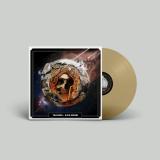
Vienna sludge doom masters TARLUNG return with their most focused and destructive statement to date. Axis Mundi is a massive slab of low tuned heaviness forged in the darkest corners of sludge and doom.
Built on suffocating riffs, dragging tempos, chugging grooves and feral vocal delivery, TARLUNG create a sound that feels both crushing and hypnotic. The band move between oppressive sludge weight, bleak doom atmospheres and abrasive noise soaked tension, shaping long, immersive compositions that pull the listener into a collapsing sonic landscape.
While rooted in nasty, direct sludge doom, TARLUNG also explore experimental textures, subtle dynamic shifts and rare moments of contemplation within the chaos, only to be swallowed again by waves of uncompromising brutality. This is an album made for listeners who want weight, tension and depth, not just volume.
For Fans Of: YOB, Crowbar, Weedeater, Iron Monkey, Dopethrone, Thou, SUMA

- 1: 00 M.p.h
- 2: Blue Rock
- 3: Destiny
- 4: The World’s Insane
- 5: If I Were King
- 6: Out Of The Way
- 7: Dirty Money
- 8: Situation Negative
- 9: Rock’n’roll Lullaby
“100 M.P.H.”, Vardis' debut album, recorded live at London's Electric Ballroom and released in 1980 by Logo Records, is now considered one of the milestones of the immortal NWOBHM. However, Vardis' roots go back to 1977, when they formed in Wakefield under their original name, Quo Vadis. The trio quickly began recording demos, followed by their first 7“ EP ”100 M.P.H.," which was released in 1979 on Redball Records and is now considered a valuable collector's item. In addition to the raw, almost punk-like original versions of “100 M.P.H.,” “Blue Rock,” “Destiny,” and “The World's Insane,” “100 M.P.H. '79 Revisited” compiles five other early recordings by Vardis. The audio data for “100 M.P.H. '79 Revisited” was restored and mastered by Patrick W. Engel at his Temple Of Disharmony in September 2025. The CD version of “100 M.P.H. '79 Revisited” includes exclusive versions of “Blue Rock,” “Dirty Money,” and “The World's Insane,” recorded at Ohm Studios in July 1978.
- 1: You And Me
- 2: Living Death
- 3: Night Light
- 4: My Victim
- 5: Labyrinth
- 6: Heavy Metal Hurricane
- 7: Hellpike
- 8: Riding A Virgin
- 9: Vengeance Of Hell
- 10: Watch Out! (Bonus Track)
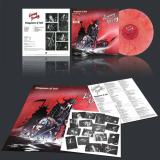
When asked about the founding fathers of German thrash metal, band names such as Kreator, Sodom, and Destruction come to mind. Perhaps even Tankard. The name Living Death is usually not among them. There is a simple reason for this. Similar to the Swiss band Hellhammer, Living Death from Velbert were simply a tad too extreme for most fans and the press. Thorsten “Toto” Bergmann's truly shrill vocals and the poor production of the first two (legendary) albums did not make it easy for the public to adequately assess the band's musical significance. Living Death was founded in 1981 by the two Kelch brothers, Reiner on guitar and Dieter on bass. In the early days, guest drummer Eric sat behind the drums. The line-up was completed by Frank Fricke on second guitar and the aforementioned singer Thorsten “Toto” Bergmann. Living Death recorded their first demo with three tracks in 1981, which earned them a deal with the Belgian label Mausoleum Records. A year later, their debut album “Vengeance of Hell” was released, which actually suffered from its very thin (and treble-heavy) production (in 1985, the record was re-released as a remix – with slightly improved results). However, the below-average production should not obscure the fact that “Vengeance of Hell” offers a few timeless thrash metal classics with “My Victim,” “Heavy Metal Hurricane,” “Hellpike,” and the title track “Vengeance of Hell.” The raw, unpolished sound of Living Death sounds more contemporary than ever today, 30 years after its initial release. This only proves that it took the music world three decades to catch up with Living Death.
- 1: Broken Freedom
- 2: Key Of Fortune
- 3: Master Of Evil
- 4: Screaming For Mercy
- 5: Mindless Sinner (Demo 1983)
- 6: Higher And Higher (Demo 1983)
- 7: We All Go Back (Demo 1983)
- 8: Heavy Metal Will Never Die
- 9: City Games (Demo 183)
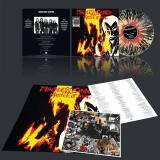
Purple Haze started out in Linköping in 1981. When singer Christer Göransson joined them towards the end of the year, they soon changed their moniker to Genocide (after the Judas Priest song of the same name) and supported local metal heroes Axewitch. A final name change was to follow: In August 1983, the band, now called Mindless Sinner, recorded a four-track demo entitled »Master Of Evil«, consisting of the title track, “Broken Freedom”, “Key Of Fortune” and “Screaming For Mercy”. This attracted Swedish label Fingerprint Records, and they in turn released the NWOBHM-inspired material as a mini-album with an awful cover and getting the band’s name wrong (spelling it Mindless Sinners). By then, the line-up of the band was Anders Karlsson (bass), Magnus Danneblad (guitar), Jerker Edman (guitar), Tommy Johansson (drums) and vocalist Christer Göransson. »Master Of Evil« originally saw the light of day on Fingerprint in January 1984. Christer Göransson takes us back to the early days of Mindless Sinner saying: “We wanted to record an album, but we couldn’t afford the studio cost. We were lucky to win a music contest, and the price money paid for the studio. I remember walking into the studio, and we thought it was like a spaceship in there, with all the buttons and flashing lights everywhere. We recorded the four songs that would become »Master Of Evil«. We then gave the tape to the Axewitch guys, and they played it to their record label at the time Fingerprint/Web Records and they liked it so much that they signed us as well.” Over the years, the music of Mindless Sinner has often been compared to the Tygers Of Pan Tang from England but Christer Göransson doesn’t see too many similarities: “We really love Tygers Of Pan Tang but I don’t think they were a big influence. It was more Judas Priest, Iron Maiden, Saxon, Black Sabbath, Ozzy, Dio etcetera. That kinda stuff.” In addition to the four tracks of the original edition of »Master Of Evil«, the current High Roller Records pressing also contains the five songs of the band’s first demo tape from early 1983 (including “Mindless Sinner”, “Higher And Higher”, “We All Go Back”, “Heavy Metal Will Never Die” and “City Games”). All nine tracks were mastered by Patrick W. Engel at his Temple Of Disharmony in November 2025. Cutting by SST Germany on Neumann machines for maximum quality on all levels ... The ultimate audiophile re-issue of this Swedish metal classic!
- 1: We Go Together
- 2: I'm Gonna (Have Some Fun)
- 3: Turn On The Power
- 4: Live And Die
- 5: Left Out On My Own
- 6: Here She Comes Again
- 7: Standing On The Stage
- 8: Voice Of The Doomed
- 9: Tears Of Pain
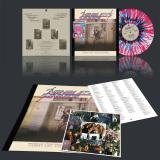
Purple Haze started out in Linköping in 1981. When singer Christer Göransson joined them towards the end of the year, they soon changed their moniker to Genocide (after the Judas Priest song of the same name) and supported local metal heroes Axewitch. A final name change was to follow: In August 1983, the band, now called Mindless Sinner, recorded a four-track demo entitled »Master Of Evil«, consisting of the title track, “Broken Freedom”, “Key Of Fortune” and “Screaming For Mercy”. This attracted Swedish label Fingerprint Records, and they in turn released the NWOBHM-inspired material as a mini-album with an awful cover and getting the band’s name wrong (spelling it Mindless Sinners). By then, the line-up of the band was Anders Karlsson (bass), Magnus Danneblad (guitar), Jerker Edman (guitar), Tommy Johansson (drums) and vocalist Christer Göransson. »Master Of Evil« originally saw the light of day on Fingerprint in January 1984. This was followed by the second album »Turn On The Power« in 1986 as Christer Göransson explains: “Well, »Turn On The Power« was actually recorded in October 1984, the same year as »Master Of Evil« was released. But the record label was almost out of business by 1985, so as a result »Turn On The Power« didn’t come out until January 1986, and shortly after the label went bust.” Just like on the debut, the cover was once again pretty weird. “Same story,” says the singer. “Blame the label again. We wanted a band photo for the cover but once more Fingerprint didn’t listen. We didn’t know who this girl was at all. And once again we saw the cover for the first time when we visited our local record store.” “I guess »Turn On The Power« was more of a straight heavy metal album compared to »Master Of Evil«,” describes Christer Göransson the band’s follow-up record, “better playing and better songs on »Turn On The Power«. Even though we love »Master Of Evil«. I guess it didn’t sell that much as the label went bankrupt, but the reactions were great.” Mindless Sinner played as much as they could in Sweden at the time but didn’t venture outside their home country. Over the years, their music has often been compared to the Tygers Of Pan Tang from England but Christer Göransson doesn’t see too many similarities: “We really love Tygers Of Pan Tang but I don’t think they were a big influence. It was more Judas Priest, Iron Maiden, Saxon, Black Sabbath, Ozzy Osbourne and Dio.” Shortly after the release of »Turn On The Power«, the band cut their name short to Mindless. According to Christer Göransson, this is why: “It was the sign of the times really. We wanted a more melodic kinda style and we just thought it was better to change the name to Mindless. But looking back now we should have stuck to our guns.”
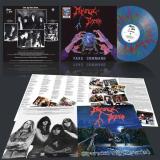

Manilla Road's »The Courts Of Chaos« album was originally released in 1990. It was the band's last release for Black Dragon and also the last release before the band temporarily split up (if we do not take 1992's »Circus Maximus« into account, which was actually supposed to be a solo album). All in all it was a very tough time for Manilla Road. When he was still alive, Mark Shelton commented in an exclusive interview: "Yes, you are correct with all of that. Our releases were not selling as well as they had years before and it seemed like metal in general was having a hard time surviving the times that followed the conversion to CD technology. Right after Manilla Road broke up, I started putting together a solo project that accidentally turned into a band. So we named it Circus Maximus and signed a deal with Black Dragon but they decided to release it as a Manilla Road album because they thought it would sell better. »The Courts Of Chaos« was the last album that was a real Manilla Road project on Black Dragon." “»The Courts Of Chaos« was a tough album to get done because the atmosphere within the band was tense, to say the least”, continued The Shark. ”We all knew it was going to be the end of an era and that this line-up would most likely never do another album.” Although »The Courts Of Chaos« might not be the strongest Manilla Road effort, Mark did not consider it a “throwaway album” whatsoever: “It does not seem to get mentioned as much as many other albums of The Road. But when it does come up, it seems like that person is really sold on the project being one of our better ones. It does, in my opinion, have some really killer songs on it. 'Dig Me No Grave' is still in our show. It's always a challenge to play but I love doing that one live and it still seems to appeal to our audience. “ Another highlight on »The Courts Of Chaos« is "DOA", a cover of a Bloodrock number. Manilla Road were not known for playing too many covers. Mark Shelton explained: "I grew up in that era and yes, I love that old stuff and could be called a collector of sorts, I guess. This was the only cover song that Manilla Road has ever put on an album. We chose this song because it was the only one that all three of us could agree upon. I wanted to do some obscure hit from the old days and turn it into a Manilla Road style song. I'm still fairly fond of the version and still like to listen to it every once in a while."
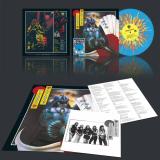
- 1: Someone To Love
- 2: Night Of The Blade
- 3: Rock Me To The Limit
- 4: Warrior Of The Rising Sun
- 5: Unleash The Beast
- 6: Love Struck
- 7: Dead Of The Night
- 8: Lightning Strikes (Straight Through The Heart)
Around 1983 it looked as if Tokyo Blade were destined to become the next Iron Maiden. But somehow it wasn’t to be – history was not kind to them! In the end Tokyo Blade never became the next superstars of the glorious New Wave Of British Heavy Metal movement. “Night Of The Blade” was the follow-up to Tokyo Blade's extremely successful self-titled debut album. The band's second record was originally released in 1984 on the English Powerstation label and contained classic Tokyo Blade songs such as “Lightning Strikes”, “Unleash The Beast” or the title track. On the other hand, Tokyo Blade presented some more melodic numbers such as “Someone To Love” or “Rock Me To The Limit”. This slight alteration of the band's musical direction was partly due to the change of the vocalist (Alan Marsh was substituted by Vicki Wright). Guitarist Andy Boulton comments on the differences between Marsh and Wright: “Vic was a different person to Alan, but Alan had been a friend I had known for quite a long time and was a key figure in the band's early success, it was a sad day when we parted ways. Alan was just different from Vic and he had his own distinct sound. I don't want to talk about who was better or whatever, it's for the fans to decide. The material on 'Night Of The Blade' was all brand new, no leftovers from from Killer or Genghis Khan.” Tokyo Blade's debut (1983) and “Night Of The Blade” (1984) are two of the best albums of the entire New Wave Of British Heavy Metal period. “Night Of The Blade” was recorded by Vicki James Wright (vocals), Andy Boulton (guitar), John Wiggins (guitar), Andy Wrighton (bass) and Steve Pierce (drums). High Roller Records is proud to re-issue this long-deleted classic once again on glorious vinyl.

- A1: Follow Your Love
- A2: That's In My Head
- A3: The Novel Of Our End
- A4: Mother
- A5: I Don't Wanna Know
- B1: My Feet On The Ground
- B2: Invisible
- B3: Streets Of Rage
- B4: In A Porcelain Shop
- B5: What Is Love
Fifteen years after their first album "Time for a Change", and drawing on the experience of two others ("Elephanz" 2017, and "Rien de personnel" 2023), ELEPHANZ now returns with a fourth album that carries the scent of first loves, the kind you sing from the heart with your hands gripping a guitar.
"Love. Hurt. Repeat." tells, across ten songs, the story of a return to oneself, like coming home after years spent roaming the world, only to realize that everything you needed to understand yourself was already there at the starting line.
To help you understand what this new album makes me feel, I'd like to tell you about my first meeting with Jon and Max in 2009, when I became the band's bassist. Sixteen years ago, I discovered these two young men and set off in their family Kangoo van on my very first tour.
Through our early rehearsals around the piano of their childhood, I discovered their love for pop music in all its breadth, always in search of harmonies and melodies that touch the heart in the simplest way and gently ease your sorrows along the way. With them, I learned to appreciate the mainstream hits I had previously dismissed on principle, and I discovered the demanding art of melody as I listened to them sing about love and friendship through unforgettable catchphrases.
Listening today to some of the songs from their new album, I think back to those two young men with a big-city rock look, shut away in the living room of their family home, talking only about leaving that dull countryside behind to live the big life in the capital (Streets of Rage). What I once took for a kind of revenge against the hostile environment of their adolescence was in fact an almost vital need to find their place among others, to feel understood in order to feel at ease in their own skin.
Today, I find them again with the same guitar and the same inexpensive Juno as back then, but with the confidence shaped by years of concerts, writing, studio encounters, and all kinds of experimentation. The music of this fourth album has never been so close to that of their earliest days, but their voices have been set free. They no longer sing about who they dreamed of becoming, but about who they have always been, their most distant concerns, sometimes even their darkest ones, yet always in search of the light.
It is as if ELEPHANZ had to travel all the way around the world to come face to face with themselves again. There is no longer any shame in being who you are, and it is even the best way to understand yourself, to exist and to heal. To heal from grief and heartbreak, to understand the child you once were and the one who carried them (Mother), to forgive yourself and finally learn to love yourself.
That is what makes this record as sensitive as it is powerful and strikingly truthful. It was written and recorded like a cry, live, in just a few weeks, using the instruments of their beginnings: sharp bass and drums, powerful guitars, and synthesizers that are at times soaring, at times carriers of liberating melodies. The art of ballads remains, as does that of universal pop songs.
There is a beautiful urgency here, the urgency of finding oneself again in order to understand oneself through both pain and beauty, and "Love. Hurt. Repeat." is its most perfect expression.
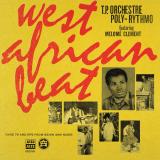
For the last few years Acid Jazz has been the proud custodian of the Albarika Store legacy. Hailing from the small but culturally-significant state of Benin, the label was operational from the late-‘60s until the early ‘80s, and was home to some of the finest, deepest, rawest West African cuts ever. A font of local and regional music, infused with contemporary Western influences, the beating heart of the Albarika sound was the mighty T.P. Orchestre Poly-Rythmo, who in various guises released dozens of recordings for the label, under the leadership of Mêlomé Clément. The intoxicating originality of their sound stems from their combination of folkloric and sacred rhythms of the region, with the modernist sound of soukous, afrobeat, soul and funk. Recorded at EMI Studios in Lagos, these recordings have a unique high fidelity and have been a target for grail-hunting record collectors for decades. For this incredible 2LP collection, Dean Rudland and David Hill compile the Poly-Rythmo 45 releases; 7” single and EP sides lost to the seeds of time. Until now. Brought together for the first time, presented in a beautiful wide spine layout, the 2 LPs present a snapshot of some of the group’s finest work from the ‘70s, their distinctive beat already honed. The printed inner sleeves include images of the rare and collectable original labels and sleeves, along with sleeve notes by Francis Gooding
- 1: Pakkanen
- 2: Maat Mennyttä Soi
- 3: Surmatuli
- 4: Rautaa Ja Tulta
- 5: Musta Yö
- 6: Joka Puun Takaa
- 7: Ne Salaperäiset
- 8: Maan Alainen
- 9: Valhallan Portit
- 10: Verta Ja Tuhkaa
также имеющийся в продаже
Grey/Black "Iron" Vinyl[24,33 €]
Havukruunu's RAUTAA JA TULTA reissued in April Svart Records continue to reissue the albums of Havukruunu, bringing their 2016 album RAUTAA JA TULTA back on the market in April 2026. Originally meant as an EP and recorded before the debut album HAVULINNAAN (2015), RAUTAA JA TULTA contains four added tracks from later sessions and was expanded into an album. ”Rautaa ja Tulta (SPIRITUAL RESILIENCE AND VIGOR, THE IRON AND FIRE OF THE SOUL) are the first 6 tracks recorded in 2014 which cemented the recognizable soundscapes of Havukruunu. These furious songs broke the recording equipment at the time, and the remaining four songs were finished in a separate session in 2016”, comments Stefa. RAUTAA JA TULTA is available now on new limited vinyl colours, housed in a single pocket jacket and comes with an insert.

- 1: Pakkanen
- 2: Maat Mennyttä Soi
- 3: Surmatuli
- 4: Rautaa Ja Tulta
- 5: Musta Yö
- 6: Joka Puun Takaa
- 7: Ne Salaperäiset
- 8: Maan Alainen
- 9: Valhallan Portit
- 10: Verta Ja Tuhkaa
также имеющийся в продаже
Black Vinyl[23,49 €]
Havukruunu's RAUTAA JA TULTA reissued in April Svart Records continue to reissue the albums of Havukruunu, bringing their 2016 album RAUTAA JA TULTA back on the market in April 2026. Originally meant as an EP and recorded before the debut album HAVULINNAAN (2015), RAUTAA JA TULTA contains four added tracks from later sessions and was expanded into an album. ”Rautaa ja Tulta (SPIRITUAL RESILIENCE AND VIGOR, THE IRON AND FIRE OF THE SOUL) are the first 6 tracks recorded in 2014 which cemented the recognizable soundscapes of Havukruunu. These furious songs broke the recording equipment at the time, and the remaining four songs were finished in a separate session in 2016”, comments Stefa. RAUTAA JA TULTA is available now on new limited vinyl colours, housed in a single pocket jacket and comes with an insert.
- 1: Mustan Merkin Enteen Alla
- 2: Kuu Erkylän Yllä
- 3: Yön Torni
- 4: Talvikuu
- 5: Routapanssari
также имеющийся в продаже
Blue Vinyl[25,17 €]
Havukruunu's KUU ERKYLÄN YLLÄ reissued in April Svart Records continue to reissue the albums of Havukruunu, bringing their highly sought after 2021 EP KUU ERKYLÄN YLLÄ back on the market in April 2026. Statement from the band: "There has been a lot of rumors and mystery surrounding the album cover art for Kuu Erkylän Yllä EP. Why was the album cover art different on the cassette version and the Vinyl/CD version at the time of release? The most well-known theory is probably that the original cover art was destroyed with an axe, which is why "the blue cover" ended up only on the cassette release and the damaged artwork could no longer be transferred to the CD/Vinyl versions. We completely deny this rumor: "the blue cover" was not destroyed with an axe, but was run over by a car, and we also confirm that "the blue cover" was not even the original cover art. The original cover art has now been found from the archives and the reissue published by Svart has now been made for the first time ever with the cover art that the release was originally intended to have." The Quorthonian homemade assault Kuu Erkylän Yllä contains Havukruunu‘s earliest and, at the time on recording, latest compositions combined, reworked and finished finally to do justice for the original vision of the band. Journey to the pitch-black star-night of Erkylä, where the Night Tower stands ever vigilant under the sign….. Presented for the first time with the original, previously unused album art by Heidi Kosenius, Kuu Erkylän Yllä is available now on new limited vinyl colours and housed in a gatefold sleeve. Kuu Erkylän Yllä was performed during first four full moons of MMXXI by Stefa - Voice, Guitars, Synth Bootleg-Henkka – Guitars Sinisalo - Electric Bass Guitar Kostajainen - 125 INTERCITY EXPRESS
- 1: Mustan Merkin Enteen Alla
- 2: Kuu Erkylän Yllä
- 3: Yön Torni
- 4: Talvikuu
- 5: Routapanssari
также имеющийся в продаже
Black Vinyl[24,33 €]
Havukruunu's KUU ERKYLÄN YLLÄ reissued in April Svart Records continue to reissue the albums of Havukruunu, bringing their highly sought after 2021 EP KUU ERKYLÄN YLLÄ back on the market in April 2026. Statement from the band: "There has been a lot of rumors and mystery surrounding the album cover art for Kuu Erkylän Yllä EP. Why was the album cover art different on the cassette version and the Vinyl/CD version at the time of release? The most well-known theory is probably that the original cover art was destroyed with an axe, which is why "the blue cover" ended up only on the cassette release and the damaged artwork could no longer be transferred to the CD/Vinyl versions. We completely deny this rumor: "the blue cover" was not destroyed with an axe, but was run over by a car, and we also confirm that "the blue cover" was not even the original cover art. The original cover art has now been found from the archives and the reissue published by Svart has now been made for the first time ever with the cover art that the release was originally intended to have." The Quorthonian homemade assault Kuu Erkylän Yllä contains Havukruunu‘s earliest and, at the time on recording, latest compositions combined, reworked and finished finally to do justice for the original vision of the band. Journey to the pitch-black star-night of Erkylä, where the Night Tower stands ever vigilant under the sign….. Presented for the first time with the original, previously unused album art by Heidi Kosenius, Kuu Erkylän Yllä is available now on new limited vinyl colours and housed in a gatefold sleeve. Kuu Erkylän Yllä was performed during first four full moons of MMXXI by Stefa - Voice, Guitars, Synth Bootleg-Henkka – Guitars Sinisalo - Electric Bass Guitar Kostajainen - 125 INTERCITY EXPRESS

Skull Snaps 1973 album on GSF is iconic because of the huge number of times tracks on it have been sampled by the Hip-Hop community.
The album, produced by genius George Kerr, and featuring the talented Ervan Walters and Sam Culley, was released with a flourish and in a classic gatefold sleeve but GSF floundered and the album flopped. It’s discovery by Rap music makers has been well documented but before that happened it was discovered by UK Soul detectives in the 70s.
As the Northern Soul scene shapeshifted on from 60’s Motown sound alikes into contemporary black music a whole new music rosta took over the dancefloors. And just as Gil Scott-Heron and Brian Jackson’s “The Bottle” got its debut British spins in the North, so did a whole slew of other acts - includung the Skull Snaps.
“My Hang Up Is You” became a single from the album and an underground anthem. One venue that became synonymous with the track was the Ritz in Manchester where the legendary Soul and Jazz -Funk All-Dayers helped shape UK dance music culture. Paul Mooney has created two 2026 remixes - one vocal and one instrumental - that pay homage to that 1970s golden era when Soul and Disco gelled into an unstoppable force. Fittingly both remixes have been dedicated to those Ritz All-Dayers.

Nickodemus is a globally respected DJ and producer who has been touring nonstop since the mid-1990s, consistently drawing capacity crowds at clubs and festivals worldwide. As a producer, he has released five acclaimed albums (Soul & Science, A Long Engagement, Endangered Species, Sun People and Moon People) and curated eleven volumes of the influential Turntables on the Hudson compilation series. His work bridges hip-hop, house, jazz, and global sounds, highlighted by collaborations and cultural milestones including the Jungle Brothers' genre-defining legacy and the enduring house-rap classic "I'll House You" with Todd Terry. Nickodemus' hit "Mi Swing Es Tropical" (with Quantic & the Candela All-Stars) has surpassed 50 million streams and featured prominently in the film Chef. He has received extensive international press (Billboard, Rolling Stone, The FADER, Paste) and widespread radio support from tastemakers such as Gilles Peterson, BBC 6 Music, KCRW, and KEXP.
b B1: Monk-One Remix feat. Monk-One
b B1: Monk-One Remix [feat. Monk-One]
[b] B1: Monk-One Remix [feat. Monk-One]
[b] B1 | Monk-One Remix [feat Monk-One]

- A1: Come On Then
- A2: Trigger Bang Feat Giggs
- A3: What You Waiting For?
- A4: Your Choice Feat Burna Boy
- A5: Lost My Mind
- A6: Higher
- A7: Family Man
- B1: Apples
- B2: Three
- B3: Everything To Feel Something
- B4: Waste Feat Lady Chann
- B5: My One
- B6: Pushing Up Daisies
- B7: Cake

Brisk is the debut album by Polish-Hungarian flutist Juli Deák (*2000), based in Budapest. Comprised of seven solo flute pieces, the album offers a concentrated snapshot of Deák’s musical world—one shaped by classical training, experimentation, improvisation, and folk influences.
The project began taking shape in 2021, as Deák moved away from the polished ideals of classical performance toward a more personal and exploratory approach. Early fragments only revealed their meaning in front of an audience, whose responses encouraged her to continue developing the material. With over 15 years of musical experience, Deák combines technical precision with a willingness to embrace vulnerability and chance.
Breathing lies at the heart of Brisk. More than a functional necessity, it becomes an expressive and structural force. Through close listening, breath feels tactile and intimate, placing the performer almost within reach. Techniques such as circular breathing, overblowing, harmonics, singing while playing, and wind tones allow the flute to unfold into multiple voices, while percussive key clicks provide a steady rhythmic pulse.
Deák foregrounds sounds often excluded from classical music—breathy tones, unstable pitches, squeaks, and audible inhalations—treating them as essential expressive tools. This focus reflects her long-term exploration of the flute’s physical and expressive limits and connects directly to her ongoing solo practice, The Breathing Project, of which Brisk is a distilled release.
Active across classical, contemporary, jazz, and experimental scenes, Deák has collaborated with ensembles including Konstmusik-systrar and the VENI ensemble, and performed at festivals such as Norbergfestival and Ung Nordisk Musik.
Across its seven pieces, Brisk balances immediacy and rigor, inviting focused listening while remaining open and bodily. It documents a musician in motion, attentive to sound as sensation, gesture, and breath, and committed to honesty
