“Great Doubt” is the third full length LP by Danish composer Astrid Sonne. Throughout her acclaimed discography, Astrid Sonne has been carefully crafting different moods through electronic and acoustic instrumental endeavours. On “Great Doubt” this skill is refined, now with the distinct addition of the composer's own vocal in front. The tone of each track is unmistakably Sonne’s, structured around contrasts through an impeccable sense of timing. Lyrics on the album are sparse, merely highlighting different scenes or emotional states of being, leaving the music to fill in the blanks. Yet they also form a pattern of ambiguity, consolidated through the album title, searching for answers through looking at how and what you are asking, questions for the world, questions of love. The viola, a trusted companion since Astrid Sonne’s youth, appears effortlessly throughout the album, fully integrated into the sonic universe; through a pizzicato driven arrangement in the poignant track “Almost” or along with booms and claps in mutated cinematic stabs during “Give my all”, paraphrasing Mariah Carey's 1997 ballad. Yet the string section also gives way to explorations of woodwinds, counterbalancing the bowed movements with digital brass and airy flutes. Finally, beats and detuned piano are fresh additions to the soundscape, cementing how Sonne’s practice is always evolving into new territories. In fall 2022, Astrid Sonne relocated from Copenhagen with its peers of artists such as ML Buch, Erika de Casier and Smerz, to live in London, where musicians of the South-East London scene like Coby Sey, Lolina, Still House Plants and Mica Levi provide a new inspirational framework. “Great Doubt” bears witness to both of those geographical locations, yet finds itself in its own unique space, in many ways due to the presence of Sonne's voice throughout. A voice that has always been present in her work, but never fully explored as a solo instrument before now. Astrid Sonne elaborates on the wish to work more in depth with the voice: “I come from a tradition of choir singing where I’ve used my voice as a way of creating unity with other voices. I’ve disciplined my voice in a certain way and this album is an exploration of me trying to find my own voice as an instrument, as a communicator, as a new way of being honest.” Questions take up a central role throughout the album. The doubt is both a blessing and a curse, always lying in-between, acting as both what holds back and drives forward. A metamorphosis not going anywhere. The great doubt takes place in a space of courage, chances, love, loss, gifts and surprises. Genre: Electronic / Experimental
quête:com sin
- In Kommer Gösta
- Du Är Min Ende Vän
- Missan Spinner
- Subjekt Och Predikat
- Dyngan Rinner I Takt
- Om Ni Tycker Jag Undviker Er
- Ingenting I Din Hjärna
- Stanna Där Ni Är
- Naturen
- Scoutvisan
- Jag Vill Va I Fred
- En Liten Stuga
- Lille Pelle
- Godda' Gösta
- Min Hund
- Blomman
- Mor Anka
- Men Va Fanken
- Henning I Sin Presenning
- Hedersmannen
- All Makt Åt Folke
- Den Sista Veckan
- Får Jag Spy I Ditt Paraply?
- Reinkarnerad Exakt Som Förut
Reissue of Philemon Arthur and the Dung's debut album, originally released in 1972. Comes with a bonus 12" where Philemon Arthur play a Bob Hund track, and Bob Hund play Philemon Arthur. Two still anonymous youngsters from Skåne, in the far south of Sweden are making music that divide music Sweden in two halves with their bold vocals, experimental lyrics and fantastic songs. Either you love them or the opposite. Clearly there are influences from early rock bands as Velvet Underground and Rolling Stones and others. But they make something completely of their own out of it with accordion, guitar, biscuit jars, granny's radiator and some other stuff. 1972 they were awarded a Swedish Grammis. Of course there was no one to receive it. The Grammy awards were shut down for 15 years after that.
Legendary postmodern, post punk, post human, past caring collective Mekons return with a brand-new album for 2025. Their first release on Fire Records, ‘Horror’ a collection of songs written in late 2022 but providing a horribly prescient reflection of the world in its current miasma and how we got here. ‘Horror’ looks at history and the legacies of British imperialism with mashed up lyrics set against a typically eclectic sound that amalgamates everything from dub, country, noise, rock & roll, electronica, punk, music hall, polka and you can even take your partner for a nice waltz on ‘Sad And Sad And Sad’. The roots of their global sound reflect their nomadic journey through time and space from Leeds to California in the West and Siberia in the East and is woven into the fabric and intricacies of their song creation… Sounding like The Chills and R.E.M circa the I.R.S Records years, ‘Mudcrawlers’ sees just about the whole band joining Jon Langford on vocals speaking of Irish famine and refugees journeying to Wales. ‘War Economy’ shivers in the cold of such Boroughs spiked one-liners: “Clinical coercion will not achieve dominance!” Sounding like its straight off a Jenny Holzer neon sign (she of Abuse Of Power Comes As No Surprise), it’s held together by a disgruntled swaggering riff that underpins an explosion of disquiet. Meanwhile, Rico takes the lead on the maliciously luscious ‘Fallen Leaves’ an appalled and appalling Hammer Horror take on climate breakdown reminiscent of Rolling Thunder Dylan, that recalls The Pogues at their most introspective, its Celtic twilightism augmented by Susie Honeyman’s keening violin as the dying sun sinks down and the river Styx flows on in the pitch black night. Almost 50 years in the making, these Mekons continue to astound, their sound, sentiment and method of delivery blended to perfection by bass player and studio wizard, Dave Trumfio. The Mekons are Jon Langford, Sally Timms, Tom Greenhalgh, Dave Trumfio, Susie Honeyman, Rico Bell, Steve Goulding, and Lu Edmonds. "Effortlessly eloquent post-punks" Pitchfork // “The Mekons are still vital” Rolling Stone // “The most revolutionary group in the history of rock ‘n’ roll,” Lester Bangs // UK Tour 8-15 May 2025 (including London, Manchester, Glasgow, and more).
- 1: Pennies From Heaven
- 2: Sugar Blues
- 3: Finger Filibuster
- 4: Little Jazz
- 5: Jive At Five
- 6: Ciribiribin
- 7: I Can't Get Started
- 8: I Don't Wanna Be Kissed
Released in 1989 by the noted audiophile label Chesky Records, Portraits is a testament to the prodigious talent of the legendary trumpeter, flugelhornist, and jazz educator Clark Terry.
The first of four albums for the Chesky label, Portraits was recorded when the St. Louis-born hornblower, then 68 years old, was a much-venerated jazz elder. By then, he had 35 albums under his belt and boasted a resume that included stellar collaborations with Duke Ellington, Charles Mingus, Quincy Jones, and Dizzy Gillespie.
For Portraits, produced by David Chesky, Terry assembled a quartet comprising pianist Don Friedman, bassist Victor Gaskin, and drummer Lewis Nash. With Terry alternating between flugelhorn and muted trumpet while also showing off his chops as an occasional vocalist, the quartet breezes through a blend of familiar jazz standards, like 'Pennies From Heaven,' and Terry's hard-driving original tune, 'Finger Filibuster,' where he shows off his athletic scat singing.
Other highlights include the Louis Armstrong favorite 'When It's Sleepy Time Down South' and 'Sugar Blues,' a nostalgic nod to New Orleans jazz. The album is reissued on 180g One Step Pressing Vinyl LP and SACD Hybrid Stereo.
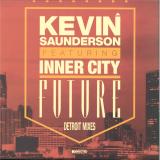
In 2011 Kevin Saunderson, Ann Saunderson and Paris Grey, collectively known as the legendary band Inner City, released ‘Future’, their first entirely new material since taking a break in 1996, written and produced in collaboration with another Detroit legend, namely Kenny Larkin, and the very talented producer / remixer Orlando Voorn. The track marked a welcome return for a group that combined the tough, futuristic grooves of the Detroit scene with the vocal energy of R&B and gospel and helped to define the period in which house and techno moved from underground phenomena to top 10 material, paving the way for hundreds of dance hits to come.
The Kenny Larkin remix devastated dancefloors at the time and continues to do so over 10 years since its release. Now fully reissued backed with the Carl Craig edit from the original pressing and the MK AW Deep Dub which had previously only seen a one-sided hand stamped white label vinyl outing.
Ranil is undoubtedly the most unconventional figure among the greats of Amazonian cumbia, earning a well-deserved place alongside iconic bands like Los Mirlos, Los Wembler's, and Juaneco y su Combo. This compilation offers a glimpse into the vast musical output Ranil created in the late 1970s and early 1980s. Psychedelia, rock fusion, cumbia, salsa, mambo, Amazonian folk_ you'll find all these flavors blended into the vibrant, jungle-rich sound Ranil crafted. DESCRIPTION Ranil is undoubtedly the most unconventional figure among the greats of Amazonian cumbia, earning a well-deserved place alongside all the better-known iconic bands. He worked as a teacher, criollo guitarist, radio host, TV entrepreneur, and politician, but gained lasting fame as the founder of Ranil y Su Conjunto Tropical in the 1970s. By 1968, around the same time Los Destellos were making waves in Lima, groups like Los Wembler's de Iquitos and Juaneco y su Combo began electrifying cumbia in Iquitos. This new genre, dubbed Amazonian cumbia, exploded nationwide in 1973, thanks to hits by Juaneco y su Combo, Los Mirlos, and Los Wembler's. The success these bands achieved spawned dozens of other groups from the Amazon. Ranil, always a visionary, recognized the movement's potential and joined forces through his first single recorded on the Dinsa label in 1974. Unhappy with the contractual terms, he went on to found Producciones Llerena, the label on which he would release the rest of his discography. Over the years, Ranil y su Conjunto Tropical featured guitarists like Límber Zumba and Luis Nigro, while Ranil remained the lead vocalist and bassist for group. Zumba and Nigro had already played with other regional bands and written songs for groups like Los Destellos and Los Mirlos. This compilation offers a glimpse into the vast musical output Ranil created in the late 1970s and early 1980s, bringing together 14 tracks from the band's 10 LPs. These records have always been hard to come by as, despite being recorded in Lima, they were distributed by Ranil from Iquitos. Psychedelia, rock fusion, cumbia, salsa, mambo, Amazonian folk_ you'll find all these flavors blended into the vibrant, jungle-rich sound Ranil crafted.
- A1: 0:00Am
- A2: B-Boy Literature
- A3: Nobel Naughty De Award
- A4: Antarctic Story
- A5: 5Th Wheel 2 The Coach
- A6: Summer Jam '95
- B1: Gigolo 7
- B2: Dubidu What?
- B3: The Late Show
- B4: From Joy, Anger, Sorrow And Happiness
- B5: Ultimate Breakfast & Beats
- B6: 8:00Am
An analog record commemorating the 35th anniversary of the debut of Scha Dara Parr, a leader in the Japanese hip-hop scene, and the 30th anniversary
of the release of their masterpiece "5th WHEEL 2 the COACH".
An analog record containing "5th WHEEL 2 the COACH", the first album released by Scha Dara Parr after moving to EMI and their 5th album overall, released
in 1995 under the supervision of Scha Dara Parr, on a single LP!
Includes the three singles "Dubi Do What?", "From Joy, Anger, Sorrow and Happiness", and "Summer Jam '95".
Torn traverses the charnel realms of the grey area on his debut EP for DNO, ‘Taiga’. Steely beats and stony bass coalesce into chimeric rhythms across four enthralling constructions; techno and drum & bass seeping into each other like liquids in a solution, changing the very nature of both.
Opening with a solemn march shrouded in swathes of noise and jitter that blur the soundscape like the death throes of some unlucky video game character, ‘Wreak Havoc’ is an incessant builder. When it finally lets loose the chaos promised by its title, reinforced breakbeats rain down like great factory apparatus hammering out metal plates.
‘Whalebone’ is of a similarly industrial bent. Like a head full of rotor blades, it ripples with densely packed polyrhythms that rattle and whirr, new layers emerging from the churn to grab the consciousness before sinking back into the melee.
‘Taiga’, meanwhile, channelling the cold, ancient immensity of its boreal forest namesake, progresses at a plant-like pace — unhurried and purposeful. It's droning low-end seems to mask secrets, while a canopy of tangled percussion cuts angular shapes through the shadowy undergrowth.
And on ‘Stay’, the complex drumwork vibrates so rapidly around the track’s irradiated pads as to almost merge with them completely, rhythm and ambience becoming a singular hypnotic form.
A natural fit for DNO, Torn’s mystic machine music opens new pathways for the label’s darkling voyage through sound.
Rhythms of postmodern realism at the very bottom of the DNO.
Since our first contact with NYC based producer Thavius Beck in 2018, he sent us over 100 unreleased tracks, or beats, as he calls them. 25 of them have been selected for releases on U-TRAX, good for over 2 hours of music, across this album and the Lovesick EP.
Growing up in LA, Thavius Beck entered the hip-hop scene as member of Global Phlowtations, and released several solo albums under the Adlib moniker. In later years, he released five albums under his own name on labels like Mush, Big Dada and Plug Research, and also produced albums for artists like Saul Williams and K‑the‑I???, and did some remixing for amongst others Nine Inch Nails.
Nowadays he combines making music with a career as a succesful certified Ableton and Bitwig trainer and as a music teacher at Berklee NYC.
The tracks vary in style a lot, but what they have in common is that they either are moody – in U-TRAX lingo: deep - or they are drum heavy. The common denominator would probably be 'experimental/instrumental hip-hop', reminiscent of producers like Flying Lotus. People have tried all sorts of comparisons to pinpoint Thavius' sound, ranging from 'between DJ Shadow and Orbital' and 'a mix of Massive Attack and The Orb'. None of these are spot on, yet quite a few of these tracks feel like a happy marriage between hip-hop beats and techno sounds.
Despite the fact that some tracks are 20 years old and have been made with widely different gear (one track was even made on a PlayStation 2), this selection sounds remarkably balanced, yet diverse.
From the irresistible single 'Lovesick/Still Sick' to the dark and massive 'Birdsong' (that echoes the sound of his popular song 'Atmos'), and from the head-nodding 'Work!' to the soothing 'Reunited With The All' - if this collection showcases anything, it's Thavius' brilliant production and composing skills, as well as his wizard-level sampling techniques. The result is a luscious electronic music album with a broad appeal.
Available on double 180 grams colored vinyl vinyl, comes in gatefold picture sleeve.
Repress!
The latest by Chicago trio Purelink unspools an alchemical suite of fractal ambient, dusted dub tech, and interstitial electronica, born from a spirit of unity and flux: “All hands on the mixer, forever finding the sound.” Since forming in 2020, Tommy Paslaski (aka Concave Reflection), Ben Paulson (aka Kindtree), and Akeem Asani (aka Millia) have convened regularly in a shared studio to workshop, swap samples, and hone their collective muse via “the endless possibilities of a laptop,” seeking “something different than we would make on our own.”
Distilled from extended compositions prepared and performed across 2022 in Chicago, Kansas City, New York, and Los Angeles, Signs captures their chemistry at its most liquid and immaterial, mapped in mutating systems of glitch, glass, rhythm, and space. It’s music alternately subdued and subterranean, elevated and remote, attuned to the flickering sentience of outer spheres.
Leipzig producer Old Man Crane makes her debut here with a new four-track 12" that explores new deep dubstep frontiers and subterranean bass excellence. Beatrice M's Bait label has been busy in the two years since it launched, as this marks a 16th outing, and their previous One Hundred and Fifty Steps compilation actually featured a first track from Old Man Crane. This fuller offering is class indeed, with 'Hepp' rolling on a nice, rounded, thudding kick as smattered tops tap out a rhythm. 'Brew' is darker and more driving with a rolling bass energy and eerie urban atmosphere up top. 'Veil' is a slower rhythm with blurting sounds and lonely bird calls and 'Quork' then ups the pace with potent dub weight and searching synths. A fine solo start to life on vinyl for Old Man Crane.
Limited Press, full sleeve & centre label design by Ciaran Birch. Mastered by Beau @ 1087 Studios.
The Babyfather members have been on a roll recently, and this one is no different. Following 24's single 'Open Up' for Accidental Meetings, Tusk & Massiah link up once again on the Bristol imprint.
Lord Tusk serves up a killer beat on Might Be The One, a raw and breezy stepper with Tusk's trademark drums and synth work sprinkled all over. With it's tempo coming in on the slightly quicker side for the dance floor, James Massiah's flow is perfect as per to meet it, ice cold delivery from the London poet with sharp verses and lyric work. Another gem from two of London's finest.
- A1: The Coming (Intro)
- A2: Do My Thing
- A3: Everything Remains Raw
- B1: Abandon Ship
- B2: Woo Hah!! (Got You All In Check)
- B3: It's A Party (Feat. Zhané)
- C1: Hot Fudge
- C2: Ill Vibe (Feat. Q-Tip)
- C3: Flipmode Squad Meets Def Squad (Feat. Jamal, Keith Murray, Lord Have Mercy, And Redman)
- D1: Still Shining
- D2: Keep It Movin' (Feat. Charlie Brown, Dinco D, And Milo)
- D3: The Finish Line
- D4: End Of The World (Outro)
In 1996, Busta Rhymes delivered his debut album, The Coming, three years after the Leaders of the New School unofficially disbanded. Though his talents were evident on those Leaders of the New School releases, Busta went on a series of features that only built up the public's desire for a solo Busta album. Right out of the gate, Busta dropped his classic debut single "Woo Hah!! (Got You All in Check)" that made it abundantly clear he was to be mentioned among Hip Hop's greatest solo artists. The energy and originality packed on that one song set a tone for the album that displays Busta's raw talent and ability to bend words with his ever rambunctious flow. The album features production by Easy Mo Bee, DJ Scratch, Q-Tip, and J Dilla. Songs such as "Everything Remains Raw", "Abandon Ship", and "Still Shining" all rise above as The Coming's stand-out tracks, but "Ill Vibe" is the album's crown jewel moment. Busta sounds right at home over this J Dilla beat, trading verses with his Native Tongue cohort Q-Tip. The Coming was a critical and commercial success for Busta Rhymes. It reached #6 on the Billboard 200 chart in 1996 and has since received a platinum certification from RIAA. As mentioned, The Coming boasts the hit single "Woo Hah!! Got You All in Check " which reached #8 on the Billboard Hot 100 chart in 1996. It was nominated for a 1997 Grammy Award for Best Rap Solo Performance. It also ended up sporting another hit single, It's a Party featuring Zhané. The Coming shows amazing variety where Busta can break free from the bells and the whistles of the Busta Dungeon Dragon flow to explore other ways of leaving our jaws open by his incredible lyricism. The Coming surely lives up to its title, as Busta delivers a performance that ignited his impeccable solo career.
- A1: Got A Memory
- A2: Entangled
- A3: Every Journey From Here
- A4: Satellites
- A5: The Sky’s On Fire
- B1: We Don’t Dream Their Dreams
- B2: Settle Down
- B3: Falling
- B4: First Time Caller
- B5: Daylight
- B6: Going To The Moon
Get ready for a musical journey like no other as Apollo Junction, the dynamic and innovative indie rock sensation, prepares to launch their eagerly awaited new album, ’What In The World’ on August 22nd. The members of Apollo Junction hail from Leeds, UK. Known for their electrifying live performances and genre-blurring sound, the band has captured the hearts of music enthusiasts worldwide.
With a strong and dedicated fan base, Apollo Junction continues to push the boundaries of their craft, creating music that resonates on a profound level. Apollo Junction’s new album ‘What in the World’ has been years in the making - born from highs, lows, countless gigs, and all the chaos in between. It’s the most honest version of the band yet, a record shaped by every late-night argument, every breakthrough, every crazy story they have ever told each other.
Recorded at Chairworks Studio with David Watts (The Reytons, OMD, Paul Heaton, and Kaiser Chiefs) the album also features tracks co-written with Eliot Kennedy (known for his work with Bryan Adams and the Spice Girls) and includes a track with a powerful guest vocal from Brianna Corrigan of The Beautiful South. Lead singer Jamie Williamson explains the importance of the album: “This album feels exactly right for where we are now. Every track is a snapshot—of getting lost, finding our way back, and remembering why we started. It’s about making something that feels like home. We went looking for meaning and realised it was right in front of us: the band, the songs, this record. ‘What in the World’ isn’t just a title—it’s the answer we’ve been chasing all along.” Leeds-based quintet Apollo Junction is made up of Jamie Williamson (singer) Matthew Wilson (guitarist), Ben Hope (bassist), Jonny Thornton (drummer) and Sam Potter (keyboards). Their shared love of live music and dedication to performing, coupled with an incredible hard-work ethic has taken them on this magical journey which has included support slots for Shed Seven, Kaiser Chiefs, Richard Ashcroft and performing at festivals including the prestigious Isle of Wight Festival. Coming up this summer, the lads will be playing with Blossoms, Manic Street Preachers and Doves
- Buick Door
- Nora
- Bitter Root Lake
- Kentucky Cave
- Seventeen
- Wishing Stone
- In A Bungalow
- Tennessee
- Hallelujah
- Bluff
Im Jahr 2018 war Case Oats so etwas wie eine nebulöse Idee. Die Bandleaderin Casey Gomez Walker hatte bereits in Bands gespielt, und ihr Projekt Case Oats hatte eine selbst veröffentlichte Single, aber war keine Band, bis ein auswärtiger Freund sie fragte, ob Case Oats eine Show in Chicago headlinen könnten. Casey bluffte - ja, sie hatte eine Band, ja, sie waren bereit, eine Show zu spielen - und machte sich an die Arbeit. "Es war ein bisschen wahnhaft von mir", sagt sie, "aber ein bisschen wahnhaft zu sein hat ja auch etwas für sich." "Last Missouri Exit", das Debütalbum von Case Oats, ist ein bemerkenswert sicheres Album, bei dem sich die Band - Spencer Tweedy (Schlagzeug), Max Subar (Gitarre, Pedal Steel), Jason Ashworth (Bass), Scott Daniel (Fiddle) und Nolan Chin (Klavier, Orgel) - um Gomez Walkers Stimme und Gitarre gruppiert. "Last Missouri Exit" ist eine Sammlung scharf gezeichneter Charakterstudien. Gomez Walkers Hintergrund im kreativen Schreiben drückt sich in ironischen Beobachtungen und einem entwaffnend leichten Sinn für Lyrik aus, das Tiefgründige und Profane purzelt aus Songs wie "Bitter Root Lake" mit dem Gewicht eines Bekenntnisgedichts und der Leichtigkeit eines Gesprächs unter Freunden. Der rote Faden von Case Oats' erstem Auftritt bis zu ihrem Debütalbum ist Vertrauen, in die Songs und in ihre Spieler. "Last Missouri Exit" klingt aus den chaotischsten Kammern des Herzens und die Band schwillt um Gomez Walker herum an, die das Erwachsenwerden in Bezug auf die Loyalität zu verzweifelt fehlerhaften Menschen und schließlich, mit etwas Abstand von zu Hause, die Treue zu sich selbst beschreibt. Die Songs entstanden live, und die ersten Aufnahmen fanden, wie sich Gomez Walker erinnert, im Keller eines Hauses statt, das Ashworth, Subar und Tourmitglied Chet Zenor gemeinsam bewohnten. "Wir nahmen die Songs an drei heißen Augusttagen mit unseren Freunden auf und versuchten einfach, die Energie zwischen uns einzufangen". Tweedy, der die Session mit Ashworth und Subar aufnahm und das Album produzierte, sagt dazu: "Wir brachten gerade so viel Material mit in den Keller, dass wir es aufnehmen konnten. Wir hatten das Glück, in den Monaten vor der Session viele Konzerte gespielt zu haben, so dass wir einfach so spielten, wie wir gespielt hatten, ohne jede Wertigkeit." Diese anfängliche Kellersession ist das Zuhause, in dem "Last Missouri Exit" aufwuchs, und diente sowohl als Ursprungs- als auch als Zielort, da Gomez Walker und Tweedy den Gesang in getrennten Sessions zu Hause aufnahmen. Texte, die sich so wahrhaftig lesen wie "Your brother was the golden boy and you were your mother's pup / The safety of her guiding arms kept you from fucking up", heißt es in einem Couplet aus "Buick Door", das durch die Distanz zwischen Gomez Walker und den auslösenden Ereignissen ihrer Songs gestärkt wird. Ihre Stimme ist selbstbewusst und zart, sie fängt den Nervenkitzel eines Schlagzeugs oder die schmerzende Weite der Pedal Steel ein und kanalisiert den Schwung in die Hoffnungen und den Herzschmerz des Kleinstadtlebens im Mittleren Westen. Auf der Fahrt von Gomez Walkers Heimatstadt auf dem Freeway nach Chicago in Richtung Norden steht auf dem Schild kurz vor der Grenze zu Illinois unter anderem "Last Missouri Exit". Es ist ein Punkt auf der Landkarte und für sie ein Punkt, an dem es kein Zurück mehr gibt. Als sie ihn eines Tages überquerte, bedeutete das das Ende ihrer Kindheit und den Beginn ihres restlichen Lebens. Das Album ist ein Scharnier zwischen diesen beiden Zuständen, in dem sich die Schmerzen des Heimwehs mit dem Nervenkitzel des Aufbruchs zum Horizont überlagern. "In a Bungalow" betrachtet diese Überschneidung im Licht der goldenen Stunde, ein Lied, dessen leidenschaftliche Sehnsucht nach der Heimat - ihren süßen Quellen und langsamen Tagen und alten Freunden - nur möglich ist, weil sie einen Ort verlassen hat, der sich einst wie das Zentrum des Universums anfühlte. Wenn "Last Missouri Exit" ein Coming-of-Age-Album ist, dann deshalb, weil es um Wachstum und Perspektive geht, und weil es von einer Band gemacht wurde, die bereits jenseits des Horizonts lebt, nach dem das Album benannt ist. Es ist ein Album, das sich danach sehnt, gehört zu werden, während man den Sonnenuntergang von seiner Veranda-Schaukel aus beobachtet, aber seine wehmütige, idyllische Sicht auf den Mittleren Westen ist keine Nostalgie für die Vergangenheit - es ist das, was Case Oats einen Sommer lang im Keller auf einer Ad-hoc-Bühne gezaubert haben, ein Dokument einer Band, die um diese Songs herum zusammengewachsen ist, auf einem neu entdeckten Höhepunkt ihrer gemeinsamen Kräfte. Was sie geschaffen haben, ist warm und einladend, ein Album, das sich beim ersten Durchlauf offenbart und mit jedem Hören tiefer wird. Dies ist ihre Einführung; man fragt sich, was ihr Horizont noch bereithält.
- 1: I’ll Be With You 3:00
- 2: Left :0
- 3: Carmen Electra 2:45
- 4: Idr 1:3
- 5: Fumbled 1:46
- 6: “Affirmatively.” Pt 1 1:59
- 7: Honey I 2:10
- 8: Could You 3:31
- 9: Recognize Me 2:11
- 10: “Affirmatively.” Pt Ii 3:19
- 11: And 4:16
Blaney describes A Room With A Door That Closes as “a love letter to her blue,” an emotional state that she defines as “a kinetic, intense, and dark energy that needs to be expressed as soon as it is felt.” The eleven songs on the album span radioactive kiss offs, sorrowful meditations on yearning, and gossamer reveries about self image.
The music has a fittingly tumultuous, intricate sound: 1960s soul samples melt into warm drum n bass percussion, blips of glitch ping pong against grating synth, and Blaney’s vocals range from searing punk exclamations to gentle, exploratory croons. It’s the sound of a singer peering deeply within herself and presenting the world with everything she finds, unadulterated, in real time. Blaney produced the new project along with a tight team of three producers: Emerson Fossett, Harlan Steed (Show Me The Body), and Alex Farrar (MJ Lenderman, Wednesday, Squirrel Flower, Snail Mail).
Blaney had just started playing guitar and producing around the time she began writing the songs that would become the album. Being new to both producing and guitar playing opened up a sense of exploration and freedom for her. She felt emboldened to employ more adventurous riffs and unconventional song arrangements when she was writing. A Room With A Door That Closes is a collection of songs that rigorously pursue honesty, that present feelings as they arise without rushing to categorise them or explain them away. In the process of understanding her rage or discomfort, Blaney often lands on a sense of pride and assurance, but that’s never the ultimate goal. She eschews the easy comfort of neat resolution for the excitement of ongoing discovery. The album is an exercise in unfiltered self-expression, and a celebration of life at its messiest.
White LP. Born out of the early 1980's Austin noise punk scene, Scratch Acid deliberately eschewed the loud, fast rules of hardcore as everything they didn't want to be and embraced a weirder, artier sound. Prior to the release of their 1984 debut S/T EP, someone gave Touch and Go Records owner Corey Rusk a cassette of the recording, and he was instantly a huge fan. Rusk was immediately interested in releasing the EP and contacted the band to express his admiration. At the time, Scratch Acid had already committed to working with Rabid Cat Records, who released the band's debut release S/T EP (1984) and their only full-length album, Just Keep Eating (1986). The group quickly developed a riveting performance aesthetic, and, as the debut S/T EP made its way around the country via fanzines, college radio, and word-of-mouth, the band mounted short tours to the Midwest and the East Coast. After playing a total of 146 shows, Scratch Acid broke up after the long tour that followed the release of the Berserker EP (Touch and Go Records, 1987). Since that time, the band have had many imitators, and many alternative bands have cited Scratch Acid as one of their influences.
For many bands, having all their gear stolen would be catastrophic. For Third Ear Band, this unfortunate 1968 incident opened a portal to beneficial change. Leader/percussionist Glen Sweeney viewed the heist as a sign to alter Third Ear Band's approach, and they switched to exclusively using acoustic instruments. With electrified psychedelia in full bloom, Sweeney, Paul Minns (oboe, recorder, whistles, flutes) and Richard Coff (violin, viola) struck out on an individualistic path, blending Indian raga with chamber music – without plugging in.
Third Ear Band's 1969 debut album, Alchemy, established them as a solemn, powerful force in the global underground. On Alchemy, Sweeney laid down a steady pulse on hand drums, while Minns and Coff wove in melismatic patterns on oboe, recorder, violin and viola. This approach carried over to Third Ear Band's self-titled sophomore album, often called Elements due to its track titles being named after the four basic components of medieval European alchemists' doctrines.
On this 1970 LP, Third Ear Band sounded at once ancient and contemporary, yet they turned on the hippies with their epic, trance-inducing jams that suggested secret knowledge of infinity. Although Third Ear Band flourished during the West's countercultural zenith, they were peculiarly estranged from it on a sonic level. Even outré contemporaries such as Comus and Jan Dukes De Grey sounded like pop groups compared to TEB. Having no traditional front person or electric instruments, Third Ear Band forged a singular path that flowered most vividly on Elements.
The long songs here stream forth from their skilled hands, evoking a communal transcendence in sound – a hypnotic swirl that doesn't swing, but rather wafts and undulates with cloistered beauty. TEB's music exists in an eternal now, a perpetual wow. It is an ouroboros of organic textures, seemingly magicked into the air spontaneously, yet possessing a rigor that suggests long hours in the lab. Without electricity, it somehow burrowed deeper into your consciousness.
– Dave Segal (excerpt from the liner notes)
- Buick Door
- Nora
- Bitter Root Lake
- Kentucky Cave
- Seventeen
- Wishing Stone
- In A Bungalow
- Tennessee
- Hallelujah
- Bluff
Im Jahr 2018 war Case Oats so etwas wie eine nebulöse Idee. Die Bandleaderin Casey Gomez Walker hatte bereits in Bands gespielt, und ihr Projekt Case Oats hatte eine selbst veröffentlichte Single, aber war keine Band, bis ein auswärtiger Freund sie fragte, ob Case Oats eine Show in Chicago headlinen könnten. Casey bluffte - ja, sie hatte eine Band, ja, sie waren bereit, eine Show zu spielen - und machte sich an die Arbeit. "Es war ein bisschen wahnhaft von mir", sagt sie, "aber ein bisschen wahnhaft zu sein hat ja auch etwas für sich." "Last Missouri Exit", das Debütalbum von Case Oats, ist ein bemerkenswert sicheres Album, bei dem sich die Band - Spencer Tweedy (Schlagzeug), Max Subar (Gitarre, Pedal Steel), Jason Ashworth (Bass), Scott Daniel (Fiddle) und Nolan Chin (Klavier, Orgel) - um Gomez Walkers Stimme und Gitarre gruppiert. "Last Missouri Exit" ist eine Sammlung scharf gezeichneter Charakterstudien. Gomez Walkers Hintergrund im kreativen Schreiben drückt sich in ironischen Beobachtungen und einem entwaffnend leichten Sinn für Lyrik aus, das Tiefgründige und Profane purzelt aus Songs wie "Bitter Root Lake" mit dem Gewicht eines Bekenntnisgedichts und der Leichtigkeit eines Gesprächs unter Freunden. Der rote Faden von Case Oats' erstem Auftritt bis zu ihrem Debütalbum ist Vertrauen, in die Songs und in ihre Spieler. "Last Missouri Exit" klingt aus den chaotischsten Kammern des Herzens und die Band schwillt um Gomez Walker herum an, die das Erwachsenwerden in Bezug auf die Loyalität zu verzweifelt fehlerhaften Menschen und schließlich, mit etwas Abstand von zu Hause, die Treue zu sich selbst beschreibt. Die Songs entstanden live, und die ersten Aufnahmen fanden, wie sich Gomez Walker erinnert, im Keller eines Hauses statt, das Ashworth, Subar und Tourmitglied Chet Zenor gemeinsam bewohnten. "Wir nahmen die Songs an drei heißen Augusttagen mit unseren Freunden auf und versuchten einfach, die Energie zwischen uns einzufangen". Tweedy, der die Session mit Ashworth und Subar aufnahm und das Album produzierte, sagt dazu: "Wir brachten gerade so viel Material mit in den Keller, dass wir es aufnehmen konnten. Wir hatten das Glück, in den Monaten vor der Session viele Konzerte gespielt zu haben, so dass wir einfach so spielten, wie wir gespielt hatten, ohne jede Wertigkeit." Diese anfängliche Kellersession ist das Zuhause, in dem "Last Missouri Exit" aufwuchs, und diente sowohl als Ursprungs- als auch als Zielort, da Gomez Walker und Tweedy den Gesang in getrennten Sessions zu Hause aufnahmen. Texte, die sich so wahrhaftig lesen wie "Your brother was the golden boy and you were your mother's pup / The safety of her guiding arms kept you from fucking up", heißt es in einem Couplet aus "Buick Door", das durch die Distanz zwischen Gomez Walker und den auslösenden Ereignissen ihrer Songs gestärkt wird. Ihre Stimme ist selbstbewusst und zart, sie fängt den Nervenkitzel eines Schlagzeugs oder die schmerzende Weite der Pedal Steel ein und kanalisiert den Schwung in die Hoffnungen und den Herzschmerz des Kleinstadtlebens im Mittleren Westen. Auf der Fahrt von Gomez Walkers Heimatstadt auf dem Freeway nach Chicago in Richtung Norden steht auf dem Schild kurz vor der Grenze zu Illinois unter anderem "Last Missouri Exit". Es ist ein Punkt auf der Landkarte und für sie ein Punkt, an dem es kein Zurück mehr gibt. Als sie ihn eines Tages überquerte, bedeutete das das Ende ihrer Kindheit und den Beginn ihres restlichen Lebens. Das Album ist ein Scharnier zwischen diesen beiden Zuständen, in dem sich die Schmerzen des Heimwehs mit dem Nervenkitzel des Aufbruchs zum Horizont überlagern. "In a Bungalow" betrachtet diese Überschneidung im Licht der goldenen Stunde, ein Lied, dessen leidenschaftliche Sehnsucht nach der Heimat - ihren süßen Quellen und langsamen Tagen und alten Freunden - nur möglich ist, weil sie einen Ort verlassen hat, der sich einst wie das Zentrum des Universums anfühlte. Wenn "Last Missouri Exit" ein Coming-of-Age-Album ist, dann deshalb, weil es um Wachstum und Perspektive geht, und weil es von einer Band gemacht wurde, die bereits jenseits des Horizonts lebt, nach dem das Album benannt ist. Es ist ein Album, das sich danach sehnt, gehört zu werden, während man den Sonnenuntergang von seiner Veranda-Schaukel aus beobachtet, aber seine wehmütige, idyllische Sicht auf den Mittleren Westen ist keine Nostalgie für die Vergangenheit - es ist das, was Case Oats einen Sommer lang im Keller auf einer Ad-hoc-Bühne gezaubert haben, ein Dokument einer Band, die um diese Songs herum zusammengewachsen ist, auf einem neu entdeckten Höhepunkt ihrer gemeinsamen Kräfte. Was sie geschaffen haben, ist warm und einladend, ein Album, das sich beim ersten Durchlauf offenbart und mit jedem Hören tiefer wird. Dies ist ihre Einführung; man fragt sich, was ihr Horizont noch bereithält.
Brenda (Hudson Whitlock of Surprise Chef / Karate Boogaloo / The Pro-Teens) presents new album 'Bath Time', a suite of heartbreaking, cinematic indie-soul ballads from the hotbed of Melbourne, Australia.
Brenda encompasses the left-field soul sensibilities for which Whitlock has come to be recognised in cult instrumental groups Surprise Chef, Karate Boogaloo and The Pro-Teens, alongside heartfelt, introspective lyricism delivered in a sincere, delicate falsetto. Stylistically, lines can be drawn to the 1960s sweet soul ballads of The Delfonics, Jean-Claude Vannier's vivid arrangements for Serge Gainsbourg, and, of course, the unmistakable flavour of Melbourne's cinematic soul movement à la other Whitlock exploits Surprise Chef and Karate Boogaloo.
'Bath Time' contains ten entrancingly melancholic ballads that earnestly express Whitlock's dramatic indie-soul sensibilities; encompassing the classically introspective nature of the poetic lyricist and the idiosyncratic use of soulful instrumental arrangements. The songs encompass themes of old romantic habits dying hard, familial rifts and unrequited love.
True to his modest vagabond nature, Whitlock has 'released' six Brenda albums to date, each uploaded exclusively to bandcamp, gladly resigning the music to the underground. Whilst he created theses albums in solitude, playing each instrument himself, 'Bath Time' sees Whitlock relinquishes the isolationism of previous works in favour of including his trusted inner circle of friends and collaborators: Surprise Chef's Lachlan Stuckey and Jethro Curtin on guitar and keyboard respectively, Karate Boogaloo's Darvid Thor on bass, and production from Henry Jenkins (Surprise Chef, Karate Boogaloo, Frollen Music Library).
AVAILABLE IN BLACK ICE WITH ORANGE AND BLUE SPLATTER (COK015WW)