
También disponible
Black Vinyl[29,20 €]
It’s been over 13 years since the last pressing of the "1990" compilation, and now it’s time to dive back
into the g(l)ory days of Finnish death metal. Don’t sleep on this! Classic black vinyl!
Black Vinyl[29,20 €]
It’s been over 13 years since the last pressing of the "1990" compilation, and now it’s time to dive back
into the g(l)ory days of Finnish death metal. Don’t sleep on this! Classic black vinyl!

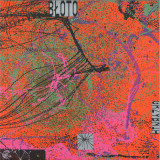
Błoto’s bold 2020 debut brought forth three albums in just twelve months. This prolific creative burst, followed by an ongoing tour and involvement in other projects, meant that fans had to wait over three years for the next release. During this time, new ideas took shape, and the vision for their fourth LP crystallized. The wait for Błoto's new album is nearly over. As always, autumn signals the arrival of Grzybnia (Mycelium).
The idea for the album had been simmering within the band since the release of Kwasy i zasady and finally took shape in late January 2023 at Warsaw's Studio Pasterka, under the careful guidance of Piotr Zabrodzki. It was by far the most fruitful session in the group's history, with ideas flowing in abundance. The chosen tracks not only resulted in two well-received singles, Szlam / Ścieki and Bakteria, but also provided enough material for an EP set to drop next year.
The seemingly chemical title of the album Kwasy i zasady (Acids and Bases) ultimately referred to interpersonal relationships, describing traits that prevent harmony. The album embodied the polarization of societies in the 21st century. The metaphor of Grzybnia (Mycelium) goes a step further. It emphasizes the importance of cooperation as a fundamental skill that can yield various results (fruits, fungi)—both good and bad. Above all, it underscores the power of collective action beyond divisions.
In a complex, unstable modern world that is breaking apart into pieces, the concept of mycelium offers a powerful model. Mycelium thrives in degraded, seemingly lifeless environments created by humans. A key aspect of the broader significance of mycelium is that cooperation benefits all involved parties, where each contributes something and receives something in return. Mycelium is a symbiont, meaning it forms a symbiotic relationship with certain tree species through mycorrhiza, where the roots of the trees and the mycelium exchange essential life-sustaining substances. This results in mutual benefits. The world of mycelium exemplifies cooperation.
A single mushroom, like a person, dies, but mycelium endures, much like humanity itself. Thus, similar to culture, it is immortal. Błoto operates in a manner akin to mycelium. It undoubtedly belongs to the underground realm, embodying the essence of the underground. It is also a destructor of music. In what sense? The Polish Nobel laureate Olga Tokarczuk noted in her book Primeval and Other Times that “... Mycelium thrives by drawing the last remnants of life from what dies, decomposes, and seeps into the earth. Mycelium is the life of death, the life of decay, the life of what has died.” In the same way, Latarnik, Cancer G, Wuja HZG, and OlafSaxx, through their collaboration, process cultural products to create entirely new and surprising combinations. The result of this work is both edible and poisonous mushrooms, manifested in the form of fat beats, house, spiritual jazz, improvised music, illbient, organic techno, and genre-defying electronics.
The peak mushroom season in Poland occurs in autumn, which is why Grzybnia will be released on October 11, 2024, via Astigmatic Records.

Legowelt returns to Clone Records with yet another sonic journey that defies conventional electronic music boundaries, offering an album that is as eclectic as it is immersive. Blending different styles and textures seamlessly and proving that electronic music can still be creative and that function doesn't always prevail style. He delivers a collection that transports listeners through a kaleidoscope of retro-futuristic sounds, deep grooves, and cosmic melodies. Despite being in the music game for more than 25 years the music from Danny Wolfers remains playful and refreshing. Stylistically taking elements from his whole musical career and not commiting to the latest trend or any genre specifically, and low-key taking the piss with everyone who takes themself to seriously. While many electronic music artists are stuck in their own void, busy pleasing the big room, Legowelt meticulously crafts rich textured soundscapes, balancing between cosmic exploration and the dancefoor, that evoke both nostalgia and futuristic visions. His ability to fuse elements of house, techno, disco and electro with cinematic influences results in an album that is not only ready for club use but also gratifying at home. Each track offers something unique--whether it's the hypnotic rhythms, the lush synth lines, or the subtle, eerie undertones that creep in unexpectedly. Legowelt's attention to detail and passion for his craft shine through, making this album a worthy follow up to his last album on the Clone Jack For Daze series.

Freestyle Records drop another UK boogie 12" rarity from Eddie Capone's Treatment, this time the previously white label-only "Only You Know What I Like" from 1985. Limited to 300 copies worldwide.
----------
A mainstay of the UK's reggae, soul, funk & rock circuits since the early 1970s, Eddie Capone has played with a diverse and revered collection of acts; Chairmen of the Board, The Foundations, Black Velvet, The Elgins, Arthur Brown's Kingdom Come, Arthur Lee's Love, Billy Preston and Edwin Starr to name but a few. Eddie was also part of short-lived group Casablanca, with David Costa & Barry Clarke of early 70's folk-rockers Trees, signed to Elton John's Rocket Record Company.
Eddie founded the Treatment band in the early 1980s bringing in a revolving cast of singers and players, and created the Treatment Records imprint out of his own Black Rock studio in South East London in 1982. Releasing a string of singles - with efforts from Eddie Capone's Treatment, a side-project with singer Beryl Marsden as Salt & Pepper, and a single from Norwegian group Wave - Treatment Records then followed this up in 1985 with the 12" release of "I Won't Give You Up" with Diane Jones brought in on vocal duties. This received solid support amongst DJs and radio at the time, and was quickly followed with this solid slice of white label-only UK boogie-funk that has since become a favoured deep cut on the selectors circuit.
Treatment Records continued through the 1980s through to early 1990s releasing Eddie's music, both as a solo artist and as part of collaborative side-projects, and Eddie has continued to write, perform and produce music from his home studio right through to the present day. As a committed community figure & activist in South East London, Eddie has since 2014 re-started Treatment Records under the name of 3G Treatment - bringing together three generations of people from the local area to ensure young artists & musicians have access to the expertise and experience of their elders for support and encourage successful careers in the industry.

Leng’s San Francisco connection has long been strong, with the 40 Thieves collective – and their friend Cole Odin – providing some of the label’s most memorable releases of the last decade. That Bay Area connection comes to the fore once more on the imprint’s latest release, which sees Odin join forces with fellow San Francisco resident Marshall Watson, a long-serving producer, engineer and live performer known globally for his Balearic-minded productions.
‘Voyager’, the pair’s first collaborative single, is a genuine meeting of minds. It combines Odin’s love of low-slung dub disco, dancefloor psychedelia and low-tempo cosmic house with Watson’s
picturesque Balearic synths, sparkling piano riffs and immersive sound design. It’s this blend that dominates on the EP-opening Original Mix, an infectious workout that gets progressively more blissed-out and saucer-eyed as it progresses. Listen carefully and you’ll hear some suitably psychedelic guitar solos nestling amongst the heady washes of sound, sun-bright piano riffs and weighty bass.
Those languid, stretched-out guitar parts naturally take a more prominent role on the Extended
Guitar Mix. On this alternative take, the pair deliver a lightly tweaked take on the original groove, stretching it out while overlaying eyes-closed guitar solos, pots-and-pans percussion and a more DJ-friendly outro. It’s effectively an extended club mix – the club in question being a Bay Area basement at 5am. To round off the EP, Odin and Watson dust off their dancing shoes and pay tribute to San Francisco great Patrick Cowley. On the appropriately titled Cosmic Rave Mix, the pair swap their bass guitar for a pulsating sequenced bassline, trance-inducing synth sounds, and locked-in electronic loops designed to take you to a higher state of consciousness. By the time the track’s familiar piano refrain drops midway through, you’ll be reaching for the lasers in no time at all.

48 tracks on a 3-LP collection – including: Queen, The Police, Blondie, Abba, Elton John, Donna Summer, Chic, The Boomtown Rats, The Clash, Meat Loaf, Pretenders, Billy Joel,
Electric Light Orchestra, The Specials, The Selecter, Gary Numan, The Buggles…

Pique is the sensational debut solo album from Dora Morelenbaum, one of the key talents spearheading Brazil’s new musical wave. A member of the Latin Grammy award-winning band, Bala Desejo, Dora showcases a new side to her solo productions on this special LP. Whereas Dora’s first solo EP, Vento de Beirada, was a leap of faith, Pique sees her soaring as one of Brazil’s standout stars, emboldened, emphatic but ever elegant. Building bridges between past and present, it’s a funkier, more groove-based affair, weaved together with those signature, slower, celestial tracks. Touching on disco, MPB, soul, R&B and jazz, the album is enriched with an indie pop aesthetic courtesy of fellow Brazilian star and co-producer, Ana Frango Elétrico.
With an ethereal, enveloping air few can match, Dora’s gift shines through both the serene and the spirited songs contained within. The blissful, sun-soaked ‘Não Vou Te Esquecer’ opens, before the funk-fuelled, feel-good ‘Venha Comigo’ and ‘Sim, Não.’ give a glimpse of the creativity bursting from the production partnership between Dora and Ana Frango Elétrico. Elsewhere, the album reclines into hazy lean-back realms via ‘A Melhor Saída’ and ‘Petricor’, virtuoso jazz funk in the form of ‘VW Blue’ and radiant MPB through the album’s title track ‘Pique’.
The drumming is tight, fresh and swung, the horns and strings deftly arranged, as funk-driven basslines and strutting guitars mesh with playful production touches that give an added vibrancy to the record. It is an album that exhibits every side of Dora and one she has been involved in from the ground up, from the songwriting, singing, arrangement and production to booking the studio time and sourcing the artwork designer, Maria Cau Levy.
An exchange of musical ideas powers every great scene and Rio’s contemporary landscape is no different - a family of interconnected musicians and friends that collaborate on each other’s productions. Pique is graced by a wealth of these leading Brazilian lights including her Bala Desejo bandmates Lucas Nunes, Julia Mestre and Zé Ibarra, as well as Guilherme Lirio, Alberto Continentino and Tom Veloso to name just a handful. This exchange crosses generations merging tradition with modernity. In a full circle moment, Dora’s parents Paula and Jaques Morelenbaum, who featured in countless recordings from Tom Jobim's Nova Banda and Ryuichi Sakamoto to Gal Costa and Gilberto Gil, join on the album through backing vocals and arrangement.
Pique sees Dora embrace a freedom through fresh forms, showcasing the depth and diversity of her creative artistry. An infinitely listenable release that nods to Brazilian greats like Gal Costa, Banda Black Rio and Lincoln Olivetti, fused with the indie pop edge of Ana’s production. The result is truly unique and sure to be a future Brazilian classic.

First compilation album by Argentine synthesizer maniac Nacho Marty Meyer... Tip!
Since the 80's, Meyer has been interested in synthesizers and electronic music, and started making demos. The compilation includes the Italo disco track 'Magical Journey', previously released under the name Xarion, which is now a hard-to-find record.
Makoto (satoshi& makoto): "The sincerity conveyed in his work is very good and I love the primitive feel of the music."

Having spent their formative years in São Paulo Brazil, as a teenager, Lau Ro found themself uprooted from their home. Moving with their family to Europe in search of a better quality of life, their story was like that of many immigrants in the same position. Lau Ro's parents found work in factories and cleaning jobs, for the first few years in the North of Italy and then in Brighton on England's Southern coast. "We never managed to visit back home, so my connection to Brazil became largely made up of childhood memories and my fascination with all the 60s and 70s music I could find from there."
In Brighton, the young non-binary singer and composer would immerse themself amongst the city's vanguard of free-thinking artists and musicians. Lau Ro formed Wax Machine whose prefigurative, psychedelic community provided a glimmer of countercultural hope amid a backdrop of national political decline. From 2020-23, Wax Machine birthed three cult-favourite albums in as many years; indebted in part to their British psychedelic forebears from progressive folk, rock and jazz yore. But the kernel of Lau's Brazilian sound was already beginning to blossom across Wax Machine's releases. Now, taking root deeper still, Lau Ro steps forward with their debut album: Cabana.
Named after the small wood cabin at the bottom of their garden where the album was recorded, Cabana is a deeply personal record of memory, self-discovery and imagination. Melancholy and hope combine across ten tracks of dreamy bossa, ambient folk, fuzzy tropicalia and majestic MPB. The music is swathed in masterful string arrangements and trippy electronics in equal part, while Lau Ro's delicate, yet quietly confident voice takes acerbic aim (in both English and Portuguese) at polluted city life, while dreaming of a utopia, rich with nature and wildlife.
Like the musical equivalent of semantic drift, Lau Ro's displacement led to the creation of another Brazil. A mythic place in Lau's soul, as they put it, "where the sunshine and joy of my childhood remained untapped." Lau continues: "It's music that might sound as if it came out of a parallel universe Brazil, rather than its modern day landscape. I am nowadays rediscovering Brazil, going back as often as I can and trying to stay connected to these different parts of the world and myself."

Blue vinyl repress
With a voice of pure gold and a startling sensitivity for heartfelt pop songwriting, on No Reino Dos Afetos (In the Realm of Affections), Berle firmly embraces earnestness, through starry-eyed Brazilian love songs, ambient vignettes, warm, home-cooked beats and gentle strokes of MPB genius.
Maceió, the capital of Brazil’s Alagoas state on its sprawling east-coast, is home to pastel coloured colonial houses, white sand beaches and a brilliant young composer, poet and multi-instrumentalist named Bruno Berle.
With a voice of pure gold and a startling sensitivity for heartfelt pop songwriting, on No Reino Dos Afetos (In the Realm of Affections), Berle firmly embraces earnestness, through starry-eyed Brazilian love songs, ambient vignettes, warm, home-cooked beats and gentle strokes of MPB genius.
“It’s an album that was built from my desire to find beauty”, Berle explains - his simple, graceful words mirroring the graceful simplicity in his music. But amongst the simplicity, the compositions, arrangements and productions on No Reino Dos Afetos tingle with nuance and detail.
On the contemporary R&B inspired lead single “Quero Dizer” - produced by Berle and longtime friend and collaborator Batata Boy - the swirling, lo-fi, kalimba and guitar-fronted beat is turned into a feel-good hit by the ingenuity of Berle’s honey-soaked vocal melody.
Powerfully intimate, “O Nome Do Meu Amor” (My Love’s Name) is a guaranteed tearjerker, with Berle’s stunning voice soaring over gently plucked acoustic guitar and the textural flutter of soft movement, as if we hear him writing the song in the moment.
Drawing upon a close-knit, collaborative scene of Maceió artists and musicians, (of which Berle and Batata Boy are vital members), Berle also recorded some of his friends songs on the album, including João Menezes’ “Até Meu Violao”, the album’s beautifully laid back sunshine soul opener, which has all the charm of early-70s João Donato.
Having cut his teeth in soft-rock group Troco em Bala, and more recently finding himself embedded in both Rio and Sao Paulo’s contemporary music scenes - collaborating with the likes of Ana Frango Eletrico, who took the photo for the album cover - No Reino Dos Afetos is as musically diverse as Bruno himself. It’s hazy indie rock (“É Preciso Ter Amor”), calming ambient and field recording (“Virginia Talk”) as well as Berle’s own take on West African High Life (“Som Nyame”).
Instantly recognisable as a truly special artist, Berle’s character fills every corner of the sound, which is unsurprising considering he played most of the instruments.

Das Geheimnis ist schon seit einer Weile gelüftet: Nach fast neun Jahren Pause sind die schwedischen Prog-Rock-Legenden Beardfish zurück. "Songs For Beating Hearts" ist die erste brandneue Musik von Beardfish seit neun Jahren, aber während sich die vielen magischen Momente entfalten, erscheint es, als wäre die Band nie weg gewesen. "Songs For Beating Hearts" ist ein leuchtendes Zeugnis für die Magie, die entsteht, wenn sich diese vier Musiker zusammentun - mit starken Anklängen an vergangenen Ruhm, aber auch mit einer ganz neuen, wehmütigen Stimmung. Von der verträumten Melancholie des Eröffnungsstücks "Ecotone" und der vertrackten Opulenz des fünfstimmigen "Out In The Open" über den prog-freundlichen Pastoralismus des bittersüßen 11-Minuten-Epos "Beating Hearts" bis hin zum ernüchternden Prog-Noir des abschließenden "Torrential Downpour" haben Beardfish nicht nur ihr bisher stärkstes Werk geschaffen, sondern auch ihr emotionalstes. "Songs For Beating Hearts" wird von Gedanken über Liebe, Verlust, Freundschaft und Endgültigkeit zusammengehalten und ist der Sound von vier Gleichgesinnten, die ihr Herz ausschütten. Ein triumphales Comeback, das niemand hat kommen sehen. "Songs For Beating Hearts" wird als limitiertes CD-Digipak (inkl. Bonustrack), Gatefold 140g LP und als digitales Album erhältlich sein.

No one has lived a life quite like Marcos Valle. He became an overnight international sensation, fled a military dictatorship, dodged the Vietnam war draft, had his music sung by Homer Simpson, made enemies with Marlon Brando, and became an unsuspecting fitness guru for multiple generations. But to truly understand the great Brazilian composer, arranger, singer and multi instrumentalist, one must listen to his music.
Lead Single (Life Is What It Is) : Between the release of his first album in 1962 and today, Marcos Valle has released twenty-two studio albums traversing definitive bossa nova, classic samba, iconic disco pop, psychedelic rock, nineties dance and orchestral music. He has also had his songs recorded by some of the all time greats, including Frank Sinatra, Sarah Vaughn, Sergio Mendes, Elis Regina, and (last but not least), Emma Button of the Spice Girls. He has also had his music sampled by Jay-Z, Kanye West, Pusha T and many more.
With his twenty-third studio album Túnel Acustico, Valle set out to bring it all together.
“I believe my music is many things. It goes in different directions. I have many different ways of writing music, sometimes it’s melodies and harmony, sometimes the groove is the focus. But all the music I have made over my sixty year career is unified. It is all natural and it is all sincere. And this is what I wanted to bring to my new album.”
A prominent feature of Valle’s career has been his dual residence between Brazil and the USA. Originally moving over in the mid-sixties on the back of bossa nova’s international proliferation, Valle toured with Sergio Mendes and became hugely in demand as a composer and arranger. But the Vietnam War loomed and the threat of being drafted saw him return to Brazil. He spent the following years in Rio writing music for TV and film, as well as four cult favourite albums in collaboration with some of Brazil’s most groundbreaking musicians including Milton Nascimento, Azymuth, Som Imaginario and O Terco.
By 1975, Brazil's military dictatorship was at its most oppressive, making living and working increasingly difficult. Valle moved back to the US where he would reside in LA, writing songs for, and collaborating with the likes of Eumir Deodato, Airto Moreira, Chicago, Sarah Vaughn and Leon Ware, amongst others.
Túnel Acústico features two songs originally conceived during Valle’s time on the West Coast: “Feels So Good”, a stirring two-step soul triumph written in 1979 with soul icon Leon Ware, and the sublime AOR disco track “Life Is What It Is”, composed around the same time, with percussionist Laudir De Oliveira from the group Chicago.
Built around an unfinished demo Marcos found on a shelf in his house 44 years after it was made, the “Feels So Good” demo was restored with the help of producer Daniel Maunick, who also utilised AI stem-separation to remove the placeholder vocal ad-libs. Valle added Portuguese lyrics to sit alongside Ware’s vocal hook, as well as extra keyboards and percussion.
Also written in late seventies LA, “Life Is What Is It” was co-penned by Laudir De Oliveira from the band Chicago and first released on the bands’ Chicago 13 album with lyrics by Robert Lamb. Another nod to his good times in LA, Valle recorded his own version for Túnel Acústico, upping the tempo and deepening the groove for a blast of irresistible summer soul.
On Túnel Acústico, Valle's core band features two members of the renowned Brazilian jazz-funk group Azymuth: Alex Malheiros on bass and Renato Massa on drums. The rhythm section is completed by percussionist Ian Moreira, with additional contributions from guitarist Paulinho Guitarra and trumpeter Jesse Sadoc.
The contemporarily composed music on Túnel Acústico features an impressive lineup of guest lyricists, including renowned Brazilian artists: Joyce Moreno (Bora Meu Vem), Céu (Nao Sei), and Moreno Veloso (Palavras Tão Gentis) as well as Valle's brother Paulo Sergio Valle (Tem Que Ser Feliz).
The album closes with "Thank You Burt (For Bacharach)", a tribute to the legendary composer who passed away in 2023.
Túnel Acústico will be released on 20th September 2024 via Far Out Recordings. Valle is set to tour Europe and America in support of the album.

Transparent Blue Vinyl. After years of preparation, Marcus Drake emerges from the basement networks of the resistance underground to claim the first save point along his quest ahead. Welcome to Save Point 1, a universe where popular forms of the past collide at warp speed with Marcus's mutant inspirations to produce sounds and genres hitherto unknown. Save Point 1 is a visionary and singular Debut work of Avant Rock & Pop Alchemy, blown apart and reassembled under the laws of Quantum Musical Mechanics. Written, Produced & Performed by Marcus Drake, the album eludes classification, but sounds like a sci-fi fusion of musical DNA from Nine Inch Nails, Prefab Sprout, Nobuo Uematsu (the Final Fantasy video game composer), Animal Collective, Prince, Mr. Bungle, Liars, The Mars Volta, and Lil Ugly Mane. The album marks the first release under Drake's own name, and the latest since his 2017 release as Anthony Fremont's Garden Solutions_his idiosyncratic side-project with Water From Your Eyes' Nate Amos, Options' Seth Engel, and NNAMDI. He has also since scored for film and video, including the Adult Swim short Thoron the Conqueror. Save Point 1 isn't just a new beginning, but a reintroduction to Marcus Drake the artist and composer. Drake experimented with new techniques and approaches for many years while recording Save Point 1, a process that transformed his sound, voice, and artistic identity. The resulting oeuvre is giddy and dreamy, an Olympic-height diving board from which to descend through indie rock and videogame soundtracks, thrilling math-rock riffs that turn experimental, and synths that glow in rainbow hues. Just turn to the glitchpop of "Heaven's in the Rot" or the slow-motion acoustic glitter that is "Dragon It Out" to hear it in motion. And note the two-part "Haunted" suite that funnels his unpredictable experimentation into darker, weirder directions.

Paul Kelly"s latest album, "Fever Longing Still", his first of new original material since 2018"s "Nature", delivers 12 additions to his superb catalogue of love songs spanning more than 40 years. "Hello Melancholy, Hello Joy", as one of the new songs says. The album"s title comes from a line in Sonnet 147 by Shakespeare, whose writing has thrilled and inspired Kelly ever since schooldays. With love as the topic, Kelly finds a way to keep replenishing the creative well. Even if it can take some time for a song to surface.

~~~From Mississippi and Olvido Records~~~~~~ Steel-string guitar and vocals by the great Giorgos Katsaros, a mythic figure of Greek rembetiko. Our obsession with underground Greek music continues with 10 ultra-rare recordings of heartbreak and vice from rembetiko legend Giorgos Katsaros. Katsaros, who by some accounts lived to be over 100 years old, carried the old songs of Greece to the Diaspora in the United States, bridging centuries of music in one storied lifetime. Born in 1901 on the Greek island of Amorgos, Katsaros' was enchanted with the songs he picked up as a kid in the streets of Piraeus and Athens. Encouraged by his grandfather, an amateur singer, Katsaros developed a style that mirrored his upbringing - centuries-old Asia Minor songs, island rhythms of his homeland, well-known Athenian songs of the time, and anonymous `rebetiko' songs. Katsaros' songbook was vast, but he was most drawn to the street life and music of the manges of early 20th-century Greece: outcasts who dealt with the indignities of an unstable economy and an inauspicious future with the old standbys: wine, hash, and dancing. These ten tracks are remastered from Katsaros's 64 surviving early recordings, many rarely heard since their original release. Hypnotic melodies plucked over repeating thumbed basslines back his deep, mournful voice. Katsaros brought this nostalgic late-night music to smoke-filled rooms of Greek exiles in Chicago, Philly, and New York, where he emigrated in 1917. He continued to travel the country and play until his music was supplanted by more modern styles in the 1950s. He retired to the town of Tarpon Springs, FL, famous for its Greek sponge fishers, til a late-in-life revival brought him back to Greece for a few massive concerts and national accolades in the 1990s. Like many great artists, Katsaros carefully curated his own mythic backstory over the decades. He sometimes claimed he was born in 1888, making him 109 on his passing, and conflicting accounts of his birth and travels circulate to this day. Greek researchers Stavros Kourousis and Konstantinos Kopanitsanos, who also compiled these tracks, contribute groundbreaking new historical research on Katsaros' life. Lyrics, poetically translated by Tony Klein, further fill in the picture. Clean and rare 78s were remastered by Stereophonic. Katsaros has never sounded better than on this LP, pressed on red vinyl, with extensive notes and lyrics.

Estelle soared to international prominence on 2008’s Shine. The lead single, “American
Boy” featuring Kanye West, won a 2009 GRAMMY in the category of “Best Rap Sung
Collaboration”. As vinyl was declining, Atlantic chose not to keep this vinyl in print. It goes
for over $100 if you can find it at all. Round Hill Records is going to reissue the vinyl and
add a new remix of “American Boy”. It is updated here with an Afro-Beat remix by up and
coming DJ NASHUP.
As a recording artist Estelle has released 5 solo albums and countless features and
collaborations that have crossed multiple genres and generations of artists. She released
the follow-up All Of Me in 2012, and the single “Thank You” received a GRAMMY®
nomination for “Best R&B Performance.” 2015’s True Romance yielded the anthem
“Conqueror”.

Just under a year after their acclaimed self-titled debut, dreampop duo deary release a brand new six-track EP – Aurelia – via Sonic Cathedral on November 1. It includes the singles ‘The Moth’, ‘Selene’ and ‘The Drift’ and features Slowdive drummer Simon Scott playing on three songs. It will be available on three different vinyl variants, a CD with three bonus tracks and digitally. It’s a stunning record, which displays a new-found maturity in terms of production as well as musically and lyrically. The band – singer Rebecca ‘Dottie’ Cockram and guitarist/producer Ben Easton – have had to grow up in public since the release of their debut single at the start of 2023, supporting legends such as Slowdive and Cranes and TikTok sensations like Wisp along the way. An aurelian is a rare old term for a lepidopterist – someone who studies and collects moths – derived from the Latin aurelia, meaning chrysalis. The perfect title for an EP which is based around the theme of metamorphosis and change. “It leans on the natural world, the human body, the earth and sky as well as human emotion,” says Ben of how the EP represents physical and metaphysical growth. “Change can be daunting but equally exciting, which is something we’ve come to learn.” “While writing the EP, I found a letter I had written to myself when I was 22,” adds Dottie. “I was fresh out of university and had moved back in with my parents as Covid was in full force. I was uninspired and lost and reaching out to my future self for some hope. It was a physical representation of what can happen in a few years; how much can change and how you never know what’s coming next. “I found it interesting that – at the age of 26 – here I was looking back to my younger self for hope or just some comfort in the fact that things will and do move on. It was important to me to bring both of these versions of myself into the new songs.” “Personally, I had noticed a change in myself; a new level of social anxiety, a strange disassociation to things that once brought me joy as well as negative repetitions in my daily life,” reveals Ben. “I began the year sober which allowed me to finish the writing process as a letter of care to my own mental health. There are motifs throughout the EP – for example the riffs in ‘The Moth’ and ‘The Drift’ being reminiscent of each other – which are like musical reflections of these repeated cycles.” It’s musically where the change deary have undergone is most obvious. ‘The Moth’ mixes howling guitars atop a strident breakbeat making it more Curve than Cocteaus; ‘Selene’ is a slow-building wall of noise; ‘The Drift’ combines a perfect pop melody with an incredible sense of urgency. These three singles are balanced by the brief but beautiful ‘Where You Are’ which leads into the Portishead-style trip-hop of ‘Dream Of Me’. The title track has been a staple of their live sets for about a year as ‘Can’t Sleep Tonight’, but its mix of The Cure circa Disintegration and Mezzanine Massive Attack has grown and evolved so much that they renamed it ‘Aurelia’ as the embodiment of the change they have been through. “We’ve allowed deary to naturally grow over the past year, we didn’t want to force it to take a certain shape or sound,” explains Dottie of the duo’s slow and steady approach. “A lot of the last EP was written by sending ideas back and forth over WhatsApp, but this time we were able to sit in the same room and I think that really shows. We know each other a lot better now as we have experienced this journey together and that benefits the writing process as we are more open with each other and can be vulnerable.” “Aurelia definitely feels a lot more collaborative, more personal and more fully realised than the first EP,” concludes Ben. “It feels like a real document of what has been a very important time in both of our lives. Ironically, the band has changed and matured even more since the recording, so we’re both excited to document the next stage

2024 Reissue
The syndicate manifests its sonic potential in full glory. Giving rise to this collection of colossal heavyweights, Sentry demonstrates its spotless record of selecting certified heavyweights for the discography once again, twenty-fold. Stepping into the ring are some of the scene's most prolific artists alongside a plethora of promising, choice newcomers.
Boasting more than an hour of supercharged sound system pressure with names like Caspa, Truth, Bukez Finezt, Nomine and Youngsta himself on the controls - the subsequent inferno proves to be an authoritative display of quality bass music, that is sure to reach roaring stacks of speakers all around the globe for years to come."
"Vintage flavours transmute into fiery low-end excursions in 'Sun Ra' as Onhell reigns with fire and brimstone and makes way for what's to come. Rolling on, Taso lays waste with dimly lit half-time flows as we enter the smoke-filled mansion of Argo's meticulously crafted 'Since Then' - a prime cut of hip-hop infused breakbeats and bass.
Abstrakt Sonance & Substance set the heater into overdrive and blunts aflame as we proceed into the shelling of 207's 'Gypsy Dub' - then promptly being crunched to bits by 'Crocodile' - encapsulating Dayzero's cold-blooded dance floor armaments. Brace yourself for battle as we step to the drums of Caspa's tribal warfare, full-frontal assault engineered for the club.
Unrestrained power surges propelling us onwards in Coltcut & Ourman's decidedly high-grade collaboration as listeners march through Khiva's haunting sound system belter 'Teeth' and a zealous dosage of Dubstep as envisioned by Truth. Led through eerie alleys and pressure-ridden environments with LSN on the buttons, the onslaught proceeds with the relentlessly driving 'R U Broke' in Mr. K's signature style.
Opus merciless injects straight fury in an auditory form in the spiked 'Lime Pickle' - Bukez Finezt keeping pace with a murderous Cembalo-ridden thug anthem, lunacy! Minimal instrumentation to its fullest effect, Sukh Knight's 'Modulate' keeps it spicy - as does the claustrophobic sub-bass chiming by Leftlow. Thanom ignites what's left of the residual air in 'Tumble It' - dangerous goods.
The subsequent time bomb armed by A:Grade & Feonix, cast into the abyss that is Nomine's space-bending 'Judas' - big speaker business. The clock strikes its final hour - Youngsta & Cimm finish off the survivors with a no-holds-barred showdown, the 'Last Judgement' executing its massive verdict.

Al Jarreau hat immer gesagt, dass er Al Jarreau-Musik singt, und er war wirklich einzigartig: Seine sechs Grammy-Awards und neunzehn Nominierungen als "Bester Sänger" decken nicht weniger als drei Kategorien ab – Jazz, Pop und R&B – mit anderen Worten, musikalische Genres interessierten ihn nicht wirklich. "Musik mag für andere Leute in Kategorien fallen, und ich verstehe das", sagte er, "aber für mich gilt: Wenn ich einen Song mag, muss ich ihn machen, und das war's. Wenn du zu meinen Konzerten kommst, setze ich mich auf deine Schulter und flüstere dir etwas ins Ohr. Ich öffne den Geist und gehe durch viele Türen." Diese Art von reichhaltigen, beschreibenden Bildern beschwört die Höhenflüge der stimmlichen Fantasie herauf, zu denen sein Gesang jederzeit fähig war. Er konnte einen Song plötzlich in neue und unerwartete Richtungen lenken. Er erklärte es immer so: "Wenn es ein Rückgrat für das gibt, was ich tue, dann ist es die Jazz-Umgangssprache."
Musik, Klänge und Rhythmus schienen ihn zu durchströmen, und das war kein Wunder. 1940 in eine musikalische Familie geboren, war er ein überdurchschnittlicher Student und schloss sein Studium mit einem Bachelor of Science in Psychologie und anschließend einem Master in beruflicher Rehabilitation ab. Und doch war die Musik nie weit von ihm entfernt. In den späten 1960er Jahren schloss er sich einem Trio an, das vom Pianisten George Duke geleitet wurde, und arbeitete daran, das Singen zu einer Vollzeitbeschäftigung in Los Angeles zu machen.
Zu diesem Zeitpunkt hörte ihn Siggi Loch, der damals ein hochkarätiger Manager bei Warner Brothers Records (WEA) war und später ACT Records gründete. "Ich sah Al Jarreau 1974 zum ersten Mal im Troubadour in Los Angeles und war sofort von seiner Stimme und seiner Bühnenpräsenz gefesselt", erinnert er sich. "Am nächsten Tag ging ich zu Mo Ostin, dem Präsidenten der WEA, um ihn davon zu überzeugen, ihn zu unterschreiben." Nach anfänglichen Widerständen erhielt Loch grünes Licht und 1975 erschien Jarreaus Debütalbum für WEA, "We Got By". "Ich habe Al nach Deutschland gebracht, bevor er in den USA Erfolg hatte", fährt Loch fort. "Al trat drei Nächte lang in Hamburg auf und ich schaffte es, Michael Naura, den Chef der Jazzabteilung des NDR, davon zu überzeugen, den dritten Abend für die Live-TV-Übertragung aufzunehmen." Diese Show machte Al über Nacht in Deutschland berühmt, und seitdem hat er immer einen besonderen Platz in den Herzen des deutschen Publikums. "We Got By" gewann den Preis der Deutschen Schallplattenkritik und seine erste Deutschlandtournee füllte große Konzertsäle.
Es folgte "Glow" (1976), das in Europa erneut gut ankam und einen zweiten Preis der Deutschen Schallplattenkritik gewann, in den USA aber nicht so gut ankam: "Das richtete sich an ein 'Smooth Jazz'-Publikum", so Loch. "Es hat Al nicht vor einem Live-Publikum eingefangen. Also bat ich darum, dass seine nächste Veröffentlichung ein Live-Album sein sollte. Mo Ostin stimmte widerwillig zu", und "Look to the Rainbow" wurde in Europa ein Riesenerfolg, "Als es in den USA veröffentlicht wurde, wurde es Al's Durchbruchsalbum und brachte ihm seinen ersten Grammy ein, also ist es wirklich richtig zu sagen, dass seine Karriere vor allem in Deutschland begann!", sagt Loch.
Jarreaus langjährige Zusammenarbeit mit dem NDR veranlasste Jörg Achim Keller, Chefdirigent der NDR Bigband, 2016 eine Zusammenarbeit mit dem Sänger vorzuschlagen: "Eine Produktion mit der Musik von Al und Ellington zu machen, war etwas, was ich schon seit Anfang der 2000er Jahre machen wollte", erinnert er sich. "Die Reaktion von Al war von Anfang an sehr positiv." Jörg bereitete eine Liste von einigen hundert Ellington-Titeln vor, und wie sich Jarreau später erinnerte: "Wir gingen einfach die Liste durch, und es war ein Fall von 'Oh, der funktioniert für mich' und 'Lass uns das als alten Darm-Blues machen – was für mich wichtig war, war, mich in der Musik wiederzufinden und vielleicht eine andere Art von Aussage über Ellington zu machen, damit die Leute die Musik auf eine andere Art und Weise hören konnten. alles, was sie vorher gehört hatten."
Beim Schreiben der Charts achtete Jörg darauf, Jarreaus Herangehensweise an das Material zu respektieren, indem er ihm Raum ließ. Tracks wie "I'm Beginning to See the Light" oder "I Got It Bad (and that Ain't Good)" geben den Solisten der Band ebenfalls Spielraum, um ihr Bestes zu geben. "Das sind hochentwickelte, intelligente Solisten, die mit jedem auf der Welt spielen können", sagte Jarreau. "Sie pushen mich, und ich liebe den Push, und sie lassen mich wie eine echte Sängerin klingen!"
Jarreau und die Band tourten in der zweiten Hälfte des Jahres 2016 mit der Musik, "Es gab immer noch einige Feinabstimmungen während der Tour, von Konzert zu Konzert", fügte Jörg mit einem Lächeln hinzu. "Er liebte es, diese Balladen zu singen – und jede hatte ein anderes Gefühl. "Am Sonntag" war ihm aber sehr wichtig. Diese Tabelle wurde zweimal überarbeitet, bevor er schließlich damit zufrieden war! Bei einigen Songs entschied er sich für einen reinen Balladenstil – 'I Got It Bad (and that Ain't Good)', einige Melodien wurden in eine Pop/R&B-Tasche gesteckt ('Lush Life', 'Come Sunday') und er liebte das 'Old Gutbucket Blues'-Feeling von 'I Ain't Got Nothing but the Blues'."
Rückblickend auf diese Sessions und Tour sagt Jörg: "Es waren Al's Stil und Persönlichkeit, die alles zusammenhielten. Das Ganze war eine echte Kombination aus der musikalischen Meisterschaft von Jarreau und Ellington – es hat das Publikum in ganz Europa angesprochen, sie liebten das Programm." Dieses Gefühl teilt auch Siggi Loch, der Jarreau mit der NDR Bigband in Paris erwischte: "Es war offensichtlich, dass er es wirklich genoss, diese Musik aufzuführen, und er tat es mit so viel Energie und Emotion, es war eine Freude zu sehen und zu hören. Leider verstarb Al nur wenige Monate später."
In vielerlei Hinsicht schließt sich mit "Ellington" ein Kreis: Es fühlt sich sehr richtig an, dass Jarreaus letztes Album auf ACT veröffentlicht wird, dem Label, das von Siggi Loch gegründet wurde, dessen starkes und unerschütterliches Eintreten für den Sänger ihn ursprünglich auf den Weg zum Superstar brachte. Und die Tatsache, dass es vom NDR und seiner hauseigenen Bigband aufgezeichnet wurde, ist eine passende Erinnerung daran, dass es sich um eben jenen Sender handelte, dessen TV-Sendung Jarreau einst über Nacht in Deutschland berühmt gemacht hatte. Darüber hinaus wurde "Ellington", genau wie "Look to the Rainbow", das Jarreaus internationales Durchbruchsalbum war, auch live aufgenommen. Manchmal gibt es Verbindungsfäden zwischen Ereignissen, die auf den ersten Blick in keinem Zusammenhang zu stehen scheinen, und das Ergebnis erweist sich nicht nur als besonders und magisch, sondern auch bedeutungsvoll und tief berührend. Das ist hier auf jeden Fall der Fall.
Stuart Nicholson, Musikjournalist und Autor
