Blod is the solo project of Gustaf Dicksson (Enhet För
Fri Musik, Oroskällan), a prolific and crucial figure in the
Swedish Underground scene radiating out of Gothenburg
and centered around a number of independent labels and
including bands such as Enhet För Fri Musik, Monokultur,
Oroskällan, Loopsel, and Neutral. Blod has released
various home-recorded cassettes and a handful of albums
since 2014, all mercurial in nature, exploring various facets
of Dicksson’s preoccupations. The melodies borrow from
tradition and possess a lonesome quality inspired by
Swedish melancholy, close relations, and white trash
culture. Combined with intentionally banal artwork, the
experience can be beguiling and sometimes bleak but at the
same time warm and humorous.
Missväxt is Dicksson’s greatest work yet, exploring the
myth of ancient Swedish being and misery but with a sound
that is uniquely ecstatic. Inspired by medieval folk music,
it’s reminiscent of Fairport Convention’s marriage of traditional
folk music and psychedelic rock.
Missväxt features guest appearances by Elin Engström
(Loopsel, Monokultur) on drums, Astrid Øster Mortensen
on vocals and flute, Joakim Karlsson (Facit) on production
and synth, and Magnus Jäverling on flute.
You Can See Your Own Way Out is the first collaborative record between Ilyas Ahmed (Geographic North, Immune, Mie Music) and Jefre Cantu-Ledesma (Shelter Press, Mexican Summer, Type). Long-time friends and satellites orbiting the same communities and scenes, You Can See's inception was never really a question of if, but when. Combining Ahmed's explorative guitar/synth-work and Cantu-Ledesma's field recording, sound processing and electronics, the result presents as a book of short stories or vignettes highlighting their individual strengths. At times evoking pastoral landscapes, others frayed edges of disintegrating photographs, there's always the suggestion of a forked path or a promised destination. Jonathan Sielaff guests on bass clarinet.
out of Stock
Last delivered 5 years ago available to reorder, subject to availability
AL presents the first musical collaboration between Hamburg based Asmus Tietchens and Japanese artist Miki Yui, operating out of Düsseldorf for almost 20 years now. Highly respected and hugely influential artist Asmus Tietchens first made his mark on the electronic music scene in the late 1970s, whereas Miki Yui debuted her sonic settings in1999.
Their first joint album NEUES BOOT envelops the listener with a poetic sound sensibility and a conceptual clarity which was processed and passed back and forth between their individual studios in Hamburg and Düsseldorf.
Asmus Tietchens: After Stefan Schneider suggested to release a Yui-Tietchens album on his TAL imprint Miki and I quickly developed some ideas towards our eventual collaboration. We agreed upon an ongoing mutual exchange of material. We have both been very familiar with each other's music for a long time and we found our individual approach towards sound design to be uniquely compatible. We do not use our electronic tools in order to merely achieve the maximum of technical possibilities, but to illustrate aesthetic necessities. This entails a deliberate reduction and refined perception of the sonic characteristics of the material. Only this approach enabled us to fully realise the complete spectrum of the sounds and noises we were working with in order to construct this New Boat. Each and everyone of my treatments is e x c l u s i v e l y based on a track supplied by Miki. I added no new sound sources. Naturally the spatial and temporal dimensions of the source material were thus altered. These transformations are exactly what makes our collaboration special and unique. Very early on we had agreed on New Boat as a working title and a guiding light . Of course in the beginning we had no idea where this New Boat might take us. Now we do know. After several months of ship-building the boat has now set sails for new sonic horizons. Ahoi!
Miki Yui: The title of the album as well as the individual tracks have been inspired by conversations with Asmus. When we had a chat after one of his concerts, he told me about Kōdō, the Art or the Way of the Scent. It is a 8th century Japanese incense ceremony. Very frequently the names of Japanese incense sticks are derived from natural themes, e.g. Bairin is the plum grove, the scent of the first blossom heralding the end of winter. This poetry, the ephemeral nature of the world reminded me of Kigo, words from a Haiku (a form of Japanese poetry), which reference a particular season or a natural phenomenon. So I chose the names of the individual pieces from Kigo as if The Boat was exploring nature whilst sailing through the seasons. Only in retrospect I realised that the titles combined create this poem:
Early spring a hazy view in the night (Oboro)
Plum groves (Bairin)
Over a Dayfly (Kagerou)
A Milkyway (Amanogawa)
Dawn (Akatsuki)
Art of fragrance (Kōdō)
On fragile thin ice (Usurai)
A reissue of the 2016 demo tape by New Orleans band
Special Interest, who combine elements of no wave,
glam and industrial music. First time vinyl pressing with
bonus track, new sleeve designed by Studio Tape Echo
and 8 page risographed zine insert.
Four of the tracks here are raw early versions of songs
that would appear in slightly more refined form on their
debut album, 2018’s ‘Spiralling’. The other four pieces
are unique to this release, including a cover version of
Italian new wave band Chrisma, raging opener
‘Disease’, the over-saturated shoegaze-punk of ‘ATC’
and comedown lament ‘I’ll Never Do Ketamine Again’.
The band’s second album ‘The Passion Of’ (2020) was
widely acclaimed and appeared in many album of the
year lists. It was recently followed by a companion
album of remixes on Boy Harsher’s Nude Club label,
with all profits going to NOLA charity House Of Tulip.
“A blistering vision of punk as possibility.” - Pitchfork
“Members Alli Logout (vocals), Ruth Mascelli (synth and
drum machine), Maria Elena (guitar), and Nathan
Cassiani (bass), together manage to make their
instruments and vocals sound like a fight for our
existence.” - The Quietus
Recorded and mastered by Jasper Denhartigh at Bird
Island Recording March-May 2016. Originally selfreleased on cassette in 2016. Cut by Beau Thomas at
Ten Eight Seven. All songs by Special Interest except
‘Black Silk Stalking’ written by Chrisma.
Black vinyl in 3mm spine reverse board sleeve with 8-
page risographed zine, digital download card and
sticker.
Buzzing new Glasgow five-piece VLURE release their hotly anticipated
debut 7” ‘Shattered Faith’ via London-based label Permanent Creeps
Records.
Bursting onto the scene at the dawn of 2020, VLURE introduced
themselves to the world with a live audio/visual performance of their
phenomenal track ‘Desire’, captured in beautiful cinematography from
the loading bay of their Glasgow studio space. Blurring the lines between
live electronics, jarring guitars and the performance sensibilities of their
post-punk contemporaries, the video offered a keyhole view into their
captivating live shows.
Combining synth laden hooks, heavy club influenced rhythms and
emotionally confronting lyrics, VLURE have already seen support from
the likes of So Young and Wax Music praising their life affirming, intense
and enigmatic live performances.
Recorded between the halls of a deconsecrated church in the heart of
the Scottish Borders, the self-produced ‘Shattered Faith’ is an indulgent,
genre bending coming of age anthem influenced by the rhythms,
repetitions and euphoric hooks of Glasgow’s thriving afterparty and club
scene with an angular post-punk foundation. Speaking on the track the
band explain: “We wanted to create something that felt at home on the
dancefloors that we all found ourselves on growing up, yet still equally at
home in the sweat-filled venues that the band was conceived in. At its
crux, ‘Shattered Faith’ is about self-empowerment. It’s the
disillusionment with where you are and what you’ve been given. It’s lying
on your kitchen floor at 3am realising who you truly are and finding
power in that - it’s a new lease of life. We believe that, if they want to find
it, there is something for everyone in this song.”
“There is nothing comparable - this is a new era of musically skeletal
human showmanship” - So Young Magazine
“Urgent, destructive and completely absorbing. Brutalist in form -
unyielding, massive-sounding, distinctive - their atmospheric, yearning
mood is overflowing with inclination and exposed tenderness -
vulnerable and exasperated. They pound the door down with every inch
of blood, sweat and tears in their vessels” - Wax Music
“This is post-punk, but not as you might familiarly expect” - Little Indie
Blogs
“One of Scotland’s most exciting new bands” - Tenement TV
“My vision was big,” says Brighton-based singer Macve of the road to her second album. “I knew I wanted to do something more expansive than my first record.” With reach, feeling, storytelling power and a stop-you-dead voice, Macve sizes up to that mission boldly on Not The Girl. Following on from the rootsy saloon-noir conviction of her 2017 debut, Golden Eagle, Holly sets out for
deeper, often darker territory with a firm, unhurried sense of direction on her second record: on all fronts, it’s an album that looks its upscaled ambitions in the eye fearlessly.
For Macve, the combination of influences such as Nancy & Lee with time spent touring helped widen her horizons. “I wasn’t afraid of trying new things, and I wanted to explore sounds and develop my skills in production, composing and engineering. When I wrote the songs on Golden Eagle I had never toured, it was just me in my bedroom playing acoustic guitar. I then got the chance to tour the world with a band and sing with a symphony orchestra with Mercury Rev in 2017. My little world grew and I realised there was so much for me to learn about how I can use my skills as a singer and writer. I didn’t want to limit myself – I wanted to push my boundaries.”
At every turn, Macve’s powers of evocation are matched by the depth and strength in her voice. Witness the meeting of a plangent pedal-steel with her elastic vocal on the atmospheric “Be My Friend”, or the sultry verses and soaring chorus of “You Can Do Better”, which bring to mind a prairie-sized Mazzy Star. Guest guitarist Bill Ryder-Jones’ spacious contributions help enhance its sense of space. “Bill was an important part of the story of this record,” says Holly. “I love his playing – it helped create that kind of heavy, lazy, dreamy sound I’m such a fan of.”
Elsewhere, rich seams of contrast and counterpoint emerge. The Velvet Underground-ish “Sweet Marie” is epic drone-country, “Little, Lonely Heart” a symphonic waltz around the rootsy stuff of bad love, jealousy, and guilt. “Who Am I” merges a Phil Spector-ish wall of sound with a grunge-y melodic insouciance, while “Daddy’s Gone” finds Macve reflecting on the death of her father over Memphis soul-style backing, rendering complex emotions with controlled reserves of detail and drama before a roistering climax.
“My vision was big,” says Brighton-based singer Macve of the road to her second album. “I knew I wanted to do something more expansive than my first record.” With reach, feeling, storytelling power and a stop-you-dead voice, Macve sizes up to that mission boldly on Not The Girl. Following on from the rootsy saloon-noir conviction of her 2017 debut, Golden Eagle, Holly sets out for
deeper, often darker territory with a firm, unhurried sense of direction on her second record: on all fronts, it’s an album that looks its upscaled ambitions in the eye fearlessly.
For Macve, the combination of influences such as Nancy & Lee with time spent touring helped widen her horizons. “I wasn’t afraid of trying new things, and I wanted to explore sounds and develop my skills in production, composing and engineering. When I wrote the songs on Golden Eagle I had never toured, it was just me in my bedroom playing acoustic guitar. I then got the chance to tour the world with a band and sing with a symphony orchestra with Mercury Rev in 2017. My little world grew and I realised there was so much for me to learn about how I can use my skills as a singer and writer. I didn’t want to limit myself – I wanted to push my boundaries.”
At every turn, Macve’s powers of evocation are matched by the depth and strength in her voice. Witness the meeting of a plangent pedal-steel with her elastic vocal on the atmospheric “Be My Friend”, or the sultry verses and soaring chorus of “You Can Do Better”, which bring to mind a prairie-sized Mazzy Star. Guest guitarist Bill Ryder-Jones’ spacious contributions help enhance its sense of space. “Bill was an important part of the story of this record,” says Holly. “I love his playing – it helped create that kind of heavy, lazy, dreamy sound I’m such a fan of.”
Elsewhere, rich seams of contrast and counterpoint emerge. The Velvet Underground-ish “Sweet Marie” is epic drone-country, “Little, Lonely Heart” a symphonic waltz around the rootsy stuff of bad love, jealousy, and guilt. “Who Am I” merges a Phil Spector-ish wall of sound with a grunge-y melodic insouciance, while “Daddy’s Gone” finds Macve reflecting on the death of her father over Memphis soul-style backing, rendering complex emotions with controlled reserves of detail and drama before a roistering climax.
10Questions is a record label by Dam Swindle's Lars Dales and graphic designer Bas Koopmans. After an amazing first release, 10Questions ventures deeper into Italo territory with signing one of the scene's longest running duo's: 'PBR Streetgang'. PBR has been known for big dancefloor tracks, whether it's house or disco, they always deliver. This EP will surely add to this legacy.
The title track 'Dayskipper' sets the mood with it's 707 drum programming and rolling Italo bassline. The track slowly progresses to show it's dancefloor pedigree. A catchy synth hook combined with synth choir stabs drives the theme home. What makes this a standout track is that the hook is not an obvious one. The ominous chords are very well crafted and will cut through you like a knife through butter.
'Dayskipper' shares the A side with 'Knockout'; a track that is both a tribute to the early history of house and a contemporary piece of music in one. The 'Moog' style bassline sets the mood for a playful approach but it's the addition of the vocal hits and the piano hook that drives that theme home. Add a pinch of hip-house and you have the recipe for a good time.
On the third track (and a full side on the record) 'Chi-Lite' you can hear that PBR still knows how to get the most out of a house beat. The theme however is more a dreamy proto house track than anything else. The syncopated synth stabs set the perfect mood for the DX7 style bells that are played on top. PBR masterfully shift from floating moments to dancefloor energy within a matter of minutes.
10Questions is a label build on the concept that the record and record sleeve are an integral part of the full experience of an EP. The artist is given a questionnaire and depending on his/her answers the artwork is made. This way the music and art co-exist in the same creative universe, that of the artist and the label alike.
out of Stock
Last delivered 11 months ago available to reorder, subject to availability
Tamiko Jones - born Barbara Tamiko Ferguson in 1945 in Kyle, West Virginia – debuted in 1967 on Atlantic with flautist and mentor Herbie Mann on the soul-jazz-bossa flavored ‘A Mann & A Woman’. Her solo career take off in 1968 with the rare groove inflected I'll Be Anything For You, released on A&M/CTI and produced by label owner Creed Taylor. Recorded and engineered by master Rudy Van Gelder at his own Studio in Englewood Cliffs, New Jersey, the album is such a lovely combination of soul-funk jams and r&b ballads with craft strings arrangements by Artie Butler and Don Sebesky. Featuring a who’s who line-up of classy session men – Bernard Purdie on drums and Eric Gale on guitar just to name a few - I'll Be Anything For You is namely one the best soul-pop crossover ever.
out of Stock
Last delivered 5 years ago available to reorder, subject to availability
Jean Philippe Smet went to a different type school: while education came second, he spent most of his time in music halls. He began studio recording at 17 and was still there almost 60 years later, at 74. You can fool people for a long time and an audience for a brief moment, but no one could have fooled such a diverse fanbase for 57 years. There are only few examples, in France or anywhere else, of such longevity in the music industry.
Not only did Johnny Hallyday attract a horde of admirers around him, but he also never stopped growing his fans who stayed with him for 57 years. Staying at the top for five decades is only possible for an artist who combines sincerity with talent.
It is that combination of gifts and personality, along with the exceptional composers and writers surrounding him, that can explain why three years after his death, people are still looking for the slightest opportunity to get together and celebrate their idol.
There’sone word that unites everyone who loves Johnny Hallyday with the ones who don't; and this word is 'Respect'. This record is available in crystal clear with a printed inner sleeve!”
Post-minimalist American composer Rafael Anton Irisarri makes his Umor Rex debut with his new album, The Shameless Years. Inspired by a troubled socio-political climate, buried melodies punch their way through a bleak cover of noisy drones, periodically veering into some of Irisarri's most eerily pertinent music to date.
One of Rafael Anton Irisarri's most thematically and sonically cohesive records to date The Shameless Years came together in a relatively short burst of creativity starting at the end of 2016. Rediscovering some relatively older tools - namely Native Instruments' Reaktor, Absynth, and Kontakt software - Irisarri combined them with his collection of guitars, pedals, amps, and analogue processing gear, turning his Black Knoll Studio north of NYC into a powerful writing tool. Completed quickly by Irisarri's standards, let alone during a period of social upheaval in American society, the record faces down several key personal themes. The title, suggests Irisarri, could in fact be seen as a reflection of the era of shamelessness we're currently living in, a time of fake news and alternative facts.
Two tracks were completely remotely between Irisarri in New York and Umor Rex veteran Siavash Amini from his home in Tehran, Iran. This music came together at the peak of all the anti-Muslim and anti-immigrant rhetoric happening in the USA, not to mention the banning of Iranians from entering the country, explains Irisarri. The diptych with Amini, 'Karma Krama' and 'The Faithless', seems bathed in additional waves of sorrow and dread. The wash of symphonic stormclouds of synth drones and processed notes on the latter gradually appears and disappears over the course of thirteen mournful minutes.
'Rh Negative' marches gigantic guitars through towering valleys of scarred ambient noise dealing with Irisarri's own heritage, many of his ancestors having come to America to escape poverty and oppression. The refusal of modern America to extend similar sanctuary to refugees escaping turmoil weighs heavily on the composer. Elsewhere an emotional onslaught of notes buried in mounds of greyscale noise on 'Sky Burial' aims to deal with Irisarri's very own mortality - something he was recently confronted with following health scares, an accident, and a near-death experience in 2016. Pushing 40 as this album was being made, the composer is constantly aware that he's already outlived his own father, who died at the age of 32. Facing down both intolerance and the void, the epic soundscapes of The Shameless Years are a vast cry of emotion from Irisarri. The clock is ticking - gotta make the most out of it while you still can.
All songs written and performed by Rafael Anton Irisarri, except #5 & #6 written and performed with Siavash Amini. Design by Daniel Castrejón, photos by Camilo Christen. Mastered by James Plotkin.
Scratch Sounds No 3 (Atomic Bounce), the accent in this record is on the sound of electronic funk.
The SCRATCH SOUNDS series is a resource for the musically minded turntablist practitioner.
My aim with this series is to produce a coherent set of original recordings with vocalists and instrumentalists, designed specifically for the scratch musician.
Taking inspiration from the library music catalogues of the 1960’s and 70’s, each record is themed in style or mood. By building a library of Scratch Sounds the creative process becomes streamlined, enabling you to select the record most fitting to your project or jam.
For each instrument I have provided a combination of skip-proof loops, chords, riffs and licks. This is to ensure that the format isn’t overly prescriptive and allows for a variety of playing styles and approaches. I recorded separate takes for each tempo so each side has a distinct set of sounds. One of the most rewarding elements of turntablism is sample discovery, for this reason i made sure there was ample material for your digging pleasure.
It is my belief that with the correct tools and mindset we can further strengthen the legitimacy of the turntable as a musical instrument.
The Slovakian-Norwegian orchestra Angrusori releases its debut-album “Live at Tou” on Hudson Records in May 2021.
This album combines, and at times fuses two distinctive spheres of musical culture: on the one hand, an ancient migratory song tradition, and on the other, contemporary, experimental improvisation. Since 2016, a group of musicians from the Norway based Kitchen Orchestra and the Slovak Roma community have collaborated on the project Phuterdo re (open ear), now renamed as the band Angrusori (ring).
New connections have been developed between contemporary improvised
music from Norway and traditional Slovak Roma music, beautifully re-composed and hybridized by Nils Henrik Asheim and Iva Bittov - helped along by
contributing musicians and hours of collaborative work.
For a number of years, researcher Jana Beli ov has worked with the Roma
population in Slovakia, collecting and documenting songs rarely heard outside
the Slovakian countryside. This album offers a collection of these songs in a
remoulded and repackaged format, inviting both old and new listeners of Roma
music, and appealing to diverse audiences within and outside the Slovakian
vernacular.
These are songs from an otherwise secluded society, songs usually shared in
people’s homes and kitchens. They are songs telling stories of a different European reality, encompassing experiences of social segregation, abject poverty
and ill health, or love, jealousy and loss - stories of specific and universal human
tragedies, which nevertheless bear within them enduring qualities of resilience
and togetherness.
It is music that seeks to give renewed hope for our shared and interdependent
humanity, through its ability to cross borders.
Oiche, the debut album from Fears, available 7th Mayl 2021. Pieced
together over five years, Oiche chronicles growth through challenges,
instability, and relationship changes, both with one’s self and others.
The album reveals itself much like a coming of age novel about the breaking
apart of girlhood and rebuilding of a young woman. An intimate depiction of
discovery, Oiche unearths internal dialogue, and makes peace with uncertainty.
Oiche, meaning ‘night’ in Irish, was recorded in three bedrooms, hospital, and
the Domino Recordings studio in Brixton.
Fears is London-based Irish artist Constance Keane. Combining reflective electronics, acoustic samples, and haunting vocals with organic visuals, Fears invites the listener on an ethereal journey, blurring the boundaries between
music and visual art. Her minimalist approach centres on emotive subjects,
which are all-at-once deeply personal yet remarkably universal. Oiche is the
first release on TULLE, run by and for exceptional womxn.
First album by Selda Bagcan, originally released in 1976- A collection of well-known poems and folk-songs, recorded in cooperation with the most progressive Turkish musicians / arrangers of the 70s: Mogollar, Dadaslar, Zafer Dilek & Arif Sag.
Combining traditional instrumentation from Anatolia with Western psychedelic grooves: fuzz-wah guitars, electric saz, funk drums and above all, Selda's passionate vocals.
*Original artwork in gatefold sleeve.
*Insert with detailed liner notes by Kornelia Binicewicz (Ladies on Records).
Larry de Kat joins Alexis Raphael’s recently launched Paella Hair Sex imprint with his debut EP on the label entitled ‘Radio K-Nip 4.20 FM’.
Utrecht-based DJ and producer Larry de Kat is a rising talent with releases on Slapfunk Records, Lazare Hoche, Ruff and his own Katnip imprint. The artist has built a diverse underground following with his eclectic but distinctive sound gaining support from the likes of Bicep, Mark Farina, Ben UFO and Subb-An. 'Radio K-Nip 4.20FM' explores Jazz, Hip-Hop, House and Funk, adding another impressive release to his growing catalogue.
Alexis has established himself as a critical figure within the house scene since rising through the ranks in 2011. His illustrious career has seen his material land on prestigious labels like Hot Creations, Mad Tech, Moda Black, Get Physical and Nervous, whilst remixing Disciples, Kim English, Tiger Stripes and Miguel Campbell. The recently launched Paella Hair Sex imprint is the beginning of a new chapter in the long-standing Deep House artist’s musical story. A return to vinyl in 2016 sparked the inspiration behind the vinyl-only label, now welcoming a heavyweight release from Larry de Kat this coming March.
Brief ‘cut and paste’ opener 'Tune In Turn On' features immersive drum loops, spoken word vocals and a classic flute sample, laying the way for the rest of the package. The sensational ‘J’ provides a feel-good Deep House affair, as a slick bassline sequence fuses with rising synth lines and soulful vocals to guide listeners on a hypnotic journey. The charming vibe continues on interludes - ‘The Spoiler’, ‘LoPass’ and ‘Zoned Out’ which showcase another side to the artists’ unique style, providing three stripped-back modern jazz affairs.
On the flip, Larry de Kat’s rework of Vanity 6’s ‘Nxsty Girl’ combines funk-infused melodies with taut bass guitar-riffs and loose percussion arrangements to keep the energy flowing. ‘Criminally Understated’ is a harmonic slice of old skool gospel and soul - sensual chords, soft keys and fluttering modulations rise through the cosmos, whilst the B-side interludes 'Lonnies Tune', 'Interloot' and Tribulations round out proceedings in style.
out of Stock
Last delivered 4 years ago available to reorder, subject to availability
Pixey grew up in the sleepy but picturesque village Parbold, Lancashire before moving to Liverpool for school and remaining there to this day. Now signed to Chess Club - a label famed for breaking new talent, where recent exciting signings include AlfieTempleman and Phoebe Green, and past successes include Jungle, Wolf Alice and Easy Life - Pixey is making more waves than ever before. ‘Just Move’ drew attention from BBC Radio 1 DJs Jack Saunders (who made Pixey one of his Next Wave artists) and Huw Stephens amongst many other admirers like Radio X’s John Kennedy who added the band to the X-Posure playlist at the station in October. Pixey has also featured as the cover artist of Spotify’s Indie Brandneu (GER) and Peach editorial playlists, and wasamongst the artists named in major annual tips lists, the Dork HYPE List and the NME 100.
New single ‘Electric Dream’ - with its accompanying video by Thomas Davies - combines cavernous drum machines and dreamy pop melodies with a signature dance stomp. Speaking about new single, Pixey explains: “‘Electric Dream’ was originally written as a piano ballad but after finishing the lyrics I felt the song worked as a dance track. I wrote it to make sense ofbeing locked in with nothing to rely on but technology. The verses are all of my anxieties that come with that - like trying to simulate humanity digitally and what kind of a future that would be - but the choruses are about the imperfections of real life that technology and AI can’t give us.”
Debut EP Free To Live In Colour was written, recorded and produced in Pixey’s bedroom in Liverpool - with additional production added by frequent Gorillaz and Jamie T collaborator James Dring - and draws inspiration from genres like hardcore breakbeat and
dream pop. Pixey says: “I wanted a collection of tracks which gave a quick snapshot into me and my brain - where I’m from, where I want to be and what I’m thinking about. I hope people can take something meaningful from it or simply have a dance.”
Pixey first discovered music as a toddler - she remembers not even being able to walk yet but desperate to sing and dance to Queen - before discovering the likes of Kate Bush, Björk, and George Harrison, whose classic songwriting struck a chord with her in her youth. The catalyst for Pixey’s musical coming of age however, was a near fatal viral illness suffered in early 2016 which hospitalised her, she says: “When I thought I was going to die I thought of all the things I wish I’d done and music was the first thing I thought of. As soon as I started recovering I started learning to record and produce.” She taught herself Ableton production software before mastering guitar and eventually drums and bass after her previous (and current) boyfriend(s) left their instruments lying around to prove she could learn it quicker and play it better.
Once able to carve out her own sound, Pixey turned to The Verve, The Prodigy and De La Soul for sonic inspiration, adding: “I particularly like the idea of using samples/making my own riffs sound like samples which was heavily inspired by the De La Soul album 3 Feet High and Rising. Starting out initially though Grimes was a huge catalyst when I realized she wrote, recorded &produced herself.” Her prolific and unusual songwriting style stems from an original riff or beat, with further layers added as she records and produces, and lyrics being added last - the process taking only a day or two.
With Free To Live In Colour and a whole arsenal of further material being readied on her new label home, Chess Club, Pixey is primed for big things in 2021 and beyond.
All music improvised by Michael Wollny, Emile Parisien, Tim Lefebvre
and Christian Lillinger (except ‘Nostalgia for the Light’, written and
arranged by Michael Wollny).
The music we hear doesn’t fit into any category. We’re in uncharted
territory, so a good way to capture its essence might be to break it
down into its four component parts. First there’s Michael Wollny, here
for the very first time playing only on electronic keyboard instruments.
He creates a characterful world of retro-futuristic sounds that is very
much his own. We find the occasional nod to early Jean-Michel Jarre,
references to science fiction and horror movies and also vivid
memories of the sounds of avant-garde Krautrock: Can and Irmin
Schmidt and Klaus Schulze.
As for Tim Lefebvre, here is a musician who has plied his very great
craft with stars such as David Bowie, the Tedeschi Trucks Band, John
Mayer, Knower, Steely Dan, Elvis Costello and Wayne Krantz. Here
he is like a rock in a tempestuous sea. He propels the music forward
with a combination of bass and effects. He builds structures and
tames unruly elements. The way he lays down a groove is
overwhelming.
As a counterbalance we find the explosive yet highly sensitive playing
of drummer Christian Lillin-ger. He stacks layer upon layer of rhythms
and textures.
And the melodic lines of Emile Parisien on soprano saxophone
always have an astonishing springy inventiveness. Such is Parisien’s
latent energy, it seems as if at any moment he could suddenly
become airborne.
The players’ eager curiosity as to what the next turn, the next
impulse, the next push will be is palpable to the listener. One can
sense the tension between the urge to construct forms, lines,
grooves, harmonies, textures, versus the illicit joy of tearing such
fragile structures apart before they have even been heard. There are
beats and patterns from the 90s, 80s and 70s, all coalescing into
cinematic bacchanalia of sound. These four master improvisers and
composers all have the urge to rewrite the rules of their musical world
- and to do so in real time.
LP pressed on 180g vinyl with digital download code.
Crumb’s second album, Ice Melt, takes its name from the coarse blend of salts that you can buy from your local hardware store for $9.99. When sprinkled on your wintry steps, this mixture absorbs water and gives off heat, transforming the ice into a viscous, briney
slush and, eventually, nothing at all. Beginning with the dynamic chaos of “Up & Down,” and ending with Crumb’s closest thing to a lullaby, Ice Melt’ s ten tracks combine, like ice sculptures melting into a glistening puddle.
From the start, the group knew that cohesion was best achieved through plumbing their individual strengths— frontwoman Lila Ramani’s earliest songwriting, which catalyzed the group’s first two EPs; Bri Aronow’s knack for building (dis)affecting soundscapes; the hypnotic grounding of Jonathan Gilad’s drums, a Crumb mainstay; and Jesse Brotter’s distinctive bass playing, which subtly traces Ramani’s vocal melodies while providing an unrelenting pulse. These collective skills make Crumb a project of independent self-discovery, four creative minds converging around an idea that is always shifting and reforming.
Convening in Los Angeles to work with producer Jonathan Rado, Crumb tapped into atmosphere-creation like never before, building experimental compositions that are at turns head-nodding and surrealist, energetic and euphoric. Ramani characterizes the album as a “return back down to earth,” a deeply felt examination of “real substances and beings that live on this planet.” It is also the cultivation of road-worn musicians exploring brand-new sounds and thematic concepts, pushing themselves into territory they could never have anticipated five years ago.
180 gram Vinyl LP Producer - Jah Thomas Toyan aka Ranking Toyan (born Byron Letts, died 1991) was a Jamaican reggae deejay active since the mid-1970s and best known for his early 1980s recordings.
Toyan began his career in 1974, deejaying on Kingston’s sound systems, such as Socialist Roots and Romantic HiFi. He recorded his debut single, “Disco Pants” in the late 1970s for producer Don Mais. He went on to work extensively with Joseph Hoo Kim and Jah Thomas, resulting in a string of hits including “Girls
Nowadays”, “Kill No Man”, “John Tom”, and “Talk of the Town”, as well as combination hits with The Mighty Diamonds (“Pretty Woman”), Badoo (“Rocking the 5000”), and Freddie McGregor (“Roots Man Skanking”).
In 1981 he joined Henry “Junjo” Lawes’ Volcano Sound system, and toured Canada. With Lawes, he recorded the album How the West Was Won, and went on to produce his own work and that of others such as Billy Boyo and Anthony Johnson. He toured the United Kingdom with the Jah Prophecy band and performed in Jamaica alongside Dennis Brown. He was murdered in Jamaica in 1991.
Mailout to relevant music press and radio. Promotion across social media platforms Advertising in Riddim, Black Echoes and Record Collector Magazine
Crumb’s second album, Ice Melt, takes its name from the coarse blend of salts that you can buy from your local hardware store for $9.99. When sprinkled on your wintry steps, this mixture absorbs water and gives off heat, transforming the ice into a viscous, briney
slush and, eventually, nothing at all. Beginning with the dynamic chaos of “Up & Down,” and ending with Crumb’s closest thing to a lullaby, Ice Melt’ s ten tracks combine, like ice sculptures melting into a glistening puddle.
From the start, the group knew that cohesion was best achieved through plumbing their individual strengths— frontwoman Lila Ramani’s earliest songwriting, which catalyzed the group’s first two EPs; Bri Aronow’s knack for building (dis)affecting soundscapes; the hypnotic grounding of Jonathan Gilad’s drums, a Crumb mainstay; and Jesse Brotter’s distinctive bass playing, which subtly traces Ramani’s vocal melodies while providing an unrelenting pulse. These collective skills make Crumb a project of independent self-discovery, four creative minds converging around an idea that is always shifting and reforming.
Convening in Los Angeles to work with producer Jonathan Rado, Crumb tapped into atmosphere-creation like never before, building experimental compositions that are at turns head-nodding and surrealist, energetic and euphoric. Ramani characterizes the album as a “return back down to earth,” a deeply felt examination of “real substances and beings that live on this planet.” It is also the cultivation of road-worn musicians exploring brand-new sounds and thematic concepts, pushing themselves into territory they could never have anticipated five years ago.
Liam Bailey follows up his 'Ekundayo' album with this heavy hitting remix 7" featuring two absolute legends. The A side is a remix of Champion featuring Black Thought of The Roots. Black Thought kills the first verse finding the pocket over the Leon Michels produced reggae banger designed to bust up woofers and blow out dance floors. Liam and Thought combine to sing praises to a woman worthy of all the admiration they can muster, and in doing so, they take what was already a classic to another level. The B side is straight from the far flung corners of outer space. Producer Leon Michels strips down and revamps the album cut Ugly Truth, making room for the most special of guests, the one and only, Mr. Lee "Scratch" Perry. The Upsetter switches between singing and talking, one minute proclaiming his powers and the next playing with the title of the original tune. Some proper Lee Perry business alongside the already unstoppable chemistry of Liam Bailey and Leon Michels...An absolute Big Crown Surehot.
out of Stock
Last delivered 5 years ago available to reorder, subject to availability
These tracks were recorded by Kevin Low and Fiona Carlin in Kevin’s bedroom in Gayfield Square, Edinburgh, in 1986. Me and my dad, Kevin, dug out a huge bunch of his tapes over the lockdown (about 80 of the them at first). Some were…better than others, however, the Gayfield Square demos were the pick of the lot. Previously Kevin and Fiona were part of the Post Punk / indie band ‘Wild Indians’, whose first release “Stolen Courage” had come out in 1983 – released on Flexi Disc via the Edinburgh fanzine Deadbeat. Throughout the mid-1980s they performed across Edinburgh’s clubs, including at the Hoochie Coochie Club (name checked on track 7), where they played alongside bands and close friends Pop Wallpaper and Visitors. The band went on to release two 12” singles, “Love of My Life” in 1984 and “Penniless” in 1986.
After the band broke up Kevin sold his guitar amp and 7inch collection, Fiona her saxophone and they went out and got themselves a Yamaha RX-5 drum machine, Yamaha QX7 sequencer and a Yamaha DX-100. These bedroom tracks are the fruits of their first venture with this hardware, combining their experimentation with synthetic sounds (mostly the DX-100’s famous pre-sets) with a post-punk vocal style.
These eight tracks are also, in part, the fruit of the “Enterprise Allowance scheme” - a policy venture of Margaret Thatcher’s UK government that gave unemployment claimants access to an extra £40 to top up the basic dole money. Following Thatcher’s election victories in 1979 and 1983, the policy sought to reduce the figures of mass unemployment which hung over Britain well into the 1980s. This policy, according to Kevin, helped to keep up the credit payments. He notes that, “when Fiona and I turned up at the DHSS office with the sure-fire money-making plan of making a business as a ‘song-writing’ duo they signed us up. However, I still think they thought we said, sign writing as they were filling out the form.”
Kevin and Fiona stopped making music together shortly after these tracks were recorded so unfortunately, they never saw the light of day…until now!
Fiona went on to work in Film and Television sound. Kevin became a photographer, working mostly in theatre. He is now an artist/painter working in Glasgow.
out of Stock
Last delivered 5 years ago available to reorder, subject to availability
"We want to make people feel good about things that we feel terrible about." says David Brewis, who has co-led the band Field Music with his brother Peter since 2004. It's a statement which seems particularly fitting to their latest album, Flat White Moon released on 23 April via Memphis Industries. Sporadic sessions for the album began in late 2019 at the pair's studio in Sunderland, slotted between rehearsals and touring. The initial recordings pushed a looser performance aspect to the fore, inspired by some of their very first musical loves; Free, Fleetwood Mac, Led Zeppelin and The Beatles; old tapes and LPs pilfered from their parents' shelves. But a balance between performance and construction has always been an essential part of Field Music. By March 2020, recording had already begun for most of the album's tracks and, with touring for Making A New World winding down, Peter and David were ready to plough on and finish the record. The playfulness that's evident in much of Flat White Moon's music became a way to offset the darkness and the sadness of many of the lyrics. Much of the album is plainly about loss and grief, and also about the guilt and isolation which comes with that. Those personal upheavals are apparent on songs like Out of the Frame, where the loss of a loved one is felt more deeply because they can't be found in photographs and compounded by the suspicion that you caused their absence, or on When You Last Heard From a Linda, which details the confusion of being unable to penetrate a best friend's loneliness in the darkest of circumstances. Some songs are more impressionistic. Orion From The Streets combines Studio Ghibli, a documentary about Cary Grant and an excess of wine to become a hallucinogenic treatise on memory and guilt.. Others, such as Not When You're In Love, are more descriptive. Here, the narrator guides us through slide-projected scenes, questioning the ideas and semantics of 'love' as well the reliability of his own memory. The result is a generous record of bounteous musical ideas, in many ways Field Music's most immediately gratifying to date.
"We want to make people feel good about things that we feel terrible about." says David Brewis, who has co-led the band Field Music with his brother Peter since 2004. It's a statement which seems particularly fitting to their latest album, Flat White Moon released on 23 April via Memphis Industries. Sporadic sessions for the album began in late 2019 at the pair's studio in Sunderland, slotted between rehearsals and touring. The initial recordings pushed a looser performance aspect to the fore, inspired by some of their very first musical loves; Free, Fleetwood Mac, Led Zeppelin and The Beatles; old tapes and LPs pilfered from their parents' shelves. But a balance between performance and construction has always been an essential part of Field Music. By March 2020, recording had already begun for most of the album's tracks and, with touring for Making A New World winding down, Peter and David were ready to plough on and finish the record. The playfulness that's evident in much of Flat White Moon's music became a way to offset the darkness and the sadness of many of the lyrics. Much of the album is plainly about loss and grief, and also about the guilt and isolation which comes with that. Those personal upheavals are apparent on songs like Out of the Frame, where the loss of a loved one is felt more deeply because they can't be found in photographs and compounded by the suspicion that you caused their absence, or on When You Last Heard From a Linda, which details the confusion of being unable to penetrate a best friend's loneliness in the darkest of circumstances. Some songs are more impressionistic. Orion From The Streets combines Studio Ghibli, a documentary about Cary Grant and an excess of wine to become a hallucinogenic treatise on memory and guilt.. Others, such as Not When You're In Love, are more descriptive. Here, the narrator guides us through slide-projected scenes, questioning the ideas and semantics of 'love' as well the reliability of his own memory. The result is a generous record of bounteous musical ideas, in many ways Field Music's most immediately gratifying to date.
‘Any Other City’ by Life Without Buildings, the only
album recorded in their brief existence, is
repressed and available again. Originally released
on Tugboat Records (a Rough Trade affiliated
label) in February 2001, ‘Any Other City’ has slowly
become a widely admired cult album.
Life Without Buildings formed in Glasgow in 1999,
they existed for three years and then split in 2002,
having released just one album and three double A
side singles, yet they’ve continued to build a
strong underground following in the years since,
which has culminated in copies of the original
album on vinyl changing hands for exorbitant
figures and numerous musicians citing it as a
major influence and inspiration.
Frontwoman Sue Tomkins’ unique vocal delivery
which is somewhere between talking and singing,
a kind of narrative, combined with the often spiky,
course backing that the rest of the band provide,
tends to prove magnetic after a few listens.
Life Without Buildings managed to be utterly
unique in the sound they made and ultimately
that’s what has made this album’s reputation grow
over time to be deemed absorbing, timeless and
utterly essential listening.
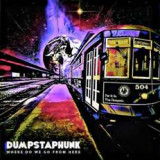
"Where Do We Go From Here" is Dumpstaphunk's first album in seven years. It will be released on April 23, 2021 on The Funk Garage, an imprint of Mascot Label Group.
Over its past 17 years, Dumpstaphunk has earned its reputation as the most well-regarded next-generation New Orleans live powerhouse, the type of band whose live shows attract sit-ins from legends like Carlos Santana, Bob Weir and Trombone Shorty. Alongside Hall, Daniels, Alex Wasily, Ryan Nyther and drummer Devin Trusclair, cousins Ivan and Ian Neville have built upon their family’s iconic NOLA legacy as they’ve transformed Dumpstaphunk into the city’s pre-eminent 21st-century funk-fusion export.
The band’s mix of classic and modern influences can be heard throughout the party-friendly mix of R&B, funk, rock, swamp-pop and blues of "Where Do We Go From Here," from the slap-bass rave "Make It After All" to the band's contemporary renderings of NOLA R&B rarities (the 1975 Blackmail gem "Let’s Get At It") and early Seventies classics (Sly and the Family Stone's "In Time”).
‘Where Do We Go From Here’ is perhaps the best evidence yet of Dumpstaphunk’s ability to strengthen and transform their singular NOLA roots in combination with the deeper outside musical and philosophical influences on which the band is founded.
Numa Recordings is back again with a heavyweight release for all the grime heads out there: Badman Ting is a proper roadman anthem featuring Killa P, Irah, Long Range (aka Killa’s Army) and XL Mad (member of Numa Crew).
The original version sees the four MCs riding a heavy drill riddim with an unparalleled mix of dancehall and grime vocal styles. The riddim, produced by XL Mad himself, is minimal and impactful, combining spooky melodies with distorted 808 bass. All these elements make the whole thing.. a ‘Badman Ting!’
out of Stock
Last delivered 5 years ago available to reorder, subject to availability
Wicca Phase Springs Eternal is the creative persona of Scranton, PA singer, songwriter, producer, and multi-instrumentalist Adam McIlwee. Since 2010, he has simultaneously established himself as a singular voice, adeptly combining his natural songwriting instincts with the digital culture enveloping his world. Through an extensive catalog of collaborations, singles, EPs and 2016’s Secret Boy LP, McIlwee has become a celebrated pioneer in this vital new direction of underground music. Along the way, he assembled
what would become his 2019 Run For Cover Records debut, Suffer On, with the sonic bedrock evolving yet again as he re-embraces an initial vision.
Suffer On is an exploration of familiar forms through the lens of something new and extraordinary. It is the first Wicca Phase record fully written by McIlwee, utilizing guitars and keyboards to create each song’s core and building upwards from there. Themes of longing, entrapment and sacrifice permeate the album - the notion of wanting more and not getting it. Production and lyrics are both intentionally sparse and bleak, reinforcing such feelings and allowing room for the weighty moods to fill the sonic void.
“It’s about making a deal with the devil,” he says. “It’s saying I can pursue this artistic thing as a career, but the consequence is I’m going to put myself out there in an emotional state for everybody to consume.” But it was never really a choice which path to follow - like all great songwriters, McIlwee is driven by the innate urge to express himself through song. And in the end, Suffer On emanates its own magic stemming from its creator.
Run For Cover & Wicca Phase Springs Eternal have partnerted to celebrate the anniversary of this release with a Deluxe Collectors Edition double album of Suffer On. The completely redesigned new version features a companion disc of each song performed acoustically, a new gatefold jacket, updated poster and a photo zine with over 40 photos and Suffer on Lyrics from Adam Mcilwee.
After NEF's album in 2019, Ici Bientôt is happy to present today the reissue of Comme Au Moulin by Nyssa Musique.
Paris 1985... ‘Extra-European’ Traditions meet Jazz and Minimal Music. An unusual array of instruments turn music into a dialogue. For a unique record ... vivid, full of texture, somewhere between Midori Takada, Don Cherry and Jon Hassell.
Beginning of the eighties, 5 musicians rehearse in a contemporary dance class hall, upstairs from the ‘’New Morning", renowned Music venue in Paris. Nyssa Musique is born. Passionate for a long time about traditional music, like those of the Middle East, India and East Asia, but also about African traditions, they throw a bridge between Jazz and ‘Extra-European’ traditions, resulting in what would be called "Spiritual Jazz" today, a little bit in the style of Don Cherry's Organic Music or Pharoah Sanders. With the notable difference, however, that their creations are strongly infused by contemporary classical and repetitive music, notably Steve Reich's work with whom they share a great interest for the traditional cultures of Southeast Asia, particularly Indonesia and its gamelans.
In the original group we have Armand Amar, Ballet Music composer and John Boswell. Both specialists of traditional hand percussion which they had been studying for a long time in India and the Middle East, they are also very fond of synthesizers. Three other talented musicians quickly join them: Jean-François Roger, percussionist, marimba and vibraphone specialist, Henri Tournier, multi-flutist and Renaud Garcia-Fons, double bass player, who has a passion for the Middle East and has developed a virtuosic play of the bow, reminding that of Cecil Mc Bee.
Each of them enriches the ensemble with their personality, originality and musical generosity. The rehearsal hall is rapidly invaded by the phenomenal instrumentarium put together by Armand Amar. A great opportunity for the musicians, for the dancers, to have access to an endless choice of instruments, offering infinite possibilities for mixing different colors and timbres. Their sense for being a group and their great capacity for improvising culminates, in 1986, in the composition of their first and only album Comme au Moulin (« As by the windmill"), testimony of years of creating without hidden agenda.
Authentic, free and vibrant, still today, this album has no real equivalent. Even though it recalls the Fourth World current by its combination of traditional instruments with a subtle use of synthesizers, Comme au moulin gives more space to improvisation. It may also recall those of Midori Takada, less the New Age esthetics. An album that should delight as well lovers of "Love Supreme" by John Coltrane, of "Vernal Equinox" by Jon Hassell, as those of Moondog, an artist who, like them, invented a music based on the use of untypical percussions, at the confluence of 'Extra-European' traditions, Jazz and Classical, all together complex and hypnotic.
out of Stock
Last delivered 4 years ago available to reorder, subject to availability
35th Anniversary reissue of legendary
Canadian/American singer, composer and transgender
activist Beverly Glenn-Copeland’s beloved seminal
work, ‘Keyboard Fantasies’.
An ahead of its time synth exploration which somehow
combines the essence of new-age minimalism, early
Detroit techno and the warmth of traditional
songwriting.
Beverly Glenn-Copeland’s third album, ‘Keyboard
Fantasies’ was originally self-released on cassette in
1986. Initially overlooked by mainstream media, it
caught the ear of a Japanese collector who contacted
the artist in 2015 and asked for copies to sell. These
sold out instantly and led to more copies being
distributed and multiple offers from record labels.
Features stunning alternative cover artwork and liner
notes by Robyn.
This album is available on CD for the first time.
Digisleeve with spot gloss to the cover and 8-page
booklet.
This is only the second time the album has been
repressed (with the previous repress being extremely
limited). LP format is housed in a gatefold sleeve with
spot gloss to the cover, printed inner sleeve, 180g
black vinyl and digital download code.
Also available again on tape as a white cassette.
out of Stock
Last delivered 5 years ago available to reorder, subject to availability
FUSE reveal the first single from Paolo Rocco’s forthcoming album ‘Ever So’ alongside house icon Robert Owens, backed by two slick remixes from S.A.M.
Ahead of the release of his ten-track album on the label in late-April, FUSE unveil the first single from Montreal based talent Paolo Rocco’s ‘Life In Pieces’ LP as he combines with legendary singer-songwriter, DJ, producer, and one of the most iconic voices in house music, Robert Owens, to deliver the soulful and slick ‘Ever So’ – accompanied by two warping remixes from Mandar member and Delaphine boss S.A.M.
A warming and rich production from the off, ‘Ever So’ welcomes a melting pot of classic and modern influences as Rocco’s bright keys and resonant chords meet Owens’ infectious and inimitable vocals to reveal a smooth, classy slice of house music. On the flip, S.A.M’s first interpretation of the production sees the introduction of trademark swirling, spacey synths and vibrant stabs, whilst his ‘Hypnotic’ take on the production flows and journeys into deeper moments guided by arpeggiated melodies, acid-tinged basslines and sweeping atmospherics.
out of Stock
Last delivered 17 months ago available to reorder, subject to availability
The established favourite Nicolas Laugier AKA. The Reflex has been a crucial name in the fabric of electronic music, and is widely praised for his masterful production style which has gained the seal of approval of heritage artists such as Nile Rodgers, Giorgio Moroder, Nina Simon, Kid Creole, Kathy Sledge, Noel Gallagher, Bono and Paul Weller - morphing some of the world classics into contemporary; certified rave anthems. Loved by tastemakers alike including Rob Da Bank, Gilles Peterson, Craig Charles and Mistajam, The Reflex is responsible for unleashing some of the best remixes to date.
Returning off the back of his latest revision of Norman Doray and Darren Crook's 'Sweet Freedom', which has so far gained nearly 150 worldwide radio spins since it's release on 6th November, The Reflex now puts forward an incredible 2021 revision of two time Grammy award winner Nile Rogers' 'Do What You Wanna Do'. A modern disco anthem, the track has since been remixed by producers like MK, Eats Everything and Rob Da Bank. With an already established repertoire of essential remixes and re-edits, the London based producer combines his unique Disco and Soul blend with his acclaimed musical initiative to create what will be an intricate and exceptional upgrade, and a key selection of an already impressive arsenal of releases.
A percentage of the royalties from this release will be donated to Nile Rodgers' 'We Are Family Foundation' - who collaborate with forward thinking organisation who believe in youth and together, build creative programming and content, empowering young people to take humanity forward.
out of Stock
Last delivered 7 months ago available to reorder, subject to availability
Melvin Ukachi needs little introduction, the Lagos (Nigeria) based vocalist and bandleader is a living legend. Melvin is known for his fantastic solo albums, his vocals for the afrobeat star-groups M.F.B. and Ozzobia_but his biggest legacy is without a doubt him being the singer and bandleader of Ofege. Melvin formed Ofege in the early 1970s (when he and the other band members were all still a bunch of teenagers). Due to their vibrant combo of sweet harmonies, hooks & fuzz, Ofege would become one of the most legendary Nigerian groups of all time, with expressive sales and national stardom to follow. At the turn of the century (and because of tracks appearing on various compilations) Ofege would receive international acknowledgment for being the first of their kind and THE ultimate West-African psychedelic funk band! Melvin Ukachi recorded four milestone albums with Ofege: 'Try and Love' (1973) 'The Last of The Origins' (1976), 'Higher Plane Breeze' (1977) and 'How Do You Feel' (1978). When the Ofege story came to an end, Melvin recorded two astonishing solo albums: 'Evolution-Bring Back The Ofege Beat' (1981) and 'I am Ok' (1985). Both of his solo recordings have now become much sought-after holy grails for collectors and fans alike. On the album, we are presenting you today (Evolution-Bring Back The Ofege Beat) the listener is treated to the trademark Ofege sound (as the title of the record obviously suggests). Next to the rootsy and raw Ofege sound, we're shown a perfect glimpse of the late '70s afrobeat works combining soul, jazzy rhythms, William Onyeabor style synths & fluid boogie-danceability Expect some serious 'all-star' guest musicians as well_featured on the album are Chyke Madu (The Funkees) on drums, Berkley Jones (Ofege) on guitar_and many other local legends. To top things off the tracks were recorded and mixed at the legendary Abbey Road Studios in London_all slickly engineered by Rafiu Ayoade (The Apostles) and produced by the president of sound himself Odion Iruoje (known for his work with Manu Dibango, Fela Kuti_and many others). 'Evolution-Bring Back The Ofege Beat' was released on EMI Nigeria in 1981 and is a total Afro-psych-funk classic that begs for a special place in your record collection. It's tight, funky and Melvin's soulful vocals are to die for. This record is a monster! Tidal Waves Music now proudly presents the first-ever reissue (supervised by Melvin Ukachi himself) of this amazing Nigerian Afrobeat album. This RARE classic (original copies tend to go for large amounts on the secondary market) is now finally back available as a limited 180g vinyl edition (500 copies) complete with the original artwork made at Grafikad (who were responsible for designing landmark sleeves for renowned artists such as Fela Kuti).
Conceived at the heel of Italy's boot-shaped peninsula in Apulia, Patrick Belaga's Blutt makes music for the unruly imagination. The title is an old German word for 'naked', 'bare', but it can also mean 'blood' when spelt blut. Take away another letter and it makes 'butt'. None of these definitions and adaptations were what prompted the classically-trained composer and cellist to name his second album with a word simulating the sound of a punctured artery. That came later. Blutt's nine woozy compositions are inspired by a contemplative road trip with a friend, and the mysterious muffled music heard from an unidentified source. It was a combination of jazz and classical music that haunted Belaga's wanderings through the Byzantine town Gallipoli, and soon infected his dreams of long-gone civilizations. This record is its outcome, where organic instrumentals and electronic production merge into a sound that's both contemporary and ancient. Samples of mewing incantations and tape hiss sway atop the waltzing thud of piano chords on "Sigh". Composite layers of Belaga's cello play in downcast harmony on "Rust". There's a wistful sense for the romantic, in the eerie rhythm of a piece like "Momentum". The quarter tones of an Eastern European and Middle Eastern folk scale probe a profound melancholy via Kai Knight's violin. Its notes are haunted by a field recording of running water on "Unsoft", echoes of panpipes and a Jew's harp on opener "Lilt". As a consummate composer and performer known for his work with artists Wu Tsang, boychild, Josh Johnson and Asma Maroof, Belaga's Blutt is itself marked by flawless collaborations. Vocalist and instrumentalist Jazmin Romero sings and composes the surreal melodies of "Grey Eye". Multidisciplinary dance artist and producer Riley Watts contributes to the muted, motorik movement of "The Tunnel is a Tower". Together, the record plays as a stunning soundtrack to the strangeness of sleeping, and the heartbreaking transience of time. Like an intense dream half-remembered, the emotions persist after waking but for the sharp machinations just outside of the mind's reach. The album is mastered by Rashad Becker, featuring artwork by Giovanni Furlino & design by N MRE 08.
MICROCORPS is the new project by artist and musician Alex Tucker (Grumbling Fur, Alexander Tucker, Imbogodom) exploring electronics, cello and voice. The debut release XMIT, an eight-track album featuring collaborations with Gazelle Twin, Nik Void, Simon Fisher Turner and Astrud Steehouder, is out on 16 April 2021. Tucker's ever-evolving soundworld continues to unfold with this collection of harsh realms centred around processed electronic systems, strings and vocal manipulations. On the new album, MICROCORPS employs altered voices, sound synthesis and atomised beat constructions. In a move away from previous projects XMIT investigates erasing the self, removing obvious traits of the hand and voice, and allowing a focus on the humanoid rather than the human. Instead of recognisable lyrics and coherent imagery, MICROCORPS evolved synthesised voices to generate alternate characters. He expands, "I was investigating how language brings our world into being and how manipulating the actual grain of the voice could open up momentary shifts in perception." Each track is born from a balance between composition and improvisation within set parameters. At each stage audio is heavily processed and then reconfigured. Setting up systems that are non-repeatable, where decisions can be premeditated and intuitive but never the same with each performance, using hardware and instruments outside of the computer to make live stereo takes that have limited room for editing and mixing. "I'd been looking into combining dream music with machine rhythms, but there are so many great examples out there of both music forms, so I started to cut up the drones and really filter the drum patterns to create a hybrid space." The album artwork features manipulated ink drawings by Tucker that originally featured in his recent comic ENTITY REUNION 2. XMIT refers to a time in which information both physical and nonphysical transfers at an alarming rate beyond human comprehension into an age which is at once banal and terrifyingly alien.
Hailing from London, UK, PUPIL SLICER are preparing to release their debut album, Mirrors, via Prosthetic Records. Combining all the sharp edges of angular mathcore with the bonecrushing intensity of grindcore, PUPIL SLICER are guaranteed to leave their mark on 2021. Mirrors captures the frenetic energy that propels PUPIL SLICER forward, making their snarling blend of mathcore, grindcore, death metal and more a truly essential listen. For all the disjointed chaos and jagged edges present on Mirrors - and there are many - PUPIL SLICER has created an enticing, cohesive collection of songs that represent a marked period of time in the lives of its creators. Complemented further by the distinctive collage cover art by Nick Povey, this debut album is equal parts grit and sass.
One of the busiest keyboardists in Tel Aviv today, Yonatan Daskal plays with the biggest names in the local scene as a composer, producer and keyboardist.
His classical background combined with a love for synthesizers as well as a curious and open-minded musical vision make Daskal’s music such a deep, culturefusing and timeless experience. Daskal’s debut solo album and first release on
Raw Tapes titled ‘Romantican’ reveals a colorful, rhythmically driven universe of gentle atmospheric nebulas as well as more uplifting disco planets.
Created using skillful analog synthesis, sequencers, vinyl sampling and of course good old keyboard playing. Conceived and played by Yonatan Daskal.
Co-Produced by Yonatan Daskal and Rejoicer
MICROCORPS is the new project by artist and musician Alex Tucker (Grumbling Fur, Alexander Tucker, Imbogodom) exploring electronics, cello and voice. The debut release XMIT, an eight-track album featuring collaborations with Gazelle Twin, Nik Void, Simon Fisher Turner and Astrud Steehouder, is out on 16 April 2021. Tucker's ever-evolving soundworld continues to unfold with this collection of harsh realms centred around processed electronic systems, strings and vocal manipulations. On the new album, MICROCORPS employs altered voices, sound synthesis and atomised beat constructions. In a move away from previous projects XMIT investigates erasing the self, removing obvious traits of the hand and voice, and allowing a focus on the humanoid rather than the human. Instead of recognisable lyrics and coherent imagery, MICROCORPS evolved synthesised voices to generate alternate characters. He expands, "I was investigating how language brings our world into being and how manipulating the actual grain of the voice could open up momentary shifts in perception." Each track is born from a balance between composition and improvisation within set parameters. At each stage audio is heavily processed and then reconfigured. Setting up systems that are non-repeatable, where decisions can be premeditated and intuitive but never the same with each performance, using hardware and instruments outside of the computer to make live stereo takes that have limited room for editing and mixing. "I'd been looking into combining dream music with machine rhythms, but there are so many great examples out there of both music forms, so I started to cut up the drones and really filter the drum patterns to create a hybrid space." The album artwork features manipulated ink drawings by Tucker that originally featured in his recent comic ENTITY REUNION 2. XMIT refers to a time in which information both physical and nonphysical transfers at an alarming rate beyond human comprehension into an age which is at once banal and terrifyingly alien.