dgoHn (pronounced “John") is the moniker of John Cunnane, who hails from somewhere between London and Essex. ‘Tessares,’ his fourth album but his first for Planet Mu, is playful, unconventional drum & bass that contrasts sparse effects and melodic elements with complex drumfunk and breakcore. He often uses unusual time signatures and head-spinning polyrhythms inspired by jazz and math rock, sometimes within the same track. Somehow he makes it sound effortless, and occasionally pretty as well, keeping a fine balance that never feels punishing; exploratory without getting lost.
He's built a name for himself over the last two decades performing live at festivals and events around the world, while collaborating with fellow artists such as Macc, Nic TVG, Jodey Kendrick and Badun as well as solo releases.
The album opens with ‘Waiting For’ which combines complex breaks with melodic fills, spacey effects and dubbed out vocals that feel like snatches of lost conversations - a combination he uses throughout the album giving it an eerie touch of humanity. Lead single ‘I Couldn't Remember So I Made Something Up’ is in 15/8 time. It feels like a conventional melodic drum & bass track, but the time signature disrupts the listeners’ expectations, while the detuned melody eases its sense of dislocation. ’Whistling On A Tuesday’ opens with a light echoey piano countdown into bass stabs which introduce heavy whirling amen breakbeats that switch between 180 and 120 bpm. ’Holly Can Swim But She Doesn’t Really Like It’ is the most rhythmically challenging track here. It feels hard to hang on to as its knotty breaks play out over bell chimes, like something Autechre might make if jungle was in their DNA. The album ends on the dubbed-out drumfunk of ‘7 Years Or More,’ with an arrangement that builds a filmic, dusty atmosphere of chimes and electric guitar, layering in vocals, vinyl crackle and echoing synth giving way to tough drums, before all that is taken away so that just a voice remains.
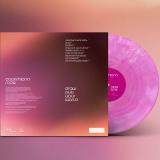
LP Limited Edition (500 copies) ‘Draw Out Your World” LP on Pink Marble Vinyl with signed postcard.
Caoilfhionn Rose's completely immersive fourth full-length offering - her first for Lost Map - is a powerful statement about new motherhood, strength and resilience through change and the importance of collaboration, community and placing trust in others. A softly unravelling collection of songs grown from dreamy improvisations and driving, beat-led folktronica. 'Draw Out Your World' arrives in the wake of Caoilfhionn having scored a #1 on the UK Official Independent Albums Chart, as a key contributor to Mancunian post-punk cult heroes The Durutti Column's critically-acclaimed 2026 release Renascent.
Raised in Manchester, Caoilfhionn developed a "deep, almost spiritual appreciation" of music in all its diversity. Drawing inspiration from nature, dreams, and personal experiences, she crafts songs that are both intimate and universal in their themes.
A performance at a local café caught the attention of Gondwana Records founder Matthew Halsall, who invited Caoilfhionn to work on her debut album 2018's Awaken. It became the first of three albums for the label; followed by 2021's Truly and 2024's Constellation. As a bandleader she headlined tours across the UK and Europe and has also supported artists such as Mammal Hands, The Breath, GoGo Penguin, Alabaster dePlume and Hania Rani.
Scattered ideas for what would become Caoilfhionn Rose's fourth album began accumulating long ago, in fits and starts and multiple iterations, with some tracks lying finished but unheard for years. Yet the record only truly began to take shape in the midst of a period of profound personal change. During a trip to Marrakesh, Morocco with her husband and long-time creative partner Rich Williams in January 2025, the pair spent evenings among the musicians and communities gathered beneath the night sky in Jemaa el-Fnaa. "The trip really reinvigorated us and led to lots of conversations about why we make music and why we love it," she remembers.
Several of Draw Out Your World's newest songs were born during Caoilfhionn's pregnancy with her first child. Although a deeply joyful time, she experienced severe sickness throughout, making music difficult (her voice changed so much during pregnancy that some vocals had to be re-recorded after her daughter arrived). In moments when she felt well enough, Caoilfhionn and Rich began shaping new ideas and songs from loops and fragments he had been creating, later bringing musicians together to record and remodel the compositions live in the studio. A combination of impulse and patience, individual expression and collective improvisation lies at the heart of Draw Out Your World. Four tracks emerged during two days of spontaneous invention in Copenhagen with multi-award-winning Danish electronic jazz duo Svaneborg Kardyb. Other, older pieces were patiently revisited and reworked with keyboardist John Ellis (a founding member of The Cinematic Orchestra). Caoilfhionn's ongoing collaborations with The Durutti Column have long informed her carefree approach to making music ("lots of improvising and experimenting… seeing what sticks"); here she pushes it further than ever. "It's been a lot about following my intuition and trusting in the process and musicians in the room," she says.
Started from a sweet little mini-hand-drum loop by Rich and finished with Awen Blandford's swooping cello lines, lullaby-like opener 'Reflecting The Light' was inspired by Caoilfhionn's pregnancy - "the feeling of my little girl growing inside me," as she puts it, and the almost supernatural feeling of connection to another person it brings. The much older 'Grow' - a song about how a person "keeps unfolding" through good times and bad - came close to appearing on Caoilfhionn's previous record Constellation in 2024 before finding renewed meaning and purpose here, reinvigorated by John Ellis's rolling Fender Rhodes. Set to finger-picked guitar and hazy electronics, the album's title track 'Draw Out Your World' drifts into view like a gentle parting of the clouds - a mellow but vivid reflection on dreams and realities and the pathways in between, with shades of Judee Sill and Linda Perhacs. By sharp contrast, 'Hidden Wars' - a song about trying to get away from spiralling negative thoughts - is set to a fiercely snaking groove inspired by Caoilfhionn's love of artists like Portishead and The Smile. The moodily languid and sparse 'Just To Be Alive' leans into Caoilfhionn's more electronic side, Nikolaj from Svaneborg Kardyb conjuring pure atmosphere on his swirling Juno synth, before 'To A Feeling' collides into a wild, wonky and raw jazz jam rising to Eleanor Colee's ripping saxophone solo. 'As I Find Myself Again' lands the album on a subtle ellipsis - its feeling of calm finality unsettled by the faintest flicker of a new melodic phrase at the end.
‘They went beyond punk before punk had properly started…the entire album is a controlled explosion of ideas. Nearly fifty years on, This Heat’s debut is something the world has still not completely caught up with.’ - Simon Reynolds
‘Over the years, there have been bands to play as aggressively, or even as strangely, but very few have been able to rise from their collective influences and histories to create music so singularly distinctive and inspiring.’ – Pitchfork 9/10
‘This Heat sounded like the future then ... and still do now.’ - Dan Snaith (Caribou)
Although widely considered to be Post-Punk’s finest, This Heat actually began performing and recording their music in 1976, the early days of London’s punk era. Within their two albums and an EP they perfected a strange and volatile new strain of avant-garde rock that time has proved to be massively influential, a blueprint for much that would follow: post-rock, math rock, homemade musique concrète, experimental electronica.
Numerous critics have recognised the band's influence on the music of Sonic Youth, Glenn Branca, Steven Wilson, Public Image Ltd., Radiohead, Swans, Shellac, Young Knives, Black Dice, Lightning Bolt and numerous other experimental and post-rock bands. Disbanding in 1982 they have left an undeniable legacy that has only continued to grow in stature and relevance.
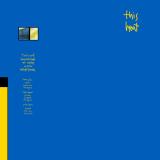
The album This Heat, also known to fans and critics as the ‘Blue and Yellow’, was their eponymous debut release, recorded in sessions between February 1976 and September 1978 in a variety of studios including their own Cold Storage, a converted cold storage room in the Acme Studios complex. Innovating throughout, they combined loops and tape manipulation (producing for example the proto-drum and bass ‘24 Track Loop’) with live performance and haunting vocals to a complex, dissonant whole. The band recorded everything they ever did – including gigs – and tracks such as “Water” were entirely improvised in the studio.
Having recently passed the 50 year anniversary of their first gig, and the recording of material that appears on their debut album, the group’s surviving members Charles Bullen and Charles Hayward, true to their DIY roots, have set up an imprint to release their recordings for their growing fan base that is increasingly recognising their influential place in music history.
Luke Una introduces a new series of original, dancefloor-focused productions on his É Soul Cultura imprint, in partnership with Mr Bongo. True to the label’s ethos, the series pushes sonic boundaries into deeper, more expansive territories, delivering forward-thinking music for discerning dancefloors. The first release brings together UK garage royalty Zed Bias and the underground talents of MJK, as we’re served up a double hit of hypnotic, futuristic techno and house.
Zed Bias is an artist that needs little introduction. The main moniker of Manchester’s Dave Jones, over the past 25+ years he’s cemented himself as a crucial figure in UK garage and dance music as a whole. He’s remixed hundreds of artists including Whitney Houston, The Streets and Azymuth, been nominated for a MOBO award and, through his more experimental take on 2 step garage, helped lay the foundations for the development of bass music into dubstep. For this new release he teams up with Ghanaian-British producer and DJ, MJK. Earmarked as ‘One To Watch’ by DJ Mag, and similarly championed by Mixmag, MJK’s sound draws from the worlds of bass, grime, house and beyond.
Opening track ‘Keep On Livin’’ sees Zed Bias and MJK coming together in the studio. Passed to Luke by his manager If Khan, it’s a sonic alchemy rooted in black heart soul music yet seen through a prism of bass futurism. A heads-down cut of driving techno, with nods to Detroit, and firm UK foundations, that is both bass-heavy and otherworldly. It’s a simple yet effective, entrancing combination of percussion, bass, and keys, peppered with old soul samples that lock you into a groove and never let go. A track built for dancefloors big or small.
On the flip, MJK steps up solo with ‘Late to Camberwell’, diving into deeper, late-night territory. Known for his three-deck DJ mixing style, MJK has a real understanding of how to layer elements to keep people moving. A swirling cosmic feel reverberates through ‘Late to Camberwell’. Drum hits, shakers and synth loops are weaved together in style, creating a dose of deep, immersive rolling house. In Luke’s own words, “I found it very exciting to hear a new artist create such a beautiful sound that reminded me of Detroit and Artwork's late ‘90s techno alias Grain. It’s stripped-back raw house music of the highest calibre”.
LOS ANGELES—To celebrate the 40th anniversary of the celebrated Talking Heads and Jonathan Demme’s concert film Stop Making Sense, the set will be re-released as a 2LP and 2CD/Blu-ray set this summer.
Released last year, the sold-out Deluxe Edition of the soundtrack will return as a 2-LP black vinyl on Rhino and 2-LP crystal clear vinyl at retail. Both variants feature a 12-page booklet with liner notes from all four band members –Tina Weymouth, David Byrne, Chris Frantz, and Jerry Harrison—and band photos. The 2CD/Blu-ray version includes the entire 28-page booklet from last year’s Deluxe Edition and a Dolby Atmos mix of the complete concert, mixed by Jerry Harrison and E.T. Thorngren, who also mixed the original release. Both will be available on July 26. Pre-order now.
The band appeared together for a sold-out screening and Q&A last night at the Pantages Theater, the same theater at which Stop Making Sense was recorded. They were joined by Blondshell, who performed “Thank You For Sending Me an Angel.” Another special screening with the band will occur in Brooklyn at the King’s Theater on June 13, with the Q&A hosted by Questlove and The Linda Linda’s performing “Found a Job.” The two events cap off a banner year of celebrations for what many consider to be the best concert film of all time.
The inspiration for Stop Making Sense came when director Jonathan Demme saw Talking Heads perform during the band’s 1983 tour for Speaking in Tongues. Afterward, he approached them with the idea of making the show into a concert film. They agreed and worked together over the next few months to finalize the details. Ultimately, Demme filmed three shows at Hollywood’s Pantages Theater in December 1983 to create Stop Making Sense.
The concert film presents a retrospective of the band up to that point, with a performance that weaves together songs from all six of its studio albums. The show progresses methodically, opening with Byrne onstage performing “Psycho Killer” alone with a drum machine. After each song, he’s joined by a new band member until Weymouth, Frantz, and Harrison are all on stage with him. The group continues to grow throughout the concert as members of the stellar touring band are added: keyboardist Bernie Worrell, percussionist Steve Scales, guitarist Alex Weir, and backup singers Lynn Mabry and Ednah Holt.
The band performs 18 songs in Stop Making Sense, including its recent single at the time, “Burning Down The House.” That summer, the song was in heavy rotation on radio and MTV, helping the song become the band’s first top 10 hit in America. It was, however, a different song from Speaking in Tongues that was destined to deliver one of the film’s signature moments. Talking Heads would perform “Girlfriend Is Better” wearing the now iconic, oversized suit inspired by costumes worn in traditional Japanese theater. For good measure, a picture of David Byrne in the suit also graces the album cover.
Stop Making Sense focuses mainly on music by Talking Heads but does include a few songs recorded outside the band: “Genius Of Love” by Tom Tom Club, “What A Day That Was” and “Big Business” from Byrne’s 1981 album, The Catherine Wheel. Limited edition vinyl versions of both of these albums, along with Harrison’s The Red And The Black, were released for this year’s Record Store Day.
When it arrived in September 1984, Stop Making Sense was an artistic and commercial triumph. The film had people dancing in theatre aisles, and the soundtrack sold over two million copies. Just last year, the Library of Congress added Stop Making Sense to the National Film Registry in recognition of its cultural, historical, and aesthetic significance.
Weymouth praises Demme as a collaborator: “…Jonathan was a very enthusiastic, highly adaptive, and imaginative guy who was just as good a listener as he was a talker and collaborator. From the get-go you just got the impression he was as flexible as he was disciplined. Being team players, that boded well for a great relationship and a great film!”
Harrison says the film still holds up today: “To me, Stop Making Sense has remained relevant because the staging and lighting techniques could have been created in a much earlier time period. For example, Vari-Lights, lights with motors to re-aim them, had just come into vogue. Had we used them, there would have been a timestamp on the film, and it eventually would have felt dated...The absence of interviews, combined with the elegant and timeless lighting, created a film that can be watched over and over.”
Byrne says it’s interesting that this album was – for many people – an introduction to Talking Heads. “We had done a live album before this, but coupled with the film, and with the improved mixes and sound quality, this record reached a whole new audience. As often happens, the songs got an added energy when we performed them live and were inspired by having an audience. In many ways, these versions are more exciting than the studio recordings, so maybe that’s why a lot of folks discovered us via this record.”
Frantz recalls the sheer joy surrounding the entire Stop Making Sense experience. “I’m talking about real, conscious, transcendent joy… I’m talking about what the Southern gospel people call ‘getting happy,’ which means ‘to be filled with the Spirit.’ That is what happened to us onstage every night, and from my seat behind the drums, I recognized that this was happening to the audience too. Joy was visible in front of me and all around me every night.”
KiNK & Raredub launch new sub-label Raw on SHDW's Mutual Rytm with bold two-tracker 'You And Me', backed by a VIP remix of 'Time To Change' from Paul Woolford aka Special Request.
Following their standout debut on Spectra with 'Time To Change', Bulgaria's finest dance music export KiNK & Raredub return to the Mutual Rytm universe to launch the label's new sub-series: Mutual Rytm Raw. Their latest release, 'You And Me', marks the next step in their collaboration - two stripped-back yet anthemic cuts that embody their signature sound: "Rude Boy Techno", a fusion of techno's drive with the swing and grit of UK Garage. Both versions of 'You And Me' are built for the floor, combining sharp percussion, catchy vocal hooks, and powerful low-end pressure - minimal in structure but rich in character and groove.
Rounding off the release is a standout VIP remix from Paul Woolford aka Special Request - one of his infamous 'Variation in Production' versions - offering a stripped yet high-impact reinterpretation of KiNK & Raredub's previous single 'Time To Change'. Raw, rolling, and unmistakably shaped by his UK Garage-influenced style.
Sciahri and his label Sublunar are thrilled to present "VEIL OF ECHOES," a new project that brings together both emerging and established talents from the label.
This release showcases
a fresh dimension of techno and electronic music, celebratingf originality by combining timeless cuts from the past with cutting edge sounds of the present and future. The journey begins with "IIum" by Temudo, an entrancing track with hypnotic synths that seamlessly transitions into Troys Awakening, featuring an irresistible and cerebral groove. Neel takes over with Follow Me, pushing the boundaries with intricate sound design crafted to move your body, followed by Marcal's Ancient Swing, renowned for its unique sound and processed vocals. Kameliia's Insolitam then transports you to another dimension with its deeply immersive and mental vibes.
Kaiser kicks off the next phase with Fearless Attitude, a powerful yet refined track, while Roll Dann continues the momentum with "Area 24," offering a softer yet penetrating synth line.
On side D, Cirkle's "Mooree" showcases his talent for
creating minimalistic yet razor-sharp tracks, leading into Juri Heidemann's "Reger," a mysterious piece with a groove designed to carry you to another realm. The project culminates with Kerrie's Jump The Gun, featuring intricate synths and a mind-bending bassline.
With "VEIL OF ECHOES," Sublunar aims to share a visionary collection that encapsulates the essence of techno and electronic music, bridging past influences with future innovations.
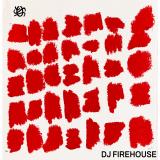
Full Dose welcome DJ Firehouse to the fold with a four-track suite that drifts deep into fogged-out space. Rooted in the lineage of late-2000s innovators, this is a record that leans into atmosphere as much as it does low-end pressure.
“Hamilton Hill” sets the tone with metallic percussion and submerged chords, locking into a hypnotic groove that feels equal parts system music and head music. “Gardening” follows with a blurred palette, combining rippling textures, tape hiss and a hypnotic vocal loop to pull you further inward. On “Starpol 666”, Firehouse eases off the pressure with a more abstract, interlude-like piece, where drifting mid-range pads and liquid movement hint at a more experimental edge. Closing track “Cross Fader” stretches things out into a dubbed, slow-burning finale. Breathy ambient layers give way to dembow-leaning drums, with thunderous hits and long-tailed echoes building a quiet but undeniable tension.
Thirteen years have passed since their debut album, but now Oppenheimer MKII is ready to release their long-awaited second album "Embrace The Dark”.
Oppenheimer MKII is Andy Oppenheimer, singer, songwriter and formerly one-half of 1980s synth-pop duo Oppenheimer Analysis, one of the leading bands of the ‘minimal synth’ scene, and inspiration behind the New York-based Minimal Wave label and Mahk Rumbae, electronic musician and producer known for his work with Codex Empire, Mitra Mitra, and long-running UK industrial/experimental band Konstruktivists.
“Embrace The Dark” does exactly as its title suggests: it embraces dark, apocalyptic themes for our current turbulent times. In nine mind-blowing tracks, Mahk’s thunderous dance rhythms and addictive synth-pop melodies combine with Andy’s latest dystopian – and sometimes utopian – visions of our past, present and future.
From the atmospheric title track, greatly influenced by Andy’s lifelong obsession with space – ‘When you embrace the dark, you gaze back in time...’ to delusional tech-bro world domination in “I Went Too Far” – ‘The sky is not the limit; my wealth is infinite’ and the pounding paranoid lead track “Oh! My Mind is a Storm” – ‘When I go dark, I'm into demon mode’, the new Oppenheimer MkII album “Embrace the Dark” ventures deep into futuristic dreams and nightmares and is guaranteed to fill the dancefloor.
Continuing its faithful documentation of the early years of Monolake, Field Records proudly present the first-ever vinyl pressing of seminal 1999 album Interstate. In a kaleidoscopic lattice of micro-rhythms and exquisitely dynamic textural work, Robert Henke and Gerhard Behles fully collaborated for the final time on this record — and created an electronica landmark in the process.
Monolake's evolution from their earlier dub-techno-tinted works saw their exploration of Max/MSP go further out. The duo yielded greater complexity in the behaviour of their sound palette to achieve an organismic quality that remains an enduring influence on so many strands of experimental electronic music today. Interstate is a vivid record that builds up eight different ecosystems of sound and subtly threads elegant grooves through their root structures.
There's a house-like undulation to the low-end driving 'Tangent-I' and 'Tangent-II', but the infinitesimally detailed layers of sound on top swoon from techno synth shimmers to trickling waters, snaking delay trails and pin prick percussion. You can hear the unmistakable, snappy rhythmic thrust of drum & bass driving 'Ginza', but here it's used as an engine for the crispest array of designer percussion and dub-soaked synth chirrups. Across every track, Henke and Behles demonstrate a potent combination, both groovily instinctive and eternally fascinating to try and pick apart.
After Interstate, Behles departed to focus entirely on the development of Ableton Live and Henke steered Monolake towards a leaner — but no less pioneering — sound. Every Monolake record has its own unique context and sound, and the circumstances of Interstate could never be repeated. Capturing the leaps in progress that were being made in digital music production at the end of the millennium, it's an information-rich document of a moment in time that still sounds wildly futuristic 27 years later.
Dewa Alit, master of radical Balinese gamelan, returns to Black Truffle with Baur Bentur. Genetic (2020, BT063) introduced international listeners to the magical sound-world of Alit’s Gamelan Salukat, who perform on instruments tuned to a unique scale derived from modified versions of two traditional Balinese scales. The two pieces heard on Chasing the Phantom (2022, BT093) further demonstrated his radical fusion of tradition and experimentation, with passages where unorthodox techniques make the acoustic ensemble resemble glitching electronics. Baur Bentur now highlights another aspect of Alit’s work, presenting pieces composed in 2024 and 2025 where Gamelan Salukat performs alongside virtuoso pianist Sri Hanuraga. Alit’s music is grounded in deep reflection on the tradition of Balinese gamelan and its place in the contemporary world. His title, ‘Baur Bentur’, which translates as ‘mixing and smashing’, points to his embrace of the intercultural mixture of Eastern and Western elements in the search for innovation. Against the calcification of Balinese music into tourist entertainment, Alit poses his searching, experimental work, which celebrates the communal values and performance practices of traditional gamelan while pushing into startling new directions.
‘Sukat Tacara’ is a study in layered tempos, meters, and polyrhythms, a constantly shifting dialogue between piano and the instruments of Gamelan Salukat. It begins close to a traditional concerto, pairing a brisk sequence of melodic variations from the piano with a spare but propulsive accompaniment of drums and hanging metallophone tones, punctuated by low gong strikes. The piano builds in volume and density across a rapid succession of fragments, at points recalling George Antheil’s ticking wind-up machinery, though Hanuraga’s jazz background shines through in the fluidity with which he navigates the complexities of the score, where chromatic movement co-exists with bluesy phrases. An abrupt change in the piano to patterns of dense clusters introduces a new episode, during which the metallic instruments of the gamelan enter the foreground. The piece dazzles with its inventive rhythms and dynamics, building to a stunning passage featuring the signature heavy muting technique of the Gamelan Salukat metallophones in kinetic patterns that would be at home on a Príncipe release.
The title piece begins at high intensity and rarely lets up, working through bracing unison ensemble melodies and punctuation points where piano and gamelan together seem to become a single, thudding drum. For much of the piece the piano is tightly integrated into the ensemble, the harmonic extensions of the melodic line subsumed into a moving cloud of complex overtones generated by the gamelan instruments. Wildly kinetic on the rhythmic level, the piece swarms with microscopic movements of beating patterns generated by the ‘blend and crush’ of three simultaneous tuning systems: the equal temperament of the piano and the saih cenik (small scale) and saih gede (big scale) used by the gamelan instruments. Accompanied by the composer’s thoughtful liner notes and images of the musicians, Baur Bentur is a stunning next step in Alit’s radical combination of tradition and innovation.
Like a meteor striking earth, two forces hit each other. Merkelbach and Nathan Homan found each other in a shared vision in music, and this is the reason they’ve started the label Beau Brummel. Combine the two and you get the alias Merkoman. If you were to take a look at both of their agendas, you’d see Thursday crossed off because that’s Brummel Day. After two years of Thursday evening Brummel sessions, a big vault of music has been filled. The result is The Story of Brooks Pipe, a two-part story of a refreshing new sound that only Merkoman can achieve. In Part 1 you’ll find four tracks strictly made for all sorts of dance floors. An additional injection of creative artwork was given by Sjeng Schupp.
In the early 1990s, as techno began to emerge from the shadows of New Beat and EBM, a number of tracks crossed over into wider club circulation, helping define the sound of a new era. Among them was “Fingerfoc” by Friends Of Carlotta, the project of German producer Volker Then.
Originally released in 1990 on ZYX Records, “Fingerfoc / Alles Klar” quickly achieved cult status. Both tracks are driven by punchy drum machine patterns, sharp synth stabs and looping vocal fragments, combining the rhythmic directness of New Beat with the emerging minimalism of techno. “Fingerfoc” stands out for its hypnotic repetition and stripped-down structure, while “Alles Klar” takes a slightly more playful, rhythmic approach. Together, they capture the raw, functional club aesthetic of the early 1990s.
Limited to 300 copies on black vinyl and 200 copies on crystal silver vinyl, this new edition of “Fingerfoc / Alles Klar” pairs the original mixes with two previously unreleased remixes and two previously unheard recordings, offering a broader glimpse into the project's output during this formative period.
In the early 1990s, as techno began to emerge from the shadows of New Beat and EBM, a number of tracks crossed over into wider club circulation, helping define the sound of a new era. Among them was “Fingerfoc” by Friends Of Carlotta, the project of German producer Volker Then.
Originally released in 1990 on ZYX Records, “Fingerfoc / Alles Klar” quickly achieved cult status. Both tracks are driven by punchy drum machine patterns, sharp synth stabs and looping vocal fragments, combining the rhythmic directness of New Beat with the emerging minimalism of techno. “Fingerfoc” stands out for its hypnotic repetition and stripped-down structure, while “Alles Klar” takes a slightly more playful, rhythmic approach. Together, they capture the raw, functional club aesthetic of the early 1990s.
Limited to 300 copies on black vinyl and 200 copies on crystal silver vinyl, this new edition of “Fingerfoc / Alles Klar” pairs the original mixes with two previously unreleased remixes and two previously unheard recordings, offering a broader glimpse into the project's output during this formative period.
In the early 1990s, at the intersection of New Beat, early techno and EBM, a wave of raw, experimental club music emerged from Germany—dark, mechanical and often strangely playful. Among its most distinctive voices was Scrot, the project of producer Lars Janzik (Base Scan, Decade V, Technoline).
Originally released on ZYX Records, Scrot’s three seminal singles—“Teufelsrhythmus”, “Der Rhythmusmensch” and “Der Amokläufer”—captured a unique moment in early European techno. Built on hypnotic drum machine patterns, lo-fi sequencing and spoken-word German samples, these tracks combined industrial textures and unconventional vocal treatments with early techno production techniques and a peculiar sense of humor.
Limited to 300 copies on black vinyl and 200 copies on orange vinyl, and accompanied by an exclusive postcard, “Teufel & Mensch” brings together some of the project’s most iconic tracks and remixes, alongside the previously unreleased Knauer Remix of “Teufelsrhythmus”.
More than a retrospective, “Teufel & Mensch” stands as a document of a transitional era—when techno was still forming its identity, and artists like Scrot were pushing its boundaries into strange and uncompromising territory.
In the early 1990s, at the intersection of New Beat, early techno and EBM, a wave of raw, experimental club music emerged from Germany—dark, mechanical and often strangely playful. Among its most distinctive voices was Scrot, the project of producer Lars Janzik (Base Scan, Decade V, Technoline).
Originally released on ZYX Records, Scrot’s three seminal singles—“Teufelsrhythmus”, “Der Rhythmusmensch” and “Der Amokläufer”—captured a unique moment in early European techno. Built on hypnotic drum machine patterns, lo-fi sequencing and spoken-word German samples, these tracks combined industrial textures and unconventional vocal treatments with early techno production techniques and a peculiar sense of humor.
Limited to 300 copies on black vinyl and 200 copies on orange vinyl, and accompanied by an exclusive postcard, “Teufel & Mensch” brings together some of the project’s most iconic tracks and remixes, alongside the previously unreleased Knauer Remix of “Teufelsrhythmus”.
More than a retrospective, “Teufel & Mensch” stands as a document of a transitional era—when techno was still forming its identity, and artists like Scrot were pushing its boundaries into strange and uncompromising territory.
San Francisco artist Ross Hogg has been grafting away on his grooves for many years. He has plenty of styles in his arsenal and here digs into some sun-baked reggae and lovers' rock. Up first, he reworks 'Rose Inna Di Dark', the title cut from the debut album by British soul singer Cleo Sol. Her angelic vocal rides a clean reggae rhythm with sleek melodies reflecting rays outwards. On the flip is 'Come Around & Kick It', a deep cut groove with an r&b vocal and classic reggae guitar riffs. It's a steamy combination that's designated to get plenty of backyard parties and beefy sound systems ablaze as we head into the warmer months.
"This majestic Italo-Disco tune, arranged by Pierluigi Giombini, possesses something magical and mysterious. "On Ice" begins with Natasha King's a cappella vocals and a sweet piano melody by the same composer who wrote "Masterpiece" and "I Like Chopin" for Gazebo. A classic Italo-Disco piece from the mid-1980s, which, more than its sales, achieved success in live performances and on TV shows for the grace and charm exuded by the artist, who was also a dance teacher at the time. The elegance and precision of every move are the foundation upon which Natasha builds her technique. The reissue of "On Ice" was never fully embraced by lyricist Natascia ''Nati'' Maimone, straying from her tastes in soul, blues and jazz. It was also overshadowed by her previous hip-hop track, "AM-FM" - released from Best Record in 1983 - which made the artist world-famous at the age of twenty. This reissue in both original versions was also created to allow new generations to relive, at least in part, the great musical era of the 1980s, a period of incredible musical richness combined with a carefree spirit."
Suburban Base Records welcomes Spinscott with his debut release on the label, Pure Magic / F2.
Hailing from the USA, Spinscott is a lifelong drummer, international performance DJ, and producer who has built a global following through his distinctive approach to Jungle and Drum & Bass. His 100% real-time live sets, performed on drum machines and samplers, have set him apart, combining technical precision with the energy of live musicianship.
Through a steady output of widely shared Live Jungle Drum Machine videos, DJ mixes, and original productions, he has carved out a unique space within the scene, earning recognition for both his skill and his commitment to pushing performance boundaries.
Pure Magic / F2 marks his first release on Suburban Base Records, bringing that same ethos into the label’s catalogue. The pairing reflects both his foundation as an artist and his forward-facing approach to the genre, aligning naturally with Suburban Base’s long-standing role in championing authentic Jungle and Drum & Bass.
With a growing international profile and a clear artistic identity, Spinscott’s arrival on the label adds another distinct voice to the roster, grounded in craft, driven by performance, and built for the culture.
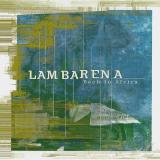
Combining Bach with traditional Gabonese music, Lambarena pays tribute to Albert Schweitzer, a doctor and musician who settled in Lambaréné in 1913. Conceived by Hughes de Courson and Pierre Akendengué, this extraordinary project brings together more than 250 artists and blends organ, baroque choirs, and African percussion in a musical celebration of rare intensity. A true timeless classic, it is now available for the first time on double vinyl, accompanied by a 4-page bilingual booklet (English/French) recounting the history of this unique album.
b 02: Sankanda (traditionnel) + Lasset uns den nicht zerteilen Passion selon St. Jean
[e] 05: Mabo Maboe (traditionnel) + Gigue de la quatrième suite en mi bémol majeur pour violoncelle [extrait]
[f] 06: Bombé (extrait) + Ruht wohl, ihr heiligen Gebeine [Passion selon St. Jean, mouv. 62]
Released independently and on her 30th birthday, "Water Baby" is Giorgia-May's stunning debut album. Spanning over 8 tracks & recorded live at The Famous Goldwatch Studios in Berlin, Giorgia collaborates with some of Berlin's finest musicians to enhance her craft at putting emotions into songs. Each track highlights something different in her ability to channel pain, desire, lust and heartbreak, all whilst (most of the time) making you want to dance & smile.
Stemming originally from Brighton (UK), Giorgia-May has been pursuing a musical career through the means of travel. Now based in Berlin, she combines sensual lyrics, mesmerising tones and exciting arrangements which draw upon her personal experiences of love, loss and coming into womanhood. Blending soulful melodies with jazzy chords and hints of RnB, she takes influence from writers such as Olivia Dean & Amy Winehouse.
Extensive independent European tour in August & September 2026 through the following cities: Berlin, Paris, Bilbao, Porto, Lisbon, Valencia, Barcelona, Marseille, Cannes, Milan, Lake Como, Zurich, Luxembourg, Brussles, Cologne, Amsterdam and more ...
Copenhagen-based DJ and producer Anastasia Kristensen presents her debut album Bestiarium Sombre, a vivid and cinematic techno work shaped by UK bleep, jungle and dubbed IDM influences. Known for headlining major clubs and festivals worldwide and for releases on Houndstooth, Turbo and Arcola, she now delivers a cohesive long-form statement on Intercept, home to artists such as Tsepo, Coloray, DJ Aya and Ineffekt. The album follows an anthropomorphic concept where each track embodies an animal, creating a distinctive narrative world with strong visual identity. This vinyl edition arrives as a limited transparent yellow marbled pressing housed in full-colour artwork. Designed for both peak-time DJs and collectors, it combines dancefloor impact with strong shelf presence.
Paling Trax returns with their 6th Split EP coming from labelhead TAFKAMP and the Irish multi-talent Dylan Fogarty. On the A-side we find the long anticipated release of TAFKAMP’s Friestalig, combined with some filterhouse galore on Trakpad #4! On the B-side Dylan delivers the big room banger ADE Special, and the super groover Morning Ritual to finish off the release. Highly essential!
For his sixth solo album, Ezéchiel Pailhès returns with a new collection of songs infused by a sunny wandering spirit.
Within each of the twelve songs on SOL is a thread of melancholic happiness that has permeated much of Pailhès’ music and songwriting. He addresses love, the passing of time, hope, lost illusions, fleeting moments of grace, the temptation of forgetting, a need to escape, and desire. All this is
insulated by understated orchestrations that blend acoustic and electronic instrumentation with deft confidence.
The Portuguese and Brazilian concept of saudade—a form of melancholic longing and nostalgia— pervades, thanks in part to Pailhès decision to record the album in Rio de Janiero and to reinterpret some of the finest works of Música Popular Brasileira (MPB). In particular, he revisits a handful of
lesser known classics from the mid-century samba and bossa nova era—originally written or performed by talents including Vinícius de Moraes, João Gilberto, Tom Zé, Dorival Caymmi, João Donato, Os Tincoãs, and Ataulfo Alves.
The shift from Brazilian Portuguese to French and the decision to adapt rather than perform a straightforward cover versions, allows Pailhès to invent a form of prosody and euphony (the musicality and harmonious combination of words) that feels vibrant and unlike anything else in today’s French
chanson landscape.
“Some lyrics are simple translations from Portuguese, in what I’d call an expanded version. For others, I started from a single word or a single phrase and embroidered an entirely new text that carried me elsewhere,” explains Pailhès. “I allowed myself great interpretive freedom, while preserving the humanist dimension of the original songs. I’ve always been deeply moved by the way Brazilians transfigure reality through heightened emotion. I love this visceral and spontaneous country, which always seems to live through emotion. And above all, I love its music both popular and unifying,
bringing together all social classes. In that sense, it’s very political music, but even more so utopian, made by the people and for the people.”
On this new album, however, the French artist was keen to avoid cliché. Each song is therefore built around a carefully balanced interplay between Pailhès’ piano and synthesizers, alongside restrained arrangements of percussion, brass, bass, and cavaquinho (a small four-string plucked guitar). These parts were recorded in Rio de Janeiro with two musicians who regularly perform alongside the legendary Caetano Veloso—Kainã Do Jêje and Alberto Continentino—joined by Thomas Harres, Antônio Neves, Eduardo Neves, and Gabriel Loddo.
Since the 1960s, France and Brazil have shared a long-standing cultural and musical relationship. Some Brazilian artists, most famously Gilberto Gil, took refuge in France during the dictatorship years (1964–1985). But above all, French chanson quickly fell in love with the richness and ingenuity of
bossa nova and samba, translating and reinventing them in the language of Molière. Throughout the 1960s and 1970s, albums and hits by Henri Salvador, Georges Moustaki, Pierre Barouh, Pierre Vassiliu, and Claude Nougaro all drew from the MPB repertoire.
Fifty years later, with SOL, Ezéchiel Pailhès reinvents this rich Franco-Brazilian musical legacy, bringing to it a personality and modernity that stand confidently alongside those of his forbears.
"Over the past three decades, Philipp Lauer has produced an incredible body of work, deploying a myriad of aliases, both as a solo artist and as a part of collaborative projects. From his hardware-steeped Frankfurt studio Pyramide 2, he has built this catalogue through original material and remix commissions, taking on the full spectrum of electronic music while retaining an unmistakable signature. He combines a hands-on approach to rhythm and composition with a DIY MO and a love of big hooks. The level of expertise at hand seems to facilitate a playfulness that subtly permeates all layers of his work. He's a pop melody natural who just so happens to love fiddling with synthesizers, drum machines, and effects an equal amount. All of these qualities are exemplified on "Embalmed In Martino": Lauer's four-track ode to the Belgian Martino sauce, a spicy tomato-based condiment, and arguably the essential ingredient to top off the namesake raw meat sandwich. On "Embalmed", which makes use of instrumentation that would fit right in on an early eighties Manchester cut, and "Martino", where a sturdy, electroclash flavored arp bass provides the stamina, a slew of big and small riffs easily work their way in, thirsting for our ears. On the other side, "Transactional" combines Miami basslines and similarly electro-fundamental twinkling synth work with a flanger-laced 4/4 beat, while "Don't You Know" features soaring synthwave patterns and the only vocal samples on the EP. Both sport rich arrangements as well, right down to the cowbell overdubs. Lauer's often lauded for his "summery sound". In this light ALT026 lands right on time - yet we might disagree here, as it's suited for all seasons, and all terrains, both the shiny festival grounds and the dim-lit club floors."
Mark Flash returns on DTFA with two late-night transmissions built for the floor and the mind. "Interstellar Dreams" opens the space. Warm textures, deep chords, uplifting strings, and floating atmospheres drift into Detroit's futurist side, combining Hi-Tech Jazz with a funky bassline by Jon Dixon.
"Midnight Scanner" moves with purpose—pulsing synth lines and restless energy cutting through the dark, like signal traffic across the city after hours. Direct, mechanical, and locked-in, it's a peak-time tool designed to drive the room forward.
Together, the two tracks capture both ends of the spectrum: street-level grit and cosmic lift-off—classic Mark Flash territory where funk, techno, and movement meet. Functional. Emotional. Built for DJs.
"From The Kitchen To Your Ears" is the debut Various Artists release from Home Kitchen Records, a project rooted in the same spirit as cooking: raw ingredients, patience, instinct, and creativity. Like a dish made with care, each track has been shaped and refined to deliver its own sonic identity.
This VA brings together a special selection of artists, including a track from the label’s founder Z-ID, alongside Briki, Ghazi, Ahmet Mecnun, Shkedul & Salma, all connected through a shared passion for music. Each contribution brings its own flavor, forming a diverse yet cohesive journey from the studio to your ears
If – in some parallel universe (or perhaps a not-so-distant-future version of the one we’re already sentenced to living in) – the evil overloads of artificial intelligence were actually successful in their attempts to create convincingly enjoyable “original music,” more specifically tasked with wholly encapsulating my own personal tastes by data-chugging some cocktail of – oh, I don’t know – the posters on my wall, the records in my “most listened to” pile, the mixtapes I made for others, intensive physical scans of my auditory cortex, amygdala, hippocampus, heart strings, whatever else they have splayed out on their autopsy table with the intention of generating one all-encompassing “perfect band” based on the fruitful sum of their findings – that band, for me, would be (or would at least sound exactly like) the Tara Clerkin Trio. It is, quite simply, without exception, the music I wish to hear.
Formed in Bristol UK (where none of them are from yet all of whom are deeply engrained) in 2020, the Tara Clerkin Trio – as it somewhat democratically exists today, despite the singular authority implied by its name – consists of the titular Tara Clerkin, her partner Sunny Joe Paradisos, and Sunny’s brother, Patrick Benjamin. I’ll confess, I don’t know what their respective roles are within the operation and there’s only a very small part of me that cares to learn, as one of my favorite qualities in an objective listening experience is the mystery of who is playing what, which sounds are “authentic” versus synthesized, which chunks are performed “live” in a room together versus meticulously Frankenstein’ed from measure to measure, or how exactly the overall sound is so (seemingly) effortlessly achieved. Though, I suspect, if and when I do witness a live performance by this band at any point, my enjoyment of the music will not be lost in my better understanding of it.
With two extraordinary mini-albums – In Spring (2021) and On The Turning Ground (2023) – making a splash on London’s formidable World of Echo label in wake of their self-titled 2020 debut, this upcoming Somewhere Good LP is, in many ways, the band’s most realised work. In running their usual gauntlet of idiosyncratic (*an overused adjective for which here there is regrettably no sufficient alternative) approaches, Clerkin & co. colour in and outside of compositional lines over the course of 40+ celebratory minutes - never wallowing, despite inherently somber subject matters of self-defeat, disease, displacement, restlessness, gentrification - allowing their arrangements and improvisations ample space and time to situate, stretch out, breathe, cross-pollinate, and ultimately take deeper hold on the listener’s imagination – all while somehow sounding more like themselves than ever before.
Of course, there are traceable influences herein, if one felt that such comparisons were necessary to properly examine and enjoy this music (they aren’t)… Being the big dumb American from the small boring town that I am, cornfed on ‘90s alternative radio with the enchantingly exotic sounds of Maxinquaye and Mezzanine emanating from my chunky tube television, I can’t help but to make a blatantly obvious reference to a “Bristol sound”, ie the whole trip-hop trip, the pastoral crooning over the suggestive urban grime of cracked electro/piano treatments, the digitally-yet-primitively reconstructed James Bond soundtrack string-beats, etc.. But the Tara Clerkin Trio is so infinitely much more than that. There are elements of avant-pop, modern classical, kraut-folk, audio verité, dare I say indie rock (and not of the beer guzzling, masturbatory fuzz-flex variety but perhaps more like a Trish Keenan-fronted Faust, Adrian Sherwood at the mixing desk of If You’re Feeling Sinister, or – in expanding on our alternate reality – a world in which High Llamas cut a full-length for Warp Records with Andrew Weatherall on coffee duty).
The hazy, unmappable skyline-mirage of droning harmonium, upright bass, peculiarly accentuated wind instruments, acoustic guitar, hushed yet literally mighty keys combine to hypnotizing effect. The band may make underlying nods to jazz, sure, but it’s not appropriation, it’s that they have the actual chops to build it out. Beneath the janky samples and oddball percussive embellishment lies actually great drumming. Beyond the manipulated vocal witchery and woefully reflective plain-spoke moments are Tara’s subtly inspired melodies, sung with what might honestly be the glue to the whole crazy equation. A calming consistency throughout the otherwise unpredictably dynamic, boldly intuitive, uniquely British exploration of this (their own) universe in song. – Ryan Davis (Chicago, February 2026)
A sonic journey that feels both intimate and expansive, Inigo Lunani drifts between late-night introspection and dancefloor euphoria. The album blends minimal grooves and warm tones into a cohesive narrative that feels alive—constantly evolving, yet grounded in emotion.
Each track unfolds like a fragment of memory: hazy, rhythmic, and slightly surreal. There’s a tension between control and spontaneity, where tight percussive patterns meet playful, almost careless melodies. The result is music that invites movement but rewards deep listening—equally at home in a dark club or through headphones at sunrise.
Inigo Lunani isn’t just about sound; it’s about identity in motion. It captures the feeling of searching, of becoming, of existing somewhere between who you were and who you’re about to be.
The First EP marks the first collaborative vinyl release by Reed N. & Niels F., driven by a shared passion for classic disco culture, warm analog synths and groove-oriented house music.
Blending shimmering disco influences with modern nu-disco aesthetics, the EP combines rolling basslines, soulful rhythms and nostalgic synthesizer textures into a timeless dancefloor experience.
The release also features a disco-infused remix by Jeff & Jessey, reinterpreting the original material with funky basslines, warm analog textures and an energetic groove.
The First EP captures the duo’s love for groove, melody and the unmistakable warmth of disco and synth-driven music.
SUNANDBASS Recordings proudly presents its next release, welcoming rising artist Napes with a brand new single: Hit The Corner / Clamber. This release marks the exciting introduction of a new artist joining the SUNANDBASS Recordings roster, signalling a bright future for both the label and its evolving sound. With previous releases on Shall Not Fade and Alix Perez’s 1985 Music, Napes is a promising name within the modern jungle scene. This release is a clear statement of his pushing boundaries combining grime influences and old school jungle, giving us his fresh sounds and melody-led drum and bass music, reaching new horizons while staying rooted in foundations. On the A-side, Hit The Corner showcases acid-tinged synths that meet a UK grime edge, driven by energetic beats and rolling breaks. In 6:20, Napes lets us travel through all the facets of a SUNANDBASS Recordings journey, with his ever-changing arrangement that evolves from heavy, club-focused energy into a euphoric jungle-inspired middle section, before concluding with driving arpeggiated synths. On the B-side, Clamber offers a deep, darker contrast. Between the atmospheric strings set intro which is dropping into a heavy, bass-driven groove, easily imagined shaking the dancefloor during an Ambra Night indoor session. The track reveals a more introspective side of Napes, blending refined sound selection with classic, weighty basslines built for the dancefloor. We’re honoured to welcome Napes to the SUNANDBASS Recordings family, an artist whose sound reflects our love for all corners of the genre while paying homage to the music that brings us together in Sardinia year after year. SUNANDBASS Recordings continues to push the boundaries of drum & bass, fostering connection through music that transcends borders, unites listeners, and celebrates rhythm, movement, and culture.
A1 - THE ULTIMATE DANCE TRACK
the juno 106 main line in the front and super fat bassline make this track to a special dance floor killer!
A2 - TIMELESS WHISPER
dramatic, and in the same time beautiful moments in a one tack live jam can you hear, here. Get lost in your memories..
featuring Dawn's background drums - a LONG TIME female studio friend of MEGNA
B1 - D-PAD
in love with the envelope in the melody and a handplayed angel synth line, this track is a mix of electro and trance and presents how easy it is to combine music styles.
B2 - DIRTY WASP
8 Track Tape Beats, 3 synth lines, a super long break to set the effects to the final, bring this slower wobbling track to the next level of dreams.
A1 - THE ULTIMATE DANCE TRACK
the juno 106 main line in the front and super fat bassline make this track to a special dance floor killer!
A2 - TIMELESS WHISPER
dramatic, and in the same time beautiful moments in a one tack live jam can you hear, here. Get lost in your memories..
featuring Dawn's background drums - a LONG TIME female studio friend of MEGNA
B1 - D-PAD
in love with the envelope in the melody and a handplayed angel synth line, this track is a mix of electro and trance and presents how easy it is to combine music styles.
B2 - DIRTY WASP
8 Track Tape Beats, 3 synth lines, a super long break to set the effects to the final, bring this slower wobbling track to the next level of dreams.
Leinenbezogene, foliengeprägte Tip-on-Gatefold-Hülle mit 24-seitigem Comicbuch im LP-Format.
The 3rd collaborative album between Les Claypool (Primus) & Sean Lennon (the previous sold over 150,000 combined) is an elaborate concept record reflecting on morality, the warnings of A.I., and the slippery slope of optimization without empathy. Told across 14 songs - which ooze with classic psychedelic / progressive rock stylings - and the accompanying comic book by Rich Ragsdale, The Great Parrot-Ox and The Golden Egg of Empathy is a peak for both The Claypool-Lennon Delirium and rock music at large.
Shed makes his first appearance on Dekmantel with Rave Echoes — a supple, mesmerising album of angular techno caught between the heat of peak time and the time-blurred hours after the club.
A combination of dreamlike atmospherics and rugged propulsion takes on many forms across the album. It's submerged and restrained on 'Loot 25', speckled with sharply sliced breaks on 'Everybody' and scattered across a sparse, steppy soundscape on 'Rave Predator'. Emotive, swooning strings collide with tough, squashed breakstep drums on 'Double Scoop' and 'Taking You Home' thrusts with urgency and rave romanticism in equal measure.
Wielding his signature blend of UK-school soundsystem pressure and Berlin-school techno momentum with poise and purpose, on Rave Echoes Shed offers a perfect impression of those wild, indescribable sensory overloads that leave their mark on anyone devoted to the dancefloor.
From Wisdom Teeth’s recent compilation nagoyaka na kaze / 和やかな風 (quiet wind)—which cast a spotlight on the Japanese city of Nagoya—emerges “2++”, a new label launched by abentis, who curated the compilation alongside Facta and K-LONE as a central figure in the scene. Conceived as a series introducing facets of Nagoya’s underground electronic music to the world on vinyl, its inaugural release is abentis’ debut album, Dim Grow.
Across the album, intricately designed electronic mallet sounds—created using Ableton Live’s physical-modeling synthesizer—take center stage. Fresh and percussive like marimba or kalimba, yet simultaneously carrying an otherworldly, unreal quality, these tones form the core of the record’s sonic identity. In moments of near-silence, a crystalline resonance poised between glass and metal shimmers with subtle shifts in temperature, giving the album its distinctive texture.
While resonating with the sonic sensibilities of fellow Wisdom Teeth affiliates such as K-LONE, Tristan Arp, and Salamanda, abentis’ uniquely strange palette can be traced back to one of his strongest influences: Haruomi Hosono. In particular, Hosono’s mid-’70s tropical-infused solo albums — Tropical Dandy (1975), Bon Voyage Co. (1976), and Paraiso (1978) — serve as a key reference point. Symbolically reflected in Hosono’s marimba and vocal performance at a 1976 live show in Yokohama Chinatown, the marimba functioned as a central instrument for constructing imagined exotic landscapes inspired by Martin Denny and Hawaiian music.
For abentis—who worked at a local jazz bar before becoming active as a hip-hop beatmaker—the language of “tension chords,” a harmonic vocabulary rooted in jazz and R&B that hovers ambiguously between brightness and darkness, forms a consistent grammar throughout Dim Grow.
Behind the album’s core theme of “mallets + tension chords” lies a broad musical lineage: the harmonic sensibility of Claude Debussy, who anticipated the tensions of jazz; the proto-minimalist spirit of Erik Satie; the marimba-centered structures of Steve Reich; their continuation in Japan through Mkwaju Ensemble (with Midori Takada and production by Joe Hisaishi); and the subsequent branches into post-rock, electronica, and ambient music.
Growing up in Nagoya—an industrial city where creative independence is deeply valued—and being rooted in punk and hip-hop counterculture scenes naturally fostered abentis’ affinity with these predecessors. His practice between genres, combined with an encounter with the highly cross-pollinated musical perspective cultivated around Wisdom Teeth, provided the framework through which his own musical language crystallized. Dim Grow stands as the natural culmination of that journey.
Cheeba’s Reggae Sound Boys are unloading the bass bins again with another two slices of funky reggae beats for the dance, in their second release on ECR
VOICE OF THE VOODOO - Emerges through a haze of psychedelic dub sounds into a big break beat laden skank. Organ riffs are chopped up over the funky reggae guitar rhythm and the big bass grooves. With vocals and JA deejay scats coming in and out of the mix. This has been waiting for release for a while and the dubplate has been hammered all round the country the last 12 months or more !
SAY IT LOUD - The flip side is equally club friendly with a hard hitting combination of beats and rhythms - coming on like Jah Shaka playing a soundclash at Wigan Casino - when it explodes into a big soul-stomping piano loop and heavy Hammond flourishes. The vocals riff on the JB “Black & Proud” theme, with a dancehall flava to create a party vibe just right for the summer BBQs
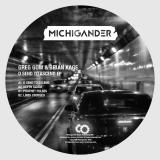
^°Michigander Music again sets the pace with another future classic, D Send to Asend, a powerful 4-track EP from Canada's Greg Gow and Detroit's Brian Kage. Rooted in Detroit techno at its finest hour, this release is strictly for the true heads combining Gow’s techno sensibilities and driving textures with Kage’s raw, soulful energy. Together, they break down borders and deliver a timeless, late-night sound that feels both refined and uncompromising.
Fresh from flexing his scalpel skills via an impressive double 12-inch for Hot Biscuit Recordings, The Mighty Zaf once more joins forces with regular studio buddy Linkwood for two more tried-and-tested reworks. 'Get Another Love' is particularly potent, with the duo combining elements from a vintage disco-soul workout - glistening guitars, bass, vocals, strings - with a vintage-sounding drum machine beat which alternates between sweat-soaked Chicago-house jack and post-electro swing. 'He Made You Mine', meanwhile, is a straight edit of a slow, loved-up, immersive and horn-laden disco-soul gem that switches from loved-up downtempo loveliness to punchy dancefloor excellence midway through.
Sept returns to OPUS with a versatile five-track EP built for both peak-time impact and deeper moments. Featuring four dynamic techno tracks, the release combines driving energy with detailed sound design, making it equally effective on large stages and in intimate club spaces. The EP closes with an ambient track designed as a perfect DJ set opener, adding depth and flexibility for selectors.