What I Breathe is the debut album from Mall Grab AKA Jordon Alexander. The Australia-born London-based powerhouse reaches within to create the most comprehensive demonstration of his style to date – loudly defining the raw energy that has become synonymous with the moniker.
“This album is deeply personal and an exploration of all influences, sounds and sides of the Mall Grab project. It follows my journey of the last 6 years from a university dropout in Newcastle (Australia), making music as a source of happiness and expression.”
While glances of what Jordon gravitates towards in dance music can be heard in the record label imprints he steers—Looking For Trouble and Steel City Dance Discs—it's with What I Breathe that he elaborates on and articulates his diverse ear for music. Through collaborations with Brendan Yates of Turnstile, Novelist, D Double E and Nia Archives, the Mall Grab repertoire of emotive electronics is used to traverse his love of hard-to-define energies that exist between genres like Hardcore, Hip-Hop and Soul.
“I have been lucky enough to work with some of my favourite artists which have really been the glue that keeps the project coherent. There are a lot of familiar sounds on this album that my listeners and followers have become accustomed to and joined me in the deep dive. Elements of emotional but hard and pumping club music are intertwined with House, Jungle, Rave and Grime. My adopted home city of London has been a huge inspiration to how my music has evolved and progressed, and on What I Breathe I wanted to create a body of work which not only had something for everyone who has been with me the past 6 years, but also those who aren’t yet aware of what I’m about or the music I make.”
Jordon’s long-standing penchant for all things DIY blossoms in tracks like Lost In Harajuku and Without The Sun which feature his own original lyrics and vocals. As the album twists and weaves from one song to the next, gleaming melodies flare up into club-ready anthems such as Metaphysical and Breathing. The kinetic flow of the music as a whole can be attributed to the many years of cutting his teeth as a DJ, a skill that can be testified by anyone who has witnessed a Mall Grab set.
“As I was a DJ for many years before I delved into producing electronic music, I had a wide appreciation and love for all types of music, predominantly gravitating towards ‘band' music when creating my own projects, before evolving into a fully-fledged electronic producer – however always retaining the influence and love for all things live and genre-fluid.”
Even with a stack of very well-received projects already under his belt, What I Breathe can be seen as the first deep breath in and a fierce declaration of what’s to come for Mall Grab.
“I’m grateful for everything and everyone in my life, those I love and those who support my music, through all the ups and downs. I live and breathe this shit. I cannot do anything else. I will continue until there is nothing left for me to say.”
out of Stock
Last delivered 12 months ago available to reorder, subject to availability
Sub Pop debut by accomplished Greek artist Σtella, produced by Redinho (Swet Shop Boys).
‘Up And Away’ is an eclectic, compelling modern pop album showcasing Σtella’s skilled songwriting and the influence of classic love songs, Greek folk, and contemporary electronic-music production.
Σtella makes her Sub Pop debut with the mesmerizing ‘Up And Away’, an oldschool pop paean to the pangs and raptures of love. From the Greek folkinflected get-go, we’re swept up in Σtella’s world - and it’s quite the captivating place to be.
The singer songwriter joined forces with artist and producer Tom Calvert (aka Redinho), and it was a match made in Athens; the results are heavenly. Tom caught one of Σtella’s gigs on a visit to the city. He reached out, they started hanging out, and the pair soon clicked creatively. Both mention chemistry when asked about their collaboration and it’s clear, from what we hear, they had it in spades. The meld is seamless.
Σtella’s songs have always riffed on American and Greek mid-century pop but ‘Up And Away’ doubles down on the vintage aesthetic. Tom says he styled the record “as if it was a rare gem from the ’60s found in a box of records in Athens,” and Σtella notes she was ready for a more “deeply Greek touch - it felt comfortable and right, smoothly fusing with the pop.” The bouzouki appears on a full five tracks played by Christos Skondras who, she says, “was brilliant at improvising,” while Sofia Labropoulou on the kanun “brought an insane amount of dreaminess to the last two songs. Having these amazing musicians play for ‘Up And Away’ - I couldn’t be more grateful.”
While not exclusively a confessional artist, Σtella is always intimate - when she sings, it’s personal. She writes “about things I feel passion for. Stories about me, about others, about all that’s there in love and war.” Σtella was “in a very emotional state at the time, which came through in the lyrics and vocals.” And it’s true, her honeyed voice - layered in those unmistakable harmonies of hers - thrillingly runs the gamut from tender to terse, by turns bracing and smitten, aching and forlorn. But it’s the lyrics that feel key. Across her output, Σtella has proven herself a strong storyteller, and ‘Up And Away’ is no exception (the guise of the medieval bard she assumes on the cover is telling). Past releases have been studded with gem-like vignettes - a diverse array of stories set tightly together to form non-linear narratives unified by emotion. Her latest feels singular in that it seems to trace a longer-form tale across songs, with each track escalating the record’s erotic arc.
By the end of the album, ‘Up And Away’s core concerns are clear: the conflicting and conflicted emotions inherent in love, that live on in ways we can’t always understand or control. Love is like this record: when it’s over, you still feel it for time to come.
Loser Edition LP pressed on blue vinyl.
out of Stock
Last delivered 4 years ago available to reorder, subject to availability
Limited Vinyl Box Set including 6x blue vinyl & download code
Another year, another expertly curated compilation touches down courtesy of Cocoon Recordings. Somehow, the world keeps turning and with it the Cocoon universe keeps expanding, causing subtle yet persuasive shifts in the sonic soundscape that continue to
capture and captivate the imagination. In time-honored tradition the old guard and the new combine with devastating effect, to define the current state of play…
Veteran Techno producer Stephen Brown makes it clear the compilation series is back with a bang, opening things up in epic fashion with the lucid dreamscape ‘Level Steps’ - a true work of art. Another heavy-weight hitter steps straight up in the form of Claude von Stroke, who adds his own unique swagger to proceedings with those trademark shuffling beats and freaky, hypnotic bleeps scuffling for dominance on ‘Moody Fuse’. Denis Horvat then slows things down on ‘Monomono’, with post-raveNew Release Information
abstractions and disobedient synth-patches causing mayhem before the track finally unfolds in all its terrifying beauty.
Motoring on, the collection wastes no time reaching that familiar tipping point as we enter the techno phase of the journey. A very special appearance from Daniel Avery makes it all the more worthwhile amid a dense forest of chiming melodies and blistering electrical surges on ‘Your Future Looks Different In The Light’, before Jeroen Search’s aptly titled ‘Subversive Elements’ lead us deeper and
deeper, into the matrix.
Marco Bailey then kicks off a triptych of trance with some massive filtered piano action on ‘Kanai’ that’s destined to trigger a serotonin smile with everyone it touches. Revisiting the huge,
ever-growing pulsating brain of planet Orb, Damiano van Erckert continues the loved-up vibe on the gorgeously titled ‘500 People 500 Hearts 1 Love’, expertly complimenting the classic ambience with
some slick 909 snare and cymbal interplay. The melodic pull of ‘Vision99’ then signifies that the party is peaking at just the right moment as YOKTO concocts a glistening, psychedelic groove. The
emotional resonance climbs ever higher with brittle melodies endlessly circling a lush, throbbing bass drone to create the sense of something stirring out of reach.
Just when you think the acid sound is done and dusted, up pops a track like Jonathan Kaspar’s ‘CCC’ that somehow manages to offer an entirely new perspective. Riding in on a wave of expectant
arpeggios, the squelching bass and noise filter go toe to toe before Kaspar gets busy with a freaky tempo excursion that’ll be destroying dance floors all year long. ‘The Art of Electronics’ is, as the title
suggests, another superlative example of pure analogue fire, served up by UK legend, Andrew Meecham aka The Emperor Machine. The funk starts to flow as the bass drops, the machines cut loose and a swarm of cascading bleeps ride the trans-europa express to oblivion.
Electro overlord Carl Finlow, has come to define the UK take on the genre over the last couple of decades. Here, he makes his long overdue label debut, taking us into the closing straight with a
nervous sliver of dystopian futurism, complete with molten basslines and a fuzzy logic that underpins the tight, laser-guided groove on ‘Surface Control’. DeFeKT then draws this great adventure to a close
with the deliciously dark robo-disco overtones of ‘Terraform’ creating a dusky landscape that skillfully seduces the listener before the tension finally breaks in a wash of ecstatic chords.
All in all, it’s a supremely ambitious collection of tracks, generously featuring some of the most inspirational and durable artists of their respective generations. In fact, is this perhaps the best Cocoon
Compilation to date
out of Stock
Last delivered 12 months ago available to reorder, subject to availability
Neil Young + Promise Of The Real release a new live album, ‘Noise & Flowers’, that captures the group in all their glory on their 2019 European tour. The release will be accompanied by a concert film that shares the same title and is included in the album’s 2xLP+CD+Blu-ray Deluxe Edition.
‘Noise & Flowers’ documents a 9-date tour that began just two weeks after Young’s lifetime friend and manager of more than 50 years, Elliot Roberts, passed away at the age of 76. Performing alongside a photograph of Roberts taped to his road case, Young approached each show as a celebratory memorial service to honour his late friend. It’s a trek the legendary singer/songwriter describes as “wondrous.”
In the album’s liner notes, Young says, “Playing in his memory made it one of the most special tours ever. We hit the road and took his great spirit with us into every song. This music belongs to no one. It’s in the air. Every note was played for music’s great friend, Elliot.”
In paying tribute to the manager who guided Young’s career for over a half-century, ‘Noise & Flowers’ explores all corners of his vast discography. It balances all-timer anthems (‘Mr. Soul’, ‘Helpless’, ‘Rockin’ in the Free World’) with rarely aired ‘70s deep cuts (‘Field of Opportunity’, ‘On the Beach’) and ’90s gems (‘From Hank to Hendrix’, ‘Throw Your Hatred Down’). His frequent backing band since 2015, Promise of the Real effectively bridges the extremes in Young’s sound, infusing his raging rockers and country serenades with their casual brilliance and telepathic intuition.
The companion film (directed by Bernard Shakey and dhlovelife) emphasizes both the intimacy and ecstasy of these performances.
‘Noise & Flowers’ is entry No. PS 21 in the Neil Young Archives Performance Series of live releases – a special addition to a robust, and still-growing catalogue.
Two years after their first major release on Nice Guys, the band Marcoca returns with a new full-length album Cosmic Blunder. It originated out of the urge to merge new psychedelic sounds with elements of funk, jazz and surf rock, while keeping the stuff that worked on the first record in place. The result is a reverb soaked ride through songs that cover the ups and downs of life and all the questions that come along with it. While some of the songs had been previously arranged, some instrumental parts developed during the recording process in order to preserve the natural flow of the music.
Inspired by their travels around the warm beaches of our beautiful planet, the eight tracks of this long-player help the listener walk through a colorful Californian dream. The husky voice of the singer Marco Rinke invites us to an auditory journey to the 70s. This LP proves to be a real cathartic experience for the ears and the mind.
Cosmic Blunder, the eponymous track of this release, embodies the soul of the whole album, influenced by psychedelic and surf rock. With its groovy elements and symphonic guitars, the four musicians succeed to elevate one’s mind to spheres of beauty and inner peace. Overall, this LP turns out to be a real cathartic experience for the ears and the mind that wants to erase the physical self in favour of the mind.
"Die Band hatte sich eine Woche in einem Chalet in den Schweizer bergen eingeschlossen und dieses album geschrieben .. Doom Blues und Nasty No-Future-Wave und Synth Folk Trash - REVEREND BEAT-MAN & THE UNDERGROUND ist eine Kollaboration Arbeit zwischen dem PALP Festifal und Reverend Beat-Man, eine Woche Aufenthalt in Bruson (wallis, Westschweiz) mit Weisswein und Raclette und Musik kreieren, ich hab dann meine Lieblings Musiker kontaktiert: Milan Slick an den Tasten, er und ich haben bereits das Synth-Punk-Duo-Projekt Entartete Musik dann die Unglaublichen Beats von Beatrice Graf von Ester Poly. Benjamin Glaus von Skinny Jim Tennessee ist einer der meist unterschätzten Rockabilly-Performer Berns, und K.Lou aus Athen kümmerte sich um unser Catering und präsentierte uns die ganze Woche über neue Musik aus ihrer Schatztruhe. was du auf diese Platte hörst ist ein Prozess, ein finden einer Musik u.a. eine Doom Blues Version vom 'Jesus Christ Twist' oder die verliebte Kuschelrock Nummer 'It's a matter of time'. Die meisten Songs wurden im Lockdown geschrieben wo ich und Benjamin Glaus akustische Musik spielte ,slave to the phone' oder 'banned from the internet' sind 2 von denen. Unser schlecht beheizter Übungsraum war über einer Schaffarm wo wir den ganzen tag probten und alles aufnahmen, dies sind alles 1 Take aufnahmen.. keine Overdubs.. ist alles live eingespielt.. und ein paar Wochen später von Matteo Bordin im Ouside inside Studio abgemischt, dies ist Doom Blues oder No-Wave Rock'n'Roll von den Schweizer bergen" Die Band: Reverend Beat-Man (vocals, guitar), Beatrice Graf (drums), Milan Slick (keys), Benjamin Glaus (lead guitar) 12" LP: + Free Download Card + Inlayposter Booklet + Rotes Vinyl (limited 1000 copies) + Free Brainfuck CD: comes in double gatefold jacket incl 12 side booklett (no plastic exept the CD)
A Boogie Wit da Hoodie will be releasing his third studio album ‘Artist 2.0’ on vinyl on the 5th August.
The Bronx-bred artist Artist Dubose, better known as A Boogie Wit Da Hoodie, first hit the rap scene with the breakout hit “Still Think About You” which was featured on his 2016 debut mixtape, ARTIST. The mixtape also introduced fans to “My Shit” which went on to become RIAA certified platinum and was also listed as one of “The Best Songs of 2016” on Apple Music. A Boogie quickly proved himself to be one of the game’s newest heavyweights after XXL dubbed him as “one of the hottest and newest up-and-comers in hip-hop” and included him in the 2017 Freshman Class. The young star also went on to release the 3x platinum “Drowning feat. Kodak Black” along with the platinum certified singles “Jungle” and “Timeless.” A Boogie went on to release his highly anticipated, now gold certified, debut album, THE BIGGER ARTIST, which quickly sprung into the Top 5 on Billboard’s Top 200. He also became the top emerging acting in the U.S. as he simultaneously sprung to #1 on Billboard’s Emerging Artists chart.
It is easy to see why The New York Times named A Boogie “the most promising young rapper the city has produced in some time.” A Boogie earned a BET Award Nomination for “Best New Artist” at the end of 2018 in addition to releasing his gold-certified sophomore album, HOODIE SZN, which made its debut at #2 before spending three non-consecutive weeks at #1 and maintaining a stunning 17-week streak within the top 10 on the Billboard Top 200 chart. The album also soared on streaming, garnering over 83 million streams the week it went #1. Following his latest album as well as his sold out “A Boogie Vs. Artist” tour, there’s no doubt A Boogie will continue to make waves and redefine the sound of New York rap.
[i] 9. Calm Down (Bittersweet) [feat. Summer Walker]
Hailing from Ancaster, Ontario, Carl Didur has been an enigmatic fixture of Toronto’s underground music community for close to two decades. Originally traversing the Golden Horseshoe with The Battleship, Ethel, a band which sprung from his first outfit CEDRUMATIC, Didur soon moved to Toronto. Throughout the mid-2000’s he could be spotted playing his trademark ace-tone organ as a member of No Dynamics and Rozasia in the city’s crammed rogue venues, such as The Bagel and the infamous and transient Extermination Music Night. During these years The Battleship, Ethel continued to tour, often performing as backup band for Damo Suzuki, while at other shows inviting Dave Byers (Simply Saucer) and Bob Bryden (Spirit Of Christmas) to perform alongside the band. Perhaps the most enduring legacy of "The Battleship, Ethel", which dissolved in 2009, is that it laid the creative foundation for Carl and bandmate Michael McLean's next project, the prolific, studio focused, Zacht Automaat. As Zacht Automaat released music at a frantic pace, Carl continued to collaborate with members of a tight-knit group of Toronto’s downtown scene including touring with U.S. Girls and Slim Twig, performing and recording with Colin Fisher as Fake Humans, guesting on Absolutely Free’s Currency EP and producing New Fries’ most recent album The Idea of Us. Throughout the last decade Didur’s purely solo output has served to document his unimpeachably singular approach to music making. I Cannot See You Too Well (2011), Nothing is the Secret to Anything (2014) and Is It Yesterday? (2020) all released on cassette were followed by a digital album of gentle minimalism called Natural Feelings Vol I (2020). His solo shows consist of multiple tape machines running loops through various analog devices (a Certified Electronics Technician Didur now spends his non-piano playing hours of the day repairing all manner of tape echoes and synthesizers) or solo Wurlitzer electric piano improvisations, his performances gracing both stage and gallery. With his latest release Maybe Next Time, Didur further establishes himself as a singular artist with a unique methodology honed from years of music-making and listening. The album’s compositions swing from lush Axelrod-ish affairs filled with Mellotron strings to the album’s spiritual jazz influenced centerpiece The River Meets The Sea. “I was inspired by Eno's Here Come the Warm Jets, Crazy Horse but only when they are sad, Alice Coltrane, Jessica Pratt, McDonald and Giles, and so many others…” states Didur. Infused with a melancholic tone throughout, tracks such as Close My Eyes and Autumn’s Here invoke cinematic memories with tape echo and reverb applying a softened focus to the proceedings. Carl explains the context for the tone and the setting for the record’s gestation: “Maybe Next Time is a record I made after the world lost a sweet person that many in our community loved. Unlike most of my albums this one never seeks to shock or surprise you. It is about sadness, confusion, dissolution, transformation and ultimately a deeply forgiving sense of love. It is a concept record about being a human being!”
7A Records announces the release of Dolenz, Jones, Boyce & Hart’s original studio and live albums. In the mid-1970s promoters were trying to reunite the Monkees, but with Michael Nesmith and Peter Tork unavailable, it was suggested that Micky Dolenz and Davy Jones team up with Tommy Boyce and Bobby Hart to tour as ‘The Golden Great Hits Of The Monkees Show - ‘The Guys Who Wrote ‘Em & The Guys Who Sang ‘Em’’. The group signed a deal with Capitol Records to record a self-titled studio album of new material. They later released a live album from their tour of Japan. Both albums have been unavailable and out of print for many years. 7A Records have tracked down the original master tapes, that were presumed missing for at least 27 years, and remastered both albums for this release. Available as deluxe 2CD and 2LP sets, the CD version will include a big 40 page colour booklet featuring extensive liner notes and previously unseen photos. The 2LP version comes in a gatefold sleeve and is pressed on special 180g Green, Black and Yellow Quad Vinyl.
Delroy Wilson was one of Jamaica's most soulful vocalists, and over a 40-year career the singer unleashed a flood of hits and a multitude of masterpieces. Born on October 5, 1948, in the Kingston neighborhood of Trenchtown, Wilson's phenomenal talent would be his ticket out of the ghetto, and his discovery by producer Coxsone Dodd in 1962 would change the path of Jamaican music. Released on Big Shot in 1973 and produced by Bunny Lee, 'Captivity' is one of the true classics from Delroy's discography, back on vinyl for the first time since its original release.
Debut release from David J (Bauhaus, Love And Rockets), Victor DeLorenzo (Violent Femmes) and multi-instrumentalist Darwin Meiners Recorded worldwide during the pandemic Available January 21, 2022 on CD and Digital with LP coming later in 2022 Iconic and foundational bands in the history of alternative music certainly include Bauhaus, Love And Rockets, and Violent Femmes. San Francisco born artist Darwin Meiners was a fan of all three. A chance meeting 13 years ago with David J (Bauhaus, Love & Rockets) grew into a friendship, and Darwin not only became a bandmate, but David J’s manager. After reaching out to Victor DeLorenzo through e-mail, Darwin met the Violent Femmes drummer after the Femmes’ Coachella set in 2013. Soon after the three collaborated on Darwin’s 2014 release Souvenir. As the pandemic took hold, Darwin was looking for a new project to occupy the lock-down time and approached Victor, who was keen to proceed and suggested that David join as well. The musical trust established between these three was immediate and Night Crickets were born. Within weeks a global process was initiated between them, the recordings eventually forming the album, A Free Society. To say this is something of a dream come true for music fans would be entirely accurate. (The band’s name came from one of many Zoom meetings between the three members. After addressing various pressing musical issues the conversation rambled somewhat and turned to the subject of David Lynch, with David J telling an anecdote which was told to him by Lynch’s sound designer, John Neff. Lynch had asked Neff to obtain a field recording of crickets chirping at night for inclusion in Mulholland Drive. When Neff played him the tape, the director immediately recognized the sound that the insects make when it is light which is apparently a little different to their nocturnal chirp. “No! No! No! These are day crickets, John! I want my night crickets!” Victor, Darwin, and David then shared a look of mutual realization and instantly agreed that the project now had a name!) In Night Crickets’ own words: Night Crickets, a long distance groove affair conducted during the drawn out days of lockdown and beyond.
We all make mistakes. We all have regrets. We all look back on the loves and losses life brings and lament on how things might have been different. In these deeply personal moments of reflection our emotions can run wild as we contemplate our choices and come to terms with what’s next. Hindsight is a powerful and complex thing, and a phenomenon whose intricacies are explored in captivating fashion on The Greatest Mistake Of My Life, the second album from Cardiff’s Holding Absence.
Building on the excellent foundations laid down by the band’s eponymous debut record, released in 2019, and following standalone singles ‘Gravity’ and ‘Birdcage’, the four-piece have returned with a group of songs that, in the view of vocalist Lucas Woodland, are the truest representation of Holding Absence to date.
Inspired by a song of the same name that was recorded in the 1930s by actor and singer Dame Gracie Fields, The Greatest Mistake Of My Life is rooted in a time long before Holding Absence even existed. Lucas’ great uncle covered the song during the 1950s – something the frontman repeats on this album – and after finding this out from his grandmother, the singer decided the poignancy of its words were worthy of titling Holding Absence’s next record.
Holding Absence – the band completed by bassist James Joseph and drummer Ashley Green – carry the The Greatest Mistake Of My Life’s contemplative and thoughtful spirit throughout their second album. Whereas their debut was a concept record about the subject of love, The Greatest Mistake Of My Life’s inspirations are more complex, as Holding Absence stare down love in the face of death, all the while musing on the vast array of emotions we as humans experience throughout our lives.
Lead single ‘Beyond Belief’ is a soaring epic about the risk of loving someone forever, when their definition of ‘Forever’ might be different to yours, and a song that, Lucas says, argues how “love is something worth taking a risk on.” Holding Absence’s unique approach to romance is also present on atmospheric tracks like ‘Curse Me With Your Kiss’ and ‘Afterlife’, but for every display of affection, The Greatest Mistake Of My Life counters with despondency. ‘Die Alone (In Your Lover’s Arms)’ tells of the loneliness two people feel within a relationship long-turned sour, while ‘In Circles’ speaks to the monotony of everyday life and the crushing of dreams.
The Greatest Mistake Of My Life soundtracks the journey of our lives via all of its despair, elation, joy and pain, but never once tells the listener how they should be feeling.
Shedding their skins and emerging into a bright new phase for their band, with The Greatest Mistake Of My Life, Holding Absence are embracing change whilst holding onto the things that make them special. Aesthetic, for instance, remains important to Lucas and his bandmates, but as seen in the video for ‘Beyond Belief’, no longer do they exist in a world of purely black and white colour. Ushering in a colourful new era for Holding Absence, Lucas speaks of a desire “to bring warmth to people’s lives.”
Armed with a stellar new album and an unflinching belief in their craft, this new incarnation of Holding Absence promises to excite and impress like never before. An enthralling collection of songs and stories that tell of love, life, death and everything in between, The Greatest Mistake Of My Life is a thrilling record, and one its creators were born to make.
As Holding Absence have proved, the greatest mistakes can sometimes open the door to even greater triumphs.
For genre-bending band Whiskey Myers, 2019’s self-titled and self-produced album offered a watershed moment. With Rolling Stone raving that the “irresistible” album was “the record the band was poised to make” while declaring them “the new torch bearers for Southern music” in a story titled “How Whiskey Myers Won Over Mick Jagger and Made the Album of Their Career;” Billboard and No Depression naming the album to best-of-the-year lists; 41,000 first week album sales; and the project debuting atop both the Country and Americana album charts (as well as at No. 2 on the Rock charts, behind only a re-release of The Beatles’ Abbey Road), the band celebrated mainstream success a decade in the making. Now, after spending 21 days isolated at the 2,300-acre Sonic Ranch studio deep in the heart of their native Texas, just miles from the U.S./Mexico border, the Gold-certified renegades have doubled down on what they do best: sharing honest truths with no-holds-barred instrumentation, letting the self-produced music speak for itself. Yet with Tornillo, named for the border town that is home to the pecan orchard-filled recording complex and set for release on July 29 via their own Wiggy Thump Records with distribution by Thirty Tigers, the six-piece band has taken their solid decade-plus foundation and pushed themself to further explore new sonic landscapes. “It’s going to have a little bit different sound,” lead singer Cody Cannon shared recently with Outsider. “It’s still Whiskey Myers at its core, but it’s kind of fresh… We did a lot of bass and horns on this one, which is something we’ve always wanted to do. Just being fans of all that old music and Motown stuff, and a lot of the stuff coming out of Muscle Shoals, old rock and roll. “We’re going to bend genre even more, I think, with this new record,” he continued. “It’s all over the place. But that’s fun, right? I hate the whole ‘Put it in a box. You gotta be this.’ … That’s not art to me. I love the idea of just doing, really, whatever you feel. It comes out a certain way because that’s just how it comes out. Whiskey Myers never really tried to be a certain way. It’s just how we are. So I think that’s really the whole thing about music, or the beauty about music; it’s just that freedom to create.” Tornillo as a whole does exactly that, drawing as much inspiration from Nirvana as from Waylon Jennings – even adding the legendary McCrary Sisters’ gospel influence to the project on background vocals. With Cannon leading the way on songwriting, the album also features writes from lead guitarist John Jeffers and fellow bandmembers Jamey Gleaves and Tony Kent, as well as rising singer/songwriter Aaron Raitiere (Anderson East, Oak Ridge Boys, A Star is Born).
Who are the spirit fakers? What do they want? These are just two of the many questions posed by The Difference Machine on their 3rd full length album, 'Unmasking the Spirit Fakers'.
Loosely based on an essay by the master magician himself, Harry Houdini, 'Unmasking the Spirit Fakers' finds the Atlanta-based psychedelic hip hop outfit examining the motives and practices of those who attempt to provide cure-alls and treatments for spiritual ills. Are they gurus or snake oil salesmen? Though abstract in their approach, The Difference Machine attempts to pin down these answers for the listener via a vast backdrop rich with dense lyricism and mind-bending production. Songs like 'Repeater' and 'Flat Circles' place them in the role of shaman whereas songs like 'Car Key' and 'It Ain't' venture to ask if they themselves are the spirit fakers in question.
Regardless of what role the ensemble assumes, the album was crafted with the human psyche in mind. Poignant guest appearances from hip hop heavyweights such as Sa-Roc (Rhymesayers), Quelle Chris (Mello Music Group), Homeboy Sandman, Denmark Vessey, Dillon & Sum add more colors to the canvas. The only wish of The Difference Machine is that the listener is both entertained and enlightened by this auditory adventure. They hope whatever conclusion you come to will be through honesty and sincerity.
“Rob wanted the world of The Northman to feel harsh and uncomfortable, and for everything to feel like it was caked in mud and dry blood, so it was crucial for the score to mirror that.” Composers Robin Carolan (Tri-Angle Records) and Sebastian Gainsborough (Vessel) were given a task of epic proportions when director Rob Eggers (The VVitch, The Lighthouse) asked them to create the score for his ambitious and highly anticipated new film The Northman, releasing on April 22nd. They needed to make a score that both honored the immense research that had gone into the authenticity of this Viking era period piece and complimented the cinematic maximalism of the film for a modern audience. The artists stretched themselves to the depths of their creativity and the resulting album is a gorgeous sonic tableaux that places the listener right in the center of the film.
While arranging the score the composers consulted musician and ethnographer Poul Høxbro for inspiration and insight into the history of Viking music. Having backgrounds in left field electronic music, Robin and Sebastian felt liberated by the constraint of using a small selection of musical tools for this piece. “Electronic music has almost limitless potential when it comes to making sounds and that’s obviously an incredible thing, but you can also go down the wormhole and get lost in it sometimes. There’s no risk of that happening when you only have a few primary instruments to draw upon.” Robin remarked.
They utilized traditional instruments such as the tagelharpa, langspil, kravik lyre, and säckpip to build the cinematic world of The Northman but they also took creative freedoms in adding instruments likes drums, which some academics believe wouldn’t have played a big part in Viking musical culture, simply due to the lack of archaeological evidence of actual drums. “One of the pieces we wrote was intended to emulate the sound of a bullroarer; an ancient instrument used in sacred rituals or in battle to intimidate enemies. It makes a really disorienting roaring vibrato sound and low frequencies capable of traveling insane distances.” Robin says when asked about one of the more unique aspects of the score. Everyone involved put so much effort into both their research and their creativity and this richness is evident in every track. The album as a whole is a cinematic masterpiece of sound and ambiance, both gorgeous and disturbing, like the film it so beautifully accompanies.
“Rob wanted the world of The Northman to feel harsh and uncomfortable, and for everything to feel like it was caked in mud and dry blood, so it was crucial for the score to mirror that.” Composers Robin Carolan (Tri-Angle Records) and Sebastian Gainsborough (Vessel) were given a task of epic proportions when director Rob Eggers (The VVitch, The Lighthouse) asked them to create the score for his ambitious and highly anticipated new film The Northman, releasing on April 22nd. They needed to make a score that both honored the immense research that had gone into the authenticity of this Viking era period piece and complimented the cinematic maximalism of the film for a modern audience. The artists stretched themselves to the depths of their creativity and the resulting album is a gorgeous sonic tableaux that places the listener right in the center of the film.
While arranging the score the composers consulted musician and ethnographer Poul Høxbro for inspiration and insight into the history of Viking music. Having backgrounds in left field electronic music, Robin and Sebastian felt liberated by the constraint of using a small selection of musical tools for this piece. “Electronic music has almost limitless potential when it comes to making sounds and that’s obviously an incredible thing, but you can also go down the wormhole and get lost in it sometimes. There’s no risk of that happening when you only have a few primary instruments to draw upon.” Robin remarked.
They utilized traditional instruments such as the tagelharpa, langspil, kravik lyre, and säckpip to build the cinematic world of The Northman but they also took creative freedoms in adding instruments likes drums, which some academics believe wouldn’t have played a big part in Viking musical culture, simply due to the lack of archaeological evidence of actual drums. “One of the pieces we wrote was intended to emulate the sound of a bullroarer; an ancient instrument used in sacred rituals or in battle to intimidate enemies. It makes a really disorienting roaring vibrato sound and low frequencies capable of traveling insane distances.” Robin says when asked about one of the more unique aspects of the score. Everyone involved put so much effort into both their research and their creativity and this richness is evident in every track. The album as a whole is a cinematic masterpiece of sound and ambiance, both gorgeous and disturbing, like the film it so beautifully accompanies.
Ignite’s sound is hard to pin down, as their music contains elements of punk, hardcore, alternative, and even heavy metal. Their 30 year career has produced several albums, one o the most successful being their 2006 debut for Century Media, Our Darkest Days. The authorised Svart Records repress of this modern genre-defining classic comes in a gatefold jacket with all lyrics.
Turquoise Vinyl
Ignite’s sound is hard to pin down, as their music contains elements of punk, hardcore, alternative, and even heavy metal. Their 30 year career has produced several albums, one o the most successful being their 2006 debut for Century Media, Our Darkest Days. The authorised Svart Records repress of this modern genre-defining classic comes in a gatefold jacket with all lyrics.
Introducing Bristol-based label Dummy Hand; the latest transmission fromNoods Radio. Standing as a separate entity but driven by the same subversive, independent ethos of the station, Dummy Hand is an outlet for music from theouter fringes of the dance oor.
Dummy Hand's inaugural release, 'Transient Communications' comes fromVancouver-baseddj_2button, and will be available on vinyl and as a digital download.
Once a resident of Bristol and Noods Radio, 'Transient Communications' is Vancouver-based dj_2button's vinyl debut. The record features spaced outgrooves designed to move your astral body as well as for moments deep in the dance. dj_2button uses a hardware setup to create a lean percussive backdrop,held together by rumbling sub bass and synthetic bird squalls that it across the stereo eld.
out of Stock
Last delivered 3 years ago available to reorder, subject to availability
NEW 45 BY DEEP-FUNK PIONEER LUCKY BROWN RECORDED DURING THE MYSTERY ROAD SESSIONS!
"Funk is a living, breathing, creative and generative entity and The New Lucky Seven celebrate its life with a mysterious and authentic sonic snapshot from the iconic Mystery Road sessions: WOODHEAD!"
Woodhead is a steady medium groover built around an acute chanky guitar part that Joel Ricci aka Lucky Brown composed while living in the "Woodhood" district of Bellingham Washington, USA in the fallout shadow of an industrial area on the outskirts of town. The Woodhood was so named because the streets were all named after different kinds of trees; Cottonwood, Alderwood, Birchwood, etc. Though members of the band had been performing Woodhead since as early as 2004, it had never been officially committed to tape. So during the 2013-2014 span of living room "Magik Carpet" sessions at drummer, Oliver Klomp's house in West Seattle, the combo dubbed by Lucky as "The New Lucky Seven" casually hit the head a couple times before calling it a night as Lucky rolled tape.
Opening with the now world-famous guitar player, Jabrille "Jimmy James" Williams dropping deftly into his rhythmic part, Lucky chants in the background the words "don't stop" as the tension builds up into the moment the whole band comes in. With Bob Heinemann on bass, Marc Hager on Rhodes and Oliver Klomp on drums, the thick but honest groove is instantly palpable. Trombone player Mars Lindgren and Sax player Thomas Deakin, along with Lucky on Trumpet lay down the 'head' to the tune right off the bat with everyone in the band giving that hard hit on the 4 count of the last bar of the repeated figure. This 'hit' returns again to form the breakpoint between soloists Jimmy James, Marc Hager, and on side B, Thomas Deakin, and Lucky Brown on the flute. The horn section microphone was situated on the dining room table and Lucky just had to lean over to reach it with his instrument! Michael Iris of Bell Creek Studio transferred and mixed these two tunes from Lucky Brown's cassette machine.
This tune was left off of the Mystery Road compilation album but comprises one of the last tracks created during those sessions therefore the concept, vibe, style, and intention should resonate and be interchangeable with the rest of the 45s from that epic Box Set TR-9043 released by Tramp Records on May 4, 2015.
As you spin and interact with the Mystery Road recordings, you are invited to allow Woodhead to take its rightful place specifically alongside the other "The New Lucky Seven" recordings and generally as a part of the suite of crude and naive living-room "Magik Carpet" funk of the rest of the Mystery Road.
As illuminated before in Lucky's artist statement regarding the Mystery Road sessions, the music contained therein was always intended to put emotion, vibe, feeling, and spirit before technical, spatial, or even performance constraints and to serve as a gift of discovery to lovers and aficionados of the deep funk idiom and the rare 45rpm format. Funk is a living, breathing, creative and generative entity and The New Lucky Seven celebrate its life with a mysterious and authentic sonic snapshot from the iconic Mystery Road sessions: WOODHEAD!
out of Stock
Last delivered 4 years ago available to reorder, subject to availability
Now a two-times Number 1 UK Albums artist, Jack Savoretti’s 2015 album ‘Written In Scars’, a UK Top Ten, is now regarded as his breakthrough. A stunningly confident, almost effortless collection of songs, it contains co-writing and production from the likes of Adele / Sia musical collaborator Samuel Dixon and, on one highlight ‘Tie Me Down’, Matty Benbrook (aka Jake Bugg). Released in very limited quantities on vinyl at the time, and unavailable on the format for some years to the chagrin of Jack’s dedicated fanbase, this new repress of ‘Written In Scars’ comes on limited edition Aztec Gold vinyl, this new repress of ‘Written In Scars’ is looking and sounding better than ever on the format.
The new vinyl repress of Written In Scars represents another step in the celebration of Jack’s phenomenally successful years with BMG. After a successful mini digital campaign around ‘Christmas Morning’ in December 2021, this long-overdue vinyl repress of Jack’s first album with the label, comes courtesy of demand from diehard fans and all the new fans he has won over since its original release in 2015. Both Sleep No More and Singing To Strangers will follow with their own special vinyl editions in time.
Todh Teri is back to make us groove with the tenth and final volume of the Deep In India series. A total double whammy of a record – this one happens to be a limited edition double vinyl that includes the best of the Todh Teri’s tracks from the previous volumes. As this alluring series comes to an end, get ready to shake a leg to some dark & dubby tunes one last time.
It all begins with Sampadan 34, a tune that makes you want to close your eyes and get lost in a musical trance with its intricate elements of this melody. This is followed by Sampadan 35, an iconic tune that takes you down memory lane, bringing back sweet memories of the yesteryears.
Using a historic sample from the 90s Indian cinescape, Todh Teri has added his touch to create Sampadan 36 - a track that you’re sure to get hooked onto. For the grand finale, wehave Sampadan 37, which brings in some old-school percussive beats into play that will
make your soul come alive.
For listeners who missed out, this final EP of the series also includes a second vinyl which has the best-selected tracks from Vol.1 - Vol.4. Deep In India has been Todh Teri’s heartfelt tribute to the golden age of Indian cinema that has given listeners a fresh perspective on its conventional music. Overall, this record has something for each listener with a magnificently illustrated album cover by Costanza Chandra in association with Masala Movement.
TODH TERI
I would like to thank everyone involved in this project from the bottom of my heart for their
constant support and encouragement. With this release we come to an end to this series
out of Stock
Last delivered 3 years ago available to reorder, subject to availability
In many ways Kumoyo Island represents the culmination of a journey for Kikagaku Moyo. While their decade-long career can be summarized as a series of kaleidoscopic explorations through lands and dimensions far and near, there’s a strong intention in each of their works to take the listener to a particular place, however real or abstract they may be. In that sense, the title and cover art for the band’s fifth and final album draws you into a magical mass of land surrounded by water—but the couch suggests that Kumoyo Island may not be a fleeting stop, but rather a place of respite, where one could pause and take it all in.
Reconvening at Tsubame Studios in Asakusabashi, Tokyo, where their earliest material had been recorded, the five members of Kikagaku Moyo found new inspiration in a familiar and comfortable environment. With their adopted homebase of Amsterdam under lockdown and their touring activities halted due to the pandemic, the band felt a renewed sense of freedom being back in shitamachi, or the old downtown area of their hometown. With unrestricted time in the studio, they began to build upon the demos and song fragments they’d amassed since their last tour. In the 1.5 months spent in Tokyo, everything started to come together.
“Monaka”, its name taken from a type of Japanese wafer sweets, takes melodic inspiration from traditional minyo folk styles, while “Yayoi Iyayoi” is a rare instance of the band singing in their native tongue, its evocative lyrics utilizing archaic words taken from old poetry and nature books found in one of the many secondhand bookstores of Tokyo. For “Meu Mar”, an Erasmos Carlos cover, the original Portuguese lyrics were translated into English, then to Japanese. Strangely enough, the words seem to conjure an image of the protagonist floating among the clouds, looking down upon Tokyo Bay.
In fact, it may be possible to draw a parallel between the topography of the band’s home country—an island nation, surrounded by bodies of water—and the mysterious isle of Kumoyo. Are they one and the same? Has the band finally made it back home? It’s up to the listener to decide.
out of Stock
Last delivered 3 years ago available to reorder, subject to availability
It is to the detriment of our understanding of musicality that we mostly measure it by the capacity to produce, and much less by the capacity to receive some sort of acoustic information or event. The virtuosity of listening, of understanding the sonic situation and its potential, is, however, that which defines one's capacity to interact – with other musicians, with the audience, and with the environment. This could also be taken to mean that an ethical act is implied in the situation of listening – the decision to relate, to be attentive to, to actively position oneself in relation to what is heard.
Rarely is this capacity so thoroughly pronounced and ethically conscious as in the case of Manja Ristić, the Belgrade-born and Royal Academy of Music-schooled musician, composer, sound and multimedia artist (the list could go on), who currently lives on the island of Korčula in the Croatian part of the Adriatic. Ristić’s recent, field recording-based work, is indeed all about attentiveness, most of all towards the environment and the acoustic traces of the endangered ecological layers of her old-new Mediterranean surroundings. With that in mind, it is indeed no wonder that her newest album draws from Milton’s Paradise Lost, which could easily be the anti-slogan of the endangered Croatian coast, eaten up by the pressures of touristification and the usurpation and privatization of once common space. More precisely, the album is inspired by one of the fifty Gustave Doré illustrations of Milton’s epic, Him, fast sleeping, soon he found, In labyrinth of many a round, self-rolled, from which it draws its title. The verses and the scene are from Book IX, and depict the moment Satan inhabits the Serpent, the beginning of his subversion of God’s autocratic rule, as some interpretations would have it.
For Ristić, the actual Paradise she introduces us to is in a state of imbalance – the idyllic soundscapes of her island surroundings overlain with sonic anxiety, such as on the album’s first track, The Flies, with its unrelenting, nervous buzzing evoking the ominous Biblical entity of Beelzebub, or The Lord of the Flies. The next track, Whales, which beautifully utilizes archival whale recordings, could also be taken to establish an intertextual relation to Milton through Melville, whose Moby Dick was strongly influenced by Paradise Lost. The middle track of the album, dedicated to the Croatian-American painter and muralist Maksimilijan Vanka, uses to great, unsettling effect what to my ears sounds like a buried hydrophone, a technique often employed by Ristić in her work, giving us a rough, grinding impression of water beating the pebbles over a high-pitched drone. But perhaps the most ominous, pessimistic image is painted in The Flag Pole, in which the symbol of revolutionary victory (I’m thinking of the Yugoslav modernist Tin Ujević and his proto-avant-garde sonnet Farewell from 1914) becomes a source of terrifying sonic unease, as we are listening to the incessant sound of its rope hitting the metal pole. However, with Dlana Night comes relief – the drones become airier, calmer; there is a distant notion of people, dogs, everyday life, all shrouded in the calming sound of the crickets on the island of Silba. Ristić, ultimately, serves us some hope on this wonderful new album, showing us that something has been lost, but that something can also be gained through the thoughtful attention with which she listens to the world around her.
„My recording techniques all boil down to one thing – intuition. I do not use expensive or highly sensitive equipment nor do I employ special techniques. On the contrary, I believe that the information regarding a space or an object can be recorded well enough on an average device. My personal guideline when recording sound is the positioning of myself as the listening medium, active and with the intention of establishing a connection that is sometimes intellectual, sometimes conceptual, and sometimes phenomenological.” - Manja Ristić, in an interview for Kulturpunkt.hr
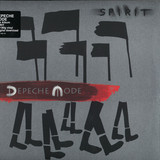
Depeche Mode have released their much anticipated new single Where's The Revolution' today. A powerful and timely track, the song vibrates with a drum laden, menacing energy, anchored in frontman Dave Gahan's vocals demanding, Where's The Revolution / Come on people you're letting me down.'
out of Stock
Last delivered 20 days ago available to reorder, subject to availability
Legendary American musician Brian Jackson announces his first solo album in over 20 years,
‘This Is Brian Jackson’, produced by Phenomenal Handclap Band founder Daniel Collás and
released on BBE Music.
Brian Jackson earned mythic status among music fans thanks to his pioneering work with Gil
Scott-Heron in the 70’s, where his flute and electric piano performances on ‘Pieces of a Man’
and ‘Winter In America’ virtually defined the sound of an era. From the 80s onwards he went
on to record with Kool & The Gang, Will Downing (whose debut album he produced), Roy
Ayers and Gwen Guthrie among many others, and while many veteran musicians tend to
stick with the sounds they know best at some point in their careers, Jackson remains an
unusually adventurous, vital and broad-minded artist to this day.
When the Phenomenal Handclap Band’s Daniel Collás first met Brian Jackson at a
performance in New York, right off the bat he said “I think I could produce you”. “I wasn’t
sure why he thought that,” says Jackson “but I considered it a challenge to find out. Turns
out that he was right.”
Early on in their friendship, Brian mentioned that he’d embarked on a solo project right
around the time he recorded ‘Bridges’ with Gil Scott-Heron in 1976. There were even some
unfinished demos, but the album had never materialised. Daniel leapt on the idea, asking
“what would a Brian Jackson album sound like if the 21st century Brian were to complete
that 1976 album today?” Completed in a series of twice weekly sessions over 11 months in
Daniel’s Williamsburg studio, ‘This Is Brian Jackson’ provides the answer.
“We sketched out musical ideas, drank way too much coffee, consumed way too many
tacos and sampled perhaps a few too many exotic whiskeys while talking about things that
were important to both of us personally. The lyrics for the songs are a result of those
conversations” says Jackson.
Contributors to the album range from Jackson’s guitarist, bassist and longtime friend Binky
Brice (Billy Ocean, Evelyn Champagne King, Roy Ayers), Collás’s occasional writing partner
Morgan Phalen, Latin Grammy-winning flautist Domenica Fossati, drummers Moussa Fadera
and Caito Sanchez, and Phenomenal Handclap Bandmates Juliet Swango and Monika
Heidemann.
And the music? Vintage, soul-stirring Brian Jackson, with the great man’s warm vocals,
distinctive flute and lyrical keys taking centre stage. The songwriting feels timeless, the
arrangement effortless, the production human and analogue. From golden-era soul-funk
opener ‘All Talk’, through soaring Afrobeat-inspired dreamscape ‘Mami Wata’ to compact
groover ‘Little Orphan Boy’ which closes the album, ‘This Is Brian Jackson’ is simply some of
the veteran artist’s best work yet, subtly and lovingly framed by Daniel Collás.
out of Stock
Last delivered 3 years ago available to reorder, subject to availability
Évariste is one of the rare specimens of artist-cum-scientists. Among his kind stand others like Pierre Schaeffer, a Polytechnique graduate (an engineer but also the father of musique concrète) and the eccentric Boby Lapointe (graduate of the École centrale and inventor of the Bibi-binaire system, patented in 1968). Évariste's songwriting, joyful and full of energy (albeit extremely critical), shrouds an original tragedy: born in 1943 among résistants, Joël Sternheimer (aka Évariste) grew up without a father, lost to Auschwitz. Although he makes little reference to Jewish culture in his music, his origins leave their mark: in 1974, he sings a Hebrew song on television. In 1966, the young Joël sports Princeton's colourful paraphernalia - that's because he's freshly returning from the US, where he was sent to pursue his research on "particle mass and the interpretation of observed regularities, such as the effects of a wave" (will understand who may). When he gets there the country's in the midst of the Vietnam War. With McNamara keen to find an alternative to the nuclear weapon and calling upon the country's biggest brains to undertake the task, there's a "fund shift" within the university - a diplomatic way to give notice to whoever may not be disposed to follow the government's scheme. Joël, who's under the supervision of a rebellious physician, is dismissed. He regardless keeps following the prestigious seminaries of the Institute for Advanced Study, chaired by Oppenheimer, inventor of the atomic bomb. Likely inspired by the hippie movement and music, Joël buys a guitar and starts playing in Washington Square - after all, Bob Dylan himself started there. He blithely skips Oppenheimer and receives a warm (though surprised) welcome from a crowd thoroughly unfamiliar with French. When the ageing physicist questions him about his decreasing attendance, Joël explains how drawn he is to music, and how he thinks it could help him in self-financing his research. Évariste recalls seeing the sickened man, his face torn by remorse, lighten up to his words and say: "What's keeping you - go for it! If I was still young that's exactly what I'd do." The student takes these words as a testimony from his professor - and it's enough to convince him . And so he takes the leap during the Christmas vacations he spends in Paris. A journalist friend he often sees around the Sorbonne introduces him to the artistic director of Disques AZ. The latter passes the tapes on to the label's boss, Lucien Morisse, also program manager on Europe N°1. Morisse is blown away - and signs him onto the label right away. Michel Colombier, arranger for Serge Gainsbourg and co-author of "Psyché Rock", with Pierre Henry, contributes some of his original ideas to the 7 inch "E=mc2": Évariste's preoccupation with the percussion sound on the track "Le calcul intégral" is that it goes "poom poom" and not "tock tock" - Colombier is aware of the issue and records Évariste's guitar like a percussion in an isolated booth. The organist Eddy Louis, who is to participate, in 1969, to the success of Claude Nougaro's "Paris mai", also appears on the record. It's 1966 and the Antoine phenomenon (signed on Vogue) storms through France. The two singers share similarities: Antoine is an engineer of the École centrale, gifted with a great originality in his song-writing. A godsend for the two labels who turn this resemblance into a commercial strategy, setting them out as rivals. To this day though, Évariste still denies what was little more than slushy tabloïd gossip. Success comes around swiftly and in 1967 Évariste launches into a second 7 inch, "Wo I nee", again arranged by Michel Colombier. Quantum mechanics fans finally get their anthem with "La Chasse Au Boson Intermédiaire" (or the "Intermediary Boson Pursuit"). To sum up what's a boson, say he's a close pal of the meson, photon and other gluons. A few months later, it's May 68 and everything's turned upside down. Évariste writes a series of songs inspired by the events, which he immediately submits to Lucien Morisse. When the man behind "Salut les copains", once married to Dalida, hears the song "La révolution" - a father and son dialogue - he can't take any more: AZ simply cannot release this. But there and then Lucien Morisse makes a gesture which will remain engraved in French music's history: sorry to be unable to officially stand by the singer, he encourages him to self-produce the record, but with his tacit support. He calls the pressing factory and asks they apply the same rate for Évariste as they would for AZ. The singer and his musicians use the same studio as for the previous record, all of them playing for free awaiting a return on investment. Évariste keeps singing at the Sorbonne with "Jussieu's gang" and "the young Renaud" he nicknames "le p'tit gavroche" (or "street urchin"). Renaud volunteers to type the lyrics of the song "La révolution" so that the chorus can be sung and recorded. A boy in the group is related to Wolinski and introduces them. The two get along so well that Wolinski ends up drawing the cover for the record "La révolution", for free. The self-released 7 inch "La révolution / La faute à Nanterre" is sold under the table and door-to-door for half the price of a standard record, on and around the boulevard Saint-Michel; and it runs out fast. In the end, there will be 6 releases of the record, and 25000 copies sold. When the theatre director Claude Confortès decides to adapt Wolinski's drawing series titled "Je ne veux pas mourir idiot" ("I don't want to die a fool"), he asks Évariste to write the original soundtrack. His friend, now cartoonist for Hara-Kiri Hebdo, often promotes him in accordance with a principle dear to him by virtue of which he gives a special place to his friends. Dominique Grange (writer of the song "Nous sommes les nouveaux partisans") soon joins the team. After 150 performances, Évariste leaves his place to Dominique Maurin (brother of Patrick Dewaere). Évariste composes the songs for Claude Confortès' next play, "Je ne pense qu'à ça" ("That's all I think about"), co-wrote with Wolinski in 1969. The comedians of the play record the songs on a 7 inch, with a cover signed, again, by Wolinski. In 1971, French television produces the documentary "Évariste et les 7 dimensions", but doesn't air it. Indeed, the scientific sub-comity of the programming comity (sic) censors the show. The given justification is that "Évariste dangerously mixed science with science-fiction, numerology and other non-scientific disciplines". The underlying motive might have been a will to censor the singer-mathematician's political discourse. In the documentary and among other things, Évariste discusses hierarchy, alienation and revolution. Half a century later the documentary remains invisible, though some excerpts resurfaced in 1992 in the cult show "L'oeil du cyclone", on Canal +. Though flourishing, Évariste's career is nearing its end. 1970 is the beginning of a decade in the course of which he is to make a decisive discovery in the musical and scientific domains. Following this breakthrough, he moves away from self-produced music and gaucho magazines to focus on science. He keeps Oppenheimer's encouraging words in mind, now freely pursuing his research thanks to the sales of his records. Joël realises that when decoding protein sequences, one finds musical sequences recognisable to humans. He names them "proteodies". If, when listening to a proteody, one responds by being so sensitive as to finding it beautiful, then it reveals a deficiency of the related protein - and this peculiar music may be the cure. We could trace back the music history in light of proteins lacking in a given artist, or within a public's majority. You always thought these hysterical groupies who'd throw their underwear with passion and faint in the pit had miraculously appeared because they had never heard anything as wonderful as the Beatles? Make no mistake! For Évariste, it all boils down to an intro's protein content. Indeed, the beginning of their first hit "Love Me Do" corresponds to dopamine, the neurotransmitter linked to compulsive buying. An intro like this could only unleash the fervour of groupies, victims of fashion and biology. Évariste's success is such that the income from his sales gives him the autonomy to which he had aspired when confiding to Oppenheimer. It made it possible for him to pursue his research without any institutional constraints. He now devotes himself to his proteodies, sat in the offices of the European University for Research, just around the corner from the Sorbonne he knew so well. Évariste is no more. Joël regained control of this strange and comical beast.
Nightlands is the solo project of The War on Drugs’ bassist and multi-instrumentalist Dave Hartley. Amid massive global paradigm shifts Dave Hartley (aka Nightlands) became a father twice over and left his native Philadelphia for Asheville, where the pace of daily life is slower and it's easier to maintain a zoomed-out perspective on modern life. From the newfound refuge of a studio he built using the bones of a barn attached to his hundred-something-year-old house in the mountains, Hartley has tailored a collection of well-crafted pop rock, pointedly titled Moonshine. Guided by some of the harmonic sensibilities that have helped make The War on Drugs a force in modern music, Moonshine combines immaculate-yet-dense vocal stacks and billowy clouds of effected keyboards with classic songcraft, revealing previously unseen acreage in the unfurling dreamscape that is Nightlands. The surrealistic album art by Austin-based illustrator Jaime Zuverza depicts an archway opening to the stars over the surface of an idyllic sea flanked by both moon and sun. Similarly, Moonshine reveals portals within portals leading to ever deeper places in Hartley's vocal-centered labyrinth. Throughout the album, there are plenty of buoyant high moods where the pitter-patter of drum machine and humming digital organ hints at Hartley's low-key tropicalia streak, but the lyrics anchor the dreaminess in real-world sorrow and resignation. Nowhere are these sentiments more apparent than on the title track, a nearly acapella recitation of "America the Beautiful" that poignantly hovers over a mirage of soft keyboards before dovetailing into Hartley's own words about the hypocrisy of the American dream. "This was never intended to be an overtly political record" he admits. "I have so many friends who are able to process the frustration of current events gracefully or with wisdom or in a nuanced way, but I often find myself just consumed with anger about it all. I decided to just let that come out, and it manifested itself lyrically." Moonshine's wide-eyed, utopian instrumental backdrops provide sharp contrast to Hartley's lyrics, which sting even harder within the sweetness. Even in light of the album's vocal emphasis, Hartley's history as a bassist brilliantly beams through Moonshine, giving effortless and sprightly movement to songs like "Down Here," which also features an extended section of saxophone lent by his Western Vinyl labelmate, Joseph Shabason. In addition to Shabason, the album hosts a short list of remote collaborators including four of Hartley's bandmates from The War on Drugs, Robbie Bennet, Anthony Lamarca, Eliza Hardy Jones, and Charlie Hall, as well as exotica virtuoso Frank Locrasto (Cass McCombs, Fruit Bats), and producer Adam McDaniel (Avey Tare, Angel Olsen). Hartley was forced to keep the guest list small out of the necessity of pandemic isolation, coupled with his move to a smaller city, all of which challenged him to do most of the album's heavy lifting right down to the mixing duties, resulting in the most independent effort of his career. By that measure, Moonshine is also the clearest image yet of Dave Hartley as a person and creator.
Studio One legend releases a brand new album backed by Dutch masters THE HIGH NOTES. 17 ska/reggae hits including "OIL IN MY LAMP", "DANCING MOOD", "YOU'RE NO GOOD", "LOVE & AFFECTION", "MY JAMAICAN GIRL", "ON THE BEACH", "GIRL I GOT A DATE", "TURN YOUR LAMP DOWN LOW" & more.
In the ever-competitive hip-hop arena, Tha God Fahim has proven to be a formidable opponent. With an unmistakable voice and an irrepressible flow, the Atlanta rapper has won over countless fans with a unique blend of style and substance, delivering sophisticated street wisdom over raw, soulful beats.
Expanding an extraordinary catalog that already includes more than 100 mixtapes, Tha God Fahim is now debuting "Six Ring Champ", his second studio album with Nature Sounds. A meditation on achievement and the hard work it requires, the album is a triumphant statement from an inspiring artist. "Six Ring Champ" features multiple appearances by Your Old Droog, plus production by Nicholas Craven, Camoflauge Monk, Thrasherwulf, and Fahim himself.
Will Sessions steps into the next phase of their sonic vision and invites you into their Electromagnetic Reality. The new 11-track LP of original compositions explores a new direction that pulls influences from an array of styles, highlighted throughout the 15 year discography from the Detroit-based ensemble.
Jazz, hip-hop, and soul swirl through the lens of producer and co-founder Sam Beaubien, capturing the spirit of live performance while utilizing the unique subtleties and styles of beat making. Other founding members Bryan Arnold (drums), Ryan Gimpert (guitar), and Tim Shellabarger (bass) welcome special guest musicians Ian Finkelstein (keys), Marcus Elliot (Saxophone), and Quentin Joseph (drums) to create a sound-scape that pushes and blurs the boundaries and musical concepts that Will Sessions has become known for.
Will Sessions has put together this fabric of sounds using threads and influences from all over the musical spectrum, setting their creative compass to their new Electromagnetic Reality.
* Comes with the original 1985 artworks & obi strip. * All-star line-up featuring Herbie Hancock, Mory Kante & Bernie Worrell. * 180g blue Vinyl repress. Manu Dibango needs little introduction, born in Cameroon in 1933, Manu developed a musical style fusing jazz, funk, and traditional Cameroonian music. He's definitely among the best known African artists outside of Africa. Collaborations were numerous and include top acts like Fela Kuti, Herbie Hancock, Bill Laswell, Sly & Robbie, Don Cherry and Bernie Worrell. In addition to selling hundreds of thousands of copies of the albums he recorded, he played such huge venues as Yankee Stadium and Madison Square Garden. In 1972, at 40 years of age, Manu Dibango did something almost unheard of for an African artist - he had a pop hit. His song "Soul Makossa" became an enormous hit which influenced popular music for decades to follow. First picked up by David Mancuso (The Loft), "Soul Makossa" took New York dance floors by storm & in July 1973 it became the first disco record to enter the Billboard Top 40_an early instance of Western pop experiencing a paradigm shift thanks to Africa. The song's chant of "ma-mako ma-ma-sa mako-mako sa" echoes through the greatest-selling pop album of all-time, Michael Jackson's Thriller, and it's in the DNA of the music of Kanye West, Rihanna, A Tribe Called Quest, Akon and The Fugees. By 1985, Dibango was back in Paris, one of the most successful African artists in the world, to start on the recordings for the Electric Africa album. This album hooked Manu and the Soul Makossa Gang up with New York avant garde producer Bill Laswell, jazz pianist Herbie Hancock, Parliament-Funkadelic keyboard player Bernie Worrell, Pan African synthesist Wally Badarou, New York guitarist Nicky Scopelitis, African drummer Aiyb Dieng and Malian kora virtuoso Mory Kante. This means of working gave Manu and Laswell license to fuse synthesizers and kora, talking drums and samples, ngoni and electric guitar. What it all boils down to is world beat in its truest sense. Electric Africa remains one of Manu's strongest albums. His deep growl of a honey and sandpaper voice and the energetic honk of his saxophone merge with the seamless samples and the myriad hand percussion and overt funkiness of his band. Herbie Hancock plays on three tracks, contributing an amazing electric piano solo on the title track and interacting with Manu's sax while weaving to the warp of Mory Kante's kora during "L'arbre a Palabres." Similarly but more subtly, Laswell, Badarou and Worrell play dueling synthesizers in and around the band throughout "Pata Piya." All of this makes the album an hypnotic & upbeat Afro-Funk classic that will rock every part your body (and mind). Now finally back available as a limited vinyl edition (Blue vinyl, limited to 500 copies) for the first time since 1985.
It's been four-years since La Coka Nostra released their sophomore album, Masters Of The Dark Arts, (the groups first project without Everlast was also their most critically acclaimed project - featured collaborations with Vinnie Paz, Sean Price & production from DJ Premier and Statik Selektah) and the music industry has changed considerably in that time. However, a few things still remain constant; La Coka Nostra will always be as their aptly-titled 2009 debut verified, A Brand You Can Trust, and the group will continue to dazzle their rapid fan-base with sold out shows around the globe with their rau-cous live performances. Always known for tackling controversial topic matter, the group’s new album, To Thine Own Self Be True, finds them once again in torchbearing mode, addressing subjects that most artists shy away from.“This album was created during a time of unique and individual transformation for each member of the group” ILL Bill stated. “Speaking for myself, it’s been a heavy last couple of years.It’s definitely the most personal record we’ve made under the La Coka banner and while we’re still making music that’s hard as fuck, there’s a maturity to this latest batch of songs that makes it different from a lot of the older stuff. I notice the biggest reactions come from the songs our listeners can personally relate to and we needed to make a record like this right now, not only for the fans, but for ourselves. I got alot off my chest on this one. Making music can be extremely therapeutic and making To Thine Own Self Be True was a rebirth and a re-ignition for me.” Slaine had a similar take on the projects thera-peutic manifestation “You don’t put as many years in the game as we have without having ups and downs. We all have gone through struggle and adversity—personally and professionally”Slaine la-mented. “This album was recorded as I walked out of a very dark time toward a place of truth and understanding. Music has been how I feed my family, my plane ticket around the world and a place I’ve built real friendships; but at the very core it’s a tool I use to get through life.This album is a moment in time. It is visceral and real.” While DJ Lethal continues to oversee the production end ofToThine Own Self Be True, the group also enlisted Statik Selektah, Marco Polo, Salam Wreck (D-12, Obie Trice, Proof, B-Real, Tha Dogg Pound) & ChumZilla (from the Demigodz) and get vocal contributions from extended family members such as Vinnie Paz, Apathy, Q-Unique, Sick Jacken, SKAM2? & Rite Hook.
Hurtling out of Lesser Poland full of indignant rage and armed with defiant conviction come Lublin’s OHYDA with a third LP that puts Kaczyński and his PiS cronies to shame. The legacy of Polish forefathers DEZERTER lurks behind razor-sharp riffs and tightly-wound drums, but this record is no mere exercise in homage paying. Where other efforts may hide behind prescriptive cacophony, OHYDA leap out from the dark with a sound that is both cleaner and more considered while somehow remaining belligerently heavy and grotesque. Such is the catchiness that loiters beneath the swell of this tortured LP you might even pick up glimmers of TZN XENNA’s 1985 7” Dzieci z Brudnej Ulicy. Right-wing populists and pro-lifers are amongst the victims who are dressed down with both fury and absurdity. There’s also an entire tune that goes after Kaja Godek, which deserves a round of applause in itself. The band’s best work to date. (Christopher Dodd, Bad Breeding). Pan Bóg Spełni Wszystkie Pragnienia Lewaków... I Dojdzie Do Katastrofy! was recorded at the local Culture Center (CK Lublin) by Dariusz Kociński and mastered by Jack Control at Enormous Door Studios. Sleeve art by Dziki, mincing the head of Kaja Godek, a prolife/anti LGBTQ+ activist, with lettering help from Guitarrist Mike Champagne.
Translucent purple 180 Gram vinyl with Download card including all 12
tracks that appear on the CD
Over a 45-year career as one of the world's top blues musicians, Ronnie Earl has
transfixed audiences with his distinct sound of emotion-laden blues. On his own
and with his band The Broadcasters, Ronnie is a four- time Blues Music Award
winner as "Guitar Player of the Year," with 28 albums and multiple chart-topping
compositions in his catalogue.
Ronnie sets the songs of this album into context with a quote from Rev Dr Martin
Luther King Jr prominently placed in the album art: "The Blues tell the story of
life's difficulties, and if you think for a moment, you will realize that they take the
hardest realities of life and put them into music, only to come out with some new
hope or sense of triumph."
These songs present triumphant Blues - uplifting and hopeful songs that point to
a better tomorrow, including "Soul Searching," "A Prayer for Tomorrow," "The Sun
Shines Brightly" and "Your Love Keeps Lifting Me Higher And Higher." Celebrating
artists who have contributed to the theme of hope, Mercy Me includes "Blues for
Ruthie Foster," "Blues for Duke Robillard" and "Dave's Groove" (co- written with
Dave Limina).
It’s going off and The Chisel are back to cause a bit of bovver. Following a trio of explosive singles, the band finally bring us their debut full-length album, Retaliation, on the London-based punk institution La Vida Es Un Mus. Having formed in early 2020 and featuring a crew of members with long-term associations to the London punk scene, The Chisel quickly secured a reputation as one of the most exciting bands from a pool of contemporaries that includes Chubby & The Gang, Stingray and Big Cheese. Their sound is rooted firmly in Punk but with influences that run across the board to create a distinctive blend of Oi!, anarcho, UK-82 and hardcore. Retaliation is an unmistakably British record that draws a line from 1982 up to the present day, pushing its way into your collection and torching your stereo. Opening with the agitated force of ‘Unlawful Execution’, the tone is firmly set by a song that addresses the brutality of the Met Police (“Tell me what’s the difference between right or wrong / When a copper gets to blast a lad who did nothing wrong”). ‘Come See Me’ is a ferocious ode to camaraderie in the face of mouthy boneheads and bellends. ‘Shit Life Syndrome’ is a poisoned reference to the same cynical phrase used by physicians to describe the effects of people living under poverty and in the grips of substance abuse (“How can you expect people to act nicely, they’ve all been left on the edge of society”). It’s one of many songs influenced by singer Cal’s experiences of growing up in the working-class town of Blackpool. Cal states: “Blackpool as a town is often overlooked or even looked down upon, I wanted to write lyrics which gave the people of my town a voice”. With tunes like these The Chisel show that they’ll never pull any punches. However, beyond the fury and the swagger there’s another side that plays to an additional strength; the ability to write a memorable hook. Songs like ‘Retaliation’, ‘Tooth & Nail’ and ‘Not The Only One’ could be described as modern day anthems (the latter has become a fan favourite since the arrival of their first live shows) and cement their identity as a band not to be defined by their influences. Recorded by Jonah Falco at Total Refreshment Centre, London, March 2021.
Mixed by James Atkinson at the Stationhouse in Leeds. Mastered by Daniel Husayn at North London Bomb Factory. Cover painting by Tara Atefi.
Available for distribution for the first time! The new album by drummer producer Teppo "Teddy Rok" Mäkynen continues where his trio 3TM was last spotted: "Atonal Drums", out on Helsinki's We Jazz Records, lives someplace in & around the new spots where acoustic jazz and electronic music spill into each other in ways previosuly unheard. Each vinyl copy is unique and comes "edited" by Teddy Rok with personalized signatures and extra bespoke stickers glued in. "Atonal Drums", initially a Bandcamp only exclusive, was featured in Wilco's best albums of 2021. Vinyl and tape copies include download code.
out of Stock
Last delivered 4 years ago available to reorder, subject to availability