An outstanding artist since his earliest productions, Pablo Mateo now fully joins the ranks of Figure for his first album. On this versatile LP finally expands his complete creative vision of what techno music truly means to him.
Weird Reflections Beyond The Sky is an album that is accessible to all audiences. When engaged with actively, it holds narratives deeply connected to personal experience, going beyond what words or even images can describe. Confronting the listener with their own complexity and emotions is both its feat and feature. A beautiful use of technology and synthetic sounds as a means to journey far within.
An open invitation to drop all expectations and simply let the mind wander, creating an immersive soundtrack for each individual to explore.
Suche:complex
In 1986, Uruguayan vocalist and musician Mariana Ingold took the advice of a storied Uruguayan composer and musicologist and recorded her first album (Todo Depende) for the now legendary label Ayuí/Tacuabé. In the early ’80s, the introduction of the synthesizer fostered an experimental new approach to traditional Candombe rhythms. Ingold’s influence on the scene looms large. Pairing elegant vocals and majestic harmonies with complex arrangements, she pushed the Montevideo-specific sound — loosely termed Candombe fusion — in new directions and thrived working collaboratively with artists including Eduardo Mateo, Jaime Roos, and Hugo Fattoruso.
With the assistance of Chris J. Morris, Left Ear Records has extracted a collection of tracks that encapsulate this period between 1986-1991, lifting from her albums Todo Depende, Cambio de Clima, and Haace Calor. Full liner notes translated in English and Spanish with archival photos included.
Techno workhorse Dustmite demonstrates once again why he’s appreciated for his uniquely deep and diverse production styles. “Warpath”, the 6th release on Supervoid Records, is a palette of contrasting elements that are sure to strike a notable chord in listeners’ minds.
The titular track opens with determination. Heavy kicks drive a syncopated rhythm as momentous explosions decompress into oily murk. The polyrhythmic synth stabs of “Weaving” evoke imagery of complex machinery calibrated in near- perfect synchronicity. The hard offbeat shuffle of “Flares” conjures a primal response with scattered dissociative flashes. A foreboding mood descends over the listener in “Caustics.” Increasing tension and a pensive ambience.
Inner atmos and next time – rain into rivers, rivers to rain.
Sequence is subjective, irrelevant – it’s where we stand. Out of order, we dissolve and reform, coming together to come undone. There is no first, no now, no next – just precision points in the wide deep sky.
Another bang, another – it’s the reading which is important. Repeating in parallel, the natural loop is healing; repair, resonance, return. We live in a fragment; soft light and clouds drift like dreams into memory, showing movement in the mirror.
“Here the performer becomes free like the playful clouds high above the world of pain, suffering, happiness, ecstasy, disappointment, greed and ambition of human life”
In this present, we are touched to have unreleased business from Memphis. In unlocking the stoic DAT tapes we open a direct channel from 1993 to this now; three tracks which are meditative, essential rhythm with direct, organic charge. It’s Dream Night Dance Music and Osram 509, with RHK, En-Trance, and Microgravity.
More poetry in remembering our first release was also Memphis. Big complex loops and inner paths. Who’s been here before? All of us, one of us, none of us.
The latest addition to Furanum's discography arrives as an EP entitled "White Cold Skin" that simultaneously marks the emergence onto the scene of Beuthen OS. In keeping with the central ethos of the label, the figure behind the guise interrogates and ably materializes the industrial aesthetics of raw power and dystopic bleakness within the confines four diverse yet thematically coherent compositions.
The exploration of said dichotomy is cogently on display within the eponymous track, where an immediately evident presence of inordinate subsonic force is gradually complemented by the imposing throes of harsh yet carefully crafted analog cyclicality. Linearly hurtling toward its final destination, it relentlessly batters the listener with exhilaratory waves of cold sweat in its wake.
In contrast, "J131" and "Porobieni" present far more dispersed and unorthodox rhythmical structures as they maintain the omnipresent sense of part thrilling, part foreboding unease that permeates the record. Propelled by a pervasive pendulatory sway, the former radiates barely repressed power as it exerts its existential narrative, while the latter seems to speak to the ritualistic submission of willing bodies continually broken on the rhythmic wheel of a self-perpetuating cycle of sonic gratification.
Finally, recorded live and serving as an apt epilogue, a beatless yet by no means any less compelling droning rendition closes out the record. Whereas overt melodic content was hitherto eschewed in favor of rhythmic complexity, the piece more than delivers on this front, thrusting the audience into an ever encompassing and vividly visceral collage of throbbing textures as it progresses towards the revelatory unconcealment of a recondite core.
Mastered & cut by Kassian Troyer at Berlin's Dubplates & Mastering,
Heady, deep dive into techno's more psychedelic spaces, true to form, "Dimensions Doors" EP kicks off with the rolling kicks of "Portal Opening", a trippy exploration of shifting ambiances and rhythmic noise, punctuated by a siren tone. AWB steps up with a broken beat remix of "Portal Opening", layering Clotur's ambiances over low-slung percussion. "Hyperspace Travel" brings up the energy with galloping kicks and rippling resonant synths. BLNDR follows up with a pounding remix, building Clotur's sweeping textures into trippy loops circling over a monolithic kick. "Irregular Frequencies" pulls even further into the portal, with a relentless, rubbery synth squelching along over driving, percussion. Clotur lays a gentle, but uneasy atmosphere over this trippy tool. He brings us back down with "Forbidden Level", another complex rhythmic track featuring glitchy percs and robotic warping over a tough low-end workout.
Philippe Cam is the Thomas Pynchon of the electronic music world. Little is known about him and only a couple of pictures have been put online since he emerged on this planet to write his first and only album18 years ago. We know he worked as a sailor and that’s it. If you dig deeper you might find out that he worked as a DJ in the beginning of the 90ies in Brussels and began to study electronic music there and also began to write music for theaters and ballets.
The American distributor Forced Exposure once wrote that about him: „Philipe Cam is a star in his own field. He is among the few people who have succeeded to write hypnotic dance music without a conventional beat still conveying a thrilling, dramatic feel. Cam has developed an accurate, intense and complex formula of modulation-techno. Starting with music similar to Pan Sonic in 1996, his music turned towards a more elegant form of minimal music. Abstract soundtracks lead to an organic form of music, which was equally influenced by modern techno as Wolfgang Voigt's Studio 1/Gas or Basic Channel/Maurizio. Cam's music corresponds heavily to the Cologne scene, where his music is appreciated and played throughout the clubs by the likes of Michael Mayer, Tobias Thomas and various other DJs as well as experimental djs from the A-musik corner.“
So what’s new with his music? Basically the art of filtering is still his passion. Maybe he can be less associated with techno and the themes of his new tracks emerge in a more distinctive pattern? Well that’s hard to say, we would comment the energy of his early techno days in Brussels have returned here in a fierce way with some oft he tracks. The rhythmic movements are classy and stick with you. Whereas other tracks look for a distinctive relaxation of some kind.
We are releasing the album as a double clear vinyl with cover art by Yvette Klein who also designed the cover for his Philippe Cam’s album 18 years ago. Graphics for "Rotterdam" come from Cologne designer Daniela Thiel. We also would like to thank the cultural department of Cologne for supporting us to finance the album and to see the artistic value in this piece of minimalism.
The album kicks off with the mellow and soothing "Cocoa Beach". A Gentle beat that moves like bodies swaying in the hot summer sun. The clock moves a step forward and then a step backward as evolution takes a rest.
"Manga" feels like an acceleration to the moon, the contemplative moments come in spurts and hide in the intervals of the chords which are on the loose. Philippe Cam is the most energetic person in the world when it comes to core activity, this is head banging stuff for the ambient lounge.
"Short Summer" is a heavy and violent recognition. As intensive as it is it knows when to stop and disappear. In the ear and brain of the listeners it leaves an indisputable echo which lingers on for minutes. We suggest not to make a pause but jump directly into "Vermillions Sands".
What can be said about into "Vermillions Sands"? Be prepared some Terry Riley might lure around the corner to offer you some oranges on a silver plate, but don’t eat them. This is luring and beautiful at the same time. Maybe the best ambient track ever written and yet who can ever venture to say that without making a fool of himself. "Vermillions Sands" comes in waves and they could be longer we think.
"Rotterdam" the home of Philippe Cam for a long time but not anymore. He moved away. So that changes the perspective. But when was the track written? "Rotterdam" seems mechanical and rusty and spooky and divided. This arrangement is very different to all the other tracks so far and is almost dub in style but way more fractured. A steady stop and go emerges. But the longer it runs the better it gets. At minute 6 the brain resets itself and tries to grasp what has happened so far, reconstruction as a result of its own phantasmic imagination and hardly true at all, wonderful. Applause included!
Here comes "Bis", a short episode of a track and before we can comment on it, it is already over.
"The Game" is a mule of a track. It has a quiet stubborn sequence that bites and kicks you in the back without any change in near sight. We can hear a voice whispering, which sounds like a miniature vocoder featuring the voice of a child calling out - never stopping. This is treadmill to some extend but starts to breathe towards the middle of the track and slowly changes perspective. In fact there are some changes taking place here which go beyond a sound design that works heavily on the stereo image. Stick with it and the experience will be a great one.
"Ultimate Fly For Halloway" somehow orchestrates how you might feel after you climbed a 8000 meter high mountain and reached the top. A rejoicing off a special kind. Lava for the ears. No cheerleader murder plot sorry.
"Last Track" is a perfect example of a true minimalistic pice of music that manages to make contact with other genres and does this with elegance, determination and a lot of soul.
key selling points: The key selling point is the fact that Philippe Cam once was referred to as one of the main protagonists of the minimal music scene along with Wolfgang Voigt's Studio 1/Gas and Basic Channel/Maurizio. A true artist with a vision which is very rare.
Philippe Cam has picked up the sound he was famous for but has developed it further without selling out to any genre and expectation that rules our daily business.
Exactly this is the strength of the album to create a vivid world of impressions by using instruments in a whole different way than all software developers would suggest.
"Rotterdam" is a piece of art that can set off a firework when you listen to it and it owes nothing to anyone.
Like a fine 40-year old whisky, the layers on this record and influences are complex, nuanced & Layered. You might taste something different but here are my tasting notes...
The Nose - Notes of Bobby Cauldwell, Steely Dan, David Crosby a definite Sun Drenched yacht folk dram.
The Body - I can taste strong notes of Jimmy Webb and Aztec Camera not present on the nose, this a much deeper dram than initially nosed, I can see myself enjoying this in front of a warm fire.
Finish - Long finish on this one, I can taste the Miami tarmac, the Beach and salt water, the nightclubs and linen clothing, Don Johnson's dirty washing.
Whisky tasting over, both the albums this LP was compiled from were recorded at Coconuts recording Studio in Miami, notable for Miami Sound Machine recordings and Blood, Sweat and Tears. I have been into these for a long time and whilst not the rarest AOTN re-issue to date (although that may change now the words out) they deserve to be recognised for the solid LPs that they are. Just buy it and float away.
* Back on vinyl officially for the first time since 1973
* Reissue of this RARE Nigerian landmark Psy-funk album
* Comes with insert containing exclusive liner notes
* Strictly limited to 500 copies worldwide, comes with obi-strip
Tidal Waves Music now proudly presents the first OFFICIAL reissue of this landmark Nigerian album. This RARE classic (original copies tend to go for large amounts on the secondary market) is now finally back available as a limited vinyl edition (500 copies) complete with the original artwork and exclusive liner notes/pictures provided by Ofege's founding member 'Melvin Ukachi' who also supervised this reissue.
Ofege was formed in the early 1970s by a bunch of teenagers at the St. Gregory's College in Lagos Nigeria. They were largely influenced by the guitar solos of Carlos Santana, Jeff Beck & Jimmy Page while closer to home, they were influenced by the music of 'BLO' (Berkley Jones, Laolu Akins and Mike Odumosu), 'Monomono' (led by Joni Haastrup), The Funkees, and Ofo The Black Company.
Due to their vibrant combo of sweet harmonies, hooks & fuzz, Ofege would become one of the most legendary Nigerian groups of all time, with expressive sales and national stardom. At the turn of the century (and because of tracks appearing on various psychedelic music compilations) Ofege would receive international acknowledgment for being the first of their kind and the ultimate West-African psychedelic funk band!
Their first album was recorded while the band members were still in high school (average age of 16), Ofege's debut album 'Try And Love' was originally recorded and released in 1973 on EMI Nigeria.
'Try And Love' is wild and uncompromising blend of soul, funk and rock with complex and groovy rhythms. Ofege succeeded in creating a debut album drenced with fuzzy guitars, plaintive/wailing vocals and a backbeat as influenced by James Brown as it is by Fela Kuti. It's a unique, raw and beautiful take on the psychedelic sound. The ingenuity allied with the inexperience of its members makes this album a real treasure.
In the early eighties, Edmond Mondésir, professor of philosophy and Léon Bertide, trade unionist, founded the Bèlènou group. They were actors of the great agricultural strike of 1974, which resulted in the death of two workers (Ilmany and Marie-Louise) and left many wounded. Activists of the patriotic movement Asé Pléré An Nou Lité (Stop crying, Fight), they were part of the identity and the cultural affirmation la revendication identitaire et culturelle of the time. Like the Guadeloupean musician Gérard Lockel and his work on the Gwo Ka, they put the Bèlè, in its traditional form, back in the spotlight during Swaré Bèlè (Bèlè nights).Minimalist and spiritual, a true rural ancestral art from Martinique, the Bèlè combines dance and music from responsorial monodies, which is a choir that responds to the lead singer (Respondè / La vwa dèyè), on codified drum rhythms and ti-bwa (2 sticks that hit the back of the drum or a piece of bamboo). It comes in a series of collective choreographies, working up into the trance. The texts are simple, short and tell the story of everyday life and struggle. While preserving the emotion and the drum’s central place, the fundamental contribution of Bèlènou is to keep the traditional form of Bèlè while adding a modern instrumentation: bass, guitar, saxophone, drums...
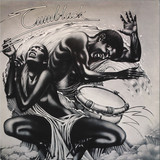
Emosyon Tambou-a (Emotion of the Drum) was released in 1990. This third opus of the band expands the musical spectrum in harmonies, arrangements and influences to create a contemporary music anchored in the Bèlè matrix, while keeping the beat, the energy and ancestral roots of music. Bèlènou adapts some classic rhythms: Bélya, Gran Bèlè, Bèlè Pitjé or Ting-Bang rewritten here for an orchestra.With the appearance of long couplets and a complex harmonization of the choruses, Bèlènou's music brings a form of modernity, it opens notably to jazz territory as well as to other forms of music and grooves. Also, Bèlènou leaves the musicians with space for improvisation: not only on the saxophone or the guitar, but also with the drums (cleverly adaptating traditional rhythms to the drums).
The texts sung in Creole are of a social nature, appealing to the solidarity and self-denial of the people (Bélya pou péyi-a, Tout pèp-la sanblé), to the struggle for political emancipation towards a new democracy (Wi ny ké rivé, Ni dé jou, Démokrasi); land protection (Sové tè-a); finally, to the vitality of the Bèlè culture ... (Emosyon Tambou-a, Dansé Ting-Bang)...Culture participates, according to the expression of Aimé Césaire, as "Miraculous Weapons". Bèlènou sings a project of a new and united society. A precursor group, experimental in the its early years, Bèlènou reconciles with talent tradition, modernity and cultural identity.
Lovely crafted tip-on sleeve. Remastered. 700 copies
‘One of our favourites’ iD Magazine
‘Mesmerizing’ The Guardian
‘Keep an eye on this guy!’ - Gilles Peterson
Catching Flies’ music draws from a wide-ranging palette of influences including jazz, soul, hip-hop, house and electronica and has previously seen him handpicked by Bonobo to provide support on his World Tour. Over the past few years, his music has gathered the support of Gilles Peterson, Annie Mac, Lauren Laverne, Julie Adenuga & Huw Stephens, critical acclaim from the likes of iD Magazine, The Guardian, Dazed & Confused, and Nowness, and a growing fanbase which has seen him perform both Live and DJ sets across the UK, Europe, the USA and Asia. This has culminated in over 60,000,000 streams to date.
Catching Flies is set to release debut album ‘Silver Linings’ on 5th July 2019. Containing shades of house and jazz, to hip-hop and electronica, ‘Silver Linings’ is a melodic mesh of bright electronics and intricate rhythms. It’s a beautiful, moving record, with sounds that unmistakably come straight from the heart.
Producer, multi-instrumentalist and DJ George King began Catching Flies in late 2012, when he recorded and self released his first two EPs. With huge radio and press support around the world - including multiple #1’s on Hype Machine, BBC Radio support from Gilles Peterson, Mary Anne Hobbs, Lauren Laverne, Tom Ravenscroft, Nemone, Annie Mac, Huw Stephens; praise from i-D, Dazed, The Guardian, Complex, Notion, The Line Of Best Fit, Clash, Dummy and more - he’s since attracted millions of listeners.
Against his instincts he signed with a big management agency and got talking to a label: it almost derailed his career. He explains “What I'd found so inspiring originally was the total freedom to make a tune on my own terms and just decide to put it out the next week. There was a hunger that came with that, and a sense of achievement from being the driving force, but as soon as I tampered with that ecosystem, it wasn't as exciting anymore”.
Touring with electronic music giant Bonobo - who also included him on his BBC Radio 1 Essential Mix - allowed him to watch up close someone who had taken a slow and steady path from tiny clubs in Brighton to arenas worldwide, and see it was possible to do without any compromise. After being teased through a succession of warmly received singles this past year, and seven years on from that first EP recorded and released from his bedroom, his debut album ‘Silver Linings’ is now ready to be revealed.
“It's taken me a while because I didn't want to speak until I had something to say. I wanted to make something positive, hopeful and colourful...The world isn't in the best place at the moment, and the last thing it needs is another dark and moody electronic record. I wanted ‘Silver Linings’ to be a scrapbook of the last three years. It’s definitely eclectic, and it’s supposed to be. Over three years a lot changes, your perspectives change, your tastes change; and I wanted to celebrate that by picking tracks that meant the most to me. One of my favourite things about making music is that it takes me right back to where I made it - the keyboard I used, the chair I was sitting on, the room I was in. It kind of teleports you back to a certain point in your life. A bit like a diary entry.”
Recalling those moments brings back a range of memories: ‘Satisfied’ began by being tapped out on a £15 keyboard bought from Kentish Town Cash Converters, ‘Yǔ’ was made in the mountains of China during a few days off from touring, while an evening on Hampstead Heath inspired ‘Kite Hill Theme’. Also featuring on the album is ‘New Gods,’ a collaboration with London’s bright stars Jay Prince and Oscar Jerome and the beautiful and meditative ‘Opals,’ inspired by the likes of Ryuichi Sakamoto and Alva Noto.
Catching Flies is already looking to the future, closing the first chapter in an exciting and inspiring story, ‘Silver Linings’ is only the beginning.
“A few weeks after I finished the album, I moved out of my house I made all the music in, so it feels like the closing of one chapter and the beginning of another. I can’t wait to make the next one now.”
Birthed from Arizona’s regaled Ascetic House collective, Body of Light is a dark synth-pop outfit comprised of young brothers Andrew and Alexander Jarson. What began as a vehicle for their exploration of noise and sound during their early teens has evolved into an established production over the last decade, as Body of Light continues to carve out their own style of complex, structured, and moving dancefloor electronics.
Their music is not only individually personal, but drawn from experiences shared between the two brothers – and calls on elements of new wave, freestyle, goth, and techno to create timeless and singular tracks without fear of trend or passing fashion.
On their third album Time to Kill, Body of Light refines their brand of cold and driving synth pop with a bold pallet of sounds and a focus on uncharted technique and purpose. Like the pale digital stare of the modern devices surrounding our daily lives, the album weaves stories of love and obsession in an era of technical bondage and fleeting exhilaration. Written over a period of intense and profound change, Time to Kill stands as a startling reminder of how important our existence truly is. Haunting keys, swelling pads, and punching rhythms score their work as Alex Jarson presents an alluring and romantic dialogue with confident projection. The title single “Time to Kill” kicks off the album with a merciless signature beat, complimented by distorted sample patterns against an infectious, moving bass groove
This year, First Word Records celebrates its fifteenth year in the game. The year commenced triumphantly with First Word being named "record label of the year" at Gilles Peterson's Worldwide Awards 2019. Over the past six months, we've seen new music from 14KT, Souleance, Myele Manzanza, Teotima, Don Leisure, Children of Zeus and a range of artists across Europe, on the 'Music! Musik! Musique!' compilation.
To commemorate the 15th anniversary, First Word has a series of releases in the works for the second half of the year which see collaborations by artists from the label's current roster. To kick off, we have this special double-AA sided 7" single featuring Darkhouse Family, Kaidi Tatham & Tyler Daley.
Darkhouse Family consists of two Cardiff beatmakers & musicians, Earl Jeffers - founder of Melange Records and producer of 'A Library Excursion' from 2018, and Don Leisure, who recently provided us with 'Halal Cool J', the beat-tape sequel to 2017's 'Shaboo'. Over the years they've had releases, solo & individually, on Fat City, Metalheadz & Earnest Endeavors to name a few, bridging the gaps between various strains of dance music, beats and hip hop, with the organics of jazz and funk. Recently making noise across the UK with their new live band, and production work for the likes of Kamaal Williams, this is their first new release since their highly-acclaimed 2017 debut album 'The Offering' & subsequent remix project which also featured DJ Spinna, and one Kaidi Tatham.
Kaidi Tatham is one of the most revered multi-instrumentalists in the game. His endless contributions have included Bugz In The Attic, Amy Winehouse, Slum Village, Mulatu Astatke, Soul II Soul, Moonchild, Leroy Burgess, Amp Fiddler and loads more. Dubbed by Benji B last year as "the UK's Herbie Hancock", his versatility as a musician is actually more akin to Prince. He can play most things, and play them well. Providing flute duties on this track, he also graces the flipside with a full "flutestrumental" version. Aside from numerous other projects, Kaidi released three EPs on First Word to date, 'Changing Times', 'Hard Times' and 'Serious Times', and an album last year, entitled 'It's A World Before You', which featured daddy of 2000 Black, Dego, son of Jazzy Jeff, Uhmeer and Children of Zeus, Konny Kon & Tyler Daley.
Tyler Daley hails from Manchester, alongside son of Zeus, MC / DJ / beatmaker, Konny Kon. Somewhat of a veteran in the game, Tyler is currently one of the most-recognisable talents in the British soul scene, also lending his talents to dance music royalty along the way, including the likes of Goldie, Zed Bias, DJ Marky & Lenzman. With Children of Zeus, the duo have had a whirlwind 12 months since the release of their debut album 'Travel Light', performing shows across the globe & gaining new fans daily. The record was named "album of the year" by Complex magazine and BBC 6 Music's Huey Morgan, amongst a number of other notable tastemakers & selectors. Hot on the heels of the 'Excess Baggage' EP, Tyler laces this one with his inimitable brand of bars and soul.
A veritable super-group amongst the First Word stable, this low-slung slinky joint sees the guys work up a unique blend of jazz, soul, beats and hip hop - guaranteed to go 'All The Way'…
'All The Way' is released on First Word Records on July 26th 2019, limited 7" vinyl & digital.
Produced & mixed by Darkhouse Family
Vocals by Tyler Daley (Children of Zeus)
b B1. All the Way (Flutestrumental) [feat. Tyler Daley & Kaidi Tatham]
[b] B1 | All the Way (Flutestrumental) [feat. Tyler Daley & Kaidi Tatham]
[b] B1 | All the Way (Flutestrumental) [feat. Tyler Daley & Kaidi Tatham]
As spring dawns, Rhythm Section International go from Local Artist to a pair of very 'local' artists - Peckham's very own Chris Watson + Chris Coupe; otherwise known as FYI CHRIS , who present the 'Back In The Millennium' EP as the labels 5th offering.The EP was born after a rather hazy late night listening session at Rhythm Section HQ, where bossman Bradley Zero was instantly beguiled by the Duo's hypnotic and rhythmically complex arrangements.The record begins abrasively with the trance-inducing mechanical stutter of 'back in the millennium', before shuffling into downbeat number 'Jeru' and then picks things up with the peak time groove of 'need i say more' before bringing us back down to earth with the melancholic acid bump of 'dedication'. Early support from Osunlade, MR.G, Ryan Elliott & Damiano Von Eckhert
Ready for Club Use..
Exactly a year on from 'Travel Light', we release the final single from Children of Zeus' debut album. A dinked 7" single, containing one of the stand-out tracks from the album, 'Hard Work', and a re-vocalled Lover's Rock version of 'The Heart Beat' (a demo version of which appeared on 'The Winter Tape' from Christmas 2018).
'Hard Work' is a term than can easily summarise the past twelve months in the life of Tyler Daley and Konny Kon. They've been busily touring Australia, New Zealand, South Africa, Europe and the UK twice in that time, as well as rocking shows at countless festivals across the continent.
'Travel Light' was named "Album of the Year" by Complex Magazine, BBC 6 Music's Huey Morgan and Rinse FM's Jyoty, as well as taking 2nd place at the Worldwide Awards (for which their label First Word was named "Label of the Year") and numerous high-placing's from Fact, Mixmag, The Vinyl Factory, Juno, Bandcamp, Mi-Soul, Wordplay & Piccadilly Records, amongst numerous other notable selectors, blogs, tastemakers and musicians, with fans far & wide from Radio 1's Benji B to Chase & Status, Jazzy Jeff to Lily Allen, Stormzy to Goldie.
The depth of styles & genres included on 'Travel Light' confirmed that Tyler & Konny are not easy to put in a box. Their initial inspirations of Manchester pirate radio in the 80's/90's all make up to form the sonic tapestry of hip hop, soul, r&b, broken beat, jungle and, in this instance, reggae.
One of the album's biggest surprises was this now-anthemic track, 'Hard Work', which sees Tyler Daley effortlessly ride a one-drop riddim drenched in positivity, and is a highlight in their live sets, as anyone who's witnessed will testament to. Meanwhile, the flip-side transforms the quiet storm vibe of 'The Heart Beat' into a heavy, heavy dubwise track, creating an essential accompaniment and fitting sequel to the original lick.
Pressed on a limited edition rustic JA-style dinked 7", this one is, of course, essential for any discerning collector, fan and DJ. Released on First Word Records, July 12th 2019.
Tekvision Volume 1 was a stone cold classic, with Rolling Stone charting it at #3 in their top 20 EDM records of 2017. Two years on, Cornelius ‘Traxman’ Ferguson returns with the second instalment, featuring 7 exceptional new Footwork productions. Traxman is a bonafide OG, with a discography dating back to the halcyon era of Ghetto House in the late 80’s and early 90’s. 30 years on, Traxman is a revered figure in Chicago’s urban music scene, having presided over the evolution from Ghetto House to Juke and from Juke to Footwork culture. Originally released in 1989, Work Dat Mutha Fucker by Steven Poindexter is considered to be one of the most influential tracks from the early days of Ghetto House. Traxman remixes it brilliantly on this release, reworking the stripped back, minimalist drum beat of the original into an upfront Footwork pattern. This sense of continuity is equally evident on Let Me See You Naked feat. DJ Juicy, and Traxman’s remix of To Da Hoooz by DJ Deeon. These productions successfully capture the sexual energy and exuberance of Ghetto House, turbo charged at 160 BPM. Elsewhere on the record, Traxman explores different moods whilst always keeping the dance floor firmly in mind. The opening track It’s Lasting Bass lays an infectious vocal harmony over complex drum patterns and a fearsome bassline. Osaka opens with mellow, sultry keys before introducing a wobbling synth and diced up Orchestal samples. 4 Da Lyfe is a soulful and slightly more meditative track, with a vocal loop expressing solidarity and self-affirmation. Wildcard feat. Jana Rush, stands alone as the only track without a vocal element, instead utilising a piercing and insistent synth to create a powerful sonic intensity. Overall this is triumphant record, and a worthy successor to the original Tekvision release, proving once again that Traxman is an unrivalled exponent of MPC-driven footwork energy.
Where To Now? Records present the debut release from Akiko Haruna. Akiko’s world is one where cacophonic distress lingers, shuffling itself over scapes of percussive damage and driven groove. Akiko presents a fresh take on the current Technoid function through her use of emotive and intentionally disruptive vocal chops and a dizzying ‘wall of sound’ approach to the dancefloor, consuming all yet somehow keeping vibes alive.
Akiko’s artistic background is primarily in Dance, and undoubtedly this performance led background has had an acute impact on her approach to melodic detail & storytelling. Akiko’s tracks rapidly shift & morph states, always restless and searching with fluidity and intent. From the ever present Micro Electronic details to sweeping swathes of Bass flutter the notion of progressive movement remains at the forefront of her sound, minute elements of detail become briefly isolated, intentionally directing the listener to their subtle presence.
‘Delusions’ Leads with ‘A Mother’s Love’ and begins a theme of resentment and dissonance. The Japanase vocal cuts throughout the track roughly translate to “you should die”, here obviously flipping assumed and supposed relationship rules and roles and exposing an inner turmoil, reflected through a continuous anxiety ridden, almost panicked siren detail which pulses over Akiko’s heads down, deep and uniform forward march.
‘Husband Established’ and the opens with the emotive vocal line “I just hate your Voice”. This is the sound of a poisonous & damaging relationship hurtling towards combustion, where Akiko’s elements gather momentum and impact as layer upon layer of detail pummel and puncture this heightened state, pausing and spiralling to evoke a standoff of aggression and imminent outburst. ‘Husband Established’ stands as a frankly stunning piece of sound design, which manages to capture a raw human emotion, and provide release for the associated junk, stress, and occasional banality of Relationship angst.
‘Hetero’ picks up where ‘Husband Established’ finished, further exploring societal character types and submissive gender tropes that are thrust into our sub consciousness from day to day. The concept of Hyperreality and its themes are continuously explored within Akiko’s practice and It would perhaps be fair to say that these themic explorations within her Music are Akiko’s own outlet for traversing human relationships within a complex, heightened, & layered reality, and it is certainly Akiko’s intention for her audience to feel some kind of relief and release within her sound world. Sonically ‘Hetero’ is a much sparser, subtler affair, where swathes of sampled voice & machine swing in and out of focus, against a weightless backdrop of affecting isolated electronics.
The EP closes with ‘Ripehus Alley’, seemingly void of any deeper meaning or message this serves more as a dreamlike parting song to what is otherwise a highly charged collection. Floating itself away from a frantic & incomprehensible world into a calmer space for final thought and reflection. ‘Delusions’ is a complex, exploratory trip, one which fans of Logos, Fis, Alva Noto, Jlin, Jesse Osborne-Lanthier etc will relish exploring.
Milan-based imprint Just This present Cristalli Ionici, a four-track EP from Italian duo Abstrakt featuring a Marcel Fengler remix.
Abstrakt is a collaborative project from Luca Rambelli and Filippo Scorcucchi concerned with the intense study of spatial timbres - a psychedelic trip represented as a sonic aesthetic.
A relatively new endeavour, their debut on Just This offers an expertly crafted voyage into the outer reaches of the imagination. Sonically, the EP files under ambient techno, brandishing swirling textures and tangible effects to create a blissful meditative state.
For his remix of the title track, Marcel Fengler places the subtle complexion of the original and places it inside a driving rhythmic pattern of syncopated percussion and unrestrained energy.
In a landscape increasingly dominated by surface-level sonics and a lack of true organic – man-made-machine-driven - sound, the newly found and London-based Gaia Tones project rises with an unforgiving grasp over the science of improvisation and mystery. Like a gust of wind from Mother Nature herself, the duo comprised of John Swing and David Soleil-Mon breathe a new, highly perceptible form of life into the UK’s long ‘dub and ‘bass’ dynasty.
Contrary to the consumer plastics found across much of the ‘digital’ musical spectrum, the two artists impose their own vision and aesthetic to a framework of sound that has somehow always existed but never fully explored before. Heady, stoned-out and surely emanating from physical matter, their two debut tracks are set to redefine the standards going into the next decade.
The A-side “Lychees”, stutters its own brand of dread paranoia over a sea of complex, morphing percussion that together create a whole new palette of exploratory sound, loosely tied up into a hazy, nomadic groove. On the flip, “Wonkadonk” feels like its natural extension, evolving that familiarly off-kilter assembly of drums to work around a devotedly dystopian swell of bass that pushes further and further out into the ether.
In the end, the universe tends to unfold as it should.
Label artwork by Egidio Sterpa
A cryptical presence hiding behind many different aliases spread across a range of underground labels: co-owner of LiveJam Records alongside EMG, John Swing begins producing with a live and spontaneous approach that pushes the boundaries and general conceptions of club music while digging deeper into the techniques of the past.
The production process through ananlog equipment that John Swing so strongly supports with an uncompromising attitude is the key to his underground success and esteem.
With a back catalogue of over seventy releases including collaborations with established artists such as Mr. G and Ben Sims, the London based talent has been receiving recognition by established artists including Floating Points, Gerd Janson, Levon Vincent, Theo Parrish and many others.
Inspired by London's Plastic People and it's bonding vibes, through a well refined spectrum of musical knowledge John Swing engages with the dance floor in a physical yet emotional way: the strength and power of pure house is blended with black soul music in a constant crossover between underground aesthetics and cherry-picked funk and disco. His subtle understanding of the dance floor guarantees a deep-rooted experience for the mind, body and soul.
“Acid Sensible EP” released by Johnkôôl Records is a compilation of tracks composed by french producer Botine (already seen on Acid Avengers Records) along those formative years. It is truly the fruit of back-and-forths between the stage and studio environment from 2013 to 2016.
The term Acid Sensible first appeared in Clément’s graphic work as he developed his musical adventures. It’s a tale in which pets, organized in a micro-society produce music that will free them from humans and their alienating lifestyle. Acid Sensible is how they name that musical genre they created and that Botine appropriated himself. Built on a complex mix of influences, Acid Sensible is a careful and melodious pop balance between new-beat rhythms and meditative sounds sourced from IDM, Braindance, Psychedelic Rock and Krautrock.
Most of the tracks on the EP were composed on analog devices. The recording was done in one take only, thus preserving its powerful esthetic sourced from the live environment.
Hailing from the heartland of British techno, Sheffield’s John Shima is one of the leading lights of UK electronics. His beautifully crafted sounds have graced a host of imprints including Distant Worlds, Exalt Records and, of course, FireScope. It is to the latter that Shima returns with his long awaiting debut album, The Lonely Machine.
John Shima is a master melody weaver, with this first LP attesting to his deftness of touch. Celestial chords and star gazing synthwork permeate this ten track odyssey. The musical heritage of Shima’s hometown, the elegance, majesty and subtlety of British electronics, is invoked from the needle drop. A range of influences come to the fore in this 2LP. Skirting around the edges of astral ambience and tonal texture are nods to industrial history, the rasp and resonance of rhythms in “Empires”, with the inspiration of Detroit surfacing in the future funk of “Phase Distortion” and “Linear.” Dreamscapes are painted in delicate hues, the fragile movements of “Accepting”, with brooding works adopting thicker basslines and ruffled notes as with “Distrust.” Nevertheless, it is the incandescent brightness of Lonely Machine that truly shines. Radiant pieces of elating electronics, complex and joyful compositions that chime with unbridled hope and open-hearted optimism.
Aleqs Notal's introduction to the Sistrum family, 2017's Ascending Nodes, offered a taste of his capacity for jazzy undertones and rhythmically complex percussion. His return to the label, the LYU EP, takes his propensity for drums a step further. Heavy hand percussion drives the release across all three cuts, with a fourth mix that's stripped down to just its bare bones parts.
Henrik Schwarz & Alma Quartet present CCMYK, a new album on Henrik's own label Between Buttons. Produced in collaboration with the Alma String Quartet, it's a free conversation between classical and electronic music, carefully transformed into a set of astonishing tracks, ready for club or concert hall. Though based on free improvisations between Laptop and String Instruments, CCMYK is not a record of bumbling jams. Rather, it's a record of startling density, control and emotional complexity. This is the sound of open conversation between piercing intellects, taking their individual instruments and musical backgrounds to create a new universe of sound. The vinyl comes in a unique, handmade, limited 4 colour CMYK pressing. Every record is unique! Black is available as well.
Picture Vinyl "A balance between things that you know people will like and things that you think people will like" is what John Peel had to say on his BBC homepage about Apparat's music programming concept. Apparat then appeared at the Peel Session in May of 2004 substituting like with die for in JP's statement. Indeed, it's sad but true: John Peel passed away a few months later to a heart attack while vacationing in Peru. Apparat could only find a more fitting farewell mood with the rerecording of his session: a sonic dedication to the huge mentor John Peel from Shitkatapult and their people.
Apparat is known as a fluctuating mood-maker by way of his computer companion. In this case he leaves his garb behind. Apparat swings the composer's stick with emotion to give yearning its segway by conducting pieces of lonely melancholic beauty with godly discretion. New strings are thanks to the violin and cello of Kathrin Pfänder and Lisa Stepf aka Complexácord, whose soul-drenched expression lets your mind sway.
The trio harmonizes with dream-like perfection. It reminds one once again of the experimental modus operandi combining classical instruments with electronic music. Singer Raz Ohara and clarinet/sax player Hormel Eastwood find their chosen virtuous and emotional space on this promising cloud. What remains are warm dark drops of elegiac pop the pour down the back of your heart.
This Apparat John Peel Session was remastered by Bo Kondren at Calyx Studios in February 2019 incl. the digital bonus track - Komponent as Telefon Tel Aviv Remix.
The physical appears as picture disc featuring the wonderful original design by Hanna Zeckau & Carsten Aermes on vinyl.
The original release from 2005 (Strike 153) also contained more Remixes by Bus, Rechenzentrum and Apparat himself.
Stellar new EP on the way from Dutch producer Qindek. The rising star has been on the up as of late having released on labels on such Wolfskin Records and Invite's Choice Records. This time he's releasing on vinyl only label Dreiklang who have had some scintillating cuts from Edit-Select (who appears as one of the remixers on this EP) and Claudio PRC.
Qindek has really been honing his skills and is known as much for his flowing DJ sets as he is for his masterful live sets. This level of technique is truly standing to the artist as we can see from his comfortability with hardware shine through on this project.
'Come Closer' will be the fifth release from the label: it features the original mix Come Closer and three remixes from VOLTMAR, Edit-Select, and KUF, which show the different facades of the track. The original cut is a primal, tribal number merged with club elements. It enters with a bongo-like drum that is followed by a hi-hat for some pace. A surreptitious synth floats in and levitates back and forth, which is coupled with fluctuating keys and toms. It's a mesmerizing number with an understated tempo, bringing the forest to the club.
Cologne based artist VOLTMAR takes the first remix. Known as a DJ for many years now, he has performed in clubs across Europe. He tends to enjoy a deeper sound and this is prevalent in his take on the cut. The percussions are deeper and more hollowed, which creates a different kind of sway. It feels more tribal, with more jungle elements to it. It has less synth and more of a heavy bassline, designed to connect people on a primal level.
Next to feature is none other than Edit-Select. The British native is well established in the club scene and does not disappoint with this remix. A more complex sound, he takes the track and elongates it. It's a consistent sound with underground elements and a slight bit of tempo. It has this divine gothic synth that oscillates with a certain lilt to it. The beat is enchanting as the cut slowly diminishes.
The last stand is by Swedish artist Kuf. Known for his energetic sound, this cut does not disappoint. It's a high-velocity all-out assault club banger. It has rolling beats, speedy hi-hats and a tempo that is driven forward by hand claps. It has a skeleton aspect to it, whereas instead of using builds, they add and subtract elements inject an ever-changing pace.
As a visual artist and ambient composer, Tor Lundvall's work often recontextualizes the familiarity of everyday life through abstraction and space. Starting with the snapshot of a moment, Lundvall extracts its underlying complexity of the seemingly mundane and gives sleeping suggestion a presence and purpose. Mainly working sans vocals, Lundvall returned to voice exploration for 2018's A Dark Place, a somber, dark synth album that merged his mastery of textural ambience with traditional pop structures.
Rescued from old DAT tapes A Strangeness In Motion: Early Pop Recordings 1989-1999 are some of Lundvall's earliest completed synth pop works which have remained unreleased until now.
Though Lundvall's work throughout the collection has the recognizable ambient bones and sensibilities he has refined throughout his career, many of the tracks call back to the synth-driven pop of Orchestral Manoeuvres In The Dark, The Human League and New Order, with the common thread being the sparse density and mood created by reservation and the lonely impulse to twist convention, not to rip it up and repurpose it. Rather than 10 disparate ideas, Lundvall's curation of A Strangeness In Motion: Early Pop Recordings 1989-1999 feels like excerpts from a broader work, allowing the listener to fill in the holes and ladder up to his larger themes and concepts, perhaps coloring his prior works in new hues and tones.
'For years I dismissed these songs as naive and youthful relics, but I've grown much fonder of them in recent years along with the memories they evoke,' he says of the decade spanning collection of tracks, many of which were sketched out in his duo with Drew Sullivan, After The Outing. 'Original One', 'Procession Day', 'The Clearing', and 'The Melting Hour' are present here as solo reworkings, originally culled from his sessions with Sullivan. The remaining songs were ideas originally considered for Passing Through Alone (1997) and its proposed follow up, provisionally and playfully titled Femalamania.
'The title was summing up my girl problems at the time and also a silly word spin on Robyn Hitchcock's Fegmania!' he says. 'Sadly, the project was abandoned—a rare decision for me and perhaps the only time I've scrapped an album entirely.'
Idiosyncratic producer DMX Krew offers up four playful acid-tinged tracks for the Malekko Phase Mod EP, released through eclectic Spanish label/club night/promotion agency, Fanzine Records. The vinyl-only release is the first output of 2019 for the Coruna based imprint currently celebrating their 10th anniversary and is the follow up to C44's bizarro-techno Res Publica Populi Romani EP, and Dijuma's dubby and atmospheric Cold Tracks EP.
For DMX Krew's first Fanzine release the eccentric producer adopts a much lighter and brighter sound, in line with his recent records on Hypercolour and his classic output on Aphex Twin's Rephlex Records. The EP also comes hot on the heels of the prolific producer's latest album, Glad To Be Sad - twelve wavey cuts of vigorous electronic funk released in March through Hypercolour.
Kicking off the A-side with "Maleko Phase Mod", DMX Krew immediately conjures an effortlessly enjoyable mood. From the opening bars, a bouncing synth line is met with a classic acid house beat - prominently featuring the requisite skipping snares, rustic rimshots and phasing percussion that gives this track its distinctly Chicago feel. Meanwhile, shimmering chords fill the track with sunny warmth and enthusiastic energy.
Next up, "Smoke Stack" matches a groovy acid bassline with vintage drums, clusters of claps and a mischievous marimba-esque lead. Don't let the whimsy fool you, however, DMX Krew is a master craftsman at sequencing intricate synth lines and programming complex drum patterns.
On the flip, "Low Star" imbues DMX Krew's familiar elements bubbling bass, sparkling synths, and a pumping groove with a twisted 80s lo-fi essence. Crunchy claps, distorted hats, and tumbling toms keep the track bouncing at a frenetic pace, while a glossy lead contrasts with solemn pads to create a mood at once exuberant and earnest.
Closing track "Suspicion Ruff Mix" once again finds the producer riding a classic jacking 80s house beat, filling any gaps in the groove with crashing cymbals, rolling snares, and cascading claps. With his squelchy bass, vibrant lead, and oddball melody, DMX Krew concludes the Malekko Phase Mod EP with a sense of effervescent joy undeniably his own.
Black Truffle is honoured to announce the first ever vinyl reissue of David Rosenboom’s legendary Brainwave Music, originally released on A.R.C. Records in 1975 and here expanded to a double LP with the addition of over 40 minutes of contemporaneous material. Pioneer of live electronics, innovator in music education, collaborator with artists as diverse as Jon Hassell, Jacqueline Humbert, Terry Riley and Anthony Braxton, Rosenboom is renowned for his ground-breaking experiments with the use of brain biofeedback to control live electronic systems.
Each of the three pieces that make up the original Brainwave Music LP integrates biofeedback with musical technology in different ways. In the side-long opening piece “Portable Gold and Philosophers’ Stones”, four performers have electrodes and monitoring devices attached to their bodies to receive information about brainwaves, temperature, and galvanic skin response. This information is analysed and fed into a complex set of frequency dividers and filters, manned by Rosenboom, but essentially played by each of the performers through their psychophysiological responses to the situation. The result is a slowly unfolding web of filtered electronic tones over a tanpura-esque fundamental, possessing the unhurried, stately grandeur of an electronic raga. In “Chilean Drought”, three different variations of a text about a drought in Chile, each read by a different voice in a different style, are associated with the Beta, Alpha, and Theta brainwave bands. Alongside an insistent piano accompaniment, we hear a constantly shifting combination of the three vocal recordings controlled by the relative preponderance of each of the brainwave bands in the soloist whose brainwaves are being monitored. “Piano Etude I (Alpha)”, the earliest piece included here, is based on research into the link between Alpha brain wave production and the execution of repetitive motor tasks. As Rosenboom plays a very rapid, incessantly repeated pattern in both hands – deliberately designed to be difficult to execute without being in an alert, non-thinking state similar to that associated with strong Alpha brainwave production – two filters controlled by monitoring his brainwaves process the piano sound, moving gradually higher in frequency as the average Alpha amplitude increases, resulting in a hypnotic, constantly shifting blur of repeated notes reflected through the shimmering, watery lights of the filters. For this reissue, the original LP is supplemented with an additional LP containing an unreleased 1977 live recording of Rosenboom’s “On Being Invisible”, in which the composer himself performs on an array of electronics that are fed information from his brainwaves. Stretching out over 40 minutes, the piece begins in similar territory to “Portable Gold and Philosophers’ Stones” but eventually becomes far wilder, building up to pointillistic bleeps and dense layers of electronic fizz that unexpectedly cut to near-silence. As Rosenboom explains, the piece creates a situation in which the ‘performer’s active imaginative listening became one of the ways to play their instrument, as well as an active agent in how self-organizing musical forms might emerge.’ Enriched with archival images and new notes from the composer, this expanded reissue of Brainwave Music is essential listening for anyone interested in the history of live electronic music and alive to the possibilities it might still contain.
Zohar's debut EP contains a wide spectrum of sound structures and complex moods. The 5 track industrial experiment variates from club driven breaks, electronics, ambient to dub.
For its first release of 2019, Sol Power Sound is pleased to welcome back Nenor -- formally Obas Nenor-- to the label family. Since his now-classic Color Soul EP on Sol Power Sound back in 2015, Nenor has gone on to release a string of hugely successful EPs on Heist, Whiskey Disco, and on his own imprint, Nenorion Music.
With the Future Ancestor EP, Nenor revisits the African-inspired textures that made the Color Soul EP unforgettable, but ventures further into the subterranean reaches. On "Tike Ye Ya Kende", Nenor teams up with Congolese-born vocalist Natalie Wamba for a rousing dancefloor heat-rock, with pulsing marimbas and hazy synths.
"Nova Man" is a straight-up banger with huge chugging bass, dubby vocal samples, and thrilling atmospherics.
"Ibe" dives head-first into the deep with tripped-out arpeggios, complex, layered percussion, and more of those gritty signature Nenor synths.
"Knwo" speeds ahead on a bruk-n-bass trajectory as a frenetic stomper that will inspire late-night dancers to throw crazy shapes.
With early support from Simbad, Soul Clap, Jacques Renault and more, the Future Ancestor EP is sure to be another staple in ever-growing Nenor and Sol Power Sound catalogs and will keep dark rooms ablaze all summer long.
As a winemaker hailing from the Palatinate, Florian Hollerith understands a thing or two about vintage. It's something that also comes through when you sample his music - rich, full bodied with just the right level of acidity. 2018 was already a good year with Ohrenzirkus featuring on both Sven Väth's Sound of the 19th Season mix CD as well as this year's Dots and Pearls vol. 5 compilation. Florian certainly announced his arrival on the scene in style, so it's only fair that he gets the chance to demonstrate his full range of skills on his very own Cocoon Recordings release. 2019 however, has a darker, more complex flavour...
Florian certainly knows a hookline when he finds one. On the EP's title track Perlas, he's working from the inside out with complex layers creating a vortex of sound. This dense sonic mesh is playful yet dangerous, with ethereal voices and jagged chants adding to the disorientation of the opening exchanges until the congas and skipping bassline give us something to hold onto. The dance floor melts under our feet as a raw, tripped out groove takes hold before the bass suddenly morphs into a brassy acid line that spreads its wings and soars. It's music for the headstrong, a celebration of the timeless tribal ceremonies that have come to define us.
Love Summer adds a contemporary twist to the melodic joys that drenched the early nineties in pure ecstasy. The soulful vocals soothe the mind as horn stabs punctuate the sensual groove, generating power and passion in equal measures. It's a straightforward approach, revolving around a familiar yet eminently seductive riff that just keeps on rolling, propelled forward by the force of its own momentum. There's no need to fuss when you hit on a winning formula like this.
More retro futurism abounds on Electro Indianer as arpeggiated bleeps usher in another vast, sprawling soundscape designed to induce a collective trance on the dance floor. Whistling, circular effects wash back and forth increasing the tension notch by notch as we're led deeper into the wormhole. Finally, the track deconstructs slightly, creating enough space for classic Casio-style bleeps and percussion to embellish a beautiful blissed out ending that trails off into the sun rise, as ancient Native American pipes pick out a haunting melody in the distance.
"Mattheis and Amandra collaborate for Ahrpe on their Ventriloquist Chant EP. While the Nous'klaer affiliated artist is commonly known for his tension building synth lines and rich atmospheres, the Ahrpe co-founder has turned his percussion and complex bass line programming into its very own distinctive art form. Their debut EP consists of four tracks, exploring the spectrum of their approach on synths and percussions, and displaying the result of a collaboration between two established artists that yet sound like they were meant to cross each other's paths.
Winner of the 2018 BASCA British Composer Award for Solo or Duo
"Bloody hell that was good" Tim McKinney, BBC Radio 3
Dominic Murcott – The Harmonic Canon
A music project featuring a specifically design half-tonne double bell, an array of rare percussion and two highly virtuosic percussionists.
Dominic Murcott is a composer, percussionist, curator and educator based in London. Much of his work combines acoustic instruments with computers, film and other media. He has a continuing interest in work that is personalised for specific performers and has created acoustic/electronic pieces for trumpeter Noel Langley, percussionist Joby Burgess, clarinetist Joan Enric Lluna, harpist Sioned Williams and the Elysian String Quartet among many others. He has taken an unusual path to his current position, starting out as a self taught musician, his early career included playing drums with no-wave pioneers 'Blurt' and composing for the highly successful V-Tol Dance Company throughout their ten-year history. Changing from drums to vibraphone he became a member of art-pop band The High Llamas and has played on records by many influential artists including Stereolab and Pavement.
Created in collaboration with sculptor Marcus Vergette, The Harmonic Canon is both the name of the piece and the double bell that was custom-made for it. Comprising of two bells tuned a semitone apart, the bell was created using Finite Element Analysis, a type of structural analysis that determines the vibration patterns of the bell, manipulating its harmonic series to create a complex series of frequencies that make up a note. Part One is made up of rapid, high energy, virtuosic passages, articulated with the ominous striking of the bell while the second part contrasts with a single resonant tone that evolves and shifts over time. This is part of nonclassical's 21 Minutes series, a new project commissioning 21-minute pieces.
The piece won the BASCA British Composer Award for Solo or Duo. Premiered in 2018, the piece has had radio play on BBC Radio 3, broadcast from Huddersfield Contemporary Music Festival.
Following on from big recent releases from Neue Grafik & Oliver Night, CoOp Presents Sivey, with an all-new double-header of heat, 'Nobody Else' and 'Somebody Samebody'.
For those that don't know, Manchester-based Sivey became a player in the future beats scene a couple years back, releasing music with the LA-based collective Soulection, as a solo artist and via collaborations with Evil Needle, which came to fruition after a series of online beat battles, as well as releases and remixes with labels like Astral Black and Ninja Tune.
His last wave of output was greeted with enthusiasm by fans of soulful beats championed by artist collectives such as HW&W and Darker Than Wax, and saw Sivey subsequently spinning at events across the UK, and perform shows as far afield as Los Angeles and Tokyo.
Rooted in hip hop production, Sivey's largely instrumental tracks have brought together elements of millennial R&B, neo-soul, UK garage, jazz and 80s funk. In the few years since his previous releases, Sivey has continued to experiment with new ways of exploiting his diverse influences in his productions. As his listening habits became increasingly orientated around jazz and obscure 70s fusion records, his own productions began to reflect the shift.
The recent resurgence of the broken beat movement was something that also inspired him, admiring the balance between musicality and danceability of the genre. He made his first experiments with bruk in 2017 and found that it mixed perfectly with what he'd already been creating. Eager to share the results with the world, it made perfect sense for his first offerings of this ilk to find a home here with us at CoOp Presents.
These two tracks exemplify the ever-evolving progression of Sivey's sonics; the familiar deep keys and synth sounds of his previous productions are there, but nestled alongside more uptempo grooves, and the lush rhythmic complexity of bruk. Tied in with his love for jazz fusion, 'Somebody Samebody' sees Sivey reinterpret a late 70's track by Japanese guitarist, Kazumi Watanabe; this one also enlisting the help of Trian Kayhatu on keys. As well as the original tracks, prolific Selectors Assemble crew member Danvers adds in his own tasty heads-down version of 'Nobody Else', and label co-founder IG Culture (who recently received a Worldwide Award for 'lifetime achievement'!) provides a dope bruk-funk flip of 'Somebody Samebody' to close out the set.
Koryu Budo Records is a new techno label based in Madrid. This is their second release, as for the first release, it will only be released on vinyl (300 copies).
This EP named ‘The Last Gift’ has been written and produced by HD Substance, the Spanish producer, DJ, journalist, owner of SUBtl recordings and teacher at The Bass Valley. 2018 marks his 30 year anniversary in electronic music and he keeps on playing techno all over the world, releasing techno in a constant basis, teaching techno at The Bass Valley, writing techno for Beatburguer, Clubbingspain, Pole Group or Falling Ethics and releasing other people’s techno in his own label SUBtl.
The EP opens with "No Body Cares", a complex and timeless track, an orgy of analog psychedelia, the sequences that seem extracted from old clocks are mixed together to offer a hypnotic and enveloping sensation.
In second place, we find "Red Lady", pure and raw techno that is nourished with a devilish bass line, that immerses us in a sinister and dark universe. Direct simplicity.
"Red Lady_Sarcoma version" follows the line of the original track, though the main bass line disappears and in its replaced by syncopated sounds that take away some of the aggressiveness of the track but nourish it with more groove.
A work of great maturity, which shows this producer as one of the great names of techno.
-
1
Breach One
9' 36''
2
Interlude One
3' 26''
3
Breach Two
7' 05''
4
Breach Three
9' 32''
5
Interlude Two
2' 29''
6
Breach Four
7' 34''
Breach dives into chaotic systems and reflects on the recent events of protests and riots in the world, exploring the build up and release of tension and energy in a new form of pitch black metal electronics and polyrhythmic structures.
Zeno van den Broek is a Dutch-born, Copenhagen-based composer and artist. Van den Broek works in a multi-sensory way to research and express physical, social and acoustic notions. He utilises audiovisual means to create site and concept specific works. This trans-disciplinary method has a strong conceptual foundation, originating from a background in architecture, which enables Zeno to comprehend and reveal the richness and complexity of spatial, visceral and physical perception. He works with a characteristic artistic language based on minimalist and fundamental elements such as sine waves, lines, noise and grids.
Italian electronic music mastermind ABYSSY and the Marseille underground hero DONARRA, share for the ALLEY VERSION's 4th release the split E.P. "CLOSE".
ABYSSY aka Mayo Soulomon has, over the years, released records of great interest for Mathematics, New Interplanetary Melodies and many other labels, marked by Detroit and Chicago influences reworked in his personal complex cut.
DONARRA comes to ALLEY VERSION after two beautiful E.P. for Skylax Records and La Chinerie, and recently spotted with its synth-dark-industrial-punk moniker Cardinal & Nun, on L.I.E.S.
The opening ABYSSY's "Close To Me", an obscure rough track totally jacked with the legendary rhythm sampler E-MU SP1200, is an instant cult.
In the following "Lower Michigan Ave", a hypnotic dark plot of analog synthesizers runs on a leftfield rhythm cut, while a whiny female voice condenses the air.
First track of DONARRA's side, "Nostalgie Futuriste", is a surreal sound voyage where are merged Chicago House and Zen atmospheres.
In the culminating Detroit style banger "Rivières Lumineuses", the trippy movements of percussions and synthetic melodies are pure magic.
Exclusively on limited 12" vinyl.
For the second release on the Galaxiid imprint, a label of electronic music archeology and quality, we are transported to the strange sonic world of an elusive 90s pioneer. Solar X's 1997 album X-Rated will be released for the first time on vinyl, as well as reissued digitally, with new artwork by the Japanese artist Keiichi Tanaami. Two worlds connecting sonically, visually and culturally.
Solar X enjoyed a burgeoning career in post-Perestroika Moscow making playful, low-tech electronica from Soviet analogue instruments, which he masterfully configured to forge animated compositions and dancefloor rarities. Fascinated by chaos and complexity, his music explores the ways in which our minds can be manipulated by structure - an endeavour quite plausibly linked to his other career as a lecturer and researcher of AI, information theory and cognitive science, his interest in which was in turn triggered by his young experiments in computer music.
Solar X gained international attention at a time when Russia was (quite unfairly) seen as a vacuum for electronic music, but was exploding in the period of piracy, poverty and freedom following the collapse of the USSR. Young Russians had benefited from the soviet education system and there was a strong DIY computer programming and music scene, fuelled by hackers, gear freaks and party animals. Viewed from today, the album is reborn at a time of further political and social strife, which many see as fuelling the huge creativity and radical thinking of modern Russia's young creatives.
X-Rated treats tempo and form as fluid concepts, administering sudden changes to its sonic landscape with disorienting effect, underlain with a subtle dose of humour and experimentation. Downtempo trip-hop sits alongside frenetic IDM and blistering electro, all bound together by peculiar melodic inflections and lively distortions. Warm, trippy harmonies and robotic synths are offset with angular drums, shifting erratically through moods and genres with cunning intent. Much like his contemporaries from the era, it's his ability to breathe life into a humble production setup that makes his music so compelling some twenty one years later.
The track titles are from a book of call girl cards in London phone booths, that reached the artist in Moscow in 1995. "I liked the titles from these cards, which were self-promoting and offering pleasure (e.g. "Mistress awaits you"). So, I thought since my tracks also offered some kind of pleasure, they might as well advertise this through their titles.'
Label head Nina Kraviz was introduced to the work of the 83 year old sensei Keiichi Tanaami by Ukawa Naoshiro, founder of Dommune in Tokyo, one of the brightest figureheads for the arts in Japan, responsible for the graphic design of the cover. In September 2017 Nina played for the opening of Tanaami-san's first exhibition in Moscow at Gary Tatintsian Gallery. Nina performed a live sound palette, to accompany the looping 7 minute animation, of experimental music from the Soviet Union, Russian pioneers of electronic music like Species Of Fishes and SolarX, Soviet-time pioneer Lev Termen, Kuryochin, avant-guard rock mixed with some Stockhausen and just pure abstract sounds, as well as treasured artists like Biogen.
Tanaami's illustrative work has strong sexual elements, so out of the five art pieces Nina selected and commissioned for Galaxiid, the first fits perfectly for 'X-rated'. The vertical line of text on the left is the traditional form for Japanese covers of foreign releases. The cover, together with the accompanying poster and sticker, are printed in Japan to ensure the highest print quality and purity of the colours.
Anadol is a psychedelic synth folk project by Gözen Atila, a Turkish sound artist and photographer based in Berlin. Her third album Uzun Havalar is based on collective improvisations of middle eastern folk songs called „uzun hava“. They turn out as rich, atmospheric synth ballads. A diverse roster of improvising musicians creates their fascinating complexity. Anadol recorded them during extensive sessions in Istanbul. You can hear drummers laughing and playing guitars, composers howling, announcements in French and screams in no language, record collectors playing oscillators, and trumpets through spacious echoes. Anadol represents Gözen Atila’s liberation from a rather academic approach to electronic composition which she pursued during her music technology studies in Istanbul. She calls her education the „darkness of serious music“ where she first tried to belong, then to break free with the help of lo-fi synth pop. As a producer of radio plays and an expert field recording artist she has developed a distinct sense of timing, editing and sound design. Her Anadol project walks in the footsteps of lone synth experimentalists like Bruce Haack and The Space Lady with their childlike curiosity for electronic sounds, pushing the boundaries of minimal equipment. On Uzun Havalar she translates her experimental background into these floating folk ballads. The album was originally released on tape via Kinship in 2018.
Alex Jann returns to Censor for the label’s second excursion into the unknown with three direct communications and a mix of the title track from Rotterdam’s Animistic Beliefs.
The EP’s title track Computoid.Transmission.X is a pulsating drum workout laced with dystopian pads, laser-cut leads, anxious bass lines and an evocative mutant vocal from an A.I. system gaining consciousness.
Animistic Beliefs create a darker texture in their Electric Eye Mix of the title track, sending the vocal and lead sound straight through the stratosphere via complex bass and arp phrases that filter and stalk around the lead bringing a deeper and more contrasting A2.
Firewall Culture comes as an intoxicating trip on the B1 with off-world FX, feral acid lines and a spacetime-defying style of vocal that haunt Alex’s work.
Jupiter Storms on the B2 ascends the EP to a higher plane with deep washes created from evolving pads adding space and movement to the final track of the release, all accented with glacial micro drops, syncopated beats and tight trickling synth sections. The release was mastered by Keith Tenniswood at Curve Pusher.
Architectural returns to Wolfskuil Records with 4 exceptional cuts on his 'Beautiful Life After Death' twelve inch. Complex sound design and a warm and open atmosphere go hand in hand with the Spanish studio wizzard's sonic world. From lush ambient in the title track, the addictive groove in 'Piedras' to wobbly modular bass excursions in 'Luminous Path' and moody textures from the abyss in 'Gris'. Architectural covers a lot of ground in just 4 tracks. Diverse and coherent at the same time, few artists have such a recognizable sound signature as the Barcelona artist.
- A1: Throbbing Gristle – Dead On Arrival
- A2: Deutsch Amerikanische Freudschaft – Der Musolini
- A3: Cabaret Voltaire – Walls Of Jericho
- B1: Polyphonic Size - Zas
- B2: The Neon Judgement - Chinese Black
- B3: Da Davo - Sex Head
- B4: Borghesia - No Hope No Fear
- C1: Chris & Cosey - Exotika
- C2: Click Click - Headf
- C3: Front 242 - Body To Body (1988 Mix)
- C4: The Cassandra Complex -One Millionth Happy Customer (Ebm Mix)
- D1: The Weathermen - Poison (Lethal Mix)
- D2: Nitzer Ebb - Control I’m Here (Strategic Dancefloor Initiative Mix)
- D3: Meat Beat Manifesto - Radio Babylon
Electronic Body Music, abbreviated as EBM, is a term whose origin stems from the Belgian group Front 242, chosen to describe their electronic music; cold and dancing, free of the dominant influences of the time. Powerful, cold and minimalist electronic rhythms were the hallmarks of this new genre.
The movement quickly garnered followers with the British group Nitzer Ebb but also in the rest of Europe, with the likes of Borghesia and The Neon Judgment, later signed to labels like PIAS, Antler- Subway, Wax Trax!, Mute, Off Beat, Zoth Ommog, Pendragon and Metropolis.
EBM’s popularity grew rapidly in the underground scene during the 1980s and early 1990s, especially in Europe, before breaking through in the rest of the world, also influencing the subsequent electro-industrial scene.
‘Dancing In Darkness: EBM, Black Synth & Dark Beats From The 80s’ - to give it its full title - is a compilation of some of these bands; bands that changed contemporary music in terms of ideology, politics and aesthetics.
CD version in digipack with poster booklet. 2LP version in gatefold sleeve.
- A1: Three 4:28
- A2: Uncle Joe 3:05
- A3: Seriousfeaturing - Joell Ortiz 2:38
- A4: By Law Featuring - Jazzy 3:55
- A5: Flex Featuring - Fabolous, Tory Lanez 4:11
- A6: Forget 1:31
- B1: I Gotta Ask 2:55
- B2: Time For Work Featuring - Emanny 3:25
- B3: Wrong One 3:28
- B4: I Wanna Know Featuring - Stacy Barthe 5:54
- B5: Idols 6
oe Budden is one of the mainstays of rap. Originally hailing from New Jersey, Budden entered the game after heating up the streets via mixtapes that made the rounds, and eventually caught the attention of Def Jam recordings. After a successful stint there, and a Grammy Award for “Best Male Rap solo Performance” for “Pump It Up”, Budden parted ways and soon after formed the supergroup, “Slaughterhouse” alongside Royce Da 5’9”,Joell Ortiz, Crooked I, which were signed to Eminem’s, Shady Records. After a slew of releases and starring 2 successful shows on VH1; “Love & Hip-Hop: New York”, and “Couples Therapy”, Joe Budden’s brand has never been bigger. Throughout the summer he dominated headlines and timelines via an open and running dialogue with Drake, a dialogue that has resulted in millions of Soundcloud and Youtube streams. With momentum at its peak, Joe Budden returns with his highly anticipated new solo album Rage & The Machine.
Rage and the Machine, is produced entirely by super producer, AraabMuzik and features the likes of Tory Lanez, Fabulous, Joell Ortiz, and more. The music, as Joe describes it is for listeners who still appreciate lyricism with an updated twist. Backed by AraabMuzik’s sonic landscape, the album delves into Joe’s life, thoughts, and perspectives. Budden, never one to shy away from the spotlight announced the album via Complex by jumping out of a plane.
The interventions of Spring Heel Jack — sly repetitions, uncanny intrusions of feedback and melody, expansive organ chorales — subtly transform the proceedings, focusing with microscopic precision on the dramatic power and lyrical poise of their collaborators and throwing the sonic complexities of the ensemble into vivid contrast.’
* The latest EP (S.U.F.O.S. Save Us From Ourselves) from South London based producer, arranger and multi-instrumentalist, Wu-Lu.
* Pressed using 180g clear heavyweight vinyl
* Includes collaborations with long-term friends, Binisa Bonner, Kwake Bass, Nubya Garcia, Eun, Demae Wodu, and Morgan Simpson.
* Recorded at The Room and Abbey Road Studios
* Limited edition of 300
Having worked with the likes of MNDSGN (Stones Throw) and Andrew Ashong on his previous 2015 EP Ginga, Wu-Lu has already secured some strong production credits. These include Ego Ella May, Oscar Jerome and Poppy Ajudah, as well as work alongside Joe Armon-Jones (Ezra Collective) and Kwake Bass (Kate Tempest, Sampha) on a brand new project coming in 2020.
S.U.F.O.S. sees Wu-Lu collaborate with long-term friends Binisa Bonner, Kwake Bass, Nubya Garcia, Eun, Demae Wodu, and Morgan Simpson (drummer from band Black Midi). Thematically, it’s a reflection of where Wu-Lu sees himself and his people in 2019 London. This EP taps into racial injustice in Britain, black empowerment and self-exploration. Spending much of his time working behind the scenes for a range of artists, this EP helps define him as a soloist.
Speaking about S.U.F.O.S. Wu-Lu says, “The EP is about family in every sense of the word: blood family, spiritual family, extended family, your family. It’s the perception of my own experience and the young people who haven’t got a loud enough voice yet”.
Wu-Lu is no stranger to experimentation within his music. He has constantly been experimenting with the various influences on his Brixton doorstep, as well as some of the complex issues that a young, mixed race man living in London may face. It’s the live stage where the impact of Wu-Lu’s passionate retellings really come into their own. Recent standouts include sharing the Field Day main stage with the likes of Erykah Badu and Loyle Carner, Brainchild Festival and a feverish Clash Music LIVE appearance at Metropolis Studios alongside Masego.
Catch Wu-Lu headline The Windmill, Brixton on the 25th April 2019.
- A1: Pesrev
- A2: Külüstür
- A3: Katastrof
- A4: Düzkontak
- A5: Delidivane
- A6: Ara (Interlude)
- A7: Delidivan
- A8: Hayda
- A9: Kontrol (Interlude)
- A10: Delibas
- A11: Beng-Ü Bade
- A12: Vesaireler
- A13: Inkar
- A14: Miskinatlar
- B1: Pesrev
- B2: Külüstür
- B3: Katastrof
- B4: Düzkontak
- B5: Delidivane
- B6: Ara (Interlude)
- B7: Delidivan
- B8: Hayda
- B9: Kontrol (Interlude)
- B10: Delibas
- B11: Beng-Ü Bade
- B12: Vesaireler
- B13: Inkar
- B14: Miskinatlar
Last year we welcomed Grup Ses to our sister label Sucata Tapes with "Program #01", a mystically mixed soundtrack of far-out new age and film sountracks from Turkey circa 1986. A new set of Turkish delights were prepared for this year's release. "Deli Divan" it's a two-part record with incredibly crafted beats that tell a different story depending on the version you chose to listen.
A side captivates by its voracity. Hi-tech and fierce beats drop with the sharp voice and flow of Ethnique Punch, delivering 14 - yes, f-o-u-r-t-e-e-n - short and punchy tracks. The diggin' liveliness
of Grup Ses is well present in the samples used, manufacturing beats that serve well the fast paced and nocturnal voice of Ethnique Punch. The first part of "Deli Divan" is pretty much a straight story. A good one.
But then comes the surprise. The other side. The same fourteen tracks without voice, just the beats. And here "Deli Divan" tells a completely different story. It loses the emergency, darkness and
robustness of the A side, specially because the beats float on a limbo without a voice. But that limbo reveals the straight forwardness of the beats created by Grup Ses for this record. There's a hidden narrative here, without the voice the short tracks connect like an outer world radio broadcast.
But there's no narrator. Just time-travelling beats that interlink past, present and future, synthetizing complex ideas in short bursts of 1 or 2 minutes. A Deli-Delight this is.
French producer Erell Ranson's affinity for the deeper shades of Detroit sound is well known, but his ability to absorb those influences and create beautiful music with his own signature is the reason we're so excited to welcome him into our family. Having previously released on labels such as Kalahari Oyster Cult, aDepth audio, Nice & Nasty Records and his own MySelf Recordings, amongst others, Erell's became quite skilled in crafting sophisticated and emotional tracks which still seem to feel perfectly at home in a crowded 3 AM club situation. EP for Barba, titled "Dreams Of Nila", is a 4-tracker consisting of "Dreams Of Nila", "Reminiscence 0f The Past", and "Far Away Of Your Side", with the latter receiving an additional remix treatment by a Rotterdam-based project Duplex. "Dreams Of Nila" is a somewhat more leaning towards Chicago-ish side of things, with its huge bassline enveloped by shuffling 707 drums. Soft-sounding synth pad sequences work as an emotion injection and appear perfectly timed, without removing the edge of this, essentially, club track. "Reminiscence Of The Past" is the most direct of the bunch. Syncopated bass drum, forward-leaning groove and those classic techno snare roll fills make this track hard to ignore as it is, without mentioning complex interaction of synth lines, chords and beautiful detroit-reminiscent string stabs. Wonderfully executed counterpoint of hard edge and soft touch is what makes this cut a truly special one. Techno in its fullest form. "Far Away Of Your Side" is somewhat closer to the energy level of "Dreams Of Nila", and is a well-paced deep cut perfect for later moments in the night when subtle approach is everything. Slow synth pads give your mind some time to relax while the groove keeps your body occupied. Duplex remix of "Far Away Of Your Side" takes the track another notch down but in a more sideways manner. Broken electro groove is what keeps the foundation of the track while Chris Aarse & John Matze (aka Duplex) masterfully work their synths and pads to keep the tension for the whole duration of the track. Melancholy mood is tangible here, and at its best, ready for the dancefloor.
Repress!
Contemporary house merged with space-age jazz & broken beat from Copenhagen newcomer Nejrup on debut release MANDA backed by a uniquely off-kilter remix from London soul stalwart K15 (Eglo / Wild Oats)
MANDA is a selection of intricate compositions for the dancefloor with a jazz centered approach to combining dance grooves with modular soundscapes & live instrumentation.
For Nejrup, a self-learned synthhacker, pianist and producer from Copenhagen, his debut MANDA is a result of years of experimentation and never-ending practice and noodling on his Fender Rhodes & homebuilt synth collection. Delivering a compositional complexity influenced by Radiohead and Floating Points, while letting his tunes simmer with airy synths and improvised live instrumentation combined with a love for depthful harmonies.
K15 backs the release with a soothing, heavily syncopated remix, as only he could do it. The Londoner, whose soulful touch and ear for melody has earned him high status in the jazz encompassing house- and broken beat circuit, through Kyle Hall's 'Wild Oats' and Alexander Nut's 'Eglo Records' and as center of the Culross Close outfit.
As a musical act, Xeno & Oaklander (Sean McBride and Liz Wendelbo) conflate a rich love of analog synths, melody, and mythology with eloquent nuance and a nod to the heritage they draw from. While that construct is the duo's immediate kiss and crush, there's a deeper importance to their collaboration which began in 2004. As evidenced in their debut Vigils (2004), McBride and Wendelbo's artistic dynamic is more than just a mutual love for electronics but a contrast between architectural precision and painterly expression. From the film scores to the traditional albums they've recorded in their Brooklyn studio, they've both spurred and fostered the global synth wave revival through a commitment to analog-only production and performance as well as a strident respect for the medium.
On their latest album Hypnos and first for the Dais imprint, the duo leveraged the talents of visual artist and live sound engineer Egan Frantz to mix the album. It's a touch that adds both punch and balance, allowing their inherent conceptual voices to converge into a collage with defined edges and warm, synapses of frequency and beat.
'Musically, Hypnos is a return to polyphony after several years of using strictly monophonic synthesizers,' McBride says about the album's ethos. 'This has brought dense harmonies and a more complex counterpoint to the composition. Staying with the same equipment and processes without the inveterate compulsion to update and refashion allows for a clearly perceivable genealogy with our previous work.'
'I felt the desire to tell mythical stories, I also wanted my voice to sit strongly in the mix,' Wendelbo explains. 'I channeled the spirits of 60s French Pop chanteuse Françoise Hardy and 80s New Wave New York icon Tina Weymouth.' Her intentions are best evidenced on the tracks 'Angelique,'and 'Insomnia,' the former a spry track sung in French, against a springy rhythm. Laden with expanding and contrasting frequency and a penchant for strategic rhythm, Hypnos juxtaposes dance with distance, creating an immersive oeuvre that exudes contrast and control.
d
After The First Wave Of Artists That Have Broken The Ice With Their Way Of Combining Contemporary Symphonic Music With Electronica And Jazz On The European Side (olafur Arnalds, Nils Frahm, Max Richter) - Now There Is A New Generation Of Young Musician Breaking Boundaries On A New Level. Especially In Germany There Is A New Wave Of Artists That Bring The Thing On A Whole New Level. These 20 - 25 Year Old People Don't Just Imitate What The Bigger Names In The Scene (the Fathers) Have Done But Develop The Style To A Totally Different Level And Add New Ideas Instead Of Just Copying What The Older Guys Did. This New Wave Of Artists Have A Huge Musical Knowledge, Have Studied At The Best Music Academies, Learned To Play "classical" Instruments And Know How To Improvise On A Very High Level. They Have Been Raised In 2 Different World: Studied The History Of (contemporary) Classical Music And Also Been Influenced By What's Happening In Electronica Evolution Of The Last 25 Years. Ralph Heidel Is One Of These New Kids In The German Scene. Coming From Munich, The 25 Year Old Extremely Talented Musician Studied Saxophone And Composition At The Munich Academy Of Music (known For Being The Best Music School In Germany. Think Julliard Or Berklee). He Graduated In 2018.leering Everything About The Music Of 20th Century Composers (charles Ives, Alfred Schnittke, Giöyrgi Ligeti Etc). At The Same Time He Grow Up With The Music Of Electronic Producers Like Alvo Noto, Boards Of Canada, Jon Hopkins, Jan Jelinek, Four Tet Since Early Days. And: He Comes From A Jazz Musicians Family And Has Grown Up By Listening To The Jazz Collection Of His Father. Studied Saxophone Since Age Of 12 With A Big Passion For The More Advanced Jazz. In His Own Music All This Comes Together. "moments Of Resonance" Are Seven Compositions Full Of Brilliant Little Ideas, Harmonic Complexity, Unheard Music Surprises, Clever Citations, Dramatic Evolutions, Big Explosive Moments, Meditative Moments And Euphoric High Points. This Album Is An Extremely Emotional Work Of Art For Strings, Saxophone, Drums, Bass And Electronics. Ralph Heidel And His 7 Piece Ensemble Homo Ludens Connect Contemporary Chamber Music With Electronica, Ambient, Post Rock And Avant-garde Jazz. On A Highest Possible Musical Level - Without Getting Too Abstract And Incomprehensible. Everything Is Composed And Improvised. Nothing Is Sampled. You Find Wild Punk-jazz Parts That Recall John Zorn Or Mahavishnu Orchestra And Romantic Passages That Make You Think About European Impressionistic Composers Like Ravel Or Debussy. But Nothing Is Imitated, Everything Gets Broken Up Through An Expressive New Way Of Using Harmonization And Melodic Composing. Sometimes The Band Flies Through An Ambient And Drone Universe But One Moment Later The Music Evolves Into An Explosive, Impossible To Describe Musical Moment. One Of Heidel's Biggest Ability Is To Melt Electronic And Organic Elements Into A New Unheard Sound.
Jason Letkiewicz has always swum against the musical tides, flitting between different solo pseudonyms (including Steve Summers, Death Commando and Alan Hurst) and collaborative projects (most notably Mutant Beat Dance) in order to explore different aspects of his leftfield inspirations. With his latest release, a first full-length outing for Artificial Dance entitled Mirage Information, the Chicago-based artist is operating under an alias that celebrates this approach: Opposing Currents.
It's an alias he's used once before - for a track featured on Chronditic Sound's 2015 cassette compilation Non-Christian Referent - but Mirage Information sounds like an artistic rebirth. Densely layered, mind-altering and often intense, the album's seven tracks update the Cold War paranoia and pulsating electronics of EBM and industrial music for today's complex and chaotic political climate.
Throughout, Letkiewicz smothers off-kilter drum machine rhythms and throbbing, body-jacking synthesizer basslines in untold layers of hazy audio detail, creating a dystopian sound soup out of which alien electronic melodies, psychedelic acid lines and barely audible vocals emerge. At times, such as on angry opener 'Lying Awake', the extra-terrestrial 'Dissolve' and foreboding 'Shallow Grave', we're invited to dance in the darkness in celebration of impending doom. On other occasions, such as the poignant and melancholic closing cut 'It Awaits', Letkiewicz simply seems exasperated at the chaos that is life in the 21st century. It makes for a genuinely arresting and thought-provoking listen.
Compilation of work from the group, spanning 1986 to 1991.. Dub infused experimental tunes here!
Politico dub-collage practitioners Guerilla Welfare came from Edmonton, Alberta, coincidentally the birthplace of prophetic media sage Marshall McLuhan. Armed with vanguard ideas taken from Steve Reich, Fela Kuti, Robert Fripp and Material, the duo of Curtis Ruptash and Brian Schultze adopted the 'studio as instrument' mindset of Eno and King Tubby creating complex textural and polyrhythmic sonic insurgencies. They overdubbed drum computers, guitar, bass, noise-makers, mallet percussion, sitars, often accompanied by sampled vocals and found sound taken from TV. Their pan-global, multi-media palette supported zeitgeist commentary — often, with a healthy dose of gallows humour — on gender, power structures, and sexual and geopolitical tensions in the late 80s. Their DIY bunker studio experimentations align them with genre defying dub-infused outfits like African Head Charge, Dome, Lifetones, Naffi, Woo, Negativland and The Residents. The Nature of Human Nature captures Guerilla Welfare's most formidable output, compiling tracks selected from their entire discography (two LPs and a cassette collaboration with poet Mary Howes), all originally self-released from 1986 to 1991. Remastered from the original tapes.
Always driven by his search for balance, Crayon delivers here his most personal work.
«Post Blue» presents a digital soul, both contemplative and rousing, where acoustic and electronic sounds mingle. This taste of paradox is essential from the beginning, and remains throughout all the EP. One feels at once relaxed and anguished, optimistic and melancholic.
Creatively, the approach is, again, both instinctive and purposeful. The instrumentation is thought like a traditional group, but never at the detriment of the possibilities o ered by cur- rent technologies.
Beyond the work of introspection, the Parisian composer ex- plores new sound and emotional horizons throughout a love story, rst banal, but nevertheless rich and complex.
'Producer and multi-instrumentalist FRNT BZNZZ returns with the second installment in a six-part series of 45s from the Aloha State.
Just like the rst 45, the A-side 'Separation Anxiety' takes to the same raw electro boogie feel, this time with more layers. The 4-minute ride into the artist's complex, often haunting production is up before you know it.
The B-side opens new doors in the series with vocals - angsty, yearning, a little somber. 'Always Wanted' is a slow burner for those looking to alleviate heavy doses of straight-laced modern funk. Something about Aiea High School prom circa 1990s, and a feeling of being left out.'
Detroit's resident producer, Appian, joins ANMA with three originals that twist and grind through break and straight 4/4 beat grooves. A lot of the sound presented sets ground in the rough and rugged but minimalist feel with focus on rhythms that are sometimes complex and sometimes more reliant on the heavier dance floor cuts while simultaneously meshing new ideas with references to electronica classics that paved the way for today.
The alternative take on the flip is provided by Italian producer Sofa Talk, no stranger to the label seeing his own release debut EP hitting the shops in 2017, with more focus on 4/4 beat with layers upon layers of improvised synth and atmospheric licks.
After a brief wander 'round the garden, Chilean-born Ricardo Tobar returns to the ESP Institute bearing earthly delights. With 2017's Liturgia, he introduced his creative point-of-view—instantly substantiating a sense of rhythm that was deliberately complex yet slightly rough around the edges, while touching upon his musical origins from the guitar-driven corners of psychedelia— however with his debut 2xLP Continuidad, he leaves us gobsmacked and seeking shelter as he leaps from dancefloor comforts and descends into absolute chaos (in more ways than one). Emotionally, the artist has crossed all previously self-imposed and subconscious thresholds, putting his true imagination on display and exposing an unwavering attraction to all things loud, orgasmic and transcendent. He's not subtly hinting at a fetish, but opening his arms wide with conviction, abandoning genre taboos and personally inviting everyone to join his enchanted caravan. Sonically, his appetite for intensity is clear throughout—epic chord changes, ascending peaks in arrangement, accumulating layers of grit that build into impenetrable blankets of distortion and feedback—a kind of aural hedonism that translates visually into the potent video abstractions our Mario Hugo has summoned for the album's packaging. This follow-up single surrounding the Continuidad album boasts the dirty little secret Bailemix of album track Recife—we wont go as far as uttering the 'T' word, but this is unbridled merciless tops-off festival gear for the massive. The flipside is another exclusive non-album cut Cuatro Meses De Verano, a rhythmic build-up that breaks into a low-slung funky stomper, Tobar's idea of a warm-up weapon.
- A1: You Make It Better
- A2: Been Thru
- A3: Weed Gunna
- A4: Voice Note #1
- B1: Strane Roses
- B2: Best Friend
- B3: Something To Say Feat. Frankie Stew
- B4: Outro
Recorded in Stockholm and produced by FAMILY_TIME and Maths Time Joy, who produced 'Best Friend', the mixtape follows the release of Ady's critically acclaimed debut album, 'Memories' in March 2018. Having worked on his debut album for some time, Ady wanted to release a collection of songs, ahead of writing and recording his second album.
A deft songwriter and a singer with soulful brilliance, Ady Suleiman has a rich era-spanning appreciation of music, and an innate need to turn life experiences into narrative. His timelessly classic yet fresh sound and lyrical distinctiveness has garnered him a broad range of influential fans from both sides of the Atlantic - from Chance the Rapper, Leon Bridges and Joey Bada$$ through to Labrinth, Michael Kiwanuka, Laura Mvula and Lianne Le Havas. Awarded 'Breakthrough Act of the Year' at Gilles Peterson's Worldwide Awards, Ady has been supported by the likes of The Fader, NME, Complex, The Line of Best Fit and Mahogany to The Independent and GQ (to name but a few).
A collection of songs which originated as voice memos on his phone, Ady comments, 'I wanted to make a project that is a bit more free, I originally wanted to do an interludes or outtakes project, but over time it changed form. 'Thoughts & Moments Vol 1' is the result."
I wanted it to be the biggest sounding Foo Fighters record ever. To make a gigantic rock record but with Greg Kurstin's sense of melody and arrangement... Motorhead's version of Sgt. Pepper... or something like that.'
So speaks Dave Grohl of the mission statement made manifest in Foo Fighters' ninth epic, the aptly-titled Concrete and Gold, due out September 15 worldwide on Columbia Records and available for pre-order now.
Concrete and Gold marries some of the most insanely heavy Foo Fighters riffs ever with lush harmonic complexities courtesy of a first time team-up with producer Greg Kurstin (Adele, Sia, Pink). The first taste of which came in the form of anthem of the summer Run' which was described by The Times as 'epic', Music Week as 'Classic' and Shortlist as 'the best thing they've done in years'.
Concrete and Gold was written and performed by Foo Fighters, produced by Greg Kurstin and Foo Fighters, and mixed by Darrell Thorp.
Foo Fighters are Dave Grohl, Taylor Hawkins, Nate Mendel, Chris Shiflett, Pat Smear and Rami Jaffee.
Recorded Between The Release Of Sand (1977) And Lost Secrets(1981), Symphonic Songs Is A Formerly Unreleased Work That Chronicles The Dynamic Shift And Development In Experimental Swedish Composer Ragnar Grippe's Canon.
Following His Seminal Release Sandin 1977, Swedish Experimental Composer Ragnar Grippe Worked On Various Art And Performance Commissions, Often Returning To Stockholm During The Summer Months To Focus His Efforts On His Compositional Practice. It Was There At The Famed Ems Studioswhere He Began Employing The Buchla Synthesizer And The Facilities Multi-tracking Capabilities As New Instruments To Map His Mining Of Sound And Movement.
During The Late 1970's, Grippe Formed A Creative Collaboration With Choreographer Susan Buirge, Specifically Writing Compositions For Her Works restes And tamis, Thus Pushing Grippe To Start Working In A More Intricate Studio Environment. These Passages Inspired Grippe Into A More Complex Layering Process That Focused More On Placement And Structure, Rather Than The Aural Floods And Flourishes Of His Previous Sand Album, Eventually Germinating In His First Full 24-track Composition Entitled orchestra.
After Debuting orchestra In 1980 At The Electronic Music Festival In Stockholm, Grippe Holed Up At Ems Studios With Those Lessons And The Fussy Buchla Synthesizer, In Which Grippe Affectionately Recalls needed To Be Tuned And Calibrated Every 20-30 Minutes. He Emerged With A New Commission For Susan Buirge Later Formally Titled Symphonic Songs And Used In Her Avant-garde Theater Piece ci-déla Which Debuted In Paris In 1981.symphonic Songsshowcased Grippe's Sound Au Courant, Pushing Dense Against Sparse, Calm Into Cacophonous, Using Each Track As Its Own Intersecting Plane. Using The Machinations Of Studio And Structure To Drive Symphonic Songs' Voice, Grippe Culled A Haunting, Often Cinematic Electronic Work That Dots And Darts Into Unexpected Corners With Curious Aplomb.
Listen To The Words, Both Terms Have Their Root In Classical Music, But Not In Its Form But Because Now I Had So Many More Stems Or Voices That Could Be Played Simultaneously Compared To My Earlier Pieces. Coming From A Classical Background, But With Big Nostrils For Pop And Jazz Music, I Can Now See A Thread In Which Classical Got A New Costume, Dressed Up In Buchla Synthesizer And Real Bass Sounds Grippe Says. Since Its Live Theater Debut Over 37 Years Ago, Dais Records Releases For The First Time Symphonic Songs, One Of Grippe's Most Ambitious Compositions, As A Deluxe Double Vinyl Lp (with Limited Edition Color Variants) And On Digital Formats. Artwork Packaging By Artist J.s. Aurelius (ascetic House) With Reflective Linear Notes By Ragnar Grippe.
After a brief wander 'round the garden, Chilean-born Ricardo Tobar returns to the ESP Institute bearing earthly delights. With 2017's Liturgia, he introduced his creative point-of-view—instantly substantiating a sense of rhythm that was deliberately complex yet slightly rough around the edges, while touching upon his musical origins from the guitar-driven corners of psychedelia— however with his debut 2xLP Continuidad, he leaves us gobsmacked and seeking shelter as he leaps from dancefloor comforts and descends into absolute chaos (in more ways than one). Emotionally, the artist has crossed all previously self-imposed and subconscious thresholds, putting his true imagination on display and exposing an unwavering attraction to all things loud, orgasmic and transcendent. He's not subtly hinting at a fetish, but opening his arms wide with conviction, abandoning genre taboos and personally inviting everyone to join his enchanted caravan. Sonically, his appetite for intensity is clear throughout—epic chord changes, ascending peaks in arrangement, accumulating layers of grit that build into impenetrable blankets of distortion and feedback—a kind of aural hedonism that translates visually into the potent video abstractions our Mario Hugo has summoned for the album's packaging. This might all sound like a warning for Hurricane Ricardo, but fear not, listeners will still find some security in the album's rhythmic underpinnings, and although this foray into primitive, ritualistic bang-the-drum percussion is significantly more dangerous than his previous programming, its the imperfection in his passionate studio performances that imbue Continuidad with something remarkably human.
On March 15th Erased Tapes presents the invigorating and powerful debut solo album Lines of Sight by Australian-born, Liverpool-based composer, saxophonist and founder of Immix Ensemble, Daniel Thorne. Deeply moving, full of otherworldly beauty and rapture, the album is alive, throbbing like a circulatory system, colourful and glowing. It literally dazzles - effectively capturing what the birth (or death) of a planet might sound like.
In Daniel's own words, 'Thematically, this music was inspired by birds-eye aerial images and the idea of perspective - how something incredibly complex like a river or the surface of the ocean is reduced to a simple line or shape when viewed from the heavens. The line between natural and man-made becomes increasingly blurred.'
Every strand is fresh, vital and purposeful. The description 'seamless' might suggest a smooth, bland fusion, but here elements overlap in intermittent, undulating layers of mesh. Avant-garde, noise, electronics, ecclesiastical, classical, a touch of jazz and traces of Wyatt-style contemporary folk come together, each occupying their own space while acquiescing with the whole.
'Several compositions are derived from ratios and processes, and are highly calculated, while others evolved in a much more organic way. I wanted to create music that blurred lines between acoustic and electronic, organic and synthetic, composition and improvisation.
I've long been a fan of studio-based composition, but have always found the infinite possibilities on offer daunting and, often, a stumbling block. To get around this I set myself a challenge of limiting myself to the physical instruments in my possession - a few different saxophones and a bass synth, with no more than four tracks to record them,' he adds.
Lines of Sight follows Thorne's work as artistic director of the acclaimed, collaboration-focussed group Immix Ensemble. Together with experimental electronic artist Vessel, he co-wrote Transition released on Erased Tapes in 2016, described by BBC Radio 6's Mary Anne Hobbs as 'a remarkable new piece of music'. More recently, he worked with acclaimed modular synth wizard Luke Abbott, to create a four-part suite, which was premiered live in June 2017. Immix Ensemble have also performed special live commissions with Kelly Lee Owens, Dialect, Jane Weaver and Bill Ryder-Jones, among others.
Prior to leaving Australia, Daniel was fortunate to work with some of the country's leading new music ensembles as both a composer and performer, receiving commissions from the TURA New Music Festival and the Australia Council, as well as being appointed as Composer in Residence at the Western Australian Academy of Performing Arts. In the UK he was the recipient of the prestigious Dankworth Prize for Jazz Composition, and also undertook a residency at Metal Liverpool, which provided him with the time and space to create Immix.
As the first track under Thorne's own name, 'Iroise' was recorded for the Erased Tapes 10th anniversary release 1+1=X, alongside works by Nils Frahm, Penguin Cafe, A Winged Victory For The Sullen and Rival Consoles. He also recently remixed Manu Delago, known as the live percussionist for Björk and Ólafur Arnalds. After a first solo performance at Sea Change Festival 2018, the new year will see Daniel tour across Europe, promoting the forthcoming release of Lines of Sight.
- Limited vinyl only release - Including postcard with download code for another new album from Jacek Sienkiewicz.
IMOW, or 'In My Own Wave' - Atmospheric, cinematic, stirring and utterly engaging, this is surely Sienkiewicz's most personal work to date and very possibly his best!
IMOW, or 'In My Own Wave' is a moody record. Although overtly experimental in form, it's quite different to Sienkiewicz's abstract, improvisational albums recorded with Max Loderbauer or AtomTM. Clocking in only 35 minutes and comprising of eight tracks, 'IMOW' is several years of work distilled into a dense, concise whole. Atmospheric, cinematic, stirring and utterly engaging, this is surely Sienkiewicz's most personal work to date and very possibly his best: his constant struggle to find a perfect balance of flesh and machine, or to translate human emotions to sound by means of a modern studio is manifested here in its purest, most consistent and, surprisingly, very accessible form. From subtle drones, through chants and rhythms echoing in mountainous chambers, to innumerable insect-like sounds and tiny details, it's an encephalogram recorded to tape (or disk). With all its complexity, it's not overwhelming: the meticulously constructed compositions leave both space for the sounds to breathe, and for the listener to fully experience it, without being bored, tired, wishing for less or being hungry for more. And there's beauty in this record, and hope - in the world of overpowering darkness and constant noise 'IMOW' feels like a peaceful trip into the untouched nature with all its wonders - offering in equal parts rest, strength and inspiration.
Right here, right now ADF are the most important band in Britain. NME 1997
Rafis Revenge originally peaked at number 20 on the UK Albums Chart and was shortlisted for the 1998 Mercury Music Prize, with Bobby Gillespie hailing them at the time as the best live act in Britain. This 21 year anniversary reissue includes a limited edition, coloured 2xLP plus expanded digital & CD editions with bonus tracks selected by Adrian Sherwood. To celebrate the release the band are playing at Rich Mix, London on 28th March.
By the time they recorded Rafis Revenge in 1998, Asian Dub Foundation were primed to explode. Having initially emerged from East Londons grassroots Community Music project as a largely studio-based collective, the band had galvanised themselves into a riotously exciting touring machine by the late Nineties. Their extraordinary live shows around this period were electrifying to witness, kinetic and dynamic, incendiary and euphoric, confrontational yet celebratory. For sheer roof-raising energy, they were unrivalled. ADF have evolved enormously over the last two decades, of course, but their breakthrough album remains a fascinating chapter in the real, complex, unwritten history of Britpop. Expanded and enlarged for this anniversary edition, these multi-layered musical treasures still dazzle and delight with their grandiose ambition and riotous energ
a t (Lena Platonos) is a Greek musician, pianist and music composer. Her third solo album, 'Lepidoptera' was produced in 1986 and reissued by Dark Entries in 2018. Inspired by a scientific book on butterflies she found in a trashcan one day, the compositions follow minimalistic motifs and carefully-staged soundscapes. Lena narrates each song in deadpan fashion, skillfully reciting her surreal Greek poetry.
We've recruited 4 contemporary Greek producers to remix their favorite tracks from 'Lepidoptera'. First up is 'Cyaniris' remixed by Anatolian Weapons who delivers an enchanted late-night journey through the New Wave forest. Next is 'Araschnia Levana' remixed by Pasiphae who speeds up the pace with machine driven melodic electro pulses. On the B-side we have June remixing 'Cyaniris' twirling the track into a complex deep sea dive with lush drum kicks and pads. Closing out the EP is a remix of 'a Gee´a ´ Aporia Maturna' by Morah who leads us to the underworld of Hades via sinister squelches and full-on apocalyptic rave breakdown. All songs have been mastered for vinyl by George Horn at Fantasy Studios in Berkeley. The jacket is a reinterpretation of the original 'Lepidoptera' cover, isolating the illustration of the butterfly/woman designed by Eloise Leigh.
MODU:LAR Music is a new label project born from established Liverpool-based collective, which has now been running for five years. Promising to release straight-up party tracks made for the dancefloor, the label will showcase and expose emerging talents from it's home city and beyond.
First up is a debut four-track EP from Scouse duo, Danny Mc and James Hall a.k.a. UZU. 'The A1' fires off with a swinging, housey groove that's brought to life by danceable pads, kicks and hats, interweaving warm melodies across the duration of the opening track - before a sharp change of direction with 'The A2' sees the feeling head down a contrasting electro-tinged beat with percussive highlights coming through strongly once again, likely the product of Danny Mc's influence on this debut vinyl release as an accomplished musician and drummer.
On the reverse, 'The B1's glossy and sophisticated breakbeat core sweeps into warm synths and vocal constructions that put forward a real garage-like note that'll be a strong fit with different environments and play times. Rounding up the record is a punchy, driving roller that features complex electronic, spacey accents polished off finely by Jim Hall - a signature of both artists production style that'll become more and more evident in future work.
Komos Records are proud to present the first time reissue of a cult French private press rarity at the intersection of jazz, percussion and experimental sounds.
'Hypnotic percussion tracks and organic soundscapes drawing on African, Asian, Indian & South American traditions, recorded deep in the French countryside in 1984."
- Founded by long-time friends Gerard Kurdjian and Stéphane Olivier alongside compatriot Christian Berthier in 1983, Nakara Percussions was a trio from the south of France, fascinated with percussion instruments, rhythms and textures from across the world.
- Steeped in Jazz and ethnographic recordings, the trio designed and built their own instruments and played across the South of France throughout the 80s, recording a single album in the tiny village of Alliens in 1984.
- Self-produced and mainly sold at gigs, the record reflects the inquisitive, experimental approach of the group and has become a cult album among DJs and music lovers for its blend of complex rhythms and organic soundscapes, taking in everything from Brazilian batucada to Indian tabla rhythms by way of West African thumb pianos and the drums of the Maghreb.
- The track 'Balimba' has become a dancefloor classic, finding a home in the sets of openminded techno DJs as well as on the jazz dance and tropical scenes.
Third LP of Cabaret Contemporain, French band (featuring Fabrizio Rat on keys) who use acoustic instruments (piano, guitar, bass, drums, contrabass) to produce a « hand-crafted » club music infused with techno. Inspired by Jeff Mills, Robert Hood or Drexciya, the five members already had a career on classical scene; their idea is not to replay classical techno tunes but to create a new path for the electronic music. 2 tracks featuring with the label boss, Arnaud Rebotini.
« Ballaro », which opens Cabaret Contemporain's third album, begins with light percussions, which seem to turn on themselves, while being conveyed by reverberations close to dub. After a few minutes of convolutions, the piece gets out of hand, transporting the listener into a rich form of pulsating trance, irrigated by a soaring melody and punctuated by persistent piano tones. « La selva »; more subdued, has the same energy, the track ending in an even more powerful way, a kind of paroxysm.
Finally, the strangest and most minimal « Cactus », features a singular groove, which evokes the most brutal house from Chicago, or the sometimes obsessive techno from Detroit. Just like other tracks such as « Transistor » or « TGV », fuelled by sweat and trance, Séquence Collective bears all the intensity of a techno cut for clubs' dancefloors. The only difference being that their music is not played with synths, drum machines or software, but with acoustic instruments. Dual curriculum The band is composed of five musicians and a sound engineer: Fabrizio Rat on piano, Giani Caserotto on guitar, Julien Loutelier on drums, Ronan Courty and Simon Drappier on double bass and of course Pierre Favrez on console. They are all in their thirties and met at the prestigious Paris Conservatoire in the late 2000s. However, all the musicians in the band have a double curriculum and navigate freely between the institutional realm and the underground or pop music scenes. Through classical or contemporary music, jazz and improvisation, rock and experimentation, they share a common passion for the original and futuristic techno of the 1990s, that of Jeff Mills, Robert Hood or Drexciya, which they have decided to reinvent and further in their own way. Not as a simple stylistic exercise practiced by virtuoso musicians, but rather as a new path for modern music, and for their generation. « The original idea » they say, « was to make club music by hand, like craftsmen. Like in the early days of jazz, our band managed to transform itself into a kind of dancing machine. Our music is therefore functional because it is danceable, but also mental and abstract, while offering several layers of listening. You can dance and play, have a purely physical and sensory connection to the music. But you can also immerse yourself in its listening, perceive refined harmonies or more complex rhythmic superpositions »
If the tones of Cabaret Contemporain are truly unique it is because each member of the band has developed a very personal approach through the use ''prepared'' instruments. The strings of their piano, guitar or double bass may recall strange machines with literally incredible sounds, obtained using objects such as chopsticks, clothes pegs, foil, hangers, a tiny pie mould or many other utensils from a DIY store. A collective energy
Cabaret Contemporain is first and foremost a live band that has been performing in venues and festivals since its inception in 2012 (Nuits Sonores, Siestes Electroniques, L'Aéronef, Le Trabendo, Philharmonie de Paris, Gaîté Lyrique, Rewire, Dancity, Barcelona Accio Musical...), both at traditional jazz and contemporary music venues, and more often at electro music hubs. When facing the audience, the band, which plays each of its sets in one go, without a break, shows an intense physical presence, which competes with the musical power of DJs who share the stage with them. Their performance, full of tension and repetition, which requires maximum concentration and a state close to trance from the musicians, is sometimes, according to them, « a mental journey and a mystic experience ». A dimension that brings to mind the historical techno culture and its dancers who, communicating on the dancefloor, were carried until the early hours of the morning by the power of the beat. An album inspired by the stage Since their beginnings, their compositions on record have drawn their energy directly from the practice of their concerts, whether referring to Terry Riley (2014) or Moondog (2015), an EP and an album dedicated to the repertoire of the two American artists, the original compositions of Cabaret Contemporain (2016) and Satellite EP (2017), as well as this new album. Séquence collective can be listened to as a condensed transcription of their inventions and their live experiments. The tracks, more than half of which were improvised during sessions held in the former Vogue studios near Paris, were recorded in live conditions, « like an old school rock band » they say. As usual, they invited a new musician to join them in the studio. After collaborating with Étienne Jaumet or Château-Flight, Arnaud Rebotini, César winner for best film music, added a welcome synth touch on two tracks (Pro- One, Prophet 600), which boosted the group's formidable collective energy. The album ends with « October Glide », again performed with Rebotini, a lyrical and lively track, built on a powerful and slow progression of timbres and percussions, which would ideally find its place at the core of a techno party « peak time »
The sensational contribution of the Roman project Fire at work, risen over the millennium end, delivers the next 12 release of the label.
The sounds and visions of the two producers are coming directly from the most radical electronic counterculture's pot, the industrial dimension and the radical sound choice seem to be the best and right way to tell the story of a dystopian reality, a meaningful choice useful to criticise humans and their civilisation. The complex of the Fire At Work production represents an act of cultural resistance, therefore Monolith Records seems to be the right and natural follow up of a long multidisciplinary journey. This release is the meeting point of two generations sharing a similar electronic countercultural background, in the middle of the ruins of a modern world which is nothing but a ripped-off planet, a consumed scenario where the radicalisation of the exclusivity leads the beings to the recurring Post-humanistic alienation. The music journey develops through cuts deliberately violating the borders of genre and style, leaving to the dark decaying soundscapes the duty to shape coherence. The overall dimension of this work floats in a tension between the mental form of the synths and the implacability of the concrete drumming asset, that alternates straight and broken beats merged by the same obsessive character. In order to consistently remark the intention behind the production, the Remix by hypnoskull for 'Re_Sample The Future', a tool shaped by an heavy distorted timber that brings lyrics to clarify the common denominator of the EP: a totalitarian vision of reality involving the rejection of the status quo, together with the roles and the scopes of a totally dehumanised system. The 2.0 Man is unarmed and similar to a cadaver, and his desires and senses are reconciled by a perpetual stream of information, a data replacement of reality. The one way direction streaming can be interrupted by noise, as the element able to distort meaning the unexpected element occurring in the middle between the matrix of the message ed his audience. Given such conditions the style choice becomes part of the concept itself, and it is far from any kind of 'induced' choice.
Italian sound designer and Soma alum Roberto Clementi steps up with a MOC-worthy release comprised of three original tracks with BNJMN on remix duties.
Standout track ' Plebiscite' makes a statement from the first bar with a pounding bassline. It's a clae peak time heavy-hitter that energizes with its shriek, alarm-like highs and understated yet powerful percussion.
Just off the stride of releasing his third studio album, BNJMN puts on his remixer hat to take on the leading track, adding an ethereal dimension through evocative pads and percussive rattles.
On the flipside, ' Evocate' skewes dark and minimalist with a simple lead and eerie-laden somber sequences. Simplicity proves itself just as compelling as more complex layering, rendering an overall dance-inducing atmosphere.
Acid-laced ' Cription' spells techno in a more experimental, non-kickdrum reliant manner. It's a refreshing take on the genre in a piece that is reminiscent of early rave days.
Genre: Electronic, World (Arabic). 180gram vinyl includes 12'x24' art print poster + 320kbps DL card. RIYL: Matar Mohammad, Pauline Oliveros, Nadah El Shazly, Lucrecia Dalt, Chino Amobi, Sote, Arca, Fatima Al Qadiri, Tacita Dean, Stan Brakhage. Jerusalem In My Heart (JIMH) returns with Daqa'iq Tudaiq, the third full-length album from the Montréal-Beirut contemporary Arabic audio-visual duo, following the acclaimed 2015 release If He Dies, If If I f If If If (ye ar-end li sts at The Wire (#39), The Quietus (#24) and A C loser Listen (Top 10), among other accolades).
Featuring voice, electronics, buzuk and other instrumentation from composer-producer Radwan Ghazi Moumneh (Matana Roberts, Suuns, Big Brave) and abetted by the 16mm analog film work of Charles-André Coderre in live performance, JIMH continues to expand the horizons of its profound conceptual and aesthetic engagement with Arabic/Middle-Eastern traditions. Daqa'i q Tudaiq translates as 'minutes that bother/oppress/harass'—which presumably needs no further explanation—and features two distinct album sides of music. Side One realizes a long-held dream of Moumneh's to record a modern orchestral version of the popular Egyptian classic 'Ya Garat Al Wadi' by the legendary composer Mohammad Abdel Wahab. JIMH assembled a 15-piece orchestra in Beirut, enlisting the celebrated Montréal-Cairo composer Sam Shalabi (Land Of Kush) as arranger and musical director for the session. Anchored by the stately hypnotic pace of mallet and percussion instruments (riq, santur, derbakeh, kanun), the piece unfolds with lush, languid, reverb-drenched manoeuvrings through virtuosic Maqam shifts (Oriental scales). Moumneh's melismatic lead vocals and electronic production sensibility pay homage to the genre's documented historical recording traditions, while pushing things subtly and respectfully into new territories of sonic distortion and noised, artefact-laden transmission.
The song's original title (with lyrics penned in 1928 by the poet Ahmad Shawqi) translates as 'Oh Neighbour Of The Valley', but JIMH takes a different line from the original lyric as the new title for its orchestral-electronic re-interpretation. 'Wa Ta'atalat Loughat Al Kalam' (' The Language Of Speech Has Broke Down') is an expression of wordless love and transcendent communication between two lovers' eyes in Shawqi's poem; JIMH re-titles the song with this line, exploding the sentiment with more complexity, tragedy and socio-political meaning - also prefiguring the formal aesthetic ruptures JIMH bring to the piece itself. Love in a time of politics, politics in a world conspiring against love, and the specificity of Arab diasporic experience in our brutish 21st century. Side Two comprises four tracks of non-ensemble 'solo' material by Moumneh which push rupture and decomposition/recomposition of tradition further into avant-garde territory - voice, buzuk and electronics take the lead on a suite of emotive and evocative songs, including the percussive loopdriven instrumental 'Bein Ithnein' ('Between Two' ) and the stunningly unsettling processed vocal track 'Thahab, Mish Roujou', Thahab' ('(The Act Of) Departing, Not Returning, Departing'). Daqa'iq Tudaiq is a masterful, mesmerizing artistic statement and confirms Jerusalem In My Heart as one of the most engaged and forward-looking avant-Arabic projects at work in contemporary music today. Thanks for listening.
After a successfull first record Underground Town is back for their 2nd release just in time for the kick-off of their 4th Season of events in the top of the Swiss Alps.
Mysterious Artist delivers a serious bomb for the first track of this record. A track that makes you travel in space with groove and a fine shower of synths. Lost.act makes his first appearance in the label with a powerful minimalistic and deep trip.
Label head Giorgio Maulini comes back with some break beats & crazy synths changing the dynamic and giving this record a clever complexity with various styles. Last but not least another delicious piece by Cesar Martinez full of groove and swinging hats.
Stay tuned because the next delivery in on the way!
- A1: Daisy Fields
- A2: Sruthi Dub Resonance
- A3: Barefoot
- A4: Pollinator (Eternal Opuscule #120)
- A5: Stamens (Eternal Opuscule #121)
- B1: Oregano In Dub Minor
- B2: Sunken Forest
- B3: Daisy Dub
- B4: Beat Resonance (Eternal Opuscule #118)
- B5: Gyration (Eternal Opuscule #119)
- C1: Time Zone Conversations
- C2: Deeping Breathely
- C3: Oregano In E-Minor
- C4: All That Spins (Eternal Opuscule #124)
- D1: Sruthi Box Resonance
- D2: Galaxea
- D3: Be As You Are
- D4: Be As You Will (Eternal Opuscule #126)
- E1: Sundog Suite
- E2: Pear Strings
- E3: Pair Of Seeds (Eternal Opuscule #122)
- F1: Spiral Activator
- F2: Final Oscillator (Eternal Opuscule #117)
- F3: Sundog Reprise (Eternal Opuscule #125)
It gives me the greatest honour to finally be able to announce the release of this amazing triple vinyl masterpiece by log(m) and Laraaji on Invisible, Inc.
It's been over a decade since Laraaji first joined forces with log(m) in their Canadian studio in early 2007. In those ten years the trio recorded many hours of music. Over time these recordings, beginning essentially as live jams, were polished, dissected, processed, re-arranged and then finely and painstakingly distilled down to the 105 minutes of music that now form this album, which finally reached completion just earlier this year. The wait has been more than worth it.
The Onrush Of Eternity is a melding of minds like no other. Ever the pioneer of experimental ambience, Laraaji's signature hammered dulcimer, zither, mbira, auto harp, sruthi drone box and of course his exceedingly positive vibes are here combined with log(m)'s unique vision of gronky hi-tech psychedelic space dub. The resultant voyage into deeply meditative ambience and trance-inducing dub is as unexpected an outcome as it is a bona fide "Eureka" moment. It sounds neither like log(m) OR Laraaji....but of course like both. It is one of those rare collaborations that is, without a doubt, even greater than the sum of its already great parts.
Log(m) started making waves in the early '90s as Legion Of Green Men with their visually striking 12"s, complete with eternal opuscules (locked grooves) and mathematically inspired titles, all lovingly issued on their own Post Contemporary imprint. These deservedly got the attention of Richie Hawtin who promptly asked the duo for an album on his own classic Plus 8 Records. 20+ years later and the music (much like their name) has morphed into something more sophisticated: even more complex, atmospheric and deeper than ever.
Laraaji's reputation of course precedes him: he first came to wider attention when Brian Eno released his "Day Of Radiance" as part 3 of his Ambient Series in 1980. Since then, Laraaji has released over 40 albums, yet his stellar path seems still to be on the ascendant - a recent landmark being the 2017 "Sun" series of albums for the wonderful All Saints' Records.
This unique triple LP in tri-fold sleeve is limited to 200 copies on coloured vinyl and 300 copies on black vinyl featuring ten of log(m)'s signature eternal opuscules and cryptic engravings on all three discs.
Gaijin Blues is Naphta and band mate PlaystationYoga Music's tribute to Japanese pop culture, manga and video games. This EP is the result of tours to different regions of Japan and spending time in record shops, as well as playing classic RPGs. Gaijin Blues is a blend between Japanese and Western music with live studio instruments. It's a feeling, an expression and a time and space vehicle.
Secret of Mana explores live percussion and bass with strings, live flute and dreamy vocals, whilst Cafe LeBlanc references a peaceful location in JRPG Persona 5 and features more soothing strings and is inspired by manga soundtracks.
Metal Gear Rex is string-lead and features complex melodies and vocal chops. Another tribute to Japanese gaming culture, this one has a driving, hypnotic bassline and an eye on the dance floor.Guardia Castle opens with a 4/4 disco beat before introducing unexpected layers of blissful, melodic female vocals, acoustic guitars and flutes.
White Shadows In The South Seas is the title of a book written in 1919 by Frederick O'Brien as part of a trilogy he wrote based on his experiences living in the Pacific islands in the early part of the 20th century. His book was taken as the starting point for a film to be directed, initially, by Robert Flaherty (famous at the time for his groundbreaking documentary / fiction film Nanook Of The North) with W.S.Van Dyke as his support. The film, ultimately, apart from the title, had little to do with O'Brien's book and Flaherty left the film after a few months leaving Van Dyke to finish it.
I purchased O'Brien's book, along with many others, from Basement Books, a secondhand bookstore in Melbourne/Australia. Part of my 'Islomania' and on going fascination with all things Pacific. When I discovered there was a 1929 silent film based on the book I sought it out and started to present it as part of my 'Live Music/Silent films' repertoire. Tabu by Frederick Murnau, which coincidently also had Flaherty as co-director originally, was the first film I ever wrote / improvised a score for and presented as a live film/music performance. My repertoire extends to over 23 films now.
My eclectic and diverse musical and artistic interests extend into 'Hawaiian', 'Exotica', 'Ambient' and 'Electronic' Music. I have produced several volumes of so called 'Electronic, Ambient, Exotica' on CD and Vinyl, including Kiribati, Globe Notes, Rayon Hula ( on Vinyl, CD and digital format ) and most recently, New Globe Note on Vinyl and White Shadows In The South Seas on CD.
White Shadows In The South Seas features some of the music presented in my live screenings of the 1929 silent film.
The film is the story of Dr. Matthew Lloyd, an alcoholic doctor who is disgusted by the exploitation by white people of the natives on a Polynesian island. The natives dive for pearls, however, numerous accidents occur and one diver dies. In anger, Dr. Lloyd punches Sebastian, the employer. As revenge and to prevent further interruption of his activities, he tricks Dr. Lloyd onto a ship with a diseased crew (thinking they are ill) and his men rough him up and send the ship off into a storm. Dr. Lloyd survives and is washed ashore on an island where none of the natives have ever seen a white man before. Lloyd is rescued and ultimately falls in love with the chief's daughter, who is Taboo, hence Lloyd is prevented from pursuing his love for her. An incident occurs and a young boy is thought to have drowned but Lloyd is able to revive him, earning him points and permission with the chief's daughter. Lloyd begins to realise that the local islanders have no sense of the value of the black pearls which grow in abundance around their island and he starts to dive for them and collect them. One morning the white man Sebastian unexpectedly turns up on a scooner and starts to offer the islanders trade for their pearls. Llloyd tries to interrupt the encounter and is shot and dies. His wife and the islanders morn for his dead body and, symbolically, the passing of a way of life.
Mike Cooper plays - Electric and acoustic lap steel guitars / electronics / Zoom Sampletrack / Kaos Pad / Casio SK1 / Korg Drum Machine / Self Made Instruments.
It also features field recordings made on Pulau Ubin by Mike Cooper during a month as Artist In Residence for The Artist Village / Singapore.
I would like to acknowledge and thank Lawrence English (Room40 Records) for his assistance and encouragement with the original recordings and the CD version of White Shadows In The South Seas.
All music written and played by Mike Cooper PRS/MCPS - except Po Mahina (trad. Arr. Cooper) and Hilo Hanakahi (trad. Arr. Cooper)
Recorded and Mixed at the Steelworks in Rome 2012/2013.
A White Shadow In The South Seas
In February 2014 'A White Shadow In The South Seas' was the title of an audio-visual installation I made at the Teatro In Scatola in Rome, Italy, presented as part of a series of sound installations titled 'Visitazioni' produced by Proposte Sonore.
The essay below, as well as our collection of Hawaiian shirts, Exotica and Hawaiian vinyl records, was an inspiration for this installation.
'..the transformation and reconstitution of the souvenir commodity as an indigenous ethnic art form and a scarce relic of Hawai'i's romanticized past...' from - Clothing and Textile Reasearch Journal - From Kitsch to Chic by Marcia A. Morgado.
And....
Michael Thompson's Rubbish Theory (1979)
' ...a critical aspect of Western culture is the pre-disposition to see objects in terms of two overt categories: the transient and the durable. Objects identified as transient have finite life spans and lose value over time, whereas those identified as durable have infinite lives and over time increae in value....category assignments are arbitrary, but once assigned a category membership determines relative value. Fashion apparel-by defenition-is assigned to the transient category; paintings commonly are designated durables....how is it that transient objects.. ( e.g. Hawaiian shirts and vinyl records ) ..sometimes become durables.
Objects assigned to the rubbish category are largely invisible, have no value and, ideally, no life span. Fashion for example, no longer worn and relegated to the back of the wardrobe has fallen into the covert rubbish category. But rubbish can be rescued and transformed. Thompson says ' What I believe happens is a transient object gradually declining in value and in expected life span may slide across into rubbish. Here it exists in a timeless and valueless limbo where it has a chance to be re-discovered and be successfully transformed to a durable. Such transferes are radical: objects gradually slide from transcience to rubbish, but the transformation from rubbish to durable involves an all-or-nothing leap across two boundaries, that separating the worthless from the valuable and that between the covert and the overt. Things drift into obscurity but they leap into prominence.
The delightful consequence of this hypothesis is that in order to study the social control of value we must study rubbish.
The rubbish-to-durable transformation is accompanied by the development of highly specialized knowledge derived from the discovery of subtle variations and complex details that went unnoticed in the objects transient stage. The discoveries initiate renewed interest in the object and its market value begins to climb. As prices soar beyond the reach of ordinary people, the object becomes available only in high priced collectors' markets. Furthermore, as market values rise, the aesthetic value of the object undergoes a reassessment as well, and it becomes increasingly apparent that the objects intrinsic beauty has been overlooked. Ultimately the object is re -assigned as a durable and becomes recognized as a timeless classic.
Exotica, Ambience and Pacificism - A dialogue with Mike Cooper & Professor Philip Hayward Deputy Pro Vice Chancellor of Research Southern Cross University, Lismore, Australia.
The album which was named after the studio Death in Vegas recorded most of their records is the crown on their career. It's an album full of surprises from one of the most interesting electronica groups to come out of the '90s. The production and arrangements from the duo Richard Fearless/Tim Holmes are combined with the greatness by guitarist Ian Button and bassist Mat Flint. It's a fine combination of their electronica sounds and the more rocking music. The vocal guest appearances by Iggy Pop, Jim Reid of the Jesus & Mary Chain, Bobby Gillespie of Primal Scream, and Dot Allison are incredible and they're pushing this record to a higher level. This album's beauty lies in the complexity of the emotions it exhibits.
Richard Fearless is the only active member of the original Death in Vegas line-up. Their sound is influenced by rock, dub and industrial music.
PLEXITY
...the simplistic complexity of subliminal melodic aggression.
Drivetrain (Detroit, USA) - 'Lozen'
A paradoxal tribal eruption crafted by label chief, Derrick Thompson.
Filtered patternization built on barbaric harmonic algorithms.
Teknobrat (Ottawa City, CANADA) - 'Relapse'
A vicious debut headlining a twisted, distorted analog synth abducted by
a rancid 909 beat machine.
DJ Mourad (Tunis, TUNISIA) - 'All Fixed Up'
We welcome another revered DJ/Producer, this one takes
an expedition through incalculable rainbows of acid-tech and the unexplained.
Hughes Giboulay (Beaucaire, FRANCE) - 'Genése'
Another first installment to Soiree...highlighting an emotionally driven
chord progression with encapsulating rhythm incisions, biting at the bass foundation.
Lost Futures is a new label that explores experimental and often radical approaches to dance music from the past. In a musical landscape that increasingly claims to seek and reward new forms and ideas, Lost Futures delves into the recent past to revisit forward-thinking, optimistic projects that, owing to the social, musical or outright political climate, perhaps struggled to find an audience. Allowing only time to re-contextualise these leftfield, sometimes misunderstood and ultimately human bodies of work, Lost Futures taps into the inherent idealism of rave.
LF001 trips back until the early nineties to revisit the alternative scene emerging from the Dutch city of Utrecht. Here, three young men - DJ Zero One (Sander Friedeman), TJ Tape TV (Arno Peeters) and DJ White Delight (Richard van der Giessen) - joined forces to form 'The Awax Foundation'. Inspired by the transcendent and revolutionary electronic music arriving on their shores imported from Chicago and Detroit, combining their knowledge, gear and ever-expanding vinyl collection allowed additional freedom in paying sincere tribute to these intoxicating sounds, while also developing their tastes in a more personal, eclectic direction.
The musical flavours of Awax initially leaned toward acid house and the roots of techno. However, with three different mindsets in the mix, their tastes were rarely fixed. One thing each shared in common was a devotion to collecting rare sounds, specifically more adventurous and international samples than those emanating from the increasingly-hard, masculine dance music emerging from the Netherlands during the period. Inspired by the cross-over global sound of bands like Suns of Arqa, or 'World Music', as it was perhaps patronisingly termed at the time, the trio became interested in the idea of making techno with 'ethnic instruments'.
Of course, this being 1992, none of The Awax Foundation had access to such instruments, instead, they had a vast, collective library of samples from all over the world. There were no collaborations and no clear plan. Instead, they set to work using a Yamaha TX16W sampler, the legendary Atari 1040ST computer, a cheap mixing desk and a couple of low-end synths and FX machines. When Richard mentioned the project to his friend, Akin Fernandez, the London DJ and owner of cult label Irdial Discs, Fernandez was intrigued enough to invite the trio to record a one-hour show for his 'Monster Music Radio' series on London's then-burgeoning Kiss FM.
Forced to come up with a name, 'CultureClash' seemed like the obvious choice, even if the members of Awax were only creatively sparring among themselves. Along with the term 'ethno-techno', slightly dubious to a hopefully more conscious Western audience in 2017, these were the only guiding principles to the quietly ambitious project that soon combined cutting-edge machine rhythms with samples sourced from everywhere from Bolivia to Togo, and inspired by everything from Ravi Shankar's epic soundtrack to the Oscar-winning movie Ghandi, to the technical limits of their own setup requiring a dazzling degree of cut-and-paste work. Some tracks even emerged out of academic studies within the ethnomusicology department at The University of Amsterdam.
The show aired on October 2nd, 1992, recorded in one blistering take and without any rehearsals, traversing a huge variety of tempos and styles. If the performance wasn't seamless, it was undeniably thrilling, fresh and ambitious. As such, several labels, including Fernandez's aforementioned Irdial Discs expressed an interesting in commercially releasing CultureClash, while another imprint proposed a series of twelve-inches and an album. But the sheer complexity of the project meant that it never saw the light of day, while the trio embarked on different journeys ahead, both creative and personal.
Twenty five years later, and the original CultureClash lineup and founding members of The Awax Foundation provide the sound of the first release from Lost Futures. An otherworldly, ambitious and optimistic compilation, accompanied by extensive sleeve notes from the trio, CultureClash is a timeless ode to experimentation in dance music's ever-overlapping culture.
Loya is a new project by French producer Sébastien Lejeune, which allows him to research his
own cultural heritage, as a native of La Réunion.
For the past five years, Loya has been exploring the musical environment of the sister islands of the
Mascarenes (Indian Ocean), breaking down the boundaries between electronic music and
traditional music in a globalized world. Growing up in the great melting pot of La Reunion, Loya was
exposed to a number of cultures and rhythms that fueled his curiosity.
Settling in metropolitan France in the mid-90s, Loya's first encounter with electronic music
happened upon discovering acts such as Autechre, Plaid and Boards of Canada. Soon, Loya was
drawing from Intelligent Dance Music and bleep techno to build complex rhythm arrangements and
ethereal melodies. Throughout this research, Loya gradually managed to tame the erratic nature of
his machines to summon states of trance that reminded him of the music he grew up listening to as
native of the Mascarene.
From this route through the meanders of contemporary electronic music, Loya developed a
trademark sound based on triple time beats, pointillist sound design and a taste for experimentation.
Such distinctive features can already be heard on his first self-produced album Eruption, released
in 2014 and the EP Indian Ocean, released in 2016 on Mawimbi Records, although Corail is his
most accomplished work and a testament of his clear talent.
Exploring the blue depths of the Indian Ocean with the fluency of a native, the ten compositions of
Corail unfold like an archipelago. Showcasing the talents of traditional musicians such as Mauritius
ravanne icon Menwar and Madagascan accordion master Régis Gizavo, Corail finds a fine balance
between the soft, velvety ripples of modular synthesizers and the rawness of frantic percussion
motifs and local field recordings.
German electronic originator Gudrun Gut's latest solo collection distills a lifetime of persuasions and obsessions into a compelling 14-track statement: "Moment." Stark, somber, sultry, and clever, the sides slide between ballad and lament, synth-pop and spoken word, anthemic and abstract.
Gut's background as a key figure in Berlin's first-wave industrial uprising still casts an aura in the music's mechanized rhythms and frozen emotional palette but decades of improvisation and collaboration have deepened her sense of composition and melody beyond any easy genre categorization.
If anything "Moment" finds Gut's muse at its most enigmatic, threading shades of motorik hypnosis, technoid laboratory, coldwave pop, glitchy gauze, and even a gender-bent Bowie cover ('Boys Keep Swinging') into its eclectic web. It also showcases the depth and detail of her voice, reserved but suggestive, intoning blunt truths and opaque poetry in both German and English.
This is music of history and heartache, modernity and desire, alienation and expression, by a singular creative committed to the complexities of sound. - Britt Brown
Gudrun Gut's story spans many years, scenes, and sounds, from the 'ingenious dilettantes' subculture of early 1980's Berlin as part of Mania D, Einstürzende Neubauten, and Malaria! to her twilit industrial pop trio Matador into an expansive solo catalog of later work scoring films, videos, and radio plays. Her talents extend beyond musician, however, to include founding record labels (the influential imprints Moabit Musik and Monika Enterprise), club nights (progressive electronic pop collective Oceanclub), and experimental feminist collaborations (Monika Werkstatt).
Gut also works extensively in the technical sector of the recording industry, as a producer. Recent projects have included collaborations with Antye Greie (AGF) and Hans-Joachim Irmler of Faust, participating on the advisory committee for Musicboard Berlin, and performing at The Royal Albert Hall with Âme as part of an Innervisions label night.
For Shelley's on Zenn-La, Oliver Coates designs a complex of bending truths and reverse walkways to vernal states. Open ears can peer down hidden aux channel corridors, while melodic patterns present two-way mirrors to rooms of other retinal colors. An endless euphoria is just beneath the dance floorboards of Shelley's, and an inquisitiveness unencumbered by the institution of knowledge surrounding its frame and inhabitants.
One year after his debut, the label Hidden Tapes is proud and pleased to present CMBM 'cosmic microwave background radiation' by Dark Division, a 2×12' inch gatefold in stores on 12 November: a techno experimental project that range from ambient dimensions to more dark and industrial techno. The release features 8 new tracks including 2 astonishing remixes.
In this new release Dark Division reaches a more abstract dimension with emerging cosmical and spacial feelings, swirling and deep sounds obtained with dark pads, disruptive deep basses, with ever present echoes and focused distortions: the entire projects sound pleasant and challenging.
It's a small journey, lasting 8 tracks, that envision a unique point of view on the scientific theory about multi-universes. His primary and essential sounds blend with other rhythmic elements. The result are rich dynamics and a unique metric structure. It takes multiple listenings to discover a complex blend of sonic fluxes.
On each record there's a remix: the first one features PRG-M, and the second features Matter. Both artists enhance Dark Division's music making this double vinyl an extremely interesting release...
For this third release on Dais, Drew McDowall reaches into concept, ritual, and immersion, in an exercise of unravelling the DNA of hallucination. The Third Helix is McDowall's product of deconstructive exploration, twisting the fibers of being into new structure, shape, pattern, and pulse, without reconstituting its inscribed template.
The result is a true third act,in McDowall's career, that has seen him peregrinate from the late-70s art-punk of the trio Poems to his work with Psychic TV and Coil throughout the 80s and 90s, into his current home of New York City, where he has composed with CSD, Compound Eye, as well his solo work. That triangulation is central to The Third Helix, as it begins with his dive into the existence of a sensory toolkit unique to McDowall before twisting faculties and reconfiguring consciousness by honoring inherent power, cognizant of memory yet agnostic of context.
With the tenet that journey is rarely linear, but rather an omnipresent oscillation of matter, sound is stripped to salient and primal, propelled by McDowall's boring into the core of memory and impulse, suturing together the silent awareness of excogitating experience.
Featuring eight new tracks of McDowall's dark, experimental electronics, including the opener "Rhizome", The Third Helix is a churning descent into emotion, provoking thought and reflection while carving out haunting space only to fill it with baffling and wondrous structures of layered sound. McDowall solidifies himself as an architect who transforms otherworldly materials into something fascinating and challenging in the process.
Unnerving, trancelike anthems for nervous meditation and anxious relaxation, fans of Coil will immediately connect and immerse, while the complex compositions welcome listen for drone and ambient enthusiasts.
Packaged within a thick sturdy matte sleeve jacket featuring artwork/design by artist J.S. Aurelius (Ascetic House/Marshstepper).
Cat.no.: DAIS 122 LP
Tracklisting
For this third release on Dais, Drew McDowall reaches into concept, ritual, and immersion, in an exercise of unravelling the DNA of hallucination. The Third Helix is McDowall's product of deconstructive exploration, twisting the fibers of being into new structure, shape, pattern, and pulse, without reconstituting its inscribed template.
The result is a true third act,in McDowall's career, that has seen him peregrinate from the late-70s art-punk of the trio Poems to his work with Psychic TV and Coil throughout the 80s and 90s, into his current home of New York City, where he has composed with CSD, Compound Eye, as well his solo work. That triangulation is central to The Third Helix, as it begins with his dive into the existence of a sensory toolkit unique to McDowall before twisting faculties and reconfiguring consciousness by honoring inherent power, cognizant of memory yet agnostic of context.
With the tenet that journey is rarely linear, but rather an omnipresent oscillation of matter, sound is stripped to salient and primal, propelled by McDowall's boring into the core of memory and impulse, suturing together the silent awareness of excogitating experience.
Featuring eight new tracks of McDowall's dark, experimental electronics, including the opener "Rhizome", The Third Helix is a churning descent into emotion, provoking thought and reflection while carving out haunting space only to fill it with baffling and wondrous structures of layered sound. McDowall solidifies himself as an architect who transforms otherworldly materials into something fascinating and challenging in the process.
Unnerving, trancelike anthems for nervous meditation and anxious relaxation, fans of Coil will immediately connect and immerse, while the complex compositions welcome listen for drone and ambient enthusiasts.
Deep'a & Biri curate a bevy of much-respected underground techno specialists to further unravel and reimagine the vital and sophisticated sounds of 'Dominance', their full-length LP released earlier in 2018.
Midnight Operator, the collaborative project of Mathew and Nathan Johnson, begin the set with their trippy and transcendent take on 'False Memories'. A rare remix from the pair, their return has been worth the wait; an expertly executed techno excursion, it simultaneously burrows deeper into the psychedelic textures of the original, while providing a club-centred kick.
Further blending the experimental and the physical, Peter Van Hoesen provides a typically complex and compelling take on Voltage, deconstructing the original and expanding each element in myriad, rave-specific directions.
Deep'a & Biri enlist rising Dutch DJ-producer Deniro contributes a rolling, hypnotic version of Dominance's spectral centrepiece, 'Alpha Cephei', while Z.I.P.P.O. charges down a tense, big-room industrial tunnel for his interpretation of 'Seeking Solace', hitting on a cathartic groove after a passage of uncompromising noise.
Concluding the EP, Steinlac'h Records founder Wice reimagines 'Theories of Loneliness' in dubby but propulsive fashion.
Cómeme delivers to you one of the freshest rhythms of 2018, recorded in Johannesburg, the new residency for the renegades of the beat. This is 'Rain' - starring Matias Aguayo and the actress, dj and singer Ayanda Seoka aka Mujaji The Rain. She's resident at the legendary Bar Kitchener's all femme 'Pussy Party', a space for feminist / queer action and dancefloor joy, right in the centre of Joburg.
Cómeme has been since some time in a serious and passionate relationship with that city. Radio Cómeme transmitted shows from there with electronica legend Felix Laband, Mpumelelo Mkatha from BLK JKS, the queer performance duo Faka, Gqom pioneers RudeBoyz and also Kwaito's legacy keeper Spleef McZaul. Matias Aguayo ventured into a beautiful collaboration with DJ Spoko, released two years ago on this label.
'Rain' is a deeply rhythmical track, inspired by the grooves that converged when Cómeme swing crossed the paths with the syncopations people in Joburg were dancing to. It has become quite clear in the recent years that elegantly shuffled triplets are marking a way to the future in dance music, especially in the southern hemisphere, no matter if you're in Durban, Rio or Santiago.
On top of this modern groove we can hear Mujaji the Rain enjoying how she gets wet under a dark and tropical sky. Laughter, joy and ecstasy is what she emanates while hypnotically involving you into this atmosphere of dense drumming and trance. (side note: Cómeme has been consequently evading the description hypnotical in press releases but this time it was unavoidable).
For further jacking fun we generously included a 'Club Mix', including more drum frenzy towards the second half of the track, and a 'Just Drums Mix' for the skilful DJ.
Side B features the jam 'Serious', which comes along with another killer beat, reminiscent of Michael Jackson or Cheri. A late-night track in which Mujaji The Rain turns into a sensual but slightly annoying creature that doesn't want to leave the dancefloor. and for sure doesn't want to go home.
We added an instrumental version to this complexly arranged tracks, which feature pianos, strings, and heavy synth bass stabs.
All tracks on this 12' are written in a 6/8 signature, which some normative DJs might shy away from, but be safe: both tracks are in 120 bpm and carry the seal of official Cómeme dancefloor approval by the label's highly respected DJs.
A trio of guitar, bass and drums, Elektro Guzzi overcome the boundary between analogue versus digital, performing techno live with the drive of a machine and the sonic detail of an instrument - without any computers or loopers. For their upcoming album Polybrass, Elektro Guzzi have drastically expanded their sonic repertoire: both in the studio and on stage, they are joined by an ensemble of three trombonists, opening up a whole new realm of possibilities. With Hilary Jeffrey, Daniel Riegler and Martin Ptak, the band are joined by three brass heavyweights, each of them well renowned for both their solo ventures as well as projects such as The Kilimanjaro Darkjazz Ensemble, Sand and Zeitkratzer. By treating the three trombones not simply as a set of extra instruments but rather as one coherent body of sound on its own, Elektro Guzzi dissociate the brass instruments from their conventional use and repurpose them into something completely different: a modular synthesizer, with each trombone representing one oscillator. In doing so, Elektro Guzzi add new layers of depth to their music, emphasizing a more cinematic side of their music: like the soundtrack for a movie, Polybrass is bigger, darker, more dramatic, more intimate. Warm and fuzzy textures float weightlessly above fragile soundscapes and complex sonic fragments. At the same time, the band's signature sound runs distinctly through the entire album: solid percussive grooves, stripped down to the absolute minimum it takes to make your body move. Hypnotic repetition, building tension and suspense up to a point where the energy of the music gets so intense you feel like you can physically touch it with your hands, interlaced with organic patterns of sound, constantly changing and evolving, pulsating and oscillating. Vinyl: heavy sleeves + heavy printed inner sleeves, 180g vinyl with download code.
Foul & Sunk is proud to present 'Morello', a cathartic EP from upcoming producer star D.Y.A. As an university educated jazz drummer the concept of improvisation and aspiration for that one special musical moment is surely no secret to D.Y.A. So both tracks 'Morello' and 'Cosy' are melodic groovers with the extra portion of soul. Beside this there are Johannes Albert and Shan on remixing duties. Albert is taking it to a deeper level, while Shan delivers a 9 min. monster remix with his emotional melodies and deep grooves.
About D.Y.A
City: Berlin (DE)
Labels: SOLIDE / Foul & Sunk
Growing up in a family where D.Y.A was surrounded by all kinds of different music led
to the mindset of appreciating each genre as equally important and eventually got him
to draw inspiration from all kinds of music. As an university educated jazz drummer the
concept of improvisation and aspiration for that one special musical moment is surely no
secret to D.Y.A.
While being Berlin based and a founding member of - SOLIDE', a label and collective he
runs along with fellow producers Kalyma and MYNY, translating these rather complex
concepts from jazz into house music, wether we are talking about production or DJ Sets,
has been one of D.Y.A´s main goals. Looking back to a relatively young discography, this
summers forthcoming EP´s on Solide and Foul & Sunk, with remix guests like Johannes
Albert, Panthera Krause or Shan, will fall in nicely to showcase D.Y.A's influences and his
quest for a special musical moment.
Vinyl Only
New Release By Revolt! Featuring Four Tracks By Athens Based Eclectic Producer G.u.s. Late-90s Inspired Personal Experience Stands Out With Its Groovy Baseline, Raw Patterns And Melodic Parts, While Complexity Gives A Modern Twist To The A Side With Fast Tempo, Classic Houzy Pads And Electric Chords. B1 Side Has The Taste Of Detroit, With Melodic Midnight In Mars, Which Has A Tech House Character And Was Recorded In A Live Jam. B2 Breakbeat Rat Run Finishes The Release With Groovy Hypnotic Sounds, Synths And Pitched Hi-hats. Vinyl Only.
Sometimes Magic Happens. Sometimes, Emotions Enwrap You In A Way You've Rarely Experienced Before. Sometimes, It's Just A Matter Of Freedom: The Freedom To Create, Improvise, Process, And Re-process, Without Specific References, Deadlines, Or Obligations To Please Whatever Markets Or Audiences With Clear-cut Styles And Sound Signatures.
Actually, This Tomat Petrella Affair Is Quite Unexpected. It's A Game Of Two: Turin-based Davide Tomat, Who Has Over Twenty Years Experience As A Multi-instrumentalist, Band Leader, And Sound Designer In Several Italian Projects (niagara, N.a.m.b., And Founder Of The Superbudda Collective); And Musician Gianluca Petrella, Hailing From Southern Italy But In Fact A Citizen Of The World And - More Importantly - One Of The Most Revered And Inventive Jazz Trombone Players In The World From The Last Decade Or So (as Stated On Several Down Beat Critics' Polls And Proven On His Blue Note And Ecm Releases).
'kepler', Their Collaborative Effort, Is A Beast Of A Different Nature. It Has So Many Textures, Intuitions, And Complexities That You Can Hardly List This Simply As A 'jazz-meetselectronica' Project.
So Much Cheesy, Well-educated, Nicely Predictable Music Has Been Produced Under That Moniker, But So Far None Of Them Have Had 'it'.
Redsonja Records presents: Reference number 17, 'Mercury', a 3 track EP, on Digital and Vinyl signed by two internationally renowned English artists, highly acclaimed on the global electronic scene. We are talking about none other than Mark Broom and Silicon Scally (Carl Finlow).
Mark Broom delivers the goods with 2 original tracks exclusively for Redsonja Records.
'Mercury' is techno in its purest form, a beautiful groove delineated by an accompanying string meandering synthetically along the track from start to finish, at times broken up by Broom's generous use of delay and reverberating claps, making the track compact and ready for the dance floor. Whereas a darker and more complex techno sound, alive with trademark Broom percussion, identifying with the current techno club scene can be heard spilling out of his second track '77S3'
Carl Finlow also presents us with a little gem of a track, surprising us once again, this time with an electro remix of 'Mercury' in true Silicon Scally style. The resources he puts to use define him as a serious producer, successfully maintaining significance and groove whilst distorting the soundscape by overlaying the sinister rhythm with captivating fettles and shapes of sound, the end result being literally extraordinary.
This EP makes for a must have in any techno sympathiser's collection, as RS17 is an all round excellent and authentic production, made with lots of care and attention.
Return of the UK producer Allen Saei aka Aubrey on the mighty Barba label is another bold statement in the discography of this well-versed artist. Building on the relationship with the Burek/Barba/Pomalo family established through remixes of Information Ghetto's "Inspiration" track (Burek 2013), DJ Stingray's "Communication System" (Barba 2015) and his solo "Clock Funk EP" (Barba 2017), for this record Aubrey presents us with a continuation of his previous Barba release, simplistically titled "Clock Funk 2" EP. As is to be expected from a guy who's been spending time in the studio for better part of the last three decades, this 12" is pure techno, in the best sense of the word. As mature and consistent as the previous record of the series, we have Aubrey building on that ground and expanding the range into more abrasive and rough on one side, and even more subtle and humane on the other. A1, titled "Clock Funk 2" is among the subtle ones. Beautiful cascading keys, glitchy synth bleeps and lead lines intertwine into a gorgeous composition grounded by a driving bassline and counterpinted with distorted ride cymbals. Uniquely sounding track which draws influences from many corners of the planet. A2, titled "Sel Moulo" sets a point for the other side of the spectrum. The heaviest and roughest, it locks the frame in which this EP works. Direct, abstract and firmly aimed towards the dancefloor, this cut is for the peak moment of the night when its combination of jacking beats and trippy leads will just push the craziness off the edge. B1, the most humane and gentle track on the EP, "Triads" is a perfect match for the A1 cut, although slower and calmer. Again, the similar approach is used, where the perfectly tuned combination of small synth and keys elements form a complex image which will stay ingrained into anyone's mind once you play it in the right moment. Again, it's hard not to reach for the word "beautiful" when describing this one. B2, Ghost Mist, is on the other hand a match for the heavy A2, but also not as intense. A repetitive affair, with abstract synth lines and disharmonic pads serving as an emotion injection just when they're needed. Common thread moving through all four cuts is an infectious groove intertwined with synth lines that would not be misplaced amongst the best examples of space-influenced techno music firmly grounded on the floor. All that, pressed onto a heavy duty 180 gram vinyl and beautifully packaged in an original artwork by local artist EmaEmaEma.
Black Sun Records returns with a monster collaboration from Unhuman & Surit. Unhuman is best known for his contributions on labels such as Instruments Of Discipline, Liber Null & Veleno Viola among many others, his sound running the gamut between noise, power-electronics, EBM & techno; Surit is better known as one half of NX1, recently releasing some solo remixes on his own Nexe Records label and on some others. Together they deliver a powerful 4 track EP, opening with 'Moral Poverty', a perfect driving track with fat bass, metal percussion and layered pads that trap you from the very beginning; next is 'Surrender', a twisted break-cut full of character, complex yet effective, a mind-warping, beautiful journey. Turning to the B-side, the track that gives name to the EP 'Impact Bashing', delivers pure, raw, industrial- techno, oppressive, incisive & brutal. 'Precipitated Paranoia', closes the record, a higher bpm techno cut, defined by the power of the drums and held in tension by jittering, nervous synths.
In the sweltering North-Eastern Brazilian state of Pernambuco lies the coastal city of Recife, where Amaro Freitas is pioneering the new sound of Brazilian jazz. For the prodigious young pianist, the spirit of his hometown runs deep. From the Afro-Brazilian maracatu born on the sugar plantations of slavery, to the high intensity carnival rhythms of frevo and baião, Amaro's heavily percussive approach to jazz is as indebted to these Pernambuco traditions as it is to Coltrane, Parker and Monk.
As with many of the greats before him, Amaro began playing piano in church aged 12, under the instruction of his father, leader of the church band. As his natural talents became obvious, the young prodigy quickly outgrew his father's instruction. He won a place at the prestigious Conservatório Pernambucano de Música but had to drop out as his family could not spare the money for the bus fare. Undeterred, Amaro gigged in bands at weddings and worked in a call centre to fund his tuition. The transformative moment came at age 15 when Amaro stumbled across a DVD of Chick Corea concert, 'he completely blew my mind, I'd never seen anything like it but I knew that's what I wanted to do with a piano'.
Despite not actually owning a piano, Amaro devoted himself to studying day and night - he would practice on imaginary keys in his bedroom, until eventually striking a deal with a local restaurant to practice before opening hours. By the age of 22 Amaro was one of the most sought-after musicians in Recife and resident pianist at the legendary jazz bar Mingus. It was during this time he met and begun collaborating with bassist Jean Elton and the pair went in search of a drummer. 'We kept hearing about this crazy kid who was playing in 7/8 or 6/4, we knew we had to meet him'. Hugo Medeiros joined, and the Amaro Freitas Trio was born.
'I want to show the simplicity of music, to break the stigma that the piano is for a particular social class. Yes, it's a difficult instrument, which many people do not have access to, but with it you can express everything.'
Following his critically acclaimed debut album Sangue Negro (black blood), the title of his sophomore release Rasif is a colloquial spelling of Amaro's home town. A love letter to his native northeast, Amaro explores its traditional rhythms through the jazz idiom, employing complex mathematical patterns reminiscent of some of the most challenging works by fellow Brazilian masters Hermeto Pascoal, Egberto Gismonti and Moacir Santos.
Preferring to see the piano as a though it were a drum with 88 unique tones, Amaro's intelligence and emotion intertwine on every track, from album opener 'Dona Eni': a scorching reconstruction of the baião rhythmic structure, played in seven measures instead of two, to the serene homage to the coastal reef and its ecosystems on the title track 'Rasif'. 'Aurora' is a suite of three parts, representing the sun's journey from the light and soft of the rise, to the aggressive dissonance at its midday zenith and descending chromatic cadences as the sun sets.
Due for an Autumn release on Far Out Recordings, Rasif sees Amaro Freitas take a deserved step onto the world stage. Having already made a name for himself in Brazil, Amaro and his phenomenal band will embark on their first European tour later this year.
Amaro Freitas - Piano
Hugo Medeiros - Drums & Percussion
Jean Elton - Double Bass
Henrique Albino - Baritone Sax, Flutes & Clarinet
All compositions by Amaro Freitas
Produced by Amaro Freitas
Recorded by Bruno Giorgi @ Carranca Studio, Recife, Brazil
Mixed and mastered by Bruno Giorgi @ Quarto Studio, Rio de Janeiro, Brazil
Executive producer and management: Laercio Costa
Produced by Jenn Wasner of Wye Oak. LP is on coloured coke bottle green vinyl + inclues download code and 12x12' lyric sheet/ liner note insert.
Madeline will be on tour throughout the UK and Europe this Autumn.
'Building from understated beauty to dense guitar theatrics. It reminds me of Chicago circa '93 as remembered in a dream — a little bit of Liz Phair 'Exile In Guyville' - rendered in soft-focus with the graceful confidence of a young master. ' STEREOGUM
In January of 2018, five months after the release of her debut album Night Night at the First Landing, Madeline Kenney traveled from Oakland, California to the woods outside of Durham, North Carolina to record her sophomore album with a new collaborator, Wye Oak's Jenn Wasner.
The choice was a conscious decision to explore new methodology in writing, recording, production and even genre. Perfect Shapes sees Kenney leaping headfirst into fresh and adventurous territory, largely eschewing conventional rock structures in favor of theme and melody. Its ten songs are full of surprises big and small - from vibrant synth lines to taut bass figures and subtly modulated vocals - that instead of feeling fussed over, reveal Kenney's penchant for elegant and abstract composition.
Kenney's 2017 debut, Night Night at the First Landing, was a guitar-centric rock album, produced by friend and collaborator Chaz Bear of Toro Y Moi, Perfect Shapes leans on the foundational pieces of Night Night - fuzzed-out guitar tones, coy wordplay and Kenney's notably strong voice - but with an unconventional approach that allows them to bloom, reincarnated. Perfect Shapes marks Wasner's first foray into producing another artist's work and is permeated by the pair's collaborative spirit. Both Wasner and Kenney play multiple instruments on the record, and engineered the session alongside Kenney's touring percussionist, Camille Lewis.
An eagerness to explore and experiment is apparent from start to finish, as Kenney and Wasner weave endless sonic curve balls into the arrangements. From the delightfully warped percussion on opening track 'Overhead' to the burbling synths on the R&B-tinted 'The Flavor of the Fruit Tree' and the left-field trumpet solo in 'Your Art,' these rich and inventive ideas echo Yo La Tengo's everything-but-the-kitchen-sink mentality, as well as the surging soundscapes of Tame Impala and Wye Oak at their most impressionistic. Lead single "Cut Me Off" is a surprise of its own - the most pop-forward song Kenney has written yet. 'Bad Idea,' finds her balancing fragility as foil; later, 'I Went Home' manages to evoke both frustration and affection in a single breath.
The complex and open-ended questions that lay at the core of Perfect Shapes mark Kenney's arrival into a hard-hitting reflective space: How do you love another when it hurts to do so What is the physical limit to which one can carry the emotions of others How does a modern female artist reckon with the expectations demanded of her femininity Yet for all the notes of doubt and fear that Kenney raises, she delivers each song with confidence and poise, grounded by the pointedly laid and surging soundscape.
Kenney has always had a penchant for curiosity and experimentation. Raised in the Pacific Northwest, she began studying classical piano and dance in kindergarten, and grew to believe her future lay in modern dance choreography. Not one to be tied to a singular pursuit, however, Kenney took a hard left in college, studying Interpersonal Neurobiology and supporting herself with a career in baking. Music remained a constant however, and after moving to the Bay Area in 2013, Kenney quickly found footing in the supportive arts community in Oakland. There, she met and began collaborating with Chaz Bear (Toro Y Moi), which led to the production of her Signals EP and later her debut album, Night Night at the First Landing. Both releases were received with great critical acclaim, and saw Kenney exploring the sounds within her self-proclaimed twang-haze genre, defined by cathartic fuzz breakdowns and lyrical sensitivity.
Blackfilm is an anonymous Hungarian artist who introduced himself with his self-titled debut in 2008, sold out in a few months and later reissued on both CD and vinyl format via Denovali in 2010. His debut has garnered widespread attention - "Evolving from downtempo electronic music to orchestral paroxysms and, insanely, passing from down-pitched nothingness to frozen urban landscapes, it becomes inevitable to resist." / "Dark and brooding, Blackfilm envelopes you like a thick fog creeping off a cooling swampland." (Headphone Commute) - and is still a classic.
Since then, he has relocated to London and released the collaboration master-piece - Along the Corridors' with Italy's heavy dub producer Eraldo Bernocchi in 2010. After eight years of silence Denovali now proudly presents his second solo album - Zero One Seven', in line with a re-issue of - Along the Corridors' on vinyl for the first time.
On - Zero One Seven', Blackfilm merges tracks spanning across drum and bass, dub and electronic. The sounds on the album are built from the ideas on the original Blackfilm - S/T' and - Along the Corridors' and progress to a sound built on new ground mixing modern production techniques and influences while at times referencing the Blackfilm sound we know from his previous releases.
The album maintains a consistent focus on atmospherics, beats and heavy bass ranging from darker dub and drum and bass influences to vocal tracks and complex ambient soundscapes. Production wise, the familiar Blackfilm style incorporating the use of synthetic sounds mixed with samples enables the album to create an intriguing, shifting atmosphere as the album progresses. A dystopian journey through haunting vocals, hypnotic drum patterns and complex sound design.
4th album from Dutch electronic duo Tangent .
Limited Edition 180gm Orange vinyl LP w/DL of full CD tracklisting.
Previous coverage from Arctic Drones, Collective Zine, Igloomag, Soundblab
Approaching Complexity is the fourth album from Netherlands based ambient-beats duo Tangent.
This follow-up to 2016s Collapsing Horizons finds the duo expanding their sound by adding reoccurring expressive piano themes to their composite of skyward ambience and unfolding beat formations.
The album is said by the duo of Ralph van Reijendam and Robbert Kok to be 'about the transition from basic forms to complex struc- tures which are often seen in nature during the transi- tioning of seasons.' They add that 'Life awakens from hibernation and evolves from being introverted to becoming extroverted, even building upon the remnants of previous cycles and evolving into new realms.'
Approaching Complexity for Tangent is all about their evolution as progression has been a clearly defined constant in their output as a whole. Each work effort- lessly transitioning unto its predecessor.
OTHER TITLES FROM TANGENT
- MD248 / Collapsing Horizons / LP
Hot on the heels of Rapid Eye Movement's journey of discovery and growth comes the EP 'Split: Remixes' featuring reworks of the quartet of cuts originally signed by label founders Memorial Home and VII Circle.
Invited to apply their own reflections onto the material are rising producers Nur Jaber and Wrong Assessment as well as renowned artists on the underground experimental scene Edit Select and Reggy Van Oers.
First up is Nur Jaber's take on VII Circle's 'Metaphysical Functions' showing how the young Berlin-based Lebanese artist is as much inspired on remix duties than in crafting her already much acclaimed productions. The perfect mixture of dark and intense driving techno beat with haunting ambient-driven melodic motifs and dramatic breakdowns encompasses much of what her sophisticated sense of sonic exploration is about.
Up next on a heavier kicking note is 'Dogma' refashioned by Milanese fellow Wrong Assessment who transmits his vision of both minimal and hard pounding techno by merging a strait rugged beat with undulating synth lines and bouncy cymbals that will drive the audience to an insane rave-spirited dance floor venture.
Following the path, Tony Scott a.k.a Edit Select's interpretation of Memorial Home's 'Second Floor' is a clear example of the unique and forward-thinking sound that the Scottish techno scene 'veteran' has developed throughout the years. Deftly combining a tension-building drum and bassline work with layers of hypnotic synth textures that makes the track both suggestive and trippy-hitting in equal measure.
Concluding the journey is Reggy Van Oers (RVO)'s rework of Memorial Home's 'Ampere' which evinces this quest for organic and mental techno soundscapes inspired by classical and cinematic music, characterising the both complex and powerful crafting signature of Dutch Telemorph label's owner.
Between dark shadows and brightness, REM confirms with this new release that quality and free-minded artistry are the key pillars of the platform's curation philosophy.
Moritz Simon Geist, media artist and robotic musician, publishes his first record. It is the world's first techno record played entirely by self-made futuristic robots. This is the 4-track EP to the following full-length album out 16. Nov. 2018. All of the sounds on his records are played by robots: small motors that beat on metal, futuristic 3D-printed robo-kalimbas, salvaged parts from old hard drives that click and cut. It took Geist several years to build, tweak, test and play all his DIY robotic instruments. His 'Sonic Robots' try to push the boundaries of the imaginable. He did so already in 2012 with his well-known oversized 808 robot - an iconic drum machine gotten real, 4 by 2 meter, filled with robotic parts which play the instruments live and in front of the audience. Now, Moritz Simon Geist goes even further to discover the unknown and futuristic world of techno robotics. For this quest he teamed up with the berlinian sound wizards from Mouse On Mars and dug deep in the history of mechanical music and experiments of early electronic music.
On the 4-track EP 'The Material Turn' Moritz Simon Geist turns materials into sounds. The opener 'Entropy' is a bassy club-track, played by futuristic bass-kalimbas, a psychedelic pattern of tonal glasses and pneumatic hi-hat patterns. It is core piece to this EP and is also featured in the main video. Even without a visual part, listening to his music, a sound world opens up which is unheard before: in definition, reference and organic nature. Geist: 'When you listen to robots playing, you realize, that they sound precise, but in contrast to digital sounds they transport an immense organic feeling. No beat is like the other, everything is played with actual acoustic physicality and thus actual error. On the same time, the repetitive nature of the robots make it perfect for playing electronic music. Its industrial and organic at the same time.' The second track 'Under Deconstruction' is a metal-on-metal slammer with a heavy beat played on a big sheets of metal. 'I often try to compose a track around one instrument', explains Geist, 'letting the sounds take a lot of room so they can stand out.' The B-side starts with 'Supercharged' - a heavy drone, reminding of the darked sides of music concrete. Here, tuned air fans, and a metallic percussion robot create the texture. 'Detok' closed the EP with an up-tempo club track, featuring complex rhythmic textures and well defined robotic percussion elements. What Moritz Simon Geist came up with is a stunning record of what is possible today - to explore the sound of mechanics that keep on filling our world. Geist creates a smashing soundtrack for both the precise automation and physical fragility that shapes today's society.
Composer Tashi Wada has performed for years with his father Yoshi Wada—artist, composer, and early member of the Fluxus movement. However, they have rarely appeared together in studio settings. Nue, the fourteenth entry in RVNG Intl.'s intergenerational FRKWYS series, finally brings Tashi and Yoshi, along with an eclectic group of close friends and extended family, together on tape.
Nue draws on aspects of Tashi's background for his widest vision to date—among them the minimalist bagpipe music of Yoshi, who co-composed three of the tracks, the psychoacoustic and perceptual explorations of his mentor, composer James Tenney, and reimagined forms of ancient and devotional music. The album, however, is not a tribute to the past or a recapitulation of familiar sounds. Instead, Nue is an intertwining of people and ideas as a means of growing, of looking inward to move outward, and of looking back to move forward.
To achieve this growth, Tashi assembled a core group of fellow travelers, including Yoshi, composer Julia Holter, producer Cole MGN, and percussionist Corey Fogel, to give life to this multifaceted suite. As an experience, Nue subtly navigates the interactions, intimacy and spaciousness of this group.
The album's title itself is a nod to Tashi's abiding interest in duality and the unknown: nue is a mythological Japanese chimera with the face of a monkey, the legs of a tiger, and a snake for a tail, a composite form, at once disturbing and otherworldly. But, as the composer points out, nue is also French for naked—stripped of complexity, bare and exposed, but also raw and essential.
From the doubling of tones—and the world of harmonic nuances such an action produces—to the rich interplay between individual musicians, all baring their own personalities and experiences through shared performance, Tashi's compositions allow space for these elements to join and grow. The multipartite creature that is an ensemble melds in the simplicity and purity of the music itself.
As explained by Tashi, each part was written with an individual in mind, not simply an instrument. And each individual performer makes their mark, from Holter's vocal performances on the cresting, oceanic 'Mutable Signs' and 'Ondine' with guest vocalists Simone Forti, Jessika Kenney and Laura Steenberge, to Fogel's resonant, precise percussion on 'Bottom of the Sky.' Producer Cole MGN, who has worked extensively with artists like Beck and Ariel Pink, helped to create a world of sound with minimal yet multi-dimensional materials. Like many of its influences, Nue uses deceivingly simple means to create complex, coherent worlds and narratives.
Tashi notes the influence of legendary Brazilian writer Clarice Lispector, whose work looked inward, investigating memory and emotion and dream, to understand the often overwhelming world outside the self. Like Lispector's classic novel Near to the Wild Heart, Nue cleaves these archetypal dualities—world/self, old/new, complex/simple—to create a work that allows them to coalesce into something singular.
As Tashi states in his liner notes: 'My desire was to create something both old and new sounding—ancient and futuristic—and ultimately something of its own world and other. Nue is a vision, an endless night of dreams, and a personal history of sorts, full of joys and demons.'
Those of you who have followed Lucky Brown's tireless efforts since joining the Tramp family in 2007 can hear without a doubt the progress he and his various ensembles have made in almost every musical aspect. His songwriting skills amazed us right from the start of our relationship. What deserves much more respect is that during the past years he has proved to be probably one of the most authentic and steady but at the same time most innovative creative minds on the contemporary funk scene. Sure, many of today's funk bands are able to deliver a two-and-a-half minute funk killer, what distinguishes Lucky Brown, however, is his ability to create compositions which also employ the idiom as a means to deliver an artistic message, a hard-to describe feeling, or a conscious concept, just like James Brown and Fela Kuti mastered in the 1970s. Furthermore, Lucky has developed his own trademark production and sound whose depth and honesty form a basis from which his work will ever remain timeless.
But that's nothing new as you can hear on both of his first two albums for Tamp ("Lucky Brown's Space Dream, 2011 and "Mystery Road", 2015) On "Mesquite Suite" he is forging new paths by soaking up musical styles from all over the world to infuse with his own totally unique way of producing. Perfect examples are the Mulatu Astatke-ish tracks "Pauraque" and "Mother Corn Stalk" with its distinctive New Orleans Swamp-Jazz flavor. Fans of the Menahan Street Band or El Michels Affair may see in "Taterbug" and "Estrellas De La Tierra" their favourite tracks. But it's the entirety which makes this album standout.
It has been Lucky Brown's aim to paint for the world a picture of the vernacular jazz that America's neighborhoods once crafted as their own homegrown cultural heritage. Lucky Brown's music is a rejection of the elitism, classism, and status of the music industrial complex and is an antitoxin to it's resultant homogeneity. He wants with his heart and his art to transmit an everyday people's sound, made by everyday people, dedicated to the upliftment of all people.
Tobias Kirmayer, August 2018
key-selling points:
- limited to 500 hand-numbered copies
- incl. full album download code
- double vinyl LP with deluxe gatefold cover
If you check the credits of The Rolling Stones' Goats Head Soup LP from 1973 you'll find a certain "Pascal" listed on the percussion section. That is none other than Los Angeles based artist Nicolas Pascal Raicevik (1933-1994), aka 107-34-8933, aka Head, aka Nik Pascal, aka Nik Raicevic. Besides his hitting the bongoes on the Stones album, Nik was a great artist on his own, both as a painter and as a musician. As a musician, he was a pioneer in the use of synthesizers, preceeding the Berlin school by some years when his Head LP was released on on Buddah in 1970. Buddah probably saw in Head the opportunity to cash in some money from the remains of the psychedelic scene - the three tracks on the LP are named after drugs used in the late sixties. The sounds, however, are accomplished works that show Raicevic as one of the most interesting pioneers in the use of synths. The album probably didn't do too well, since Buddah didn't renew the contract with Raicevic, who instead took his own way releasing his works on his very own Narco Records and Tapes label. Between 1968 and 1975 Narco would issue 4 LPs credited either to Nik Raicevic (Beyond The End... Eternity) or Nik Pascal (The Sixth Ear, Magnetic Web and Zero Gravity) plus one credited to 107-34-8933 (Numbers, which is in fact the same LP as Buddah's Head, albeit with different cover art). Copies of these LPs came with an ironic sticker over the shrinkwrap that read "Do not listen to this LP if you are stoned".
1972 saw the release of The Sixth Ear (Narco NR666), this time credited to Nik Pascal. A more complex work than Beyond The End..., it adds consistent rhythmic patterns to the mix with the addition of bongoes and also explores some interesting chord progressions.
Besides his musical explorations, Nik was also an interesting painter. His paintings are auctioned from time to time, and are consciousness expanding works influenced by abstract cubism and surrealism, some kind of Salvador Dalí on drugs exploring the outter and inner space. All the artwork on the sleeves of his LPs is done by himself. Spacey landscapes and psychedelic colours that fit perfectly to the music they contain.
"Nik Raicevic's music is at the intersection of radical psycho-electronic weirdness and kraut kosmische music (in particular the scifi-hypno-minimal modules of Conrad Schnitzler in Grun, Rot and Blau). It presents mega epic & tripped out electronic improvisations.
"This is an absolute must for collectors and fans of visceral, neurotic soundscapes." (progarchives)
"As far as late-60s / early-70s American Bedroom' Electronic Music goes, these LPS have to be among the first transmissions from this sector, made all the more attractive when coupled with Raicevic's alien topographIes - the covers are high-color portrayals of Venusian lanes, knotted growths, & future-past architecture in a style you might equate with Vintage' sci-fi pulp-novel covers - & copious Downer' sentiment. This music is imbued with a sort of lonely, anti-social sensibility that's about as far as you can get from the Academic' Early Electronic vector. I will say that if the Steve Birchall, Cellutron & the Invisible, and/or Pythagoron™ seed your garden, this will likely do the same." (twoheadeddog)
Never reissued before on vinyl format, the Wah Wah reissue features original sleeve artwork made of paintings and drawings by Nik himself and reproduction of the famous ironic "Do not listen if you are stoned" sticker. Limited edition, 500 copies only.
After more than a decade of deep, expansive productions on labels such as Detroit Underground and CPU, Annie Hall arrives on MUSAR for a record typically rich in texture and understated grooves.
Opening track 'Linium' immediately seduces listeners with a complex drum pattern that somehow feels spacious, subtly twisting and turning its way around Hall's analogue world. Dutch artist Mattheis maintains this understated feel but adds a soft, compelling kick in response on his suspenseful remix of 'Lavandula'. The original, moodier version of this cut the follows to open the B side, gradually erupting around a killer distorted bassline. The EP continues to hit a more urgent note with the tense machinations of 'Silene', where dense layers of stuttering, frenetic drums interweave with Hall's trademark, melancholy keys. The record concludes on a weightless, transcendent note with 'Santolina', taking each visceral element featured thus far and slowing each down, with affecting results.
Indebted to vintage electro and IDM, Hall's music is no throwback, always looking forward and moving dancefloors in the most unexpected ways.
DJ FEEDBACK
Early support from
Michael Mayer (Kompakt) : Nice vibes from Mattheis... will play for sure!
James Zabiela (Born Electric) : Linium is a nice one, thanks.
Arnaud Le Texier (Cocoon / Chronicle) : Nice music. Thx!
Marcel Dettmann (Ostgut Ton/MDR) : Thx!
Carl Craig (Planet E) : Thx!
Gonno (Beats In Space Records / Endless Flight) : I like Mattheis' :)
Thomas Hessler (Index Marcel Fengler) : Nice one! Thank you!
Slam (Soma) : Thanx
Âme (Innervisions) : Thanks
Blasha & Allatt (Meat Free / Manchester) : Amazing!
EREZ / John Byrun : A superb EP
Tom Lye (Melodic Distraction - Liverpool) : Big fan of the whole EP. Strong, building electro with different moods. Essential!
Afrodeutsche (NTS / LuckyMe / Skam) : Glitchy melodica... Right up my Strasse...
DJ Shiva / Noncompliant (Valence / Detroit Underground) : Stellar music here. Moving beyond "DJ music", this is just really fantastic to listen to in headphones. Gorgeous stuff.
Lonya (Asymmetric Recordings) : Great stuff here!
Nori (Posivision) : Cool work.
Cinnaman (Rush Hour / Naked Naked) : Lavandula and Santolina are my favorites! thanks
Dj Windows XP (E-Beamz) : Dope E.P. Will play Lavandula.
Ambivalent/LA-4A (Delft/Cocoon/Ovum) I'm a huge fan of Annie Hall and Mattheis!!! This is a FANTASTIC release!! One of my favorites of recent months just on first listen!!
Benoit C (Tsugi) : Linium for me
Ian Blevins (ESP Institute / Sulk Magic) : Linium and another bit of top work from Mattheis. Santolina is pushing my buttons too. Aphexy vibes.
Joe Europe (Ransom Note) : Very nice!
Azterisco: Very interesting record. Nice remix!
Oded Peled : What a fantastic release! Was hard to choose a favourite between Linium and the Mattheis Remix of Lavandula. Both will come in handy in my sets. ....Thanx a lot and keep em coming.
Naduve (Cocktail d'Amore / Disco Halal) : Both A1 and A2 are great!..Thanks.
Anastasia Kristensen (Nous) : I dig this a lot, it's a crazy well produced record.
Demia E.Clash (Darknet) : Such a good ep-.i love them all,quality production yess.
Pedro Martins (Karakter Records) : Nice EP overall. Linium, Silene, and Santolina are my favorites. Thank you so much!
Xinobi (Discotexas) : Great record. I'm specially enchanted by the original version o Lavandula. Congratulations.
Scan Mode (DJ Mag Spain) : Lavandula in both mixes for me
John Osborn (TANSTAAFL) : Can't pick a fav. it is all Devine. thank you.
Madloch (Sound Avenue) : Nice EP, Linium & Lavandula original are my favs, thanks.
DVS NME (Transient Force) : The standout track is Lavandula.
Inner River delivers a self-titled debut 2LP which is a 10-track journey of beautiful ambient, downtempo rhythms and otherworldly atmospheres. This mysterious dreamworld sounds complex, emotive, mystic and elegant. It's a personal story that remains interesting until the very end.
Lockjaw introduces his upcoming LP 'Human Research' with the release of the 'Human Research Sampler EP' on Locked Concept. A longtime curator of adroit, technical drum & bass through his Locked Concept imprint, Lockjaw now steps to the foreground, revealing four tracks from his forthcoming album that exemplify a continued dedication to this guiding principle, whilst displaying his expert abilities across an eclectic array of tracks that give a tantalizing taste of what is to come from the full LP.
The titular 'Human Research' opens with glistening chimes and a pensive drone, quickly joined by a wandering bassline that sweeps through the shadowy milieu of the track's opening, winding its way forwards amongst a series of increasingly sharp and distorted pulses towards the track's main section, where the combination is joined by a frantic drumbeat that rushes forwards with single minded determination.
'Without You' bears a tangible nostalgia, its opening drums carrying a classic, rave inspired piano riff and vocal reminiscent of an earlier era that reaches its climax amongst rising saw stabs, before locking into a dynamic bassline groove still rippling with the same jubilant energy introduced at the track's beginning.
'Velveteen' features the vocals of QUAILS, who provides an ethereal verse that daydreams about possible affection over soft, floating keys and a pulsating bassline, which drift aimlessly until the track grows with excitement in the second chorus amongst rising percussion & desirous guitar. 'Second Chance' considers the prospect of beginning again, as its sweeping pads grow from muted beginnings to produce an originally subdued drumbeat which exudes a humanizing growth in confidence that waxes as its complexity increases, with a rolling bass and stirring percussion introduced alongside wistful pads still wary from the outcome of the unspoken first attempt.
With the 'Human Research Sampler EP', Lockjaw, demonstrates in brief his unique ability to bestow deeply human qualities to his musical productions across a wide array of tones. In debuting these four sample tracks, he issues firm assurance that the forthcoming 'Human Research LP' will be no less mystifying as its researches the condition of humanity and the emotions most central to it.
Raw analog engines sound, roaming around concrete paved roads. Hypnotic rhythms mixed up with dystopian sound spheres. A perfect blend of analog synthesizers combined with bowed double bass and drums. CHOGORI project a picture of retro futuristic complexeties, intriguing compositions manifested in a massive HEAT HAZE. Hailing out from Düsseldorf, composed by Ralf Stritt and Gregor Kerkmann with drum performance by Martell Beigang.
Thomas Fehlmann steps away as co-member of The Orb following two acclaimed full lengths on Kompakt (COW - 2016, Moonbuilding 2703 AD - 2015) and embarks back on his solo career with a career defining album 'Los Lagos' - from Detroit to Schaffel techno he conducts a broad spectrum of electronic music into a seamless flow.
Thomas Fehlmann has been active since the late 1970's from Palais Schaumburg, the Tresor defnining trio 3MB (with Moritz von Oswald and Juan Atkins), Ocean Club (together with Gudrun Gut) and of course The Orb.
Artwork direction and design by DESIGNERS REPUBLIC.
'Los Lagos' is Thomas Fehlmann's seventh solo full-length, his 4th for Kompakt following his Berlin inspired 2010 full length 'Gute Luft'. in the musician's own words it's about "checking the juice".
Establishing a picture of his current artistic condition, as suggested by the title - los lagos / die lage / the situation (literally translating to 'the lakes' but taking the meaning of 'wassup' in the context of a relaxed discussion between friends), the album refers to Fehlmann's "musical motivation, dreams and wishes" through the language of music exclusively: a way to "allow myself to techno" he says, "to techno as a means to deconstruct and rebuild again. Set up an area of tension, loose it in the flow of the grooves. Magnifying some detail out of proportion, regroup around that and slowly knit a texture. Expand."
"It was time to take a bend and head where the sun rises or sets, wherever my heart drives me." This is pretty much the kind of decision Thomas Fehlmann has made. 61 and shining, longstanding member of The Orb, multi-talented composer and boundless experimentalist, had to make in the twilight of his collaboration with Alex Paterson, eager to taste the flavours of the unknown on his own again. "It was the moment when felxibility would have become compromise'. Far from being the demise of their joint dream, this was bound to split it in two distinct, parallel fantasies - rich of their own singularity.
As goes with that essential love of his for the free-flowing nature of electronic music, a fascination born out of its "lack of borders", capable of "inventing, changing the emphasis, experimenting with an unpredictable outcome", 'Los Lagos' "freely connects disparate extremes. Art, disco, minimalism, schmalz, jazz and funk". As he likes to say, Fehlmann's head functions as a sampler, capturing elements and re-assembling them under his own embracing perspective ; not afraid to leap from a deep, dubbed-out hypnotism ('Window', 'Morrislouis', 'Freiluft') to the playfulness of '90s-style bleepy schaffel ('Tempelhof' featuring Max Loderbauer), through out-there, muscle-flexing dancefloor cuts ('Triggerism') onto the calmness of ambient ('Geworden').
In need to keep his inner balance in check, Fehlmann committed himself to "switch off the control" and follow his intuition, which isn't so much of an easy process as he also wanted to incorporate the side disturbances experienced: "it's a complex process of search and destroy to bring out a new beauty trying to expand my vocabulary". With 'Los Lagos', Fehlmann looked at finding "the structure that's surprising, disturbing and rewarding". The artwork for the record, courtesy of contemporary artist and friend Albert Oehlen whom he shares lots of artistic ambitions with, echoes the producer's "funky use of shape and space, sludge and clarity" like a second skin. A search for light and harmony that Fehlmann sums up eloquently: "Does your inner musical voice respond", that is the question. Then "doors open up in unexpected corners, rays of light appear; you follow through and you're in - in your oasis."
The young virtuoso producer Prins Emanuel follows up his acclaimed debut album on Music For Dreams with something quite different than what we're used to hearing from him. While Arbete & Fritid was an epic odyssey into the furthest corners of disco with an array of studio wizardry and complex rhythms, Diagonal Musik is a sparse and delicate exploration of the acoustic guitar. Steering away from his comfort zone, the Prins follows his intuition for experimentation and lands somewhere in a field of genre-defiant folk-jazz meditations; a development that fits like hand in glove for the eccentric nature of Music For Dreams. The album reads like a soundtrack to the country house Emanuel shares with his family and friends, a place on the map called Oran. From atop a hillside overlooking a lake, Oran is lodged deep in the heart of the Skåne landscape, the southern part of Sweden that once belonged to Denmark. This place encompasses the whole of the album, as the track titles all pinpoint crucial locations on the courtyard and its surroundings. 'Orön' which opens the album is named after the small half-island that sits in the centre of the lake. There's the hand-built sauna ("Bastun") at the edge of the yard, and behind that in a slope the old root cellar ("Jordkällaren"). While the nature here is anything but balearic, the overwhelming calm of the country life seems to inspire the same laid-back attitude and passion for all things organic (and not just musically, as this is where Emanuel also makes cider from local apples according to the vin naturel school). Upon listening to Diagonal Musik one might be keen to draw references to works in similar style, such as the output of late 80's new age label Windham Hill or the dreamy lullabies of long-time friend and Music For Dreams affiliate 55 Cancri e. This is all circumstantial however, surprising as it may seem.
Luciano has arranged a special series of four releases as part of the celebrations for the fifteen years anniversary of his own Cadenza Records, launching the first one to begin the festivities. Each episode is coming out in a different season of the year; the first one, with the catalogue number 118, is the chapter dedicated to the summertime and contains 5 enchanting tracks with an exquisite sound. Thisseries is just one of the astonishing surprises that Luciano has set aside for the birthday of his beloved label.
The show begins with "The Amazing Lilou", a crispy ariose tune with elaborated percussions and calypso-flavored synthesizers. "Hiding Hearts" is a latin prelude with pleasant guitars and restful melodies, flowing with joy and peace. "Nabusima" is another Caraibic spell, with noteworthy carefullymixed drums and elevating harmonies. "Magik Mechanics" explores complex broken beats andelectronic textures, drawing a colored narration in between a fairy tale and a sci-fi movie. Finally,"Tirana del Oriente", as disclosed by the title, is a trip into the Oriental ardent magic. A collection offive long summery compositions to accompany our hot pleasing days from the dawn till the dusk,holding our hands during a never ending daydream.
- A1: Stilted
- A2: Swingtheory
- A3: Lie
- B1: Ghost
- B2: If You Only Knew
The 2nd Release On 823, A Creative Project Founded By Ta-ku, Is Featuring The Label Debut Of Portland Wunderkind Quickly, Quickly.
823 Is Also The Numerical Representation Of The Phrase 'thinking Of You'. It Represents The Appreciation For The People/ideas/places That Inspire Us And Push Us Forward. As A Label We Are Proud To Present A Series Of Musical Releases That Showcase The Artists Musical & Visual Endeavors. The Artwork Is Shot By The Artist Themselves & Each Release Has An Accompanying Photo Zine That Acts As A Visual Story That Compliments The Music They Wrote At That Time.
There's A Maturity To The Sound Of Portland, Oregon-based Producer Quickly, Quickly That Makes It Difficult To Believe He's Just 17 Years Old. Using Elements Of Jazz, Hip Hop, And R&b, Quickly, Quickly Weaves A Tapestry Of Wispy Productions That Feel Equally Inspired By The Dusty Drums Of Early '90s Boom Bap As They Do By The Whimsical Electronics Of Head-turning Contemporaries Like Tennyson. Taking Over On Vocals, Bass, Drums, And Piano, He Offers Insight Into A Greater Understanding Of Musicality, There's Time Devoted To Each Audible Layer And It Shows.
Ta-ku:
graham First Caught My Eye With His Film Photography - It Was Only Co-incidental That He Also Made World Class Sounds & Made Me Ever So Jealous With His Musical Talent At Such A Young Age. Graham Is One Of Those Wunderkinds That Have Managed To Create Such A Strong Musical Identity For Himself And Makes It Look So Effortless. Graham Is The Reason Why I Started 823. He Is The Epitome Of Someone Who Embodies That Free Flowing Creative Energy That Needs To Be Showcased To The World!
Music Has Always Been A Part Of Quickly, Quickly's Life, As He Started Playing Piano When He Was Two Years Old. This Love Of Music Shaped His Young Life And Created A Solid Musical Foundation For Future Efforts. In 5th Grade Quickly, Quickly Found Hip-hop, Citing Common Market, J Dilla, Blue Scholars, And The Pharcyde As Early Influences. With His Love Of Hip-hop And Early Musical Background, It Seemed Only Right That Quickly Would Begin To Produce His Own Music.
Having Now Made Beats For Around Six Years, Quickly, Quickly Is Producing At The Top Of His Game. The Production On His Debut Ep over Skies' Is As Easy-going As It Is Complex, And The Fact That There Are No Samples On The Ep Makes It All The More Impressive. Inspired Heavily By The Sky And The Many Forms It Takes, This Ep Blends Genres And Crosses Musical Borders With Ease.
Minialbum EP + Insert CD
An Ardent Heart is a focused techno mini album that brings forward Stefan Goldmann's most dancefloor-centered material in a decade. The tracks push and pull relentlessly. Despite their linear appeal, there is an intricately balanced interplay between the heavy-handed kicks, the bouncy bass accents and the sizzling, yet clear-cut details whipped up by the rallying drums. The peculiar, seemingly 'vocalised' mode of synthesis is maybe the most unifying sonic characteristic of the six tracks and one coda. Formant shaping, vowel filters and airstream perturbations let a wide range of sounding elements speak in the tongues of a cybernetic Babylon. Layered polymetric patterns perforate the aural plane with alien scripts. Clearly structured, yet opaque messages that seem to have traveled for aeons emanate from the red-hot circuitry. They spill into a network of delays, channeled down into labyrinthine corridors, enveloped in electrostatic noise. Most tracks build on chance patterns evoked with hardware sequencers and freeform modulation sources. The resulting synthetic systems are as cohesive as they exhibit vast internal variation and range. Thus balancing simplicity and complexity right in the middle, the results are just as immediately gripping as they can feed sustained attention. A wide palette of distortion and overtones mark the contours of individual elements that seem to have near-physical qualities - as if there were metallic strings, thick membranes, a resonating sphere, all struck by electric mallets, caused to vibrate by mechanical bows and sung by silicone lips.
Opening track 'In The B' kicks off proceedings in no uncertain fashion. It's 100% wall shaker material, the type of techno music best paired with strobe lights and towering speaker stacks. It mesmerises with its low-slung undulating bassline and Detroit rhythms before giving way to some riotous old school Essex stabs and sharp claps. No messing, this is a certified 3 AM red light burner! Track 2 'Chocolate Biscuit' accelerates proceedings! Beginning with unfussy drums and a robotic, bleep-heavy melody driving it off into a wonderfully off-kilter direction. Its arpreggio'd rhythms may be brutish and wrestle a growling sense of menace out of the track, but the overall feel, however, suggests considerable care and attention has been paid to make it sound this way. There's clearly an uncommon musicality at play here to make something this complex feel so simple.
The BPM drops next on 'Jenny's Hall' but from the offset, there's enough funk and thrust in the motorised synth line to get bodies gently grooving without the beauty getting lost in the slower loop. This is blissed out, psychotropic techno - the kind of track where it feels like you're floating and falling at the same time, but all the while making sure you still remain fit for purpose on the dancefloor. Ian Blevins takes on remix duties this time and the Berlin-based DJ/producer offers up a sleek peak-time banger that fizzes, bubbles and percolates. He gives the rhythm on 'Jenny's Hall' less space to swing and ties it to a tight motorik beat turning it into a slice of shiny, modern techno but with extra shoulder-checking force. Its vibe drawing from a sense of outsider-party fun with a wry smile, and a knowing wink running throughout before bringing the package to a suitably left of field crescendo.
After a debut outing on International Black last year with his best friend Mallard, LT graduates onto Rhythm Section INTL with a stunning debut solo effort: FOREST FLOOR.Aged just 20 years old, Lewis Taylor aka LT is another prodigal talent from the north of England, whose association with Rhythm Section goes back to his school days. A fan of the label from an early age, Lewis regularly made pilgrimages to the pool hall as soon as he was old enough to do so. It was these visits with his old school friend Mallard (who had recently moved down to London from Derbyshire to study music) which proved to be a formative influence, prompting him to try his hand at production...It turned out he was quite the natural, with his second ever effort as an 18 year old making it onto this very EP. Sitting somewhere between electro, house and techno with a healthy dose of breaks - LT constructs complex arrangements with as much of a nod to the retro summer of love stylings of Lone as to the new age bounce of the Pender Street Steppers. The piano house stabs of 'Untitled (Chesney)' reverberate around chopped breaks and screaming samples, anchored down by bouncy organ bass and FM lead synth which really begs the question: 'How did LT develop such a rich lexicon of club culture references in such a short time' We'd be tempted to believe it was just pure luck, if this mastery of rave aesthetics wasn't repeated throughout the EP...
Mesosphere fizzes with arpeggiated energy before giving way to a magnificent yet subtle drop that will serve festival main stages as well as it will back room clubs. Before the EP is over, LT has one more trick up his sleeve in Forest Floor - the titular track which is the musical equivalent of watching the sun rise through a misty glade after a night spent alone in the wilderness. With this gentle touch, LT proves he's more than another kid on Ableton making bangers - he has breadth, incredible musicality and a rare ability to transcript sceneries into sounds. Finishing with 'North Circular' possibly a reference to the free Parties on the London Orbital or merely just a coincidence you decide.
We couldn't be happier to welcome LT onto the RS INTL roster in what feels like a fulfilment of destiny. It's such a great honour to have nurtured and now introduce the next generation via the Rhythm Section platform.
- 180 GRAM AUDIOPHILE VINYL
- INCLUDES INSERT
Alanis Morissette released some of her bestselling albums during the mid-90's, before writing some of her more complex songs in the zero's. Her sixth studio album So-Called Chaos deals with subjects like cynicism, bitterness and jealousy, but she acts in a happier way. The records reaches out to a more serious approach, but the catchy refrains stays intact. Romanced by her relationship with actor Ryan Reynolds she reaches out to unconditional love on her single Everything'. The opening track Eight Easy Steps' is layered in the ideas of self-destruction, while the new-age sounds of the synthesizers creates the imagination of Out is Through'. Allover it's an satisfying record in which she searches for answers in a more hopeful way.
Four years after her debut album Alanis Morissette released her million seller Jagged Little Pill, which includes her singles You Oughta Know', Ironic' and Hand in My Pocket'. She released eight studio albums and sold over 75 million records worldwide.
Very LIMITED album discs available now:
This is the first album Oscar Mulero has released under his own name, after two acclaimed LPs under the moniker Trolley Route. Well known for his skills as a hard-edged, raw and floor-orientated techno dj, his productions go far beyond, digging deep into the intricate landscape of intelligent techno, floating moods, reminiscent atmospheres, harmony and detail.
Grey Fades To Green is the affirmation of his maturity as a producer, using both hardware and software in the pursuit of a highly coherent and diverse album.
The concept is split into two parts: The Grey and The Green, each one with its own character. The first part is rougher and meant for the dance floor, although pays full attention to detail and complexity. The second part is quieter, has a slower pace and is best enjoyed at home.
In The Green Oscar goes deep into the intellectual side of techno music and is heavily influenced by the post rave sound emerging from the UK in the nineties: Aphex Twin, Gescom, B12, Plaid, Autechre.. but with a contemporary approach.
This part of the album brings you melodies, harmonies, endless atmospheres, and hours of studio work. Each sound has been carefully constructed, nothing is left to chance: Every stereo panning, every change to the synth's parameters has been meticulously designed for your listening pleasure; just what you want when you listen to techno on headphones. Futuristic music made with the utmost care.
'Last Regrets' shows how melancholic harmonies can be a perfect match for abstract beats and a dub-step reminiscence. A fine piece of sci-fi techno.
'Grey Fades To Green' makes a clean break by offering us an industrial drum'n' bass piece with a techno approach that mutates as the minutes tick by. A dub-step melodic track. Futuristic breakbeat for the decades to come.
The final track of The Green, 'Silent Air', picks up the homage to the intelligent techno sound of the beginning and returns to random grooves, crunchy samples, impossible hi-hats and massive synthesizer and step sequencer routines. A perfect ending to this sound journey from the heart of the dance floor to the core of your mind.
A mature work that confirms Oscar Mulero as one of the most qualified studio animals on the techno landscape.
Cong Burn go deep on their third record with Freerotation affiliate Duckett making his first appearance on the label and Chekov following up his recent contribution to Timedance. The heady A-side opens with Chekov's 'Spring' which has spent the last few years popping up in sets from Lena Willikens, Call Super and the Hessle Trio. Duckett's 'Lost In Israel' rolls through its first half carried by complex arpeggios before its layers are broken down and evaporated. On the B side Lack provides a extended and dubbed out DJ tool sounding like if Kowton released on Workshop. Haddon's 'Anabiosis' ties this batch together having first appeared on Cong Burn's debut CDR back in 2015 - since then it has become a go-to opener, closer and after party ender.
47016 is Killawatt's third solo EP on 47. The 12' vinyl and digital formats will be released on July 20th 2018.
A1 'Accupunk' thrashes and beats with complex rhythm programming. A2 'The Roamer' continues with high-velocity alien minimalism. B1 'Polar Polemic' slows the pace to heavy stepping with cyborg talk. And B2 'Glacia Systemic' decelerates even more so the voices and synth-lines are glaciers twisting in space.
Portsmouth, UK-based producer and DJ Killawatt released the solo EPs 47010 and 47012 in 2017, and featured on the label's first release 47001 with label head Tommy Four Seven.
Time flies, doesn't it It sure does when you suddenly wake up to celebrate your 10th vinyl release as a small label, which is the case with us. But as we're all about quality over quantity, our latest 12" offering comes with a superb collage of fresh music by the one and only Radicall. Having made his mark as one of the most consistent producers, known for his trademark combination of strong, dynamic drum programming and soft and booming basslines, Radicall keeps on delivering top-quality music with each next release. And this 12" single is no exception to the said rule. The playful, happy-go-lucky 'Touch' is a bit of a nod to the old-school/rave/early jungle/footwork/you-name-it style given its complex drum pattern and an array of acid-style synthetic samples and tinges of vocal here and there, but sticking to modern-day standards nonetheless. The flipside comes with 'Build Me Up' remixed by Bungle, who surely knows how to make good things just as good as they are, but yet a bit different. And here we have the Brazilian powerhouse reshaping Radicall's work to make it a bit lighter and upbeat, but still retaining some elements of rawness mixed perfectly with traces of nostalgia. An excellent job, breathing a new life into the original piece - a darker-shaded straight-to-the-point roller, which you can get as a digital bonus added to the release. So here it is - the tenth vinyl item in our catalogue, featuring names you simply can't go wrong with. What better way to celebrate the occasion
At last, the vinyl reissue of this masterwork, adding two hitherto unreleased gems recorded solo for Charles Fox's Radio 3 programme Jazz in Britain, in the same few months of 1980 as the stunning Aida performances.The phrase 'in the moment' is often bandied about with reference to free improvisation, and indeed there's no better way to describe Derek Bailey's playing. The acoustic guitar is notoriously lacking in natural reverberation — notes barely hang in the air for a couple of seconds before they disappear — which explains the almost non-stop flow of new material in these stellar performances. Bailey knew from one split-second to the next exactly where to find the same pitch on different strings, either as a stopped tone or a ringing harmonic, and there's never a note out of place. 'He who kisses the joy as it flies,' in the words of William Blake, 'Lives in eternity's sunrise' — and this music is forever in the moment, constantly active but never gabby, kissing the joy.One of the special pleasures of the BBC set is the guitarist's own laconic commentary, a deliciously deadpan description of what he's doing while he's doing it — 'I like to think of it... as a kind of music' — and the interaction between words and music is a particular delight. 'You may have noticed a certain lack of variety,' he quips, while unleashing a furiously complex volley. Is it a coincidence that the final seconds recall the famous cycling fifths of the coda to Thelonious Monk's Round Midnight Surely not — for Bailey, like Monk, was a note man par excellence. And they're both still alive and well in eternity's sunrise.
* Mirae Arts (founded By Elbert Choi) Is A New Label Based In The Suburban Bowels Of El Cerrito, California, Usa. Elbert Choi, Originally From South Korea, Is Inspired By The Mountainous Landscapes Of Northern California And Is Focused Primarily On Releasing Music With Blissful & Natural Soundscapes.
* The Debut 12' Ep On Mirae Arts Is Called Prayers By The Lake, Produced By Seraphim Rytm. Seraphim Rytm, Based In Belgium, Is The Alias Of Damaskin, The Veteran Master Of Dark Hypnotic Techno Who Has Releases On Esteemed Labels Such As Unknown Precept, Noiztank, And 10 Label (japan). Damaskin Debuted As Seraphim Rytm With A Celestial Album Called Aeterna On Vancouver's Silent Season, Which Was Reviewed By Resident Advisor As Being 'deeper-than-deep Techno Shrouded In The Damp Atmospherics Of The Rainforest'. Prayers By The Lake Continues The Sonic Journey Into The Beautiful Complexities Of Nature And This Time Invoking Images Of An Isolated Lake Surrounded By Mountains In Seasonal Transition. The Ep Consists Of Three High-powered Ceremonious Tracks And Concludes With A Beautiful Ambient Closure.
* The Artwork Is By Landscape Photographer Cody Cobb Who Is Responsible For The Artwork On Haxan Cloak's Breakthrough Album, Excavation (tri Angle). Cody Has Also Worked For Labels Such As Permanent Vacation And 10 Label.
* 180g Vinyl Pressed At The Highly Reputable Gotta Groove Records, Cleveland, Ohio.
One of Australia's most dynamic up & coming acts acts, The Goods have become vital members of Sydney's rising soul/electronic scene in just a few short years. With word spreading internationally and the band recently joining forces with Brooklyn-based label Bastard Jazz Recordings, The Goods are gearing up to release their hotly anticipatedMake Your MoveEP as they put the finishing touches on their debut album out later this year.
Consisting of founding members Badmandela and Rosario, along with the more recent addition of vocalist Black Tree, The Goods first burst onto the scene in 2016 with the release of their self-titled double EP rooted in a steady stream of hip-hop, space funk, low slung house and soul. Recognised by outlets such as Complex, MTV, VICE and Indie Shuffle, The Goods have also been heralded for their smashing live sets, sharing stages with the likes of Oddisee and Onra, in addition to highlight performances at various music festivals.
TheMake Your Move EPdocuments The Goods' exploration into faster tempos and broken rhythms, and was created in a much more collaborative spirit than their previous work. With Black Tree now an official member, the trio has tapped back into their roots as improvising musicians, with experimentations and ideas developed during their live shows making their way back into the studio, and fine-tuned into the tracks on this new EP.
Led by the bumping, soulful vibes of singles "Make Your Move" and "Glow", the new EP is an exciting taste of what's to come from The Goods in 2018.
Unusual Colour And Complex Microtonality Found In The Classical Music Of Iran / Blurts Of Noise, Sour Tones, And A Vaguely Technoid Or Dubwise Impression Expose The Inner Rhythm And Counterpoint Embedded In This Strummed Music / Emotional, Mathematical And Polyrhythmic Principles Underpinning Persian Music, The Record Reveals A Dramatic Blend Of Acoustic Persian Instrumentation And Contemporary Electronics. Sote Aims To Devise An Idealised Fusion Of The Musical Heritage And Tradition Of Iran With The Forward-thinking Vision Which Has Propelled His Storied Career Producing Techno, Hardcore And Computer Music For Labels Like Warp, Ge-stell, Morphine And Repitch. Now Living In Tehran, His Music Has Frequently Grappled With The Strict Cultural Restrictions Imposed In His Country Over The Past Few Decades, Finding A Space And Setting To Nurture New Developments In Experimental Sound And Performance. Working With Arash Bolouri Who Plays The Santour (persian Hammered Dulcimer), And Behrouz Pashaei On The Long-necked, Four-string Setar, Sote Frames And Responds To Their Traditional Artistry. On Occasions He Directly Manipulates The Music Emanating From Their Ancient Instruments, Cultivating And Thickening Up A Surreal And Beautiful Tonality Plucked From Their Strings With A Series Of Processing Techniques, But Mostly Each Track Is A Peaceful Arrangement And Partnership, Sote Electro-acoustically Augmenting Their Movements Within His Own Cybernetic Framework.
Ground is an Osaka native, but his soul is truly that of a nomad, traversing the planet, befriending kindred spirits found in humans, animals and plants. He is exceptionally receptive to the beauty in everything that surrounds him—the incidental music of a city street, the orchestral chaos of a scrambling radio, the syncopated grace of migrating birds, the simplicity of an isolated hand clap—and as his roadmap continuously unfolds, he accumulates a vast catalogue of visceral tools to musically recount his experiences. Sunizm is a cross section of the artist's process—an array of complex microcosms overlapping to comprise a thematic whole—gathering field recordings, found instruments, jagged electronics, synthesized chanting, and weaving all into a dense narrative that appears obsessively constructed yet divinely improvised. Logos is the first of two singles surrounding the album and is complimented with a monster remix by Bartellow (a fellow ESP artist, collaborator and good friend of Ground) as well as a secret weapon b-side entitled Discopazzle, which is exclusive to this single release. Attention all humans, animals and plants, Ground and the ESP Institute present, Sunizm.
Scottish Producer, Stephen Lopkin Is Back On M>o>s Deep With A Great Double Pack Of That Gleaming Sound We Love Him For! Tip!
.
Having Released Two Eps On The Label Since 2014, Stephen Lopkin Now Steps Up To Mos Deep With A 2x12" Release Entitled Clyde Built, Recorded In His Home Town Thornliebank. The Scottish Artist Has Been Making Prickly House And Techno For Almost A Decade. His Style Is Serene And Slick, And Across The 10 Tracks Here He Manages To Conjure Tracks That Work In The Club But That Come With Plenty Of Cerebral Qualities.
He Never Made A Secret He Takes A Lot Of Influence From Early Detroit Techno, Even Several Track Titles Pay Direct Homage To His Musical Heroes Like Derrick May, Kevin Saunderson, Carl Craig And Also The Track New Euro Politique Is Made In Memory Of The Late Uk Producer Matt Cogger Aka Neuropolitique.
'welcome To Nowhere' Kicks Thing Off With Languid House Grooves And Jittery Percussion, 'matrix' Is Awash With Swirling Pads And Astral Grooves And 'new Euro Politique' Is A Blizzard Of Kicks, Panning Percussion And Arpeggiated Synths That Glows Bright. There Are Darker, Driving Cuts Like 'fridays At Pure', Trippy Offerings Like The Title Track And More Thoughtful And Pensive Jams Such As 'qinosen'. The Final Three Tracks Are Busy, Electrifying Pieces That Fire Every Synapse With Their Sci-fi Fx, Crisp Drums And Cinematic Atmospheres.
The Whole Album Is Wrapped Up In Majestic Synth Work And Every Track Reveals More Layers With Each Listen. Offering A Sublimely Complex House And Techno Sound, These Tracks Look Back To Go Forwards And Do So With A Real Timelessness.
Sfetsas formed GFO in 1976, in order to accomplish an ambition dating back to his 1960's Avant-garde period in Paris: to create a piece of work that would expand the boundaries of Greek traditional music. The result is a Progressive-Jazz Fusion masterpiece comprising complex and intriguing compositions, and performed by Athens' best musicians of the day.
.
Sfetsas grew up on the island of Lefkada where he studied classical music from an early age at the local conservatory. At the same
time he was genuinely connected to traditional music and especially to the sound of the clarinet, the lead instrument in the region's
folk music. From a young age Sfetsas would perform with Gypsy orchestras in local feasts. It was this experience that inspired him
to create the GFO after his return from Paris in 1975. Sfetsas founded the orchestra while working at the National Radio, an orchestra comprised mostly of members of the Variety Music Orchestra, who had a solid background in both classical and traditional music. In that way, he was able to realise his ambition. Something he could not do in Paris, since it was impossible to find musicians trained
in both musical cultures.
The recordings on this album, forming only a small part of his overall body of work with GFO, are previously unreleased. The music
was recorded Stereo on Reel Tape and with high standards for the time, with the current mastering process highlighting even more
the quality of the recordings. The result is a truly impressive and pure audiophile album.
Tachyon Audio is a vinyl label that's focused on sounds in the techno realm targeting sweaty, dark dance floors, with large, high-quality sound systems.
Inhabitants come back strong in Mutations Volume II, Tachyon Audio's second offering. These two primates are often found inhabiting dark spaces, forging ahead on complex math equations. Their distinct, driving, mathematical, and drumming techno is a result. Expect more solid work and performances from these two mysterious beings on Tachyon Audio as the label continues its progression.
Tachyon Audio's second release follows a similar format to the first, in that, TAC002 is a diverse EP that touches on techno sounds that are helping to lead the march forward into the future of sound production and style. The second Tachyon Audio release also comes from the mysterious dark studio of Inhabitants, who build off their first, and display their precise, technical forms of production.
The A-side track, Mut11 (A1) is a sci-fi exploration that pleases the ear with thick sub and low basses, along with a pitch-twisted melodic element, and the Inhabitants distinct sound effects and automation. The track has a strong impact immediately, as you can feel the intensity of elements being added, manipulated, and combined, and a sturdy, grimy feel pervades the piece with an interesting driving rhythmic percussion.
Side A ends with two separate open-source NASA samples. The first, Sounds of Enceladus - Radar Echoes from Titan's Surface (A2), is a locked groove and according to NASA, 'was produced by converting into audible sounds some of the radar echoes received by Huygens during the last few kilometers of its descent onto Saturn's moon, Titan. As the probe approaches the ground, both the pitch and intensity increase. Scientists will use intensity of the echoes to speculate about the nature of the surface.'
The second sample, Cassini - Saturn Radio Emissions #2 (A3), is another locked groove. The sound as described by NASA, 'Saturn is a source of intense radio emissions, which were monitored by our Cassini spacecraft. The radio waves are closely related to the auroras near the poles of the planet. These auroras are similar to Earth's northern and southern lights. This is an audio file of radio emissions from Saturn.' These samples are poised for reuse in production and make for good intro and looping material during performances.
The second side of the EP starts with Mut1 (B1), a track that is well-rounded percussively, with a strong kick drum driving the track forward. A simple looping and effected tom drum also helps keep a good movement to the track. An ominously melodic pad that evolves subtly throughout the track helps to keep the Inhabitants err present throughout the track.
Mut8 (B2), is another acidic venture with solid percussion. The looping and other melodic elements provide a solid stricture, with the more adventurous sounds being placed and effected incrementally with distinct Inhabitants flare throughout the track.
"The art of the future, therefore, will not be poorer, but infinitely richer in subject-matter. And the form of the art of the future will also not be inferior to the present forms of art, but infinitely superior to them. Superior, not in the sense of having a refined and complex technique, but in the sense of the capacity briefly, simply, and clearly to transmit, without any superfluities, the feeling which the artist has experienced and wishes to transmit." - Leo Tolstoy, "What is Art"
This statement can be made of Lucky Brown's attempt to "briefly, simply, and clearly" capture the feeling of the sound, soul, smoke and soil of the Texas Hill Country with his upcoming album "Mesquite Suite".
A little more than one year after the release of his firebrand "Mesquite Beat/Justice" single on imprint "Tramp Tapes" (TR-1040) Lucky Brown offers us here another glimpse into the sound and concept of the Mesquite Suite.
Saints & Beggars is a rustic pentatonic horn-led 6/8 anthem that builds upon a simple primitive melody assembled from two opposing figures set against two repeating figures. Brown conceived the motif while in meditation in a yoga-turned-composition studio in San Marcos, Texas. He later delicately draped the parts around it like woodsmoke. The overall effect of the composition is one of economy and restraint - nothing could be added or taken away. The horns, guitar and vintage electric combo organ begin in unison and then the figure brazenly explodes like a flock of white winged doves from a pecan tree in humid dusk. Here are featured extemporizations from Jason Cressey - trombone, Peter Daniel - saxophone, Colin Higgins - guitar, and drummer Ollie Klomp, with an exposition of open horns in the climax. The tune is drenched in shitty reverb which engenders a mysterious dimension begging the record diggers' favorite questions: "...when is this from", "...where is this from".
'Bout To Blow, remaining uncompiled in the upcoming "Mesquite Suite" (exclusively released on this single only), is a specimen of the generic Deep Funk on 45 that lit a fire in Lucky's heart more than 20 years ago. The use of the word generic here is not meant to be derogatory. Rather, it is to transmit the sense that this tune falls squarely within the confines of the so-called Deep Funk canon. 'Bout to Blow offers classic dancefloor essentials: driving bassline, hard drum beat, chanky guitar, and outrageously distorted horns fiercely executing a devastatingly primitive horn line. Also, for devout followers of Lucky Brown's recorded work, there is hidden in the bridge an easter egg in the form of a self-referential quote: the bridge of 'Bout To Blow is also the head of T.D. & The Jimmy James 3's "Jalapeño Pep" (TR-1025)!
It has been Lucky Brown's aim to paint for the world a picture of the vernacular jazz that America's neighborhoods once crafted as their own homegrown cultural heritage. Lucky Brown's music is a rejection of the elitism, classism, and status of the music industrial complex and is an antitoxin to it's resultant homogeneity. He wants with his heart and his art to transmit an everyday people's sound, made by everyday people, dedicated to the upliftment of all people. Could this be the "art of the future" that Tolstoy wrote of in 1904
Key-selling points:
- "Bout To Blow" is available on this 7" release only
- "Saints & Beggars" is taken from the forthcoming album "Mesquite Suite" (out september 2018)
The ep comes in 300 copies packed in hand burnt sleeves on the front and a silkscreen print on the back
Eocity is the result of a study on technological failure and the imagination of a non-existent urban landscape.
This project features the use of a Yamaha ex5r, one of the rst synths to ever implement VL synthesis.
The "Yamaha Virtual Acoustic" Synthesis tone generation was born to try to accurately emulate the complex vibrations and other acoustic phenomena of real instruments and their sounds within space, but the dubious results of this technology gave birth to something more.
Its nal output sound happens to be cold and synthetic while being also organic and warm at the same time, welcoming the listeners into a feeling of an arti cial world that is neither digital nor analog.
In this world man is not around anymore and the binary language survived him, communicating with the rest of the natural environment, in respect of its laws and dynamics, becoming one indistinct entity.
Eocity is a place that exists in between the imaginary and the real one, gently oating as a digital tactile experience.
Building On Over A Decade Of Work, Drums & Drones Ii Follows Master Drummer And Composer Brian Chase (yeah Yeah Yeahs) Into Unchartered Sonic Realms. All Of The Pieces Are Based On The Acoustic Resonance Of A Single Drum With Each Track Designed To Emphasize A Different Method Of Sonic Investigation.
The Project Draws Inspiration From Brian's Time Working At La Monte Young And Marian Zazeela's Dream House In Tribeca, Nyc. As He Spent More Time Immersed Within The Installation, Its Complexity And Beauty Started To Reveal Itself In Its Magnitude. On The Technical Side, This Was Partly Due To The Distinct Tuning System - Just Intonation - That Was Used To Create The Sound And The Way It 'plays With' The Listening Process. Brian Grew Intent On Finding Ways To Adapt This Approach To His Primary Instruments Of Drums And Percussion.
The Album Was Recorded Over A Four Week Period As Artist-in-residence At Headlands Center For The Arts In Northern California. Spending Day And Night In A Secluded Barn At The Top Of A Hill, The Residency Provided The Opportunity To Live And Work Immersed In The Creative Process. This Focus Very Much Relates To The Way In Which The Music Functions: As The Listener Tunes Into The Sonic Characteristics And Pace Of Each Track, Its Meditative Properties Are Gradually Revealed.
Fresh on Francis Harris' Kingdoms imprint comes Rasmus Juncker's 'Ophold' - six tracks of sublime atmospheres and textures. The Danish musician, sound composer and DJ fits perfectly with the label's aesthetic, joining the dots between ambient, leftfield electronica and modern classical.
Juncker has a background in studying jazz drumming and has been playing improvised music within the jazz domain for many years. He also started to DJ at the age of 14 and was introduced to the world of electronic music production at the same time.
When Rasmus started to think about his debut album he spent several months trying to find his own way to combine his favourite musical influences, improvisation, electronics and classical music. 'Almost a year later', Juncker says, "I went to a sensory deprivation floating tank in Copenhagen while researching for another performance and while I was lying there, floating in the water, deprived from most of my senses, I got the idea to do something drastic in my musical process. Philosophers like Immanuel Kant describe this deprived state as a mental 'Cesura', which became some sort of guideline for the album."
So Juncker decided to start working on the album by leaving the process as well as the final result completely open. 'I wanted to create sounds and music that I had no idea what they would sound like, but would feel like a mental 'Cesura', an 'Ophold' (in Danish)' he states.
He invited musicians, one after the other, to his studio. "I had an electronic musician to improvise patterns and new interesting sounds based on my experience in the deprivation tank. I chose some of the takes and some weeks later I invited a jazz guitarist to listen and improvise on top of what he heard. Then a classical string quartet and a double bass player came to my studio months later, and finally I recorded myself on percussion and drums.
Throughout the recording process I've been experimenting with special microphones in various setups, used noises from the recordings and the room became absolutely essential for the pieces." Juncker states.
"The material I used was all first take improvision which I arranged, layered and edited into compositions. The final pieces were mixed by Andreas Pallisgaard with the same improvised and experimental approach of the recording and the production. None of the musician met each other, but their sounds developed into something completely fantastic I think. The presence of the acoustic instruments and the depth and complexity of the synthesized layers gave some kind of an indescribable sounding music from another galaxy.
Track by track:
'Norddrum' starts proceedings - ethereal, grainy sounds merge and disassociate, as a distant rhythm gradually finds its way to the fore.
The second track, 'Sora' , clocking in at under 2 minutes, is an interlude full of strings, pads, and percussive hits, rich in feeling. This strong sense of sound design and seemingly disparate sounds woven together into a whole carries through into 'Eksotisk Tirsdag' - the strings, plucked instruments and electronics harking back to 4th world adventurers like Jon Hassel and Brian Eno.
'Cyklus' dives into drone textures, pulsing and modulating to create an unearthly soundtrack.
'Havekunst' is another 2 minutes interlude, this time bringing a fully charged rhythmic barrage to the front.
'Cesura', the final track is in essence the EP's centerpiece - a sprawling 8 minute journey that traverses tense, fibrous sections and on into pulsing modular passages, before opening up into glorious moments of wonder and brightness. It's a hugely bold yet fragile endeavour, in line with the whole release.
Dark Matters label head Amirali returns with the expertly crafted Odyssey EP, employing his vital understanding of
space and texture to construct a highly emotive release featuring a remix from Fort Romeau. The three track
package is out digitally on May 14th followed by the vinyl release a few weeks later.
Leading on from his critically acclaimed discography and curatorial work with the inimitable Dark Matters imprint,
Amirali enters 2018 with grand plans for the future. He is currently conceptualising a live stage show whilst
continuing to provide a platform for all manner of weird and wonderful music.
'Odyssey' is a striking example of Amirali's penchant for songwriting, as well as a testament to his sonic identity,
merging memorable harmonies with heartfelt vocals and complex soundscapes. 'Hidden Past' veers more towards
the dancefloor, brandishing vast sonic explorations and levitating pads amongst detailed drum patterns. For the
'Hidden Past' remix, Fort Romeau mutates the delicacy of the original into a spaced out dose of peak time house,
gradually building rich harmonies around a fierce rhythmic motif.
On the creation of this forthcoming EP, Amirali states:
"Nothing is more important than my craft which is the main reason I'm here. There's no better satisfaction than to
create an amazing piece of music, that's my happiest point in life. I don't want my work to just be good or ok and that
takes a lot of effort and sacrifice in life. I got to a point where I said to myself I have to go and disappear for a while,
go be normal and do normal things. Instead of being on the road all the time, stay home, create an environment I
like to write music. There have been many experimentations involved in my upcoming material. I wanted to try and
push myself to the limit and I believe I've succeeded. For me, it's all about evolving and exploring areas I haven't
touched. That's why sometimes it takes a bit longer than expected, I don't just want to meet people's expectations,
sometimes I want to blow them away. There is so much music coming out week in and week out, the music is
evidently becoming more disposable and I would like to stay out of that chaos. When you stay true to your heart and
try to do something different you put yourself in an uncomfortable situation, that's when you grow as an artist and
also as a person, but the satisfaction you get when you finish a work cannot be put into words.
Following their work compiling last year's hugely well-received Ten Years of Jaunt EP, Blackhall & Bookless return to their label with four varied, equally confident shades of their distinct, versatile dancefloor vision. 'Forward' is an instantly enveloping slice of big-room techno that's entirely club ready and yet focused on atmosphere and tension, taking no prisoners and yet unfolding on it's own terms. That same ecstatic and almost ethereal club pressure reemerges on 'Voyager', under which gently unleashes a skittering landscape of blissful breakbeats and Vangelisesque synths. Inspired by the unforgiving sea that borders their hometown in the North East of England, 'Ocean' is perhaps the most intense moment on the EP, dragging listeners into wave after wave of undulating dub chords, always underpinned by driving, raw and percussive drums. Ending in forgiving ambience, this moment of respite leads to the conclusion, 'Occupy'. A beatless send-off, it nonetheless remains equally compelling and vast in it's filmic and complex sound design, showcasing Blackhall & Bookless' finely tuned meld of the substantial and the subtle. Tinged with the North Sea air and the pulse of Detroit, Blackhall & Bookless continue to master the sound of agile, accessible yet uncompromising club music.
- A1: A Min We Vo Nou We - Les Sympathics De Porto Novo
- A2: Asaw Fofor - Ignace De Souza & The Melody Aces
- A3: Dja Dja Dja - Stanislas Tohon
- B1: L´enfance - Elias Akadiri & Sunny Black´s Band
- B2: Mé Adomina - Picoby Band D´abomey
- B3: Nounignon Ma Klon Midji - Antoine Dougbé
- B4: Moulon Devia - Orch. Poly-Rythmo De Cotonou
- C1: Paulina - Black Santiago
- C2: Glenon Ho Akue - Lokonon André Et Les Volcans
- C3: Sadé - Sebastien Pynasco And L´orchestre Black Santiago
- C4: Baba L´oke Ba´wagbe - Super Borgou De Parakou
- D1: Gangnidodo - Cornaire Salifou Michel Et L´orchestre El Rego & Ses Commandos
- D2: How Much Love Naturally Cost - Gnonnas Pedro And His Dadjes Band
- D3: Idavi - Orchestre Poly-Rythmo De Cotonou
African Scream Contest 2
A great compilation can open the gate to another world. Who knew that some of the most exciting Afro-funk records of all time were actually made in the small West African country of Benin Once Analog Africa released the first African Scream Contest in 2008, the proof was there for all to hear, gut-busting yelps, lethally well- drilled horn sections and irresistibly insistent rhythms added up to a record that took you into its own space with the same electrifying sureness as any favourite blues or soul or funk or punk sampler you might care to mention.
Ten years on, intrepid crate-digger Samy Ben Redjeb unveils a new treasure- trove of Vodoun-inspired Afrobeat heavy funk crossover greatness. Right from the laceratingly raw guitar fanfare which kicks o Les Sympathics' pile-driving opener, it's clear that African Scream Contest II is going to be every bit as joyous a voyage of discovery as its predecessor. And just as you're trying to get o the canvas after this one-punch knock out, an irresistible Afro-ska romp with a more than subliminal echo of the Batman theme puts you right back there. Ignace De Souza and the Melody Aces' Asaw Fofor" would've been a killer instrumental but once you've factored in the improbably-rich-to-the-point-of-being-Nat-King-Cole-influenced lead vocal, it's a total revelation.
The screaming does not stop there, in fact it's only just beginning. But the
strange thing about African Scream Contest II's celebration of unfettered Beninese creativity is that it would not have been possible without the assistance of a musician who had been trained by the Russian secret services to "search and destroy" enemies of the country's (then) Marxist-Leninist president Mathieu Kerekou.
Already familiar to fans of the first African Scream Contest as a mainstay of ruthlessly disciplined military band Les Volcans de la Capitale, Lokonon André vanished in a cloud of dust at Ben Redjeb's behest with a list of names and some petrol money, only to return a few days later having miraculously tracked down every single name he'd been given. The source of this Afrobeat bounty-hunter's impressive people-finding skills - his training with the KGB - highlights the tension between encroaching authoritarian politics and fearless expressions of personal creative freedom which is the back-story of so much great African music of the 60s and 70s. Happily, in this instance, Lokonon was tracking the artists down to oer them licensing deals, rather than to arrest them.
Where some purveyors of vintage African sounds seem to be strip-mining the
continent's musical heritage with no less rapacious intent than the mining companies and colonial authorities who previously extracted its mineral wealth, Samy Ben Redjeb's determination to track this amazing music to its human sources pays huge karmic dividends.
Like every other Analog Africa release, African Scream Contest II is illuminated by meticulously researched text and eortlessly fashion-forward photography supplied by the artists themselves. Looming large - alongside Lokonon André - in the cast of biopic-worthy characters to emerge from this seductive tropical miasma is visionary space-nerd Bernard Dohounso, who laid the foundations for Benin's vinyl predominance by importing and assembling the turntables that would play the products of his Bond villain-acronymed pressing plant SATEL, a factory that would revolutionise the music industry in the whole region.
The scene documented here couldn't have been born anywhere else but in the Benin Republic , and the prime reason for that is Vodoun. It's one of the world's most complex religions, involving the worship of some 250 divinities, where each divinity has its own specific set of rhythms, and the bands introduced on the African Scream Contest series and other compilations from that country were no less diverse than that army of dierent Gods. At once restless pioneers and masters of the art of modernising their own folklore, the mystic sound of Vodoun was their prime source of inspiration.
One especially irascible Vodoun-adept was Antoine Dougbe, who styled himself The devil's prime minister' while turning ancestral rhythms into satanically alluring modern beats. As Orchestre Poly-Rythmo songwriter Pynasco has observed sagely, Evil is not elsewhere, evil extends into the house'. And African Scream Contest II is a gloriously cinematic road-trip through an undiscovered realm of music lore whose familiarity is every bit as thrilling as its otherness.
Written by Ben Thomson, March 2018
Recorded in Philadelphia in 1969, The Deirdre Wilson Tabac's sole album is a beautiful blend of funk, jazz and soulful pop. Possessing the complex grooves, thrilling breaks and ethereal weirdness that The Rotary Connection pedalled so brilliantly, the LP failed to connect with audiences upon its original release.
In the decades since, it has deservedly attracted a considerable cult following. However, almost inevitably, it has become increasingly tricky to pick up a copy in good condition for anything less than eye-watering sums. As such, we're delighted to present the first officially licensed vinyl reissue of this undoubted masterpiece of freaky funk-rock, limited to just 500 copies.
The Tabac were, in fact, a trio. Discovered, managed and produced by Svengali Sonny Casella (who'd earlier managed garage band The Magic Mushrooms), they comprised Deirdre Wilson, Stu Freeman (formerly of said Mushrooms) and Barbara Payne (formerly with the James Brown Revue). They were backed by session players including jazz guitarist Chuck Anderson, bassist Hugh McDonald and keyboardist Roy Bittan (who went on to be a long-term Bruce Springsteen sideman).
Their first single coupled two fine Casella compositions, each featuring powerhouse vocal workouts, the supremely funk-fuelled blues beat of "The Other Side Of Life" and the psychedelic-flavoured "Look In My Face" - both of which are featured here. This 7" picked enough up airplay to merit an album, which duly appeared early the following year, but, as is often the way with these lost classics, it received barely any press. Correspondingly, sales where low and the trio didn't last long.
And herein lies the real tragedy. The rest of the LP deserves to be heard from start-to-finish - it's that good. A beguiling mix of funky folk and rocky jazz tracks, with some deep, string-drenched harmony soul ballads and a handful of remarkable covers elegantly presented througout. Indeed, they put some sauntered head-nod funk into The Beatles' "Get Back" whilst tearing through a version of "Sittin' On The Dock Of The Bay" which gives Otis' original a real run for its money.
But the real standout cut for most - with its soulful, haunting vocals, swinging hammond organ and stabbing horns, is the incredible 6/8 time jazz dancer "I Can't Keep From Cryin' Sometimes." Staggering.
Here We Are Releasing The Second Album Of Cologne Born Producer Thyladomid Who Is Familiar To Many Through His Work On Hamburg Label Diynamic Which Has Lead Him To Perform Around The World, Together With Artists Such As: Adriatique, Solomun, Kollektiv Turmstraße, Hosh, David August, Stimming, And Many More. More Then 30 Minutes Playing Time, 6 Tracks And Artwork By Florian Kramer Offer A Lot To Discover. Thyladomid Is Famous For His Forward Thinking Deep Melodic Dance Music Which Earned Him Respect And Support From Many People Of The Scene And Evolved Also In Cooperations With Adriatique And The Singer Mahfoud. You Can Find Two Tracks Featuring Mahfoud On The Album. With His First Album "interstellar Destiny" In 2015 Thyladomid Has Already Changed Towards More Introspective Music And You Will Hear He Has Taken That A Step Further Here. In Comparison To His First Album, "places" Refers To Different Places Which Inspired Him To Write The Album And Offers A Higher Level Of Complexity In The Making Of Music Which Has Helped Thyladomid To Enhance The Moody Quality In A Dazzling Way Sometimes Even Spine Tingling When You Let Yourself Go To Explore The Abundance Of The Trax. As He Said In His Own Words: - the Albums Intention Was That Of An Organic Produced Album With Different Moods. Instruments Such As Piano And And Violin As Well As Field Recording Bring Alive A Special Quality. The Bouncing Of Stones On A Frozen Pond Recorded With Multiple Microphones Suggest For Example An Authentic Spacious Quality. The Self Recorded Percussion, Sometimes Quite Exotic Were Included In All Of The Tracks. The Combination Of Synthetic Sounds With Traditionally Instruments Was One Of The Big Challenges For Me. The Piano And Prophet 6 Und The Moog Sub37 Were The Main Instruments Used For The Album'. Thyladomid Started Working On The Album 2 1/2 Years Ago. His Classical Training On The Piano Helped To Quickly Come Up With A Musical Theme Which Is Based On Different Tonalities Which Were Then Linked To Each Other And Which Actually Helped To Structure The Whole Release. The Good Weather In Summer Was A Good Inspiration And Finally Led To The Idea To Dedicate Tracks To A Certain Place, A Place Which Means A Lot For Him. From That Idea The Title Of The Whole Album Derived: "places ". "a Little Church In Amsterdam" As He Says "is Such A Track Encouraged By The City Of Amsterdam I Love And Respects So Much And Actually Have Spend So Much Time In. It Is A Track I Played Outside In My Garden To Friends And Which Works Perfectly For Me.' "a Little Church In Amsterdam" Is A Track Where Melodies Bloom And Flourish. It Feels Like Zooming In On Nature Grasping A Time Lapse Symphony. "blossoming Limburg Ft Mahfoud" Was Born In The Capital Of Limburg Which Is Located In The South Of The Netherlands And Reflects The Summer Of 2017 And Was Recorded In A Warehouse. It Reflects The Intimacy And Synergetic Level Between Mahfoud And Thyladomid. The Fantastic Deep Vocal Track Is Spiced Up With Lots Of Acoustic Details Which All Happen In The Background But Effectively Surface To Pull The Listener Into His World. "night Owl" Is A Lyrical Dreamy Piano Piece With A Melancholic Note And An Ear For Details. Acoustic Finesse Presented On An Episodic Scale. We Guess The Track Was Influenced By The Works Of Four Tet Or Pantha Du Prince. "kollwitzplatz" Is A Small Park In Berlin's Prenzlauer Berg Which Was Thyladomid's Home For 2 Years . - the Cafes And Restaurants Laced By The Alleys Of The Kollwitz District Resemble A Piece Of Home For Me And Represents The Time Of My Stay In Berlin'. Musically "kollwitzplatz" Is Full Of Life. You Can Hear Children Talking While The Piano Attracts Sounds Like Moths Are Attracted To Light. The Track Offers This Richness Of Percussive Elements And Sound Sources Creating A Stunning Complexity Which Does Not Limiting Itself But Rather Creates This Free Flow Of Acoustic Signals. You Instantly Will Feel: There Is A Lot To Discover At "kollwitzplatz". "underwater Rhapsody", The Title Says It All: It Has That Episodic, Free-flowing Structure, Featuring A Range Of Highly Contrasted Moods, Color And Tonality. What It Actually Means To The Listener Is That Grande Chords Meet Dissonances Of Sound That Fly In Like Drones Cross The Big Time Melodies That Gain A Centrifugal Force At Times... And All This Leaves You Dizzy And Creates Another Big Listening Experience As The Whole Album Is Directed To Entertain You In A Smart And Distinguished Way.
[E b2 | Places Ft. Mahfoud
Joanne Forman's Cave Vaults of the Moon created in 1987 for an exhibit of sculptures in Taos, New Mexico is a mesmerizing score for voice, Ensoniq Mirage, Juno 106, flute, guitar and effects. The playful extra-terrestrial recording wafted through the exhibit every day for its duration and then lay dormant for nearly 30 years. Unearthed now, Cave Vaults of the Moon sounds prescient and timeless, as if Pep Llopis and Iasos scored a Wicker Man remake set on Mars. Restored, remastered and cut using DMM.
.
We humans, the nascent beings that we are, still haven't quite figured out the full potential of music. Dancing, meditating, emoting, protesting, these are all pretty basic. But what if we communicated more complex ideas with music What if we codified all of our activities with music This idea came to composer Joanne Forman
when commissioned in 1987 to create the soundscape for an environmental exhibition of sculpture called Artifacts from an Alien Civilization in Taos, New Mexico. The sculptures, elaborate ruins that had been found on the moon, begged the question: who created them and for what purpose
Joanne Forman imagined that Earth's moon was a vacation spot for advanced beings from another galaxy. In her mind, the sculptures in the exhibit were the remnants of a deserted playground. Cave Vaults of the Moon became a collection of sonic texts describing the recreational activities that went on there, earth-viewing, collecting information, building and playing.
'It is now clear that humans are no longer the most important things in the universe, that their knowledge, creativity and intelligence are ultimately limited.'
The Posthuman realises that the ultimate questions about existence and being do not require answers and accepts that humans have a finite capacity to understand and control nature. Even just to know the ultimate nature of the universe would require knowing everything about the universe, everything that has happened and everything that will happen. If one thing were not known it would imply that all knowledge of the universe is partial, potentially incomplete and, therefore, not ultimate.
Humans privilege to order over disorder on the assumption that the essential laws of nature are gradually being discovered. This is a fundamental error; nature is neither essentially ordered or disordered. What we perceive as regular, patterned information we classify as order; what we perceive as irregular, unpatterned information we classify as disorder. The appearance of order and disorder implies more about the way in which we process information than the intrinsic presence of order or disorder in nature.
The humanist era was characterized by certainty about the operation of the universe and the place of humans within it. The Posthuman era is characterized by uncertainty about the operation of the universe and about what it is to be human.
What is a human Is there such a thing
No finite division can be drawn between the environment, the body and the brain. The human is identifiable, but not definable.
Consciousness, (the interaction body-brain) and the environment (reality) cannot be separated; they are continuous that defines the being.
All technological progress of human society is geared towards the transformation of the human species as we currently know it; the posthumans regard their own being as embodied in an extended technological world. In such 'synthetik' reality power no longer needs to impose physical regulations, as it is able to manipulate and shape up the minds directly, becoming part of it.
There won't be any resistance from the individual, as he will have embodied the needs of the system in his own being, and their ambition will serve the economy.
Currently the output of machines is predictable; the Posthuman era fully starts when the output of machines becomes unpredictable, so that complex machines, apparatus whose workings we do not fully understand or control, become an emerging form of life.
In the Posthuman era, the future never arrives.
..from ´The Posthuman Manifesto´, Robert Pepperel, 1995
Grammy-nominated Ostinato Records presents "Abu Obaida Hassan & His Tambour: The Shaigiya Sound of Sudan" in a gatefold LP packaging with vintage photos and authentic Sudanese designs.
A complex blend of Arab melodies, Nubian rhythms, and signature Sudanese call and response by a legend of Shaigiya music from nothern Sudan.
Abu Obaida Hassan and the wonders of his five-string tambour remained largely a mystery. In the early 2000's, a prominent Sudanese newspaper declared him dead. Internet forums confirmed his passing. Many in Khartoum, Sudan's capital, said he had indeed died.
But rumors that he was still alive persisted.
What was always certain is Abu Obaida Hassan's mercurial talent.
His command of a modified tambour, backed by a chorus and two drummers, unleashed swirling melodies alongside complex Nubian rhythms and hypnotic Sudanese call and response. His bands roster constantly changed, but he remained at the helm, playing for sold out shows in cities across the country and capturing the dancefloors and youth of 1970's and 80's Sudan. This is a rich, raw example of the human experience with sound from northern Sudan, an ancient part of the world, and the birthplace of civilization. Music like this isn't mastered overnight.
The Ostinato team first came across Abu Obaida's recordings in 2011, finding scratchy bits and pieces along the years. We traveled to Sudan in 2016 to find the clues to piece together the Abu Obaida Hassan puzzle. Through some extensive detective work with our man in Khartoum, Ahmed Asysouti, and a generous dose of good fortune, we tracked Abu Obaida to the rural outskirts of Omdurman, the old capital just across the White Nile from Khartoum. Age has taken its toll, but he remains full of life and music, ready to jointly curate a selection of his eight best cuts. He has written over 100 songs, only 30 were recorded.
Abu Obaida comes from the Shaigiya people, whose culture is spread around the ancient city of Merowe, home of traditional Nubian culture, where pyramids older than those in Egypt still stand. They trace their entire lineage to one man, Shaig, who migrated from the Arabian peninsula in the 15th century. An endlessly rhythmic syncretism between Arab and Nubian styles, Abu Obaida's Shaigiya music was an in demand party affair in an era when a vibrant nightlife and roving sound systems were a staple of life in Sudan.
It was music for a modern era, and Abu Obaida, at just 19, rebelliously abandoned traditional Shaigiya music traditions, pioneering a new sound by adding an extra string to his tambour and electrifying an instrument adored across East Africa. The result was complexity in simplicity and a hyper-talented artist who mirrors the story of Sudan's highs and lows, from the leading tambour maestro of the hour to such obscurity on the fringes that he was believed dead. "They killed me!", he likes to joke.
Abu Obaida Hassan, his music and the musical traditions of the Shaigiya remain alive and kicking. A culmination of a 7-year journey — from first hearing Abu Obaida's distinct sound, found only in Sudan, to finding the man — has produced the first global release of Shaigiya music and is just the beginning of Ostinato's immersion into Sudan, with a full compilation of the lavish musical history of one the most diverse countries in Africa due later this year. All brought to you by the Grammy-nominated team behind last year's "Sweet As Broken Dates."
Arcarsenal duo is back with their first ever full length production in 7 years of making music together. The album is a collection of intuitive jams crossing over the codes of electronic music typologies. With this set of hallucinatory psychedelic electronica tracks evolving over complex patterns and grooves, and sprinkled with pinches of krautrock and folk aesthetics, Arcarsenal is here once again blurring boundaries and proving that their world is located in an ever expanding universe.
All tracks jammed & recorded by Alan Mathias and Etienne Dauta between 2013-2016.
* Pioneers of the electronic music scene, Music Producer and Finiflex Studio Owner, John Vick and DJ, Davie Miller are working together on a new project . . . . FINIFLEX
* TA TA OO HA was the first single to be released from the much anticipated forthcoming album SUILVEN, slated for release in May 2018.
* FINIFLEX have been playing the new material live since the end of 2016 with gigs in Edinburgh (Neu Reekie), Glasgow (Let's Go Way Back) Skye (Non Stop Easter Weekender) Barcelona (Kosmopolis), Dundee (Carnival 56) and the TA TA OO HA Single Launch Party (TRANSMISSION) in Glasgow.
The show itself is an immersive experience featuring lights, live projections and video graphics, basically a super slick production rammed with back to back bangers.
* These new releases may by the first in 20 years but in reality it's not been such a long period of silence. The almost a secret FINIFLEX Studio Complex (FINIFLEX HQ) based in Leith, Edinburgh has continued to work away with some of the best in the genre including the likes of Justin Robertson, Lord Of The Isles, DJ Rolando, Andrew Weatherall, Sparks, Billy McKenzie, Jon Pleased Wimmin, Paul Oakenfold, Dave Ball (Soft Cell) to name a few.
It's a given that their past assures their pedigree within the electronic music arena but with the release of TA TA TA OO HA . . . . . FINIFLEX brought it all rushing into the future. . . . . .
Following on from their 'Ususmood' EP in February, Finnish duo Shuffless return to Paris based record store and distribution company Synchrophone this May to deliver the enigmatic 'Puoliaskel'.
Taking inspiration from music, nature and the elements that surround them, Jukka Hänninen and Mika Hanka aka Shuffless have quickly garnered the attention of many within house and techno since making their production debut in 2016. Written at the Vislampi Studio, located in Ruutana City, Finland, using a combination of hardware gear from the likes of Roland, Korg and Arturia, here we see the duo reveal their latest work with four diverse and expansive cuts set for release this Spring as they return to Syncrophone's in-house imprint. Opening up the EP, Hänninen and Hanka fluently introduce 'Chi', a complex and evolving cut that effortlessly fuses deep, rich chords, and delicate, skipping hi-hats, before easing into the flowing groove of 'Lahti' with its jazz-tinged melodies and heady tones guiding the production into lighter territories.
On the flip, 'Nime Ñvailla' introduces a matrix of hazy textures amongst crunchy percussion licks and dubbed out atmospherics as the duo return to deeper, darker realms, before title cut 'Puollaskel' punctuates the package in classy fashion, laying down gritty analog percussion, resounding kicks and subtly programmed nuances to conclude an excellently worked EP.
A thrilling 9-song set, Murmurations is as perfectly pitched for headphones as it is for clubs, named after giant cloud formations of starlings and themed around the stunning emergent behaviors that appear within them. To mirror these movements in the sonic landscape and visuals of Murmurations, SMD's James Ford and Jas Shaw collaborated with the celebrated Hackney-based vocal collective The Deep Throat Choir, as well as creative directors Kazim Rashid of ENDLESSLOVESHOW (Aphex Twin, Flying Lotus, Hudson Mohawk) and Carri Munden.
Finding time in between Ford's work as a producer and Jas' club gigging last year, the duo arranged a session in Shaw's countryside studio. Via an introduction from a friend of Ford's wife, The Deep Throat Choir's director Luisa Gerstein and SMD began swapping some production and melodic ideas. They decided to bring the whole East London-based choir into the studio to experiment, and the results were intense. Jas says, 'Listening to them moving their voices around a tone, altering the timbre, making chords, was like working with an incredible new synthesiser.' Rashid and Munden explore related ideas centered on kinetic energy and communal movement throughout the visuals of Murmurations. Rashid says of the collaboration, 'We were both having discussions around the purity of collective human experience and how transcendental this can be. Techno and the dance-floor is one of the last true expressions of this euphoria.'
From the beat-less introduction 'Boids' onwards you can hear uncanny patterns and sounds rising up from the sea of voices -- not traditional chords or harmonies, but complex interference patterns that play tricks on the mind and merge perfectly with SMD's distinctive synth tonalities and instinctive dancefloor nous. At times you might hear hints of Bulgarian choral music, or Cocteau Twins, or avant-garde composers like Iannis Xenakis or Pauline Oliveiros - but really, thanks to the creative freedom of SMD's working methods, it is a sound completely of its own, something all too rare in an age of retro and reference.
Ford and Shaw still have the same love of pure sound, human harmonies and electronic possibilities that they did when they first met at university, and it's clear that their career path has allowed them to nurture this love and express it as vividly as ever before.
The Works of John B. McLemore, the star of one of last years biggest podcasts, S-Town, which is coming out on Dais. The story behind this release is truly fascinating.. the music itself is ambient remixes of Tor Lundvall's best works, but with John's idiosyncratic slant on them, with some having been woven together using the horde of clocks he use to keep in his basement. This story is really worth a read if you get a chance."In September 2012, I received an e-mail from someone named John B. who said he had assembled a lengthy remix of my music, which also incorporated some of his own material. John asked if I'd mind if he posted this recording on YouTube, to which I agreed. He also mentioned that there was a second part to his mix that was "roughed out", but never completed. I was curious to hear both parts, so shortly afterwards, John mailed me two CDrs which I enjoyed very much. The recordings were hypnotic and haunting, evoking images of vast fields at twilight. I was especially fond of the second disc which had a darker atmosphere and featured more of John's original material, beginning with ghostly clock chimes and ending with a mysterious piece using dried seed pods and other cryptic sounds that slowly built-up into an intense, almost claustrophobic environment.
My correspondence with John lasted about two months. In one of his final e-mails, John said "I have to observe that your paintings seem to have a great deal of loneliness involved in them... even multiple characters seem to be together alone, so to speak... I really appreciate looking at your paintings as well as your music, I think I have connected with the spirit of them both as much as anyone can." He went on to discuss his struggles with depression, caring for his aging mom and his concerns about the future. I tried to encourage his music as a possible outlet, perhaps as a means to help transform his feelings of loneliness into a more content solitude. Always easy to say, but as I well know, not always easy to do.
In his last e-mail in late October 2012, John sent me a beautiful slideshow of his Fall flower beds and his dogs. I was touched and I told him how much watching his video had brightened my day. That was the last time I heard from him.
Last year, I visited John's YouTube channel to see if Part One of his mix was still posted, which it was, and still remains. I was shocked and saddened to read in the comments section that he had passed away. The comments also suggested that John had received some sort of national attention recently. This quickly led me to the S-Town podcast. Although I had mixed reactions after listening, I was thankful that S-Town shed more light on John and his remarkable life... but somehow, I just couldn't place the person in the podcast with the person I had corresponded with. Had I not listened to S-Town, I would have remembered John as a very private, somewhat dark and lonely person. He may have been these things, but there was obviously far more to him than that.
After finishing the final episode, I decided to play the second, unreleased CDr of John's recordings for the first time in years. Listening to his clock chimes ringing in the dark was an eerie and chilling moment. I was reminded of a line from my song "29" which says "I live with dreams and a lonely mind, my clock is set to a different time". I wondered what those lyrics might have meant to him.
John had mentioned that he wasn't satisfied with his final mix, but I felt his work was too special not to be heard. I hope that these recordings offer another glimpse into the creative mind of a unique, complex and gifted individual who tragically left this world all too early."
Tor Lundvall
January 17th, 2018
JOHN B.'s NOTES:
This is what was intended to be the second part of my Tor Lundvall Remix series. Unfortunately I am dissatisfied with it due to a few defects, and it is highly unlikely that I will ever be able to complete it. Still it serves as a testament to my interest in the work of Tor Lundvall that I made it this far. Defects are as follows: The first movement is too 'fussy', and the first section of the fifth movement seems a bit long and may bore the listener, but since it consisted of so many slow moving textures, I don't know how I could redo it and still achieve what I was wanting to accomplish. Additionally, this recording was done just days before my Father died, and there are many feelings of guilt associated with the time spent on it. If you are receiving this recording, either you are one of my better friends, or you are a great admirer of Tor Lundvall, and requested that I send it to you.
1st Part: Basically a track of me fiddling around with old clock bells, and air turbulence mixed with Tor Lundvall and Field Recordings of rain, birds, cicadas, frogs and such.
2nd Part: My interpretation of Lundvall's Dark Spring. This track was inspired by the music of Carl Michael von Hausswolff.
3rd Part: Very ambient Field Recordings inspired by the work of Francisco Lopez.
4th Part: A Very Quiet passage consisting of delicate Field Recordings.
5th Part: Music performed entirely by me inspired by the Darker paintings of Tor Lundvall. Most of the instruments on this piece consisted of dried seed pods from the plant; Showy Rattlebox (Crotolaria Spectabilis), that I had collected and dried the previous Fall. There are other sounds from my own environment as well.
This mix was assembled in the Late Fall of 2003. There are some very Quiet passages in this piece, so it requires a nearly Isolated listening environment... It should be heard After Midnight, in the Late Fall of the year, and, not surprisingly, a Very Long Attention span is a Prerequisite.
John B. McLemore
September 10, 2012
Black To Comm's Marc Richter returns under his Jemh Circs guise for a 2nd album of sonic abstractions. In contrast to Black To Comm's analogue tape and vinyl based sound, in Jemh Circs he works with digital sources by primarily sampling modern Pop Music (and various other oddities) on YouTube (et al.) and sending chunks of it through a variety of arcane transformations and mutations.Using similar esoteric methods as on his 2016 debut album but with very different results the record deconstructs the hypermodern sound of Pop Music with a Post Punk attitude, energy and primitivism. Richter's combining disparate elements that shouldn't really work together but somehow all the chaos is making strange sense creating a collection of oddly diverging sonic vignettes with a surreal and anarchic spirit. This is music deeply rooted in the present but still difficult to pinpoint to a certain year or style."(untitled) Kingdom" converts a seemingly one-dimensional concept into a complex puzzle of ideas, sounds and narratives, completely assimilating the original sources and transforming them into novel entities with an unexpected melodic and rhythmic quality.Some press clips for previous releases:The overall effect is quite remarkable. Each track is like a hologram of pop music itself, a tiny part that reflects the whole. You almost feel that you could open them out and re-create entire popular music cultures. We'll be grateful for that when the next solar storm fries all of our hard drives. (Ian Sherred / The Sound Projector) In that way Jemh Circs is a record about process - not just how Richter loops and distorts and mutates his samples, but how the sounds of pop music create a particular sonic signature, one that gets more interesting the farther they're pulled from their original context. (Marc Masters / The Out Door) Recycling random audio off YouTube, Jemh Circs' process couldn't be less sentimental, but the results turn out to be sneakily emotive. (Philip Sherburne / Pitchfork)
Wave Stu might just be the Platonic ideal of icy, emotionally fraught synth-pop. On his debut release for Origin Peoples, Stockholm-based musician Michel Isorinne puts paragons of this style like Orchestral Manoeuvres In e Dark in his slipstream. Laced with spoken-word passages from films and television shows, Wave Stu weaves a loose tale about the nature of time, physics, and mortality that can be summarized by the key phrase, uttered by a woman scientist somewhere throughout the album, 'magic is in the molecules...'
Isorinne essentially creates introverted minimalist symphonies in which sprightly synth leads peacefully coexist with melancholy, drone-y undercurrents. Throughout the record, Isorinne's melodies bear a fruitful contrast between the morose and the jubilant. He repeatedly places exceptionally delicate and beautiful tunes amid subliminal waves of pensiveness. It truly is a masterly balancing act. e zenith of this approach is Side A's closing track, in which gorgeous countermelodies intertwine like lovers on a tropical beach while a pistoning rhythm pumps up the libido. It's instant paradisiacal bliss.
Side B contains Wave Stu 's most cheerful, uptempo track yet it never bursts into full-on euphoria. Elsewhere, Isorinne reverts back to more somber moods: an eerie, methodical chiller full of quiet wonderment and subdued sparkle reminiscent of Casino Versus Japan, Plone, and others of their gnomic ilk; a low-key anthem in which '70s Vangelis grandiosi meets the workmanlike bass-synth chug of Ulrich Schnauss; an elegiac piece that conjures an intimate majes ; a bass-heavy dirge festooned with forlorn wisps of melodiousness.
The complex, paradoxical happy/sad pendulum at the heart of Isorinne's music lends Wave Stu a tingly resonance that will reward repeat listens. Please welcome an extravagantly rich synth-pop classic.
His latest release I KNOW from Elypsia Records is a quintet of Detroit inspired remixes of the song 'I Know'. Inspired by Kevin Saunderson, his original TECHNO MIX (7:06) is a hardcore and high energy track with intensity to match the wildest of crowds. The EP also contains 3 remixes of the track, each exposing and accentuating the brilliant aspects of his complex tune. It begins with the LUCIEN FOORT REMIX (6:41), a lively big room hit with a punch fit for an epic Saturday night. UK MIX (6:46) follows with subtle electric melo-dies and rhythmic drum and bass patterns that give listeners the feel of wonder and excitement under a clear starry sky. With a clean and gravitating groove BIT FLOAT REMIX (7:42) would fit perfectly in any Ibiza party with flair and style. This release is a masterpiece of its own and nothing less than the product of a man who was born with beats and melodies ingrained in his soul. For Orlando Voorn, making music is more than a way of life, it's a necessity. From the early age of 9 his natural intuitions became apparent when his drum teacher told his parents he could play everything that was shown to him, even though he had no ability to read a score. He began to DJ at the age of 12, and 3 years later won the World Mixing Championships of 1983 at just 15 years old. Steve Clisby, from the popular American band 'American Gypsies', recognized Voorn's ability and taught him chord structures, which gave him the tools to begin composing tracks using keys and bass. His artistry then took off, making a name for him-self with his vibrant dance tracks under the alias 'Frequency". Today, he's known as one of the Netherland's most inventive and ingenious producers in the world of electronic dance music. Having produced a wide variety of music under a number of monikers including 'Fix', 'Format', 'Urban Nature' and 'X-it', his diverse ability stems
After a period of hibernation, aperture records awakens with a bang and a compelling program in the pipeline.
Following their first album released on aperture at the tail end of 2015 'no.3.obliate', the Italian duo T.e.s.o. bring us their second full-length album 'costruzione 04'.
As the title suggests, the album centres around an underlying theme of construction, inspired by radical architecture, brutalism and collages from Superstudio. The concept and title evolved from the nature of the album and the process of building up tracks from a number of separate samples, much like the singular elemental materials used to assemble a structure.
Alongside their music production, the duo have previously created a multimedia installation that investigated the geometric studies of Le Corbusier in parallel to the musical production of Erik Saite and Matteo Castiglioni continues to create impressive audiovisual installations such as the recent 'Freddo Flusso' and 'neon(i)', as well as a collaboration with Danilo Randazzo. T.e.s.o also continue to perform absorbing live sets of their own inimitable range of musical perspective and vision.
Intense, visual and structured, 'costruzione 04' again showcases T.e.s.o.'s complex, obscure and dominant beats and their oblique and sometimes challenging style.
- A1: Perseverance (Feat. Harry Pane)
- A2: The Brightest Light
- A3: Slide (Feat. Yudimah)
- B1: Focus Uppermost
- B2: Step By Step (Feat. Sôra)
- B3: Make A Change
- C1: Atoms (Feat. Birsen)
- C2: Believe
- C3: Where Your Heart Goes (Feat. Syml)
- D3: Better Days Ahead
- D1: Healing (Feat. Mesita)
- D2: Moment Of Truth
- D3: Late Hours (Feat. Antony Left)
- D4: Uprising
2x12"
UPPERMOST will be releasing his upcoming album on March 23, 2018 with a completely new perspective that should change the course of his career, expanding to a brand new pop oriented approach but keeping his French signature at the core of the project. His previous hit tracks Flashback and Beautiful Light have already generated more than 27 Million combined streams across platforms, while Mercedes-Benz selected Uppermost single Disco Kids to be featured in their Formula One advertising campaign and Starz/Encore chose another of his instrumentals for their 2018 TV spot only few weeks ago. Uppermost is being closely followed by international media leading to great articles from influent press channels such as DJMAG, Vice, Complex, Paper Magazine, and famous radios such as BBC 1 and Virgin. In addition to releasing music via his own independent label Uppwind Records, Uppermost has released music through powerful labels such as Sony and Ministry Of Sound and done official remixes for Dada Life, Lemaitre and Crystal Fighters. He has also already shared french festival SOLIDAYS's stage with Madeon, Yelle, Fakear and Die Antwoord. This new year, Uppermost premiered his upcoming live show at Paris . Point Ephemere . for a sold out event that turned into a great success. Meanwhile, a U.S. tour is already confirmed for the month of March.
UMO presents his first release BLOODLINE, after one decade shaping his sound through hardware lives in the underground scene and clubs of Barcelona.
A five track E.P produced entirely with the set-up of his live show, Ableton being used only to record the audio.
(Gear: Machinedrum, Monomachine, Octatrack, MC-909, SH-32, Electribe MX y KaosPad 3).
Bloodline invites you to an immersive journey with an evocative, complex and sinuous sound. Downbeat electronica reminding of a sci-fi soundtrack, the tracks are evolving in multiple shades and unexpected paths.
The record is offering an extra bonus to Djs staying focused, when raising the tempo the tracks turn into a rare electro/techno delight . A real djtool for advanced dancefloors.
Bloodline is the first reference of the label OPENTHENEXT.
A colletor printed version will come out strictly limited to 111 numbered copies including handmade silk screen printed sleeve & vinyl.
Then, there will be 389 white vinyl copies without any artwork at all but only a OPENTHENEXT sticker
Both will be in stores and for worldwide distribution on the 21st of April 2018, Record Store Day (RSD).
- Collector edition including OPENTHENEXT tote bag, full handmade artwork, silk screen printed sleeve and numbered vinyl copies limited to 111 units
UMO presents his first release BLOODLINE, after one decade shaping his sound through hardware lives in the underground scene and clubs of Barcelona.
A five track E.P produced entirely with the set-up of his live show, Ableton being used only to record the audio.
(Gear: Machinedrum, Monomachine, Octatrack, MC-909, SH-32, Electribe MX y KaosPad 3).
Bloodline invites you to an immersive journey with an evocative, complex and sinuous sound. Downbeat electronica reminding of a sci-fi soundtrack, the tracks are evolving in multiple shades and unexpected paths.
The record is offering an extra bonus to Djs staying focused, when raising the tempo the tracks turn into a rare electro/techno delight . A real djtool for advanced dancefloors.
Bloodline is the first reference of the label OPENTHENEXT.
A colletor printed version will come out strictly limited to 111 numbered copies including handmade silk screen printed sleeve & vinyl.
Then, there will be 389 white vinyl copies without any artwork at all but only a OPENTHENEXT sticker
Both will be in stores and for worldwide distribution on the 21st of April 2018, Record Store Day (RSD).
(12"+ Poster)
What is Infoline Infoline indicates new content components via an intuitive union of several media forms. We see the medium record/cover as a placeholder that does not contain enough information or limits itself only to the audio (music). The goal is to break open that standard by collaborating with designers, artists and musicians to find the improbable (formula) within the limit (format). The label Infoline is built on that collaboration because via that connection the network of possibilities grows and the intensification becomes more complex. POSTER & BLOTTER ART BY MARC JAUSLIN A SIDE PROVIDED BY LUCA DIGILIO AS AUDIOGUIDE AND B SIDE BY FLAVIO AUDINO & WALID EL BARBIR AS MEMBERS OF INFOLINE
Having grown up with and on the internet, Martin Steer (1986) has transformed its pull into a concept album that is just as immediate and intangible as the digital world. Bad Stream is guitars and machines vanishing in the spaces between Radiohead and Nine Inch Nails only to reemerge amidst Ambient, Noise, and Drone. Bad Stream, then, is his modus operandi - a hybrid soundtrack to the feelings of resignation, isolation, and cynicism within neoliberal cyberspace and to that strangely numbing comfort of bodies transmuting into zeros and ones in real time.
'I look at my phone even when I play guitar,' says Martin Steer, 'and that isn't even entirely voluntary. The 2010s really changed my perception of how digital technologies and social media affect me as a musician. Through Bad Stream I want to make sense of this particular kind of anxiety, and to use sensory overstimulation as a way to develop an independent and progressive musical language.'
The past seven years took Martin and his laptop and guitar from Berlin to Mexico and Nepal and, as a founding member of Frittenbude, into the German charts and to various festival stages. And yet, Bad Stream is a true 'Berlin album,' out of Friedrichshain, Neukölln, and Kreuzberg and will be released on Martin Steers own label ANTIME. It was recorded with real drums and programmed beats, with shoegaze guitars, acid baselines, piano, smartphone synths, violins, field recordings from the darknet and his voice, whose hopeless timbre conveys reflections on systems, the future, drugs, people, and his own place. In his ever expanding A/V live shows and in the music videos, this is supplemented by complex visuals.
The acutely talented Russian returns - leading a new generation of ultra-gifted producers, Black Barrel presents the 'Labyrinth EP' on our main label in April.
From the opener 'Seeing Explosives' with Gusto, the classic tech funk inspirations are clear to see and Black Barrel guides complex arrangements with addictive grooves.
Bringing a refreshing, energized vibe to intricate, technical production, Black Barrel intensifies his portfolio on the 'Labyrinth EP', with sadistic delivery and playful charm.
Molten Moods releases another finely curated various artists record with tracks by Skee Mask, Kessel Vale, Jonas Yamer and Konrad Wehrmeister. Kessel Vales opening track Voguing Geisha' is an unconventional breakbeat masterpiece following his sense of harmony and rhythm already shown through previous releases on Tanstaafl Records and Rhythm Nation. As the track unfolds it reveals musical storytelling by integrating a technoid polyrhythmic loop structure into melodic synth figures, slowly deconstructing in the end. Skee Mask collaborated with Molten Moods labelhead and Carl Gari member Jonas Yamer on Fanta Ocean', it being the first release ever outside of his Ilian Tape homebase. The outcome is a moody IDM piece with cinematic qualities, complex but soothing. The B-Side begins with Xenomorph' by Konrad Wehrmeister, who is known by his releases on Public Possession and SVS Records. This trancy yet distorted and detailed electro banger surely takes on the role of the records dancefloor highlight. The closing track Insgeheim' is delivered by Molten Moods head honcho Jonas Yamer. Here groovy kicks, distorted chords and a psychedelic pad are woven into one compelling 10 am techno track. The common thread of Molten Moods 4 is four young Munich artists going on a joint trip into idiosyncratic electronic music. The resulting tracks intertwine as one modern and diverse techno record. Out on 12 vinyl and wav by the end of March 2018. In the tradition of Molten Moods' cost-conscious design strategies by Paul Bernhard, the record comes with a xeroxed low budget sticker set.
Mastered by Manmade.
Pioneers of the electronic music scene, Music Producer and Finiflex Studio Owner, John Vick and DJ, Davie Miller are working together on a new project . . . . FINIFLEX
Bonus Freaks is the second single to be released from the much anticipated forthcoming album SUILVEN, slated for release in May 2018.
FINIFLEX have been playing the new material live since the end of 2016 with gigs in Edinburgh (Neu Reekie), Glasgow (Let's Go Way Back) Skye (Non Stop Easter Weekender) Barcelona (Kosmopolis), Dundee (Carnival 56) and the TA TA OO HA Single Launch Party (TRANSMISSION) in Glasgow.
The show itself is an immersive experience featuring lights, live projections and video graphics, basically a super slick production rammed with back to back bangers.
These new releases may by the first in 20 years but in reality it's not been such a long period of silence. The almost a secret FINIFLEX Studio Complex (FINIFLEX HQ) based in Leith, Edinburgh has continued to work away with some of the best in the genre including the likes of Justin Robertson, Lord Of The Isles, DJ Rolando, Andrew Weatherall, Sparks, Billy McKenzie, John Pleased Wimmin, Paul Oakenfold, Dave Ball (Soft Cell) to name a few.
It's a given that their past assures their pedigree within the electronic music arena but with this NEW release 'Bonus Freaks'. . . . . FINIFLEX brings it all rushing into the future. . . . . .
Soren Jahan launches a new limited series from the Ygrok camp, (ssto). Variations on an Oud melody combine with his signature complex rhythm programming. Taksim Part 1 and 2 are two different recording sessions live sequenced directly to cassette. Mastering by Anscorm.