»What is Dance?« contains two pieces originally conceived in 2017 for a performance/sound installation of the same name at Meinblau Projektraum (Berlin), as part of the series singuhr_projekte. Drawing inspiration from the works of American sound artist Joe Jones and his »Music Machines«, Robert Lippok (Ornament und Verbrechen, To Rococo Rot) arranged various sound objects (pieces of wood, cymbals, rotating plastic film), that were played mechanically. The sound piece—designed for a 4-channel system and condensed into a loop, that clocked in at around 20 minute—is his interpretation of three dances from the opera »The Fairy Queen« by Baroque composer Henry Purcell.
From this source material, Robert Lippok has now extracted and rearranged two pieces for »What is Dance?.« The result is music of its own right: Dense, but permeable drones are central, but complemented by harmoniously matching and gently pulsating sounds.
Buscar:composer
"Rural" is the first long-play work of Carlos Asimbaya aka Kaifo, which sees a fully matured vision of Ecuadorian keyboard tradition catapulted into the future and rhythmically sustained by the "bomba" percussion; an Afroandean element that bears witness to the unique history of this country.
Trained in classical music composition and inspired by jazz, Kaifo's repertoire features haunting, extensive melodies and scales that inform listeners on the landscapes of Andean styles while delivering a postmodern dancefloor experience. " Carlos Asimbaya is a keyboardist, composer and producer hailing from the small town of Machachi, Cantón Mejía, Province of Pichincha Ecuador. In 2016 he began a process of personal research and exploration of various musical expressions of traditional music, collecting sonic resources from remote localities such as Aloag, Machachi, Chalguayacu, Cotacachi, Alausi, Borbon, Santo Domingo de los Tsachilas and more - customs that identify the history of Ecuador.
In June 2019, he finally published his first single "Desvío" - a warm fusion of bomba, albazo, dembow, global bass, etc. followed by other digital releases culminating in the EP "Curtido" as part of the 'Kipus' series of Eck Echo Records. With "Rural" Kaifo uplifts the Ecuadorian organ tradition inaugurated in the mid-1960s by the likes of Polibio Mayorga into futuristic clubbing arenas. "Tres Caminos" is a magnificent opener where psychedelia meets the soft snare elegance of the "albazo", the indigenous genre that defines the soul of this country. "Monte Espeso" introduces clubbers worldwide to the contagious grooves of "bomba", the trademark rhythm of Afroecuadorian communities. The raw keyboard melody strikes fast like a proverbial lightning. "Hecho Leña" sounds like the one-man orchestra that is Kaifo. Relentless timbales fills and an alcohol-fueled family vibe characterize this unique "chicha" track.
On January 10, 1963, recording sessions for this world premiere recording of Britten's War Requiem were completed in London. In 2023, sixty years later, Decca has made new high-resolution 24-bit/192 kHz transfers of the original quarter-inch stereo master tapes at British Grove Studios for the best possible sound quality. Conducted by the composer and featuring the three soloists (Galina Vishnevskaya, Peter Pears, Dietrich Fischer-Dieskau) for whom the work was written, this still remains for many the reference recording par excellence. The truly comprehensive companion book includes excerpts from John Culshaw's autobiography, "Putting the Record Straight," recollections from three members of the original 1963 Decca recording team, technical notes, extensive essays on the War Requiem and the recording sessions, and rare, never-before-seen photographs.
- A1: The Avengers Main Titles Theme
- A2: My Wildest Dream (Main Title)
- A3: My Wildest Dream (Action Sequence)
- A4: My Wildest Dream (Finale)
- A5: Whoever Shot Poor George Oblique Stroke Xr40? (Main Title)
- A6: All Done With Mirrors (Main Title)
- A7: All Done With Mirrors (Action Sequence)
- A8: All Done With Mirrors (Blues In Suspense)
- A9: All Done With Mirrors (Optical Illusions)
- A10: All Done With Mirrors (Fife And Drum)
- B1: Super Secret Cypher Snatch (Main Title)
- B2: Super Secret Cypher Snatch (Action Sequence)
- B3: Super Secret Cypher Snatch (Action Sequence 2)
- B4: Super Secret Cypher Snatch (Cyber Crush)
- B5: Super Secret Cypher Snatch (Finale)
- B6: Super Secret Cypher Snatch (Tag Scene)
- B7: Game (Main Title)
- B8: Game (Contrabassoon Plays Burlesque)
- B9: Game (Circus Snakes And Ladders)
- C1: Noon Doomsday (Main Title)
- C2: Noon Doomsday (Lone Railroad)
- C3: Noon Doomsday (Ticking Clock)
- C4: Noon Doomsday (Death By Bullfight)
- C5: Noon Doomsday (Insistent Heartbeat)
- C8: Wish You Were Here (Main Title)
- C9: Wish You Were Here (Interlude For Bassoon)
- C10: Wish You Were Here (Woodwind Games)
- C11: Wish You Were Here (Cor Anglais)
- C12: Wish You Were Here (Tag Scene)
- D1: The Interrogators (Main Title)
- D2: The Interrogators (Adagio Flute / Main Theme)
- D3: The Interrogators (Harp To Flute / Brass Menace)
- D4: Take Me To Your Leader (Main Title)
- D5: Take Me To Your Leader (Wah-Wah Blues March)
- D6: Take Me To Your Leader (Wah-Wah Blues March 2)
- D7: Take Me To Your Leader (Light Suspense)
- D8: Who Was That Man I Saw You With? (Extended Title Music)
- D9: Who Was That Man I Saw You With? (Quiet Winds)
- D10: Who Was That Man I Saw You With? (Fender Rhodes Suspense)
- D11: Who Was That Man I Saw You With? (Finale)
- C6: Noon Doomsday (Marking Time)
- C7: Noon Doomsday (Finale)
The Avengers remains one of the great institutions of British television, a landmark series and the epitome of the swinging 60s.
This debut release on vinyl features highlights of music from the Tara King era series of The Avengers by composer Howard Blake,
taken from the CD release (2011). Following on from Johnny Dankworth and Laurie Johnson (whose classic theme opens this release),
Blake delivered his own distinctive musical style to the hippest show on TV. He was awarded the OBE in 1994,
after a music career covering everything from choral works and ballet to film and TV. His music for the Christmas perennial
The Snowman, with its magical Walking in the Air theme has become a seasonal standard.
Pianist and composer Ricardo Marrero and The Group's A Taste is as rare as an honest politician. Now the magical Latin sounds are available for all once more as P-Vine serves up a special edition 7" with 'Babalondia' and 'And We'll Make Love' making this a must-cop. They are taken from a debut album that is as good as it gets and originally came on the famed tax scam label TSG. The a-side here brings the funk with floor-filling grooves to spare while on the flip it's more of a mellow outing with vibrant female vocals getting you in the mood and the groove.
Sounds While Waiting documents the latest organ works by composer and musician Ellen Arkbro – following her phenomenal debut, 2017's For Organ And Brass, and the more recent CHORDS. Recorded at a centuries-old church in Unnaryd, Sweden in June 2020, these pieces reveal the enchanting qualities of sustained harmonic sound, how patterns of listening dissolve and emerge as textured space. On opening track "Changes," long radiant tones ebb and flow like divine breaths, while "Leaving Dreaming" builds with dynamic tension to unlock a subtle, otherworldly ambience.
As the composer states in the sleeve notes, "These recordings are traces of something I have come to love to do in large resonant spaces, which is to set up sustained chords on multiple organs and then move slowly through the sound. The instruments are usually far apart, which makes for the emergence of large fields of continuous change, spaces of harmonicity that can be passed through layer by layer and which contain within them points of both clarity and overwhelming complexity. The organ pipes are tuned and retuned, though sometimes I leave them just as they are. What I'm searching for is the moment when a particular kind of sounding texturality is revealed – it is rough, focused and yet strangely transparent."
Arkbro composes for acoustic instruments, for synthetic sound and for combinations of both, including music for orchestra and smaller chamber ensembles and large scale installation works. She currently performs in Catherine Christer Hennix's Kamigaku ensemble, and she previously studied with La Monte Young and Marian Zazeela. Recommended for fans of Sarah Davachi, Eliane Radigue and Charlemagne Palestine.
Repress!
In the mid-1970s, a force of nature swept across the continental United States, cutting across all strata of race and class, rooting in our minds, our homes, our culture. It wasn’t The Exorcist, Goodbye Yellow Brick Road, or even bell-bottoms, but instead a book called The Secret Life of Plants. The work of occultist/former OSS agent Peter Tompkins and former CIA agent/dowsing enthusiast Christopher Bird, the books shot up the bestseller charts and spread like kudzu across the landscape, becoming a phenomenon. Seemingly overnight, the indoor plant business was in full bloom and photosynthetic eukaryotes of every genus were hanging off walls, lording over bookshelves, and basking on sunny window ledges. The science behind Secret Life was specious: plants can hear our prayers, they’re lie detectors, they’re telepathic, able to predict natural disasters and receive signals from distant galaxies. But that didn’t stop millions from buying and nurturing their new plants.
Perhaps the craziest claim of the book was that plants also dug music. And whether you purchased a snake plant, asparagus fern, peace lily, or what have you from Mother Earth on Melrose Avenue in Los Angeles (or bought a Simmons mattress from Sears), you also took home Plantasia, an album recorded especially for them. Subtitled “warm earth music for plants…and the people that love them,” it was full of bucolic, charming, stoner-friendly, decidedly unscientific tunes enacted on the new-fangled device called the Moog. Plants date back from the dawn of time, but apparently they loved the Moog, never mind that the synthesizer had been on the market for just a few years. Most of all, the plants loved the ditties made by composer Mort Garson.
Few characters in early electronic music can be both fearless pioneers and cheesy trend-chasers, but Garson embraced both extremes, and has been unheralded as a result. When one writer rhetorically asked: “How was Garson’s music so ubiquitous while the man remained so under the radar?” the answer was simple. Well before Brian Eno did it, Garson was making discreet music, both the man and his music as inconspicuous as a Chlorophytumcomosum. Julliard-educated and active as a session player in the post-war era, Garson wrote lounge hits, scored plush arrangements for Doris Day, and garlanded weeping countrypolitan strings around Glen Campbell’s “By the Time I Get to Phoenix.” He could render the Beatles and Simon & Garfunkel alike into easy listening and also dreamed up his own ditties. “An idear” as Garson himself would drawl it out. “I live with it, I walk it, I sing it.”
But as his daughter Day Darmet recalls: “When my dad found the synthesizer, he realized he didn’t want to do pop music anymore.” Garson encountered Robert Moog and his new device at the Audio Engineering Society’s West Coast convention in 1967 and immediately began tinkering with the device. With the Moog, those idears could be transformed. “He constantly had a song he was humming,” Darmet says. “At the table he was constantly tapping.” Which is to say that Mort pulled his melodies out of thin air, just like any household plant would.
The Plantae kingdom grew to its height by 1976, from DC Comics’ mossy superhero Swamp Thing to Stevie Wonder’s own herbal meditation, Journey Through the Secret Life of Plants. Nefarious manifestations of human-plant interaction also abounded, be it the grotesque pods in Invasion of the Body Snatchers or the pothead paranoia of the US Government spraying Mexican marijuana fields with the herbicide paraquat (which led to the rise in homegrown pot by the 1980s). And then there’s the warm, leafy embrace of Plantasia itself.
“My mom had a lot of plants,” Darmet says. “She didn’t believe in organized religion, she believed the earth was the best thing in the whole world. Whatever created us was incredible.” And she also knew when her husband had a good song, shouting from another room when she heard him humming a good idear. Novel as it might seem, Plantasia is simply full of good tunes.
Garson may have given the album away to new plant and bed owners, but a decade later a new generation could hear his music in another surreptitious way. Millions of kids bought The Legend of Zelda for their Nintendo Entertainment System back in 1986 and one distinct 8-bit tune bears more than a passing resemblance to album highlight “Concerto for Philodendron and Pothos.” Garson was never properly credited for it, but he nevertheless subliminally slipped into a new generations’ head, helping kids and plants alike grow.
Hearing Plantasia in the 21st century, it seems less an ode to our photosynthesizing friends by Garson and more an homage to his wife, the one with the green thumb that made everything flower around him. “My dad would be totally pleased to know that people are really interested in this music that had no popularity at the time,” Darmet says of Plantasia’snew renaissance. “He would be fascinated by the fact that people are finally understanding and appreciating this part of his musical career that he got no admiration for back then.” Garson seems to be everywhere again, even if he’s not really noticed, just like a houseplant.
Two of new music's most powerful and virtuosic composer-performers
get together for a dazzling and thoughtful program of radical
compositions and improvisations
Featuring brilliant writing and telepathic improvisational interplay, the music is
concise, intense, and endlessly imaginative. An essential view into the Downtown
scene's newest generation of musical masters.
Aho Ssan debuts on Other People with second solo album and book 'Rhizomes' featuring Nicolás Jaar, Moor Mother, Angel Bat Dawid, clipping., Blackhaine and more
Paris based composer Aho Ssan, the artist moniker of Niamké Désiré, presents his new full-length 'Rhizomes' on the Other People label following his debut LP 'Simulacrum' (2020) and collaborative record 'Limen' (2022) with fellow musician KMRU.
'Rhizomes' draws inspiration from a concept coined and developed between Gilles Deleuze and Felix Guatarri. The idea of an ever evolving structural model, constantly in motion and spreading out in all directions at once. It has no beginning and no end, but always remains in a middle, through which it grows and overflows.
"The root thought is the one that kills everything around itself while the rhizome is the root that stretches out to meet other roots," Désiré explains considering the works of French writer Édouard Glissant who addresses questions of identity, crossbreeding of cultures and its evolution.
Much like the name it borrows, Aho Ssan's 'Rhizomes' is a multimedia project that embarks on a myriad of disparate, unique musical and artistic partnerships. This piece adapts this concept to explore the influence of sound materials on creation, the appropriation of a sound object, and the collaborative nature of a composition that responds to modernity.
"Rhizome represents an underground stem system that fosters connections between various organisms and allows them to flourish collectively. It's an album that celebrates collaboration and brings together a diverse group of talented artists," Désiré continues.
Aho Ssan collaborated with a comprehensive cast of artists to create a musical rhizome including Nyokabi Kariuki, Josefa Ntjam, Blackhaine, Nicolás Jaar, Resina, R?n C?p ?uôi, Richie Culver, clipping., Lafawndah, 9T Antiope, James Ginzburg, Exzald S, Valentina Magaletti, Moor Mother, Angel Bat Dawid and Mondkopf. Cooperation and community are at the root of this project and the lens through which all the compositions can be understood through.
Aho Ssan will present 'Rhizomes' AV show together with visual artist Sevi Iko Dømochevsky at Berlin Atonal 2023. 'Rhizomes' received a Honorary Mention at Prix Ars Electronica 2023 Digital Music
Ouverture feat Nyokabi Kariuki
Swedish singer and composer Elin Piel returns to Mystery Circles after making a debut appearance on the Las Vegas-based ambient label back in 2020. Piel's sound deals in microscopic layers of textural detail slowly shifting around delicately embellished melodies - 'Tunnlar' is a perfect opening statement in this sense as glassy synth phrases pass through prismatic DSP and faint flickering interference skips around in the background. If you enjoy the work of artists like Emily A. Sprague and The Humble Bee you'll certainly find much to savour on this beautifully rendered album.
- Kinetic Forms - Osmo Lindeman
- Variabile - Osmo Lindeman
- Mechanical Music For Stereophonic Tape - Osmo Lindeman
- Is This The World Of Teddy - Osmo Lindeman
- Tropicana - Osmo Lindeman
- Midas - Osmo Lindeman
- Sunkist Tv Commercial - Osmo Lindeman
- Fin-Humus Tv Commercial - Osmo Lindeman
- Theme For The National Tv News 4 Drafts And The Final Broadcast Version - Osmo Lindeman
- Ritual - Osmo Lindeman
- Spectacle - Osmo Lindeman
Includes a CD featuring all tracks from the compilation
Osmo Lindeman is one of the main developers of electronic music in Finland.He was active in Europe, USA and Finland from 50s to end of 70s.In the beginning Osmo Lindeman studied and worked as a modern classical composer. During the 1960s he shifted making electronic music only at his home studio.
Lindeman is a Finnish hybrid of Monty Norman, Krzysztof Penderecki and Edgar Varèse
There is no album of his electronic work before this.
Svart Records proudly presents Pekka Pohjola's "Heavy Jazz - Live in Helsinki" for the first time on vinyl! Legendary Finnish composer and bassist Pekka Pohjola, known from his work in Wigwam, Made In Sweden, touring with Mike Oldfield and having a successful solo career, caught live at Tavastia Club, Helsinki, Finland on April 18th 1995. Joining Pohjola (bass) on stage are Seppo Kantonen (keyboards), Markku Kanerva (guitars) and Anssi Nykänen (drums). During his long career that took him from riding the Finnish prog rock wave to the heavy jazz rock heights of the 1990s, Pekka Pohjola tried his hand in many things. Heavy Jazz has previously only been released on CD in 1995 and 2011 by Pohjola Records and will now finally be available on wax as well. Heavy Jazz is presented on a 2LP edition of classic black vinyl. Limited to 500 copies.
Two visionary maestros, Pierre Bastien and Michel Banabila, unite in their first collaborative album, Baba Soirée. The veterans of electronic music bring their unique expertise to the table, resulting in a captivating fusion of experimental styles. Bastien’s mechanical loops and experimental instrumental setups merge seamlessly with Banabila's sound design and impeccable skills of sampling collages. It's not a dance party, nor is it an avant-garde intervention. It's a soirée: a cultivated evening of sonic alchemy hosted by these two charismatic gentlemen.
Pierre Bastien is a composer and multi-instrumentalist with a background in French literature. He has spent decades crafting an idiosyncratic world of experimental sound with his self-built mechanical orchestra Mecanium. It was most notably showcased in audiovisual releases on Aphex Twin's Rephlex label. Bastien's creations are a mesmerizing combination of traditional instruments (he has a vast collection) and mechanical automatons. The violin in the track Rotomotor, for example, is physically played by one of his machines. In Baba Soirée, Bastien also plays a prepared cornet (Slow Dance, Banbas Aura), infusing the recordings with a breathy, dreamy dimension.
Michel Banabila, a sound artist, composer and producer, possesses an eclectic musical repertoire that defies genres. His seamless blend of minimal electronica, tribal ambient, and neo- classical influences has earned him a prominent place in the world of experimental music, and an impressive discography (Knekelhuis, Bureau B, Séance Center, a.o.). Banabila serves as the creative sampling editor for Baba Soirée, expertly weaving together the recordings to craft an evocative sonic tapestry.
The two share a curiosity for traditional instruments from various cultures. The instruments used in the recordings are shown in the cover artwork. A mutual admiration for each other's work paved the way for this fruitful artistic partnership of the Rotterdam-based artists: Collaborating on a single as a fundraiser for Yemen in 2022 set the stage for the creation of Baba Soirée.
For Pierre Bastien, Dada, Fluxus and International Situationism have played a significant role in shaping his artistic vision. The title Baba Soirée is an homage to Kurt Schwitters and Theo van Doesburg's "Kleine Dada Soirée" collaboration which took place exactly a century ago. There's an unmistakable stoicism and an anarchic not-giving-a-f*** attitude in these recordings by Bastien & Banabila, which resonates in the light of this Dada reference.
Composer, singer, producer, and multi-instrumentalist Laufey continues her story by writing
and recording Bewitched, her second album. Inspired by jazz greats and classical masters
while possessing a point of view that could only be conveyed by a 21st-century
twentysomething, Bewitched represents an expansion of Laufey’s sonic palette. Tracks like
the breezy bossa nova cut “From The Start” and the smoldering string-assisted ballad
“Promise” have classic songcraft and intricate arrangements that make them feel instantly
timeless, while Laufey’s conversational lyrics give her music a relatability to the next
generation of jazz, pop, and classical aficionados.
- 01: Subterraean Futari Botchi - Nanako Sato
- 02: Silhouette - You & The Explosion Band
- 03: I Wish You Love - Hatsumi Shibata
- 04: Kirameku Inner Space - Yuji Ohno & Galaxy
- 05: Speak Low - Ann Young & Yuji Ohno Trio
- 06: Lilac-Gai No Aki - Ken Tanaki
- 07: I Want To Be Happy - Mieko Hirota
- 08: The Soaring Seagull - Electric Keyboard Orchestra
- 09: Mouchido Kikasete - Hatusmi Shibata
Wewantsounds is delighted to announce the release of "TOUCH," a selection of sought-after tracks produced by Yuji Ohno, one of the most revered producers and arrangers on the Nippon music scene. His blend of Jazz, Space Funk and Disco have long been highly sought-after by DJs around the world and we've been given unique access to the Nippon Columbia vaults and to Mr. Ohno himself to come with a versatile selection from his 70s body of work, all bearing his uniquely recognisable sound. The set includes works with singers Nanako Sato, Hatsumi Shibata and Ken Tanaka alongside tracks from his cult anime soundtracks for "Lupin III" and "Captain Future." Approved by Yuji Ohno himself, "Touch" was remastered in Tokyo by Nippon Columbia and features liner notes by Nick Luscombe in conversation with the maestro and artwork by Optigram's Manuel Sepulveda.
Born in Atami in 1941, Yuji Ohno started learning the piano at a young age and formed his own band during his teenage years, getting into Jazz in the process. After high school, he entered the prestigious Keio University in Tokyo and played in the revered university big band alongside two other pianists, Masahiko Sato and Hirosama Suzuki, who would have an illustrious career in their own right. After University, Ohno became a professional musician and started playing with the new wave of Japanese Jazz musicians forming his own trio and recording with the likes of Hideo Shiraki, Terumasa Hino and Masahiko Togashi from 1967 onwards.
At the turn of the 60s, Ohno started to veer away from the Jazz scene as he realised, as told to Nick Luscombe that "the jazz music being played by the Japanese at the time was only chasing the cutting edge, and was ignoring the roots and origins of jazz." Ohno therefore shifted his efforts to film and TV and also to producing artists for various Japanese labels, becoming one of the most in-demand composers, arrangers and producers in Japan. This is when Ohno developed his unique sound across a wide variety of styles. More than anything else, he got renowned for his anime soundtracks, particularly with the Lupin III series - represented here by the superbly funky "Silhouette" - which made his fame in Japan
Whether it's jazz, funk, disco or Pop, the "Ohno Sound" is unmissable both in terms of melodies and arrangements, on a par with those of such legends as Quincy Jones and Michel Legrand. Ohno's melodies are sophisticated yet accessible and there's a great sense of space in his productions especially when it comes to slow-burning grooves as heard on "Kirameku Inner Space" from the cult anime soundtrack "Captain Future" or "The Soaring Seagull" from the sought-after 1975 album "Electro Keyboard Orchestra." This album was recorded with seven fellow musicians including Kentaro Haneda and Ohno's old friend, Masahiko Sato and using twenty Korg synths to create a unique blend of futuristic jazz funk. "The Soaring Seagull" could be the perfect embodiment of Ohno's signature sound when it comes to instrumentals. The producer was however equally at ease with producing lush disco extravaganzas such as "Subterranean Futari Botchi" by Nanako Sato or "I Wish You Love" by Hatsumi Shibata, a revamp of Charles Trenet classic, both colourful and glitzy.
Ohno's versatility is on display here with a couple of jazz vocal tracks, "Speak Low" by Ann Young accompanied by the Yuji Ohno Trio and Mieko Hirota's fast and furious "I Want to Be Happy" while he also excelled at crafting gorgeous mellow songs such as Ken Tanaka's "Lilac-gai No Aki" and Hatsumi Shibata's "Mouichido Kikasete" closing the selection on a perfect note. "Touch" is just a tiny selection from Yuji Ohno's immense body of work and it will hopefully open the ears of Japanese music lovers to one of the most important musician, producer and arrangers of his generation.
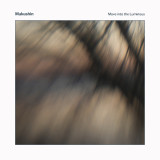
Move into the Luminous is the debut album by the trio Makushin.
Double bassist Jon Thorne (Lamb, Yorkston Thorne Khan), guitarist Peter Philipson (Jane Weaver, Fenella) and singer Nancy Elizabeth (Leaf Label, James Yorkston) lead this inspiring collective whose work explores the intersection between folk, jazz and ambient music.
The album also features contributions from Andrew Wasylyk, Raz Ullah, David A Jaycock and more.
Nancy Elizabeth is a singer and multi-instrumentalist who has released three chamber folk albums under her own name on the Leaf Label. She has also previously played with James Yorkston and recorded with the late ambient composer Susumu Yokota.
Jon Thorne is a double bassist best known as a member of the pioneering electronic band Lamb and, more recently, Yorkston Thorne Khan. He has worked with many other musicians, including Jon Hopkins, Robert Fripp and his mentor Danny Thompson, as well as releasing his own music.
Peter Philipson is a guitarist who has previously performed with Jane Weaver as her guitarist for a decade and has collaborated with her and Raz Ullah on two ambient albums under the artist name of Fenella. He has also released a number of instrumental guitar albums under his PJ Philipson guise.
Midwestern psychiatrist Suzanne Mathis' world is turned upside down when she decides to protect Mae, a fragile teenager on the run from a cult. As Suzanne’s daughter Jules begins to suspect there’s more to Mae’s story, a series of incidents – seemingly brought on by Mae’s presence - leave the family in chaos. Soon the Mathis family is fighting for survival against a strange cult while Suzanne and a local police detective try to unravel the clues of Mae’s past and sinister happenings in the town she escaped. Adapted from Daria Polatin’s best-selling book inspired by true events, DEVIL IN OHIO is a thrilling, shocking tale of demonic mayhem and mystery in the heart of small-town America.
British composer Will Bates incredible work on DEVIL IN OHIO began with a hymn for the cult, written before shooting. It expanded with songs for Bishop Briggs and Maiah Manser, with melodies for hurdy-gurdy and synth, until it became a haunting world of its own, blending score, soundtrack and diegesis. Now, together with Netflix Music, we’re excited to release DIO’s first-ever full-length soundtrack on vinyl.
Dark Red Vinyl. Lambent Material is the debut album by Eluvium , the moniker for composer Matthew Robert Cooper 's sonic experiments and explorations. First released in May of 2003, Lambent Material was immediately recognized as much for its artful simplicity as it was for its deceptive complexity - an album of melodic austerity, alien transmissions, and titanic waves of cathartic noise. Previously only available on vinyl as part of Eluvium 's Life Through Bombardment Vol. 1 box set (a 7xLP collection released in 2008 that has been sold out for well over a decade), Lambent Material - Anniversary Edition finally gets its first standalone vinyl release. Beautifully remastered for vinyl by LUPO at Loop_O Mastering, it is packaged in a full-color jacket and heavyweight inner sleeve with fully restored original artwork.