repressed !
Versalife's N.T.A. part 2 is taking us further down deep into the night! This is some of the at widest, cleanest, most absorbing electro, techno tracks we've heard in a while! Especially the b-side tracks oozes twilight suave and atmosphere with its precise electro pulse and caressing midnight sounds.
Search:computer
- A1: Revue Noire
- A2: Swinging In The Rain
- A3: La Pegre
- A4: The End Of A Love Affair (Billy In The Sky) (Billy In The Sky)
- A5: Drum Rain
- A6: Les Annees Folles
- A7: Swing Swing
- B1: The Drummer
- B10: Soul Computer
- B2: Black Musette
- B3: Tambours Battants
- B4: Negro Digital
- B5: La Nuit Mene Une Existence Obscure
- B6: Be Bop Vaudoo
- B7: The Dancer
- B8: Harlem Jungle
- B9: Tant Qu'il Y Aura Des Etoiles
For the first time Nicolas Repac's album Swing-Swing, originally out in 2004, is released on vinyl LP!
He has a reputation as a musician's musician, a talented Jack-of-all-Trades as much at ease playing the guitar alongside his old accomplice, French songwriter Arthur H, as he is when tinkering with all kinds of machines by instinct, and creating made-to-measure contexts for instrumentalists like Michel Portal. Everyone knew he had a secret garden, the song' world of a composer and performer who was difficult to categorize, a world not only lyrical but also dark and full of tender melancholy, not to mention easily surrealist (his first record of songs, La vile', which was released on the Indigo label in 1997, has a sequel in preparation in the form of a new opus, Lovni'.) But, once again,
Nicolas Repac had a surprise in store, because he has turned up where no one was expecting him: Swing Swing is a record as magnificent as it is difficult to place, with electro ramblings around jazz (its subjects and virtues, its spirit and memory), wanderings that are playful, light, fluid in gesture and crammed with ideas, discoveries and intuition, they are at once naive and instinctive (Repac is an erudite amateur, the Ferdinand Cheval of the already-established world of electronic music), and extremely elaborate in their crushed samples, hallucinatory, rhythmic whirls and sensual, dreamlike atmospheres.
Repress
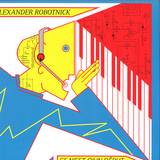
Alexander Robotnick (aka Maurizio Dami) is an Italian electronic musician. He made his debut on the Italian music scene as the founding member of Avida, a dance-cabaret band featuring Daniele Trambusti and Stefano Fuochi.In 1983 he attained international popularity with his track Problemes d'amour, published first by the Italian label Materiali Sonori and then by Sire-Wea. Problemes d'amour went on to become a cult track of the disco scene. It became quite an import hit in America's underground club scene, and sparked the mini-LP Ce N'est Qu'un Debut that same year (originally released on Materiali Sonori in 1984 (Italy). It consists of 6 captivating tracks including the hit Problemes d'amour as well as the track Dance boy dance which has appeared on other cult disco compilations.
- A1: Severed Heads - Lamborghini (Petrol 1982)
- A2: Marco Bernardi - The Light Beside The Hall
- B1: Object Blue - Even In You
- B2: N Y House'n Authroity - Apt. 2B
- C1: Computer Says No - Grab And Reform
- C2: Mount Kimbie - Southgate (Dj-Kicks)
- C3: Aleksi Perälä - Uk74R1512110
- D1: Via App - Chatter
- D2: Taz & Meeks - Obviously
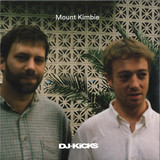
Mount Kimbie take the reigns of the DJ-Kicks series with a 23 track mix that includes one of their own new exclusives. Due for release on 28th Septem- ber, it's a snapshot of exactly what the UK duo sound like in the club right now and is accompanied by a DJ-kicks tour that takes the pair to DJ and live dates all round the world.
Alex creates with Tum Tum the soundtrack of a dreamed teen movie and sings for the lonely hearts that beat behind their screens.
The hero of this film ventures into the meanders of a digital jungle, a digital psychedelism where words come into resonance with sounds, structures deform, because behind the pop evidence of Tum Tum lies a desire deconstruction of pre-established forms.
As much influenced by the break-up songs of the Everly Brothers as by Ryuichi Sakamoto's compositions, by Kitano's films, and by Ninja Kids, Tum Tum is a map of Alex Van Pelt's influences that finds its form in an intimate patchwork.
"The simplest line is always the best," he says in the song Endless Rain that closes Tum Tum. A formula worthy of Lao-Tseu, which sums up well the poetics of the guitarist of French band Coming Soon, Alex Van Pelt: it is in a refined language that responds to the kaleidoscopic profusion of his music that Alex tells these eight romances, in search of a Way to to follow. We listen to it with pleasure, and let it guide us through the labyrinth of our mediated lives.
Repress
Machines redefined and shaped the way we make music and gave access to new sounds. Enabling the availability of music instruments to a wider spectrum of artists gave birth to many genres and sound aesthetics. The sound of Roland machines from the 80's have had a huge influence on underground music and is outstandingly beautiful. Therefore this very first Talking Machines v.a. is dedicated to the synthesizer Roland SH-101.
Ever since the early 90s, The Mover has set the standard for apocalyptic melodramatic techno and has been praised as one of the leading artists of Planet Core Productions. His distinct tone and memorable production expertise, causes one to leave the world behind. In 2018 he returns with - Undetected Act From The Gloom Chamber', an album which implies all the goodness and fears he is renowned for. Eight masterpieces carrying the authentic excitement that you would expect from the Mover in a timeless fashion. Shifting between electro beats and classic old school techno patterns, the album sets a moody tone. The release is filled with magnificent bass lines and dark-dreamy pads that leave the mind in a trance. Muscular drums and authentic synth-lines paired with the unmistakable Mover signature, makes this assembly of gems an outstanding masterpiece.
MW present two classic Minimal Wave tracks which have been on heavy rotation for years now, Computer Bank' and Like I Am, Comme Je Suis' remixed by The Floor (Veronica Vasicka & Karl O'Connor).
Five Times Of Dust was formed in Bristol, U.K. in 1981 by Mark Phillips and Rob Lawrence. Mark had answered an advert that Rob had placed in a local record shop and later that year they went on to record and release their first tape, The Dadacomputer. A standout track from that tape, Computer Bank' is a seminal, proto-techno banger'. The Floor remixed it a while ago to DJ it out and since then have been receiving many requests about where it could be purchased.
The flip side features Unovidual & Tara Cross' Like I Am Comme Je Suis'. It appeared on our first compilation entitled V/A The Lost Tapes LP, in 2006. Unovidual was a Belgian producer involved with the Micrart Group (Autumn, Linear Movement, Twilight Ritual) and Tara Cross, a long lost girl from Brooklyn' who used to play in small NYC downlown clubs alongside Madonna during the early 1980s when she was still an unknown. Unovidual and Tara collaborated on several tracks through the mail during this time as well as in the studio. Like I Am Comme Je Suis' was recorded in a studio in Ghent, Belgium in 1985.
We find both of these tracks prime examples of innovative and pioneering synth wave tracks that work on and off the dance floor. And through these mixes, The Floor aim to stay true to the artists' original intentions whilst making the songs more dance floor oriented.
Featured alongside these remixes, are two unreleased tracks. Rob Lawrence's Armoured Car' which at one point was released on a compilation CD as Robert (not to be confused with Rob Doran from Hard Corps) and Unovidual's Imponative', a beautiful minimal synth track which has remained unreleased to this day.
The Five Times of Dust / Unovidual & Tara Cross EP is pressed on standard weight royal blue clear vinyl and housed in a hand stamped disco sleeve. Limited to 600 numbered copies.
More rudeness for your pleasure from the co-founder of the Permanent Vacation kingdom, Benjamin Fröhlich: One Year after the well received first Rude Movements EP and the accompanied remixes Benjamin Fröhlich returns for another round.
The second part of the 'Rude Movements' series brings you further adventures into the world of dance music from the past and present.
It covers percussive space trance, roaring synth jams to stab-driven and flute-infused house workouts and dubby breakbeat steppers, all happily dancing under one roof.
For the thirteenth release, we are pleased to invite the Argentinian prodigy Jonas Kopp. Following the path of his recent works on Tresor, « Cosmic Control Center Ep » starts with « Cognitive Process » and « Metaprogramming » which are more introspective and abstract whereas « Vortex » is the climax, the release of energy. To conclude « Human Bio Computer » adds something tragic, the final touch to the picture. Let's start the ride
In November last year, Undo released 'Disconnect', his third album. A charming long-player that has won very good feedbacks and reviews. Now it's time to unveil the first Ep with remixes from the album. A great and variate package including reworks from friends and artists he admires as mexican Iñigo Vontier, russian Dimitri Veimar and belgium Cabaret Nocturne. There's also a new mix by Undo himself.
Lengthy and Weighty "Hunch Music" remixes by Mick Wills and DJ Fett Burger! After Hunee's celebrated debut album "Hunch Music", it's time for these two weighty remixes here... DJ Fett Burger inserts "Crossroads" into Boss Brian's computer and takes it to an extraordinary new level, Mick Wills transforms "Hiding The Moon" into a lengthy throbbing and grinding floor cracker.. BIG TIP!
DimDj has no control over his life. Machines, records and noise boxes took over years ago. This is more than confirmed by this 5-track journey from acid techno to the old-school electro and further to Kuno's dystopia, who delivers a complete acidic rework over PTN1.
All tracks produced by DimDJ.
A3 - Vocals by Trenton Chase
B1 - Remixed by Kuno
B2 - Additional synth work by Wirenightmare Music
- A1: Goneville (Feat. Max Graef)
- A2: Computer Killer
- A3: Throwback (Album Cut)
- A4: Shit Iz Real
- B1: (Forgotten Intro) 4 My Peeps
- B2: Bochum (Feat. Imyrmind)
- B3: You Can't Groove
- B4: To The Beat Interloot
- C1: Still Shining
- C2: Kilometer Disco (Feat. Max Graef)
- C3: Ødland
- D1: One For Viktor
- D2: Long Live Human (One For Sveta)
- D3: A Bit Warmer
- D4: Brother T (Greeting To Rasho)
Essen's own Glenn Astro has called his first album Throwback, and the name is at once a perfect fit and not nearly the extent of the story. On the one hand, Astro has filled the double-LP with a wealth of old-school gestures and textures—the warm whoosh of analog synths, the rattle of Rhodes tines and the sizzle of jazzy drums,all held together by the comforting glue of tape hiss and vinyl crackle. If you're used to the clean sonic lines and stylistic streamlining of so much contemporary house music, then Throwback is sure to feel less like a record you just pulled out of plastic wrap than a well-seasoned one salvaged from a flea market or unfinished basement. And yet like so many Tartelet releases—particularly the label's last two full-lengths,
Max Graef's Rivers of the Red Planet and Uffe's Radio Days—it feels fresh and keenly contemporary no matter how vintage the fabric. Rather than throw back to any one moment, he's given us a collage of styles that's quite literally timeless. Astro makes brilliant work of his influences, drawing on hip-hop, house, funk and soul in such equal measure that it's hard to argue that one impulse dominates the other. The sound certainly flirts with the dance floor, with Astro applying highpressure
deep house pads on the title cut, gliding on shimmering keys for "One For Viktor," and taking us on a vibraphone-fueled workout with "Kilometer Disco," one of a pair of cuts featuring Max Graef. But Astro obviously relishes the time he spends on the sidelines absorbing the atmosphere, or at home head-nodding to the dustiest corners of his record collection. For every house beat you hear, you'll also dip into juicy, 90's-style beat science, toasty ambience and buttery chord progressions.
Expertly paced but never hustling you along, Throwback begs to be heard as a whole but explored at your own easy pace—a record for hazy mornings-after, vibey
nights in and endless summer afternoons.
Toby Tobias has been responsible for some fine quality music over the past 10 years with labels such as Rekids, Nang, Let's Play House and Quintessentials all dropping his unique brand of raw, analogue house and techno. A DJ's DJ who always seems to pull out a lesser known gem and make it sound like a classic, Toby knows his music as well as his studio, inside out. We've been proud to deliver three EP's from him on Delusions but we all felt the time was right for a full length, especially considering that 7 years have passed since his debut LP Space Shuffle on Rekids. Toby fully embraced the scope and breadth that an LP affords a producer, holing up in his Hackney studio and losing himself in his machines. Rising Son is the result of those sessions and it's brilliant!
From the opening machine funk of The Wonder featuring vocals from Atwell we can hear that Toby is quite sure about the direction he's taken for the LP. 808 beats bring vintage electro vibes whilst Atwell's vocal hints at the golden era of Chicago house, adding a soulful touch to the rigid groove. Love Affair continues the theme of off-world utopia where the droids have a heart and soul and sing torch songs of love lost, the Moroder-esque influences bringing a retro sheen to the LP. As we continue through tracks such as Sloflava and Sending Signals we find blissful, downtempo jams which perfectly soundtrack this imagined night time world which Toby seems so happy to immerse himself and his listeners in.
I Robot follows, providing the one cover version on the LP from the Alan Parsons Project as well as being an LP defining focal point. A track which shows that when the machines are working for you, it could just be a perfect world. But Broken Computer soon shows us what can happen when things go wrong. Incidentally, this is from a genuine computer crash which Toby managed to capture using his phone. A beautiful glitch in the system which spewed out such a mournful noise and a very happy accident that would be completely impossible to create if you set out to try.
As we continue we're treated to the likes of Friday Analogue Jam, Whisper It and Weird Danger, all echoing bleeps, squelching bass notes, heavenly pads and precision beats. In some ways we get a feeling of a land that time forgot, in others something of sublime beauty and futurism. That Toby can paint pictures with his music in this way speaks volumes, knowing instinctively when to draw out a mood or feeling or flip things on their head to command your attention and beg another listen. And another.....
Continuing on from Vol 1's theme of established artists working in disguise, 'Music First Vol 2' delivers another sonic assault with this absolute rollercoaster ride of a record. The mysterious Scorpio T opens the EP with 'Neptune Rising', a squelching acid-bass boomer that can simultaneously spiritually elevate and physically devastate any dancefloor. Rounding off Side A it's followed by Scandalous Arthur's 'Acid In My Mind', a lo-fi tape-hissed jacking beast of a banger that sounds like it's genuinely been brewing in a vat of highly toxic acid for at least 25 years and guaranteed to melt your mind. On the flipside comes JaX DaX returning from Vol 1 with the low-frequency moody slo-mo electro workout 'Fucking Computer' that oozes bad attitude and booty-shaking basslines in equal abundance. Bringing the trip to a close is Kyrenic Azalee with the self-titled 'Kyrenic Azalee', an x-rated new beat tour-de-force of epic proportions that will fry minds and bodies with its relentless energy. Limited edition so don't sleep on it, not that it would let you.
- A1: Clock Catcher
- A2: Pickled!
- A3: Nose Art
- A4: A Cosmic Drama (Intro)
- A5: Zodiac Shit
- A6: Computer Face/Pure Being
- B1: And The World Laughs With You (Feat Thom Yorke)
- B2: Arkestry
- B3: Mmmhmm (Feat Thundercat)
- C1: Do The Astral Plane
- C2: Satelllliiiiiiiteee
- C3: German Haircut
- C4: Recoiled
- D1: Dance Of The Pseudo Nymph
- D2: Drips/Auntie's Harp
- D3: Table Tennis (Feat Laura Darlington)
- D4: Galaxy In Janaki
Der Ausnahmeproduzent Flying Lotus legt nach seinem vielbeachteten Debutalbum "Los Angeles" den Nachfolger vor! Auf "Cosmogramma" weitet er das Spektrum der integrierten Stile in Richtung Space-Jazz aus und lädt ein zu einem kosmischen Trip voller unendlicher Liebe und Begeisterung für Musik in all ihren Variationen.
Some clean, remixed, re-edited tracks by Amplified orchestra. Quite obscure material, essential stuff and a must have for all the italo / cosmic disco heads & CBS.nu addicts, fans of Lindstrom & Thomas, Clone, Environ, Rong music, Idjut boys... actually for everyone who is always on the search for fresh tunes, new or old!
- Data - Ja Nisam Kao Ti
- Data - Izumi
- Data - España
- Data - Damage In My Head
- Data - France
- Data - Strahovi
- Data - Ne Želim Da Tako Žive
- The Master Scratch Band - Break War (The First Version)
- The Master Scratch Band - Jailbreak (The First Version)
- The Master Scratch Band - Computer Break (The First Version)
- The Master Scratch Band - Mad Scratch
Despite its tragic breakup, Yugoslavia as a political, social and cultural phenomenon still inspires generations, especially those who were born or lived at the time of this utopian land of South Slavs. Those who didn’t enjoy the privilege are still amazed by its 1970s and ’80s music scene and the number of very modern, high quality acts that were so often ahead of their time. Two such acts were Data and The Master Scratch Band, both founded by Zoran Jevtic and Zoran Vracevic, who introduced synth-pop, breakbeat, and hip-hop music in Yugoslavia in 1984 with their releases: SP Neka Ti Se Dese Prave Stvari/Ne Zovi To Ljubavlju and miniLP Deogut (Jugoton). Our latest release, “It Was Ridiculous, It Was Amazing!” gathers their earliest unreleased material from 1981-1983, showcasing a broader range of genres – alongside synth-pop and breakbeat/hip-hop, they also experimented with industrial, EBM, minimal synth, and electro-funk!
The whole record is divided into two parts: on A side there are 7 previously unpublished songs by group DATA, and on B side there are 4 previously unreleased recordings by The Master Scratch Band.
The Data side opens with two unexpected “shocker” tracks: Ja Nisam Kao Ti” (eng. I am Not Like You) and “Izumi” (eng. “Inventions”) from 1981, where they sound like early Deutsch-Amerikanische Freundschaft with unusual vocal pan sound effects on Serbian lyrics and uncompromising synth-based sound. Equally unpredictable are the next two songs: atmospheric “España” and dusty “Damage In My Head,” where Zoran Jevtić boldly steps into the lead vocal role. But the surprises don’t end there. The next two songs, France and Strahovi (eng. “Fears”), bring a mysterious and nostalgic atmosphere, elevated by the irreplaceable sound of the modular Roland System-100M. At the end comes the greatest surprise of all: Data covers YMO-Ballet in a song called Ne Zelim Da Tako Zive (eng, I Don’t Want Them Living Like That) and puts some extra energy in rhythm without losing the original song’s sensibility. Like in the original, the lyrics are tender and yet mysterious and provocative.
The Master Scratch Band side contains the very first versions of the songs Break War, Jailbreak, and Computer Break, originally recorded in studio Druga Maca in Belgrade in 1983. These versions were not released on their mini-LP album Dégout (Jugoton, 1984), and they are actually the first ever hip-hop/Breakbeat recordings in Yugoslavia. With great enthusiasm, every sound was uniquely crafted from scratch using the finest analog gear available in the early ’80s. The two young artists, aiming for international success, chose to write their lyrics in English. The album’s final track, “Mad Scratch,” showcases their talent for creating impressive sound effects, which would be a delight for contemporary DJs and producers who specialize in sampling and scratching old-school hip-hop.
This release is truly a “100% digger’s gem” – 11 previously unreleased tracks from legendary pioneers of electronic, hip-hop, and breakbeat. A collection to discover, enjoy, play, and treasure forever!
The process of making this mini-album “anaiis & Grupo Cosmo” was truly life-altering for me. It changed my approach to making music and really brought me back to the roots of what creation is about. I went to Salvador for a month-long artist residency in February 2020 and during that time, I not only fell in love with Brasil’s culture and music, but I also wrote “Toda Cor” with the wonderful Luedji Luna. A few years later, I reached out Biel who’d co-produced “Estrela Acesa” with Sessa to see if they’d be interested in re-developing “Toda Cor” with me. They were enthusiastic and we fully reproduced the record in December, remotely. The connection between us all was electric and it felt like there was a collective enthusiasm for creating more together so I flew out to Brasil in April 2023 to continue this exploration. The beauty behind this record really lies in the experience of making it. We all stayed together in Biel’s house in Ilhabela for a week with Cabral, who co-produced the record with us and plays bass. We would go to the beach, eat communally, share stories, be around the kids, but then spend most of the days creating and jamming together. Each day we would record our songs live to tape, not a computer in the room. By the end of the week we had this album. It was refreshing to make music in this way. The music and approach really held us in that moment and gave us a chance to create freely, in a big moment of transition in our lives in a way that truly embraces imperfection, spontaneity, just very human.
There’s no direct English translation for the word “hiraeth”. In the Welsh language, it describes a form of longing for an intangible something, somewhere or someone that no longer exists. Sofie Birch and Antonina Nowacka draw on the concept to guide their second collaborative album, a suite of vulnerable, open-hearted improvisations and reflections that attempt to grasp an image of the past that’s chimeric, dissolving almost as soon as it materializes. The duo’s process follows the same distant beacon; unlike Languoria, their critically acclaimed debut, Hiraeth is, at heart, an acoustic record, informed by in-person improvisations with voices and string instruments that gesture to an era before computers, AI and DAWs. It’s just as lush, but Hiraeth is warmer and more muted than its predecessor.
Nowacka and Birch conceived the album in the wake of a slew of collaborative live concerts, spurred on by serendipitous improvisations and an interest in paring down their setup. Unsound arranged a retreat in Sokołowsko, an idyllic village nestled in the verdant hills of Southern Poland, close to the Czech border. Sokołowsko surrounds a large ruined sanatorium that’s rumored to have inspired Thomas Mann’s 1924 novel The Magic Mountain, and has long been a magnet for artists. The two took the opportunity to rethink their approach completely, arriving with just a guitar, a zither and a portable Nagra reel-to-reel machine. Recording directly to tape, they sketched out ideas with just their voices and instruments, reflecting their surroundings without being distracted or mediated by modern technology.
“We wanted to get away from screens as much as possible,” says Birch, “to bring to the world something vulnerable and honest. Without advance preparation, every day we went out into the open air, finding places to sit, during sunset or the midday sun. We discovered new tunings on our instruments, picked up a melody, and started the machine, playing over
and over till we got a take.” In the autumn, they met again in a Copenhagen studio, sparingly and carefully layering old synths and organs to add more depth without muddying the mix.
Both Nowacka and Birch sing throughout, their voices threading the acoustic instruments and tangling with each other, almost becoming one. But it’s the environment of Sokołowsko, “the birds and the light, even the wind playing against the harps,” that’s woven into the music’s lining. Affected by time spent meditating and in nature, as well as the fact that Birch was pregnant whilst recording, the album feels alive and remarkably present. Even the sound quality of the tape machine gives Hiraeth a tactile, organic quality, as Nowacka puts it, “like being in a warm bath.”
They still have the raw recordings from Sokołowsko on old reels, physical souvenirs of their time spent making music in a “habitat for intuitive songs, a little ecosystem, alive and spirited.” The outmoded gear and remote setting helped the duo disengage from the modern world for a few moments and imagine an existence that’s been lost to time and nominal progress. With digital technology receding into the background, Nowacka and Birch had space to make “intuitive connections with frequencies and people,” as Birch explains. Hiraeth is a testament not to nostalgia, but to the power of kinship.
When you notice the cheerful mystery playing with the synths, the edges of this small world start to look slightly distorted. In any era, someone is always creating mysterious music on their own. (7FO)
----------------------------
Music in DNA is an album recorded in the early 1980s in New York City by Yasuhito Ohno, a young Japanese man breaking free from the constraints of his homeland. The album is a naive burst of outsider DIY enthusiasm, inspired by the multiple avant-garde movements of the era, in music, painting and performance, as well as the native energy of 80s NYC. Ohno channeled his youthful "edge" and zeal into open-minded lo-fi musical explorations using a mere two machines: the then-new technological glories of a four-track cassette recorder and that polyphonic synthesizer masterpiece, the Roland Juno-60; on several pieces he vocalizes. These seven tracks have a zestful, innocent, anything-goes charm, free from preciousness and self-consciousness: a raw and youthful human spirit at play in a new world. Ohno was also inspired by the humanistic promise of the general technological developments of the day, including DNA research, personal computing, and early computer graphics, an example of which can be found on the cover. Ohno later returned to Japan, becoming a renowned composer/producer. In an era of jaded cynicism, Music in DNA is a welcome taste of big-hearted innocence, a revival of a raw self. Available on CD/LP/Digital, with E/J liner notes.
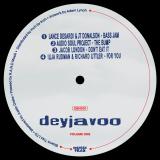
Presenting Deyjavoo Volume One - A compilation of neverheard-before tracks from four iconic artists/collaborations.
These tracks were pulled from old computers, long-lost hard drives and DAT tapes almost forgotten. A very special collection indeed. The music comes from the legendary Lance DeSardi & JT Donaldson, Audio Soul Project (Mazi), Jacob London and Ilija Rudman & Richard Littler. A reminder of the timeless magic of music and its refusal to never grow old. This project is brought to you by Bizarre Trax.
- 01: Quantum Computer
- 02: Roboman
Only 200 copies were produced, hand-numbered by Eprom.
In response to the overwhelming interest in Eprom's album "We Are The Biobots," we are releasing the single "Rebelzeit" as a separate product, which appeared as a bonus track on the DELUXE edition of the album.
A new cover has been created, and the 7-inch vinyl is green. The new material is a preview of DJ Eprom's next album...
Reissue of a lost hit by the British composer Kevan Frost, now championed and given a brand-new Dub Mix by Mark Grusane. Up for pre-order now and due late-March on our RSS series!
Kevan Frost grew up in Jos, Nigeria where he became a self-taught musician and developed a deep understanding of rhythm and melody. In the 90's, Frost was a session musician for many studios in London, one of these was unable to pay him so they gave him a few free days in the studio and the result was "Give It Up" as he explains:
"I went in and recorded all the music in a day, and the vocals and mix on day two. This was the days of only having 24 tracks available on tape so I programmed the drums, bass and keyboard parts on C-Lab which was only available on the Atari computer and the samples I made on my Akai S-1000 sampler. Full of floppy disks I went in early on day one and printed all of this on tape. I then recorded the guitar parts. Day two was me layering the lead vocals and Backing vocal parts as quick as I could before starting to mix."
However, the track fell into obscurity with no major label backing or marketing budget. A friend of Mark Grusane’s came across it in Brooklyn at the African Record Centre and it eventually ended up in Mark's hands and from there he edited the original track to a more stripped-back dub mix and began playing it out to great effect on dancefloors.
After a bit of digging, we tracked down Kevan and a fully licensed reissue is due on Rush Hour in late March 2026, including a brand new ‘Dub Mix’ from Mark Grusane.
Rob Clouth returns to Mesh with Cicada, a follow-up to his EP earlier this year and a continuation of his ever-curious approach to the outer limits of electronic music.
An artist who has spent much of his career committed to a dialogue between scientific phenomena and music built for big soundsystems, Bichillo signalled a segue into a more free-running idea of creativity - one that didn’t pander to unrealistic expectations and, essentially, brought the fun back to Rob’s production process. A theme also explored in a link-up with long-time collaborator and label boss Max Cooper on their recent joint EP 8 Billion Realities, out now on Mesh.
Cicada, he continues to expand on this universe, prioritising experimentation over concept, and arriving at some of the funnest music he’s ever made.
Like a field of insects, ‘Cicada’ opens with cross-rhythmic layers of animated glitches, soon joined by huge bass swells that gradually build into a maximal tranced out build-up and a swarm of vocal chops. ‘Core’ builds a quietly dramatic symphony of machinist built sound - a soothing polyphony of computers singing. Leaning into an off-kilter 2-step, ‘Gummy Clusters’ swirls into a hazy blur of distorted voices and acoustic rhythms. Closing things off, ‘Grefuser’ puts pedal to the metal with a high BPM storm of pointillist drums and melancholic leads.
Cicada is music that twitches and mutates, but most importantly, breathes fun into the circuitry.
‘Cicada’ lands Friday 20th March via Mesh.
Specs: Wrapped in shrink, DL code, insert with liner notes
"Music in DNA" is an album recorded in the early 1980s in New York City by Yasuhito Ohno, a young Japanese man breaking free from the constraints of his homeland. The album is a naive burst of outsider DIY enthusiasm, inspired by the multiple avant-garde movements of the era, in music, painting and performance, as well as the native energy of 80s NYC. Ohno channeled his youthful “edge” and zeal into open-minded lo-fi musical explorations using a mere two machines: the then-new technological glories of a four-track cassette recorder and that polyphonic synthesizer masterpiece, the Roland Juno-60; on several pieces he vocalizes. These seven tracks have a zestful, innocent, anything-goes charm, free from preciousness and self-consciousness: a raw and youthful human spirit at play in a new world. Ohno was also inspired by the humanistic promise of the general technological developments of the day, including DNA research, personal computing, and early computer graphics, an example of which can be found on the cover. Ohno later returned to Japan, becoming a renowned composer/producer. In an era of jaded cynicism, "Music in DNA" is a welcome taste of big-hearted innocence, a revival of a raw self. Available on CD/LP/Digital, with E/J liner notes.
Nach ihrer gemeinsamen Interpretation von I See A Darkness mit Perfume Genius kündigt Anna Calvi die neue EP Is This All There Is? an, die am 20. März erscheint. Die vier Songs versammeln Kollaborationen mit Perfume Genius, Iggy Pop, Laurie Anderson und Matt Berninger.
Eröffnet wird die EP von God’s Lonely Man, in dem Calvi Iggy Pop die Stimme eines zerstörerischen inneren Monologs überlässt. Der Song ist von nervöser Energie getragen: kantige Gitarren, antreibende Drums, eine direkte Konfrontation mit emotionaler Stagnation. Pop verkörpert dabei genau jene rohe Präsenz, die Calvi für die Erzählung suchte.
Seht und hört "God´s Lonely Man" HIER.
Is This All There Is? bildet den ersten Teil einer geplanten Trilogie, die Identität als etwas Veränderliches begreift, geformt durch Nähe, Liebe und biografische Brüche. Ausgangspunkt ist Calvis eigene Erfahrung des Mutterwerdens, die ihren Blick auf Sicherheit, Verantwortung und Möglichkeiten verschoben hat. Die EP kreist um grundlegende Fragen moderner Existenz: Wie lässt sich Intimität neu denken? Was bedeutet es, sich wirklich verbunden zu fühlen? Und wann fühlt man sich wach?
Neben dem bereits veröffentlichten I See A Darkness interpretiert Calvi gemeinsam mit Laurie Anderson Kraftwerks Computer Love neu. Mit Andersons Stimme im Zentrum und choralen Arrangements entsteht ein Stück über digitale Nähe und emotionale Distanz. In ihrer Gesamtheit wirkt die EP wie ein zusammenhängender filmischer Bogen – vier Songs, vier Perspektiven, eine fortlaufende Erzählung.
Is This All There Is? versteht Kollaboration nicht als Zusatz, sondern als Strukturprinzip: Die Stimmen der Beteiligten werden zu Figuren innerhalb eines gemeinsamen Klangraums, in dem Fragen offen bleiben dürfen.
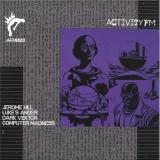
Jerome Hill, Lukes Anger, Dark Vektor and Computer Madness deliver a no-nonsense 12 Inch strike between Electro, Detroit pressure and machine funk. Punchy drums, icy synth cuts, raw momentum, built for DJs, built for floors. Four producers, four angles, one shared language of body-ready electronics, driven by Detroit energy and sharp-edged Electro.
2026 REPRESS
Pure, Distilled Dub. Upholding Jamaica's Legacy As Well As Germany's Unequivocally Influential Dub Techno Spirit, Moonshine Recordings Proudly Welcomes Their Next Addition To The Roster. On The Controls For The 9th Full-length Album Release, A True-to-the-roots, All-analogue Musician: Another Channel. Having Put Himself On The Map With Releases On Soukah's Blacksoil Records, Bristol's Transient Audio As Well As On Australian Imprint Modern Hypnosis, It's Now Time For The Album Release, We've All Been Waiting For. No Computer Involved As Impeccable Arrangements And Analogue Reverberations Unfold. Live And Direct In The Original Dub Mixing Fashion, The Augsburg-based Artist Uniquely Transports The Sonic Characteristics Of Rhythm & Sound Into The Present Time.
Subtle Vinyl Crackles Gently Introducing Meditative Beats, 'run Dub' Sets The Pace. Keen Listeners Find Themselves Embedded In Lively Echoes And Reverbs, Left To Bask In Smooth, Sonic Contemplation. Engineered To Soothe The Soul, Timeless Foundation Sound. Intensified Groove Meets Low-frequency Pressure In 'amir Dub' Among Haunting Melodica Fragments. '(yes!) Badness' Unsheathes Its Off-kilter Swing, Vocal And Foley Samples Musing In The Distance - Further Showcasing Another Channel's Technical Prowess. Heavy Chord Stabs And Delicate Overdrive Counterpoint The Immense Scope Of Conjured Space In 'ael Na Dub', Concluding A Beautiful A-side.
Lush Chords Lure Us To The Flip-side - 'solid' Kicks Off With A Staccato Bass-line In The Midst Of Lavish White Noise Surges And Minimal Drums. Rooted In Endless Feedback Trails, Steadily Kept In Check. Previously Teased, The Mighty 'ethiopian Dub' Steps Through In Full Glory, Carried By Militant Drum Motion And Forceful Low-end. On A More Spacious Excursion, 'uranus' Takes A Brightly Lit Stroll Through The Analogue Dub Universe, Led On By Another Channel's Signature Groove Propulsion. Pointing Back Towards A-side, Prolific Dub Proponent Babe Roots Presents His Musical Qualities In A Monumental Remix Of 'run'.
The latest in Field Records' run of essential vinyl pressings revisits Stephen Hitchell's 2009 masterpiece under his Variant alias, The Setting Sun. As part of Echospace and also celebrated for his productions as Intrusion and Soultek, Hitchell is considered a leading light in dub techno, with the versatility in his sound to range from rhythmic, physical pulses to purely tonal, abyssal drone. His work as Variant, which debuted with The Setting Sun, capitalises on this scope to deliver a compelling ambient-with-teeth set richly deserving of a proper vinyl pressing.
The Setting Sun first emerged on Echospace as a download-only release. Hitchell was at pains to map out the tools that went into the sound on the album — field recordings of storms in Berlin, Germany and train rides in Narita, Japan, outboard synths and samplers. Crucially, he declared no computers were used, and it shows. When The Setting Sun was recorded, in-the-box production was largely dominating electronic music and the technology had yet to replicate the warmth and character of analogue equipment. Hitchell's looming chords come baked with harmonic overtones, surface noise becomes another essential layer and fragments of distortion add to the narrative of these glacial, monumental pieces.
Hitchell threads his dub techno tendencies in subtle ways, from the kick pattering underneath 'As Time Stood Still' to the quintessential metallic delay ripples that define 'A Silent Storm'. 'Someplace Else' has a defined, albeit delicate, rhythm section guiding its lighter shades of pads and chords. However, drums are never a dominant aspect of the music, simply another layer in an intentionally coagulated whole. At times, flickering tones hint at space where percussion once stood, since muted to leave the wet signal setting a new course for the sound, somewhere far beyond drum duties. The hushed ceremony of tracks like 'Adrift' are the perfect scenario in which to absorb these microfibres of detail, where the genius of Hitchell can truly be savoured.
In line with the limitations of record pressing and Hitchell's proclivity for long-form tracks, 'The Setting Sun' is reserved for the digital edition of this reissue. It's a logical move, as the sound palette widens to encompass tangible, organic instrumentation evolving over the best part of half an hour. The presence of piano keys feels stark in the Variant sound world, but Hitchell ably folds these coded elements into his process bathed in the same curious luminosity that lingers around all his work. Evolving at a painstaking pace, the plaintive humanity in the cascading keys and plucked guitar strings renders one of the most personal expressions in Hitchell's considerable canon — a unique piece that holds its own space comfortably, while also adding to the overall weight of The Setting Sun as a profound benchmark in a stellar discography.
Green Sleeve 2026 Repress
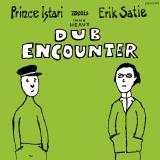
The earliest musical memories of young Prince Istari are of his mother beautifying the home with her piano playing. She would repeatedly play the tranquil pieces of Erik Satie. Skipping school and sitting in the sun, young Prince would listen to these catchy, calm compositions.
In the first week of 2024, the older Prince Istari rediscovered himself and found a box containing his mother's old sheet music. He transferred them to his computer and began spinning dub versions from them. It became a tapestry. As his mother used to say: "To weave a net, one must first spin." The form of the pieces dictated the direction each would take. The heavy dub transforms here into a light weightiness until it dissolves into a pure piano piece accompanied by a synthesizer. However, the last piece is much older, from the time when Prince was still known as Istari Lasterfahrer. The ending includes a distorted recording of Huberta, Prince's mother, playing a Gnossienne by Satie. At the end, she turns the sheet music, and the record can be turned back to the beginning.
In the essence of its material, this record rejects the Loudness War. The originality of the compositions guided the dub within their tracks, thereby imparting to each a form descriptive of its essence.
- 1: Dreamt Person V3
- 2: Everything About You Is Special
- 3: Slightly Bent Fork Tong V2
- 4: Magnificent Stumble V2
- 5: Decembers
- 6: Can't Vote For Yourself V1
- 1: You And Shayna V
- 2: Goose And Gary V
- 3: Anxattack Boss Level19 V
- 4: She Married A Chess Computer In The End
- 5: Health Card10
- 6: Paganism Ratchets
- 1: Everything About You Is Ambient
- 2: You And Shayna Slow Funk V
- 3: Your Bounce V1
- 4: Magnificent Stumble V1
- 5: Can't Vote For Yourself Video Version
- 6: Goose And Gary V1
- 7: Slightly Bent Fork Tong V1
- 8: You And Shayna Video Version
- 9: Terrazen 1012Nc
- 10: Resting Tongue
The tenth anniversary edition of Venetian Snares' Traditional Synthesizer Music adds ten more tracks and alternative versions previously available only on a limited edition compact disc from the artist's Bandcamp.Traditional Synthesizer Music is a collection of songs created and performed live exclusively on the modular synthesizer by Aaron Funk. Each sound contained within was created purely with the modular synthesizer. No overdubbing or editing techniques were utilized in the recordings on Traditional Synthesizer Music. Each song was approached from the ground up and dismantled upon the completion of its recording. The goal was to develop songs with interchangeable structures and substructures, yet musically pleasing motifs. Many techniques were incorporated to "humanize" or vary the rhythmic results within these sub structures. An exercise in constructing surprises, patches interrupting each other to create unforeseen progressions. Multiple takes were recorded for each song resulting in vastly different versions of each piece, a number of which are released for the first time on vinyl and digital for this updated version of the album. BIO Aaron Funk, mainly known artistically as Venetian Snares, is a Canadian electronic musician based in Winnipeg, Manitoba who's been working since the mid nineties. He is widely known for innovating and popularising the breakcore genre being something of its breakout star. His signature style features complex drums and unusual time signatures and a knack for making ultra-vivid music that takes listeners into unusual places, from the aggressive and extreme, to the surreal, comic and sometimes plain beautiful. His musical explorations extend out in many different ways, from the complex Hungarian, classical-inspired Rossz Csillag Alatt Született, to acid explorations as Last Step, to innovations with modular synths on Traditional Synthesiser Music. As a collaborator, he's made music using intimate recordings as musical elements with the artist Hecate as Nymphomatriarch, as Poemss with Joanne Pollock, where they both sing over strange delicate pop. He's recorded an album of rich, edited improvisations with producer and guitarist Daniel Lanois and he's also part of the sometime duo Speed Dealer Moms with John Frusciante. Most recently he features on Rosalia's album Lux on the song Reliquia, providing drum programming and production input.

Faitiche welcomes a new artist: Christina Kubisch belongs to the first generation of sound artists. Her practice ranges from performances, concerts, to works with video and visual art, but she is best known for her sound installations and electro-acoustic compositions.
TUNING brings together three pieces by Christina Kubisch from different periods of her oeuvre. What they have in common is the way they transform sound phenomena originally considered “non-music” into compositions.
Jan Jelinek: Gaming in Silence (2024) is the most recent work on this compilation. It’s a collage of electromagnetic waves, voice, and abstract sound textures. How did this combination come about?
Christina Kubisch: Gaming was commissioned as a fixed-media composition for the Sound Dome at ZKM Karlsruhe. Since Resonances: The Electromagnetic Bodies Project (2005), I’ve been making recordings in the old and new server rooms at the ZKM and in their permanent collection of historical computer games. Computer games like Asteroids (Atari, 1979) and Poly-Play (VEB Polytechnik, 1986) have specially generated analogue electromagnetic waves that interest me in particular on account of their density, rhythms and textures. I originally studied painting and to me the work of composition often feels like painting an abstract picture. I alter my source material as little as possible, layering and overlapping until a distinctive sound space emerges. In recent pieces, I sometimes combine magnetic waves with field recordings or live instruments. In Gaming it’s my recording of a Chinese song about silence.
JJ: Two persons walking through a street in Madrid (2004) is a recording from your Electrical Walks series. Here we should give a brief explanation of one of your best known works: participants in an Electrical Walk move through public spaces wearing prepared headphones that allow them to receive electromagnetic waves from their surroundings – for example from security gates, ATMs or neon signs. They discover a situation that normally is inaudible to the human ear and they can actively shape it by choreographing their movements. I really admire this piece, not least because there’s no clear dividing line between participants and artist. What exactly do we hear in Two persons walking through a street in Madrid (2004)?
CK: With this early work, I wanted to understand what is heard by people participating in an Electrical Walk in the same place but moving in different ways. The Spanish composer Miguel Alvarez-Fernàndez and I set off from opposite ends of a major shopping street in Madrid, met briefly in the middle, and then continued to the end. We both recorded our walks and I then layered them over one another. You might call it a work of electromagnetic conceptualism.
JJ: Diapason (2009 version) is an installation that plays a composition based on sounds from fifteen tuning forks. This setting is audible in the recording: there’s no dramatic arc, no beginning or end – instead, it recalls a piece of aleatoric music focussing on the decay phase. How did you come to make this work and could you tell us something about your compositional method?
CK: Diapason is part of a series of three pieces that deal with “non-instruments” or instruments that no longer exist: electrical mine bells used to send signals to the workers underground; a historical glass harmonica originally used for medicinal purposes; and tuning forks that were used by doctors to test people’s hearing. All of these methods are no longer in use. The sound of the tuning forks, audible only if held close to the ear, was recorded at the electronic studio at Berlin’s Technical University in such a way that even their decay remained audible. The frequencies range between 64 and 2048 Hertz and they can be adjusted at micro-intervals using small movable weights. The sequence and the duration of the pauses are dictated by chance and were not defined in advance. The 2009 version was created for an installation in the historic Holy Cross Church (Korskirken) in Bergen. Visitors could enter and leave the space at any time, deciding for themselves where and for how long they wished to listen to the sounds played back over an array of small loudspeakers placed on the floor of the apse.
Credits:
Gaming in Silence: commission of the ZKM/Hertzlab, Karlsruhe 2023
elektronic sound processing: Tom Thiel
sound engineering and mixing: Eckehard Güther
Diapason: produced at Elektronisches Studio of TU Berlin
rearrangement: Eckehard Güther
Christina Kubisch, published by Edition Christina Kubisch / Random Musick Publishing
image front: Transitionen 2021 by C. Kubisch, sonagrams of electronic waves (courtesy: Galerie Mazzoli Berlin)
image back: Diapason Tuning Fork, property of Folkmar Hein, Photo: Archiv Christina Kubisch
design by Tim Tetzner
mastered by Giuseppe Ielasi
Thanks to Miguel Álvarez-Fernández, Folkmar Hein, Dominik Kautz and Mario Mazzoli
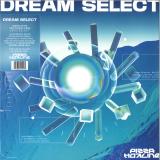
Dream Select is the sequel to Pizza Hotline’s 2022 genre-defining album Level Select, continuing his signature blend of nostalgic, video game-inspired drum & bass with a melodic and uplifting edge.
The album continues the UK based producer's journey into the fusion of Y2K video game aesthetics with modern breakbeat music. As the name suggests, DREAM SELECT is a collection of dreamy, hypnotic, and emotionally-charged tracks — built to feel like they’re from a forgotten 2000s video game that never existed. It draws heavily on the sound and spirit of the PS1, PS2, Dreamcast, and N64 eras and games such as Wipeout and Ape Escape.
Pizza Hotline wrote and produced the album throughout 2024 in his North London studio, with just a computer and a few 90s outboard synths and samplers. The sound relies on obscure and dated 90s sample CDs, as well as hunting through ROMplers and digital synths of the era to find crystalline, artificial, and precise sounds that have come to define Pizza hotline's sound. The result is a focused, minimalistic, and deeply nostalgic record — one that balances texture, emotion, and groove in equal measure.