As a long-time admirer of his work, R&S/Apollo boss Renaat has signed up Italian craftsman Nuel for a stunning concept album that finds the artist becoming "my own imaginary band" after ten years of personal growth and exploration. Nuel has been revered in underground techno circles for many years. He is a meticulous sonic sculptor who has made some of the most meditative and hypnotic electronic grooves of the last decade on labels like Semantica, Kontra-Musik and Sublunar. He also put out cult classic and highly sought after album 'Trance Mutation', which found him playing all the sounds himself on a wide array of instruments. 'Fantasia' is physical, dance-able music but crafted from unfamiliar sound sources that make it as suited to a campfire gathering as an experimental club setting. It's expertly assembled and utterly unique.
Suche:concept 2
With this collection of deeply personal tracks, I wanted to reconnect to my inner emotions and to my love of melody, showing my most introspective and passionate side. Locking myself away in my studio, surrounded by vintage analog machines and acoustic instruments, my desire was to create a late night journey of contemplative experiences in music.
Drifting away from the harder, dancefloor oriented sound, this concept album reveals a thoughtful observation on the state of our world today and on these times of turmoil and uncertainty, ending with a positive message of hope and peacefulness".
On The Corner Records is delighted to announce the release of Dialectic Soul, the debut album from one of Cape Town's most cuttingedge, visionary artists and musicians, the drummer Asher Gamedze. This is Jazz at its most spiritual, most progressive and most appealing form. As Asher himself says: Dialectic Soul is about motion and a refusal to remain static or stay still. It's the commitment to be continually moving'. Recorded live over two days at the Sound and Motion Studios in Cape Town with renowned musicians (Thembinkosi Mavimbela (bass), Buddy Wells (tenor sax), Robin Fassie-Kock (trumpet) Nono Nkoane (voc)), Dialectic Soul is breathtaking in its musical vitality and expression of soul seeking truth. By incorporating the concept of the Total Art for this project, it fits perfectly within On The Corner's aesthetic of music, art and vision for creative innovation. Label art director Victoria Topping created the sleeve design working with Asher's drawings and concept.
Rose Colour Vinyl[19,96 €]
Repress
MARA is the debutalbum of Munich-based jazz group FAZER. The young musicians combine African and Latin rhythms with dubby basslines and melancholic melodies. The unusual lineup with two drummers (Simon Popp, Sebastian Wolfgruber), bass (Martin Brugger), guitar (Paul Brändle) and trumpet (Matthias Lindermayr) leaves an open space for unfettered improvisation. Through the concept of repetition and finely measured dynamics, Fazer create a drawing energy that can be felt directly at their live shows and has been captured perfecty on this record.
The globe-trotting Robert Millis returns to Helen Scarsdale for this beautifully fragile album of dissolved glass rendered as a collage of recontextualized minimalism. To astute listeners, Millis should be a household name due to his work in the unpredictably diverse Climax Golden Twins as well as his impeccable curations for Sublime Frequencies (collections include the Deben Bhattacharya: Men and Music on the Desert Road and Indian Talking Machine books). Hie previous solo work include Relief (released here on The Helen Scarsdale Agency in 2013) and The Lonesome High for the Sun City Girls’ Abduction Records in 2016. His scholarship into the hidden corners of music across the world has also earned him Guggenheim and Fulbright fellowships.
Related Ephemera is an album composed mostly from the hiss, the crackle, the surface noise of 78rpm shellacs and wax cylinders. “Horrifying,” Millis explains “is the concept to record collectors that vinyl degrades and can be easily damaged. however, initially records were considered ephemeral, especially 78rpm records. They were novelties. Fleeting. Entertainment.” Millis intends for the album to be a feedback loop whereby the patina of handling, playing, living with the record will circle back to the original source material. Furthering that metaphor, Millis amplifies and dilates feedback tones generated from his collection of vintage gramophones.
That said, Millis does cite the intrusion of exactly one field recording, a broken toy, and a few notes from a cello. But the construction of these rarified tones, crispy textures, ghostly rattles, and fluid resonance that ripples through all of Related Ephemera has its origins in the tactile nature of the vinyl medium. It’s hardly the stuff of sentimental nostalgia though. Related Ephemera is more an act of time travel, slipping backwards and forwards with the scratch of a needle (Watch out! What pre-recorded needle jump sound is not your turntable going haywire!). The emotional core to the album is that of a resigned melancholy, almost Bergman-esque in its starkness but not without a brief moment of dark humor.
Here is an album that aligns itself aesthetically with Nurse With Wound’s Soliloquy For Lilith, Philip Jeck’s more languid collages, and even some of Harry Bertoia’s sculptural atmospherics.
The vinyl was mastered and cut by Helmut Ehler at D&M Berlin, whose expertise was necessary given that part of the original compositions from Millis’ reworked surface noise were exceedingly problematic to cut. The D&M cut does temper the composition into a mysterious, diaphanous cloud; where the digital-only mastering provides a cascade of insects gnawing within your inner ear. Two facets. One piece of music.
Kenton Slash Demon return to Tartelet Records with Zstring + remixes by Urulu and Kasper Marott + 12' comes in vintage Tartelet sleeves circa 2009-2010. Limited Edition 400 copies. It's been ten years since Kenton Slash Demon landed on Tartelet with their debut EP Khattabi followed by the much-celebrated The Schwarzschild Trilogy singles - Sun, Matter and Daemon all released 2009-2011.Ten years have passed since our first release on Tartelet and with this record it feels like we've gone full circle. It's a beautiful thing.'Zstring marks their return to Tartelet - but it's also a precursor for things to come within the next year. With talks of a full-length album, the KSD project is now being given the attention it deserves.
Kenton Slash Demon have always had an affinity for uplifting melancholic tunes - and Zstring cements their ability to create just that. The track oozes with dance-floor euphoria, offering up a distorted arpeggio bassline, lush pads and layered melodies, all built around a tight and ever- changing groove. There are clear references to Italo disco, early techno and trance, but it's hard to pin down the exact style - if that even matters.On remix duties, man of the moment and label collaborator, Urulu, delivers a fresh take in his signature early 90s style, while local hero and close friend Kasper Marott of Monkeytown fame comes through with an obscure melodic techno workout of the finest sorts.
To further advance the concept of 'full circle,' the 12' comes in vintage Tartelet sleeves circa 2009-2010, salvaged from three different releases - which have been in storage since being produced.Zstring will be available April 12 th 2019 on vinyl and April 26th on all digital platforms.
Repressed in 2023, limited!
Hull/Leeds based five-piece bdrmm release their much anticipated debut Bedroom on July 3, via Sonic Cathedral. The 10-track album was recorded late last year at The Nave studio in Leeds by Alex Greaves (Working Mens Club, Bo Ningen) and mastered in Brooklyn by Heba Kadry (Slowdive, Beach House). It's a hugely accomplished debut and a real step up both sonically and lyrically from their early singles, which were rounded up on last year's If Not, When? EP. Musically, there are nods to The Cure's Disintegration, Deerhunter and DIIV, while the band reference RIDE and Radiohead. There are also echoes of krautrock and post-punk, from The Chameleons to Protomartyr, plus the proto shoegaze of the Pale Saints' The Comforts Of Madness, not least in the cross fading of some tracks, meaning the album is an almost seamless listen. As a result, Bedroom becomes an unexpected and unintentional concept album, running through the different stages of a break-up set against the backdrop of the ups and downs of your early twenties. "The subject matter spans mental health, alcohol abuse, unplanned pregnancy, drugs_ basically every cliché topic that you could think of," reveals frontman Ryan Smith. "But that doesn't mean they ever stop being relevant. It's a fucker growing up, but I'm lucky enough to have been able to project my feelings in the form of this band, surrounded by four of the best people I've ever met." And that band name, in case it needs explaining, is pronounced the same way as the album title. "I never thought I'd get to the stage where I would have to explain it so much," says Ryan. "We have been pronounced as Boredom, Bdum and my old boss thought we were a ska band called Bad Riddim. We're all sarcastic cunts, so Bedroom spelt correctly seemed like the perfect title." He's right. The perfect title for the perfect debut album.
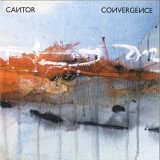
After releasing on Correspondant, Traffico Music and Mortordiscs, the new Cantor EP ‘Convergence’ is published by his own label Underground Pacific. Convergence is an emblematic rendering of Cantor’s attitude in sonic form – a sampling from his consciousness.
Pared down to four arresting tracks, influenced by new wave and post punk, including a remix by the legendary Alexander Robotnick, Convergence presents auditory concepts through which to explore the fundamentals of Cantor’s music: distortions, psychedelia, romanticism and sonic cheerfulness.
The vinyl edition is carefully tended featuring a unique contribution of the Italian artist Fabio Baggio (artbajo).
Introducing new sounds into the continuing MANHIGH project with Azteka Tekno, emerging Moscow producer Ober Dada finds rare power with his refined combinations of EBM and techno. Fusing concepts from Dadaist, Futurist, and Suprematist art with vocal guests from the Krasnodar Opera on ‘Tomorrow No’ and ‘Erdefalt’, the sophistication of his vision is immediately apparent in the arrangements and structures. With lyrics sourced from World War I-era apocalyptic poetry and a forthcoming opera from the artist, these two efforts show uncommon complexity in their running times, with layers of vocals and melodies trading off in sections with punishing rhythms that move between lashing breakbeats and straighter 4/4 sections. The comparably straightforward title track prominently features the producer’s own snarling vocal refrain, repeated through heavy distortion over pounding kicks and wayward electronics, while a contrasting melodic sequence enters from the breakdown for needed relief. Again featuring Ober Dada’s voice, ‘Hey’ foregrounds its wandering keyboard line for a comparatively restrained but still intense study on the styles found across the record.
Lascelle 'Lascelles' Gordon - the driving force behind Vibration Black Finger – astonishes us yet again with a magnificent second album. Once more his inspiration is drawn from the obscure spiritual jazz collectives of the 1970s where he employs a vast array of like-minded collaborators to create a listening experience infused with an ever-present undercurrent of personal expression and cultural empowerment that's as enriched with ideas as it is progressive in its form.
Having earned his chops as founding member of the Brand New Heavies, Campag Velocet and Heliocentric World, Lascelle's latest album Can You See What I'm Trying to Say bursts with energy and vivid contrasts, flowing effortlessly between beat-laden grooves, oscillating improvisations, soulful recitations, audio verité and moody atmospherics. The album drops like a post-hip-hop reimagining of foundational genres, with a prayer to the future.
''Can You See What I'm Trying to Say' is a quote from Marion Brown, the great alto saxophonist' explains Gordon. 'The album was put together over the last three years, not in the conventional way of going into the recording studio with musicians, but starting from ideas I had on various formats (cassettes, mini disc, DATs & reel to reel). I also used field recordings. I did a lot of home recording with long time musical friends Ben Cowen & Diana Gutkind, some of them going back 20 years. The voices of my nieces (heard on Law of the Universe) were recorded 25 years ago. 'Only in a Dream' and 'Empty Streets' are the only songs that were recorded live in the studio.'
'I was blown away by the New Life Trio 'Empty Streets' (from 1978) and was fascinated by the vocals' continues Lascelles. 'I always thought it would be great to cover this tune'. Such is the power of this song, it's used to open the album, with vocalist Ebony Rose turning in a thoroughly haunting vocal performance. While not a concept album as such, Lascelles has nonetheless conceived and presented Can You See What I'm Trying to Say to be heard as a complete listening experience, with each track blending into the next, resulting in a seamless expression of music.
Following 'Empty Streets', some instrumental interludes segue into a dimensional drift of beats, space synths, horns and electronics; there's a vocal reprise of 'Acting For Liberation', sung with gusto by Maggie Nichols, and then there's the album's momentous finale, 'Only In A Dream', which takes off as an ominous drone before a delicious bassline from the late Ken Kambayashi transforms it into an intense, soaring epic which finally descends onto another world.
In a career spanning several decades, Lascelle Gordon remains an omnivorous musical force, whether as DJ, collaborator or radio broadcaster. As amply demonstrated on Can You See What I'm Trying to Say, he refuses to rest on his laurels and continues to impress with music that is as rich, vital and contemporary as anything he's done before, covering an incredible amount of musical ground in the process.
The premise for Quindi Records is simple – to represent music with a universality at its core.
Without adhering to specific genre tropes, the releases are intended to have a meaning and purpose in all kinds of situations – a social soundtrack as much as a stimulating experience,
feeding emotions and the psyche with a sentimental palette of sounds. Lovers’ music, loners’ music, music for friends and family alike.
Woo makes for a perfect choice to meet this loose concept head-on – the music of Clive and Mark Ives straddles disparate worlds and finds its own peculiar balance. On one hand it’s delicate synthesizer music with a minimalist bent, while on the other their joyous, twinkling harmonies have an immediacy that speaks to the soul. You can detect privacy in their craft – the brothers originally recorded their music in relative isolation in London in the 70s, 80s and early 90s. It’s only in recent years their sublime work has enjoyed a wider audience through an extensive run of reissues.
Arcturian Corridor ? presents a rare, previously unreleased piece of music from Woo – the expansive suite of the title track that unfurls across five parts. It’s an enchanting listen that shows a new breadth and depth to the duo – detailed drum programming and a broader palette of synth tones cascading in elegant unison. The name refers to Arcturus, the fourth brighteststar in the night sky. As Woo themselves explain, “The Arcturian Corridor is said to be a channel of light that brings unconditional love and wisdom from Arcturus to Earth.”
In addition to the 20-minute A-side piece, Woo also presents a new version of “Love On Other Planets”, a standout piece from their 1990 album ?Into The Heart of Love? . The fragile subtlety of the original has been embellished here with rich new passages that turn it into a kind of electronica epic, although still marked out with the sensitivity one expects from a Woo record.
Two remixes complete the set, both furthering Quindi’s modus operandi as a genre-agnostic force for cosmically charged music. Dublin’s Wah Wah Wino collective present their Wino Wagon manifestation for a tastefully strange house version of the fifth part of “Arcturian Corridor” that channels the freakiness of Pepe Bradock, the robo-funk of Metro Area and a soupcon of pop nous. British duo Ultramarine maintain the stylistic ambiguity as they channel decades of expressive experimentation between live band dynamics and machine soul on their version of the title track’s second chapter.
‘Reality Tunnels’ is a concept that was originally introduced by Robert Anton Wilson in his 1983 book ‘Prometheus Rising’. In essence, the concept of a reality tunnel relates to an idea on how we create our own perspective – the subjective filter that we each apply to the world around us; the things we perceive and what our consciousness deems worthy of attention, IE what we see and hear is entirely relative to what we do not.
At points angular and uncompromising with levels in the red, frequencies pushed out and EQ curves stretched into strange new shapes, Pinch mixes both low and hi fi on this boldly distinct sonic statement. It sees him flexing years of production skills – but unconventionally so – knowing well that safe predictability and rounded polish don’t get the most interesting results.
Dark trip hop Bristolia segues into blistering jungle on album opener ‘Entangled Particles’, before planet-hopping onto the spiky insidious grimestep of ‘All Man Got’, featuring the rugged rasp of OG warhorse Trim.
Beginning a triptych of future techno, ‘Accelerated Culture’ offers the album’s most relatively straightforward moment, albeit one of scorching, anthemic dancefloor heat. Delving deeper into the vortex is the synapse sparking wobbler ‘Returnity’, before ‘Finding Space’ reaches to the cosmos’ far-flung, glowing outlands.
Back to an urban reality is ‘Party’, where a subtly menacing sense of dread is ignited by Killa P’s incremental flow, which ramps-up and pairs-back the intensity in unexpected ways. Still moving freely between different realities, ‘Back To Beyond’ is beautiful gloaming ambience, executed with equal fine-tuned grace as the genre’s masters.
Jamaican vocalist Inezi lends sweet tones to the slow burning, roots-meets-modern-bass spiritual ‘Change Is A Must’, and on ‘Non-Terrestrial Forms’ an atmospheric, misty steppers intro segues stealthily into fiercely dystopian, amen-fuelled jungle tekno; marking one of several surprise attacks on the album, where a subtle-slight-of hand shoots the intensity level dynamically up.Closing as it begins, the album is bookended by a piece that recalls the dark, intricate soundscapes of Massive Attack’s ‘Mezzanine’ and Tricky’s ‘Maxinquaye’ – found here in ‘The Last One’s scorched, smoky rocker.
Hit the vinyl double pack for an exclusive and quite unique sounding 120bpm glitchy techno roller featuring man like Trim once again and live cello recordings.
‘Reality Tunnels’ is a concept that was originally introduced by Robert Anton Wilson in his 1983 book ‘Prometheus Rising’. In essence, the concept of a reality tunnel relates to an idea on how we create our own perspective – the subjective filter that we each apply to the world around us; the things we perceive and what our consciousness deems worthy of attention, IE what we see and hear is entirely relative to what we do not.
At points angular and uncompromising with levels in the red, frequencies pushed out and EQ curves stretched into strange new shapes, Pinch mixes both low and hi fi on this boldly distinct sonic statement. It sees him flexing years of production skills – but unconventionally so – knowing well that safe predictability and rounded polish don’t get the most interesting results.
Dark trip hop Bristolia segues into blistering jungle on album opener ‘Entangled Particles’, before planet-hopping onto the spiky insidious grimestep of ‘All Man Got’, featuring the rugged rasp of OG warhorse Trim.
Beginning a triptych of future techno, ‘Accelerated Culture’ offers the album’s most relatively straightforward moment, albeit one of scorching, anthemic dancefloor heat. Delving deeper into the vortex is the synapse sparking wobbler ‘Returnity’, before ‘Finding Space’ reaches to the cosmos’ far-flung, glowing outlands.
Back to an urban reality is ‘Party’, where a subtly menacing sense of dread is ignited by Killa P’s incremental flow, which ramps-up and pairs-back the intensity in unexpected ways. Still moving freely between different realities, ‘Back To Beyond’ is beautiful gloaming ambience, executed with equal fine-tuned grace as the genre’s masters.
Jamaican vocalist Inezi lends sweet tones to the slow burning, roots-meets-modern-bass spiritual ‘Change Is A Must’, and on ‘Non-Terrestrial Forms’ an atmospheric, misty steppers intro segues stealthily into fiercely dystopian, amen-fuelled jungle tekno; marking one of several surprise attacks on the album, where a subtle-slight-of hand shoots the intensity level dynamically up.Closing as it begins, the album is bookended by a piece that recalls the dark, intricate soundscapes of Massive Attack’s ‘Mezzanine’ and Tricky’s ‘Maxinquaye’ – found here in ‘The Last One’s scorched, smoky rocker.
Hit the vinyl double pack for an exclusive and quite unique sounding 120bpm glitchy techno roller featuring man like Trim once again and live cello recordings.
- A1: Mind Up (Feat Andrew Ashong)
- A2: Future (Are We Living!?) (Are We Living!?)
- A3: String Stingalings
- B1: Us (Feat Afua)
- B2: Check (Feat El Train)
- B3: Choppa Fiesta
- C1: Give Me Some Of That (Feat Afua)
- C2: Good Ol' Love (Feat Sol Goodman)
- C3: Whole Again Hooligan (Feat Sol Goodman)
- D1: Glide (Feat Emeson)
- D2: Take Me To The Gutter (Feat Sol Goodman)
- D3: I Remember
Producer and multi-instrumentalist J-Felix returns with his
future blend of boogie, p-funk, disco and soul on his
sophomore album ‘Whole Again Hooligan’. Influenced by the
musicianship of Roy Hargrove’s The RH Factor, James
Brown and George Clinton, Joe elaborates on the concept of
the record: "My mum used to call me a hooligan when I was
growing up which was probably quite accurate, but there's
something about finishing a creative project as a musician that
makes you feel whole again”.
‘Whole Again Hooligan’ features a plethora of guest talent
including Brighton producer El Train, vocal flair Jerry Clavier
aka Sol Goodman, soul veteran and stellar DJ – Emeson,
and classically trained musician Afua. The records magic
moments are catalysed through a collaborative ethos, a skill
honed on J-Felix’s debut LP '101 Reasons'.
Constantly soaking up a mind-boggling array of influences –
through touring internationally as Alice Russell and Swindle's
guitarist, being an in-demand DJ (holding residencies at
Patterns, Brighton and Queen of Hoxton, London), hosting
a radio show on 1BTN, supporting the likes of Roy Ayers and
George Clinton, the list is endless... through which J-Felix's
penchant for all things funk has been perfected.
“The spirit of disco is more than alive and well for this” – Mixmag
“This guy’s got it going on!” - Huey Morgan (BBC 6Music)
“A sublime journey through squelchy electro-funk, tripped-out neo-soul and woozy hip-hop beats” - NME
“J-Felix aka Joe Newman crafts a solid tune with smooth gliding funk guitars, an undeniable bassline that magnetizes the eardrums and hard-hitting groove to match.” – EARMILK
“Excellent.. So many reasons to listen to J-Felix’ music” – FIP
“Tru Thoughts’ rising talent” – The Telegraph
After years of searching for the elusive sensation of heart-rending beauty, Avondlicht releases his debut album on 3 April, 2020 on all digital platforms. The LP will be out on 8/4.
Hyperromance is the culmination of an emotional and geographical journey, as Belgian producer Matthias Dziwak sought to find and examine idealised moments of true romance within the less-than-romantic reality of existence.
Having already achieved a great deal with his initial run of EPs for labels like PIAS, Fog Mountain and Unit Delta Plus, Antwerp-based Dziwak became obsessed with the concept of Hyperromance – “a moment or idea so heavily romanticised that it seems impossible to be really experienced.” The melancholic feeling it sparked in his heart set him off on a journey through Argentina, Chile and Uruguay, via a month-long stay in Amsterdam and finally to settling for six months in Portugal. Throughout this time he made field recordings and began writing pieces that would feed into the finished album. Along the way he found a full spectrum of moments that allowed him to view the world in a truly romantic way, from the majesty of the Andean mountains and the snow falling on the Amsterdamse Grachten to encountering love in Lisbon. At other times he found himself lost, adrift and heartbroken, pulled back to Earth, as is the cyclical nature of the human experience.
Musically, Hyperromance’s grapple with day-to-day reality and rose-tinted fantasy is embodied through the contrast between organic instrumentation and high-definition electronics. Dziwak began writing his songs as simple piano pieces, which then transferred to a staple of synths and sound processing as they became more wholly defined. Sonically, the sound sweeps from modern classical and bombastic electronica to evocative ambient, even touching on jungle and techno along the way. Rather than being defined by genre associations though, Hyperromance is shaped by the swooning beauty of its composition, as the music pulls you in and out of richly rendered moments of joy and pain following Dziwak on his personal journey of truth and beauty. With visceral life experiences woven into the fabric of the record, Hyperromance is expressive on the most intimate level. It’s a record that dazzles with searing bright wonderment and casts creeping shadows as the time passes – a journey as nuanced as life itself, elevated by romance and grounded by reality, beautifully told by Avondlicht.
Beijing-based duo Zaliva-D returns with a second installment on Knekelhuis. After last year’s great EP, released on Shanghai label SVBKVLT, Zaliva-D unleashes a new record in these unreal pandemic times. At its core is a concept of data’s capacity to overcome any boundary, whether that’s physical, digital or mental.
The material at hand, created after the second European tour, pushes heavily through walls, with bombastically accentuated kicks. Blended with joyous, psychedelic songwriting, it is a testament to the power of music to unite despite involuntary confinement.
Artwork by Fenna Fiction. Mastering by Brandenburg.
Chris Korda's new album "Polymeter" is unique as entirely composed in complex polymeter sequences, a unique way to compose music with a new generation of algorithm, inside which Chris injects DNA of neo classical, ambient and jazz music.
This refreshing album will please both those who are into complex musical composition, conceptual music and who are just seeking for a beautiful, emotional and accessible, unique, musical moment.
This is a "In your hearts not the charts" album, as Irdial Discs once said.
Chris Korda is a transgender, vegan and relentless critic of consumerism, leader of The Church of Euthanasia (willing to halt the overpopulation through suicide, sodomy, abortion and cannibalism) and composer/performer of electronic dance music. She has previously released albums on Kevorkian, International Deejay Gigolo Records and Perlon.
Please read below Chris Korda's introduction to his new album "Polymeter":
Polymeter is an album of virtual solo instrumental performances. They're mostly piano pieces, along with a couple of guitar pieces. They sound uncannily similar to human performances, but they aren't. On the contrary, they are algorithmic music, pure applied mathematics.
The compositions are generated by elaborate networks of polymeter modulation. This sounds complicated and will need some explaining. But the most important point is that these are compositions I didn't write in any usual sense of the word. I created systems of rules, and the compositions emerged from those rules. The rules that generated these pieces can be conceptualized as kinetic sculptures that produce intricate non-random patterns of musical interference. The resulting patterns repeat themselves over long periods, measured in hours, days, or in some cases years.
In order to create this album, I had to write my own MIDI sequencer from scratch, because commercial MIDI sequencers lack the necessary degrees of freedom. My sequencer is also called Polymeter, and I started writing it in 1994. I used a relatively primitive version of it to create my earlier techno and electro releases, but the rapid evolution of computer technology made my original so ware hopelessly obsolete by the 21st century. Like its immediate predecessor "Akoko Ajeji" (Perlon) this album was created using a much more sophisticated version of my sequencer. It took me many years to learn the programming skills I needed to modernize my sequencer, which is one reason why such a long hiatus occurred between my older and newer releases.
Chris Korda
Fractura del SueNo is the debut album from the Catalan and Berlin-based artist Ameeva and his first big step into his musical path. With the purpose of creating a conceptual LP which develop the idea of transcendence, power of mind and self-interpretation of the individual, Alex Busse has created an album where different influences share the same environment. From ambient and drones to deep techno, going through broken-beats, distortions, organic percussions, field-recordings and even the human speech, he has created a progresion in the storytelling which ascends in energy nd comes back to the origin point, making it ideal for a calm and deep listening where the listener can focus on each sound.
Ben Buitendijk returns to his own Oblique Music for the tenth release. A three-tracker firmly rooted in techno, yet each track is showcasing a very different execution of the genre. "Erosion" is an energetic acid workout, whilst "Sketch" is an study of minimalism with freaky FM sounds. Title track "Ouroboros" is inspired on the mythological concept of the snake eating it's own tail, sounding like an infinite loop.
A - Raise & Sgt. Risk - The Shining Wall
A slowed down tribute to the dichotomy of mellow/heavy in mid 90's Jungle/Drum n' Bass, "The Shining Wall" begins with eery pads and a forlorn siren call, gently driven along by a subtle amen groove. Midway through, things turn more aggressive with distorted break switchups and a smattering of mentasm for good measure, before coming full circle and leaving you with a warm but somewhat uncertain end.
B - Sgt. Risk - Weaponized Soul
The flip is a more ominous affair, inspired by the short transition period ca. '96, just before techstep became a defined term. "Weaponized Soul" sets the mood with foreboding pads, until it drops into a relentless barrage of industrial beats and a cavernous sub. In the midway breakdown everything drops away, clearing the stage for a monstrous, swarmlike synthriff.
Both of these tracks where never meant to be "conceptual tributes", but just ended up that way.
A is fairly new, while B is the umpteenth version of a ten year old tune. Big up the Dolphin Man for convincing us to put them out together.