Singeley Wax presents the third installment of the Russian Series — Finetune's "Impulse" album by electronic musician and media artist Mikhail Komisarov (Michael Dop), co-founder of Slowdance Records.
__About the Music
Finetune is a project through which Mikhail explores and experiments with a sonic palette encompassing ambient, electronic music with elements of jazz and neoclassical. His medium combines modular synthesis, acoustic instruments, field recordings, and deliberately crafted effect chains. He creates distinctive compositions that guide listeners through various emotional states.
The "Impulse" album brings together ten tracks of experimental electronica: hypnotic synthesizer sequences, polyrhythmic structures, cinematic textures, and subtly shifting modulations blend into sonic landscapes where time becomes relative.
__Art Concept
The album's visual identity is based on the multidisciplinary neuro-performance "Impulse," created at the intersection of art and neurotechnology in collaboration with neurovisualization pioneers NeuroLab, digital art studio STAIN (working with algorithmic abstraction since 2009), and physical theatre project "Dancing in the Dark" — Russia's only company featuring visually impaired artists.
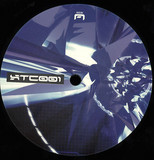
During the performance, the brain activity of visually impaired dancers was captured in real-time via neurointerface and transformed into generative graphics. This visual content, born from electrical impulses of consciousness in moments of musical perception, became the foundation for the album's artwork — both static and motion graphics.
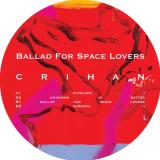
Editia de Camera returns with its first limited vinyl release. A conceptual space designed by Alin Crihan, the label focuses on the interdependence of creative mediums, from spoken word to canvas. The first release centers on works by Sebastian Hosu, a Romanian-born, Leipzig-based artist with exhibitions around the world, from Hong Kong to Bucharest, as well as his first publication, entitled Ballad for Space Lovers. Across the four selected pieces, Crihan explores the synergy of Sebastian’s brushstrokes, combining a rhythmic sense of forward motion with ethereal soundscapes that build and collapse, push and pull, toward an inherent sense of inertia that complements each other’s color palette—both on canvas and in sound.
There was nothing in contemporary music like Chris Isaak’s Heart Shaped World when it hit shelves in June 1989. More than three decades later, the singer-songwriter’s third album still sounds unique — and claims a backstory nearly as fascinating as the retro-leaning material and standout performances that propelled it to sales of more than 2.5 million copies. Home to the Top 10 smash “Wicked Game,” the set remains a masterful mood piece that invites you to pour a late-night drink, sit in a dimmed room, and relish Isaak’s elegant albeit raw ruminations on love, relationships, and questionable decisions.
Sourced from the original master tapes, pressed at Fidelity Record Pressing, strictly limited to 3,000 numbered copies, and featuring the bonus track “Diddley Daddy,” Mobile Fidelity's UltraDisc One-Step 180g 45RPM 2LP box set of Heart Shaped World unearths the staggering inner details, saturated tones, and brilliant atmospherics of the crisp production. It brings you up close and personal with Isaak’s spectacular singing — impeccably controlled, tense, brooding, steamy, smoldering, haunted — situated amidst stripped-down backdrops that allow every note to fully bloom and decay.
While Isaak’s ever-steady baritone remains the anchor, the contributions of his trusty backing band, the aptly named Silvertone, come across with just as much cool, command, and realism. The indispensable playing of guitarist James Calvin Wilsey particularly emerges with superb clarity and dimensionality. The character of his 1965 Fender Stratocaster, shivering twang of his spring-coiled fills, and his signature use of reverb, delay, and vibrato seamlessly match Isaak's patient deliveries and the band’s unhurried rhythms. Experienced on UD1S with ultra-black backgrounds and a nearly invisible noise floor, Heart Shaped World is in every regard a demonstration disc.
The premium packaging of this UD1S pressing befits its elevated status. Housed in a deluxe slipcase, it features foil-stamped jackets and faithful-to-the-original graphics. Aurally and visually, this reissue is for discerning listeners who desire to immerse themselves in everything involved with the album, not the least of which is the cover art depicting a lost-in-thought Isaak staring ahead and sitting in what appears to be an efficiency apartment. The image epitomizes the record’s lonesome temperaments and pensive themes.
Of course, if not for director David Lynch hand-picking two cuts from Heart Shaped World for his 1990 film Wild at Heart, the record would’ve probably suffered the same fate as Isaak’s prior efforts and gone unnoticed by the mainstream. Despite receiving raves from outlets such as NME, Chicago Tribune, and Rolling Stone upon its original release, the album stalled in the lower quadrants of the Billboard charts and, after a few weeks, dropped off.
Cue the ear of Lee Chesnut. Then the music director for a large Atlanta radio station, Chesnut heard the instrumental version of “Wicked Game” on Lynch’s soundtrack and started airing the album rendition at all hours of the day. Aided by a sensual video featuring Isaak and supermodel Helena Christensen, the song found its way into the public consciousness by early ‘91 and helped make Isaak a most unlikely mainstream star in an era where his techniques had little to nothing in common with popular tastes.
Despite its vintage vibes and shared DNA with legends such as Roy Orbison, Chet Baker, and Glen Campbell, Heart Shaped World transcends nostalgia, rockabilly, and throwback tropes. For all the melodrama and sadness at hand, Isaak’s gorgeously transparent singing dives deep underneath emotional surfaces. He mines subtleties that indicate his feelings go beyond heartbreak and anguish, and occasionally suggest frustration, menace, and anger. You can hear it in his quivering falsetto, and the slow and methodical ways he allows delicate whispers to break into shadowy phrasing that crosses over to the darker sides of romance and desire.
That approach bolsters the title track, which suggests calm yet moves on ominous currents — its simmering pace and snare-drum snappiness foreshadowing Isaak raising the volume and urgency during the coda. The southwestern-tinged “Wrong to Love You” plays with similar concepts of hesitation, unease, and discord, Isaak careful never to fully erupt and give anything away. His poised deliveries offer a master class in the art of insinuation and hurt on “Nothing’s Changed,” sent up with a wordless backing chorus and crackling guitar lines straight out of a Memphis blues joint.
Heart Shaped World further boosts its merit via its abundant stylistic variations, from the upbeat country-and-western trot of “I’m Not Waiting” and Spanish acoustic shimmer of the jazz-based ballad “Blue Spanish Sky” to the swinging horn-accompanied grooves of “Don’t Make Me Love You” and desert smokiness of the understated “Kings of the Highway.” On the latter, Isaak comes across as resigned and absolute. His singing and pain worm their way into your soul, and echo akin to the way the music prepares to strike when you least expect.
“Trouble going 'round,” Isaak croons right as the album begins. “Trouble going down.” Damn straight.
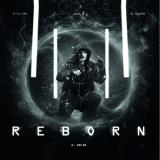
REBORN — Chapter I: The Big Bang is a conceptual double-vinyl album created to be experienced in sequence, with each track flowing into the next as one continuous journey. Moving through house, techno and electro house, the record gradually increases in energy while connecting cosmic creation to G. Felix’s own artistic rebirth. The physical edition contains the first 12 tracks of the chapter, but the story does not end with the vinyl. The sequence continues digitally through track 16.0, including a hidden composition positioned between 12.0 and 13.0. Inside the vinyl insert, listeners will find a QR code that opens access to exclusive material, visual content, behind-the-scenes information, the continuation of the narrative and Chapter II — The Dark Matter. Designed as both a record and a portal, REBORN combines music, visual art, symbolism and storytelling into a larger expanding universe. The album is intended to be heard from beginning to end, allowing every transition, message and sonic detail to become part of the complete experience.
Mutual Rytm welcomes new school tastemakers Klint and Hemka to sub-label Versus for imprint’s second drop. SHDW’s Mutual Rytm welcomes back two standout label alumnus for the second edition of Versus, a newly-launched conceptual sub-label focused around two artists whose sound works individually and in unity. Hemka made an impressive and well-received debut with her full solo EP back in 2025, while Klint appeared on ‘Federation of Rytm IV’. Both artists hail from France, and have crafted a well-earned reputation for their own distinctive approaches to sound design - pairing locked in grooves with cosmic synth escapes. Across the EP, each artist delivers three individual takes on techno to make for an essential collection of high-end cuts, exploring the label’s ethos of creative symbiosis between two artists on one shared release. Klint’s tracks lean towards minimal yet highly effective, dance floor-focused DJ tools, starting with the lithe, stripped back menace of ‘Prism’, before the sparse eeriness of ‘Dobermann’ keeps you looking over your shoulder while remaining trapped in the groove. Third cut ‘Romance’ is more bold and muscular, with contoured drums and icy pads ramping up the tension and energy. Hemka then dives deeper into a hypnotic and anthemic direction while introducing her own voice into the mix. ‘Leave It’ is textured, percussive deep techno with shadowy whispers, while ‘Breathe’ has a dark, grinning undercurrent and scintillating snares fluttering over the drums. ‘Mindness’ then pairs spoken word atmospherics with taught drum pressure and an ethereal backlit glow. In addition, Klint's digital only cuts ‘1112’ and ‘Blue’ marry minimal synths with meticulously defined drums that hit hard, while Hemka's ‘Push’ is an anxious percussive trip, contrasting with the introspective emotional core of ‘Live To Tell’.
In 2023, Kraków-based composer Martyna Basta and Los Angeles-based sound artist claire rousay were invited to Poland by Unsound for a short residency, where they spent a few days trading ideas and concepts, and brainstorming their first collaboration. Initially motivated to create lengthy, expansive pieces together, they also ended up experimenting with shorter vignettes, and ‘hotel room’ expresses these two extremes, featuring three long-form tracks and three brief, euphoric songs. “It wasn’t something we specifically planned,” explains Basta. “It just unfolded that way.” The most important stage of the process, however, was the period that followed the residency, when rousay and Basta began working on their sketches in isolation, trading drafts and sculpting the sounds independently before rousay handled the final mixdown. In the comfort of their own bedrooms, they were better able to reflect their individual creative routines, organically reaching a junction where their music felt truly unified. Even while they were in Poland, the duo joked that it might have been easier if they’d been holed up in separate rooms emailing each other.
Both artists have had an energetic few years: after steadily building a reputation for her diaristic and candid concrète experiments, rousay signed to Thrill Jockey in 2023, releasing the acclaimed ‘sentiment’, ‘a little death’ and the more eaze collaboration ‘no floor’; Basta, meanwhile, followed up 2023’s hallucinatory ‘Slowly Forgetting, Barely Remembering’ and her debut for Belgium’s Stroom imprint, ‘Diaries Beneath Fragile Glass’ with a studio album on !K7’s 7K sublabel: ‘Winged in Collapse’. The title of their collaboration reflects rousay and Basta’s hectic touring schedules in the wake of these releases, the constant feeling of displacement and the emotions that emerge when the environment is in flux. “I know we aren’t the only musicians traveling and creating work at the same time,” says rousay, “but being able to speak about that experience and all the things that come with it was comforting.” And the music itself, assembled from hypnagogic field recordings, spectral voices, electronics and filtered instrumental improvisations, sounds bewitchingly unmoored, not tied to a specific location but hovering around the uncanny space in-between.
Scratchy ASMR sounds introduce us to the opening track ‘zoom’, initially obscuring the duo’s elegiac harmonies. They are careful to let the various elements evolve at their own pace, with the fictile guitar drones melting into the foreground while Basta’s dissociated whispers and rousay’s illusory synths pick out the subtlest subliminal shades. It all builds to the piece’s dramatic third act, when layered chords ring out like organ blasts, enveloping the negative space. The shorter, more anxiety-provoking ‘denim’ is remarkably divergent, a dismantled folk memory pieced together from skeletal piano notes, vaporous choral echoes, haunting string plucks and pulsating feedback. Where the music aligns is in the mood itself, capturing a feeling that’s neither completely abstract nor fully referential. Not ambient exactly, ‘hotel room’ is a suite of soundscapes that gesture towards structure while repeatedly folding in on themselves.
On ‘Lost and Found’, wordless Autotuned ad-libs spiral around delicate guitar plucks and washing waves, coalescing into a faded Polaroid of opiated Americana, and on ‘Where Are You Now’, operatic squeals and corroded orchestral scrapes are juxtaposed with nauseous low-end tones. Evaporating until only industrial whirrs and music box chimes remain, the latter encapsulates the entire album’s chilling liminality, smudging saturated voices with casual electro-acoustic interjections before it erupts abruptly, transforming into a dense, pitch-skewed hymn. ‘hotel room’ plays like a surreal travelogue, teasing listeners with airy familiarities as it humidifies dry, awkward spaces. More a labyrinth of catacombs than a single, fixed chamber, it’s Escher-like – cryptic and seductive – and decked out with personal asides and intimate details that reward the most patient, curious listeners.
The oddjob concept was conceived on a mountain top at a festival with friends . The artist is unknown, the tracks are made for moments at festivals and open air gatherings rather then club environments. Tech house with a twist
In their third collaboration, the shared project between Merzbow and Pedro Vian shifts towards less confrontational and more introspective terrain. Bardo Thödol, released as an LP, draws on The Tibetan Book of the Dead not so much as an explicit narrative framework but as a conceptual resonance: a passage, a suspension between states.
Where Inside Richard Serra Sculptures and The Wheel of Mani foregrounded a relatively defined dialectic between Vian’s environmental restraint and Masami Akita’s impulsive, textural excess, that friction here appears to dissolve in favour of a more homogeneous mass. Noise, far from its most abrasive edge, is reconfigured as a continuous field — dense yet permeable.
Within this flow, melodic structures emerge without assertion, surfacing almost incidentally as by-products of the accumulation of frequencies itself. The result is less a reconciliation of languages than a blurring of their boundaries: a space in which intensity is internalised and the radical gesture folds into a more sustained, contemplative mode of listening.
Chronicles Diary returns with WAYF VOL.2, the second chapter in its ongoing When Are You From? series. Exploring the idea of duality, the compilation unfolds across four tracks that balance tension and release, density and space, movement and stillness. Tensal opens with the driving Suspense, followed by Stanislav Tolkachev’s shifting and elusive Invisible Shapes. On the B-side, MMSS & Time Traveler deliver the hypnotic Interval, while Conceptual & Mohamad Kafarsoussa close with Sezione Aurea, a deep study in proportion and restraint. Four distinct visions converge around transformation, continuity and contrast, further expanding the sonic narrative of Chronicles Diary’s contemporary underground techno aesthetic.
Goldmin Music label founder Romain Lanteaume alias EinKa meets Detroit minimalism master Terrence Dixon aka Population one for a truly conceptual techno 12".. Terrence Dixon is one of our favorite artists and biggest inspiration.. Detroitborn artist released his first 12" back in 1994 followed by several quintessential records and 2 epic albums "From the far future" on legendary Berlin-based label Tresor. Terrence is not only a great techno producer who makes subwoofers roar in clubs, he is a man obsessed by a concept, an idea that he's following from the very beginning.. "Minimalism" in the reaaaaal sense of the word.. For example, when thousands producers are wondering what's eventually missing in their new track, Terrence is rather wondering what's useless, what could be removed and that's definitely what he gets to share on his own "Reduction" imprint. After the release of Terrence's track "Steve Austin's mile" on Goldmin Theme Lp, Romain got to meet him in Detroit during summer 2014. The aim was to make an abstract record that could still be linked to a feeling or a situation.. A1 The edge track is probably a good example as it's designed and built to make you feel like you get closer and closer to the edge while the track is slowly growing until you fall.. Can you feel it :) As for the other tracks, there is also a special idea behind them but we better let you interpret it your way
Gala – Freed From Desire was first released in 1996 on NiteLite Records in Italy. 2024 and Ministry of Sound Recordings / B1 Recordings are happy to release two fresh new remixes for the first time on limited edition yellow transparent vinyl. Gala wrote this song when she was drawing on a Buddhist concept that challenges the constant craving for more and encourages us to value our principles and our own freedom instead. She believed that ‘Freed From Desire’ could resonate with people all over the world. Arguably one of the biggest sporting songs of all time, it has become a unifying sensation across the world. The main mix has been re-recorded for a whole new generation but is still very true to that original of ’96, whilst on the flip, Diplo; the American superstar, showcases his trademark, energetic, thumping style. A huge club and radio hit.
Riviera Records is a brand new label that kicks off with ‘Move’ - a statement of intent from founder X-Coast. Continuing to perform across the USA, Canada, Europe and Asia, X-Coast is an unconventional character and little is known about the mysterious Serbian other than the concept for the alias is that it exists “somewhere in the deep blue Caribbean Sea, between your imagination and what’s real.” Having released on labels like Hot Haus, Lost Palms and Steel City Dance Discs, X-Coast now launches Riviera Records with a promise to be an uncompromising clash of sounds” and the label stays true to that from the get-go.
There is no mucking about here as X-Coasts demonstrates his versatility as a producer with three varying mixes of ‘Move’ making up the bulk of the package. First up is the Trans Mix: an arms-in-the-air, throwback trance track with euphoric vocal stabs all primed to inject real energy into any set. House Mix then bounces and bumps with a refracted garage vox and endless old school dynamism, before the twisting and turning Breaks Mix follows with its thumping drums, hits and rattling dub sounds that all explode to life. Finally, ‘Naos’ totally flips the script with a slow, deep, cosmic workout build on a rugged bassline. A breathy voice, warm chords and balmy pads all wash over you like a Balearic breeze and take you to hedonistic dance floor somewhere in 80s Ibiza.
What changed between Av. General Roçadas and Junkeira? Seven years in people's lives — yet the team's commitment remains untouched, and the steady hand on the plumb line that keeps dance music (still) upright holds firm. Years of sustained research and field work from both producers, with their own records, mutually independent and independent too in how they brought them to life. Moreno Ácido has been navigating detours through a conceptual yet grounded underground — in sound and in format (two self-released cassettes since 2019) — while keeping one eye on the floor. His post pandemic reawakening carries a clear message: Call to Action is the label that in 2023 put the still-in-demand Trash/Treasure out on vinyl. Diogo keeps Discos Extendes as his shelter, gathering talent and retreating into it. At the same time, a disseminating vocation — that talent turned outward, on a mission to champion the different sensibilities that can converge in music made for dancing.
Junkeira is direct. It hides nothing in its intent, nor does it conceal the origin of its love, nor the way it exercises its fascination with the source. Geography can define movements, described and echoed countless times outside and then inside the net. The signifiers are known to all — it's a matter of applying them with respect and flow. Perhaps the craft in this production really does come down to love, when it comes to it. What is "WTF" if not a declaration of love — at the very least of closeness — to the sonic essence of the English rave? The piano stab, the breaks defining that hardcore state of mind, the string bed lifting feet off the floor. Closing out the EP, "Freak" gathers different emotions — eyes still shut, body in comedown while still moving. Chill. Everything rounded. Bassline, vibes, vocals woven into the rhythm.
Rewinding, the opening track "100 Planos" is a throwback to Roçadas (2019) — harder on the ground, with a 4/4 beat broken up by claps, a circular structure built for DJs, with mix-friendly entry and exit points. Then "Turbo Love" puts the keys in control, foregrounding them, letting a car alarm ring out and balance the beat — a reverential nod to UK Garage felt as raw material, already part of the lineage that has been the continuous evolution from Disco onwards: an evolution that traces a line and its branches, from which you can isolate any chronological point since at least 1977 and combine whatever elements form a personality. The spirit lives, as summer kicks in.
Sa Pa launches Dub Techno For Life: a dedicated outlet for the artist’s more dancefloor-focused material - work that has largely sat outside the conceptual frame of his previous releases.
The label’s first release, Girls on Tour EP, opens with “Mokira Ultra Dub”, a 10-minute club rework of Mokira classic “Manipulation Musik”. Originally produced alongside an ambient version commissioned for Kontra Musik’s 2016 Kontra X compilation, the dancefloor mix was ultimately shelved until now. With Andreas ‘Mokira’ Tilliander’s blessing, it finally surfaces as a standalone Sa Pa production. A track too banging to go unreleased.
“Waiting For You” traces back to Sa Pa’s orbit around the giegling ecosystem via FORUM. Once lined up for an official release on the parent label before plans stalled, the track slipped into the archives. Buoyant and disarmingly pop by Sa Pa standards, it finds its place here as the A2 - tuned to the collective memory of mid-2010s German house music.
Harnessing the spirit of Chain Reaction from the abandoned patches and borrowed machines of a rainy night’s recording in Taipei, the B-side’s “Modular System” captures a late-night, one-take modular jam. A broken yet hopeful “World Saving Banger” closes the EP with some raw and IDM-leaning force, showcasing Sa Pa’s new label - and the Girls On Tour EP - as a space for neo dub techno ideals to take shape.
Candeleros, la banda madrileña de «caribe psicodélico», presenta su doble EP en un único vinilo de 12 pulgadas. Dos caras, dos conceptos, una misma energía desbordante.
El vinilo captura la esencia de Lavapiés, el barrio que vio nacer a la banda y que inspira todo el proyecto. Cuatro temas originales que mezclan ritmos tradicionales venezolanos y colombianos con guitarras psicodélicas y samplers, acompañados de cuatro remixes que llevan su sonido a la pista de baile.
Colaboraciones estelares con Mauro Santos, Desiré Paredes y Afro Libertad, y remixes a cargo de Caribombo, Piper Street Sound, Phran y Pirámida. La mezcla corre a cargo de la banda en Chip Lab Studio, y la portada es obra de la artista bogotana SOMA (Laura Ortiz), cuya ilustración refleja la dualidad del disco: día y noche, orden y caos, Bululú y Bochinche.
Undo & Casiowaves join forces to bend minds on their new EP “Chemical Eyes”. The Catalonian pairing, collaborators for the past five years, have built a body of work that’s conceptually rich and sonically sophisticated. The “Chemical Eyes” EP is a love letter to analog synths, taking us on a psychedelic trip through past and present, nostalgic but never mimetic.
Reality begins to warp the moment “Chemical Eyes” kicks in. The title track opens in post-punk territory, leaning into nostalgia both lyrically and sonically and with synth outro that lingers like a memory.
Parisian producer Chloé’s remix takes us firmly into the 21st century, chopping up the title track until it mutates into something more minimal and syncopated. This electronic take still retains the track’s post-punk mood, with contemplative loops and reverb-drenched guitar as we begin to move from the concert venue into the club.
B side “Trumpsky Beats” picks up the pace with neon-soaked synthwave that references the 80s synthpop icons in more than just name. Crisp, shimmering synths dance through warped bass lines and new wave drum patterns, creating a lush contrapuntal soundscape that thrives as much on nostalgic memory as it does on contemporary creativity.
Italo Brutalo’s remix amps up the intensity further with infectious snares and acid twangs. The German producer and synth enthusiast adds a tasteful complexity that pulls the EP fully onto the dancefloor.
Chlar returns to his Primal Instinct label with 'Modern Survival'
Following the widely praised Funk Assault (Chlar & Alarico) 'Minimum One Post A Week' EP, which kicked off the Primal Instinct label last summer and won the support of the likes of Rodhad, Tasha, and Luke Slater, as well as routine plays from Sarah Story on BBC Radio 1, Chlar now returns to his imprint with solo venture 'Modern Survival'. While the first Primal Instinct release saw references to artist urges and behaviours on social media, this next instalment explores a modern recontextualisation of humanity's hierarchy of needs in yet another high-concept EP.
First up, 'Internet Soulmate' boasts a crunchy bassline as its drum work chugs along the track playfully. The groove twists and turns before the hypnotic and tribal 'Supermarket Hunting' continues with sounds of nature, loopy rhythm and syncopated bleeps.
On the B-side's 'Body Control Officer', human-made grooves intertwine with machine-like thrum, synths whirring and zapping, while 'Competitive Influencing' takes off with rolling percussion, subtle whistles and distorted vocal one-shots. Closing out another stellar offering from the Primal Instinct frontman, Chlar brings the dark 'Scout My Algorithm', a brooding slow-burner offset by smooth arpeggio snippets and warped slices of digital noise.
"In an era where technology entwines our everyday existence, where the virtual realm shapes our interactions, and where the pursuit of influence takes centre stage comes an EP that delves deep into the modern tapestry of human existence. 'Modern Survival' is not merely a collection of songs and visual clips, but a poignant reflection on the intricate dance between our primal instincts and the brave new world we navigate today. The EP invites listeners on a journey of self-discovery and reflection, prompting them to ponder the fundamental essence of our existence in an environment of fast-paced technological evolution." - Chlar
Bifu is a new curation project by Pirka that translates the concept of a gentle wind into a refined electronic signature.
Marking the label's inaugural release, Barut crafts an atmospheric, airy landscape where floating textures meet dancefloor weight.
By seamlessly weaving mellow synths and emotive vocals over the organic warmth of swooshing congas and groovy basslines, this debut defines a space where deep house feels entirely natural, refreshing, and moving as a gentle wind.
LP,180g, 2027 REISSUE - REMASTERED FROM ORIGINAL TAPES, CAREFULLY REPRODUCED ORIGINAL ART
The 'vivid contemporary sounds for a fresh visual image' make up the now canonised Synthesis from Alan Hawkshaw and Brian Bennett. These two greats go deeper than usual on this collection, and the end result is a synth concept record of sorts. Released in 1974, it's an essential companion piece to
their Synthesizer and Percussion LP, released on Themes International Music in the same year.
Like most of our favourite library records, Synthesis has that gloriously funky, 'weird electronic music' vibe without ever being inaccessible. With the awesome ARP Odyssey at the fore, Hawkshaw and Bennett have created a blissed-out soundscape that, whilst laid back in all the right places, somehow remains heavy on the funk. It's a sort of throbbing, proto-G Funk sound and you can fnd it on many of these low-lit basement workouts.
Take the ice-cool 'Alto Glide'. It's a sunset-funk highlight with an electro-fute refrain that conjures those dreamier Dre / DJ Quick instrumentals from '91 to '92.
Stereolab, Koushik (again) and all those Ghost Box artists were clearly listening very closely in the years since. The equally relaxed 'Mermaid' glides efortlessly with soft, shimmering piano, understated percussion and kaleidoscopic synths.
It's a really beautiful piece.With these two soft-focus closing tracks allowing the LP to foat away over the horizon, the preceding ten tracks have a more insistent, neck-snapping rhythm
section to back the synth overload. Highlights include the head-nod funk of 'Getting It Together' and the synth break in 'The Executive', which informed classic video game soundtracks.
For once Be With really is stuck for words to describe just how good this record is.
Best just to listen. As with all ten re-issues, the audio for Synthesis comes from the original analogue tapes and has been remastered for vinyl by Be With regular Simon Francis. We've taken the same care with the sleeves, handing the reproduction duties over to Richard Robinson, the current custodian of KPM's brand identity.
With Panorama, Frank Maston pays homage to the classic era of library records and Italian soundtracks of the 70s. A blissed-out, grooving collection of filmic cues, it continues the unique brilliance of Tulips and Darkland. Elegant and easy, subtle and stylish, breezy and beautiful; this is his Maston-piece. Commissioned by legendary label KPM, Panorama cements Maston as a master of modern classics and the most mesmeric of contemporary composers.
In early 2020, Be With suggested to Frank that he should make a KPM record. He wasn't aware that they were still putting out new library records - but he was super keen: "It was completely surreal and it still hasn't fully sank in that I have a record in that catalog, sitting alongside those incredible albums that were so influential to me."
Frank was visiting family in his hometown of LA in March 2020 when the world ground to a halt so the KPM project arrived at a fortuitous moment. Having fantasised about committing to a record with no distractions, with a proper budget, access to his gear and space to work in - to really dig in and try to write and arrange the best work he could possibly make - it was a real "be careful what you wish for" moment. But, as Frank explained, "it completely saved my year and sanity to have something to focus on and get excited about. It was my lifeline." He spent seven months on it, working almost every day.
Maston had already been making library-influenced music so when KPM outlined the criteria for the tracks it was exactly what he had been doing all along. He thought the best approach would be to make a follow-up to Tulips that had a parallel life as a KPM record. Enjoying complete creative freedom, “gave me the drive to power through and dig in deep. I'm not sure if I could have kept myself on such a rigorous recording schedule under my own steam, and I think the momentum I had writing and recording it is part of the strength of this record."
Maston’s sleek retro-groove instrumentals emulate the classic KPM “Greensleeve” reel-to-reel recordings that provided mood-setting music for mid-century cinema, television, and radio programs. Apparently in close conversation with the John Cameron-Keith Mansfield KPM pastoral masterclass Voices In Harmony, Maston's Panorama could be heard as that record's funky follow-up. Yes, it's *that good*. Another reference point from the hallowed library would be Francis Coppieter's wonderful Piano Viberations.
Opener "First Class" is a blissed-out groove, featuring the soothing vocals of Molly Lewis and a glistening harp over drums, a two-note bass motif (from Eli Ghersinu of L'Eclair) and an assemblage of guitars, synths, French horn and glowing vibraphone. Acid Lounge, anyone? The irresistibly funky "Easy Money" is a gorgeous cut led by more of Molly's vocals, pastoral flute and Rhodes, underpinned by drums and percussion, grooving bass, chilled guitars and synth strings. Kicking the tempo up, the percussive "Storm" is a vibin' filmic-fusion jam where psychedelic guitars (courtesy of Pedrum of Allah Las/Paint) organ, jazzy flute, Rhodes and vibes all compete for a place in the sun, over drums and walking bassline.
The heavenly "You Shouldn't Have" is a delicate, melancholic wonder; a dreamy instrumental where the melody is shared by a whistle, harpsichord and celeste, over a cyclical piano chord sequence and bass, synths, guitars, organ and distant French horn. The tempo rises again with the passionate, sticky "Fling", a summery, nostalgic groove with skipping drums and percussion, warm bass and electric guitar, yearning flute and synth strings. The brilliantly titled "Fool Moon" has that Voices In Harmony sound down pat. A romantic slow-mo dreamscape of Rhodes and harpsichord, piano, light drums and softly strummed acoustic guitar.
Side B opens with "Medusa", a hopeful, mellowed-out track with shuffling drums, feel-good flute, muted horns, glowing Rhodes and synth strings. The soft and gentle "Morning Paper" is an elegant way to start the day; a beatless blend of flute, guitar, percussion, ambient synths and vibes. The upbeat head-nod jam "Scenic" has that widescreen car-chase feel, uptempo drums and percussion, grooving bass, piano, synths and ambient electric guitar. "Adieu" is a smooth summer vibe, relaxing with brushed drums, Rhodes, flutes and horns. Molly Lewis's gorgeous vocals steal the show, alongside vibes, jamming organ and synth strings.
"Hydra" is another laid-back 70s-sounding retro cinema cue with light drums and percussion, walking bass, spacey synths, clavinet, glowing vibraphone, vintage organ and electric guitar. Closer "Jet Lag" is a laconic bow out; bass-driven drum machine soul, featuring hand percussion, Rhodes, vibes, synths and organ.
Multi-instrumentalist Frank played a bit of everything across Panorama. Yet, humble as ever, he believes the time, energy, and enthusiasm of all of the musicians invited to the sessions helped him realise his vision: "There were two Italian flautists who really understood what I was going for. Two french horn players, cor anglais, a vibraphonist and a flügel horn player. I've never involved this many people in my projects before, and yet the result is the most "me" record I've ever made."
Musically, a strong Italian theme runs through the record. Frank is fascinated by ancient Rome and both his parents are Italian (Maston was originally Mastrantonio before anglicisation). So, it felt natural to fully embrace these strands and tie everything together with the striking artwork. The Romans were influenced by Greek culture, emulating their art and architecture, which, in turn, influenced Renaissance era artists. Frank acknowledged this tradition when reflecting on his place in the lineage of library and soundtrack composers. He then asked his friend Mattea Perrotta, a painter and sculptor, for some sketches. What he received was exactly what he had in mind: "Especially the theater mask, which really captures the range of moods on the album". Frank arranged them as per the cover and it soon felt right: "I wanted to make a cover that was reminiscent of the classic KPM albums without making it too pastiche - so it has its own identity and looks at home alongside other library records, while still fitting in nicely in the KPM catalogue." The last step was for us to introduce Frank to Be With-KPM’s Rich Robinson, who helped put together the back and centre labels and align it all within the KPM standard.
Panorama is a perfect title for the album. With no opportunity to travel for tours or recording projects, Frank arranged postcards from his collection on his desk with beautiful views of the mediterranean coast, the Roman Colosseum and Cinque Terre. These also served as visual prompts: "That was part of the sonic concept - imagining myself driving down the mediterranean coast with this music on, with the top down." Additionally, the range of moods and vibes - "I tried to make each song very different from the previous one in terms of tempo and arrangement and feeling" - speaks to the idea of a Panorama of music and sounds and emotions. The last track was originally called Panorama, but KPM already had that title in their catalogue so it was changed to "Jet Lag", which, as Frank notes, "is perhaps even more fitting, since the trip is over".